


Abstract
By expanding the Technology–Organization–Environment (TOE) framework to match the Complex Adaptive System (CAS) characteristics of high-speed rail (HSR) enterprises, this study adopts fuzzy-set Qualitative Comparative Analysis (fsQCA) and Necessary Condition Analysis (NCA) to investigate the driving mechanisms and configuration paths of high-quality development (HQD). Using data from 137 listed Chinese HSR concept companies during 2018–2023, the results reveal that HSR enterprises operate as CAS, where HQD emerges from the synergistic interaction of technology, organization, and environment subsystems rather than isolated factor contributions. Four equivalent configuration paths to HQD are identified, categorized into three models: Technology-Dominant, Dual-Driven Technology + Environment, and Multi-Collaborative Technology + Organization + Environment. Policy support is a necessary condition for system evolution, digital intelligence empowerment serves as the core “order parameter” driving subsystem adaptation, and high-quality human resources act as the key coordinating element for inter-subsystem coupling. The degree of subsystem synergy has a significant positive correlation with HQD levels. This study enriches the application of CAS theory in the transportation equipment manufacturing industry, expands the TOE framework’s analytical boundary from linear dimension division to systematic synergy, and provides theoretical insights for understanding the nonlinear, emergent mechanisms of HSR enterprise HQD. It also offers practical references for governments to optimize policy supply and for enterprises to enhance adaptive capacity.
1. Introduction
The 20th National Congress of the Communist Party of China emphasizes that high-quality development(HQD) is the primary task for building a modern socialist country in an all-around way. As a core component of China’s modern transportation system, high-speed rail (HSR) has evolved into a “national business card” and a critical carrier of the country’s advanced equipment manufacturing industry. By 2024, China’s operational HSR mileage had exceeded 48,000 km, accounting for over 70% of the global total, marking a strategic shift from “scale expansion” to “quality improvement” [1]. As the core carriers of China’s modern transportation system, HSR enterprises are traversing a critical transition phase from “scale expansion” to “quality improvement.” They confront complex challenges arising from rapid technological iteration, organizational restructuring, and an increasingly volatile external environment. However, existing research on HQD predominantly adheres to a traditional reductionist paradigm. These studies tend to conceptualize technology, policy, and organization as isolated, linear variables, relying on regression analyses to examine the net effects of single factors. Such linear thinking overlooks the intricate nonlinear interactions among internal system elements, consequently failing to explain why identical resource inputs can yield widely differentiated development outcomes across different enterprises. In essence, HSR enterprises function as Complex Adaptive Systems (CAS) operating within dynamic environments. The realization of their HQD is not merely a simple summation of isolated factors; rather, it is an emergent outcome resulting from the nonlinear coupling and co-evolution of technological, organizational, and environmental subsystems.
Existing research on HSR HQD primarily focuses on single dimensions: First, a policy-driven perspective highlights the role of national strategies (such as the “Eight Vertical and Eight Horizontal” HSR network plan) and institutional reforms (like railway marketization reform) in expanding the industry [2,3,4]; second, from a technological innovation viewpoint, it focuses on how breakthroughs such as high-speed train R&D (e.g., EMU head technology) and intelligent railway systems (e.g., digital track management) improve HSR operational efficiency [5]; and third, from an industrial synergy angle, it emphasizes coordinated development across the entire HSR industrial chain through integrated strategies [6,7]. However, existing research still faces three limitations: first, it lacks a systematic analysis of the interactions among multiple factors like policy, technology, and organization, especially in fully revealing the mechanisms behind digital intelligence transformation and enterprise organizational change; second, research methods mainly rely on linear regression or case descriptions, which makes it hard to capture the combined effects of multiple factors; and third, there is a lack of micro-level empirical studies focused on HSR enterprises, missing a deep analysis of their unique pathways to HQD.
To address the aforementioned limitations and fill the research gaps, this study aims to identify the necessary conditions for HSR HQD, explore its equifinal configurational paths, and verify the causal asymmetry between HQD and non-HQD outcomes. As the core carriers of the modern transportation system, the HQD of HSR enterprises constitutes the micro-foundation for achieving the strategic goal of a transportation-powerful country. Under the new development paradigm of dual circulation, HSR enterprises need to prioritize supply-side structural reform, drive industrial upgrading through technological innovation, and build a modern operational system characterized by “safety, efficiency, greenness, and intelligence.”
Based on the TOE (Technology–Organization–Environment) analytical framework and employing the fsQCA method, this study attempts to transcend traditional linear analytical frameworks by adopting a Complex Adaptive Systems (CAS) perspective. It systematically identifies the interaction patterns among multidimensional factors such as policy support, technological innovation, profitability, and digital intelligence empowerment. The results not only provide empirical evidence for constructing a theoretical analytical framework for HSR enterprise HQD in the new era but also offer a solid theoretical basis and highly practical guidance for the sustainable and robust development of China’s HSR. Furthermore, they provide scientific decision-making references for government departments to optimize policy supply and for enterprises to formulate transformation strategies.
2. Literature Review
2.1. Connotation of HSR High-Quality Development
Since the concept of high-quality development (HQD) was proposed, it has become a central focus in the pursuit of sustainable and inclusive growth across nations [8,9]. Regarding the connotation of HQD in transportation, Lu Chunfang interpreted HQD in transportation in terms of infrastructure scale, first-class service quality, and economic development adaptability [10]. Sun Dongquan analyzed the high-quality development trend and implementation path of China’s transportation logistics under the new situation from the perspective of high-quality development of transportation logistics [11]. Zhou Zijun discussed the logical relationship and mechanism between the high-quality development of transportation and transportation standardization and put forward key directions and countermeasures for the development of transportation standardization based on the new international and domestic situation and new requirements of standardization [12].
From the perspective of high-quality development, its manifestations can be observed at three levels: the micro-level in products, the meso-level in industries, and the macro-level in the national economy and productivity [13]. Therefore, this paper posits that HSR, as a fundamental organization for meso-level industrial development and a micro-agent of macro-economic development, can be studied from two dimensions: HSR industry HQD and HSR enterprise HQD. The HSR industry refers to the collection of enterprises providing products and services for the high-speed railway system [4], while HSR enterprises are the main participants in the HSR industry. Through the synergistic linkage of numerous upstream, midstream, and downstream enterprises, they collectively support and drive the operation and development of China’s HSR industry. This paper adopts HSR enterprises as the research object. By investigating the influencing factors and configurational pathways for the HQD of HSR enterprises, it aims to summarize HQD pathways for these enterprises across different industrial chains. This will facilitate the overall optimization and upgrading of the HSR industry, fully leverage its role in promoting economic and social development, and enhance the competitiveness of Chinese HSR in the international market.
2.2. HSR Enterprises as CAS
A Complex Adaptive System (CAS) is defined as a dynamic network composed of numerous semi-autonomous agents possessing their own schemata or behavioral rules. Within an open environment, these agents engage in the continuous exchange of matter, energy, and information through nonlinear interactions, thereby achieving co-evolution in the pursuit of maximizing their fitness. Self-organization serves as the core dynamic mechanism of a CAS. It refers to the process by which a system spontaneously evolves from a disordered or random state into an ordered structure in the absence of a single central controller, driven by local feedback loops among agents and the energy exchange characteristic of dissipative structures [14,15]. As noted by Kauffman, this represents an endogenous attribute of the system—an inherent tendency to evolve toward order rather than chaos—which frequently occurs at the edge of chaos [16]. Building on this foundation, emergence describes the novel patterns or holistic properties manifested at the system’s macro-level. These properties originate from simple nonlinear interactions among micro-level agents; crucially, they cannot be predicted through reductionist analysis of individual agents, and their holistic characteristics far exceed the simple linear summation of their constituent parts’ functions.
The rationality of conceptualizing the HSR system as a CAS is rooted in its inherent characteristics of self-organization, nonlinearity, and dynamic evolution. This system is composed of numerous semi-autonomous agents—including train operation units, infrastructure monitoring modules, and dispatch command hubs—which engage in a continuous exchange of matter, energy, and information within an open network environment. The overall performance of the system is not a simple summation of individual component functions; rather, it generates emergence through complex nonlinear interactions among agents, thereby achieving capacity optimization at the global level and the automatic evolution of systemic order [17].
The dynamic adaptability of HSR relies primarily on internal feedback loops, enabling the system to perceive environmental perturbations (such as technological iteration, meteorological changes, or sudden failures) and adjust operational strategies in real time. This allows the system to maintain the stability of core functions across different stages—from resistance and adaptation to reconfiguration. Furthermore, the operational logic of HSR embodies an organic balance between centralized coordination and decentralized local decision-making. By continuously seeking optimization among diversity, redundancy, and system coherence, the HSR system ensures extreme robustness and continuous learning capabilities in the face of uncertainty risks [17,18]. In summary, through collaboration among agents and active perception of the environment, the HSR system realizes a dynamic transition from local stochastic interactions to global orderly control.
The operational logic of the HSR system can be analogized to a self-regulating biological neural network: it does not rely solely on preset static instructions but spontaneously forms highly synergistic, holistic behavior through a process where individual neurons (operational agents) constantly exchange information and make local adjustments based on environmental feedback.
2.3. TOE Theoretical Framework
We first clarify the theoretical advantage of the TOE framework over alternative theories to justify its adoption. While the resource-based view (RBV) focuses primarily on internal firm resources and capabilities [19,20], and institutional theory emphasizes external pressures for legitimacy and isomorphism [21], the TOE framework [22] offers a more comprehensive and integrative perspective by simultaneously incorporating three critical dimensions: technological context, organizational context, and environmental context. This tripartite structure is particularly well-suited for studying HSR enterprises as Complex Adaptive Systems (CAS), where high-quality development emerges from the synergistic interplay of all three subsystems [23]. The TOE framework allows us to systematically examine how internal capabilities (technology and organization) interact with external forces (policy and market competition) to produce emergent outcomes. In contrast, RBV tends to overlook external environmental dynamics, while institutional theory may underemphasize internal technological and organizational factors [24]. Therefore, the TOE framework serves as the optimal theoretical lens for our configurational analysis.
The TOE (Technology–Organization–Environment) theoretical framework, proposed by Tornatzky and Fleischer in 1990 [22], systematically explains the attribution and driving mechanisms of enterprise or organizational behavior decisions under different contexts through three core dimensions: technological characteristics, internal organizational attributes, and external environmental pressures. The technology dimension focuses on attributes of the technology itself, such as compatibility, complexity, and relative advantage. The organization dimension encompasses internal factors like organizational size, resource capabilities, management structure, and culture. The external environment pressure dimension includes external conditions such as policies and regulations, market competition, industry standards, and stakeholder pressure [3]. Its development has undergone three stages: initially focusing on enterprise technological innovation (e.g., ERP, e-commerce); expanding after the 2000s to areas like digital transformation and green technology while integrating with institutional theory and resource-based view; and since the 2010s, further combining with dynamic capability theory and ecosystem perspectives to explore the diffusion patterns of emerging technologies like AI and blockchain. Current research primarily forms four schools: technological determinism (emphasizing the direct role of technological attributes), organizational fit theory (focusing on resource and strategy matching), the institutional theory school (explaining environmental pressures through compliance and legitimacy), and the integrated model school (integrating theories like UTAUT, DOI) [25]. Consistent with our CAS perspective, we reject the notion of isolated, linear causality among the six antecedent conditions. Instead, we argue that high-quality development (HQD) emerges from the nonlinear interactions, feedback loops, and synergistic couplings across the technology, organization, and environment subsystems. FsQCA is uniquely suited to capture these CAS hallmarks—namely, causal complexity, conjunctural causation, equifinality, and causal asymmetry. While we categorize the conditions within the TOE framework for analytical clarity, the fsQCA method itself, rooted in set theory and Boolean algebra, inherently operationalizes the nonlinearity and emergent properties emphasized by CAS theory. Thus, our empirical approach serves as a rigorous bridge connecting the CAS theoretical lens to the TOE-based configurational analysis.
2.4. Analytical Framework
Driven by the era of artificial intelligence, China’s HSR HQD is influenced by a combination of antecedent conditions at the technological, organizational, and environmental levels. It is the result of the synergistic interaction of “Technology (T)—Organization (O)—Environment (E)”. It is necessary to simultaneously consider internal and external enterprise factors such as technology, organization, and environment from a CAS perspective to explore the configurational driving role of digital intelligence in HSR enterprise HQD, providing a scientific theoretical basis and decision-making reference for analyzing the causes and pathways of HSR HQD.
2.4.1. Technology Dimension: Digital Intelligence Empowerment and Technological Innovation
Conditions in the technology dimension generally refer to the technology and related capabilities possessed by an enterprise. To some extent, they affect outcomes like organizational efficiency by influencing the degree of change in organizational element structures and the ability to respond to the external environment [26]. In existing HQD research, digital intelligence empowerment and technological innovation frequently appear as keywords in the manifestations of HQD, explaining its connotation from different dimensions. Digitalization and technological innovation can help enterprises form new factor inputs and resource allocation efficiencies, improve the fit between user demands and value supply, promote strategic transformation, enhance sustainable development capabilities, and achieve HQD. Digital intelligence HSR, by integrating advanced technologies such as big data, artificial intelligence, the Internet of Things, and cloud computing, enhances the operational efficiency, safety, service quality, and sustainable development capabilities of HSR. Simultaneously, throughout the development history of China’s HSR, technological innovation has undoubtedly been the primary factor and key driving force for successfully catching up in terms of industrial competitiveness and for leadership [27]. To break the barriers of internationally monopolized technologies, China’s HSR enterprises have continuously enhanced their core technological competitive advantages, adopted technology-leading strategies such as establishing Chinese standards or applying for foreign patents, gradually formulated product design and development methods oriented towards independent intellectual property rights, and leaped to become the world’s HSR “frontrunner”. Although digital intelligence empowerment and technological innovation are interrelated components of the technology subsystem, they are conceptually and empirically distinct [28]. Digital intelligence empowerment focuses on the application and deep integration of mature digital technologies (e.g., artificial intelligence, big data, cloud computing, IoT) into enterprise operations, reflecting the breadth of organizational digital transformation [29]. In contrast, technological innovation denotes the output of independent R&D activities (measured by granted invention and utility model patents), capturing the creation of new technological knowledge [30]. Notably, an enterprise can achieve high digital intelligence empowerment by adopting external technologies without massive patents, while some firms with abundant patents may lag in digital integration—proving the two are complementary and non-overlapping, jointly forming the technological foundation for HSR enterprises’ high-quality development. Therefore, this paper considers digital intelligence empowerment and technological innovation as the technology (T) conditions for HSR enterprise HQD.
2.4.2. Organization Dimension: Organizational Structure and Enterprise Resilience
The structural characteristics of an organization and its resilience significantly impact enterprise development [31]. Strategy-oriented human resources are a crucial component of organizational structural traits. They can input heterogeneous resources into the process of enterprise knowledge resource utilization, drive enterprise process management transformation and product iteration updates, strengthen competitive advantages in the market, and propel enterprises into the ranks of HQD [32]. Meanwhile, organizational resilience, as a core issue in enterprise HQD, refers to an enterprise’s ability to demonstrate resistance, stability maintenance, and recovery amidst difficulties and challenges. In a business environment full of uncertainty, an enterprise’s ability to respond quickly to emergencies and build self-protection systems has become a key factor determining its survival and breakthrough in adversity. Enterprises with high organizational resilience often exhibit stronger resistance to external shocks. This capability is concentrated throughout the process of identifying potential risks, efficiently handling sudden situations, and dynamically adapting to environmental changes [33]. The long-term performance manifestations of enterprise resilience can be divided into volatility and growth [34,35]. Enhancing profitability is core to ensuring the future HQD of the railway industry. HSR enterprises are often in stages of growth and transformation, facing significant demands for organizational stress resistance and capital increments. In selecting organizational antecedent conditions, we adhere to two core principles: alignment with the CAS theoretical perspective and direct relevance to HSR enterprises’ adaptive capacity for high-quality development. From a CAS perspective, the organization subsystem’s core attributes are knowledge absorption and dynamic adaptive capacity, which are precisely reflected by human resources and enterprise resilience [36]. High-quality human resources (the proportion of employees with a bachelor’s degree or higher) are the fundamental carrier of knowledge accumulation and technological application in the technology-intensive HSR industry, enabling effective deployment of digital intelligence technologies and iterative upgrading of technological innovation [37,38]. Enterprise resilience (proxied by operating profit margin) captures the firm’s ability to withstand external shocks, maintain operational stability, and sustain performance, a critical capability for long-term HQD in the dynamic HSR industry [35]. Based on the above analysis, this paper selects human resources and enterprise resilience as the organizational (O) conditions for HSR HQD.
The technology and organization dimensions constitute the internal adaptive structure of the system. Specifically, digital intelligence empowerment and technological innovation serve as the core instruments enabling enterprises to cope with environmental uncertainty, whereas human resources and enterprise resilience act as the organizational carriers that underpin the efficacy of these tools.
2.4.3. Environment Dimension: Policy Support and Competitive Pressure
The environment dimension primarily includes policy and market environments, constituting the system’s fitness landscape and source of energy. Governments inject strong momentum into enterprise development through the dual drive of policy guidance and resource support [39]. Policy support serves not merely as an external constraint but, more critically, as a negative entropy flow injected into the enterprise system. This input counteracts the entropy increase generated by internal managerial friction and market fluctuations, thereby maintaining the stability of the system’s dissipative structure. On the one hand, policy releases signal favorable development prospects; on the other hand, through means such as fiscal subsidies, they effectively alleviate enterprise financing difficulties, stimulate technological innovation vitality, promote steady improvement in operational performance, and pave a solid path for enterprises towards HQD. In a market economy system, market competition is a core engine for improving economic efficiency and a key variable shaping enterprise innovation strategies. When enterprises face intense industry competition, they often proactively increase R&D investment, accelerate technological iteration and upgrading, and achieve HQD goals in the market tide by continuously enhancing their core competitiveness [39]. The technological catch-up and development of China’s HSR depend to a certain extent on strong government intervention [3,4,40]. From the supply-side policy perspective, the government encourages HSR-related enterprises to achieve breakthroughs in hardware and software technologies through large-scale subsidies and incentives, continuously strengthening industry-wide common technology innovation platforms, experimental systems, and enterprise R&D system construction. From the demand-side policy support perspective, from the Ministry of Railways to the later China State Railway Group, subsidies have been provided for early adopters and experimental users in the promotion of digital technology applications and the upgrading of intelligent railway facilities. Consumer subsidies have also been offered for enterprises conducting continuous satisfaction surveys to improve operational levels. Regarding the competitive landscape, the railway construction industry is relatively concentrated, with leading enterprises holding significant competitive advantages, gradually shifting from domestic competition to international competition through the “HSR going global” strategy [7]. Competitive pressure operates as a selection mechanism, compelling the system to continuously optimize its internal structure to enhance its survival fitness. Based on the above analysis, this paper selects policy support and competitive pressure as the environmental (E) conditions for HSR HQD.
In summary, the three primary categories of conditions—technology, organization, and environment—include six secondary conditions. Among them, digital intelligence empowerment, technological innovation, human resources, and enterprise resilience belong to subjective and controllable conditions, while government subsidies and competitive pressure belong to external, objective, and uncontrollable conditions. Based on a configurational perspective, this paper explores the impact mechanism of the synergistic matching interactions among these six conditions on the HQD of HSR enterprises and establishes the theoretical model shown in Figure 1.
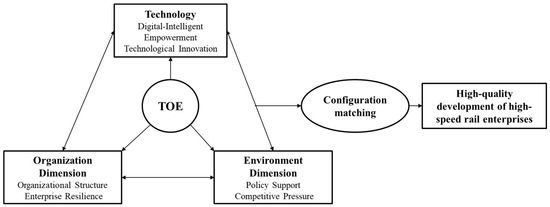
Figure 1.
HSR enterprise high-quality development model based on the TOE theoretical framework.
Based on the above theoretical analysis and the CAS-TOE integrated framework, this study proposes the following propositions to guide the configurational analysis:
Proposition 1 (Configurational Effect).
No single condition from the technology, organization, or environment dimensions is sufficient for HSR enterprise high-quality development. HQD emerges from the synergistic interaction of multiple conditions across these dimensions.
Proposition 2 (Equifinality).
Multiple distinct configurational paths can lead to HSR enterprise high-quality development. These paths are expected to fall into three categories: Technology-Dominant, Dual-Driven Technology–Environment, and Multi-Collaborative Technology–Organization–Environment.
Proposition 3 (Causal Asymmetry).
The configurational paths leading to high-quality development are not the mirror opposites of those leading to non-high-quality development. The conditions that explain success differ qualitatively from those that explain failure.
3. Methods
3.1. Research Methods: fsQCA and NCA
This study integrates two complementary analytical methods—fuzzy-set Qualitative Comparative Analysis (fsQCA) and Necessary Condition Analysis (NCA)—to comprehensively unpack the causal mechanisms of HSR enterprises’ high-quality development (HQD).
3.1.1. Fuzzy-Set Qualitative Comparative Analysis (fsQCA)
Rooted in set theory and Boolean algebra, fsQCA transcends the limitations of traditional linear regression by focusing on configurational causality—where outcomes emerge from synergistic combinations of conditions rather than isolated factor effects [41]. This method is particularly suited to our research context for three core reasons: First, it embraces equifinality, acknowledging that multiple distinct condition configurations can lead to the same HQD outcome, which aligns with the diverse development paths of HSR enterprises as Complex Adaptive Systems (CAS). Second, it captures conjunctural causation, emphasizing that conditions interact nonlinearly to drive outcomes, which is consistent with the CAS perspective that HQD arises from subsystem coupling rather than single-factor contributions. Third, it reveals causal asymmetry, meaning the pathways to HQD differ from those leading to non-HQD, providing a more nuanced understanding of complex causal relationships.
The fsQCA analytical procedure follows standard academic protocols [42]: (1) Calibration: Converting all condition and outcome variables into fuzzy-set membership scores (ranging from 0 to 1) to reflect the degree of membership in the target set. (2) Truth table construction: Generating all logically possible condition combinations and matching them with corresponding outcome values. (3) Truth table reduction: Retaining combinations that meet preset frequency (≥1) and consistency (≥0.8) thresholds to exclude contradictory configurations. (4) Solution derivation: Applying Boolean minimization to obtain parsimonious, intermediate, and complex solutions. This study prioritizes the intermediate solution for interpretation (as it balances theoretical relevance and empirical fit) and uses the parsimonious solution to distinguish core conditions (indispensable for the outcome) from peripheral conditions (auxiliary but non-essential).
3.1.2. Necessary Condition Analysis (NCA)
Developed by Dul [43], NCA complements fsQCA by identifying necessary conditions—factors that must be present for HQD to occur (though insufficient on their own). NCA’s core outputs include (1) effect size (d), which quantifies the importance of a necessary condition (d > 0.1 indicates a meaningful necessary effect), and (2) bottleneck levels, which determine the minimum threshold of a necessary condition required to achieve different levels of HQD. By integrating NCA with fsQCA, we first confirm necessary conditions for HQD (via NCA) and then identify sufficient configurational paths (via fsQCA), forming a ‘necessary condition → sufficient configuration’ analytical framework. This combined approach addresses the limitations of single-method research and has been widely validated in management and organizational studies [44,45].
3.2. Data Source and Sample Selection
This paper primarily focuses on HSR enterprises as the research object, aiming to further explain the HSR industry HQD by exploring the HQD pathways of HSR enterprises. To ensure the availability of overall sample data and the comparability of subsequent research subsamples, this paper selects 137 listed companies classified under the “HSR concept” and exported from the Tonghuashun database as the research sample. The period is set from 2018 to 2023, mainly for two reasons: Firstly, on 18 October 2017, the 19th National Congress of the Communist Party of China first proposed the term “high-quality development,” marking China’s economy’s transition from a high-speed growth stage to a high-quality development stage. Secondly, on 21 September 2017, the Fuxing Hao China Standard EMU commenced commercial operation at 350 km/h on the Beijing–Shanghai High-Speed Railway, setting a new global benchmark for HSR construction and operation. On 28 December 2017, the Shijiazhuang–Jinan High-Speed Railway opened for operation, marking the completion of China’s “Four Vertical and Four Horizontal” rapid rail corridors. Starting this study in 2018 effectively ensures the timeliness of the research questions.
3.3. Variable Measurement
Unless otherwise specified, all financial, patent, and enterprise basic information data for the variables were sourced from the CSMAR database and Wind Economic Database, with missing values supplemented and cross-verified by manual collection from the annual reports of listed HSR concept firms. Price indices for TFP calculation were obtained from the National Bureau of Statistics of China, and the Herfindahl–Hirschman Index (HHI) was calculated by the authors based on industry revenue data from the above databases. The digital intelligence empowerment index was constructed via manual text collection and Python3.10-based word frequency analysis of corporate annual reports.
3.3.1. Outcome Variable
The outcome variable (HSR enterprise HQD) is measured by Total Factor Productivity (TFP) [46,47,48], which reflects a firm’s overall production efficiency and technological progress—core connotations of HQD. TFP is estimated via the Levinsohn–Petrin (LP) semi-parametric method [49], which addresses simultaneity bias in production function estimation by using intermediate inputs as a proxy for unobserved productivity shocks. LP is preferred over OLS (biased estimates due to ignoring simultaneity) and the OP method (sample attrition from zero investment observations) and is widely recognized as the optimal approach for Chinese firm-level research [50]. Key indicators for TFP calculation include real output (deflated operating revenue), labor input (number of employees), capital input (deflated net fixed assets), and intermediate inputs (deflated operating costs minus depreciation/labor costs). All financial data are from the CSMAR and Wind Databases (missing data from annual reports), with deflation indices from China’s National Bureau of Statistics. TFP is lagged by one period (T + 1) to mitigate endogeneity.
3.3.2. Condition Variables
- Digital intelligence empowerment: Drawing on established methods for measuring firm-level digital transformation [51,52], we construct a digital intelligence empowerment index by counting digital-related keyword frequencies in the Management Discussion and Analysis (MD&A) section of listed HSR concept firms’ annual reports—this section effectively reflects firms’ strategic focus and digital technology adoption as a valid text corpus. We developed a multi-dimensional keyword dictionary via three steps: reviewing national policy documents (e.g., New Generation Artificial Intelligence Development Plan, 14th Five-Year Plan for Digital Economy Development), synthesizing terms from prior academic research on digital transformation measurement, and finalizing a dictionary covering six core dimensions (artificial intelligence, big data, cloud computing, IoT, blockchain, digital technologies such as digitalization and intelligent manufacturing). We then used Python’s jieba library (a standard tool for accurate Chinese text processing) to conduct text segmentation and keyword frequency counting, summed the keyword frequencies across all six dimensions for each firm-year observation, and applied a logarithmic transformation ln (1 + keyword count) to the raw counts to mitigate distributional skewness, using the transformed value for subsequent empirical analyses;
- Technological innovation: Following Shang [53], patent holdings are used as a valid proxy for technological innovation in the context of enterprise high-quality development. This variable is operationalized as the total number of granted invention patents and utility model patents announced by the enterprise;
- Human resources: In selecting organizational antecedent conditions, the educational structure of employees is a core reflection of enterprise human capital quality and knowledge absorption capacity [54]. This variable is measured as the proportion of employees with a bachelor’s degree or higher relative to the total number of employees [55];
- Enterprise resilience: Financial performance and profit growth capacity are key dimensions for measuring organizational resilience [56]. This variable is captured by operating profit margin, reflecting the enterprise’s ability to sustain profit growth and adapt to market changes;
- Policy support: In the environmental subsystem, government financial subsidies are a direct and core indicator of policy support for enterprise development [57], especially for the HSR industry with strong policy orientation. This variable is quantified as the amount of government subsidies received by HSR enterprises [58];
- Competitive pressure: The Herfindahl–Hirschman Index (HHI) is a comprehensive and widely used measure of industrial market concentration and competition intensity [59]. This variable is operationalized as the HHI (calculated as the sum of the squares of the percentage shares of total industry revenue held by each market competitor), where a higher HHI indicates lower market competition and vice versa.
The variable names and measurement methods are shown in Table 1.

Table 1.
Variable names and measurement methods.
3.4. Variable Calibration
Before conducting fsQCA analysis, all variables were calibrated into fuzzy-set membership scores within the range [0, 1]. Following the classic and widely adopted calibration practice in fsQCA [44,60], the calibration thresholds for all variables were set at the 95th percentile (full membership), 50th percentile (crossover point), and 5th percentile (full non-membership) [61]. This scheme identifies clear extreme cases and maintains sufficient variation across cases, which is consistent with standard set-theoretical practices. To avoid case attrition at the crossover point [60], a constant of 0.001 was added to membership scores exactly equal to 0.5. The calibration results are shown in Table 2.
Table 2.
Descriptive statistics and calibration of variables.
4. Results
4.1. Necessity Analysis
Within the theoretical framework of Qualitative Comparative Analysis (QCA), if a condition always accompanies a specific outcome, it is defined as a necessary condition for the outcome’s occurrence. In necessity testing, the academic community commonly uses the consistency level as the criterion: when the consistency score of a condition exceeds the 0.9 threshold, it can be judged as a necessary condition. This study uses the fsQCA4.0 professional analysis software to systematically explore the necessary conditions for HSR HQD. The analysis results show that the consistency levels for the policy support condition are significantly higher than the 0.9 standard value, indicating that policy support has become an indispensable key element driving HSR HQD. Specific results are detailed in Table 3.
Table 3.
Results of necessary condition analysis for condition variables.
To further investigate the necessity of various influencing factors for HSR HQD, this study introduces the Necessary Condition Analysis (NCA) method. This method identifies necessary conditions by analyzing the necessity effect size of antecedent conditions and their significance and accurately assesses the minimum level threshold required for antecedent conditions through bottleneck level analysis [46]. Table 4 details the results of NCA’s necessity analysis for each single condition, including key indicators, such as accuracy, ceiling zone, scope, effect size (d), and p-value, obtained using the CR (Ceiling Regression) and CE (Ceiling Envelopment) estimation methods. According to widely accepted criteria in the academic community, a condition is deemed necessary for an outcome if its effect size (d) exceeds 0.1 and the p-value test indicates a significant effect [47]. The NCA calculation results show that among the condition variables, only policy support has an effect size (d) greater than 0.1 and p < 0.05, satisfying the criteria for a necessary condition for HQD. Other conditions fail to meet both criteria and do not constitute necessary conditions for HQD. Additionally, the bottleneck level refers to the minimum level value (%) a single antecedent condition needs to achieve within its observed range to attain a certain level value (%) within the outcome’s observed range. The bottleneck level analysis results (Table 5) also confirm that only policy support meets the necessary condition criteria.
Table 4.
NCA necessity analysis for single conditions.
Table 5.
NCA bottleneck level analysis (%) for single conditions.
Specifically, the CR estimation method reveals that policy support achieves an accuracy of 92.9% (Table 4), which quantifies the fit of policy support as a necessary condition—nearly 93% of HQD cases are consistent with the “policy support → HQD” causality. It is important to distinguish this accuracy metric from the “bottleneck level” (reported in Table 5), as the former validates the statistical necessity of the condition, while the latter indicates the specific threshold required for full HQD attainment. This high accuracy underscores that sufficient policy support is an indispensable prerequisite for HSR enterprises to achieve HQD, which aligns with the industry’s transformation logic of “from scale expansion to quality improvement.” As a capital-intensive, technology-driven sector with public welfare attributes, China’s HSR industry relies on policy support to mitigate long-term investment risks and stabilize operational environments during the quality upgrading stage, making policy support a foundational guarantee for systemic evolution.
4.2. Configurational Analysis
Sufficiency analysis is designed to identify condition configurations that consistently lead to the HQD outcome. For our sample of 137 listed HSR concept firms covering 2018–2023, key parameters for truth table reduction were set in accordance with standard fsQCA protocols [44,45]: a raw consistency threshold of 0.8 (the conventional baseline for valid sufficient causality), a PRI threshold of 0.7 (to eliminate contradictory configurations and ensure unambiguous outcome sufficiency), and a frequency threshold of 1 (suitable for our medium-sized sample), which retains empirically relevant configurations while excluding idiosyncratic combinations caused by measurement error or outliers [60]. The truth table was constructed using fsQCA 4.0; rows meeting the above thresholds were coded as HQD-associated and subsequently subjected to Boolean minimization via the Quine–McCluskey algorithm. For the sake of methodological transparency and reproducibility, the complete truth table (including all condition combinations, frequencies, and consistency scores) is presented in Appendix A.
The sufficiency analysis identified four distinct configurational paths leading to HSR enterprise HQD (see Table 6). These results provide empirical support for Proposition 1, confirming that HQD is a configurational phenomenon arising from the synergistic combination of multiple conditions rather than any single factor in isolation. Notably, no single condition appears in all four paths, and each path represents a unique combination of technological, organizational, and environmental elements.
Table 6.
Results of sufficiency analysis for condition configurations of HSR enterprise high-quality development.
Overall, there are four configurations leading to the HQD of HSR enterprises, with consistencies of 0.87, 0.88, 0.88, and 0.90, respectively. The overall solution consistency of the four configurations is 0.86, and all individual path consistencies exceed the 0.80 threshold. Simultaneously, the overall solution coverage is 0.80, indicating that the condition configurations have good explanatory power for the cases of HSR enterprises achieving HQD. Based on the core conditions of the four configurations and their underlying explanatory logic, this paper summarizes the configurational pathways for the HQD of Chinese HSR enterprises under digital intelligence drive into three models: “Technology-Dominant,” “Technology + Environment Dual-Driven,” and “Technology + Organization + Environment Multi-Collaborative.” The specific analysis is as follows:
(1) Model 1: Technology-Dominant
In the Technology-Dominant model (S1), digital intelligence empowerment, technological innovation, and policy support are the key conditions. This represents an “endogenously-driven” adaptation mode. By leveraging high-intensity technological innovation and digital intelligence empowerment, the system proactively reconstructs its internal processes. It utilizes robust internal core competitiveness to transcend environmental constraints, thereby achieving a systemic phase transition. This configuration has a consistency of 0.87, raw coverage of 0.64, and unique coverage of 0.02. A typical case is China Railway Signal & Communication Corp Ltd. (CRSC, Stock Code: 688009, Beijing, China). CRSC is a central enterprise directly managed by the State-owned Assets Supervision and Administration Commission of the State Council (SASAC), holding a leading position in the rail transit control field. It has built a full industry chain covering investment and financing, R&D, manufacturing, and operation maintenance and is also the standard custodian unit for China’s rail transit control systems. It has 14 important secondary enterprises and over 20,000 employees. In terms of digital intelligence empowerment, CRSC’s train operation control system achieves millisecond-level response through advanced algorithms and communication technology, significantly improving operational efficiency. On busy lines like the Beijing–Shanghai HSR, this system reduces train headways to 3 min, increasing daily train throughput by approximately 20 trains. Simultaneously, using big data analysis technology, equipment failure prediction accuracy exceeds 90%, reducing over 500 delay incidents caused by equipment failures annually. In technological innovation, the company’s R&D investment has grown continuously, accounting for 5.5% of revenue in the past three years. It led or participated in the formulation of over 100 national and industry standards. Its independently developed CTCS-3 train control system covers over 90% of domestic HSR lines, with equipment failure rates reduced by 60% compared to the previous generation. It has secured over 300 patents in cutting-edge fields like train-to-train communication and intelligent maintenance. In terms of policy support, the National Development and Reform Commission (NDRC) and other departments have granted special approvals for its major research projects. The company received over CNY 1.5 billion in research subsidies and approximately CNY 800 million in tax reductions in the past three years, providing strong support for technological innovation and promoting the development of China’s HSR industry.
(2) Model 2: Dual-Driven Technology + Environment
In the Dual-Driven Technology + Environment model (S2), high digital intelligence levels, strong policy support, and intense competitive pressure are the key conditions. This constitutes a “reactively synergistic” adaptation mode. Under high-intensity competitive pressure, the enterprise system strengthens the coupling between the technological and environmental subsystems. By utilizing external pressure to compel internal innovation, the system secures a survival niche through dynamic adaptation. This configuration has a consistency of 0.88 and raw coverage of 0.63. A typical case is CRRC Corporation Limited (CRRC, Stock Code: 601766, Beijing, China). In technological innovation, CRRC has consistently invested in R&D, firmly maintaining its position as the world’s largest rail transit equipment supplier. It has presided over, participated in, or revised nearly 100 international standards, overcoming key technologies such as train network control systems. The Fuxing Hao trains are equipped with a “Chinese brain” (domestic train control system), achieving data transmission speeds 60 times faster and capacity 100 times larger. The world’s first 600 km/h high-speed maglev transportation system was launched. Its product portfolio is rich, covering EMUs of different speed grades, and it continuously innovates in intelligence and energy efficiency. It also leverages the technological homology of HSR to expand into fields like wind power. In terms of policy support, HSR is a strategically important industry prioritized by the state. As an industry leader, CRRC receives policy support in project approval, R&D investment, and industrial layout. Under the “Belt and Road” initiative, CRRC exports rail transit equipment and participates in overseas HSR projects. In terms of competitive pressure, the global rail transit equipment market is fiercely competitive, facing rivals from established foreign companies. Domestic peer competition also drives it to innovate and maintain technological and market advantages. Through continuous innovation, improving product quality and service levels, it consolidates its industry position.
(3) Model 3: Multi-Collaborative Technology + Organization + Environment
In the Multi-Collaborative Technology + Organization + Environment model, technology, organization, and environment all play important roles in the HQD of HSR enterprises. This embodies the characteristic of “self-organizing emergence”. Within this model, extensive and tight nonlinear linkages are established among technological, organizational, and environmental elements. The system mediates conflicts between subsystems through high-quality human resources, realizing the optimal emergence of overall systemic efficacy. This model includes two similar but distinctive pathways, namely S3 and S4, both of which reflect the core logic of multi-dimensional synergy:
- Configuration S3 indicates that high levels of technological innovation, strong human resources, and substantial government support can achieve HQD for HSR enterprises. This configuration has a consistency of 0.88 and raw coverage of 0.58. A typical case is China Railway Group Limited (CREC, Stock Code: 601390, Beijing, China). CREC is a large integrated enterprise group that has ranked among the Fortune Global 500 for 18 consecutive years, encompassing businesses like survey and design, construction and installation, and industrial manufacturing. In technological innovation, the enterprise promotes “Six Modernizations” management including intelligence during construction processes. It possesses the “National and Local Joint Engineering Research Center for Digital Rail Transit Technology Research and Application,” integrating digital intelligence means into technology R&D and application. In human resources, it has approximately 290,000 employees, with 48.88% holding bachelor’s degrees or higher, over 85,000 mid-to-senior technical personnel, more than 2400 senior professional title holders, and two academicians of the Chinese Academy of Engineering. In government support, as a large state-owned enterprise, it undertakes important tasks in national major strategies like infrastructure construction, aligning with national development plans. It receives support in project contracting and policy preferences. For example, participating in “Belt and Road” projects, the government provides guidance and support at the policy level for its overseas business expansion, helping it expand into international markets;
- Configuration S4 indicates that even with average enterprise resilience and competitive pressure, high levels of digital intelligence, high-quality human resources, and strong policy support can drive HQD. This configuration has a consistency of 0.90 and raw coverage of 0.50. A typical case is China High Speed Transmission Equipment Group Co., Ltd. (CHSTE, Stock Code: 000008, Beijing, China). CHSTE is a listed central state-owned enterprise controlled by China Chengtong Holdings Group Ltd. (Beijing, China). In the first three quarters of 2024, its operating revenue was CNY 1.09 billion (down 16.71% YoY), and net profit attributable to the parent company was CNY −180 million (down 23.69% YoY), indicating average profitability at this stage. In terms of policy support, the “Action Plan for Promoting Large-Scale Equipment Renewal and Consumer Goods Replacement” formulated by the NDRC and relevant departments brings development opportunities. In technological innovation, CHSTE has achieved significant results: seven of its subsidiaries were rated as provincial/municipal “Specialized, Refined, Unique, and New” SMEs, and its subsidiary Nanjing Tuokong was rated as a national-level “Specialized, Refined, Unique, and New” “Little Giant” enterprise. As of the end of June 2024, it held 814 cumulative valid patents, including 243 invention patents. A project by its subsidiary Jinshen Technology won the first prize of the “2024 China Railway Society Science and Technology Award,” and an invention patent by Xinliantie was selected for the Railway Major Scientific and Technological Innovation Achievement Database. Driven by strong policy support and robust technological innovation, CHSTE’s business continues to expand. Its rail transit operation and maintenance equipment business covers all 85 HSR EMU maintenance bases and depots in China, and its operation and maintenance service sector has also made effective progress.
4.3. Configurational Analysis for Non-High-Quality Development (~HQD)
In line with the principle of causal asymmetry in QCA, this study further analyzes the configurational paths leading to non-high-quality development (~HQD). The analysis adopts the same calibration rules, case frequency, and consistency thresholds as those for HQD (raw consistency ≥ 0.8, PRI consistency ≥ 0.7, case frequency ≥ 1). The results are presented in Table 7.
Table 7.
Configurational paths to non-high-quality development (~HQD).
As shown in Table 7, two configurational paths are identified for ~HQD, with an overall consistency of 0.93 and coverage of 0.39. Both paths share three core absent conditions: the lack of technological innovation, human resources, and policy support—revealing a clear asymmetric logic compared to HQD pathways, where these conditions are typically present.
The two paths differ in their peripheral conditions: N1 adds the absence of competitive pressure (low market competition), suggesting that a protected environment further reduces incentives for improvement when core resources are missing. N2 adds the absence of digital intelligence empowerment, indicating that without digital adoption, even potential competitive pressure cannot compensate for the lack of foundational resources.
The comparison between HQD paths (Table 6) and ~HQD paths (Table 7) provides strong empirical support for Proposition 3, confirming that the mechanisms driving success are qualitatively different from those driving failure. While HQD can be achieved through multiple combinations of present conditions, ~HQD consistently involves the joint absence of three core resources: technological innovation, human resources, and policy support. Notably, the two ~HQD paths are not simple mirror inversions of the HQD paths—for instance, the absence of digital intelligence empowerment appears in N2, whereas digital empowerment is present in most HQD paths. The lower coverage (0.39 vs. 0.86 for HQD) further suggests that failure pathways are more heterogeneous than success pathways, a finding consistent with complexity theory where success follows more regular patterns while failure arises from diverse combinations of deficiencies.
4.4. Robustness Test
To further verify the reliability and stability of the research conclusions, three robustness tests were conducted: (1) alternative calibration schemes, (2) adjusted consistency thresholds, and (3) sub-period analysis.
- First, we adopted an alternative calibration strategy (using the 90th/50th/10th percentiles instead of the original 95th/50th/5th percentiles) for all condition variables. The results showed that the core configurational paths for HQD remained unchanged, with only minor fluctuations in coverage values, confirming the calibration stability;
- Second, we adjusted the consistency threshold from 0.80 to 0.85. The four core HQD configurations were still identified, and the overall solution consistency and coverage remained within a reasonable range, indicating that the results are not sensitive to minor changes in the consistency criterion;
- Third, a sub-period robustness analysis was performed by dividing the full sample period (2018–2023) into two sub-periods: 2018–2020 and 2021–2023. The fsQCA results of the two sub-periods showed that the three core HQD models (Technology-Dominant, Dual-Driven Technology + Environment, Multi-Collaborative Technology + Organization + Environment) were consistently present in both sub-periods. This confirms that the identified configurational paths for HSR enterprise HQD are stable over time and not affected by short-term policy or market shocks.
Overall, the three robustness tests collectively demonstrate that the research conclusions of this study are reliable and robust.
5. Discussion and Conclusions
5.1. Main Research Conclusions
Through the integration of Complex Adaptive Systems (CAS) theory and the Technology–Organization–Environment (TOE) framework, this study demonstrates that the digital intelligence (HQD) of high-speed rail (HSR) enterprises is a dynamic, nonlinear process of systemic emergence. The findings reveal that digital intelligence empowerment plays a pivotal role across multiple evolutionary paths, essentially functioning as the “Order Parameter” that drives systemic evolution. By reducing internal information interaction costs and organizational friction, it orchestrates the synergistic motion of subsystems, guiding enterprises from a state of disordered competition toward ordered high-quality development. Based on fsQCA analysis, four equivalent configurational pathways leading to HQD are identified and summarized into three theoretical models: Technology-Dominant, Dual-Driven Technology–Environment, and Multi-Collaborative Technology + Organization + Environment. Combined with NCA empirical results, the core conclusions of this study empirically validate the three propositions derived from the CAS-TOE framework and are as follows:
- Policy support is an indispensable necessary condition for the HQD of HSR enterprises. NCA analysis (Table 4) shows that policy support achieves an accuracy of 92.9% under the CR method, reflecting the institutional characteristics of China’s HSR industry. As a “negative entropy flow” injected into the enterprise system, policy support provides stable institutional guarantees for systemic adaptation during the industry’s transition from scale expansion to quality improvement, laying a foundational basis for technological innovation and market-oriented transformation of HSR enterprises;
- Digital intelligence empowerment is a core driving force across multiple HQD models. It is a key condition in the Technology-Dominant (S1), Dual-Driven Technology–Environment (S2), and Multi-Collaborative Technology + Organization + Environment (S3, S4) models, fully demonstrating that enhancing the digital intelligence level is a critical and universal path to drive the HQD of China’s HSR enterprises, and the deep integration of digital technologies with HSR operation and management is an inevitable trend of industry development. These findings support Proposition 1, confirming that HQD emerges from configurational combinations rather than isolated factors, and Proposition 2, demonstrating the existence of multiple equifinal paths;
- High-quality human resources act as a key coordinating element for inter-subsystem coupling in the multi-collaborative development model. In the Multi-Collaborative Technology + Organization + Environment pathways (S3 and S4), high-level human resources as a core component highlight their irreplaceable supporting role in the HQD process of HSR enterprises. This implies that human capital is an indispensable core force for promoting the synergy among technological, organizational, and environmental subsystems, profoundly impacting on the long-term development of HSR enterprises;
- Enterprise profitability exerts a potential substitution effect under specific contextual conditions. Although enterprise resilience (proxied by profitability) is not a key core factor in the current HQD configuration models, under scenarios of high competitive pressure and large-scale government subsidies, it shows a certain substitution effect for enterprise resilience, participating in and driving the HQD process of HSR enterprises to a certain extent, and is a non-negligible potential influencing factor for enterprise HQD;
- The causal logic of HQD and ~HQD presents obvious asymmetry, providing strong support for Proposition 3. The analysis of non-high-quality development (~HQD) configurations shows that the core conditions leading to ~HQD are the joint absence of technological innovation, human resources, and policy support, and the failure pathways are not simple mirror inversions of the success pathways. This asymmetric characteristic indicates that the formation mechanism of success and failure in the HQD of HSR enterprises follows different logical paths, and simply reversing the conditions of successful configurations cannot effectively explain the causes of failure.
5.2. Theoretical Contributions
Based on the above empirical findings, this study systematically derives its theoretical contributions, clarifies the academic added value of the research, and makes marginal contributions to the literature on HSR enterprise development, CAS theory, TOE framework, and transportation sector HQD research, as follows:
- Extend CAS theory’s application to HSR enterprises and deepen empirical verification: CAS theory is rarely applied to the HSR industry with typical complex adaptive characteristics. This study conceptualizes HSR enterprises as CAS and empirically verifies core CAS features (nonlinear interaction, self-organizing emergence, conjunctural causation, equifinality) via fsQCA. It reveals that HSR enterprise HQD stems from the synergistic coupling of technological, organizational, and environmental subsystems, providing a new theoretical lens for understanding HQD’s dynamic evolution in technology and complex capital-intensive industries.
- Enrich the TOE framework from a configurational perspective and break linear analysis limitations: Traditional TOE studies rely on regression to examine single-factor net effects with linearity and unifinality assumptions. This study identifies three equifinal HQD configurational models by analyzing TOE dimension combinations, verifying the equifinality of HSR enterprise HQD paths and highlighting context-contingent factor matching. Moreover, the combination of fsQCA and NCA distinguishes necessary conditions (policy support) from sufficient configurational paths, clarifying different causal roles of antecedent variables and providing a more nuanced analytical framework for TOE theory development.
- Complement transportation sector HQD research and reveal HSR enterprises’ unique driving mechanism: This study provides micro-empirical evidence for emerging transportation HQD research, identifying HQD’s core driving factors and configurational paths with Chinese institutional characteristics. It quantifies the bottleneck level of policy support as a necessary condition, confirming government intervention’s irreplaceable role in HSR industry quality upgrading; meanwhile, it clarifies digital intelligence empowerment’s core position as an “Order Parameter” and human resources’ key coordinating role, enriching the theoretical understanding of transportation infrastructure enterprises’ HQD driving mechanism in the digital era.
- Advance the understanding of organizational performance causal asymmetry and supplement HQD failure mechanism research: By analyzing ~HQD configurational paths and comparing them with HQD paths, this study finds that HSR enterprise HQD failure logic is not a simple inversion of success logic. HQD can be achieved through multiple combinations of core and peripheral conditions, while ~HQD is consistently driven by the joint absence of three core resources (technological innovation, human resources, policy support). This finding enriches organizational performance causal asymmetry research and deepens the academic understanding of HQD success–failure asymmetry in complex systems.
- Demonstrate the methodological value of combining fsQCA and NCA for complex causal relationships: This study constructs a “necessary condition → sufficient configuration” analytical framework for HSR enterprise HQD by integrating fsQCA and NCA. NCA accurately identifies the necessary condition (policy support) and its bottleneck level, while fsQCA explores multiple sufficient configurational paths for HQD and ~HQD. This combined method makes up for the limitations of single-method research in capturing complex causality, providing a replicable methodological reference for studying complex management phenomena in the transportation and other infrastructure industries.
5.3. Management Implications and Suggestions
In response to the configurational findings of HSR enterprise HQD and the causal asymmetry characteristics of success and failure paths, this study proposes path-specific and targeted management implications and suggestions from the government and enterprise perspectives, abandoning one-size-fits-all recommendations and ensuring that all suggestions are closely tied to empirical results, with strong practical operability:
Suggestions for Government:
- Policy guidance and targeted support: Continuously introduce policies to encourage the digital intelligence transformation of HSR enterprises, clarifying key directions for technological innovation such as big data and AI applications. Improve the policy implementation system to ensure precise delivery of subsidies and preferential policies and enhance policy operability and effectiveness by aligning support with the three HQD configurational paths of HSR enterprises;
- Build industry–university–research collaboration platforms: Establish multi-stakeholder cooperation and exchange platforms among HSR enterprises, research institutions, and universities to deepen industry–academia–research integration. Prioritize collaboration in digital intelligence technology R&D and professional talent cultivation, accelerate the transformation of scientific and technological achievements, and elevate the overall digital intelligence level of the HSR industry.
- Regulate market competition order: Strengthen market supervision, standardize HSR market competition, and curb vicious competition. Create a fair and impartial market environment, guide enterprises to take competitive pressure as a catalyst for innovation, and encourage them to enhance core competitiveness through technological innovation and service improvement to boost the healthy development of the entire industry.
Suggestions for Enterprises:
- Strengthen technological innovation investment: Increase capital and human resource input in digital intelligence technology R&D and set up dedicated R&D teams or cooperate with research institutions to explore the in-depth application of big data, AI, and other technologies in HSR operation links. Optimize big data-based passenger flow prediction and transportation scheduling systems to improve train punctuality and operational efficiency, matching the technological core requirements of each HQD configurational path;
- Leverage policy dividends precisely: Closely track national industrial policy dynamics, set up specialized policy research teams, and actively strive for government subsidies and preferential policies. Allocate the obtained funds rationally to key fields, such as technological innovation, equipment renewal, and talent cultivation, and tilt resource allocation according to the enterprise’s own HQD path characteristics to accelerate digital intelligence transformation;
- Enhance profitability and operational resilience: Optimize internal operational management processes and explore diversified profit growth points such as expanding HSR advertising business and developing integrated tourism products with tourism enterprises. Establish sound early warning and response risk mechanisms, strengthen internal management, and improve the organization’s ability to cope with market changes and emergencies, making up for the resource deficiencies in the configurational paths;
- Boost market competitiveness: Cultivate a strong market competition awareness, deeply analyze the strengths and weaknesses of competitors, and learn from advanced domestic and international experience. Enhance market competitiveness by improving service quality, optimizing fare strategies and launching differentiated products to meet diverse passenger needs, and give play to the environmental synergy effect of the dual-driven configurational path;
- Promote cross-dimensional synergistic development: Establish cross-departmental collaboration mechanisms to break down organizational silos and realize information sharing and collaborative linkage among technological innovation, organizational management, market expansion, and policy utilization departments. Strengthen industrial chain synergy with suppliers and cooperative partners to jointly drive digital intelligence transformation, form integrated development forces, and meet the multi-collaborative requirements of the HQD configurational path;
- Prioritize high-quality human resource management: Formulate scientific talent recruitment and cultivation plans and widely attract professionals in digital intelligence technology and HSR operation management from universities and research institutions. Meanwhile, build a sound compensation incentive and career promotion mechanism, stimulate employees’ work enthusiasm and innovation potential through competitive salaries and clear career development paths, and provide solid talent support for the synergy of all elements in the HQD configurational paths.
6. Limitations and Future Research
6.1. Research Limitations
This study has several inherent limitations. First, regarding the empirical operationalization of Complex Adaptive System (CAS) theory, fuzzy-set Qualitative Comparative Analysis (fsQCA) effectively captures CAS’s configurational logic and nonlinear causality but cannot directly measure dynamic core constructs (e.g., agent interaction intensity, adaptation speed). As a cross-sectional configurational method, fsQCA identifies static equifinal paths of systemic emergence but fails to reflect the dynamic evolutionary processes and inter-agent feedback mechanisms of high-speed rail (HSR) enterprise systems.
Second, the research sample is confined to Chinese listed HSR concept firms during 2018–2023. Non-listed HSR enterprises are excluded due to micro-data unavailability, which may limit the generalizability of the findings to the entire HSR industry.
Third, some condition variables are measured with simplified proxies. Enterprise resilience is solely indexed by operating profit margin, and digital intelligence empowerment is gauged via text word frequency statistics. These single-dimensional measures cannot fully capture the multi-faceted complexity of the underlying constructs.
Fourth, this study employs a pooled cross-sectional fsQCA design, which averages data over the 2018–2023 period to capture the stable configurational patterns of long-term HQD. However, this approach cannot reflect the dynamic evolution of causal configurations in response to technological breakthroughs, policy adjustments, and market changes. Future research should adopt advanced dynamic QCA methods, such as time-series QCA (TSQCA) or multi-period fsQCA, to track how configurational pathways shift over time. Complementary longitudinal case studies could also provide deeper processual insights into the temporal dynamics of HSR enterprises’ adaptive behavior.
6.2. Future Research Directions
Based on the above research limitations, combined with the research conclusions of this study, the following future research directions are proposed:
First, to further bridge the gap between CAS theory and empirical research, future studies should develop fine-grained operational measures for dynamic CAS constructs. This can be achieved through social network analysis to quantify the intensity and network structure of inter-agent interactions in HSR enterprises and their industrial chains, longitudinal panel data tracking to observe adaptive behaviors of HSR enterprises in response to external shocks, and agent-based simulation modeling to simulate the dynamic evolutionary process of HSR enterprise systems.
Second, the research scope should be expanded in two dimensions: including non-listed HSR enterprises, local railway firms, and HSR supporting enterprises to enrich sample heterogeneity and extending the research time series to conduct dynamic tracking analysis, thus exploring the evolutionary characteristics of HSR enterprise high-quality development (HQD) configuration paths across different policy and development stages.
Third, the measurement system of key variables needs to be optimized. For enterprise resilience, digital intelligence empowerment, and other core constructs, multi-dimensional and multi-indicator measurement systems should be constructed by combining objective secondary data, questionnaire surveys, and field interviews. In-depth case studies can also be conducted to explore the micro-transmission mechanisms and boundary conditions of digital intelligence empowerment and policy support in driving HSR enterprise HQD.
Finally, international comparative research on HSR enterprise HQD is encouraged. By comparing the driving mechanisms and configuration paths of HSR enterprises in different countries and regions, future studies can explore the impacts of institutional environments, industrial structures, and technical paths on HSR enterprise HQD, providing diversified theoretical references for the global high-quality development of the HSR industry.
Author Contributions
Conceptualization, F.Y.; methodology, F.Y.; software, F.Y.; validation, X.Y. and Y.S.; formal analysis, J.S.; investigation, X.Y. and Y.S.; resources, X.Q.; data curation, F.Y.; writing—original draft preparation, F.Y.; writing—review and editing, J.S.; visualization, F.Y.; supervision, X.Q.; project administration, X.Q. All authors have read and agreed to the published version of the manuscript.
Funding
This research received no external funding.
Data Availability Statement
The data that support the findings of this study are available from the first author upon reasonable request.
Conflicts of Interest
The authors declare no conflicts of interest.
Abbreviations
| CAS | Complex Adaptive System |
| fsQCA | Fuzzy-set Qualitative Comparative Analysis |
| HQD | High-quality development |
| HSR | High-speed rail |
| NCA | Necessary Condition Analysis |
| TFP | Total Factor Productivity |
| TOE | Technology–Organization–Environment |
| HHI | Herfindahl–Hirschman Index |
| LP | Levinsohn–Petrin (method) |
Appendix A
Table A1.
Truth table for HQD configurational analysis.
Table A1.
Truth table for HQD configurational analysis.
| Digital Intelligence Empowerment | Technological Innovation | Human Resources | Enterprise Resilience | Policy Support | Competitive Pressure | Number | Raw Consist. | PRI Consist. | SYM Consist | HQD |
|---|---|---|---|---|---|---|---|---|---|---|
| 1 | 1 | 1 | 0 | 1 | 0 | 17 | 0.940 | 0.826 | 0.826 | 1 |
| 1 | 1 | 0 | 0 | 1 | 1 | 6 | 0.942 | 0.825 | 0.826 | 1 |
| 1 | 1 | 1 | 1 | 1 | 0 | 16 | 0.937 | 0.809 | 0.810 | 1 |
| 1 | 1 | 0 | 1 | 1 | 1 | 9 | 0.941 | 0.802 | 0.802 | 1 |
| 0 | 1 | 1 | 0 | 1 | 1 | 4 | 0.944 | 0.798 | 0.800 | 1 |
| 0 | 1 | 1 | 0 | 1 | 0 | 4 | 0.945 | 0.785 | 0.785 | 1 |
| 0 | 1 | 0 | 0 | 1 | 1 | 14 | 0.932 | 0.782 | 0.787 | 1 |
| 0 | 1 | 1 | 1 | 1 | 1 | 8 | 0.946 | 0.779 | 0.780 | 1 |
| 1 | 1 | 1 | 0 | 1 | 1 | 18 | 0.921 | 0.776 | 0.788 | 1 |
| 1 | 1 | 1 | 1 | 1 | 1 | 21 | 0.921 | 0.762 | 0.763 | 1 |
| 1 | 1 | 0 | 1 | 1 | 0 | 10 | 0.929 | 0.745 | 0.745 | 1 |
| 0 | 1 | 1 | 1 | 1 | 0 | 6 | 0.941 | 0.738 | 0.738 | 1 |
| 1 | 1 | 0 | 0 | 1 | 0 | 6 | 0.922 | 0.733 | 0.733 | 1 |
| 1 | 0 | 1 | 0 | 1 | 0 | 3 | 0.930 | 0.732 | 0.732 | 1 |
| 1 | 0 | 1 | 0 | 1 | 1 | 9 | 0.914 | 0.729 | 0.729 | 1 |
| 0 | 1 | 0 | 1 | 1 | 1 | 13 | 0.926 | 0.703 | 0.715 | 1 |
| 1 | 0 | 0 | 0 | 1 | 1 | 8 | 0.913 | 0.697 | 0.697 | 0 |
| 1 | 0 | 1 | 1 | 1 | 0 | 7 | 0.916 | 0.690 | 0.690 | 0 |
| 0 | 0 | 1 | 0 | 1 | 1 | 8 | 0.921 | 0.687 | 0.691 | 0 |
| 1 | 0 | 1 | 1 | 1 | 1 | 15 | 0.903 | 0.686 | 0.688 | 0 |
| 0 | 0 | 1 | 0 | 1 | 0 | 3 | 0.932 | 0.674 | 0.674 | 0 |
| 0 | 0 | 0 | 0 | 1 | 1 | 16 | 0.906 | 0.670 | 0.671 | 0 |
| 0 | 0 | 1 | 1 | 1 | 1 | 5 | 0.921 | 0.653 | 0.655 | 0 |
| 0 | 1 | 0 | 0 | 1 | 0 | 13 | 0.908 | 0.650 | 0.650 | 0 |
| 0 | 0 | 1 | 1 | 1 | 0 | 5 | 0.929 | 0.646 | 0.649 | 0 |
| 1 | 0 | 0 | 1 | 1 | 1 | 1 | 0.908 | 0.612 | 0.612 | 0 |
| 0 | 1 | 0 | 1 | 1 | 0 | 7 | 0.908 | 0.606 | 0.607 | 0 |
| 1 | 1 | 1 | 0 | 0 | 0 | 16 | 0.895 | 0.590 | 0.595 | 0 |
| 0 | 0 | 0 | 1 | 1 | 1 | 3 | 0.910 | 0.582 | 0.582 | 0 |
| 1 | 1 | 1 | 1 | 0 | 0 | 6 | 0.891 | 0.563 | 0.563 | 0 |
| 1 | 1 | 0 | 1 | 0 | 0 | 1 | 0.895 | 0.549 | 0.549 | 0 |
| 0 | 1 | 1 | 0 | 0 | 0 | 3 | 0.912 | 0.547 | 0.547 | 0 |
| 1 | 1 | 0 | 0 | 0 | 0 | 2 | 0.887 | 0.529 | 0.529 | 0 |
| 0 | 1 | 1 | 0 | 0 | 1 | 8 | 0.898 | 0.520 | 0.521 | 0 |
| 1 | 0 | 0 | 0 | 1 | 0 | 2 | 0.880 | 0.517 | 0.517 | 0 |
| 0 | 1 | 1 | 1 | 0 | 0 | 3 | 0.915 | 0.514 | 0.514 | 0 |
| 1 | 1 | 1 | 0 | 0 | 1 | 5 | 0.873 | 0.514 | 0.514 | 0 |
| 0 | 0 | 0 | 0 | 1 | 0 | 4 | 0.879 | 0.502 | 0.502 | 0 |
| 0 | 1 | 1 | 1 | 0 | 1 | 6 | 0.909 | 0.493 | 0.493 | 0 |
| 1 | 1 | 1 | 1 | 0 | 1 | 13 | 0.869 | 0.481 | 0.481 | 0 |
| 0 | 0 | 0 | 1 | 1 | 0 | 8 | 0.880 | 0.476 | 0.476 | 0 |
| 1 | 0 | 0 | 1 | 1 | 0 | 2 | 0.889 | 0.476 | 0.476 | 0 |
| 0 | 1 | 0 | 0 | 0 | 1 | 5 | 0.891 | 0.464 | 0.465 | 0 |
| 0 | 0 | 1 | 0 | 0 | 1 | 4 | 0.875 | 0.426 | 0.426 | 0 |
| 0 | 1 | 0 | 0 | 0 | 0 | 5 | 0.866 | 0.401 | 0.401 | 0 |
| 1 | 0 | 1 | 0 | 0 | 0 | 9 | 0.855 | 0.389 | 0.394 | 0 |
| 1 | 0 | 1 | 0 | 0 | 1 | 9 | 0.839 | 0.388 | 0.388 | 0 |
| 0 | 0 | 1 | 1 | 0 | 1 | 2 | 0.877 | 0.378 | 0.378 | 0 |
| 0 | 0 | 1 | 0 | 0 | 0 | 4 | 0.875 | 0.373 | 0.373 | 0 |
| 0 | 1 | 0 | 1 | 0 | 1 | 17 | 0.874 | 0.351 | 0.351 | 0 |
| 0 | 1 | 0 | 1 | 0 | 0 | 9 | 0.863 | 0.350 | 0.350 | 0 |
| 0 | 0 | 1 | 1 | 0 | 0 | 3 | 0.871 | 0.341 | 0.341 | 0 |
| 1 | 0 | 1 | 1 | 0 | 1 | 9 | 0.825 | 0.339 | 0.339 | 0 |
| 1 | 0 | 1 | 1 | 0 | 0 | 8 | 0.829 | 0.312 | 0.312 | 0 |
| 0 | 0 | 0 | 0 | 0 | 1 | 22 | 0.777 | 0.240 | 0.240 | 0 |
| 0 | 0 | 0 | 1 | 0 | 1 | 7 | 0.794 | 0.202 | 0.202 | 0 |
| 1 | 0 | 0 | 0 | 0 | 0 | 6 | 0.717 | 0.181 | 0.181 | 0 |
| 0 | 0 | 0 | 0 | 0 | 0 | 21 | 0.718 | 0.163 | 0.163 | 0 |
| 0 | 0 | 0 | 1 | 0 | 0 | 15 | 0.751 | 0.159 | 0.159 | 0 |
| 1 | 0 | 0 | 1 | 0 | 0 | 17 | 0.712 | 0.145 | 0.145 | 0 |
Note: Frequency threshold = 1; raw consistency threshold = 0.8; PRI consistency threshold = 0.7. Configurations meeting all three thresholds were coded as 1 for HQD and included in the Boolean minimization for deriving sufficient configurations.
References
- Ma, W.; Gao, H. Impact of high-speed railway network improvement on consumption synergy in Beijing-Tianjin-Hebei region. Transp. Policy 2024, 158, 29–41. [Google Scholar] [CrossRef]
- Jiao, J.; Zhao, H.; Lyu, G. How does high-speed rail affect off-site investments? Evidence from the Yangtze River Delta, China. Transp. Res. Part A Policy Pract. 2024, 181, 103978. [Google Scholar] [CrossRef]
- Li, H.; Dong, X.; Jiang, Q.; Dong, K. Policy analysis for high-speed rail in China: Evolution, evaluation, and expectation. Transp. Policy 2021, 106, 37–53. [Google Scholar] [CrossRef]
- Zheng, G.; Meng, Y.; He, Y. What Is the Path of Indigenous Innovation with Chinese Characteristics?—A Case Study Based on Chinese High-Speed Rail (HSR) Industry. In Proceedings of the 2012 International Symposium on Management of Technology (ISMOT), Hangzhou, China, 8–9 November 2012; IEEE: New York, NY, USA, 2012; pp. 2–7. [Google Scholar] [CrossRef]
- Feng, Q.; Chen, Z.; Cheng, C.; Chang, H. Impact of high-speed rail on high-skilled labor mobility in China. Transp. Policy 2023, 133, 64–74. [Google Scholar] [CrossRef]
- Niu, Y.; Li, H.; Luo, X.; Deng, X. Coopetition configuration and performance of international joint ventures for high-speed rail projects. Eng. Constr. Archit. Manag. 2024, 31, 3748–3772. [Google Scholar] [CrossRef]
- Niu, Y.; Deng, X.; Zhao, X.; Zhang, N. Hexagonal diamond model for international competitive advantages of high-speed railway industry. J. Manag. Eng. 2020, 36, 04020001. [Google Scholar] [CrossRef]
- Luo, S.; Yu, M.; Dong, Y.; Hao, Y.; Li, C.; Wu, H. Toward urban high-quality development: Evidence from more intelligent Chinese cities. Technol. Forecast. Soc. Change 2024, 200, 123108. [Google Scholar] [CrossRef]
- Bei, J. Study on the “high-quality development” economics. China Political Econ. 2018, 1, 163–180. [Google Scholar] [CrossRef]
- Lu, C.F.; Zhang, H.; Zhang, M.Y. Realization of high-quality development of transportation in the new era. China J. Highw. Transp. 2021, 34, 1–9. [Google Scholar] [CrossRef]
- Sun, D.Q.; An, R.; Wang, H.; Xiao, G.; Li, Y. Trends and implementation paths for high-quality development of transportation logistics in China under the new situation. Transp. Res. 2024, 6, 27–37. [Google Scholar] [CrossRef]
- Zhou, Z.J.; Wang, X.G.; Shi, Y.L.; Liu, Y.; Li, Y.M.; Wang, Y.; Ge, C. Reflections and strategies for advancing high-quality transportation development through standardization in new situation. Transp. Res. 2024, 6, 68–77. [Google Scholar] [CrossRef]
- Zhang, Z.; Bai, Y. Research on whether quality policies can promote the high-quality development of China’s manufacturing industry and its configuration paths in the context of sustainable development. Sustainability 2024, 16, 9539. [Google Scholar] [CrossRef]
- Dooley, K.J. A complex adaptive systems model of organization change. Nonlinear Dyn. Psychol. Life Sci. 1997, 1, 69–97. [Google Scholar] [CrossRef]
- Anderson, P. Perspective: Complexity theory and organization science. Organ. Sci. 1999, 10, 216–232. [Google Scholar] [CrossRef]
- Kauffman, S.A. The origins of order: Self-organization and selection in evolution. In Spin Glasses and Biology; World Scientific: Singapore, 1992; pp. 61–100. [Google Scholar]
- Shi, Y.; Zhai, G.; Xu, L.; Zhou, S.; Lu, Y.; Liu, H.; Huang, W. Assessment methods of urban system resilience: From the perspective of complex adaptive system theory. Cities 2021, 112, 103141. [Google Scholar] [CrossRef]
- Lawrenz, F.; Kollmann, E.K.; King, J.A.; Bequette, M.; Pattison, S.; Nelson, A.G.; Cohn, S.; Cardiel, C.L.; Iacovelli, S.; Eliou, G.O.; et al. Promoting evaluation capacity building in a complex adaptive system. Eval. Program Plan. 2018, 69, 53–60. [Google Scholar] [CrossRef]
- Barney, J. Firm resources and sustained competitive advantage. J. Manag. 1991, 17, 99–120. [Google Scholar] [CrossRef]
- Shi, Q.; Shen, L. Advancing Firm-Level Digital Technology Diffusion: A Hybrid Bibliometric and Framework-Based Systematic Literature Review. Systems 2025, 13, 262. [Google Scholar] [CrossRef]
- Ioakeimidou, D.; Chatzoudes, D.; Symeonidis, S.; Chatzoglou, P. HRA adoption via organizational analytics maturity: Examining the role of institutional theory, resource-based view and diffusion of innovation. Int. J. Manpow. 2024, 45, 958–983. [Google Scholar] [CrossRef]
- Tornatzky, L.G.; Fleischer, M.; Chakrabarti, A.K. The Processes of Technological Innovation; Lexington Books: Lanham, MD, USA, 1990. [Google Scholar]
- Cho, M.-J.; Bae, K.; Byun, J.; Shin, J. Expanding the identification of key resource combinations for mid-to long-term growth in electric vehicle market entry. PLoS ONE 2025, 20, e0328563. [Google Scholar] [CrossRef]
- Wang, G.; Zhang, H. FinTech-driven corporate sustainability: A technology–organization–environment framework analysis. Sustainability 2025, 17, 8748. [Google Scholar] [CrossRef]
- Shi, J.; Jiang, Z.; Liu, Z. Digital technology adoption and collaborative innovation in Chinese high-speed rail industry: Does organizational agility matter? IEEE Trans. Eng. Manag. 2023, 71, 4322–4335. [Google Scholar] [CrossRef]
- Dwivedi, Y.K.; Wade, M.R.; Schneberger, S.L. Information Systems Theory: Explaining and Predicting Our Digital Society; Springer: New York, NY, USA, 2012; Volume 1. [Google Scholar]
- Sun, Z. Technology innovation and entrepreneurial state: The development of China’s high-speed rail industry. Technol. Anal. Strateg. Manag. 2015, 27, 646–659. [Google Scholar] [CrossRef]
- Kleis, L.; Chwelos, P.; Ramirez, R.V.; Cockburn, I. Information technology and intangible output: The impact of IT investment on innovation productivity. Inf. Syst. Res. 2012, 23, 42–59. [Google Scholar] [CrossRef]
- Vial, G. Understanding digital transformation: A review and a research agenda. J. Strateg. Inf. Syst. 2019, 28, 118–144. [Google Scholar] [CrossRef]
- Ahuja, G.; Katila, R. Technological acquisitions and the innovation performance of acquiring firms: A longitudinal study. Strateg. Manag. J. 2001, 22, 197–220. [Google Scholar] [CrossRef]
- Hoopes, D.G.; Madsen, T.L.; Walker, G. Guest editors’ introduction to the special issue: Why is there a resource-based view? Toward a theory of competitive heterogeneity. Strateg. Manag. J. 2003, 24, 889–902. [Google Scholar] [CrossRef]
- Forcadell, F.J.; Ubeda, F.; Zúñiga-Vicente, J.Á. Initial resource heterogeneity differences between family and non-family firms: Implications for resource acquisition and resource generation. Long Range Plan. 2018, 51, 693–719. [Google Scholar] [CrossRef]
- Sharma, S.; Sharma, S.K. Team resilience: Scale development and validation. Vision 2016, 20, 37–53. [Google Scholar] [CrossRef]
- Ortiz-de-Mandojana, N.; Bansal, P. The long-term benefits of organizational resilience through sustainable business practices. Strateg. Manag. J. 2016, 37, 1615–1631. [Google Scholar] [CrossRef]
- Sajko, M.; Boone, C.; Buyl, T. CEO greed, corporate social responsibility, and organizational resilience to systemic shocks. J. Manag. 2021, 47, 957–992. [Google Scholar] [CrossRef]
- Uhl-Bien, M.; Arena, M. Leadership for organizational adaptability: A theoretical synthesis and integrative framework. Leadersh. Q. 2018, 29, 89–104. [Google Scholar] [CrossRef]
- Subramaniam, M.; Youndt, M.A. The influence of intellectual capital on the types of innovative capabilities. Acad. Manag. J. 2005, 48, 450–463. [Google Scholar] [CrossRef]
- Frank, A.G.; Dalenogare, L.S.; Ayala, N.F. Industry 4.0 technologies: Implementation patterns in manufacturing companies. Int. J. Prod. Econ. 2019, 210, 15–26. [Google Scholar] [CrossRef]
- Morgan, T.; Anokhin, S.A.; Wincent, J. New service development by manufacturing firms: Effects of customer participation under environmental contingencies. J. Bus. Res. 2019, 104, 497–505. [Google Scholar] [CrossRef]
- Zhou, J.; Yang, L.; Li, L. The implications of high-speed rail for Chinese cities: Connectivity and accessibility. Transp. Res. Part A Policy Pract. 2018, 116, 308–326. [Google Scholar] [CrossRef]
- Ragin, C.C. Redesigning Social Inquiry: Fuzzy Sets and Beyond; University of Chicago Press: Chicago, IL, USA, 2009. [Google Scholar]
- Schneider, C.Q.; Wagemann, C. Set-Theoretic Methods for the Social Sciences: A Guide to Qualitative Comparative Analysis; Cambridge University Press: Cambridge, UK, 2012. [Google Scholar]
- Dul, J. Necessary condition analysis (NCA) logic and methodology of “necessary but not sufficient” causality. Organ. Res. Methods 2016, 19, 10–52. [Google Scholar] [CrossRef]
- Dul, J.; van der Laan, E.; Kuik, R. A statistical significance test for necessary condition analysis. Organ. Res. Methods 2020, 23, 385–395. [Google Scholar] [CrossRef]
- Du, Z.; Qian, Y.; Liu, X.; Ding, M.; Qiu, J.; Yang, Z.; Tang, J. Glm: General language model pretraining with autoregressive blank infilling. In Proceedings of the 60th Annual Meeting of the Association for Computational Linguistics (Volume 1: Long Papers); Association for Computational Linguistics: Stroudsburg, PA, USA, 2022; pp. 320–335. [Google Scholar]
- Lee, C.C.; Tang, M.; Lee, C.C. Reaping digital dividends: Digital inclusive finance and high-quality development of enterprises in China. Telecommun. Policy 2023, 47, 102484. [Google Scholar] [CrossRef]
- Zhao, X.; Liu, G.; Zhao, X. Tax incentives, financial subsidies and high-quality development of enterprises. Financ. Res. Lett. 2025, 86, 108350. [Google Scholar] [CrossRef]
- Yiqing, J. Total Factor Productivity: A Study on Digital Finance Development of Some Enterprises in Chinese Economy. Asian J. Econ. Bus. Account. 2025, 25, 10–19. [Google Scholar] [CrossRef]
- Levinsohn, J.; Petrin, A. Estimating production functions using inputs to control for unobservables. Rev. Econ. Stud. 2003, 70, 317–341. [Google Scholar] [CrossRef]
- Lu, X.D.; Lian, Y.J. Estimation of total factor productivity of industrial enterprises in China: 1999-2007. China Econ. Q. 2012, 11, 541–558. [Google Scholar] [CrossRef]
- Loughran, T.; McDonald, B. When is a liability not a liability? Textual analysis, dictionaries, and 10-Ks. J. Financ. 2011, 66, 35–65. [Google Scholar] [CrossRef]
- Wu, L.; Sun, L.; Chang, Q.; Zhang, D.; Qi, P. How do digitalization capabilities enable open innovation in manufacturing enterprises? A multiple case study based on resource integration perspective. Technol. Forecast. Soc. Change 2022, 184, 122019. [Google Scholar] [CrossRef]
- Shang, M.; Jia, C.; Zhong, L.; Cao, J. What determines the performance of digital transformation in manufacturing enterprises? A study on the linkage effects based on fs/QCA method. J. Clean. Prod. 2024, 450, 141856. [Google Scholar] [CrossRef]
- McGuirk, H.; Lenihan, H.; Hart, M. Measuring the impact of innovative human capital on small firms’ propensity to innovate. Res. Policy 2015, 44, 965–976. [Google Scholar] [CrossRef]
- Lin, C.; Lin, P.; Song, F.M.; Li, C. Managerial incentives, CEO characteristics and corporate innovation in China’s private sector. J. Comp. Econ. 2011, 39, 176–190. [Google Scholar] [CrossRef]
- Lin, J.; Fan, Y. Seeking sustainable performance through organizational resilience: Examining the role of supply chain integration and digital technology usage. Technol. Forecast. Soc. Change 2024, 198, 123026. [Google Scholar] [CrossRef]
- Wu, A. The signal effect of government R&D subsidies in China: Does ownership matter? Technol. Forecast. Soc. Change 2017, 117, 339–345. [Google Scholar] [CrossRef]
- Guo, D.; Guo, Y.; Jiang, K. Government-subsidized R&D and firm innovation: Evidence from China. Res. Policy 2016, 45, 1129–1144. [Google Scholar] [CrossRef]
- Zhang, Q.; Yang, H.; Wang, Q.; Zhang, A.; Zhang, Y. Impact of high-speed rail on market concentration and Lerner index in China’s airline market. J. Air Transp. Manag. 2020, 83, 101755. [Google Scholar] [CrossRef]
- Fiss, P.C. Building better causal theories: A fuzzy set approach to typologies in organization research. Acad. Manag. J. 2011, 54, 393–420. [Google Scholar] [CrossRef]
- Pappas, I.O.; Woodside, A.G. Fuzzy-set Qualitative Comparative Analysis (fsQCA): Guidelines for research practice in Information Systems and marketing. Int. J. Inf. Manag. 2021, 58, 102310. [Google Scholar] [CrossRef]
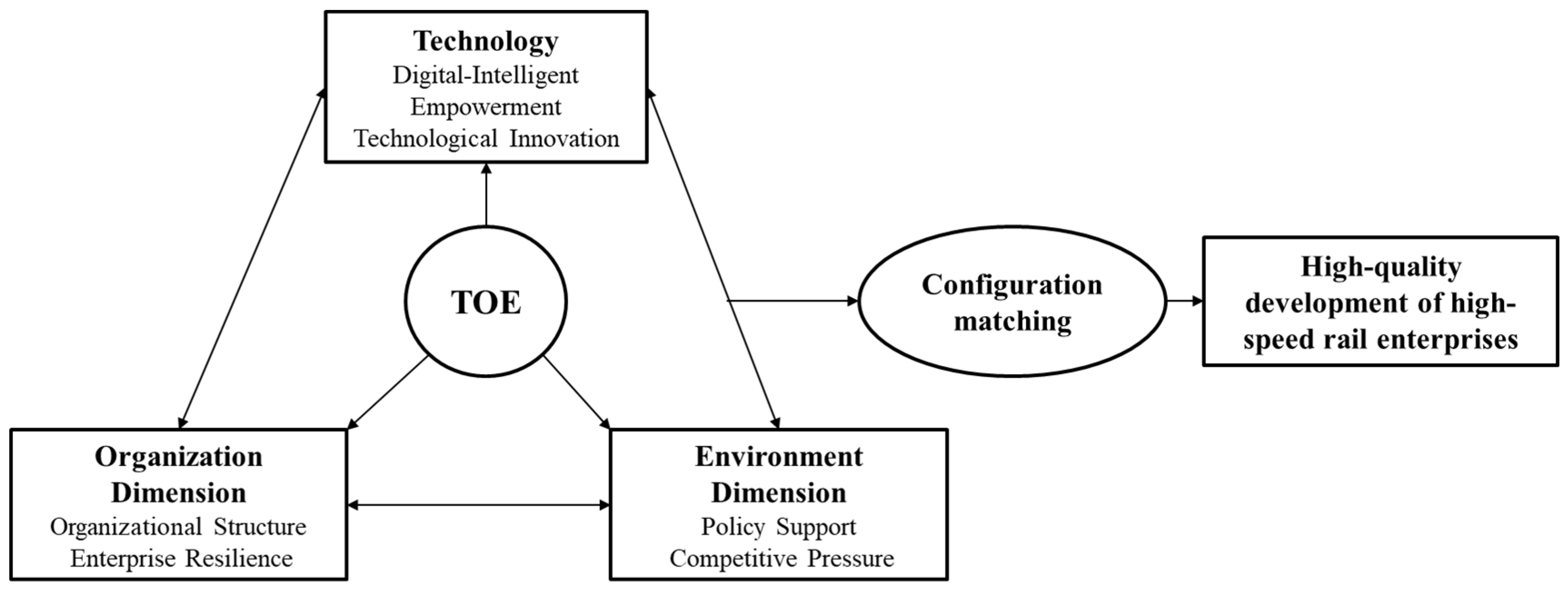
Disclaimer/Publisher’s Note: The statements, opinions and data contained in all publications are solely those of the individual author(s) and contributor(s) and not of MDPI and/or the editor(s). MDPI and/or the editor(s) disclaim responsibility for any injury to people or property resulting from any ideas, methods, instructions or products referred to in the content. |
© 2026 by the authors. Licensee MDPI, Basel, Switzerland. This article is an open access article distributed under the terms and conditions of the Creative Commons Attribution (CC BY) license.