1. Introduction
Digital transformation in the public sector has emerged as a strategic axis for improving administrative efficiency, institutional transparency, and the quality of citizen services. In this context, Information and Communication Technologies (ICTs) play a pivotal role by enabling process automation, data-driven decision-making, and more agile interactions between institutions and users. However, digital transformation extends far beyond the mere deployment of technological tools. It entails profound changes in operational processes, organizational structures, functional roles, training models, institutional culture, digital governance, and interdepartmental coordination [
1]. Following Saeedikiya et al. [
2], digital transformation can be understood as the reconfiguration of processes, technologies, and human capabilities to generate sustained organizational value. In municipal public utilities, such value is reflected not in profit maximization but in improved service reliability, faster response times, reduced cost-to-serve, enhanced transparency, and increased citizen trust.
The literature consistently emphasizes that the success of digital transformation in public institutions depends not only on technological infrastructure but also on human, organizational, and institutional factors. Empirical studies have shown, for example, that the adoption of AI-based chatbots in Korean government agencies is strongly conditioned by employee trust and organizational support [
3]. Likewise, the emotional intelligence and digital readiness of public servants have been identified as key determinants of effective AI deployment in public administration [
4]. These findings reinforce the view that digital transformation is a socio-technical process in which governance, skills, and change management play a decisive role.
Public utilities in Latin America—particularly those responsible for essential services such as water supply and sanitation—face increasing pressure to modernize administrative processes and improve service delivery. Despite this pressure, many of these organizations continue to operate with limited technological infrastructure, fragmented workflows, and heterogeneous levels of digital literacy among staff [
5]. Evidence from Ecuador illustrates these challenges clearly. A recent case study conducted in Guayaquil identified significant gaps in technological infrastructure, personnel training, and regulatory frameworks for the ethical and effective adoption of emerging digital technologies [
6]. Similar patterns have been reported across the region, where successful digital initiatives are associated with adaptive governance models, competency-based capacity building, and institutional coordination rather than technology alone [
7,
8].
Against this background, the present study focuses on a municipal public utility in Ecuador providing basic public services, where administrative performance has been constrained by manual procedures, limited automation, and weak interdepartmental integration. Rather than evaluating an already implemented digital transformation, this research adopts a diagnostic and design-oriented approach. Specifically, it combines an organizational ICT diagnostic—based on interviews, institutional records, and direct observation—with a citizen perception survey to identify critical bottlenecks, readiness conditions, and social acceptance of proposed digital services. On this basis, the study develops an ICT-based improvement roadmap aimed at modernizing administrative and operational management through process redesign, capacity building, and modular technology adoption.
From a scientific standpoint, this study contributes to the digital government and public management literature by providing empirical evidence from a developing-country context through two complementary components: (i) a structured diagnostic assessment of administrative processes and ICT readiness, and (ii) an analysis of citizen attitudes toward proposed digital service channels. Building on this evidence, the paper designs a modular ICT roadmap—including CRM systems, Virtual Offices, mobile applications, and electronic invoicing—and reports ex ante performance scenarios expressed through Key Performance Indicators (KPIs). These KPI values represent projections derived from baseline measurements, process redesign analysis, and benchmarking with peer utilities, rather than post-implementation empirical outcomes.
Importantly, this framing distinguishes clearly between observed conditions and anticipated effects. The study does not claim to measure the realized impact of digital transformation; instead, it provides a needs assessment and a structured intervention proposal supported by diagnostic data and citizen perceptions. As such, the contribution lies in clarifying what improvements are plausible under specific organizational and technological assumptions, while explicitly acknowledging the uncertainties and constraints associated with implementation.
The remainder of this article is organized as follows.
Section 2 reviews the main theoretical and empirical contributions related to ICT-driven administrative modernization in public institutions, with particular emphasis on developing-country and Latin American contexts.
Section 3 describes the methodological design, including data collection techniques, population and sampling, instrument validation, and KPI definition.
Section 4 presents the diagnostic findings, the proposed ICT-based solutions, and the projected performance scenarios derived from process redesign analysis and benchmarking assumptions.
Section 5 discusses these findings in light of regional experiences and existing literature, highlighting implications for governance, organizational change, and digital readiness. Finally,
Section 6 summarizes the main contributions, limitations, and recommendations for future empirical evaluation of digital transformation initiatives in municipal public utilities.
2. Literature Review
Digital transformation in public administration, particularly in developing countries, has become a key driver of institutional modernization, transparency, and service efficiency. Recent studies emphasize that effective adoption of ICTs in the public sector requires not only technological investment but also organizational readiness, regulatory alignment, and contextual adaptation [
9,
10]. In Latin America, public institutions continue to face challenges related to digital inequality, infrastructural gaps, and fragmented policy implementation, which hinder uniform progress in e-government initiatives [
11,
12].
Despite growing research on digital transformation in public and private sectors, the literature still lacks a systematic integration of key theoretical frameworks such as the Technology Acceptance Model (TAM), Unified Theory of Acceptance and Use of Technology (UTAUT), and Digital Maturity Models—especially in studies applied to developing countries. Some recent works have begun to address this gap. For instance, Saeed et al. [
13] employ the UTAUT3 model to analyze the adoption of CRM-driven service robots in Iraqi restaurants, finding that behavioral intention is shaped not only by classical UTAUT factors (e.g., performance expectancy, effort expectancy), but also by individual innovativeness and hedonic motivation—emphasizing the need to contextualize technology acceptance frameworks in emerging economies with limited digital maturity. Similarly, Juita et al. [
14] extend the Technology–Organization–Environment (TOE) framework by incorporating self-efficacy and trust as mediating and moderating variables in digital market adoption among underserved MSMEs, thus reflecting the psychological and structural barriers faced by small organizations in developing regions. These studies suggest that theoretical models like UTAUT and TAM remain highly relevant for explaining digital adoption, but require contextual calibration to address infrastructural, cultural, and institutional constraints. Furthermore, while maturity models are frequently used to guide digital progress in developed nations, Carlsson et al. [
15] argue that inter-municipal collaboration can act as a compensatory mechanism to advance digital capabilities in municipalities with resource disparities, providing an alternative pathway to digital maturity that is more collaborative than hierarchical. Despite these contributions, a broader integration of these frameworks in municipal and public utility contexts remains limited, signaling an important direction for future research and practice.
The transformation of municipal and local government services through digital tools has been documented in a range of contexts, offering insights into both barriers and enablers. For instance, the case of Tabriz municipality in Iran illustrates how IoT technologies can enhance urban service delivery when integrated within a supportive policy and infrastructural environment [
9]. In Mozambique, small enterprises adopting digital tools face cybersecurity challenges due to lack of awareness and tailored frameworks, highlighting the need for contextual cybersecurity governance in developing nations [
16]. Carlsson et al. [
15] examine inter-municipal cooperation in Sweden as a strategy for overcoming local resource disparities, a model that could inform digital transformation efforts in under-resourced Latin American municipalities.
Other studies emphasize the importance of user trust, inclusion, and participation in the success of digital government initiatives. Nyadzi and Morris [
12] find that e-government can enhance public trust if accompanied by consistent service performance and contextual responsiveness. At the same time, bridging the digital divide remains a persistent challenge. Sagala and Őri [
11] propose alternative strategies for inclusive e-government in developing countries, including multi-channel service provision and user mobilization initiatives.
Digital transformation also intersects with broader governance and sustainability goals. In the domain of higher education, Twabu and Nakene-Mginqi [
17] explore how blockchain-enabled smart contracts can streamline data access and verification across public institutions. In environmental governance, Xiong and Yu [
18] demonstrate a nonlinear relationship between e-government development and carbon emission efficiency across 136 countries, suggesting that digital maturity is critical for maximizing policy impacts.
While much progress has been made in theorizing and documenting digital transformation, the literature still calls for more grounded, municipal-level case studies that integrate technological, organizational, and citizen-centered dimensions. Existing frameworks and international experiences provide a foundation, but their application to Latin American public utilities—especially in Ecuador—remains limited. This study addresses that gap by offering an empirical examination of digital transformation within a municipal public service in Ecuador, contributing new insights to both regional scholarship and global theoretical debates.
3. Materials and Methods
3.1. Research Design
The research adopted a mixed-methods design that integrated descriptive, diagnostic, explanatory, and evaluative approaches to analyze the administrative processes of a municipal public utility in Ecuador and the role of Information and Communication Technologies (ICTs) in improving efficiency and service quality. The descriptive component focused on characterizing the technological infrastructure, information systems, and administrative workflows; the diagnostic phase identified critical areas of improvement and current limitations; the explanatory analysis examined how ICT implementation could influence process optimization; and the evaluative dimension assessed potential gains in efficiency and citizen satisfaction.
The methodological structure combined both qualitative and quantitative strategies. Qualitative techniques, such as direct observation and semi-structured interviews with the head of the Information Technology Department, allowed for a contextual understanding of digital practices, technological gaps, and user interactions with administrative systems. Quantitative methods were applied through structured surveys administered to service users, providing measurable insights into satisfaction levels, perceptions of efficiency, and acceptance of proposed digital tools.
This cross-sectional design enabled the collection and analysis of data within a specific timeframe, establishing a baseline for subsequent performance assessment using Key Performance Indicators (KPIs). The design ensured a comprehensive evaluation of the institution’s digital maturity and readiness for administrative modernization through ICT integration, aligning methodological rigor with the study’s applied orientation toward organizational improvement.
3.2. Data Collection Techniques
The data collection process combined qualitative and quantitative techniques aligned with the study’s diagnostic and evaluative approach. Three primary instruments were used: direct observation, semi-structured interviews, and structured surveys.
The observation technique was applied to analyze the technological infrastructure and administrative workflows within the organization, identifying existing digital tools, areas of inefficiency, and opportunities for automation. This allowed a first-hand understanding of how administrative activities were managed and how technology was integrated into daily operations.
Semi-structured interviews were conducted with the head of the Information Technology Department to obtain detailed insights into the institution’s technological capabilities, system functionality, and current limitations in ICT adoption. The interview guide consisted of 12 open-ended questions focusing on digital resource management, data systems, and human capital competencies.
A structured survey composed of 13 multiple-choice questions was administered to service users to assess their satisfaction and perception of digital service quality. The survey was distributed electronically using Google Forms, enabling efficient data collection and ensuring accessibility for participants. The questionnaire addressed topics such as service responsiveness, ease of use of digital tools, and perceived improvements in transparency and administrative efficiency. Descriptive and inferential statistical analyses were conducted to provide a robust assessment of satisfaction levels. Survey participants were recruited from the institutional customer database through online invitations, yielding a convenience sample; therefore, potential self-selection and digital-access bias associated with online-only data collection is acknowledged as a limitation.
Together, these techniques provided a multi-perspective understanding of the organization’s readiness for digital transformation, combining empirical evidence from internal stakeholders and end users.
3.3. Population and Sampling
The study population consisted of 31,147 active users registered in the customer database of the municipal public utility. From this total, a representative sample of 380 individuals was determined using the finite population formula, which corrects the estimation when the population is not large enough to assume infinite conditions [
19]. Applying a 95% confidence level and a 5% margin of error, and assuming maximum variability (
),
where
n is the sample size,
N is the population size,
corresponds to a 95% confidence level,
is the acceptable margin of error, and
P and
Q represent the probability of success and failure, respectively. Substituting these values produced a sample size of
participants.
This sampling approach ensured statistical representativeness of the population and reliability in estimating users’ perceptions and behaviors. The selection process employed a simple random sampling method, allowing equal opportunity for all active customers to be included in the survey. The resulting dataset served as a foundation for evaluating service satisfaction, efficiency indicators, and the overall acceptance of ICT-based administrative modernization.
3.4. Instrument and Construct Definition
The data collection instrument consisted of a structured questionnaire composed of 13 closed-ended items, administered through Google Forms. All attitudinal questions were measured using five-point Likert-type scales, adapted to the nature of each item (e.g., agreement, perceived importance, or likelihood of use). The questionnaire was designed to capture citizens’ perceptions regarding the proposed digital transformation initiatives at the municipal institution.
Based on a conceptual review of digital transformation, e-government, and public service modernization literature, the items were grouped into nine analytical constructs. Four constructs were operationalized as multi-item scales: ICT Infrastructure Improvement (Items Q1–Q2), Process Automation Perception (Items Q3–Q4), Digital Self-Service Adoption (Items Q5–Q6), and Chatbot Acceptance (Items Q7–Q8). The remaining items (Q9–Q13) were treated as single-indicator constructs, addressing specific dimensions such as document digitalization, electronic invoicing preference, mobile meter-reading applications, staff training, and the use of Geographic Information Systems (GISs).
The internal consistency of the multi-item constructs was assessed using Cronbach’s alpha coefficient. Reliability analysis was conducted using the R statistical environment (R version 4.3.2; R Foundation for Statistical Computing, Vienna, Austria), employing the
psych package (version 2.3.9).
Table 1 presents the obtained reliability coefficients.
All Cronbach’s alpha values exceeded the recommended threshold of 0.70, indicating acceptable internal consistency and supporting the reliability of the measurement instrument.
Content Validity
Content validity was ensured through a systematic review of prior studies on digital transformation, e-government services, and ICT adoption in public utilities. The questionnaire items were formulated to reflect key dimensions identified in the literature, such as service efficiency, accessibility, transparency, and technological acceptance. Additionally, the instrument was reviewed by domain experts in public administration and information systems, who assessed the clarity, relevance, and coherence of the items. Minor wording adjustments were made to improve comprehension, ensuring that the instrument adequately represented the constructs under study.
3.5. Application of Key Performance Indicators (KPIs)
To evaluate the operational improvements derived from the implementation of Information and Communication Technologies (ICTs), a set of Key Performance Indicators (KPIs) was defined. These indicators were selected based on the main challenges identified in the diagnostic phase and aligned with the strategic objectives of the digital transformation proposal. The KPIs aim to quantify efficiency gains, reductions in administrative delays, process automation rates, and improvements in citizen satisfaction.
The baseline values of the KPIs were obtained from institutional sources, including semi-structured interviews with the head of the IT department, direct observation of administrative workflows, and analysis of operational practices supported by the existing ERP system. These values represent average pre-digitalization performance. Estimated post-implementation KPI values were derived using an ex ante approach based on process redesign analysis and benchmarking against comparable municipal public utilities, as documented in the associated master’s thesis.
The use of KPIs in this study responds to the lack of empirical performance-based evaluations identified in prior research on digital transformation in municipal public utilities.
The key performance indicators (KPIs) defined to evaluate the impact of ICT-based process optimization are presented in
Table 2.
Each KPI provides a quantitative and comparable measure of progress toward digital transformation goals. The combination of response time, digital usage, and satisfaction indicators ensures a balanced assessment between operational efficiency and citizen-centered outcomes. The metrics are periodically reviewed on a quarterly basis to adjust implementation priorities and to track sustainability of improvements in the long term.
KPI Measurement Methods and Data Sources
To ensure methodological transparency and address the traceability of the reported performance indicators, this subsection describes how each Key Performance Indicator (KPI) was measured and the institutional data sources used to obtain baseline values. The measurements are grounded in empirical evidence collected through interviews, direct observation, administrative records, and user surveys conducted during the diagnostic phase.
Table 3 summarizes the measurement approach and data sources associated with each KPI, providing a clear basis for the ex ante performance estimations and supporting future longitudinal validation.
5. Discussion
5.1. Impact of Digital Transformation on Administrative Efficiency
This discussion distinguishes explicitly between empirically observed findings and projected performance improvements derived from the proposed ICT-based digital transformation roadmap. Such a distinction is necessary to ensure analytical rigor and to avoid conflating validated evidence with scenario-based estimates.
From an empirical perspective, the primary validated findings stem from the citizen satisfaction survey. The results indicate a strong positive perception of ICT integration, with more than 88% of respondents agreeing that digital tools improve service quality and 82% expressing a preference for electronic invoicing. These outcomes constitute direct empirical evidence of social acceptance and readiness for digital service adoption, supporting the relevance of the proposed transformation strategy.
In contrast, the operational efficiency indicators—Average Response Time (ART), Administrative Processing Time (APT), and Number of Digital Transactions (NDT)—represent projected outcomes based on baseline measurements, process analysis, and benchmarking against comparable public utilities. These projections were derived from the comparison between current manual workflows and the expected performance of integrated digital platforms such as CRM systems, Virtual Offices, and mobile applications.
Specifically, the Average Response Time (ART) is projected to decrease by approximately 75%, from 48 h to 12 h, as a result of automated case registration, prioritization, and real-time monitoring. Similarly, the Administrative Processing Time (APT) is expected to be reduced from 72 h to 24 h through document digitalization, workflow automation, and ERP integration. The Number of Digital Transactions (NDT) is projected to increase from 20% to 85%, reflecting a shift toward self-service digital channels and reduced dependence on in-person interactions.
While these projected improvements are grounded in documented baseline conditions and validated experiences from comparable municipal utilities, they should be interpreted as scenario-based performance estimates rather than empirically observed post-implementation results. Their value lies in illustrating the potential operational impact of the proposed ICT roadmap and in supporting decision-making for digital investment and planning.
Overall, the discussion highlights that the digital transformation initiative combines empirically validated citizen acceptance with analytically grounded performance projections. This dual evidence base supports the feasibility and relevance of the proposed transformation while underscoring the need for future longitudinal studies to empirically validate KPI outcomes following full implementation.
5.2. Risk Analysis and Alternative Implementation Scenarios
Although the projected performance improvements represent an optimistic scenario, their realization is subject to several organizational, technological, and contextual risks. The studied municipal public utility operates with aging end-user hardware, limited human resources, and intermediate levels of digital skills, which may affect the pace and effectiveness of ICT adoption. Additionally, resistance to change, budgetary constraints, and regulatory or legislative requirements may delay or limit the full deployment of the proposed solutions.
To address these uncertainties, three alternative implementation scenarios are considered. In a conservative scenario, partial ICT adoption and limited staff training would result in more moderate improvements, such as a 40–50% reduction in response and processing times and digital transaction rates below 60%. A moderate scenario, assuming phased infrastructure upgrades and targeted training programs, would enable intermediate gains, with efficiency improvements between 55–65% and digital transactions reaching approximately 70%. The optimistic scenario, reflected in the KPI projections reported in
Section 4.3, assumes adequate financial support, effective change management, and full integration of CRM, Virtual Office, and mobile platforms, leading to the maximum projected benefits.
This scenario-based analysis highlights that the reported KPI values should be interpreted as upper-bound estimates rather than guaranteed outcomes. It also reinforces the importance of risk mitigation strategies, including phased implementation, continuous staff training, stakeholder engagement, and regulatory alignment, to ensure sustainable and realistic digital transformation in municipal public utilities.
5.3. Comparative Analysis with Similar Public Utilities
The expected outcomes of the proposed digital transformation in the studied municipal utility align closely with regional experiences of ICT implementation in public sector services across Latin America. This alignment reinforces common patterns identified in the literature—particularly with respect to administrative efficiency, transparency, and responsiveness.
In the Ecuadorian context, several municipalities and public service organizations have undertaken similar initiatives. For example, Paredes-Parada et al. [
24] document the implementation of integrated ERP systems and administrative analytics in Ecuadorian higher education institutions, which led to measurable improvements in process coordination and efficiency. While the sector differs, the operational complexity and institutional challenges are comparable to those of municipal utilities, supporting the relevance of ERP-based solutions in this case study.
On a broader regional level, Martínez-Pérez and Rodríguez-Abitia [
25] propose a structured roadmap for digital transformation in Latin American public institutions. Their model emphasizes three pillars—organizational readiness, infrastructure modernization, and governance frameworks—all of which are addressed in the present case through staged implementation (infrastructure renewal, CRM deployment, Virtual Office platform, and user training). This confirms the scalability of such frameworks to local municipal environments.
Additionally, Carlsson et al. [
15] highlight how inter-municipal collaboration in Sweden can help overcome disparities in resources and technological maturity, offering an alternative path to digital maturity through collective digital action. Although situated in a different geopolitical setting, the underlying principle—leveraging collaboration to mitigate structural gaps—is transferable and supports strategies for smaller municipalities in Latin America seeking to build capacity through shared digital platforms.
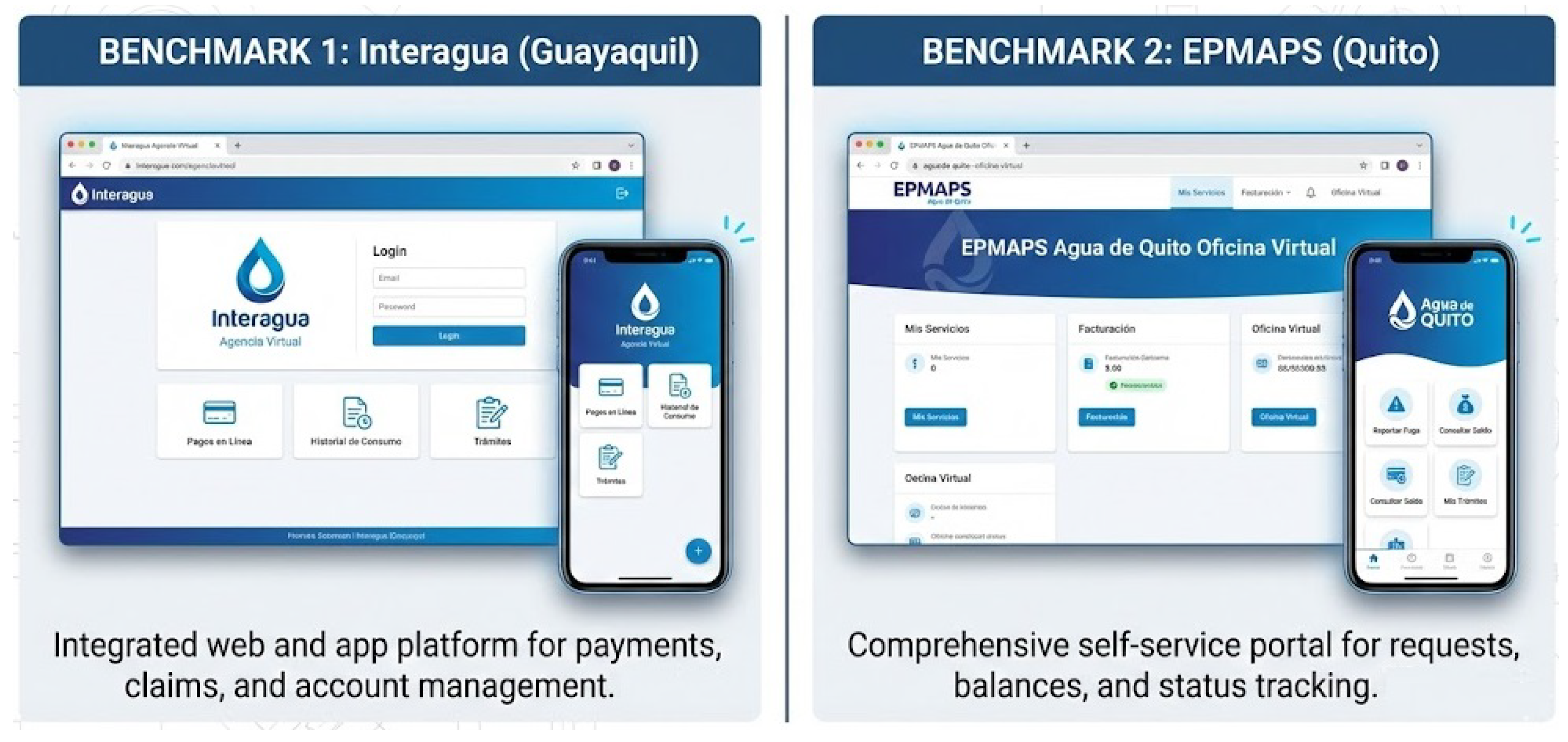
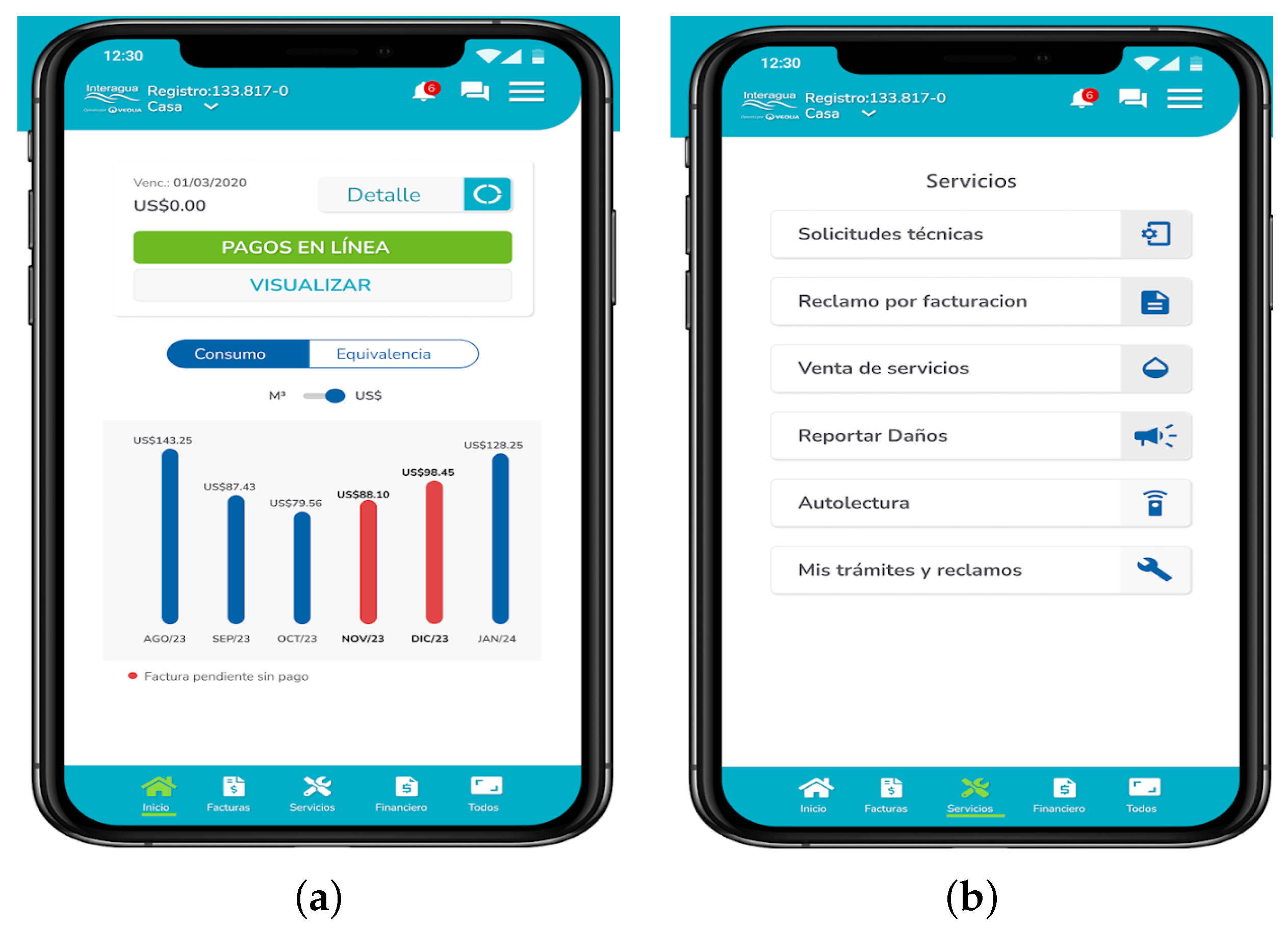
These comparative cases suggest that targeted digital investments, combined with pragmatic project management and gradual implementation, can lead to substantive improvements in municipal service delivery—even in contexts with limited resources. By integrating proven tools like CRM systems, mobile apps, and Virtual Offices, and by adopting modular implementation strategies aligned with regional best practices, the studied utility is positioned to replicate similar success outcomes documented in both national and international public sector cases.
5.4. Theoretical Implications
This study contributes to the theoretical discourse on digital transformation in the public sector by refining how existing e-government and digital governance frameworks can be operationalized at the level of municipal public utilities. Rather than proposing new theory, the research advances current conceptual models by translating abstract principles of digital transformation into concrete organizational processes and measurable performance dimensions.
While prior studies have primarily focused on policy alignment, institutional readiness, or national digital strategies, this work emphasizes the operational layer at which digital transformation unfolds in practice. By integrating organizational diagnosis, ICT solution design, and KPI-based performance modeling, the study provides a structured analytical approach that links socio-technical transformation theories with process-level implementation in public service organizations.
Importantly, the contribution of this study lies in its conceptual and methodological clarification of how digital transformation can be assessed in contexts where full post-implementation data are not yet available. The proposed framework demonstrates how baseline measurements, citizen perception data, and analytically grounded performance projections can be jointly used to evaluate digital transformation initiatives in a systematic and transparent manner.
Furthermore, the findings reinforce theoretical perspectives that conceptualize digital transformation as a socio-technical phenomenon, highlighting the interaction between technology adoption, organizational capabilities, and user acceptance. The empirically observed citizen satisfaction results support the relevance of user-centered approaches within digital governance theory, while the KPI-based projections illustrate how efficiency-oriented constructs are expected to evolve following ICT integration.
5.5. Practical Implications
From a practical perspective, this study offers actionable insights for public managers, policymakers, and municipal decision-makers seeking to implement digital transformation initiatives in resource-constrained environments. The proposed ICT improvement plan provides a structured and modular roadmap that can be adapted to the specific operational realities of municipal public utilities, particularly those responsible for essential services.
The empirical evidence generated through KPI-based evaluation demonstrates how targeted ICT investments—such as CRM systems, Virtual Offices, mobile applications, and e-invoicing—can lead to measurable improvements in administrative efficiency, service responsiveness, and citizen satisfaction. These findings support informed decision-making by enabling managers to prioritize digital initiatives based on expected operational impact rather than on technological trends alone.
Additionally, the study highlights the importance of integrating technological solutions with organizational change management and staff training. The identification of skill gaps and resistance factors underscores the need for continuous capacity-building to ensure sustainable adoption and long-term benefits. By emphasizing performance monitoring and user feedback, the proposed framework enables public organizations to track progress, adjust implementation strategies, and enhance accountability.
5.6. Governance Mechanisms for Transparency, Accountability, and Trust
Improvements in transparency and citizen trust are not assumed to arise automatically from the introduction of digital channels, but rather from specific governance mechanisms enabled by the proposed ICT solutions. In this study, such mechanisms are explicitly embedded in the design of the digital transformation roadmap:
- 1.
Traceability and auditability are strengthened through the CRM-based case management system, which records timestamps, responsible units, service-level agreements, and resolution outcomes for each request. This creates auditable service histories that support internal accountability and external oversight.
- 2.
Complaint-resolution loops are formalized by integrating citizen feedback and service closure confirmation into the CRM workflow, ensuring that unresolved or delayed cases are systematically escalated and monitored.
- 3.
Data governance and cybersecurity practices—such as role-based access control, encrypted communications, backup procedures, and data retention policies—contribute to institutional reliability and protection of personal information, which are essential preconditions for trust in digital public services.
Finally, dashboard-based reporting of KPIs (e.g., response time, resolution rate, digital transaction rate) enhances managerial transparency by making service performance visible and comparable over time.
6. Conclusions
This study provides a structured diagnostic assessment and an ICT-based digital transformation roadmap for administrative process optimization in a municipal public utility. Rather than evaluating implemented technological changes, the research combines organizational diagnosis, baseline performance characterization, and citizen perception analysis to inform the design of a feasible and context-sensitive digital modernization strategy.
The empirical evidence generated by this study consists of two main components: (i) a diagnostic analysis of existing administrative processes and ICT capabilities, based on direct observation and a semi-structured interview with the head of the IT department, and (ii) a citizen survey capturing attitudes, expectations, and acceptance of proposed digital services. These findings reveal clear technological and procedural gaps, alongside a high level of citizen readiness to adopt digital channels such as Virtual Offices, electronic invoicing, and automated service support.
Projected performance improvements—such as the anticipated reduction in average response time and administrative processing time, and the expected increase in digital transaction rates—are explicitly treated as ex ante estimates. These projections are derived from baseline records, process redesign analysis, and benchmarking against comparable public utilities, rather than from post-implementation measurements. As such, they should be interpreted as plausible performance scenarios contingent upon effective implementation, adequate resource allocation, and sustained organizational commitment.
The analysis further confirms that digital transformation in public utilities is a socio-organizational process, not merely a technological intervention. Intermediate levels of ICT proficiency and generally positive attitudes toward modernization constitute enabling conditions; however, the realization of projected benefits depends on structured change-management strategies, continuous staff training, and governance mechanisms that support adoption and institutional learning.
Finally, this research contributes a transparent and replicable framework for planning digital transformation initiatives in resource-constrained municipal utilities. Future research should prioritize longitudinal and multi-actor evaluations, incorporating post-implementation KPI measurements and perspectives from multiple organizational levels, in order to empirically validate the performance impacts anticipated in this study.




 ,
,