


Abstract
Economic growth and the expanding demands of modern technologies have traditionally relied on processes and materials that harm the environment. For this reason, renewable biopolymers such as cellulose and its derivatives, together with carbon-based conductive fillers like carbon nanotubes, graphite, graphene, and carbon black, are at the forefront of the transition from toxic materials to sustainable alternatives. Building on previous work that developed a conductive substrate with fully water-based carbon black coating using sodium-carboxymethyl cellulose (CMC) as a non-toxic binder and dispersant, this study investigates how papermaking variables, such as fiber refining levels and fiber type, influence the electrical performance of conductive cellulose paper. Handsheets were prepared from 100% hardwood (HW), 100% softwood (SW), and hardwood–softwood blends at different refining levels. They were first characterized by surface roughness and other physical properties, and then coated on their rough and smooth sides with the carbon black/CMC formulation. After coating, the coat weight and sheet resistance were assessed. The results showed that fiber type, refining, and blend ratio significantly affect coating retention and conductivity. Unrefined 100% hardwood substrates provided the most favorable and predictable performance: the rough side with a single coating layer reached 4.55 kΩ/sq, and multilayer coatings reduced the estimated sheet resistance to 0.009 kΩ/sq while preserving flexibility and mechanical integrity. These outcomes appear to be closely related to the variations in coating weight observed for those samples. Certain blends were found to be comparable, as the rough side of an unrefined sheet containing 65% hardwood (35% softwood) achieved 4.77 kΩ/sq with a single coating layer, closely matching the 100% hardwood reference under the same conditions.
1. Introduction
The growing demand for sustainable and environmentally friendly materials has driven significant research into the development of cellulose-based functional composites. Among these, conductive cellulose paper has emerged as a promising candidate for applications in flexible electronics [1], sensors [2], and energy storage devices [3,4], owing to its biodegradability and renewability [5,6,7]. Although cellulose fibers are intrinsically insulating, their compatibility with a wide range of conductive fillers has enabled the creation of electrically functional paper materials. Conductive paper is typically produced either by incorporating conductive components directly into the paper furnish [8,9] or by applying conductive surface coatings to paper sheets. In the latter approach, carbon-based materials such as carbon black, graphite, and carbon nanotubes are commonly dispersed in polymer matrices and coated onto the paper surface to achieve the desired conductivity and mechanical robustness [5,10,11,12,13].
Hu et al. [3] used an aqueous carbon nanotube (CNT) ink formulated with sodium dodecylbenzenesulfonate (SDBS) as a surfactant. The ink was prepared by dispersing laser-grown CNTs and the surfactant in deionized water. The CNT concentration was 10 mg/mL, and the SDBS concentration was between 1 and 5 mg/mL. The CNT ink was applied onto paper by the simple Meyer rod coating method. With this conformal coating, the authors achieved a sheet resistance of 10 Ω/sq.
Other studies have focused on graphite-based systems and surfactant optimization. Tang et al. [12] developed graphite-based coatings for recycled fiber paper and demonstrated that the addition of sodium dodecyl sulfate (SDS) significantly enhanced graphite dispersion, increasing the conductivity of the coated paper from 67 to 247 S·m−1 as the SDS dosage was raised from 0.5 to 2.0 pph.
Recent advances have emphasized environmentally friendly approaches, replacing toxic binders, such as acrylic resins [14] and solvents [15], with biodegradable alternatives, including carboxymethyl cellulose (CMC) and water-based dispersions [5]. Kumar et al. [10] formulated nanographite/graphene coatings using nanofibrillated cellulose as a binder (10 wt% of the total carbon content). These coatings were applied to recycled linerboard, and increasing coat weight and applying higher calendaring loads reduced sheet resistance to as low as 1–2 Ω/sq. Martin et al. [13] fabricated composite coatings comprising sodium lignosulfonate (SLS) and multi-walled carbon nanotubes (MWCNTs) on cellulose substrates, achieving sheet resistance values of 113 Ω/sq for coatings containing 77 wt% SLS and 23 wt% MWCNT. Similarly, Poulin et al. [16] developed a metal-free, biodegradable carbon–shellac conductive ink containing graphite flakes and carbon black, which was stencil printed onto copy paper to form interdigitated electrodes for capacitive proximity sensing. Wang et al. [17] made fully screen-printed, flexible, high-conductivity electrodes and asymmetric supercapacitors on low-cost substrates, including paper, using carbon nanoparticle inks and CNT/metal oxide composites; the paper-based electrodes maintained conductivity under bending, with resistance changes remaining below about 4.5%. Table 1 summarizes the key characteristics of prior studies alongside the present work.
Table 1.
A summary of the key aspects of publications cited, including the present study.
Despite this progress in conductive formulations and coating design, a critical limitation shared by all of these studies is that the substrate is treated as a fixed parameter—none systematically varied fiber morphology or refining conditions to examine how papermaking variables affect coating behavior and electrical performance. While the effects of refining on conventional paper properties are well documented [18], few studies have examined how sheet structure and surface properties influence coating distribution, penetration, and interfacial contact with conductive particles [19,20,21]. In practice, refining modifies the balance between accessible surface area, internal pore volume, and fiber collapse [18], which in turn may influence coating penetration, coat weight, and the interfacial contact between conductive particles and the cellulose network. Prior work has shown that rougher surfaces and greater coating weights generally improve conductivity by enhancing particle connectivity [11,22]. However, these empirical correlations do not capture the underlying mechanisms when coatings do not form a fully continuous surface film but instead partially infiltrate the fiber network. In such systems, the electrical response would be expected to depend on the conductive layer that is formed close to the paper surface, whose three-dimensional structure and tortuosity are controlled by papermaking conditions.
The present research addresses this gap by investigating how refining intensity and fiber type affect both the physical and electrical properties of cellulose-based conductive paper. Through systematically varying refining conditions and combining macroscopic measurements of roughness, air permeability, coat weight, and sheet resistance with cross-sectional SEM imaging, we aim to elucidate how fiber morphology and network structure modulate the distribution of a carbon black (CB)/CMC coating and, consequently, the sheet resistance. These findings build on previous work focused on conductive formulation development [5] and offer a more complete understanding of how papermaking variables affect the performance of sustainable conductive materials.
2. Materials and Methods
2.1. Handsheet-Making Procedure and Properties Analysis
The handsheets were made in a two-stage process. In the first stage, bleached southern pine kraft softwood and bleached hardwood market pulp of unspecified species were soaked separately in water for approximately 12 h. After soaking, the pulps were torn into smaller pieces and refined using a Valley Beater (Serial No. 109-F-1556 M916794, capacity 23 L, VOITH, Heidenheim, Germany). Hardwood pulp was refined at intervals of 0, 2, 5, 10, and 15 min, while softwood pulp was refined at intervals of 5, 10, 15, and 33 min, yielding five distinct refining levels for each fiber type.
Handsheets from each pulp were made to a target basis weight of 100 g/m2 using a British sheet mold, following the TAPPI T 205 method. The resulting handsheets were restrained dried with drying rings under controlled conditions of 23 °C and 50% relative humidity, according to TAPPI T 402. Similarly, in the second stage, blends of unrefined bleached eucalyptus and softwood pulps of unspecified species were prepared. The blends contained hardwood fibers at proportions of 85%, 65%, 50%, and 35%, with the rest consisting of softwood fibers. In both cases, the market pulps were obtained as donated samples from prior laboratory stocks, and the original commercial supplier is unknown. The fiber length and width of the pulps were characterized using a fiber quality analyzer (FQA) (OpTest Equipment Inc., Ontario, CA, USA) and summarized in Table 2. The values are reported as mean ± standard deviation, calculated from three replicates for each sample.
Table 2.
The FQA results of the pulps implemented in the handsheet-making process.
The freeness of each set of pulp was measured following TAPPI T 227. The basis weight (grams per square meter) was determined according to TAPPI T 410 using a Mettler Toledo (Columbus, OH, USA) analytical balance (PB303-S Max = 310 g, Min = 0.02, d = 1 mg). The thickness (caliper) was measured following TAPPI T411 using a micrometer (L&W 051, ABB, Zurich, Switzerland). The air permeability was assessed following the TAPPI T 460 Gurley method, using the TMI Densometer (New Castle, DE, USA) to record the time (in seconds) required for 100 mL of air to pass through the sheet. The capillary rise in water at 10 min was determined by the ISO 8787 (Klemm method) standard. The tensile strength was measured following TAPPI T494 using a TMI 84-56 tensile tester (New Castle, DE, USA)with 100 mm clamp spacing and a strain rate of 25 mm/s. Lastly, the roughness of the handsheets, which is side-dependent, was evaluated on both sides in accordance with TAPPI T 555 (Parker Print Surf method) using an L&W PPS tester (ABB, Zurich, Switzerland).
2.2. Coating of the Handsheets
The coating formulation used for this section corresponds to that described in a previous publication and is given in Table 3 [5]. Briefly, a medium particle-sized, unpelletized carbon black (SR511; iodine adsorption of 44 g iodine/Kg CB; dibutyl phthalate (DBP) absorbed of 127.6 m3/100 Kg CB) from Tokai Carbons (Fort Worth, TX, USA) was added into a 1% wt CMC (Sigma Aldrich, St. Louis, MO, USA) solution. The resulting mixture was probe-sonicated with a Branson Digital sonifier 450 (Emerson Electric Co., St. Louis, MO, USA) for three minutes at 70% amplitude to achieve a uniform formulation.
Table 3.
Coating composition in mass percentage, taken from [5].
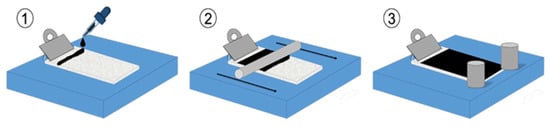
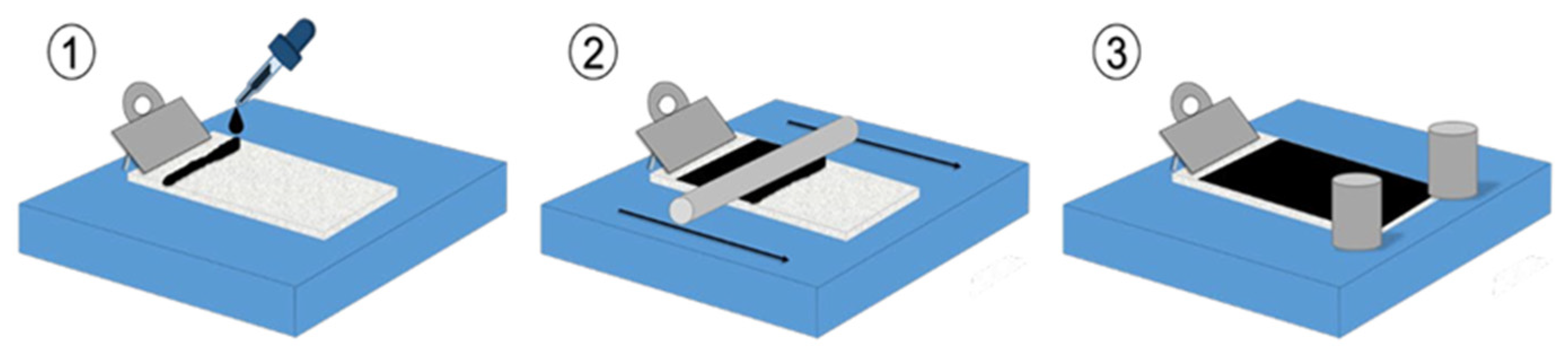
The carbon black coating was applied to the handsheets using a rod coating technique as schematically shown in Figure 1. The handsheets were placed on a flat, leveled surface and clamped on the top to prevent movement during the process. An excess of the formulation was applied near the clamp and was evenly distributed across the surface of the sheet using a Mayer rod number 6. After coating, the handsheets were dried at room temperature with their corners secured to minimize curling due to moisture uptake and fiber swelling. The drying time depended on the number of coating layers: single-layer coatings were dried for approximately 1 h, whereas multi-layer coatings were dried for about 1–2 h between successive applications, ensuring that the previous layer was completely dry before the next was applied.
Figure 1.
A schematic representation of the utilization of the Meyer rod for the coating of handsheets. This figure was taken from Millan 2022 [23] with permission from the original author. In this study, the coating was applied to only one side of the paper substrate.
However, to investigate the influence of the paper’s surface structure on the coating properties, each handsheets was divided into two samples with different sides coated on them (rough and smooth). The smooth side originated from the contact with the couch plate used during the handsheet-making process.
2.3. Coating Characterization
The dry coating weight (g/m2) was determined by calculating the difference in weight before and after coating, using the same balance employed for measuring the handsheet properties. A JCM-6000PLUS-Jeol scanning electron microscope (SEM) (Peabody, MA, USA) was utilized to examine the cross-sections of the samples. The sheet resistance of the electrodes was measured using an Ossila T2001A3 Four-Point Probe (Ossila Ltd., Sheffield, UK). For these measurements, the coated paper was cut into samples measuring 3 cm in width and 6.2 cm in length. Prior to the sheet resistance measurement, the coated sheets were left for 24 h to condition at 23 °C and 50% relative humidity. Where indicated, data are reported as mean ± standard deviation; formal statistical testing was performed only for the correlation analysis between coating weight and sheet resistance.
3. Results and Discussion
3.1. Effects of Pulp Refining on Handsheet Properties
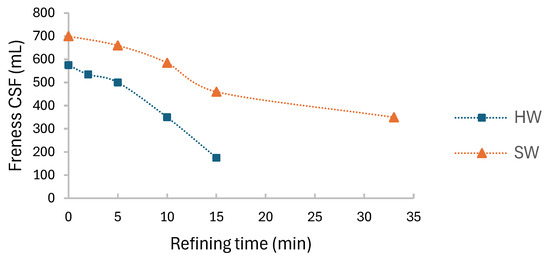
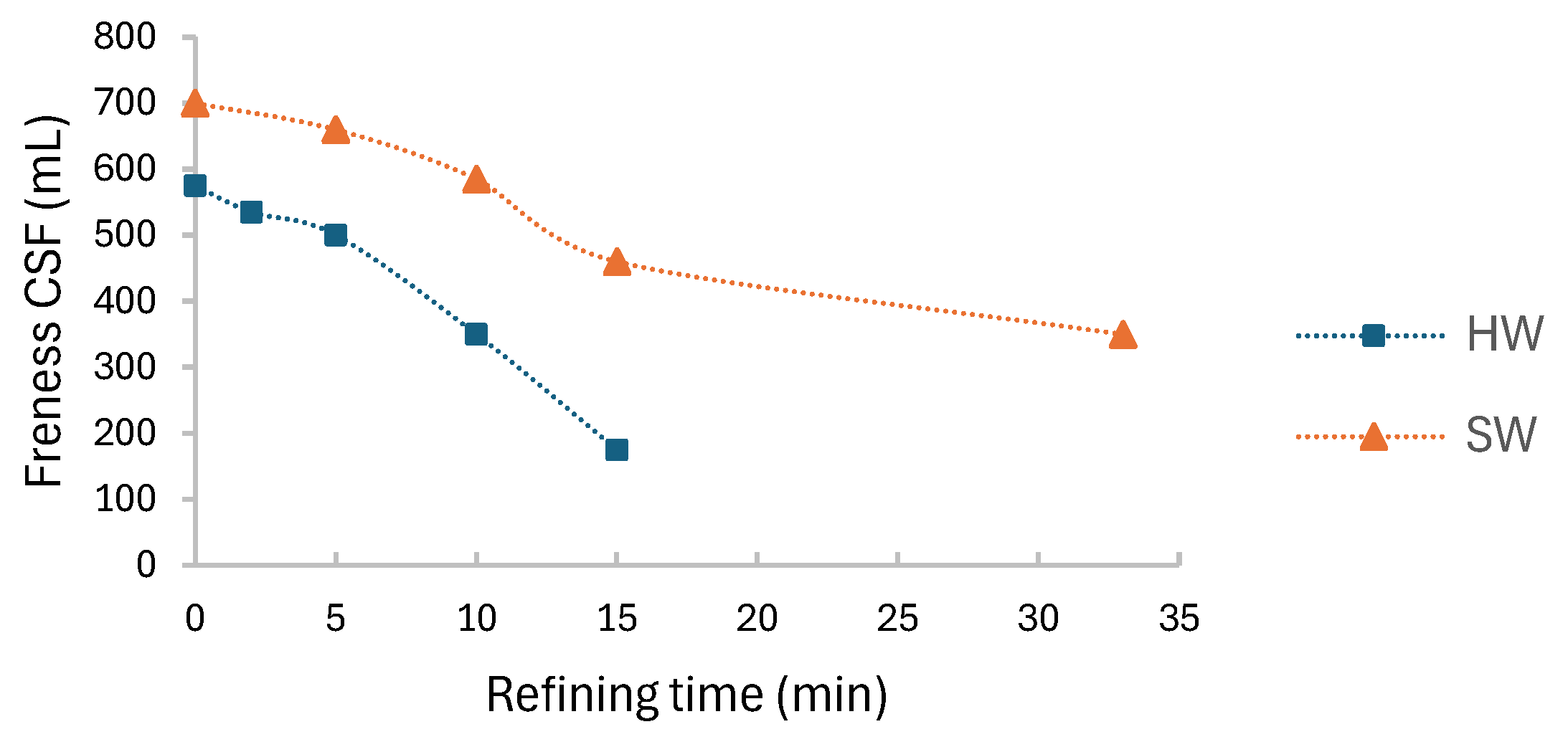
The effect of refining on pulp freeness for hardwood and softwood is shown in Figure 2. During refining, fibers undergo different physical transformations that affect their structural integrity. Main modifications include the formation of fines, fiber shortening, and internal and external fibrillation [18,24]. Such morphological and structural alterations showed similar effects in both softwood and hardwood fibers, increasing the drainage resistance, which was reflected in lower values of CSF ml (Figure 2). The formation of fines and fibrillation that occur during refining slows down the drainage rate of water [18,24], which justifies the trend observed in Figure 2. It was also observed that softwood fibers required extended refining time to reach freeness values equivalent to those of the hardwood specimens. This behavior is in accordance with several publications comparing the effect of refining on both types of fibers [25,26]. Softwood fibers typically present longer dimensions [27], which increases their resistance to mechanical modification.
Figure 2.
Freeness of softwood and hardwood pulp fibers. This figure was adapted from Millan 2022 [23] with permission from the original author.
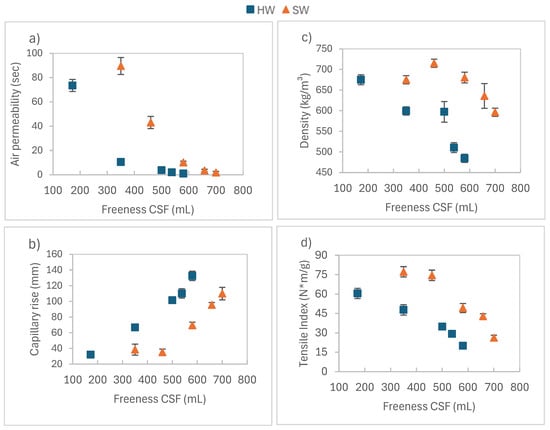
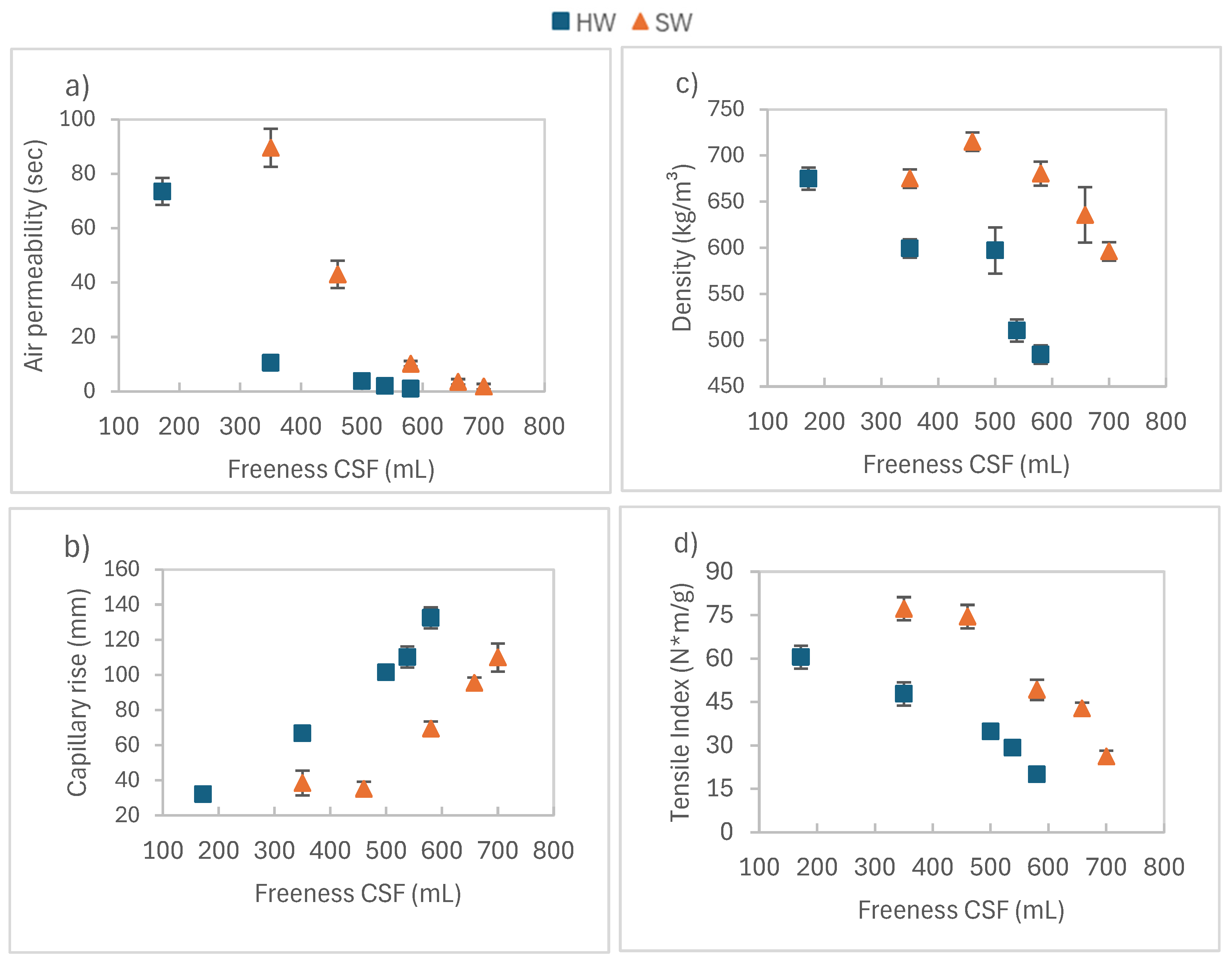
In terms of mechanical properties, the results in Figure 3d showed that softwood samples exhibited higher tensile index values compared to hardwood sheets. The enhanced mechanical performance can be attributed to the fundamental morphological characteristics of softwood fibers and the changes induced by mechanical processing. Softwood fibers are characterized by their greater length and width dimensions, which inherently provide enhanced bonding potential compared to their shorter hardwood counterparts [28].
Figure 3.
Paper properties for 100% softwood and 100% hardwood. (a) Air permeability (Gurley method), (b) capillary rise, (c) sheet density, and (d) tensile index. For each parameter, five measurements were performed. This figure was adapted from Millan 2022 [23] with permission from the original author.
The structural changes induced by mechanical refining are also directly correlated with a decrease in capillary rise values, as can be seen in Figure 3b. This behavior arises from the reduction in void spaces within the fiber network, thereby constraining the sheet’s capacity for capillary-driven liquid transport across the paper samples.
Additionally, it was observed that air permeability values correlate well with the tensile and density results, increasing as refining time increases and the sheet becomes less porous (Figure 3). Refining increased the time necessary for 100 mL of air to pass through the sheet. In addition, we observed that, in general, hardwood handsheets are considerably more permeable to air than softwood, which could be attributed to the fact that hardwood fibers are shorter (1.7 mm vs. 2.8 mm, see Table 2) and therefore create a more open network with larger inter-fiber voids.
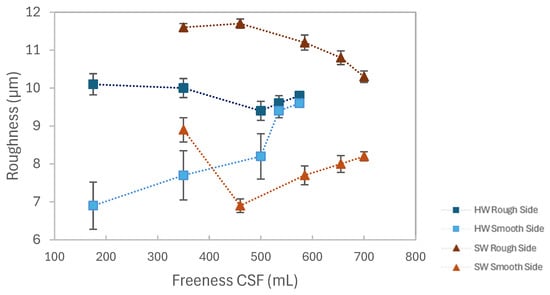
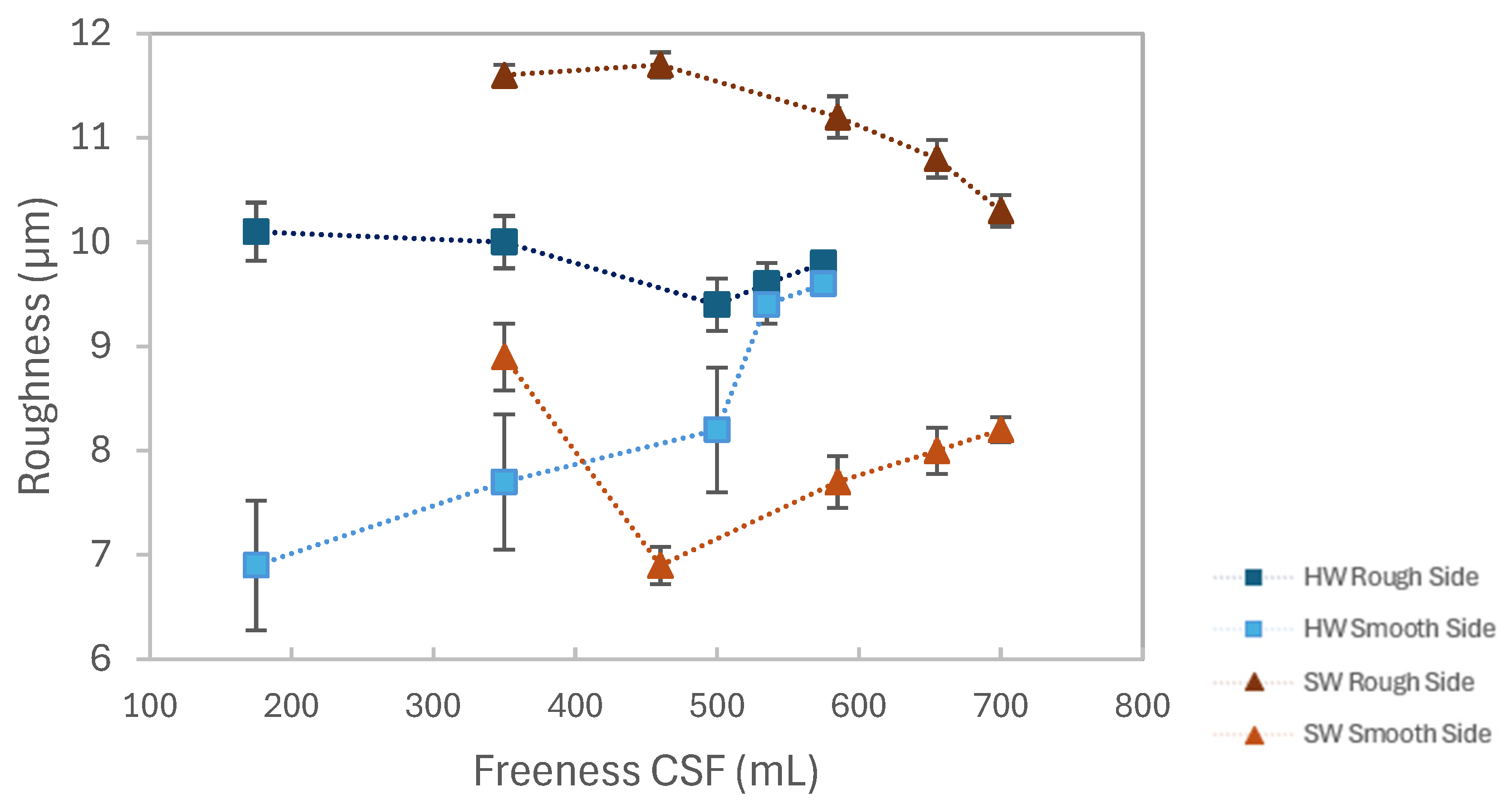
Regarding surface properties, it was found that refining decreases the handsheet roughness for the hardwood’s smooth side (Figure 4). The same trend was observed for the smooth side of softwood, but only from a non-refined level to a “medium” level (around 500 mL). This behavior could be primarily due to increased fiber flexibility, fiber shortening, the formation of fines, and enhanced fiber bonding, all of which contribute to a more homogeneous and compact paper structure [29].
Figure 4.
Roughness of hardwood and softwood sheets. For each parameter, five measurements were performed. This figure was adapted from Millan 2022 [23] with permission from the original author.
From a medium to a high level of refining, the roughness of softwood samples shifted in trend and increased, surpassing non-refined roughness. Interestingly, this unexpected roughness shift was consistent with the capillary rise and density, where their behavior also changes in that refining range (Figure 3). This behavior might result from reduced water removal during the compression stage, which is attributable to the limited dewatering of the handsheets at higher refining levels. Consequently, the handsheets cannot be compacted to the same extent as those produced at lower refining levels. As a result, the paper exhibits a greater thickness (caliper), leading to a less dense sheet [30].
For the rough side of the hardwood sheets, the degree of refining appears to have minimal influence on surface roughness; in fact, surface roughness is only slightly higher at elevated refining levels, as shown in Figure 4. In contrast, refining significantly increases the roughness of the rough side of the softwood handsheets. This phenomenon may be attributed to increased fiber flexibility resulting from refining, which makes them more susceptible to conforming to the blotter paper’s texture during pressing. Additionally, the act of removing the blotter paper after pressing may increase surface roughness by pulling fibers upward from the sheet. It is possible that this effect, in addition to the rising of surface fibers, contributes to the observed trend in roughness on the rough side of the softwood handsheets.
3.2. Effects of Fiber Composition on Handsheet Properties
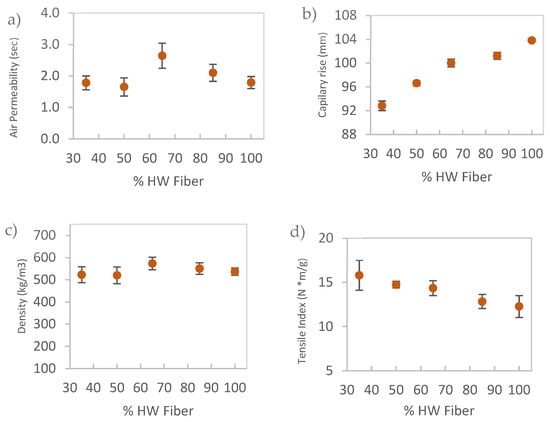
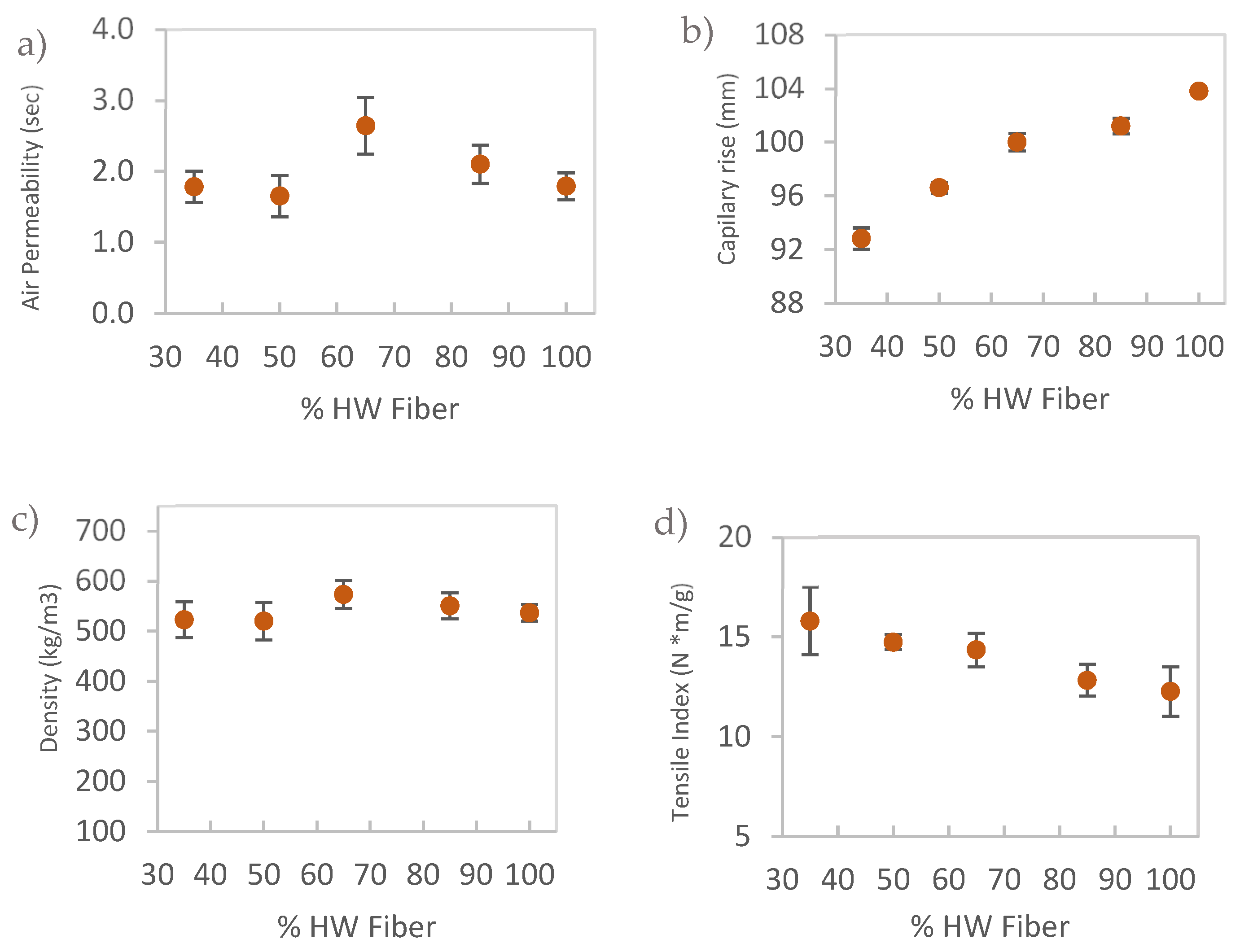
The tensile index increased with rising softwood content (Figure 5d), as anticipated, given the morphological characteristics of softwood fibers, which—when compared to hardwood fibers—are longer (2.9 mm vs. 0.9 mm, see Table 2) and thicker (30 µm vs. 17.9 µm, see Table 2), providing superior mechanical performance. This trend aligns with the findings of Mansfield et al. [31], who demonstrated that various softwood pulps, when used as reinforcement in paper, significantly improved mechanical properties such as the tensile index. Air permeability and density remained almost unchanged across the different compositions, indicating that replacing softwood with hardwood under these conditions has only a small effect on air flow and pore structure in the paper sheets. In Figure 5b, capillary rise increased with hardwood content, indicating that higher hardwood substitution produces a sheet that transports liquid water faster and to a greater height. At low hardwood content (~30%), capillary rise is lowest; as hardwood is increased toward 100%, capillary rise increases, indicating a more open or better-connected pore network for liquid penetration. These results are in accordance with the trend observed in previous experiments comparing softwood and hardwood fibers, where hardwood fibers exhibited a higher capillary rise at the same refining level. Moreover, the results suggest that hardwood fibers in this furnish create structures that favor liquid transport. According to the Lucas–Washburn [32] model for capillary penetration, smaller pores lead to greater capillary rise because there is less liquid in the cross-sectional area to be lifted, while the surface tension force along the pore walls remains nearly unchanged. As a result, the same capillary driving force acts on a lighter liquid column, allowing the liquid to rise to a higher level within the hardwood-fiber network.
Figure 5.
Paper properties for handsheets made of blends of softwood and hardwood pulps. (a) Air permeability (Gurley method), (b) capillary rise, (c) sheet density, and (d) tensile index. For each parameter, five measurements were performed.
3.3. Effects of Refining and Fiber Type on Coating Properties and Electrical Performance
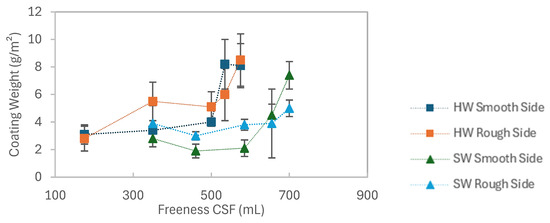
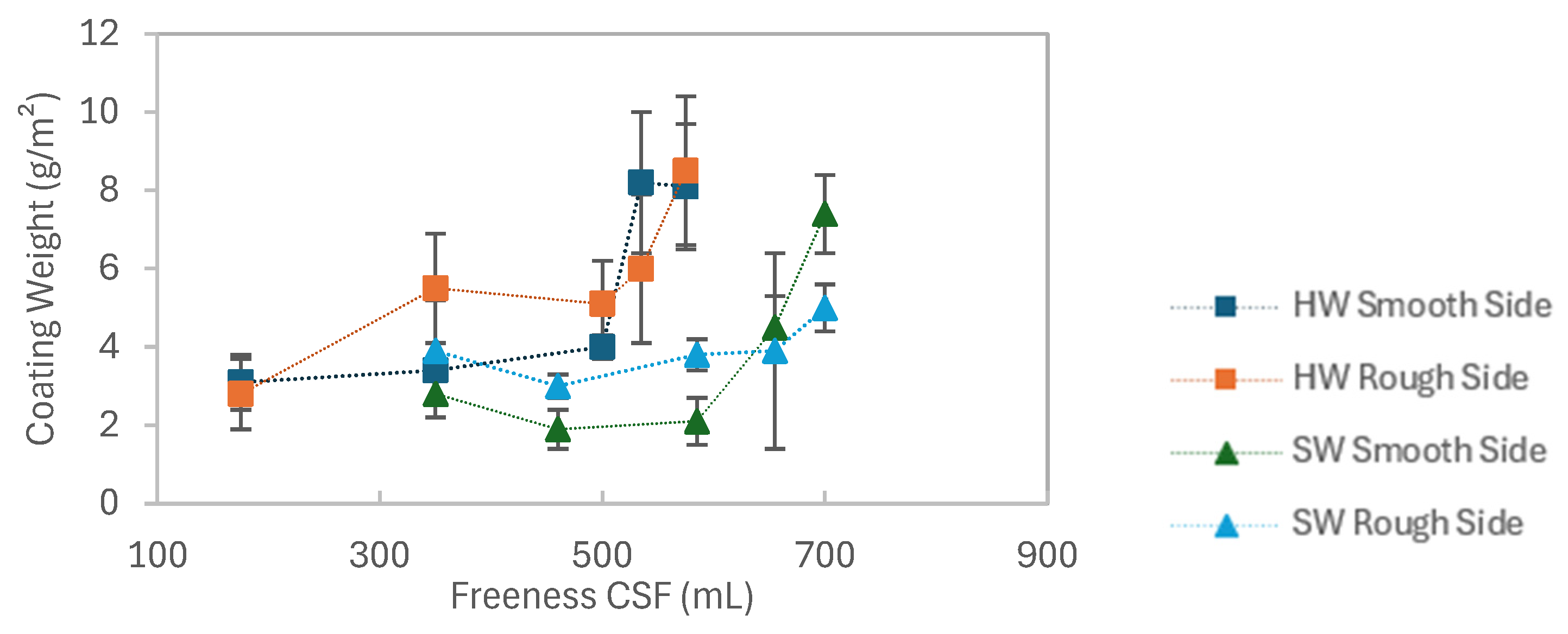
The electrical performance of the coated paper samples was assessed via sheet resistance measurements. Despite employing a consistent coating technique and rod number, the amount of coating retained by the paper substrates varied according to both the degree of refining and the fiber type. As shown in Figure 6, increasing the level of refining reduced the coating weight for both fiber types. This phenomenon can be attributed to the fact that refining compacts the fiber network, reducing the void spaces within the sheet and restricting the penetration of the coating material [18]. Additionally, a slight increase in coating weight was observed for softwood fibers at higher refining levels, which correlates with changes in surface roughness. Increments in roughness could provide more anchoring sites for the coating [33], thereby influencing the total amount deposited on the surface.
Figure 6.
Coating weight as a function of refining level for rough and smooth sides of the paper samples. The values in the graph represent the mean of three independent samples. This figure was adapted from Millan 2022 [23] with permission from the original author.
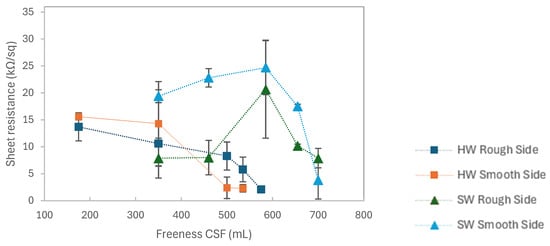
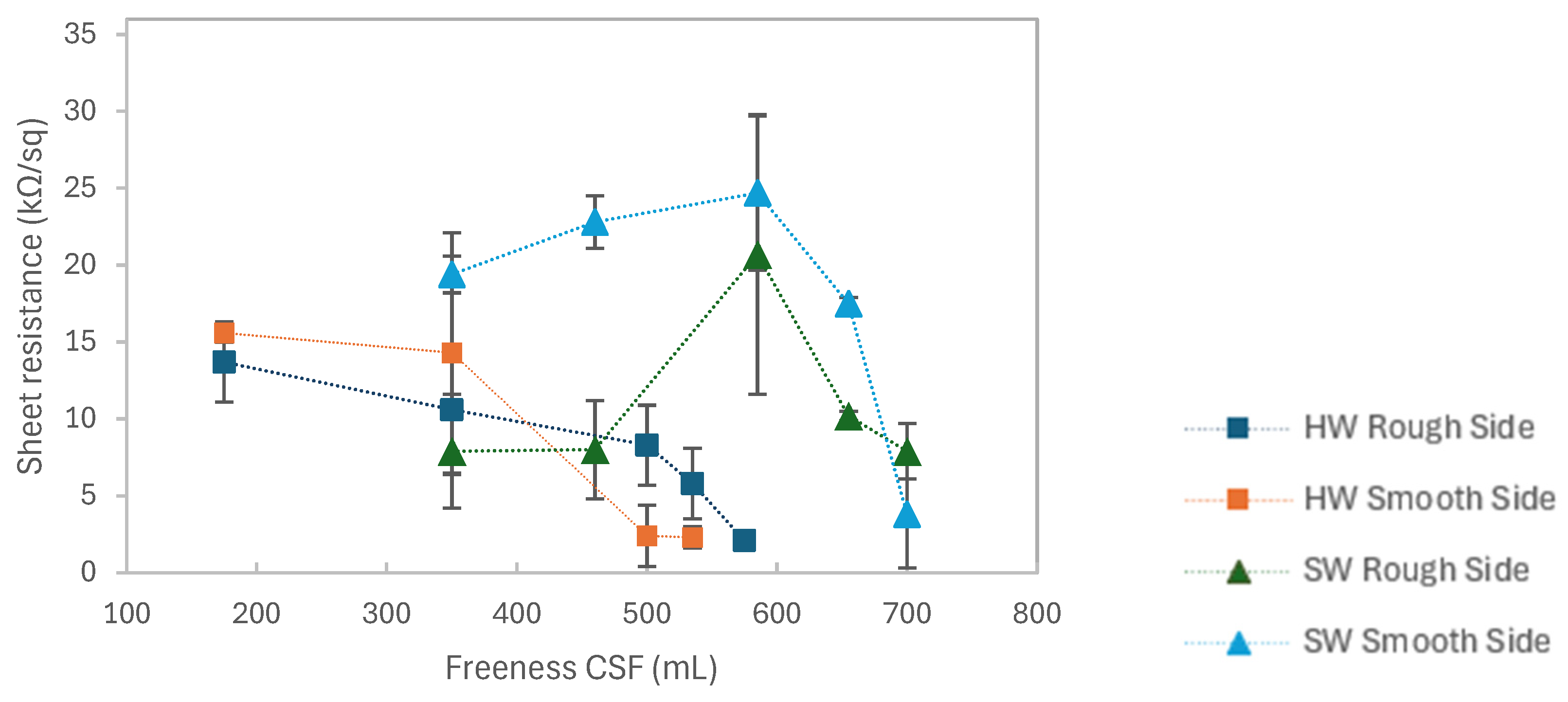
Figure 7 shows the sheet resistance data for each fiber type across different refining levels. For hardwood samples, sheet resistance values increased with refining. Additionally, a multivariable analysis using JMP software (Version 16) revealed a strong negative correlation (r = −0.95, p = 0.013–0.014, n = 5) (Figure S1) between sheet resistance and coating weight for both sides of the paper. These results suggest a strong association between coating weight and sheet resistance. Such behavior may be explained by percolation theory [34]: as the coating weight increases, the surface density of carbon black particles increases, reducing the interparticle distance until a continuous conductive pathway forms. Below the percolation threshold, electrons must tunnel across gaps between isolated conductive clusters, resulting in high resistance. As coat weight increases and the carbon black network becomes more interconnected, tunneling distances decrease and resistance drops.
Figure 7.
The sheet resistance of coated papers at different refining levels. This figure was adapted from Millan 2022 [23] with permission from the original author.
For softwood samples, a similarly strong negative correlation of r = −0.97, p = 0.0056 (n = 5) (Figure S1) was observed between sheet resistance and coating weight on the smooth side. The fact that this relationship holds across both fiber types suggests that coat weight is a determining factor in the electrical performance. However, this relationship is likely mediated by multiple structural factors, including fiber morphology, surface roughness, and coating penetration depth, all of which are themselves influenced by refining. Therefore, the observed correlation between coating weight and sheet resistance is interpreted as reflecting the combined influence of these interrelated structural parameters. Additionally, these trends also suggest that papers with lower refining provide a higher surface area of fibers for the coating to adhere to. This may explain the higher coating weights typically measured for hardwood samples, as softwood fibers are more prone to collapse [27]. The place where the fibers have collapsed will likely remain uncoated or may trap coating material in isolated pockets during drying, both of which could potentially contribute to higher resistance values.
Hardwood fibers, being shorter and less prone to collapse, tend to form a more accessible surface, which might allow the coating to distribute uniformly and establish better inter-particle connectivity. This hypothesis would benefit from confirmation through spatial mapping of carbon black distribution, which was beyond the scope of the present work.
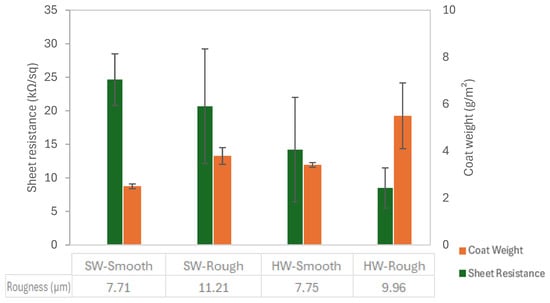
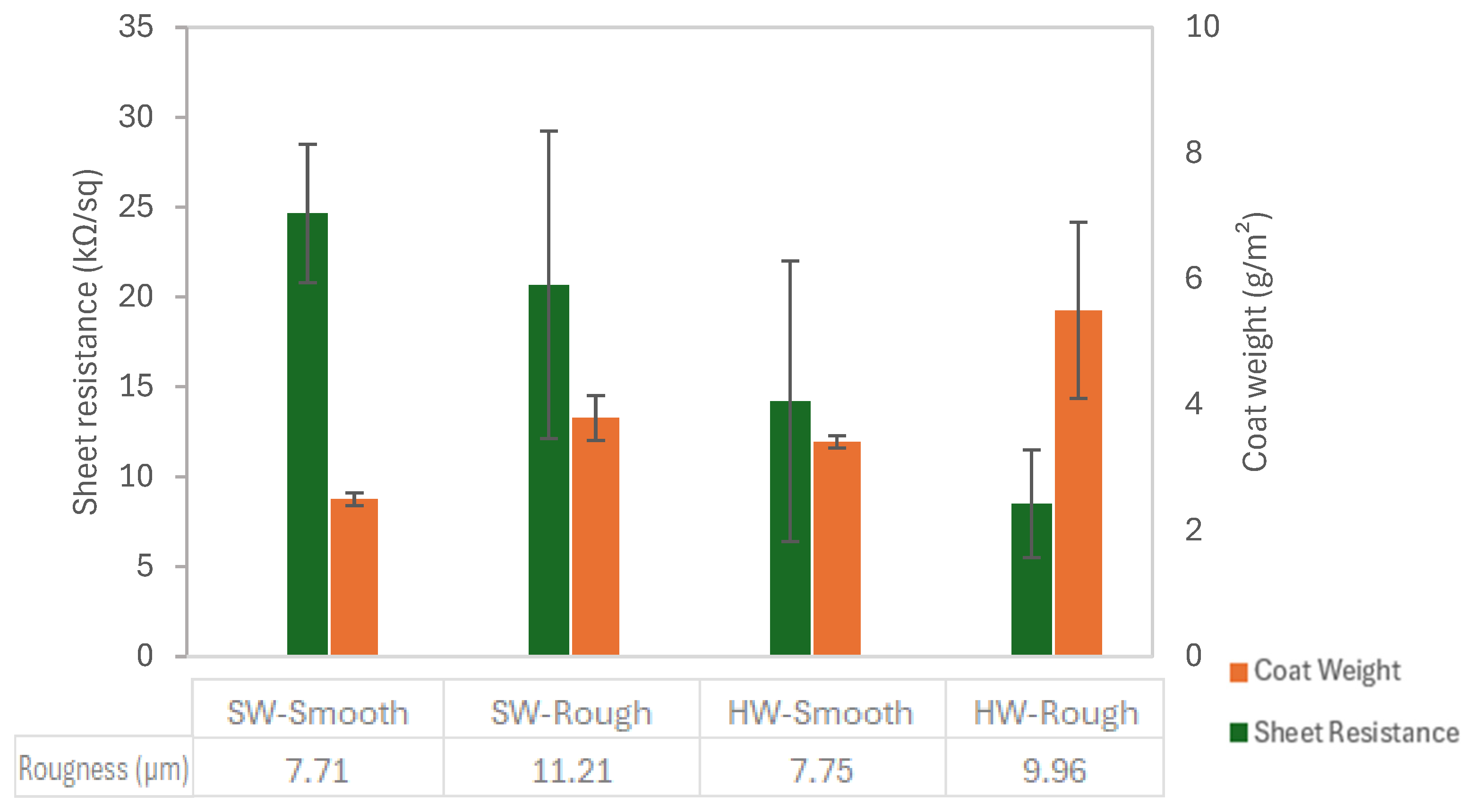
At the third level of refining (10 min), the smoothest sides of both paper types exhibit similar surface roughness (see Figure 8). Despite this similarity in roughness, as well as comparable air permeability and capillary rise, the sheet resistance of softwood is 1.7 times higher than that of hardwood, as shown in Figure 8. Furthermore, the data indicate that for samples with similar coating weight (specifically, the rough side of softwood and the smooth side of hardwood), the sheet resistance remains higher for softwood, which also has a rougher surface. When comparing the two sides within each fiber type, the rougher side consistently demonstrates lower sheet resistance and higher coating weight. Although the softwood sample has a rougher surface than the hardwood sample, the hardwood sample exhibits slightly greater coating weight and lower sheet resistance. These findings highlight the complex interactions among structural and material parameters that collectively influence the electrical behavior of coated papers, indicating that neither surface roughness nor coating weight alone can explain the observed differences in sheet resistance.
Figure 8.
Results comparison between 100% softwood and 100% hardwood handsheets at 10 min of refining. This figure was adapted from Millan 2022 [23] with permission from the original author.
The trend observed in Figure 6 and Figure 7 indicates that sheet resistance appears to depend on the coating weight. This observation aligns with findings from previous studies [3,35], which have demonstrated that increasing the coating weight enhances the contact between conductive particles, thus promoting improvements in the electrical performance.
Collectively, the results presented indicate that sheet resistance in carbon black-coated cellulose paper is governed by a hierarchy of interacting structural factors rather than a single dominant variable. Among such variables, coating weight exerts the strongest and most consistent influence on electrical performance, as evidenced by the high negative correlations observed across both fiber types (r = −0.95 for hardwood and r = −0.97 for softwood). Nevertheless, coating weight is not an independent parameter; it is inherently determined by the structural characteristics of the substrate—most notably porosity and surface roughness—which are themselves modulated by fiber type and refining intensity. At a deeper level, fiber morphology, particularly the susceptibility of softwood fibers to collapse during pressing, potentially introduces an additional source of variability in coating distribution and conductive network formation that cannot be fully captured by coating weight or surface roughness measurements alone.
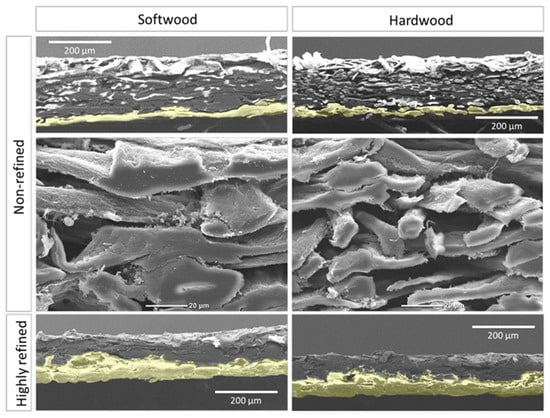
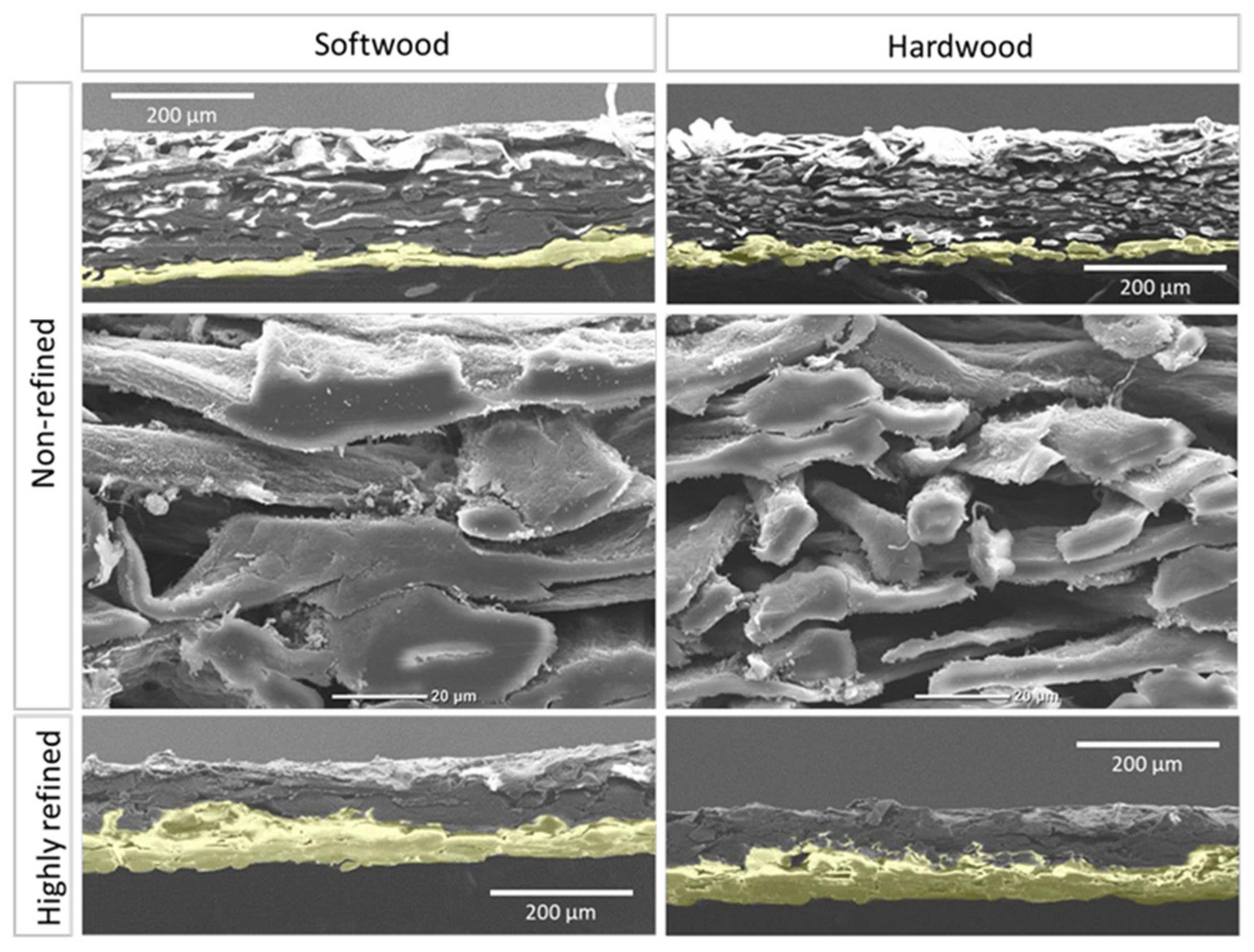
SEM cross-sectional images (Figure 9) showed that the coating material does not develop into a fully continuous layer on the paper surface at any refining level. Instead, the coating infiltrates the void spaces within the sheet and adheres to the surface of the fibers. The depth of this penetration clearly decreases with increasing refining intensity, indicating a more confined coating distribution in highly refined samples. It is important to emphasize that the coating formulation does not fully impregnate the sheet, as the ink is rapidly distributed upon application, which restricts its penetration depth and confines it primarily to the near-surface region.
Figure 9.
SEM cross-sectional images of conductive paper using unrefined and highly refined handsheets. The yellow part corresponds to the area of the paper that was not coated. This figure was taken from Millan 2022 [23] with permission from the original author.
3.4. Effects of Fiber Composition on Coating Properties and Sheet Resistance
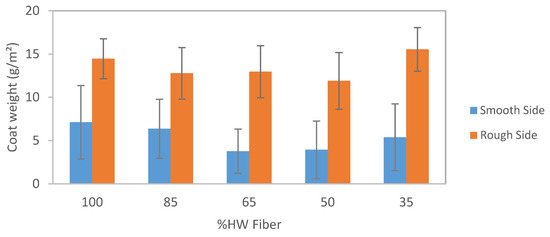
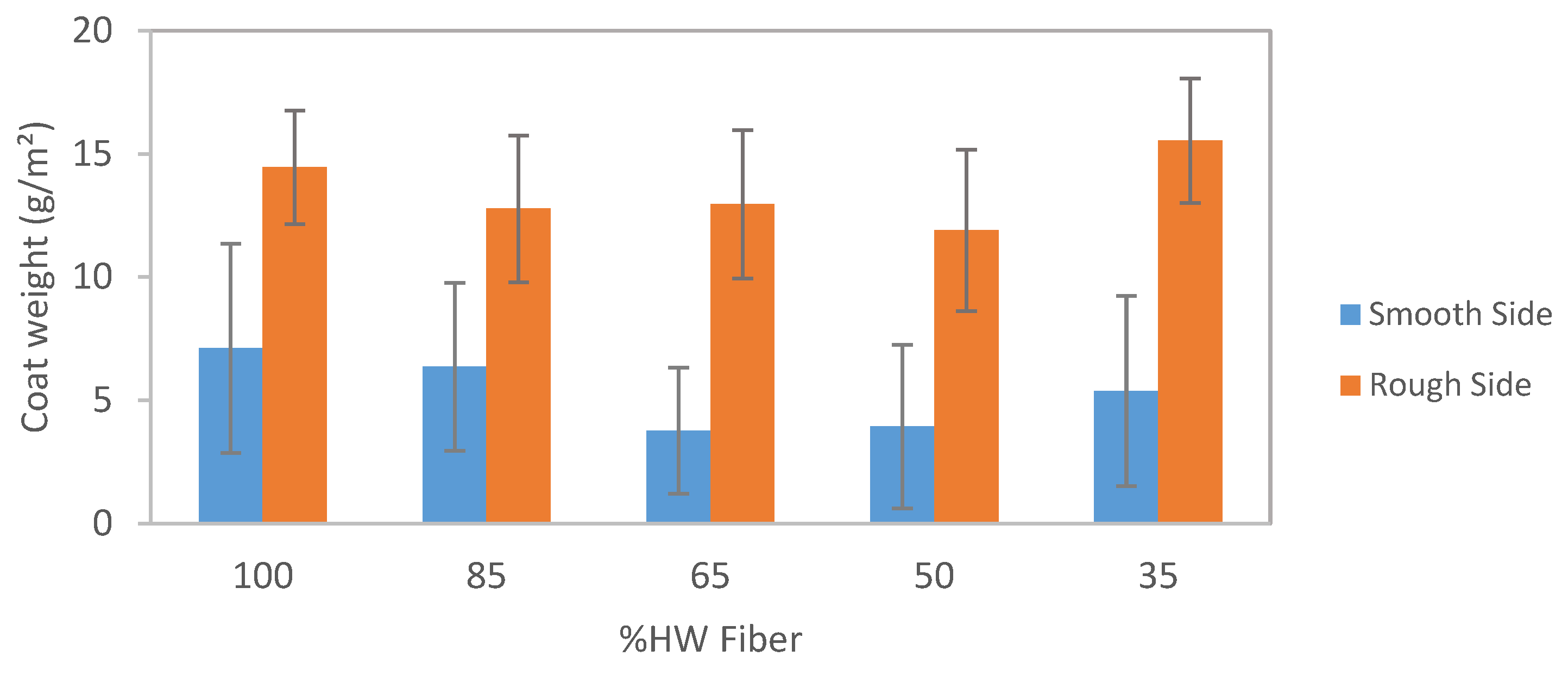
For fiber-blend substrates, increasing the proportion of softwood fibers increased the roughness on both the rough and smooth sides of the sheets, as shown in Table 4. The coat weight increased at high levels of softwood content (Figure 10), which is consistent with the observed rise in surface roughness. Although intermediate softwood substitution levels did not yield higher coat weights relative to the control sample (100% hardwood), the rough side of the samples continued to exhibit a greater coat weight than the smooth side of the coated paper samples, maintaining the trend observed earlier in this study.
Table 4.
Roughness of fiber blends before coating application.
Figure 10.
Variation in the coat weight of samples at different fiber compositions.
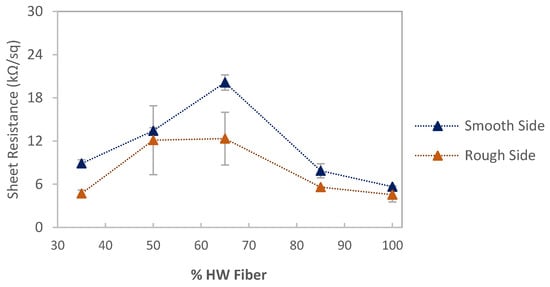
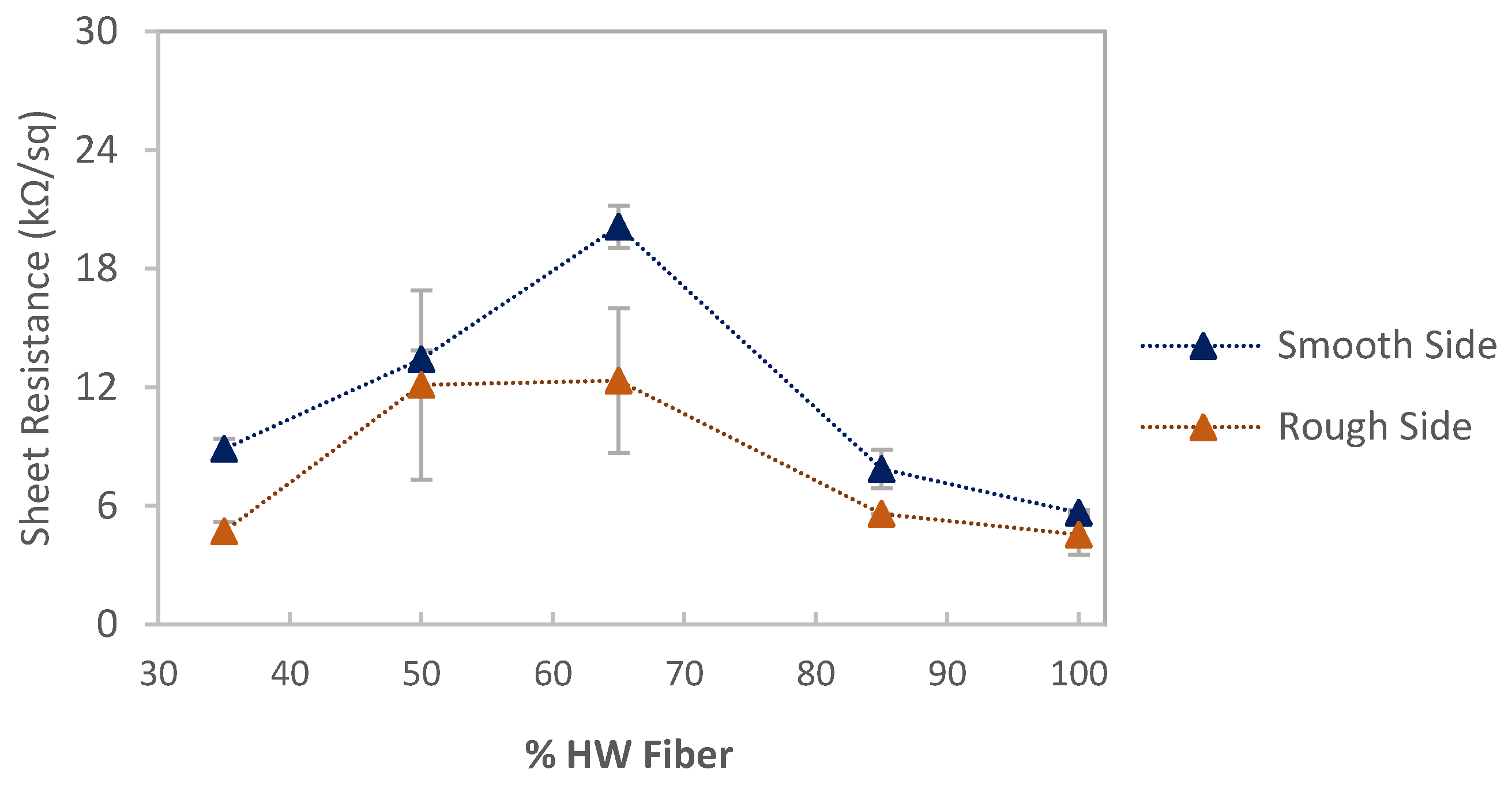
Figure 11 shows that the lowest value for the sheet resistance corresponded to the rough side of the 100% hardwood sample (4.55 kΩ/sq), consistent with earlier results showing that unrefined hardwood substrates outperform their softwood counterparts in terms of the electrical performance. Nevertheless, the rough side of the substrate with 65% softwood also exhibited low sheet resistance (4.77 kΩ/sq). At intermediate softwood substitution, the sheet resistance of the smooth side increased 2.37 times and the rough side 2.66 times. Air permeability and density remained essentially unchanged across all samples. One possible explanation for the low resistance at high softwood contents is that, beyond a certain threshold, increased surface roughness may play a more prominent role in enhancing the mechanical anchoring and interconnection of conductive particles at the surface. The results from Figure 10 and Table 4 support the earlier observation that coat weight is related to the electrical performance of the coated paper. However, coat weight and roughness alone are insufficient to fully account for the electrical behavior of the coated samples, as sheet resistance is influenced by a combination of different structural factors within the paper network.
Figure 11.
The sheet resistance of coated fiber blends. The values in the graph represent the mean of three samples.
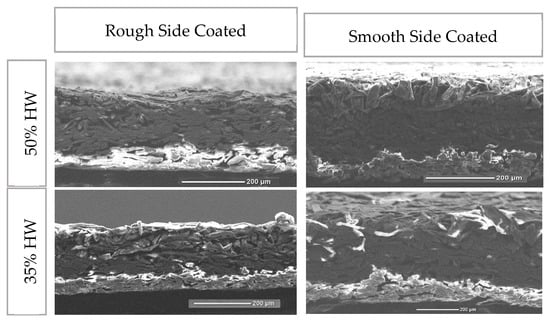
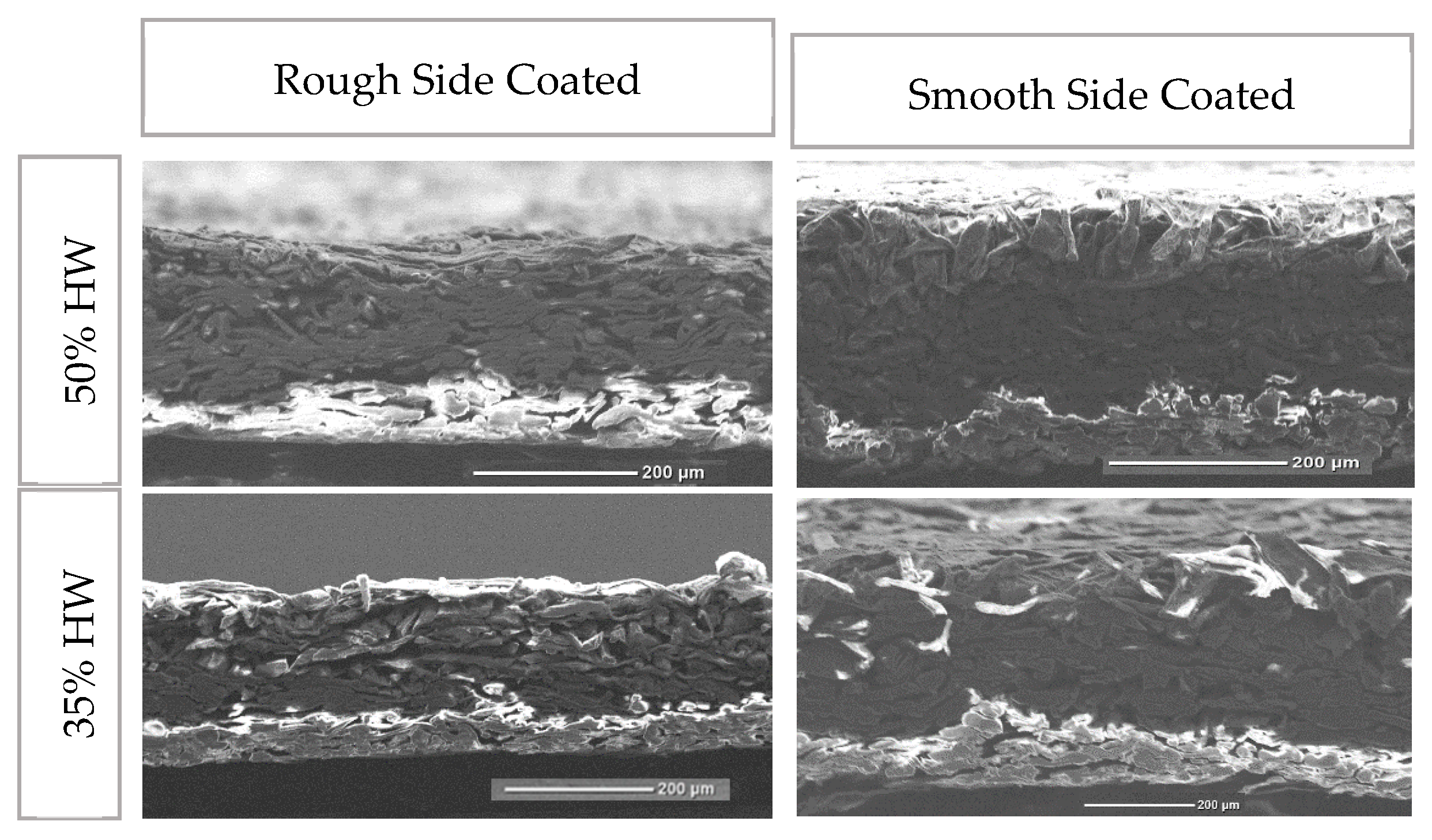
The SEM images of the paper substrates confirmed, as previously noted, that the coating layer penetrates the sheet after application rather than remaining solely on the surface. From the images (cf. Figure 12), it can be seen that the control sample and the substrate with a high proportion of softwood fibers (65% SW) exhibit more extensive coating penetration, which likely contributes to their lower sheet resistance by introducing a greater amount of conductive material into the fiber network.
Figure 12.
Cross-sectional images of coated blends. The light areas represent the uncoated portion of the sheet.
3.5. Effects of Coating Layer on Sheet Resistance
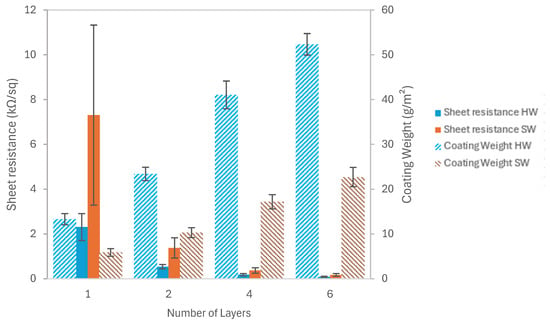
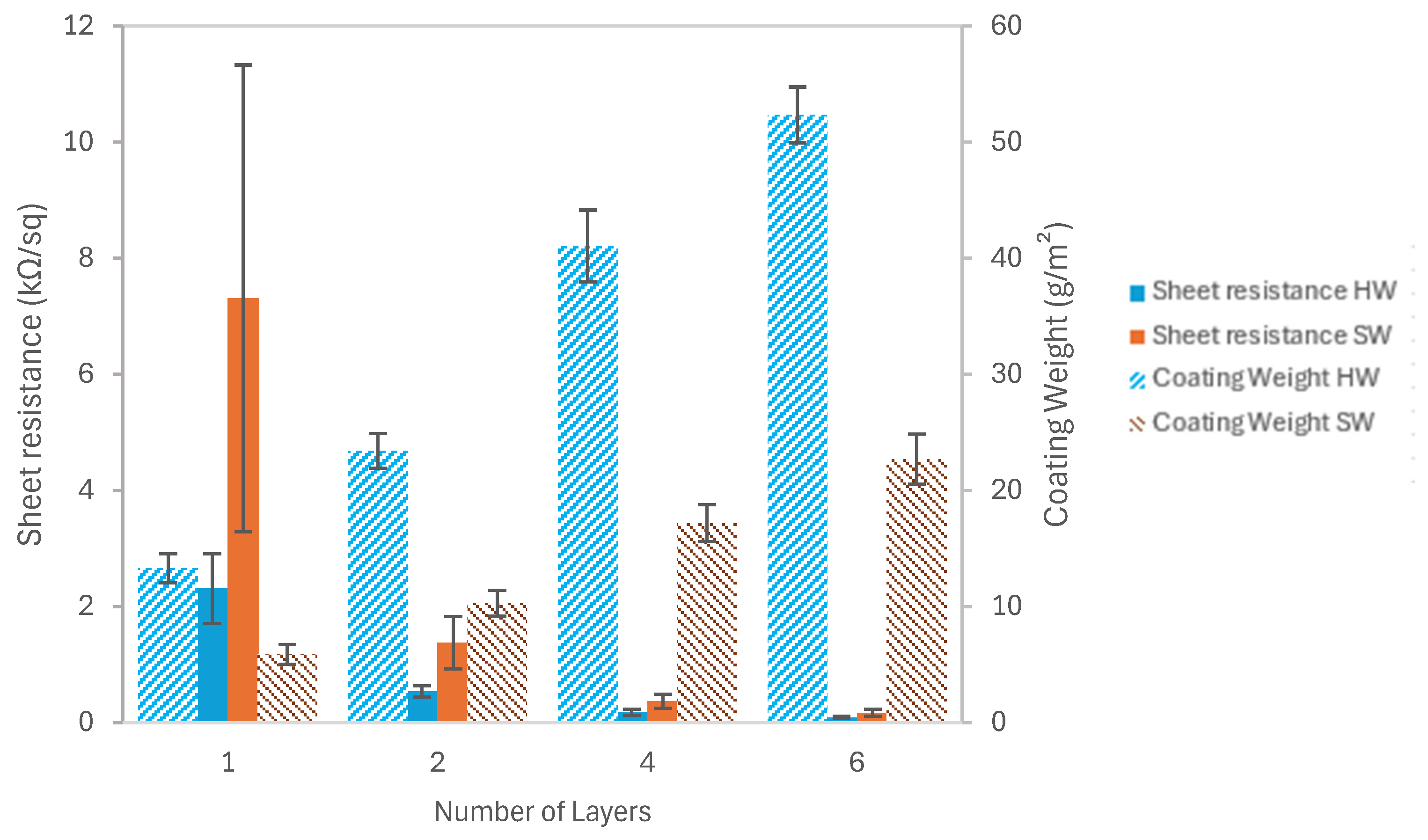
The effect of the number of coating layers on the final electrical properties of the coated paper was studied using non-refined handsheets. In the context of this work, the number of layers refers to the number of times the carbon black coating was applied to each sample. As shown in Figure 13, increasing the number of coating layers reduced sheet resistance and increased coating weight, with the hardwood sheets exhibiting the most favorable performance. These results are in accordance with work published by Kumar et al. [10] and Liu et al. [36], in which higher coat weights led to lower sheet resistance values.
Figure 13.
The sheet resistance, coating weight, and roughness of the samples prepared with unrefined softwood and hardwood fibers.
For samples with a similar coating application, the sheet resistance decreased by approximately a factor of five for both fiber types compared with a single-layer application. After four coating applications, the coating weight increased threefold, while the sheet resistance decreased by factors of about 20 and 12 for softwood and hardwood substrates, respectively. With six coating layers, the sheet resistance when using softwood fibers was 0.17 kΩ/sq, which is 43 times lower than with a single coating layer. For the hardwood sheets, the sheet resistance at six layers was below the detection limit of the four-point probe. Therefore, the value reported of approximately 0.09 kΩ/sq was obtained by fitting an exponential decay trend line (R2 = 0.9975) to the measured sheet-resistance data for 1–4 layers and extrapolating to six layers. Because this value is extrapolated rather than directly measured, it should be viewed as an approximate indication of the expected resistance rather than an exact value.
One explanation for the trend observed in Figure 13 is that with each coating pass, more carbon black is deposited on the surface of the paper, which increases the coating weight and progressively fills the gaps between conductive particles. As a result, a more continuous conductive network is formed, offering multiple pathways for electron transport and thereby lowering the measured sheet resistance.
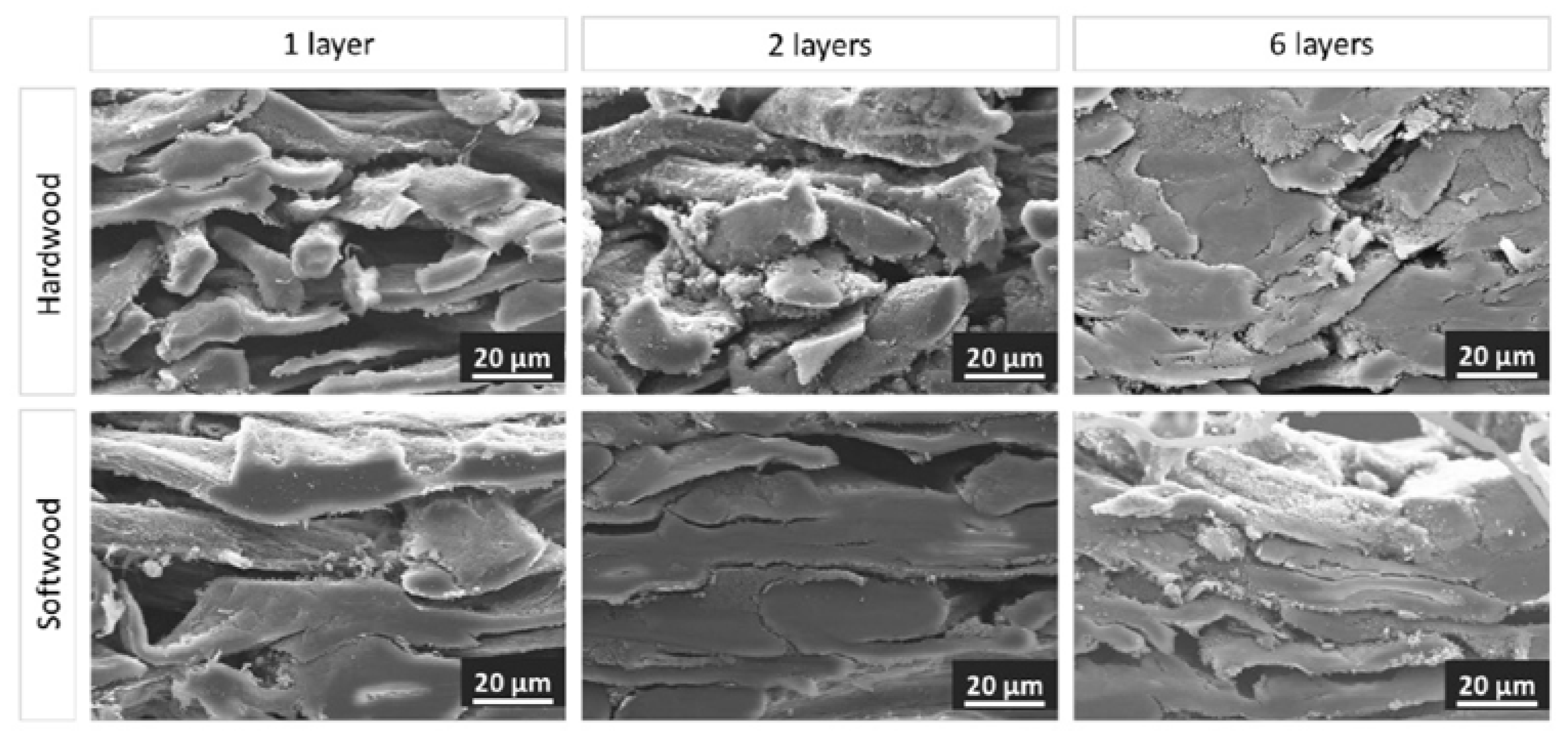
SEM images (Figure 14) show that the coating increases the thickness of the layer covering the fiber and fills the pores. As mentioned before, this increases the contact between the coating material; therefore, electrons have more pathways to flow.
Figure 14.
Cross-sectional images of conductive paper for 100% softwood and 100% hardwood paper substrates at different coating layers. This figure was taken from Millan 2022 [23] with permission from the original author.
3.6. Proof of Concept: Working Electrode Pathway
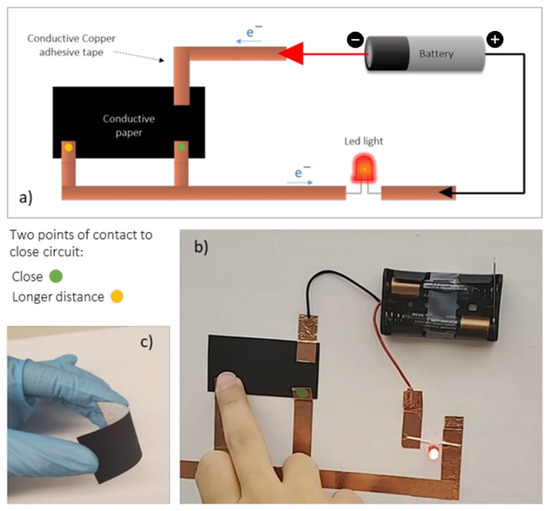
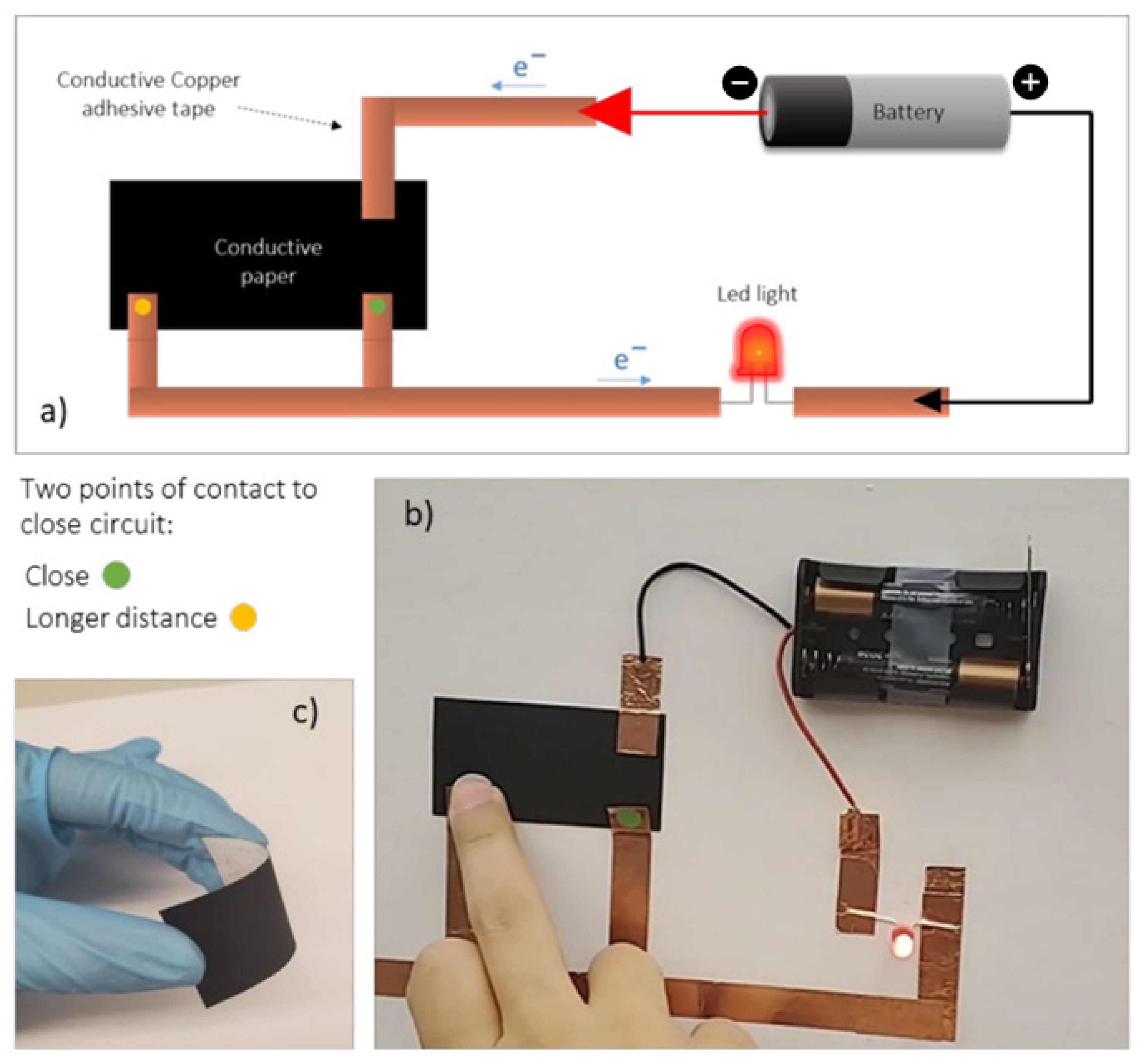
The electric conductivity was evaluated by building a simple circuit, as shown in Figure 15, consisting of an LED light, a power source (AA battery), copper tape with conductive adhesive, circuit tweezers, and the coated paper serving as the electrode pathway.
Figure 15.
(a) Electrical circuit model. (b) Circuit incorporating conductive paper made from unrefined 100% hardwood fibers with six coating layers. (c) Illustration of the material’s bendability. This figure was adapted from Millan 2022 [23] with permission from the original author.
During the test, paper samples with more than two layers of coating were able to conduct enough to close the circuit and light LEDs. In the configuration shown in Figure 15, a substrate with six layers of coating was used. A higher number of coating layers was able to generate light with more intensity. The unrefined hardwood paper with six coating layers exhibited the lowest sheet resistance and produced the highest light intensity when incorporated into the electrical circuit.
The conductive paper maintained stable performance regardless of whether the circuit was closed at a shorter or longer distance (yellow and green markers in Figure 15), and no visible change in conductivity was observed after touching or bending the coated region. The setup was also successfully tested with smaller paper pieces and up to three LEDs, which continued to show good electrical performance. These preliminary results suggest the material is a viable candidate for low-cost, disposable electrodes in sensing or energy applications, though systematic evaluation of bending stability and environmental durability under controlled conditions remains an important direction for future work.
4. Conclusions
It was found that the effect of papermaking variables, specifically fiber type and refining intensity, plays a major role in determining the electrical performance of carbon black-coated cellulose paper, primarily through their influence on coating weight retention. Mechanistically, refining progressively densifies the fiber network by promoting fiber–fiber bonding, collapsing inter-fiber voids, and reducing sheet porosity. This structural consolidation limits the penetration depth and total uptake of the aqueous coating, thereby reducing the quantity of conductive material deposited near the surface. Since carbon black forms conductive networks through particle percolation, lower coating weights translate directly to sparser networks with fewer continuous electron transport pathways and correspondingly higher sheet resistance. Fiber type introduces an additional variable through differences in fiber collapse behavior and surface accessibility: softwood fibers, being longer and more prone to collapse, can create surface heterogeneities that fragment the conductive film, whereas the shorter hardwood fibers potentially support more uniform coating distribution and lower resistance at equivalent coating weights. These findings highlight that optimizing the electrical performance of conductive paper requires co-design of both the coating formulation and the substrate structure, with unrefined hardwood representing the most favorable combination of surface area, porosity, and fiber morphology for this application. From a practical standpoint, these results offer guidance for the production of sustainable conductive papers. The identification of unrefined 100% hardwood as the optimal substrate simplifies the manufacturing process by eliminating energy-intensive refining steps, which represent a significantly high cost and carbon footprint in conventional papermaking. The strong dependence of sheet resistance on coating weight suggests that resistance can be tuned across several orders of magnitude—from approximately 4.55 kΩ/sq with a single coating pass to an estimated 0.009 kΩ/sq with six layers—by simply controlling the number of coating applications, without modifying the formulation or the substrate.
Supplementary Materials
The following supporting information can be downloaded at https://www.mdpi.com/article/10.3390/coatings16050526/s1. Figure S1: Results of implementing JMP multivariable analysis to determine the correlation (r) between sheet resistance and coating weight.
Author Contributions
A.M. (Adriana Millan): Conceptualization, formal analysis, investigation, methodology, and visualization; A.M. (Anny Morales): Conceptualization, formal analysis, writing—original draft, visualization; N.C.: Writing—original draft, writing—review and editing; F.U.: Writing—review and editing; R.A.V.: Methodology, writing—review and editing; J.J.P.: Funding acquisition, methodology, resources and writing—review and editing. All authors have read and agreed to the published version of the manuscript.
Funding
The present work was supported by North Carolina State University.
Institutional Review Board Statement
Not applicable.
Informed Consent Statement
Not applicable.
Data Availability Statement
The data that supports the findings of the present research are available upon request from the corresponding author.
Conflicts of Interest
The authors declare no conflicts of interest.
References
- Koppolu, R.; Blomquist, N.; Dahlström, C.; Toivakka, M. High-Throughput Processing of Nanographite-Nanocellulose-Based Electrodes for Flexible Energy Devices. Ind. Eng. Chem. Res. 2020, 59, 11232–11240. [Google Scholar] [CrossRef] [Scilit]
- Yuan, Y.; Zhang, Y.; Liu, R.; Liu, J.; Li, Z.; Liu, X. Humidity sensor fabricated by inkjet-printing photosensitive conductive inks PEDOT:PVMA on a paper substrate. RSC Adv. 2016, 6, 47498–47508. [Google Scholar] [CrossRef] [Scilit]
- Hu, L.; Choi, J.W.; Yang, Y.; Jeong, S.; La Mantia, F.; Cui, L.F.; Cui, Y. Highly conductive paper for energy-storage device. Proc. Natl. Acad. Sci. USA 2009, 106, 21490–21494. [Google Scholar] [CrossRef] [Scilit] [PubMed]
- Huang, L.; Rao, W.; Fan, L.; Xu, J.; Bai, Z.; Xu, W.; Bao, H. Paper electrodes coated with partially-exfoliated graphite and polypyrrole for high-performance flexible supercapacitors. Polymers 2018, 10, 135. [Google Scholar] [CrossRef] [Scilit] [PubMed]
- Millan, A.; Morales, A.; Venditti, R.A.; Pawlak, J.J. Coating Formulations Based on Carbon Black: An Alternative to Develop Environmentally Friendly Conductive Cellulose Paper. Materials 2025, 18, 2708. [Google Scholar] [CrossRef] [Scilit]
- Zhang, Y.; Zhang, L.; Cui, K.; Ge, S.; Cheng, X.; Yan, M.; Yu, J.; Liu, H. Flexible electronics based on micro/nanostructured paper. Adv. Mater. 2018, 30, 1801588. [Google Scholar] [CrossRef] [Scilit]
- Jung, Y.H.; Chang, T.H.; Zhang, H.; Yao, C.; Zheng, Q.; Yang, V.W.; Mi, H.; Kim, M.; Cho, S.J.; Park, D.W.; et al. High-performance green flexible electronics based on biodegradable cellulose nanofibril paper. Nat. Commun. 2015, 6, 7170. [Google Scholar] [CrossRef] [Scilit]
- Ding, C.; Qian, X.; Shen, J.; An, X. Preparation and characterization of conductive paper via in-situ polymerization of pyrrole. Bioresources 2010, 5, 303–315. [Google Scholar] [CrossRef] [Scilit]
- Johnston, J.H.; Moraes, J.; Borrmann, T. Conducting polymers on paper fibres. Synth. Met. 2005, 153, 65–68. [Google Scholar] [CrossRef] [Scilit]
- Kumar, V.; Forsberg, S.; Engström, A.C.; Nurmi, M.; Andres, B.; Dahlström, C.; Toivakka, M. Conductive nanographite-nanocellulose coatings on paper. Flex. Print. Electron. 2017, 2, 035002. [Google Scholar] [CrossRef] [Scilit]
- Tang, Y.; He, Z.; Mosseler, J.A.; Ni, Y. Production of highly electro-conductive cellulosic paper via surface coating of carbon nanotube/graphene oxide nanocomposites using nanocrystalline cellulose as a binder. Cellulose 2014, 21, 4569–4581. [Google Scholar] [CrossRef] [Scilit]
- Tang, Y.; Mosseler, J.A.; He, Z.; Ni, Y. Imparting cellulosic paper of high conductivity by surface coating of dispersed graphite. Ind. Eng. Chem. Res. 2014, 53, 10119–10124. [Google Scholar] [CrossRef] [Scilit]
- Martin, A.; Dudkowiak, A.; Łukawski, D. Cost-effective electroconductive sodium lignosulfonate/carbon nanotube composite coating for paper electronics. Diam. Relat. Mater. 2023, 139, 110372. [Google Scholar] [CrossRef] [Scilit]
- Zhao, C.; Wang, J.; Lu, L. Preparation and application of water-based nano-silver conductive ink in paper-based 3D printing. Rapid Prototyp. J. 2022, 28, 747–755. [Google Scholar] [CrossRef] [Scilit]
- Mäkel, T.; Jussila, S.; Vilkman, M.; Kosonen, H.; Korhonen, R. Roll-to-roll method for producing polyaniline patterns on paper. Synth. Met. 2003, 135, 41–42. [Google Scholar] [CrossRef] [Scilit]
- Poulin, A.; Aeby, X.; Siqueira, G.; Nyström, G. Versatile carbon-loaded shellac ink for disposable printed electronics. Sci. Rep. 2021, 11, 23784. [Google Scholar] [CrossRef] [Scilit] [PubMed]
- Wang, S.; Liu, N.; Yang, C.; Liu, W.; Su, J.; Li, L.; Yang, C.; Gao, Y. Fully screen printed highly conductive electrodes on various flexible substrates for asymmetric supercapacitors. RSC Adv. 2015, 5, 85799–85805. [Google Scholar] [CrossRef] [Scilit]
- Gharehkhani, S.; Sadeghinezhad, E.; Kazi, S.N.; Yarmand, H.; Badarudin, A.; Safaei, M.R.; Zubir, M.N.M. Basic effects of pulp refining on fiber properties—A review. Carbohydr. Polym. 2015, 115, 785–803. [Google Scholar] [CrossRef] [Scilit]
- Ihalainen, P.; Määttänen, A.; Järnström, J.; Tobjörk, D.; Österbacka, R.; Peltonen, J. Influence of surface properties of coated papers on printed electronics. Ind. Eng. Chem. Res. 2012, 51, 6025–6036. [Google Scholar] [CrossRef] [Scilit]
- Siegel, A.C.; Phillips, S.T.; Dickey, M.D.; Lu, N.; Suo, Z.; Whitesides, G.M. Foldable printed circuit boards on paper substrates. Adv. Funct. Mater. 2010, 20, 28–35. [Google Scholar] [CrossRef] [Scilit]
- Öhlund, T.; Örtegren, J.; Forsberg, S.; Nilsson, H.E. Paper surfaces for metal nanoparticle inkjet printing. Appl. Surf. Sci. 2012, 259, 731–739. [Google Scholar] [CrossRef] [Scilit]
- Kattumenu, R.; Rebros, M.; Joyce, M.; Fleming, P.D.; Neelgund, G. Effect of substrate properties on conductive traces printed with silver-based flexographic ink. Nord. Pulp Pap. Res. 2009, 24, 101–106. [Google Scholar] [CrossRef] [Scilit]
- Millan, A. Development of an Environmentally Friendly Conductive Cellulose Paper. The Effect of Fiber Type, Refining and Paper Properties on the Electrical Conductivity of Carbon Black-Carboxymethyl Cellulose Coated Paper. Master’s Thesis, Department of Forest Biomaterials, North Carolina State University, Raleigh, NC, USA, 2022. [Google Scholar]
- Batchelor, W.J.; Kure, K.-A.; Ouellet, D. Refining and the development of fibre properties. Nord. Pulp Paper Res. J. 1999, 14, 285–291. [Google Scholar] [CrossRef] [Scilit]
- Cole, C.A.; Hubbe, M.A.; Heitmann, J. Water release from fractionated stock suspensions. Part 1: Effects of the amounts and types of fiber fines. Tappi J. 2008, 7, 28–32. [Google Scholar] [CrossRef] [Scilit]
- Lin, T.; Yin, X.; Retulainen, E.; Nazhad, M.M. Effect of chemical pulp fines on filler retention and paper properties. Appita J. 2007, 60, 469–473. [Google Scholar]
- Horn, R.A. Morphology of Wood Pulp Fiber from Softwoods and Influence on Paper Strength; Department of Agriculture, Forest Service, Forest Products Laboratory: Madison, WI, USA, 1974. [Google Scholar]
- Fišerová, M.; Gigac, J.; Balberčák, J. Relationship Between Fibre Characteristics and Tensile Strength of Hardwood and Softwood Kraft Pulps. Cellul. Chem. Technol. 2010, 44, 249–253. [Google Scholar]
- Abitz, P.; Luner, P. The Effect of Refining on Wet Fiber Flexibility and its Relationship to Sheet Properties. In Fundamentals of Papermaking, Transactions of the 9th Fundamental Research Symposium, Cambridge, UK; Baker, C.F., Punton, V., Eds.; Fundamental Research Committee (FRC): Manchester, UK, 1989; pp. 67–86. [Google Scholar] [CrossRef] [Scilit]
- Koponen, A.; Cecchini, J.; Heiskanen, S.; Selenius, M.; Jäsberg, A. Vacuum-assisted water removal from highly refined furnishes. Bioresources 2023, 18, 1398–1419. [Google Scholar] [CrossRef] [Scilit]
- Mansfield, S.D.; Kibblewhite, R.P.; Riddell, M.J.C. Characterization of The Reinforcement Potential of Different Softwood Kraft Fibers in Softwood/Hardwood Pulp Mixtures. Wood Fiber Sci. 2004, 36, 344–358. [Google Scholar]
- Patari, S.; Mahapatra, P.S. Liquid wicking in a paper strip: An experimental and numerical study. ACS Omega 2020, 5, 2931–22939. [Google Scholar] [CrossRef] [Scilit]
- Wan, C.; Liu, Y.; Li, X.; Xu, H.; Guo, R.; Liu, J. Interfacial adhesion effects of liquid metal printed electronics on general substrates: Mechanisms and applications. InfoMat 2025, 7, e70029. [Google Scholar] [CrossRef] [Scilit]
- Li, H.; Qian, X.; Li, T.; Ni, Y. Percolation for coated conductive paper: Electrical conductivity as a function of volume fraction of graphite and carbon black. BioResources 2015, 10, 4877–4885. [Google Scholar] [CrossRef] [Scilit]
- Phillips, C.; Al-Ahmadi, A.; Potts, S.J.; Claypole, T.; Deganello, D. The effect of graphite and carbon black ratios on conductive ink performance. J. Mater. Sci. 2017, 52, 9520–9530. [Google Scholar] [CrossRef] [Scilit] [PubMed]
- Liu, H.; Jiang, H.; Du, F.; Zhang, D.; Li, Z.; Zhou, H. Flexible and Degradable Paper-Based Strain Sensor with Low Cost. ACS Sustain. Chem. Eng. 2017, 5, 10538–10543. [Google Scholar] [CrossRef] [Scilit]

Disclaimer/Publisher’s Note: The statements, opinions and data contained in all publications are solely those of the individual author(s) and contributor(s) and not of MDPI and/or the editor(s). MDPI and/or the editor(s) disclaim responsibility for any injury to people or property resulting from any ideas, methods, instructions or products referred to in the content. |
© 2026 by the authors. Licensee MDPI, Basel, Switzerland. This article is an open access article distributed under the terms and conditions of the Creative Commons Attribution (CC BY) license.