


Abstract
This study aims to develop a scale to measure Islamic parenting practices grounded in Hadith and Qur’anic teachings. The Islamic Parenting Style Scale (IPSS) was created using experimentally derived items rated on a 5-point Likert scale. Data were collected from 818 parents aged 30 to 65 from both rural and urban districts of Khyber Pakhtunkhwa, Pakistan. Exploratory factor analysis examined the scale’s factor structure and validity. The results identified three factors in the IPSS: the Compassionate, Guidance/Supervision, and Cognitive/Reflective domains. The scale also demonstrated strong internal consistency, with a Cronbach’s alpha of 0.92 and a composite reliability (CR) above 0.07 for all three factors. Confirmatory factor analysis confirmed the three-factor model with good fit indices. Overall, these findings suggest that the Islamic Parenting Style Scale is a valid and reliable tool for assessing Islamic parenting styles among parents. This research significantly enhances the understanding of parenting practices rooted in Islamic principles.
1. Introduction
A child’s initial interactions occur within the family, where they acquire socialization skills from their parents. (Syafrianty et al. 2021). To cultivate strong personalities in children and enhance their capabilities, it is essential to address psychological well-being and mental health by improving parental skills and practices. Only effective parenting approaches can achieve this level of psychological well-being and optimal mental health. (Azizah et al. 2023). In Islam, children are of great importance, as illustrated by the Qur’an’s multiple direct references to ‘children’ and its various indirect references throughout. The Qur’an underscores children’s rights and delineates parental obligations (Akin 2012).
The parenting style primarily concerns the emotional atmosphere between parent and child, which influences their communication. It pertains to the atmosphere that parents establish for their children’s upbringing, in which they manifest their attitudes through their behavior. The combination of these attitudes and behaviors influences the child’s conduct, perspectives, and overall growth. It is a system that mixes various parental attitudes and techniques, forming an environment for child-rearing practices (Darling and Steinberg 1993). Currently, parenting style has two main dimensions: control and warmth or acceptance (Maccoby and Martin 1983). The four parenting styles are related to these two dimensions (Spraitz 2011). Parenting requires ongoing efforts to foster self-awareness, realize one’s potential, and embrace accountability for one’s actions (Sari 2019). One method is Islamic parenting, a term that combines the adjective “Islamic” with “parenting,” often rendered as “Islamic parenting”. This parenting approach is grounded in Islamic principles derived from the Qur’an and Sunnah (the sayings and practices of the Prophet Muhammad). It contrasts with Western parenting techniques in various aspects and contexts.
In a time of swift transformation and heightened need for robust ethics and character, Muslim parents must adjust and mentor their children from an early age to avert moral deterioration. This requires prudent, disciplined use of technology. Islamic parenting is a comprehensive approach founded on the reciprocal rights and obligations of parents and children. In Islam, child-rearing is regarded as a sacred responsibility bestowed by Allah, with parents holding a moral commitment to both Allah and their offspring to fulfill their obligations as guardians. The Qur’an and Hadith, as the sole legitimate sources for Muslims, also function as recommendations for parenting styles and practices Ayunina and Zakiyah 2022; Azizah et al. 2023; Hidayah and Romelah 2022). Islam influences many facets of life, making parenting not merely a matter of nurturing children but also of imparting a moral compass (Franceschelli and O’Brien 2014). The concept of parenting styles in Islamic teachings differs from that of Western society. In Islam, parenting is grounded in the teachings of the Qur’an and the Hadith (Franceschelli and O’Brien 2014; Hidayah and Romelah 2022; Rahmawati 2021; Tahir 2015).
Research from Malaysia and Indonesia indicates a transition from conventional authoritarian parenting to more democratic methods, which beneficially affect children’s social and emotional development. (Fathoni et al. 2024). Furthermore, Islamic teachings promote gender equality in parenting roles, fostering a balanced and fair family environment (Dwinandita 2024). These regional insights provide an informative look at how Islamic values are being integrated into modern parenting practices.
Several studies have examined parenting styles in relation to religious, spiritual, and moral aspects (Aulia et al. 2022; Gambari and Olawale 2023; Salaam 2007; Siyana et al. 2023). For instance, Fitriyah and Maksum (2024) suggest that, with recent technological advancements, Muslim parents are adapting Islamic principles to manage their children’s exposure to digital media. Furthermore, Alhabsyi (2024) highlights the need to instill moral responsibility, emotional warmth, and religious commitment, in line with the Qur’an and Sunnah, to navigate the contemporary socio-cultural challenges adolescents face. Empirical research shows that prophetic parenting practices positively affect adolescents’ psychological well-being and prosocial behavior (Aisyah and Daud 2025).
However, as per our knowledge, no empirically standardized tool measures the same phenomenon in light of the Qur’an and Sunnah. In Pakistan, some research has indirectly touched on religion-based parenting; however, there is a lack of a scale rooted in Shariah principles (Zaman 2014; Raza-ul-Habib et al. 2024). The latest study attempting to develop such a scale aimed to create a parental religious training tool, but it relied on Western concepts (Tahir et al. 2026). In Islam, the way of life is primarily guided by the Qur’an and the Sunnah. Therefore, parenting styles should be rooted in the teachings of these two sources.
Pakistan, with its 99.47% (Pakistan Bureau of Statistics 2021; Wikipedia Contributors 2024) Muslim population, prioritizes marriage and child-rearing but lacks a culturally relevant scale to assess parenting styles based on Islamic values. Western scales are unsuitable due to their misalignment with Muslim beliefs. In Khyber Pakhtunkhwa (KP), where religion is fervently practiced, there is a critical need for a parenting scale grounded in Islamic principles outlined in the Qur’an. Therefore, this study aims to address that gap by identifying parenting styles in KP, a province in Pakistan, which are influenced by religious beliefs and practices. Additionally, constructing a scale based on Islamic teachings for the Muslim community in this area will enhance research studies regarding Islamic parenting styles and their implications for child personality development. Therefore, this study aims to develop a scale of Islamic parenting styles to evaluate their influence on child personality development.
2. Conceptual Framework of the Study
The Qur’an discusses parenting through the roles of father and mother, as illustrated in the stories of various prophets such as Prophet Ibrahim AS, Luqman al-Hakim, Prophet Nuh AS, Prophet Yaakub AS, Prophet Zakariya AS, and the story of Syeikh Kabir, which is interpreted as Prophet Syuaib AS, along with Maryam AS, Asiah, Ummu Maryam, and Ummu Musa. (Husain et al. 2020; Gambari and Olawale 2023).
Abdullah Nasih Ulwan presents an exemplary paradigm of parenting in his book Tarbiyat al-Awlad fi al-Islam, which encompasses physical, psychological, moral, religious, and sexual education. His all-around parenting style emphasizes the importance of knowledge in raising children. (Purnama 2018). This methodology, called Holistic Parenting, has five parts and ways to raise and teach kids. This integrated parenting strategy includes al Qudwah (ideal role model), al’ Adah (habituation), al’Mau’idzah (communication), al Mulahadzah (care and control), and Al-‘uqubahwal Ujaroh (consequence). It is regarded as an integrated approach that fosters a positive psychological environment and effective parenting practices.
Another paradigm grounded in Islamic principles is that articulated by Al Ghazali, recognized by scholars in his seminal work, Ihyā’ulūm ad-dīn. The name of this model is the parenting skills attribute model. In the model, he found three important areas: the relationship with Allah, with other people, and with children. Manap and Baba (2016) emphasize the importance of education and knowledge about the creator to guide parenting.
Western psychological theories have thoroughly examined parenting styles, defined as persistent patterns of parental behavior that affect child development. Schaefer’s (1959, 1965) initial parenting approach is founded on three dichotomies: acceptance against rejection, psychological autonomy versus psychological control, and rigorous behavioral control versus slack behavioral control. Building on Schaefer’s research, Baumrind (1966, 1968) formulated her typology of parenting styles, i.e., authoritative, authoritarian, and permissive, to delineate different mechanisms of parental control and socialization (Robinson et al. 1995). Maccoby and Martin (1983) subsequently expanded these styles by delineating two principal dimensions: demandingness and responsiveness. Demandingness denotes the control and supervision parents impose, but responsiveness signifies warmth, acceptance, and involvement. Maccoby and Martin (1983) and Baumrind (1989) subsequently identified a fourth style, uninvolved parenting, characterized by low demandingness and low responsiveness (Riany et al. 2017).
A review article analyzed research studies from 1995 to 2012 and identified that 53 articles utilized the parenting style questionnaire derived from Baumrind’s taxonomy of parenting styles. (Olivari et al. 2013). This typology has been used as a framework for numerous research studies. (Stewart and Bond 2002). Darling and Steinberg (1993) proposed that this paradigm emphasizes the importance of warmth and trust in building children’s competence; however, it neglects Islamic values such as tarbiyah and spiritual accountability, thereby limiting its relevance for Muslim families. The current Islamic Parenting Style Scale, based on the principles of the Qur’an and Hadith, significantly differs from previous parenting scales, including Baumrind’s (Muth 2012; Power 2013), and is grounded in Islamic philosophy. In Islam, parenting is a sacred duty for which parents are answerable to Allah Almighty, as highlighted in Surah At-Tahrim, Verse 6. Consequently, parenting, along with Qur’anic and Hadith principles, demonstrates commitment to the Creator. Conversely, Western-developed parenting frameworks predominantly emphasize parental responsibilities grounded in our consciousness, excluding considerations of divine accountability. This secular perspective, common in Western scientific frameworks, separates religion from science. In contrast, the Islamic Parenting Style Scale and Holistic Parenting Style Scale by Rahmawati (2021) adopt an integrated spiritual and practical approach.
2.1. Conceptualizing Islamic Parenting Style in the Light of Qur’an and Hadith
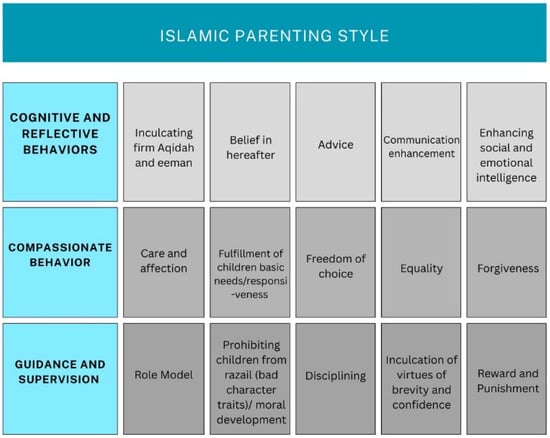
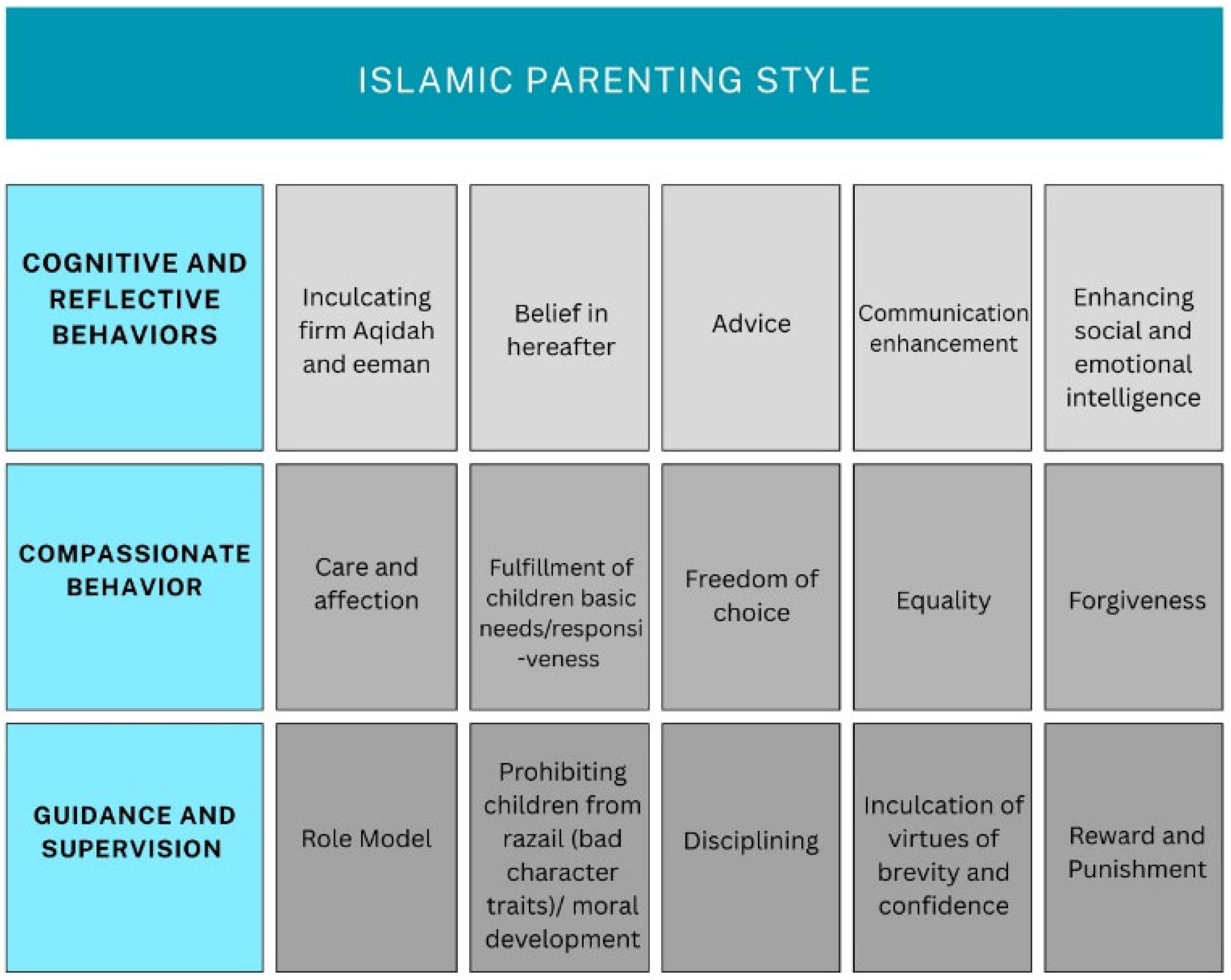
The Qur’an and the Sunnah of the Prophet Muhammad serve as the conceptual framework for this study. Therefore, this study examines the essential factors of parenting as delineated in the Qur’an and Hadith. Later, these factors are categorized into three categories: cognitive/reflective behaviors, compassionate behaviors, and guidance/supervision behaviors. The conceptual framework is presented in Figure 1.
Figure 1.
Components and sub-components of Islamic Parenting Style. Source: Authors’ Own.
2.1.1. Cognitive and Reflective Behaviors
Empirical findings suggest that prophetic parenting, combined with religiosity, significantly predicts adolescents’ self-concept, underscoring the significance of faith-based cognitive socialization processes in developmental outcomes (Tarmidi et al. 2025). Recent research has examined prophetic parenting methods as ways to support various aspects of early child development, such as cognitive, language, physical, socio-emotional, and moral growth (Hapsari 2026).
Islamic education seeks to inculcate values and strengthen a child’s capacity for analysis and evaluation. Instilling firm Aqidah (belief) and iman (faith) means teaching young people the fundamental principles of Islam and helping them to develop a strong faith. Have faith in an afterlife: Teach people that their deeds have repercussions in the next world, encouraging them to be responsible and uphold moral standards. This involves disseminating Islamic legal counsel, guidance, information, and moral instruction. The aim is to foster mutual understanding and appreciation between parents and children, thereby enhancing the quality of their conversations. Children’s emotional intelligence and sociability can be improved by teaching them Islamic values to manage challenging emotions and build healthy relationships.
Firm Aqidah and Iman
In Islamic tradition, parenting is closely linked to the development of a child’s belief system, namely aqidah and iman. These two core elements of faith are based on six fundamental beliefs: faith in Allah, the angels, the prophets, the sacred texts, the Day of Resurrection, and the afterlife (Hamdan 2009). Parental guidance is seen as an important way to pass these beliefs to children. For example, the Qur’anic verse about Luqman illustrates an intergenerational model of transmitting faith through counseling and moral guidance (Qur’an 31:13). Similarly, the concept of tawhid (the oneness of Allah) is introduced during early childhood development. Hence, aqidah and iman can be operationalized as a dimension within cognitive and reflective behavior.
Belief in the Hereafter
Islam advocates for a planned life, with the belief in akhira (the afterlife) as a guiding principle in shaping moral reasoning and behavioral orientation. The concept suggests that life is purposeful and that individuals will be accountable for their actions both now and in the hereafter. The concept of accountability communicated by parents guides children to understand the importance of responsibility, morality, and ethical behavior. Therefore, belief in the hereafter can be understood as a dimension that affects a child’s moral awareness and self-regulation.
Advice and Communication Enhancement
Parent–-child communication is significant for transmitting values and norms to children. In Islam, communication is characterized by empathy, clarity, and moral reasoning. It is clear from the Qur’anic verse where Luqman advises his son that it is presented in a dialogical and instructive manner (Qur’an 31:17).
Moreover, the communication style of Prophet Muhammad was gentler and non-confrontational, as suggested by the prophetic traditions. Several narrations report that the Prophet Muhammad used a direct approach to correcting someone, repeating his words for emphasis and to maintain context-sensitive dialogue.
Hence, this dimension influences parents’ communication to promote cognitive engagement and reflective thinking, enabling children to evaluate their actions in the light of moral expectations.
Enhancing Social and Emotional Intelligence
Islamic teaching also stresses respecting others and developing empathy for fellow human beings. Qur’anic teaching also emphasizes controlling anger, pardoning others, and demonstrating generosity (Qur’an 3:134). Similarly, prophetic narrations further highlight the importance of empathy, respect, and ethical conduct within the social circle. Hence, the concept of social and emotional intelligence aligns with the teachings of the Qur’an and the Prophet Muhammad.
2.1.2. Compassionate Behavior
In the context of parent–child relationships, this section emphasizes the importance of love, empathy, and equity. Being kind and kind in one’s everyday interactions is an expression of care and affection. Responding quickly and generously to children’s physical, emotional, and psychological needs is essential to meeting their basic needs. Freedom of choice: letting kids make judgments that are suitable for their age within the limits set by Islam. Equity means not discriminating against any child based on their gender or any other characteristic. Let youngsters learn from their mistakes without resorting to harsh punishment; this includes teaching and practicing forgiveness.
Care and Affection
Essential human wants include the desire for care and the need to belong. Adults must cherish and rely on children from their earliest stages of life. Their sole challenge is to find an individual with whom they connect and to receive attention and compassion from that person. This link originated with the parents, subsequently extended to the peer group, and ultimately encompassed the community. Consequently, Islam emphasizes nurturing infants with compassion and tenderness. According to Islam, parents must maintain empathy towards their children to help them develop emotionally (Beshir and Beshir 2004). The life of the Prophet provided numerous examples of his affectionate interactions with young children and his companions. For instance, a narration describing Prophet Muhammad interacting with a child that highlights his sensitivity to the child’s emotional state, such as recognizing the child’s grief and engaging in dialogue to provide comfort.
Responsiveness
Responsiveness is defined as the extent to which parents meet their children’s fundamental needs. Islam holds parents accountable for fulfilling their children’s fundamental needs, including providing housing and securing a legitimate income. Al-Ghazali emphasized this point in his work Ihyā’ Ulūm ad-Dīn, which encompasses choosing an appropriate name for their children at birth, providing literacy education, and arranging suitable marriages for them. Consequently, parents have an obligation to assist in their children’s physical and spiritual development (Akin 2012). This perspective aligns with the concept of responsive parenting, where timely and appropriate parental support facilitates the development of cognitive and adaptive behaviors.
Freedom of Choice
Islam advocates for a democratic framework in child development, permitting children to make autonomous decisions with parental oversight. For example, the Qur’an underscores the significance of refraining from coercion in the selection of Islam (Qur’an 2:256). This guided autonomy enables children to develop their leadership skills, self-efficacy, and reflective thinking while remaining within the defined boundaries.
Equal Treatment of Children
Islamic teachings emphasize social fairness, and this should also be reflected in parental treatment, as it is an important aspect of both ethical upbringing and psychological development. Prophetic narrations stress the importance of treating offspring justly and eliminating favoritism to achieve balanced relationships within the family.
Just parental treatment contributes to children’s perceptions of justice, trust, and emotional security, which, in turn, helps develop their ability to be compassionate.
Forgiveness
Forgiveness entails forgiving children for mistakes and offering them unwavering positive respect. Forgiveness does not include overlooking their deficiencies or neglecting to oversee and direct them. Surah Yusuf in the Qur’an narrates the account of Prophet Yaaqub (A.S.), highlighting the significance of paternal forgiveness towards their children. (Qur’an 12:96-97). Islam wants parents to model forgiveness so their kids will learn it. The Prophet exemplified the highest standard of forgiveness throughout his life (Riaz and Rahman 2023). He stressed showing mercy to those on earth so that Allah shows mercy to you (Sunan al-Tirmidhi, The Book of Piety and Kinship, Hadith No. 30).
2.1.3. Guidance and Supervision
The literature on Islamic parenting often emphasizes the importance of parental guidance and supervision in moral and behavioral development. A bibliometric study shows that research scholars are increasingly focusing on Quranic and Prophetic parenting concepts, such as role modeling, behavioral monitoring, and character building through moral education (Nirwana et al. 2024). In fact, character development, constructive role modeling, and self-control are the key goals of this area of study. Parents serve as role models for their children by demonstrating proper Islamic conduct and character. Preventing children from developing negative character traits and promoting moral development involves keeping them from engaging in harmful activities and teaching them moral ideals. Disciplining entails guiding behavior by providing appropriate corrections as needed. Inculcation of the virtues of conciseness and self-assurance: instructing young people in the art of articulate, purposeful, and modest speech. The Islamic approach utilizes rewards and punishments to reinforce positive behavior.
Role Model
It is mentioned in the Qur’an that:
Islamic sources emphasize exemplary conduct as a key method of moral transmission, as reflected in the Quranic verse that describes Prophet Muhammad as an “excellent example” (Qur’an 33:21). From a child development perspective, parents’ behavior acts as a role model (Riaz and Rahman 2023) through which the child interprets actions as right or wrong, thus playing a significant role in shaping children’s behavioral patterns.
Prohibiting Children from Razail (Bad Character Traits)
Young children often exhibit immaturity and engage in actions such as deceit, theft, and tattling. Behavioral regulations are important in such cases to avoid harmful or socially undesirable behaviors. Islam encourages moral refinements and discourages negative dispositions, which are referred to as razail. Prophetic traditions emphasize the importance of good character; one narration of Prophet Muhammad states that the best among you are those with the best morals. This underscores the significance of moral character development while avoiding trivial matters. Analytically, this aspect reflects parental efforts to shape their child’s character by helping them distinguish between appropriate and inappropriate behaviors.
Disciplining
Discipline in Islam entails parental oversight of children’s activities and tarbiyah (nurturing) to foster positive habits and mitigate harmful ones. Discipline in Islam pertains to all aspects of life; for instance, these disciplinary techniques encompass obtaining permission prior to entering others’ rooms, dietary practices, and the manner of walking Manap and Baba (2016). Qur’anic verses about Luqman’s advice to his son highlight the themes of humility, moderation, and proper social conduct. From a psychological perspective, if disciplining as part of parental supervision is carried out within the boundaries set by Islam, it will contribute to the development of self-regulation, behavioral consistency, and reflective judgment.
Inculcation of the Virtues of Brevity and Confidence
Islam places the responsibility on parents to raise brave and confident children who contribute positively to the Muslim society. Imam Al-Ghazali also emphasized the importance of recreational and physical activities in strengthening children. Such activities enhance their physical and psychological health and foster positive emotions. Allowing children to initiate such exercises and games helps them build their confidence. Islam emphasizes the importance of physical activity for children, encouraging them to be brave and confident (Baloch et al. 2012). Prophet Muhammad places trust in children and youth, treating them with respect throughout all developmental phases. Historical and Prophetic examples show the delegation of authority to youth at a young age to encourage competence and trust. From the psychological perspective, such practices promote self-efficacy, decision-making ability, and reflective confidence in the children.
Reward and Punishment
Behavioral reinforcement plays a significant role in child development. From an Islamic perspective, behavioral reinforcement involves using rewards and corrective measures to shape a child’s behavior. Islam stresses a developmentally sensitive approach in which accountability increases with age, with the focus not on harsh punishment but on corrective strategies to promote self-learning, discipline, and moral awareness. Scholarly works such as those by Nasih Ulwan explain various non-correctional techniques inspired by the actions of Prophet Muhammad, including providing guidance, withdrawing privileges, reducing their recreational and leisure time, and temporarily isolating them. These disciplinary approaches prioritize promoting appropriate behavior over corporal punishment. (Ali et al. 2005).
3. Materials and Methods
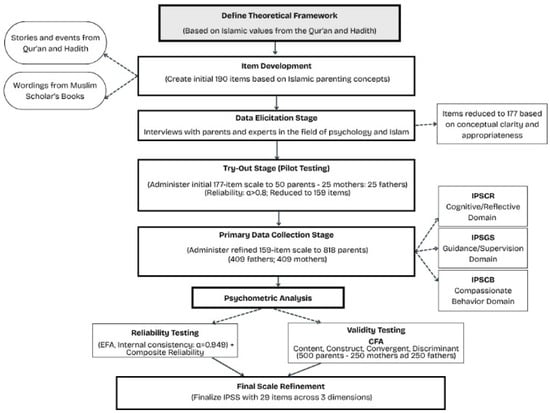
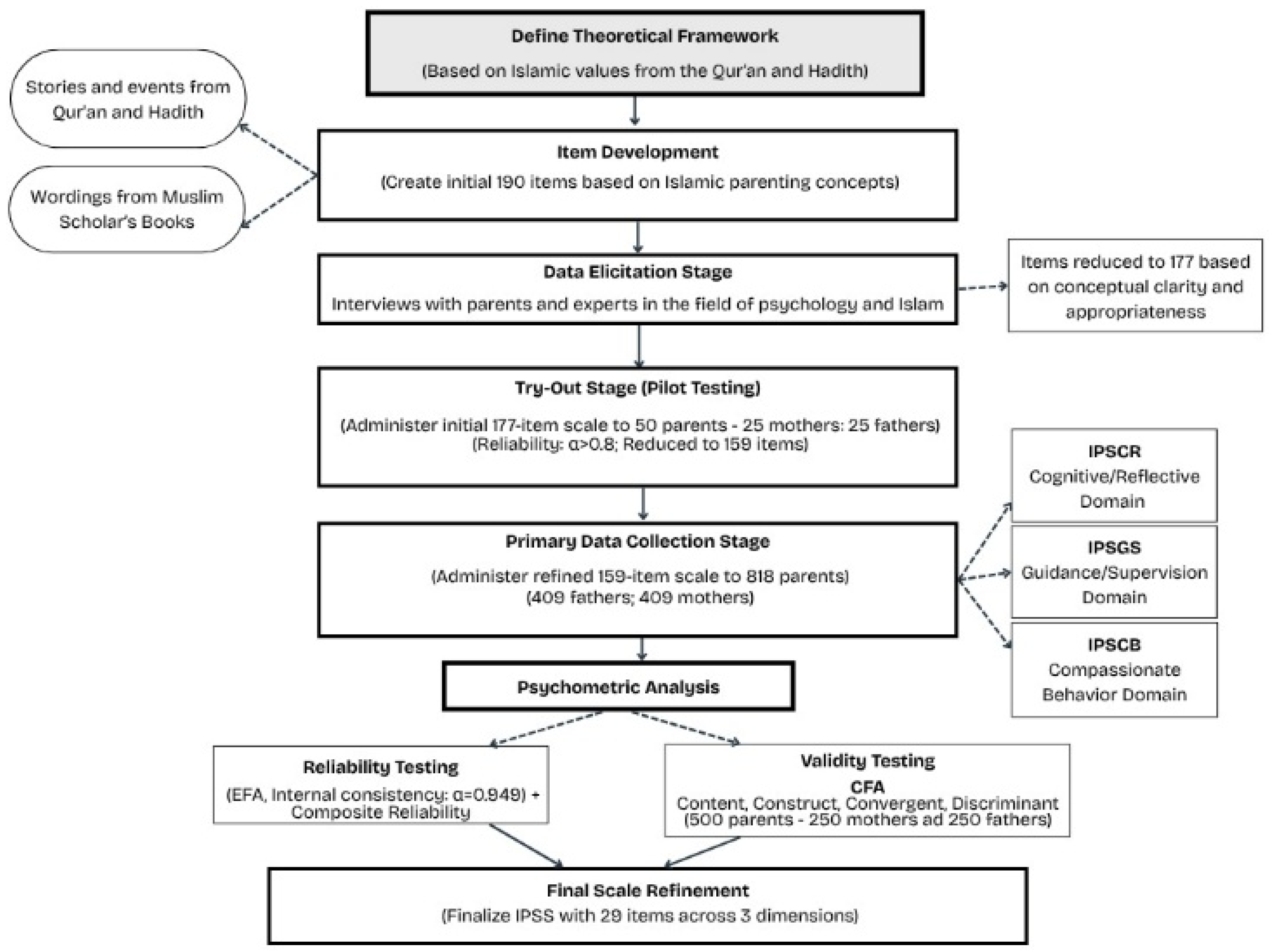
This study was conducted in four stages, as shown in Figure 2.
Figure 2.
Scale Development Process Source: Authors’ Own.
3.1. Tool Development
3.1.1. Item Generation (Stage 1)
The framework for this study on Islamic parenting was developed by drawing from the Qur’an, Hadith, and key texts such as Seerat-un-Nabvi (Nadvi and Nomani 1972), Ihya Ulum-ud-Din (Al-Ghazali 1938), and Tarbiyat-e-Ulad (Nasih Ulwan). Core parenting domains were identified in the Qur’anic teachings and Hadith, supplemented by scholarly works on Islamic parenting practices. A comprehensive literature review was conducted using databases like PsycINFO, Google Scholar, and Islamic heritage libraries, with keywords including “Islamic parenting style” and “child-rearing practices in Islam.” This process yielded a preliminary draft of 190 items, rooted in Islamic literature and scholarly insights.
3.1.2. Content Validity
Expert Evaluation of the Items (Stage 2)
For qualitative analysis, the Islamic Parenting Style Scale (IPSS) was reviewed by nine experts, including religious scholars (some with psychology backgrounds), three psychometricians, and professors from the Islamiyat Department and Islamic centers in Khyber Pakhtunkhwa with expertise in the Qur’an and Seerah. Additionally, 5–10 parents and 3–5 experts in parenting practices provided input. Experts evaluated the item’s relevance to Islamic parenting and suggested additions or deletions. Based on their feedback, 13 ambiguous, double-meaning, or irrelevant items were removed, reducing the scale to 177 items to improve its psychometric properties and practicality.
3.1.3. Pilot Testing (Preliminary Tryout)
Sample
A pilot study was conducted with 50 Muslim parents (equal numbers of mothers and fathers, aged 30–65 years) from Khyber Pakhtunkhwa, using 177 items derived from qualitative analysis and expert validation. Participants, required to have at least primary-level education for adequate literacy, were parents raising biological children aged 5–18 years. Exclusions included grandparents, guardians, parents of adopted children, divorced or separated parents, single parents, non-Muslims, childless individuals, and those with terminal illnesses to ensure a homogeneous sample focused on Islamic parenting styles, controlling for variables like family structure (Baumrind 1991; Pinquart and Gerke 2019).
Procedure
The pilot study data (N = 50 Muslim parents) for the Islamic Parenting Style Scale (IPSS), comprising 177 items, were analyzed using IBM SPSS version 22. Descriptive statistics (mean, standard deviation) and reliability analysis showed good internal consistency (Cronbach’s α > 0.8), meeting standards for robust scales (Nunnally 1978; Hair et al. 2003). Items, organized across three parenting style dimensions and subdomains, were presented on a five-point Likert scale (5 = “always true” to 1 = “always false”) with clear instructions. Participants were asked to evaluate each item’s relevance, applicability, clarity, and potential for repetition, and to report any ambiguity. Following expert consultation, some items were reworded for clarity, and participant-suggested items relevant to Islamic parenting were added. Instructions were refined for transparency, resulting in a revised draft.
3.2. Final Data Collection
The data is collected in two different stages. In the first stage, data is collected for an Exploratory Factor Analysis (EFA). A sample of 818 parents, including fathers and mothers aged 30–65 years with at least primary education, was selected from various districts of Khyber Pakhtunkhwa using purposive sampling techniques. The draft, initially comprising 159 items, was administered to the sample following a pilot study. The sample comprised exclusively parents of children aged 5 to 18. The cities were represented by districts from the Peshawar, Malakand, and D.I. Khan Divisions, as well as political agencies and the Hazara Division. Table 1 illustrates the allocation of the sample among different divisions.
Table 1.
Distribution of the Full Pilot Sample (N = 818) among the Districts of Khyber Pakhtunkhwa.
The second stage involves performing Confirmatory Factor Analysis (CFA). At this level, CFA is used to confirm further that the observed variables in the study align with those identified by EFA. It is employed to validate the measurement model by offering construct validity and additional fit indices. Confirmatory Factor Analysis (CFA), a technique within Structural Equation Modelling (SEM), is extensively employed for the development, validation, and design of scales and instruments in the social sciences (Hair et al. 2014).
A new sample of 500 participants was utilized in a Confirmatory Factor Analysis to construct the Islamic Parenting Style Scale. The parents’ ages varied from 30 to 65 years, while the children’s ages spanned from 5 to 18 years. The analysis encompassed 159 elements from the scale. Of these, 46 items were successfully loaded, yielding a final draft of 46 items for the Islamic parenting style scale during the exploratory factor analysis stage. The details of the sample distribution are provided in Table 2.
Table 2.
Distribution of the CFA Subsample (N = 500) among the Districts of Khyber Pakhtunkhwa.
Procedure
During the initial EFA, the Islamic Parenting Style Scale included 159 items. This scale covers three main areas, each assessed with a Likert-type scale. Response options ranged from 5 to 1, reflecting the level of agreement: (5) for “totally true of me,” (4) for “somewhat true of me,” (3) for “uncertain,” (2) for “somewhat false of me,” and (1) for “to-tally false of me.” For negatively worded items, reverse scoring was used, so “totally true of me” scored as (1), “somewhat true of me” as (2), “uncertain” as (3), “somewhat false of me” as (4), and “totally false of me” as (5). To reduce response bias and increase variability, 20 negative items were included.
Participants were recruited via personal communication and email from diverse businesses, educational institutions, and organizations. Certain parents were contacted via their children from various schools in Khyber Pakhtunkhwa. Samples were obtained from several towns and regions of Khyber Pakhtunkhwa, involving parents aged 30 to 65. Purposive sampling was employed to choose parents of children aged 5 to 18 years. The researchers requested appropriate institutional authorization for data gathering. Partici-pants were informed about the questionnaire and the study’s significance in securing their agreement. They were guaranteed the anonymity of their responses and urged to respond to any inquiries. A demographic form with fundamental information such as age, gender, occupation, education, socioeconomic status, and family structure was included with the questionnaire. As it is a self-administered scale, participants were instructed to carefully review the instructions and select the alternatives that most accurately reflect their par-enting style.
During the second stage of CFA data collection, 543 responses were obtained. Fol-lowing the screening process, 20 hard-copy questionnaires were discarded due to incom-plete responses or submission by a single parent. Furthermore, five questionnaires from various areas of Khyber Pakhtunkhwa were eliminated due to incomplete or negligently submitted responses. As a result, 518 questionnaires were deemed reliable and included in the analysis. Nonetheless, the remaining properties of the sample were maintained con-sistent with those employed in the EFA.
4. Results
Table 3 displays the demographic characteristics of the EFA. The gender ratio is 1:1, and most respondents are between 30 and 40 years old. Urban dwellers and those with higher education comprised the majority of respondents. Most of them hail from middle-class households and live in nuclear families.
Table 3.
Demographic attributes of the sample for the Exploratory Factor Analysis of the Islamic Parenting Style Scale (IPSS) (Items 46, N = 818).
Table 4 indicates a KMO value of 0.93, and Bartlett’s test (p < 0.001) confirms the appropriateness of the data for structural discovery via factor analysis. This is considered a good value according to Kaiser (1974), as values below 0.5 are not acceptable.
Table 4.
Kaiser-Meyer-Olkin Measure of Sampling Adequacy and Bartlett’s test of Sphericity of the Islamic Parenting Style Scale (IPSS) (Items 46, N = 818).
Table 5 displays the factor loadings derived from the exploratory factor analysis of the first draft of the Islamic parenting style scale. The analysis encompassed 159 elements from the scale. Of these, 46 items successfully loaded onto three factors, which were designated as follows: the first factor, Islamic Parenting Style Cognitive and Reflective Domain (IPSCR), comprising 18 items; the second factor, Islamic Parenting Style Scale Guidance and Supervision Domain (IPSGS), encompassing 15 items; and the third factor, Islamic Parenting Style Scale Compassionate Behaviour Domain (IPSCB), consisting of 13 items. Items with loadings of 0.40 or higher were retained and named according to their factor. Most items loaded onto the same factor as per the conceptual model, confirming the scale’s convergent validity. Some items were loaded onto factors other than expected and were removed from the analysis. Additionally, items with loadings below 0.40 were also deleted. Reverse-scored items are marked with (R).
Table 5.
Results from Exploratory Factor Analysis for Islamic Parenting Style Scale with Direct Oblimin Rotation (Items 46, N = 409).
Table 6 presents the item-total correlations of the adjusted items across all three dimensions of the Islamic Parenting Style Scale relative to their corresponding total scores. All items exhibited substantial relationships with the domain total score, indicating the domain’s internal consistency. Items exhibiting item-total correlations below 0.3 should be discarded to enhance the construct validity of the scale prior to doing confirmatory factor analysis. Item-total correlation coefficients of 0.30 are considered adequate (Greene et al. 2015).
Table 6.
Corrected-Item-total correlations of the Islamic Parenting Style Scale (Items 46, N = 818).
Table 7 presents descriptive statistics, Cronbach’s alpha reliability, and item-total correlations for the scale and subscales of the 46-item Islamic Parenting Style Scale (IPSS). Alpha coefficient values range from highly significant (0.92) for the IPSS with all 46 items to above 0.93, 0.91, and 0.88 for the three constructs (IPSCR, IPSGS, and IPSCB) of the Islamic Parenting Style Scale. A significant positive correlation was found between all three IPSS factors and the total domain score, thereby confirming the scale’s construct validity.
Table 7.
Summary of Inter-Factor Correlations, Means, Standard Deviations, and Internal Consistency of Three Factors of IPSS (Items 46, N = 818).
For CFA, a separate sample is used. The male-to-female ratio in Table 8 is 1:1. Most respondents are aged 30–40 and hold higher education. Most of them are either housewives or teachers and reside in urban areas. Most of them are middle-class and have nuclear-family structures.
Table 8.
Demographic characteristics of the sample for Confirmatory factor analysis of the Islamic Parenting Style Scale (IPSS) (Items 29, N = 500).
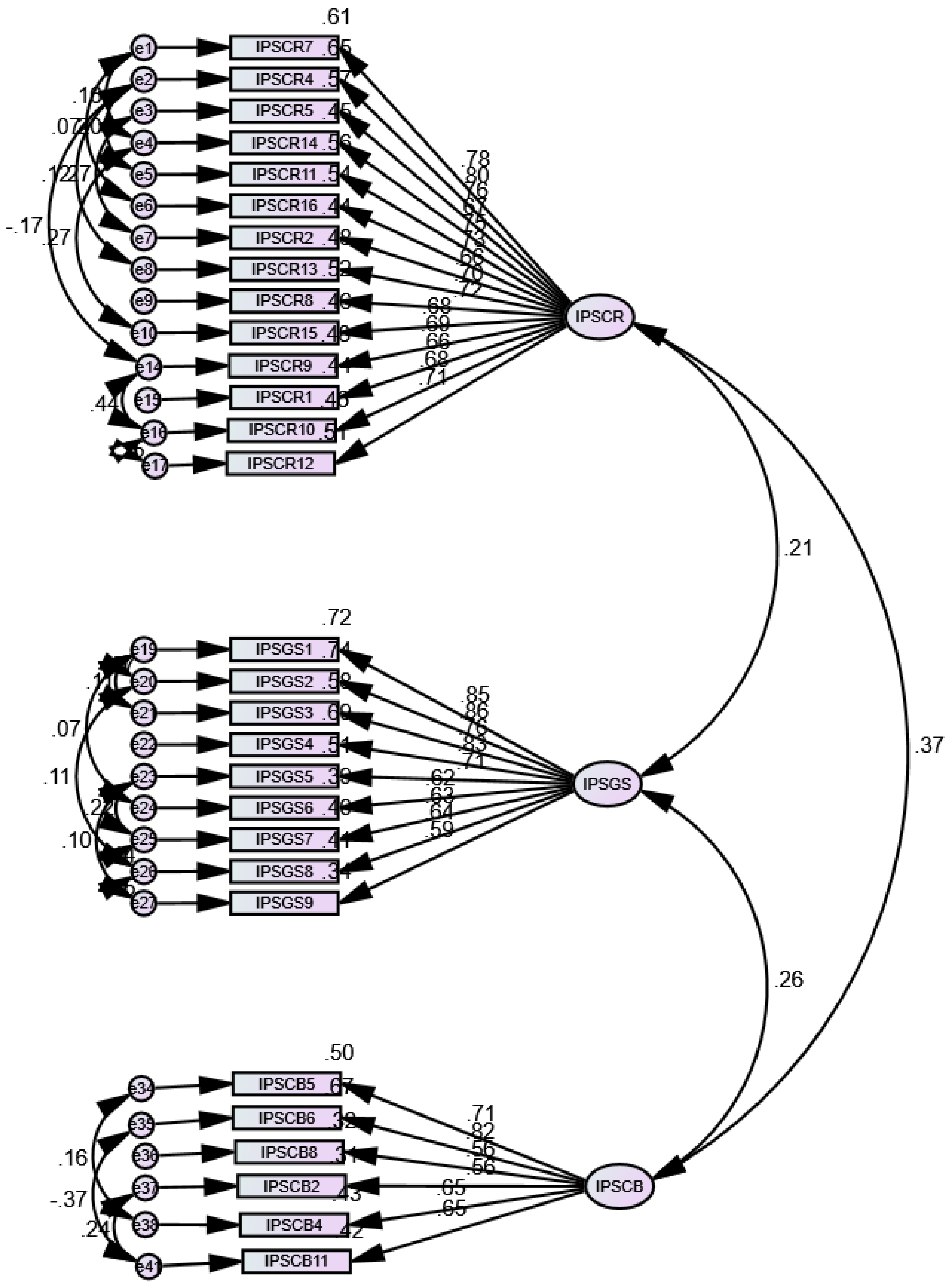
The study employed first-order confirmatory factor analysis in Amos version 23 to evaluate the theoretical framework of the IPSS and to determine the extent to which the observed indicators correspond to their corresponding latent constructs. Exploratory factor analysis discovered three components for the IPSS: IPSCR (18 items), IPSGS (15 items), and IPSCB (13 items).
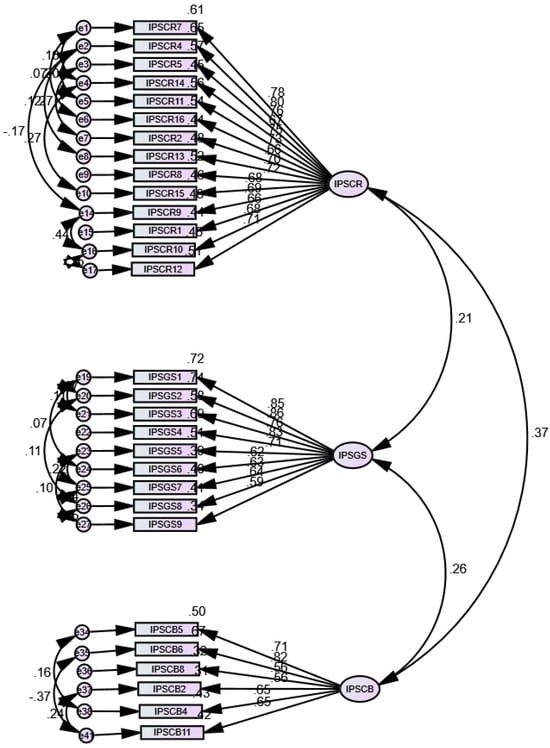
Figure 3 shows that all items with standardized factor loadings of 0.5 or higher are retained, yielding a total of 29 items: IPSCR has 14, IPSGS has 9, and IPSCB has 6. This indicates that all the observed items represent their respective latent constructs. Hence, the results provide strong support for the model’s convergent validity. Moreover, positive intercorrelations among IPSCR and IPSGS (r = 0.21), IPSGS and IPSCB (r = 0.26), and IPSCR and IPSCB (r = 0.37) are observed, suggesting that these measures capture distinct yet complementary aspects of Islamic parenting.
Figure 3.
First-order measurement model of the IPSS.
Table 9 presents the model fit indices, grouped into three factors: IPSCR, IPSCB, and IPSGS. All requisite indices, namely GFI (0.90), CFI (0.91), TLI (0.90), SRMR (0.03), and RMSEA (0.06), fall within the prescribed range, signifying robust model fit for the three aspects of the Islamic Parenting Style Scale.
Table 9.
Model Fit Statistics for First-Order Confirmatory Factor Analysis of Islamic Parenting Style Scale (Items 29, N = 500).
Table 10 shows the composite reliability, where all the AVE values fall above the threshold of 0.5, except for the subscale IPSCB; the value of AVE is 0.456, but the CR is 0.835, which is >0.07, thus proving the convergent validity of the scale (Fornell and Larcker 1981). Further, the square roots of the Average Variance Extracted (AVE) are greater than the inter-construct correlations, supporting the distinctiveness of the constructs of the Islamic parenting style.
Table 10.
Validity and Reliability for the 1st Order Measurement Model of the 2nd Draft of IPSS (Items = 29, N = 500).
5. Discussion
The present study aimed to develop and evaluate the psychometric properties of the Islamic Parenting Style Scale (IPSS), a culturally sensitive instrument grounded in the teachings of the Qur’an and Hadith, designed to assess parenting styles in the Muslim population of Khyber Pakhtunkhwa, Peshawar. Through a rigorous four-stage development process (shown in Table 2), including item generation, expert validation, pilot testing, and exploratory factor analysis (EFA), the IPSS was refined to 46 items across three subscales: Cognitive/Reflective (IPSCR), Guidance/Support (IPSGS), and Compassionate Behavior (IPSCB). To improve model fit, covariances were added to the error terms, and some items were deleted, leaving 29 items for the confirmatory analysis. The psychometric evaluation, supported by EFA, reliability analysis, and item-total correlations, demonstrates that the IPSS is a reliable and valid tool for assessing IPSS, with high internal consistency (Cronbach’s α = 0.92 for the total scale and 0.88–0.93 for subscales) and a robust factor structure explaining 49% of the variance for the IPSS.
The psychometric properties validate the hierarchical structure of the IPSS, as examined by CFA models. (Smith et al. 2009; Shevlin and Miles 1998). The robust alignment of the IPSS model corroborates the theoretical framework of Islamic parenting, which encompasses cognitive/reflective behavior, compassionate behavior, and guidance/supervision. IPSCR, which entails parents intentionally demonstrating Islamic ideals and fostering critical thinking, corresponds with the notion of tarbiyah (comprehensive upbringing) in Islamic education, as articulated by Al-Attas. (Ismail 2017). IPSCB, with the Prophetic focus on mercy (rahmah), encapsulates the emotional warmth fundamental to Islamic parenting. (Altalib et al. 2024; Tarmidi et al. 2025; Tehreem et al. 2024). IPSGS, which includes structured discipline and spiritual guidance, aligns with the Qur’anic concept of guardianship (wilayah) (Beshir and Beshir 2004). The robust fit indices in the IPSS model validate the coherence of these factors, suggesting they effectively capture Islamic parenting practices.
The substantial reliability of the subscales and overall scale enhances the IPSS’s validity in assessing multidimensional Islamic parenting styles, with IPSCR, IPSGS, and IPSCB likely corresponding to specific domains such as cognitive engagement, guidance, and compassion, respectively. The robust psychometric performance corresponds with previous studies on culturally specialized parenting assessments, which frequently demonstrate good reliability in collectivist or religious settings (Smith et al. 2009). Furthermore, the choice to maintain three categories corresponds with the theoretical framework of Islamic parenting, rooted in Islamic ideals such as tarbiyah (nurturing), ta’dib (discipline), and tazkiyah (spiritual purity). These three factors represent conceptually separate dimensions of Islamic parenting, as evidenced by existing literature (Ma’zumi et al. 2019; Riaz and Rahman 2023). The consistency of the factor loadings further validated that the items associated with these three factors were significant and coherent, representing separate yet interconnected dimensions of Islamic parenting practices.
These findings extend the literature on culturally specific parenting styles, offering an alternative to Western frameworks like Baumrind’s (1971) typologies. The three-factor model highlights the integration of cognitive, emotional, and supervisory dimensions, shaped by Islamic principles, and supports prior research on Muslim parenting practices (Aziz 2024; Syafrianty et al. 2021).
In contrast to Baumrind’s (1971) parenting approaches, which emphasize warmth and control, the IPSS integrates spiritual elements such as taqwa and akhlaq (moral character), illustrating the comprehensive essence of Islamic parenting. In accordance with Alghafli et al. (2014), who highlighted the significance of religious socialization within Muslim families, the IPSS underscores behaviors such as instructing prayer and moral behavior. This addresses a significant deficiency in the research, as most current scales lack cultural specificity for Muslim populations.
The IPSS is a comprehensive tool (see Appendix A) for researchers examining parenting practices across Muslim communities, promoting cross-cultural comparisons and longitudinal analyses of child development outcomes. The scale can effectively guide culturally specific parenting programs, assisting clinicians and educators in aiding Muslim parents in nurturing tarbiyah and adab. By anchoring the scale in Islamic values, it fosters culturally attuned psychological practice, addressing the underrepresentation of Muslim groups in parenting research.
The results have significant implications for comprehending parenting practices within Islamic cultural contexts. The strong endorsement of IPSCR indicates that cognitive and reflective domains, potentially linked to religious commitments, are prominent in the sample, which may guide family interventions or educational initiatives. Future research should investigate whether these trends endure among various Muslim groups or are influenced by contextual factors, such as religious education or community standards.
6. Conclusions
The Islamic Parenting Style Scale provides a promising tool for assessing parenting styles within Muslim families, with strong psychometric properties demonstrated in its initial validation in Khyber Pakhtunkhwa, Peshawar. Based on Exploratory Factor Analysis, three factors, i.e., IPSCR, IPSCB, and IPSGS, are derived and further fine-tuned with CFA. The scale aligns Islamic values and offers a culturally relevant framework for understanding parenting in Muslim contexts. The findings have important implications for understanding parenting styles within Islamic cultural frameworks. The high endorsement of IPSCR indicates that the cognitive/reflective domain, possibly linked to religious obligations, is prominent in the sample, which could inform family interventions or educational programs. The sample, mainly urban, middle-class Muslims from Khyber Pakhtunkhwa, limits generalizability to rural or diverse Pakistani populations. However, expanding the sample to diverse regions, genders, ages, and social classes in different cultural settings will improve the IPSS’s generalizability.
Author Contributions
M.N.: Writing—Original Draft Preparation, Conceptualization, Methodology, Data Curation and Investigation, Formal Analysis. M.J.K.: Supervision, Conceptualization, Methodology, Validation. A.K.: Conceptualization, Methodology, Data Interpretation, Writing—Review and Editing. I.S.: Data Interpretation, Writing—Review and Editing, H.F.A.-s.: Funding Acquisition, Writing—Review and Editing. All authors have read and agreed to the published version of the manuscript.
Funding
The research leading to these results was funded by the Princess Nourah bint Abdulrahman University Researchers Supporting Project (PNURSP2026R707), Princess Nourah bint Abdulrahman University, Riyadh, Saudi Arabia.
Institutional Review Board Statement
According to the guidelines of the National Bioethics Committee of Pakistan under the Pakistan Health Research Council Act 2012, formal ethics committee approval is primarily required for biomedical or health-related research involving human subjects. As this study involves a non-clinical survey and does not involve sensitive personal or medical data, formal ethical approval was not required.
Informed Consent Statement
This study is based on primary survey data collected from participants on a voluntary basis. Respondents were informed about the purpose of the research, and their participation was entirely voluntary. No personal identifying information was collected, and responses were kept anonymous.
Data Availability Statement
The data presented in this study are available on reasonable request from the corresponding author.
Acknowledgments
During the preparation of this manuscript, the authors used Grammarly and QuillBot for proofreading and to enhance the clarity of the sentences. Also, Scispace was used to revise the citation style. The authors reviewed and edited the output and take full responsibility for the content of this publication.
Conflicts of Interest
The authors declare no conflicts of interest.
Appendix A
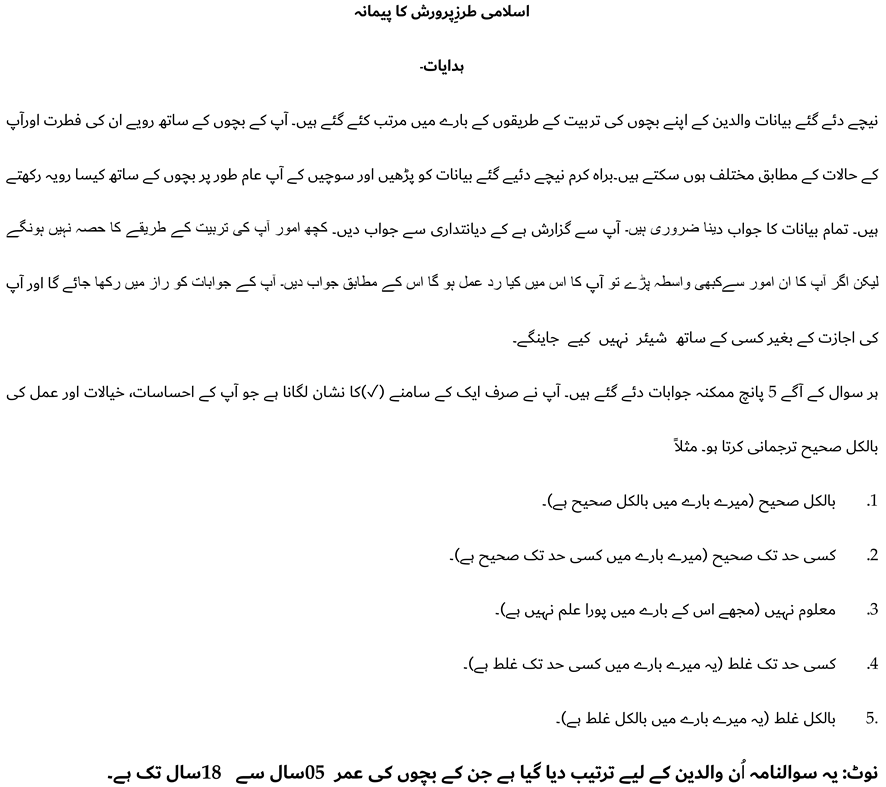
Appendix A.1. Questionnaire in Urdu
| بالکل غلط | کسی حد تک غلط | معلوم نہیں | کسی حد تک صحیح | بالکل صحیح | بیانات | نمبرشمار |
| میں بچوں کی تربیت کرتے وقت اسلام کی تعلیمات کو مدِ نظر رکھتی /رکھتا ہوں۔ | CR1 | |||||
| میں اپنے بچوں کو ایک اللہ کی عبادت کی تلقین کرتی /کرتا ہوں۔ | 2 | |||||
| میں اپنے بچوں کو اللہ کی ذات کے بارے ميں بتاتی/بتاتا ہوں۔ | 3 | |||||
| میں اپنے بچوں کو صرف اللہ سے مانگنے کی ترغیب دیتی/ دیتا ہوں۔ | 4 | |||||
| میں اپنے بچوں کو یہ ضروربتاتی/ بتاتا ہوں کہ اللہ نے ہمیں اپنی عبادت کے لئے پیدا کیا ہے۔ | 5 | |||||
| میں بچوں کو اللہ کی عبادت اور بت پرستی میں فرق سمجھاتی/ سمجھاتا ہوں۔ | 6 | |||||
| میں اپنے بچوں کو ایمان مفصّل اور يمان مجمّل کے بارے ميں بتاتی /بتاتا ہوں | 7 | |||||
| میں اپنے بچوں کو اللہ کی تمام صفات کے بارے تعليم ديتی / ديتا ہوں. | 8 | |||||
| ميں اپنے بچوں کو اللہ سے محبت اور احترام کی تربيت ديتی /ديتا ہوں. | 9 | |||||
| میں بچوں کو اللہ کی موجودگی کا علم مختلف مثالوں سے سمجھاتی /سمجھا تا ہوں۔ | 10 | |||||
| ميں اپنے بچوں کو نبیﷺ کے بارے ميں باقاعدگی سے بتاتی/ بتاتا ہوں۔ | 11 | |||||
| میں اپنے بچوں کو اللہ پر بھروسہ کرنے کی تربيت ديتی/ ديتا ہوں۔ | 12 | |||||
| میں اپنے بچوں کو آخرت کی جزا اور سزا کے بارے ميں بتاتی/ بتاتا ہوں۔ | 13 | |||||
| ميں اپنے بچوں کے سامنے دوزخ ميں لے جانے والے اعمال کا ذکر کرتی / کرتا ہوں | 14 | |||||
| ميں اپنے بچوں کو فضول خرچی سے منع کرتی/کرتا ہوں۔ | 15GS | |||||
| میں نظم و ضبط کا خیال رکھتی /رکھتا ہوں۔ | 16 | |||||
| میں بچوں کے لیے دنیا کی کامیابی کی دعا سے زیادہ آخرت کی کامیابی کی دعا کرتی /کرتا ہوں۔ | 17 | |||||
| ميں اپنے بچوں کو پوری توجہ ديتی/ ديتا ہوں | 18 | |||||
| ميں اپنے بچوں کی گفت و شنيد کی نگرانی کرتی /کرتا ہوں۔ | 19 | |||||
| ميں اپنے بچوں کو دوسروں سے بات چيت کا موقع ديتی/ ديتا ہوں۔ | 20 | |||||
| ميں اپنے بچوں کی اچھے ساتھيوں کا انتخاب کرنے ميں اُن کی مدد کرتی/ کرتا ہوں ۔ | 21 | |||||
| ميں اپنے بچوں کے سامنے صبر کا مظاہرہ کرتی/ کرتا ہوں۔ | 22 | |||||
| میں نے چھوٹی عمر سے اپنے بچوں کو نماز پڑھانا شروع کروا دیا تھا۔ | 23 | |||||
| میں اپنے بچوں کو خود فيصلہ کرنے کی ہمت دے کر انھيں احساس کمتری سے بچاتی/ بچاتا ہو | 24CB | |||||
| میرے بچے میرے سامنے کوئی بھی بات آسانی سے کر لیتے ہیں۔ | 25 | |||||
| میرے بچے آسانی سے اپنے مسائل مجھے بتاتے ہیں۔ | 26 | |||||
| میرے بچے میرے سامنے اپنی پریشانی کا اظہار کر ليتے ہیں۔ | 27 | |||||
| میں اپنے بچوں کی عزت کرتی /کرتا ہوں | 28 | |||||
| ميں اپنے بچوں کے سوالات کا جواب دينے کے لۓ انھيں وقت مہيا کرتی/ کرتا ہوں | 29 |
Appendix A.2
The following questionnaire is a translated version of the questionnaire in Appendix A.1. Please note that the translation was performed using DeepL rather than a scientific translation procedure. This questionnaire is meant only to provide readers of the paper with a general overview of the Islamic Parenting Style Scale.
- Islamic Parenting Style Scale (IPSS)
- Response Options
- 1.
- Completely Correct (Exactly true about me)
- 2.
- Somewhat Correct (Somewhat true about me)
- 3.
- Don’t Know (I don’t know much about it)
- 4.
- Somewhat Incorrect (This is somewhat incorrect about me)
- 5.
- Completely Incorrect (Completely wrong)
Note: This questionnaire is designed for parents of children aged 5 to 18 years.
| No. | Statement | Completely Correct | Somewhat Correct | Don’t Know | Somewhat Incorrect | Completely Incorrect |
| 1 | I keep the teachings of Islam in mind when raising my children. | |||||
| 2 | I urge my children to worship the One God. | |||||
| 3 | I tell my children about the nature of Allah. | |||||
| 4 | I encourage my children to ask only Allah. | |||||
| 5 | I always tell my children that Allah created us to worship Him. | |||||
| 6 | I explain to my children the difference between worshipping Allah and idol worship. | |||||
| 7 | I tell my children about detailed faith (Iman Mufasill) and concise faith (Iman-e-Mujmal). | |||||
| 8 | I teach my children about all the attributes of Allah. | |||||
| 9 | I teach my children to love and respect Allah. | |||||
| 10 | I explain to my children the awareness of Allah’s presence through different examples. | |||||
| 11 | I regularly tell my children about the Prophet ﷺ. | |||||
| 12 | I teach my children to trust in Allah. | |||||
| 13 | I tell my children about the rewards and punishments of the Hereafter. | |||||
| 14 | I tell my children about the deeds that lead to Hell. | |||||
| 15 | I forbid my children from extravagance. | |||||
| 16 | I maintain discipline in my home. | |||||
| 17 | I pray more for my children’s success in the Hereafter than for their success in this world. | |||||
| 18 | I give my children my full attention. | |||||
| 19 | I monitor my children’s conversations. | |||||
| 20 | I give my children the opportunity to talk with others. | |||||
| 21 | I help my children choose good friends. | |||||
| 22 | I demonstrate patience in front of my children. | |||||
| 23 | I started teaching my children to pray at a young age. | |||||
| 24 | I protect my children from feelings of inferiority by giving them the courage to make their own decisions. | |||||
| 25 | My children can easily talk to me about anything. | |||||
| 26 | My children easily tell me their problems. | |||||
| 27 | My children express their worries to me. | |||||
| 28 | I respect my children. | |||||
| 29 | I make time to answer my children’s questions. |
References
- Aisyah, Indah Wulan Purnama, and Muhammad Daud. 2025. Prophetic parenting and psychological well-being among late adolescents. Pinisi Journal of Art, Humanity and Social Studies 5: 33–44. [Google Scholar]
- Akin, Mergin. 2012. Exploring Theology and Practice in Islamic Parenting. Master’s thesis, University of Central Florida, Orlando, FL, USA. Available online: https://stars.library.ucf.edu/etd/2268 (accessed on 30 March 2026).
- Alghafli, Zahra, Trevan Hatch, and Loren Marks. 2014. Religion and Relationships in Muslim Families: A Qualitative Examination of Devout Married Muslim Couples. Religions 5: 814–33. [Google Scholar] [CrossRef] [Scilit]
- Al-Ghazali. 1938. Iḥyāʾ ʿUlūm al-Dīn (The Revival of the Religious Sciences). Cairo: al-Maktabah al-Tijariyyah al-Kubrā. [Google Scholar]
- Alhabsyi, Zulfi Farhan. 2024. Prophetic parenting strategies in preventing identity crisis among Muslim adolescents. MA’ALIM: Jurnal Pendidikan Islam 6: 45–60. [Google Scholar]
- Ali, Farida, Akila Belembaogo, Sahar Hegazi, and Nesrine Khaled. 2005. Children in Islam: Their Care, Upbringing and Protection. In The Islamic International Centre for Demographic Studies and Research. Cairo: Al Azhar University. [Google Scholar]
- Altalib, Hisham, AbdulHamid A. AbuSulayman, and Omar Altalib. 2024. Parent-Child Relations: A Guide to Raising Children, Revised ed. Herndon: International Institute of Islamic Thought. [Google Scholar]
- Aulia, Tyas Nur, Resa Zubaidah, and Masduki Asbari. 2022. The Role of Islamic Education on Parenting Patterns. Journal of Information Systems and Management 1: 13–19. [Google Scholar]
- Ayunina, Nadia Qurrota, and Zakiyah Zakiyah. 2022. Islamic parenting sebagai upaya mendidik karakter islami generasi alpha [Islamic parenting as an effort to educate the Islamic character of Generation Alpha]. Alhamra Jurnal Studi Islam 3: 48–57. [Google Scholar] [CrossRef] [Scilit]
- Aziz, Thorik. 2024. Internalization of Islamic values in children within families in the digital era. Nak Kanak Journal of Child Research 1: 37–46. [Google Scholar] [CrossRef] [Scilit]
- Azizah, Farha Fachriyatul, Imroatun, and Teguh Fachmi. 2023. The Concept of Parenting Patterns from an Islamic Perspective on Early Childhood Growth and Development at RA Al-Ishlah. Paper presented at the 2nd Annual International Conference on Islamic Education and Language (AICIEL), Conference Hall, UIN Sultan Maulana Hasanuddin Banten, Serang, Indonesia, November 7–8; pp. 710–16. Available online: https://ftk.uinbanten.ac.id/journals/index.php/aiciel/article/view/9770 (accessed on 30 March 2026).
- Baloch, Abdul Ghafoor, Muhammad Irfan Khalid, Aziz-ur-Rehman Saifee, and Ismail Moosa. 2012. Importance of Grooming and Upbringing of Children (In the Light of the Holy Quran and the Traditions of the Holy Prophet). British Journal of Humanities and Social Sciences 40: 40–43. [Google Scholar]
- Baumrind, Diana. 1966. Effects of authoritative parental control on child behavior. Child Development 37: 887–907. [Google Scholar] [CrossRef]
- Baumrind, Diana. 1968. Authoritarian vs. permissive parental control. Journal of Personality and Social Psychology 10: 205–13. [Google Scholar]
- Baumrind, Diana. 1971. Current patterns of parental authority. Developmental Psychology 4: 1–103. [Google Scholar] [CrossRef] [Scilit]
- Baumrind, Diana. 1989. Rearing competent children. In Child Development Today and Tomorrow. Edited by William Damon. San Francisco: Jossey-Bass, pp. 349–78. [Google Scholar]
- Baumrind, Diana. 1991. The influence of parenting style on adolescent competence and substance use. The Journal of Early Adolescence 11: 56–95. [Google Scholar] [CrossRef] [Scilit]
- Beshir, Ekram, and Mohamed Rida Beshir. 2004. Parenting Skills: Based on the Qur’an and Sunnah, with Practical Examples for Various Ages. Beltsville: Amana Publications. Available online: https://dokumen.pub/parenting-skills-based-on-the-quran-and-sunnah-1590080297-2004019500.html (accessed on 30 March 2026).
- Darling, Nancy, and Laurence Steinberg. 1993. Parenting style as context: An integrative model. Psychological Bulletin 113: 487–96. [Google Scholar] [CrossRef]
- Dwinandita, Audrey. 2024. Islamic Child Parenting Practices and Muslim Family Resilience in Southeast Asia: A Systematic Literature Review. Al-Athfal: Jurnal Pendidikan Anak 10: 83–105. [Google Scholar] [CrossRef] [Scilit]
- Fathoni, A. Musyafa, Mubaidi Sulaeman, Elima Amiroh Nur Azizah, Yuslia Styawati, and Mahendra Utama Cahya Ramadhan. 2024. The New Direction of Indonesian Character Education: Bullying, Moral Decadence, and Juvenile Delinquency. Jurnal Pendidikan Agama Islam 21: 22–39. [Google Scholar] [CrossRef] [Scilit]
- Fitriyah, Salsabila Bil, and Moh. Nur Rochim Maksum. 2024. Islamic parenting challenges and strategies in the digital era. International Summit on Science Technology and Humanity Proceedings 2: 210–18. [Google Scholar]
- Fornell, Claes, and David F. Larcker. 1981. Evaluating structural equation models with unobservable variables and measurement error. Journal of Marketing Research 18: 39–50. [Google Scholar] [CrossRef] [Scilit]
- Franceschelli, Michela, and Margaret O’Brien. 2014. ‘Islamic Capital’ and Family Life: The Role of Islam in Parenting. Sociology 48: 1190–206. [Google Scholar] [CrossRef] [Scilit]
- Gambari, Yusuph Dauda, and Fahm Abdulgafar Olawale. 2023. Qur’anic Model for Parenting in the 21st Century. Jurnal Adabiyah 23: 263–85. [Google Scholar] [CrossRef] [Scilit]
- Greene, Ryan L., Clinton E. Field, Jamison D. Fargo, and Michael P. Twohig. 2015. Development and validation of the parental acceptance questionnaire (6-PAQ). Journal of Contextual Behavioral Science 4: 170–75. [Google Scholar] [CrossRef] [Scilit]
- Hair, Joseph R., William C. Black, Barry J. Babin, and Rolph E. Anderson. 2003. Multivariate Data Analysis, 5th ed. Upper Saddle River: Prentice Hall. [Google Scholar]
- Hair, Joseph R., William C. Black, Barry J. Babin, and Rolph E. Anderson. 2014. Multivariate Data Analysis, 7th ed. London: Prentice Hall. [Google Scholar]
- Hamdan, Aisha. 2009. Nurturing Eeman in Children. Riyadh: International Islamic Publishing House (IIPH). 223p. [Google Scholar]
- Hapsari, Niken Kusuma. 2026. Stimulating child development: Prophetic parenting viewpoint. Sunan Kalijaga International Journal on Islamic Educational Research 6: 67–76. [Google Scholar] [CrossRef] [Scilit]
- Hidayah, Nurul, and Romelah Romelah. 2022. Holy Qur’an Based Parenting from the Perspective of Luqman Al-Hakim In Millennial Era. Belajea: Jurnal Pendidikan Islam 7: 87–104. [Google Scholar] [CrossRef] [Scilit]
- Husain, Husna, Zanariah Noor, Noor Banu, and Mohd Aderi. 2020. Parenting Approaches Based on Stories from the Qur’an. International Journal of Advanced Science and Technology 29: 12102–10. [Google Scholar]
- Ismail, Sanusi. 2017. Al-Attas’ Philosophy of Islamic Education. Aricis Proceedings 1: 341–50. [Google Scholar]
- Kaiser, Henry F. 1974. An index of factorial simplicity. Psychometrika 39: 31–36. [Google Scholar] [CrossRef] [Scilit]
- Maccoby, Eleanor E., and John A. Martin. 1983. Socialization in the context of the family: Parent-child interaction. In Handbook of Child Psychology: Vol. 4. Socialization, Personality, and Social Development. Edited by E. Mavis Hetherington and Paul H. Mussen. New York: Wiley, pp. 1–101. [Google Scholar]
- Manap, Jamiah H., and Sidek Baba. 2016. Al-ghazali’s parenting skills attributes model. Jurnal Hadhari 8: 113–31. [Google Scholar]
- Ma’zumi, Ma’zumi, Syihabudin Syihabudin, and Najmudin Najmudin. 2019. PENDIDIKAN DALAM PERSPEKTIF AL-QUR’AN DAN AL-SUNNAH: Kajian Atas Istilah Tarbiyah, Taklim, Tadris, Ta’dib dan Tazkiyah. TARBAWY: Indonesian Journal of Islamic Education 6: 193–209. [Google Scholar] [CrossRef] [Scilit]
- Muth, Tracy J. 2012. Parenting and Peer Bullying: Parents’ and Adolescents’ Beliefs, Communication, Behavior and Strategies. Florilegium 20: 59–61. [Google Scholar]
- Nadvi, Sulaiman, and Shibli Nomani. 1972. Seerat un Nabi. Lahore: Islami Kutub Khana. [Google Scholar]
- Nirwana, Andri Nirwana, Abdul Muiz Amir, Muhammad Zakir Bin Husain, Faisal Husen Ismail, Mohd Shafiq Bin Sahimi, Fuad Fansuri, Muhammad Amri, Fahmi Arfan, and Ainur Rhain. 2024. Millennial era Islamic parenting studies: A bibliometric analysis utilizing the Scopus database. Multidisciplinary Reviews 8: e2025002. [Google Scholar] [CrossRef] [Scilit]
- Nunnally, Jum C. 1978. Psychometric Theory, 2nd ed. New York: McGraw-Hill. [Google Scholar]
- Olivari, Maria Giulia, Semira Tagliabue, and Emanuela Confalonieri. 2013. Parenting Style and Dimensions Questionnaire: A Review of Reliability and Validity. Marriage and Family Review 49: 465–90. [Google Scholar] [CrossRef] [Scilit]
- Pakistan Bureau of Statistics. 2021. Pakistan Statistical Yearbook 2021. Islamabad: Government of Pakistan. [Google Scholar]
- Pinquart, Martin, and Dana-Christina Gerke. 2019. Associations of parenting styles and dimensions with academic outcomes in children and adolescents: A meta-analysis. Journal of Educational Psychology 111: 1248–67. [Google Scholar]
- Power, Thomas G. 2013. Parenting dimensions and styles: A brief history and recommendations for future research. Childhood Obesity 9: 14–21. [Google Scholar] [CrossRef] [Scilit] [PubMed]
- Purnama, Sigit. 2018. Abdullah Nashih ‘Ulwan’s Technological Contribution toward the Development of Islamic Early Childhood Education. Jurnal Pendidikan Islam 7: 47–77. [Google Scholar] [CrossRef] [Scilit]
- Rahmawati, Sri W. 2021. Holistic Parenting Scale: Developing a Holistic Parenting Scale Model based on Islamic Values. Psychology and Education Journal 58: 4173–85. [Google Scholar] [CrossRef] [Scilit]
- Raza-ul-Habib, Ahmad, Waqas Ali Khan, and Namra Shahzadi. 2024. Parenthood; Islamic teachings vs patriarchy’s burden on Pakistani women—A case study of Pakistan. Al-Mahdi Research Journal (MRJ) 5: 348–53. [Google Scholar]
- Riany, Yulina Eva, Pamela Meredith, and Monica Cuskelly. 2017. Understanding the Influence of Traditional Cultural Values on Indonesian Parenting. Marriage and Family Review 53: 207–26. [Google Scholar] [CrossRef] [Scilit]
- Riaz, Shehla, and Zabih ur Rahman. 2023. Ethical upbringings (ṭarbiyyah) of children in Islam and the duties of parents. INKISHĀF 3: 24–49. [Google Scholar]
- Robinson, Clyde C., Barbara Mandleco, Susanne Frost Olsen, and Craig H. Hart. 1995. Authoritative, Authoritarian, and Permissive Parenting Practices: Development of a New Measure. Psychological Reports 77: 819–30. [Google Scholar] [CrossRef] [Scilit]
- Salaam, Abdus Bin Abdillaah As-Sulaymaan. 2007. Raising Children in Light of the Quraan Sunnah. New York: Sanatech Printing, vol. 1, pp. 1–64. [Google Scholar]
- Sari, Fatma. 2019. Konsep Parenting Dalam Sholat. AL-FIKR: Jurnal Pendidikan Islam 5: 9–14. [Google Scholar] [CrossRef] [Scilit]
- Schaefer, Earl S. 1959. A study of interaction patterns and outcomes in parent-child dyads. Journal of Genetic Psychology 95: 171–87. [Google Scholar]
- Schaefer, Earl S. 1965. Children’s Reports of Parental Behavior: An Inventory. Child Development 36: 413–24. [Google Scholar] [CrossRef]
- Shevlin, Mark, and Jeremy N. V. Miles. 1998. Effects of sample size, model specification and factor loadings on the GFI in confirmatory factor analysis. Personality and Individual Differences 25: 85–90. [Google Scholar] [CrossRef] [Scilit]
- Siyana, A., Mohamed Nairoos Mohamed Haniffa, and Iqbal Saujan. 2023. The Role of Parents in Child Rearing from Islamic Law Perspective: A Study Based on Thoppur Area of Trincomalee District in Sri Lanka. International Journal of Economic, Business, Accounting, Agriculture Management and Sharia Administration (IJEBAS) 3: 621–32. [Google Scholar] [CrossRef] [Scilit]
- Smith, Gregory T., Denis M. McCarthy, and Tamika C. B. Zapolski. 2009. On the value of homogeneous constructs for construct validation, theory testing and the description of psychopathology. Psychological Assessment 21: 272–84. [Google Scholar] [CrossRef] [Scilit] [PubMed]
- Spraitz, Jason D. 2011. Parenting Styles and Criminal Involvement: A Test of Baumrind’s Typology. Unpublished Doctoral dissertation, Indiana University of Pennsylvania, Indiana, PA, USA. [Google Scholar]
- Stewart, Sunita Mahtani, and Michael Harris Bond. 2002. A critical look at parenting research from the mainstream: Problems uncovered while adapting western research to non-western cultures. British Journal of Developmental Psychology 20: 379–92. [Google Scholar] [CrossRef] [Scilit]
- Syafrianty, Raras, Abu Mansur, and Iredho Fani Reza. 2021. Dimensions of Islamic Parenting Style for Children’s Age in Parents Working in Urban Areas. Indonesian Journal of Behavioral Studies 1: 535–55. [Google Scholar] [CrossRef] [Scilit]
- Tahir, Muhammad. 2015. Development of Child ’s Personality from the Sunnah of the Prophet Muhammad (Pbuh) and Psychology Perspectives. International Journal of Advances in Science Engineering and Technology 3: 127–34. [Google Scholar]
- Tahir, Wajeeha, Adana Adil, and Anam Yousaf. 2026. Construction and validation of parental religious training scale for Pakistani Muslim adults. Journal of Beliefs & Values, 1–29. [Google Scholar] [CrossRef] [Scilit]
- Tarmidi, Dadeh, Nurul Hamifa Saragih, Ade Rahmawati Siregar, and Eka Ervika. 2025. Interactions between prophetic parenting and religiosity on adolescents’ self-concept. International Journal of Educational and Psychological Sciences 3: 119–32. [Google Scholar] [CrossRef] [Scilit]
- Tehreem, Iqra, Summayya Wassem, Najma Iqbal Malik, Tahira Parveen, Ayesha Rafaqat, and Ammara Rafaqat. 2024. Warm parenting as predictor of psychological wellbeing of adolescence. Journal of Population Therapeutics and Clinical Pharmacology 31: 478–87. [Google Scholar] [CrossRef]
- Wikipedia Contributors. 2024. Economy of Pakistan. Available online: https://en.wikipedia.org/wiki/Economy_of_Pakistan (accessed on 30 July 2025).
- Zaman, Riffat Moazam. 2014. Parenting in Pakistan: An overview. In Parenting Across Cultures: Childrearing in Different Societies. Edited by Helaine Selin. Berlin/Heidelberg: Springer, pp. 113–25. [Google Scholar]

Disclaimer/Publisher’s Note: The statements, opinions and data contained in all publications are solely those of the individual author(s) and contributor(s) and not of MDPI and/or the editor(s). MDPI and/or the editor(s) disclaim responsibility for any injury to people or property resulting from any ideas, methods, instructions or products referred to in the content. |
© 2026 by the authors. Licensee MDPI, Basel, Switzerland. This article is an open access article distributed under the terms and conditions of the Creative Commons Attribution (CC BY) license.