


Abstract
The outbreak of a pandemic has negative psychological effects. We aimed to determine the impact of the SARS-CoV-2 pandemic during pregnancy and identify the risk factors for maternal well-being. A multicenter, prospective, population-based study was carried out that included women (n = 1320) who were pregnant during the SARS-CoV-2 pandemic in Barcelona (Spain) compared against a pre-pandemic cohort (n = 345). Maternal well-being was assessed using the validated World Health Organization Well-Being Index Questionnaire (WHO-5 Index). Pregnant women attended during the COVID-19 pandemic showed worst WHO-5 well-being scores (median (IQR) of 56 (36–72) for the pandemic cohort vs. 64 (52–76) for the pre-pandemic cohort p < 0.001), with 42.8% of women presenting a poor well-being score vs. 28% for the pre-pandemic cohort (p < 0.001). Presence of a previous psychiatric disorder (OR 7.1; 95% CI 2.6–19, p < 0.001), being in the third trimester of pregnancy (OR 1.7; 95% CI 1.5–2, p < 0.001), or requiring hospital admission for COVID-19 (OR 4.7; 95% CI 1.4–16.7, p = 0.014), significantly contributed to low maternal well-being during the COVID-19 pandemic (multivariate analysis). Being infected by SARS-CoV-2 was not associated with a lower well-being score. We conclude that, during the COVID-19 pandemic, there were higher rates of poor maternal well-being; the infection of SARS-CoV-2 itself did not worsen maternal well-being, but other factors as psychiatric disorders, being in the third trimester of pregnancy or hospital admission for COVID-19 disease did.
Keywords:
COVID-19; SARS-CoV-2; pandemic; well-being; pregnancy; psychiatric disorders; anxiety; depression 1. Introduction
Severe acute respiratory coronavirus 2 (SARS-CoV-2) is a global challenge for healthcare sectors and individuals. Since the outbreak, many countries have adopted strict measures, such as lockdowns, aimed at mitigating the spread of the disease [1]. Previous evidence has revealed the negative psychological impact, in terms of anxiety, depression, and post-traumatic stress symptoms [2,3] associated to the outbreak of a pandemic and its consequences on the general population, particularly on people who have quarantined [3,4].
The coronavirus 19 disease (COVID-19) has been widely studied in pregnant women. Mostly, pregnant women with SARS-CoV-2 infection remain asymptomatic and the overall rate of complications has been found to be similar to that of non-infected women [5], except close to delivery in the third trimester, where the rate of complications increases [5,6,7]. However, this population might still be vulnerable to medical and social risks [8]. Changes in preventive health-care seeking behavior due to lockdown and healthcare policies (prenatal care and pregnancy follow-up) may increase pregnancy-related stress disorders, have a negative effect on well-being, increase the risk of post-partum depression, and exacerbate other mental health problems [4]. During the initial spread of COVID-19 in 2020, pregnant women had less prenatal visits, relatives were not allowed to attend prenatal and postnatal visits, there was uncertainty regarding fetal transmission, and strict health measures led to social isolation [9].
Many studies have assessed the negative impact of the pandemic on maternal psychological status during pregnancy [10,11,12], but few studies have compared this impact to a previous pre-pandemic cohort [13] based on laboratory confirmation of SARS-CoV-2 infection [14,15,16,17]. Most current published studies on maternal psychological impact of the COVID-19 pandemic focus on depressive disorders, mental stress, or anxiety, leaving maternal well-being aside. Assessing well-being may provide a better and more general picture of the impact the pandemic has on the physical and psychological status during pregnancy.
It remains unclear whether the impact on maternal well-being is related to the COVID-19 infection itself, its severity, symptomatology, or if it is secondary to pandemic lockdown and social restrictions. The aim of this study was to examine the impact of the COVID-19 pandemic and lockdown on maternal well-being during pregnancy and identify its risk factors.
2. Materials and Methods
2.1. Study Design and Participants
A multicenter, prospective, population-based study was carried out between March 2020 and May 2020 in Barcelona, Spain [5,18]. SARS-CoV-2 infection was confirmed in all participants by the presence of antibodies and/or real-time polymerase chain reaction (RT-PCR), as described elsewhere [5]. Inclusion criteria: pregnant women who attended the participating university hospitals (Hospital Clínic, Hospital Sant Joan de Déu, and Hospital de Sant Pau) for first/second trimester screening for Down’s syndrome (10–16 weeks of gestation) or admitted to the hospital for obstetric causes or delivery and were able to undergo a well-being assessment. Pregnant women referred for a SARS-CoV-2 diagnosis outside the catchment area of the participating centers were excluded from the study. The study was approved by the Ethics Committee of each of the participating hospitals (HCB: HCB-2020-0434, HSJD: PIC-56-20, HSP: IIBSP-COV-2020-38). All participants signed their informed consent before being included in the study.
The pandemic cohort was compared to a previous cohort of pregnant women recruited between February 2017 and October 2019 before the COVID-19 pandemic [19] (Table A1).
2.2. Aims of the Study
The primary purpose of the study was to evaluate maternal well-being, assessed with the World Health Organization’s Well-Being Index (WHO-5) [20]. The WHO-5 consists of a five-item scale that measures quality of life and psychological well-being based on patients’ feelings within the last 15 days. The raw score ranges from 0 to 25, 0 representing the worst possible and 25 the best possible quality of life. Women were classified according to their well-being status as having a poor (≤52) or a favorable (>52) WHO-5 score [21]. The questionnaire was self-administered at recruitment. Comparisons of well-being scores between pandemic and pre-pandemic cohorts were carried out.
The second aim of this study was to assess maternal and pregnancy variables that may act as potential risk factors for a poorer well-being status, as well as data related to SARS-CoV-2 infection, quarantine, and lockdown.
2.3. Data Collection
Baseline and socioeconomic characteristics (working status, housing characteristics, and availability of green areas during lockdown) were obtained from a structured questionnaire, and medical and obstetric histories from the medical records at recruitment.
COVID-19 symptoms were recorded at hospital admission using a structured questionnaire that included questions on risk factors and COVID-19 suggestive symptoms noticed between mid-February 2020 and the time of SARS-CoV-2 testing. Women who tested positive, completed the same questionnaire again 4–5 weeks later. Symptomatic SARS-CoV-2 infected women were defined as having at least one of the following symptoms: fever, dry cough, anosmia or ageusia, dyspnea, myalgia, diarrhea, sore throat, skin rash, or discoloration of fingers and/or toes. More details can be found in Appendixe A and Appendixe B.
Pregnancy, delivery, and neonatal data were obtained from electronic medical files at delivery and during the postpartum period.
2.4. Statistical Analysis
For the primary outcome, the analyses were based on WHO-5 scorings. Secondary analyses were assessed by comparing the cohort of women who were pregnant during the SARS-CoV-2 pandemic against the pre-pandemic group. Quantitative variables were assessed for normality using Shapiro–Wilk’s test: normally distributed variables were compared using the t-test and expressed as mean and standard deviation (SD). Non-normally distributed variables were compared using the U-Mann–Whitney test and expressed as median and interquartile range (IQR). Qualitative variables were compared using χ2 or Fisher’s exact tests. Logistic regression analyses were performed to assess the association between maternal well-being and potential risk factors adjusted by gestational age at recruitment. A p-value < 0.05 was considered as statistically significant. The analyses were performed on SPSS v26 (New York, NY, USA).
3. Results
3.1. Characteristics of the Study Population
During the pandemic, 1320 women were recruited; 444 (33.6%) were in the first trimester (median (IQR) gestational age 10.7 weeks (9.9–12.1)) and 876 (66.4%) in the third trimester (median (IQR) gestational age 39.7 weeks (38.6–40.6)) of pregnancy. Table 1 summarizes the baseline characteristics of the population and Table 2 shows pregnancy and neonatal outcomes. Most women (n = 851, 64.5%) had a vaginal delivery; 202 (15.3%) were positive for SARS-CoV-2 at recruitment, determined by either presence of antibodies (n = 200) and/or positive RT-PCR (n = 26) (Table A3). Table A1 summarizes the characteristics of the pre-pandemic cohort.
Table 1.
Pandemic cohort baseline characteristics.
Table 2.
Pandemic cohort pregnancy and neonatal outcomes.
3.2. Maternal Well-Being
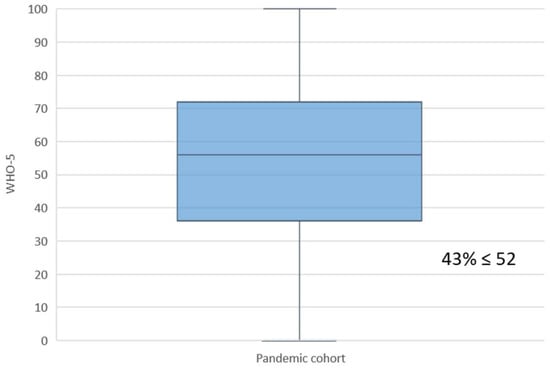
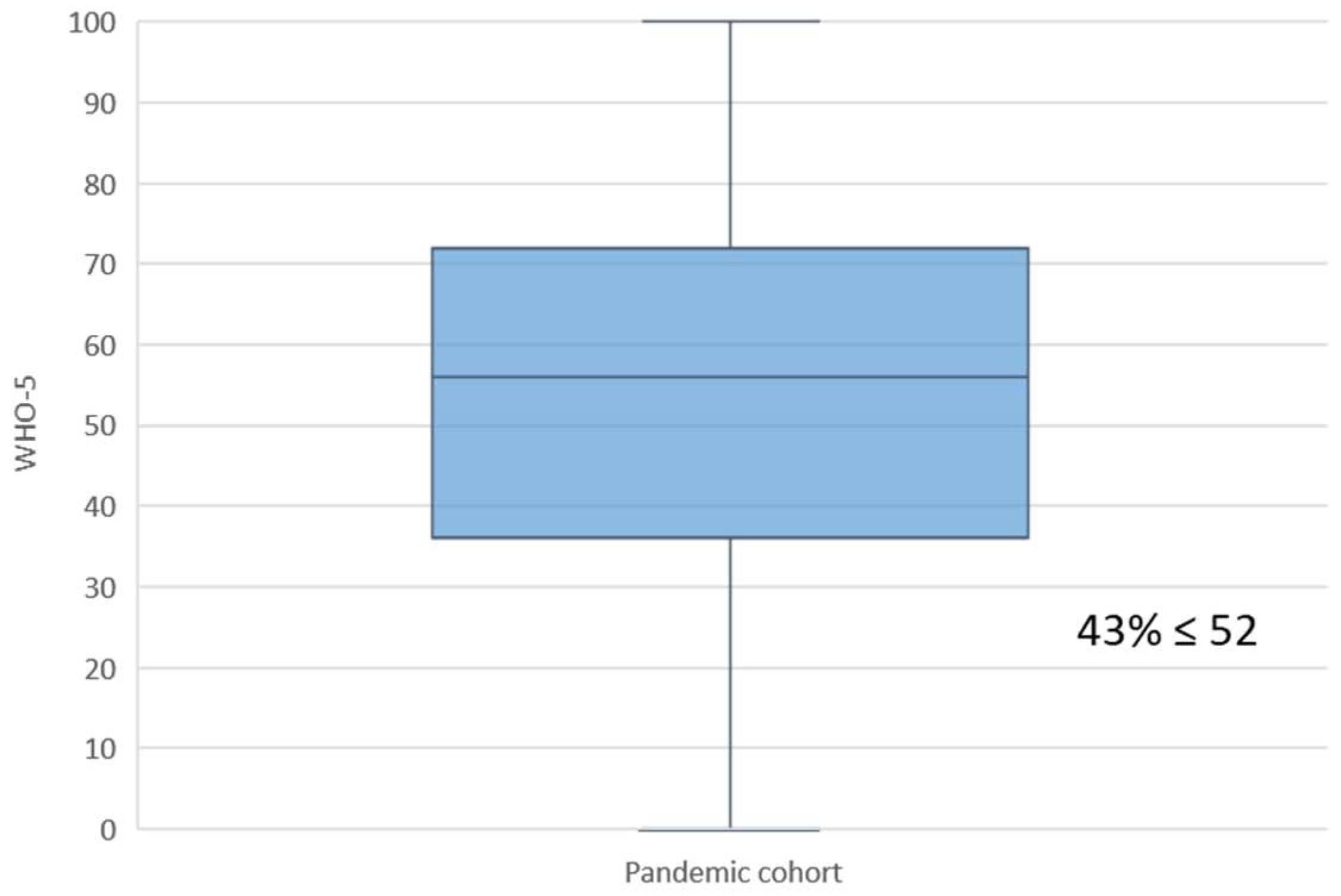
The median (IQR) WHO-5 score in the overall pandemic cohort was 56 (36–72); the score in 565 women (42.8%) was ≤52, suggestive of poor well-being, whereas in 755 participants (57.2%) it was >52, indicating favorable well-being (Figure 1).
Figure 1.
Maternal WHO-5 well-being outcomes for the pandemic cohort.
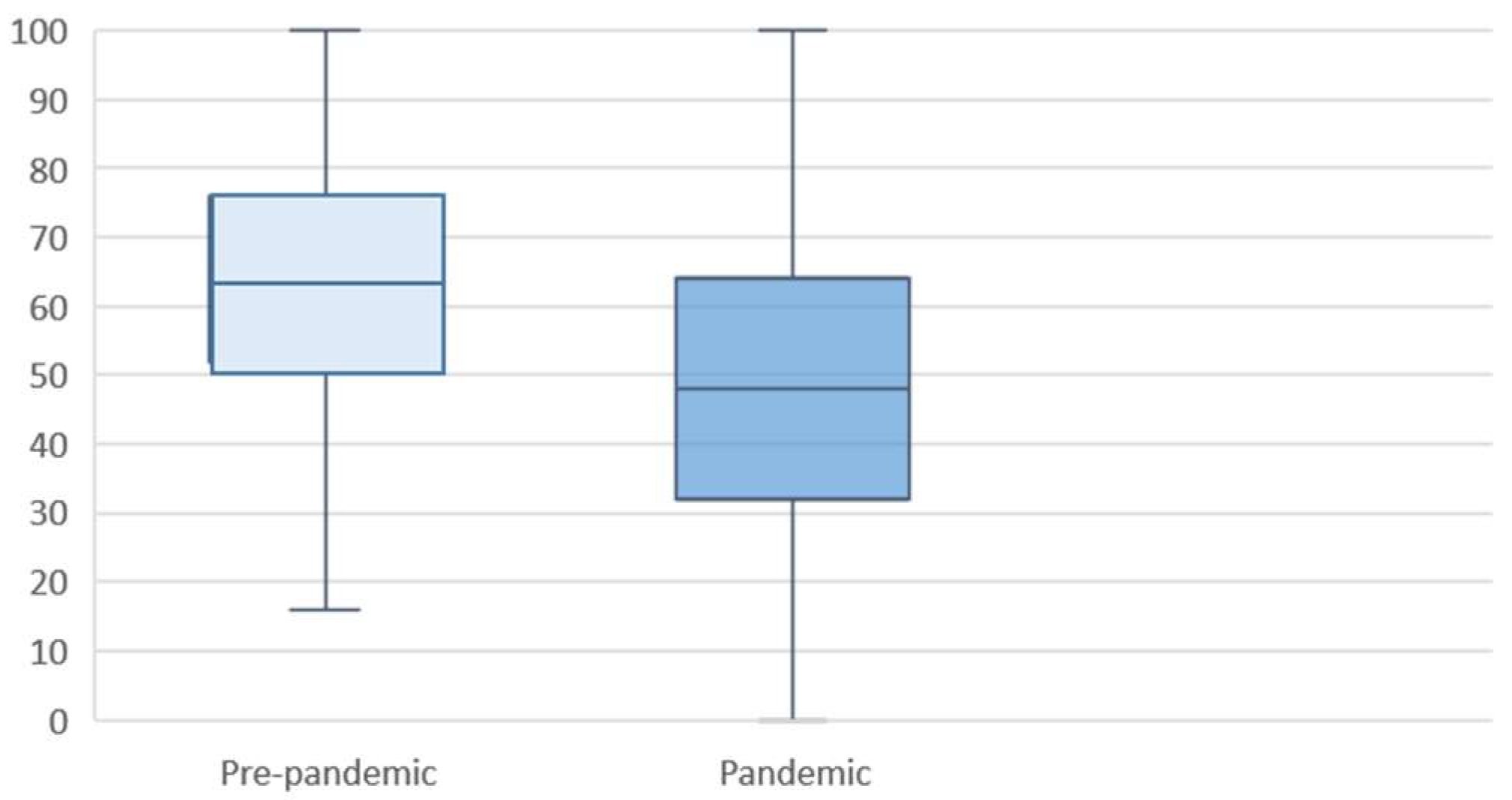
WHO-5 results for pregnant women during the COVID-19 pandemic (median (IQR) 56 (36–72)) were worse than for the pre-pandemic cohort (n = 345), (median (IQR) 64 (52–76)) (p < 0.001). In the pandemic cohort, 42.8% of women had a poor well-being score vs. 28% for the pre-pandemic cohort (p < 0.001) (Figure A1). Results were adjusted by ethnicity and psychiatric disorders (Table A1).
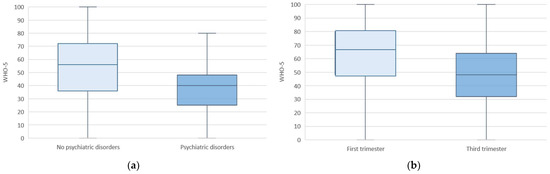
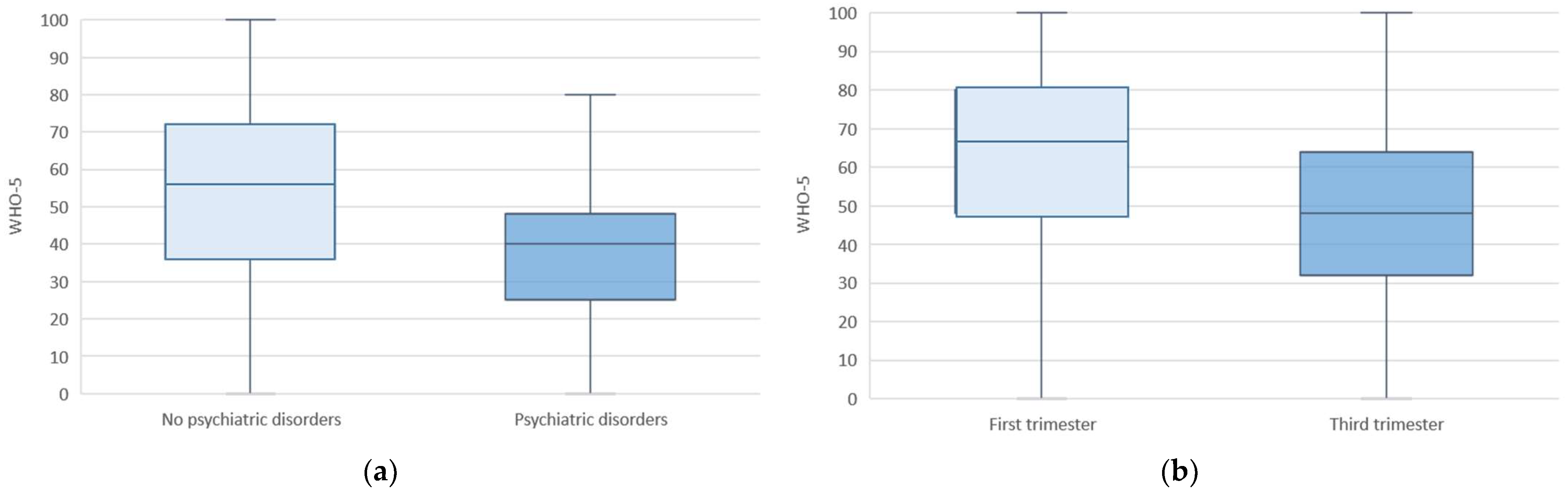
Table 3 shows the characteristics of the COVID-19 cohort, classified according to maternal WHO-5 well-being. No significant statistical differences were found for maternal age, ethnicity, socioeconomic status, BMI, parity, or assisted reproductive technologies. However, the existence of previous maternal psychiatric disorders was a significant contributor to low maternal well-being (4.1% vs. 0.6% in case of a favorable well-being, p < 0.001) (Figure 2a).
Table 3.
Pandemic cohort baseline characteristics based on maternal well-being (WHO-5).
Figure 2.
Maternal WHO-5 well-being outcomes for the pandemic cohort based on the presence of psychiatric disorders (a) and trimester of pregnancy (b).
Regarding pregnancy and neonatal outcomes, being in the third trimester of pregnancy was significantly associated to worse maternal well-being (median (IQR) score 48 (I32–64) (p < 0.001) (Figure 2b). This association was not seen for preeclampsia, prematurity, cesarean section, or fetal distress among others (Table 4).
Table 4.
Pregnancy and neonatal outcomes for the pandemic cohort based on WHO-5 well-being.
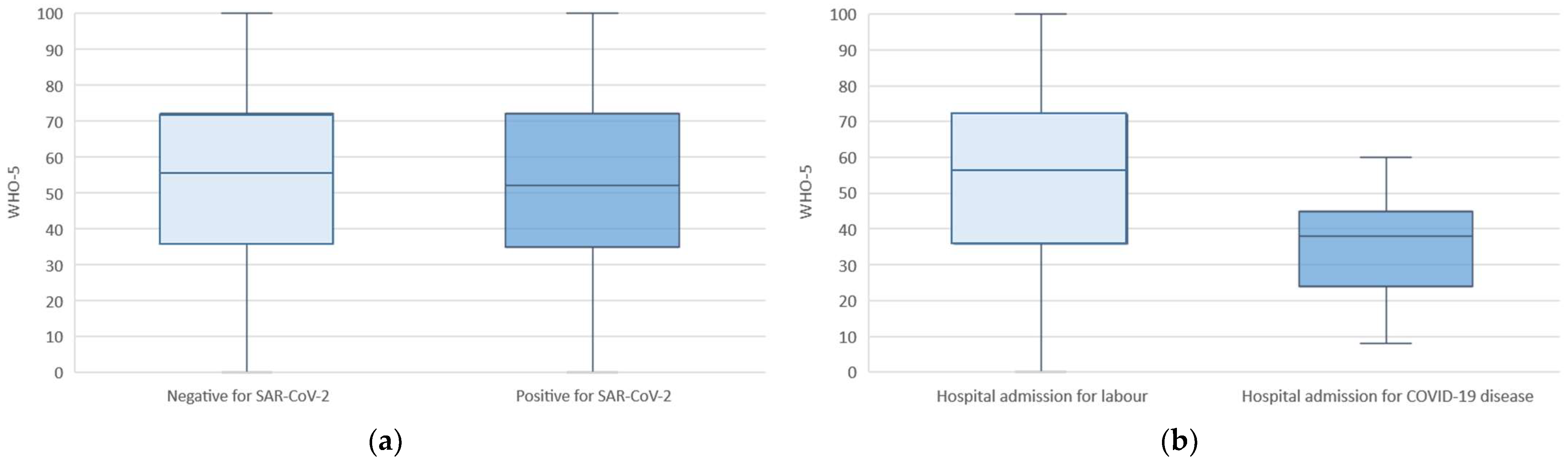
Regarding SARS-CoV-2 infection, the infection itself did not have an effect on the level of maternal well-being (p = 0.812) (Figure 3a). However, presence of severe symptoms (fever, cough, or dyspnea) and hospital admission for COVID-19 were associated with a lower well-being score (Table 5 and Figure 3b). No SARS-CoV-2 infection cases were reported in newborns.
Figure 3.
WHO-5 well-being outcomes for the pandemic cohort based on SARS-CoV-2 infectious status: (a) positive vs. negative women; (b) women hospitalized for moderate-severe COVID-19.
Table 5.
Symptoms and diagnosis of SARS-CoV-2 infection and COVID-19 disease in the pandemic cohort based on the level of maternal WHO-5 well-being.
Multivariate analyses revealed significant contribution to low maternal well-being with the presence of psychiatric disorders (OR 7.1; 95% CI 2.6–19, p < 0.001), being in the third trimester of pregnancy (OR 1.7; 95% CI 1.5–2, p < 0.001), or hospital admission for COVID-19 (OR 4.7; 95% CI 1.4–16.7, p = 0.014) (Table 6). No association was found between SARS-CoV-2 infection itself and a reduced well-being score.
Table 6.
Multivariate analysis of factors associated to poor maternal WHO-5 well-being in the pandemic cohort.
3.3. Lockdown Characteristics
Four hundred and eighty participants of the pandemic cohort answered a structured questionnaire on lockdown characteristics (Table A2). Most pregnant women remained isolated in their usual residence (n = 448; 93.3%) without older people at home (n = 434; 90.4%) and the majority (n = 439; 91.5%) were not concerned with the general impact of the pandemic, although 332 (69.2%) communicated they were worried about their pregnancy and their fetus. No significant contributors to maternal well-being status were identified (Table A2).
4. Discussion
4.1. Main Findings
The well-being score in almost half (43%) of our study population is low. This has been related to symptoms of depression [21]. Thus, maternal well-being status during the COVID-19 pandemic is affected. This is more evident when we compare pandemic versus pre-pandemic cohorts, where 28% of the latter cohort had poor well-being scores. Additionally, there are risk factors that contribute to a worse well-being during pregnancy, such as previous psychiatric disease, being in the third trimester of pregnancy, and hospital admission for COVID-19 disease. The infection of SARS-CoV-2 itself did not increase the risk of a lower well-being condition, but the severity of COVID-19 disease requiring hospitalization did.
Well-being is broadly defined as ‘the quality and state of a person’s life’ [22] and consists of two components: feeling healthy and relatively robust and being able to carry out ones job and other tasks satisfactorily [23]. Fear related to childbirth is multidimensional and, under normal circumstances, only around 20% of pregnant women experience excessive concern regarding future events in pregnancy [23]. Feelings of well-being are key to the overall health of an individual but can be affected by physical and emotional trauma.
Several studies have reported a compromised maternal mental status during the COVID-19 pandemic [3,12,16,24]. Higher depressive rates in comparison to pre-pandemic subjects [13] and prevalence of depressive and anxiety symptoms ranging around 15–19% and 11–31%, respectively, [12,16] have been found. However, most of these works are based on maternal depression and anxiety scales and a limited number use maternal well-being as an assessment of maternal physical, mental, and social health [23].
Few studies have compared pandemic cohort data to a previous pre-pandemic cohort, suggesting worse maternal anxiety and depression levels in patients assessed during the COVID-19 pandemic. Wu et al. reported higher depression symptoms in patients during the pandemic in comparison to a pre-pandemic cohort and found a positive association with the number of newly COVID-19 confirmed cases, suspected cases, and deaths [13]. Similarly, in a study by Berthelot et al., the authors found that COVID-19 pandemic-affected women were more likely to present depressive and anxiety symptoms, especially those with a previous psychiatric diagnosis or low income [25]. Zanardo et al. reported higher scores for anhedonia and depression in comparison to 100 previous patients [26]. Interestingly, Dong et al. found that anxiety levels of pregnant women were the same as before the pandemic, while the level of depression was significantly higher. The authors reported no differences in terms of gestational age or testing positive for Sars-CoV-2 infection [17]. Perzow et al. compared 135 patients pre- and post-pandemic and determined higher levels of anxiety and depression during the pandemic [27]. To the best of our knowledge, ours is the first study that assesses maternal well-being before and after the pandemic.
Our results suggest that the existence of a previous psychiatric maternal condition is as a risk factor for worse maternal well-being. Similarly, some studies have reported that a previous psychiatric disorder diagnosed in pregnant women is as a risk factor for depression symptoms during the COVID-19 pandemic [25,28,29]. The stage of pregnancy had a unique association with anxiety and the level of well-being. Zeng et al. reported that the third trimester of pregnancy at the time of the COVID-19 pandemic seemed to be associated with a worse maternal well-being, with even worse results in comparison to the post-partum period [12]. On the contrary, Saccone et al. found worse results in anxiety and psychological impact in pregnant women in the first trimester [24]. Other authors found no differences according to gestational age [11,17,30].
COVID-19 symptoms and infection have been described as anxiety factors [31] and predictors for post-traumatic stress disorder [32]. However, these studies did not consider the differences between confirmed SARS-CoV-2 infected and healthy patients. SARS-CoV-2 infection may increase the level of anxiety and worsen mental condition; our data do not confirm this hypothesis as found in other studies with smaller sample sizes [15,17]. We report worse maternal well-being in SARS-CoV-2 infected mothers with severe symptoms or requiring hospital admission due to COVID-19 disease for respiratory and or medical support according to our center protocols at the time of the study.
4.2. Clinical Relevance
Our results suggest the potential utility of maternal well-being screening during the COVID-19 pandemic, especially in patients with a previous diagnosis of mental illness and in their third trimester of pregnancy, close to delivery. There is no negative effect of SARS-CoV-2 maternal infection on their well-being. However, well-being is affected in pregnant women who require hospital admission for moderate to severe COVID-19 disease, who might benefit from a psychological support during their hospital stay.
4.3. Strengths and Limitations
Some of the strengths of this study include a very well characterized population of pregnant women, laboratory confirmation of SARS-CoV-2 infection in all women in different pregnancy stages and during the first wave of COVID-19 pandemic, where strict restriction measures were applied. The short and simple WHO-5 questionnaire can screen depressive symptoms and evaluate subjective well-being in pregnant populations, which can be helpful in daily clinical practice, especially when healthcare pressure is high. There are several limitations to this study. The WHO-5 questionnaire was self-administration with no psychiatric screening thereafter, there were no postpartum depression or anxiety symptoms follow-ups, and baseline characteristics of the pre-pandemic and pandemic cohorts were not identical. To overcome these limitations, we applied careful statistical adjustments. Moreover, our study did not include a follow-up of postpartum depression or anxiety symptoms that could be considered in future studies.
5. Conclusions
In conclusion, the COVID-19 pandemic is a challenge for pregnant women in terms of well-being, especially in their third trimester of pregnancy. Previous psychiatric disorders are associated to higher risk of poor well-being. The well-being of pregnant women testing positive for SARS-CoV-2 infection is not affected, except when presenting severe infection-related symptomatology or requiring hospitalization due to COVID-19 disease, in which cases poorer well-being was reported.
Author Contributions
F.C. (Francesca Crovetto), F.C. (Fàtima Crispi) and E.G. conceived and designed the study. E.L., F.C. (Francesca Crovetto) and M.D.G.-R. were responsible of the study protocol at each hospital and ensured the correct execution of the study. F.C. (Francesca Crovetto), F.C. (Fàtima Crispi) and E.L. were the supervisors at each of the three hospitals for day-to-day running of the study, including participant recruitment and data collection. R.P., M.L., C.T., A.C., D.B. and I.C. were responsible of medical file revision and data collection at the three participating hospitals. I.C., J.S., M.F. and L.Y. performed the data analyses. F.C. (Francesca Crovetto) supervised the data analysis. R.P. and F.C. (Francesca Crovetto) drafted the first version of manuscript. E.G. is the principal investigator of the project. None of the authors received any compensation for their contribution. All authors have read and agreed to the published version of the manuscript.
Funding
This study was partially funded by the KidsCorona Child and Mother COVID-19 OpenData and Biobank Initiative from Hospital Sant Joan de Déu (Stavros Niarchos Foundation, Santander Foundation and others), “LaCaixa” Foundation, Sant Pau Research Institute, ISGlobal, AXA and Fundació Privada Daniel Bravo Andreu, Barcelona, Spain. Funders had no role in the study design, data collection, data analysis, data interpretation, and writing the manuscript.
Institutional Review Board Statement
The study was conducted in accordance with the Declaration of Helsinki and approved by the Ethics Committee) of Hospital Clínic de Barcelona (HCB): HCB-2020-0434—date of approval 22 April 2020; Hospital Sant Joan de Déu (HSJD): PIC-56-20—date of approval 16 April 2020 and Hospital de Sant Pau (HSP): IIBSP-COV-2020-38—date of approval 16 April 2020.
Informed Consent Statement
Informed consent was obtained from all study participants.
Data Availability Statement
Data available subject to previous ethics committee agreement.
Conflicts of Interest
Eduard Gratacos reports grants from Stavros Niarchos Foundation, Santander Foundation, and “La Caixa” Foundation during the conduct of the study. Maria Foraster is beneficiary of an AXA Research Fund grant. The remaining authors have no conflicts of interest to declare. The funders had no role in the design of the study; in the collection, analyses, or interpretation of data; in the writing of the manuscript, or in the decision to publish the results.
Appendix A
Appendix A.1. COVID-19 Evaluation
COVID-19 symptoms were recorded at hospital admission using a structured self-prepared questionnaire that included questions about risk factors and COVID-19 suggestive symptoms noticed between mid-February 2020 and the time of SARS-CoV-2 testing. All positive women completed the same questionnaire again 4–5 weeks later. Symptomatic SARS-CoV-2 infected women were defined as having at least one of the following symptoms: fever, dry cough, anosmia or ageusia, dyspnea, myalgia, diarrhea, sore throat, skin rash, or discoloration of fingers and/or toes.
Appendix A.2. Sample Collection
Maternal blood samples were drawn from peripheral veins in first and third trimester participants, at recruitment. Samples were centrifuged at 1500× g for 10 min at 4 °C and sera immediately stored at −80 °C until further analysis. For SARS-CoV-2 IgG and IgM/IgA antibody determination, the COVID-19 VIRCLIA® Monotest (Vircell Microbiologist, Granada, Spain) was used. Indeterminate results were re-tested (VITROS® Immunodiagnostic Products Anti-SARS-CoV2 Total Tests, Ortho Clinical Diagnostics, Rochester, NY, USA) and classified as positive or negative. Likewise, results positive for IgM + IgA but negative for IgG in women reporting no symptoms suggestive of COVID-19 during the 10 weeks prior testing were re-tested with Luminex and classified as positive or negative [33]. A serological result was considered positive if any of the following were found: (a) IgG positive, (b) IgM + IgA positive in women with symptomatic COVID-19, (c) IgM + IgA positive confirmed by two tests (Vircell and Luminex).
Nasopharyngeal swab samples for SARS-CoV-2 RNA RT-PCR were collected in all third trimester pregnancies recruited at hospital admittance. Samples were collected in Micronics tubes with Zymo DNA/RNA Shield Lysis buffer. RNA was extracted using the Quick-DNA/RNA Viral MagBead kit (Zymo) and the TECAN Dreamprep robot. Five microliters of RNA solution were added to 15 μL of the rRT-PCR master mix (Luna Universal Probe One-Step RT-qPCR Kit; New England Biolabs) and used for amplification of the SARS-CoV-2 N1 and N2 regions, as well as the human RNase P gene as control, as described in the CDC-006-00019 CDC/DDID/NCIRD/Division of Viral Diseases protocol released 3/30/2020. A SARS-CoV-2 positive result was considered if Ct values for N1, N2, and RNase P were below 40. Samples discordant for N1 and N2 were repeated and samples with a Ct ≥ 40 for RNase P were considered as invalid.
SARS-CoV-2 infection was defined by either a positive serological result or RT-PCR in nasopharyngeal swabs.
Appendix B
Table A1.
Baseline characteristics of pre-pandemic and COVID-19 pandemic pregnant women cohorts.
Table A2.
Self-administered questionnaire on COVID-19 pandemic-related conditions.
Table A3.
Prevalence of SARS-CoV-2 infection during pregnancy.
Figure A1.
WHO-5 well-being level in pre-pandemic (n = 345) and pandemic (n = 1320) cohorts.
References
- BOE.es-BOE-A-2020-5767 Real Decreto 555/2020, de 5 de Junio, por el que se Prorroga el Estado de Alarma Declarado por el Real Decreto 463/2020, de 14 de Marzo, por el que se Declara el Estado de Alarma para la Gestión de la Situación de Crisis Sanitaria Ocasionada por el COVID-19. Available online: https://www.boe.es/buscar/doc.php?id=BOE-A-2020-5767 (accessed on 31 May 2021).
- Liu, N.; Zhang, F.; Wei, C.; Jia, Y.; Shang, Z.; Sun, L.; Wu, L.; Sun, Z.; Zhou, Y.; Wang, Y.; et al. Prevalence and predictors of PTSS during COVID-19 outbreak in China hardest-hit areas: Gender differences matter. Psychiatry Res. 2020, 287, 112921. [Google Scholar] [CrossRef] [Scilit] [PubMed]
- Wang, C.; Pan, R.; Wan, X.; Tan, Y.; Xu, L.; Ho, C.S.; Ho, R.C. Immediate Psychological Responses and Associated Factors during the Initial Stage of the 2019 Coronavirus Disease (COVID-19) Epidemic among the General Population in China. Int. J. Environ. Res. Public Health 2020, 17, 1729. [Google Scholar] [CrossRef] [Scilit] [PubMed]
- Brooks, S.K.; Webster, R.K.; Smith, L.E.; Woodland, L.; Wessely, S.; Greenberg, N.; Rubin, G.J. The psychological impact of quarantine and how to reduce it: Rapid review of the evidence. Lancet 2020, 395, 912–920. [Google Scholar] [CrossRef] [Scilit]
- Crovetto, F.; Crispi, F.; Llurba, E.; Pascal, R.; Larroya, M.; Trilla, C.; Camacho, M.; Medina, C.; Dobaño, C.; Gomez-Roig, M.D.; et al. Impact of Severe Acute Respiratory Syndrome Coronavirus 2 Infection on Pregnancy Outcomes: A Population-based Study. Clin. Infect. Dis. 2021, 73, 1768–1775. [Google Scholar] [CrossRef] [Scilit]
- Conde-Agudelo, A.; Romero, R. SARS-CoV-2 infection during pregnancy and risk of preeclampsia: A systematic review and meta-analysis. Am. J. Obstet. Gynecol. 2021, 226, 68–89.e3. [Google Scholar] [CrossRef] [Scilit]
- Villar, J.; Ariff, S.; Gunier, R.B.; Thiruvengadam, R.; Rauch, S.; Kholin, A.; Roggero, P.; Prefumo, F.; Vale, M.S.D.; Cardona-Perez, J.A.; et al. Maternal and Neonatal Morbidity and Mortality Among Pregnant Women With and Without COVID-19 Infection: The INTERCOVID Multinational Cohort Study. Obstet. Gynecol. Surv. 2022, 77, 80–82. [Google Scholar] [CrossRef] [Scilit]
- Buekens, P.; Alger, J.; Bréart, G.; Cafferata, M.L.; Harville, E.; Tomasso, G. A call for action for COVID-19 surveillance and research during pregnancy. Lancet Glob. Health 2020, 8, e877–e878. [Google Scholar] [CrossRef] [Scilit]
- BOE.es-BOE-A-2020-3692 Real Decreto 463/2020, de 14 de Marzo, por el que se Declara el Estado de Alarma para la Gestión de la Situación de Crisis Sanitaria Ocasionada por el COVID-19. Available online: https://www.boe.es/buscar/doc.php?id=BOE-A-2020-3692 (accessed on 28 July 2021).
- Lebel, C.; MacKinnon, A.; Bagshawe, M.; Tomfohr-Madsen, L.; Giesbrecht, G. Elevated depression and anxiety symptoms among pregnant individuals during the COVID-19 pandemic. J. Affect. Disord. 2020, 277, 5–13. [Google Scholar] [CrossRef] [Scilit]
- Khoury, J.E.; Atkinson, L.; Bennett, T.; Jack, S.M.; Gonzalez, A. COVID-19 and mental health during pregnancy: The importance of cognitive appraisal and social support. J. Affect. Disord. 2021, 282, 1161–1169. [Google Scholar] [CrossRef] [Scilit]
- Zeng, X.; Li, W.; Sun, H.; Luo, X.; Garg, S.; Liu, T.; Zhang, J.; Zhang, Y. Mental Health Outcomes in Perinatal Women During the Remission Phase of COVID-19 in China. Front. Psychiatry 2020, 11, 571876. [Google Scholar] [CrossRef] [Scilit]
- Wu, Y.; Zhang, C.; Liu, H.; Duan, C.; Li, C.; Fan, J.; Li, H.; Chen, L.; Xu, H.; Li, X.; et al. Perinatal depressive and anxiety symptoms of pregnant women during the coronavirus disease 2019 outbreak in China. Am. J. Obstet. Gynecol. 2020, 223, 240.e1–240.e9. [Google Scholar] [CrossRef] [Scilit] [PubMed]
- Wang, Y.; Chen, L.; Wu, T.; Shi, H.; Li, Q.; Jiang, H.; Zheng, D.; Wang, X.; Wei, Y.; Zhao, Y.; et al. Impact of COVID-19 in pregnancy on mother’s psychological status and infant’s neurobehavioral development: A longitudinal cohort study in China. BMC Med. 2020, 18, 347. [Google Scholar] [CrossRef] [Scilit]
- Kotabagi, P.; Nauta, M.; Fortune, L.; Yoong, W. COVID-19 positive mothers are not more anxious or depressed than non COVID pregnant women during the pandemic: A pilot case-control comparison. Eur. J. Obstet. Gynecol. Reprod. Biol. 2020, 252, 615–616. [Google Scholar] [CrossRef] [Scilit] [PubMed]
- Ceulemans, M.; Foulon, V.; Ngo, E.; Panchaud, A.; Winterfeld, U.; Pomar, L.; Lambelet, V.; Cleary, B.; O’Shaughnessy, F.; Passier, A.; et al. Mental health status of pregnant and breast-feeding women during the COVID-19 pandemic—A multinational cross-sectional study. Acta Obstet. Gynecol. Scand. 2021, 100, 1219–1229. [Google Scholar] [CrossRef] [Scilit] [PubMed]
- Dong, H.; Hu, R.; Lu, C.; Huang, D.; Cui, D.; Huang, G.; Zhang, M. Investigation on the mental health status of pregnant women in China during the Pandemic of COVID-19. Arch. Gynecol. Obstet. 2020, 303, 463–469. [Google Scholar] [CrossRef] [Scilit]
- Crovetto, F.; Crispi, F.; Llurba, E.; Figueras, F.; Gómez-Roig, M.D.; Gratacós, E. Seroprevalence and presentation of SARS-CoV-2 in pregnancy. Lancet 2020, 396, 530–531. [Google Scholar] [CrossRef] [Scilit]
- Crovetto, F.; Crispi, F.; Borras, R.; Paules, C.; Casas, R.; Martín-Asuero, A.; Arranz, A.; Vieta, E.; Estruch, R.G.E. Mediterranean Diet, Mindfulness Based Stress Reduction and usual care during pregnancy for reducing fetal growth restriction and adverse perinatal outcomes: IMPACT BCN. A study protocol for a RCT. Trials 2021, 22, 362. [Google Scholar] [CrossRef] [Scilit]
- Topp, C.W.; Østergaard, S.D.; Søndergaard, S.; Bech, P. The WHO-5 Well-Being Index: A systematic review of the literature. Psychother. Psychosom. 2015, 84, 167–176. [Google Scholar] [CrossRef] [Scilit]
- Bonnín, C.D.M.; Yatham, L.; Michalak, E.; Martínez-Arán, A.; Dhanoa, T.; Torres, I.; Santos-Pascual, C.; Valls, E.; Carvalho, A.; Sanchez-Moreno, J.; et al. Psychometric properties of the well-being index (WHO-5) spanish version in a sample of euthymic patients with bipolar disorder. J. Affect. Disord. 2017, 228, 153–159. [Google Scholar] [CrossRef] [Scilit]
- Linton, M.J.; Dieppe, P.; Medina-Lara, A. Review of 99 self-report measures for assessing well-being in adults: Exploring dimensions of well-being and developments over time. BMJ Open 2016, 6, e010641. [Google Scholar] [CrossRef] [Scilit]
- Mortazavi, F.; Mehrabad, M.; Kiaee Tabar, R. Pregnant Women’s Well-being and Worry during the COVID-19 Pandemic: A Comparative Study. BMC Pregnancy Childbirth 2021, 21, 59. [Google Scholar]
- Saccone, G.; Florio, A.; Aiello, F.; Venturella, R.; De Angelis, M.C.; Locci, M.; Bifulco, G.; Zullo, F.; Sardo, A.D.S. Psychological impact of coronavirus disease 2019 in pregnant women. Am. J. Obstet. Gynecol. 2020, 223, 293–295. [Google Scholar] [CrossRef] [Scilit] [PubMed]
- Berthelot, N.; Lemieux, R.; Garon-Bissonnette, J.; Drouin-Maziade, C.; Martel, É.; Maziade, M. Uptrend in distress and psychiatric symptomatology in pregnant women during the coronavirus disease 2019 pandemic. Acta Obstet. Gynecol. Scand. 2020, 99, 848–855. [Google Scholar] [CrossRef] [Scilit] [PubMed]
- Zanardo, V.; Manghina, V.; Giliberti, L.; Vettore, M.; Severino, L.; Straface, G. Psychological impact of COVID-19 quarantine measures in northeastern Italy on mothers in the immediate postpartum period. Int. J. Gynecol. Obstet. 2020, 150, 184–188. [Google Scholar] [CrossRef] [Scilit]
- Perzow, S.E.; Hennessey, E.-M.P.; Hoffman, M.C.; Grote, N.K.; Davis, E.P.; Hankin, B.L. Mental health of pregnant and postpartum women in response to the COVID-19 pandemic. J. Affect. Disord. Rep. 2021, 4, 100123. [Google Scholar] [CrossRef] [Scilit]
- Ravaldi, C.; Ricca, V.; Wilson, A.; Homer, C.; Vannacci, A. Previous psychopathology predicted severe COVID-19 concern, anxi-ety and PTSD symptoms in pregnant women during lockdown in Italy. medRxiv 2020, 23, 783–786. [Google Scholar]
- Ceulemans, M.; Hompes, T.; Foulon, V. Mental health status of pregnant and breastfeeding women during the COVID-19 pandemic: A call for action. Int. J. Gynecol. Obstet. 2020, 151, 146–147. [Google Scholar] [CrossRef] [Scilit]
- Farrell, T.; Reagu, S.; Mohan, S.; Elmidany, R.; Qaddoura, F.; Ahmed, E.E.; Corbett, G.; Lindow, S.; Abuyaqoub, S.M.; Alabdulla, M.A. The impact of the COVID-19 pandemic on the peri-natal mental health of women. J. Perinat Med. 2020, 48, 971–976. [Google Scholar] [CrossRef] [Scilit]
- Liu, X.; Chen, M.; Wang, Y.; Sun, L.; Zhang, J.; Shi, Y.; Wang, J.; Zhang, H.; Sun, G.; Baker, P.N.; et al. Prenatal anxiety and obstetric decisions among pregnant women in Wuhan and Chongqing during the COVID-19 outbreak: A cross-sectional study. BJOG Int. J. Obstet. Gynaecol. 2020, 127, 1229–1240. [Google Scholar] [CrossRef] [Scilit]
- Hocaoglu, M.; Ayaz, R.; Gunay, T.; Akin, E.; Turgut, A.; Karateke, A. Anxiety and post-traumatic stress disorder symptoms in pregnant women during the COVID-19 pandemic’s delay phase. Psychiatr. Danub. 2020, 32, 521–526. [Google Scholar] [CrossRef] [Scilit]
- Garcia-Basteiro, A.L.; Moncunill, G.; Tortajada, M.; Vidal, M.; Guinovart, C.; Jimenez, A.; Santano, R.; Sanz, S.; Méndez, S.; Llupià, A.; et al. Seroprevalence of antibodies against SARS-CoV-2 among health care workers in a large Spanish reference hospital. Nat. Commun. 2020, 11, 3500. [Google Scholar] [CrossRef] [Scilit] [PubMed]

Publisher’s Note: MDPI stays neutral with regard to jurisdictional claims in published maps and institutional affiliations. |
© 2022 by the authors. Licensee MDPI, Basel, Switzerland. This article is an open access article distributed under the terms and conditions of the Creative Commons Attribution (CC BY) license (https://creativecommons.org/licenses/by/4.0/).