


Featured Application
The proposed DIDI framework can be used to audit and evaluate AI-enabled digital health systems by identifying structural gaps between predictive analytics and decision-making layers. It provides a practical tool for diagnosing structural gaps between predictive outputs and decision-support mechanisms in AI-enabled digital health systems.
Abstract
Artificial intelligence (AI) has significantly advanced predictive capabilities in digital health systems; however, the structural integration of these predictions into formal decision-making processes remains insufficiently addressed. This study introduces the Decision Integration Deficit Index (DIDI), a structural diagnostic metric designed to assess the alignment between inference- and decision-oriented components in AI-driven health system architectures. A domain × domain integration matrix represents structurally possible and empirically observed relationships between system components, enabling the formal assessment of integration patterns. The framework suggests that apparent balance at an aggregated level may conceal substantial structural asymmetries, particularly in the limited integration of modelling outputs into formal evaluation and decision-support mechanisms. The results suggest that the analyzed corpus reflects structurally incomplete architectures, characterized by an imbalance in decision integration across domains. In contrast to performance-based evaluation metrics, the DIDI provides a system-level diagnostic perspective that identifies missing or weakly specified integration pathways within decision-process architectures. This study contributes to digital health and decision-support research by introducing a reproducible structural assessment framework that enables evaluation of decision-process completeness and supports the development of more coherent, transparent, and accountable AI-driven decision-support systems.
1. Introduction
Despite the central role of AI in contemporary digital health systems, a persistent limitation remains: predictive outputs are not systematically integrated into formal decision-making processes. While advances in machine learning have significantly improved predictive capabilities, these developments have not been matched by equivalent progress in formalizing evaluation and decision-integration mechanisms (decision layer) [1,2,3]. At the same time, the rapid proliferation of wearable technologies, mobile health applications, and remote monitoring platforms has enabled continuous, high-resolution data collection, transforming how individual health states are observed and interpreted [4,5,6].
These systems combine data acquisition, predictive modelling, and user interaction layers into multi-stage decision-process architectures. Self-monitoring (SM) generates continuous behavioral and physiological signals, self-testing (ST) provides episodic validation data, and AI models transform these inputs into predictive outputs intended to support decision-making [7,8,9]. Together, these components form the basis of data-driven healthcare informed by real-time evidence. However, predictive performance does not systematically translate into structurally consistent decision support due to the absence of formally structured evaluation and decision-integration mechanisms. This gap is addressed here from a system-level perspective rather than a performance-oriented viewpoint. This study aims to quantitatively assess the structural integration of predictive inference outputs into decision-process architectures in AI-driven digital health systems using the DIDI, a structural metric designed to diagnose imbalances between inference-oriented and decision-oriented system components [10,11,12].
This gap between prediction and decision-making has been observed across domains, including clinical decision support systems and public health analytics [13,14]. In healthcare contexts, the consequences are particularly significant. Decisions based on predictive outputs involve trade-offs between effectiveness, safety, cost, and patient preferences. Without formal evaluation and decision-integration mechanisms, these trade-offs are resolved implicitly, leading to inconsistent outcomes. In decision sciences, decision-making is conceptualized as a structured process involving evaluation, trade-offs, and explicit rules [15,16,17]. From this perspective, predictive models represent only one component of a broader decision architecture. In contemporary AI-driven digital health systems, these components are often developed asymmetrically. Considerable effort has been devoted to improving data acquisition and predictive modelling, while less attention has been paid to formalizing evaluation and decision-integration mechanisms [18,19,20]. Recent advances in sensing and diagnostic technologies further illustrate this inference-centric development trajectory. Highly sensitive biosensing platforms and AI-enabled diagnostic systems are increasingly capable of detecting subtle physiological and molecular signals with very high analytical precision. While such advances substantially improve the precision of diagnostic inference, they also highlight that highly accurate detection technologies still require structured decision frameworks to translate analytical outputs into clinically actionable decisions. As a result, many systems can be characterized as inference-centric decision-process architectures, where modelling capabilities are highly developed but decision processes remain implicit or weakly specified. This imbalance affects reproducibility, transparency, and accountability in high-stakes contexts such as healthcare. This structural condition has important implications for system performance, transparency, and governance. When decision processes are not explicitly defined, the interpretation of model outputs may vary across users, contexts, and organizational settings, reducing reproducibility and complicating accountability.
Existing research has addressed related challenges through explainable AI, fairness-aware modelling, and human-in-the-loop systems. These approaches improve interpretability and mitigate bias, but primarily focus on model-level properties rather than the structural organization of decision processes [21,22,23]. Consequently, a critical gap remains: there is no formalized method for assessing the structural integration between inference and decision components. Existing evaluation approaches emphasize model accuracy or calibration but do not systematically examine how predictive outputs are embedded within decision-process architectures [24,25,26]. In digital health, this limitation is amplified by increasing system complexity. Multi-layer architectures combine continuous monitoring, predictive modelling, and user interaction, yet their effectiveness depends on the coherence of relationships between these components. Without explicit integration, systems may generate valuable information that is not translated into actionable decisions. This highlights the need for methodological approaches that enable structural assessment of decision-process architectures.
To address this need, this study introduces the DIDI, a structural diagnostic metric for evaluating alignment between inference-oriented and decision-oriented components. Unlike performance-based metrics, the DIDI operates at the system level to identify missing or poorly specified integration pathways. Quantifying the balance between inference and decision components enables the identification of structural gaps that limit the effective use of predictive outputs. The contribution of this study is threefold. First, it extends evaluation beyond model performance to include structural integration and decision-process completeness. Second, it provides a reproducible methodological framework for assessing integration patterns in multi-layer architectures. Third, it supports the design and validation of digital health systems by identifying structural imbalances affecting decision quality and accountability. In this sense, the DIDI functions not as an additional step in decision-making, but as a diagnostic lens for evaluating system structure.
In summary, while AI has advanced predictive capabilities in digital health systems, the structural integration of these outputs into decision-making remains unresolved. Addressing this challenge requires moving beyond model-centric evaluation toward system-level assessment of decision-process architectures. The DIDI provides a methodological foundation for this shift.
2. Conceptual Framework
2.1. From Prediction to Decision: Structural Perspective
In contemporary digital health systems, the dominant paradigm centers on transforming data into predictions. Machine learning models process continuous data streams generated by SM technologies and episodic measurements from ST to produce probabilistic estimates of health states, risks, or outcomes [1,2,3]. These predictive outputs are often treated as proxies for decision support, even though prediction and decision-making represent fundamentally distinct processes. From a decision-theoretic perspective, prediction provides information about the likelihood of future states, whereas decision-making requires evaluating alternatives under uncertainty, incorporating preferences, constraints, and trade-offs [15,16]. The absence of explicit evaluation mechanisms means that predictive outputs remain informational rather than actionable, leaving the final interpretation and decision to implicit or ad hoc processes. This distinction becomes particularly relevant in healthcare contexts, where decisions frequently involve competing objectives, such as maximizing clinical effectiveness while minimizing risk, cost, or patient burden. Without formal decision structures, these trade-offs are resolved inconsistently, reducing the reliability and transparency of decision-making processes [13,27].
2.2. Multi-Layer Architecture of Digital Health Systems
Digital health systems can be conceptualized as multi-layer architectures composed of interconnected functional components. At a minimum, these systems include:
- (1)
- A data acquisition layer;
- (2)
- An inference layer (I);
- (3)
- A decision layer.
The data acquisition layer encompasses SM and ST processes that generate behavioral, physiological, and contextual data [4,5]. The I consists of AI-based models that transform this data into predictions or risk estimates [7,8]. The decision layer (C) is responsible for evaluating alternatives and supporting action selection. In digital health systems, this layer may take several forms, including rule-based decision engines, guideline-based triage systems, threshold-triggered alert mechanisms, or structured decision frameworks such as multi-criteria decision-making (MCDM) [28]. These implementations differ in operational complexity but share a common requirement: predictive outputs must be explicitly linked to evaluation criteria or decision rules in order to support consistent action selection.
While the first two layers have been extensively developed, the C remains comparatively underrepresentedin many AI-driven systems. As a result, system architectures tend to emphasize data processing and prediction, while leaving decision processes weakly specified or externally delegated to human users. This asymmetry between inference and decision components has been noted in prior work on clinical decision support systems, where predictive capabilities are not consistently accompanied by a formally defined decision process [13].
In this study, the term “decision layer” refers to structured decision-support mechanisms, while “decision integration” denotes the presence and strength of pathways linking inference outputs to these mechanisms. The domain taxonomy and corpus construction underlying each analytical factor are described in Supplementary Methods S2, and the corresponding datasets are presented in Supplementary Tables S2–S5.
2.3. Structural Integration and System Completeness
The effectiveness of a digital health system depends not only on the performance of individual components but also on the structural integration between them. Structural integration refers to the extent to which system components are connected through explicit, interpretable, and operationally meaningful relationships. In decision-process architectures, integration is typically realized through directed pathways that link data inputs, analytical transformations, and decision outputs. These pathways determine how information flows through the system and how intermediate results are translated into actionable decisions. A system can be considered architecturally complete if these pathways form a coherent and continuous chain from data acquisition to decision output. Conversely, structural incompleteness arises when connections between components are missing, weak, or implicit. In such cases, the system generates information that does not support consistent decision-making. Recent reporting and evaluation frameworks for AI-based systems have emphasized transparency, traceability, and the explicit structuring of decision processes, highlighting the need for clearly defined relationships between model outputs and decision mechanisms [24,26]. This perspective aligns with prior research in socio-technical systems, which emphasizes that system failures often arise from breakdowns in integration rather than from deficiencies in individual components [10,11].
2.4. Inference-Oriented vs. Decision-Oriented Integration
Within digital health systems, two distinct types of integration can be identified: inference-oriented and decision-oriented. Inference-oriented integration refers to the processes through which data are transformed into predictive outputs. This includes feature extraction, model training, and prediction generation. These processes are typically well-defined and extensively optimized in AI-driven systems. Decision-oriented integration, in contrast, refers to the methods through which predictive outputs are evaluated and translated into decisions. This includes the definition of evaluation criteria, weighting schemes, and decision rules, often implemented through MCDM or related frameworks [28,29]. An imbalance between these two types of integration leads to structural incompleteness in the system. Specifically, when inference-oriented integration is strong and decision-oriented integration is weak, the system becomes prediction-dominated. In such systems, outputs are generated without precise mechanisms for prioritization, comparison, or action selection. Empirical analyses of clinical decision support systems suggest that predictive capabilities do not systematically translate into structured and consistently applied decision processes [27,30].
2.5. Conceptualizing the DIDI
Building on the distinction between inference and decision layers, the DIDI is conceptualized as a measure of structural imbalance within decision-process architectures. Rather than evaluating model performance, the DIDI assesses whether decision-support structures are proportionally aligned with inference capacity. The core assumption is that adequate decision support requires a balance between the generation of predictive information and the mechanisms used to evaluate and act on it. A structural imbalance arises when decision-oriented integration is insufficient relative to inference-oriented integration. This imbalance reflects a structural limitation of the system, indicating that predictive outputs are not fully utilized in decision-making. Importantly, the DIDI does not assess the correctness of decisions or the accuracy of models. Instead, it evaluates the structural conditions under which decisions are made, providing a system-level diagnostic perspective. In this study, structural imbalance is operationalized through the DIDI, which captures proportional alignment between inference- and decision-oriented integration. Values greater than unity are interpreted as concentration rather than balanced structural distribution. In this interpretation, the DIDI functions not only as a magnitude ratio but also as a structural diagnostic indicator that captures how integration processes are distributed across the admissible pathway space. This perspective aligns the index with structural analysis approaches in complex systems, where imbalance often reflects the concentration of functional capacity within a limited subset of connections rather than uniform system-wide integration.
2.6. Positioning Within Existing Research
The proposed framework complements existing approaches in AI and decision sciences by addressing a level of analysis that is often overlooked. While explainable AI focuses on model interpretability and fairness frameworks address ethical considerations, DIDI focuses on structural integration within system architectures. Similarly, while MCDM methods provide tools for decision evaluation, they are typically applied at the level of individual decisions rather than at the level of system architecture. The DIDI bridges this gap by providing a framework for assessing how decision-support mechanisms are integrated within larger systems. This perspective is consistent with recent research emphasizing explainability and trust as essential dimensions of AI systems, while indicating that these properties alone are insufficient to ensure structurally integrated decision support [23,31,32]. By combining insights from AI, digital health, and decision sciences, the DIDI contributes to a more comprehensive understanding of how complex systems support decision-making and where structural limitations may arise.
3. Methods
3.1. Analytical Perspective and System Representation
This study adopts a structural analytical perspective, in which AI-driven digital health systems are conceptualized as multi-layer architectures composed of interconnected functional components. Rather than evaluating predictive performance, the analysis focuses on the structural relationships among system elements and the pathways that transform information into decision-relevant outputs. From this perspective, a system is represented as a directed structure consisting of nodes (components) and edges (integration pathways). Nodes correspond to functional elements of the system, such as SM, ST, AI-based inference, and decision-support mechanisms. Edges represent the existence and strength of integration between these components. This representation is consistent with established approaches in systems modelling and network-based analysis, where complex processes are formalized as structured configurations of interdependent elements and relationships [33]. The empirical configuration presented in this study is intended as a structurally illustrative application of the DIDI framework rather than a statistically generalizable evaluation across heterogeneous real-world systems. Accordingly, the constructed corpus should be interpreted as an analytically balanced structural dataset designed to enable cross-domain comparability rather than as an exhaustive representation of the entire digital health literature. Within such representations, system behavior depends not only on the characteristics of individual components but also on the configuration and completeness of their interconnections. The study selection process is documented in Supplementary Figure S1, which presents the complete PRISMA-based screening workflow, including database retrieval, deduplication, screening, and eligibility assessment.
3.2. Structural Decomposition of System Components
For structural assessment, digital health systems are decomposed into two analytically distinct layers:
- I: responsible for transforming input data into predictive outputs.
- C: responsible for evaluating alternatives and supporting decision-making.
The I includes processes such as data aggregation, feature extraction, and predictive modelling. These processes generate probabilistic outputs, risk estimates, or classifications that describe the likely state of the system or individual. The Cincludes processes related to evaluation, prioritization, and selection. These processes require the explicit definition of criteria, weighting schemes, and decision rules, typically implemented through structured decision-analytic approaches [34,35].
This decomposition enables the explicit identification of structural relationships between inference outputs and decision mechanisms, forming the basis for subsequent integration analysis. In complex decision environments, the absence of clearly defined links between analytical outputs and decision rules has been associated with reduced transparency and limited reproducibility of decision processes [36]. This decomposition allows identification of structural asymmetries between layers, which form the basis for calculating the DIDI.
The domain taxonomy and corpus construction underlying each analytical factor (SM, ST, AI, and C) are detailed in Supplementary Methods S2, with complete domain-level study lists provided in Supplementary Tables S2–S5. In contrast, the whole domain × domain integration matrix used for DIDI computation is provided in Supplementary Table S1. To ensure feasibility while maintaining representativeness, database-specific filters were applied before screening, in line with standard scoping review practices [37,38]. The final corpus size reflects a design choice to construct balanced domain-specific datasets for structural comparability rather than exhaustive coverage. Accordingly, the results should be interpreted as structurally representative rather than statistically generalizable. The corpus construction prioritizes structural comparability across domains and therefore abstracts from the heterogeneity of real-world implementations.
3.3. Operationalization of Integration Pathways
Integration between system components is operationalized through directed pathways that capture the existence and strength of relationships between system elements. Each pathway is defined as an ordered pair (i,j), where (i) denotes the source component and (j) represents the target component.
System components are grouped into four analytical factors: SM, ST, AI, and the C, operationalized through MCDM. Each factor is decomposed into three domains, yielding a total of 12.
Each directed pathway (i,j) is assigned an ordinal integration strength (S_{ij}), defined as:
Only explicitly documented relationships are coded. This constraint ensures that all assigned integration strengths are grounded in verifiable evidence, reducing ambiguity in pathway classification. When multiple potential interpretations were possible, the lowest strength level consistent with the documented methodological evidence was assigned. This conservative rule ensured that pathway strength reflects demonstrable operational integration rather than conceptual proximity between domains.
To ensure consistent application of the ordinal scale, pathway strength was determined using explicit operational criteria. Implicit linkage (S_{ij} = 1) refers to conceptual or narrative references between domains without documented analytical procedures linking them. Partially operationalized linkage (S_{ij} = 2) refers to cases where analytical or algorithmic procedures connect domains but do not explicitly define downstream evaluation or decision rules. Explicit and operationalized integration (S_{ij} = 3) refers to pathways where predictive outputs are directly connected to structured evaluation or decision mechanisms, such as formal decision models, prioritization systems, or rule-based decision frameworks. The absence of evidence is treated as S_{ij} = 0, ensuring that both observed and unobserved relationships are represented within a unified structural space. The coding procedure, including dual independent coding, consensus-based resolution, and ordinal assignment rules, is fully specified in Supplementary Methods S3 to ensure reproducibility in constructing the integration matrix. Disagreements between coders were resolved through structured comparison against predefined criteria, ensuring that all final assignments reflect rule-based classification rather than subjective judgment. All data processing, coding, and matrix construction procedures were performed using Microsoft Excel (Microsoft Corporation, Redmond, WA, USA; version 365).
Although formal inter-rater reliability statistics were not calculated due to the limited number of pathway assignments, the coding procedure relied on predefined operational criteria and independent dual coding followed by structured consensus resolution. This approach ensured that pathway assignments were based on observable methodological features reported in the source studies rather than interpretative judgment.
3.4. Quantification of Inference and Decision Integration
Inference-oriented integration is computed as defined in Equation (2). In contrast, decision integration follows Equation (3). Their structural relationship is captured by the DIDI ratio in Equation (4). The structural assessment is based on the formal quantification of integration pathways within inference-oriented and decision-oriented layers.
Inference-oriented integration I is defined as the cumulative strength of all directed pathways terminating in AI domains:
Decision-oriented integration (C) is computed as the cumulative strength of all directed pathways terminating in decision-layer (C) domains:
The DIDI is computed as follows. All reported values (I, C, DIDI) are derived directly from the whole domain × domain matrix provided in Supplementary Table S1, ensuring complete transparency of the calculation procedure. No aggregation or abstraction beyond the S_{ij} matrix was applied:
In cases where cross-layer inference pathways (SM → AI; ST → AI) are structurally defined but not empirically observed in the matrix, inference integration (I) is operationalized using the internal integration structure of the AI layer. This proxy-based operationalization does not redefine inference integration conceptually, but reflects a data-constrained representation of inference-layer connectivity. It preserves the structural role of I as an indicator of inference capacity while explicitly acknowledging the absence of directly observed SM → AI and ST → AI pathways in the empirical matrix. Future extensions of the framework may explicitly incorporate modelled SM → AI and ST → AI pathways to avoid proxy-based inference estimation. In addition, the framework may be extended to longitudinal system analysis, enabling the assessment of how decision integration evolves as digital health architectures develop over time. Such extensions would allow the DIDI to capture structural dynamics associated with technological progress, changes in clinical workflows, and the progressive incorporation of decision-support mechanisms into AI-driven health systems. The ratio-based formulation enables comparison across systems with different absolute levels of integration and captures proportional alignment between inference-oriented and decision-oriented components.
Values of DIDI ≈ 1 indicate structural alignment between inference and decision layers. Values of DIDI < 1 indicate insufficient decision integration relative to inference processes, reflecting incomplete integration into formal decision processes. Values of DIDI > 1 indicate concentration of decision-oriented integration within a limited subset of pathways rather than proportionally distributed integration across the system. For example, a DIDI value close to 2 indicates that decision-support mechanisms exist but remain concentrated within a limited subset of structurally admissible pathways rather than being proportionally distributed across the entire decision-process architecture. It should be noted that the interpretative thresholds associated with DIDI values are analytically defined within the present framework and should be understood as structurally grounded rather than empirically universal. Consequently, the thresholds should be interpreted as analytical reference points for diagnosing structural imbalance rather than as fixed empirical benchmarks applicable to all digital health systems. All computations are performed on the complete domain × domain matrix, including both observed (S_{ij} > 0) and structurally admissible but unobserved (S_{ij} = 0) pathways.
3.5. Construction of the Full Structural Space
To ensure complete structural representation, the domain-level matrix is expanded into a whole domain × domain structural space that includes all theoretically admissible directed relationships.
Each analytical factor consists of three domains:
For any ordered factor pair, the number of admissible domain-level relationships is:
Accordingly, the total number of structurally admissible pathways is defined as:
The whole structural space, therefore, includes all theoretically possible directed pathways between source and target domains, regardless of whether they are empirically observed.
All structurally admissible but empirically unobserved pathways are explicitly encoded as:
This ensures that the resulting matrix represents the complete structural space rather than only observed relationships. Zero-coded pathways are treated as integral elements of the analytical framework and are included in all DIDI computations. This formulation enables a consistent, reproducible assessment of structural completeness by accounting for both realized and unrealized integration pathways.
Methodological summary of DIDI computation: The computation of the DIDI follows the formal definitions provided in Equations (1)–(4). Integration strength is defined on an ordinal scale (Equation (1)), inference-oriented integration is computed as specified in Equation (2), decision-oriented integration as specified in Equation (3), and the resulting structural relationship is expressed through the DIDI ratio (Equation (4)). The complete domain-level integration matrix, including all observed and structurally admissible pathways, is provided in Supplementary Table S1 and constitutes the full analytical basis for the DIDI computation.
4. Results
4.1. Overview of Structural Integration Patterns
The structural analysis indicates a measurable imbalance between inference-oriented and decision-oriented integration across AI-driven digital health system configurations. While inference pathways form the system-level backbone of the system, decision-oriented integration remains concentrated rather than systemically distributed. This imbalance persists across the analyzed configurations within the constructed corpus. One explanation for this structural pattern is that contemporary digital health research prioritizes improvements in data acquisition and predictive modelling, whereas the formalization of decision-support mechanisms often remains secondary. The development of structured evaluation frameworks requires the explicit definition of criteria, trade-offs, and decision rules, which are typically more difficult to standardize than predictive modelling pipelines. As a result, many systems evolve into inference-centric architectures in which analytical capabilities expand faster than the mechanisms for translating predictions into explicit decisions. It is reflected not in lower aggregate values of decision integration, but in its uneven distribution across structurally admissible pathways. Inference integration (I) reflects the structural backbone of data acquisition, feature extraction, and predictive modelling components. In contrast, decision integration (C), although higher in aggregate value, is concentrated in a limited subset of domains. This indicates that formal mechanisms for evaluation, prioritization, and decision-making are not systematically distributed across the system despite their higher aggregate representation.
4.2. Domain × Domain Integration Structure
To further examine structural relationships, integration pathways were represented in a domain × domain matrix that captured interactions between system components. This framework defines the structural relationships among data acquisition (SM and ST), inference, and decision components, and guides the organization of analytical factors and domains. The matrix reveals a dense clustering of pathways within the inference domain, particularly between SM, ST, and AI-based modelling components. These domains form a tightly interconnected cluster, indicating strong internal integration. In contrast, pathways connecting inference outputs to decision-support mechanisms are limited. Connections involving structured evaluation components, such as MCDM or formal decision rules, are either weakly represented or absent in many configurations. The domain × domain structural space is formally defined in Section 3.4 and Section 3.5.
4.3. Quantitative Assessment of Integration Balance
The quantitative analysis of integration pathways enables the calculation of inference integration (I), decision integration (C), and the resulting DIDI. All reported values are computed directly from the whole domain × domain integration matrix (Supplementary Table S1). The following results are presented descriptively, while their structural interpretation is elaborated in Section 4.4. The reported configuration should be interpreted as an analytically consistent structural instance rather than an exhaustive empirical representation of all possible system configurations. Because the present analysis is cross-sectional, it captures integration patterns at a single analytical stage rather than the temporal evolution of system architectures. Future research could extend the DIDI framework to longitudinal analyses, enabling examination of how decision-integration pathways emerge, evolve, or stabilize as digital health systems mature. Inference-oriented pathways (SM → AI; ST → AI) exhibited a concentration of values in the upper range (S_{ij} = 2–3), accounting for 11.1% (2/18) of the evaluated inference pathways within the defined structural space (Supplementary Table S1). In contrast, decision-oriented pathways (AI → C; SM/ST → C) were dominated by zero- or low-strength values (S_{ij} = 0–1), accounting for 85.2% (23/27) of all admissible decision pathways. Implicit linkages (S_{ij} = 1) were not observed in AI-to-decision relationships but were present in other pathway types. This distribution indicates both quantitative imbalance and structural disparity in integration mechanisms, with inference pathways concentrating higher-strength interactions and decision pathways dominated by low or absent integration.
This imbalance arises from the structural organization of system components rather than from differences in the magnitude of aggregate integration alone. Inference-oriented pathways primarily encompass data acquisition, feature extraction, and predictive modelling, which are inherently modular and can be implemented across multiple domains simultaneously. In contrast, decision-oriented pathways require explicit evaluation criteria, prioritization rules, or formal decision-support mechanisms. Such mechanisms are typically implemented selectively within specific application contexts rather than systematically across all admissible pathways. As a result, inference-oriented integration tends to form dense, distributed connectivity patterns, whereas decision-oriented integration appears as isolated, concentrated links within the structural space.
Within the analyzed configurations, inference integration was operationalized using the AI layer’s internal structure, yielding I = 5 based on observed non-zero domain-level pathways. Decision integration reached C = 10, resulting in a DIDI value of 2.0. These values correspond directly to the distribution of non-zero S_{ij} entries across inference-oriented and decision-oriented pathways, as reflected in the observed ratio between inference integration (I = 5) and decision integration (C = 10), indicating that decision-layer integration is not proportionally distributed across the complete set of admissible pathways. The consistency of DIDI values across structurally varied configurations indicates that the observed pattern is not an artefact of a specific domain arrangement but emerges from the overall distribution of integration pathways within the defined structural space.
The operational procedure used to derive these results is summarized in Table 1, which presents the whole workflow for DIDI computation, including structural space construction, pathway coding, and inference and decision integration. The aggregated values indicate a deviation from proportional distribution between inference and decision layers, with C exceeding I. This deviation is reflected in a DIDI value of 2.0, indicating a concentration of decision integration within a limited subset of pathways rather than a system-wide distribution. This interpretation is directly supported by the observed ratio between inference integration (I = 5) and decision integration (C = 10), as well as the limited number of active pathways (2 out of 9 structurally possible connections). To assess the robustness of the observed pattern, the analysis explicitly incorporates both observed (S_{ij} > 0) and structurally admissible but unobserved (S_{ij} = 0) pathways. This ensures that DIDI values are not sensitive to selective reporting and capture the whole structural space of possible integrations. A reduced structural scenario that excluded one domain from the I yielded a DIDI value of 1.6, consistent with the primary analysis. Despite variation in pathway activation, the DIDI value remains above unity (DIDI = 1.6), confirming that the observed structural imbalance reflects a persistent distribution pattern. Additional structurally admissible configurations produced consistent directional patterns (DIDI > 1), with values ranging from 1.6 to 2.0 across tested variations, indicating that the observed structural imbalance is consistent across the defined analytical space. The persistence of DIDI values above unity under this complete-space formulation supports the interpretation of the observed imbalance as a structural property rather than a sampling artifact.
Table 1.
Workflow of DIDI computation and structural assessment procedure.
Table 1 formalizes the analytical procedure and highlights the sequential dependency between structural space construction, pathway coding, and aggregation. Notably, separating inference aggregation (Step 3A) from decision aggregation (Step 3B) operationalizes the structural distinction between I and C, which directly determines the resulting DIDI value. By explicitly defining each step, the table links the conceptual framework presented in Section 2 with the quantitative results reported in this section. The results indicate that the observed configuration exhibits a DIDI value above 1, reflecting structurally uneven and concentrated decision integration rather than a proportional distribution across the system. This structural imbalance appears to be systematic across the analyzed configurations, suggesting that decision-support mechanisms are not proportionally developed relative to inference capabilities.
4.4. Structural Asymmetry Between Inference and Decision Layers
The observed imbalance can be interpreted as a form of structural asymmetry between system layers. While inference processes are characterized by continuous data flows and iterative model updates, decision processes are often episodic, loosely defined, or externally delegated. The results indicate dense connectivity within the I and limited pathways leading to structured decision components. This occurs because inference-oriented components (e.g., sensing, data processing, and predictive modelling) can be integrated incrementally across multiple system stages. In contrast, decision mechanisms typically require explicit evaluation criteria, prioritization logic, or formal decision-support frameworks. As a result, inference capabilities tend to expand continuously, while decision integration develops through isolated implementation points. The structural asymmetry between inference-oriented and decision-oriented integration pathways is conceptually described based on the observed distribution of integration links. This asymmetry is empirically grounded in the structural configuration identified in this study rather than representing a purely conceptual distinction. Information flows efficiently through the I but encounters structural gaps when transitioning to decision-making components, as reflected in the distribution of integration pathways and the resulting DIDI values. As a result, predictive outputs are frequently interpreted without explicit evaluation criteria or formal decision rules, leading to variability in outcomes.
4.5. Interpretation of DIDI Across System Configurations
The calculated DIDI values provide a concise and formally interpretable representation of structural balance within the system, enabling direct comparison between inference-oriented and decision-oriented integration. Because the DIDI is defined as the ratio between aggregate decision integration (C) and inference integration (I), values above unity do not necessarily imply that decision processes are structurally dominant. Instead, values greater than one indicate that decision integration is concentrated within a limited subset of pathways rather than proportionally distributed across the full structural space. In such cases, a small number of pathways may carry relatively strong integration (S_{ij} = 2–3), while the majority of structurally admissible connections remain inactive (S_{ij} = 0). Consequently, the index reflects structural asymmetry in integration across pathways rather than simple aggregate magnitude:
- DIDI > 1 (observed pattern): indicates non-proportional distribution of decision integration across a limited number of inference-active domains rather than balanced system-wide integration;
- DIDI ≈ 1 (rare): indicates balanced architectures;
- DIDI < 1 (not observed): would indicate inference-dominated systems with systematically insufficient decision integration.
Importantly, this imbalance persists even in systems with advanced predictive capabilities, suggesting that improvements in predictive performance alone do not resolve structural limitations in decision integration.
4.6. Implications of Structural Imbalance
The structural imbalance identified through the DIDI has several implications for system performance and reliability. The uneven distribution of decision mechanisms limits the consistency and reproducibility of recommendations. Without explicit evaluation criteria, different users may interpret the same predictive output differently. Second, the lack of structured decision pathways reduces transparency and accountability. Decisions cannot be traced to formal rules, complicating validation and governance. Third, the imbalance between inference and decision integration constrains the potential of digital health systems to deliver personalized decision support. While predictions may be individualized, decisions remain weakly structured and context-dependent.
Table 2 provides a structural explanation by demonstrating that only 2 out of 9 admissible AI-to-decision pathways are operationalized, corresponding to partial (S_{ij} = 2) and explicit (S_{ij} = 3) integration. While inference-oriented pathways (SM → AI; ST → AI) are consistently strong and densely represented, decision-oriented pathways (AI → Decision; SM/ST → Decision) remain sparse and weakly operationalized. This configuration indicates that predictive outputs are not systematically translated into structured decision processes, reinforcing the characterization of AI-driven systems as inference-centric rather than decision-complete architectures.
Table 2.
Observed AI-to-Decision Integration Pathways (Domain-Level).
The observed distribution further indicates that decision integration is structurally incomplete and unevenly distributed relative to inference integration, as the majority of admissible pathways remain unrealized within the analyzed configurations. Importantly, this imbalance is not gradual but discrete, reflecting the presence of isolated integration links rather than a systematically developed decision layer. These findings align with prior research highlighting the challenges of translating predictive insights into actionable and accountable decisions in AI-driven systems. This structural imbalance is illustrated in Figure 1, which provides a conceptual–analytical visualization of the empirically observed distribution of inference- and decision-oriented pathways. The figure reflects the same structural pattern, showing that only 2 out of 9 admissible AI-to-decision pathways are operationalized, consistent with the DIDI value reported in Section 4.3, and demonstrates that integration density sharply declines at the transition from inference to decision layers.
Figure 1.
Structural imbalance between AI-based inference and decision integration in digital health systems.
4.7. Summary of Findings
Overall, the results indicate that:
- AI-driven digital health systems within the analyzed corpus are structurally organized around inference-oriented integration as the primary backbone.
- Decision-oriented integration is structurally uneven and concentrated.
- The resulting imbalance can be systematically captured using the DIDI.
- Structural imbalance persists regardless of model accuracy.
These findings support the study’s central argument that decision-process completeness requires not only predictive capability but also the explicit and proportionate integration of decision-support mechanisms.
5. Discussion
5.1. From Predictive Performance to Structural Completeness in AI-Driven Health Systems
The findings of this study shift the analytical focus from predictive performance toward structural completeness in AI-driven digital health systems. While existing research has predominantly evaluated AI systems in terms of accuracy, efficiency, and model interpretability, substantially less attention has been given to how predictive outputs are systematically integrated into decision-making processes, particularly in ways that support traceable and consistently applied decision pathways [20,26,39]. From a decision-theoretic perspective, adequate decision support requires explicit structural integration beyond predictive outputs. It depends on the explicit structuring of evaluation criteria, trade-offs, and choice mechanisms that translate information into action [15,16,17]. In many AI-driven health systems, however, these components remain only partially specified or are external to the system architecture. As a result, predictive outputs are often presented without a formally integrated decision layer, limiting their practical interpretability and operational use. Recent advances in sensing and inference technologies illustrate this divergence. For example, Li et al. [40] demonstrated a quantum-engineered sensor architecture capable of detecting cancer biomarkers with sub-ppb sensitivity. While such developments significantly extend diagnostic inference capabilities, their practical impact ultimately depends on how predictive outputs are integrated into structured decision pathways.
This limitation has been increasingly recognized in socio-technical and implementation-oriented research, where the gap between model outputs and actionable decisions has been associated with issues of context sensitivity, usability, and accountability [39,41,42]. In clinical contexts, similar concerns have been raised about translating predictive analytics into decision-support tools that can be consistently applied in practice, particularly when workflow integration is weak or inconsistent [27,30,43]. The present study addresses this gap by introducing a structural perspective on decision integration. The analysis evaluates how inference- and decision-oriented processes are connected across the system. The DIDI provides a formal analytical framework for assessing this relationship, capturing not only the presence of integration but also its structural distribution.
Here, system completeness refers to the extent to which predictive outputs are systematically embedded across all admissible pathways within decision-support mechanisms. This concept extends beyond performance-based evaluation by emphasizing the architectural conditions required for consistent, transparent, and reproducible decision-making. The subsequent sections interpret the empirical findings through this lens, with particular attention to the distinction between structural imbalance and concentration in decision integration.
5.2. Reinterpreting Structural Balance: From Deficit to Concentration
The empirical findings challenge a simplified interpretation of structural imbalance as merely a deficit in decision integration. The interpretation of DIDI values should therefore be understood in relation to the structural configuration under analysis rather than as a standalone universal indicator. This apparent contradiction arises because DIDI captures a proportional distribution across the entire structural space rather than the absolute magnitude of integration. Thus, higher aggregate C does not imply structurally complete decision integration. While prior discussions in AI and digital health frequently suggest that decision-support components are underdeveloped relative to predictive capabilities, such claims are typically formulated at a conceptual level and rarely operationalized within system architecture [11,12,44].
In contrast, the present results provide a quantified structural representation of integration patterns. The observed DIDI value above unity (DIDI = 2.0) indicates that the aggregate level of decision-oriented integration (C) exceeds inference integration (I), operationalized using the internal structure of the AI layer. However, this relationship does not imply that decision processes are systematically developed or evenly distributed across the system. Instead, the results indicate that decision integration is localized within a limited subset of inference-active domains, leaving most structurally admissible pathways unimplemented.
System imbalance can persist even when aggregate decision integration appears relatively high. In such cases, a small number of pathways carry relatively strong integration (S_{ij} = 2–3), whereas most admissible connections exhibit no integration (S_{ij} = 0). Consequently, the system may appear decision-integrated in aggregate terms while remaining structurally fragmented. Interpreting DIDI in isolation is insufficient. When considered alongside pathway distribution, the index indicates that values above unity should not be construed as evidence of decision dominance, but rather as an indicator of concentrated integration patterns. These patterns reflect an uneven allocation of decision-support structures across domains, in which integration is selectively implemented rather than systematically embedded.
From a system-level perspective, this configuration can be described as structurally concentrated rather than structurally balanced. Inference-oriented processes continue to provide the primary functional backbone, while decision-oriented integration remains unevenly distributed and lacks coverage across the whole structural space. This interpretation aligns with prior observations that digital systems may achieve technical capability while remaining fragile in real-world implementation due to incomplete socio-technical alignment and workflow fit [41,43,45]. The shift from deficit to concentration has essential conceptual implications. Rather than assuming that decision integration is uniformly weak, the results suggest a more complex condition in which integration exists but is structurally misallocated. This reframing highlights the need to evaluate not only the presence of decision-support components but also their distribution across system architectures. In this context, structural imbalance should be understood as a function of both the magnitude of integration and its distribution across pathways.
5.3. From Structural Diagnosis to Decision-Centric System Design
The identification of concentrated decision integration has direct implications for the design of AI-driven health systems. If predictive outputs are not systematically connected to decision-support mechanisms across the complete set of admissible pathways, then improving model performance alone cannot resolve the underlying limitation. Instead, the problem must be addressed at the system architecture level. From a design perspective, this requires a shift from model-centric to decision-centric system development. In conventional AI pipelines, predictive models are treated as endpoints that generate intermediate outputs such as risk scores, classifications, or alerts. However, without formally integrated evaluation structures, these outputs do not constitute decisions. They remain intermediate representations that require external interpretation.
Decision-centric system design extends the pipeline by explicitly incorporating structured decision-support components. These components define evaluation criteria, assign relative importance to competing objectives, and formalize trade-offs between alternatives. Within this framework, multi-criteria decision analysis (MCDA) and related MCDM approaches provide a well-established methodological foundation for embedding explicit evaluation and trade-off structures within decision processes [17,28,35]. Integrating such frameworks enables the transformation of predictive outputs into context-sensitive and operationally meaningful recommendations. Instead of presenting isolated predictions, systems can support structured, transparent, and reproducible decision processes aligned with user priorities, including clinical constraints, risk tolerance, and resource considerations.
The DIDI framework supports this transition by providing a diagnostic mechanism that can be applied during both system design and evaluation. In development contexts, it allows system architects to assess whether decision-support components are sufficiently distributed across inference pathways. In evaluation contexts, it complements performance-based metrics by capturing whether predictive outputs are structurally embedded within decision processes. This is consistent with the broader move toward lifecycle-aware evaluation of AI systems, where deployment conditions and implementation success are treated as measurable dimensions rather than assumed properties [20,39,46]. Ultimately, addressing structural imbalance requires designing systems in which prediction and decision processes are not loosely coupled but systematically integrated. This involves not only adding decision-support components but ensuring that they are consistently connected across all relevant domains. In this sense, decision-centric design is not an additional layer, but a reconfiguration of system architecture toward structural completeness.
5.4. Implications for AI System Design and Decision Integration
The structural imbalance identified in this study can be interpreted as an architectural gap between inference and decision layers in AI-driven health systems. While contemporary system designs emphasize data acquisition and predictive modelling, the integration of these outputs into formal decision-making structures remains inconsistent and often incomplete [13,20,26]. In a typical AI-driven pipeline, data generated through SM and ST are processed by machine learning models to produce probabilistic outputs, such as risk scores, classifications, or anomaly alerts [2,47]. However, these outputs are frequently presented without explicit decision-support mechanisms for evaluation, prioritization, or action selection, leaving decision processes implicit or externally defined [11,12,43].
From an architectural perspective, this gap can be conceptualized as a missing or weakly implemented decision layer. While inference processes are continuous, computationally optimized, and tightly integrated, decision activities are often fragmented, ad hoc, or dependent on user interpretation. This results in systems that are functionally capable of prediction but structurally incomplete as decision-support systems. Addressing this limitation requires the explicit incorporation of decision-support components into system architecture. At a minimum, this includes (i) the formal definition of evaluation criteria, (ii) the specification of weighting or prioritization schemes, and (iii) the implementation of mechanisms for resolving trade-offs between competing objectives. These elements correspond to established structures in MCDM frameworks [15,28,29].
The proposed DIDI approach can guide this architectural development by identifying where decision integration is absent or insufficiently distributed across inference pathways. For example, pathways with high inference integration but zero decision integration (S_{ij} = 0) indicate locations where decision-support components need to be introduced. Conversely, pathways with strong but isolated decision integration (S_{ij} = 2–3) may signal localized solutions that should be generalized across additional domains. This approach implies a shift from incremental model improvement toward structural system redesign. Rather than optimizing predictive accuracy in isolation, system development should aim to ensure that all relevant inference outputs are systematically connected to decision-support mechanisms. In this sense, decision integration becomes a core architectural requirement rather than an optional extension.
5.5. Illustrative Application in AI-Driven Health Systems
The structural implications of uneven decision integration can be illustrated through a typical AI-driven digital health scenario involving continuous SM and predictive analytics. Contemporary systems frequently collect high-resolution physiological and behavioral data, such as heart rate, activity patterns, sleep metrics, and other biosignals, which are processed using machine learning models to generate individualized risk assessments or alerts [9,48]. In practice, these systems often produce outputs in the form of probabilistic risk scores, anomaly notifications, or predictive classifications. However, translating these outputs into actionable decisions remains inconsistent. In many implementations, predictive results are presented directly to users or clinicians without explicit decision-support mechanisms, requiring interpretation outside the system [41,43].
This structural configuration is conceptually illustrated in Figure 1 and corresponds directly to the empirically observed distribution of AI-to-decision pathways identified in the structural matrix. The left panel depicts the empirically observed structure identified in this study, in which only a limited subset of AI-to-decision pathways is operational. The remaining pathways are not implemented, indicating that most inference outputs are not connected to formal decision processes. As a result, the system provides predictions without systematically supporting decision-making across domains.
Conceptual–analytical illustration based on empirical structural findings. The figure illustrates the structural imbalance between inference-oriented and decision-oriented integration identified in this study. The left panel shows the empirically observed structure, in which only 2 of 9 structurally possible AI-to-decision pathways are present, while the remaining 7 are missing. This illustrates structural incompleteness in decision integration, where AI outputs are not systematically translated into formal decision processes. The right panel presents a conceptual full-integration scenario (not empirically observed), in which all AI-to-decision pathways are operational (9/9) and supported by structured decision-making mechanisms such as MCDM. This configuration reflects complete structural alignment between the inference and decision layers (DIDI ≈ 1), indicating a theoretically balanced structural configuration. Solid lines indicate observed integration pathways, whereas dashed lines represent structurally possible but unobserved (missing) pathways. The conceptual full-integration scenario is presented solely as a structural reference point and does not imply an empirically attainable or universally optimal system configuration. All numerical proportions in the figure correspond directly to values reported in Section 4.3.
The consequence of this configuration is that decision-making becomes fragmented and context-dependent. For example, an elevated risk score generated by an AI model may signal the need for intervention. Still, without an integrated decision framework, the system does not specify how this information should be weighed against competing factors, such as intervention cost, user preferences, or potential side effects. This leads to variability in interpretation and limits the reproducibility of decisions. This challenge aligns with implementation research showing that successful deployment depends not only on technical performance but also on feasibility, appropriateness, and sustainability in real-world settings [39,42].
The right panel of Figure 1 presents a conceptual full-integration scenario, in which all AI-to-decision pathways are operational (9/9). In this configuration, model outputs are systematically connected to structured decision-making mechanisms, such as MCDM, enabling consistent evaluation across domains. This does not represent an empirical observation but rather a reference model illustrating structural completeness. Notably, the contrast between the two panels suggests that the limitation of current systems is not the absence of predictive capability, but the lack of systematic linkage between inference and decision processes. Even when decision pathways exist, their restricted distribution prevents the system from functioning as a fully integrated decision-support structure.
5.6. Theoretical Contribution: Bridging AI, Digital Health, and Decision Sciences
This study contributes to the theoretical integration of three domains that are increasingly interconnected in practice but remain only partially aligned at the conceptual level: AI, digital health, and decision sciences. Each of these fields has developed substantial internal frameworks. However, their interaction within complex system architectures has not been systematically formalized. In AI research, the dominant focus has been on model development, predictive performance, and, more recently, explainability and human–AI interaction [1,23,32]. These approaches provide critical insights into how models generate outputs, but they typically do not address how those outputs are structurally integrated into decision-making processes.
In digital health, research has emphasized data acquisition, continuous monitoring, and user engagement, particularly through wearable technologies and mobile health platforms [4,5]. While these systems enable large-scale data collection and real-time analysis, the Cis often implicit, externally defined, or inconsistently implemented across applications. Decision sciences, in contrast, have long focused on the formal structuring of choices, including the definition of criteria, weighting schemes, and trade-offs under conditions of uncertainty [15,17,28]. However, these frameworks are typically applied in isolated decision contexts and are rarely embedded directly within AI-driven system architectures.
The DIDI framework bridges these domains by conceptualizing decision integration as a structural property of system architecture rather than as a feature of individual components. By representing inference-oriented and decision-oriented processes within a unified domain × domain structure, the framework enables the analysis of how predictive outputs are connected to decision-support mechanisms across the complete set of admissible pathways. This perspective extends existing approaches in two ways. First, it introduces structural integration as a distinct analytical dimension that complements performance-based and interpretability-focused evaluations. Second, it provides a formal mechanism for identifying not only observed relationships but also structurally missing connections, thereby incorporating absence as an analytically meaningful condition. This aligns with socio-technical theory, which emphasizes that system-level outcomes are shaped by interactions and interdependencies rather than solely by component quality [41,42].
5.7. Methodological Contribution: Reproducible Structural Assessment
From a methodological perspective, this study introduces a reproducible approach for assessing structural integration in complex AI-driven systems. Rather than relying on purely interpretative analysis, the framework operationalizes system architecture through explicitly defined coding rules and a structured domain × domain representation. The use of observable coding indicators ensures that integration strength is assigned based on verifiable textual evidence rather than subjective judgment. By linking each coded relationship to predefined criteria and decision rules, the approach enhances transparency and enables independent replication of the analysis.
The domain × domain matrix serves as the central analytical structure, representing both observed and theoretically admissible relationships between inference-oriented and decision-oriented components. This representation captures the whole structural space of possible interactions, rather than limiting the analysis to empirically observed connections. A key methodological contribution lies in the explicit inclusion of zero-coded pathways (S_{ij} = 0). In contrast to conventional approaches that focus only on observed relationships, the present framework treats missing connections as analytically meaningful. The absence of integration between domains is not interpreted as a lack of data, but as a structural property of the system. This enables the identification of integration gaps that would otherwise remain unexamined.
Furthermore, the use of ordinal integration strength values (S_{ij} ∈ {0, 1, 2, 3}) provides a balance between interpretability and analytical flexibility. This scale allows differentiation between weak, moderate, and strong integration while maintaining consistency across domains and cases. As a result, the framework supports both comparative analysis and system-level aggregation. The deterministic structure of the coding process further supports reproducibility. Given the same corpus and coding rules, independent analysts should arrive at equivalent structural representations and DIDI values. While formal inter-rater reliability statistics (e.g., Cohen’s kappa) were not computed, the deterministic and criteria-based coding protocol constrains assignments to observable textual indicators, thereby limiting subjective variability [26,39]. The structured nature of the coding protocol enables retrospective reproducibility checks, as all assignments can be traced directly to explicit textual indicators and predefined coding rules. Overall, the proposed approach extends existing methodologies by integrating formal representation, explicit coding logic, and structural completeness analysis into a single framework.
5.8. Limitations and Future Research Directions
Several limitations of this study should be acknowledged. These limitations are inherent to the study’s structural-analytical design and reflect a deliberate trade-off between analytical clarity and empirical generalizability. First, the structural assessment is based on a deliberately constructed corpus of published studies designed for analytical comparability rather than exhaustive coverage. While this approach ensures consistency across domains, it may introduce selection bias and limit generalizability to real-world system implementations, particularly those that are proprietary or insufficiently documented in the literature. The corpus was therefore designed to support structural comparability rather than represent the full empirical diversity of AI-driven health systems. Second, the coding of integration strength relies on observable evidence and predefined decision rules supported by consensus-based validation. Although this approach enhances transparency and internal consistency, the absence of retained pre-consensus coding records limits the ability to compute formal inter-rater reliability statistics. Future applications of the framework should incorporate fully traceable coding logs to enable reproducibility audits and reliability assessment.
Third, the DIDI captures structural relationships between inference-oriented and decision-oriented integration but does not directly evaluate decision quality, outcome effectiveness, or real-world impact. Structural completeness should therefore be interpreted as a necessary but not sufficient condition for adequate decision support. Future research should investigate the relationship between DIDI values and empirical performance indicators, including clinical outcomes, user adherence, and system usability. This direction is consistent with broader calls to strengthen the evaluability and transparency of AI-enabled systems in practice, without reducing assessment to model performance alone [20,42]. Finally, the present analysis is based on a cross-sectional structural representation and does not capture temporal dynamics or system evolution. Extending the framework to longitudinal and adaptive contexts would enable the study of how integration pathways develop over time and how structural changes influence system performance in dynamic AI-driven environments, particularly in complex real-world settings where sustainability and scale-up are recurring challenges [42,45].
5.9. Summary
This study suggests that AI-driven digital health systems within the analyzed corpus are structurally organized around inference-oriented processes as the primary backbone. At the same time, decision-oriented integration remains uneven and concentrated across admissible pathways. The observed configuration, reflected by DIDI values above unity, indicates that decision-support functionality is not systematically distributed at the system level. By introducing a formal method for assessing both the magnitude and distribution of integration, the study provides a structural perspective that complements performance-based evaluation of AI systems. The findings suggest that high predictive capability can coexist with structurally incomplete integration across decision pathways within system architectures, thereby constraining the systematic translation of predictive outputs into consistent, reproducible decisions.
The proposed framework contributes to both theory and practice by enabling system-level analysis of the connections between inference and decision processes. In doing so, it supports a shift from model-centric evaluation toward architectures in which predictive outputs are explicitly embedded within structured decision-support mechanisms. Overall, the results highlight that the key limitation of current AI-driven health systems is not the absence of predictive capacity, but the lack of structural completeness in decision integration. Addressing this limitation is essential for developing systems that are not only predictive but also capable of supporting transparent, consistent, and context-sensitive decision-making. Because the present analysis is cross-sectional, it captures integration patterns at a single analytical stage rather than the temporal evolution of system architectures. Future research could extend the DIDI framework to longitudinal system analyses, enabling the examination of how decision-integration pathways emerge, evolve, or stabilize as digital health systems mature.
6. Conclusions
This study addressed a critical limitation in AI-driven digital health systems: the lack of systematic integration of predictive outputs into formal decision-making processes. While advances in data acquisition and AI-based inference are substantial, they are not matched by systematic integration of decision-support mechanisms. To address this gap, the study introduced the DIDI, a formal metric for assessing the alignment between inference-oriented and decision-oriented integration. By representing systems as domain × domain structures and incorporating both observed and missing pathways, the DIDI enables a reproducible evaluation of structural integration beyond conventional performance-based metrics. The empirical findings indicate that systems within the analyzed corpus are characterized by structurally concentrated decision integration. This limits the consistent embedding of predictive outputs within decision-support structures and reduces systems’ ability to deliver transparent, reproducible, and context-sensitive decisions. These results suggest that current approaches to evaluating AI-driven health systems, which predominantly emphasize predictive performance and model-level properties, remain incomplete when considered from a system-level structural perspective. The findings highlight that the presence of decision-support components alone is insufficient; their distribution across the complete set of structurally admissible pathways is equally critical for achieving consistent, operational decision support. In this context, structural completeness emerges as a necessary condition for adequate decision support, complementing existing approaches focused on predictive performance. The DIDI provides a formal basis for diagnosing structural imbalance within the analytical scope of the present framework and guiding the development of system architectures in which predictive outputs are systematically integrated into decision processes. These findings should be interpreted as structurally indicative rather than empirically exhaustive, reflecting the analytical scope of the present study. Overall, the study suggests that the central challenge in AI-driven health systems is not generating accurate predictions but integrating them into formalized decision-making mechanisms. Addressing this challenge requires a shift from model-centric evaluation toward system-level design and assessment frameworks that explicitly account for the distribution and completeness of decision integration.
Supplementary Materials
The following supporting information can be downloaded at: https://www.mdpi.com/article/10.3390/app16073380/s1, Methods S1: Search strategy and PRISMA 2020 study selection; Methods S2: Domain taxonomy and classification framework; Methods S3: Cross-factor and domain-level coding procedure; Figure S1: PRISMA flow diagram summarizing study identification, screening, eligibility assessment, and inclusion; Table S1: Complete domain-level integration matrix representing the whole structural space of directed relationships. This matrix constitutes the full analytical basis for all DIDI calculations reported in the main manuscript, including both observed and structurally possible domain-level relationships; Table S2: Summary of the 30-Study Corpus for the SM Factor; Table S3: Summary of the 30-Study Corpus for the ST Factor; Table S4: Summary of the 30-Study Corpus for the AI Factor; Table S5: Summary of the 30-Study Corpus for the C Factor.
Funding
This research received no external funding.
Institutional Review Board Statement
Not applicable.
Informed Consent Statement
Not applicable.
Data Availability Statement
The data supporting the findings of this study are fully included in the article and its Supplementary Materials.
Acknowledgments
During the preparation of this manuscript, the author used ChatGPT (OpenAI; GPT-5.2) for language refinement and structural editing support. The author critically reviewed, edited, and validated all generated content and takes full responsibility for the final publication.
Conflicts of Interest
The author declares no conflicts of interest.
Abbreviations
The following abbreviations are used in this manuscript:
| AI | Artificial Intelligence |
| DIDI | Decision Integration Deficit Index |
| SM | Self-Monitoring |
| ST | Self-Testing |
| C | Decision Layer |
| MCDM | Multi-Criteria Decision-Making |
| I | Inference layer |
References
- Beam, A.L.; Kohane, I.S. Big Data and Machine Learning in Health Care. JAMA 2018, 319, 1317–1318. [Google Scholar] [CrossRef] [Scilit]
- Rajkomar, A.; Dean, J.; Kohane, I. Machine Learning in Medicine. N. Engl. J. Med. 2019, 380, 1347–1358. [Google Scholar] [CrossRef] [Scilit] [PubMed]
- Kline, A.; Wang, H.; Li, Y.; Dennis, S.; Hutch, M.; Xu, Z.; Wang, F.; Cheng, F.; Luo, Y. Multimodal Machine Learning in Precision Health: A Scoping Review. npj Digit. Med. 2022, 5, 171. [Google Scholar] [CrossRef] [Scilit] [PubMed]
- Swan, M. The Quantified Self: Fundamental Disruption in Big Data Science and Biological Discovery. Big Data 2013, 1, 85–99. [Google Scholar] [CrossRef] [Scilit]
- Onnela, J.-P.; Rauch, S.L. Harnessing Smartphone-Based Digital Phenotyping to Enhance Behavioral and Mental Health. Neuropsychopharmacology 2016, 41, 1691–1696. [Google Scholar] [CrossRef] [Scilit] [PubMed]
- Strain, W.D.; Paldánius, P.M. Diabetes, Cardiovascular Disease and the Microcirculation. Cardiovasc. Diabetol. 2018, 17, 57. [Google Scholar] [CrossRef] [Scilit]
- Esteva, A.; Kuprel, B.; Novoa, R.A.; Ko, J.; Swetter, S.M.; Blau, H.M.; Thrun, S. Dermatologist-Level Classification of Skin Cancer with Deep Neural Networks. Nature 2017, 542, 115–118. [Google Scholar] [CrossRef] [Scilit]
- Gulshan, V.; Peng, L.; Coram, M.; Stumpe, M.C.; Wu, D.; Narayanaswamy, A.; Venugopalan, S.; Widner, K.; Madams, T.; Cuadros, J.; et al. Development and Validation of a Deep Learning Algorithm for Detection of Diabetic Retinopathy in Retinal Fundus Photographs. JAMA 2016, 316, 2402–2410. [Google Scholar] [CrossRef] [Scilit]
- Mishra, T.; Wang, M.; Metwally, A.A.; Bogu, G.K.; Brooks, A.W.; Bahmani, A.; Alavi, A.; Celli, A.; Higgs, E.; Dagan-Rosenfeld, O.; et al. Pre-Symptomatic Detection of COVID-19 from Smartwatch Data. Nat. Biomed. Eng. 2020, 4, 1208–1220. [Google Scholar] [CrossRef] [Scilit]
- Amershi, S.; Weld, D.; Vorvoreanu, M.; Fourney, A.; Nushi, B.; Collisson, P.; Suh, J.; Iqbal, S.T.; Bennett, P.N.; Inkpen, K.; et al. Guidelines for Human–AI Interaction. In Proceedings of the 2019 CHI Conference on Human Factors in Computing Systems (CHI ’19); ACM: New York, NY, USA, 2019; pp. 1–13. [Google Scholar] [CrossRef] [Scilit]
- Raji, I.D.; Smart, A.; White, R.N.; Mitchell, M.; Gebru, T.; Hutchinson, B.; Smith-Loud, J.; Theron, D.; Barnes, P. Closing the AI Accountability Gap. In Proceedings of the 2020 Conference on Fairness, Accountability, and Transparency (FAccT ’20); ACM: New York, NY, USA, 2020; pp. 33–44. [Google Scholar] [CrossRef] [Scilit]
- Passi, S.; Barocas, S. Problem Formulation and Fairness. In Proceedings of the 2019 Conference on Fairness, Accountability, and Transparency (FAT ’19)*; ACM: New York, NY, USA, 2019; pp. 39–48. [Google Scholar] [CrossRef] [Scilit]
- Sutton, R.T.; Pincock, D.; Baumgart, D.C.; Sadowski, D.C.; Fedorak, R.N.; Kroeker, K.I. An Overview of Clinical Decision Support Systems: Benefits, Risks, and Strategies for Success. npj Digit. Med. 2020, 3, 17. [Google Scholar] [CrossRef] [Scilit]
- Topol, E.J. High-Performance Medicine: The Convergence of Human and Artificial Intelligence. Nat. Med. 2019, 25, 44–56. [Google Scholar] [CrossRef] [Scilit]
- Keeney, R.L. Value-Focused Thinking: A Path to Creative Decisionmaking; Harvard University Press: Cambridge, MA, USA, 1996. [Google Scholar]
- Belton, V.; Stewart, T.J. Multiple Criteria Decision Analysis: An Integrated Approach; Springer: Boston, MA, USA, 2002. [Google Scholar] [CrossRef] [Scilit]
- Roy, B. Multicriteria Methodology for Decision Aiding; Springer: Dordrecht, The Netherlands, 1996; Volume 12. [Google Scholar] [CrossRef] [Scilit]
- Franco, L.A.; Montibeller, G. Facilitated Modelling in Operational Research. Eur. J. Oper. Res. 2010, 205, 489–500. [Google Scholar] [CrossRef] [Scilit]
- Dellermann, D.; Lipusch, N.; Ebel, P.; Leimeister, J.M. Design Principles for a Hybrid Intelligence Decision Support System for Business Model Validation. Electron. Mark. 2019, 29, 423–441. [Google Scholar] [CrossRef] [Scilit]
- Vasey, B.; Nagendran, M.; Campbell, B.; Clifton, D.A.; Collins, G.S.; Denaxas, S.; Denniston, A.K.; Faes, L.; Geerts, B.F.; Ibrahim, M.; et al. Reporting Guideline for the Early-Stage Clinical Evaluation of Decision Support Systems Driven by Artificial Intelligence: DECIDE-AI. Nat. Med. 2022, 28, 924–933. [Google Scholar] [CrossRef] [PubMed]
- Suresh, H.; Guttag, J.V. A Framework for Understanding Unintended Consequences of Machine Learning. arXiv 2019, arXiv:1901.10002. [Google Scholar] [CrossRef] [Scilit]
- Rudin, C. Stop Explaining Black Box Machine Learning Models for High Stakes Decisions and Use Interpretable Models Instead. Nat. Mach. Intell. 2019, 1, 206–215. [Google Scholar] [CrossRef] [Scilit]
- Amann, J.; Blasimme, A.; Vayena, E.; Frey, D.; Madai, V.I. Precise4Q Consortium. Explainability for Artificial Intelligence in Healthcare: A Multidisciplinary Perspective. BMC Med. Inform. Decis. Mak. 2020, 20, 310. [Google Scholar] [CrossRef] [Scilit]
- Liu, X.; Rivera, S.C.; Moher, D.; Calvert, M.J.; Denniston, A.K. Reporting Guidelines for Clinical Trial Reports for Interventions Involving Artificial Intelligence: CONSORT-AI. Nat. Med. 2020, 26, 1364–1374. [Google Scholar] [CrossRef] [Scilit]
- Rivera, S.C.; Liu, X.; Chan, A.-W.; Denniston, A.K.; Calvert, M.J.; Ashrafian, H.; Beam, A.L.; Collins, G.S.; Darzi, A.; Deeks, J.J.; et al. Guidelines for Clinical Trial Protocols for Interventions Involving Artificial Intelligence: The SPIRIT-AI Extension. Lancet Digit. Health 2020, 2, e549–e560. [Google Scholar] [CrossRef] [Scilit]
- Collins, G.S.; Moons, K.G.M.; Dhiman, P.; Riley, R.D.; Beam, A.L.; Van Calster, B.; Ghassemi, M.; Liu, X.; Reitsma, J.B.; van Smeden, M.; et al. TRIPOD + AI Statement: Updated Guidance for Reporting Clinical Prediction Models That Use Regression or Machine Learning Methods. BMJ 2024, 385, e078378. [Google Scholar] [CrossRef] [Scilit]
- Kwan, J.L.; Lo, L.; Ferguson, J.; Goldberg, H.; Diaz-Martinez, J.P.; Tomlinson, G.; Grimshaw, J.M.; Shojania, K.G. Computerised Clinical Decision Support Systems and Absolute Improvements in Care: A Meta-Analysis. BMJ 2020, 370, m3216. [Google Scholar] [CrossRef] [Scilit]
- Thokala, P.; Devlin, N.; Marsh, K.; Baltussen, R.; Boysen, M.; Kalo, Z.; Longrenn, T.; Mussen, F.; Peacock, S.; Watkins, J.; et al. Multiple Criteria Decision Analysis for Health Care Decision Making. Value Health 2016, 19, 1–13. [Google Scholar] [CrossRef] [Scilit]
- Sahoo, S.K.; Goswami, S.S. A Comprehensive Review of Multiple Criteria Decision-Making (MCDM) Methods: Advancements, Applications, and Future Directions. Decis. Mak. Adv. 2023, 1, 25–48. [Google Scholar] [CrossRef] [Scilit]
- Grechuta, K.; Shokouh, P.; Alhussein, A.; Müller-Wieland, D.; Meyerhoff, J.; Gilbert, J.; Purushotham, S.; Rolland, C. Benefits of Clinical Decision Support Systems for the Healthcare System: A Targeted Literature Review. Interact. J. Med. Res. 2024, 13, e58036. [Google Scholar] [CrossRef] [Scilit] [PubMed]
- Sadeghi, Z.; Alizadehsani, R.; Cifci, M.A.; Kausar, S.; Rehman, R.; Mahanta, P.; Bora, P.K.; Almasri, A.; Alkhawaldeh, R.S.; Hussain, S.; et al. A Review of Explainable Artificial Intelligence in Healthcare. Comput. Electr. Eng. 2024, 118, 109370. [Google Scholar] [CrossRef] [Scilit]
- Tun, H.M.; Rahman, H.A.; Naing, L.; Malik, O.A. Trust in Artificial Intelligence–Based Clinical Decision Support Systems: A Systematic Review. J. Med. Internet Res. 2025, 27, e69678. [Google Scholar] [CrossRef] [Scilit]
- Sterman, J.D. System Dynamics: Systems Thinking and Modeling for a Complex World; MIT Sloan School of Management: Cambridge, MA, USA, 2002; Available online: http://hdl.handle.net/1721.1/102741 (accessed on 1 March 2026).
- Saaty, T.L. Decision Making with the Analytic Hierarchy Process. Int. J. Serv. Sci. 2008, 1, 83–98. [Google Scholar] [CrossRef] [Scilit]
- Cinelli, M.; Kadziński, M.; Gonzalez, M.; Słowiński, R. How to Support the Application of Multiple Criteria Decision Analysis? Let Us Start with a Comprehensive Taxonomy. Omega 2020, 96, 102261. [Google Scholar] [CrossRef] [Scilit]
- Saltelli, A.; Bammer, G.; Bruno, I.; Charters, E.; Di Fiore, M.; Didier, E.; Espeland, W.N.; Kay, J.; Lo Piano, S.; Mayo, D.; et al. Five Ways to Ensure That Models Serve Society: A Manifesto. Nature 2020, 582, 482–484. [Google Scholar] [CrossRef] [Scilit]
- Arksey, H.; O’Malley, L. Scoping Studies: Towards a Methodological Framework. Int. J. Soc. Res. Methodol. 2005, 8, 19–32. [Google Scholar] [CrossRef] [Scilit]
- Peters, M.D.J.; Godfrey, C.; McInerney, P.; Munn, Z.; Tricco, A.C.; Khalil, H. Chapter 11: Scoping Reviews (2020 Version). In JBI Manual for Evidence Synthesis; Aromataris, E., Munn, Z., Eds.; JBI: Adelaide, Australia, 2020. [Google Scholar] [CrossRef] [Scilit]
- Proctor, E.; Silmere, H.; Raghavan, R.; Hovmand, P.; Aarons, G.; Bunger, A.; Griffey, R.; Hensley, M. Outcomes for Implementation Research: Conceptual Distinctions, Measurement Challenges, and Research Agenda. Adm. Policy Ment. Health 2011, 38, 65–76. [Google Scholar] [CrossRef] [Scilit]
- Li, X.; Zhao, W.; Liu, J.; Li, R.; Jia, S.; Li, C.; Bao, D.; Zhu, S.; Wang, P.; Huang, L.; et al. Harnessing non-equilibrium hot electrons in a quantum-engineered ternary heterostructure for sub-ppb C9 biomarker detection. Chem. Sci. 2025, 16, 17200–17206. [Google Scholar] [CrossRef] [Scilit] [PubMed]
- Holden, R.J.; Carayon, P.; Gurses, A.P.; Hoonakker, P.; Hundt, A.S.; Ozok, A.A.; Rivera-Rodriguez, A.J. SEIPS 2.0: A Human Factors Framework for Studying and Improving the Work of Healthcare Professionals and Patients. Ergonomics 2013, 56, 1669–1686. [Google Scholar] [CrossRef] [Scilit] [PubMed]
- Greenhalgh, T.; Wherton, J.; Papoutsi, C.; Lynch, J.; Hughes, G.; A’Court, C.; Hinder, S.; Procter, R.; Shaw, S. Beyond Adoption: A New Framework for Theorising and Evaluating Nonadoption, Abandonment, and Challenges to the Scale-Up, Spread, and Sustainability of Health and Care Technologies. J. Med. Internet Res. 2017, 19, e367. [Google Scholar] [CrossRef] [Scilit] [PubMed]
- Olakotan, O.O.; Yusof, M.M. Evaluating the Alert Appropriateness of Clinical Decision Support Systems in Supporting Clinical Workflow. J. Biomed. Inform. 2020, 106, 103453. [Google Scholar] [CrossRef] [Scilit]
- Veinot, T.C.; Mitchell, H.; Ancker, J.S. Good Intentions Are Not Enough: How Informatics Interventions Can Worsen Inequality. J. Am. Med. Inform. Assoc. 2018, 25, 1080–1088. [Google Scholar] [CrossRef] [Scilit]
- Greenhalgh, T.; Maylor, H.; Shaw, S.; Wherton, J.; Papoutsi, C.; Betton, V.; Nelissen, N.; Gremyr, A.; Rushforth, A.; Koshkouei, M.; et al. The NASSS-CAT Tools for Understanding, Guiding, Monitoring, and Researching Technology Implementation Projects in Health and Social Care: Protocol for an Evaluation Study in Real-World Settings. JMIR Res. Protoc. 2020, 9, e16861. [Google Scholar] [CrossRef] [Scilit]
- Rajagopal, A.; Ayanian, S.; Ryu, A.J.; Qian, R.; Legler, S.R.; Peeler, E.A.; Issa, M.; Coons, T.J.; Kawamoto, K. Machine Learning Operations (MLOps) in Health Care: A Scoping Review. Mayo Clin. Proc. Digit. Health 2024, 2, 421–437. [Google Scholar] [CrossRef] [Scilit]
- Miotto, R.; Wang, F.; Wang, S.; Jiang, X.; Dudley, J.T. Deep Learning for Healthcare. Brief. Bioinform. 2018, 19, 1236–1246. [Google Scholar] [CrossRef] [Scilit]
- Attia, Z.I.; Kapa, S.; Lopez-Jimenez, F.; McKie, P.M.; Ladewig, D.J.; Satam, G.; Pellikka, P.A.; Enriquez-Sarano, M.; Noseworthy, P.A.; Munger, T.M.; et al. Screening for Cardiac Contractile Dysfunction Using an Artificial Intelligence–Enabled Electrocardiogram. Nat. Med. 2019, 25, 70–74. [Google Scholar] [CrossRef] [Scilit]
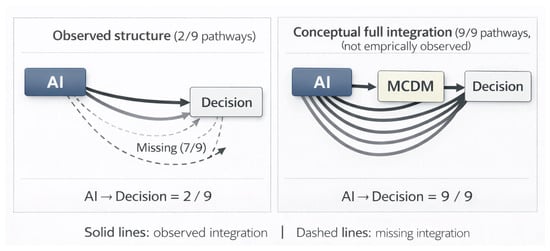

Disclaimer/Publisher’s Note: The statements, opinions and data contained in all publications are solely those of the individual author(s) and contributor(s) and not of MDPI and/or the editor(s). MDPI and/or the editor(s) disclaim responsibility for any injury to people or property resulting from any ideas, methods, instructions or products referred to in the content. |
© 2026 by the author. Licensee MDPI, Basel, Switzerland. This article is an open access article distributed under the terms and conditions of the Creative Commons Attribution (CC BY) license.