


Abstract
“To earn a living”. The definition of work and our understanding of the workplace have changed in recent years due to the emergence of occupational health and is now a field of study under continuous improvement. Despite the fact that there is a huge amount of information, studies, and guidance about how to improve occupational security, the factors that must be considered in a workplace as real hazards to avoid in order to achieve a truly healthy workplace are always subject to debate. This research contributes to efforts in two important ways. The first goal assesses the information about security risk factors established and mentioned by official international institutions aimed at safety and security science by using the relationship and categorization between the identified risks during work activities performance. The second goal is to establish the necessary requirements to be fulfilled to ensure that a workplace will be considered “healthy and safe”. As a result, it is defined that the lack of ergonomics represents the most critical risk factor in order to reduce the incidence of work-related illness during the design and continuous improvement of a tailored workplace.
1. Introduction
“To earn a living” is perhaps a definition of work that emerged with the use of the first official currency during antiquity [1,2]. Since then, and throughout history until today, with globalization as a unique economic trend, the term “work” has been in constant flux [3]. In 1848, attention to industrial hygiene during the industrial revolution made possible the first steps to achieve what is today known as occupational health [4].
‘Working for a suitable life’, was the next step. The understanding that just earning money without any workers’ healthcare can affect not only the workers but the owners of the industries themselves [5] kick-started the meaning of industrial safety. Work evolved from ‘just make money’, to today, where the concept of decent work has been established as a human right [4,6,7].
The challenge of creating a safe work environment is a recurrent study, as indicated by the ILO (International Labor Organization) in its agenda [8]. Analyses and evaluations of security risks have been carried out, but the concept needs to be defined for all work environments. Issues related to security are continuously studied, and more risk factors in workplaces have appeared [9], from those that are clearly visible (physical factors) to those that are blurred but deeply present and even more hazardous (psychological factors) [10,11].
Both physical and psychological risk factors are directly connected with causing work-related illnesses. Therefore, it is related to whether a workplace is safe or not. Factors related to health and security in work can be understood from different angles, but the research question is: what are the most important risk factors in the workplace?
The conceptualization of a safe climate or workplace is characterized by two groups. The first group is composed of analyses at the individual level and refers to the departments or units within a company. The second is at the group level and makes considerations for safety at the organizational level, which refers to management attitudes and a company’s policies [12].
The psychological safety climate is related to the employee’s perception of safety in the organizational structure of the company related to specific policies and practices, including worker education in safety and security practices [13,14,15].
Today, a wide array of tools and techniques exist for risk identification, including documentation reviews, information-gathering techniques, checklist analysis, assumption analysis, cause-and-effect diagrams and other techniques in order to minimize the effect of an unhealthy workplace [16,17,18]. In this context, the importance of the identification of risk in the workplace is a main issue in industrial settings and this study is aims to contribute to this field of research.
Related Works
A number of studies have delved into developing methods to improve workplace conditions and are directly related with identifying and preventing security factors in the workplace. Risk factors of security in the workplace have been studied for years. The amount of information about occupational safety related to security trends and hazards in the workplace has been identified, as it was mentioned in a study about behaviorally oriented occupational safety in 2009 by Michael Christian, Jill Bradley, James Wallace, and Michael Burk [19,20].
The World Health Organization in 2010 established a general framework about what safety in the workplace is, citing common risk factors to avoid accidents in the workplace [21,22,23].
A generic testing methodology enhancing an established test process to address risks by trying to develop a procedure on how risk-based testing can be introduced in a test process and derive a stage model for its integration was presented by Michael Felderer and Rudolf Ramler in 2014 [24].
Today, research on Industry 4.0 related to key aspects and the presentation of a design framework to implement risk management focuses on risk identification and prevention as presented by Jiri Tupa, Jan Simota and Frantisek Steiner 2017 [25].
The industrial non-routine operation process is the time sequence where the main hazard source could be the risk originating and the main risk identification described by Weijun Li and Qinggui Cao in 2018 [26].
Hazards such as a lack ergonomics have been discovered and mentioned in several studies related to organizational structure in companies or industrial institutions involving technical aspects [23].
Considering the risk issues mentioned in the research above, it is reasonable to conclude that the industrial trend is focused on risk prevention and how possible it is to achieve a healthy workplace. In this context, the majority of previous studies do not provide a method to identify the hierarchy of risks related to the workplace. In order to satisfy the absence of this requirement, a methodical framework for industrial risk identification is recommended.
The rest of the document is structured as follows: Section 2 describes the methods. Section 3 includes the results: MSDs (musculoskeletal diseases) is the risk factor more commonly mentioned. Section 4 comprises the discussion. Finally, Section 5 concludes the paper: a lack of ergonomics is the main security risk factor.
2. Materials and Methods
The methodological development of this research, at the first stage, establishes the following keywords: risk factors, security factors, hazards, health and security hazards, insecurities, and threats in workplace in order to compile data from a general framework of research.
To develop a compilation of data, these research keywords were input to the Google Scholar Search engine and official international organization publications (webpages, books, reports, journals, conferences, etc.). The settings search was established to obtain the data and the most important publications considering the following: (i) timeline: publications from 2000 to July 2022, (ii) must be internationals, (iii) Language: English.
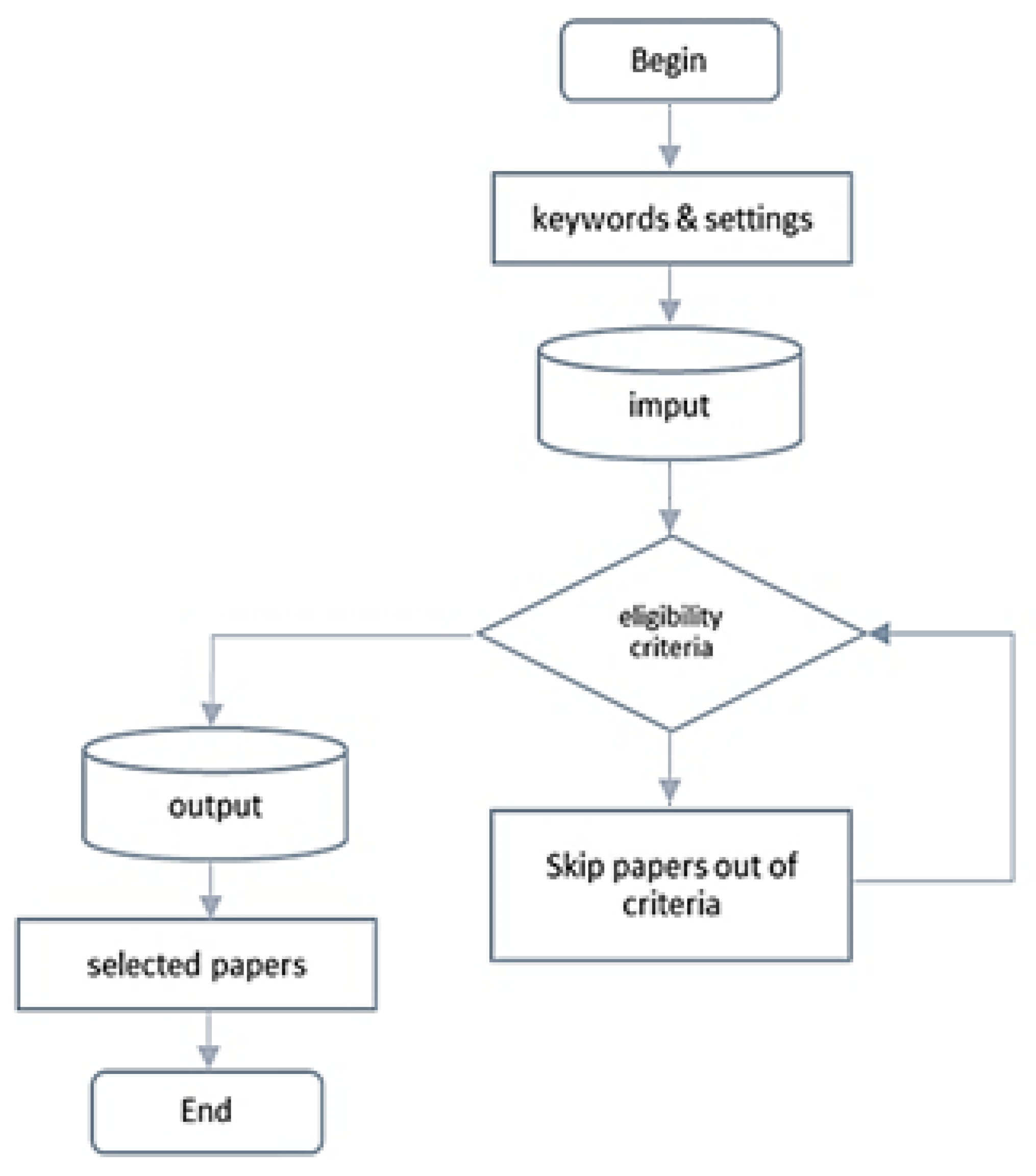
After obtaining the publications related to the input keywords, those not relevant to our eligibility criteria were deleted or omitted: the data selected were relevant to health and security in the workplace. In the final stage, the selected studies were those cited most often in the official international occupational health organizations.
The method covers five stages: (i) Establish keywords. (ii) Compilation data entering the keywords. (iii) Fix the search settings. (iv) Establish eligibility criteria. (v) Delete/Omit papers according to criteria. The method stages are shown in Figure 1.
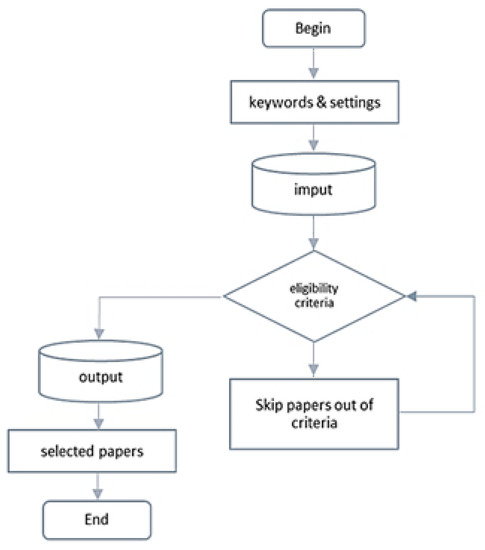
Figure 1.
Method stages.
The first step consisted of determining the keywords to identify the studies in this field using the term “safe and healthy workplace”, then more common keywords, identifying “safety risks”, “safety hazards”, “health risks”, “health hazards”, “health issues”, risk evaluation”, “risk assessment” were collected. In the second step, we evaluated the principal databases for the research papers identified: Web of Science, ScienceDirect, and Scopus, to use the main terms. In the third stage, the data were collected from documents published from 2000 to 2022. In the next filter, the eligibility criteria focused on papers published by official organizations and papers citing official international organizations. Finally, duplicate papers were removed in order to retain focus on the workplace.
Ultimately, the papers most important to consider were papers published by official organizations and papers that cite the official international organizations. Those organizations were chosen according to their member’s number at the time of this research: (i) World Health Organization (WHO), with 197 institutional members. (ii) International Labor Organization (ILO), with 187 institutional member states. (iii) European Agency for Safety and Health at Work (OSHA), with 22 states plans.
In order to obtain a new conceptual model for risk management that can be used in the industry, a thematic analysis was used to overcome the conceptual complications among the risk identification models and the difficulties at first sight and to simplify the final model. The new conceptual model may be constructed to provide research contributions and help industry practitioners to maintain a “healthy and safe” workplace [27].
The first step of this study was to collect risk identification models, which are performed by library studies and searching various databases. It is summarized in Table 1 and explains the identification risk method used in each piece of research. These risks are categorized into two main categories: the first one is Cumulative Risk related to the combined threats to worker health due to the environment or multiple agents or stressors, which can result in future illnesses. The next category is Latent Risk, related to the combined threats to worker health due to the environment or multiple agents, which can produce immediate consequences such as accidents, injuries, or illness.

Table 1.
Risk Identification research.
During the second step, thematic analysis was used for analyzing collected information, offering the most comprehensive map distribution of the main elements of risk identification. This stage is the beginning of typology and model classification. The main risk factors contributing to musculoskeletal disorders are shown in Table 2. It can be classified and set into different types and classified in concordance with the international health and safety organization [48]. Based on related studies where ergonomic risks are considered [28], these groups are classified in: Mechanical risk (RM), Physical risk (RP), Chemical risk (RC), Ergonomic risk (RE), Psychosocial risk (RPY) and ordered according to the position for making a relation to determine the classification.
Table 2.
Main factors contributing to musculoskeletal disorders.
3. Results
There are several risks in the workplace. These risks are defined as chemical hazards, ergonomic hazards, physical hazards, and psychological hazards, to mention a few [49,50,51]. Carrying out in-depth research into existing documents, including those defined by health and safety organizations presented in the standards, it was found that many published documents point out that musculoskeletal disorders (MSDs) caused by biopsychosocial and biomechanical influences have a significant impact on the individual. Furthermore, since the beginning of the 18th century, MDSs have been defined as an occupational etiologic hazard [52]. Due to the continuous efforts taken by industrial safety managers to improve the workplace to prevent risks, today, the possible syndromes or diseases are very familiar and recognized by people. For example, diseases related to the hand such as carpal tunnel syndrome or tendonitis, and in another cases, diseases related to the back such as example thoracic outlet syndrome, and tension neck syndrome [53,54]. Table 3 exposes the compendium of time that appears for each risk category obtained from the literature processed in Table 1.
Table 3.
Risk identification results.
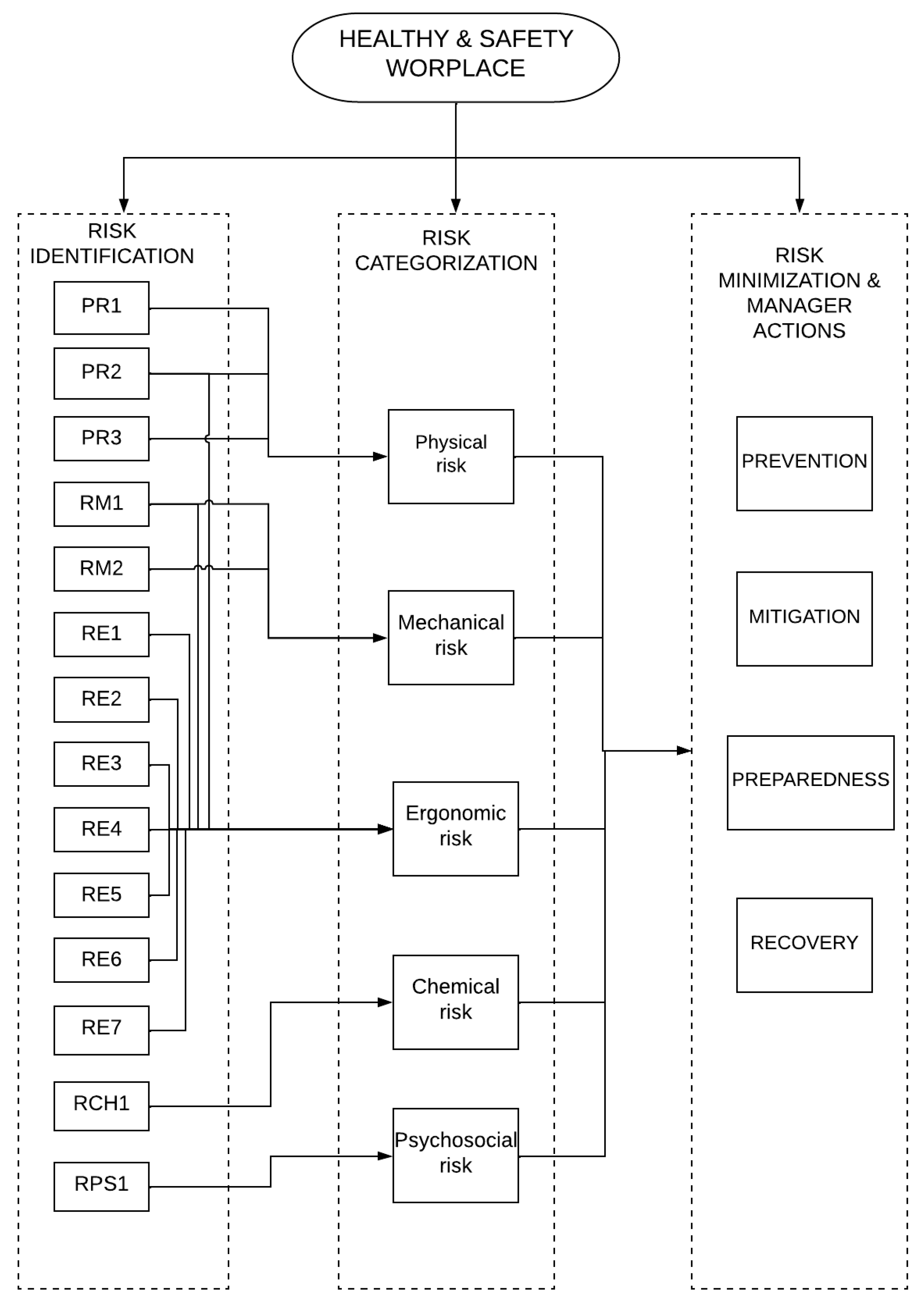
Succeeding in identification and categorization, the next step involved the relationship between risk and the main theme in order to identify the main risk presented during work activities. This result is presented in Figure 2.
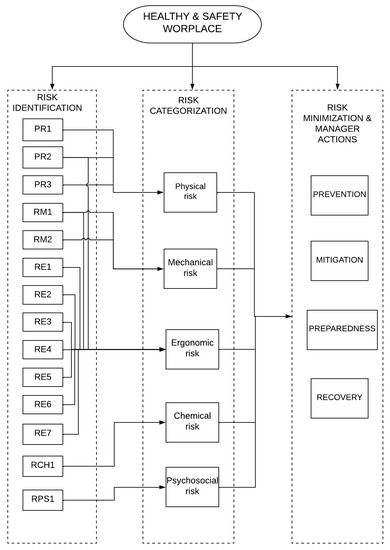
Figure 2.
Risk relation and definition.
On the other hand, in in-depth studies on workplace health, MSDs include some work-related illnesses such as tendon tenderness and associated illnesses such as bursitis, tenosynovitis, or epicondylitis. In addition to disorders producing carpal tunnel syndrome or sciatica, these diseases could include other body affections, for example back pain, and other regional pain syndromes that are not related to any pathology [53,55,56,57]. Causes were found to be directly related to the uncomfortable layout of the workplace, which results in trauma to the musculoskeletal system; this discomfort is included as the main cause of MSDs. Hence, the evaluation of WMSDs takes into account the possible risks present in the workplace including the requirements for keeping the healthy/safe workplace itself [56,58,59].
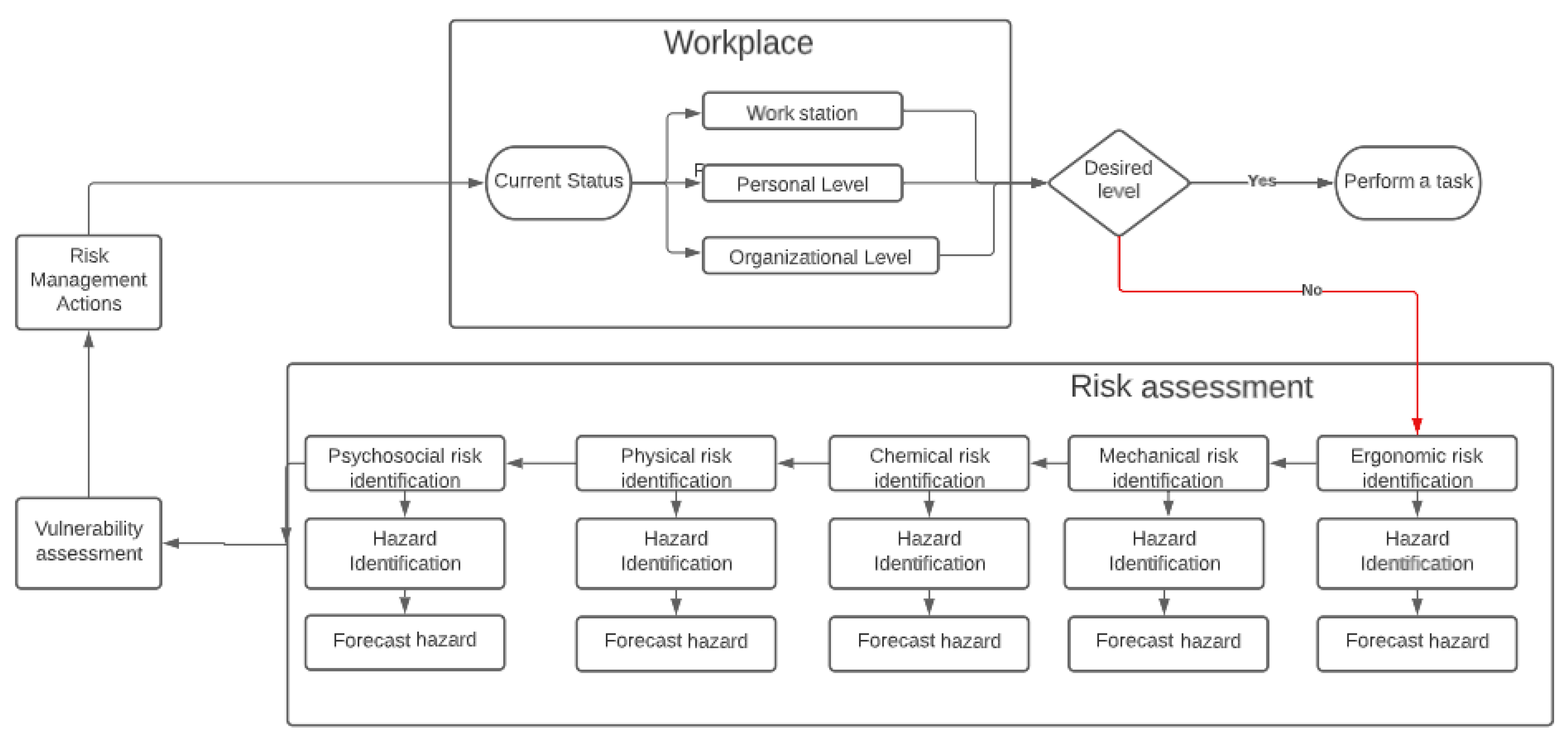
In this context, the typology stage in this study is composed of analyzing the risk identification and developing a theoretical structure from Table 3 and its associations shown in Figure 2. By recognizing their different combinations, all the possible types are created and named. Then, the workplace evaluation steps are created in order to reduce the risk and upgrade the work environment. This method is illustrated in Figure 3.
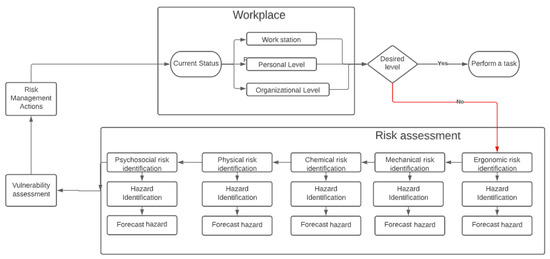
Figure 3.
Workplace evaluation method.
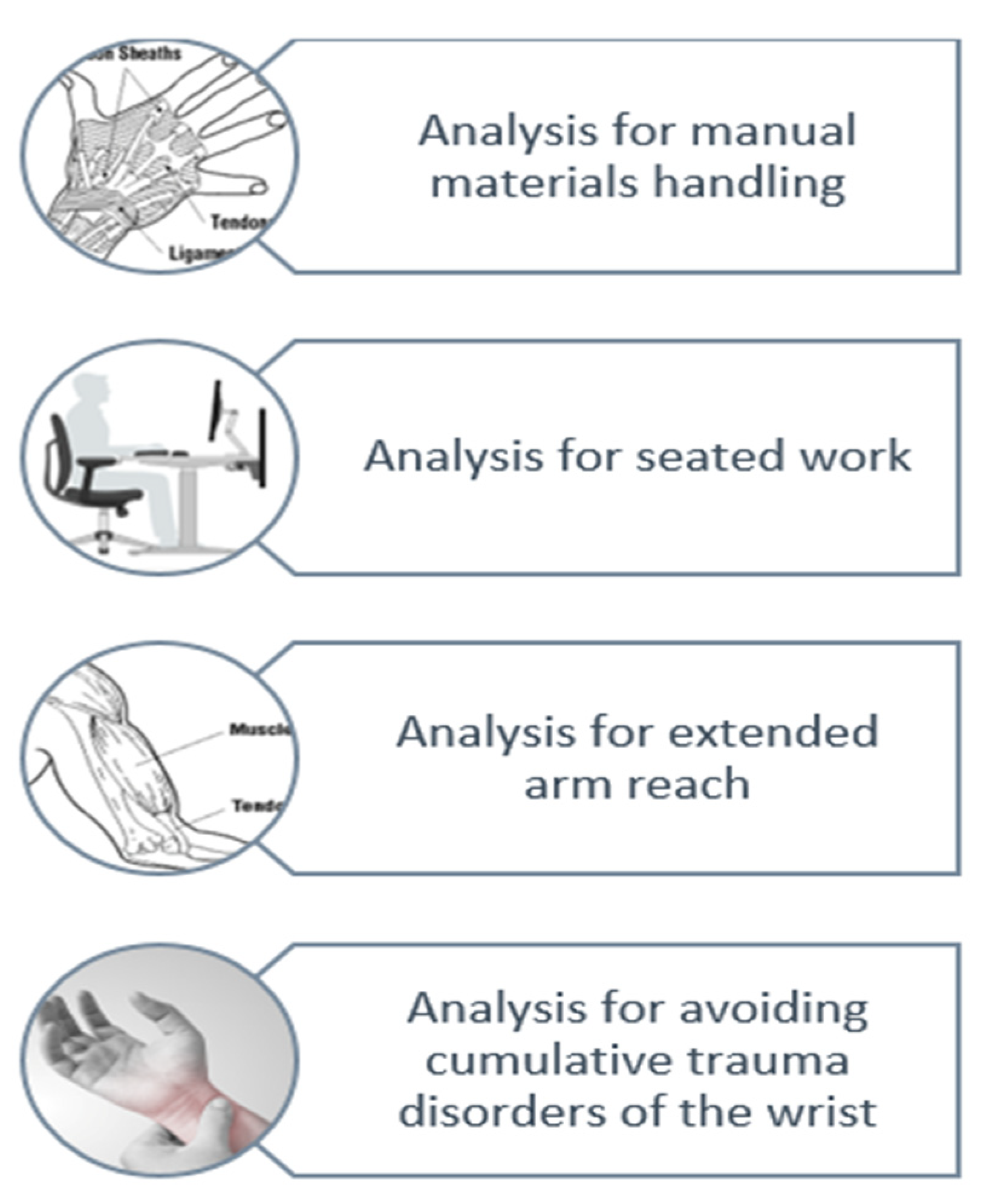
In order to avoid ergonomic hazards, the factor risks analysis in the workplace or workstation shall be classified as more relevant, as shown in Figure 4: (i) Analysis for manual materials handling, (ii) Analysis for seated work, (iii) Analysis for extended arm reach, and (iv) Analysis for avoiding cumulative trauma disorders of the wrist [57,60].
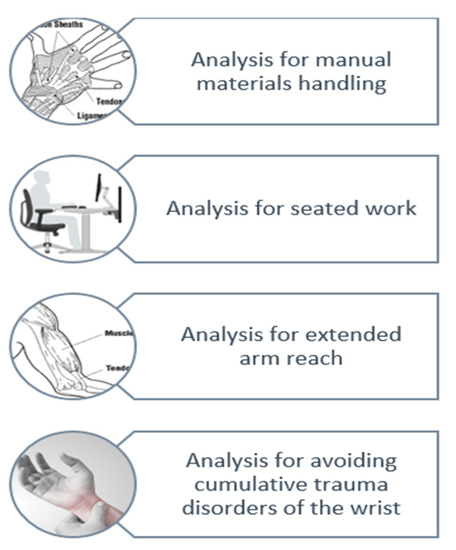
Figure 4.
Main risk factors to analyze in order to avoid ergonomic hazards into workplace.
Work injuries can be caused by different factors and can be called accidents, but work-related illness can be classified and set into different types. The injuries are illustrated in Table 4 [61].
Table 4.
Injury and Possible Causes [61].
4. Discussion
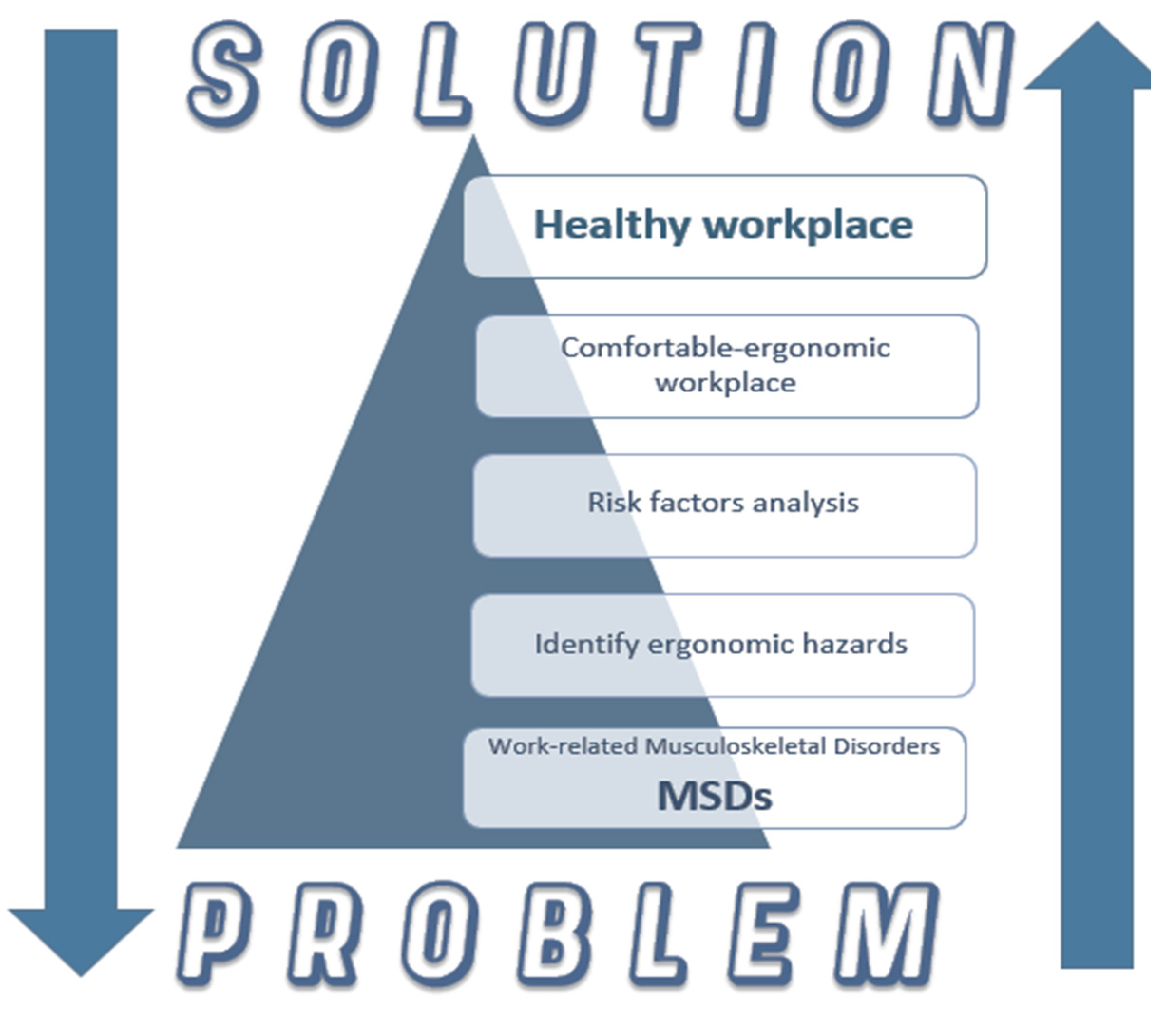
This study identified the main cause for work-related problems as the lack of ergonomics in the workplace; taking into account an analysis of effect-cause as shown in Figure 5, an MSDs is an undesired effect in a healthy workplace as a primary intention. Many studies have been carried out focusing on safety and security science to find a solution to this problem. This finding is in harmony with work by other authors in this field such as the studies “Preventing Musculoskeletal Disorders” [62], or the “Relationship between human resource development system and job satisfaction” [63].
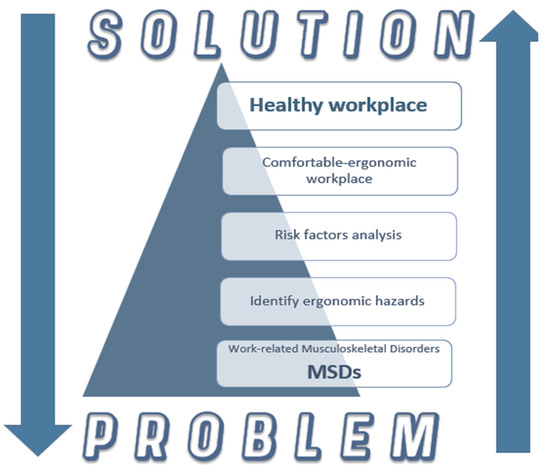
Figure 5.
Overview of effect-cause relation of Healthy workplace and biomechanics.
In concordance with studies where the “healthy workplace” is defined [64], a “safety and Healthy workplace” is considered only if it has the following four mandatory points: (i) identify and prevent the sources of possible illness. (ii) Services of “personal health care resources”. (iii) Positive feedback assuring a work environment that does not cause re-injury. (iv) Comfortability inclusive for people suffering from any disability.
As another contribution, this study presents the steps for ergonomic evaluation to achieve the final solution for a healthy workplace, shown in the problem-solution diagram in Figure 5, starting with the MSDs identification, and then focusing on ergonomic hazard identification and minimization and continuing with the risk factors analysis to meet the ergonomic healthy solution.
5. Conclusions
In a logical small analysis, it is possible to determine that most of life is spent in working years. In this sense, the workplace is a good place to share initiatives that promote the mental and behavioral health of workers to reduce the possibility of future illness related to workplace comfort.
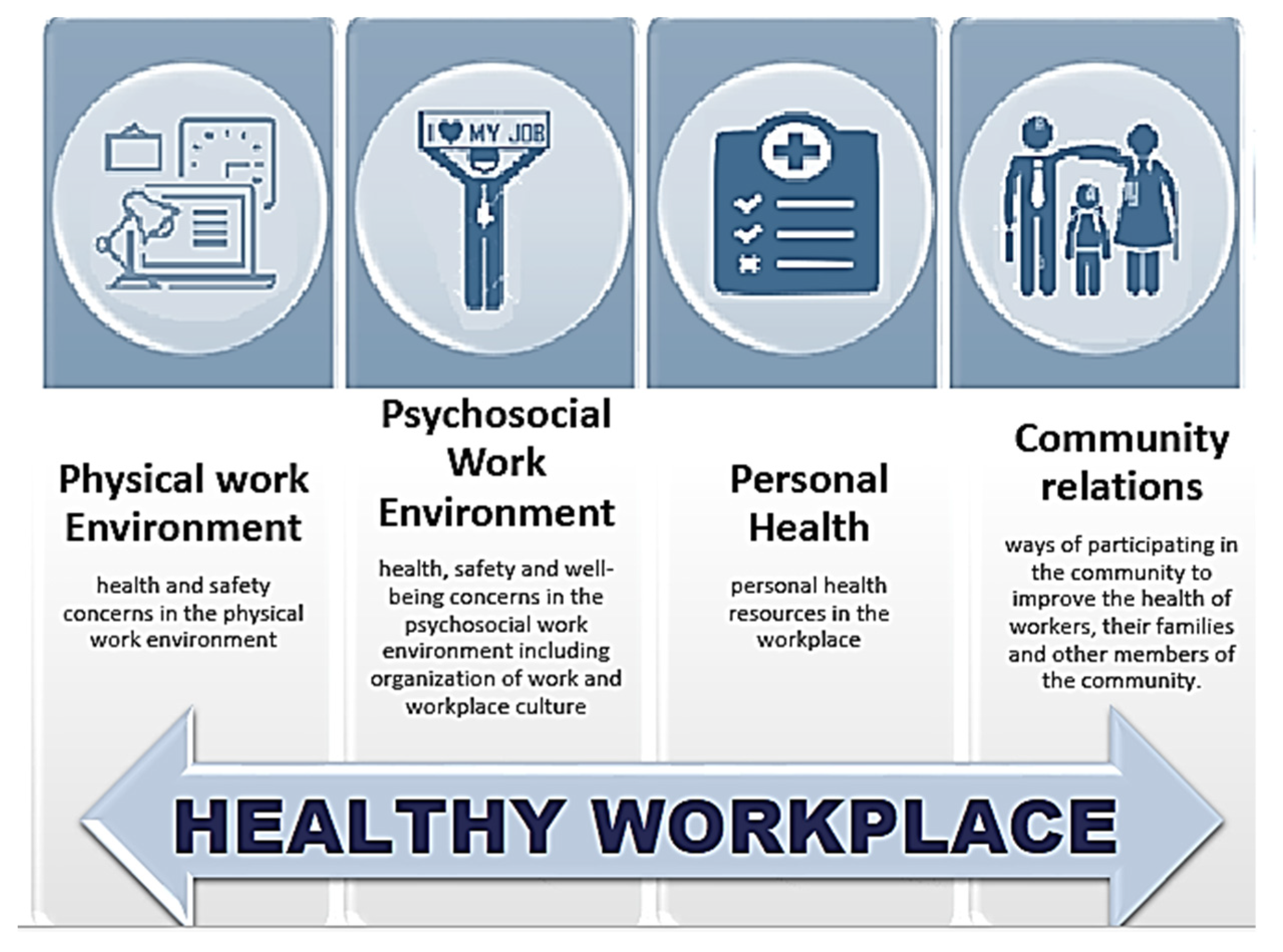
In order to achieve a healthy workplace, industrial organizations have specific concerns [65]. The specific parameters to explain the needs are categorized into two sets: (i) Physical work Environment and (ii) Psychosocial Work Environment, as shown in Figure 6, where Physical Work Environment is directly related to biomechanical ergonomic risk factors in the workplace [21,66].
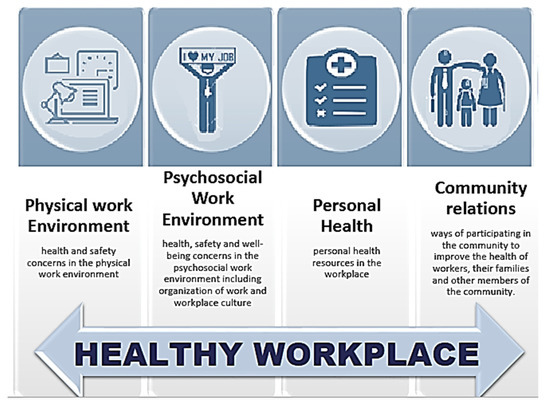
Figure 6.
Identified needs concern to achieve a healthy workplace [64].
This risk analysis methodology strives toward an easily applicable method with a hierarchy phase, which is applicable to workstation design and healthy organization. It could be established as a requirement for the improvement of companies to be included in the digitalization of the new industrial tendency.
The investigation was conducted using a qualitative methodology. In this sense, the results are presented in a general form. Subsequent studies may apply quantitative analysis methodologies to risk identification by carrying out tailored industrial risk management.
Author Contributions
Conceptualization, V.C.E.-C. and R.P.A.-R.; methodology, V.C.E.-C.; investigation, V.C.E.-C.; writing—original draft preparation, V.C.E.-C.; writing—review and editing, R.P.A.-R.; formal analysis, V.C.E.-C. and R.P.A.-R.; supervision N.R. and B.T.; review and editing, N.R. and B.T.; review S.G.; project administration, S.G. All authors have read and agreed to the published version of the manuscript.
Funding
This research received no external funding.
Institutional Review Board Statement
Not applicable.
Informed Consent Statement
Not applicable.
Data Availability Statement
Not applicable.
Acknowledgments
We would like to say thanks to N.A. and Obuda University, Budapest (Hungary) for the supporting the publication of this work.
Conflicts of Interest
The authors declare no conflict of interest.
References
- Wray, L. Credit and State Theories of Money. Available online: Books.google.com/books/about/Credit_and_State_Theories_of_Money.html?hl=es&id=qh1KLhjMqIoC (accessed on 14 July 2022).
- Arciniega-Rocha, R.P.; Rosero-Montalvo, P.D.; Erazo-Chamorro, V.C.; Arciniega-Rocha, V.M.; Ubidia-Vasconez, R.A.; Aguirre-Chagna, V.H.; Aulestia, R.R. Gasket Tester for Low-Pressure Pipelines: Design and Tests. In Proceedings of the 2019 IEEE 4th Ecuador Technical Chapters Meeting, ETCM 2019; Institute of Electrical and Electronics Engineers Inc., Guayaquil, Ecuador, 1 November 2019. [Google Scholar] [CrossRef]
- Martin, G.C. The Effects Of Cultural Diversity In The Workplace. J. Divers. Manag. 2014, 9, 89–92. [Google Scholar] [CrossRef]
- Abrams, H.K. A Short History of Occupational Health. J. Public Health Policy 2001, 22, 34–80. [Google Scholar] [CrossRef] [PubMed]
- Sirgy, M.J.; Lee, D.J. Work-Life Balance: An Integrative Review. Appl. Res. Qual. Life 2018, 13, 229–254. [Google Scholar] [CrossRef]
- Forastieri, V. Improving Health in the Workplace: ILO’s Framework for Action. 2001. Available online: https://www.ilo.org/wcmsp5/groups/public/---ed_protect/---protrav/---safework/documents/publication/wcms_329366.pdf (accessed on 1 August 2022).
- Burton, J. Healthy Workplace Framework and Model: Background and Supporting Literature and Practices. 2010. Available online: https://apps.who.int/iris/bitstream/handle/10665/113144/9789241500241_eng.pdf (accessed on 1 August 2022.).
- Safe and Healthy Workplaces Making Decent Work a Reality The ILO Report for World Day for Safety and Health at Work Geneva. 2007. Available online: https://docplayer.net/17373405-Safe-and-healthy-workplaces-making-decent-work-a-reality.html (accessed on 1 August 2022).
- Marras, W.S.; Lavender, S.A.; Leurgans, S.E.; Fathallah, F.A.; Ferguson, S.A.; Gary Allread, W.; Rajulu, S.L. Vern Putz-Anderson Biomechanical Risk Factors for Occupationally Related Low Back Disorders. Ergonomics 1995, 38, 2. [Google Scholar] [CrossRef]
- Faucett, J. Integrating ‘Psychosocial’ Factors into a Theoretical Model for Work-Related Musculoskeletal Disorders. Theor. Issues Ergon. Sci. 2005, 6, 531–550. [Google Scholar] [CrossRef]
- Clarke, S. The Effect of Challenge and Hindrance Stressors on Safety Behavior and Safety Outcomes: A Meta-Analysis. J. Occup. Health Psychol. 2012, 17, 387–397. [Google Scholar] [CrossRef]
- Morgeson, F.P.; Aguinis, H.; Ashford, S.J. Safety Climate in Organizations: New Challenges and Frontiers for Theory, Research and Practice. 2014. Available online: https://core.ac.uk/download/pdf/42412967.pdf (accessed on 1 August 2022).
- Ajslev, J.; Dastjerdi, E.L.; Dyreborg, J.; Kines, P.; Jeschke, K.C.; Sundstrup, E.; Jakobsen, M.D.; Fallentin, N.; Andersen, L.L. Safety Climate and Accidents at Work: Cross-Sectional Study among 15,000 Workers of the General Working Population. Saf. Sci. 2017, 91, 320–325. [Google Scholar] [CrossRef]
- Ostroff, C.; Kinicki, A.J.; Muhammad, R.S. Organizational Culture and Climate Integrated Model Of Culture And Climate Organizational Culture Climate Relationship Between Culture And Climate Moving Across Levels Of Analysis Emergence Of Shared Meaning And Perceptions Culture And Climate Change. 2013. Available online: https://goal-lab.psych.umn.edu/orgpsych/readings/15. Climate & Culture/Ostroff, Kinicki, & Muhammad (2012).pdf (accessed on 18 July 2022).
- Christian, M.S.; Bradley, J.C.; Wallace, J.C.; Burke, M.J. Workplace Safety: A Meta-Analysis of the Roles of Person and Situation Factors. J. Appl. Psychol. 2009, 94, 1103–1127. [Google Scholar] [CrossRef]
- Siraj, N.B.; Fayek, A.R. Risk Identification and Common Risks in Construction: Literature Review and Content Analysis. J. Constr. Eng. Manag. 2019, 145, 03119004. [Google Scholar] [CrossRef]
- Hou, Y.; Such, J.; Rashid, A. Understanding Security Requirements for Industrial Control System Supply Chains. In Proceedings of the 2019 IEEE/ACM 5th International Workshop on Software Engineering for Smart Cyber-Physical Systems, SEsCPS 2019, Montréal, QC, Canada, 28 May 2019; pp. 50–53. [Google Scholar] [CrossRef]
- Maletič, D.; Pačaiová, H.; Nagyová, A.; Maletič, M. The Link Between Asset Risk Management and Maintenance Performance: A Study of Industrial Manufacturing Companies. Qual. Innov. Prosper. 2020, 24, 50–69. [Google Scholar] [CrossRef]
- Hald, K.S. Social Influence and Safe Behavior in Manufacturing. Saf. Sci. 2018, 109, 50–69. [Google Scholar] [CrossRef]
- Li, K.X.; Yin, J.; Fan, L. Ship Safety Index. Transp. Res. Part A: Policy Pract. 2014, 66, 75–87. [Google Scholar] [CrossRef]
- Jensen, P.A.; van der Voordt, T.J.M. Healthy Workplaces: What We Know and What Else We Need to Know. J. Cor-Porate Real Estate 2020, 22, 95–112. [Google Scholar] [CrossRef]
- Fidler, D.P. The Globalization of Public Health: The First 100 Years of International Health Diplomacy. Bull. World Health Organ. 2001, 79, 842–849. [Google Scholar] [CrossRef] [PubMed]
- Liu, X.; Huang, G.; Huang, H.; Wang, S.; Xiao, Y.; Chen, W. Safety Climate, Safety Behavior, and Worker Injuries in the Chinese Manufacturing Industry. Saf. Sci. 2015, 78, 173–178. [Google Scholar] [CrossRef]
- Felderer, M.; Ramler, R. Integrating Risk-Based Testing in Industrial Test Processes. Softw. Qual. J. 2014, 22, 543–575. [Google Scholar] [CrossRef]
- Tupa, J.; Simota, J.; Steiner, F. Aspects of Risk Management Implementation for Industry 4.0. Procedia Manuf. 2017, 11, 1223–1230. [Google Scholar] [CrossRef]
- Li, W.; Cao, Q.; He, M.; Sun, Y. Industrial Non-Routine Operation Process Risk Assessment Using Job Safety Analysis (JSA) and a Revised Petri Net. Process Saf. Environ. Prot. 2018, 117, 533–538. [Google Scholar] [CrossRef]
- Beus, J.M.; McCord, M.A.; Zohar, D. Workplace safety: A review and research synthesis. Organ. Psychol. Rev. 2016, 6, 352–381. [Google Scholar] [CrossRef]
- Fox, M.A.; Spicer, K.; Chosewood, L.C.; Susi, P.; Johns, D.O.; Dotson, G.S. Implications of Applying Cumulative Risk Assessment to the Workplace. Environ. Int. 2018, 115, 230–238. [Google Scholar] [CrossRef]
- Kirby, J.; Hassall, M.; Xu, X.; Armstrong, J. The Future of Risk Identification in a Rapidly Changing Sociotechnical Work Environment; I IS 978-1-925627-33-6 Paper No. 169; Chemeca: Sydney, Australia, 2019. [Google Scholar]
- Joyce, S.; Modini, M.; Christensen, H.; Mykletun, A.; Bryant, R.; Mitchell, P.B.; Harvey, S.B. Workplace Interventions for Common Mental Disorders: A Systematic Meta-Review. Psychol. Med. 2016, 46, 683–697. [Google Scholar] [CrossRef] [PubMed]
- Andrea, H.; Beurskens, A.J.H.M.; Metsemakers, J.F.M.; Van Amelsvoort, L.G.P.M.; Van Den Brandt, P.A.; Van Schayck, C.P. Health Problems and Psychosocial Work Environment as Predictors of Long Term Sickness Absence in Employees Who Visited the Occupational Physician and/or General Practitioner in Relation to Work: A Prospective Study. Occup. Environ. Med. 2003, 60, 295–300. [Google Scholar] [CrossRef] [PubMed]
- Skamagki, G.; King, A.; Duncan, M.; Wåhlin, C. A Systematic Review on Workplace Interventions to Manage Chronic Musculoskeletal Conditions. Physiother. Res. Int. 2018, 23, e1738. [Google Scholar] [CrossRef]
- Kim, T.K. CORR® International-Asia-Pacific: How to Resolve Conflicts with Patients and Prevent Workplace Violence. Clin. Orthop. Relat. Res. 2020, 478, 228–230. [Google Scholar] [CrossRef] [PubMed]
- Silva-Junior, J.S.d.; Fischer, F.M. Long-Term Sickness Absence Due to Mental Disorders Is Associated with Individual Features and Psychosocial Work Conditions. PLoS ONE 2014, 9, e115885. [Google Scholar] [CrossRef] [PubMed]
- Bahn, S. Workplace Hazard Identification and Management: The Case of an Underground Mining Operation. Saf. Sci. 2013, 57, 129–137. [Google Scholar] [CrossRef]
- Jule, J.G. Workplace Safety: A Strategy for Enterprise Risk Management. Workplace Health Saf. 2020, 68, 360–365. [Google Scholar] [CrossRef]
- Targoutzidis, A.; Antonopoulou, L.; Targoutzidis ELINYAE, A.; Lila Antonopoulou, G. A Multidimensional Approach to Modelling for Workplace Risk Assessment. Int. J. Occup. Saf. Ergon. 2015, 15, 373–384. [Google Scholar] [CrossRef] [PubMed][Green Version]
- Sugawara, E.; Nikaido, H. Workplace Hazard Identification: What Do People Know and How Is It Done? Antimicrob. Agents Chemother. 2014, 58, 7250–7257. [Google Scholar] [CrossRef]
- Gul, M.; Ak, M.F. A Comparative Outline for Quantifying Risk Ratings in Occupational Health and Safety Risk Assessment. J. Clean. Prod. 2018, 196, 653–664. [Google Scholar] [CrossRef]
- Zeqiri, K.; Kortnik, J.; Mijalkovski, S. Determination Of The Risk At Workplace, Assessment and Its Rank Calculation, In Mining Activities. GeoSci. Eng. 2020, 66, 69–75. [Google Scholar] [CrossRef][Green Version]
- Rout, B.K.; Sikdar, B.K. Hazard Identification, Risk Assessment, and Control Measures as an Effective Tool of Occupational Health Assessment of Hazardous Process in an Iron Ore Pelletizing Industry. Indian J. Occup. Environ. Med. 2017, 21, 56. [Google Scholar] [CrossRef] [PubMed]
- Griffiths, C.; Bowen, J.; Hinze, A. Investigating Wearable Technology for Fatigue Identification in the Workplace. In Lecture Notes in Computer Science (including subseries Lecture Notes in Artificial Intelligence and Lecture Notes in Bioinformatics), Proceedings of 16th IFIP Conference on Human-Computer Interaction; Springer: Bombay, India, 2017; Volume 10514 LNCS, pp. 370–380. [Google Scholar] [CrossRef]
- Seilerová, M. The Consequences of Psychosocial Risks in The Workplace in Legal Context. Cent. Eur. J. Labour Law Pers. Manag. 2019, 2, 47–60. [Google Scholar] [CrossRef]
- Crawford, J.O.; Berkovic, D.; Erwin, J.; Copsey, S.M.; Davis, A.; Giagloglou, E.; Yazdani, A.; Hartvigsen, J.; Graveling, R.; Woolf, A. Musculoskeletal Health in the Workplace. Best Pract. Res. Clin. Rheumatol. 2020, 34, 101558. [Google Scholar] [CrossRef]
- Chia, G.; Lim, S.M.; Sng, G.K.J.; Hwang, Y.F.J.; Chia, K.S. Need for a New Workplace Safety and Health (WSH) Strategy for the Fourth Industrial Revolution. Am. J. Ind. Med. 2019, 62, 275–281. [Google Scholar] [CrossRef]
- Dimakakou, E.; Johnston, H.J.; Streftaris, G.; Cherrie, J.W. Exposure to Environmental and Occupational Particulate Air Pollution as a Potential Contributor to Neurodegeneration and Diabetes: A Systematic Review of Epidemiological Research. Int. J. Environ. Res. Public Health 2018, 15, 1704. [Google Scholar] [CrossRef] [PubMed]
- Artificial Intelligence-Enabled Wearable Medical Devices, Clinical and Diagnostic Decision Support Systems, and Internet of Things-Based Healthcare Applications in COVID-19 Prevention, Screening, and Treatment. Am. J. Med. Res. 2021, 8, 9. [CrossRef]
- Ergonomic Assessment Checklist Date Activity Assessed Risk Ratting (Circle One) Organization Point of Contact High Medium Low Personnel Observed BLDG NO/Location ROOM/AREA Ergonomic Assessment Checklist Risk Factors Yes No. Available online: https://www.osha.gov/sites/default/files/2018-12/fy14_sh-26336-sh4_Ergonomic-Assessment-Checklist.pdf (accessed on 20 July 2022).
- Davis, K.G.; Davis, K.G.; Kotowski, S.E. Understanding the Ergonomic Risk for Musculoskeletal Disorders in the United States Agricultural Sector. Am. J. Ind. Med. 2007, 50, 501–511. [Google Scholar] [CrossRef]
- Canadian Centre for Occupational Health and Safety. In CCOHS: Hazards; Wiley-Blackwell: Hoboken, NJ, USA, 2021.
- Zhang, W.; Swangnetr, M.; Bloom, P. Advances in Physical Ergonomics and Human Factors: Part I. Adv. Phys. Ergon. Hum. Factors 2014, 416. Available online: https://books.google.hu/books?hl=en&lr=&id=9olYBAAAQBAJ&oi=fnd&pg=PA313&dq=info:U7F4Q-XlwmcJ:scholar.google.com&ots=42cdmGH8Ee&sig=uP-mq3Eda8XxU9FIa2hry-dI81Y&redir_esc=y#v=onepage&q&f=false (accessed on 11 October 2022).
- Hales, T.R.; Bernard, B.P. Epidemiology of Work-Related Musculoskeletal Disorders. Orthop. Clin. North Am. 1996, 27, 679–709. [Google Scholar] [CrossRef]
- Kilbom, Å.; Armstrong, T.; Buckle, P.; Fine, L.; Hagberg, M.; Haring-Sveeney, M.; Martin, B.; Punnett, L.; Silverstein, B.; Sjøgaard, G.; et al. Musculoskeletal Disorders: Work-Related Risk Factors and Prevention. Int. J. Occup. Environ. Health 2013, 2, 239–246. [Google Scholar] [CrossRef]
- Niu, S. Ergonomics and Occupational Safety and Health: An ILO Perspective. Appl. Ergon. 2010, 41, 744–753. [Google Scholar] [CrossRef] [PubMed]
- Punnett, L.; Wegman, D.H. Work-Related Musculoskeletal Disorders: The Epidemiologic Evidence and the Debate. J. Electromyogr. Kinesiol. 2004, 14, 13–23. [Google Scholar] [CrossRef] [PubMed]
- Work-Related Musculoskeletal Disorders (WMSDs)—Risk Factors: OSH Answers. Available online: https://www.ccohs.ca/oshanswers/ergonomics/risk.html (accessed on 23 January 2022).
- Waters, T.R.; Putz-Anderson, V.; Garg, A.; Fine, L.J. Revised NIOSH Equation for the Design and Evaluation of Manual Lifting Tasks. Ergonomics 1993, 36, 749–776. [Google Scholar] [CrossRef] [PubMed]
- CCOHS. Working in a Standing Position—Basic Information: OSH Answers; 2014. Available online: https://www.ccohs.ca/oshanswers/ergonomics/standing/sit_stand.html (accessed on 21 July 2022).
- Gašová, M.; Gašo, M.; Štefánik, A. Advanced Industrial Tools of Ergonomics Based on Industry 4.0 Concept. Procedia Eng. 2017, 192, 219–224. [Google Scholar] [CrossRef]
- Chaffin, D.B. Ergonomics Occupational Biomechanics-a Basis for Workplace Design to Prevent Musculoskeletal Injuries Occupational Biomechanics-a Basis for Workplace Design to Prevent Musculoskeletal Injuries. Ergonomics 1987, 30, 321–329. [Google Scholar] [CrossRef]
- Arciniega-Rocha, R.P.; Erazo-Chamorro, V.C. Non-Powered Hand Tool Size Selection Method. In Mérnöki Szimpózium a Bánkin Előadásai: Proceedings of the Engineering Symposium at Bánki (ESB2021); Horváth, R., Ed.; Óbudai Egyetem: Budapest, Hungary, 2022; Volume 1, pp. 37–43. Available online: https://bgk.uni-obuda.hu/esb/system/files/file_upload/esb2021.pdf (accessed on 21 July 2022)ISBN 978-963-449-270-2.
- Luttmann Preventing Musculoskeletal Disorders in the Workplace. World Health Organ. Rep. Geneva 2003, 1–38lu. Available online: https://apps.who.int/iris/bitstream/handle/10665/42651/924159053X.pdf (accessed on 14 July 2022).
- Širca, N.T.; Babnik, K.; Breznik, K. The Relationship between Human Resource Development System and Job Satisfaction; 2012. Available online: http://www.issbs.si/press/ISBN/978-961-6813-10-5/papers/ML12_212.pdf (accessed on 27 March 2022).
- Erazo-Chamorro, V.C.; Arciniega-Rocha, R.P.; Szabo, G. Healthy and Safe Workplace Definition: A Friendly Boundary for a Complex Issue. In Proceedings of the Mérnöki Szimpózium a Bánkin Előadásai: Proceedings of the Engineering Symposium at Bánki (ESB2021), Online, 18 November 2021; Horváth, R., Lukács, J., Stadler, R.G., Eds.; Óbudai Egyetem: Budapest, Hungary, 2022; pp. 51–56. [Google Scholar]
- Babos, T. The Five Central Pillars of European Security; NATO Public Diplomacy Division, Brussels Strategic and Defense Research Center: Budapest, Hungary, 2007. [Google Scholar]
- Szabó, G.; Németh, E. Development an Office Ergonomic Risk Checklist: Composite Office Ergonomic Risk Assessment (CERA Office). In Proceedings of the Advances in Intelligent Systems and Computing; Springer: Cham, Switzerland, 2019; Volume 819, pp. 590–597. [Google Scholar] [CrossRef]
Publisher’s Note: MDPI stays neutral with regard to jurisdictional claims in published maps and institutional affiliations. |
© 2022 by the authors. Licensee MDPI, Basel, Switzerland. This article is an open access article distributed under the terms and conditions of the Creative Commons Attribution (CC BY) license (https://creativecommons.org/licenses/by/4.0/).