


Abstract
Objectives: Biologic therapy is a treatment option for patients with refractory chronic rhinosinusitis with nasal polyps (CRSwNP). While several real-world studies have evaluated treatment effectiveness, data on long-term outcomes remain limited. The aim of our study is to evaluate the long-term effectiveness (>3 years) of biologic therapy in patients with CRSwNP. Methodology: A retrospective analysis was conducted at a single tertiary referral center including patients with CRSwNP treated with biologic agents and followed for at least 36 months. Treatment response was assessed using the 22-item Sinonasal Outcome Test (SNOT-22) and its subdomains, the nasal polyp score (NPS), and the EUFOREA response criteria. Data on treatment interval prolongation and adverse events were also collected. Results: A total of 62 patients were identified, of whom 26 (42%) had long-term follow-up with a mean duration of 45.7 months and maximum of 81 months. Most patients (84.6%) were treated with Dupilumab. Fourteen patients (53.8%) were able to extend treatment intervals to up to 12 weeks. During follow-up, three patients (15.3%) required rescue treatment. Significant improvements in total SNOT-22 scores and its subdomains and NPS were observed by 3 months (p < 0.001) and were maintained throughout the follow-up period. EUFOREA response scores remained moderate to excellent over time, with no significant change during follow-up (p = 0.940). A sub-group analysis comparing patients treated less than 3 years and the cohort group was made at 1 year of follow-up, with no significant statistical difference between the groups. Conclusions: Biologic therapy for CRSwNP demonstrated sustained effectiveness over a mean follow-up period of nearly four years and up to almost 7 years, for patients who managed to sustain treatment for a prolonged duration. Treatment interval prolongation was feasible in approximately half of the cohort without loss of effectiveness.
1. Introduction
Biologic therapies targeting key mediators of type 2 inflammation have recently been approved for the treatment of recalcitrant CRSwNP refractory to maximal medical and surgical management [1].
Dupilumab, targeting IL-4 and IL-13; mepolizumab, a monoclonal antibody directed against IL-5; Tezepelumab, targeting thymic stromal lymphopoietin (TSLP); and Omalizumab, a monoclonal antibody targeting immunoglobulin E (IgE), have demonstrated excellent efficacy in randomized controlled trials, with a maximum follow-up duration of one year.
Real-world evidence regarding the use of biologic therapies in CRSwNP remains limited, with most published studies reporting small patient cohorts or short-term follow-up. For instance, a 2024 multicenter study from Italy reported favorable outcomes but included only 40 patients with a follow-up of up to 42 weeks [2]. Similarly, a 2025 European multicenter study evaluating 612 patients demonstrated excellent treatment responses, although the follow-up was limited to one year [3]. Another multi-center study by Mortuaire et al. demonstrated excellent results in 326 patients over 18 months of follow-up [4]. Data addressing long-term outcomes following biologic therapy are scarce. One notable study followed 138 patients for 36 months and reported significant improvements in rhinosinusitis symptoms and disease-related impairment [5]. Apart from this study, there is a paucity of data evaluating long-term (>3 years) outcomes in patients treated with biologic agents.
The primary objective of the present study was to assess long-term (>3 years) outcomes and adverse events associated with biologic treatment for CRSwNP, including the feasibility and yield of treatment tapering and the impact of comorbidities on treatment success.
2. Materials and Methods
2.1. Study Design
A retrospective analysis was conducted of all patients treated with biologic agents for chronic rhinosinusitis with nasal polyps (CRSwNP) at a university-affiliated tertiary care center between 2019 and 2025.
The inclusion criteria comprised adult patients (>18 years) who received biologic therapy for CRSwNP and had a documented follow-up duration of at least 36 months.
The study was conducted in accordance with the Declaration of Helsinki, and its protocol was approved by the Rabin Medical Center Institutional Ethics Review Board, which granted a waiver of informed consent due to the study’s retrospective nature (authorization number 22-0612, authorization date 18 September 2022).
2.2. Treatment Protocol and Follow-Up
The follow-up protocol at our institution includes an initial visit 3–6 months after treatment initiation, followed by subsequent visits every 6–12 months, depending on the individual treatment response. Prior to each visit, patients are instructed to undergo complete blood count testing to assess for eosinophilia. Nasal endoscopy is performed at every follow-up visit, and patients are asked to complete the Sinonasal Outcome Test (SNOT-22) questionnaire.
2.3. Variables and Measurements
Data were extracted from medical records and included the following parameters: demographic characteristics; type of biologic agent (Dupilumab, Mepolizumab, and Omalizumab); comorbidities, with particular emphasis on type 2 inflammatory diseases such as asthma, nonsteroidal anti-inflammatory drug-exacerbated respiratory disease (NERD), atopic dermatitis, and others; surgical characteristics, including the number of functional endoscopic sinus surgery (FESS) procedures, extent of surgery, and histopathological findings of nasal polyps; SNOT-22 scores and its four subdomains (nasal symptoms, craniofacial discomfort, sleep and functional impairment, and emotional distress); nasal polyp score (NPS); eosinophil count; European Forum for Research and Education in Allergy and Airway Diseases (EUFOREA) response criteria for biologic treatment in CRSwNP; adverse events; treatment interval prolongation; treatment discontinuation; and additional relevant clinical data.
Olfactory function was assessed using the SNOT-22 item specifically addressing smell.
A retrospective assessment of the treatment response was performed in accordance with the 2023 EUFOREA criteria [6]:
- Nasal polyp size.
- Need for OCS.
- Quality of life.
- Sense of smell.
- Comorbidities.
A score of 3–5 was regarded as “moderate–excellent response”, 1–2 as “poor response”, and 0 as “no response”.
2.4. Statistical Analysis
Statistical analyses were performed using Python v3.11.
Descriptive statistics: Categorical variables were expressed as the frequency and percentages. Continuous variables were expressed as the mean and standard deviation (SD) if they were normally distributed. Non-normally distributed variables were expressed as the median and inter-quartile range (Q1, Q3).
Assessing improvement over time: For continuous variables (SNOT-22 and its subdomains, NPS and Eosinophil count [K/µL]), we used a linear mixed effects model with random intercepts for each patient, taking into account the fact that each patient had a unique baseline value, also accounting for missing values at different follow-up timepoints.
Time was set as a fixed effect with identical timepoints for each patient, thus enabling us to estimate the mean differences at each follow-up vs. baseline with 95% confidence intervals (CI). p-values were reported for each variable compared to baseline and a p-value that tests the overall significance of the entire statistical model per variable.
For ordinal variables (Smell and EUFOREA response criteria), we used proportional-odds logistic regression. Time was a categorical variable, using the earliest time as the reference for the model: baseline (before treatment initiation) for smell and 3 months of follow-up to EUFOREA. We used the odds ratio (OR) with 95% CI and the Wald p-value. We assessed the entire model with a likelihood ratio test.
3. Results
3.1. General
In total, 62 patients treated with biologic agents for CRSwNP were identified at our institution. Of these, 26 patients had a follow-up duration of at least 3 years and were included in the present analysis. The mean follow-up time of this subset of patients was 45.73 months (range, 36–81 months).
All patients but one underwent FESS prior to biologics prescription. This patient had NERD with severe asthma and was treated with a different biologic mainly for his asthma unsuccessfully (Benralizumab). He was transferred to Dupilumab with excellent results.
Dupilumab was the most frequently prescribed biologic agent, administered to 85% of patients. Prior to initiation of biologic therapy, patients had undergone a mean of 1.76 surgical procedures. Twenty-two patients (85%) had at least one additional type 2 inflammatory comorbidity, most commonly asthma. Further patient characteristics are summarized in Table 1.
Table 1.
Demographics and general data.
3.2. Treatment Cessation, Adverse Events and Treatment Interval Prolongation
Overall, five patients in the entire cohort including patients with follow up less than 3 years, ceased treatment, all of whom treated with Dupilumab: one due to pregnancy, two due to adverse events: one with arthritis and one with unbearable but not life-threatening allergic symptoms including generalized pruritus, diarrhea and clear nasal secretions, one due to financial reasons and one due to treatment ineffectiveness.
Adverse events were infrequent (11.5%), with arthralgia reported in two patients and pruritus in one patient, both receiving Dupilumab. No adverse events were reported among patients treated with Mepolizumab or Omalizumab. Treatment interval prolongation was attempted in 16 patients (61%) receiving Dupilumab, achieving a mean interval of 5.5 ± 3.01 weeks. Three of these patients were unable to maintain prolonged dosing intervals and reverted to a two-week administration schedule. Consequently, a total of 13 patients (50%) successfully maintained treatment interval prolongation, with a mean interval of 5 weeks and a maximum interval of 12 weeks. Overall, four patients (15.3%) required rescue treatment (surgery/oral corticosteroids). One patient required both OCS and surgery as rescue treatment; this patient was treated with Omalizumab. The remaining three patients who required rescue treatment were treated with Dupilumab. Three patients were switched to other biologic agents: one from Dupilumab to Tezepelumab to achieve better asthma control, one from Mepolizumab to Dupilumab, and one from Omalizumab to Dupilumab. All three received Dupilumab for more than three years, accounting for the majority of their follow-up period. Additional details are presented in Table 2.
Table 2.
Adverse events and treatment prolongation data.
3.3. Treatment Length Sub-Group Analysis
A sub-group analysis comparing 1-year results between patients who were treated for more than 3 years with those treated for less than 3 years was performed. No statistically different outcome was found. See Table 3 and Table 4 for more details. Thirty-four patients from the <3 years group had sufficient data to be included in the analysis. See Table 3 and Table 4.
Table 3.
One-year score comparison between the > 3 years and < 3 years groups.
Table 4.
Mean improvement from baseline to one year in the > 3 years vs. < 3 years group. Improvement is baseline minus one-year score.
3.4. SNOT-22 and Its Subdomains, NPS, Smell, EUFOREA and Eosinophils
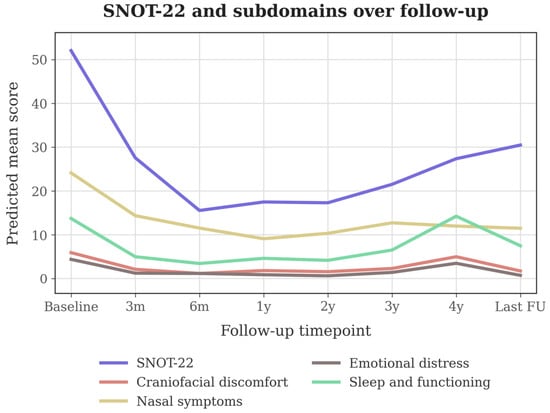
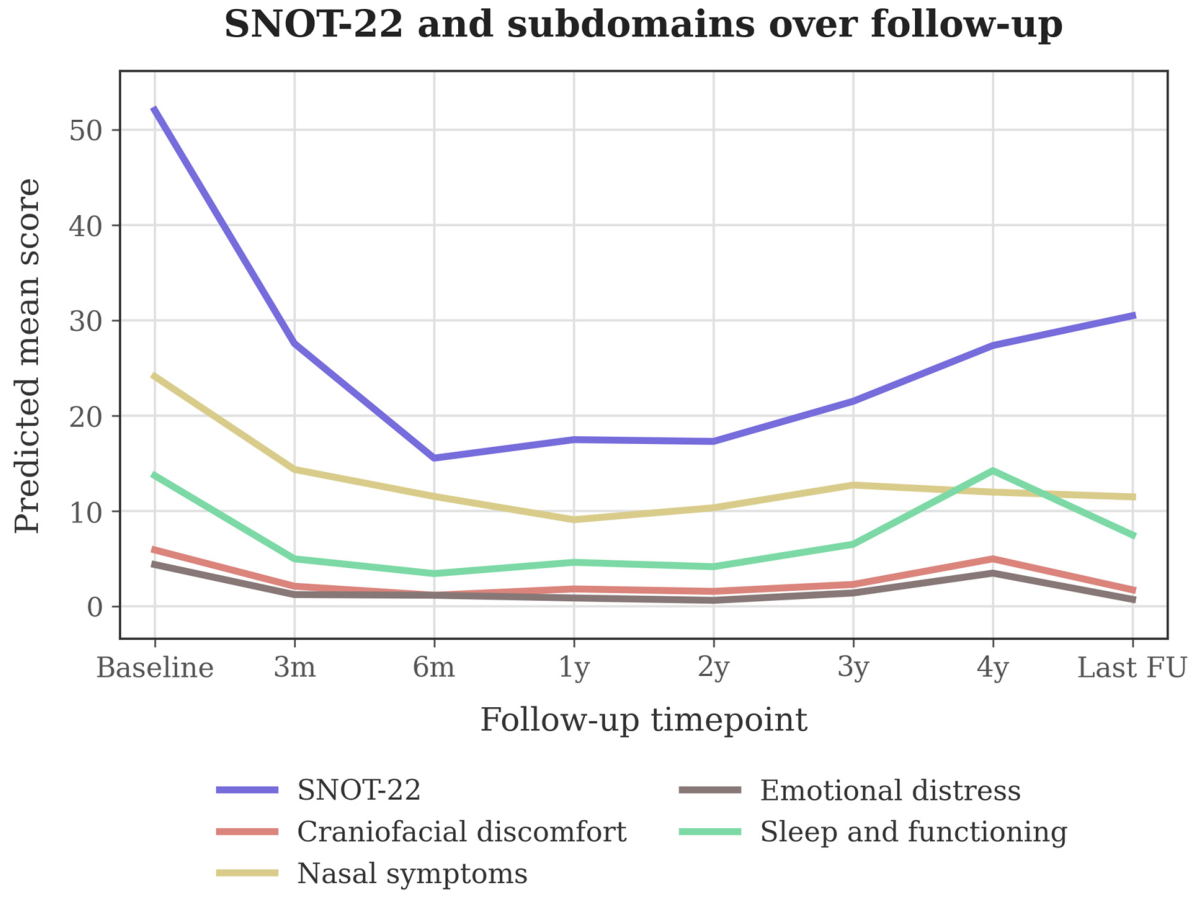
The total SNOT-22 score and all corresponding subdomains demonstrated a statistically significant improvement from baseline at nearly all follow-up time points. The p-value was statistically significant for all subdomains when assessing the entire follow-up period. For example, the total SNOT-22 score showed a mean reduction of 31.7 points at 3 months following treatment initiation, and this significant improvement was sustained throughout the entire follow-up period.
In the sleep and functioning subdomain, no statistically significant difference from baseline was observed at final follow-up visit compared to baseline, but a mean reduction of 2.9 points at last follow-up was still maintained.
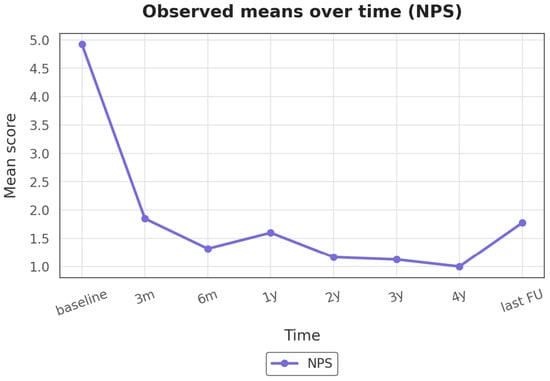
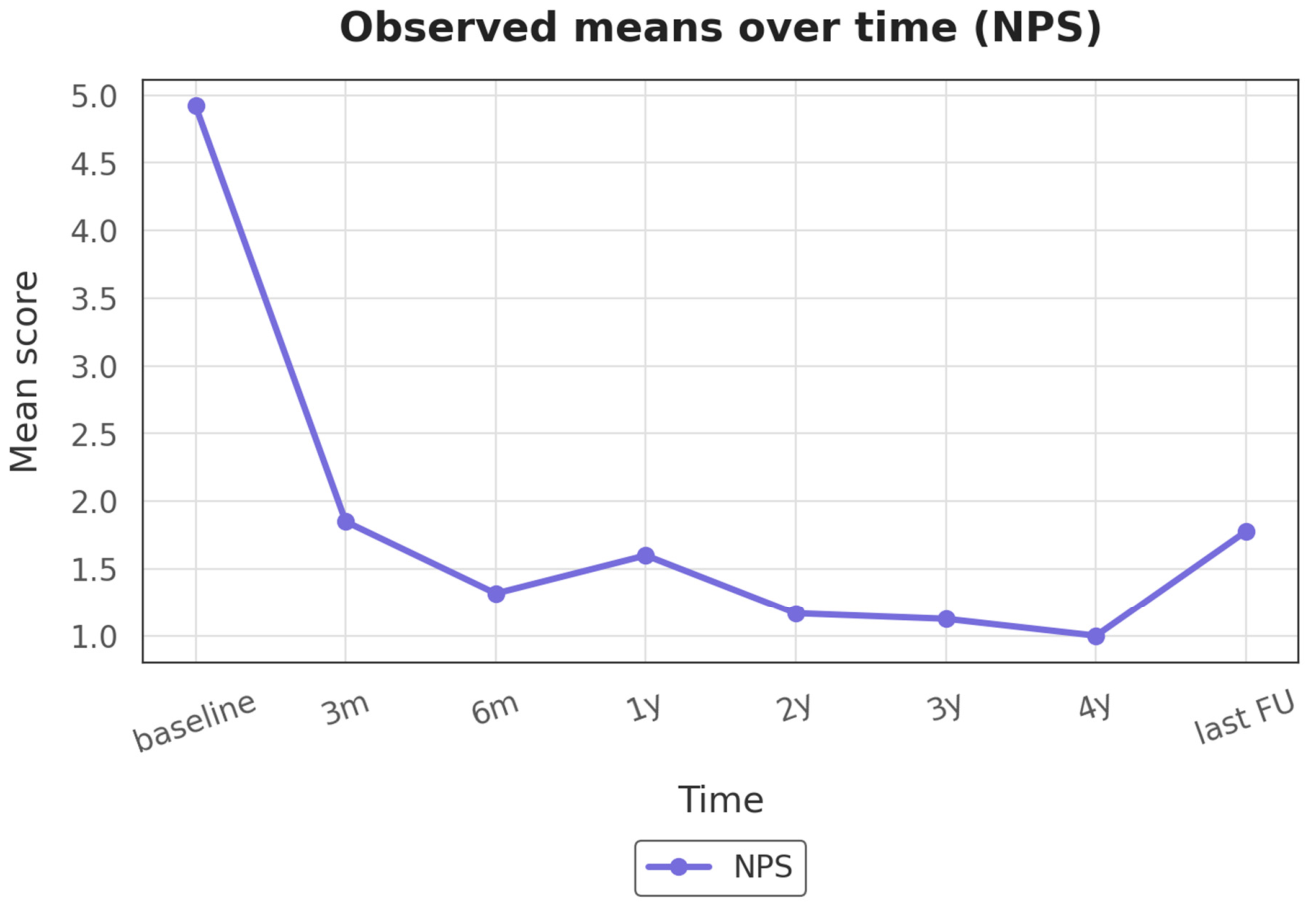
NPS also demonstrated a sustained reduction, decreasing from a baseline value of 4.92 at treatment initiation to 1.6 after one year, with this improvement maintained throughout the entire follow-up period and reaching statistical significance at all assessed time points. These results are illustrated in Figure 1 and Figure 2.
Figure 1.
Mean NPS score over time.
Figure 2.
Mean SNOT-22 and its subdomains score over time.
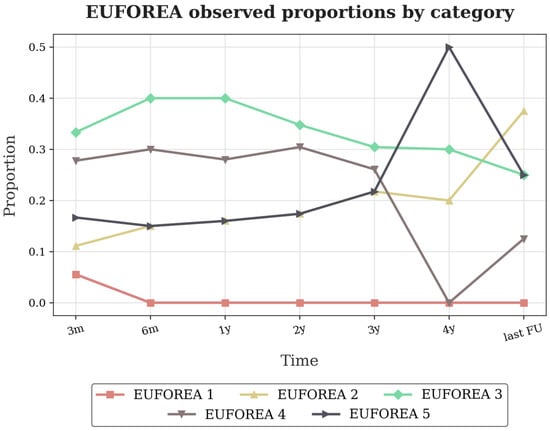
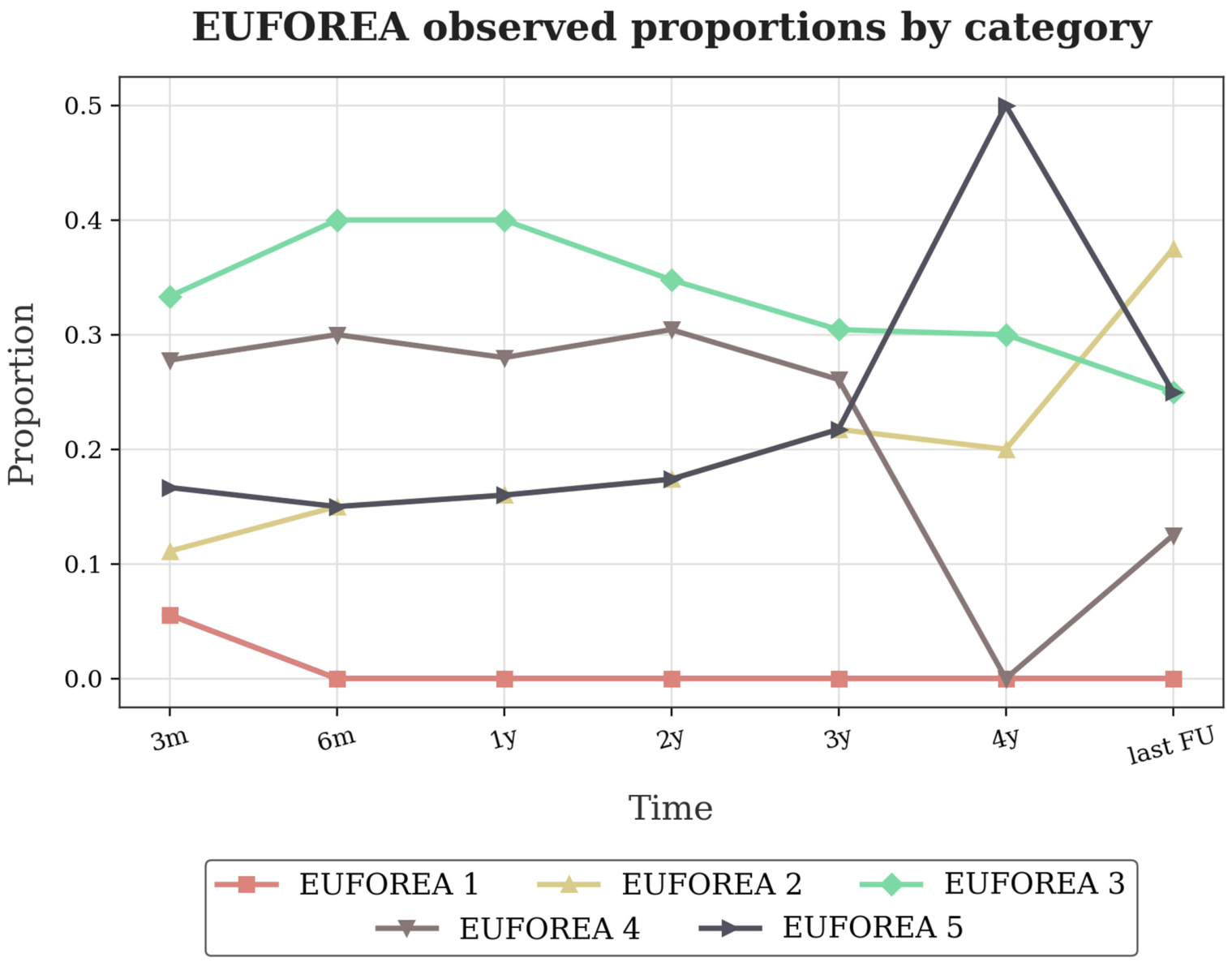
Odds ratios for treatment response according to the EUFOREA criteria were comparable across follow-up time points, with no statistically significant differences observed between follow up visits, indicating a sustained treatment response over time. At the 6-month follow-up, only 15% of patients had an EUFOREA score below 3. Scores of 3–5 were maintained in at least 75% of patients across the majority of the follow-up period. See Figure 3.
Figure 3.
EUFOREA response criteria over time. 0 = no response. 5 = excellent response.
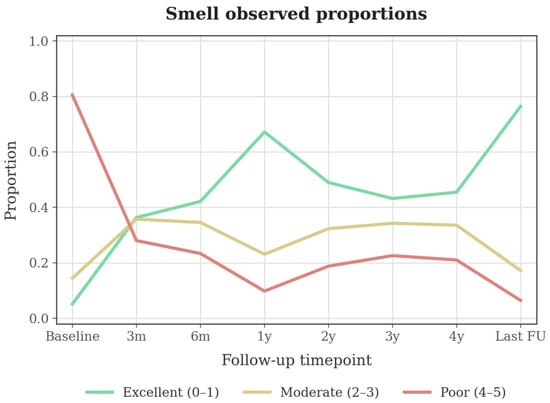
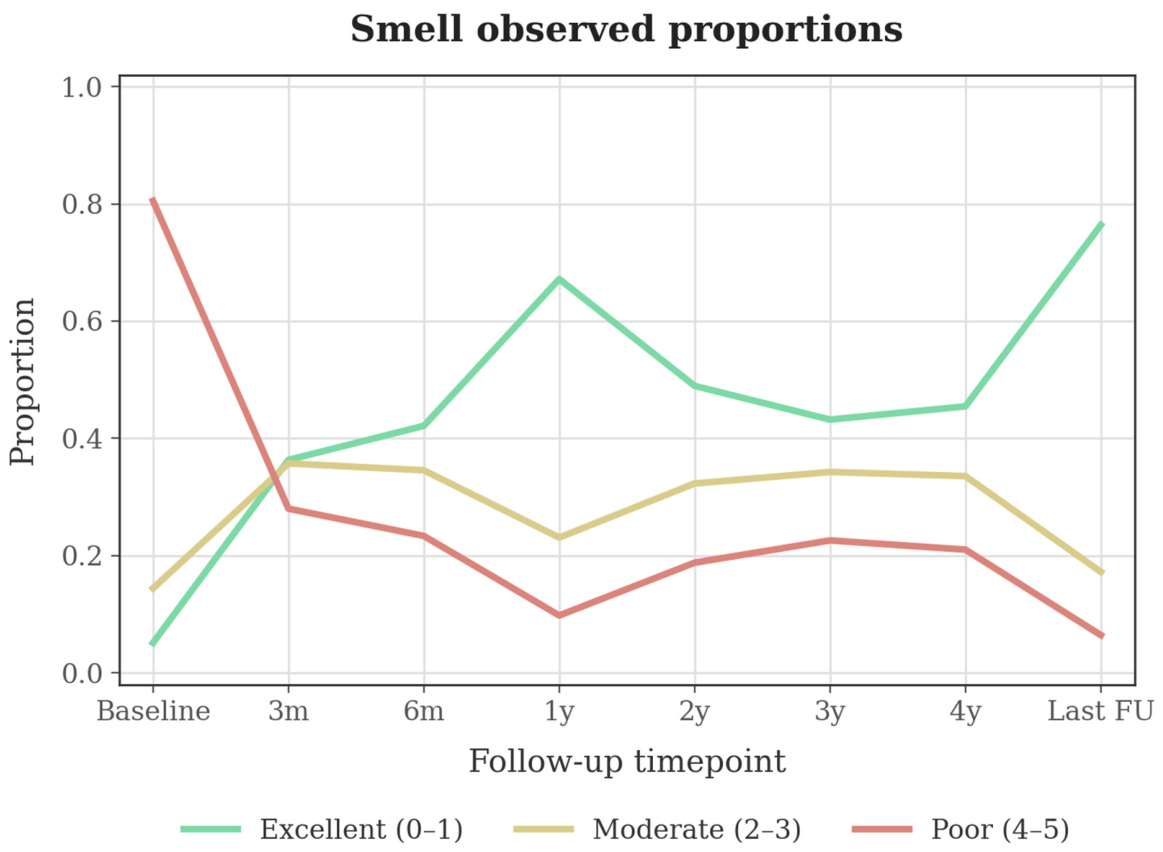
Smell, as assessed by the smell specific item in the SNOT22 questionnaire, showed statistically significant results compared to the baseline in all follow-up timepoints. The LR p value was 0.001. See Figure 4.
Figure 4.
Smell by SNOT-22 questionnaire. 5 = severe dysfunction, 0 = no dysfunction.
The eosinophil count did not show a significant change during follow-up. A transient increase from a mean of 0.4 at baseline was observed at 3 months, with subsequent return to baseline values afterwards.
4. Discussion
In the present study, biologic therapy for CRSwNP was associated with favorable outcomes across multiple domains of disease-related quality of life over a mean follow-up period of nearly four years and a maximum follow up duration of up to 7 years, with a low incidence of adverse events. Notably, 50% of patients receiving Dupilumab were able to successfully prolong treatment intervals to an average of approximately six weeks while maintaining treatment effectiveness.
Only a limited number of studies have assessed the real-world effectiveness of biologic therapy for CRSwNP. Seys et al. reported sustained real-life effectiveness of Dupilumab in the largest cohort to date, following 612 patients over a one-year period. Their analysis demonstrated favorable treatment responses irrespective of the number of prior functional endoscopic sinus surgery procedures or the presence of type 2 inflammatory comorbidities, including nonsteroidal anti-inflammatory drug-exacerbated respiratory disease (NERD). Although this study provides highly valuable data derived from a large cohort and includes extensive sub-analyses of comorbid conditions, its follow-up duration was limited to one year [3].
Numerous studies have evaluated the long-term effectiveness of biologic therapies for asthma, with or without concomitant CRSwNP. For instance, Berger et al. demonstrated that Dupilumab treatment yielded excellent outcomes regardless of the presence of concomitant CRS [7]. Another study demonstrated that Dupilumab remained well tolerated and maintained its effectiveness in treating asthma for at least three additional years beyond the initial clinical trial [8].
But while the long-term effectiveness in asthma treatment is well established, only a small number of studies have recently reported longer follow-up durations for biologic therapy in CRSwNP. Book et al. described follow-up periods extending up to five years with favorable outcomes; however, the mean follow-up duration in their cohort was limited to 19.13 months [9]. Orlando et al. reported sustained clinical improvement with biologic therapy, with adverse events occurring in 5.9% of patients. In their cohort, follow-up extended to 36 months for 25 patients and to 48 months for 12 patients [10]. Huber et al. reported the largest cohort with a follow-up duration of 36 months, comprising 138 patients treated at several high-volume centers in Germany, and similarly demonstrated the sustained long-term effectiveness of biologic therapy for CRSwNP [5].
Nonetheless, to the best of our knowledge, the present study includes the largest cohort reported to date, with follow-up reaching almost 7 years, showing sustained treatment effectiveness.
We observed marked improvements, with statistically significant reductions in total SNOT-22 scores with a reduction in the mean of 25.1 at last follow-up compared to the baseline. Furthermore, all SNOT-22 subdomains showed a statistically significant decrease for the entire follow-up period, and NPS showed a mean 3.8 points reduction at the last follow-up compared to the baseline, which was statistically significant. In addition, we evaluated the longitudinal behavior of individual SNOT-22 subdomains throughout follow-up; subdomain-level analysis provides further insight into the multidimensional impact of biologic therapy on patients’ lives. Notably, total SNOT-22 scores declined rapidly after treatment initiation and remained stable throughout the entire follow-up period, a pattern that was similarly observed across all subdomains, aside from the sleep and functioning subdomain, which did not show a significant decrease at the last follow-up. It is noteworthy that when assessing the entire follow-up time using the mixed linear effects model and not specific timepoints compared to the baseline, the reduction in all SNOT-22 subdomains scores was statistically significant. This observation warrants further investigation in larger cohorts with extended follow-up.
The impact of chronic rhinosinusitis with nasal polyps on patients’ emotional well-being and daily functioning is frequently underrecognized. The emotional distress and sleep and functioning subdomains of the SNOT-22 have maximum possible scores of 15 and 35, respectively. In our cohort, the mean baseline scores for these subdomains were 4.7/15 and 13.7/35. Although these baseline values may appear relatively modest and may not reflect severe impairment, both subdomains demonstrated a statistically significant improvement following biologic therapy. These findings indicate that biologic treatment exerts a meaningful effect even in disease dimensions that are often considered less prominent.
Previous studies have reported significant improvements in olfactory function, as assessed by the University of Pennsylvania Smell Identification Test (UPSIT), in patients with CRSwNP treated with Dupilumab [11]. It is noteworthy that a larger number of surgeries is independently associated with reduced smell recovery under Dupilumab [12]. In the present study, olfactory function was assessed using the smell-specific item of the SNOT-22 questionnaire. A sustained improvement in olfaction was observed across nearly all follow-up time points, with the mean scores improving from 4.26 at baseline to 1.26 at one year and further to 0.5 at the final follow-up. This improvement was statistically significant.
Adverse events were infrequent (11.5%), with arthralgia reported in two patients and pruritus in one patient, all of whom received Dupilumab. No adverse events were reported among patients treated with Mepolizumab or Omalizumab.
Dupilumab has been associated with a transient increase in peripheral blood eosinophil counts, as observed in the SINUS-52 study, with levels typically returning to baseline within one year of treatment initiation [11]. Rare cases of hypereosinophilia, including reports of eosinophilic granulomatosis with polyangiitis (eGPA), have been described as adverse events [13]. In our cohort, a similar pattern was observed, with an increase in peripheral blood eosinophil counts at the 3-month follow-up, followed by a return to baseline levels by 6 months. Importantly, none of the patients developed severe eosinophilia or eosinophilic granulomatosis with polyangiitis (eGPA).
Evaluation of the treatment response using the EUFOREA response criteria demonstrated a sustained therapeutic effect throughout follow-up, with 45% of patients achieving a good to excellent response by six months of treatment (EUFOREA score 4–5). These response rates were maintained over the entire follow-up period, and no patients had an EUFOREA score of 0–1 beyond the six-month time point.
Interval prolongation of biologic therapy has been suggested in a limited number of studies. In a prospective observational study, Van der Lans et al. demonstrated that prolongation of Dupilumab dosing intervals to up to eight weeks was feasible in patients with a moderate to excellent response, with 95.8% of patients maintaining extended dosing intervals [14]. In the present study, some patients were able to extend Dupilumab dosing intervals to as long as 12 weeks. Overall, 13 of 26 patients (50%) successfully prolonged treatment intervals, maintaining a mean dosing interval of approximately six weeks.
Overall, 15.3% of patients required rescue therapy with either surgical intervention or OCS. This number correlates to the number published in the SINUS-52, in which 12.5% required rescue therapy [15]. It is noteworthy that, in two real-world studies, the numbers were smaller—in the aforementioned study by Huber et al., 5% of patients required rescue therapy [5], and in a study by De Corso et al., no salvage therapy was needed at all at one year of follow-up [16].
The present study has several limitations. The study cohort size was limited and derived from a tertiary high-volume referral center, which may introduce referral bias toward more complex disease. In addition, the retrospective design resulted in incomplete data for some patients. Nevertheless, the mean follow-up duration in this study represents the longest reported to date, and the analysis provides a comprehensive evaluation that includes longitudinal assessment of SNOT-22 subdomains and treatment interval prolongation.
Another limitation is the inclusion of three different biologic agents. We included all three agents in our analysis to reflect the complexity of real-world clinical decision-making, as patients constitute a heterogeneous population with diverse comorbidities, and all three agents are used in routine clinical practice. Dupilumab was the most commonly prescribed agent in our cohort (84.6%) and is currently the mainstay of treatment due to its superior outcomes compared with other agents [16]. Given the small number of patients treated with Mepolizumab or Omalizumab in our cohort, excluding these patients would have had minimal impact on the long-term follow-up results while compromising our study’s aim of reflecting real-world outcomes. To further clarify the impact of including patients treated with Mepolizumab or Omalizumab on our findings, we specifically addressed rescue treatments and adverse events in these patients.
A potential limitation of our study is selection bias: our study included only patients who managed to reach 3 years of follow-up. To mitigate this, we included a sub-group analysis showing no statistical significance at 1 year of follow-up between patients who were treated < 3 years and our study group.
In conclusion, biologic therapy for CRSwNP was shown to be effective and safe up to seven years, and patients who continue treatment for 3 years and more show sustained effectiveness. Treatment was associated with improvements across multiple domains of disease-related quality of life, with a low incidence of adverse events. In addition, treatment interval prolongation was feasible in a substantial proportion of patients without compromising therapeutic effectiveness.
Author Contributions
Conceptualization, methodology, formal analysis, data curation, writing—original draft preparation, visualization, resources Y.A.; methodology, formal analysis, data curation, resources S.M., A.B., M.S.-T.; validation, formal analysis, resources, writing—review and editing, A.E., N.A.; conceptualization, methodology, formal analysis, software, investigation, writing—review and editing, supervision, project administration, resources, E.S. All authors have read and agreed to the published version of the manuscript.
Funding
This research received no external funding.
Institutional Review Board Statement
The study was conducted in accordance with the Declaration of Helsinki, and its protocol was approved by the Rabin Medical Center Institutional Ethics Review Board, which granted a waiver of informed consent due to the study’s retrospective nature (authorization number 22-0612, authorization date 18 September 2022).
Informed Consent Statement
Informed consent was waived due to the study’s retrospective nature.
Data Availability Statement
The data presented in this study are available on request from the corresponding author. The data are not publicly available due to privacy restrictions.
Conflicts of Interest
The authors declare no conflicts of interest.
References
- Fokkens, W.J.; Lund, V.; Bachert, C.; Mullol, J.; Bjermer, L.; Bousquet, J.; Canonica, G.W.; Deneyer, L.; Desrosiers, M.; Diamant, Z.; et al. EUFOREA consensus on biologics for CRSwNP with or without asthma. Allergy 2019, 74, 2312–2319. [Google Scholar] [CrossRef] [Scilit] [PubMed]
- Lombardo, N.; D’Ecclesia, A.; Chiarella, E.; Pelaia, C.; Riccelli, D.; Ruzza, A.; Lobello, N.; Piazzetta, G.L. Real-World Evaluation of Dupilumab in the Long-Term Management of Eosinophilic Chronic Rhinosinusitis with Nasal Polyps: A Focus on IL-4 and IL-13 Receptor Blockade. Medicina 2024, 60, 1996. [Google Scholar] [CrossRef] [Scilit] [PubMed]
- Seys, S.F.; Schneider, S.; de Kinderen, J.; Reitsma, S.; Cavaliere, C.; Tomazic, P.-V.; Morgenstern, C.; Mortuaire, G.; Wagenmann, M.; Bettio, G.; et al. Real-world effectiveness of dupilumab in a European cohort of chronic rhinosinusitis with nasal polyps (CHRINOSOR). J. Allergy Clin. Immunol. 2025, 155, 451–460. [Google Scholar] [CrossRef] [Scilit] [PubMed]
- Mortuaire, G.; Bequignon, E.; Daveau, C.; Papon, J.-F.; Lecanu, J.-B.; Favier, V.; de Gabory, L.; Vandersteen, C.; Castillo, L.; Saroul, N.; et al. Responders to biologics in severe uncontrolled chronic rhinosinusitis with nasal polyps: A multicentric observational real-life study. Rhinology 2025, 63, 22–31. [Google Scholar] [CrossRef] [Scilit] [PubMed]
- Huber, P.; Förster-Ruhrmann, U.; Olze, H.; Becker, S.; Bärhold, F.; Cuevas, M.; Gunder, N.; Hagemann, J.; Matthias, C.; Klimek, L.; et al. Real-world data show sustained therapeutic effects of dupilumab in chronic rhinosinusitis with nasal polyps (CRSwNP) over 3 years. Allergy 2024, 79, 3108–3117. [Google Scholar] [CrossRef] [Scilit] [PubMed]
- Fokkens, W.J.; Viskens, A.S.; Backer, V.; Conti, D.; De Corso, E.; Gevaert, P.; Scadding, G.K.; Wagemann, M.; Bernal-Sprekelsen, M.; Chaker, A.; et al. EPOS/EUFOREA update on indication and evaluation of Biologics in Chronic Rhinosinusitis with Nasal Polyps 2023. Rhinology 2023, 61, 194–202. [Google Scholar] [CrossRef] [Scilit] [PubMed]
- Berger, P.; Menzies-Gow, A.; Peters, A.T.; Kuna, P.; Rabe, K.F.; Altincatal, A.; Soler, X.; Pandit-Abid, N.; Siddiqui, S.; Jacob-Nara, J.A.; et al. Long-term efficacy of dupilumab in asthma with or without chronic rhinosinusitis and nasal polyps. Ann. Allergy Asthma Immunol. 2023, 130, 215–224. [Google Scholar] [CrossRef] [Scilit] [PubMed]
- Maspero, J.F.; Peters, A.T.; Chapman, K.R.; Domingo, C.; Stewart, J.; Hardin, M.; Maroni, J.; Tawo, K.; Khokhar, F.A.; Mortensen, E.; et al. Long-Term Safety of Dupilumab in Patients With Moderate-to-Severe Asthma: TRAVERSE Continuation Study. J. Allergy Clin. Immunol. Pract. 2024, 12, 991–997.e6. [Google Scholar] [CrossRef] [Scilit] [PubMed]
- Book, R.; Lazutkin, A.; Eliashar, R. Long-Term Real-World Outcomes and Insights of Biologic Therapies in Chronic Rhinosinusitis with Nasal Polyps. Int. J. Mol. Sci. 2025, 26, 4694. [Google Scholar] [CrossRef] [Scilit] [PubMed]
- Orlando, P.; Licci, G.; Illiano, G.; Minzoni, A.; Vivarelli, E.; Accinno, M.; Vultaggio, A.; Matucci, A.; Maggiore, G. Sustained Efficacy and Low Rate of Adverse Events of Dupilumab in Type-2 CRSwNP Over 48 Months. Laryngoscope 2025, 135, 3104–3111. [Google Scholar] [CrossRef] [Scilit] [PubMed]
- Mullol, J.; Bachert, C.; Amin, N.; Desrosiers, M.; Hellings, P.W.; Han, J.K.; Jankowski, R.; Vodicka, J.; Gevaert, P.; Daizadeh, N.; et al. Olfactory Outcomes With Dupilumab in Chronic Rhinosinusitis With Nasal Polyps. J. Allergy Clin. Immunol. Pract. 2022, 10, 1086–1095.e5. [Google Scholar] [CrossRef] [Scilit] [PubMed]
- De Corso, E.; Montuori, C.; Cantone, E.; Pipolo, G.C.; Lucidi, D.; Pasquini, E.; La Mantia, I.; Mastrapasqua, R.F.; De Maio, G.; Fadda, G.L.; et al. Influence of Multiple Prior Endoscopic Sinus Surgeries on Dupilumab Efficacy Including Smell Function in the DUPIREAL Population. Clin. Otolaryngol. 2026, 51, 285–295. [Google Scholar] [CrossRef] [Scilit] [PubMed]
- Kushima, Y.; Shimizu, Y.; Hoshi, H.; Arai, R.; Ikeda, N.; Nakamura, Y.; Masawa, M.; Okutomi, H.; Yazawa, N.; Chibana, K.; et al. Changes in Peripheral Blood Eosinophil Counts and Risk of Eosinophilic Granulomatosis with Polyangiitis Onset after Initiation of Dupilumab Administration in Adult Patients with Asthma. J. Clin. Med. 2023, 12, 5721. [Google Scholar] [CrossRef] [Scilit] [PubMed]
- van der Lans, R.J.L.; Otten, J.J.; Adriaensen, G.F.J.P.M.; Hoven, D.R.; Benoist, L.B.; Fokkens, W.J.; Reitsma, S. Two-year results of tapered dupilumab for CRSwNP demonstrates enduring efficacy established in the first 6 months. Allergy 2023, 78, 2684–2697. [Google Scholar] [CrossRef] [Scilit] [PubMed]
- Bachert, C.; Han, J.K.; Desrosiers, M.; Hellings, P.W.; Amin, N.; Lee, S.E.; Mullol, J.; Greos, L.S.; Bosso, J.V.; Laidlaw, T.M.; et al. Efficacy and safety of dupilumab in patients with severe chronic rhinosinusitis with nasal polyps (LIBERTY NP SINUS-24 and LIBERTY NP SINUS-52): Results from two multicentre, randomised, double-blind, placebo-controlled, parallel-group phase 3 trials. Lancet 2019, 394, 1638–1650. [Google Scholar] [CrossRef] [Scilit] [PubMed]
- De Corso, E.; Settimi, S.; Montuori, C.; Corbò, M.; Passali, G.C.; Porru, D.P.; Verde, S.L.; Spanu, C.; Penazzi, D.; Di Bella, G.A.; et al. Effectiveness of Dupilumab in the Treatment of Patients with Severe Uncontrolled CRSwNP: A “Real-Life” Observational Study in the First Year of Treatment. J. Clin. Med. 2022, 11, 2684. [Google Scholar] [CrossRef] [Scilit] [PubMed]

Disclaimer/Publisher’s Note: The statements, opinions and data contained in all publications are solely those of the individual author(s) and contributor(s) and not of MDPI and/or the editor(s). MDPI and/or the editor(s) disclaim responsibility for any injury to people or property resulting from any ideas, methods, instructions or products referred to in the content. |
© 2026 by the authors. Licensee MDPI, Basel, Switzerland. This article is an open access article distributed under the terms and conditions of the Creative Commons Attribution (CC BY) license.