


Abstract
Ageism refers to prejudice on the basis of a person’s age, often directed toward older adults. Arab culture represents a pertinent case, as this culture is historically known for its appreciation of older people, but recent studies have indicated high levels of ageism. This systematic integrative review aims to synthesize the attitudes toward older adults in Arab culture and their determining factors. Research was screened using the PRISMA guidelines, and 23 articles were included for synthesis. Thematic and content analyses were performed, from which five themes emerged: “demographic factors”, “psychological factors”, “knowledge of ageing”, “sociocultural factors and aspects” and “self-ageism and ageing experiences”. Knowledge of aging and close interpersonal relationships with older adults were associated with lower levels of ageism and more positive attitudes. Sociocultural aspects, including the low socioeconomic status in most Arab countries, seem to be associated with ageism. Moreover, individual factors like low self-esteem, low empathy, and high death anxiety were related to negative attitudes toward older adults. The review also underlines the experiences and self-ageism among older people. The article provides insights into ageism directed towards older adults in Arab culture and ties knowledge with practice by highlighting the social and policy implications of the findings.
1. Introduction
Ageism refers to the stereotyping, prejudice, or discrimination of individuals on the basis of their age (Iversen et al. 2009). The term is used to describe negative attitudes toward older adults. These age-based biases can appear across many contexts, including daily social interactions, workplaces, and healthcare environments (Roscigno et al. 2022; Araújo et al. 2023). It can be exhibited by a person towards another or can even be directed towards oneself, which is usually referred to as self-ageism (Ayalon et al. 2023).
The term “ageism” was initially coined by Butler (1969) and has received growing attention since then, especially due to its relevant implications on the social, professional, and healthcare settings (Levy et al. 2020). While Palmore (1999) suggests a broader definition of ageism by conceptualizing it as any prejudice or discrimination based on age, whether towards older adults or other age categories, this review focuses solely on the one directed towards older adults. In fact, these prejudices directed toward older adults are prevalent across societies. Globally, it is estimated that half of the people are ageist against older individuals (World Health Organization 2021). Notably, this type of discrimination is becoming increasingly relevant given the rapidly growing older population worldwide (United Nations 2017). Ageism pertains to how individuals and society relate to older people and how they perceive them (Kolushev et al. 2021). Thus, it can have numerous impacts on older adults, including increased psychological distress and loneliness (Ribeiro-Gonçalves et al. 2023), reduced well-being, and poor mental health outcomes (Sargent-Cox 2017).
There are several determinants of ageism and attitudes toward older people. Some are found on the individual level, including implicit fear of eventual death that translates to discrimination towards aging (Kolushev et al. 2021; Lev et al. 2018), contact and relationships with older people, and some personality traits (Marques et al. 2020). Other sociocultural factors are determinants of ageism, such as the socio-economic state of the society, the scarcity of resources, and the high percentage of older people in society (Hövermann and Messner 2023; Marques et al. 2020). When worries or tensions related to resource allocation emerge, higher levels of ageism tend to be observed (Marques et al. 2020).
In addition to identified factors, several theoretical frameworks can help understand ageism as a multidimensional phenomenon. First, Terror Management Theory (TMT) (Greenberg et al. 1986; Solomon et al. 2015) provides a psychological framework for interpreting ageism as a defensive response to mortality awareness. This framework posits that awareness of the inevitability of death generates existential anxiety and fear related to the end of life, which may translate into a rejection of aging and old age (Draper et al. 2024). From a TMT perspective, older adults may come to symbolize mortality, thereby leading to avoidance or negative attitudes among relatively younger individuals (Draper et al. 2024; Solomon et al. 2015).
Second, Social Representations Theory (Moscovici 1988; Wagner 2020), together with the related concept of habitus (Bourdieu 1997), helps conceptualize ageism and prejudice toward older people as rooted in shared cultural meanings and internalized social structures (Gaymard 2006). They posit that cultural attitudes toward aging are rooted in shared systems of ideas, values, and customs, collective representations that are treated by members of society as established realities (Löckenhoff et al. 2009). From a Social Representations perspective, ageism is seen as embedded in collective narratives (Marcus and Sabuncu 2016; Löckenhoff et al. 2009) that may, in the case of positive attitudes, portray older adults as sources of wisdom, experience, and moral authority, while in the case of negative attitudes, possibly depict them as dependent or burdensome. Complementarily, the concept of habitus refers to “a set of embodied, largely unconscious dispositions that individuals acquire through the accumulation of cultural, economic, and social capital” (Bietti 2023). Applied to ageism, habitus allows the perception of older people to be understood as shaped by internalized norms and practices linked to broader social structures and resource distributions (Antoninetti and Garrett 2012).
Third, an intersectional perspective (Carbado et al. 2013) offers a critical framework for understanding ageism as a phenomenon that does not operate in isolation but intersects with other axes of inequality, including gender, socioeconomic status, health, and migration-related vulnerability, among others (Gans et al. 2023; Gallardo-Peralta et al. 2025). From this perspective, age-based prejudice is not experienced in isolation but is shaped by the accumulation and interaction of multiple social positions. For instance, it might be the case that older migrants suffer from ageism more than non-migrants (Abi Chahine and Kienzler 2022), or that older women experience compounded discrimination that differs from that faced by older men (Adams et al. 2025). These intersecting identities create distinct experiences of marginalization that cannot be understood by examining age alone (Gans et al. 2023; Gallardo-Peralta et al. 2025). An intersectional lens can thus reveal how ageism is amplified when it converges with other forms of systemic inequality.
In terms of context, Arab culture may represent an interesting case in the discussion surrounding ageism and attitudes towards aging. Indeed, many Arab societies are characterized by collectivist values, where there are strong family ties, tight community networks, religious devotion, and a shared sense of identity (Digard 2003). Arab countries share significant cultural, linguistic, and historical commonalities, which collectively result in a distinct regional identity, distinguishing it from other parts of the world (Harb 2016; Rabasa et al. 2004; Behrens-Abouseif 1999). Historically, in terms of aging, this culture has placed a high value on family and on the respect and care of older individuals (Joseph 1996; Manor 2020). This culture has valued older adults, viewing them as sources of wisdom and life experience (Manor 2020). Additionally, they are often regarded as the leaders or senior figures within their families or kin groups (Joseph 1996; Rosenthal and Marshall 1986). This perception of older people was deeply rooted in the parental or clan-based family structure, which formed the foundation of Arab culture and shaped its cultural worldview (Digard 2003; Joseph 1996). However, recent evidence indicates that views of older adults within Arab culture may be shifting (Hövermann and Messner 2023; Manor 2020).
This topic of ageism and attitudes toward aging in Arab culture is pertinent not only for the Middle Eastern and North African regions but also worldwide. In fact, people from the Arab region are emigrating to various regions around the world like Europe and North America (Arab Barometer 2022) and are sometimes working in the social and healthcare sectors where they consistently interact with older adults (Alameddine et al. 2020). Thus, exploring the topic of ageism in the Arab culture has substantial relevance. As of today, several studies have been conducted on this subject in Arab countries. However, there is a clear lack of synthesis and consensus among these investigations. For this reason, conducting a synthesis using a review study is crucial, as evidence from numerous studies is needed to answer a research question or resolve a social issue (Bangdiwala 2024; Hunter et al. 1986).
Previously, a non-systematic review tried to synthesize the knowledge of attitudes towards older adults in Arab culture and yielded a preliminary/exploratory understanding of the phenomena. However, this review included a small portion of the literature and relatively older studies, mostly from the 1990s and 2000s, with only one included study conducted in the last ten years. For the most part, it was found that the studies on attitudes toward aging with Arab samples are scarce and their findings are highly inconsistent (Ibrahim and Bayen 2019). Another review solely examined attitudes toward older adults among healthcare students and professionals, not the general population (Younes and Rajha 2025).
Considering this research landscape, this integrative systematic review aims to synthesize recent studies on ageism and attitudes toward aging conducted with Arab samples, providing a comprehensive and multifaceted understanding of this phenomenon within Arab culture. To our knowledge, it is the first systematic integrative review to attempt to synthesize and identify recurring patterns in ageism and attitudes toward older adults across Arab societies. It is important to note that, while cultural shifts over time seem to be an important element in this issue, this review does not aim to trace historical changes in attitudes toward aging. Instead, it specifically focuses on the current state of knowledge and examines recent determinants and experiences of ageism among Arab populations.
All in all, the review is guided by the following research questions: What are the contributing factors or determinants of ageism and attitudes toward older adults in the Arab population? What are the principal experiences related to ageism and attitudes toward older adults in the Arab culture? In terms of broad hypotheses, we can first expect that ageism in Arab societies is partly shaped by individual existential-psychological mechanisms, whereby the fear of death contributes to negative attitudes toward older adults. We can also anticipate that social representations of aging in these contexts are marked by tension and a contrast, with traditional discourses valorizing wisdom and experience coexisting alongside emergent representations that frame older adults as dependent or burdensome, a shift likely linked to ongoing socioeconomic transformation and changing family structures. Lastly, we can hypothesize that experiences of ageism are stratified along intersecting axes of inequality, including gender, socioeconomic status, health status, and migration background, among others.
2. Materials and Methods
2.1. Study Design
An integrative review design was chosen to synthesize the literature, given the variety of study designs adopted in this scope of research (qualitative, quantitative, survey, correlational study, etc.). An integrative review is a systematic type of review that synthesizes findings from empirical studies of various study designs as well as theoretical works provide a thorough understanding of a given phenomenon (Broome 1993; Toronto and Remington 2020). Its goal is to offer a broad synthesis of current knowledge that can inform evidence-based practice and policymaking (Fossum et al. 2022; Whittemore and Knafl 2005). Given the wide variety of studies tackling ageism and attitudes towards older adults, this approach presents itself as adequate. Some studies rely on youth samples to study ageism, while others focus on the perspective of older adults. Additionally, both quantitative and qualitative approaches are used to investigate this phenomenon (Ayalon et al. 2023). This review tried to encompass studies with samples from the 22 Arab countries (Al-Wer 2006).
2.2. Literature Search and Screening
First, the process began with a systematic search in five databases: SCOPUS, PubMed, PsycINFO, Cairn.info (which encompasses French-language publications), and Al-Manhal (which encompasses Arab-language publications). Second, a manual search was carried out in Google Scholar and ProQuest Theses and Dissertations to complement the initial automatic search and to capture grey literature and any relevant theses (Toronto and Remington 2020).
Relevant keywords and the Boolean operators ‘AND’ and ‘OR’ were utilized in the search. The ‘AND’ operator was used to link population and concept terms in the same search, whereas the ‘OR’ operator grouped similar or related terms. Searches were conducted using English keywords and their French and Arabic equivalents. The search strategy is explained further in Supplementary Materials (Table S1).
Inclusion and exclusion criteria guided the screening process. Eligible studies included empirical or theoretical work centered on Arab culture and directly related to the research questions. For empirical studies, the full sample, or a clearly defined subsample, had to consist of individuals from an Arab cultural background. To ensure the review reflected current knowledge, only studies published within the past decade (2013–2024) were considered. Articles written in English, Arabic, or French were included, as these languages represent the primary publication languages among Arab scholars (Elgamri et al. 2024; Ashoor and Chaudhry 1993). The researchers aimed to include studies focusing on older adults, though the operational definitions of “older” varied. Given that most scales used to assess ageism do not specify an exact age cutoff, the review did not impose a fixed age criterion and instead included studies that explicitly targeted older populations.
The initial search resulted in 206 articles, and the manual search added an additional 69 articles. Following the removal of duplicates, records were screened by title, abstract, and full text, based on the previously mentioned inclusion and exclusion criteria. Ultimately, 23 studies met the criteria and were included for analysis. The PRISMA flow diagram summarizes the search and screening steps (Figure 1).
Figure 1.
PRISMA Flow Diagram.
2.3. Quality Appraisal
The vast majority of included studies adopted a cross-sectional design (n = 19). Others were qualitative studies (n = 3), while one included item was a reflection/theoretical article (n = 1). Regarding the definition of older adults, most studies did not specify a clear age cutoff, largely because the measurement instruments themselves typically do not define one. Among those that did, older adults were most commonly defined as individuals aged 60 years or older or 65 years or older, while a small minority used a threshold of 55 years or older.
Concerning the target audiences of these studies, a significant portion of the studies consisted of samples of Israeli Arabs (n = 6), Saudi Arabian (n = 4), Lebanese (n = 3) or Jordanian (n = 3) individuals. The other studies comprised samples of Iraqi (n = 2), Syrian (n = 1), Egyptian (n = 1), Tunisian (n = 1), Qatari (n = 1) and individuals from the United Arab Emirates (n = 1). None of the studies investigated ageism or attitudes toward aging in more than one Arab country.
Across the quantitative studies, several instruments were used to measure ageism and attitudes toward aging, including the Fraboni Scale of Ageism (n = 3), the Knowledge of and Attitudes toward Older People Scale (KOPS) (n = 3), the Arabic version of KOPS (KOPS-Arabic) (n = 1), the Relating to Older People Evaluation (ROPE) (n = 2), the Age Stereotype Scale (n = 1), the UCLA Geriatric Attitudes Scale (UCLA-GA) (n = 1), the Philadelphia Geriatric Center Morale Scale (n = 1), the Elder Discrimination Scale (EDS) (n = 1), and the Arabic Scale of Discrimination Against the Elderly (n = 1).
These studies underwent a quality appraisal, which assessed their methodological rigor. The quality appraisal sought to assess the rigor of the selected studies, though none were excluded for quality issues. The Joanna Briggs Institute (2017) Critical Appraisal Tools were used for this purpose. The scoring in these tools comprises the options of “yes”, “no”, “unclear”, and “not applicable” for each criterion. Similarly to previous integrative reviews (Kesonen et al. 2024; Abboud Mzawak et al. 2025), solely “yes” answers, meaning that the criterion is definitely suitable for a study, were equivalent to a point. Each study design has its specific checklist. A higher score reflects better study quality, while a lower score suggests limitations in the study. Lastly, it should be noted that the quality appraisal did not extend to the reflection/theoretical article included in this review. The study characteristics and quality appraisal scores are provided in Table 1.
Table 1.
Study Characteristics and Quality Appraisal.
Based on the JBI tools, the methodological quality of the studies was generally acceptable. However, some common limitations can be noted with the cross-sectional studies. A notable concern was the lack of usage of validated instruments, especially to measure ageism or attitudes toward older adults. Although most studies employed reliable measurement instruments to assess the variable, only a few used tools that had been validated in Arabic or for the Arab cultural context. More specifically, only the KOPS-Arabic and the Arabic Scale of Discrimination Against the Elderly, which were each used in one study, were validated with Arab samples. The instruments used in the remaining cross-sectional studies demonstrated good reliability and psychometric properties but have not undergone validation within Arab populations. Indeed, the reliance on unvalidated measurement tools can limit the precision and validity of research outcomes (Institute of Medicine (U.S.) 2015).
Another observed limitation, not captured by the assessment instruments but reported in several studies, was the reliance on small samples or ones with insufficient statistical power. Specifically, among the 18 included cross-sectional studies, 9 explicitly acknowledged using small sample sizes, reported low statistical power, or did not conduct a priori power analyses to determine appropriate sample sizes. As a result, the findings emerging from these studies may be contextually bound, limiting their generalizability (Tipton et al. 2017; Jager et al. 2017).
2.4. Data Analysis
Thematic analysis and qualitative content analysis were conducted, as these methods suit the intended depth of analysis (Hopia et al. 2016; Kesonen et al. 2024; Nicholls and Webb 2006). Concerning the content analysis, the researchers meticulously read the articles and established codes referring to the findings in each (Cameron et al. 2011). They then coded the findings, grouped and categorized them, and made abstractions (Elo and Kyngäs 2008). Subsequently, common patterns across the findings were found, leading to the thematic analysis. It involved identifying recurring patterns that led to the identification of themes (Popay et al. 2006).
3. Results
Based on the data analysis, five key themes emerged from the included studies. This section only addresses the results without delving into the interpretation.
3.1. Demographic Factors
Many studies have examined how demographic characteristics relate to ageism and attitudes toward older people in the general population. While each study examined particular variables, some were consistently studied: age, gender, marital status, and living in a rural or urban region.
Firstly, ten studies examined the relationship between age and attitudes toward older people. When evaluating broad correlations between age and attitudes, four studies report no significant association between them. In these studies, there was no correlation between an individual’s age and the attitude they hold toward older adults, or the level of ageism they possessed (Zisberg et al. 2015; Almarwani 2023; Rababa and Hammouri 2023; Rababa et al. 2021; Musaiger et al. 2013). In contrast, two studies indicate a positive correlation between the two, meaning that the older the individual, the more ageist they tended to be, and the more negative attitudes towards older adults they tended to hold (Alquwez et al. 2018; Rababa et al. 2023). However, one study found a negative correlation between the two variables (Ghanem 2019), and another found that the older the individual, the more likely they were to accept working in the care of older adults (Shinan-Altman et al. 2020).
Secondly, eleven studies investigated gender differences in ageism or attitudes toward older adults, with most reporting no significant link (Abu-Kaf et al. 2020; Zisberg et al. 2015; Alquwez et al. 2018; Alshehry et al. 2020; Almarwani 2023; Rababa and Hammouri 2023; Rababa et al. 2021). Gender was not identified as an associated factor with ageism or attitudes toward older adults in these studies. Nonetheless, a few studies reported that women exhibited higher levels of ageism than men (Shaikh et al. 2013; Bergman et al. 2013; Younis 2015). Conversely, one study found that women were more open to working in the care of older adults (Shinan-Altman et al. 2020). Finally, a study found that men tended to be more ageist and hold more negative attitudes toward older adults (Ghanem 2019).
Thirdly, a total of four studies explored associations between participants’ marital status and their attitudes toward older people. For the most part, these studies provided very diverging findings. One indicated no association between the two variables (Bergman et al. 2013). Another showed that married individuals were less ageist and held more positive attitudes toward older adults (Rababa and Hammouri 2023). A study found that single individuals were less ageist than married ones (Younis 2015), though the small number of married participants in this study may have biased the results.
The place of residence, specifically whether participants lived in urban or rural areas, was also frequently studied. Two studies found that individuals residing in urban areas, namely large cities, showed higher levels of ageism (Younis 2015; Alquwez et al. 2018). In contrast, a study showed the opposite; that people from rural areas were more ageist and held more negative attitudes toward older adults (Berde et al. 2023). Lastly, a study trying to investigate this association from the perspective of older adults, meaning that it compared the perceived level of ageism directed toward them, found no statistically significant differences between rural and urban areas (El Bcheraoui et al. 2015).
3.2. Psychological Factors
Psychological factors showed relations to ageism or attitudes toward older adults across several included studies. These factors are subjective psychological characteristics of individuals that, for one reason or another, constitute determinants of ageism directed toward older adults among individuals.
For starters, Rababa et al. (2023) found a negative correlation between self-esteem and ageism toward older people. Likewise, empathy was negatively associated with ageism in the same study (Rababa et al. 2023).
In addition, existential factors, namely death anxiety and symbolic immortality, have shown links to ageism. Specifically, death anxiety was found to be positively associated with ageism (Rababa et al. 2023). In contrast, symbolic immortality showed a negative correlation with ageism (Rababa et al. 2023). Symbolic immortality refers to the aspects of our lives that persist beyond death, including tangible achievements, creations, or offspring; intangible elements such as values, ideas, humor, and social connections; and altruistic actions, such as helping others or demonstrating generosity (Lifton 1996).
Two studies have investigated the link between aging anxiety and ageism, with both finding no significant association between the variables (Almarwani 2023; Bergman et al. 2013). According to these studies, the fear of aging was not a determinant of ageism directed toward older adults.
Finally, Alshehry et al. (2020) reported that religiosity is linked to more positive attitudes toward older people. Indeed, individuals who were more religious tended to express more favorable views of older people.
3.3. Knowledge of Aging
Various studies have examined the association between the knowledge of aging that individuals had and the attitudes toward older adults that they held. These studies almost unanimously indicated that the level of knowledge was negatively correlated with ageism, meaning that the more knowledgeable a person was on matters related to aging, the more positive attitudes they had toward older adults. This relation was especially underscored in nursing and healthcare students. The more advanced they were in their education and understanding of aging, the more positive attitudes they held (Zisberg et al. 2015; Shaikh et al. 2013; Alquwez et al. 2018; Almarwani 2023; Rababa and Hammouri 2023; Rababa et al. 2021). However, one study found that the year of healthcare education among nursing students was not correlated with attitudes toward older adults (Alshehry et al. 2020).
In addition, complementary to this idea, living with or having close interpersonal relationships with older adults was associated with positive attitudes and lower ageism in most studies (Alquwez et al. 2018; Almarwani 2023; Rababa and Hammouri 2023; Rababa et al. 2021). In contrast, one study reported that being close to older people was not significantly related to attitudes toward them (Alshehry et al. 2020).
3.4. Sociocultural Factors and Aspects
Numerous sociocultural aspects related to ageism and the perception of older adults emerged from the studies. For starters, several studies have compared Arab culture with others in terms of ageism and shown higher levels among Arab countries (Abu-Kaf et al. 2020; Zisberg et al. 2015; Ayalon and Cohn-Schwartz 2022; Berde et al. 2023). This prominence of ageism was also highlighted in the reflection article, which mentions the high level of discrimination against older adults (Hachem 2025), and was also shown in a cross-sectional study that underscored the negative perception of aging among the Lebanese (Wehbe et al. 2023). By contrast, it should be noted that some studies conducted in Saudi Arabia and the United Arab Emirates reported lower levels of ageism and more positive attitudes toward older adults (Alquwez et al. 2018; Alshehry et al. 2020; Almarwani 2023; Shaikh et al. 2013).
According to a qualitative study, older people felt that they were formerly valued and esteemed for their experience and wisdom, yet contemporary cultural changes have weakened this perception, with younger individuals no longer consulting them as they once did (Manor 2020). This same qualitative study noted that there is currently a duality regarding honour and older adults. On the one hand, the honor of older adults is shown in public spaces; however, on the other hand, there is a lack of honor in the private sphere (Manor 2020).
According to the included reflection article, the issue of ageism has led to an absence of adequate aging policy plans for older adults after retirement in some countries, as well as job discrimination (Hachem 2025). Such discrimination is especially prevalent among older refugees (i.e., in Lebanon) who are particularly vulnerable to neglect due to ageism (Hachem 2025; Abi Chahine and Kienzler 2022). For instance, on the governmental level, older refugees do not receive sufficient care and are excluded from livelihood programs, vocational training, and cash assistance because they are perceived as “unproductive”. Additionally, on the family and community levels, older refugees experience familial neglect (Hachem 2025; Abi Chahine and Kienzler 2022).
3.5. Self-Ageism and Aging Experiences
The last theme that emerged from the analysis was related to older adults’ own experiences and internalized ageism, also known as self-ageism. Regarding aging experiences, many older adults report a positive perception of aging (Mortagy et al. 2013), as well as benefits, mostly related to the family, faith and religion, wisdom, and being respected by others (Karlin et al. 2016). In contrast, others highlight the prominent disadvantages of aging, often related to declining health, family difficulties, struggles in adapting to age-related changes, unresolved past regrets, or feelings of loneliness (Karlin et al. 2016).
In addition to the disadvantages of aging, many older adults report facing ageism from their family members and communities in their daily lives. In a qualitative study, older adults felt people did not want to be in their company (Hachem 2025; Abi Chahine and Kienzler 2022; Manor 2020). For example, people did not want to sit beside them and talk with them in public spaces (Manor 2020).
According to a qualitative study and the reflection article, the faced ageism and the disadvantages of aging extended or led to negative self-perceptions of older adults, or self-ageism (Hachem 2025; Abi Chahine and Kienzler 2022). Due to health issues, many older adults become aid recipients and, thus, start perceiving themselves as a burden, which leads to self-ageism. In other words, according to these reports, older adults start to see themselves as a dispensable burden on their families and communities (Hachem 2025; Abi Chahine and Kienzler 2022).
4. Discussion
This systematic integrative review provides a comprehensive synthesis of the current literature on ageism and attitudes toward older people in Arab culture. It sought to determine the individual and sociocultural factors associated with ageism and investigate the experiences of older adults in this scope. To attain these objectives, scholarly articles and studies from multiple databases were collected and screened, with 23 relevant articles being included for analysis. Thematic and content analysis were performed, from which five themes emerged. To our knowledge, this review is the first to systematically synthesize and identify patterns in ageism and attitudes toward older adults across Arab culture. Compared to previously conducted non-systematic reviews on this topic (Ibrahim and Bayen 2019), this review highlights converging trends across studies. Furthermore, the review proposes an integrative conceptual lens combining existential, representational, and structural perspectives, which can inform future research designs as well as policy and practice aimed at addressing ageism in Arab contexts.
Regarding the demographic factors, most findings were inconsistent and inconclusive. For starters, there does not seem to be a clear association between age and ageism, as most studies have shown no correlation between the variables. This result is consistent with a previous systematic review of the worldwide literature (Marques et al. 2020). However, some studies indicated a positive correlation, which could either be due to the specific sample or context; or could indeed mean that a weak relation exists between the two, and other factors play a more significant role, thus leading to insignificant findings in many studies (Skelly et al. 2012). Further research is necessary to validate the nuances of the relationship between these two variables.
Additionally, there does not seem to be a link between an individual’s gender and their level of ageism. Similarly, in this review, marital status was not associated with ageism or attitudes toward older adults. Both of these findings align with the results of a systematic review of the literature on ageism in the United States, indicating similar patterns between both cultures (Allen et al. 2022). However, this pattern is not existent across all cultures, as, for example, in Canadian culture, men tend to have higher levels of ageism than women (Fraboni et al. 1990). Interestingly, the absence of a gender effect in Arab contexts does not appear to align with intersectionality theory, as one might expect women to experience more ageism (Adams et al. 2025), particularly in patriarchal cultures such as those in Arab countries, where women face discrimination and have less social power (Vioni and Liansah 2022). Overall, given the limited number of studies examining these associations, further research is needed to establish more definitive conclusions.
The place of residence, whether in a rural or urban area, was not associated with ageism or attitudes toward older adults, as there were no consistent associations between the two variables. This lack of significant differences may be attributed to the varying social and cultural dynamics in different rural and urban areas, which can influence attitudes in diverse ways, ultimately leading to no clear pattern of association (Ruiz and Domon 2012).
Furthermore, this review synthesized the psychological factors associated with ageism or attitudes toward older adults. First, existential variables were explored. Death anxiety was positively correlated with ageism, while symbolic immortality was negatively correlated with ageism. These two findings align with the TMT, which posits that awareness of mortality can lead individuals to adopt defensive attitudes, including ageism, as a rejection of the fear of death (Solomon et al. 2015; Pyszczynski et al. 2019). Conversely, when individuals perceive symbolic immortality, trusting that their legacy or values will persist, it diminishes death anxiety and associated ageist attitudes (Solomon et al. 2015; Lev et al. 2018). To compare with other cultures, studies conducted in the United States and China found no correlations between death anxiety and ageism (Root and Caskie 2024; Poon and Li 2024). These findings suggest that this association may vary across cultures (Officer et al. 2024).
The relation found between existential variables and ageism can also explain the association found with religiosity in one study, as religion has consistently been found to appease death anxiety, for instance, through the belief that the self is an immortal soul (Vail et al. 2019; Younes et al. 2024). Interestingly, however, the existential variable of aging anxiety was not associated with ageism or negative attitudes toward older adults. This could be explained by the cultural context in Arab societies, where aging is often publicly and consciously associated with virtues such as honour and experience (Manor 2020). From a TMT perspective, this positive cultural framing of aging may influence and weaken the perceived link between aging and death anxiety, reducing the likelihood that aging anxiety would contribute to increased ageism (Löckenhoff et al. 2009). In fact, based on previous studies, terror management is sometimes influenced by cultural aspects, impacting its manifestation, which can explain this surprising result in Arab culture (Du et al. 2013; Park and Pyszczynski 2016).
Second, the psychological variable of self-esteem was negatively associated with ageism. This finding aligns with worldwide research, which indicates that self-esteem is linked to less discrimination, prejudice, and ageism (Jordan et al. 2005; Özcan Tozoğlu and Gürbüzer 2025). Indeed, when individuals have higher self-esteem and accept themselves, they are more accepting of others’ differences (Rogers et al. 2013; Famose and Bertsch 2017; Yamamoto and Wiersma 1967). Last, in terms of psychological factors, empathy was linked to lower ageism and more positive attitudes. This finding is also consistent with the worldwide literature, as the more a person can understand and feel another’s perspective and experience, the more understanding they tend to be towards them, and the less discriminatory they are likely to be (Miklikowska 2018; Önal et al. 2021; Marsden and Barnett 2020; Aronson 2011).
Moreover, congruent with the worldwide literature (Caskie et al. 2024; Donizzetti 2019; Cooney et al. 2021), knowledge of aging and having close relationships with older adults are also associated with lower ageism and more positive attitudes in Arab culture. This finding was reported across the majority of studies exploring this relationship. The more individuals are familiar with aging and interact with older adults, the less prone they are to ageist attitudes and prejudice (Caskie et al. 2024).
Aside from individual factors, sociocultural factors were found to be associated with ageism and attitudes toward older adults. First off, it appears that Arab culture exhibits relatively high levels of ageism. This possible higher rate of ageism in Arab culture can be explained by the fact that most Arab countries are developing nations characterized by low socioeconomic status (El-Khoury 2017). Indeed, many Arab countries have struggled with serious economic and social difficulties, including higher poverty, elevated unemployment, debt, and limited fiscal capacity (Yassin and El Nahlawy 2023). Low socio-economic status, along with resource scarcity and a high percentage of older people in society, are known to be significant determinants of ageism (Hövermann and Messner 2023; Marques et al. 2020). A regional review points out that widespread economic crises have resulted in high youth unemployment and limited household resources, and in such a context, cross-generational financial dependency has become increasingly burdensome, and the ability of younger adults to care for their aging relatives is often strained (Kronfol et al. 2015). Consequently, it has become harder for families to sustain elder care commitments that were once considered a cultural and moral given (Kronfol et al. 2015). As these socioeconomic changes occur, representations of old age have also possibly evolved (Kronfol et al. 2015; Manor 2020).
Importantly, differences were noted across Arab countries, which seem to underline the role of economic and structural conditions. Studies conducted in relatively wealthier Gulf countries, such as Saudi Arabia and the United Arab Emirates, generally report lower levels of ageism and more positive attitudes toward older adults (Alquwez et al. 2018; Alshehry et al. 2020; Almarwani 2023; Shaikh et al. 2013). In contrast, studies with Jordanian, Syrian, and Lebanese samples, which often face economic and political instability, tend to report higher levels of ageism or more negative attitudes toward aging (Rababa et al. 2021; Wehbe et al. 2023; Abi Chahine and Kienzler 2022). While these differences cannot be interpreted causally due to the absence of longitudinal data, they suggest economic associations with ageism. It seems that as socioeconomic pressures intensify, social representations of old age may shift accordingly (Kronfol et al. 2015; Manor 2020). This phenomenon can be understood from a social representations and habitus perspective. Indeed, prolonged exposure to economic precarity may position older adults as economically dependent, less productive, and burdensome (Manor 2020). For instance, the role of elder caregiving, an endeavor that requires time, patience, and support (Charenkova 2023), becomes perceived as a chore or burden that clashes with the demands of daily life (Burnett et al. 2019). As a result, this may reshape shared meanings related to old age. In such contexts, where survival and access to limited resources are highly valued, old age may increasingly be socially constructed or perceived as burdensome, thus reinforcing ageist attitudes.
This phenomenon appears to be accentuated among older adults who are refugees, as they often occupy marginalized social positions and are exposed to compounded forms of exclusion (Hachem 2025; Abi Chahine and Kienzler 2022). In addition to age-based discrimination, older refugees may face prejudice related to displacement, legal status, nationality, and socioeconomic vulnerability. As previously explained, from an intersectionality perspective, these overlapping axes of disadvantage can interact and intensify both experienced and internalized ageism (Gans et al. 2023; Gallardo-Peralta et al. 2025).
Lastly, the review provides insights into the subject from the perspective of older adults, namely aging experiences and self-ageism. Most importantly in this regard, it was found that ageism or negative attitudes were internalized by older adults, resulting in self-ageism. Society treats older adults as burdensome or less capable; they might internalize this belief and view themselves as less competent. This phenomenon can be explained using Cooley’s (2017) sociological concept of the “looking-glass self”, which argues that individuals shape their self-identity based on how they think others perceive them. In the context of discrimination, if a person constantly encounters discriminatory attitudes, they may start to internalize others’ negative views as a reflection of their worth, contributing to self-discrimination (Chavis and Johnson 2023). It is also important to note that the issue of self-ageism among older adults is critical, as research has consistently shown that it is associated with health and well-being outcomes (Henry et al. 2024; Hu et al. 2021).
Overall, the findings of this review broadly support the hypotheses outlined previously in the Section 1. In fact, ageism in Arab contexts appears to be associated with psychological and existential factors at the individual level, with death anxiety, low self-esteem being, and low empathy being linked to more negative attitudes. Additionally, knowledge about aging and having interpersonal relations with older adults were associated with more positive attitudes. Beyond individual factors, ageism is also embedded in broader sociocultural conditions, particularly economic precarity, which seem to shape the representations of aging. However, evidence for an intersectional pattern of ageism was more limited and emerged most clearly in the case of older refugees. Figure 2 summarizes the main themes identified in this review.
Figure 2.
Thematic Synthesis of Ageism and its Associated Factors.
4.1. Limitations of the Review
The findings of this review are not infallible and have limitations. Firstly, the small number of studies on ageism in the Arab world restricts the comprehensiveness of the results. It limits the potential for providing definitive subgroup comparisons between countries or other demographic criteria (Cuijpers et al. 2021). For more reliable findings, further studies should be done with Arab samples. Similarly, additional studies would help cover more factors contributing to ageism, such as variables pertaining to Realistic Group Conflict Theory or Social Identity Theory (i.e., group identity, norm differences), which can be useful frameworks to explain ageism, prejudice, and attitudes towards older adults (Gross 2021; Lev et al. 2018).
Second, most studies had relatively small samples, which limits the generalizability of the obtained results (Tipton et al. 2017). Additionally, most quantitative studies relied on reliable, yet non-validated instruments, limiting the reliability of the findings (Institute of Medicine (U.S.) 2015). Importantly, many of these instruments were adapted from Western contexts with limited cultural validation for Arab populations, raising concerns regarding their cultural adequacy and the potential reproduction of methodological coloniality in the measurement of ageism (Misra et al. 2025).
Third, most studies utilized a cross-sectional design, which limits the variety and depth of insights of findings (Wang and Cheng 2020).
Fourth, the review is limited by the broad assumption of a shared “Arab culture,” which, while useful for identifying common values and contexts, may overlook the differences that exist between and within Arab societies (Harb 2016). The focus on a generalized Arab cultural context may underrepresent subcultural or regional differences in ageist attitudes and experiences (Younes et al. 2025). Some differences were noted between countries; however, to determine more definitive cross-national variations, a more quantitative approach, such as a meta-analysis, would be necessary (Borenstein and Higgins 2013).
Furthermore, given that only predefined keywords and a selected set of databases were used, the breadth of the review is inherently limited, and some relevant research may not have been identified (Salvador-Oliván et al. 2019). For instance, potentially relevant terms like “stereotypes” and “prejudice” were omitted from the search strategy, which can affect the comprehensiveness of the included literature. In line with methodological guidelines, a manual search was conducted to mitigate this limitation and reduce the risk of omitting relevant articles (Toronto and Remington 2020); however, the omission of these keywords should still be taken into account.
Lastly, the results provided by the qualitative content and thematic analyses used in this review are somewhat dependent on the researchers’ interpretation (Sutton and Austin 2015).
4.2. Social Implications
The review also paves the way for social implications and interventions that can mitigate ageism. One significant implication is the need for comprehensive educational programs that enhance knowledge about aging. By integrating these programs across various educational settings, from schools to community centers, aging biases, stereotypes, and misconceptions can be reduced (Beach et al. 2025; Awad et al. 2018). Additionally, combining these educational interventions with intergenerational contact can increase their benefits (Burnes et al. 2019; Natividad and Rodríguez 2025).
Another important point to consider is the need to prepare individuals for the transition into late adulthood (Fragoso and Fonseca 2022). For instance, educational initiatives focusing on aging-related preparation, which refers to “the continuum of thoughts and activities about how to age well, from awareness of age-related changes to specifying end-of-life wishes”, can contribute to the understanding and normalization of late adulthood (Sörensen et al. 2021), thus, promoting more positive and understanding attitudes toward older adults. These programs can also be structured as intergenerational exchanges (Sum et al. 2016). Such interventions can foster more favorable attitudes towards the later stages of life.
Furthermore, providing targeted support for families with older members is essential in preventing ageist behaviors that might emerge in families due to economic struggles. For instance, implementing governmental or non-governmental support for families struggling with resources can be beneficial. This support can take various forms such as financial, social, or psychosocial (Schulz et al. 2016).
Lastly, the review underscores the need for care and support for older adults who suffer from self-ageism, where they internalize negative societal attitudes about aging. Addressing self-ageism requires focused interventions, such as therapy, peer support groups and programs that promote positive self-perceptions. On the one hand, therapy has been shown to provide substantial well-being and mental health benefits for older adults (Saunders et al. 2021; Younes et al. 2024), and, thus, may be beneficial in mitigating self-ageism. On the other hand, intervention programs based on acceptance and commitment therapy (Hayes et al. 2003) were shown to reduce self-ageism among older adults (Murphy et al. 2025).
5. Conclusions
This review synthesized recent knowledge on ageism and attitudes towards older adults in Arab culture, offering a comprehensive overview of the individual and socio-cultural factors shaping these attitudes. It identified individual psychological factors contributing to ageism, including low self-esteem, insufficient knowledge about aging, and limited intergenerational contact, alongside cultural factors shaping these attitudes. The review also explored self-ageism among older Arabs and how internalized stereotypes affect their well-being.
Moreover, by situating these findings within established theoretical frameworks, namely TMT, Social Representations Theory, habitus, and an intersectional perspective, this review extends the existing literature by offering an integrated interpretive lens that anchors these frameworks within Arab social and cultural realities and, in doing so, advances the understanding of ageism in Arab contexts.
Ageism toward older adults is a critical issue requiring attention globally, especially in Arab contexts, given its substantial impact on quality of life. This synthesis informs social policy and healthcare not only in Arab countries but also in nations with significant Arab populations. The findings provide valuable insights for developing culturally adapted interventions, improving healthcare services, and promoting social inclusion for older adults of Arab descent across diverse settings. Future studies should explore underexamined variables in Arabic samples, employ larger sample sizes, and utilize validated instruments to produce more reliable and generalizable findings that can better inform policy and practice.
Supplementary Materials
The following supporting information can be downloaded at: https://www.mdpi.com/article/10.3390/socsci15020080/s1, Table S1: Keywords used in the Literature Search.
Author Contributions
Conceptualization, R.S.Y.; methodology, R.S.Y.; validation, M.A.M.; formal analysis, R.S.Y. and M.A.M.; investigation, R.S.Y. and M.A.M.; data curation, R.S.Y.; writing—original draft preparation, R.S.Y.; writing—review and editing, M.A.M.; visualization, R.S.Y.; supervision, M.A.M.; funding acquisition, M.A.M. All authors have read and agreed to the published version of the manuscript.
Funding
The APC was funded by the Higher Center for Research (HCR) at the Holy Spirit University of Kaslik (USEK).
Institutional Review Board Statement
Not applicable.
Informed Consent Statement
Not applicable.
Data Availability Statement
No new data were created or analyzed in this study. Data sharing is not applicable to this article.
Acknowledgments
During the preparation of this work, the authors used Grammarly’s (version 1.2.219) generative AI and ChatGPT-4o to refine the grammar and flow of certain sentences. The tools were strictly used to refine some sentences and no ideas were generated using it. The authors reviewed and edited the content as needed and take full responsibility for the content of the publication.
Conflicts of Interest
The authors declare no conflicts of interest.
References
- Abboud Mzawak, Mirna, Rudy S. Younes, and Clara Moukarzel. 2025. The Importance of Promoting Self-Actualization among Older Adults: Key Determinants of Mental Health and Clinical Implications. NPG Neurologie-Psychiatrie-Gériatrie 25: 61–72. [Google Scholar] [CrossRef] [Scilit]
- Abi Chahine, Maya, and Hanna Kienzler. 2022. Ageism, an Invisible Social Determinant of Health for Older Syrian Refugees in Lebanon: A Service Providers’ Perspective. Conflict and Health 16: 62. [Google Scholar] [CrossRef] [Scilit]
- Abu-Kaf, Sarah, Ora Nakash, Tsachi Hayat, and Michal Cohen. 2020. Emotional Distress among the Bedouin Arab and Jewish Elderly in Israel: The Roles of Gender, Discrimination, and Self-Esteem. Psychiatry Research 291: 113203. [Google Scholar] [CrossRef] [Scilit] [PubMed]
- Adams, Joanne, Virginia Dickson-Swift, Irene Blackberry, and Eva Yuen. 2025. Older Women’s Lived Experience of Ageism: Breast Cancer Screening Beyond the Targeted Age Range. Women’s Health 21: 17455057251400246. [Google Scholar] [CrossRef] [Scilit]
- Alameddine, Mohamad, Samer A. Kharroubi, Nuhad Y. Dumit, Sara Kassas, Marwa Diab-El-Harake, and Nathalie Richa. 2020. What Made Lebanese Emigrant Nurses Leave and What Would Bring Them Back? A Cross-Sectional Survey. International Journal of Nursing Studies 103: 103497. [Google Scholar] [CrossRef] [Scilit] [PubMed]
- Allen, Julie Ober, Lauren K. Elias, and Josephine C. Greenwood. 2022. Differences and Disparities in Ageism Affecting Older US Adults: A Review. Current Epidemiology Reports 10: 17–32. [Google Scholar] [CrossRef] [Scilit]
- Almarwani, Maha. 2023. Does Ageism Exist Among Multidisciplinary Rehabilitation Students? Predictors of Attitudes Toward Older Adults. Journal of Multidisciplinary Healthcare 16: 181–89. [Google Scholar] [CrossRef] [Scilit]
- Alquwez, Nahed, Jonas Preposi Cruz, Joseph U. Almazan, Majed Sulaiman Alamri, and Jennifer J. Mesde. 2018. The Arabic Version of the Kogan Attitudes toward Older People Scale among Saudi Nursing Students: A Psychometric Analysis. Annals of Saudi Medicine 38: 399–407. [Google Scholar] [CrossRef] [Scilit]
- Alshehry, Abdualrahman Saeed, Joseph U. Almazan, and Nahed Alquwez. 2020. Influence of Religiosity on the Saudi Nursing Students’ Attitudes Toward Older People and Perceptions on Elderly Care. Journal of Religion and Health 59: 2701–14. [Google Scholar] [CrossRef] [Scilit]
- Al-Wer, Enam. 2006. Variation in Arabic Languages. In Encyclopedia of Language & Linguistics. Amsterdam: Elsevier. [Google Scholar] [CrossRef] [Scilit]
- Antoninetti, Maurizio, and Mario Garrett. 2012. Body Capital and the Geography of Aging. Area 44: 364–70. [Google Scholar] [CrossRef] [Scilit]
- Arab Barometer. 2022. Half of Lebanese Consider Migrating. Available online: https://www.arabbarometer.org/2022/04/what-lebanese-citizens-think-about-migration/ (accessed on 20 January 2026).
- Araújo, Pricila Oliveira De, Isabela Machado Sampaio Costa Soares, Paulo Roberto Lima Falcão Do Vale, Anderson Reis De Sousa, Elena Casado Aparicio, and Evanilda Souza De Santana Carvalho. 2023. Edadismo Contra Las Personas Mayores En Servicios de Salud: Revisión de Alcance*. Revista Latino-Americana de Enfermagem 31: e4019. [Google Scholar] [CrossRef] [Scilit]
- Aronson, Elliot. 2011. Reducing Prejudice and Building Empathy in the Classroom. In Psychology and the Real World: Essays Illustrating Fundamental Contributions to Society. New York: Worth Publishers. [Google Scholar]
- Ashoor, Mohammad Saleh, and Abdus Sattar Chaudhry. 1993. Publication Patterns of Scientists Working in Saudi Arabia. International Information & Library Review 25: 61–71. [Google Scholar] [CrossRef]
- Awad, Lamia A., Zainab Hassan Hassan Osman, and Safaa Abdlazem Osman. 2018. The Effect of Intervention Program on Nursing Students Attitudes Regarding Ageism. International Journal of Advanced Nursing Studies 7: 62–67. [Google Scholar] [CrossRef] [Scilit]
- Ayalon, Liat, and Ella Cohn-Schwartz. 2022. Ageism From a Cross-cultural Perspective: Results From a National Survey of Israelis Over the Age of 50. International Psychogeriatrics 34: 779–87. [Google Scholar] [CrossRef] [Scilit]
- Ayalon, Liat, Ittay Mannheim, Stefan Hopf, Lola Casal-Sanchez, and Angela Kydd. 2023. Ageism: An Old Concept from New Perspectives. Journal of Applied Gerontology 42: 1176–78. [Google Scholar] [CrossRef] [Scilit]
- Bangdiwala, Shrikant I. 2024. The Importance of Systematic Reviews. International Journal of Injury Control and Safety Promotion 31: 347–49. [Google Scholar] [CrossRef] [Scilit] [PubMed]
- Beach, Pamela, Afeez Abiola Hazzan, Jason Dauenhauer, and Katelyn Maine. 2025. ‘I Learned That Ageism Is a Thing Now’: Education and Engagement to Improve Student Attitudes toward Aging. Gerontology & Geriatrics Education 46: 17–33. [Google Scholar] [CrossRef] [Scilit]
- Behrens-Abouseif, Doris. 1999. Beauty in Arabic Culture, 1st ed. Princeton: Markus Wiener Publishers. [Google Scholar]
- Berde, Éva, Emese Kovács, and Muyassar Kurbanova. 2023. The Two-sided Paradox of Ageism during the COVID-19 Pandemic: The Cases of Hungary, Tunisia and Uzbekistan. Regional Science Policy & Practice 15: 606–26. [Google Scholar] [CrossRef] [Scilit]
- Bergman, Yoav S., Ehud Bodner, and Sara Cohen-Fridel. 2013. Cross-Cultural Ageism: Ageism and Attitudes toward Aging among Jews and Arabs in Israel. International Psychogeriatrics 25: 6–15. [Google Scholar] [CrossRef] [Scilit]
- Bietti, Federico. 2023. Habitus. In The Palgrave Encyclopedia of Memory Studies. Cham: Palgrave Macmillan, pp. 1–7. [Google Scholar] [CrossRef] [Scilit]
- Borenstein, Michael, and Julian P. T. Higgins. 2013. Meta-Analysis and Subgroups. Prevention Science 14: 134–43. [Google Scholar] [CrossRef] [Scilit]
- Bourdieu, Pierre. 1997. The Forms of Capital. In Education: Culture, Economy and Society. Oxford: Oxford University Press. [Google Scholar]
- Broome, Marion E. 1993. Integrative Literature Reviews for the Development of Concepts. In Concept Development in Nursing, 2nd ed. Philadelphia: W.B. Saunders Co. [Google Scholar]
- Burnes, David, Christine Sheppard, Charles R. Henderson, Monica Wassel, Richenda Cope, Chantal Barber, and Karl Pillemer. 2019. Interventions to Reduce Ageism Against Older Adults: A Systematic Review and Meta-Analysis. American Journal of Public Health 109: e1–e9. [Google Scholar] [CrossRef] [Scilit] [PubMed]
- Burnett, Ann, Nancy DiTunnariello, and Becky L. DeGreeff. 2019. ‘I’m On a Rollercoaster’: Women’s Social Construction Of Time. Communication Studies 71: 148–66. [Google Scholar] [CrossRef] [Scilit]
- Butler, Robert N. 1969. Age-Ism: Another Form of Bigotry. The Gerontologist 9: 243–46. [Google Scholar] [CrossRef] [Scilit] [PubMed]
- Cameron, Joan, Michelle Roxburgh, Julie Taylor, and William Lauder. 2011. An Integrative Literature Review of Student Retention in Programmes of Nursing and Midwifery Education: Why Do Students Stay? Journal of Clinical Nursing 20: 1372–82. [Google Scholar] [CrossRef] [Scilit]
- Carbado, Devon W., Kimberlé Williams Crenshaw, Vickie M. Mays, and Barbara Tomlinson. 2013. Intersectionality. Du Bois Review Social Science Research on Race 10: 303–12. [Google Scholar] [CrossRef] [Scilit]
- Caskie, Grace I. L., Anastasia E. Canell, and Hannah M. Bashian. 2024. Identifying Specific Gaps in Knowledge of Aging and Examining Its Relation to Biases Toward Older Adults. Journal of Applied Gerontology 43: 437–45. [Google Scholar] [CrossRef] [Scilit]
- Charenkova, Jūratė. 2023. ‘Parenting My Parents’: Perspectives of Adult Children on Assuming and Remaining in the Caregiver’s Role. Frontiers in Public Health 11: 1059006. [Google Scholar] [CrossRef] [Scilit]
- Chavis, Antwon, and DeOnna Johnson. 2023. Internalized Racism and Racial Self-Identity Formation in Black Children. Pediatrics 152: e2023061292. [Google Scholar] [CrossRef] [Scilit]
- Cooley, Charles Horton. 2017. Human Nature and the Social Order, 1st ed. New York: Routledge. [Google Scholar] [CrossRef] [Scilit]
- Cooney, Cassandra, Jillian Minahan, and Karen L. Siedlecki. 2021. Do Feelings and Knowledge About Aging Predict Ageism? Journal of Applied Gerontology 40: 28–37. [Google Scholar] [CrossRef] [Scilit]
- Cuijpers, Pim, Jason W. Griffin, and Toshi A. Furukawa. 2021. The Lack of Statistical Power of Subgroup Analyses in Meta-analyses: A Cautionary Note. Epidemiology and Psychiatric Sciences 30: e78. [Google Scholar] [CrossRef] [Scilit]
- Digard, Jean-Pierre. 2003. Tribus, Maisons, États: Modernité de La Parenté Arabe. L’Homme 166: 185–92. [Google Scholar] [CrossRef] [Scilit]
- Donizzetti, Anna Rosa. 2019. Ageism in an Aging Society: The Role of Knowledge, Anxiety about Aging, and Stereotypes in Young People and Adults. International Journal of Environmental Research and Public Health 16: 1329. [Google Scholar] [CrossRef] [Scilit] [PubMed]
- Draper, Emma J., Ariadne A. Meiboom, Nynke Van Dijk, Johannes C. F. Ket, Rashmi A. Kusurkar, and Martin Smalbrugge. 2024. How Do Ageism, Death Anxiety and Ageing Anxiety Among Medical Students and Residents Affect Their Attitude Towards Medical Care for Older Patients: A Systematic Review. BMC Medical Education 24: 199. [Google Scholar] [CrossRef] [Scilit]
- Du, Hongfei, Eva Jonas, Johannes Klackl, Dmitrij Agroskin, Eadaoin K. P. Hui, and Lijun Ma. 2013. Cultural Influences on Terror Management: Independent and Interdependent Self-Esteem as Anxiety Buffers. Journal of Experimental Social Psychology 49: 1002–11. [Google Scholar] [CrossRef] [Scilit]
- El Bcheraoui, Charbel, Salim Adib, and Nicole Chapuis-Lucciani. 2015. Perception of Ageism and Self—Esteem among Lebanese Elders at Home and Abroad. Lebanese Medical Journal 63: 27–33. [Google Scholar] [CrossRef] [Scilit]
- Elgamri, Alya, Zeinab Mohammed, Karima El-Rhazi, Manal Shahrouri, Mamoun Ahram, Al-Mubarak Al-Abbas, and Henry Silverman. 2024. Challenges Facing Arab Researchers in Conducting and Publishing Scientific Research: A Qualitative Interview Study. Research Ethics 20: 331–62. [Google Scholar] [CrossRef] [Scilit]
- El-Khoury, Gabi. 2017. Socio-Economic Developments in the Arab Countries: Selected Indicators. Contemporary Arab Affairs 10: 471–80. [Google Scholar] [CrossRef] [Scilit]
- Elo, Satu, and Helvi Kyngäs. 2008. The Qualitative Content Analysis Process. Journal of Advanced Nursing 62: 107–15. [Google Scholar] [CrossRef] [Scilit]
- Famose, Jean-Pierre, and Jean Bertsch. 2017. Chapitre 3. L’approche Interpersonnelle de l’estime de Soi. In L’estime de Soi: Une Controverse Éducative. Paris: Presses Universitaires de France. [Google Scholar]
- Fossum, Mariann, Anne Opsal, and Anna Ehrenberg. 2022. Nurses’ Sources of Information to Inform Clinical Practice: An Integrative Review to Guide Evidence-based Practice. Worldviews on Evidence-Based Nursing 19: 372–79. [Google Scholar] [CrossRef] [Scilit]
- Fraboni, Maryann, Robert Saltstone, and Susan Hughes. 1990. The Fraboni Scale of Ageism (FSA): An Attempt at a More Precise Measure of Ageism. Canadian Journal on Aging/La Revue Canadienne Du Vieillissement 9: 56–66. [Google Scholar] [CrossRef] [Scilit]
- Fragoso, António, and Josélia Fonseca. 2022. Combating Ageism through Adult Education and Learning. Social Sciences 11: 110. [Google Scholar] [CrossRef] [Scilit]
- Gallardo-Peralta, Lorena Patricia, Sonia García-Aguña, Pablo De Gea Grela, Daniel Fernández-Roses, Rubén Yusta-Tirado, Óscar Fernández-Ballbé, and Lola Casal-Sánchez. 2025. Diversity, Intersectionality and Anti-ageism: Active Methodologies in the Training of Social Workers in Spain. Social Work Education, 1–19. [Google Scholar] [CrossRef] [Scilit]
- Gans, Hannah M., Michelle Horhota, and Alison L. Chasteen. 2023. Ageism Against Older Adults: How Do Intersecting Identities Influence Perceptions of Ageist Behaviors? Journal of Applied Gerontology 42: 1191–99. [Google Scholar] [CrossRef] [Scilit]
- Gaymard, Sandrine. 2006. The Representation of Old People: Comparison Between the Professionals and Students. Revue Internationale de Psychologie Sociale 19: 69–91. Available online: https://shs.cairn.info/revue-internationale-de-psychologie-sociale-2006-3-page-69?lang=en (accessed on 20 January 2026).
- Ghanem, Star Jabbar. 2019. “ييز الموجه ضد المسنين.”. Mustansiriyah Journal for Sciences and Education 20: 254–72. [Google Scholar]
- Greenberg, Jeff, Tom Pyszczynski, and Sheldon Solomon. 1986. The Causes and Consequences of a Need for Self-Esteem: A Terror Management Theory. In Public Self and Private Self. New York: Springer, pp. 189–212. [Google Scholar] [CrossRef] [Scilit]
- Gross, Richard. 2021. The Psychology of Prejudice. The Psychology of Everything. New York: Routledge. [Google Scholar] [CrossRef] [Scilit]
- Hachem, Hany. 2025. Lifelong Learning: The Red-Headed Stepchild of Lebanon’s National Strategy for Older People. Studies in the Education of Adults 57: 136–55. [Google Scholar] [CrossRef] [Scilit]
- Harb, Charles. 2016. The Arab region: Cultures, values, and identity. In Handbook of Arab American Psychology. Edited by Mona Amer and Germine Awad. Milton Park: Routledge/Taylor & Francis Group, pp. 3–18. [Google Scholar]
- Hayes, Steven C., Kirk Strosahl, and Kelly G. Wilson. 2003. Acceptance and Commitment Therapy: An Experiential Approach to Behavior Change. New York: Guilford Press. [Google Scholar]
- Henry, Julie D., Sarah P. Coundouris, and Matthew R. Nangle. 2024. Breaking the Links between Ageism and Health: An Integrated Perspective. Ageing Research Reviews 95: 102212. [Google Scholar] [CrossRef] [Scilit]
- Hopia, Hanna, Eila Latvala, and Leena Liimatainen. 2016. Reviewing the Methodology of an Integrative Review. Scandinavian Journal of Caring Sciences 30: 662–69. [Google Scholar] [CrossRef] [Scilit]
- Hövermann, Andreas, and Steven F. Messner. 2023. Explaining When Older Persons Are Perceived as a Burden: A Cross-National Analysis of Ageism. International Journal of Comparative Sociology 64: 3–21. [Google Scholar] [CrossRef] [Scilit]
- Hu, Rita Xiaochen, Mengsha Luo, Anao Zhang, and Lydia W. Li. 2021. Associations of Ageism and Health: A Systematic Review of Quantitative Observational Studies. Research on Aging 43: 311–22. [Google Scholar] [CrossRef] [Scilit]
- Hunter, John E., Frank L. Schmidt, and Gregg B. Jackson. 1986. Meta-Analysis: Cumulating Research Findings Across Studies Sage Publications: Beverly Hills, 1982, 176 pp. Educational Researcher 15: 20–21. [Google Scholar] [CrossRef] [Scilit]
- Ibrahim, Camellia N., and Ute J. Bayen. 2019. Attitudes toward Aging and Older Adults in Arab Culture: A Literature Review. Zeitschrift Für Gerontologie Und Geriatrie 52: 180–87. [Google Scholar] [CrossRef] [Scilit]
- Institute of Medicine (U.S.). 2015. Psychological Testing in the Service of Disability Determination. Washington, DC: The National Academies Press. [Google Scholar]
- Iversen, Thomas Nicolaj, Lars Larsen, and Per Erik Solem. 2009. A Conceptual Analysis of Ageism. Nordic Psychology 61: 4–22. [Google Scholar] [CrossRef] [Scilit]
- Jager, Justin, Diane L. Putnick, and Marc H. Bornstein. 2017. II. more than just convenient: The scientific merits of homogeneous convenience samples. Monographs of the Society for Research in Child Development 82: 13–30. [Google Scholar] [CrossRef] [Scilit]
- Joanna Briggs Institute (JBI). 2017. Critical Appraisal Tools. Available online: https://jbi.global/critical-appraisal-tools (accessed on 12 October 2025).
- Jordan, Christian H., Steven J. Spencer, and Mark P. Zanna. 2005. Types of High Self-Esteem and Prejudice: How Implicit Self-Esteem Relates to Ethnic Discrimination Among High Explicit Self-Esteem Individuals. Personality and Social Psychology Bulletin 31: 693–702. [Google Scholar] [CrossRef] [Scilit]
- Joseph, Suad. 1996. Patriarchy and Development in the Arab World. Gender and Development 4: 14–19. [Google Scholar] [CrossRef] [Scilit] [PubMed]
- Karlin, Nancy J., Joyce Weil, and Wejdan Felmban. 2016. Aging in Saudi Arabia: An Exploratory Study of Contemporary Older Persons’ Views About Daily Life, Health, and the Experience of Aging. Gerontology and Geriatric Medicine 2: 2333721415623911. [Google Scholar] [CrossRef] [Scilit]
- Kesonen, Pauliina, Leena Salminen, Johanna Kero, Johanna Aappola, and Elina Haavisto. 2024. An Integrative Review of Interprofessional Teamwork and Required Competence in Specialized Palliative Care. OMEGA—Journal of Death and Dying 89: 1047–73. [Google Scholar] [CrossRef] [Scilit]
- Kolushev, Ilona, Boris Punchik, Dror Digmi, Kristina Haiman, Maria Ritsner, Ofek Moller, Sarai Hadad, Tali Samson, Tamar Freud, and Yan Press. 2021. Ageism, Aging Anxiety, and Death and Dying Anxiety Among Doctors and Nurses. Rejuvenation Research 24: 366–74. [Google Scholar] [CrossRef] [Scilit] [PubMed]
- Kronfol, Nabil M., Anthony Rizk, and Mehio Siba. 2015. Ageing and Intergenerational Family Ties in Arab Countries. Eastern Mediterranean Health Journal 21: 835–43. [Google Scholar] [CrossRef] [Scilit] [PubMed]
- Lev, Sagit, Susanne Wurm, and Liat Ayalon. 2018. Origins of Ageism at the Individual Level. In Contemporary Perspectives on Ageism. Edited by Liat Ayalon and Clemens Tesch-Römer. International Perspectives on Aging. Berlin and Heidelberg: Springer International Publishing, vol. 19. [Google Scholar] [CrossRef] [Scilit]
- Levy, Becca R., Martin D Slade, E-Shien Chang, Sneha Kannoth, and Shi-Yi Wang. 2020. Ageism Amplifies Cost and Prevalence of Health Conditions. The Gerontologist 60: 174–81. [Google Scholar] [CrossRef] [Scilit]
- Lifton, Robert Jay. 1996. The Broken Connection: On Death and the Continuity of Life. Washington, DC: American Psychiatric Press. [Google Scholar]
- Löckenhoff, Corinna E., Filip De Fruyt, Antonio Terracciano, Robert R. McCrae, Marleen De Bolle, Paul T. Costa, Jr., Maria E. Aguilar-Vafaie, Chang-kyu Ahn, Hyun-nie Ahn, Lidia Alcalay, and et al. 2009. Perceptions of Aging across 26 Cultures and Their Culture-Level Associates. Psychology and Aging 24: 941–54. [Google Scholar] [CrossRef] [Scilit]
- Manor, Shlomit. 2020. Ageing, Ageism, and Lost Honor: Narratives of Arab Elders in Israel. International Journal of Ageing and Later Life 14: 67–90. [Google Scholar] [CrossRef] [Scilit]
- Marcus, Justin, and Neslihan Sabuncu. 2016. ‘Old Oxen Cannot Plow’: Stereotype Themes of Older Adults in Turkish Folklore. The Gerontologist 56: 1007–22. [Google Scholar] [CrossRef] [Scilit] [PubMed]
- Marques, Sibila, João Mariano, Joana Mendonça, Wouter De Tavernier, Moritz Hess, Laura Naegele, Filomena Peixeiro, and Daniel Martins. 2020. Determinants of Ageism against Older Adults: A Systematic Review. International Journal of Environmental Research and Public Health 17: 2560. [Google Scholar] [CrossRef] [Scilit]
- Marsden, Arthur D., and Michael D. Barnett. 2020. The Role of Empathy in the Relationship Between Social Political Ideology and Sexual Prejudice in Heterosexual College Students in the U.S. Archives of Sexual Behavior 49: 1853–61. [Google Scholar] [CrossRef] [Scilit] [PubMed]
- Miklikowska, Marta. 2018. Empathy Trumps Prejudice: The Longitudinal Relation between Empathy and Anti-Immigrant Attitudes in Adolescence. Developmental Psychology 54: 703–17. [Google Scholar] [CrossRef] [Scilit] [PubMed]
- Misra, Girishwar, Louise Sundararajan, Thomas Teo, Rachel Sing-Kiat Ting, and Jie Yang. 2025. Decolonial Research Practices from an Indigenous Psychology Perspective: Critical Contributions to Knowledge. American Psychologist 80: 1171–84. [Google Scholar] [CrossRef] [Scilit]
- Mortagy, Ahmed K., Hoda I. Fahim, Tamer M. Farid, Ekramy Abdul Rahman, and Asamaa F. Abdellah. 2013. Self-Perception of Community-Dwelling Elderly toward Ageing in Shubra El Khima City. The Egyptian Journal of Hospital Medicine 53: 782–88. [Google Scholar] [CrossRef] [Scilit]
- Moscovici, Serge. 1988. Notes Towards a Description of Social Representations. European Journal of Social Psychology 18: 211–50. [Google Scholar] [CrossRef] [Scilit]
- Murphy, Dallas J., Corey S. Mackenzie, Michelle M. Porter, and Judith G. Chipperfield. 2025. Reimagine Aging: A Process-Based Intervention to Decrease Internalized Ageism. Clinical Gerontologist 48: 743–56. [Google Scholar] [CrossRef] [Scilit]
- Musaiger, Abdulrahman O., Reshma D’Souza, and Khaldoon Al-Roomi. 2013. Perception of Aging and Ageism among Women in Qatar. Journal of Women & Aging 25: 273–80. [Google Scholar] [CrossRef] [Scilit]
- Natividad, María, and Maria T. Vega Rodríguez. 2025. Changing Attitudes Towards Retirement and Ageing Through Flipped Classroom and Collaborative Learning: A Social Psychological Study with Psychology and Social Work Students. Social Sciences 14: 562. [Google Scholar] [CrossRef] [Scilit]
- Nicholls, Lynn, and Christine Webb. 2006. What Makes a Good Midwife? An Integrative Review of Methodologically-diverse Research. Journal of Advanced Nursing 56: 414–29. [Google Scholar] [CrossRef] [Scilit]
- Officer, Alana, Matthew Prina, Andreea Badache, Barbara Broers, Sam Gnanapragasam, and Sophie Pautex. 2024. Factors Associated with Attitudes toward Death and Dying in the Second Half of Life: A Scoping Review. Death Studies 50: 53–66. [Google Scholar] [CrossRef] [Scilit]
- Önal, Aleyna, Michael A. Rapp, Miriam Sebold, Maria Garbusow, Hao Chen, Soeren Kuitunen-Paul, Christiane Montag, Ulrike Kluge, Michael N. Smolka, and Andreas Heinz. 2021. Empathy and the Ability to Experience One’s Own Emotions Modify the Expression of Blatant and Subtle Prejudice among Young Male Adults. Journal of Psychiatric Research 137: 471–79. [Google Scholar] [CrossRef] [Scilit] [PubMed]
- Özcan Tozoğlu, Elif, and Nilifer Gürbüzer. 2025. The Effect of Self-Esteem on Attitudes Toward Aging in the Elderly. Cureus 17: e76899. [Google Scholar] [CrossRef] [Scilit] [PubMed]
- Palmore, Erdman Ballagh, ed. 1999. Ageism: Negative and Positive, 2nd ed. Berlin and Heidelberg: Springer Pub. [Google Scholar]
- Park, Young Chin, and Tom Pyszczynski. 2016. Cultural Universals and Differences in Dealing with Death. In Denying Death, 1st ed. Edited by Lindsey A. Harvell and Gwendelyn S. Nisbett. New York: Routledge. [Google Scholar] [CrossRef] [Scilit]
- Poon, Tsz-Hin, and Kin-Kit Li. 2024. We Fear So We Judge: A Mediation Analysis on the Relations Among Ageing Anxiety, Ageism, and Ageist Microaggressions. The International Journal of Aging and Human Development 99: 356–72. [Google Scholar] [CrossRef] [Scilit] [PubMed]
- Popay, Jennie, Helen Roberts, Amanda Sowden, Mark Petticrew, Lisa Arai, Mark Rodgers, Nicky Britten, Katrina Roen, and Steven Duffy. 2006. Chapter 3, Guidance on Narrative Synthesis: An Overview. In Guidance on the Conduct of Narrative Synthesis in Systematic Reviews: A Product from the ESRC Methods Programme. Swindon: ESRC. [Google Scholar]
- Pyszczynski, Tom, Pelin Kesebir, and McKenzie Lockett. 2019. A Terror Management Theory Perspective on Human Motivation. In The Oxford Handbook of Human Motivation. Edited by Richard M. Ryan. Oxford: Oxford University Press. [Google Scholar] [CrossRef] [Scilit]
- Rababa, Mohammad, and Ammar M. Hammouri. 2023. Association of Nurses’ Sociodemographic and Professional Characteristics with Positive Ageism Toward Older Adults: A Cross-Sectional Study. Ageing International 48: 146–56. [Google Scholar] [CrossRef] [Scilit]
- Rababa, Mohammad, Dina Masha’al, and Ghada Shahrour. 2023. Association of Ageism with Death Anxiety, Self-Esteem, Interpersonal Reactivity, and Symbolic Immortality Among Nurses. OMEGA—Journal of Death and Dying 87: 231–45. [Google Scholar] [CrossRef] [Scilit]
- Rababa, Mohammad, Tariq Al-Dwaikat, and Maysa H. Almomani. 2021. Assessing Knowledge and Ageist Attitudes and Behaviors toward Older Adults among Undergraduate Nursing Students. Gerontology & Geriatrics Education 42: 347–62. [Google Scholar] [CrossRef] [Scilit]
- Rabasa, Angel, Matthew Waxman, Eric V. Larson, and Cheryl Y. Marcum. 2004. The Muslim World After 9/11. Santa Monica: Rand Corporation. [Google Scholar]
- Ribeiro-Gonçalves, José Alberto, Pedro Alexandre Costa, and Isabel Leal. 2023. Loneliness, Ageism, and Mental Health: The Buffering Role of Resilience in Seniors. International Journal of Clinical and Health Psychology 23: 100339. [Google Scholar] [CrossRef] [Scilit]
- Rogers, Carl Ransom, Henri-Georges Richon, Howard Kirschenbaum, and Valerie Land Henderson. 2013. L’approche Centrée sur la Personne. Vaugneray: Ambre éditions. [Google Scholar]
- Root, Eve, and Grace Caskie. 2024. Therapeutic expectations and interest in end-of-life care: Role of ageism, aging anxiety, and death anxiety. Innovation in Aging 8: 734. [Google Scholar] [CrossRef] [Scilit]
- Roscigno, Vincent J., Hui Zheng, and Martha Crowley. 2022. Workplace Age Discrimination and Social-Psychological Well-Being. Society and Mental Health 12: 195–214. [Google Scholar] [CrossRef] [Scilit]
- Rosenthal, Carolyn J., and Victor W. Marshall. 1986. The Head of the Family: Social Meaning and Structural Variability. Canadian Journal of Sociology/Cahiers Canadiens de Sociologie 11: 183. [Google Scholar] [CrossRef] [Scilit]
- Ruiz, Julie, and Gérald Domon. 2012. Relationships between Rural Inhabitants and Their Landscapes in Areas of Intensive Agricultural Use: A Case Study in Quebec (Canada). Journal of Rural Studies 28: 590–602. [Google Scholar] [CrossRef] [Scilit]
- Salvador-Oliván, José Antonio, Gonzalo Marco-Cuenca, and Rosario Arquero-Avilés. 2019. Errors in Search Strategies Used in Systematic Reviews and Their Effects on Information Retrieval. Journal of the Medical Library Association 107: 210–21. [Google Scholar] [CrossRef] [Scilit]
- Sargent-Cox, Kerry. 2017. Ageism: We Are Our Own Worst Enemy. International Psychogeriatrics 29: 1–8. [Google Scholar] [CrossRef] [Scilit]
- Saunders, Rob, Joshua E. J. Buckman, Joshua Stott, Judy Leibowitz, Elisa Aguirre, Amber John, Glyn Lewis, John Cape, Stephen Pilling, and NCEL network. 2021. Older Adults Respond Better to Psychological Therapy than Working-Age Adults: Evidence from a Large Sample of Mental Health Service Attendees. Journal of Affective Disorders 294: 85–93. [Google Scholar] [CrossRef] [Scilit]
- Schulz, Richard, Jill Eden, and Committee on Family Caregiving for Older Adults, Board on Health Care Services, Health and Medicine Division, & National Academies of Sciences, Engineering, and Medicine. 2016. Families Caring for an Aging America. Washington, DC: National Academies Press eBooks. [Google Scholar] [CrossRef] [Scilit]
- Shaikh, Rizwana Burhanuddin, Elsheba Mathew, A. M. Rafique, R. S. C. Suraweera, H. Khan, and Jayadevan Sreedharan. 2013. Attitude of Medical Students toward Old People in Ajman, United Arab Emirates. Asian Journal of Gerontology and Geriatrics 8: 85–89. [Google Scholar]
- Shinan-Altman, Shiri, Varda Soskolne, and Liat Ayalon. 2020. Becoming a Home Care Worker: Job-Seekers’ Push and Pull Factors. Research on Aging 42: 62–71. [Google Scholar] [CrossRef] [Scilit]
- Skelly, Andrea, Joseph Dettori, and Erika Brodt. 2012. Assessing Bias: The Importance of Considering Confounding. Evidence-Based Spine-Care Journal 3: 9–12. [Google Scholar] [CrossRef] [Scilit]
- Solomon, Sheldon, Jeff Greenberg, and Thomas A. Pyszczynski. 2015. The Worm at the Core: On the Role of Death in Life, 1st ed. New York: Random House. [Google Scholar]
- Sörensen, Silvia, Rachel L. Missell, Alexander Eustice-Corwin, and Dorine A. Otieno. 2021. Perspectives on Aging-Related Preparation. Journal of Elder Policy 1: 163–221. [Google Scholar] [CrossRef] [Scilit]
- Sum, Shima, Shafieh Emamian, and Alireza Sefidchian. 2016. Ageing Educational Program to Reduce Ageism: Intergenerational Approach. Elderly Health Journal 2: 33–38. [Google Scholar]
- Sutton, Jane, and Zubin Austin. 2015. Qualitative Research: Data Collection, Analysis, and Management. The Canadian Journal of Hospital Pharmacy 68: 226–31. [Google Scholar] [CrossRef] [Scilit] [PubMed]
- Tipton, Elizabeth, Kelly Hallberg, Larry V. Hedges, and Wendy Chan. 2017. Implications of Small Samples for Generalization: Adjustments and Rules of Thumb. Evaluation Review 41: 472–505. [Google Scholar] [CrossRef] [Scilit]
- Toronto, Coleen E., and Ruth Remington, eds. 2020. A Step-by-Step Guide to Conducting an Integrative Review. Berlin and Heidelberg: Springer International Publishing. [Google Scholar] [CrossRef] [Scilit]
- United Nations. 2017. World Population Ageing. Available online: https://www.un.org/en/development/desa/population/publications/pdf/ageing/WPA2017_Report.pdf (accessed on 20 January 2026).
- Vail, Kenneth E., Melissa Soenke, and Brett Waggoner. 2019. Terror Management Theory and Religious Belief. In Handbook of Terror Management Theory. Amsterdam: Elsevier. [Google Scholar] [CrossRef] [Scilit]
- Vioni, Eliska, and Irene Liansah. 2022. Gender Equality in Patriarchic Culture. In Proceedings of the International Conference on Law Studies (INCOLS 2022). Dordrecht: Atlantis Press, pp. 168–77. [Google Scholar] [CrossRef] [Scilit]
- Wagner, Wolfgang. 2020. Social Representation Theory: An Historical Outline. In Oxford Research Encyclopedia of Psychology. Oxford: Oxford University Press. [Google Scholar] [CrossRef] [Scilit]
- Wang, Xiaofeng, and Zhenshun Cheng. 2020. Cross-Sectional Studies. Chest 158: S65–S71. [Google Scholar] [CrossRef] [Scilit]
- Wehbe, Amine, Hussein Chalhoub, Haitham Abdel Rahman, and Lana El Osta. 2023. Perception of Old Age and Institutions for the Elderly among the Inhabitants of Beirut, Lebanon: A Cross-Sectional Study. Journal of Humanities & Social Sciences 6: 10–16. [Google Scholar] [CrossRef] [Scilit]
- Whittemore, Robin, and Kathleen Knafl. 2005. The Integrative Review: Updated Methodology. Journal of Advanced Nursing 52: 546–53. [Google Scholar] [CrossRef] [Scilit]
- World Health Organization. 2021. Global Report on Ageism. Available online: https://www.who.int/teams/social-determinants-of-health/demographic-change-and-healthy-ageing/combatting-ageism/global-report-on-ageism (accessed on 20 January 2026).
- Yamamoto, Kaoru, and Jack Wiersma. 1967. Lejection of Self and of Deviant Others Among Student Teachers. The Journal of Special Education 1: 401–8. [Google Scholar] [CrossRef] [Scilit]
- Yassin, Fatma Elzahraa, and Hoda El Nahlawy. 2023. Towards Ending Poverty in the Arab States. United Nations Development Programme. Available online: https://www.undp.org/arab-states/stories/towards-ending-poverty-arab-states (accessed on 20 January 2026).
- Younes, Rudy S., and Ferial Rajha. 2025. Attitudes toward older adults among Arab healthcare professionals and students: A systematic review and recommendations for geriatric care. NPG Neurologie-Psychiatrie-Gériatrie 25: 211–20. [Google Scholar] [CrossRef] [Scilit]
- Younes, Rudy S., Clara Moukarzel, Chantale D. Ibrahim, and Mirna Abboud Mzawak. 2025. Finding Strength in Times of War: A Systematic Review of Resilience and Adaptation Among Arabs Exposed to War. Social Sciences 14: 626. [Google Scholar] [CrossRef] [Scilit]
- Younes, Rudy S., Elias Rahme, Ferial Rajha, and Mirna Abboud Mzawak. 2024. Exploring Death Anxiety Among Older Adults: An Integrative Review of Associated Factors and Interventions. OMEGA—Journal of Death and Dying, ahead of print. [CrossRef] [Scilit] [PubMed]
- Younis, Nasir Muwafaq. 2015. Nasir Muwafaq Nursing Students’ Attitudes towards Older Adult People Nursing Students’ Attitudes towards Older Adult People. Zagazig Nursing Journal 11: 151–59. [Google Scholar] [CrossRef] [Scilit]
- Zisberg, Anna, Maxim Topaz, and Tova Band-Wintershtein. 2015. Cultural- and Educational-Level Differences in Students Knowledge, Attitudes, and Preferences for Working with Older Adults: An Israeli Perspective. Journal of Transcultural Nursing 26: 193–201. [Google Scholar] [CrossRef] [Scilit] [PubMed]
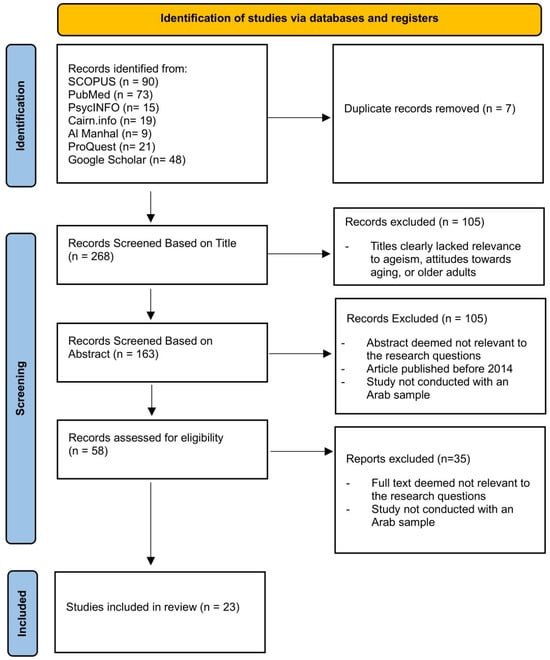
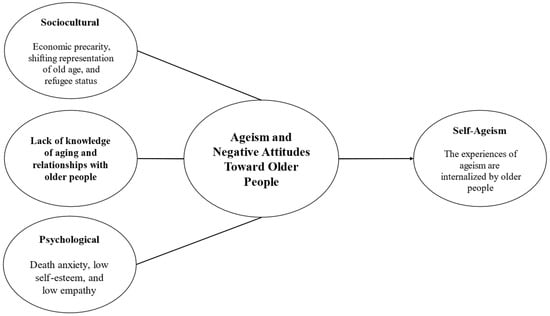

Disclaimer/Publisher’s Note: The statements, opinions and data contained in all publications are solely those of the individual author(s) and contributor(s) and not of MDPI and/or the editor(s). MDPI and/or the editor(s) disclaim responsibility for any injury to people or property resulting from any ideas, methods, instructions or products referred to in the content. |
© 2026 by the authors. Licensee MDPI, Basel, Switzerland. This article is an open access article distributed under the terms and conditions of the Creative Commons Attribution (CC BY) license.