


Abstract
Oikos (οἶκος, home) is a concept that split in modernity as it became “eco”: the oikos of economics and of ecology (quantification versus study of our home). In this essay, both derivations will be touched upon since the quantification of our natural home (econometrics) is arguably the modern source of the current climate crisis, while its study (ecology) claims to name that crisis—the Anthropocene—in order to begin to cure it. What role can art history play in this agonistic drama? There is already an architectural history (as in Reyner Banham’s Los Angeles of “Four Ecologies,” 1971). Art history, too, has ecological frameworks from the 1970s that need to be unearthed; this essay argues that they must necessarily be tied to economic ones. We get no ecological art history without the social history of art. Economic relations are found in art that represents or enacts human cultural patterns of extraction (what Marx himself identified as an “irreparable rift”); parallel ecological perceptions follow the Humboldtian logics of geographical niches hosting specifically local forms of life. Art history emerged as a discipline to deal with both these modes. It is coeval with the naming of “ecology,” and its many relations to the oikos deserve to be engaged. In three acts, this brief essay charts a dramatic arc from extraction to relation, with ecology as mediation throughout. The first act looks at a significant moment in which the economic aspects of social art history were foregrounded in Michael Baxandall’s classic Painting and Experience (1972). Baxandall theorized the “experience” of capitalist reckoning as a visual practice conjoined to aesthetic valuation. Relatedly, the quality of ultramarine, visually assessed and theologically charged, was contractually bound to systems of extraction and trade. In the second act, the essay considers Earthworks artists such as Robert Smithson, and anti-Gestalt psychologists, from Anton Ehrenzweig to perception scientist James J. Gibson. Gibson’s 1979 book The Ecological Approach to Visual Perception created a second mode of approaching the oikos: as a set of productive visual “habits” formed by the human body interacting with affordances of the planet. Act Three builds a simultaneous expansion and refutation of Gibson, privileging the non-visual senses in relation to strange media objects that can be analyzed by an art historian—epistemologies departing from vision to embrace amodal senses as ways of knowing environmental disaster in the Anthropocene. This necessarily engages the cultural polemic of symbiontics. Crafted in response to the newest forms of BioArt, this new ecological theory of aesthetics draws on the philosophical category of ontics, viz, symbiontics: symbiosis as that which is. Defeating the isolation fostered in Western art (think of Dūrer’s exceptionally precise and utterly alienated 1504 Hare), the symbiontic art discussed in Act Three is fully entangled. These relational aesthetic gestures are radical—a word whose root is radix, literally, root. Symbiontics engage us in a revolution in rooted sensibility, taken up in art that is in reciprocity with life. Presenting a mutual interdependence, second-wave BioArt performs itself on a planet that is oikos—art in reciprocity with the more-than-human species that maintain this garden of a home.
Keywords:
Anthropocene; BioArt; Earthworks; oikos; ecology; economy; ontology; perception; symbiosis; symbiontics 1. Introduction
There is no ecological practice of art history without the social history of art. This essay explores ecology and social art history as forms of scholarship that might engage our planetary environment. It does not take up the question of carbon offsets for art historians flying around to do research, nor does it mimic the admirable gesture of Stephanie LeMenager in Living Oil (LeMenager 2014), in which she gives us the greenhouse gas footprint of her remarkable book, as we are reading it, calculated as being approximately equal to a cheeseburger.
Instead, I organize the scholarship of art history and the science of ecology into three intertwining acts: a drama of conflicting epistemic commitments ranging from isolation (as “autonomy”) to economic/perceptual systems to acknowledgements of entanglement and reciprocity. The drama is not teleological, it is rhetorical. There is, however, a historical progression to be noted: We had to begin, before social art history, with isolation: the “autonomy of art” in the modernist avant-garde; its constructed removal from decorative, ritually important, or “primitive” aesthetic practices; and its asserted adequacy by itself without religion and separate from the emerging role of science—an “art for art’s sake.” This article of faith—art’s autonomy—first surfaced within French cultural bureaucracies (in the context of early world’s fairs displaying French imperial power in Paris), but it built on the revolutionary carving out of “art” from a Louvre palace purged of its royal tchotchkes. Such an ideology of autonomy was barely dented by the efforts of Marxist art historian and sociologist Arnold Hauser in the mid-20th century to encourage a social art history (Hauser 1951; Jones 2016). Modernist formalism and its self-created blinders to politics and economics (and eventually the planet) were deeply reinforced by art markets organized entirely around author names and a supposed autonomy built around abstraction (Jones 2005). Those left out of the story (women, lower classes, figurative paintings by other-than-white men) rebelled, their cause taken up by art historians revisiting sociology around the 1970–80s, declaring a social history of art (and reflecting on its canon, Mainardi 2019). We can describe these revisionists as insisting on a broader “oikos” for understanding art. This oikos (οἶκος, home) was still entirely human. It was a domestic (and domesticated) site of meaning-making, situated initially in the family workshop or artists’ guild.
Such a social history of art is the kind of art history I am referring to in this essay’s title. As I hope to demonstrate, the social history of art can reach outside the art world per se, enlarging art history for an ecological point of view, through the following: (a) embracing histories of “ecology” in trajectories some could describe as Romantic, Systems-oriented, or Functionalist (Drake 2026), (b) making reference to this author’s personal experience with managing an internal ecology of the microbiome, reflected in curatorial gambits with BioArt and symbionts (Jones et al. 2023), and (c) drawing on non-art analyses in collaboration with historian of science Peter Galison (Galison and Jones n.d.), interrogating the very concept of how harm to ecologies becomes visible at all. These social arguments and attitudes have roles to play in the drama spun out below.
The two derivations of “oikos” in everyday English are significant—economics and ecology both dealing with “home” at different scales and for different entities. The social spaces of artists’ workshop and guild constituted an “oikos” in both an economic sense and an ecological one—if we trace the implicit material histories organizing the guilds. These medieval groupings were part devotional, part supply-chain: painters hung with apothecaries and/or leather tanners to better capture the goods (pigments and binders and supports). Because they were also Christian and “confraternal,” such organizations excluded those who were not male co-religionists. The place for those actors in the ecological-economic circuitry lay outside, in the unthought of the art world: Asian extractors, Arab suppliers, Jewish traders, female managers, and child workers in the family system.
The social art history that mobilized around such European configurations came of age in the late 20th century along with so much else that could be seen as ecological thinking, even if the historical actors under examination would never conceive of an “oikos” outside the home. The new art history looked at the humble crossing point at which artistic labor met the cash contract for a delivered painting. Such a domestic and transactional context left a textual deposit of intentions, evidence of material substances, and recorded human relations—most thrillingly delineated in Michael Baxandall’s Painting and Experience in Fifteenth Century Italy (Baxandall 1972).
What Baxandall’s social art history brought to intellectual history was materialism and, by implication, circuits of earthly materials in commodity exchange (an ecology implied by an economy). As Baxandall argued, inside the Italian Renaissance painting, one might once have narrated an art history in which an ultramarine cloak for Saint Francis was merely a hue, to be understood as a marker of celestial divinity and purity in Christian iconography. However, as he brought readers outside the frame to consider the work’s social context and thicket of status-signifiers (articulated clearly in the contracts for such work), then an ecological relation glimmered into view. Such painting, in Baxandall’s reading, called upon experiences of ultramarine as a substance—ground lapis lazuli—whose purity needed specification (# florins per ounce) and whose arduous extraction, transport to Venice, and conveyance to Florence was inextricably tied up with its costliness and exotic cultural value. The thousands of years of aesthetic appraisal of this stone as especially and unusually chromatic came together with early modern trade routes, capitalist wealth accumulation, and exports from what is now Afghanistan to signify “precious and most beautiful.” Lapis lazuli was important for securing a pious commitment by the nobility to commission the best-made visual objects for signifying the divine. As Baxandall put it:
Ultramarine was made from powdered lapis lazuli expensively imported from the Levant […] To avoid being let down about blues, clients specified ultramarine; more prudent clients stipulated a particular grade—ultramarine at one or two or four florins an ounce. […] the exotic and dangerous character of ultramarine was a means of accent that we […] are liable to miss. […] In Sassetta’s panel of St. Francis Renouncing his Heritage, [circa 1437–44] […] the gown St. Francis discards is an ultramarine gown. In Masaccio’s expensively pigmented Crucifixion, the vital narrative gesture of St. John’s right arm is an ultramarine gesture.[p. 11]
Baxandall left the extracted materiality of lapis lazuli at that. However, he was precise in representing for us a lost history, in which the ecological-as-distant (the extraction of lapis lazuli) came into the domestic-as-proximate (family workshops, intimate devotional contexts) to permeate an early Renaissance artworld, constituting “what it was like, intellectually and sensibly, to be a Quattrocento person.” [p. 152] Such a Latinate person would speak of ultramarine around 1400 as “beautiful,” the “most perfect” and “noble” of the colors, which had to be traded for—and the buyer should beware. One should look specifically for “the good stone […] richest in blue color, because it is all mixed like ashes” (Cennini 1954). Artists such as Cennini would not think much about the distant place from which ultramarine came; mining was not yet “extractivist,” it was simply how humans took what was necessary for their cultural use.
The early modern domus was full of such restlessly ambitious people who had once been silent artisans and were suddenly keen to appear in print. Artists sought contacts that were both intellectual and mercantile—extending into libraries, ducal courts, cabinets of curiosities, academies, and vendors’ shops—requiring maps, ships, camels, donkeys, horses, how-to-books, and packs of rocks that foreigners carried arduously along silk/spice/color trade routes. By the end of the 15th century that Baxandall wanted to study, those routes had stretched to the New World. Along with “ultramarine gestures,” there would soon be “cochineal” and “indigo” ones. These non-mineral hues were based on insects and tropical plants taken out in quantity. Spanish colonial monopolies fed the status signaling of aristocratic and papal systems of power, stretching systems of slavery and distant hemispheric ecosystems to the breaking point [Figure 1].
Figure 1.
This image, titled “Indian Collecting Cochineal with a Deer Tail,” is from Memoria sobre la naturaleza, cultivo, y beneficio de la grana, a 1777 essay written by scientist and scholar José Antonio de Alzate y Ramírez detailing cochineal production. https://hmsc.harvard.edu/online-exhibits/cochineal/ (accessed on 24 August 2026). In Mexico, Maya and Aztec peoples were cultivating and controlling dye production by infecting cacti with this scale insect, going as far back as the second century BCE. Now identified as Dactylopius coccus (the Latin “coccus” for carmine red), the powdered bodies of these color-saturated bugs were traded throughout the Americas before conquest.
Let me be explicit: the European relationship to distant ecologies was unthinking—that is, not thinking about extraction—both in the art commodities we are talking about (pigments and dyestuffs, but also dyed textile arts and pictures of these expensive goods) and in most of art history about this period. Wherever Baxandall’s “Quattrocento persons” made their homes (in Italy or on a trading vessel heading out from Genoa), their relationship to earth was blithely avaricious—nature provided goods for human use. The dualism of active man and passive nature begins to consolidate, as monotheism completes its defeat of a pantheon of nature gods and goddesses guarding earthly domains. So, if ultramarine as a pigment required Tajik miners to carry water and firemaking equipment on their backs, scrabbling up to caves in their Kush Mountain range—a place Marco Polo reported on around 1300 as a “cold country,” where the precious blue stone is “the finest in the world and is got in a vein like silver”—then so be it (Polo 1871; Searight 2010, p. 11). We should have it, whatever the human and environmental cost.
Baxandall lets us examine this unthinking ecological relation as an attitude deposited in paint, and it is seen in the picture. He emphasizes a kind of appraisal that was certainly not “ecological,” even avant-la-lettre, but it had a geography and an intuition of extraction. For patrons, church fathers, and guild members, ultramarine was rare; it came from the “East,” maybe from somewhere near the Holy Land (Baxandall’s wished-for “Levant,” although Afghanistan is not in fact part of that geography). The best kind was like silver, identified in veins by hardworking Central Asians far, far away. The skills to “read” ultramarine in this way would be shared in part with everyday viewers of these public works of art, and the bluer the dearer. All of this came into desires for the hue and favored an ecology of extraction that remained unthought but was implicitly encoded in the valuation of purest ultramarine. This specific “ultra” or extreme blue luminously broadcast just what labors were required for the crafting of aesthetic transcendence. The far-away “blue mountain” was surely put here by the Creator for human despoliation and divine display.
2. Act One—Oikos as Domus
This opens our first “act” in this essay’s confected drama of art history + ecology: an act of simultaneous unthinking and what we can now peg as extractive excess. Baxandall drew open the curtains with his social art history but did not feel the need to explore this materialist theater any further. Others would go on to write histories of the chromatic obsessions that drove aesthetic human economies, mostly in trade publications (Searight 2010; Finlay 2004) that did not call out the ecological disruption of extraction. We had to wait, for example, for a history that would center on cochineal trade and position itself as part of “insect studies” in an ecological and post-colonial frame and for art histories to begin noting the spread of this red pigment as a symbol of colonial exploit (Moore 2021; Phipps 2010; Anderson 2015). Early modern trade begat colonial industry, which became capitalist Europe, prompting post-colonial critical histories thereof.
The contested coinage of the name “Anthropocene” in 2000 inaugurated the galvanizing surge among humanists to understand what Marx himself had termed the “irreparable rift” between capitalist enterprise and the capacities of what he called “nature” to endure it (Steffen 2013; Marx [1885] 1981, p. 949). In the post-1970s turn towards social history (micro and otherwise), researchers had already reframed the Eurocentrism of the “Renaissance” as an “early modern” period that art history increasingly understood as global. Once the Anthropocene got named, art history could suddenly perceive its most vaunted epochs as always-already entangled with predatory economies networking the whole planet—with colonial and imperial extractions of every kind. The “Great Acceleration” was named for the 20th century postwar epoch, accelerating what had begun in the Industrial Revolution (McNeill and Engelke 2015), but the rapacity and imbalance that naming designates had already been layered into the archaeology and biological sediment of the Mediterranean long before—earthy and aquatic backdrops for Baxandall’s materialist Renaissance. By the time Sassetta (Stefano di Giovanni di Consolo, d. 1450) painted his Saint Francis (that sainted lover of animalia), the teeming biodiversity of the Mediterranean Sea had been stripped for centuries by human overfishing (Trentacoste et al. 2018). Similarly, the drive for “chroma” had built insane monopolies of color as a commodity, well before ultramarine. Fishing regulations (seasonal or geographic, entirely local) and chroma monopolies (in vast networks of exchange) go back deep in antiquity—with industrial outposts right there on the Mediterranean’s coast (Whiddington 2026).
Desires for these living sources (of protein, of chroma) can even be discerned in Bronze Age trading circuits around the Mediterranean basin, which became much more fluid with the proto-capitalist invention of currency. (Of course, some traded items had become a kind of currency in and of themselves, as in wampum, cowrie shells, or the more purely aesthetic raw materials of scent and chroma.) Consider the following: An entire settlement in Phoenicia (present-day Tel Shiqmona in Israel) was walled off and defended around 900 BCE as an enclave for purple. Not a town, but a factory, it was fortified by Israelites to control and protect a lucrative monopoly on this rare, colorfast hue, via millions of hapless murex snails. These mollusks (three different species, each conveying different variations of hues ranging from deep burgundy to a bluish purple) were harvested for centuries to satisfy the appetite for “Tyrian” or “Phoenician” purple, which would become the regulated chroma of Byzantine royalty. The dyestuff was stable (unique at the time) and came from the mucus glands of the creatures’ guts. With 250,000 of them sacrificed to make a single ounce of the dye, the rapacity of the industrial-scale production was staggering. Present-day archaeology of the site reveals weaving operations and vats for fermenting the stinking, deeply hued material, vertical integration from commodified hue to the textiles it made valuable through its rare position on the color spectrum (Lidz 2024) [Figure 2].
Figure 2.
Salted glands of murex snail dry in the sun during the production of Tyrian purple. Amira Karaoud/Reuters.
Thus, whether artfully infecting cactus plants with the cochineal insect (Moore 2021; Marichal and Pretel 2024) or systematically slaughtering snails, these Bronze-age to early modern humans should be seen as fundamentally ecological actors often moving out of balance with a local ecological niche. Art historians are late to this analysis but gathering steam in locating chroma’s materiality within what sociologist John Bellamy Foster has termed the “metabolic rift” discernible to Marxist historians (Foster 2013, 2000).
Foster has clarified the link between Das Capital’s use of the word “metabolism” as a biological and ecological concept and the “irreparable rift” (unheilbaren Riß) that Marx identified in capitalist orders. These were concepts that Marx generated in dialogue with political and economic theorists (above all, Thomas Robert Malthus [1766–1834] and his famous 1798 treatise on population that made Marx furious)—but also with proto-ecologists such as soil scientist Justus von Liebig (1803–73). Industrial-age thinkers were focused on crises of differential fertility and emerging soil sciences in the second agricultural revolution, in which farming became fully commercialized. Again, this was an instrumentalist ecology and hence “unthinking” about life in a given ecological niche. Economists and chemists like Liebig were entirely focused on how humans could produce ever more grain for themselves from ever smaller plots, pushing an economy of soil depletion (and intermittent replenishment) and driving population growth. Malthus argued that lusty humans would always reproduce to surpass supply; Marx, a humanist above all, aimed to prove Malthus wrong—rational progress and modern science would take care of ever more humans on earth (Malthus 1798; Marx [1867] 1990, [1885] 1981; Shapin 2014). The “rift” could be sutured up for future communal economies, with enough science applied; like Baxandall’s ultramarine-gesturing Quattrocento persons, Marx’s industrial age worker asked no questions about the wider web of life.
Nor could Marx’s “rift” have imagined the planetary scale of the Anthropocene. Anthropocene instigations are contested, and even the scientific term has been fatally undetermined by conservative geological institutions (Joint Working Group on Anthropocene 2024; Oreskes and Conway 2010). However, art and archaeological histories do not need geologists to proceed with new, ecological art histories of our privileged “ages,” already named for extractive mastery (Stone, Bronze, Iron, etc.) We can confirm that well before the so-called Industrial epoch, and even before Baxandall’s busy ultramarine vendors came to Venice, the unthinking epistemic roots of a “rift” with earth orders were already in place, in the chromatic obsessions characteristic of the relationship humans nurtured toward their wider oikos.
The opening act of an Ecological Art History can thus use chroma’s histories to defeat nostalgia for a simpler, “Edenic” relationship to nature—a dreamy view to which even Marx fell prey. A sense of aesthetics and a drive for status drove unconscionable depletions in a past Marx imagined to be more in balance—and this can be revealed in histories of art extended to embrace deeply dyed luxury textiles and their depictions in portraiture with pigments garnered from unbalanced extraction. For Marx, aesthetic drives remain “superstructural” to what actually mattered, from his analytic but Romantic view—we might even define superstructural to mean “all of culture” in Marxian terms, waved out of view as irrelevant. Art history, to the contrary, can show the depth of epistemic investments in a willfully ignorant and dangerously anthropocentric view—as when art historians expose the pollution tourism indulged in by Impressionists as a “mystification of mist” from the known killer fogs, fires, and smoke of industrial London, contrasted with an “eco-formalist” ameliorative position (Jones 2025; cf. Siegel 2025).
Facing the agricultural crises of depleted soil in his own time, Marx theorized a rational cause for such overuse in the architectural separation of humans from nature, e.g., the city versus the country, where he imagined humans lived closer to nature’s rhythms. Yet as the remote, coastal Tyrian purple factory shows, the rupturing vanities of human desires run deeper and manifest earlier. They are cultural/superstructural, but their predations affect the base of existence. Variable human cultures either sustain a relation with the more-than-human (Indigenous cochineal or wampum, in the Americas) or destroy it (European murex mining, Spanish enslavement for cochineal and indigo super-production). Rather than spatial or architectural, or strictly a matter of labor relations, we can see in the art history of chroma the generation of unsustainable rapacious attitudes within commodity trade—for purely aesthetic qualia. The Israelites and Phoenicians working together at what is now Tel Shiqmona were not gardening or shepherding the murex snails into better places conducive to their own thriving, harvesting just a little bit; as far as we know, these historical actors were simply heedless predators. Luckily for the snails but unluckily for the insects, cochineal began to replace murex in the spectrum of hues for Catholic, royal, and military vestments (viz, colonial British Redcoats). That shift in taste and the collapse of the autocracy of the Eastern Roman Empire in 1453 CE fully snuffed out the ritual demand for color-fast purple from the sea.
The concept of the “metabolic rift” turns out to be useful in concluding this opening act. In Foster’s influential reading, “metabolism” is revealed as a keyword for how Marx’s limited, human population-obsessed view can become available to our more urgent concepts of ecological crisis. Metabolism in the German language (Stoffwechsel) is literally “material change.” While it might come to mean burning calories, material change also connotes evolution, ecological succession, or even individual creaturely development triggered by environmental cues—the mysterious ability of life forms to develop, grow, and transform themselves while still being the “same” tree as the seed or the “same” butterfly as the worm. Human metabolisms (Marx’s focus) would be driven to invest food-fueled energies (labor) in getting what was necessary to survive and reproduce. They would also go way beyond mere survival to labor for the extravagance of chroma. This metabolic arc, of course, took for granted the existence of nature as merely a provider of food and man as the dominant worker making production happen. Marx’s intuition of a “rift” is nonetheless productive for an ecological art history of chroma’s costs.
Economists’ simplified concept of metabolism fueled the emergence of ecology itself. Marx’s contemporary, the zoologist Ernst Haeckel, would reject economists’ focus on purely human circuits. Beyond even the chemist Leibig who inspired Marx, Haeckel saw “nature” and metabolism as linked in much more complex ways. Haeckel felt compelled to coin a neologism—Oecologie—to describe a new science of life’s complexity in 1866. [Figure 3] Oecologie would study “the relationships of the organism to its surrounding environment, where we can include, in the broader sense, all ‘conditions of existence’.” Haeckel’s German phrase “Existenz-Bedingungen” is hyphenated and put in quotation marks in the original because the author wanted his readers to conceive of it as a new, unified concept belonging to the equally new “Oecologie” (Haeckel 1866, v2, p. 286). Existenz-Bedingungen would obviously include the human organism, whose fitness for survival within an ecological niche would now be in question.
Figure 3.
Frontispiece Haeckel, Ernst. 1866. Generelle morphologie der organismen. Allgemeine grundzüge der organischen formen-wissenschaft, mechanisch begründet durch die von Charles Darwin reformirte descendenztheorie. 2 vols, Berlin: G. Reimer. https://www.biodiversitylibrary.org/item/52177 (accessed on 24 August 2026). It is in Vol. 2: Allgemeine Entwickelungsgeschichte, (detail above) on p. 286 in which Ernst Haeckel promulgated the neologism Oecologie, combining Greek words for the study (logos) of the Oikos (home). Digital image via the biodiversity library from a scan of the original volume now held by the Marine Biological Laboratory of the Woods Hole Oceanographic Institute, via the MIT Libraries. Text and translation: “Unter Oecologie verstehen wir die gesammte Wissenschaft von den Beziehungen des Organismus zur umgebenden Aussenwelt, wohin wir im weiteren Sinne alle ‘Existenz-Bedingungen’ rechnen können.” (By “ecology” we understand the comprehensive science of the relationships of the organism to its surrounding environment, where we can include, in the broader sense, all “conditions of existence”).
Marx and Haeckel were both “big thinkers” deeply affected by the ideas of Darwin, but they could not have had more divergent politics. Haeckel would happily endorse “racial science” and abuse the protocols of research with his fictitious “ontogeny recapitulates phylogeny” premise (Hopwood 2016). Marx’s political theory was revolutionary and liberatory, yet nonetheless rooted in similar, albeit more deeply historical, views of earthly constraints. This, then, is ecology’s “Romantic” period. Despite their different political orientations, Marx’s metabolism is closely analogous to Haeckel’s Oecologie (ecology, as writers in English would simplify it). Metabolism for Marx was labor, that relation “between man and nature, a process by which man, through his own actions, mediates, regulates and controls the metabolism between himself and nature” (Marx [1867] 1990, p. 283; Foster 2000, p. 141). Sharing this concept of interaction and mediation, Haeckel’s ecology considered the metabolisms of animals and plants in the circuit. Ultimately, ecology proved to be a more enduring concept than Marxian metabolics (even after Haeckel ruined his own reputation by endorsing the incipient politics of fascism). Should we set Haeckel’s concept aside because of his fatal imbrication in scientific racism, which of course also touched art theory deeply (Vollgraff 2026)? We cannot avoid the complexities of such histories of “ecology.” We must combine Haeckel’s term with needed modifiers as to what ecology we are talking about and what politics it travels with. In concluding this act, we use Haeckel’s idea to enlarge Marx’s intuition of a rift—yielding the name for this act: an ecology of extraction. Neither Marx nor Haeckel would complete the conceptual circle: human creatures acted to “mediate” nature, but nature, through her unthinking flows, would also mediate, regulate, and control the metabolic rift that man had introduced.
3. Act Two: Experiential Oikos
With the new word from Haeckel becoming a functional concept, the “oikos” split in two. It took almost a century before the split was fully established (“ecology” really took hold only in the 1960s), whereas oeconomia had been around for millennia. Economy was there in the Latin from the Greek—a robust signifier for household oikos + “nemein,” signifying management of the household budget by its (male) head. Economy was something you did as a responsible, civilized man: quantification and control came into modernity from that ancient, patriarchal usage. The new word “ecology” was more passive: the study of our home environment, implying a distance and an “objectivity” that positioned the scientist outside nature, looking in.
It was within Northern European academia that this supposedly objective study first took root. The Germanic notions of plants and their geographies (Goethe, Humboldt) gave ecology its first legs, emerging out of phytogeography and stretching beyond the confines of zoology, botany, or biology to embrace them all in dialogue with the geo of earth. Its first textbook came from the Danish botanist Eugenius Warming in 1895, with an English translation in 1909 as The Oecology of Plants (Warming [1895] 1909). Meteorological and mineralogical knowledge would also be needed to discern the habitats of life forms—ecology would be a synthetic and syncretic science. By the mid-20th century in US biology, the Germanic “Oe” was converted to “E,” and the science came of age.
In this 20th century context, the science of ecology would analyze systems of life. It would hint at economy through its earth systems analyses, brought to a localized site. This aimed to secure the scientism of ecology—which, after all, grew out of lowly observational field biology and suspect theoretical taxonomy with little “laboratory benchwork” to anchor its claims. Working in Georgia where his family had deep roots, Eugene Odum put out his best-selling textbook, The Fundamentals of Ecology, in 1953 for students in the US: “Definite groups of unifying principles are emerging which are gradually giving the heretofore obscurely delimited body of ecological subject matter a definite form” (Odum 1953, Preface p. v). Odum’s systems-theoretical view celebrated the “nearly perfect” cycles of a natural economy, such as the renewing nitrogen cycle of a marine ecosystem [Figure 4].
Drawn to the same soil biologist, Justus Liebig, who had influenced Marx, Odum liked laws and calculatable relations. The hard patina of economics, the ratios of chemistry, and even electrical engineering were evoked by his analysis of living systems as energic exchange. Energy loss was calculated, and inputs and outputs of productivity were measured. One reviewer commented wryly that a lot of other sciences were needed before the student could become a budding ecologist, adding, “It is a textbook of ecology, but should perhaps rather be considered a catechism” (Nielsen 1960, p. 400; Odum and Odum 1959).
How would any of this enter art history? The answer is indirectly and from multiple directions, and only in the 1970s. That era in the US mingled environment and ecology like a head-swimming cocktail. As our drama proceeds, I offer three “scenes” in this second act, presenting an experiential relation to ecology.
First, in the context of the founding of the US Environmental Protection Agency [EPA] in 1970, where did ecology stand? “Environmental” was some kind of encircling adjective, while ecology was a trendy new academic pursuit. “Environment” connotes a “state”—such as temperament, enchantment, firmament, or fundament (going back to 1603, slowly becoming the “state of being environed,” Oxford Universal Dictionary 1955, p. 619). Could it also be a place? Harvard had already spawned a cool new undergraduate major in 1968, coming out of its Graduate School of Design and housed in the only US building ever built by Corbusier: the “Department of Visual and Environmental Studies” (Rosenberg 2019). Still, “environment” in this parlance was just a shorthand for spatial experience as shaped by design, architecture, and media: something to be carved, occupied, or represented. Ecology had nothing to do with it—at least until Environmental Impact Statements would involve architects in addressing inconvenient conditions on the building site (Hanly 2026). When “ecology” entered architectural and design discourse, it would be interpreted in the same human-centered way, reflecting the earlier Romantic phase.
Take the aesthetic relation between ecology and environment in the analysis of British architectural historian Rainer Banham, who examined Los Angeles and its “Four Ecologies” in a polemical book published right after the EPA was founded (Banham 1971). Banham was engaged with something that in retrospect can be called “cultural ecology” (he uses “human ecologies,” p. 22)—if it is ecology at all: architecture and urban sprawl, the multi-cultural styles that juxtaposed surfboards and freeways and informal buildings “within the topographical and historical context of the total artifact that constitutes Greater Los Angeles.” (Banham 1971 p. 23). Formed by a settling pattern Banham saw coming overland and bringing farmers to the sunshine state, the human “ecologies” he identified were free-wheeling ranch and bungalow typologies (not chaparral) and freeway configurations for maximal mobility (not earthquake or intertidal zones). This was the city as “total artifact,” a made thing, definitely not an evolved relation. “Ecology” for Banham clearly had nothing to do with the environmentalism of US policy, whether the EPA, the precursor endangered species list (1966) and Clean Air and Clean Water Acts (‘60s–70s), or even the pioneering air quality laws that California itself had passed beginning in the 1940s. Banham’s ecology was innocent of any actual litigation on behalf of the creaturely and human habitats threatened by human sprawl (Stone [1972] 2010). As San Diego dweller and urban studies professor Lawrence Herzog put it when reviewing the 2009 reprint of Banham’s famous polemic, the swinger’s view of the four so-called ecologies (“Surfurbia,” “Foothills,” “The Plains of Id,” and “Autopia”) had aged dramatically, and a new crop of LA geographers had fatally complicated Banham’s sunny view. Herzog poses the questions of the Anthropocene specifically in confronting the Los Angeles of our current millennium:
Architectural historians today further sharpen these questions about Banham’s “environment bubble” as utterly inseparable from entanglement in actual ecologies (Jarzombek and Prakash 2025). Such questions become acute when we consider the geology of the Los Angeles basin as one of the densest petroleum production and storage fields in an age of climate urgency—an ecology blithely concealed by SoCalGas as well as the Silicon Valley and Hollywood, concealments analyzed in one art historical-ecological collaboration (Jones and Galison 2025).…how will a metropolitan region of 17 million spread across over a thousand square miles of semi-arid, water deprived land, and ranked with the worst air pollution in the United States sustain itself through the twenty first century.(Herzog 2011)
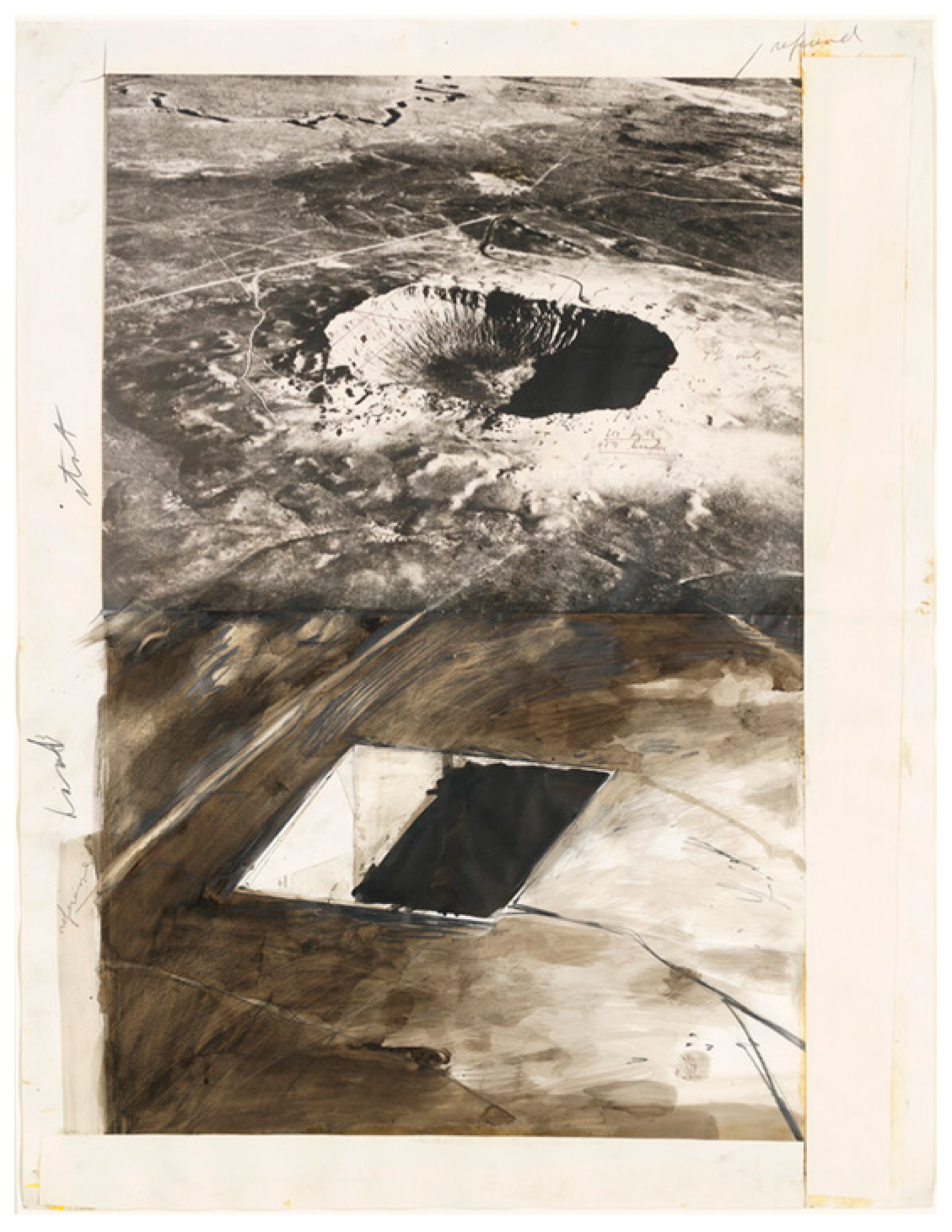
Yet, in the second scene of this second act, and at the same historical moment, ecology seemed to stir the artworld into paying attention to land as material and experience. The world-changing view from the Apollo Mission in 1968 of our fragile “blue marble” a.k.a. “Spaceship Earth” has been implicated in this crustal imaginary (Poole 2008; Diederichsen and Franke 2013)—in other words, the visual aesthetic of a distant earth seen from space was both the revolutionary impetus for environmental protection of a watery, mist-shrouded home (good Mother) and a chunk of rock ready for carving and shaping by men of action (bad object). (This provocative characterization alludes to Melanie Klein and psychoanalytic object-relations theory, for which see Allen and O’Connor 2019; Petot 1991). Noguchi had once conceived of a tragic memorial on earth, “seen from Mars” in 1947 as a post-apocalyptic condemnation of the human drive toward (nuclear and environmental) destruction in the atomic age, whereas a younger generation would imagine carving powerful geometric voids as big as craters, (bomb or meteor?) in the massive crust of a planet that was theirs to seize for manipulation and control [Figure 5 and Figure 6].
Figure 5.
Isamu Noguchi, Sculpture to be Seen from Mars, 1947 (aka Monument to Man). Unbuilt, photograph courtesy Noguchi Museum.
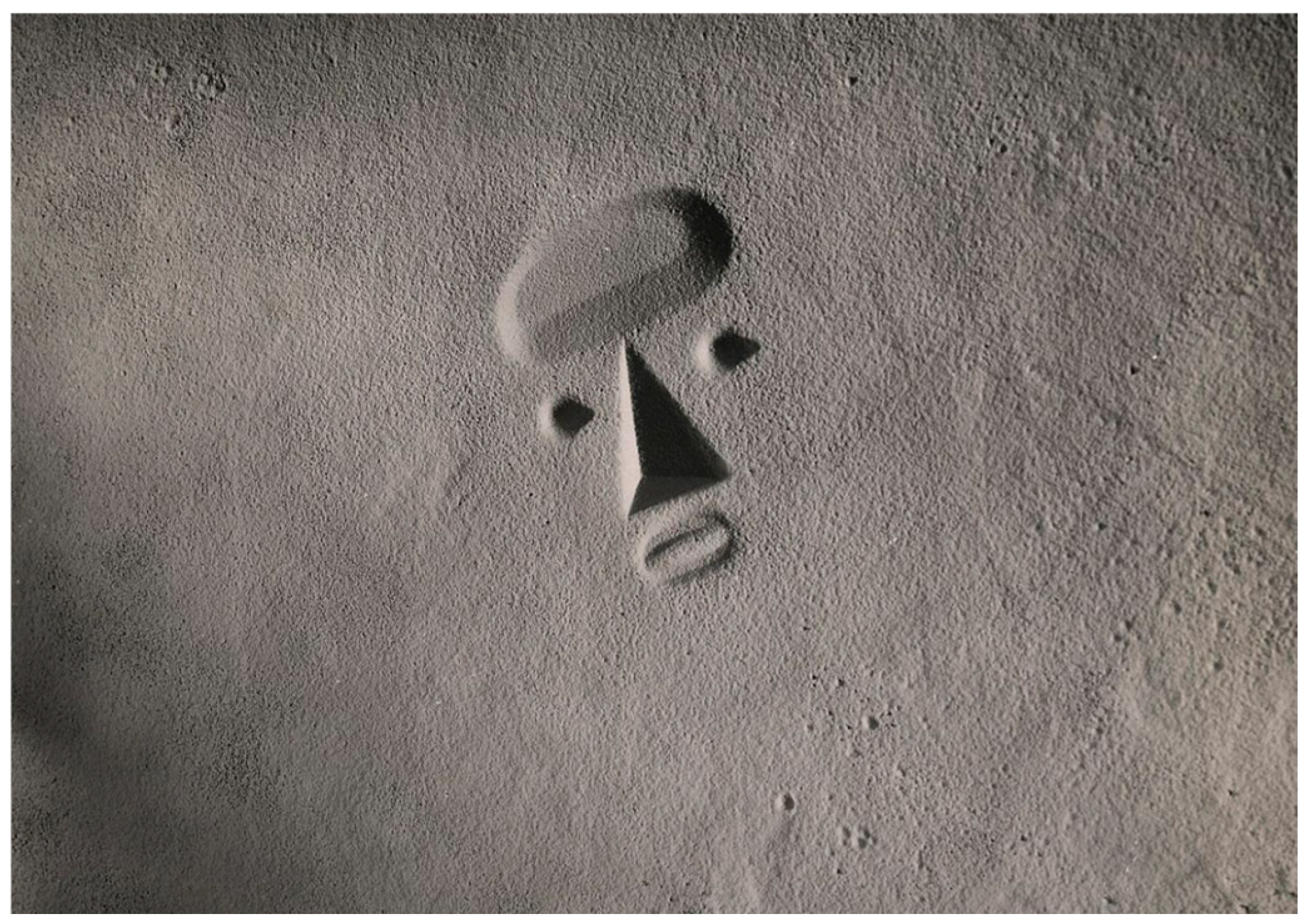
Figure 6.
Michael Heizer, Study of a Rectangular Earth Depression, 1969. Whitney Museum 80.26.1a-b.
In that hubristic context, ecology was everywhere and nowhere. The remote sites that land artists chose for visitors to encounter were nothing if not a retread of the American transcendentalist sublime (emulating Thoreau in his withdrawal from the polis, praised as a native ecologist avant la lettre.) This, too, links to the Romantic frame of earlier 19th century ecologists. Canonical land art sites were physically close to the actual territory in the American Southwest that Aldo Leopold persuaded the Feds to designate as the first US “Wilderness” in 1924 (for critique, see Cronon 1996). Even when it was just the Pine Barrens of New Jersey and not the mountainous high deserts of the West, this art called for meditative rituals displaced from city art galleries. Emphatically, land art gathered force as a pilgrimage to a non-urban (but possibly post-industrial) ecological niche. For Robert Smithson, who came to name “Earthworks” from a science fiction novel (about, yes, soil depletion! Smithson 1996, p. 68), ecology was unavoidable as a term, confronting him as he came into “conscious” art making after the mid-‘60s (Jones 2002). But if he rejected the aesthetico-formalist relation to land as “landscape,” it was only to welcome in the carvings of the bulldozer, entering from stage right.
This macho scene of our second act positioned ecology as a fussy, backward-looking, nostalgic cult, probably female or at least suspiciously “sissy.” Art historians were loath to call this out, although later critics identified its native misogyny (Boettger 1994; Stephens and Sprinkle 2021). Earthworks were so clearly innovative and cool to think with, academia rarely asked the most basic questions about their epistemic commitments or environmental impacts. In the place where ecology might have been, we celebrated instead the precision engineering of Walter De Maria’s chrome-tipped lightning rods (The Lightning Field, 1977), the whopping cut into the “Virgin River Mesa” by Heizer (Double Negative, 1969), and Smithson’s deliriously postmodern film/essay/photo collage/site in the “dead sea” of the Great Salt Lake (The Spiral Jetty, 1970 and ongoing): “fragments of a timeless geology [that] laugh without mirth at the time-filled hopes of ecology” (Smithson 1972; 1996, p. 152). I am one of those art historians who exulted in the mental gymnastics and full body experience of land art’s sublime and crumbling sites. Even back in the day, I knew these works were unconscionable in their extravagant relation to property ownership and luxury travel—but I loved their conceptual force.
Smithson tried to kill ecology whenever he could, explicitly. In his ascerbic, matchless prose, we find these gems, all mined from the Collected Writings (page numbers are from Smithson 1996):
- the ecology thing is a way of delivering one from death. Sin is like pollution. [1970, “Interview (by Paul Toner) with Robert Smithson,” (p. 237)]
- During the Renaissance, man was confident in himself, he wasn’t frightened of what was out there. We are back to that state of fear again—we are frightened of what is out there—ecology is a withdrawal-people want to stop eating. They are afraid that the lettuce they are eating has feelings. During the Renaissance man started dominating the land. The whole Renaissance ideal has fallen apart. [ibid., (p. 238)]
- Ecology arises from a need for deliverance and exhibits a deep distrust of science. A need to return to Paradise or the Garden of Eden … [1969, “Can Man Survive?” unpublished essay, (p. 368)]
- The ecologist tends to see the landscape in terms of the past, while most industrialists don’t see anything at all. [1972, “Proposal” (for an Earthwork reclamation of a strip-mine), unpublished (p. 379)]
- ECOLOGY AND INDUSTRY ARE NOT ONE-WAY STREETS, RATHER THEY SHOULD BE CROSSROADS. ART CAN HELP TO PROVIDE THE NEEDED DIALECTIC BETWEEN THEM. [1971, untitled and unpublished (p. 376)]
Quintessentially, these printed or unpublished musings find Smithson yearning for that unthinking relation of man-in-charge, The Renaissance of our first act. As he poorly understood the period, he saw no cause for “conservationist” thinking, despite Quattrocento artists’ fulsome antiquarian obsessions. Smithson’s own anti-preservationist practices insisted on a turn to experiential values that plunged him and his art’s public into delirious perceptual ambiguities and disarray. In this, he shifted from the mostly Romantic conceits of Land Art to vaguely surrealist or psychedelic ones. Unlike the Renaissance man we art historians have cemented, a pre-Cartesian rationalist cogitating one-point perspective and engineering a commanding gaze over the terrain, Smithson wanted control, but only to abandon “being in charge” of perception on site. In territory, the visitor to a Smithson earthwork should be overwhelmed by scale, sound, sheer magnitude, and the crushing chaos of abandoned industrial detritus—perceptions merging imaginatively into paleolithic time. The art dialectically “packaged” this disorientation for encounter in the tidy white cube, as piles of material spilling out of geometric containers. This rich and confounding paradox makes Smithson’s work perpetually fascinating for any analysis of art history and ecology. In the world, it could get ugly: when Smithson was opposed by local environmentalists in Vancouver who resisted his plan to cover a small island in their harbor with broken glass, he drafted an enraged letter comparing these “militant preservationists” to “Nazis […] distorting ecology to suit their end.” Wisely, the undated, unaddressed letter remained unsent, hiding in the archives (Jones 1996, pp. 331, 457). His embrace of entropy alternated with fantasies of control, as the Jetty was at times covered over by the Great Salt Lake before that fossil sea started terminally shrinking in the droughts of the Anthropocene.
There was clearly a gendered pattern in these late 20th century Earthworks and in “man’s” relation to nature. Women slowly entered this world but were more likely to get contracts for remedial land art in urban parks (Mierle Ukeles, Nancy Holt, and Patricia Johanson). They were showing up as public art makers, landscape designers, and sociologists, definitely required to be ecological—as in Helen and Newton Harrison’s collaborations, practicing together to make art out of fish farming in estuaries, offering to move rivers in China, or setting up citrus trees in galleries with lots of analysis in print (Harrison and Harrison 2016). Some of these women had begun as painters or architects, complicating those degrees to act specifically and contractually as crafters of landscapes (Johanson, and subsequently Maya Lin; Nasher 2023) [Figure 7].
Figure 7.
Patricia Johanson sculpture, Saggitaria platyphylla (Delta Duckpotato), 1981, in the urban park Leonhardt Lagoon in Fair Park, Dallas, TX. Wikimedia Commons, photograph by Michael Barera.
Johanson, in her formal language, cited inspiration from the morphology of riparian living things (the “Delta arrowhead” duckweed of estuaries and lakes in the Eastern seaboard). Yet for me, her forms seem eerily to echo Odum’s charts of ecology as a closed feedback loop—a circular economy, if we could only get it right. Systems thinking was edging in, along with feminist critiques.
Johanson was well aware of her gendered position and explicitly rejected the “bulldozers” of Earthworks that were celebrated in her time: “Why not allow the earth to live and let different people fulfill their own needs within works of art that are as open-ended and complex as nature itself?” (Johanson 2003). Her thinking emphasized harmony within an ecosystem she was required (by the discipline of landscape architecture) to study and inhabit as a time-bound proposition.
Through such shifts, the second scene of our second act shows a significant adjustment in art history—we had to deal with aesthetics (whether remedially ecological or defiantly transcendental) that demanded emplacement in, and experience of, specific outdoor sites. This aspect of Earthworks as embodied, experiential reception was even theorized by Smithson, who explicitly took art history to task for its bland formalist readings of Cézanne (e.g., Loran 1943). Where formalist art history was celebrating Cézanne as the “father of abstraction” or “precursor of Cubism,” Smithson insisted that we—art historians and artists—embrace the lumbering body of a person obsessing about physically visiting extreme sites, a man who positioned himself, day after day, in the abandoned industrial outback of the overheated Bibemus quarry near Aix-en-Provence. [Figure 8]. As Smithson saw it:
It would be interesting to deal with the ecology of […] the artist in the various sites from that period. […] you just can’t say it’s all just shapes, colors and lines. There is a physical reference, and that choice of subject matter […] has important physical implications. […] Cézanne’s perception: being on the ground, thrown back on to a kind of soil. […] we’ve seen it so long now from the decorative design point of view and not from the point of view of the physicality of the terrain. That perception is needed more now than the abstract because we’re now into such a kind of soupy, effete thing. It’s so onesided and groundless.(Smithson [1969] 1979, p. 168)
Figure 8.
Paul Cézanne, The Quarry at Bibémus, ca. 1895–1900; acquired in 1907 by the Museum Folkwang Essen, Germany. Oil on canvas, Height 65 cm (25.5 in); width: 81 cm (31.8 in). Wikimedia public domain. https://commons.wikimedia.org/wiki/File:Paul_Cezanne_Bibemus_Quarry_1.jpg (accessed on 24 August 2026).
Cézanne’s living body and the searing heat and light of the quarry to which it was exposed were made analogous to Smithson’s own journeys to peripheral destination such as the quarry at Ben Argyl Pennsylvania, or the breakwaters made of concrete cast-offs in the New Jersey marsh, or even the sundrenched sandbox of the “Monuments of Passaic.” Experience was newly situated in an industrially disrupted ecological niche.
Such encounters called up ecologies and deep time, even if Smithson positioned his practice as vehemently against actual ecologists’ “time-filled hopes.” Smithson’s human dialectic was a primordial summons—to plunge yourself into an outback and to invite the oscillation between “undone” sight and the creative drive to order that experience. This is harsher than Johanson’s “open work” allowing multiple uses. Smithson’s perceptual dialectics called to a wild and ecstatic rhythm that émigré perceptual psychologist Anton Ehrenzweig had called a “dedifferentiated” mode of seeing and making, crucial to modern creativity in a world already scarred by human mayhem (Ehrenzweig 1967). Unlike Johanson’s modest engagement with systems ecology, Smithson was after extreme experience. Deeply influenced by Ehrenzweig, he understood the Austrian psychoanalyst (who had escaped the Nazis in 1938) to have named an experience of seeing that was familiar to Smithson as a specific state of mind, “out there,” creative and overwhelmed:
… the “primary process” of making contact with matter. This process is called by Anton Ehrenzweig “dedifferentiation,” and it involves a suspended question regarding “limitlessness” […] the rhythm of dedifferentiation that swings between “oceanic” fragmentation and strong determinants.(Smithson [1968] 1996, p. 103)
Thus, despite himself, Smithson would draw the ecological into art history as a profoundly disoriented human experience of being dwarfed by a monumentalized environment. Massive mineralogical openings and disrupted arrangements—pit mines, quarries, breakwaters, dying inland seas—these would be the places from which the art was made, places to which we were constantly directed back by his theorizing, filmmaking, and discourse. Art was now to summon a constant “back and forth thing,” Smithson’s fundamental dialectic between site and non-site, flipping nature/culture on its head (Smithson 1996, p. 178). With this segue, we are ready for Act 2, Scene 3.
Cézanne, Banham, Smithson, and maybe even Johanson with her plea for polyphonic harmony—these are approaches to an ecology of experience—specifically, the varieties of perception on site. Ranging from the “artifact” of Los Angeles, perceived as a totality of human cultural ecologies, to the existential view from space that enlarged the scale of our “oikos” to planetarity, to the peripatetic but anti-conservationist “dedifferentiated vision” of Smithson’s dialectic, the 1970s can in retrospect be seen as profoundly engaged with the question of how humans were to experience their environment, at multiple scales. How well did art history deal with this challenge? We are still unsettling that moment for our own. More aggressive and explicit approaches were to follow Ehrenzweig, in the domain of perceptual psychology. Definitely contrapuntal to Ehrenzweig’s psychoanalytic approach was the 1979 publication of James J. Gibson, The Ecological Approach to Visual Perception (on which see also Farago 2025, pp. 14–15).
Act 2, Scene 3: The title alone of Gibson’s book was provocative. Like Ehrenzweig, he was deeply indebted to the German Gestaltists, who had closely studied human perception in lab settings using cards, moving lights, film loops, and a human placed in the dark with head in fixed position: the “head in a vise” experiments of Wertheimer, Köhler, and many others who left Germany (by plan or necessity) as fascism took over (Ash 1995). Those earlier psychological pioneers were all about stabilizing a “whole” (the Gestalt) from a traumatized sensing subject addled by the Great War. Gibson, like Ehrenzweig, was a postwar subject who ended up rejecting Gestaltist holism as static and weirdly passive. Both these psychologists took up the challenge of humans ranging free of the lab, roving over unsettled terrain.
Gibson’s ideas about perception began to gel after he worked training pilots during World War II—he realized that the experience of piloting an airplane and the rapidity with which a human can adapt to this unprecedented experience show that vision is a set of productive “habits” formed since infancy but highly adaptive, in coordination with a mobile body on a predictable Earth. The much-vaunted retina is cradled in a roving eyeball, turning in its bony socket on a swiveling head atop a being with limbs that interact with affordances specific to the planet on whose surface the human has learned to survive: gravity, matter, atmosphere, predators, prey: rotating and blinking orbs in a structure that can pivot, while the body lopes in a (planar) direction over the terrain. This dynamic ensemble produces what Gibson describes in Ecological as an “optical array.” As humans learn to fly, there is thus a completely unprecedented new dimension entering the array. Added to the planetary flow above us (clouds! Tree limbs!) and in front of us (the corner we want to round, the cliff we seek to avoid), there is now a wild new dimension below us, as a distant earth spools away systematically in multiple directions. This all comprises a streaming flow of visual information that we somehow begin to navigate seamlessly, in resilient ease inside our wide-ranging ecological niche.
This “ecological approach” came to have impact, especially for designers, who avidly adopted Gibson’s notions of “affordances.” (The ears and nose are “affordances” that allow spectacles to be quickly incorporated as navigational aids; the hand has “affordances” for gripping mug handles and scissor holes.) To be sure, Gibson’s ecology was not much more than Banham’s “topographical … context” and had little to say about ways of sensing the planet other than vision. Much less was there any concern for more-than-human subjects on that planet; although, importantly, it was the birds’ eye view that was diagrammed for the book’s influential cover (Gibson 1979). Still,, the “ecological” approach had appeal, merely by emphasizing how our vision evolved in these bodies, on this planet, and in a developmental sequence that required moving and experiencing an array in order for the saccadic processing of visual stimulus to produce any kind of visual perception at all. As even Gestaltists knew, a head in a vise with eyes fixed on any image for too long will simply cease seeing.
At the end of this scene, it is appropriate to introduce a simultaneous expansion and contraction of Gibson to get to the true worth of his ecological approach. Already noted: Gibson was fully fixated on vision. To expand beyond this is to embrace other senses and other ways of living and being on earth as a primate. To contract from Gibson might be to put this human sensory approach in its place, as the tiny niche of a single species. Beyond even the other senses, this contraction pulls away from humanity altogether, joining artists who are moving to “perceptual systems” of life beyond the human species. Embracing something like the complex vibrational language of bees, artists have already expanded our capacity for exercising empathy with what and whom we live.
The third and final act in our drama thus ushers on stage some scenes that involve other entities as well as other senses. We turn first to non-visual and amodal senses as ways of knowing our environment in the Anthropocene, concluding with a cultural and epistemic polemic featuring the more-than-human.
4. Act Three: Entangled, Amodal, and More-than-Human
Act 3, Scene 1: Sensing the Anthropocene. If the premise of this entire volume is that there is a fruitful conjunction of art history and ecology, I propose that thinking such a conjunction requires more than merely turning art history’s famously visual analytical tools on something like eco-art. Instead, it may mean sitting on a vibrating bench of BioArt, viscerally taking in the “waggle dance” of our fully domesticated symbiotic pollinators, the European honeybees (Simun 2022). My proposition is to follow such artworks and deploy art historical tools as perceptual analytics, well beyond the limits of vision. How might our limited senses as evolved for and responsive to this planet be tweaked for knowing the unearthly effects of the Anthropocene, the human-caused epoch of planetary alteration and extinction? (Jones 2026). Additionally, what forms of media are most likely to engage a necessarily ecological imagination? In the confrontation with the climate crisis, I have argued elsewhere in work with Peter Galison (Jones and Galison 2010, 2025; Galison and Jones n.d.) that art history’s equipage may be better utilized in this broader apprehension of the scene: away from art but embracing of a whole-body aesthetic regime. While we can still examine the visual tropes (polar bears on ice floes) and rhetorical modes (technological sublimity, horror) of visual materials covering our self-created disaster scenes, we need to broaden the sensory repertoire to understand why some perceptions lead to actions, others to paralysis. When do we do nothing and when do we act in the face of our assault on earth systems? (Jones and Galison 2010, 2025; Demos 2017).
Pressing hard on the Foucauldian categories of the seeable and sayable, Galison and I have discovered that inside the invisibilities produced by the misdirection and prevarication of fossil fuel companies (as only one example) and beyond our fixation with the terrible beauty of disaster, amodal senses reveal truths that images cannot. Imperfectly defined by multiple disciplines, the amodal describes perceptions “leaking” out of specific sense modalities or requiring the recruitment of multiple senses for understanding the data coming in. Most usefully, amodal information stimulates the sensing person to engage “emergent, higher-order relations between patterns of information available to specific sensory systems, namely vestibular and somatosensory” that definitionally go beyond the “visual” sense that is our vaunted portal to enlightenment (Spence and Stefano 2024).
Why amodal? Simply put, bodies on the front lines of disaster (whether pelagic fish, domestic cats, honeybees, or humans) know what invisible toxicity feels like, and such feelings are not contained within the classical Western five modalities. What is the “sense” belonging to nausea, vertigo, profound unease? These are somatizations associated with illness or disease—in the case of mammals or fish, from an embodied encounter with a toxic environmental catastrophe: an oil spill, a massive gas leak, or accumulated animal waste (Jones and Galison 2025; Galison and Jones n.d.). The category of the “amodal” gives art history a new concept for examining perceptions that are truly ecological, in that such interoceptive and proprioceptive feelings indeed evolved to warn us away from damaged or dangerous habitats. Artists (such as Miriam Simun of the vibrating bench) are already there.
The prefix a- in amodal functions to hold off any particular sense channel, often brought to bear when the visual is insufficient or incomplete. Rather than fully denied, dominant hierarchical senses such as seeing and hearing may simply be combined in an amodal flow; for example, there is an extensive literature in developmental psychology on human infants’ extremely early capacity to decode talking faces by synchronizing sight and sound—taking advantage of “redundant intersensory amodal information (e.g., tempo, intensity)” to do so (Kubicek et al. 2014). Another definition of the amodal is “perception of information that is common or redundant across multiple senses (e.g., auditory, visual, tactile)” (Goldstein 2010, p. 45). Indigenous cultural systems often favor different hierarchies to produce knowing from such nebulous (literally “cloudy”) sources of information (Howes 1991). Redundancy may be significant here—the “unda” in that word alluding to waves of information from different bodily sources, undulating over us, again and again, to finally locate us in an imperiled ecosystem.
Smell, on this account, is redolently contributory to the amodal; an intimate chemical sense, its processing begins close to the brainstem and is strongly associated with primordial affects such as disgust and revulsion, as well as erotic desire and keen sensory memory. Notoriously linguistically impoverished, smell is banished from Western aesthetics (at least, philosophically) and seen as irrelevant to metaphysics and epistemology in these cultures (Classen et al. 1994). Sound, too, is difficult to find in art analysis (unless the writer locates her topic as Sound Art.) However, a truly ecological art history can examine these prejudices as among many that constrain our systems of aesthetic values and contribute to the “unthinking” that has fueled what we now understand as extractive epistemes. Just as anthropology has long abandoned an exclusive focus on “humans,” so can art history go beyond the visual and “artistic” and potentially beyond the human. In this expansive approach, ecology can be a matter of tackling complex sensory relations with material (whether in art or on earth).
An ecological art history could also help in amodal considerations of eco-art works that were otherwise critically dismissed or snarkily subjected to economic analysis. On this account, Olafur Eliasson’s collaborative and expensive Ice Watch (2014) might better be interrogated as a full sensory encounter: pressing an ear to listen to archaic atmospheres popping out due to climate change, shivering, or taking a deep breath of the cold, ancient air from another time and place of our watery planet. Such nonvisual opportunities might have redeemed an abjured work of eco-art that tried to make a difference but was hampered by its own spectacular mediatic presence and its own positioning within the polluting developed world it was ostensibly criticizing (Eliasson and Rosing 2014; Nechvatal 2015). Photogenic views may be less important in an ecological art history of eco-art—where intimate, transformative, embodied encounters may ultimately rely on amodal sensory synergies rather than conceptual analytics.
The art historical approach that embraces such a multisensory ecology also allows us to explore a crucial portal to the Anthropocene in completely un-artistic images. The weird media objects of environmental disaster—the “spillcam” of Deepwater Horizon and the eerie “volcano” of an infrared revealed methane spew over LA (Jones and Galison 2025)—these invite an ecological art history to consider media that explode into view and immediately change human policies, because horrific visuals are merely confirmatory of amodal feelings on the front lines [Figure 9].
Figure 9.
(Left): “SpillCam”—Screen capture from Oceaneering footage for British Petroleum. Video obtained from the bottom of the ocean in the Gulf of Mexico, showing the gushing oil “spill” following the explosion of the Deepwater Horizon rig in 2011. Available at DVIDS website Defense Visual Information Distribution Service. (Right): Screen capture from Forward-Looking-Infrared-Reflectography (FLIR) video made in December 2015 by Environmental Defense Fund working in collaboration with the nonprofit Earthworks. Video shot with FLIR camera in a flyover of the SoCalGas Sempra Energy methane storage field at Aliso Canyon north of LA. The Los Angeles basin can be seen in the background of this aerial view. https://www.youtube.com/watch?v=exfJ8VPQDTY (accessed on 24 August 2026).
Suddenly, these mesmerizing, non-narrative videos reveal what proximate communities know they feel (Galison and Jones n.d.). The clips are confirmatory of amodal experience on the front lines, translating horror to others via rough video spews. Such videos are a visual capture of unease, recording the catastrophic events that initiated intimate harms that will remain hidden in epidemiology and bodies, taking decades to unspool (Nixon 2011). Yet as Galison and I examine, the breakthrough videos also mask what remains invisible. Neither the rich planktonic life forms destroyed by BP’s months and months of spew nor the headaches, nosebleeds, and cancers of the neighbors abutting SoCalGas’s methane leak are imagistic, although they can be made picturable as geolocated data. Amodal senses and microbial biomarkers give us clues that can be mapped. Smell is a chemical sense and as such is co-present with otherwise amodal body reckonings such as dizziness, nosebleeds, and other “intensities” that have no clear sensory home (although they are adjacent to that amodality dubbed proprioception, interoception, or even somaesthetics). With such acute senses of unease in mind, the odor-possessed subject may desire most of all to get away—an affect that might be the point of amodal processing of multiple flows of information, concertized by interoceptive systems managed by the diffuse enteric nervous system—gut feelings of all kinds.
Gut feelings open onto Scene 2 of this act: amodal and intimate registers of percep-tion, where the gut itself becomes performative in ecological artforms that are only now becoming salient as a new generation of bio-artists come on stage. These artists are not the “code boys” coming out of computer art in the 1990s and declaring themselves masters of the book of life, following the path charted by Joe Davis who encoded a Nordic rune for the female deity of fertility into the workhorse of synthetic biology, E. coli, in 1986, calling the resulting conceptual artwork Microvenus (Davis 1996). Those first “transgenic” artists had no interest whatsoever in actual ecologies, in which Escherichia coli is an enteric extremophile bacterium that has lived in the intestines of mammalian lifeforms for millions of years, coevolving with us and acting as symbionts and “commensals,” sharing our diets and ecological niche.
Gut feelings also suggest the personal, and the art historian writing this essay has a path to BioArt and symbiosis that falls into the journalistic realm of “full disclosure”: cancer, curiosity, and curating are all involved. Curatorial forms of art history had long been my luck to activate, and in the 2006–07 exhibition and catalogue Sensorium at MIT’s List Visual Art Center, I was already thinking through symbiosis and its limits with an all caps interlocutor, Donna Haraway (Haraway and Jones 2006). Reaching outside art history to engage a biologist and philosopher of science was crucial to my sensory, art historical project of moving beyond the purely visual. The extreme privilege of thinking in print with Haraway took art history away from formal analysis and toward the philosophical questions of ontology (the study of what it is to exist, the traditional metaphysical “study of being”). Since phenomenology already makes such “being” dependent on sensory perception, this is something art history can talk about! My correspondent usefully cautioned about ontologies that would remain falsely individualistic, however—a “deadly self-deception”—if they did not engage, actively and in play, with all other forms of life and their mineralogical/metabolic/symbiotic entanglements.
The “antics” of compounding that is how life arranges itself have always been Haraway’s joyous metaphor for naturecultures, as she dubs them. Never alone, but (as taught by feminists) always in and of “nature,” humans inhabit an oikos always in some kind of polis, a busy humming concatenation that is both ecological and infrastructural, never fully locked together as some whole (an artifact!) but also never a single “individual.” My exchange with Haraway in turn compounded us, intertwining epistolary voices that harmonized under the rubric of Aristotle’s concept of the Zoon (mostly, for him, just an animal), which we used as “a conceptual lariat we can throw around moving, living compounds,” what Haraway (trained as a biologist) reminded us were evolutionary stories, millennia of development by which single-celled entities merged and evolved: “MESS-MATES, COMPANIONS, SYMBIONTS . . . ‘AUTONOMY’ IS JUST A TERM FOR LINKAGES WE HAVE FORGOTTEN TO SEE” [p. 243]—a beautiful refutation of the art historical narrative of an autonomous objet d’art.
Cancer entered a decade later, necessitating blasts of radiation and chemical bombs to my particular gut microbiota. How would I rebuild this community so crucial to my everyday immune system? (Only good bacteria keep the bad kind from taking over everything.) Curiosity led me to realize that while the antibiotic industry (closely related to chemotherapy) was capitalized at around $40 billion at the time, the probiotic scene that I needed was a folksy outcast—unregulated, unscientific, and to this day riddled with fraud. Luckily, I found one extremely smart doctor in touch with recent research on the body’s microbiomes. She sympathetically contributed to my curious and effective protocol: imbibing a “right-handed sugar” (dextro-mannose) that would attract the bad bacteria, distracting them with bribes (as I imagined) while I imbibed the good, probiotic kind of organism that would replace infectious agents with symbionts in my warm and cozy interior. Suddenly I was an active tinkerer with my symbionts—negotiating with an interior ecology. Curiosity presented me with a host of co-thinkers on the subject, showing up in the art world just in time. First, into my path came the brilliant thinking-and-making of Anicka Yi, then Jenna Sutela, then Candice Lin—and countless other contemporary artists constituting a world of feminist and gender-bending Bio-Crafters who were way, way ahead of me and most of art history. Materially ecological, their profound practices built for me an argument in an ecosystem that was also an art exhibit: Symbionts: Contemporary Artists and the Biosphere (Jones et al. 2023).
Symbiontics was the organizing “polemic for our time” that came out of this collective and cumulative colloquy around ecology—positing symbiosis as simply that which is (Ibid., pp. 13–49). Being is being a symbiont among symbionts. The oikos is always already a matter of ecologies of exchange, and art history, as I argue here, is actually equipped to examine this entangled reality if it will embrace the full capacities of our sensory analytics.
Humans’ deepest metaphysical convictions that produce an “ontic” individuality are illusory and have to change. As gut bacteria adjust our moods, and color is enabled by epigenetic waves (we see color because we incorporate carotenoids that contribute to rhodopsins activated by light), it becomes clear that ontics are multiple and permeable, all the time. So, too, is the oikos revealed as a much-expanded home, where we engage our environment as zoon politikon, social animals among other beings whose complex socialities we must begin to understand—ecologies expressed in our cultural/superstructural objects of art.
In the utopian project of symbiontics for this expansive oikos, art is the place to change us and to embrace the reality of our entanglement. Art offers an anthropological gathering in which we can imagine other futures and other ways of being. Symbiontics is thus the theatrical flourish and crescendo that names the final scene of this drama in a chaotic but harmonizing chorale for art history in its curtain-call dance with ecology. A philosophical polemic, it could only have happened in art-stimulated history/criticism/thinking/writing, at least in this author’s experience, because it was driven by extraordinary works of contemporary art.
Compressed and inadequately summarized here, the artists and their projects for the exhibition Symbionts (Jones et al. 2023) form a lively final scene as they crowd onto the stage: Miriam Simun’s aforementioned homage to the bees, but also Claire Pentecost’s soil-erg project (2014) honoring the makers of our fertile garden of a planet (yes to the earthworms and tardigrades!)—linking conceptually with the other minute critters invited into the gallery in the soil that hypothetically digests a human effigy made out of mycelia (Kiyan Williams’s sculpture Ruins of Empire II). Jenna Sutela, training the exhibition preparator to coax slime mold, denizen of the forest, into acts of tracing a mandala of the universe (Minakata Mandala) in real time also voices Donna J. Haraway in another stunning performance at another venue (Extremophile, at Serpentine Gallery in 2018): “To be a one, you must be a many.” Anicka Yi had already schooled the curators in a kind of biofiction—a Harawayvian play with what words can do in relation to living entities, along with her “female bacteria” on one object label (in fact, asexual bacteria have no gender) and titles such as Living and Dying in the Bacteriocene (which welcomed spirulina algae to luxuriate on tiny sculptures in her watery vitrine). Language does a lot of work in this symbiontic retooling of art; Candace Lin’s sculpture Memory (Study 2) from 2016 has a label acknowledging the “distilled communal piss from people hosting the work”—liquid we all wanted to contribute, nourishing the lion’s mane mushroom grown during the exhibition so that it forcefully breaks edges of the filigree ceramic container Lin has made for housing the growth. Piss with a purpose connects also to the sewage nutrients in Gilberto Esparza’s techno-punk “autophotosynthesizing” plant machine, which visually enacts the many-armed and regenerating ocean hydra. [Figure 10]. In this spectacularly symbolic and material system, the sculpture siphons the sewage from different local outposts of human waste, bringing the effluent into tubular stacks of microbial fuel cells. The dream of geo-bacter energy is enacted as light once its cleaned-up nutrients siphon into a central, luminous orb, where plants and tiny fish perform an imagined planetary system in aesthetic equilibrium.
Figure 10.
Gilberto Esparza, Plantas autofotosinthéticas (2013–2014), detail and overview, as installed at the MIT List Visual Art Center in Symbionts, 2022–23, image courtesy MIT LVAC. The ten hanging stacks are stocked with geo-bacter and other microbes that digest the raw sewage fed to them from ten sites in the Boston area, notionally generating electricity that illuminates and oxygenates the orb at the center of the assembly.
This, then is the finale: not the last word but an ending in the present, in which an ecological art history in an expanded oikos has to reckon with the curatorial labor of symbiosis (Jones 2025). You, dear reader! Please be seduced to spread the word: we live because the planet is fully alive with a symbiotic hum that miraculously creates and sustains the conditions for our collective thriving: an ecology of relation. Keeping art works alive in the dead room of the white cube is a paradoxical project: part fiction, part fact. The exercise performatively engages an ecological art history, inviting us all to play, seriously and as if our lives depended on it, with the necessary ontology of symbiosis.
- Coda: A Summative Chart of the Drama
| Act One: Oikos as domus, Ecological as unthinking (we desire, we take) | Act Two: Ecological as experiential (we are fully of the planet) | Act Three: Ecological as entanglement (we are entirely more-than-human) |
| Social History of Art | Perceptual psychology | Ontology, Art practice and curation |
| Early modern epoch as part of the Great Acceleration, along with millennia of predations before … | Twentieth Century as a return to the emplaced body | Twenty-first century polemic of symbiontics and amodal sensing |
| An ecology of extraction | An ecology of experience | An ecology of relation |
Funding
This research received no external funding.
Institutional Review Board Statement
Not applicable.
Informed Consent Statement
Not applicable.
Data Availability Statement
No new data were created or analyzed in this study. Data sharing is not applicable to this article.
Conflicts of Interest
The author declares no conflict of interest.
References
- Allen, Amy, and Brian O’Connor, eds. 2019. Transitional Subjects: Critical Theory and Object Relations. New York: Columbia University Press. [Google Scholar] [CrossRef] [Scilit]
- Anderson, Barbara C. 2015. Evidence of Cochineal’s Use in Painting. The Journal of Interdisciplinary History 45: 340. [Google Scholar] [CrossRef] [Scilit]
- Ash, Mitchell. 1995. Gestalt Psychology in German Culture 1890–1967: Holism and the Quest for Objectivity. Cambridge: Cambridge University Press. [Google Scholar]
- Banham, Reyner. 1971. Los Angeles: The Architecture of Four Ecologies. Berkeley: University of California Press. [Google Scholar]
- Baxandall, Michael. 1972. Painting and Experience in Fifteenth Century Italy. Oxford: Oxford University Press. [Google Scholar]
- Boettger, Suzaan. 1994. In the Missionary Position: Recent Feminist Ecological Art. In New Feminist Criticism: Art, Identity, Action. Edited by Joanna Frueh, Cassandra L. Langer and Arlene Raven. New York: Harper Collins. [Google Scholar]
- Cennini, Cennino. 1954. Il Libro dell’Arte/The Craftsman’s Handbook. [ca. 1400]. Translated by Daniel V. Thompson. New York: Dover Publications. [Google Scholar]
- Classen, Constance, David Howes, and Anthony Synnott. 1994. Aroma: The Cultural History of Smell. London: Routledge. [Google Scholar]
- Cronon, William. 1996. The Trouble with Wilderness; Or, Getting Back to the Wrong Nature. Environmental History 1: 7–28. [Google Scholar] [CrossRef] [Scilit]
- Davis, Joe. 1996. Microvenus (1986). Art Journal 55: 70–74. [Google Scholar] [CrossRef] [Scilit]
- Demos, T. J. 2017. Against the Anthropocene: Visual Culture and Environment Today. London: Sternberg Press. [Google Scholar]
- Diederichsen, Diedrich, and Anselm Franke. 2013. The Whole Earth: California and the Disappearance of the Outside. Berlin: Sternberg Press, pp. 8–11. [Google Scholar]
- Drake, John. 2026. Can ecosystems malfunction? Aeon Magazine. May 26. Available online: https://aeon.co/essays/why-we-need-to-think-again-about-ecosystem-failure (accessed on 20 August 2026).
- Ehrenzweig, Anton. 1967. The Hidden Order of Art. Berkeley: University of California Press. [Google Scholar]
- Eliasson, Olafur, and Minik Rosing. 2014. Ice Watch. Available online: https://olafureliasson.net/artwork/ice-watch-2014/ (accessed on 20 August 2026).
- Farago, Claire. 2025. Writing Borderless Histories of Art, Human Exceptionalism and the Climate Crisis: Five Fugues on the Future of the Past. New York: Routledge. [Google Scholar] [CrossRef] [Scilit]
- Finlay, Victoria. 2004. Color: A Natural History of the Palette. New York: Random House Trade Paperbacks. [Google Scholar]
- Foster, John Bellamy. 2000. Marx’s Ecology: Materialism and Nature. New York: Monthly Review Press. [Google Scholar]
- Foster, John Bellamy. 2013. Marx and the Rift in the Universal Metabolism of Nature. The Monthly Review 65: 7. [Google Scholar] [CrossRef] [Scilit] [PubMed]
- Galison, Peter, and Caroline A. Jones. n.d. In preparation. In Invisibilities: Seeing and Unseeing the Anthropocene. Brooklyn: Zone Books. [Google Scholar]
- Gibson, James J. 1979. The Ecological Approach to Visual Perception. Boston: Houghton Mifflin. [Google Scholar]
- Goldstein, E. Bruce, ed. 2010. Amodal perception. In Encyclopedia of Perception. London: SAGE Publications, Inc., pp. 45–46. [Google Scholar] [CrossRef] [Scilit]
- Haeckel, Ernst. 1866. Generelle Morphologie der Organismen: Allgemeine Grundzüge der Organischen Formen; Wissenschaft, Mechanisch Begründet durch die von Charles Darwin Reformierte Deszendenz-Theorie. 2 vols, Berlin: G. Reimer, v2. p. 286, Entire volume online at Biodiversity Library. Available online: https://www.biodiversitylibrary.org/item/52177 (accessed on 24 August 2026).
- Hanly, B. Jack. 2026. The Environmental Professionals: Architecture, Regulation and the American Landscape. Ph.D. dissertation, Department of Architecture, MIT, Cambridge, MA, USA. [Google Scholar]
- Haraway, Donna, and Caroline A. Jones. 2006. Abecedarius: Zoon. In Sensorium: Embodied Experience, Technology, and Contemporary Art. Edited by Caroline A. Jones. Cambridge: MIT Press and MIT List Visual Art Center, pp. 241–45. [Google Scholar]
- Harrison, Helen Mayer, and Newton Harrison. 2016. The Time of the Force Majeure: After 45 Years, Counterforce is on the Horizon. Edited by Petra Kruse and Kai Reschke. London: Prestel Verlag. [Google Scholar]
- Hauser, Arnold. 1951. The Social History of Art, 1st English ed. London: Routledge & K. Paul. [Google Scholar]
- Herzog, Lawrence. 2011. Review of Reyner Banham, 2009 edition. The Journal of San Diego History 57: 105–7. [Google Scholar]
- Hopwood, Nick. 2016. Haeckel’s Embryos: Images, Evolution, and Fraud. Chicago: The University of Chicago Press. [Google Scholar]
- Howes, David. 1991. The Varieties of Sensory Experience: A Sourcebook in the Anthropology of the Senses. Toronto: University of Toronto Press. [Google Scholar]
- Jarzombek, Mark, and Vikram Prakash. 2025. Environment-Trouble: In Celebration of the 60th Anniversary of Banham’s ‘Environment Bubble’. Joelho Revista de Cultura Arquitectonica 16: 85–92. [Google Scholar]
- Johanson, Patricia. 2003. Interview with Danny Hobson (Director of the Arts and Healing Network). Available online: https://patriciajohanson.com/archive/ahn-interview.html (accessed on 24 August 2026).
- Joint Working Group on Anthropocene. 2024. Joint statement by the IUGS and ICS on the vote by the ICS Subcommission on Quaternary Stratigraphy. Subcommission on Quaternary Stratigraphy Legacy Website. Available online: https://quaternary.stratigraphy.org/working-groups/anthropocene (accessed on 24 August 2026).
- Jones, Caroline A. 1996. Machine in the Studio: Constructing the Postwar American Artist. Chicago: University of Chicago Press. [Google Scholar]
- Jones, Caroline A. 2002. Preconscious/Posthumous Smithson: The Ambiguous Status of Art and Artist in the Postmodern Frame. RES 41: 16–37. [Google Scholar] [CrossRef] [Scilit]
- Jones, Caroline A. 2005. Eyesight Alone: Clement Greenberg’s Modernism and the Bureaucratization of the Senses. Chicago: University of Chicago Press. [Google Scholar]
- Jones, Caroline A. 2016. The Global Work of Art: World’s Fairs, Biennials, and the Aesthetics of Experience. Chicago: University of Chicago Press. [Google Scholar]
- Jones, Caroline A. 2025. Atmospheres: Anthropogenic images and the mystification of mist. In Climate Changed: Models and the Built World. Edited by Mara Freilich, Irmak Turan, Jessica Varner and Lizzie Yarina. New York: Columbia University Press. [Google Scholar]
- Jones, Caroline A. 2026. Drawing Attention: Amodal Perceptions and the Weird Anthropocene. In Mediating the Ecological Imperative—A New Typology of Transformation. Edited by Peter Schneemann, Gabriele Rippl, Michaela Schäuble and Toni Hildebrandt. Munich: Edition Metzel. [Google Scholar]
- Jones, Caroline A., and Peter Galison. 2010. Unknown Quantities: On Oil Spill Imaging. Artforum 49: 49–51. [Google Scholar]
- Jones, Caroline A., and Peter Galison. 2025. Infrastructures of Invisibility. 8 Minute Film, Commissioned by MIT Department of Architecture for the exhibition The Next Earth (May 10–November 3, Palazzo Diedo, Venice), Offsite Pavilion, Venice Biennale. Cambridge: MIT Department of Architecture. [Google Scholar]
- Jones, Caroline A., Natalie Bell, and Selby Nimrod. 2023. Symbionts: Contemporary Artists and the Biosphere. Cambridge: MIT List Visual Arts Center and MIT Press. [Google Scholar]
- Kubicek, Claudia, Anne Hillairet de Boisferon, Eve Dupierrix, Olivier Pascalis, Hélène Lœvenbruck, Judit Gervain, and Gudrun Schwarzer. 2014. Cross-modal Matching of Audio-visual German and French Fluent Speech in Infancy. PLoS ONE 9: 2. [Google Scholar] [CrossRef] [Scilit] [PubMed]
- LeMenager, Stephanie. 2014. Living Oil: Petroleum Culture in the American Century. Oxford: Oxford University Press. [Google Scholar]
- Lidz, Franz. 2024. In Israel, a 3,000-year-old Purple Factory. The New York Times. March 5. Available online: https://www.nytimes.com/2024/03/05/science/archaeology-tyrian-purple-murex.html (accessed on 20 August 2026).
- Loran, Erle. 1943. Cézanne’s Composition: Analysis of his Form with Diagrams and Photographs of his Motifs. Berkeley: University of California Press. [Google Scholar]
- Mainardi, Pat. 2019. A Personal Canon. New Haven: Yale University Press, December 18, Available online: https://yalebooks.yale.edu/2019/12/18/a-personal-canon-patricia-mainardi-on-five-influential-texts/ (accessed on 20 August 2026).
- Malthus, Thomas Robert. 1798. An Essay on the Principle of Population as it Affects the Future Improvement of Society. London: J. Johnson in St. Paul’s Church-Yard. [Google Scholar]
- Marichal, Carlos, and David Pretel. 2024. Colours, Commodities and the Birth of Globalization: A History of the Natural Dyes of the Americas, 1500–2000. New York: Bloomsbury Academic. [Google Scholar]
- Marx, Karl. 1981. Genesis of the Capitalist Ground Rent. In Capital, Volume 3. Edited by Friedrich Engels. Translated by David Fernbach. London: Penguin, chap. 47. First published 1885. [Google Scholar]
- Marx, Karl. 1990. Capital Volume 1. Ben Fowkes tr. New York: Penguin Books. First published 1867. [Google Scholar]
- McNeill, J. R, and Peter Engelke. 2015. The Great Acceleration: An Environmental History of the Anthropocene Since 1945. Cambridge: Harvard University Press. [Google Scholar]
- Moore, Deirdre. 2021. The Heart of Red: Cochineal in Colonial Mexico and India. Doctoral dissertation, Harvard University Graduate School of Arts and Sciences, Cambridge, MA, USA. [Google Scholar]
- Nasher. 2023. Groundswell: Women of Land Art. Edited by Leigh A. Arnold. Dallas and New York: Nasher Museum and Sculpture Garden Dallas and DelMonico Books. [Google Scholar]
- Nechvatal, Joseph. 2015. Sundial of Melting Icebergs Clocks In at Half-Past Wasteful. Hyperallergic. December 9. Available online: https://hyperallergic.com/260217/olafur-eliassons-sundial-of-melting-icebergs-clocks-in-at-half-past-wasteful/ (accessed on 20 August 2026).
- Nielsen, C. Overgaard. 1960. Reviews: Fundamentals of Ecology. (Molslaboratoriet, Femmøler, Denmark). Ecology 41: 2. [Google Scholar]
- Nixon, Rob. 2011. Slow Violence and the Environmentalism of the Poor. Cambridge: Harvard University Press. [Google Scholar]
- Odum, Eugene P. 1953. Fundamentals of Ecology. Philadelphia: Saunders. Available online: http://catalog.hathitrust.org/api/volumes/oclc/880892.html (accessed on 20 August 2026).
- Odum, Eugene P., and Howard Odum. 1959. Fundamentals of Ecology. Philadelphia: Saunders Co. [Google Scholar]
- Oreskes, Naomi, and Erik M Conway. 2010. Merchants of Doubt: How a Handful of Scientists Obscured the Truth on Issues from Tobacco Smoke to Global Warming, 1st U.S. ed. New York: Bloomsbury Press. [Google Scholar]
- Oxford Universal Dictionary, 1955, 3rd ed. prepared by William Little. Oxford: Clarendon Press.
- Petot, Jean-Michel. 1991. Melanie Klein—the Ego and the Good Object, 1932–1960. Madison: International Universities Press. [Google Scholar]
- Phipps, Elena. 2010. Cochineal Red: Art History of a Color. The Metropolitan Museum of Art Bulletin 67: 1–48. [Google Scholar]
- Polo, Marco. 1871. The Book of Ser Marco Polo the Venetian Concerning the Kingdoms and Marvels of the East. Translated by Sir Henry Yule. London: John Murray. [Google Scholar]
- Poole, Robert K. 2008. Earthrise: How Man First Saw the Earth. New Haven: Yale University Press. [Google Scholar]
- Rosenberg, John. 2019. Harvard Renames Art Film Department. Harvard Magazine. February 5. Available online: https://www.harvardmagazine.com/2019/02/harvard-renames-art-film-department (accessed on 20 August 2026).
- Searight, Sarah. 2010. Lapis Lazuli: In Pursuit of a Celestial Stone. London: East & West Pub. [Google Scholar]
- Shapin, Steven. 2014. ‘Libel on the Human Race,’ review of ‘Malthus’ by Robert Mayhew. London Review of Books 36: 26–29. [Google Scholar]
- Siegel, Harmon. 2025. On Ecoformalism. Artforum 64: 102–7. [Google Scholar]
- Simun, Miriam. 2022. Interspecies Robot Sex. In Symbionts, Contemporary Artists and the Biosphere. Edited by Caroline A. Jones, Natalie Bell and Selby Nimrod. Cambridge: MIT List Visual Art Center and MIT Press, pp. 142–44. [Google Scholar]
- Smithson, Robert. 1972. The Spiral Jetty. In Arts of the Environment. Edited by Gyorgy Kepes. New York: George Braziller, pp. 222–32. [Google Scholar]
- Smithson, Robert. 1979. Fragments of a Conversation with art historian William Lipke, (February). In The Writings of Robert Smithson: Essays with Illustrations. Edited by Nancy Holt. New York: New York University Press, pp. 168–70. First published 1969. [Google Scholar]
- Smithson, Robert. 1996. A Sedimentation of the Mind: Earth Projects. Artforum 7: 44–50. First published 1968. [Google Scholar]
- Smithson, Robert. 1996. The Collected Writings, Jack Flam, ed. Berkeley: University of California Press. [Google Scholar]
- Spence, Charles, and Nicola Di Stefano. 2024. What, If Anything, Can Be Considered an Amodal Sensory Dimension? Psychon Bull Review 31: 1915–33. [Google Scholar] [CrossRef] [Scilit] [PubMed]
- Steffen, Will. 2013. Commentary on The ‘Anthropocene’ (2000) by Paul J. Crutzen, Eugene F. Stoermer. In The Future of Nature: Documents of Global Change. Edited by Libby Robin, Sverker Sörlin and Paul Warde. New Haven: Yale University Press, pp. 483–90. [Google Scholar]
- Stephens, Beth, and Annie Sprinkle. 2021. Assuming the Ecosexual Position: The Earth as Lover. Minneapolis: University of Minnesota Press. [Google Scholar]
- Stone, Christopher D. 2010. Should Trees Have Standing? Law, Morality, and the Environment, 3rd ed. Oxford: Oxford University Press. First published 1972. [Google Scholar]
- Trentacoste, A., Rebecca Nicholson, and Dimitra Mylona. 2018. The Bountiful Sea: Fish Processing and Consumption in Mediterranean Antiquity. Journal of Maritime Archaeology 13: 207–17. [Google Scholar] [CrossRef] [Scilit]
- Vollgraff, Matthew. 2026. The Imperial Childhood of World Art. Chicago: University of Chicago Press. [Google Scholar]
- Warming, Johannes Eugenius Bülow. 1909. Plantesamfund—Grundtræk af den økologiske Plantegeografi/Oecology of Plants: An Introduction to the Study of Plant Communities. Translated by Percy Groom. Oxford: Clarendon Press. First published 1895. [Google Scholar]
- Whiddington, Richard. 2026. Just How Much Did Pompeii’s Prized Blue Paint Cost? The Coveted Pigment Did Not Come Cheap. Artnet News. March 17. Available online: https://news.artnet.com/art-world/pompeii-egyptian-blue-pigment-cost-2754800 (accessed on 20 August 2026).
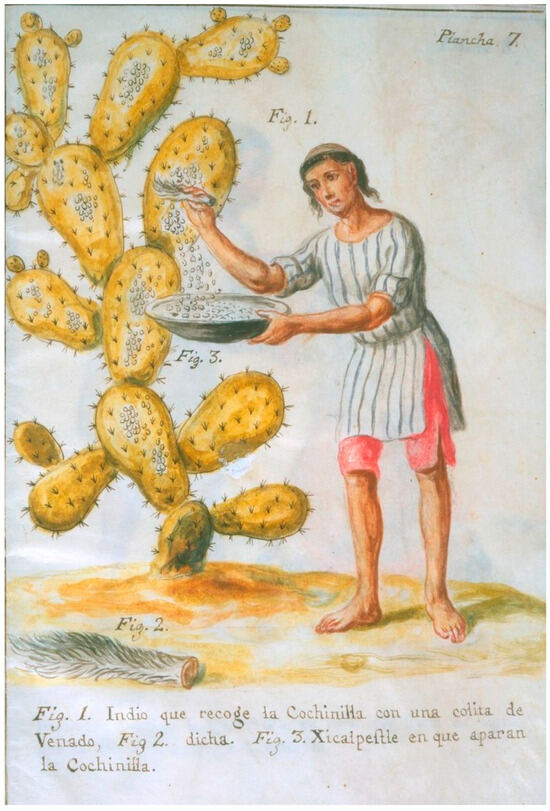
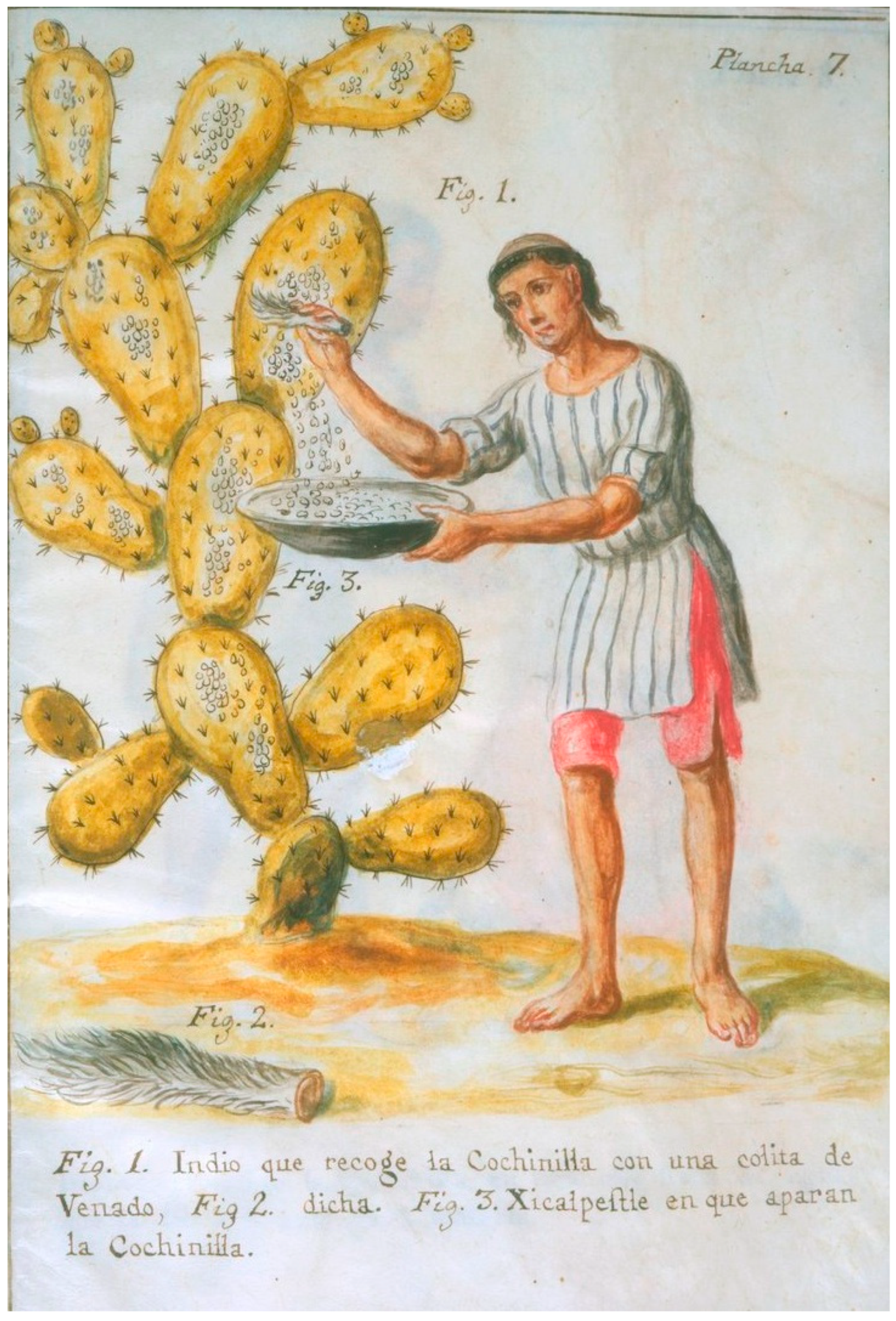
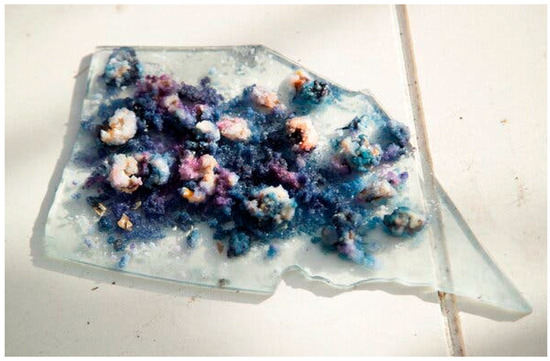
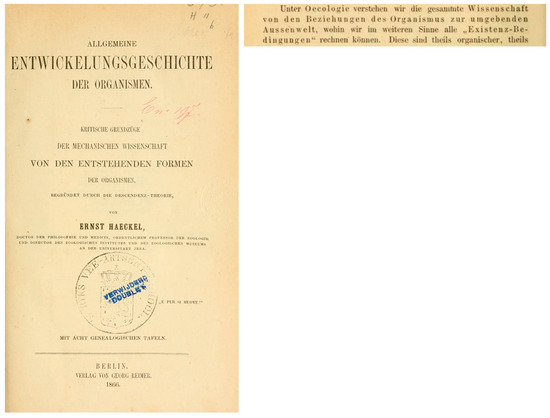
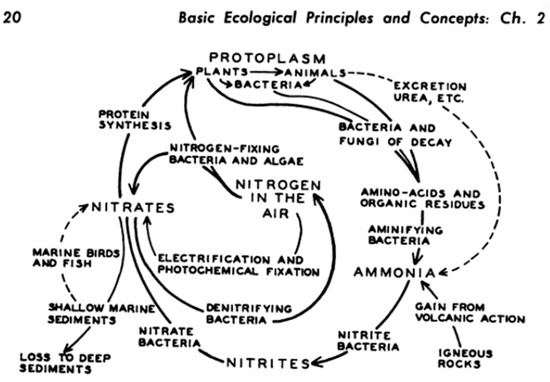
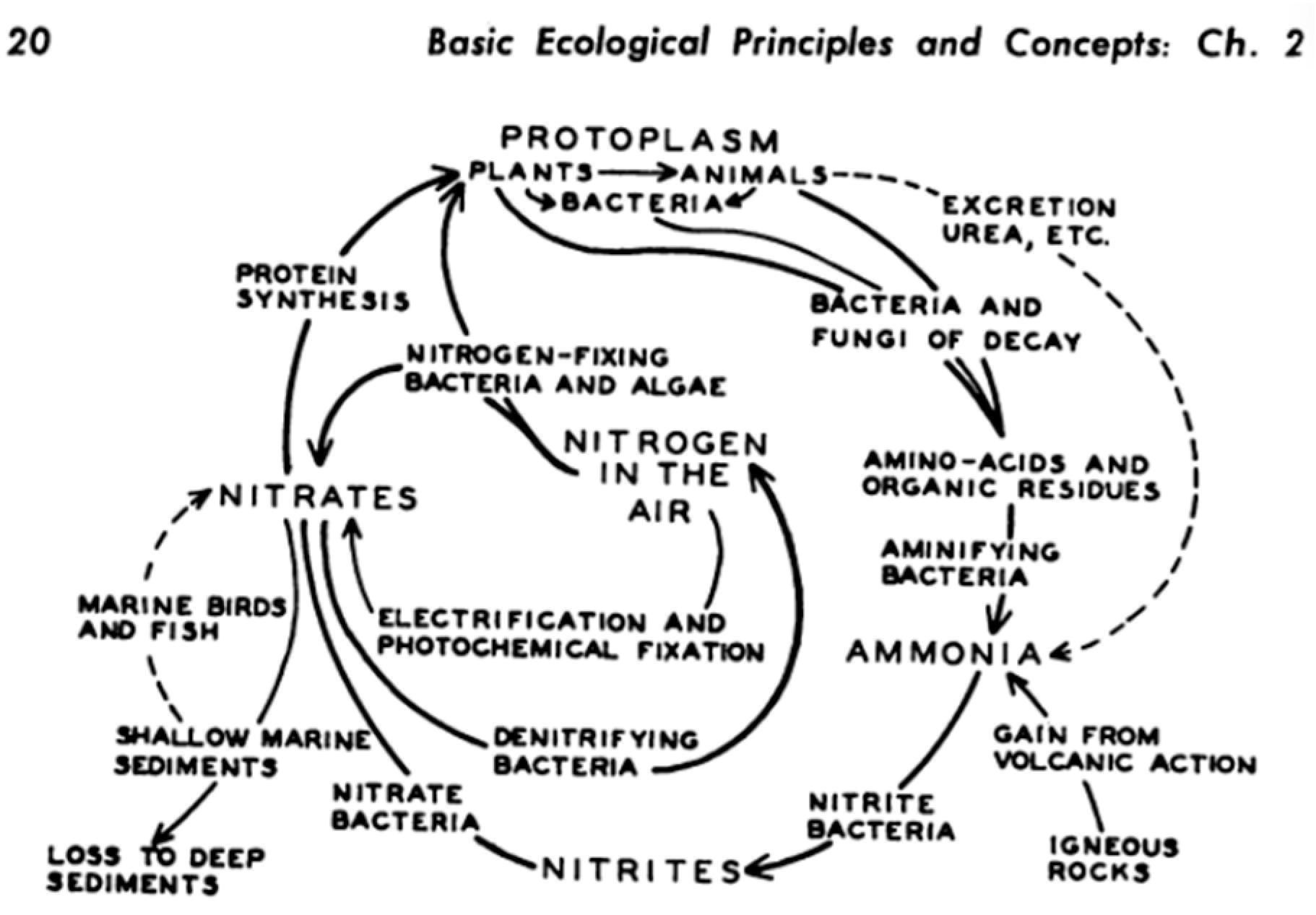
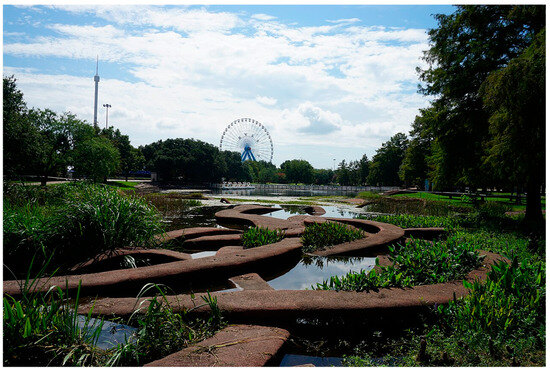
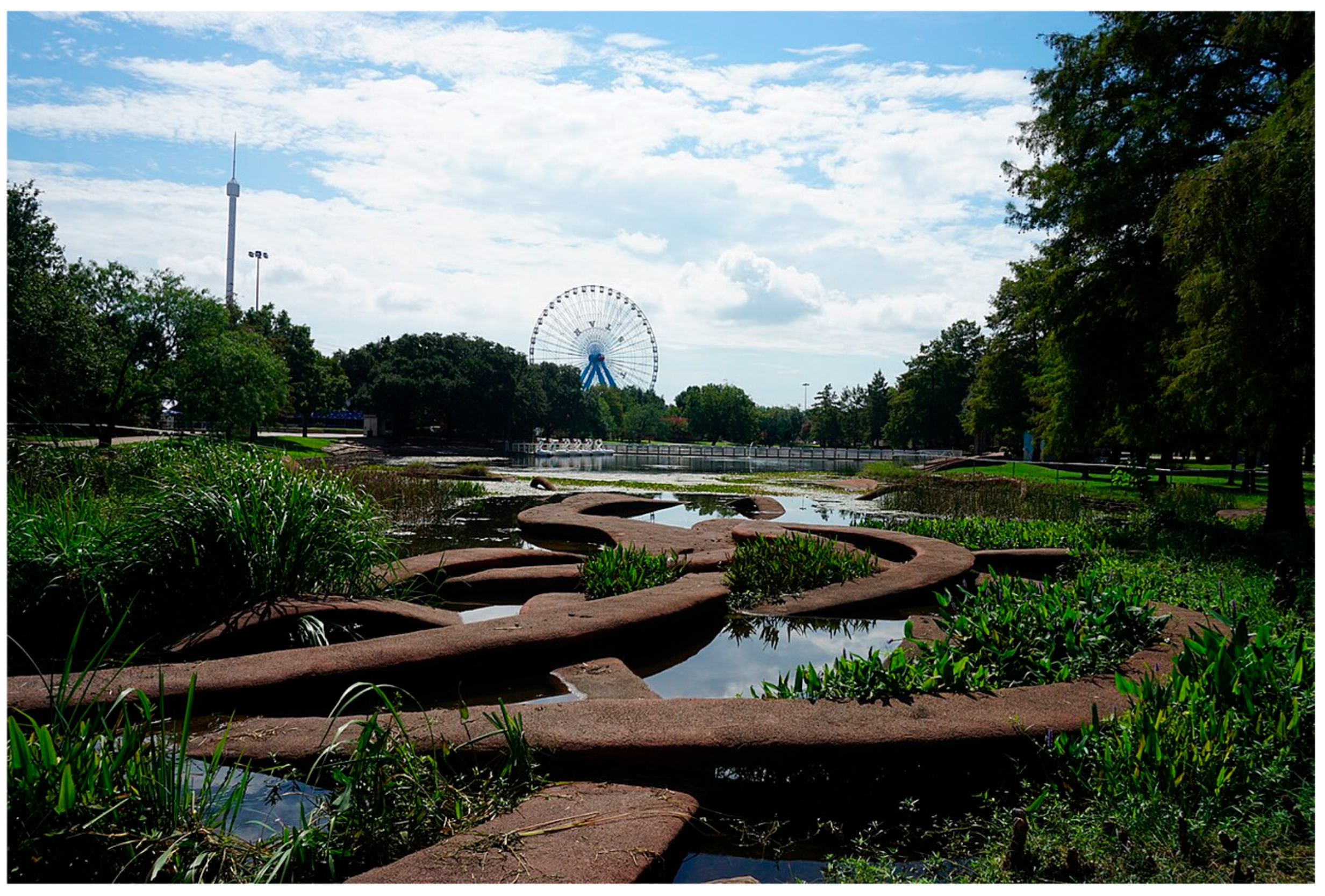
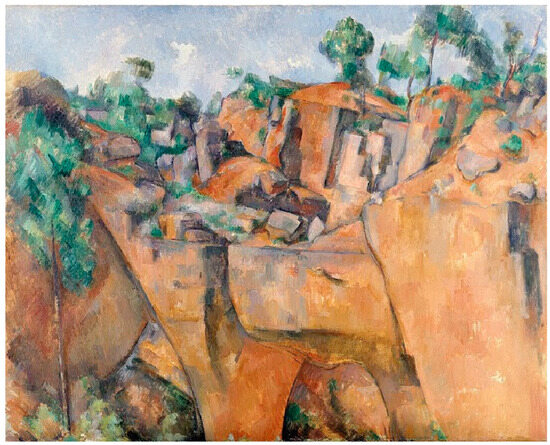
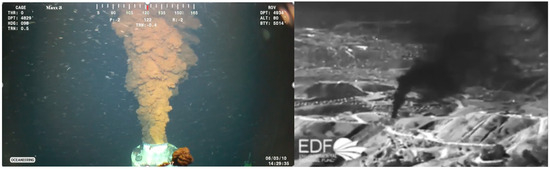
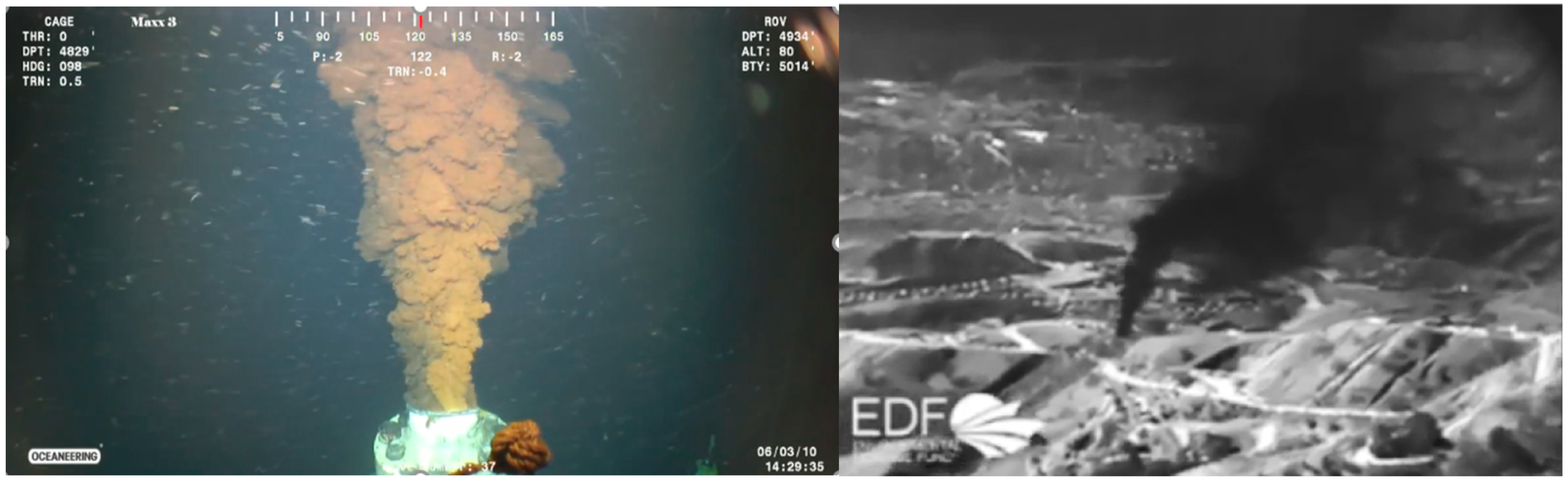
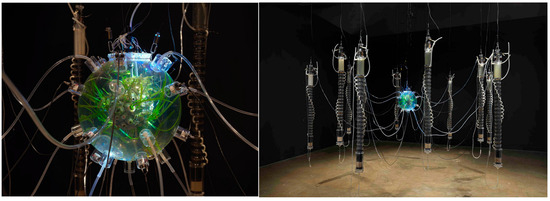
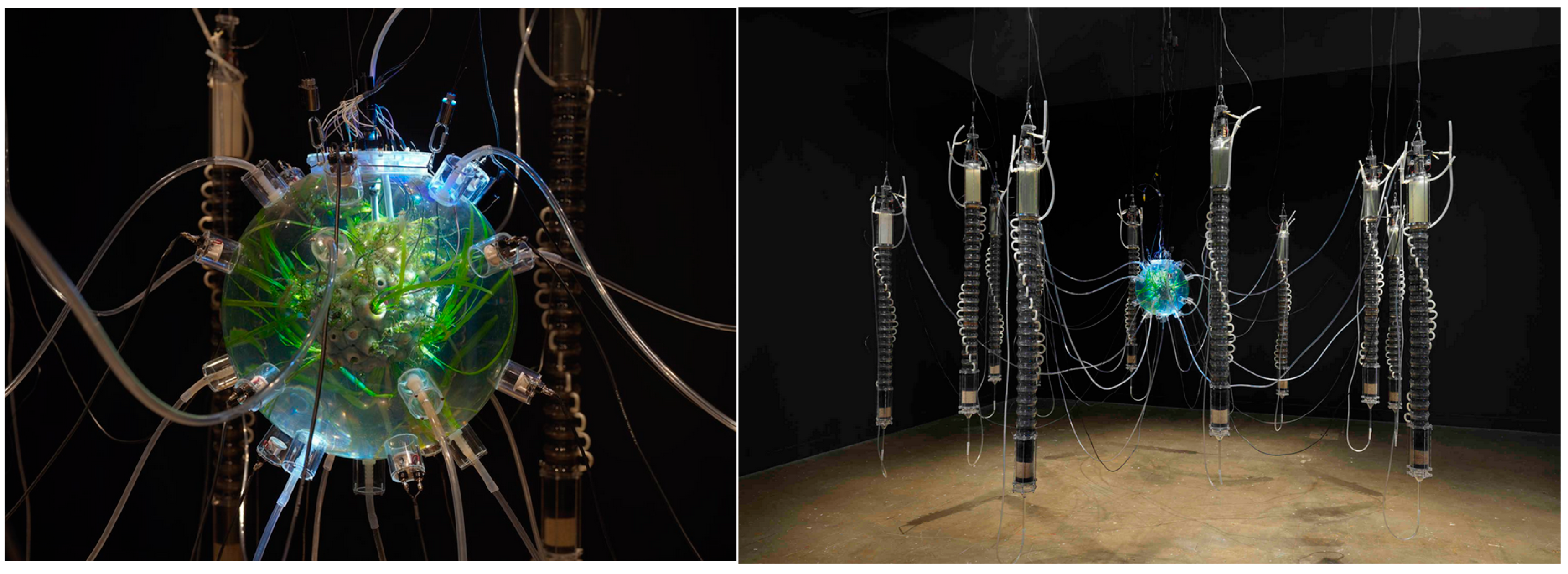
Disclaimer/Publisher’s Note: The statements, opinions and data contained in all publications are solely those of the individual author(s) and contributor(s) and not of MDPI and/or the editor(s). MDPI and/or the editor(s) disclaim responsibility for any injury to people or property resulting from any ideas, methods, instructions or products referred to in the content. |
© 2026 by the author. Licensee MDPI, Basel, Switzerland. This article is an open access article distributed under the terms and conditions of the Creative Commons Attribution (CC BY) license.