


Abstract
This study proposes an integrated façade design framework that harmonizes the creative divergence of Generative AI with the economic efficiency of Design for Manufacturing and Assembly (DfMA). To address low productivity in the construction industry, a stepwise pipeline is developed, synthesizing image generation via Midjourney, automated coding using ChatGPT, and quantitative optimization. Central to this process is the Hamming Distance algorithm, which evaluates image similarity to implement core DfMA principles: standardization and simplification. The study introduces a multidimensional decision-making model utilizing Grid Size (GS), Replacement Rate (RR), and Hamming Threshold (HT) indices to visualize the trade-off between component minimization and design fidelity. This process transforms abstract 2D patterns into manufacturable geometric panels, bridging the gap between conceptual design and constructability. The results demonstrate that algorithmic optimization significantly reduces component count, contributing to potential cost savings and schedule reduction. Ultimately, this research establishes a collaborative model where architects’ qualitative insights complement AI’s quantitative analysis, enabling designers to regain agency over digital tools and realize creative visions within technical constraints.
1. Introduction
1.1. Research Background
Digital technologies have become so pervasive that their presence is perceived primarily through their absence [1]. These technologies operate across multiple scales and are reshaping both our built and social environments. In perspectives that view technology as a force with geological implications, technology is understood not merely as a tool employed by humans but as a geological agent that reorganizes material cycles and energy flows on Earth. As a result, social, political, economic, and technological structures are believed to be undergoing radical reconfiguration [2,3,4]. At the same time, digital platforms such as social media have increasingly weakened the role of architecture as a primary medium of socialization [5]. Architecture is no longer positioned as the central apparatus that shapes society but has become subject to external social forces that cannot be fully controlled. It is shifting from a “program” to something “programmed,” and this transformation signals that the influence of technology on architecture extends far beyond the digitization of existing tools, encompassing deeper cultural and conceptual shifts [6]. During this period of transition, the architectural field has begun to recognize that technological change carries implications for architectural thought and practice that are more fundamental than previously assumed [7].
Digital technology has become not only a design medium but also an instrument for constructing interactive environments and managing contemporary complexity. Consequently, architectural drawings have transitioned from tools of representation to tools of simulation [8]. Scripting, parametric modelling, and custom tool programming increasingly link algorithmic processes with design operations, forming an integrated environment for computational design [9,10]. Coding, once a domain reserved for specialists, has become accessible through advances in graphical user interfaces since the 1980s and, more recently, through the emergence of generative AI. Today, code can be generated or modified with text prompts, clicks, drag operations, and node connections, and the results can be visualized immediately as real-time 3D models [11]. This environment positions coding as a practical tool for logical and systematic problem-solving in design, while increased computational capacity and data accessibility allow architects to address previously unattainable levels of complexity [9]. Simple scripts that automate repetitive tasks reduce labor and support highly customized design environments [12,13]. Encoding fabrication constraints directly into algorithmic logic enables conceptual forms to expand in more structured and rational ways [14,15]. This shift moves architectural practice beyond the passive adoption of prepackaged digital technologies and opens new possibilities in which architects exert direct control over digital tools. It clarifies the need for architects to actively engage with coding, which forms one of the central arguments of this study. The research therefore explores the practical potential of AI and the role of accessible coding frameworks in supporting it [16,17].
Architectural inspiration has traditionally emerged from environmental, architectural, and abstract sources, but technological development has fundamentally transformed the processes through which inspiration is interpreted and reconfigured. AI can rapidly generate or reorganize formal patterns beyond human limits, offering new aesthetic possibilities and directions for design exploration [18]. Based on this, architects can undertake architectural explorations that simplify, standardize, and modularize complex forms into manufacturable configurations [19,20,21] and combine AI’s generative capabilities with coding to streamline specific design tasks, thereby narrowing the gap between conceptual imagery and buildable data-driven modeling [17]. This approach differs from earlier uses of AI as a repetitive, data-centric tool [22] and instead supports a more integrated process in which conceptual and technical phases are connected, allowing aesthetics and performance to evolve simultaneously [23]. This study examines ways in which AI-generated forms can expand an architect’s creative vision, deepen the interpretation of geometry and constructability, and broaden the possibilities for collaboration between architects and computational systems. Nevertheless, qualitative judgment remains essential in interpreting and evaluating these computational outputs [24]. Accordingly, a key aim of this study is to establish an integrated design system that translates AI-generated images into quantitative coded structures that architects can interpret through qualitative expertise.
To connect quantitative design logic, generative AI, and architectural decision-making, the study incorporates visualization as a core methodological component. Code-based models allow real-time simulation of performance indicators while engaging designers through multidimensional visual representations. Coding thus becomes a medium that links measurable values, creative exploration, and experiential design decisions into a continuous workflow [25,26,27,28]. More importantly, AI is understood not as a passive tool but as an active agent in the design process. By enabling unexpected outcomes and creative extensions, AI expands architectural agency [23]. Given the inherent complexity of architectural projects, creative collaboration with AI enhances productivity and positions the architect as an active decision-maker, enabling innovative and informed design directions.
1.2. Research Novelty
Traditionally, building envelopes were constrained by structural and material limitations, yet advancements in construction technology introduced new formal freedoms, as seen in examples such as the Domino House and the curtain wall. As a result, the façade has become a primary element that shapes architectural identity and the visual character of the city, while also emerging as an area with significant potential for construction cost improvement. However, despite anticipated substantial growth, the construction industry has struggled with low productivity over the past two decades, recording an annual productivity growth rate of only 1%, compared with 2.8% for the global economy and 3.6% for manufacturing [29]. Therefore, researchers in the architectural and construction sector have increasingly adopted new design approaches and technologies, with Design for Manufacturing and Assembly (DfMA) becoming central to prefabrication practices [30,31]. DfMA refers to the integration of Design for Manufacturing (DfM) and Design for Assembly (DfA), and its fundamental objective is to minimize the number of components and simplify processes through standardization and simplification. However, challenges such as design coordination issues, limited use of digital tools for integrated design support, and the absence of collaborative workflows [32,33] continue to treat design and fabrication as sequential rather than integrated processes [29]. This hinders the optimization of material efficiency and constructability during the early design stages, where design decisions have the greatest impact. The current literature provides limited integration between DfMA principles and computational design approaches, particularly for non-structural elements such as building envelopes. This is also associated with architects’ limited expertise in manufacturing and assembly, as well as insufficient proficiency in digital tools.
To integrate DfMA concepts with AI-generated image-based façade design, this study adopts algorithmic methods and a computational design approach. Despite the advantages of generative coding and algorithmic strategies for simplification and standardization, few studies have enabled feedback loops between image generation and DfMA-driven design logic. Moreover, conventional design workflows often rely on 2D CAD or basic 3D modeling tools that are not well suited to integrating image generation, geometric evaluation, and material optimization strategies. This has constrained the ability to rapidly explore and evaluate multiple design alternatives based on manufacturing constraints during early design phases. To ensure that optimized panelization strategies, such as minimizing component count, reducing partial panels, and limiting material waste, can be integrated with diverse image alternatives without restricting exploratory conceptual design, this study emphasizes repetition through simplification and standardization within a DfMA framework and proposes an integrated process that balances initial design intent with manufacturing feasibility. The distinct contribution of this research lies in this integrated approach. To this end, the design process is digitally consolidated through ① image-based inspiration using AI, ② linking manufacturing constraints with images through code generation, ③ algorithm-based panel analysis and evaluation, and ④ façade implementation based on these outcomes. This approach accelerates traditionally time-consuming inspiration workflows through AI and connects imagery with manufacturing-oriented panelization to support architectural sustainability. In particular, multidimensional data visualization and continuous image representation based on 2D information enable users to participate more actively in the design process and achieve more productive design outcomes.
Ultimately, this study presents both a practical direction and an applicable framework for architectural design in the digital era by integrating productive design workflows with visualization. By combining generative AI that supports divergent creativity with coding technologies that enable algorithmic and functional reasoning, the research extends conventional 2D image-based conceptual inspiration into manufacturing-oriented data modeling. It connects algorithmic thinking with architectural thinking and provides architects with greater design control beyond prepackaged software environments.
1.3. Research Purpose
This study proposes a design process that generates creative images from text prompts and reconstructs them architecturally through coding and algorithmic analysis to produce façade designs optimized for building applications. The workflow integrates AI-based image generation, Python 3.12.2 programming, and computational evaluation to translate dynamic façade imagery into a limited number of standardized panels that can be fabricated at minimal construction cost. The identity and perceptual character of urban buildings are established at the image-generation stage and translated into productive and efficient façade systems through standardization. This approach seeks to secure both expressive quality and economic feasibility within the design process.
The research process consists of the following stages:
- Image generation using Midjourney V6 (https://www.midjourney.com, accessed on 3 February 2026) (Text To Image)
- Code generation using ChatGPT-4o (Text To Coding)
- Application of DfMA concepts through AI algorithms (Algorithm to Standardization and Simplification)
- Multidimensional visualization integrating numerical and experiential assessment (Data Visualization)
- Final proposal (Façade Design for Manufacturing)
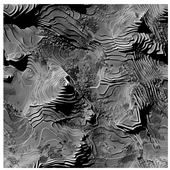
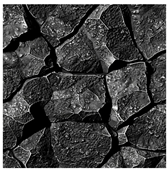
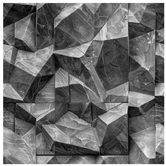
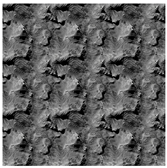
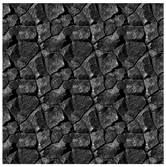
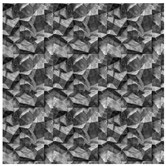
The first stage involves image generation. Midjourney is used as the collection platform, and images are produced through text prompts that incorporate three key descriptors: parametric, seamless, and tessellation. These descriptors guide the generation of images with continuity and regularity, while allowing designers to add supplementary terms to introduce conceptual direction or thematic inspiration. The second stage focuses on image manipulation. Python scripts generated through ChatGPT are used to segment, rotate, and substitute the image components, transforming the initial visual material into structured information suitable for architectural analysis. The third stage applies the Hamming Distance algorithm to analyze image similarity and evaluates the results based on DfMA principles of standardization and simplification. The adjusted images can therefore contribute to construction cost reduction. During analysis, optimization prioritizes panel reuse to the greatest extent possible, thereby minimizing the number of components. The final fourth stage restructures the results for panelization. The manufacturable patterns are mapped into three-dimensional panels to achieve economic efficiency in construction detailing. For this purpose, pure geometric primitives such as circles and rectangles are employed (Table 1).
Table 1.
Process and tools.
2. Materials and Methods
2.1. Theoretical Review
2.1.1. Data-Based Design Approaches
Data-driven and algorithmic approaches have been explored across the fields of architecture and urban design. Examples include genetic algorithm models that optimize design outputs based on Darwinian principles of natural selection, geographic information systems that integrate spatial and contextual datasets, and evidence-based design methodologies that utilize patient data to inform hospital design [34,35]. These methods demonstrate ongoing efforts to incorporate computational intelligence into architectural decision-making [36]. In this study, image generation through conversational AI, generative coding-based manipulation, and similarity analysis using established algorithms are combined to propose a new standardized façade design methodology. This method leverages AI to produce optimized and implementable outcomes for architectural envelopes.
2.1.2. Generative AI (LLM Based AI)
Generative AI is expanding the boundaries between technology and creative practice by enabling machines to produce original content across multiple media domains. As a field of artificial intelligence trained on large datasets, it can generate text, images, music, and video with increasingly sophisticated expressive capacity. Text-based and image-based systems, in particular, have become widely adopted because of their accessibility, supporting cross-disciplinary collaboration and creative experimentation. Text-based AI systems rely on natural language processing. Among them, ChatGPT is one of the most prominent platforms, built on the Generative Pre-trained Transformer architecture. Trained on extensive corpora and refined through supervised and reinforcement learning, ChatGPT can respond to diverse prompts with detailed and contextually appropriate outputs. In this study, it is used to assist Python coding tasks, enabling efficient image manipulation and data extraction. Image-based AI systems are designed to recognize, analyze, generate, and transform visual information, drawing on computer vision and image generation techniques. Prominent examples include Midjourney, DALL·E 3, and Stable Diffusion 3.5. Midjourney is particularly effective for generating visually expressive imagery and incorporates transformer-based deep learning models alongside GAN or diffusion model structures. It interprets natural language prompts to generate images with rich aesthetic and conceptual potential. This study begins with image generation in Midjourney, establishing the initial dataset for the design workflow.
2.1.3. Python, Rhino and Grasshopper
Python, introduced by Guido van Rossum in 1991, is an object-oriented, platform-independent programming language known for its intuitive syntax and extensive library ecosystem. These qualities allow it to be used widely across scientific, engineering, and design disciplines [37].
Rhino, first released by McNeel in 1998, is a three-dimensional modeling tool based on NURBS geometry, capable of producing free-form surfaces. Its support for a wide range of data formats and its compatibility with Python make it an ideal environment for computational design workflows. Grasshopper, a visual programming environment integrated with Rhino, has long been used to create parametric models through node-based logic. Inputs and components are linked visually, enabling designers to construct algorithms without traditional coding. Because Grasshopper relies on visual logic rather than text-based syntax, it is accessible not only to expert programmers but also to designers and practitioners in architecture and related fields. Grasshopper’s open-source plugins further expand its capabilities and support sophisticated visualization and automation. In this study, data collected and processed through AI methods are translated into a façade system through basic geometric principles within Rhino and Grasshopper. The workflow connects AI-generated imagery, algorithmic evaluation, and geometric modeling, resulting in a constructible architectural envelope.
2.1.4. Hamming Dist. Algorithm
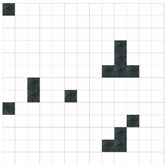
The Hamming Distance algorithm is a simple and intuitive method for measuring similarity by calculating differences at the bit level. It can therefore be applied to compare the similarity of images. The algorithm converts an image into numerical values and compares those values bit by bit to determine the extent of difference. For example, if an image is conceptualized as a 100-cell black-and-white grid, each cell is evaluated according to brightness (0–255). Pixels with values equal to or greater than 128 are assigned a value of 1, and those below 128 are assigned a value of 0. The resulting binary grid is then used for comparison. When two images are compared, each corresponding cell is evaluated. If 10 out of 100 cells differ, the Hamming Distance is 10, indicating a 10% difference. The algorithmic steps and their meaning are summarized in (Table 2 and Table 3).
Table 2.
Hamming Dist.: Process and Description.
Table 3.
Hamming Dist.: Range-specific sisgnificance.
In this study, Hamming Distance values within approximately 1–5% are considered meaningfully similar. Assuming grid sizes of 10 × 10 or 15 × 15, the number of evaluable cells becomes 100 or 225, corresponding to 10,000 or 50,625 individual comparisons once the image is scaled within the code. For consistency, the images are resized to 100 × 100 pixels, producing a maximum Hamming Distance of 10,000. When fewer than 500 cells differ, the images are regarded as nearly identical. The classification system used in this study is summarized in (Table 3).
Mathematically, the Hamming Distance between two vectors x = (x1, x2, ..., xn) and y = (y1, y2, ..., yn) is defined as follows:
The Hamming Distance algorithm is well suited for architectural panel standardization and simplification. This is because design inspiration typically supports divergent thinking through a large number of images, whereas structural similarity metrics such as SSIM or feature-based methods such as SIFT require substantial computational effort, making them less suitable for inclusion in optimization loops. In contrast, Hamming Distance relies solely on XOR operations, which enables rapid matching. Moreover, in façade design images, minor variations such as subtle line thickness or negligible differences can be treated as noise during the standardization and simplification stages. For this reason, Hamming Distance, which evaluates similarity based on overall form and proportional relationships, is considered appropriate for this study, whose objective is to minimize the number of components. The algorithms are compared in (Table 4).
Table 4.
Comparison of Image Similarity Algorithms and Their Characteristics.
2.1.5. Design for Manufacturing and Assembly (DfMA)
DfMA refers to a design strategy that optimizes the manufacturing processes of individual components in order to reduce production cost and time. In this study, DfMA concepts are applied to transform inspiration-stage images into components that are feasible for construction. Beyond its conventional definition as design for manufacturing, DfMA is also important from the perspective of securing cost-reduction potential through the geometric rationalization of images. Images generated by generative tools are often geometrically complex, which can lead to increased construction costs. In this context, DfMA functions as a strategic filter that converts abstract imagery into manufacturable data, thereby reducing economic uncertainty. The two core elements of this strategy are standardization and simplification. The grid-based similarity analysis conducted in this study represents a type minimization process aligned with standardization principles, which is expected to maximize mold reuse and consequently reduce both initial investment costs and unit production costs. In addition, this approach decreases assembly complexity, facilitates control of installation tolerances on site, and is therefore anticipated to lead to reductions in labor costs and construction duration. By providing quantitative economic estimates derived from reducing the number of panel types, this DfMA-oriented approach also offers an important indicator for evaluating project feasibility during the early design stages.
2.2. The Process of AI-Driven Façade
2.2.1. Image Generation (Text to Image)
The first stage of the façade design process is image generation, which serves as the conceptual point of departure for the overall façade design strategy. As contemporary architecture continues to rethink distinctions between structure and ornament, function and decoration, and form and façade, the building surface has shifted from a decorative layer to an autonomous architectural entity [38]. The façade now operates as a medium with its own identity, mediating spatial, environmental, and perceptual relationships [39]. Throughout the twentieth century, façades have been sites of concentrated experimentation and innovation, and this condition persists today. The façade therefore functions not as a secondary outcome but as an expressive and symbolic surface that generates meaning and contributes to the architectural and urban experience. At the urban scale, façades strongly shape the character of streetscapes, public spaces, and the broader visual environment. They influence how residents perceive and inhabit the city and play a significant role in creating vibrancy and spatial identity. Urban experience is defined to a large extent by the interplay of building envelopes, street views, and open public spaces, underscoring the importance of façade design in shaping the lived environment [39,40].
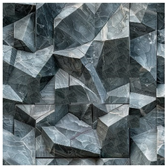
Façades also represent a substantial portion of construction costs, typically accounting for 15–20% of the total budget. The gap between estimated and actual façade construction costs tends to be larger than in other trades, often becoming a source of friction between designers and contractors. Standardization—dividing the façade into fabrication-friendly modules based on manageable sizes and geometries—can therefore play a critical role in reducing construction costs and improving coordination. In this study, image generation begins with three key descriptors selected to support standardization. These are combined with architectural keywords to produce conceptually rich and repeatable images. The prompts include the “–tile” command in Midjourney, which enables the generation of seamless, continuous tile-based patterns suitable for transformation into modular façade panels. This step initiates the AI-driven façade design workflow. Table 5 summarizes the image-manipulation process.
Table 5.
Image Manipulation.
2.2.2. Image Manipulation (Text to Code)
In this stage of the workflow, repetitive and rule-based operations are executed through code, and the code itself is generated using generative AI to ensure accessibility and ease of use. Text-based code generation allows designers to produce scripts quickly, update rules with only minor edits, and reprocess entire datasets with high computational efficiency. In this study, coding is used to divide, rotate, and replace image segments. Hamming Distance analysis is incorporated to evaluate similarity, and because of its importance, the algorithmic process is addressed separately in Section 2.2.3. Table 6 presents the text prompts and keywords used to generate the Python scripts for image manipulation and see the Appendix A Table A1, Table A2 and Table A3 for the detailed code.
Table 6.
Manipulation and Prompt.
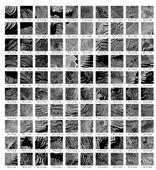
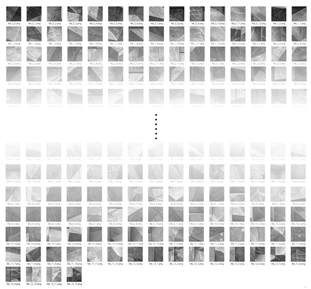
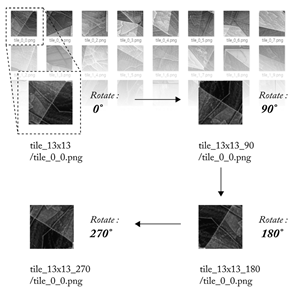
The workflow begins by dividing the source image into segments that can be fabricated as façade panels. The segments are then rotated to maximize the potential reuse of identical panels. The mutual similarity of the prepared images is analyzed, and based on the evaluation values, the number of replaceable images is explored in the subsequent analysis stage in order to substitute them with optimized images. Replacement selections prioritize maximizing reuse frequency while maintaining the overall meaning and recognizable form of the original image. A detailed description of the replacement logic is provided in Section 2.2.4. Examples of the divided and rotated comparison images are shown in Table 7.
Table 7.
Operated Images.
2.2.3. Image Analysis (Algorithm to Standardization)
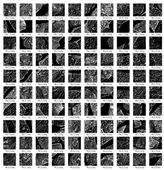
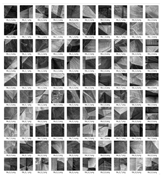
The similarity between image segments is evaluated through the Hamming Distance algorithm. The analysis proceeds in two main steps. First, each base image segment is compared with its rotated versions at 90, 180, and 270 degrees. For instance, if the image is divided into a 10 × 10 grid containing 100 segments, comparisons yield 10,000 Hamming Distance values per rotation, resulting in approximately 40,000 total comparisons. The algorithm is executed as Python code and exported in spreadsheet format for subsequent evaluation. In the subsequent stage, additional coding is introduced to calculate the replacement rate by selecting optimal replaceable image candidates based on the previously computed Hamming Distance values. Based on the Hamming Distance values, the script searches for image segments that fall within the acceptable similarity threshold. Because reuse frequency is prioritized over absolute similarity, the algorithm selects candidates that appear repeatedly within the threshold range. This ensures that the final façade maximizes repetition without significantly compromising visual meaning. In this hierarchy, replacement rate becomes more important than raw similarity. For each selected candidate, the x- and y-coordinates of the segment are extracted and stored for use in the replacement script. Table 8 summarizes the text prompts used in ChatGPT to generate the algorithmic logic and replacement procedures and see Appendix A Table A4 and Table A5 for the detailed code.
Table 8.
Image Analysis and Code Generation.
2.2.4. Image Selection and Visualization (Data Visualization)
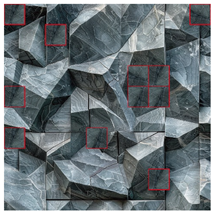
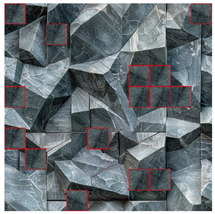
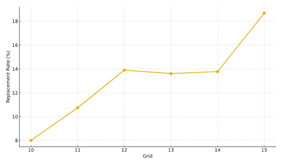
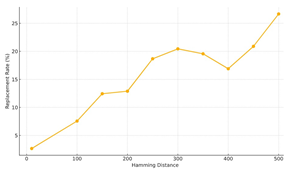
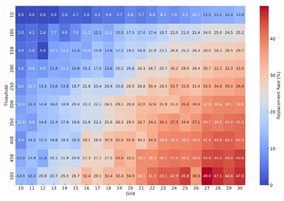
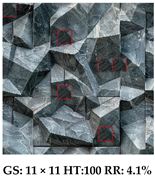
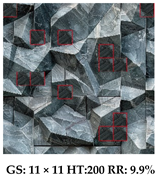
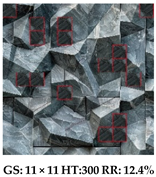
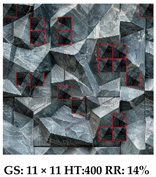
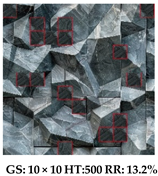
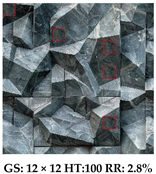
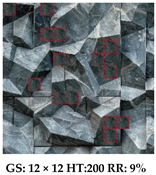
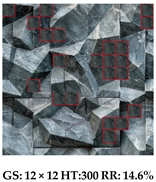
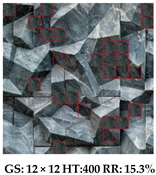
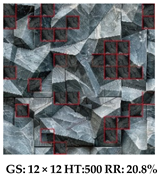
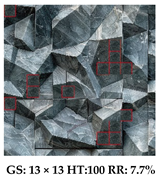
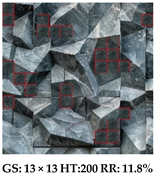
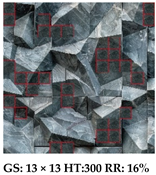
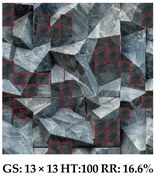
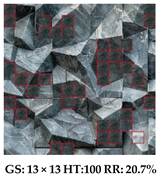
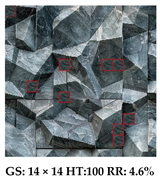
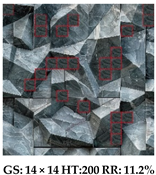
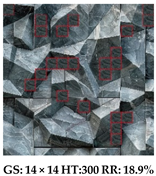
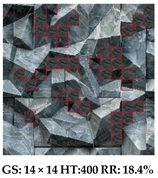
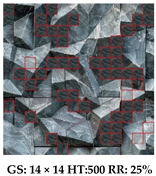
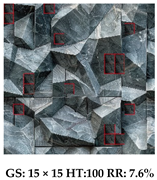
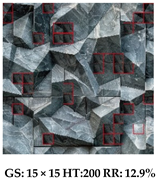
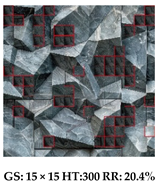
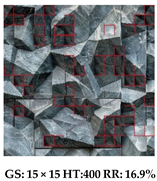
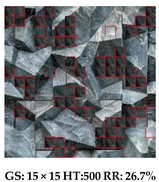
The selected images undergo a multidimensional visualization process that integrates quantitative measurement with qualitative assessment. For each image, the grid size, Hamming Distance threshold, and replacement rate are displayed together, allowing designers to evaluate data and imagery simultaneously. The visualized outputs are organized into three indices: GS (grid size), RR (replacement rate), and HT (Hamming Distance threshold). These indices support informed decision-making by allowing designers to assess visual meaning alongside the level of structural standardization achieved (Table 9). In this study, the replacement rate was limited to approximately 5–25%. Values beyond this range were excluded because they were found to significantly distort the intended form and meaning of the image. The selected range provides sufficient tolerance for substitution without undermining architectural intent. Hamming Distance is regarded as representing fabrication tolerance, grid size as reflecting information loss, and replacement rate as a primary determinant of construction cost, and these parameters are applied to evaluate façade geometry. Grid size was selected as a key parameter because the resolution of discretized data was considered to indicate the precision of similarity assessment between panels [41]. An excessively small grid resolution risks distorting panel information, whereas an overly high resolution can increase computational load and negatively affect component quantity. In addition, to ensure the reliability of image-based similarity evaluation, this study references the Nyquist–Shannon sampling theorem and introduces a relationship between grid resolution and the minimum periodicity of image features, adjusting the density to fall within a range of one to two times this minimum. This theorem describes the relationship between grid size and the minimum meaningful feature size of panels, stating that the grid resolution should be at least twice as dense as the minimum feature periodicity. In other words, during the discretization of façade panel geometry, grid size is set as a baseline to be smaller than the minimum periodicity of a given feature and is further refined to achieve higher density. For example, regions where pattern variation occurs are visually identified, and grids are configured to be denser than areas where edges or shape changes are perceived. In this study, images generated using the tessellation keyword adopted a baseline resolution of 10 × 10. Two graphs illustrate the relationships between grid size and replacement rate, and between Hamming Distance and replacement rate. A third heatmap table presents grid size, replacement rate, and Hamming Distance simultaneously to support integrated interpretation (Table 10). Continuous image representation combined with data-driven visualization creates conditions in which quantitative and qualitative decision-making can complement one another.
Table 9.
RR-GS-HT Relationship in Images.
Table 10.
RR-GS-HT Relationship in Numbers.
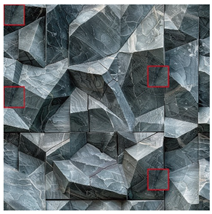
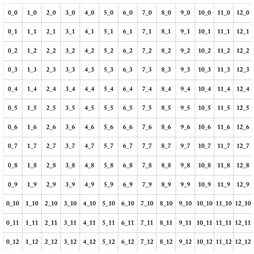
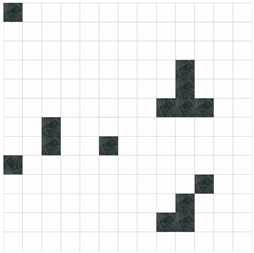
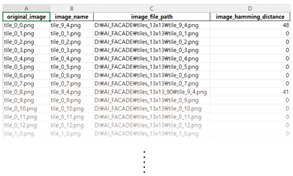
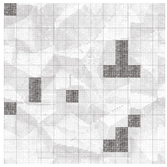
Based on the combined evaluation of RR, HT, and GS, and incorporating architectural judgment, the final selection was GS 13 × 13 with HT 100. The x- and y-coordinates of each selected segment are stored as image names and mapped as shown in Table 11. The Excel file generated by the algorithm lists the compared images, file paths, and similarity values derived from the Hamming Distance analysis (Table 12). Using this information, the final set of replacement panels is selected. The complete set of 13 final panels and their similarity values are presented in Table 13 and Table 14. The final replaced image and the resulting composite façade image are shown in Table 15. Table 10 presents the multidimensional visualization, which will be explained in detail in Section 2.2.5.
Table 11.
Relationship between AI as a Creative Partner, Inputs, Outputs, and Process.
Table 12.
Multi-Dimensional Visualization.
Table 13.
Grid Mapping and Replaced Images.
Table 14.
Replaced–Original Images in X–Y & Hamming Dist.
Table 15.
Final Images and Their Fabrication-Friendly Façade Patterns.
Based on the combined evaluation of RR, HT, and GS, and incorporating architectural judgment, the final selection was GS 13 × 13 with HT 100. The x- and y-coordinates of each selected segment are stored as image names and mapped as shown in Table 13. The Excel file generated by the algorithm lists the compared images, file paths, and similarity values derived from the Hamming Distance analysis (Table 13). Using this information, the final set of replacement panels is selected. The complete set of 13 final panels and their similarity values are presented in Table 13 and Table 14. The final replaced image and the resulting composite façade image are shown in Table 15. Table 12 presents the multidimensional visualization, which will be explained in detail in Section 2.2.5. Table 11 summarizes the workflow in terms of input, process, and output.
2.2.5. Final Façade Design
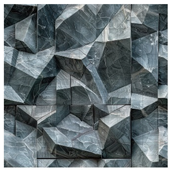
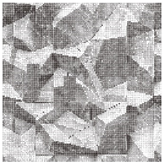
The final façade design overlays the optimized image set with fabrication-friendly geometric patterns composed of circles and rectangles. This step abstracts the image and reconstructs it into forms that are feasible for fabrication, enabling designers to reinterpret the original image while maintaining compatibility with diverse materials and construction methods. The uppermost row of Table 15 shows the original full image, followed by the replaced grid image, a combined composite of the two, and finally the completed façade incorporating the replacement logic and geometric patterning.
3. Discussion
The concept of design automation in architecture has continued to evolve since the emergence of CAD. Early generative design approaches in the late twentieth and early twenty-first centuries were grounded in clearly defined algorithms such as parametric design. These methods relied on explicit rule-based knowledge encoded by designers, and alternative solutions were generated by adjusting predefined parameters. Although effective within limited scopes, these approaches were constrained by the boundaries of designer-defined rules and therefore exhibited clear limitations [18]. Recent advances in AI and machine learning have introduced a significant shift in this domain. The rise of “vibe coding,” in which AI assists or substitutes portions of coding to accelerate development processes, has also gained traction in various fields [42]. However, applications that combine large language models with coding workflows in architectural design remain limited and challenging [43,44]. Despite their potential to rapidly visualize ideas and facilitate expansive exploration, difficulties persist in controlling and adapting AI outputs in architecturally meaningful ways. In façade and form-making research, the use of AI has largely focused on climate-responsive environmental analysis or on extending and modifying existing pattern systems. Many studies have explored methods that propagate patterns across façades, remove segments to create variation, or apply continuity-based transformations [45,46,47]. Yet AI also holds the potential to link architectural processes with creative design workflows in more integrated ways. This study therefore applies large language models during the conceptual design phase while incorporating generative coding methods that allow architectural control and modification. By doing so, it explores new possibilities for integrating AI into processes that demand architectural rigor. The methodology is extended to façade design, enabling the standardization of images and supporting creative decision-making while maintaining control by the architect. Architectural design must harmonize aesthetic considerations with functional requirements while simultaneously addressing technological, economic, environmental, and sociocultural constraints. It is inherently complex and creative. The advancement of AI will undoubtedly bring significant transformation to future design processes [48,49,50]. There remains substantial potential to achieve standardization through AI while simultaneously linking it with creative design practice. This offers designers significant opportunities by enabling rapid visualization of imagination and facilitating exploration of diverse ideas. Furthermore, by introducing DfMA principles of simplification and standardization into geometric imagery through algorithms, notable economic impacts can also be anticipated. In other words, this approach can lead to concurrent cost reductions, including direct material savings, shortened construction duration, reduced labor costs through simplified assembly, and lower quality control expenditures by minimizing defects. In particular, for building envelopes, it enables reductions in mold and processing costs and achieves economies of scale through increased quantities of identical components. Lifecycle cost analyses of construction projects indicate that although early design stages account for only a small portion of total expenditure, they determine approximately 80% of the overall project budget [51]. This study therefore concentrates on the early design phase, using AI to generate images and subsequently regenerating them through strategies that reduce component count. It is generally reported that even a 20% reduction in component numbers can result in more than 50% savings in total assembly costs, and that applying DfMA principles can reduce direct material costs by 15%, refabrication and processing costs by 30%, assembly and installation costs by 40%, and logistics and management costs by 20%, yielding an overall construction cost reduction exceeding 30% [29,52]. Of course, DfMA also involves consideration of multiple variables arising during construction. However, one of the primary bottlenecks in implementing DfMA in the construction industry lies in the information disconnect between architectural modeling and manufacturing systems. This study prioritizes establishing a design exploration process that incorporates real-time manufacturing constraints before addressing physical assembly at the construction stage. Accordingly, it focuses on the conceptual design phase, employing large language models while applying generative coding methodologies that allow architectural editing and modification, thereby exploring new possibilities. By limiting the scope to buildable façade design, the approach is structured to support architects in concentrating on creative design tasks. Architectural design is a highly complex and creative activity that must reconcile aesthetic intent with functional requirements while simultaneously addressing technological, economic, environmental, and sociocultural considerations. The advancement of AI will undoubtedly introduce innovation into future design processes.
4. Conclusions
This study is expected to contribute to the field in three principal ways. First, it expands the role of generative AI by establishing a structured connection between image generation and coding. This approach overcomes the difficulties typically associated with adjusting and refining images and offers architecturally viable alternatives. Generative coding and algorithmic evaluation help embed architectural validity into AI-generated images. The methodology is anticipated to significantly improve the efficiency of the labor-intensive process of generating early-stage design alternatives. AI-generated imagery supports creativity by providing conceptual stimuli, and AI-assisted coding offers a logical framework for rapid control and exploration. Through data-driven interpretation and adjustment of architectural and urban conditions, this method supports a creative and iterative design experience.
Second, the study demonstrates how quantitative and qualitative thinking can be integrated within a unified design process. Architects can link personal insights gained through experience with new technological tools to make more informed decisions. By establishing measurable criteria for quantitative evaluation and combining this with data-assisted creative exploration, architects can employ multidimensional visualizations that support intuitive judgment. Architectural design is inherently difficult to formalize. It is a creative human endeavor that remains open to diverse possibilities, subject to multiple variables, and characterized by complexity, specificity, and uncertainty. These conditions have often limited the applicability of rigid or prescriptive approaches. The quantitative indicators and associated visual materials introduced in this research provide a basis for multidimensional decision-making and can support the development of design methodologies that cultivate new forms of balance between quantitative and qualitative reasoning.
Third, the study links research outcomes to concrete fabrication-friendly design results. By applying the proposed methodology to façade design, the research demonstrates its practical applicability and relevance to real design workflows. The standardized outputs can be transformed into pure geometric patterns that correspond to perforated metal panels, triangular modules, rectangular stone panels, or other fabrication systems. In addition, each configuration enables the unification of perforation pin types during panel fabrication through laser cutting and CNC punching, thereby reducing tool changes, shortening cutting paths, and decreasing power consumption and processing time. The same logic applies to drilling operations and can be extended to standardize bracket connection details using a single universal specification. If implemented in concrete or glass fiber–reinforced concrete (GFRC), formwork costs could be reduced and a wider range of patterns could be produced with a single system through finely adjustable molds. Adjusting individual panel scales to existing material specifications, expanding workflows by accounting for logistics and on-site assembly variables, and further developing base modules into performance-driven components linked to environmental data by finely tuning pattern openness or angles are considered subsequent stages of this research. This study therefore focuses primarily on early-stage design and manufacturing information integration, providing a foundation for future work to quantify economic benefits while preserving architectural creativity. Through this approach, higher scalability and sustainability can be achieved.
Finally, the study offers value by presenting a new design methodology responsive to the rapidly evolving technological landscape. It supports architects in improving productivity, creativity, reducing time-intensive tasks, and exploring the architectural potential of emerging technologies. At the same time, AI technologies do not remain static but undergo continuous large-scale updates through data training and algorithmic refinement. In domains such as architectural manufacturing design, which require both creative expression and rigorous precision, this dynamic evolution represents both opportunity and risk. Accordingly, practical application requires systematic data management, including documentation of specific software versions and input and output parameters, together with the establishment of validation processes that allow designers to independently assess evolving results. This approach is expected to positively influence architects by encouraging them to re-examine their own design processes through technology and rediscover creative engagement in architectural design.
Author Contributions
Conceptualization, S.S.; methodology, S.S.; software, S.S. and H.K.; validation, S.S. and H.K.; formal analysis, S.S.; investigation, S.S.; resources, S.S.; data curation, S.S. and H.K.; writing—original draft preparation, S.S.; writing—review and editing, S.S.; visualization, S.S. and H.K.; supervision, S.S.; project administration, S.S.; funding acquisition, S.S. All authors have read and agreed to the published version of the manuscript.
Funding
This research was funded by the University of Ulsan (2025—0364).
Data Availability Statement
The data presented in this study are available on request from the corresponding author.
Conflicts of Interest
The authors declare no conflicts of interest.
Appendix A
Table A1.
Python Code: Split.
Table A2.
Python Code: Rotate.
Table A3.
Python Code: Replace.


Table A4.
Python Code: Analysis Process 01.

Table A5.
Python Code: Analysis Process 02.

References
- Negroponte, N. Beyond Digital in Wired; WIRED Ventures Ltd.: Singapore, 2019. [Google Scholar]
- Haff, P.K. Technology as a Geological Phenomenon: Implications for Human Well-Being. Geol. Soc. Lond. Spec. Publ. 2014, 395, 301–309. [Google Scholar] [CrossRef] [Scilit]
- Bratton, B. The Stack: On Software and Sovereignty; MIT Press: Cambridge, UK, 2015; pp. 1–461. [Google Scholar]
- Mattern, S. Code and Clay, Data and Dirt: Five Thousand Years of Urban Media; University of Minnesota Press: Minneapolis, MN, USA, 2017. [Google Scholar]
- Gleiter, J.H.; Steinert, T. Architecture and Social Media. Cloud-Cukoo-Land 2014, 19, 1–281. [Google Scholar]
- Rushkoff, D.; Leland, P. Program or Be Programmed: Ten Commands for a Digital Age; Soft Skull Press: Berkeley, CA, USA, 2011; pp. 1–150. [Google Scholar]
- del Campo, M.; Leach, N. (Eds.) Machine Hallucinations: Architecture and Artificial Intelligence; Architectural Design; John Wiley & Sons: Hoboken, NJ, USA, 2022; pp. 1–144. [Google Scholar]
- Scheer, D.R. The Death of Drawing: Architecture in the Age of Simulation; Routledge: London, UK; New York, NY, USA, 2014; pp. 1–258. [Google Scholar]
- Cannaerts, C. Mediality of Code: Architectural Design and Coding Practices. Cloud-Cuckoo-Land 2011, 25, 27–43. [Google Scholar]
- Bölek, B.; Tutal, O.; Özbaşaran, H. A systematic review on artificial intelligence applications in architecture. J. Des. Resil. Archit. Plan. 2023, 4, 91–104. [Google Scholar] [CrossRef] [Scilit]
- Kim, M. A study on efficient approaches for grasshopper programming in architectural design process. Korean J. Comput. Des. Eng. 2016, 21, 453–461. [Google Scholar] [CrossRef] [Scilit]
- Aref, M.; Basel, A.B.H.; Ali, H.A.; Samir, D.; Emad, M.; Wasim, Y.M. Computational design for futuristic environmentally adaptive building forms and structures. Archit. Eng. 2023, 8, 13–24. [Google Scholar]
- Kurtoglu, T.; Campbell, M.I.; Linsey, J.S. An experimental study on the effects of a computational design tool on concept generation. Des. Stud. 2009, 30, 676–703. [Google Scholar] [CrossRef] [Scilit]
- Silver, M. Programming Cultures: Art and Architecture in the Age of Software; Architectural Design; Academy Press: Washington, DC, USA, 2006; pp. 1–134. [Google Scholar]
- De Kestelier, X.; Peters, B. Computation Works: The Building of Algorithmic Thought; John Wiley & Sons: Hoboken, NJ, USA, 2013; pp. 1–176. [Google Scholar]
- Davis, D.; Brady, P. Design Ecosystems: Customising the Architectural Design Environment with Software Plug-ins. Archit. Des. 2013, 83, 124–131. [Google Scholar] [CrossRef] [Scilit]
- Reas, C.; Chandler, M. Form+Code in Design, Art, and Architecture; Princeton Architectural Press: New York, NY, USA, 2010; pp. 1–173. [Google Scholar]
- Wang, H.; Zou, J.; Mozer, M.; Goyal, A.; Lamb, A.; Zhang, L.; Su, W.J.; Deng, Z.; Xie, M.Q. Can AI be as creative as humans? arXiv 2014, arXiv:2401.01623. [Google Scholar]
- Leach, N. In the mirror of AI: What is creativity? Archit. Intell. 2022, 1, 15. [Google Scholar] [CrossRef] [Scilit]
- Lindsay, G.; Townsend, A. The Future of Generative AI in Architecture, Design and Engineering; Jacobs Institute, Cornell Tech.: New York, NY, USA, 2014; pp. 1–36. [Google Scholar]
- Lukovich, T. Artificial intelligence and architecture towards a new paradigm. J. Built Environ. 2023, 8, 31–48. [Google Scholar] [CrossRef] [Scilit]
- Matter, M.; Nevine, G. Artificial intelligence in architecture: Integration into architectural design process. Eng. Res. J. 2024, 181, 1–16. [Google Scholar] [CrossRef] [Scilit]
- Glanville, R. CAAD Instruction: The New Teaching of an Architect? eCAADe Proceedings: Barcelona, Spain, 1992; pp. 213–224. [Google Scholar]
- Wnukowska, W. AI & the New Creative Era in Architecture: A Journey Through Technological Disruptions Shaping Architectural Practice. Master‘s Thesis, Politecnico di Milano, Milan, Italy, 2024. [Google Scholar]
- Jang, S.; Roh, H.; Lee, G. Generative AI in architectural design: Application, data, and evaluation methods. Autom. Constr. 2025, 174, 106174. [Google Scholar] [CrossRef] [Scilit]
- Jeon, Y.C. Data-Based Architectural Design Strategies for Digital New Deal. Archit. Inst. Korea 2020, 64, 27–31. [Google Scholar]
- Binnekamp, R. Preference-Based Design in Architecture, 1st ed.; Delft University Press: Amsterdam, The Netherlands; IOS Press: Amsterdam, The Netherlands, 2010. [Google Scholar]
- Loyola, M. Big data in building design: A review. J. Inf. Technol. Constr. 2018, 23, 259–284. [Google Scholar]
- Montazeri, S.; Lei, Z.; Odo, N. Design for manufacturing and assembly (DfMA) in construction: A holistic review of current trends and future directions. Buildings 2024, 14, 285. [Google Scholar] [CrossRef] [Scilit]
- Liao, L.; Teo, E.A.L.; Low, S.P. A project management framework for implementing building information modelling (BIM) in industrialized construction in China. Int. J. Proj. Manag. 2017, 35, 147–159. [Google Scholar]
- Lu, W.; Tan, T.; Xu, J.; Wang, J.; Chen, K.; Gao, S.; Xue, F. Design for manufacture and assembly (DfMA) in construction: The old and the new. Archit. Eng. Des. Manag. 2021, 17, 77–91. [Google Scholar] [CrossRef] [Scilit]
- Omrani, S.; Iordanova, I. A Conceptual Framework for Design for Adaptability Based on Modularity, DfMA, Digital Design, and Fabrication. In Canadian Society for Civil Engineering Annual Conference 2023; Springer: Cham, Switzerland, 2023; Volume 497, pp. 189–202. [Google Scholar]
- Widanage, C.; Kim, K.P.; Ochoa, J.J.; Xing, K. Integrating DfMA and BIM for Sustainable Infrastructure: Industry Perspective. In International Sustainable Ecological Engineering Design for Society (SEEDS); Leeds Beckett University: Leeds, UK, 2024; pp. 189–202. [Google Scholar]
- Woo, S.H. A Study on the Otimization of Architectural Skin Panel Using Genetic Algorithm. Ph.D. Thesis, Kyungpook National University, Daegu, Republic of Korea, 2014. [Google Scholar]
- Son, S.H. Optimized Void Spaces in the Urban Mixed-Use Building Using a Data-Driven Design and Application to Design Proposal. Korean Inst. Spat. Des. 2022, 17, 429–440. [Google Scholar]
- Hamilton, D.K.; Watkins, D.H. Evidence-Based Design for Multiple Building Types; John Wiley & Sons: Hoboken, NJ, USA, 2009; pp. 1–304. [Google Scholar]
- Chae, H.J.; Ko, S.H. Experiments and Evaluation of Architectural Form Generation through ChatGPT. J. Archit. Inst. Korea 2024, 40, 131–140. [Google Scholar]
- Kim, D.W.; Kim, D.J. A Study of characteristics of the imagine Creator on the Architectural Skin in Contemporary Architecture. J. Korean Inst. Inter. Des. 2014, 23, 83–93. [Google Scholar] [CrossRef] [Scilit]
- Lim, J.S. A Study on the Cost Estimates for Optimization in the Design Phase Free-Form Building Façade; Seoul National University of Science and Technology: Seoul, Republic of Korea, 2013; pp. 1–2. [Google Scholar]
- Lim, J.S.; Ock, J.H. Development of the preliminary cost estimate method for the free-form building facade trade in conjunction with the panel optimization algorithm process. Korea Inst. Constr. Eng. Manag. 2014, 15, 95–105. [Google Scholar]
- Eigensatz, M.; Deuss, M.; Schiftner, A.; Kilian, M.; Mitra, N.J.; Pottmann, H.; Pauly, M. Paneling architectural freeform surfaces. ACM Trans. Graph. 2010, 29, 45. [Google Scholar] [CrossRef]
- Ray, P. A Review on Vibe Coding: Fundamentals, State-of-the-art, Challenges and Future Directions. TechRxiv 2025. [Google Scholar] [CrossRef] [Scilit]
- Qiu, Z. LLM-based framework for automated and customized floor plan design. Autom. Constr. 2025, 180, 106512. [Google Scholar] [CrossRef] [Scilit]
- Postle, B.; Nikos, A.S. LLM and Pattern Language Synthesis: A Hybrid Tool for Human-Centered Architectural Design. Buildings 2025, 15, 2400. [Google Scholar] [CrossRef] [Scilit]
- Abu-Shaikha, M. AI-driven parametric facade design for adaptive architectural performance. In Proceedings of the 24th International Scientific Conference Engineering for Rural Development, Jelgava, Latvia, 21–23 May 2025. [Google Scholar]
- Abediniangerabi, B.; Makhmalbaf, A.; Shahandashti, M. Deep learning for estimating energy savings of early-stage facade design decisions. Energy AI 2021, 5, 100077. [Google Scholar] [CrossRef] [Scilit]
- Ahmed, K.A.; Lee, O.J. Facade style mixing using artificial intelligence for urban infill. Architecture 2023, 3, 258–269. [Google Scholar] [CrossRef] [Scilit]
- Müller, V.C. Philosophy and Theory of Artificial Intelligence; Springer: Cham, Switzerland, 2018; pp. 1–375. [Google Scholar]
- Dietterich, T.G.; Ullman, D.G. FORLOG: A Logic-Based Architecture for Design; Computer Science Department, Oregon State University: Corvallis, OR, USA, 1986; pp. 1–30. [Google Scholar]
- Agkathidis, A. Generative Design; Laurence King Publishing: New York, NY, USA, 2016; p. 159. [Google Scholar]
- Paulson, B.C., Jr. Designing to Reduce Construction Costs. J. Constr. Div. 1976, 102, 587–592. [Google Scholar] [CrossRef] [Scilit]
- Boothroyd, G.; Dewhurst, P.; Knight, W.A. Product Design for Manufacture and Assembly, 3rd ed.; CRC Press: Boca Raton, FL, USA, 2010. [Google Scholar]

Disclaimer/Publisher’s Note: The statements, opinions and data contained in all publications are solely those of the individual author(s) and contributor(s) and not of MDPI and/or the editor(s). MDPI and/or the editor(s) disclaim responsibility for any injury to people or property resulting from any ideas, methods, instructions or products referred to in the content. |
© 2026 by the authors. Licensee MDPI, Basel, Switzerland. This article is an open access article distributed under the terms and conditions of the Creative Commons Attribution (CC BY) license.