


Abstract
In this work, the synergistic effects of mineral admixtures and advanced mixing processes are systematically accounted for steel fibre-reinforced recycled aggregate concrete (SFR-RAC). It studies the improvement of performance optimization in SFR-RAC, inherently weak ITZ by adding 0.5% hooked steel fibres and replacing cement with ground granulated blast furnace slag (25–50%), fly ash (20–40%) and silica fume (7–14%). The efficiency of double-mixing (DM) and triple-mixing (TM) procedures were comprehensively evaluated. Results showed that mineral admixtures could improve mortar-aggregate interface bond, and the triple-mix technique contributed to such improvement. The maximum performance was observed for the combination of 7%SF with triple mixing (7%SF-TM), which presented increased compressive, tensile and flexural strengths by 7–18%, 12–29%, and 16–31% respectively. The durability was significantly improved, and the water resistance could increase by 53% with addition of 7%SF-TM, chloride penetration depth reduced by 86% when incorporated with 25%GGBS-TM, acid attack decreased by 84% with addition of 14%SF-TM. Microstructural analysis (SEM, XRD) confirmed that these enhancements stem from a denser matrix and refined ITZ due to increased C–S–H formation. This study confirms that the strategic integration of fibre reinforcement, pozzolanic admixtures and optimized mixing protocols presents a viable pathway for producing sustainable concrete from construction waste.
1. Introduction
Concrete is the most widely used construction material globally, valued for its affordability, high compressive strength and durability [1]. However, the extensive consumption of natural aggregates and the energy-intensive production of Portland cement pose significant environmental threats, including resource depletion and substantial greenhouse gas emissions [2]. In parallel, rapid urbanization and industrialization generate enormous volumes of building and demolition debris (BDD), with annual estimates of 1.85 billion tons in China and 320–380 million metric tons in Europe [3]. In developing regions like Pakistan, factors such as natural disasters and urban expansion further exacerbate BDD accumulation, leading to severe waste management challenges [4,5]. Recycling this debris into recycled concrete aggregate (RCA) presents a dual opportunity: conserving natural resources and mitigating waste disposal problems, thereby promoting a circular economy in construction [3].
Recycled Aggregate Concrete (RAC) is an environmentally friendly material which uses wastes in concrete but has weaker mechanical properties and lower durability than ordinary concrete. It is mainly due to the porous attached mortar of RCA which forms a poor ITZ with the new mortar matrix [6]. The earliest methods to enhance RCA quality were based on treatment such as mechanical crushing, acid wash and bio-techniques to detach this bound mortar [7,8,9,10]. However, these methods are typically highly energy intensive, expensive and environmentally unfriendly. Thus, attentions have been given to more applicable techniques from academia such as the application of mineral admixtures—industrial waste materials: fly ash (FA), silica fume (SF), ground granulated blast-furnace slag (GGFS), metakaolin, nanoparticles such as nano-silica and graphene oxide coating. These materials develop the microstructure of concrete through pozzolanic reactions and particle packing, leading to enhancement of the ITZ and reduction in permeability [11,12,13].
GGBS has been proven to improve ITZ as well as the long-term strength and durability especially against chloride ion attack. However, its effectiveness is dose-dependent and high addition levels (55%) may decrease early-age mechanical performance [14,15]. Fly ash (FA) increases workability and has been reported to promote strength gain at later ages but can retard early age strength development. Its pozzolanic activity is especially advantageous in the porous RAC field [11,14,15,16,17,18,19,20,21,22,23,24,25,26,27,28,29]. SF, being a high pozzolic material is an effective additive in enhancing the mechanical strength and durability through the packing of binder matrix. Varying authors have shown that RAC with 5–10% SF can exceed the NAG in its performance [11,20,23,30,31,32,33,34,35,36,37,38].
To improve performance even more, novel mixing techniques have been proposed. The triple-mixing (TM) method refers to coating RCA with a cementitious or pozzolanic slurry prior to mixing the remaining ingredients. This forms a more, dense strong ITZ as in situ pozzolanic reaction is encouraged that depletes the calcium hydroxide and effectively fills the voids in the attached mortar [39,40,41]. Likewise, it has been demonstrated that the two-stage mixing method (TSMA) can improve ITZ and increase compressive strength dramatically [36,42]. These techniques are better than simple mixing methods, which concentrate mainly on the pre saturation.
At the same time, adding fibres also overcomes handicaps of low tensile strength and brittleness in concrete. Fibers provide a substantially increased toughness, flexural strength, and resistance to cracking [13,19,20,21,33,43,44,45,46,47,48,49,50,51,52,53,54,55,56,57,58,59,60]. However, it could enhance permeability in some cases because they can leave voids after being eroded and form an interconnected network, which is a trade off between enhancement of mechanical properties and durability [13,19]. Accordingly, a combined approach of fibres with mineral admixtures is quite promising as the admixtures may offset possible deteriorating effects of the fibres on durability by promoting densification [47,48,49,50,51].
While the binary combinations including fibre and admixtures, and admixture mixing technique have been mainly discussed, synergistic impacts of a ternary combination of fibre, mineral admixtures and advanced mixing technique on 100% recycled concrete aggregate concrete (RCA) are relatively limited. The novelty of this study is to explore the synergistic influence of steel fibres (0.5%), various mineral admixtures (GGBS, FA, SF) and innovative mixing techniques (DM, TM) in case of 100% RCA mixes. This integrated approach can effectively compensate the multi-faceted deficiencies of RAC: fibers can bridge the macro-crack; admixtures are able to densify micro-pore structure and advanced mixing improve ITZ. The improvements in mechanical and durability properties are thoroughly investigated, aside from microstructural analyses (SEM, XRD) to determine the underlying processes. This integral process offers a route towards high-performing and sustainable concrete making full use of the potential of 100% recycled concrete aggregates.
2. Experimental Program
2.1. Materials
Ordinary Portland Cement (OPC) Grade 53 was used as the primary binder. It was partially replaced with three mineral admixtures: Ground Granulated Blast Furnace Slag (GGBS), Class F Fly Ash (FA), and Silica Fume (SF). Their chemical and physical properties are detailed in Table 1.

Table 1.
Chemical composition and physical properties of binders.
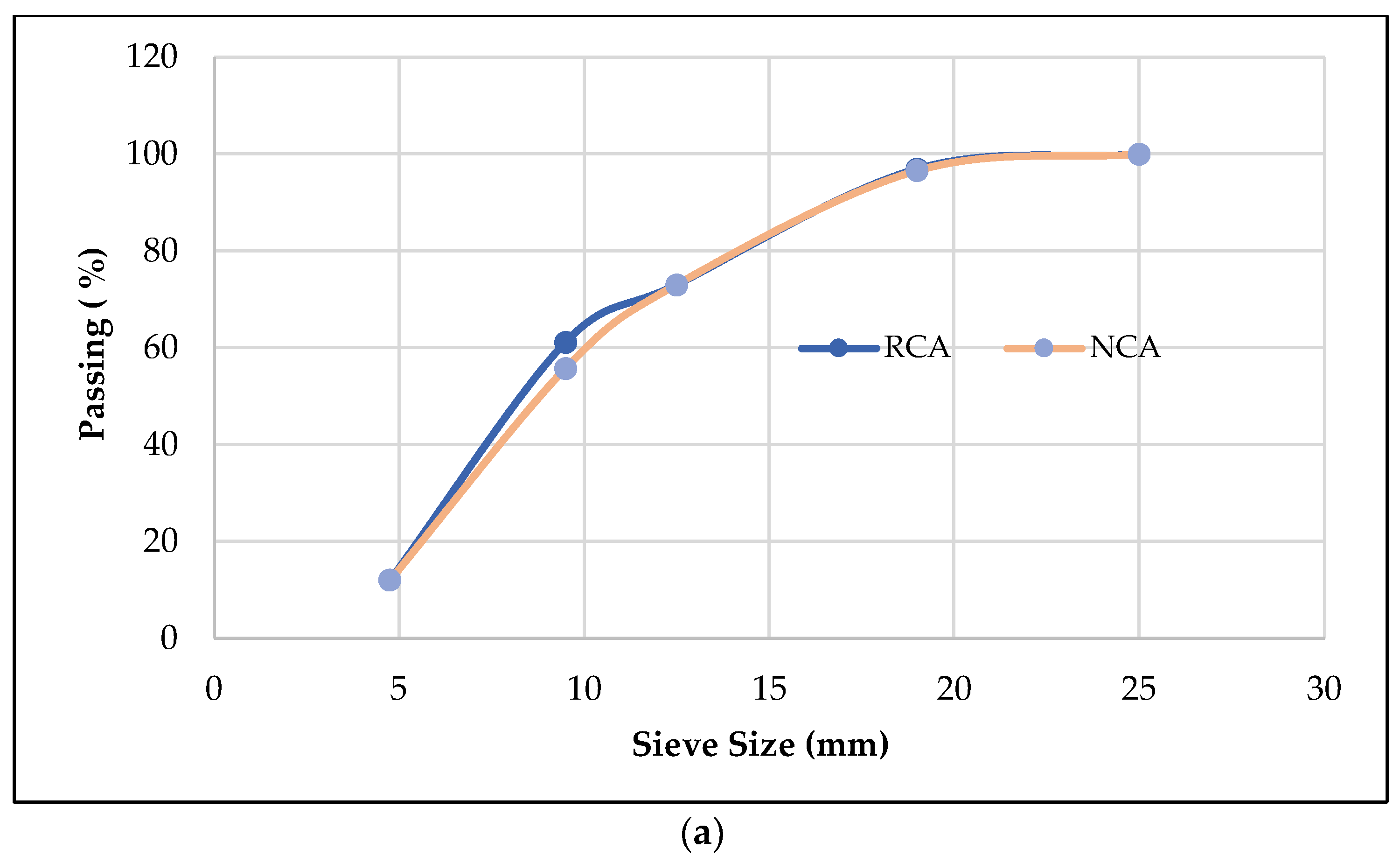
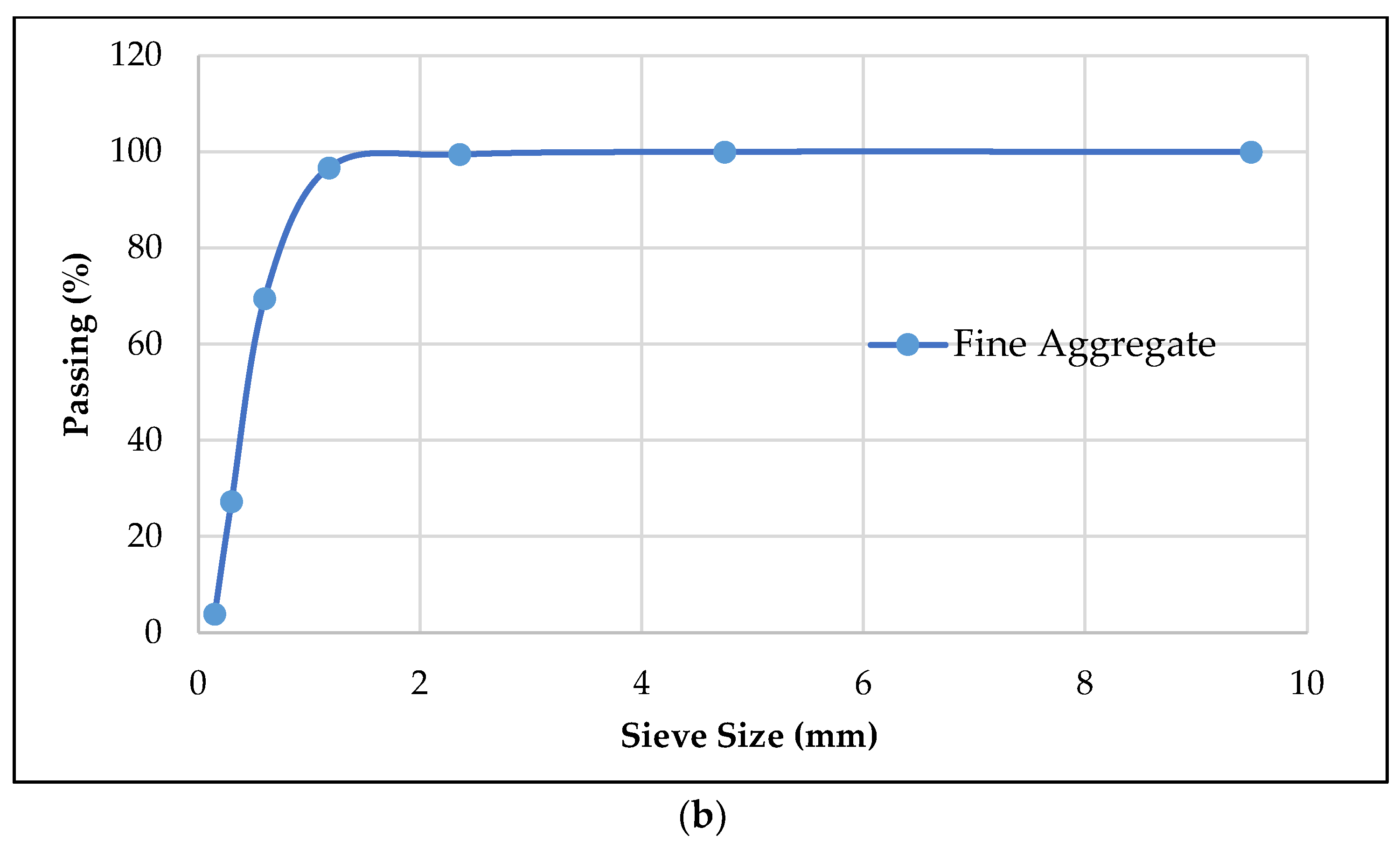
The fine aggregate used was natural siliceous sand. The recycled concrete aggregate (RCA) was sourced from laboratory waste concrete (parent strength: 35–40 MPa), manually crushed, and sieved to a maximum size of 20 mm [61]. To ensure a valid comparison, the particle size distribution of the RCA was matched to that of a standard natural coarse aggregate, as shown in Figure 1a, while the fine aggregate gradation is presented in Figure 1b.
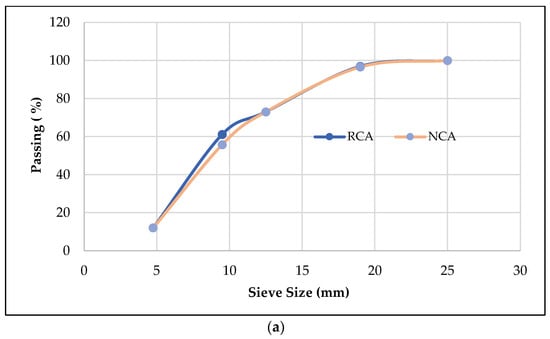
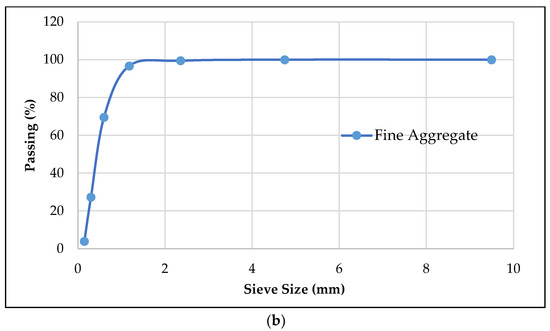
Figure 1.
(a) Particle Size Distribution of recycled concrete aggregate (RCA) and Natural concrete aggregate (NCA). (b) Particle Size Distribution of Fine aggregates.
The physical properties of the fine aggregate and recycled concrete aggregate (RCA) are summarized in Table 2. The RCA exhibited a high 24 h. water absorption of 6.11%, primarily due to its porous adhered mortar content [11]. The adhered mortar content was quantified at approximately 45% by mass using the acid digestion method [62]. The Los Angeles abrasion value of 38% indicated a relatively good resistance to degradation [63,64,65,66]. Furthermore, the RCA was preconditioned to a saturated surface dry (SSD) state before batching to account for its high absorption and maintain free water-to-binder ratio of 0.38 across all mixtures. Potable water was used for mixing in all mixes.
Table 2.
Physical properties of fine aggregate and RCA according to ASTM Standard.
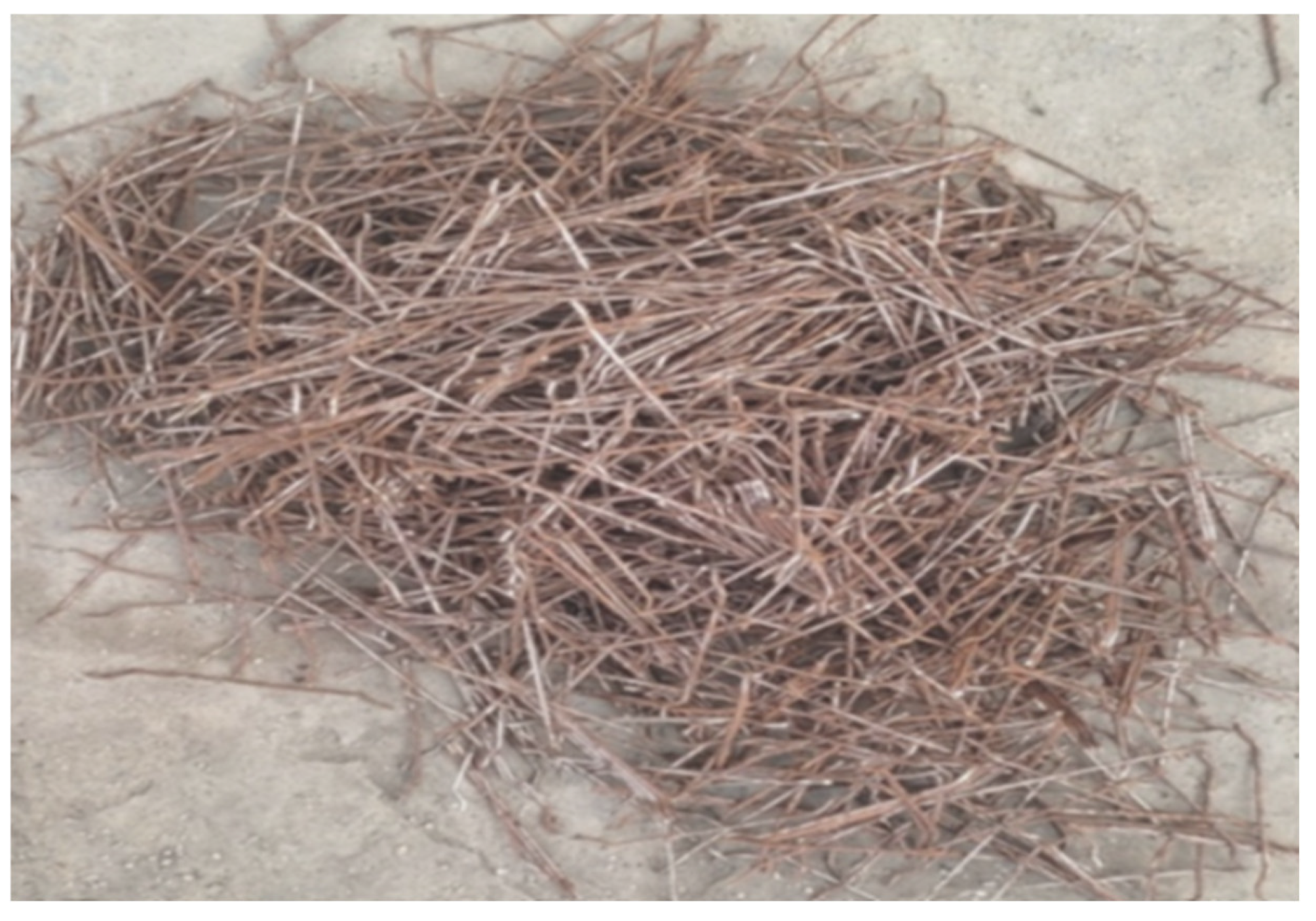
Hooked-end steel fibres (HSF) with a length of 34 mm, diameter of 0.9 mm, tensile strength of 1200 MPa, and density of 7750 kg/m3 were used at a volume fraction of 0.5% [56,57] as shown Figure 2.
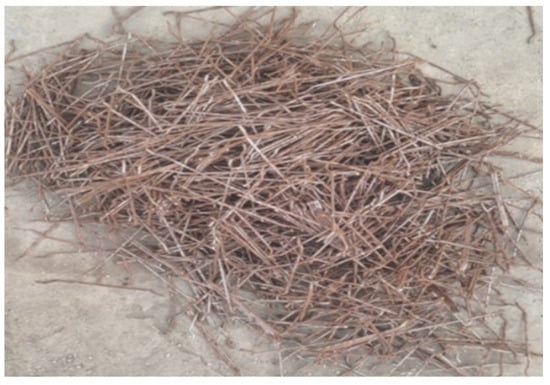
Figure 2.
Overview of Hooked steel fibres (HSF).
2.2. Mix Proportions
Two series of Steel Fibre-Reinforced Recycled Aggregate Concrete (SFR-RAC) were designed: a Double-Mixing series (DFRAC) and a Triple-Mixing series (TFRAC). Both series were designed with a constant water-to-binder ratio of 0.38 and incorporated 0.5% by volume of steel fibres, targeting a compressive strength range of 35–40 MPa. To investigate the effect of supplementary cementitious materials, a portion of the cement was replaced with Ground Granulated Blast-furnace Slag (GGBS) at 25% and 50%, Fly Ash (FA) at 20% and 40%, and Silica Fume (SF) at 7% and 14% by weight. A polycarboxylate-based superplasticizer was used, with its dosage adjusted in each mix to maintain a consistent target slump of 75–100 mm. The complete mix proportions are provided in Table 3.
Table 3.
Mix proportions of all concrete mixtures of Steel fiber reinforced RAC (SFR-RAC).
2.3. Mixing Procedure
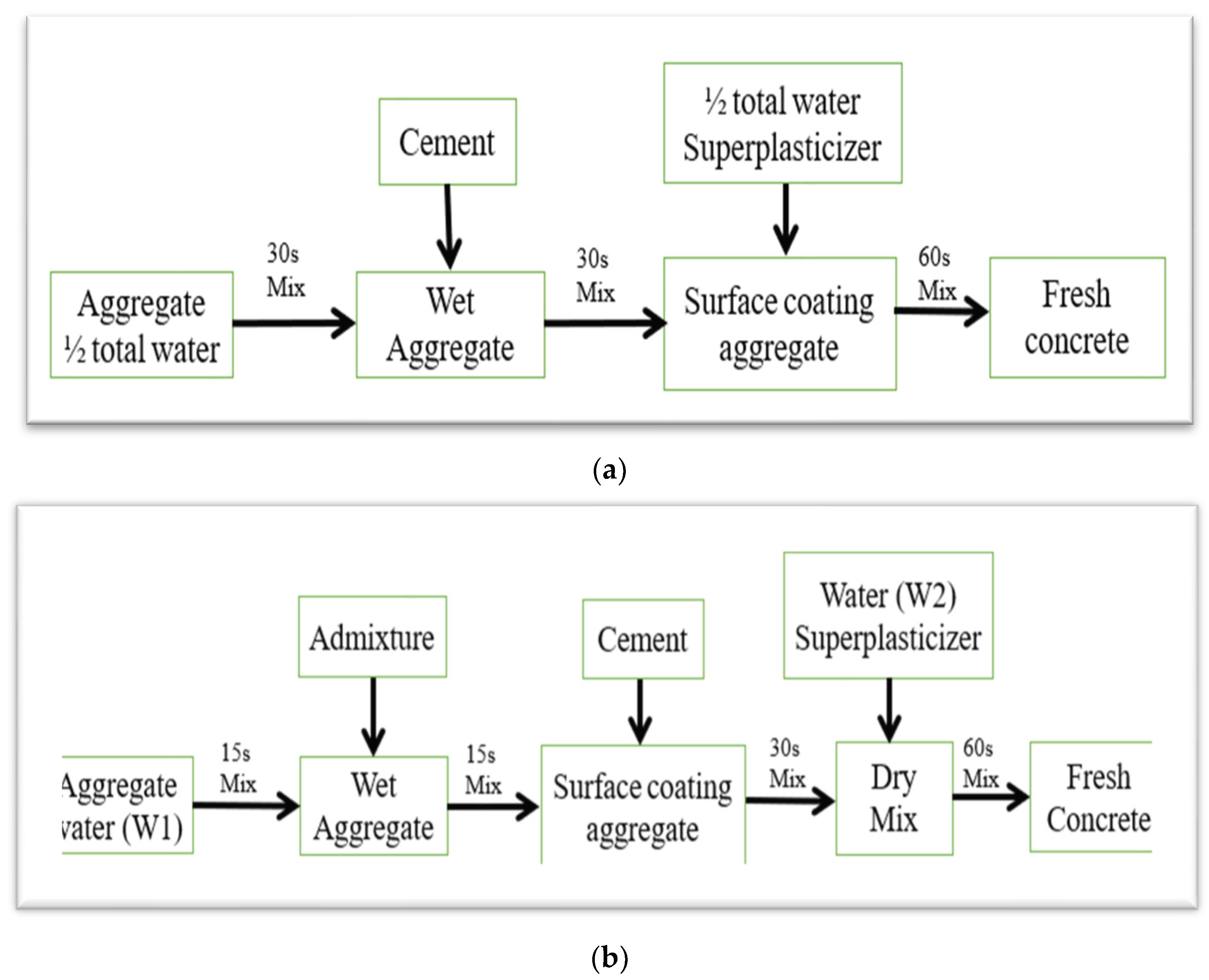
Mechanical mixing was performed using two distinct methods: the double-mixing (DM) and triple-mixing (TM) techniques. The double-mixing (DM) procedure consisted of two primary stages: (1) pre-wetting the recycled concrete aggregate (RCA) with 50% of the total mixing water, followed by (2) the introduction of the cementitious materials, sand, remaining water, and chemical admixtures [36,42]. The triple-mixing (TM) technique involved a more complex sequence: (1) the RCA was initially coated with a slurry of admixtures, mixed at a water-to-binder ratio of 0.38 for 15 s, after which (2) the remaining ingredients were added to complete the mix [39]. The procedural sequences for both the DM and TM methods are illustrated schematically in Figure 3a,b.
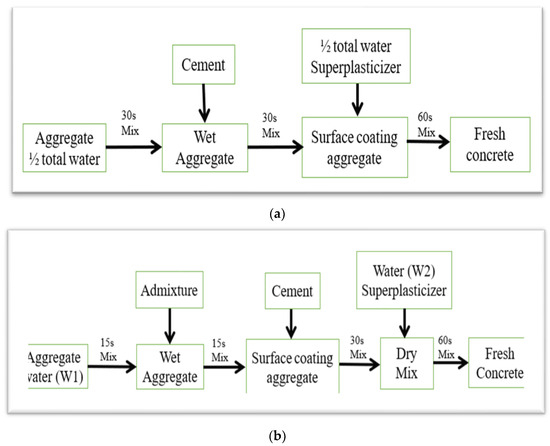
Figure 3.
(a) Detailed procedure of the Double-Mixing Technique (DM). (b) Detailed procedure of the Triple-Mixing Technique (TM).
2.4. Specimen Preparation and Testing
The workability of all freshly mixed concrete was evaluated immediately after mixing using the slump test in accordance with [67]. The mix proportions were designed to achieve a target slump of 75–100 mm. For RCA mixtures, any observed reduction in workability was compensated by adjusting the dosage of a high-range water-reducing admixture (HRWRA), as detailed in Table 3. A high-range water-reducing admixture of polycarboxylate-ether (PCE) type commercially referred to as Ultra Superplasticizer 470, with specific weight equal to 1.155 g/cm3 was adopted [21].
This superplasticizer was selected due to its high-dispersed properties and compatibility with the mineral additives employed. In the case of RAC, in which the mixing conditions are unfriendly and contribution from fibers to the total flexural capacity cannot be overemphasized, all additions were made to avoid fiber balling and to provide even distribution in as follows: (i) Fibres were discretely added to the running mixer using a duration of 60 s. (ii) The mixing time was increased by 2 min above that attained when everything else is complete. (iii) Visual assesment of the fresh concrete in each mix ensured there were not any visible clusters present within the fiber slurry, and since no clusters were observed a successful dispersion was achieved [43,47,57].
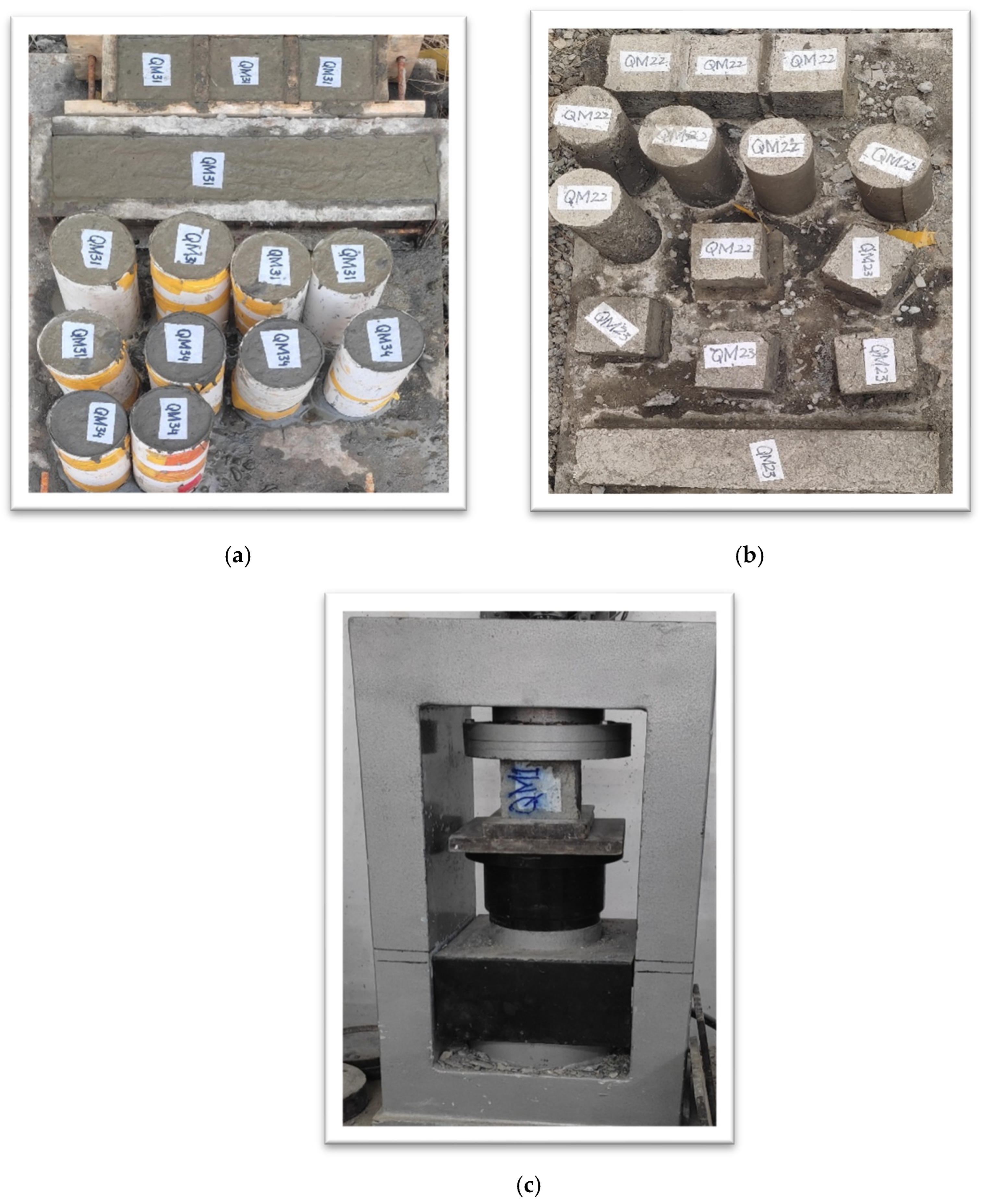
A total of 574 specimens were prepared for mechanical and durability testing, which include 100 mm cubes for compressive strength, Ø100 × 200 mm cylinders for split tensile strength and rapid chloride penetration test (CPT), and 100 × 100 × 500 mm prisms for flexural strength. Moulds filling was made in three layers by a vibrating table compaction per layer. After 24 h, specimens were demoulded and then cured (in potable water at a constant temperature of 20 ± 2 °C) to specified test age [67]. The casting, demoulding and testing processes are shown in Figure 4a–c respectively.
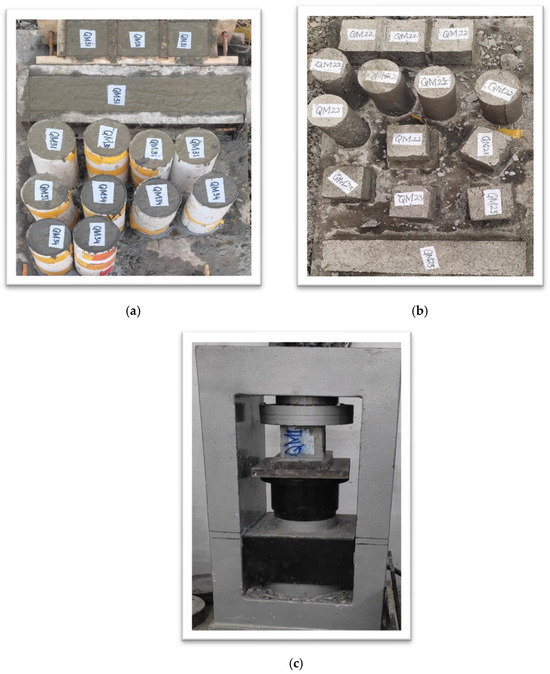
Figure 4.
(a) Casting of all samples. (b) Demoulding of specimens. (c) Testing of a Cube.
2.5. Testing Methods
The mechanical and durability attributes of the concrete mixed were studied based on standard test methods. At the 7, 28 and 90 d age of curing the values for compressive strength [68], split tensile strength [69] and flexural strength [70] were recorded. The durability was evaluated with water absorption [71], rapid chloride penetration test [72] and acid resistance [73]. In addition, the composition of hydration products, type of pore network (C-S-H and CH) from selected samples was studied by X-ray diffraction (XRD) and scanning electron microscope (SEM), as well as the quality of ITZ [74,75,76,77,78,79,80,81,82].
2.6. Statistical Analysis
All experiments are shown as the mean SD. Statistical significance of the differences between mixtures was tested for each property at 7, 28 and 90 days by one-way analysis of variance (ANOVA) at a confidence level of 95% (α = 0.05). Following a significant overall effect of the ANOVA (p < 0.05), post hoc Tukey’s Honest Significance Difference (HSD) tests were used to determine specific differences between individual mixture groups [83].
3. Results and Discussion
3.1. Compressive Strength
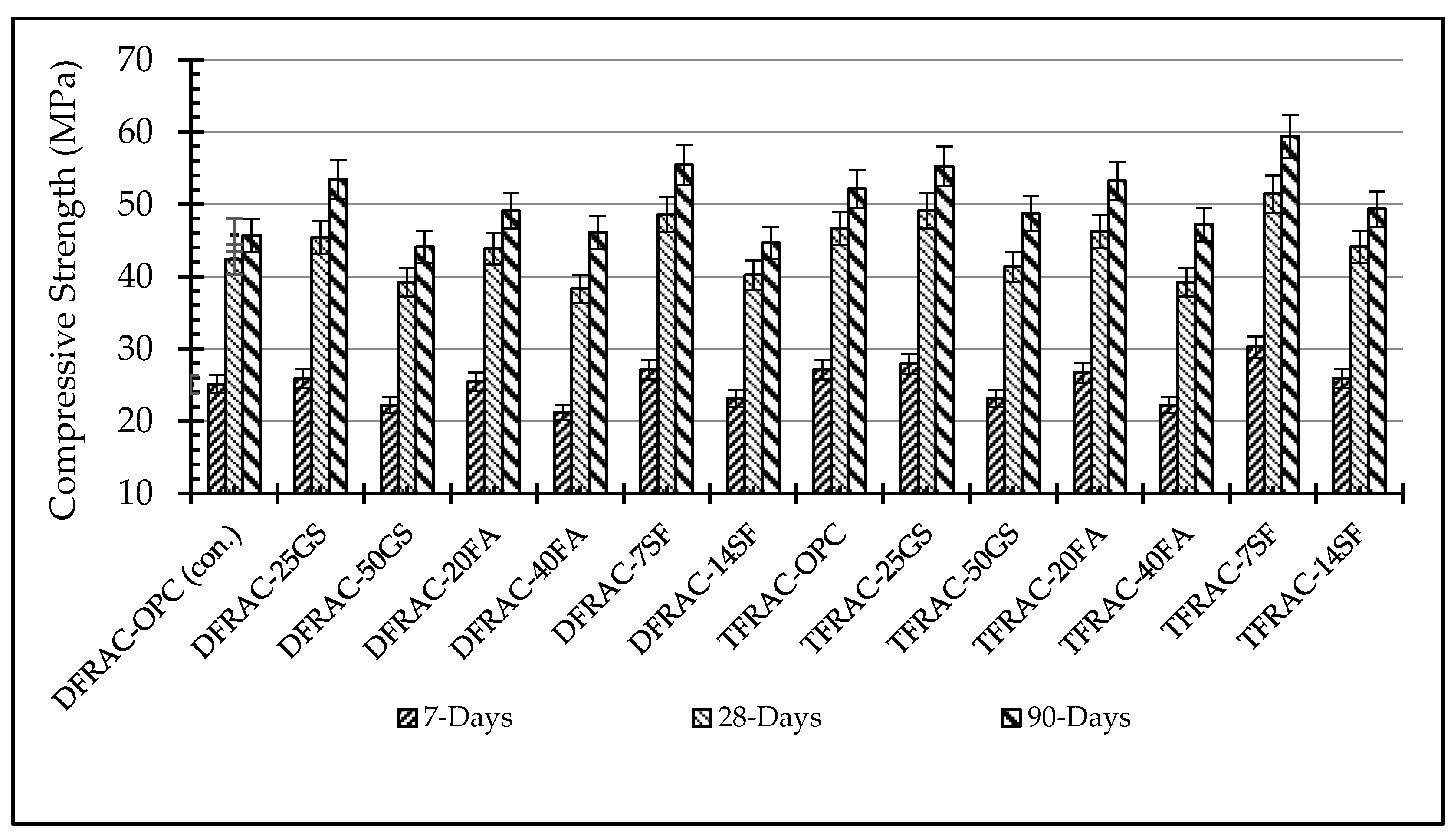
The TM method provided superior improvement compared with the DM method, with an average percentage increase of 11% in compressive strength of SFRAC over that achieved by SFRAC obtained using DM (p < 0.05). Interestingly, the TFRAC-7%SF combination even outperformed all DFRAC compositions as illustrated in Figure 5. The error bars on the data variance reaffirm the integrity of these trends.
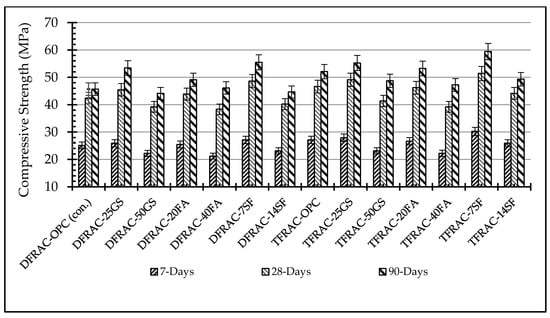
Figure 5.
Compressive Strength of all DFRAC and TFRAC mixes ±1 standard deviation shown as Error bars.
The effectiveness of TM was particularly evident in combination with certain mineral admixtures. The maximum strength enhancement (17% and 23%) was obtained for the mix with 7% silica fume, which is explained by the denser ITZ promoted by more homogeneous and compact form of microstructure around aggregate [11,44]. Likewise, when mixed with 25% GGBS, TM gave uniform strength gains of 10–17%. It was observed that mixtures with 40% fly ash experienced a drop in early-age strength, however, they performed well in TFRAC, and the loss was only about 3% at 90 days when compared to its’ similar DFRAC mixes. All these results combined demonstrate that the triple-mixing approach successfully integrates with mineral admixture to densify ITZ and further improve compressive strength.
3.2. Splitting Tensile Strength
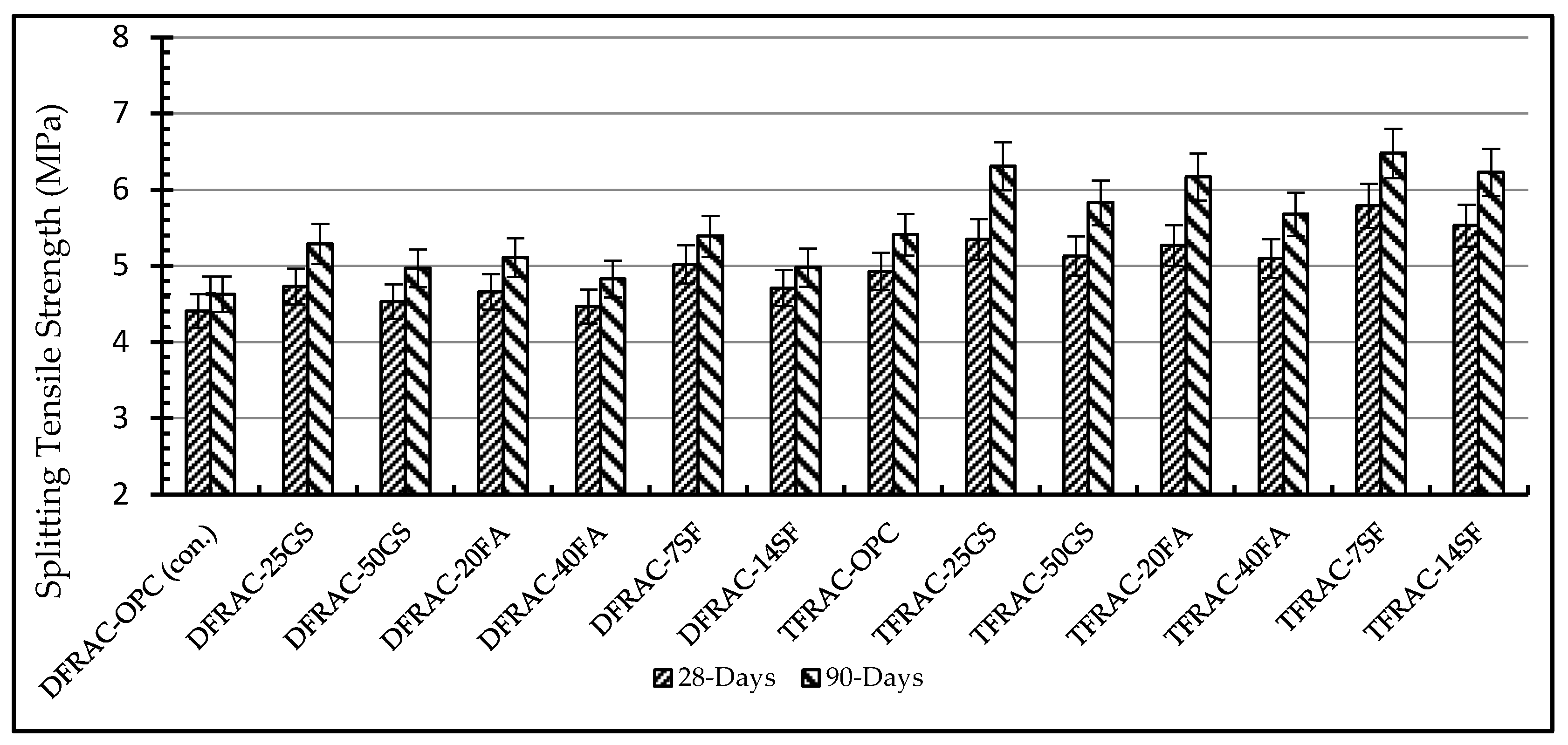
The use of the TM method improved the splitting tensile strength of TFRAC and TFRAC largely exhibited an increased splitting tensile strength by around 29% in comparison with mixtures added with DM-treated RA, as presented in Figure 6. Statistical analysis by one-way ANOVA also confirmed these differences were significant (p < 0.05).
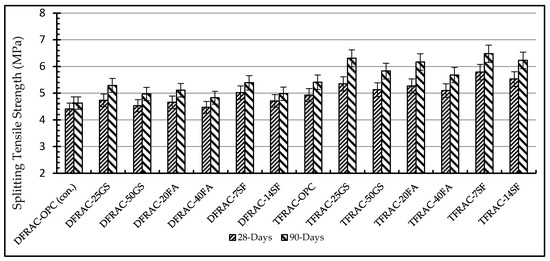
Figure 6.
DFRAC and TFRAC Mixes—Tensile Strength and the error bars show ±1 standard deviation.
The performance was strongly influenced by the nature and content of mineral admixtures. Maximum enhancements occurred with 7% SF, which resulted in the increases of 24% and 29% at 28 and 90 days, respectively. Similar gains were also made with 25% GGBS (18–27%) and 20%FA (16–25%). Even at higher dosages such as 14%SF, 50%GGBS and 40%FA, the effect was not as significant implying that maximum benefit of TM application lies within certain optimal replacement levels. The strength gained rate gradually decreased while the strength enhancement rates kept a similar trend of being in good agreement with low variation (error bars = ±1 SD), which is due to the synergistic effect of the activity of TM method and the addition of mineral admixtures. Thus, the TM process would lead to a better matrix whose interfacial transition zone (ITZ) was improved by an enhanced pozzolanic reaction. This denser micro-structure is considered to offer a better substrate for bonding between the steel fibre and matrix, resulting in higher stress transfer from the graphene nanosheets to the basin-like surface of the fibre, as well as more efficient bridging by short fibres on micro-cracks that are blocked.
3.3. Flexural Strength
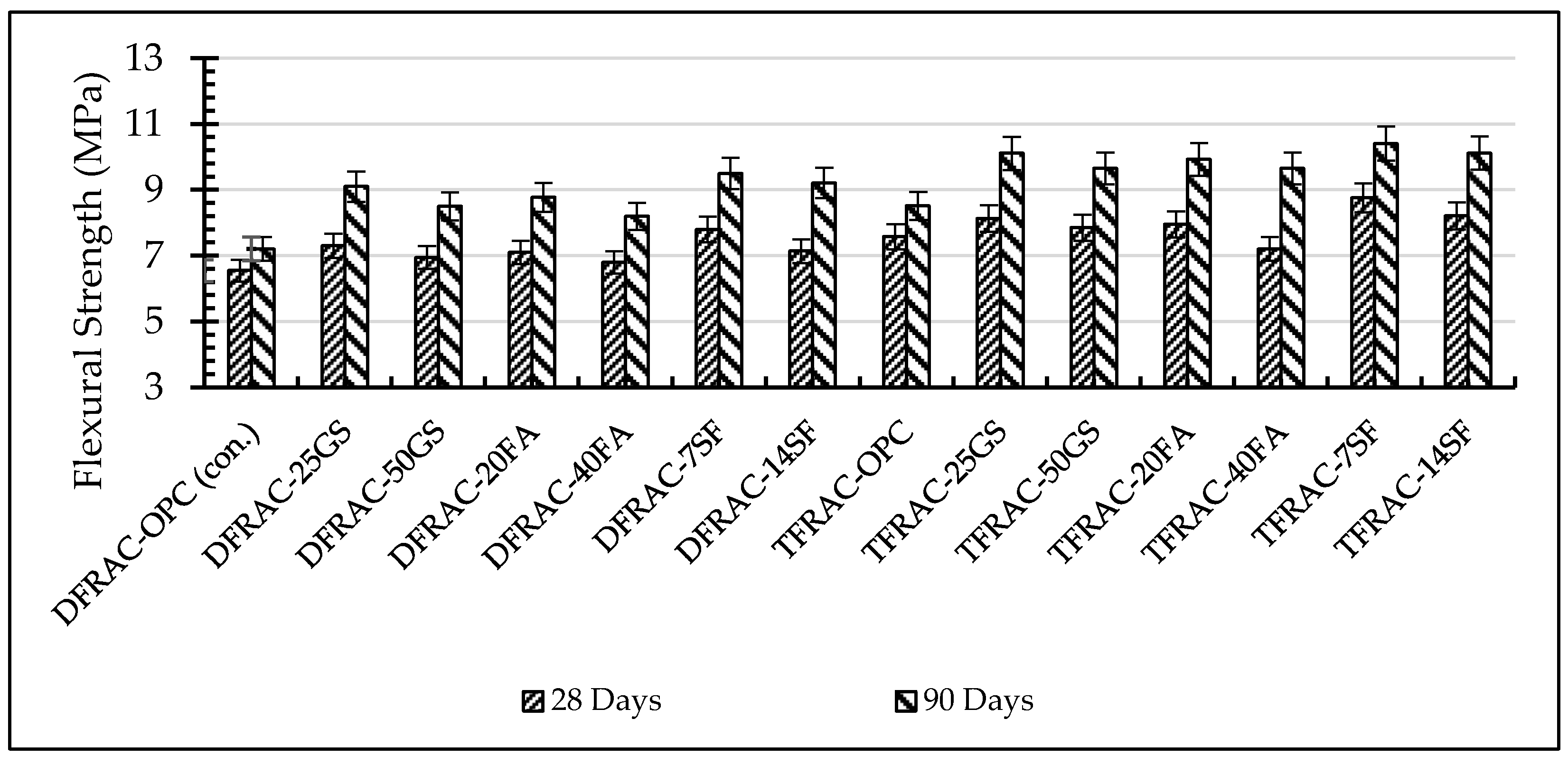
The flexural strength of fibre-reinforced concrete is a critical design property that is primarily enhanced by the capacity of fibres for crack bridging and must be determined experimentally, as it cannot be reliably predicted from compressive strength. As illustrated in Figure 7, both mixing methods improved flexural strength over the control, with the triple-mixing technique (TFRAC) yielding statistically superior results to the double-mixing method (DFRAC) across all mixtures (p < 0.05). The most significant enhancement was achieved with the TFRAC method incorporating 7% silica fume (SF), which exhibited a 31% increase in flexural strength over its DFRAC counterpart at 90 days. Substantial gains were also confirmed for TFRAC mixtures with 25% GGBS (29%) and 20% fly ash (FA) (25%). While higher admixture contents (50% GGBS, 40% FA, 14% SF) still conferred a statistically significant improvement, the benefits were less pronounced, indicating that the efficacy of the TFRAC method is optimized at specific replacement levels.
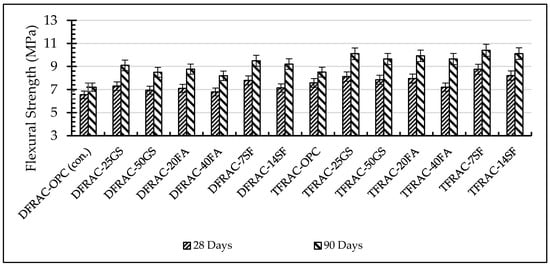
Figure 7.
TFRAC and DFRAC Mixes Flexural Strengths, and Error bars are shown as ±1 standard deviation.
The triple mixing technique and the mineral admixtures have a synergetic effect on the increase of the compressive strength. Comparatively, the TM method also generates denser and more homogeneous matrix by improving ITZ, which is beneficial to promote the bonding between steel fibre and matrix. This enhanced bonding provides for a more efficient stress transfer and crack bridging, directly leading to the superior flexural behaviour. Error bars showing variability of data indicate how small the variance is in this manufacturing enhancement [46]. Generally, it can be seen from the test results that the use of a triple-mixing method together with optimized mineral admixture ratios is an effective approach for improving the flexural performance of steel fibre-reinforced recycled aggregate concrete.
3.4. Water Absorption
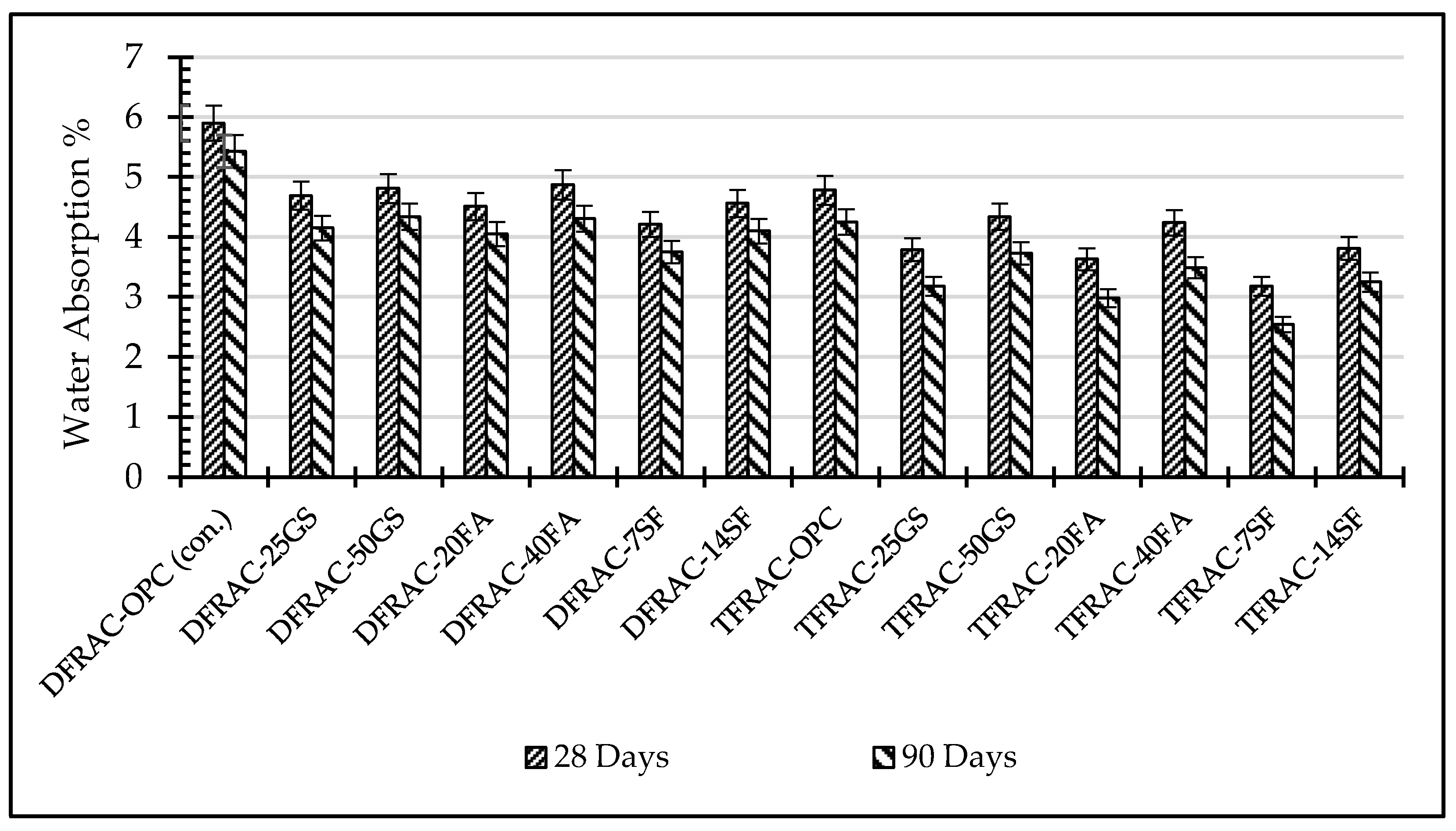
The contribution of mineral admixtures and mixing method to water resistance is shown in Figure 8. Statistical analysis indicated that the use of mineral admixture indeed improved water absorption resistance in both DFRAC and TFRAC (p < 0.05), with a further and constant 19–22% improvement obtained using triple mixing technique (TFRAC) over what was observed in corresponding DFRAC mixes. The reduction in water absorption was in the range of 21–53% about control mix. The optimum admixture was found to be 7% silica fume (SF), with a 46–53% decrease obtained. Next 20% FA and 25% GGBS had percent reduction ranges as 38–45% and 36–41%, respectively. Significantly more limited responses were found with increased admixture dosage (14% SF, 40% FA, 50% GGBS) but improvements remained statistical although less notable; signifying a saturation in the applied admixture quantity for performance gain.
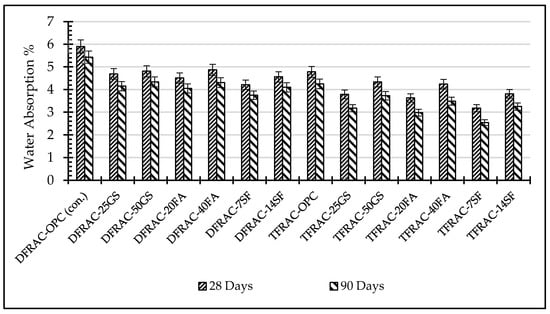
Figure 8.
Water Absorption of DFRAC and TFRAC MixesResults Error bars indicate ±1 standard deviation.
The superior performance, especially of the TFRAC mixes is attributed to a synergistic effect. The pore-blocker/mineral admixtures are a class of fillers/matrix densifiers, that clog the inner voids and cover the surface of crushed aggregates. Meanwhile, the triple mixing technique also contributes to more uniform dispersion of these admixtures and steel fibers that consecutively affect the ITZ in a positive manner [47]. The structure in this overall response is also improved by having a more solid matrix itself.
3.5. Chloride Ion Penetration
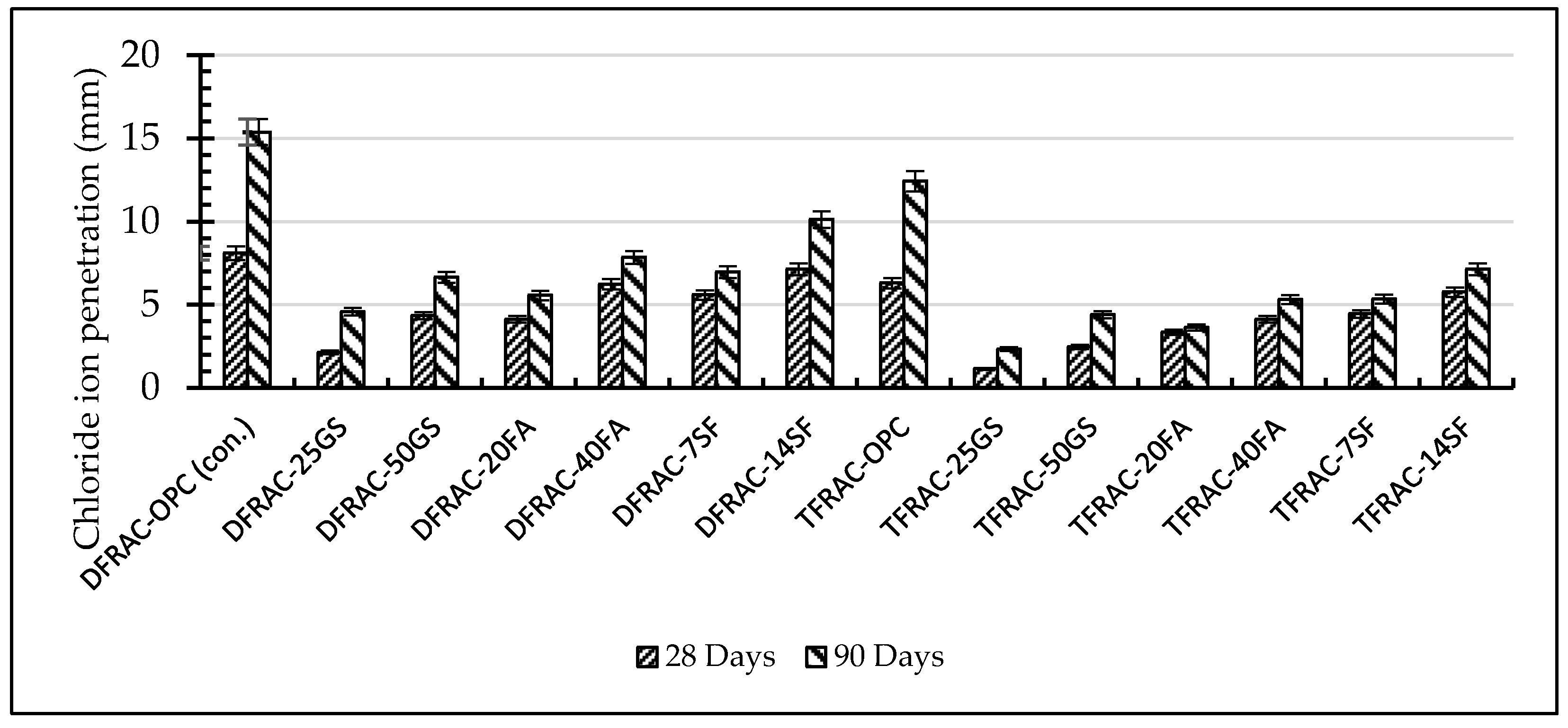
Next, from the Figure 9 chloride ion penetration (CP) resistance statistical analysis, it can be concluded that mineral admixtures significantly improve the performance of steel fibre-reinforced recycled aggregate concrete (SFR-RAC), with reductions between 12% and 85% compared to control mixes (p < 0.05). Triple-mixing (TFRAC) demonstrated superior outcomes compared with double mixing method (DFRAC) in all tested formulations; the differences were statistically significant.
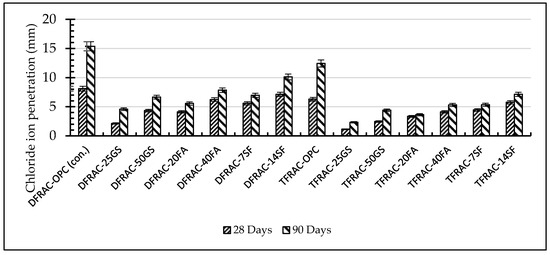
Figure 9.
The Chloride Ion penetrability of DFRAC and TFRAC Mixes; and Error bars ±1 standard deviation.
The effectiveness was largely influenced by the type of admixture and dosage. One way ANOVA and post hoc comparisons demonstrated that the 25% GGBS mix TFRAC prepared offered the maximum improvement, decreasing chloride penetration by more than 85%. Fly ash at 20% dose was highly effective (achieving as high as 76% reduction in TFRAC); however, a higher dosage of 40% showed significantly less effectiveness. Silica fume (7 and 14%) gave less but still significant improvements with a maximum strength reduction of 55% in DFRAC mixes.
They proposed that these performance improvements would originate from combined effects. The reduction in the overall permeability of the admixed concrete is attributed to pozzolanic reactions and filler effects, whereas high alumina content in GGBS and fly ash contributes to improving the chloride binding capacity [14,15,23]. The TFRAC process as statistically more significant indicates the importance in establishing a homogenized network and a refined pore-network, for permeability to be further decreased. The observation that GGBS contributes towards the major improvement in chloride barrier agrees to its substantial efficacy as an admixture for improving chloride resistance [15].
3.6. Acid Attack Resistance
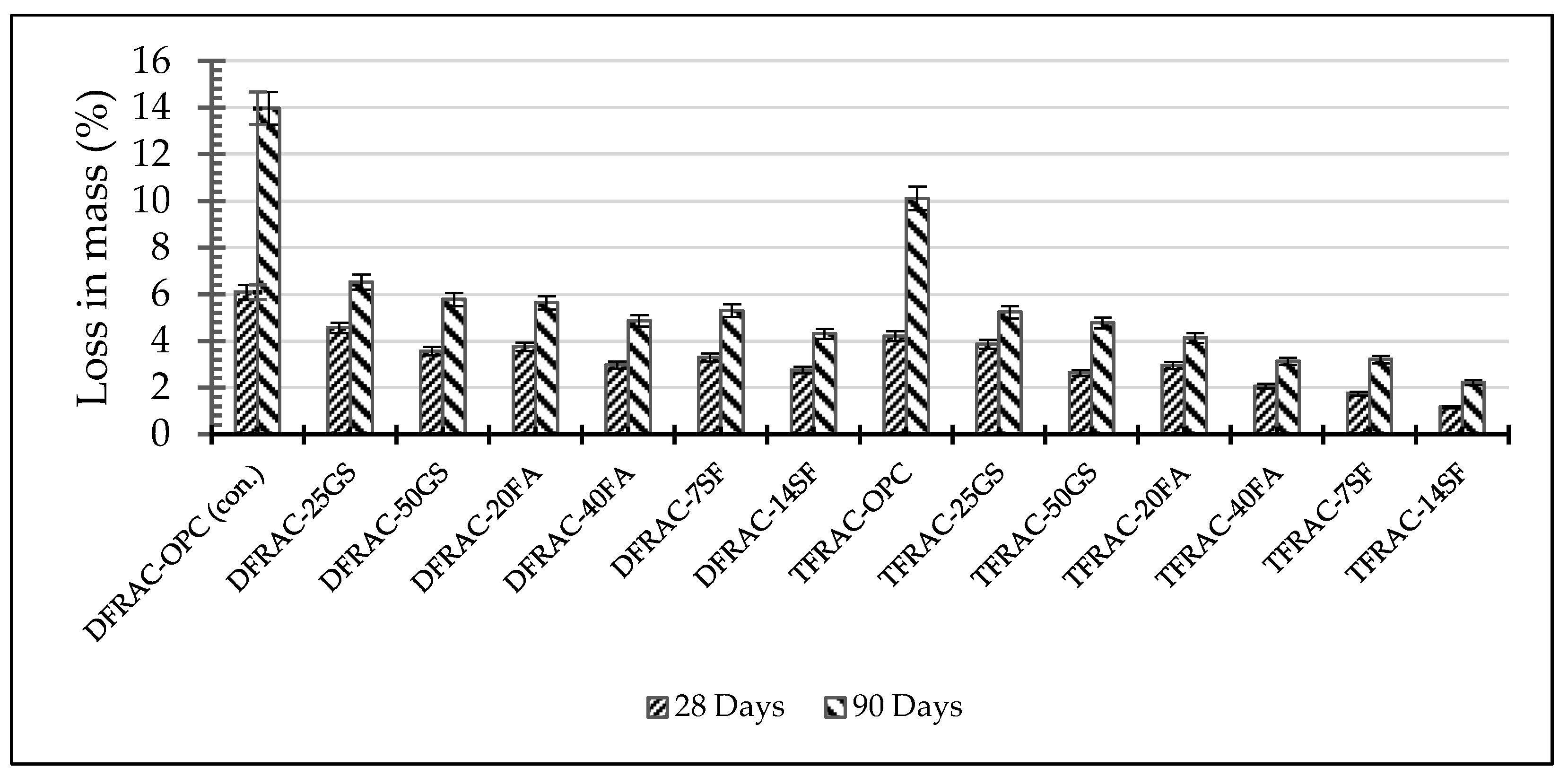
Statistical analysis of the data presented in Figure 10 confirms that both mineral admixtures and the triple-mixing technique (TFRAC) significantly enhance the acid attack resistance (AAR) of steel fiber-reinforced recycled aggregate concrete (SFR-RAC). A one-way ANOVA revealed significant main effects for both mixing technique and admixture type, as well as a significant interaction between them (p < 0.05). Post hoc tests confirmed that the TFRAC method consistently yielded statistically superior performance to the double-mixing (DFRAC) method across all mix designs.
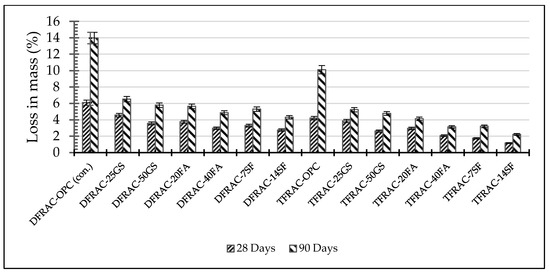
Figure 10.
Loss in Mass due to acid attack of DFRAC and TFRAC after 28 and 90 days of immersion in 5% H2SO4 solution and Error bars represent ±1 standard deviation.
The resistance to acid actions was directly related with the mineral admixture type and amount. Silica fume (SF) resulted in the highest degree of improvement, and AAR increased 81–84% when incorporated with 14% SF which was significantly better than FA and GGBS containing series (p < 0.05). Fly ash performance was also quite good with 40% FA in TFRAC increasing the resistance by 66–78%. Although GGBS was found to be statistically inferior to SF and FA, the magnitude of improvement in 50% GGBS -TFRAC mix was still impressive with strength increase between 57–66%.
These improved wear properties can be ascribed to several synergistic mechanisms. The steel fibres give a reinforcement framework that restricts the formation of cracks from acid generated expansion. Mineral admixtures, especially silica fume, chemically react with calcium hydroxide and form higher volume of stable impermeable C-S-H gels. From the physical point of view, such method for triple-mixing contribute to more uniform dispersion of these admixtures which are factors inducing refinement in microstructure and the decreasing permeability [23]. The excellent statistical behaviour of silica-based additions reflects their efficiency at densifying matrix and enhancing the chemical resistance.
3.7. Statistical Analysis of Results
Statistically significant differences between mechanical and durability properties (Figure 5, Figure 6, Figure 7, Figure 8, Figure 9 and Figure 10) were thoroughly confirmed. One-way ANOVA was conducted with post-hoc Tukey’s HSD tests for the data related to each property if a statistically significant overall effect was obtained (p < 0.05). Table 4 presents the results, which revealed that mix design was (extremely) significantly affected (p < 0.001) for all properties at 7, 28 and at 90 days.
Table 4.
P-values of the one-way ANOVA analysis on mechanical and durability properties.
The post hoc analysis validates two main outcomes of the experimental results. First, triple-mixing (TM) method consistently produced significantly better strength results (p < 0.05) compared to the double-mixing (DM) for almost all of mix designs. Second, the precise TM combination with optimized mineral admixture doses was important. The TFRAC-7SF blend was a separate statistical homogeneous group that had higher compressive, tensile and flexural strength compared to all other mixes. Regarding the durability, TFRAC-25GS was statistically better for chloride resistance and the TFRAC-20FA gave the most balanced development of properties. On the other hand, higher replacement levels (such as 50% GGBS, 40% FA) demonstrated consistently significant reduction in efficiency of activation thereby indicating that both TM and mineral admixtures are most effective at certain optimal dosages.
The statistical results have quantitatively confirmed that the increased ITZ density and a finer microstructure by triple mixing technique are responsible for the better performance, which is further synergistically promoted by judicious use of mineral admixtures.
3.8. Micro Structural Analysis
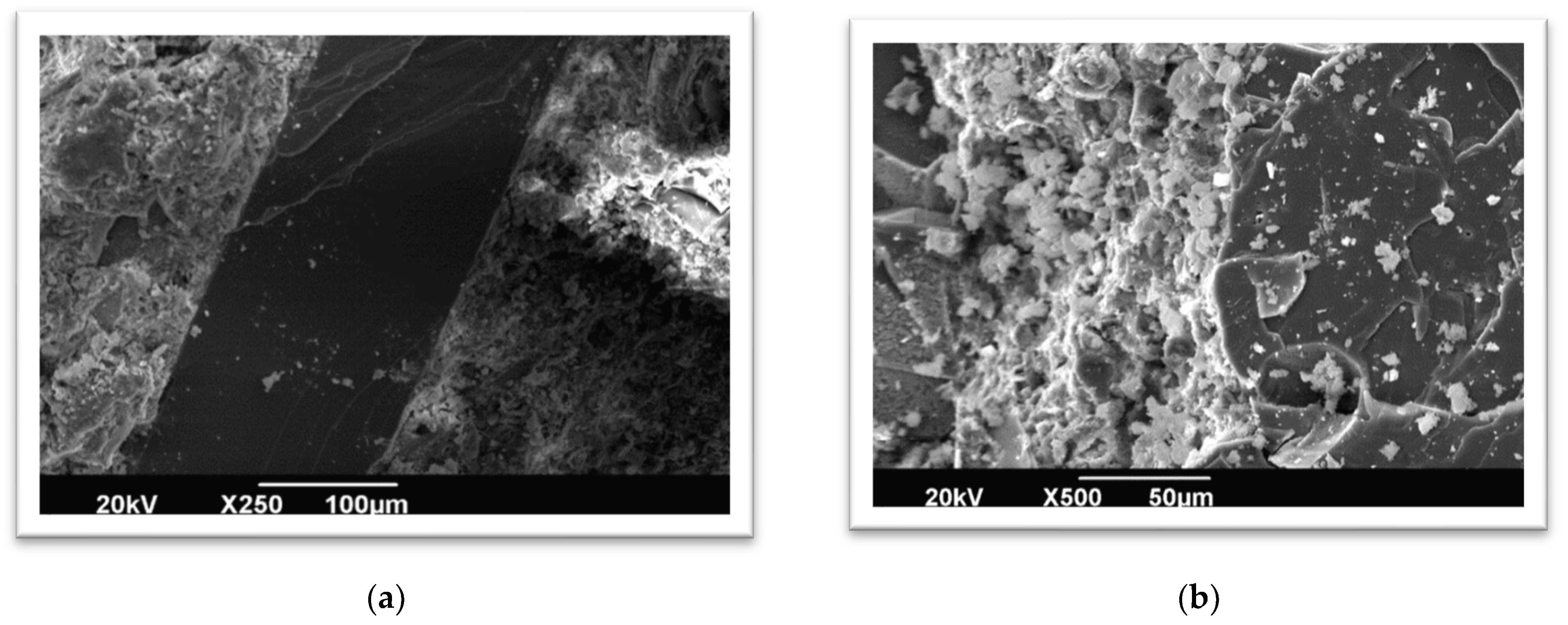
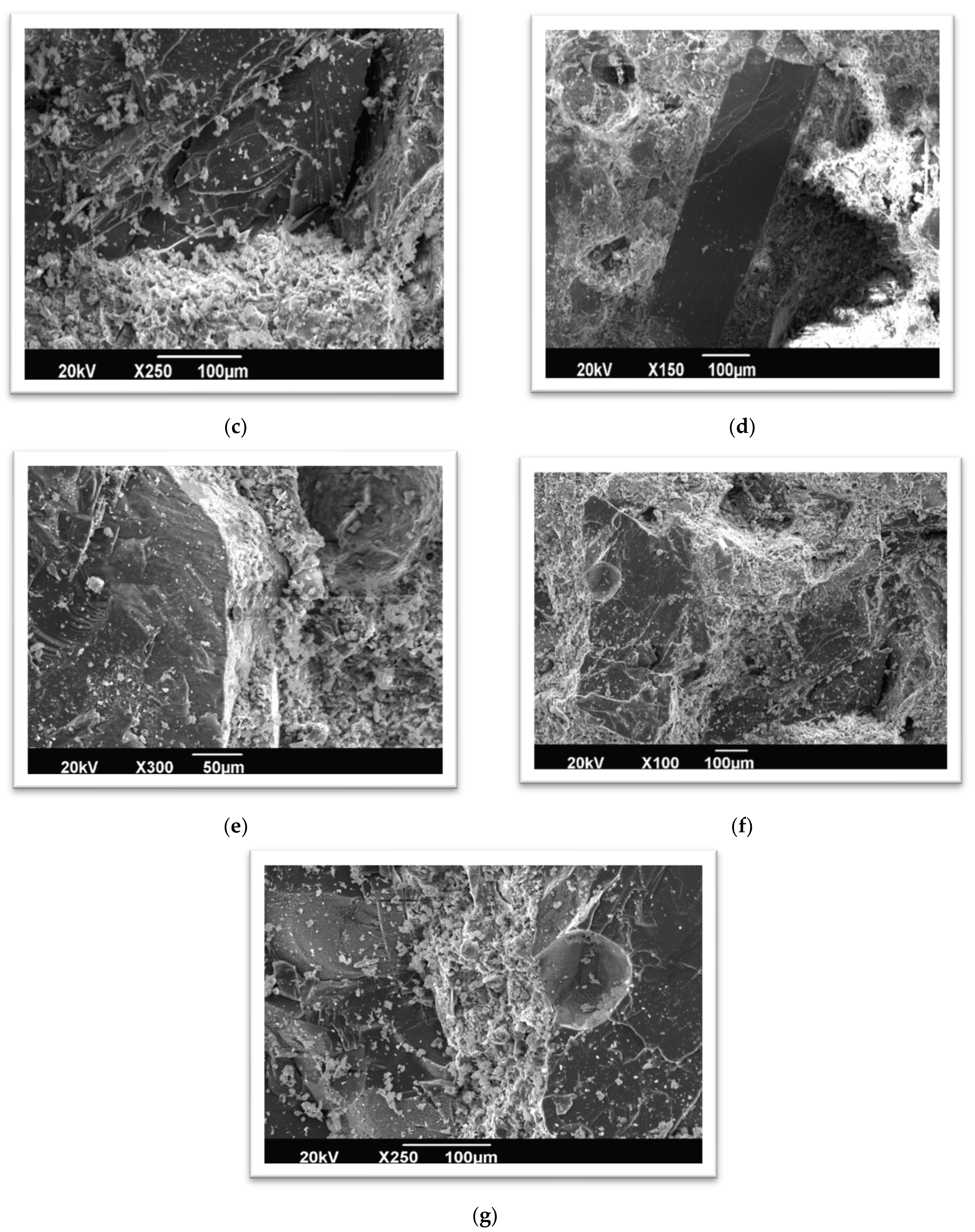
The microstructural characterization offers experimental direct evidence of mechanical and durability behavior trends previewed in this work. As shown in Figure 11a–g, the porosity of ITZ decreases away from the aggregate surface, which is like that observed for normal concrete. However, the ITZ density was notably higher in SF mixes and TM mixtures. Visual evidence of a denser ITZ in the SEM images presented and fewer microcracks in these optimized mixes was confirmed, with the higher strengths and stabilities observed being directly proportional to densities.
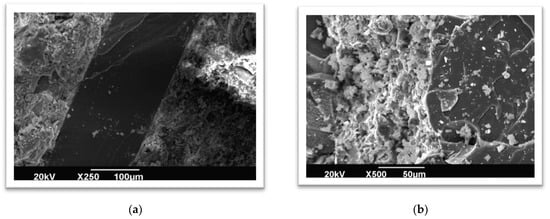
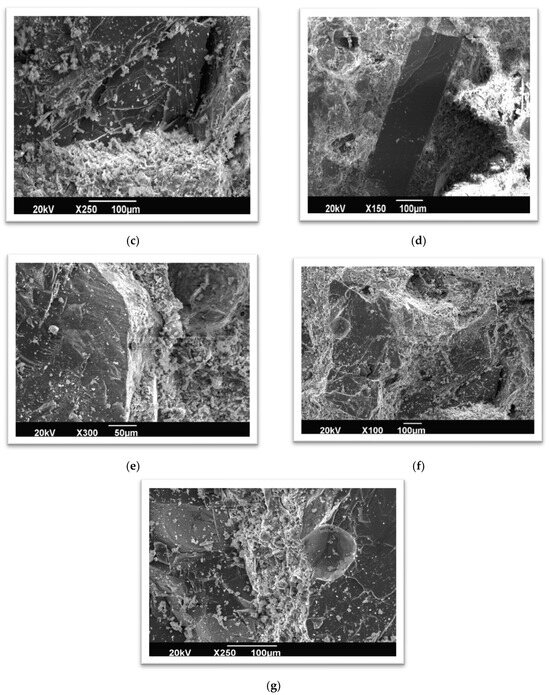
Figure 11.
(a) SEM images of ITZ for control mixes. (b) SEM-images indicating the ITZ for 25% GGBS. (c) SEM images of ITZ for 50% GGBS. (d) SEM images of the ITZ for 20% FA. (e) SEM of ITZ for 40%FA. (f) SEM images of ITZ for 7% SF. (g) SEM image of SF in concrete specimens. Micrographs of the ITZ for the 14% SF specimen, using SEM.
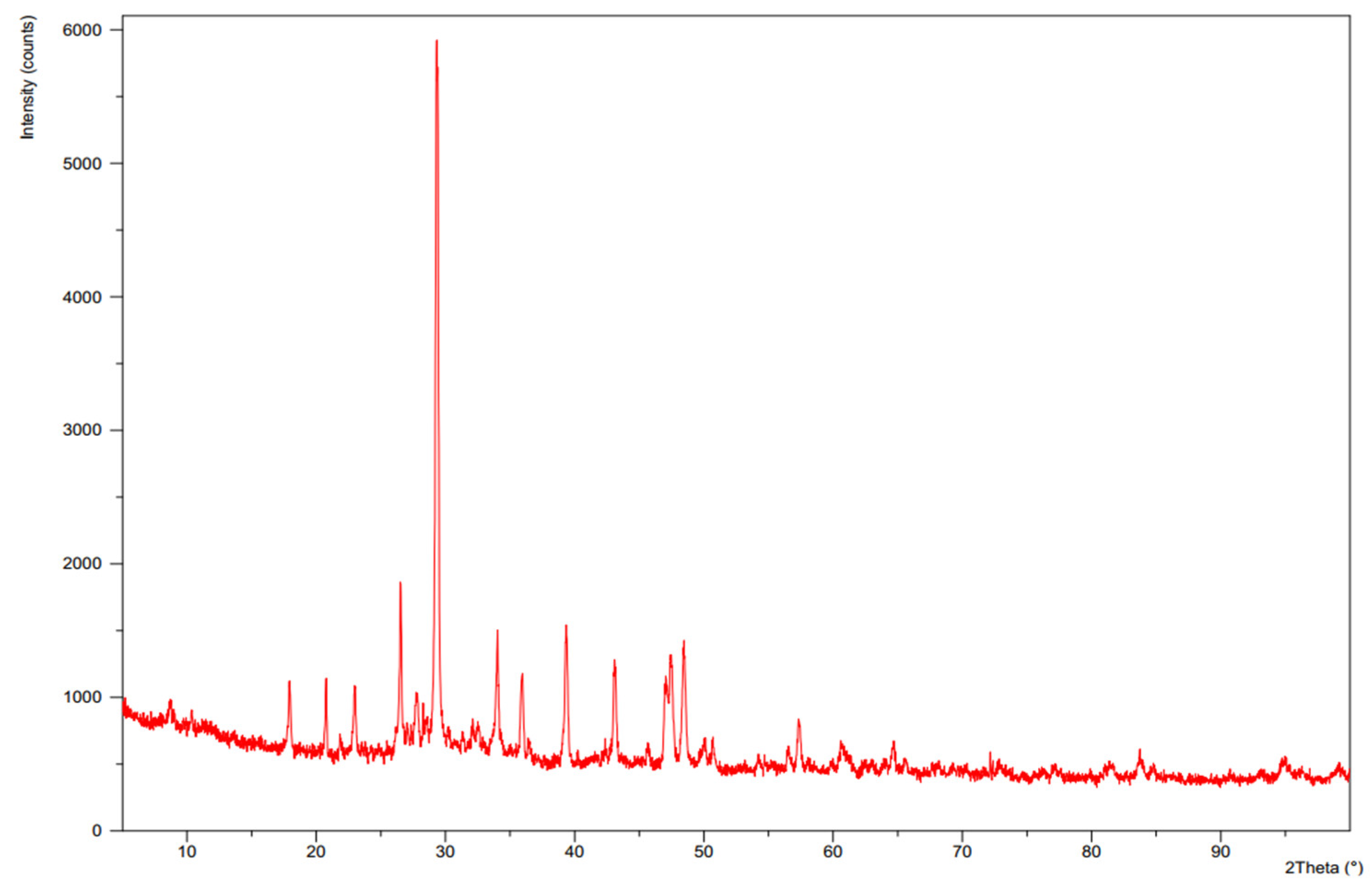
Quantitative validation for this observation was made using X-ray Diffraction (XRD) analysis. For optimized mixes, especially those that contain silica fume, the peaks of portlandite (Ca(OH)2) were evident and decreased substantially with much higher amorphous hump attributed to C-S-H gel evidenced as presented in Figure 12. This proves a full pozzolanic reaction that represents the main root of matrix densification. GGBS and fly ash, we note here also contribute to the pozzolanic reactions, but showed the nature of performing dose depended. ITZ porosity was effectively reduced by GGBS at 25%, while at the higher level (50%), partial Portland cement dilution led to increased porosity. In the same way, 20% of fly ash enhanced ITZ while 40% cause the formation of bigger pores and microcracks. Due to its small particle size and high reactivity, silica fume was the most ideal admixture for ITZ refining to optimize the structural contribution ability of composites. Moreover, the XRD results show that GGBS can result in more C-S-H phase which increases strength properties of material [75,76].
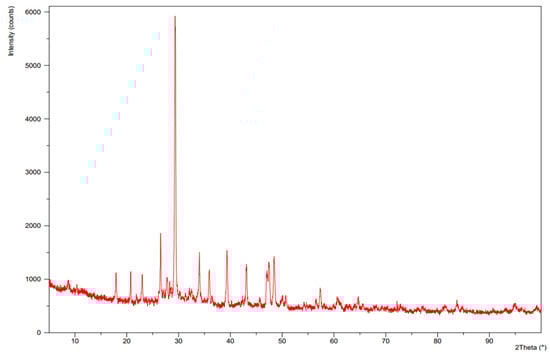
Figure 12.
XRD analysis of SFR-RAC specimens.
4. Conclusions
This research provides a comprehensive examination of their combined influence on the performance of steel fibre-reinforced recycled aggregate concrete (SFR-RAC). The experimental findings, along with the comprehensive statistical comparison (ANOVA, p < 0.05), can derive the following main statements:
The triple-mixing (TM) approach exhibited statistically superior performance over the double-mixing (DM) technique in all mechanical and durability features. It is mainly due the ability of TM method to form a denser and more uniform microstructure, especially by producing a finer ITZ around the recycled aggregates.
The synergistic effect between TM and certain mineral admixtures at an optimum dosage: Mechanical Properties: The TFRAC- 7%SF mixture was the best mix that yielded highest compressive, tensile, and flexural strength increases (as high as 23%, 29% and 31%, respectively). Durability Performance: TFRAC-25%GGBS presented an excellent resistance to chloride ion penetration (maximum reduction of 86%), while TFRAC-40%FA and TFRAC-14%SF had the best performance with respect to acid attack (up to 78%, 84%, respectively).
A trend was consistently observed for admixture dosages: lower replacement levels (7% SF, 25% GGBS and 20% FA) being found optimum to improve mechanical properties while higher levels (14% SF, 50% GGBS and 40% FA) were beneficial to improve the long-term chemical resistance. It highlights the necessity of designing amount of admixture depending on the main purpose for performance.
SEM/XRD analysis validated the mechanism for these enhancements. The addition of polycarboxylate-based super-plasticisers and ultrafine slag promoted the generation of more C-S-H gel, consuming portlandite and resulted in a denser pore structure and stronger ITZ.
In conclusion, this study shows that the triple-mixing approach can be strategically utilized with optimized mineral admixture to overcome demerits of recycled aggregate concrete. For high mechanical strength, TFRAC-7%SF mix is preferred while application subjected to chloride environment will be successfully using the TFRAC-25%GGBS. Indeed, such approach offers a viable solution to making high-performance green concrete with industrial by-products to evolve an eco-efficient construction industry.
Limitations and Future Work: From an industry perspective, the current work is targeted towards mix optimization in an SFR-RAC system. Future research will have to include the direct comparison with its natural aggregate concrete equivalent and study the impact of different replacement percentages of recycled concrete aggregate (RCA) for enhancing the wider application.
Author Contributions
Conceptualization, M.Q. and M.Y.; methodology, M.Q. and M.Y.; validation, M.Q. and M.Y.; formal analysis, M.Q.; investigation, M.Q.; resources, M.Q.; writing—original draft preparation, M.Q.; writing—review and editing, M.Y.; visualization, M.Q.; supervision, M.Y. All authors have read and agreed to the published version of the manuscript.
Funding
This research received no external funding.
Data Availability Statement
The raw data supporting the conclusions of this article will be made available by the authors on request, without undue reservation.
Conflicts of Interest
The authors declare no conflicts of interest.
Abbreviations
The following abbreviations are used in this manuscript:
| XRD | X-ray Diffraction |
| SEM | Scanning Electron Microscope |
| C–S–H | Calcium Silicate Hydrate |
| DM | Double-Mixing Technique |
| TM | Triple-Mixing Technique |
| SFR-RAC | Steel fiber reinforced recycled aggregate concrete |
| GGBS | Ground granulated blast furnace slag |
| FA | fly ash |
| SF | Silica fume |
| RAC | Recycled aggregate concrete |
| BDD | Building and demolition debris |
| NAC | Natural aggregate concrete |
| DFRAC | Double Mixing Fibre-Recycled Aggregate Concrete |
| TFRAC | Triple Mixing Fibre-Recycled Aggregate Concrete |
| OPC | Ordinary Portland cement |
| ASTM | American Society of Testing Materials |
| NCA | Natural coarse aggregate |
| RCA | Recycled Coarse aggregate |
| ACI | American Concrete Institute |
| MPa | Mega Pascal |
| HSF | Hooked Steel Fibres |
| SP | Super Plasticizers |
| ITZ | Interfacial transition zone |
References
- Mahmoud, A.S.; Omar, A.S. Recycled Concrete Aggregates Utilization in Construction: Publications Trends, Bibliometric Analysis, and Literature Review (2011–2021). J. Scientometr. Res. 2024, 13, 757–772. [Google Scholar] [CrossRef]
- de Andrade Salgado, F.; de Andrade Silva, F. Recycled aggregates from construction and demolition waste towards an application on structural concrete: A review. J. Build. Eng. 2022, 52, 104452. [Google Scholar] [CrossRef]
- Nawaz, A.; Chen, J.; Su, X. Factors in critical management practices for construction projects waste predictors to C&DW minimization and maximization. J. King Saud. Univ. Sci. 2023, 35, 102512. [Google Scholar]
- Zhou, Y.; Elliott, J.R.; Parsons, B.; Walker, R.T. The 2013 Balochistan earthquake: An extraordinary or completely ordinary event? Geophys. Res. Lett. 2015, 42, 6236–6243. [Google Scholar] [CrossRef]
- Bothara, J.K.; Hiçyilmaz, K.M.O. General Observations of building behaviour during the 8th October 2005 Pakistan earthquake. Bull. N. Z. Soc. Earthq. Eng. 2008, 41, 209–233. [Google Scholar] [CrossRef]
- Mamirov, M.; Hu, J.; Cavalline, T. Geometrical, physical, mechanical, and compositional characterization of recycled concrete aggregates. J. Clean. Prod. 2022, 339, 130754. [Google Scholar] [CrossRef]
- Verma, A.; Babu, V.S.; Arunachalam, S. Influence of acetic acid soaking and mechanical grinding treatment on the properties of treated recycled aggregate concrete. J. Mater. Cycles Waste Manag. 2022, 24, 877–899. [Google Scholar] [CrossRef]
- Alqarni, A.S.; Abbas, H.; Al-Shwikh, K.M.; Al-Salloum, Y.A. Treatment of recycled concrete aggregate to enhance concrete performance. Constr. Build. Mater. 2021, 307, 124960. [Google Scholar] [CrossRef]
- Liu, Z.; Chin, C.S.; Xia, J. Improving recycled coarse aggregate (RCA) and recycled coarse aggregate concrete (RCAC) by biological denitrification phenomenon. Constr. Build. Mater. 2021, 301, 124338. [Google Scholar] [CrossRef]
- Ouyang, J.; Liu, K.; Sun, D.; Xu, W.; Wang, A.; Ma, R. A focus on Ca2+ supply in microbial induced carbonate precipitation and its effect on recycled aggregate. J. Build. Eng. 2022, 51, 104334. [Google Scholar] [CrossRef]
- Wang, J.; Che, Z.; Zhang, K.; Fan, Y.; Niu, D.; Guan, X. Performance of recycled aggregate concrete with supplementary cementitious materials (fly ash, GBFS, silica fume, and metakaolin): Mechanical properties, pore structure, and water absorption. Constr. Build. Mater. 2023, 368, 130455. [Google Scholar] [CrossRef]
- Gao, Y.; Zou, F.; Wang, S.; Sui, H.; Yu, J.; Xu, B.; Liu, Y. Redefining the cement substitution potential of recycled concrete powder using graphene oxide coating. Cem. Concr. Compos. 2025, 164, 106276. [Google Scholar] [CrossRef]
- Sun, H.; Luo, L.; Yuan, H.; Li, X. Experimental evaluation of mechanical properties and microstructure for recycled aggregate concrete collaboratively modified with nano-silica and mixed fibers. Constr. Build. Mater. 2023, 403, 133125. [Google Scholar] [CrossRef]
- Sarma, V.V.S.; Subhan Alisha, S.; Vijay, K.; Gireesh Kumar, P.; Sai Kumar, K.S. Mechanical performance enhancement of recycled aggregate concrete using GGBS and fly ash for sustainable construction. Multiscale Multidiscip. Model. Exp. Des. 2024, 7, 1693–1700. [Google Scholar]
- Mohamed, O.A.; Al Khattab, R. Fresh properties and sulfuric acid resistance of sustainable mortar using alkali-activated GGBS/fly ash binder. Polymers 2022, 14, 591. [Google Scholar] [CrossRef]
- Ali, B.; Qureshi, L.A.; Nawaz, M.A.; Aslam, H.M.U. Combined Influence of Fly Ash and Recycled Coarse Aggregates on Strength and Economic Performance of Concrete. Civ. Eng. J. 2019, 5, 832–844. [Google Scholar] [CrossRef]
- Nawaz, M.A.; Qureshi, L.A.; Ali, B.; Raza, A. Mechanical, durability and economic performance of concrete incorporating fly ash and recycled aggregates. SN Appl. Sci. 2020, 2, 162. [Google Scholar] [CrossRef]
- Wei, H.; Wan, H.; Yuan, S.; Liu, G.; Teng, J.; Shi, N.; Liu, Z. A new gelling material: Properties of recycled aggregate concrete under conditions of complete cement replacement using steel slag, ore slag, and fly ash. Constr. Build. Mater. 2025, 464, 140180. [Google Scholar] [CrossRef]
- Ali, B.; Qureshi, L.A.; Shah, S.H.A.; Rehman, S.U.; Hussain, I.; Iqbal, M. A step towards durable, ductile and sustainable concrete: Simultaneous incorporation of recycled aggregates, glass fiber and fly ash. Constr. Build. Mater. 2020, 251, 118980. [Google Scholar] [CrossRef]
- Dong, C.; Zhang, Q.; Chen, C.; Jiang, T.; Guo, Z.; Liu, Y.; Lin, S. Fresh and hardened properties of recycled plastic fiber reinforced self-compacting concrete made with recycled concrete aggregate and fly ash, slag, silica fume. J. Build. Eng. 2022, 62, 105384. [Google Scholar] [CrossRef]
- Raza, A.; Ali, B.; Haq, F.U.; Awais, M.; Jameel, M.S. Influence of fly ash, glass fibers and wastewater on production of recycled aggregate concrete. Mater. Constr. 2021, 71, e253. [Google Scholar] [CrossRef]
- Ren, Q.; Wu, Y.; Zhang, X.; Wang, Y. Effects of fly ash on the mechanical and impact properties of recycled aggregate concrete after exposure to high temperature. Eur. J. Environ. Civ. Eng. 2022, 26, 683–699. [Google Scholar] [CrossRef]
- Çelik, Z.; Bingöl, A.F.; Ağsu, A.S. Fresh, mechanical, sorptivity and rapid chloride permeability properties of self-compacting concrete with silica fume and fly ash. Iran. J. Sci. Technol. Trans. Civ. Eng. 2022, 46, 789–799. [Google Scholar] [CrossRef]
- Liu, J.; Zang, S.; Yang, F.; Hai, R.; Yan, Y. Fracture properties of steel fibre reinforced high-volume fly ash self-compacting concrete. Case Stud. Constr. Mater. 2023, 18, e02110. [Google Scholar] [CrossRef]
- Miao, L.; Jiao, C.; Ye, H.; Huang, J.; Lu, C.; Wen, M. Quantitative study on the influence of fly ash content, saturation degree and interface transition zone on the permeability of cement-based materials. Case Stud. Constr. Mater. 2023, 19, e02234. [Google Scholar] [CrossRef]
- Qiu, J.; Zhu, M.; Zhou, Y.; Gao, X.; Li, L. Modification Effect of Fly Ash on Interfacial Transition Zone of Coal Gangue Concrete. Cailiao Daobao/Mater. Rep. 2023, 37, 75–81. [Google Scholar]
- Onyelowe, K.C.; Kontoni, D.P.N.; Ebid, A.M.; Dabbaghi, F.; Soleymani, A.; Jahangir, H.; Nehdi, M.L. Multi-objective optimization of sustainable concrete containing fly ash based on environmental and mechanical considerations. Buildings 2022, 12, 948. [Google Scholar] [CrossRef]
- Ho, L.S.; Van-Pham, D.T.; Huynh, T.P. Strength development and microstructural characterization of eco-cement paste with high-volume fly ash. Results Eng. 2025, 26, 105013. [Google Scholar] [CrossRef]
- Mohsen, M.O.; Aburumman, M.O.; Al Diseet, M.M.; Taha, R.; Abdel-Jaber, M.T.; Senouci, A.; Abu Taqa, A. Fly ash and natural pozzolana impacts on sustainable concrete permeability and mechanical properties. Buildings 2023, 13, 1927. [Google Scholar] [CrossRef]
- Haider, I.; Yaqub, M.; Inam, I.; Ali, T.; Qureshi, M.Z.; Kahla, N.B.; Ahmed, A.; Ahmed, H. Investigating the synergistic effects of Metakaolin and silica fume on the strength and durability of recycled aggregate concrete at elevated temperatures. Sci. Rep. 2025, 15, 29510. [Google Scholar] [CrossRef]
- Sasanipour, H.; Aslani, F.; Taherinezhad, J. Effect of silica fume on durability of self-compacting concrete made with waste recycled concrete aggregates. Constr. Build. Mater. 2019, 227, 116598. [Google Scholar] [CrossRef]
- Zhang, Q.; Wang, Z.; Zhang, L.; Jiang, C.; Cheng, X.; Wang, D. Synergistic Enhancement of Recycled Aggregates via Acetic Acid Dissolution and Silica Fume Filling: A Two-Step Mechanistic Study. J. Mater. Res. Technol. 2025, 38, 5146–5165. [Google Scholar] [CrossRef]
- Wang, J.; Xie, J.; He, J.; Sun, M.; Yang, J.; Li, L. Combined use of silica fume and steel fiber to improve fracture properties of recycled aggregate concrete exposed to elevated temperature. J. Mater. Cycles Waste Manag. 2020, 22, 862–877. [Google Scholar] [CrossRef]
- Chen, J.J.; Ng, P.L.; Chu, S.H.; Guan, G.X.; Kwan, A.K.H. Ternary blending with metakaolin and silica fume to improve packing density and performance of binder paste. Constr. Build. Mater. 2020, 252, 119031. [Google Scholar] [CrossRef]
- Li, B.; Gao, A.; Li, Y.; Xiao, H.; Chen, N.; Xia, D.; Wang, S.; Li, C. Effect of silica fume content on the mechanical strengths, compressive stress–strain behavior and microstructures of geopolymeric recycled aggregate concrete. Constr. Build. Mater. 2023, 384, 131417. [Google Scholar] [CrossRef]
- Chand, G.; Kumar, A.; Ram, S. Comparative study of metakaolin, pumice powder and silica fume in producing treated sustainable recycled coarse aggregate concrete by adopting two-stage mixing. Clean. Eng. Technol. 2022, 9, 100528. [Google Scholar] [CrossRef]
- Azmakan, A.; Ahmadi, J.; Shahani, A.; Badarloo, B.; Garbowski, T. Optimal Quantity Investigation of Metakaolin and Silica Fume in Production of Durable Acid Resistance Alkali Activated Slag Concrete. Buildings 2023, 14, 21. [Google Scholar] [CrossRef]
- Wu, J.D.; Guo, L.P.; Fei, X.P.; Lyu, B.C.; Chen, B. Synergistic effects of silica fume and slag on the microstructure and mechanical behaviors of ultra-high-strength and high-ductility cementitious composites. Constr. Build. Mater. 2023, 367, 130169. [Google Scholar] [CrossRef]
- Zhao, K.; Zhao, L.; Zhang, X.; Feng, Z.; Yang, S. An experimental study on the mixing process and properties of concrete based on an improved three-stage mixing approach. Mater. Struct. 2022, 55, 134. [Google Scholar] [CrossRef]
- Singh, P.K.; Rajhans, P. Effect of surface treatment and mixing approach on the durability performance of recycled aggregate geopolymer concrete against aggressive environment. J. Build. Eng. 2025, 101, 111867. [Google Scholar] [CrossRef]
- Singh, P.K.; Rajhans, P. Optimizing mechanical and durability properties of recycled aggregate concrete using pozzolanic slurries and modified mixing approach. Eur. J. Environ. Civ. Eng. 2024, 28, 3661–3685. [Google Scholar] [CrossRef]
- Faysal, R.M.; Maslehuddin, M.; Shameem, M.; Ahmad, S.; Adekunle, S.K. Effect of mineral additives and two-stage mixing on the performance of recycled aggregate concrete. J. Mater. Cycles Waste Manag. 2020, 22, 1587–1601. [Google Scholar] [CrossRef]
- Gao, Y.; Cheng, Z.; Yu, J.; Guo, X.; Liu, Y.; Chen, W. Mechanical performance enhancement of UHPC via ITZ improvement using graphene oxide-coated steel fibers. Cem. Concr. Compos. 2025, 157, 105931. [Google Scholar] [CrossRef]
- Liu, Z.; Lu, Y.; Li, S.; Yi, S. Behavior of steel tube columns filled with steel-fiber-reinforced self-stressing recycled aggregate concrete under axial compression. Thin-Walled Struct. 2020, 149, 106521. [Google Scholar] [CrossRef]
- Kaplan, G.; Bayraktar, O.Y.; Gholampour, A.; Gencel, O.; Koksal, F.; Ozbakkaloglu, T. Mechanical and durability properties of steel fiber-reinforced concrete containing coarse recycled concrete aggregate. Struct. Concr. 2021, 22, 2791–2812. [Google Scholar] [CrossRef]
- Ghalehnovi, M.; Karimipour, A.; Anvari, A.; De Brito, J. Flexural strength enhancement of recycled aggregate concrete beams with steel fiber-reinforced concrete jacket. Eng. Struct. 2021, 240, 112325. [Google Scholar] [CrossRef]
- Adlparvar, M.R.; Esmaeili, M.; Taghavi Parsa, M.H. Strength properties of fiber reinforced concrete including steel fibers. World J. Eng. 2024, 21, 194–202. [Google Scholar] [CrossRef]
- Gondokusumo, G.S.; Venkateshwaran, A.; Li, S.; Liew, J.R. Residual flexural tensile strength of normal-weight and lightweight steel fibre-reinforced concrete at elevated temperatures. Constr. Build. Mater. 2023, 367, 130221. [Google Scholar] [CrossRef]
- Yan, Y.; Gao, D.; Yang, L.; Pang, Y.; Zhang, Y. Evaluation method of shear toughness for steel fiber-reinforced concrete containing recycled coarse aggregate. Struct. Concr. 2023, 24, 2879–2893. [Google Scholar] [CrossRef]
- Wang, J.; Xie, J.; He, J.; Sun, M.; Yang, J.; Li, L. Effect of glass fiber and high temperature on the mechanical properties of recycled aggregate concrete. J. Therm. Anal. Calorim. 2023, 148, 4655–4668. [Google Scholar] [CrossRef]
- Koushkbaghi, M.; Kazemi, M.J.; Mosavi, H.; Mohseni, E. Acid resistance and durability properties of steel fiber-reinforced concrete incorporating rice husk ash and recycled aggregate. Constr. Build. Mater. 2019, 202, 266–275. [Google Scholar] [CrossRef]
- Alyousef, R.; Ali, B.; Mohammed, A.; Kurda, R.; Alabduljabbar, H.; Riaz, S. Evaluation of mechanical and permeability characteristics of microfiber-reinforced recycled aggregate concrete with different potential waste mineral admixtures. Materials 2021, 14, 5933. [Google Scholar] [CrossRef] [PubMed]
- Kong, X.; Yao, Y.; Wu, B.; Zhang, W.; He, W.; Fu, Y. The impact resistance and mechanical properties of recycled aggregate concrete with hooked-end and crimped steel fiber. Materials 2022, 15, 7029. [Google Scholar] [CrossRef] [PubMed]
- Saber, A.Z. Prediction and developing of shear strength of reinforced high strength concrete beams with and without steel fibers using multiple mathematical models. PLoS ONE 2022, 17, e0265677. [Google Scholar] [CrossRef]
- Cui, K.; Liang, K.; Chang, J.; Lau, D. Investigation of the macro performance, mechanism, and durability of multiscale steel fiber reinforced low-carbon ecological UHPC. Constr. Build. Mater. 2022, 327, 126921. [Google Scholar] [CrossRef]
- Ni, W.; Cui, X.; Yuan, J.; Sun, W.; Cui, C.; Wu, Y.; Feng, J. The influence of fiber, aggregate and cementitious materials on the mechanical properties of ultra-high content steel fiber reinforced reactive powder concrete. Constr. Build. Mater. 2024, 431, 136530. [Google Scholar] [CrossRef]
- Jang, S.J.; Park, W.S.; Kim, S.W.; Kim, D.H.; Wang, Q.; Jeong, W.J.; Jin, A.H.; Yun, H.D. Effect of contents, tensile strengths and aspect ratios of hooked-end steel fibers (SFs) on compressive and flexural performance of normal strength concrete. Int. J. Concr. Struct. Mater. 2023, 17, 46. [Google Scholar] [CrossRef]
- Aisheh, Y.I.A.; Atrushi, D.S.; Akeed, M.H.; Qaidi, S.; Tayeh, B.A. Influence of polypropylene and steel fibers on the mechanical properties of ultra-high-performance fiber-reinforced geopolymer concrete. Case Stud. Constr. Mater. 2022, 17, e01234. [Google Scholar] [CrossRef]
- Saleh, M.A.; Kazemi, F.; Abdelgader, H.S.; Isleem, H.F. Optimization-based multitarget stacked machine-learning model for estimating mechanical properties of conventional and fiber-reinforced preplaced aggregate concrete. Arch. Civ. Mech. Eng. 2025, 25, 185. [Google Scholar] [CrossRef]
- Afaque, M.; Khan, R.A.; Roy, S. Durability and Strength Enhancement in Concrete Using Steel Slag as Fine Aggregate Replacement. Mater. Circ. Econ. 2024, 6, 46. [Google Scholar] [CrossRef]
- Kravanja, G.; Mumtaz, A.R.; Kravanja, S. A Comprehensive Review of the Advances, Manufacturing, Properties, Innovations, Environmental Impact and Applications of Ultra-High-Performance Concrete (UHPC). Buildings 2024, 14, 382. [Google Scholar] [CrossRef]
- Akbarnezhad, A.; Ong, K.C.G.; Zhang, M.H.; Tam, C.T. Acid treatment technique for determining the mortar content of recycled concrete aggregates. J. Test. Eval. 2013, 41, 441–450. [Google Scholar] [CrossRef]
- Knaack, A.M.; Kurama, Y.C. Creep and Shrinkage of Normal-Strength Concrete with Recycled Concrete Aggregates. ACI Mater. J. 2015, 112, 451. [Google Scholar] [CrossRef]
- Trivedi, S.S.; Das, B.B.; Barbhuiya, S. Performance of construction and demolition waste as recycled aggregates in concrete–review. Proc. Inst. Civ. Eng. Constr. Mater. 2025, 178, 20–47. [Google Scholar] [CrossRef]
- Chougan, M.; Skibicki, S.; Al-Noaimat, Y.A.; Federowicz, K.; Hoffmann, M.; Sibera, D.; Cendrowski, K.; Techman, M.; Pacheco, J.N.; Ghaffar, S.H.; et al. Comparative analysis of ternary blended cement with clay and engineering brick aggregate for high-performance 3D printing. Dev. Built Environ. 2024, 20, 100529. [Google Scholar] [CrossRef]
- Yaro, N.S.A.; Sutanto, M.H.; Baloo, L.; Habib, N.Z.; Usman, A.; Yousafzai, A.K.; Ahmad, A.; Birniwa, A.H.; Jagaba, A.H.; Noor, A. A comprehensive overview of the utilization of recycled waste materials and technologies in asphalt pavements: Towards environmental and sustainable low-carbon roads. Processes 2023, 11, 2095. [Google Scholar] [CrossRef]
- ASTM C143; Standard Test Method for Slump of Hydraulic-Cement Concrete. Annual Book of ASTM Standards. ASTM: West Conshohocken, PA, USA, 2015.
- BS EN 12390-3:2019—TC.; Testing Hardened Concrete—Compressive Strength of Test Specimens. British Standards Institution (BSI): London, UK, 2019.
- ASTM C496-96; Standard Test Method for Splitting Tensile Strength of Cylindrical Concrete Specimens. ASTM International: West Conshohocken, PA, USA, 2011.
- ASTM C78/C78M-22; Standard Test Method for Flexural Strength of Concrete (Using Simple Beam with Third-Point Loading). American Society for Testing and Material: West Conshohocken, PA, USA, 2016.
- ASTM C642-21; Standard Test Method for Density, Absorption, and Voids in Hardened Concrete. ASTM: West Conshohocken, PA, USA, 2013.
- ASTM C1202-19; Standard Test Method for Electrical Indication of Concrete’ s Ability to Resist Chloride Ion Penetration. ASTM: West Conshohocken, PA, USA, 2022.
- Aliques-Granero, J.; Tognonvi, T.M.; Tagnit-Hamou, A. Durability test methods and their application to AAMs: Case of sulfuric-acid resistance. Mater. Struct. 2017, 50, 36. [Google Scholar] [CrossRef]
- ASTM C494/C949M-19; Standard Specification for Chemical Admixtures for Concrete. ASTM International: West Conshohocken, PA, USA, 2005.
- Joseph, H.S.; Pachiappan, T.; Avudaiappan, S.; Flores, E.I.S. A study on mechanical and microstructural characteristics of concrete using recycled aggregate. Materials 2022, 15, 7535. [Google Scholar] [CrossRef]
- Xu, Z.; Bai, Z.; Wu, J.; Long, H.; Deng, H.; Chen, Z.; Yuan, Y.; Fan, X. Microstructural characteristics and nano-modification of interfacial transition zone in concrete: A review. Nanotechnol. Rev. 2022, 11, 2078–2100. [Google Scholar] [CrossRef]
- Sammer, T.; Shi, X.; Khan, M.Z.; Matkovic, A.; Teichert, C.; Raith, J.G. Influence of broad ion beam polishing on the surface roughness of hydrated cement paste and its implications on microstructural analysis. Cem. Concr. Res. 2024, 182, 107555. [Google Scholar] [CrossRef]
- Duchesne, J. Alternative supplementary cementitious materials for sustainable concrete structures: A review on characterization and properties. Waste Biomass Valorization 2021, 12, 1219–1236. [Google Scholar] [CrossRef]
- Yin, J.; Kang, A.; Xiao, P.; Kou, C.; Gong, Y.; Xiao, C. Influences of spraying sodium silicate based solution/slurry on recycled coarse aggregate. Constr. Build. Mater. 2023, 377, 130924. [Google Scholar] [CrossRef]
- Yang, W.; Liu, H.; Zhu, P.; Zhu, X.; Liu, X.; Yan, X. Effect of recycled coarse aggregate quality on the interfacial property and sulfuric acid resistance of geopolymer concrete at different acidity levels. Constr. Build. Mater. 2023, 375, 130919. [Google Scholar] [CrossRef]
- Gade, P.; Kanneganti, J.B.C.; Vummaneni, R.R. Durability study on multiple grades of concrete with terinary blend supplementary cementitious materials. Mater. Today Proc. 2020, 33, 925–933. [Google Scholar] [CrossRef]
- Dacić, A.; Fenyvesi, O.; Rashid, K.; Ju, M. Novel Design of Circular Concrete Incorporating Recycling Sustainable Constituents. J. Build. Eng. 2025, 110, 113070. [Google Scholar] [CrossRef]
- Tran, V.Q.; Dang, V.Q.; Ho, L.S. Evaluating compressive strength of concrete made with recycled concrete aggregates using machine learning approach. Constr. Build. Mater. 2022, 323, 126578. [Google Scholar] [CrossRef]
Disclaimer/Publisher’s Note: The statements, opinions and data contained in all publications are solely those of the individual author(s) and contributor(s) and not of MDPI and/or the editor(s). MDPI and/or the editor(s) disclaim responsibility for any injury to people or property resulting from any ideas, methods, instructions or products referred to in the content. |
© 2025 by the authors. Licensee MDPI, Basel, Switzerland. This article is an open access article distributed under the terms and conditions of the Creative Commons Attribution (CC BY) license (https://creativecommons.org/licenses/by/4.0/).