


Abstract
Corporate groups allocate authority, operations and information across jurisdictions, with different rules on attribution, evidence and enforcement. This review defines criminal liability arbitrage as the lawful use of an applicable legal difference to improve a specified position in criminal accountability. The framework asks whether a feasible alternative engages a different rule, whether that difference influenced the entity’s choice, and whether the choice materially changes a defined consequence. A purposive legal review separates substantive rules, organizational facts, and procedure and remedies. The VimpelCom and British American Tobacco records document control, knowledge and dispositions while leaving the strategic choice unresolved. The Teva Pharmaceuticals USA agreement supplies a comparison within one jurisdiction. The anticipated effect of conviction on eligibility for federal health care programmes was a documented consideration in the negotiated resolution. The evidence of the company’s strategic use of that difference remains inconclusive. Network analysis and forensic accounting can identify leads and help establish particular facts where admissible. The applicable offence, attribution rule and standard of proof govern the legal determination.
1. Introduction
A payment at the end of a transnational bribery scheme may reveal little about who approved it, what the decision-makers knew, or which company benefited. Chan et al. (2021) use a corporate-crime framework to reconstruct transnational bribery as an organizational process. Their work establishes the value of tracing a transaction across people and entities. The question addressed here concerns the legal treatment of that process. For a given allocation of functions, which entity can be charged, which records can lawfully be used, and what consequences can follow in each competent jurisdiction?
Brammer et al. (2021) explain how multiple institutional environments shape multinational business conduct. Elliott (2024) examines the responsibilities and possible contributions of corporate lawyers to anti-corruption efforts. Lasslett and Capus (2024) reconstruct how political and corporate secrecy complicated enforcement in Uzbekistan’s telecommunications sector. These studies supply different accounts of conduct, governance and enforcement. The present review uses them to locate the facts and institutional conditions that matter to a legal analysis. The applicable statutes and judgments supply the rules for attributing conduct, establishing fault and using evidence.
Langenbucher’s (2021) study of regulatory arbitrage explains why legal differentiation gives actors incentives to choose one available arrangement over another. Scholarship on corporate criminal liability asks a different question. It examines when a legal person may answer for conduct and fault under a particular regime (Pieth and Ivory 2011). Work on collective knowledge shows how an attribution rule can leave a gap when decision-making and information are dispersed (Sarch 2024). Research on offshore corporate structures shows how entities in different positions within ownership chains can perform distinct functions (Palan et al. 2023). This review connects those questions by comparing what two feasible organizational arrangements would change for the same actor, at the same stage of accountability, under the rules that could actually apply.
The term criminal liability arbitrage is used in a narrow sense. It denotes a lawful organizational or procedural choice made at least in part to obtain a material advantage from a difference in criminal accountability rules. The term describes the legal exposure at issue. It requires evidence that the difference influenced the choice, and it can apply to prospective exposure even where no offence occurs. False declarations, unlawful concealment and obstruction are assessed separately under the law governing those acts. A favourable outcome produced by ordinary business organization or uneven enforcement may warrant attention as an accountability gap.
The review develops a three-question framework and applies it across five points where legal treatment can diverge. It separates offence and attribution rules from organizational facts and the rules for obtaining and using evidence. It then compares public records of foreign bribery, sanctions-related conduct and criminal price fixing. The first two cases show how records can establish authority, payments and dispositions. The third isolates a conviction-dependent consequence within one jurisdiction and identifies the evidence needed to attribute its strategic use to the company. The final sections link responses and research designs to the stage of accountability they address.
2. Methodology
2.1. Review Design and Source Selection
The study uses a purposive integrative legal review and functional comparison. The unit of comparison is a defined accountability question, such as whether an agent’s conduct may be attributed to a particular company or whether a court may use data obtained from a foreign provider. The review draws on doctrinal and socio-legal scholarship, legislation and judgments, and institutional and enforcement documents. Integrative review methods support the use of heterogeneous material for concept development when the role of each source type is explicit (Snyder 2019). Primary legal authority establishes the rule within its jurisdiction. Empirical research characterizes observed behaviour or institutional practice. Public charging and resolution records establish the procedural posture and provide allegations, admissions or findings according to the type of record.
The source corpus comprised doctrinal and socio-legal scholarship, primary legal authorities, institutional reports and publicly accessible enforcement records. Publication titles and identifiers were cross-checked against Crossref and publisher records. Targeted searches of official repositories supplemented the corpus with statutes, judgments, enforcement agreements and disclosures. Representative searches included “corporate criminal liability senior managers commencement” in UK legislation, “Second Additional Protocol cybercrime ratifications” in Council of Europe materials, and “Teva Pharmaceuticals deferred prosecution agreement exclusion” in United States Department of Justice and Securities and Exchange Commission records. Reference lists and cited authorities supplied related material. The review emphasized sources from 2000 onward and retained earlier authorities where they supplied a governing rule or explained development.
Sources were included when they stated a relevant rule, reported a documented case or empirical pattern, or explained a plausible mechanism connecting organizational allocation to a specified accountability issue. General corporate governance or financial regulation sources were used where they supplied a comparator or a documented reason for ordinary organizational choices. Repeated accounts of the same event were checked against the primary record where available. The case comparisons distinguish a charging allegation, a fact accepted in a plea or stipulated in a deferred prosecution agreement, and an adjudicated finding. These categories carry different evidential weight. The purposive corpus supports comparisons of rules and mechanisms. Frequency estimates require a defined population and a sampling design.
The synthesis follows the distinction between integrating evidence to develop a concept and pooling observations to estimate an effect. Torraco (2005) emphasizes the identification of relationships across bodies of work and an explicit conceptual contribution in integrative reviews. Whittemore and Knafl (2005) separate source evaluation, analysis and presentation when combining studies of different designs. Here a source enters the legal comparison for the proposition it supports. The applicability of a statute is checked against the relevant legal text and date. A reported association, administrative indicator or methodological proposal is recorded with that status.
2.2. Jurisdiction and Case Selection
The principal attribution illustrations are the United States at the federal level, the United Kingdom, and the Netherlands. They were selected to contrast attribution through agents acting within scope and for corporate benefit, statutory senior-manager attribution alongside specified failure-to-prevent offences, and reasonable attribution to the legal person in the circumstances. Comparative work on foreign bribery documents the importance of distinguishing these bases of liability from differences in sanctions and procedure (OECD 2016). Australia supplies a targeted statutory contrast because its federal Criminal Code identifies corporate culture as a route by which authorization or permission may be established in specified circumstances (Criminal Code Act 1995, ss. 12.2–12.4). Germany provides a focused comparison with an administrative sanction for legal persons. European Union instruments appear where they govern cross-border electronic evidence or set minimum rules for restrictive-measures offences. The comparison follows the rule applicable to the issue, territory and date. The contemporary statutory examples are stated as at 6 November 2026. The historical case illustrations use the law and resolutions relevant to those matters.
Case selection required a publicly accessible primary enforcement record, an identifiable entity and disposition, and facts relevant to an accountability question in the framework. VimpelCom and British American Tobacco were selected because their filed agreements document authority, payments and information and distinguish outcomes for parents and subsidiaries. VimpelCom also documents coordinated dispositions in two jurisdictions. Teva Pharmaceuticals USA was selected to hold the entity and forum constant while comparing the legal consequences of a deferred prosecution agreement and a conviction. The agreement records the government’s rationale and the company’s public disclosure identifies the expected benefit. Section 5 distinguishes these sources from evidence of the company’s decision process. The three applications were selected for their contrasting legal and evidential conditions.
2.3. Extraction and Synthesis
For each rule or documented transaction, the review organized material in three separate fields. The substantive-law field records the offence, the potential defendant, required conduct and fault, the route to corporate attribution or failure-to-prevent liability, and applicable defences. The organizational field records who performed, directed or funded the activity, who received material information or benefit, and which legal person or jurisdiction held the relevant functions and records. The procedure and remedies field records jurisdiction, the means of obtaining and using evidence, the form and factual scope of disposition, and the legal basis and delivery of sanctions or remedies. Asset recovery and victim participation are recorded as outcomes or procedures, depending on the rule, independently of the elements of the offence.
The synthesis compared those fields to identify the applicable legal difference, the specific choice said to respond to it, and the consequences of a feasible alternative. A legal rule was recorded separately from any observed effect. The direction of an effect may sometimes follow from the rule itself, such as the presence or absence of a statutory route to attribution. A claim about the size of a deterrence or enforcement effect requires outcome evidence. Where the record supports the existence of a gap but leaves the reason for the choice unresolved, the gap and the unresolved motive are recorded separately. The five categories in Section 4 organize recurring issues identified in that comparison.
3. Defining Criminal Liability Arbitrage
3.1. Relationship to Existing Concepts
Regulatory arbitrage concerns choices that change regulatory treatment across legal forms, activities or locations. A bank’s choice of where to book a loan is an example of a response to differences among regulatory systems (Demirgüç-Kunt et al. 2023). Regulatory-arbitrage research describes the incentive and the available legal responses, including legislative drafting designed to address avoidance (Langenbucher 2021). Corporate criminal liability scholarship identifies when a legal person can be liable and how conduct and fault are assigned to it (Pieth and Ivory 2011). The present framework draws on both questions. It asks when a lawful allocation decision made in response to a particular legal difference changes a specified actor’s criminal accountability position.
Venue selection can involve lawful strategic choice. It falls within the framework only where the actor could lawfully choose between competent routes, the identified difference influenced the choice and the choice materially affected a defined criminal accountability issue. Likewise, separate personality and asset partitioning serve legitimate commercial purposes and can distribute financial risk (Hansmann and Kraakman 2000). A change in creditor exposure alone belongs to that field. Where the allocation also affects a route to criminal attribution, access to proof or an enforcement outcome, the additional effect can be examined under the framework. The distinct contribution is the comparison of legally available alternatives at a named accountability stage, using evidence of the decision and its consequences.
Bank regulation shows how to specify the effect of a legal difference. Boyer and Kempf (2020) examine how regulatory arbitrage influences the efficiency of banking regulation in a model of regulatory competition. Minto et al. (2021) develop a framework for characterizing regulatory-arbitrage risk in financial markets. Chiu (2023) examines how the institutional structures of United States and United Kingdom regulators shape responses to cryptoasset offers. In a criminal inquiry the comparison also needs an identified defendant and an outcome defined by the governing criminal or procedural rule. A relative cost in financial regulation supplies evidence about an incentive. The criminal comparison must specify, for example, whether a recognized attribution route or a conviction-dependent consequence changes.
Work on cryptoasset jurisdiction examines how gaps in territorial coverage affect the location of services (Draganidis 2023). Pollman (2019) examines how technology companies structure activity around regulatory boundaries and what constrains those choices. Those studies clarify why mobility and a change of form warrant inquiry. The framework adds a requirement to identify the actual lawful choice and link it to a material effect on a specified actor’s criminal accountability. A case that shows relocation, with evidence only of ordinary customer access or financing, can therefore be classified separately.
3.2. Three Questions for Classification
Applicable legal difference: The first criterion establishes the legal person, the relevant offence or concrete prospective exposure, the accountability stage and the rules in force at the relevant time. It also establishes a feasible alternative arrangement to which a different rule or legal consequence could apply. Comparisons between two countries are informative only where each comparator has a legally plausible connection to the arrangement. A difference may also occur within one system if two lawfully available arrangements trigger different rules. In a negotiated resolution, the comparison concerns the rule affected by the procedural route and the consequence governed by that rule. Discretionary concessions are distinguished from the legal consequences of the disposition. Evidence that the company took the distinct legal consequence into account is required to classify its choice under this framework.
A negotiated disposition is not available solely at a company’s election. The comparison between a deferred prosecution agreement and conviction distinguishes the prosecutor’s decision to offer deferral, the defendant’s consent, the court’s role under the governing procedure and the legal consequences of each completed route. In England and Wales, judicial approval of a deferred prosecution agreement is governed by Schedule 17 of the Crime and Courts Act (2013). In United States federal proceedings, the court’s function in the relevant Speedy Trial Act context differs from that model (Crime and Courts Act 2013, sch. 17, para. 7–8; United States v. Fokker Services B.V. 2016, pp. 741–47).
Influence on a lawful choice: The second criterion concerns who made or maintained the choice and what evidence connects that decision to the legal difference. Legitimately accessible option papers, implementation records and contemporaneous changes in authority may support that connection. Timing alone is ambiguous. Financing, operational autonomy and other commercial reasons provide alternative explanations that can be evaluated against contemporaneous records. A legal advantage can be one reason among several. A prosecutor’s explanation records the authority’s reasons. Evidence of the company’s own choice can include an authorized proposal, a contemporaneous option assessment or a documented instruction that links the legal difference to the selected route. Whether an offence’s mental element is present is a separate question.
Material effect on accountability: The third criterion determines the effect relative to the feasible alternative. The relevant change may concern whether an attribution route is available, which actor is exposed, whether specified evidence can lawfully be obtained or used, or which remedies remain available. The comparison holds other material facts constant where feasible. A difference in headline penalties or case duration may arise from cooperation, evidential strength or other case-specific factors. To count as arbitrage, the advantage must be materially linked to the choice and the identified legal difference. For prospective effects, the classification depends on an identifiable legal basis and explicit assumptions.
Figure 1 presents the decision sequence. The three conditions are cumulative. A missing or uncertain condition is recorded as such. Offence elements, attribution and the standard of proof remain in the separate substantive inquiry.
Figure 1.
Decision sequence for identifying lawful criminal liability arbitrage.
3.3. Lawful Planning, Incidental Gaps and Misconduct
Ordinary corporate planning may produce a more favourable legal position as a side effect. For example, a subsidiary may receive real decision-making authority because it can respond to local clients more quickly. If a parent attribution route is then harder to establish, the result may be an incidental accountability gap. Evidence that the legal difference influenced the allocation is necessary to move beyond that classification. Genuine delegation can also be adopted with an identified liability consequence in mind. A mixed commercial and legal rationale remains compatible with lawful arbitrage if the three conditions in Section 3.2 are met.
The alternative explanations are testable. A model of organizational form examines how differences in tax treatment and access to external capital affect firms’ choices and aggregate output (Bilicka and Raei 2023). Evidence on debt financing shows how the form itself can communicate information to lenders (Bracht et al. 2024). Comparative work on elective board structures identifies governance as another reason for choosing among forms (Gelter and Siems 2024). These are reasons to examine the firm’s own decision records and implementation. Where legal exposure is one of several recorded considerations, the remaining questions concern the specific rule, the alternative and the consequence.
A hypothetical corporate group may choose between procuring contracts through an agent and selling through a genuinely independent distributor. In this illustration, both structures are lawful and commercially feasible, and the applicable prevention offence turns on whether a person performs services for or on behalf of the organization. If the actual change in functions puts the independent distributor outside that condition and contemporaneous records show that the legal consequence influenced the decision, the choice illustrates prospective arbitrage. Each conclusion depends on the real service relationship and the applicable law. For example, under section 8 of the United Kingdom Bribery Act, all relevant circumstances inform whether a person performs services for or on behalf of the organization (Bribery Act 2010, s. 8). A contractual label has limited value where the actual relationship differs from what the agreement describes.
A transaction may contain a lawful allocation and a separately unlawful act. Paying a bribe, falsifying an end-user certificate or destroying records under a preservation obligation requires a separate analysis of the relevant prohibition, elements and defences. The legality of a prior group structure leaves those questions open. A valid claim of privilege and the exercise of defence rights are governed by the relevant procedural law and do not supply evidence of fault. Table 1 presents the classification developed in this review. Its categories are analytical decisions, not classifications attributed to the cited studies or enforcement authorities.
Table 1.
Classification of organizational choices and accountability gaps.
3.4. The Five Points of Comparison
The framework locates legal differences at five points. Attribution concerns the rule for assigning conduct and fault. Entity and control concerns which legal person performed, authorized or benefited from the conduct. Knowledge and expertise concerns what particular actors knew and the legal significance of their professional roles. Jurisdiction and evidence concerns the power to investigate, obtain and use proof. Enforcement and remedies concerns the resolution and consequences that follow. One matter may involve several points, but each proposed advantage must be assessed on its own facts and legal basis.
Evidence from organizational research can help locate a decision or explain why information failed to reach an actor. Bociga et al. (2025) show that information sharing in the United Kingdom’s anti-money-laundering system depends on institutional resources, trust and coordination as well as formal rules. That finding helps explain how a gap can arise without a strategic corporate choice. The relevant outcome measures therefore differ between attribution reforms and interventions aimed at information exchange.
4. Where Accountability Differences Arise
4.1. Corporate Attribution
Attribution identifies the conduct and fault that the law treats as the corporation’s for a specified offence. In United States federal practice, an agent’s conduct can generally be attributed where the agent acted within the scope of employment or authority and intended, at least in part, to benefit the corporation (New York Central & Hudson River Railroad Co. v. United States 1909, pp. 493–95; U.S. Department of Justice n.d., § 9-28.200). Particular statutes and facts may require further analysis. Under the Dutch approach articulated in Drijfmest, the question is whether the conduct can reasonably be attributed to the legal person in the circumstances. Indicators include whether it occurred within the entity’s sphere, such as in the course of its ordinary activities, or whether the entity could control the conduct and accepted it. The judgment sets out factors relevant to attribution of conduct. Any required fault must still be established under the applicable offence (Hoge Raad der Nederlanden 2003, para. 3.4).
In the United Kingdom, the senior-manager rule in section 250 of the Crime and Policing Act 2026 took effect on 29 June 2026. It replaced sections 196–98 of the Economic Crime and Corporate Transparency Act 2023, which had applied to specified economic crimes. Section 250 extends the statutory route to offences under the law of England and Wales, Scotland or Northern Ireland, subject to its conditions and territorial rule. The manager must commit the offence while acting within actual or apparent authority. Senior-manager status turns on the person’s actual role in decisions about or management of the whole or a substantial part of the organization’s activities (Crime and Policing Act 2026, ss. 250 and 255(3)(k)). Where all relevant conduct occurred outside the United Kingdom, the organization must itself be within the offence’s applicable extraterritorial reach. Historical conduct is assessed under the rules applicable to it (Crime and Policing Act 2026, s. 250(2)).
Failure-to-prevent offences create distinct routes. Section 7 of the Bribery Act 2010 applies where an associated person bribes another intending to obtain or retain business or an advantage in the conduct of business for the organization, subject to the adequate-procedures defence (Bribery Act 2010, ss. 7–8). Section 199 of the Economic Crime and Corporate Transparency Act 2023 addresses specified fraud by an associated person of a large organization intended to benefit the organization or certain persons for whom the associate provides services on its behalf. The statute excludes liability under the second route where the organization was or was intended to be the victim of the fraud. The statute provides a defence concerning reasonable prevention procedures, including circumstances in which it was unreasonable to expect any such procedures (Economic Crime and Corporate Transparency Act 2023, ss. 199–200 and sch. 13). Each route has its own conditions. A senior-manager attribution analysis cannot substitute for the associated-person and prevention inquiries.
Under Australia’s federal Criminal Code, section 12.2 addresses attribution of physical elements. Section 12.3 addresses intention, knowledge or recklessness through express, tacit or implied corporate authorization or permission. Its specified routes include evidence of a corporate culture that directed, encouraged, tolerated or led to non-compliance, or failure to create and maintain a culture requiring compliance (Criminal Code Act 1995, ss. 12.2–12.3). This comparison helps identify which facts matter under each rule. A proposal to relocate authority below board level, for example, requires examination of the manager’s actual role and the applicable legal route before any change in exposure can be inferred.
Khanna (1996) compares civil and criminal liability as ways of controlling corporate misconduct. Wells (2001) examines the development of organizational responsibility in criminal law. Lederman (2000) distinguishes attribution of individual fault, aggregation and models based on characteristics of the organization. Laufer (2006) identifies problems of implementation when formal corporate liability coexists with diffuse authority and weak incentives for internal compliance. The distinctions matter in practice. A rule that attributes an identified manager’s conduct calls for different proof from a rule that treats the absence of specified preventive measures as an element or a defence.
Horder (2025) analyzes the United Kingdom’s former senior-manager rule under the 2023 legislation. Contemporary comparative analysis distinguishes the historical identification doctrine from the statutory shifts in the United Kingdom (Ma and Ryder 2025). Work on failure to prevent bribery explains the separate preventive logic of section 7 (Korotana 2024). Germany supplies a further contrast. The debate over a proposed corporate-sanctions statute arose against a background of administrative fines for associations under section 30 of the Regulatory Offences Act (Regulatory Offences Act (Germany) 1968, § 30). The proposal and the legal regime it sought to change must be identified separately (Allahverdiyev and Othman 2022). Whether a case goes through a criminal or administrative route can change procedure and sanctions. The classification depends on the rule governing the specific entity and conduct.
4.2. Entity Boundaries and Practical Control
Separate corporate personality and asset partitioning affect who controls assets and who bears claims (Hansmann and Kraakman 2000). Research on corporate groups links weaker enterprise liability to a greater use of legally independent subsidiaries to separate risks within the group (Belenzon et al. 2023). Analysis of multinational ownership chains also shows why an entity’s position in the chain can matter alongside its place of incorporation (Palan et al. 2023). These findings explain why similar structures can arise for different reasons. They support investigation of the activity and control at issue in a particular transaction.
In a group-liability inquiry, the relevant question is who could approve, fund or stop the transaction under the governing law. Budgets, veto rights, secondments and reporting lines help locate possible decision-makers. Their legal significance depends on what those people actually did and what the offence requires. A parent’s approval of a budget may show involvement in the activity, while a specific instruction to make a prohibited payment could bear on authorization. Receipt of a benefit can help explain an arrangement or satisfy an element where the law makes benefit relevant. It does not establish knowledge. These inquiries examine direct participation, attribution and any applicable prevention duty for each entity separately.
The allocation of authority can vary within the same ownership structure. Blumberg (1993) traces why legal analysis of multinational groups must address the relation between the enterprise and its separate entities. Comparative corporate-law scholarship distinguishes a legal person’s asset boundary from its governance arrangements (Kraakman et al. 2017). Muchlinski (2021) connects the structure of multinational enterprises to the reach of regulatory regimes. Witting (2021) explains why a group’s design and functions can matter to questions of responsibility. Kokorin (2021) examines how arrangements that allocate liabilities across group entities affect restructuring. These distinctions make it possible to test the firm’s asserted business rationale against records of who controlled the function at issue.
Chang et al. (2023, Table 1 and Figure 3) construct offshore networks from leaked records and compare four beneficiary groups. Figure 2 shows their published counts of clients, intermediaries and links, and the percentage of nodes in the largest connected component. The panels distinguish the volume of observed activity from its connectivity. Their simulations also show that the response to removal of highly connected intermediaries varies across the four groups. These results can guide a search for records of who commissioned, financed or controlled an arrangement. Authorization and the reasons for selecting a legal arrangement require evidence about the particular entity and governing rule.
Figure 2.
Published statistics for offshore networks of four beneficiary groups. Panels show (a) client nodes, (b) intermediary nodes, (c) recorded links, and (d) the share of all nodes in the largest connected component. Counts in panels (a–c) are in thousands. CHN denotes mainland China, RUS Russia, USA the United States and HKG Hong Kong. Adapted from Chang et al. (2023, Table 1). © The Author(s) 2023. Published by Oxford University Press on behalf of the National Academy of Sciences. The published values are replotted from Table 1 of Chang et al. (2023); colors distinguish the beneficiary groups. Source article: https://doi.org/10.1093/pnasnexus/pgad051 (accessed on 19 November 2026). Licensed under CC BY 4.0: https://creativecommons.org/licenses/by/4.0/ (accessed on 19 November 2026).
4.3. Knowledge and Professional Involvement
An enterprise may possess information in the ordinary sense that it exists in its records. An offence requiring knowledge asks a more specific question. The legal inquiry concerns the material fact, the relevant person under the governing attribution rule, the time at which knowledge mattered and the evidence capable of establishing it. A dated report, a reply showing that its contents were understood, an approval following a specific warning or a corroborated instruction can be probative. Mere access to a file, lack of direct contact or receipt of group revenue does not by itself establish what a particular person knew.
Where law permits it, knowledge may be inferred from circumstantial evidence. An inference that a manager deliberately avoided learning a fact must satisfy the relevant legal test for that doctrine. Sarch’s (2024) argument for limited collective knowledge in response to culpable interference with information flows is a proposal for reform. A court applying existing law can attribute knowledge only through a route that the applicable law recognizes. Organizational records can help establish who received or blocked the relevant information. They cannot pool fragments of knowledge across staff unless the governing rule permits aggregation.
Professional relationships may explain who formed entities, prepared documents or transmitted information. Lord et al. (2019) show how the market for professional services can connect legitimate corporate vehicles to illicit financial activity. The professional’s actual role and mental state are separate from the client’s. The analysis distinguishes legitimate representation, a breach of an applicable regulatory duty, and assistance meeting the elements of a criminal offence. Legal privilege and applicable reporting duties require their own analysis under domestic law (Financial Action Task Force 2013). A legitimate confidentiality arrangement is consistent with ordinary professional practice.
The difference between a specialist role and criminal assistance is important for lawyers, accountants and other intermediaries. Ramasastry (2021) examines the responsibilities of professional service providers when their work enables harm. The OECD (2021) documents routes by which professional services can facilitate tax and white-collar crime and identifies policy responses aimed at those services. The Financial Action Task Force and Egmont Group (2018) describe case-based techniques for concealing beneficial ownership, including the use of nominees and chains of legal vehicles. A mandate or payment to an adviser identifies a role to examine. Proof of a relevant duty or criminal element remains dependent on the underlying facts.
Reporting duties and evidentiary privilege also require separate treatment. Comparative work examines the conditions under which anti-money-laundering reporting may reach attorneys’ work and the role of privilege (Hofmann and Lustenberger 2023). An Australian analysis examines how protective legal advice and reporting obligations interact under a distinct legal regime (Nicolas 2025). Tofan and Arseni (2024) examine disclosure obligations for transaction intermediaries and their relationship to professional confidentiality. These issues belong in the legal record for the service and jurisdiction in question. The exercise of a valid privilege remains a procedural matter.
4.4. Jurisdiction and Cross-Border Evidence
The authority to prescribe an offence and the power to obtain evidence abroad answer different questions. A court may have jurisdiction over the offence while investigators have no direct authority to compel a foreign provider. Mutual legal assistance offers a route through the requested state where a legally competent authority and the information sought can be identified (United Nations Office on Drugs and Crime 2012). The Budapest Convention provides cooperation routes for cybercrime and electronic evidence (Council of Europe 2001). Its Second Additional Protocol sets out additional channels for specified types of electronic evidence. Article 16(3) provides for entry into force on the first day of the month after three months have elapsed following the fifth party’s consent to be bound (Council of Europe 2022, art. 16(3)). The Council of Europe (n.d.) recorded four ratifications when the status was checked on 6 November 2026. The additional channels were prospective at that date. Under the European Union framework, Regulation (EU) 2023/1543 applies from 18 August 2026 and provides European Production and Preservation Orders under defined conditions (European Parliament and Council 2023b, arts. 5–8 and 34). Directive (EU) 2023/1544 addresses designated establishments and legal representatives to receive and respond to orders (European Parliament and Council 2023a).
There are two distinct points of failure. The first is acquisition. Evidence acquisition depends on the identification of the relevant custodian or lawful point of contact and a legally available route to preservation and production. van Roomen’s (2025) study of Dutch crypto investigations describes cases in which conventional mutual legal assistance was inadequate because exchange data were held abroad or in multiple jurisdictions, their location was unknown, or the competent authority was disputed. These are difficulties in locating or compelling evidence. Encryption raises a separate technical question about whether the acquired data can be read and by whom. The presence of a legal channel cannot answer that question.
The second point is evidential use. Even when records can be acquired, the receiving forum must apply its rules on lawful collection, authenticity, integrity, privilege, disclosure and challenge. A hash and custody log can help verify integrity from collection onward. Other proof may be required to establish who produced a record, what it means and whether it is complete (Lasagni 2025). In M.N. (EncroChat), the Court of Justice of the European Union addressed a European Investigation Order for evidence already held by another Member State. It required courts to disregard material in the circumstances identified in the judgment where the accused could not comment on it effectively and it was likely to have a preponderant influence on the factual findings (Court of Justice of the European Union 2024, para. 127–31). The ruling illustrates the distinction between transferring data and using them in a fair proceeding.
A delayed request, an unknown data location or a disagreement about admissibility can arise without a firm influencing the arrangement. To support an arbitrage classification, the record must show that a lawful choice was made in response to a defined procedural difference and materially altered access or use relative to a feasible alternative. Table 2 links the possible points of difference to the facts and legal questions relevant to each inquiry.
Table 2.
Legal questions and records at each point of comparison.
Territorial jurisdiction over a cross-border offence depends on the connecting acts and the governing jurisdictional rule (Payer 2023). Ryngaert (2023) distinguishes the reach of jurisdictional claims from the exercise of enforcement authority in cyberspace. Shurson (2025) examines the limits of extraterritorial investigative measures in cross-border digital investigations. The legal analysis distinguishes the state competent to prosecute from the authority competent to preserve, obtain or compel the relevant records. The survey by Casino et al. (2022) shows why a data category, storage location or service relationship can affect that second inquiry.
The relevant cooperation mechanism also depends on the parties and the kind of evidence. Articles 18 and 19 of the United Nations Convention against Transnational Organized Crime provide for mutual assistance and joint investigations within the Convention’s scope (United Nations General Assembly 2000, arts. 18–19). An analysis of the Ljubljana–The Hague Convention examines how double criminality affects cooperation in international-crime cases (Moodrick-Even Khen 2025). Work on Australia’s extraterritorial access to encrypted communications examines a distinct legal route and the possibility that differences in surveillance rules change investigative practice (Mann et al. 2020). Digital transmission of a request can improve its administration. It leaves the legal basis for compulsory access to be established (Gascón Inchausti 2023).
The European Investigation Order illustrates the separation between a transfer instrument and the receiving forum’s treatment of the evidence. Its directive sets conditions for issuing an order and addresses legal remedies (European Parliament and Council 2014, arts. 6, 14). Sachoulidou (2024) examines the more direct forms of cross-border cooperation introduced by the newer electronic-evidence instruments. Kusak (2024) distinguishes gathering electronic content from its admissibility. Hoxhaj (2025) examines the consequences of the EncroChat decision for use of the transferred material. The practical distinction concerns authority to obtain the material, its authentication, and the procedure for effective challenge as separate analytical fields.
4.5. Enforcement, Deterrence and Remedies
A negotiated resolution may secure cooperation, remediation, sanctions or compensation on terms the law permits. The Organisation for Economic Co-operation and Development documents differences in how jurisdictions structure non-trial foreign-bribery resolutions, including the role of judicial oversight and the terms available for legal persons (OECD 2019). Assessment begins with the procedural form and its legal effect. A conviction following a guilty plea, a deferred prosecution agreement, an administrative penalty and a civil settlement have distinct legal statuses. A criminal fine following a conviction presupposes established criminal liability for the offence of conviction. Other monetary payments have the legal status of the instrument imposing them.
Burns et al. (2024) examine fines received by the 50 highest-revenue United States corporations over 2016–2020 and report repeat violations across the sample. Their findings address the coexistence of penalties and recurrent violations in a domestic setting. They do not identify a cross-border organizational choice or show that the original sanction failed to establish liability. Estimating whether the penalties changed later behaviour would require a design that addresses comparison outcomes and differences in detection. In the framework, this evidence concerns deterrence following enforcement.
Parallel enforcement can change the final allocation of penalties. A credit for a foreign payment may be a lawful means of coordinating sanctions. A claim of arbitrage requires evidence of a strategic choice between legally available routes, coupled with an advantage that is attributable to the legal difference. Relevant features of a resolution include the entity and conduct covered, treatment of individual proceedings, and the distinction between what was ordered and what was delivered. Fines, confiscation, restitution and compensation serve different functions. The United Nations Convention against Corruption addresses asset recovery and the disposition or return of assets under defined conditions (United Nations General Assembly 2003, arts. 51–59). Amounts sought, frozen, forfeited and returned represent distinct measures corresponding to the procedural stage reached.
Comparisons of negotiated enforcement distinguish the governing law, the disposition and the reasons provided for it. Garrett’s (2014) work on corporate prosecution agreements examines the conditions attached to negotiated outcomes and their relationship to prosecution. Arlen and Kahan (2017) distinguish when settlement terms can improve corporate governance from cases in which such regulation through nonprosecution is less justified. A study of prosecutorial narratives shows how the account of a settlement can also present the authority’s enforcement decisions in a particular light (Capus and Bozinova 2023). Assessment of an asserted effect therefore draws on the agreement, statutory text and subsequent record. It is especially important when an entity cites reduced exposure to another authority’s sanction.
A prior disposition can also affect subsequent proceedings. European scholarship examines how the Charter’s ne bis in idem protection can apply at the boundary between punitive administrative and criminal proceedings (de Vries 2024). Coffey (2024) analyzes the conditions and exceptions relevant to the Schengen rules. These questions differ from credit for a payment or a concurrent sanction. The legal comparison turns on the subject of the earlier decision, the conduct covered, its finality and the specific rule governing the later forum. A favourable sequence may reflect coordination between authorities. Strategic use of an available difference requires evidence of the entity’s own choice.
5. Application to Public Enforcement Records
5.1. VimpelCom and Unitel in Uzbekistan
In 2016, VimpelCom Limited entered into a deferred prosecution agreement in the Southern District of New York on charges involving foreign bribery, books and records, and internal controls (United States v. VimpelCom Ltd. 2016, para. 1–2). Unitel LLC, its Uzbek subsidiary, pleaded guilty to conspiracy to violate the anti-bribery provisions of the United States Foreign Corrupt Practices Act (United States v. Unitel LLC 2016, para. 1–3). The Dutch Public Prosecution Service entered a related settlement with VimpelCom and its Dutch subsidiary Silkway Holding (Openbaar Ministerie 2016). The United States and Dutch authorities coordinated the financial resolutions, including credit for a penalty payable to the Dutch authorities (U.S. Department of Justice 2016).
VimpelCom’s agreed statement of facts describes more than USD 114 million in bribes paid to secure entry to and continued operations in the Uzbek telecommunications market. Certain managers knew that the shell company receiving payments was beneficially owned by the relevant public official. The record describes payments structured through equity, consultancy and other agreements. It also records concerns raised about a proposed payment, limitations in the information supplied for outside legal review and senior executive approvals. The analysis of knowledge rests on this affirmative record of information and action. It assigns no inference of knowledge to a particular person solely because that person worked within the group or lacked direct contact with the recipient (United States v. VimpelCom Ltd. 2016, Attachment A, para. 11–17 and 38–47).
The framework identifies two issues. The use of the shell company and inaccurate records to disguise payments belongs to the analysis of the underlying bribery and accounting conduct. The different domestic legal routes and coordinated dispositions belong to enforcement. A corporate resolution may include crediting and cooperation without demonstrating that the company lawfully selected its structure or forum because of an identified disparity. The public agreements identify the conduct and the disposition. Whether a lawful strategic choice of the kind defined in Section 3.2 explains the difference in dispositions remains unresolved.
The distinction is consistent with the legal framework for foreign bribery. The OECD Anti-Bribery Convention directs parties to establish legal-person liability according to their legal principles and recognizes differing forms of sanction (OECD 2011, arts. 2–3). The OECD Foreign Bribery Report identifies the role of intermediaries in resolved cases (OECD 2014). Its work on detection documents multiple routes by which foreign bribery comes to official attention (OECD 2017). A reported route to detection or proof can help reconstruct the case. The public record would also need to identify the lawful alternatives open to VimpelCom and show that a difference between them influenced a specific choice.
5.2. British American Tobacco and Its Singapore Subsidiary
In 2023, British American Tobacco p.l.c. entered into a deferred prosecution agreement with an agreed statement of facts in the District of Columbia (United States v. British American Tobacco P.L.C. 2023a, para. 2). British American Tobacco Marketing (Singapore) Private Limited agreed to plead guilty to conspiracies to commit bank fraud and violate the International Emergency Economic Powers Act (United States v. British American Tobacco P.L.C. 2023b, para. 1). The court entered a judgment of conviction against the subsidiary (United States v. British American Tobacco P.L.C. 2023c, p. 1).
The parent’s agreed statement describes a 2007 transfer of an indirect interest in a North Korean joint venture to a Singapore company. A group subsidiary retained a call option, along with approval rights over material changes. The statement describes internal records discussing the group’s continuing influence and the receipt of proceeds. It also describes payments from North Korea routed through entities that were presented to banks as the counterparties, with dollar transactions passing through United States correspondent banks. For the knowledge inquiry, the relevant material includes internal records of the ownership and payment arrangements and the agreement’s account of what the companies knew about sanctions. Corporate ownership, commercial benefit and an intermediary payment chain each address different facts (United States v. British American Tobacco P.L.C. 2023a, Attachment A, para. 36–40 and 53–76).
The 2007 transfer illustrates why a review of corporate registers must be supplemented with records of control and payments. The agreement identifies continuing influence after formal title changed. The admitted misrepresentation of payment origin belongs to the charged conduct. The different dispositions for the parent and subsidiary establish how the authorities resolved the charges against each entity. They do not establish that a lawful organizational choice exploited a difference between competent legal regimes. A supported arbitrage conclusion would require a lawful alternative, the rule that would change and evidence that its legal effect influenced the choice.
5.3. Teva Pharmaceuticals USA and a Conviction-Based Consequence
In August 2023, Teva Pharmaceuticals USA, the United States affiliate of a multinational pharmaceutical group, entered into a deferred prosecution agreement on federal antitrust charges. It admitted the facts set out in the agreement and agreed to financial, cooperation, divestiture and other remedial obligations (United States v. Teva Pharmaceuticals USA, Inc. 2023, para. 1–8 and 12–18, and Attachment A). The comparison concerns the same defendant in the same federal proceeding. A guilty plea accepted by the court could have led to conviction under the applicable plea procedure (Federal Rules of Criminal Procedure (United States) 2024, Rule 11). The agreed route deferred prosecution under a written agreement subject to judicial exclusion of time (Speedy Trial Act (United States) 2024, 18 U.S.C. § 3161(h)(2)). An accepted guilty plea supplies a conditional legal comparator for the consequences of conviction. The agreement does not establish that Teva could require the prosecutor to offer a deferred prosecution agreement or could secure a particular judicial outcome.
The government identified a conviction, including one following a guilty plea, as likely to trigger at least five years of mandatory exclusion from federal health care programmes (United States v. Teva Pharmaceuticals USA, Inc. 2023, para. 5(a); United States Code 2024, 42 U.S.C. § 1320a-7(a), (c), and (i)). Teva’s announcement identified avoidance of that expected consequence as a benefit of the agreement (Teva Pharmaceutical Industries Ltd. 2023). The board certificate records authorization of the agreement. The agreement also required consultation with the government before an announcement about the resolution (United States v. Teva Pharmaceuticals USA, Inc. 2023, para. 29 and Attachment B). These materials establish a distinct statutory incentive, the government’s consideration of it and the company’s public account of the expected benefit. The weight Teva assigned to the exclusion consequence when assessing its alternatives remains unresolved. The within-forum comparison therefore illustrates the legal consequence at issue and the evidence needed to classify a company’s strategic choice.
The agreement defers prosecution until the later of the term’s expiry or full payment of the monetary penalty. Subject to full compliance, it provides that the government will seek dismissal with prejudice within 30 days of full payment. Other agencies retain their own powers to consider exclusion, suspension or debarment (United States v. Teva Pharmaceuticals USA, Inc. 2023, para. 4, 8, 11, and 19–20). In its quarterly report filed on 3 November 2026, Teva reported that the three-year term expired in August 2026 and that it expected to meet its remaining payment and donation obligations through 2028 (Teva Pharmaceutical Industries Ltd. 2026, p. 27). Expiry of the term and dismissal of the charges are distinct events under the agreement. The recorded outcome concerns the deferred disposition and its conditions. The anticipated exclusion consequence remains the government’s assessment of the conviction route.
5.4. Comparative Findings and Application to Other Cases
The cases distinguish facts about control, observed dispositions and evidence of strategic choice. In VimpelCom, the agreed facts support analysis of knowledge and authorization, while penalty crediting documents coordination between authorities. In British American Tobacco, the retained option and approval rights help reconstruct practical control. The different dispositions concern different entities. The two cross-border cases leave the applicable alternative and its influence unresolved. In Teva, the same-entity comparison identifies the expected conviction-dependent consequence. The record establishes a negotiated choice and an anticipated benefit, with the company’s reasoning about feasible alternatives unresolved. Table 3 reports the observed disposition, the comparator and the remaining evidential question separately.
Table 3.
Comparison of the recorded dispositions, available alternatives and evidence of choice.
van Santvoord and Visser (2025) reconstruct the sequence of sanctions circumvention from three Dutch cases, documentary material and five interviews with law-enforcement officers. Their crime-script analysis helps explain how purchasing, documentation and routing can be coordinated across actors. The legal classification depends on the relevant prohibition. For example, Directive (EU) 2024/1226 calls for criminalization of specified intentional violations of Union restrictive measures and of certain trade conduct involving at least serious negligence. Its legal-person liability provisions address offences committed for an entity’s benefit by a person in a leading position and offences made possible through specified failures of supervision or control. Analysis in a Member State turns on the implementing law applicable to the conduct (European Parliament and Council 2024, arts. 3 and 6).
Different sources can establish different aspects of sanctions circumvention. An examination of alleged circumvention involving a Norwegian seafood company illustrates how a case study can reconstruct opportunities while keeping the status of the allegations explicit (Gottschalk 2024). Chupilkin et al. (2026) use trade flows and mirror discrepancies to estimate diversion via Armenia, Kazakhstan and the Kyrgyz Republic following the 2022 sanctions. Their aggregate evidence can direct attention to routes and classes of goods. Classification of an entity’s conduct depends on the goods or services, destination, actors, governing measure, exceptions and required fault documented in the case record. United States interagency guidance identifies third-party intermediary practices that warrant such checks (U.S. Department of Commerce et al. 2023).
The same distinctions apply to money laundering and the concealment of beneficial ownership. An incorporator may know who requested the entity. A bank may know who transmitted funds. A nominee’s name may appear in a register even though another person exercises control. The Financial Action Task Force (2023) recommends access to adequate, accurate and current beneficial ownership information, using complementary sources to improve verification. Field experiments on anonymous incorporation show that providers differ in their response to requests to establish entities without disclosing the person behind them (Findley et al. 2013). These sources identify ways of obtaining evidence and testing how ownership transparency operates. A laundering analysis still requires proof of the applicable offence elements, including the origin or character of the property and the required fault. A claim of lawful arbitrage requires a separate showing about the choice and its effect.
Sharman’s (2010) audit study used approaches to incorporation service providers to test whether clients could obtain vehicles without adequate identity disclosure. A World Bank study reconstructed how legal structures had been used to hold and move stolen assets in documented cases (van der Does de Willebois et al. 2011). These designs provide different comparators. One tests providers’ responses to otherwise comparable requests. The other shows how layers of legal ownership functioned in specific cases. The FATF guidance on legal arrangements further distinguishes trust roles and the natural persons subject to identity verification (Financial Action Task Force 2024). Recent experimental evidence on reporting priorities in Norway examines how the availability of ownership and source-of-funds information affects judgments about suspicious transactions (Bjønness and Kolstad 2026). In each design, verification of control or ownership and proof of the criminal character of the underlying transaction are separate inquiries.
6. Responses at Each Stage of Accountability
6.1. Attribution, Control and Professional Roles
Attribution analysis begins with the applicable offence and the available legal routes for the entity under examination. Each route depends on facts concerning the actor’s authority, function and conduct. A comparison can then show whether a narrower rule excludes a case that another applicable rule would capture. For prospective reform, the relevant issue is which legally defined attribution or prevention condition would be altered. The United Kingdom’s senior-manager and failure-to-prevent provisions illustrate the different functions such rules can serve (Crime and Policing Act 2026, s. 250; Bribery Act 2010, s. 7; Economic Crime and Corporate Transparency Act 2023, s. 199).
Where a group operates through separate entities, control is assessed in relation to the particular activity and legal person. Records of actual decisions and escalation are more informative about that activity than general assertions that a group was centrally managed. For professional intermediaries, the analysis concerns the service performed, any independent regulatory duty, and evidence bearing on the fault required for criminal participation. A domestic reporting duty is analytically distinct from complicity in the client’s offence. Lawful acquisition of professional records remains subject to applicable privilege, confidentiality and procedures for judicial or administrative review under domestic law (Elliott 2024; Financial Action Task Force 2013).
Compliance material can help distinguish formally assigned responsibilities from the practical ability to prevent a transaction. The OECD (2020) examines drivers of corporate anti-corruption compliance. Its Guidelines for Multinational Enterprises describe risk-based due diligence for business relationships (OECD 2023). The United States foreign bribery resource guide discusses third-party management in an effective compliance programme (U.S. Department of Justice and U.S. Securities and Exchange Commission 2020). The U.S. Department of Justice (2024) asks in its evaluation guidance whether a programme is designed, resourced and implemented in practice. These sources point to records of training, escalation, controls and remediation. The force of any duty in a criminal case depends on the applicable law.
6.2. Evidence Acquisition and Use
In a cross-border case, the preservation analysis specifies the source, relevant period, custodians, legal route and court or authority responsible for authorization. A separate evidential-use analysis addresses data provenance and custody, privilege and disclosure, and the opportunity for the defence to challenge the material. Where more than one jurisdiction can act, cooperation can help coordinate the order of requests and reduce duplication. Each participating authority remains subject to its own legal powers and procedural obligations (United Nations Office on Drugs and Crime 2012; European Parliament and Council 2023b, arts. 5–8 and 18). The success of a faster acquisition channel can be evaluated in time to preservation and production. The effectiveness of the evidential process also depends on which materials are lawfully usable and for what purpose.
6.3. Dispositions, Sanctions and Delivery of Remedies
The principal characteristics of a corporate resolution are the legal person, conduct covered, factual basis and legal status of the disposition. Where the law permits coordination of parallel cases, the scope and rationale of any credits or allocations form part of the comparison. Cooperation and remediation obligations and the authorities responsible for monitoring performance are additional features of the arrangement (OECD 2019). This permits meaningful comparison of what the parties agreed and what was subsequently delivered. Victim participation, compensation, confiscation and return of assets have their own legal bases. The analysis distinguishes the person or institution legally entitled to receive a payment or asset from the amount ordered and the amount actually delivered (United Nations General Assembly 2003, arts. 35 and 57).
The law governing judicial oversight is part of the comparison. In England and Wales, Schedule 17 of the Crime and Courts Act (2013) sets out court approval in the interests of justice and review of whether the terms are fair, reasonable and proportionate (Crime and Courts Act 2013, sch. 17, para. 7–8). In the United States, United States v. Fokker Services addresses the narrower role of a federal court under the Speedy Trial Act in considering exclusion of time for deferred prosecution (United States v. Fokker Services B.V. 2016, pp. 741–47). Comparative work on the United States, United Kingdom and Jersey examines how differences in oversight and compliance obligations may affect deterrence (Zhou 2025). For each case, the consequences arising from the legal instrument differ from those dependent on implementation. Publicly announced terms provide one part of that record.
Asset measures also need separate fields. The European Union mutual-recognition regulation distinguishes freezing and confiscation orders and provides rules on disposal and victim compensation (European Parliament and Council 2018, arts. 2, 29–30). Maugeri (2024) examines how mutual recognition interacts with safeguards and confiscation without conviction. Savona and Anastasio (2025) analyze gaps in implementation of the European Union asset recovery system. A civil class action can supply a separate route to recovery in settings where it is available (Cronin 2024). Comparative outcome analysis distinguishes payments to the state, money returned to victims and assets remaining under restraint.
7. Using the Framework in a Case File
The framework can organize an inquiry through three linked records. The first is a legal record specifying the offence, the defendant, the applicable attribution or prevention route, and the required standard of proof. The second is a factual record mapping the people, entities, transactions and records that may establish or contradict a proposition. The third is a procedure and outcome record identifying the legal basis for obtaining and using those materials and recording the disposition and remedies. For example, the legal record may ask whether a particular senior manager authorized a transaction with the required knowledge. The factual record identifies the instruction, the manager’s scope of authority and the information the manager had at the relevant time. The procedure record identifies the lawful source of the instruction and the conditions under which it can be used.
An organizational network diagram may help identify a professional who repeatedly connects entities in a set of files. A forensic accounting reconstruction may help trace how a payment moved through those entities. Investigators can use both to identify records, witnesses and alternative explanations. A court may receive underlying records, a properly founded expert opinion or a demonstrative exhibit where its evidential rules allow. The court determines what use can be made of each item. In United States federal proceedings, for example, the rules distinguish expert testimony, authentication and summaries of voluminous admissible materials. In a federal criminal case, Rule 704(b) bars an expert opinion on whether the defendant had the mental state or condition that constitutes an element of the crime charged or a defence. The trier of fact determines that issue (Federal Rules of Evidence (United States) 2024, Rules 702, 704(b), 901, and 1006). Figure 3 shows the sequence from a lead to legal assessment. Its checkpoints distinguish investigative value from the evidential basis for a legal finding (Lasagni 2025; Court of Justice of the European Union 2024, para. 127–31).
Figure 3.
From investigative leads to the legal determination.
Figure 4 illustrates the supporting role of network analysis in the factual record of the proposed framework. dos Reis et al. (2024, Figures 7 and 8) construct seller networks using clustered Bitcoin transactions associated with dark web marketplaces. The panels show the size of the largest connected component in one-year windows around Operation Bayonet and in annual snapshots. The event windows show a sharp difference. The annual series shows a subsequent recovery, which changes the interpretation of the shorter comparison. Differences in timing can guide a search for transactions and records that explain the pattern. Linking a wallet to a legal person, establishing control and proving an offence require admissible evidence. A causal estimate of the operation’s effect would require an appropriate comparison design. Within the cumulative test in Section 3.2, the figure supports the identification of investigative leads and the selection of records for factual reconstruction. Classification as criminal liability arbitrage requires separate evidence of an applicable legal difference, its influence on a lawful choice and a material effect on accountability relative to a feasible alternative. Its connection to the central legal argument therefore lies in guiding the evidence sought to assess all three conditions.
Figure 4.
Largest connected component in the Bitcoin seller-to-seller network. Panel (a) shows the networks in the one-year windows before and after Operation Bayonet. Node colors identify seller categories. Panel (b) gives annual snapshots from 2012 to 2020. Counts are in thousands. The dashed line marks the year of the operation. The figure illustrates investigative lead generation within the framework in Section 3.2; classification under its three cumulative conditions requires a separate legal and case-specific evidential assessment. Adapted from dos Reis et al. (2024, Figures 7 and 8). © The Author(s) 2024. Published in Scientific Reports. Panel (a) adapts the networks from Figure 7 of dos Reis et al. (2024), with restyled headings and legend. Panel (b) replots the annual node counts from Figure 8 of dos Reis et al. (2024). Source article: https://doi.org/10.1038/s41598-023-50409-5 (accessed on 19 November 2026). Licensed under CC BY 4.0: https://creativecommons.org/licenses/by/4.0/ (accessed on 19 November 2026).
The classification record links the proposed legal advantage to its feasible comparator, the rule that would alter the outcome, the evidence connecting that difference to the actor’s choice, and any competing commercial explanation or unresolved fact. The conclusion on arbitrage can remain unresolved while evidence supports an underlying offence, or a lawful choice may meet the framework’s criteria without any offence. The legal decision and the research classification answer separate questions.
8. Research Agenda
8.1. Measuring Organizational Responses to Legal Change
Reproducible comparison of legal changes depends on mapped statutory text, commencement, territorial scope and judicial interpretation before outcomes are coded. Burris (2025) explains the value of making legal mapping reproducible through transparent rules for collecting and coding legal texts. A study of organizational responses to an attribution reform could specify which entities and conduct are covered, document authority and reporting structures before and after commencement, and compare them with similar entities facing a different change in exposure. Process tracing can test whether contemporaneous decision records connect a particular allocation to the reform. Changes in market strategy, reporting duties and enforcement intensity provide competing explanations for observed changes in corporate structure.
8.2. Studying Professional Intermediaries
Within a defined collection of investigated cases, network analysis can map documented ties and identify which actors connect particular transactions. A reproducible network description specifies nodes and ties, distinguishes the professional roles involved, resolves duplicate identities and verifies links against the underlying records. The resulting descriptions concern the observed network. This is a valid descriptive use of network analysis; a population denominator is necessary for estimates of prevalence or comparative rates, not for identifying which recorded entities connect the observed transactions. An actor with many links may handle a large volume of routine work or appear frequently because investigators examined that actor’s clients. Levi (2021) discusses the difficulty of judging the effectiveness of anti-money-laundering controls on legal professionals. This matters when drawing conclusions from detected conduct.
Routine variation in market activity is one reason to obtain the denominator. Wachs et al. (2021) document differences in procurement network structure and activity across European markets. Figure 5 compares market centralization with two risk measures. Its units are national procurement markets, so the associations address market structure and the choice of indicator. Waxenecker and Prell (2024) use longitudinal networks to examine contracting relationships in Guatemala. A review of data-driven procurement methods identifies a range of statistical and network techniques for detecting patterns associated with corruption or collusion (Lyra et al. 2022). These studies motivate comparison with the full activity at risk. A connection observed among investigated transactions has a different interpretation from an estimate based on all relevant engagements.
Figure 5.
Procurement market centralization and two risk indicators across European countries. The left panel shows the single-bidding rate and the right panel shows the European Quality of Government Index. The horizontal axis is the share of contracts between core issuers and winners. The blue line shows the fitted linear relationship and the blue shading indicates the 95% bootstrapped confidence interval. Single-bidding rates cover 2008–2016; the right panel uses the mean index for 2010 and 2013. Country abbreviations identify the observations; ρP and ρS denote Pearson and Spearman correlations, respectively. Adapted from Wachs et al. (2021, Figure 5). © The Author(s) 2020. Published in the International Journal of Data Science and Analytics. The panels are redrawn from the source, with new headings and styling. Source article: https://doi.org/10.1007/s41060-019-00204-1 (accessed on 19 November 2026). Licensed under CC BY 4.0: https://creativecommons.org/licenses/by/4.0/ (accessed on 19 November 2026).
Estimating rates requires a different design. For example, a study could define the unit as a company-formation engagement and sample engagements from the same service categories, jurisdictions and period as the investigated records. The denominator would be eligible engagements, including routine work. Such a design permits comparison of a defined outcome per engagement, with adjustments for client mix, service volume and unequal detection. Outcome coding distinguishes allegations, disciplinary findings and criminal convictions. Where only case records are available, the results describe that case collection rather than the underlying population. This design keeps a tool for describing relationships separate from a study of prevalence or causal risk.
8.3. Comparing Enforcement and Remedies
Comparable enforcement outcomes require a common follow-up period, a defined observational unit, the type of disposition, the persons and conduct covered, and consistent criteria for subsequent detected violations. Announced penalties and sums collected represent distinct outcome measures. Asset data distinguish freezing, final confiscation and actual return. The effectiveness of remedies also concerns whether eligible recipients participated and actually received payment. When comparing negotiated and adjudicated outcomes, designs must address how cases were selected for each route, including differences in evidence, cooperation and offence severity (OECD 2019). These measures would allow tests of specific propositions, such as whether an attribution reform changes the range of entities charged or whether a provider-order regime shortens time to preservation.
Institutional evidence informs the selection of a case stage for comparative analysis. A review of organizational misconduct examines how information, incentives and institutional processes affect whether misconduct is sanctioned (McDonnell and Nurmohamed 2021). A systematic review of economic crime case outcomes in Sub-Saharan Africa examines institutional influences on the progression from prosecution to conviction (Onyango et al. 2026). These differences affect who enters a case file dataset and the distribution of its outcomes. Accordingly, comparison of negotiated and adjudicated resolutions relies on a defined set of filed or eligible matters followed through a common outcome window.
9. Conclusions
Criminal liability arbitrage is a lawful strategic choice that uses an applicable legal difference to improve a specified criminal accountability position. The framework requires a feasible comparator, evidence that the difference influenced the choice and a material effect tied to that difference. These requirements distinguish lawful strategy from incidental gaps and place bribery, false records and unlawful concealment within the analysis of the relevant offences. The cross-border cases show how records of control, knowledge and enforcement can support particular findings while leaving the company’s choice between legal routes unresolved. The Teva comparison shows how one forum can offer routes with different statutory consequences. It documents a conviction-dependent incentive and the terms of deferral. Classification as strategic use calls for evidence linking the company’s decision to the difference. Network and forensic methods can help locate material and establish particular facts where the forum permits their use. The applicable offence, attribution rules, defences and standard of proof govern the legal determination. Future studies can test the framework by documenting the choices available when decisions were made, comparing like transactions, and following outcomes from evidence preservation through delivery of remedies.
Author Contributions
Investigation, N.Y., N.M., K.M., A.Y., L.D. and E.S.; resources, N.Y., N.M., K.M., A.Y., L.D. and E.S.; writing—original draft preparation, N.Y., N.M., K.M., A.Y., L.D. and E.S.; writing—review and editing, N.Y., N.M., K.M., A.Y., L.D. and E.S. All authors have read and agreed to the published version of the manuscript.
Funding
This research received no external funding.
Institutional Review Board Statement
Not applicable.
Informed Consent Statement
Not applicable.
Data Availability Statement
The sources used in the review and case analyses are identified in the text and references.
Acknowledgments
Grammarly (web application, accessed in March 2026) was used for language editing.
Conflicts of Interest
The authors declare no conflicts of interest.
References
- Allahverdiyev, Sijad, and Marvin Othman. 2022. “Verbandssanktionengesetz”—Corporate Liability for Germany? German Law Journal 23: 637–49. [Google Scholar] [CrossRef] [Scilit]
- Arlen, Jennifer, and Marcel Kahan. 2017. Corporate governance regulation through nonprosecution. University of Chicago Law Review 84: 323–87. Available online: https://chicagounbound.uchicago.edu/uclrev/vol84/iss1/15/ (accessed on 6 November 2026).
- Belenzon, Sharon, Honggi Lee, and Andrea Patacconi. 2023. Managing risk in corporate groups: Limited liability, asset partitioning, and risk compartmentalization. Strategic Management Journal 44: 2888–921. [Google Scholar] [CrossRef] [Scilit]
- Bilicka, Katarzyna, and Sepideh Raei. 2023. Output distortions and the choice of legal form of organization. Economic Modelling 119: 106159. [Google Scholar] [CrossRef] [Scilit]
- Bjønness, Anne Marthe, and Ivar Kolstad. 2026. Hidden ownership in suspicious transactions—Experimental evidence on anti-money laundering reporting priorities in Norway. International Review of Law and Economics 86: 106334. [Google Scholar] [CrossRef] [Scilit]
- Blumberg, Phillip I. 1993. The Multinational Challenge to Corporation Law: The Search for a New Corporate Personality. New York: Oxford University Press. [Google Scholar] [CrossRef] [Scilit]
- Bociga, Diana, Nicholas Lord, and Elisa Bellotti. 2025. Dare to share: Information and intelligence sharing within the UK’s anti-money laundering regime. Policing and Society 35: 812–31. [Google Scholar] [CrossRef] [Scilit]
- Boyer, Pierre C., and Hubert Kempf. 2020. Regulatory arbitrage and the efficiency of banking regulation. Journal of Financial Intermediation 41: 100765. [Google Scholar] [CrossRef] [Scilit]
- Bracht, Felix, Jeroen Mahieu, and Steven Vanhaverbeke. 2024. The signaling value of legal form in entrepreneurial debt financing. Journal of Business Venturing 39: 106380. [Google Scholar] [CrossRef] [Scilit]
- Brammer, Stephen, Giulio Nardella, and Irina M. Surdu. 2021. Defining and deterring corporate social irresponsibility: Embracing the institutional complexity of international business. Multinational Business Review 29: 301–20. [Google Scholar] [CrossRef] [Scilit]
- Bribery Act. 2010. (UK), c. 23, ss. 7–8. Available online: https://www.legislation.gov.uk/ukpga/2010/23/crossheading/failure-of-commercial-organisations-to-prevent-bribery/enacted?view=plain+extent (accessed on 6 November 2026).
- Burns, Ronald G., Michael J. Lynch, and Katelyn Smith. 2024. Sanctioning corporate crime: Fines received by the 50 top revenue generating companies in the US. Crime, Law and Social Change 82: 1131–55. [Google Scholar] [CrossRef] [Scilit]
- Burris, Scott. 2025. The advantages of scientific legal mapping. Journal of Law, Medicine & Ethics 53: 134–36. [Google Scholar] [CrossRef] [Scilit]
- Capus, Nadja, and Melody Bozinova. 2023. Impression management in corporate corruption settlements: The storied self of the prosecutorial authority. International Journal of Law, Crime and Justice 73: 100578. [Google Scholar] [CrossRef] [Scilit]
- Casino, Fran, Claudia Pina, Pablo López-Aguilar, Edgar Batista, Agusti Solanas, and Constantinos Patsakis. 2022. SoK: Cross-border criminal investigations and digital evidence. Journal of Cybersecurity 8: tyac014. [Google Scholar] [CrossRef] [Scilit]
- Chan, Fiona, Carole Gibbs, Rachel Boratto, and Mark Speers. 2021. Understanding transnational bribery: A corporate crime framework. Crime, Law and Social Change 75: 221–45. [Google Scholar] [CrossRef] [Scilit]
- Chang, Ho-Chun Herbert, Brooke Harrington, Feng Fu, and Daniel N. Rockmore. 2023. Complex systems of secrecy: The offshore networks of oligarchs. PNAS Nexus 2: pgad051, Correction in 2023, PNAS Nexus 2: pgad112. https://doi.org/10.1093/pnasnexus/pgad112. [Google Scholar] [CrossRef] [Scilit] [PubMed]
- Chiu, Iris H-Y. 2023. An institutional account of responsiveness in financial regulation- Examining the fallacy and limits of ‘same activity, same risks, same rules’ as the answer to financial innovation and regulatory arbitrage. Computer Law & Security Review 51: 105868. [Google Scholar] [CrossRef] [Scilit]
- Chupilkin, Maxim, Beata Javorcik, and Alexander Plekhanov. 2026. The Eurasian roundabout: Trade flows into Russia through the Caucasus and Central Asia. European Economic Review 187: 105340. [Google Scholar] [CrossRef] [Scilit]
- Coffey, Ger. 2024. Exceptions to the Ne Bis in Idem Principle in the Context of Articles 54 and 55(1)(b) CISA and Compatibility of Declarations Not to be Bound by that Principle with Articles 50 and 52(1) CFREU. New Journal of European Criminal Law 15: 241–52. [Google Scholar] [CrossRef] [Scilit]
- Council of Europe. 2001. Convention on Cybercrime. ETS No. 185. Opened for Signature at Budapest. November 23. Available online: https://rm.coe.int/1680081561 (accessed on 6 November 2026).
- Council of Europe. 2022. Second Additional Protocol to the Convention on Cybercrime on Enhanced Co-Operation and Disclosure of Electronic Evidence. CETS No. 224. Opened for Signature at Strasbourg. May 12. Available online: https://rm.coe.int/1680a49dab (accessed on 6 November 2026).
- Council of Europe. n.d. Chart of Signatures and Ratifications of Treaty 224. Treaty Office. Available online: https://www.coe.int/en/web/Conventions/full-list/?module=signatures-by-treaty&treatynum=224 (accessed on 6 November 2026).
- Court of Justice of the European Union. 2024. Criminal Proceedings Against M.N. (EncroChat). Case C-670/22, Judgment of April 30. ECLI:EU:C:2024:372. Available online: https://eur-lex.europa.eu/legal-content/EN/TXT/HTML/?uri=CELEX%3A62022CJ0670 (accessed on 6 November 2026).
- Crime and Courts Act. 2013. (UK), c. 22, sch. 17, Deferred Prosecution Agreements. Available online: https://www.legislation.gov.uk/ukpga/2013/22/schedule/17/enacted?view=plain (accessed on 6 November 2026).
- Crime and Policing Act. 2026. (UK), c. 20, ss. 250 and 255. Available online: https://www.legislation.gov.uk/ukpga/2026/20/section/250 (accessed on 6 November 2026).
- Criminal Code Act. 1995. (Cth). Schedule 1, Part 2.5, ss. 12.1–12.5. Australia. Available online: https://www.legislation.gov.au/C2004A04868/latest/text (accessed on 6 November 2026).
- Cronin, Alison. 2024. The important role of civil class actions in the enforcement of corporate criminal law. Journal of Economic Criminology 6: 100106. [Google Scholar] [CrossRef] [Scilit]
- Demirgüç-Kunt, Asli, Bálint L. Horváth, and Harry Huizinga. 2023. Regulatory arbitrage and loan location decisions by multinational banks. Journal of International Economics 145: 103840. [Google Scholar] [CrossRef] [Scilit]
- de Vries, Aart. 2024. The Principle of Ne Bis In Idem (Article 50 of the Charter) at the Cross-Border Interface of Punitive Administrative and Criminal Proceedings in the European Union. Review of European Administrative Law 17: 123–38. [Google Scholar] [CrossRef] [Scilit]
- dos Reis, Elohim Fonseca, Alexander Teytelboym, Abeer ElBahrawy, Ignacio De Loizaga, and Andrea Baronchelli. 2024. Identifying key players in dark web marketplaces through Bitcoin transaction networks. Scientific Reports 14: 2385. [Google Scholar] [CrossRef] [Scilit] [PubMed]
- Draganidis, Sideris. 2023. Jurisdictional arbitrage: Combatting an inevitable by-product of cryptoasset regulation. Journal of Financial Regulation and Compliance 31: 170–85. [Google Scholar] [CrossRef] [Scilit]
- Economic Crime and Corporate Transparency Act. 2023. (UK), c. 56, ss. 199–200 and sch. 13. Available online: https://www.legislation.gov.uk/ukpga/2023/56/section/199 (accessed on 6 November 2026).
- Elliott, Jasmine. 2024. The corporate legal profession’s role in global corruption: Obligations and opportunities for contributing to collective action. Crime, Law and Social Change 81: 185–201. [Google Scholar] [CrossRef] [Scilit]
- European Parliament and Council. 2014. Directive 2014/41/EU of 3 April 2014 regarding the European Investigation Order in criminal matters. Official Journal of the European Union L 130: 1–36. Available online: https://eur-lex.europa.eu/legal-content/EN/TXT/PDF/?uri=CELEX%3A02014L0041-20220313 (accessed on 6 November 2026).
- European Parliament and Council. 2018. Regulation (EU) 2018/1805 of 14 November 2018 on the mutual recognition of freezing orders and confiscation orders. Official Journal of the European Union L 303: 1–38. Available online: https://eur-lex.europa.eu/legal-content/EN/TXT/PDF/?uri=CELEX%3A02018R1805-20250501 (accessed on 6 November 2026).
- European Parliament and Council. 2023a. Directive (EU) 2023/1544 of July 12 laying down harmonised rules on the designation of designated establishments and the appointment of legal representatives for the purpose of gathering electronic evidence in criminal proceedings. Official Journal of the European Union L 191: 181–90. Available online: https://eur-lex.europa.eu/legal-content/EN/ALL/?uri=uriserv%3AOJ.L_.2023.191.01.0181.01.ENG (accessed on 6 November 2026).
- European Parliament and Council. 2023b. Regulation (EU) 2023/1543 of July 12 on European Production Orders and European Preservation Orders for electronic evidence in criminal proceedings and for the execution of custodial sentences following criminal proceedings. Official Journal of the European Union L 191: 118–80. Available online: https://eur-lex.europa.eu/legal-content/EN/TXT/PDF/?uri=CELEX%3A32023R1543 (accessed on 6 November 2026).
- European Parliament and Council. 2024. Directive (EU) 2024/1226 of April 24 on the definition of criminal offences and penalties for the violation of Union restrictive measures and amending Directive (EU) 2018/1673. Official Journal of the European Union. L, 2024/1226. April 29, pp. 1–16. Available online: https://eur-lex.europa.eu/legal-content/EN/TXT/PDF/?uri=CELEX%3A32024L1226 (accessed on 6 November 2026).
- Federal Rules of Criminal Procedure (United States). 2024. Rule 11, Pleas. As Amended to 1 December 2024. Available online: https://www.uscourts.gov/sites/default/files/2025-02/federal-rules-of-criminal-procedure-dec-1-2024_0.pdf (accessed on 6 November 2026).
- Federal Rules of Evidence (United States). 2024. Rules 702, 704, 901, and 1006. As amended to 1 December 2024. Available online: https://www.uscourts.gov/sites/default/files/2025-02/federal-rules-of-evidence-dec-1-2024.pdf (accessed on 6 November 2026).
- Financial Action Task Force. 2013. Money Laundering and Terrorist Financing Vulnerabilities of Legal Professionals. Paris: FATF. Available online: https://www.fatf-gafi.org/content/dam/fatf/documents/reports/ML%20and%20TF%20vulnerabilities%20legal%20professionals.pdf (accessed on 6 November 2026).
- Financial Action Task Force. 2023. Guidance on Beneficial Ownership of Legal Persons. Paris: FATF. Available online: https://www.fatf-gafi.org/en/publications/Fatfrecommendations/Guidance-Beneficial-Ownership-Legal-Persons.html (accessed on 6 November 2026).
- Financial Action Task Force. 2024. Guidance on Beneficial Ownership and Transparency of Legal Arrangements. Paris: FATF. Available online: https://www.fatf-gafi.org/en/publications/Fatfrecommendations/Guidance-Beneficial-Ownership-Transparency-Legal-Arrangements.html (accessed on 6 November 2026).
- Financial Action Task Force and Egmont Group. 2018. Concealment of Beneficial Ownership. Paris: FATF. Available online: https://www.fatf-gafi.org/en/publications/Methodsandtrends/Concealment-beneficial-ownership.html (accessed on 6 November 2026).
- Findley, Michael G., Daniel L. Nielson, and Jason Campbell Sharman. 2013. Using field experiments in international relations: A randomized study of anonymous incorporation. International Organization 67: 657–93. [Google Scholar] [CrossRef] [Scilit]
- Garrett, Brandon L. 2014. Too Big to Jail: How Prosecutors Compromise with Corporations. Cambridge, MA: Harvard University Press. [Google Scholar] [CrossRef] [Scilit]
- Gascón Inchausti, Fernando. 2023. The new regulation on the digitalisation of judicial cooperation in the European Union: Something old, something new, something borrowed and something blue. ERA Forum 24: 535–52. [Google Scholar] [CrossRef] [Scilit]
- Gelter, Martin, and Mathias Siems. 2024. Elective corporate governance: Does board choice matter? International Review of Law and Economics 78: 106190. [Google Scholar] [CrossRef] [Scilit]
- Gottschalk, Petter. 2024. How convenient is deviance to circumvent and evasion sanctions against Russia? The case of alleged economic crime in a Norwegian seafood company. Journal of Economic Criminology 3: 100045. [Google Scholar] [CrossRef] [Scilit]
- Hansmann, Henry, and Reinier Kraakman. 2000. The essential role of organizational law. The Yale Law Journal 110: 387–440. Available online: https://yalelawjournal.org/article/the-essential-role-of-organizational-law (accessed on 6 November 2026). [CrossRef] [Scilit] [PubMed]
- Hofmann, Robin, and Livio Lustenberger. 2023. Reporting Obligations for Attorneys in Money Laundering Cases: Attorney-Client Privilege Under Pressure? German Law Journal 24: 825–37. [Google Scholar] [CrossRef] [Scilit]
- Hoge Raad der Nederlanden. 2003. Drijfmest. Judgment of October 21. ECLI:NL:HR:2003:AF7938. Judgment Text Reproduced by PONT Omgeving. Available online: https://omgevingsweb.nl/jurisprudentie/eclinlhr2003af7938/ (accessed on 6 November 2026).
- Horder, Jeremy. 2025. Corporate criminal liability under the Economic Crime and Corporate Transparency Act 2023. Legal Studies 45: 133–48. [Google Scholar] [CrossRef] [Scilit]
- Hoxhaj, Andi. 2025. The CJEU Ruled that the EncroChat Data can be Admissible Evidence in the EU. European Journal of Risk Regulation 16: 1567–79. [Google Scholar] [CrossRef] [Scilit]
- Khanna, Vikramaditya S. 1996. Corporate Criminal Liability: What Purpose Does It Serve? Harvard Law Review 109: 1477–534. [Google Scholar] [CrossRef] [Scilit] [PubMed]
- Kokorin, Ilya. 2021. Promotion of group restructuring and cross-entity liability arrangements. Journal of Corporate Law Studies 21: 557–93. [Google Scholar] [CrossRef] [Scilit]
- Korotana, Shabir. 2024. The Corporate ‘Failure to Prevent’ Principle in the UK Bribery Act 2010: Philosophical Foundations of Economic Crime. Statute Law Review 45: hmae007. [Google Scholar] [CrossRef] [Scilit]
- Kraakman, Reinier, John Armour, Paul Davies, Luca Enriques, Henry Hansmann, Gerard Hertig, Klaus Hopt, Hideki Kanda, Mariana Pargendler, Wolf-Georg Ringe, and et al. 2017. The Anatomy of Corporate Law: A Comparative and Functional Approach, 3rd ed. Oxford: Oxford University Press. [Google Scholar] [CrossRef] [Scilit]
- Kusak, Martyna. 2024. EU Cross-Border Gathering and Admissibility of Electronic Content Data. European Journal of Crime, Criminal Law and Criminal Justice 32: 126–55. [Google Scholar] [CrossRef] [Scilit]
- Langenbucher, Katja. 2021. Regulatory arbitrage: What’s law got to do with it? Accounting, Economics, and Law: A Convivium 11: 91–117. [Google Scholar] [CrossRef] [Scilit]
- Lasagni, Giulia. 2025. Admissibility of digital evidence. In The Cambridge Handbook of Digital Evidence in Criminal Investigations. Edited by Vanessa Franssen and Stanisław Tosza. Cambridge: Cambridge University Press, pp. 126–52. [Google Scholar] [CrossRef] [Scilit]
- Lasslett, Kristian, and Nadja Capus. 2024. Shadow state structures and the threat to anti-corruption enforcement: Evidence from Uzbekistan’s telecommunications bribery scandal. Crime, Law and Social Change 81: 343–64. [Google Scholar] [CrossRef] [Scilit]
- Laufer, William S. 2006. Corporate Bodies and Guilty Minds: The Failure of Corporate Criminal Liability. Chicago: University of Chicago Press. [Google Scholar] [CrossRef] [Scilit]
- Lederman, Eli. 2000. Models for Imposing Corporate Criminal Liability: From Adaptation and Imitation Toward Aggregation and the Search for Self-Identity. Buffalo Criminal Law Review 4: 641–708. [Google Scholar] [CrossRef] [Scilit]
- Levi, Michael. 2021. Making sense of professional enablers’ involvement in laundering organized crime proceeds and of their regulation. Trends in Organized Crime 24: 96–110. [Google Scholar] [CrossRef] [Scilit] [PubMed]
- Lord, Nicholas J., Liz J. Campbell, and Karin van Wingerde. 2019. Other people’s dirty money: Professional intermediaries, market dynamics and the finances of white-collar, corporate and organized crimes. The British Journal of Criminology 59: 1217–36. [Google Scholar] [CrossRef] [Scilit]
- Lyra, Marcos S., Bruno Damásio, Flávio L. Pinheiro, and Fernando Bacao. 2022. Fraud, corruption, and collusion in public procurement activities, a systematic literature review on data-driven methods. Applied Network Science 7: 83. [Google Scholar] [CrossRef] [Scilit]
- Ma, Yuyun, and Nicholas Ryder. 2025. Progress or stagnation? The evolution and reform of corporate criminal liability in the UK. Journal of Economic Criminology 10: 100172. [Google Scholar] [CrossRef] [Scilit]
- Mann, Monique, Angela Daly, and Adam Molnar. 2020. Regulatory arbitrage and transnational surveillance: Australia’s extraterritorial assistance to access encrypted communications. Internet Policy Review 9: 1–20. [Google Scholar] [CrossRef] [Scilit]
- Maugeri, Anna Maria. 2024. Regulation (EU) 2018/1805: Mutual recognition of freezing and confiscation orders between efficiency and safeguards. “Proceedings in criminal matters” and non-conviction based confiscation. New Journal of European Criminal Law 15: 164–208. [Google Scholar] [CrossRef] [Scilit]
- McDonnell, Mary-Hunter, and Samir Nurmohamed. 2021. When are organizations punished for organizational misconduct? A review and research agenda. Research in Organizational Behavior 41: 100150. [Google Scholar] [CrossRef] [Scilit]
- Minto, Andrea, Stephanie Prinz, and Melanie Wulff. 2021. A Risk Characterization of Regulatory Arbitrage in Financial Markets. European Business Organization Law Review 22: 719–52. [Google Scholar] [CrossRef] [Scilit]
- Moodrick-Even Khen, Hilly. 2025. Mutual Legal Assistance and Double Criminality. Journal of International Criminal Justice 23: 87–106. [Google Scholar] [CrossRef] [Scilit]
- Muchlinski, Peter T. 2021. Multinational Enterprises and the Law, 3rd ed. Oxford: Oxford University Press. [Google Scholar] [CrossRef] [Scilit]
- New York Central & Hudson River Railroad Co. v. United States. 1909. 212 U.S. 481. Available online: https://www.govinfo.gov/app/details/USREPORTS-212/USREPORTS-212-481 (accessed on 6 November 2026).
- Nicolas, Isabelle. 2025. Striking the balance: Anti-money laundering goals and legal privilege in Australia. Current Issues in Criminal Justice 37: 208–27. [Google Scholar] [CrossRef] [Scilit]
- OECD. 2011. Convention on Combating Bribery of Foreign Public Officials in International Business Transactions. Paris: OECD Publishing. [Google Scholar] [CrossRef] [Scilit]
- OECD. 2014. OECD Foreign Bribery Report: An Analysis of the Crime of Bribery of Foreign Public Officials. Paris: OECD Publishing. [Google Scholar] [CrossRef] [Scilit]
- OECD. 2016. The Liability of Legal Persons for Foreign Bribery: A Stocktaking Report. Paris: OECD Publishing. [Google Scholar] [CrossRef] [Scilit]
- OECD. 2017. The Detection of Foreign Bribery. Paris: OECD Publishing. [Google Scholar] [CrossRef] [Scilit]
- OECD. 2019. Resolving Foreign Bribery Cases with Non-Trial Resolutions: Settlements and Non-Trial Agreements by Parties to the Anti-Bribery Convention. Paris: OECD Publishing. [Google Scholar] [CrossRef] [Scilit]
- OECD. 2020. Corporate Anti-Corruption Compliance Drivers, Mechanisms, and Ideas for Change. Paris: OECD Publishing. [Google Scholar] [CrossRef] [Scilit]
- OECD. 2021. Ending the Shell Game: Cracking Down on the Professionals Who Enable Tax and White Collar Crimes. Paris: OECD Publishing. [Google Scholar] [CrossRef] [Scilit]
- OECD. 2023. OECD Guidelines for Multinational Enterprises on Responsible Business Conduct. Paris: OECD Publishing. [Google Scholar] [CrossRef] [Scilit]
- Onyango, Brian O., James B. McFie, and David M. Mathuva. 2026. Prosecution without conviction? A systematic literature review of institutional drivers of economic crime case outcomes in Sub-Saharan Africa. Journal of Economic Criminology 12: 100220. [Google Scholar] [CrossRef] [Scilit]
- Openbaar Ministerie. 2016. Vimpelcom betaalt bijna 400 miljoen dollar aan Nederland voor omkoping in Oezbekistan. Press Release. February 18. Available online: https://www.om.nl/actueel/nieuws/2016/02/18/vimpelcom-betaalt-bijna-400-miljoen-dollar-aan-nederland-voor-omkoping-in-oezbekistan (accessed on 6 November 2026).
- Palan, Ronen, Hannah Petersen, and Richard Phillips. 2023. Arbitrage spaces in the offshore world: Layering, ‘fuses’ and partitioning of the legal structure of modern firms. Environment and Planning A: Economy and Space 55: 1041–61. [Google Scholar] [CrossRef] [Scilit]
- Payer, Andrés. 2023. The Territorial Principle as a Basis for State Criminal Jurisdiction: Particularly with Regard to Cross-Border Offences and Attempts, and to Multiple Parties to an Offence Acting in Different Countries. International Criminal Law Review 23: 175–238. [Google Scholar] [CrossRef] [Scilit]
- Pieth, Mark, and Radha Ivory, eds. 2011. Corporate Criminal Liability: Emergence, Convergence, and Risk. Dordrecht: Springer. [Google Scholar] [CrossRef] [Scilit]
- Pollman, Elizabeth. 2019. Tech, Regulatory Arbitrage, and Limits. European Business Organization Law Review 20: 567–90. [Google Scholar] [CrossRef] [Scilit]
- Ramasastry, Anita. 2021. Advisors or Enablers? Bringing Professional Service Providers into the Guiding Principles’ Fold. Business and Human Rights Journal 6: 293–311. [Google Scholar] [CrossRef] [Scilit]
- Regulatory Offences Act (Germany). 1968. Gesetz über Ordnungswidrigkeiten of May 24, 1968, as Republished on February 19, 1987 (BGBl. I, p. 602), as Amended, § 30, Geldbuße gegen juristische Personen und Personenvereinigungen. Available online: https://www.gesetze-im-internet.de/owig_1968/__30.html (accessed on 19 November 2026).
- Ryngaert, Cedric. 2023. Extraterritorial Enforcement Jurisdiction in Cyberspace: Normative Shifts. German Law Journal 24: 537–50. [Google Scholar] [CrossRef] [Scilit]
- Sachoulidou, Athina. 2024. Cross-border access to electronic evidence in criminal matters: The new EU legislation and the consolidation of a paradigm shift in the area of ‘judicial’ cooperation. New Journal of European Criminal Law 15: 256–74. [Google Scholar] [CrossRef] [Scilit]
- Sarch, Alexander. 2024. Collective knowledge and the limits of the expanded identification doctrine. Oxford Journal of Legal Studies 44: 920–48. [Google Scholar] [CrossRef] [Scilit] [PubMed]
- Savona, Ernesto U., and Matteo Anastasio. 2025. EU Asset Recovery System Failure: An Incentive for the Internationalisation of Organised Crime? International Criminology 5: 589–604. [Google Scholar] [CrossRef] [Scilit]
- Sharman, Jason Campbell. 2010. Shopping for Anonymous Shell Companies: An Audit Study of Anonymity and Crime in the International Financial System. Journal of Economic Perspectives 24: 127–40. [Google Scholar] [CrossRef] [Scilit]
- Shurson, Jessica. 2025. Investigative Jurisdiction: The Evolving Limits of Extraterritoriality in Transnational Digital Investigations. International and Comparative Law Quarterly 74: 675–705. [Google Scholar] [CrossRef] [Scilit]
- Snyder, Hannah. 2019. Literature review as a research methodology: An overview and guidelines. Journal of Business Research 104: 333–39. [Google Scholar] [CrossRef] [Scilit]
- Speedy Trial Act (United States). 2024. 18 U.S.C. § 3161(h)(2). U.S. Code, 2024 ed. Available online: https://www.govinfo.gov/content/pkg/USCODE-2024-title18/html/USCODE-2024-title18-partII-chap208-sec3161.htm (accessed on 6 November 2026).
- Teva Pharmaceutical Industries Ltd. 2023. Teva Settles Price Fixing Charges with U.S. DOJ. Press Release, August 21. Available online: https://www.tevausa.com/news-and-media/press-releases/teva-settles-price-fixing-charges-with-u.s.-doj (accessed on 6 November 2026).
- Teva Pharmaceutical Industries Ltd. 2026. Quarterly Report on Form 10-Q for the Period Ended September 30, 2026; Filed November 3. Washington, DC: U.S. Securities and Exchange Commission. Available online: https://www.sec.gov/Archives/edgar/data/818686/000081868626000006/teva-20260930.htm (accessed on 6 November 2026).
- Tofan, Mihaela, and Alina-Adriana Arseni. 2024. The Professional Conflict Pertaining to Confidentiality—The Obligation of Disclosure for Intermediaries of Financial Transactions. Laws 13: 2. [Google Scholar] [CrossRef] [Scilit]
- Torraco, Richard J. 2005. Writing Integrative Literature Reviews: Guidelines and Examples. Human Resource Development Review 4: 356–67. [Google Scholar] [CrossRef] [Scilit]
- United Nations General Assembly. 2000. United Nations Convention Against Transnational Organized Crime. A/RES/55/25. November 15. Available online: https://digitallibrary.un.org/record/427192?ln=en (accessed on 6 November 2026).
- United Nations General Assembly. 2003. United Nations Convention Against Corruption. A/RES/58/4. October 31. Available online: https://www.unodc.org/documents/treaties/UNCAC/Publications/Convention/08-50026_E.pdf (accessed on 6 November 2026).
- United Nations Office on Drugs and Crime. 2012. Manual on Mutual Legal Assistance and Extradition. New York: United Nations. Available online: https://sherloc.unodc.org/cld/en/bibliography/2012/manual_on_mutual_legal_assistance_and_extradition.html (accessed on 6 November 2026).
- United States Code. 2024. 42 U.S.C. § 1320a-7. Exclusion of Certain Individuals and Entities from Participation in Medicare and State Health Care Programs. U.S. Code, 2024 ed. Available online: https://www.govinfo.gov/content/pkg/USCODE-2024-title42/html/USCODE-2024-title42-chap7-subchapXI-partA-sec1320a-7.htm (accessed on 19 November 2026).
- United States v. British American Tobacco P.L.C. 2023a. Deferred Prosecution Agreement and Attachment A, Statement of Offense. No. 1:23-cr-00118-BAH, Doc. 11 (D.D.C., Filed 25 April 2023). Available online: https://www.justice.gov/d9/2023-12/23-cr-00118_deferred_prosecution_agreement_-_bat_508.pdf (accessed on 6 November 2026).
- United States v. British American Tobacco P.L.C. 2023b. Plea Agreement and Statement of Offense of British American Tobacco Marketing (Singapore) Private Limited. No. 1:23-cr-00118-BAH, Doc. 12 (D.D.C., Filed 25 April 2023). Available online: https://www.justice.gov/nsd/media/1328156/dL (accessed on 19 November 2026).
- United States v. British American Tobacco P.L.C. 2023c. Second Amended Judgment as to British American Tobacco Marketing (Singapore) Private Limited. No. 1:23-cr-00118-BAH, Doc. 18 (D.D.C., Filed 27 April 2023). Available online: https://www.justice.gov/d9/2023-12/23-cr-00118_second_amended_judgment_-_batms_508.pdf (accessed on 6 November 2026).
- United States v. Fokker Services B.V. 2016. 818 F.3d 733 (D.C. Cir.). Available online: https://www.govinfo.gov/app/details/USCOURTS-caDC-15-03016/USCOURTS-caDC-15-03016-0 (accessed on 6 November 2026).
- United States v. Teva Pharmaceuticals USA, Inc. 2023. Deferred Prosecution Agreement and Attachment A, Statement of Facts. No. 2:20-cr-00200-RBS, Doc. 186 (E.D. Pa., Filed 21 August 2023). Available online: https://www.justice.gov/d9/2023-08/415809.pdf (accessed on 6 November 2026).
- United States v. Unitel LLC. 2016. Plea Agreement and Statement of Facts. No. 1:16-cr-00137-ER, Doc. 11 (S.D.N.Y., Filed 22 February 2016). Available online: https://www.justice.gov/archives/opa/file/827181/dL (accessed on 6 November 2026).
- United States v. VimpelCom Ltd. 2016. Deferred Prosecution Agreement and Attachment A, Statement of Facts. No. 1:16-cr-00137-ER, Doc. 6 (S.D.N.Y., Filed 22 February 2016). Available online: https://www.justice.gov/d9/cases/attachments/2016/02/25/vimpelcom-dpa.pdf (accessed on 6 November 2026).
- U.S. Department of Commerce, U.S. Department of the Treasury, and U.S. Department of Justice. 2023. Tri-Seal Compliance Note: Cracking Down on Third-Party Intermediaries Used to Evade Russia-Related Sanctions and Export Controls; March 2. Available online: https://www.justice.gov/nsd/media/1277536/dL?inline= (accessed on 19 November 2026).
- U.S. Department of Justice. 2016. VimpelCom Limited and Unitel LLC Enter into Global Foreign Bribery Resolution of More than $795 Million; United States Seeks $850 Million Forfeiture in Corrupt Proceeds of Bribery Scheme. Press Release. February 18. Available online: https://www.justice.gov/archives/opa/pr/vimpelcom-limited-and-unitel-llc-enter-global-foreign-bribery-resolution-more-795-million (accessed on 6 November 2026).
- U.S. Department of Justice. 2024. Evaluation of Corporate Compliance Programs; Criminal Division, September. Available online: https://www.justice.gov/criminal/criminal-fraud/page/file/937501/dL?inline= (accessed on 19 November 2026).
- U.S. Department of Justice. n.d. Principles of Federal Prosecution of Business Organizations. Justice Manual, § 9-28.000. Available online: https://www.justice.gov/jm/jm-9-28000-principles-federal-prosecution-business-organizations (accessed on 6 November 2026).
- U.S. Department of Justice, and U.S. Securities and Exchange Commission. 2020. A Resource Guide to the U.S. Foreign Corrupt Practices Act, 2nd ed.; Washington, DC: U.S. Department of Justice and U.S. Securities and Exchange Commission. Available online: https://www.justice.gov/d9/pages/attachments/2020/07/03/fcpa-guide-2020_final.pdf (accessed on 6 November 2026).
- van der Does de Willebois, Emile, Emily M. Halter, Robert A. Harrison, Ji Won Park, and Jason Campbell Sharman. 2011. The Puppet Masters: How the Corrupt Use Legal Structures to Hide Stolen Assets and What to Do About It. Washington, DC: World Bank. [Google Scholar] [CrossRef] [Scilit]
- van Roomen, Tessa. 2025. Cross-border evidence gathering in criminal crypto investigations: A case study of the Netherlands. Tilburg Law Review 30: 120–46. [Google Scholar] [CrossRef] [Scilit]
- van Santvoord, Victor, and Nina Visser. 2025. Scripting the evasions of sanctions: A case analysis of the circumvention of sanctions on the supply of goods to Russia from the Netherlands. Journal of Economic Criminology 9: 100177. [Google Scholar] [CrossRef] [Scilit]
- Wachs, Johannes, Mihály Fazekas, and János Kertész. 2021. Corruption risk in contracting markets: A network science perspective. International Journal of Data Science and Analytics 12: 45–60. [Google Scholar] [CrossRef] [Scilit]
- Waxenecker, Harald, and Christina Prell. 2024. Corruption dynamics in public procurement: A longitudinal network analysis of local construction contracts in Guatemala. Social Networks 79: 154–67. [Google Scholar] [CrossRef] [Scilit]
- Wells, Celia. 2001. Corporations and Criminal Responsibility, 2nd ed. Oxford: Oxford University Press. [Google Scholar] [CrossRef] [Scilit]
- Whittemore, Robin, and Kathleen Knafl. 2005. The integrative review: Updated methodology. Journal of Advanced Nursing 52: 546–53. [Google Scholar] [CrossRef] [Scilit] [PubMed]
- Witting, Christian. 2021. The Corporate Group: System, Design and Responsibility. The Cambridge Law Journal 80: 581–612. [Google Scholar] [CrossRef] [Scilit]
- Zhou, Yuan. 2025. Raising the deterrent effect of the U.S. deferred prosecution agreement: New perspectives on the U.S. from the U.K. and Jersey. Journal of Economic Criminology 10: 100189. [Google Scholar] [CrossRef] [Scilit]
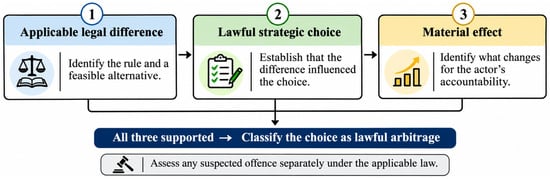
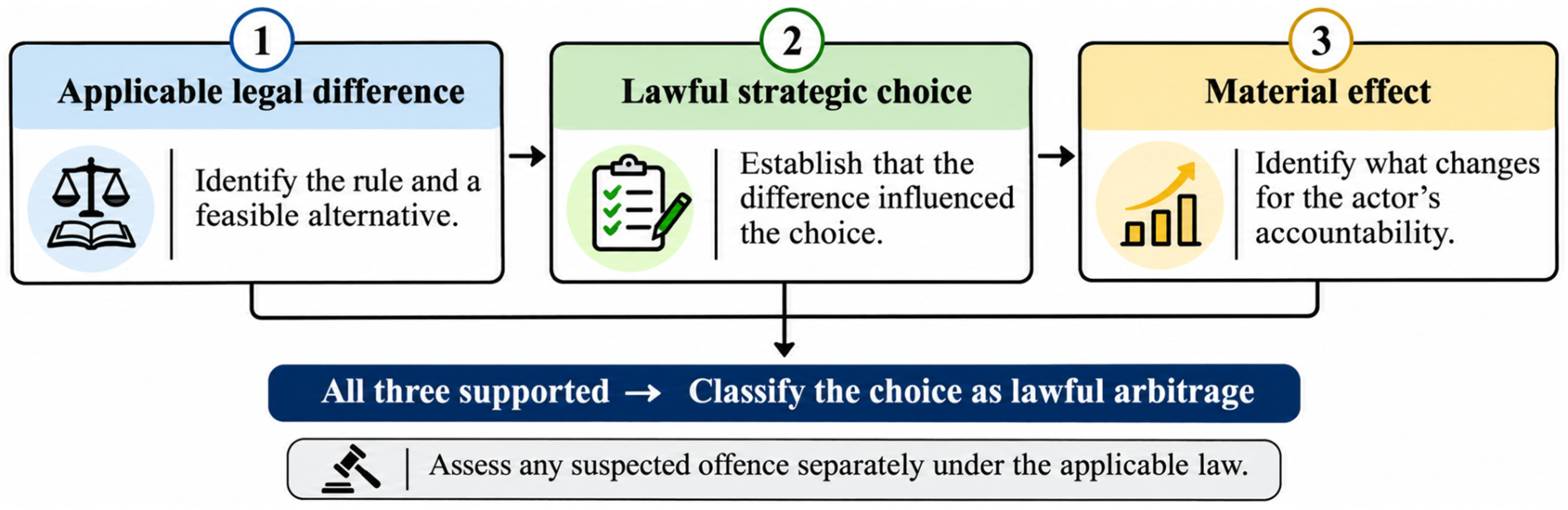
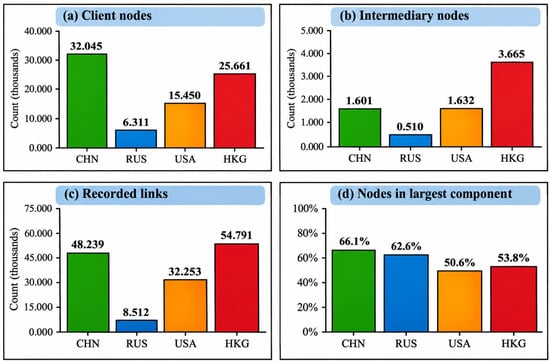
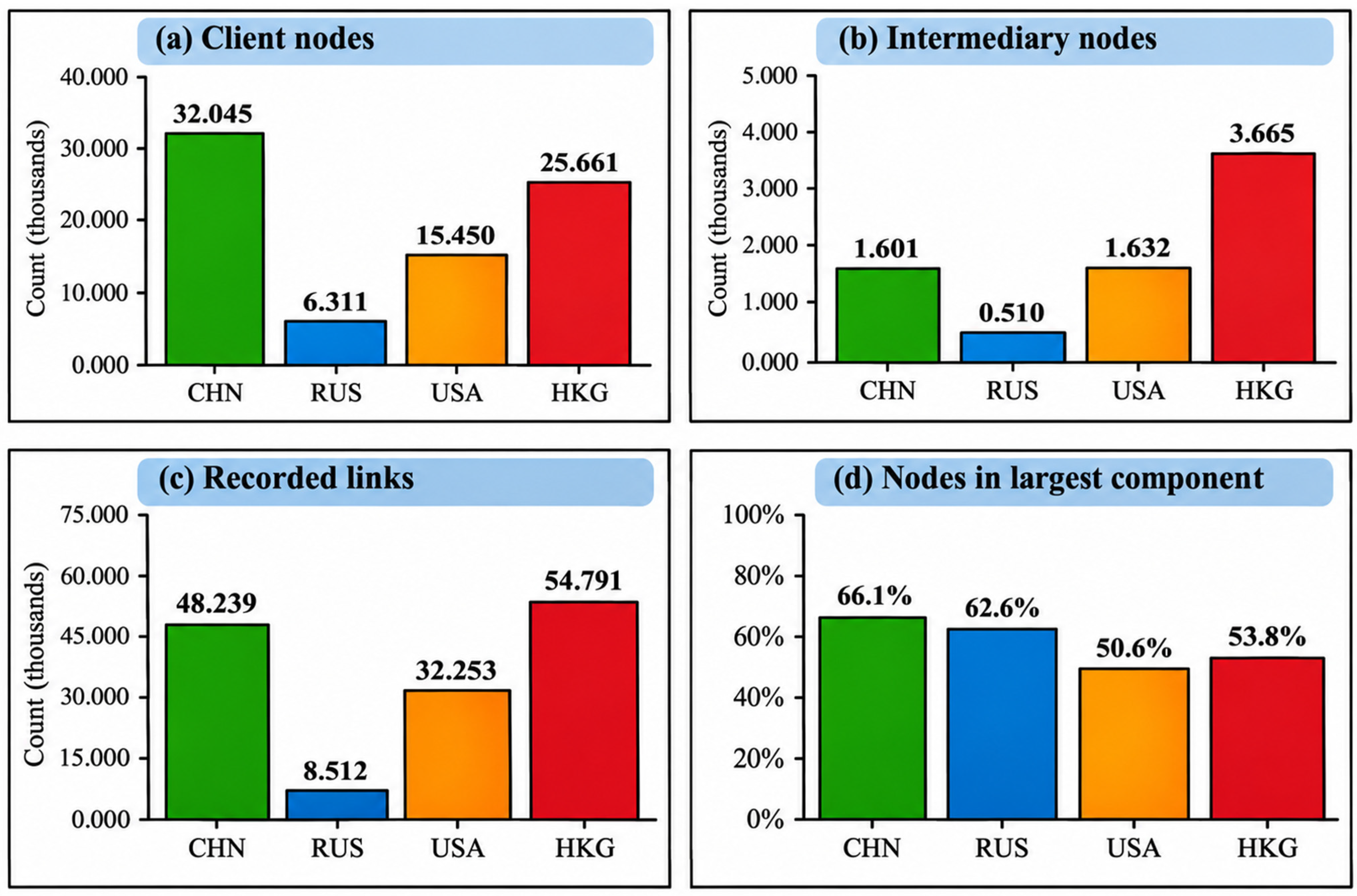
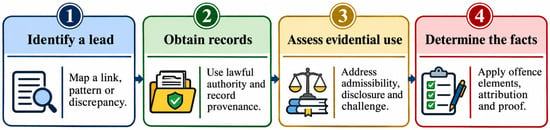
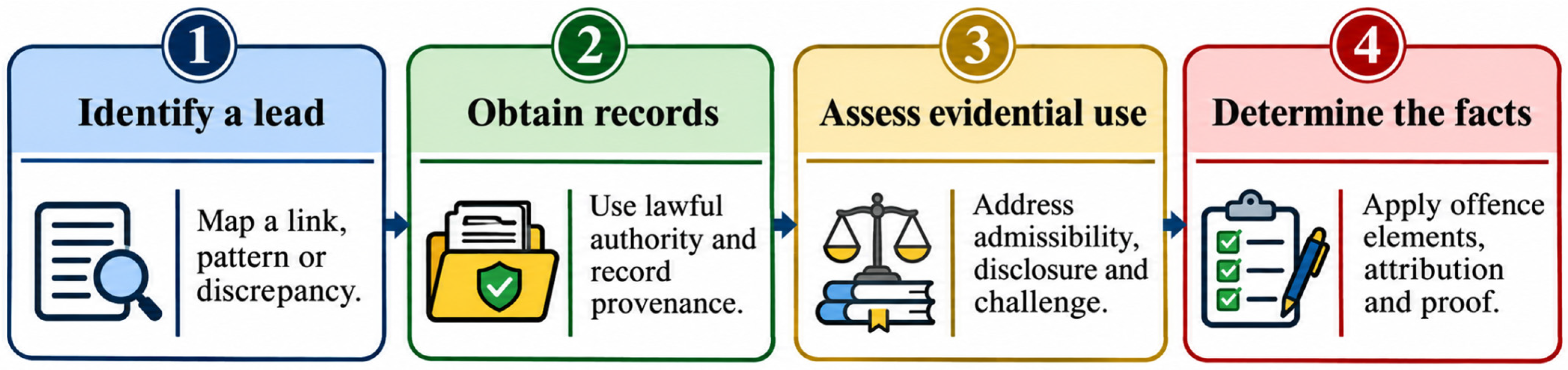
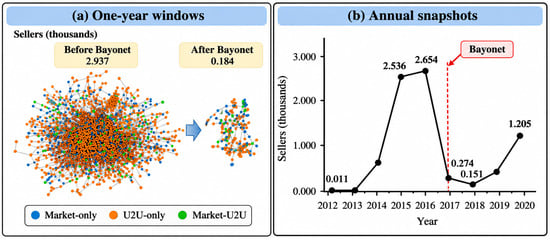
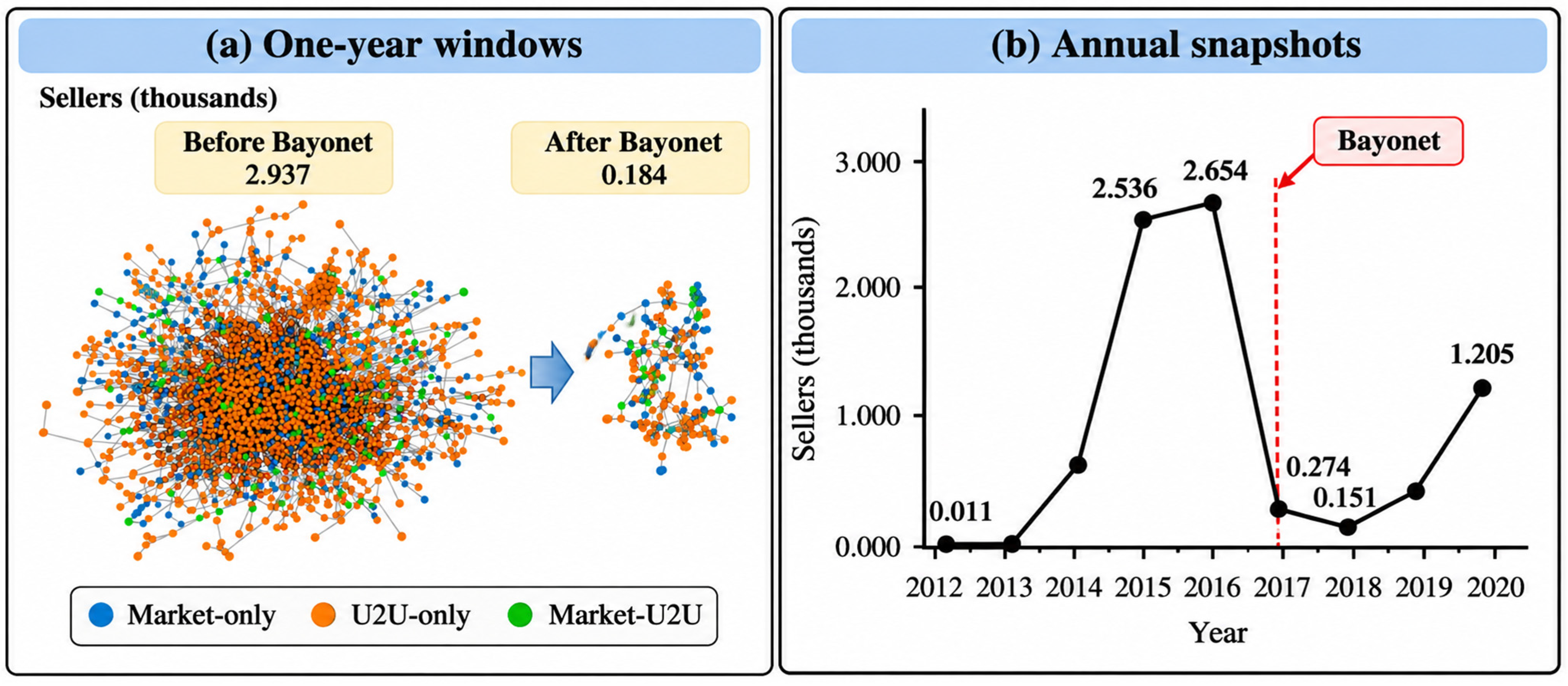
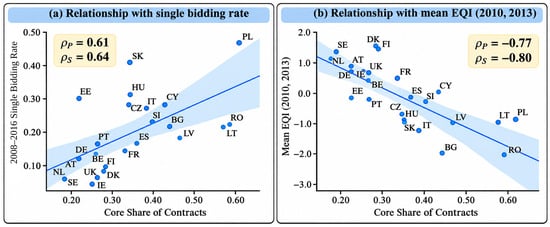

Disclaimer/Publisher’s Note: The statements, opinions and data contained in all publications are solely those of the individual author(s) and contributor(s) and not of MDPI and/or the editor(s). MDPI and/or the editor(s) disclaim responsibility for any injury to people or property resulting from any ideas, methods, instructions or products referred to in the content. |
© 2026 by the authors. Licensee MDPI, Basel, Switzerland. This article is an open access article distributed under the terms and conditions of the Creative Commons Attribution (CC BY) license.