


Abstract
The NdFeB magnetic material is widely used in modern industry and electronics. Recycling spent magnets containing 30–40 wt.% Rare Earth Elements (REEs) and 60–70 wt.% iron is essential for resource recovery. This study focuses on treating wastewater from hydrometallurgical REE extraction to enable water reuse and iron recovery. Experiments investigated the influence of temperature (25–60 °C) and oxalic acid concentration (50–120% stoichiometric amount) on iron precipitation as the main focus. Optimal iron recovery of 85.3% and 86.8% was achieved at 25 °C using 80% and 100% stoichiometric oxalic acid, respectively. Simultaneously, praseodymium removal exceeded 94%. The Differential Scanning Calorimetry (DSC) analysis identified a peak between 168.8 °C and 245 °C, with the peak temperature recorded at 214.5 °C, indicating the optimal calcination temperature for iron oxalate. This was confirmed through oven testing and X-ray Diffraction (XRD) analysis. The treated effluent exhibited a Chemical Oxygen Demand (COD) of 418 mg/L, with residual Fe and Pr concentrations significantly reduced to 5.7 mg/L and 4.3 mg/L, respectively. This approach demonstrates an efficient method for wastewater treatment and resource valorization, promoting sustainability in the recycling sector.
1. Introduction
NdFeB magnetic material is acknowledged as a “permanent magnet,” characterized by its robust coercive force, substantial remanence, and remarkable magnetic energy product capabilities [1,2]. NdFeB permanent magnets find widespread application across modern industries and electronic technologies [3,4,5,6] such as wind turbines [7], electric and hybrid vehicles (EVs and HEVs), and computer hard disk drives (HDDs) [4,8,9,10]. Their uses also extend to household electrical appliances, acoustic transducers/loudspeakers, magnetic resonance imaging (MRI) machines, and various other industrial motors and generators [4,10,11]. With the expansion of applications for permanent magnets, global production of NdFeB has surged since 2010. By 2016, the annual output of NdFeB magnetic materials had increased by 35% compared to 2010, reaching 132,800 tonnes, with expectations of continuing growth at an annual rate of 10% [12,13]. Meanwhile, over 10,000 tonnes of NdFeB scrap are anticipated to be recovered annually from waste electrical appliances [14]. Recycling spent magnets is appealing due to their composition, which typically contains 30–40% rare earth elements (REEs) [15,16].
Hydrometallurgy has proven to be a promising way to recover metals, showing impressive results in extracting precious metals [17]. It offers several benefits better control over the process, and being environmentally friendly [18], less capital cost, and recovering more metal than traditional methods [19,20]. These processes are highly dependent on water, and the demand continues to rise steadily yearly [21]. However, the extensive use of leaching solutions in specific hydrometallurgical operations generates substantial amounts of wastewater [22]. This wastewater contains dangerous substances like heavy metals [21,23] and has acidic pH levels [24], posing significant environmental risks. According to Binnemans et al.’s [25]. Principles of sustainable hydrometallurgy, adopting strategies that enhance process sustainability, are crucial. Their insights emphasize the importance of minimizing waste and maximizing resource recovery to meet the increasing demand for environmentally friendly metal extraction practices. Addressing these factors will help tackle the challenges of wastewater generation and reduce the environmental risks associated with heavy metals and acidic leaching solutions. Acknowledging wastewater as a potential renewable source that can be reclaimed and recycled offers a promising solution to alleviate water shortages [26]. As a result, significant research efforts have been dedicated to investigating and advancing several physicochemical techniques, such as sorption, ion exchange, coagulation, and flotation. These methods aim to treat hydrometallurgical wastewater effectively and facilitate the reuse of treated water within the same processes [21,26]. With mounting concerns over water scarcity and the global targets for 2030 [27], ensuring the sustainability of wastewater treatment approaches has become imperative.
Allayorov et al. [21] conducted research focusing on purifying hydrometallurgical effluents through coagulation and precipitation, with a specific emphasis on reducing total hardness. They optimized using reagents such as sodium carbonate and employed aluminum and iron sulphate sorbents as effective coagulants for removing impurities from wastewater. Ullah et al. [28] studied wastewater generated during the hydrometallurgical process of extracting silver from in-mold structural electronics. They employed the Fenton process to treat the wastewater and achieved a COD reduction efficiency of 93.6%. Sudibyo et al. [24] utilized electrocoagulation to treat wastewater from laterite hydrometallurgy, specifically targeting the reduction of nickel and other metals. They utilized a tubular aluminum electrode, achieving a 67% reduction in turbidity and reducing the nickel content in sludge to 0.62% by weight. The effective removal of metal ions was achieved through deposition on the cathode during the process. Gameel et al. [29] investigated the removal of iron from synthetic wastewater using a novel hybrid filter composed of equal amounts of activated carbon and limestone. They successfully achieved complete iron removal from a 10 mg/L solution by optimizing conditions, specifically using 1000 g of the filter, a 95 min detention time, and an initial pH of 6.0.
Alongside rare earth elements (REEs), iron is the other major metal found in spent magnets, making up 60–70% of the total mass [11,30,31]. Therefore, recovering iron from NdFeB slurry is both essential and significant. Oxalic acid was employed to extract iron from the solution. This study uses a hydrometallurgical technique to extract iron and address the wastewater produced during Rare Earth Elements (REE) recovery from used permanent magnets. Oxalic acid was employed to extract iron, while lime was utilized to precipitate the residual iron and other elements contained in the wastewater. Subsequent analysis of iron oxalate was conducted using X-ray Fluorescence (XRF), X-ray Diffraction (XRD), and Differential Scanning Calorimetry (DSC). Although iron is often considered a low-value metal compared to rare earth elements, its high concentration in NdFeB-derived effluents makes it a critical component in terms of environmental load and sludge generation. If it is not selectively recovered, iron is typically removed through bulk hydroxide precipitation, producing large volumes of low-value sludge that require costly handling and disposal. Selective precipitation as iron oxalate allows concentration of iron into a stable and potentially marketable oxide after calcination, while significantly reducing secondary sludge production. This research integrates wastewater treatment and its potential reuse with efficient metal recovery as a secondary benefit, while also addressing environmental impact and contributing to sustainable water management objectives by 2030 [27].
2. Materials and Methods
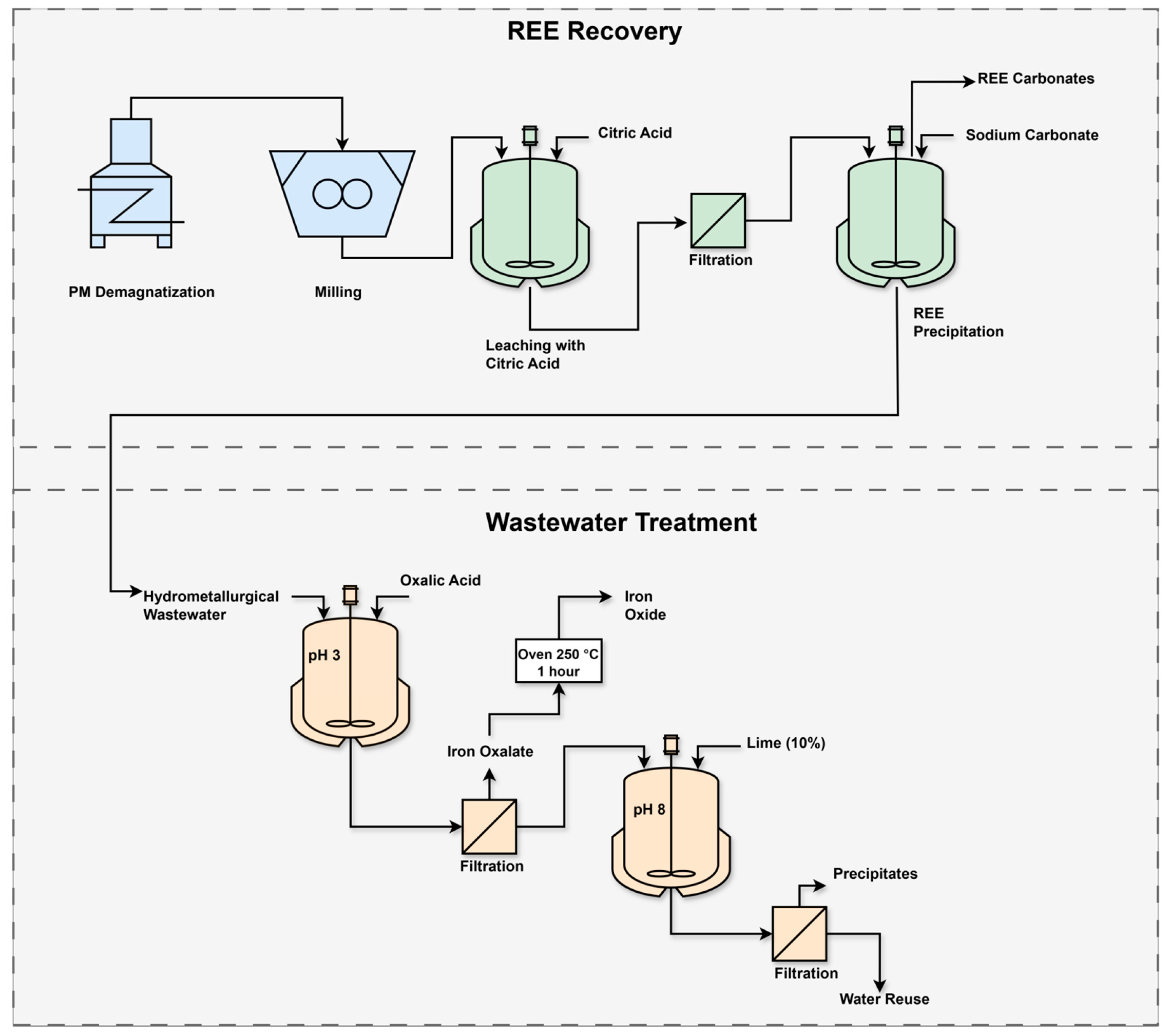
Wastewater used in this study originated from a hydrometallurgical pilot plant designed for the extraction of rare earth elements (REEs) from spent permanent magnets, under the New-RE project (Innovation Projects, EIT RawMaterials 2022–2024) sourced from the automotive sector. The spent permanent magnets were first demagnetized in a furnace at 350 °C, followed by mechanical grinding in a mill to achieve fine powder suitable for leaching. Table 1 shows the REEs concentration in the permanent magnet sample. Then the fine powder was leached using citric acid (C6H8O7) [32]. A subsequent liquid–liquid extraction transferred the REEs into an organic phase, while the remaining inorganic aqueous phase constituted the wastewater investigated in this study [33,34]. This acidic wastewater (pH 3.0) had the following initial composition: Iron (Fe) 32,366 mg/L, Boron (B) 518.7 mg/L, and Praseodymium (Pr) 341.6 mg/L, given in Table 2. All chemicals used were of analytical grade. These included oxalic acid (C2H2O4) and calcium hydroxide (Ca(OH)2), which was prepared as a 10% (w/v) solution. The effluent with an initial pH of 3.0, which corresponds to the optimum range for ferrous oxalate formation [35]. Thus, all experiments were conducted under this condition without external pH control. A reaction time of one hour was adopted from preliminary tests, ensuring sufficient time for precipitation. Subsequent neutralization with lime was performed up to pH 8.5, the precipitation pH for iron hydroxides [36].
Table 1.
Concentration of REEs, B, and Fe in the demagnetized PM sample.
Table 2.
Composition of wastewater before treatment.
The experimental investigation aimed to assess the effectiveness of oxalic acid in recovering iron from this wastewater. To initiate iron recovery, specific amounts of oxalic acid were added to the samples at varying stoichiometric ratios: 50%, 80%, 100%, and 120%. Additionally, the effect of temperature was assessed by conducting experiments at 25 °C, 40 °C, 50 °C, and 60 °C. Each sample was stirred at 200 rpm for 1 h using a shaking incubator (Argolab, SKI 4, Carpi, Italy) to ensure adequate mixing and reaction kinetics. After the reaction, samples were vacuum filtered using a 0.45 µm cellulose nitrate filter (Steroglass, Model ST510, Perugia, Italy) to separate the precipitated iron oxalate from the solution.
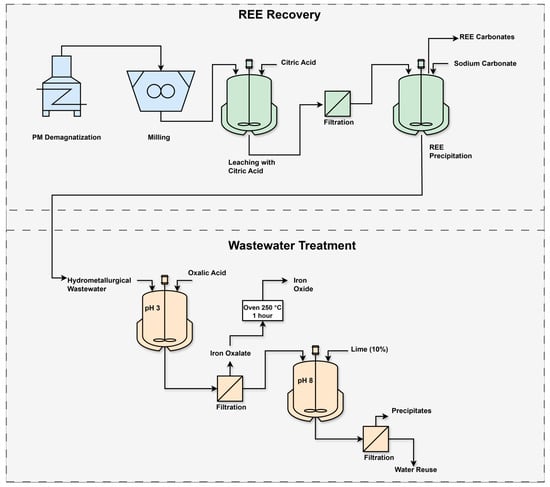
Differential Scanning Calorimetry (DSC 8500, PerkinElmer, Inc., Waltham, MA, USA) was employed to examine the thermal behavior of the precipitated iron oxalate. The DSC analysis was performed under a nitrogen purge gas at a 20 mL/min flow rate. The temperature profile involved heating at a rate of 20 °C/min from 0 °C to 360 °C, followed by cooling to 0 °C under the same conditions to identify the optimal calcination temperature. The solution remaining after filtration was then treated with a 10% (w/v) lime solution to precipitate any residual iron and boron from the wastewater. Finally, Inductively Coupled Plasma Optical Emission Spectroscopy (ICP-OES) using the Agilent Technologies 5100 instrument (Santa Clara, CA, USA) was used to analyze the samples for the concentrations of iron, boron, and praseodymium after the experiments were completed. The removal percentage was determined from ICP-OES measurements of the leachate before and after oxalic-acid precipitation, with additional analysis of the digested precipitate to confirm the mass balance. Pr was selected as a representative light rare earth element (LREE) due to its intermediate atomic mass and chemical behavior, which are comparable to those of other REEs commonly found in hydrometallurgical liquors, making it a suitable indicator for assessing the overall REE removal performance. A schematic diagram illustrating the overall process is presented in Figure 1.
Figure 1.
Schematic diagram of the process.
All experiments were performed in duplicate under identical conditions. The results demonstrated high reproducibility, confirming the reliability of the experimental approach.
3. Results
3.1. Effect of Oxalic Acid Concentration
Four separate experiments were conducted, varying the percentage of stoichiometric oxalic acid added to each sample: 50%, 80%,100%, and 120% (stoichiometric conditions). The balanced chemical equation is given below, in which Ferrous citrate (C6H6FeO7), Pr3+, Nd3+, Dy3+, and Tb3+ react with oxalic acid (C2H2O4) to produce solid precipitate and a solution of citric acid (C6H8O7).
2C6H6FeO7 + 2C2H2O4 → 2FeC2O4↓ + 2C6H8O7
Pr3+ + C2O42− → Pr2(C2O4)3↓
Nd3++3C2O42− → Nd2(C2O4)3↓
2Dy3+ + 3C2O42− → Dy2(C2O4)3↓
2Tb3+ + 3C2O42− → Tb2(C2O4)3↓
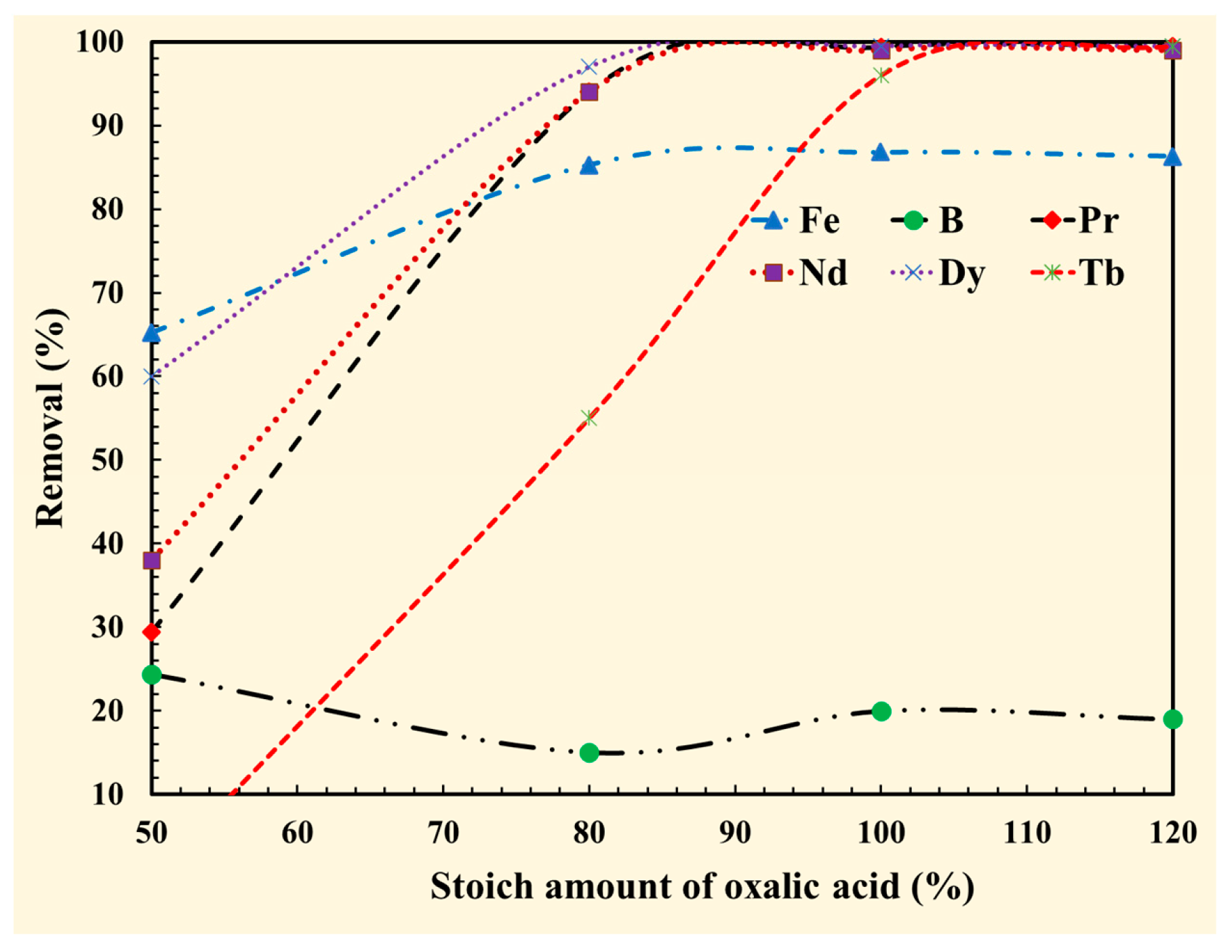
The purpose of this study is to find the optimal concentration of oxalic acid to accomplish the maximum recovery of iron to treat the wastewater while reducing the reagent consumption. For effective precipitation of iron as an oxalate, the solubility differences between ferrous (Fe(II)) and ferric (Fe(III)) in oxalate solutions are critical. Ferrous oxalate (FeC2O4) is known to be highly insoluble in water, with very low solubility product constants (Ksp) reported as 3.2 × 10⁻⁷ [37,38]. This low solubility allows for its efficient precipitation from solution [37,39]. In contrast, ferric iron (Fe(III)) tends to form stable and soluble oxalate complexes [38], such as Fe(C2O4)33− and Fe(C2O4)22− [37]. The formation of these soluble complexes means that Fe(III) is less likely to precipitate as a simple oxalate salt compared to Fe(II). The maximum iron recovery was achieved at 100% stoichiometric amount of oxalic acid, with a recovery of 86.8%, 86.3% for 120% oxalic acid, while 80% stoichiometric amount of oxalic acid led to a recovery of 85.3%. A considerable decrease in efficiency was noticed at 50% stoichiometric amount of oxalic acid, where only 65.2% of the iron was recovered, suggesting that an inadequate amount of oxalic acid constrains the precipitation and complexation. Consistent with previous findings [9], sub-stoichiometric doses of oxalic acid constrain the formation of oxalates, which ultimately compromise the efficiency of the metal recovery process. However, the efficiencies exceeding the stoichiometric ratio could be due to the preferential dissolution of more reactive or accessible metal phases, particularly at low stoichiometric ratios, where the leaching agent primarily attacks the most easily extractable species. In such cases, even a limited amount of reagent can result in significant metal dissolution, especially if the target metals are present in surface-exposed or highly soluble phases. Additionally, higher-than-expected leaching efficiency may result from side reactions, complexation effects, or partial catalytic behavior of the reagent, which can enhance metal solubilization beyond the simple stoichiometric prediction. The small difference between 120%, 100% and 80% suggests that 80% is more efficient in terms of cost-effectiveness and reagent consumption while achieving nearly the same recovery efficiency.
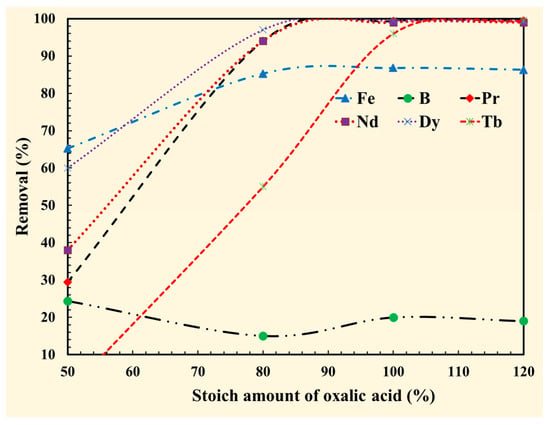
Figure 2 illustrates the effect of oxalic acid on the recovery of iron, boron, and praseodymium. The findings revealed that iron precipitation increased with increasing the amount of oxalic acid; however, 80%, 100% and 120% stoichiometric conditions have a negligible effect on the difference in recovery efficiencies of iron. This suggests that there is an optimal oxalic acid concentration, beyond which further addition of oxalic acid does not increase the recovery efficiency and can lead to an increase in iron solubility due to the creation of soluble iron oxalate complexes. This solubility increase is attributed to the tendency of excess oxalate ions to form stable and soluble ferric oxalate complexes, such as Fe(C2O4)33− and Fe(C2O4)22−. This is supported by findings indicating that maintaining a high oxalate-to-iron ratio is essential for the stabilization of the [Fe(C2O4)3]3− complex [40]. While ferrous oxalate (FeC2O4) is known to be highly insoluble, the presence of these soluble ferric complexes means that some iron remains bound in solution even with excess oxalic acid. It was also observed that praseodymium and boron recovery were also affected by oxalic acid concentration. Praseodymium exhibited a significant increase in recovery at an 80% stoichiometric amount (94%) as compared to 50% (29.4) shown in Table 3, indicating that higher concentrations of oxalic acid increase the recovery of rare earth elements. This lines up with literature reporting near-quantitative (>90%) rare earth recovery through oxalate precipitation [41]. To achieve complete removal of iron and other elements, a secondary precipitation step was carried out using lime solution (10% w/v) at a pH value of 8.5. This aligns with established wastewater treatment strategies where lime-induced precipitation within an optimal pH range of >8 effectively transforms dissolved iron and co-existing metals into insoluble phases, achieving removal efficiencies of up to 100% [42]. The precipitated iron and other impurities were then separated through filtration. This two-stage process increases the overall recovery efficiency by initially getting iron in oxalate form and further removing the remaining dissolved iron and other elements via calcium citrate precipitation.
Figure 2.
Effect of oxalic acid concentration on Iron recovery.
Table 3.
Elements recovery in oxalate form.
Interestingly, at a 100% stoichiometric amount of oxalic acid, the precipitation of iron in the citrate sludge increased significantly to 40.9%, compared to 10.5% at an 80% stoichiometric condition. This indicates that excess oxalic acid may have caused partial dissolution of the iron oxalate, which was then removed during the lime treatment. This observation strongly supports the hypothesis that the excess oxalic acid (at 100% and 120%) causes partial redissolution of the initially formed ferrous oxalate or prevents its complete precipitation by promoting the formation of soluble iron oxalate complexes. Consequently, this residual dissolved iron is then effectively removed as iron hydroxide during the subsequent neutralization step with lime. This significant secondary precipitation of iron directly contributes to the substantial increase in the weight of the wet calcium citrate sludge, measured at 235.9 kg/m3 at the 100% stoichiometric condition. The iron oxalate obtained was then thermally treated at a temperature of 250 °C for one hour, resulting in a 66.3% loss in weight due to the decomposition of iron oxalate into iron oxide and the release of CO2. To ensure the reproducibility of the results, experiments were reproduced under the same experimental conditions, and the results remained consistent (85.5% and 85.1%), validating the consistency of the enhanced 80% stoichiometric condition. These calculated values (given in Table 4) are below 0.5%, indicating excellent reproducibility and reliability of the experimental results. The increase in sludge weight at the 100% stoichiometric condition is reported in Table 5.
Table 4.
Statistical analysis of Iron recovery with different oxalic acid ratios.
Table 5.
Elements recovery in calcium citrate.
Economic analysis for chemical usage was performed for all four concentrations of oxalic acid, showing that 50% oxalic acid costs € 34, 80% (€ 45), 100% (€ 54), and 120% (61 €/m3) to treat 1 m3 of wastewater. Beyond reagent costs, the techno-economic viability is influenced by sludge management; the 80% stoichiometric condition produces 127.2 kg/m3 of wet metal oxalate and a significantly lower volume of calcium citrate sludge (30.1 kg/m3) compared to the 100% condition (235.9 kg/m3). This reduction in secondary sludge volume minimizes handling costs and aligns with the principles of minimizing waste and maximizing resource recovery. Among these, 80% (45 €/m3) provides the best balance in terms of wastewater treatment, iron recovery, and cost-effectiveness.
It is important to emphasize that the identification of 80% of the stoichiometric oxalic acid amount as the optimal operating condition represents a relevant process insight. While oxalate precipitation is well known in the literature, most studies employ stoichiometric or excess reagent conditions without evaluating the impact on secondary sludge formation and overall process efficiency. The present results demonstrate that slight under-stoichiometric conditions minimize reagent consumption and significantly reduce calcium citrate sludge formation, without compromising iron recovery efficiency. This optimization contributes to both economic and environmental performance.
To establish a more detailed mass balance, an analysis of the feed solution was conducted to verify the distribution of elements during oxalic acid and lime treatment. The feed solution (concentrations given in Table 2) underwent treatment with 80% oxalic acid, which decreased the concentrations of Fe to 3.29 g/L, Pr to 14.13 mg/L, and Boron to 303.9 mg/L, indicating extensive precipitation of Fe. However, the remaining iron in the solution exceeds the solubility of pure iron oxalate (0.097 g/100 mL at a temperature of 25 °C [43]), suggesting that some portion of the iron is still present in the solution, possibly other soluble complexes, as in iron citrate, but the exact chemical form has not yet been confirmed. Following the oxalic acid treatment, lime was added to remove the remaining elements from the wastewater. The characteristic of the treated effluent is given in Table 6.
Table 6.
Characteristics of treated water.
3.2. Effect of Temperature
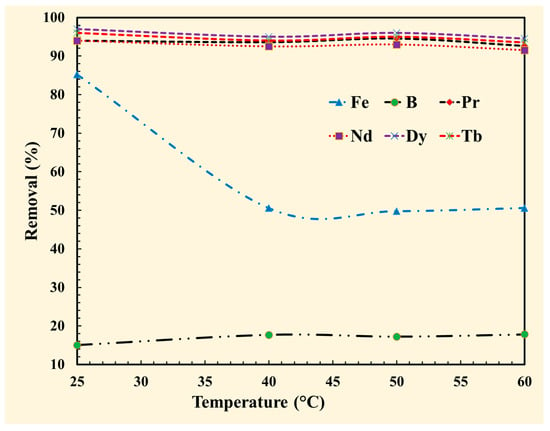
To investigate the optimal temperature for iron recovery by using oxalic acid from the wastewater produced during the recycling of spent permanent magnets, four different experiments were performed at 25 °C, 40 °C, 50 °C, and 60 °C. An 80% stoichiometric amount of oxalic acid was introduced to the wastewater and agitated for 1 h at 200 rpm. Following the agitation, the solutions were then filtered and analyzed using ICP to determine the concentrations of iron, boron, and praseodymium. The results given in Table 7 indicate that the temperature has an inverse effect on the recovery of iron. The maximum iron recovery of 85.3% was seen at a temperature of 25 °C, whereas the recovery considerably declined at high temperatures (~50% at 25 °C, 40 °C, 50 °C, and 60 °C). This suggests that high temperatures may increase the solubility of iron oxalate complexes, leading to decreased precipitation efficiency. From a thermodynamic perspective, the precipitation of iron oxalate is an exothermic reaction. Increasing temperature shifts the equilibrium toward the dissolved species, reducing the amount of solid precipitate. Therefore, the observed decrease in iron recovery at higher temperatures is consistent with both solubility effects and thermodynamic considerations. Ling He et al. [6] also noticed that iron recovery efficiency decreases gradually with increasing temperature, identifying 25 °C as the optimum temperature. This behavior is likely due to the increased dissolution of iron oxalate at elevated temperatures, leading to partial redissolution and decreasing precipitation efficiency [44].
Table 7.
Iron recovery at different temperatures.
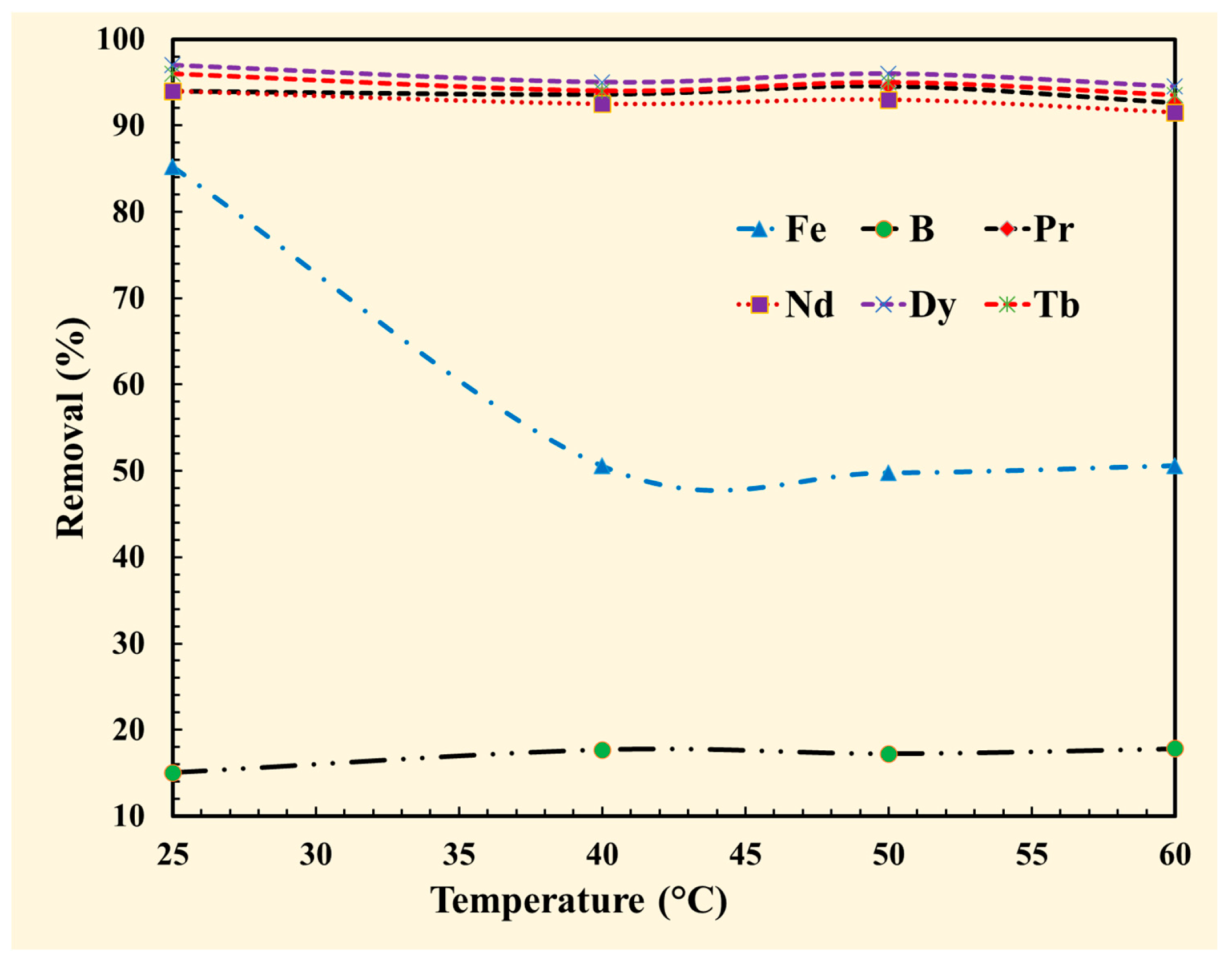
Figure 3 demonstrates the effect of temperature on the recovery of Fe, B, and Pr, indicating the sharp decrease in iron recovery at a temperature above 25 °C. In contrast, Pr recovery remained consistently high (~93–94%) across all temperatures, showing that its precipitation is less affected by varying temperatures compared to iron. This stability is rooted in the exceptionally low solubility of Praseodymium (III) oxalate, which has a solubility constant (log10K0) of −30.82 ± 0.30 at 25 °C. This ultra-low value confirms that the solid phase acts as the solubility-controlling phase [45].
Figure 3.
Effect of temperature on Iron recovery.
Notably, recovery of boron increased a bit with the temperature reaching a maximum of 17.8% at 60 °C, which could be due to the more stable precipitates at higher temperatures. For boron extraction, a phosphonium-based ionic liquid was used, with the results reported in [46].
3.3. Thermal Behavior Analysis (DSC)
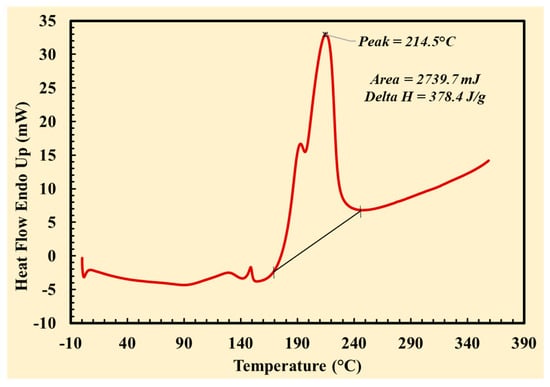
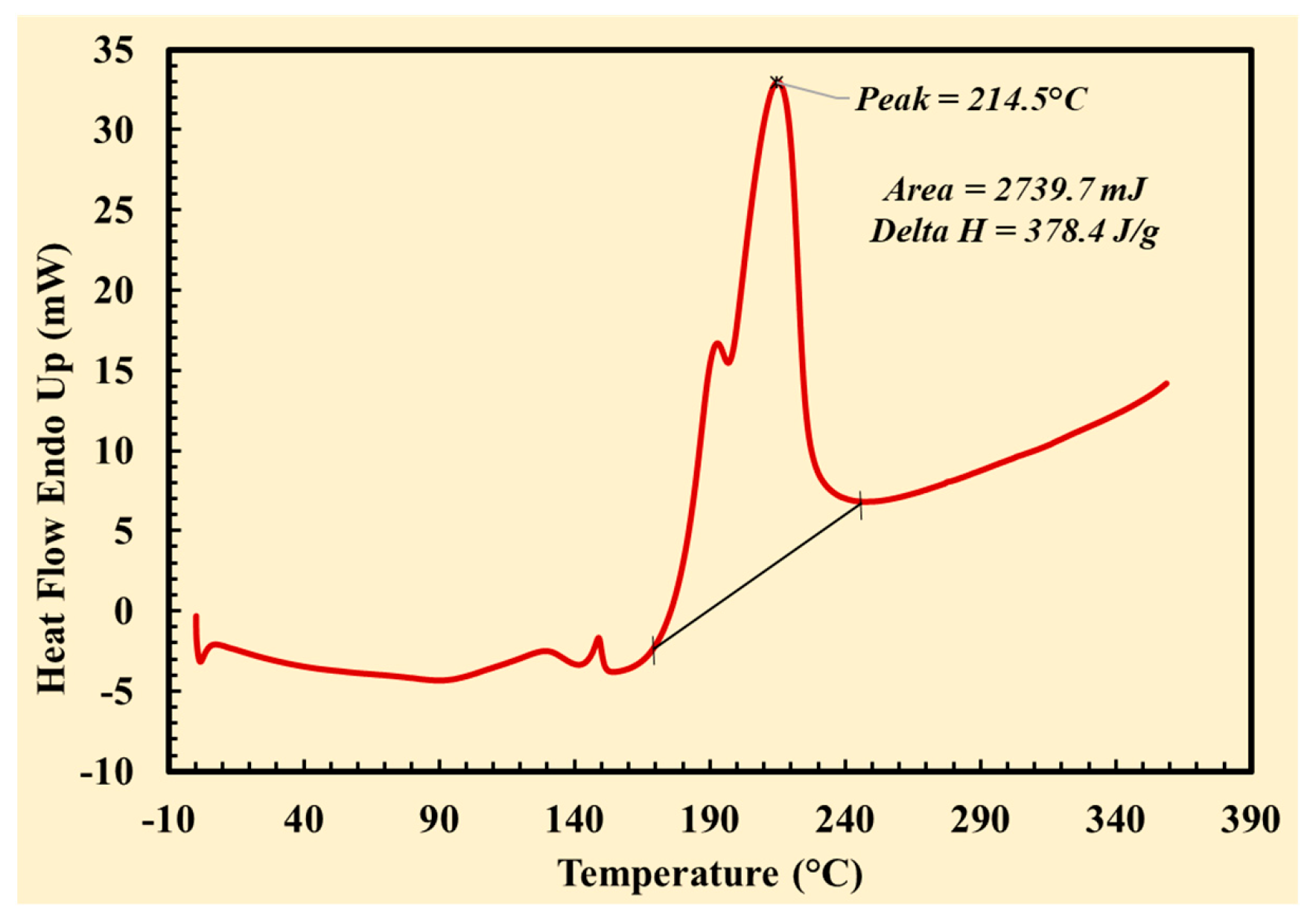
To examine the thermal stability of the iron oxalate, Differential Scanning Calorimetry was conducted. The DSC thermogram (Figure 4) demonstrated a distinctive endothermic peak between 168.8 °C and 245.0 °C, with the peak temperature recorded at 214.5 °C. This endothermic transition corresponds to the decomposition of iron oxalate into iron oxide and gaseous CO2. The area under the peak was quantified at 2739.7 mJ, corresponding to a heat flow of 378.4 J/g, further confirming a decomposition process needing a considerable energy input. These results provide important insights into the phase change and decomposition behavior of iron oxalate. The subsequent transformation into magnetite stabilizes the waste and increases the recovered iron content from 25.9% to 55.9%, significantly enhancing its market relevance as a secondary raw material. This valorization route effectively transforms a hydrometallurgical byproduct into a valuable resource, directly supporting industrial circularity and sustainability objectives.
Figure 4.
Thermal behavior of the sample analyzed by DSC.
3.4. Elemental Composition Analysis (XRF & XRD)
To investigate the compositional change occurring during calcination, XRF analysis was conducted on iron oxalate samples before and after thermal treatment at 250 °C. The findings (Table 8) revealed the occurrence of iron (60.33%), Neodymium (11.01%), and Pr (1.5%) in the untreated sample, with insignificant traces of other elements (<1%).
Table 8.
XRF analysis of the sample before and after calcination at 250 °C.
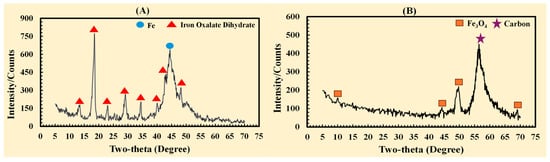
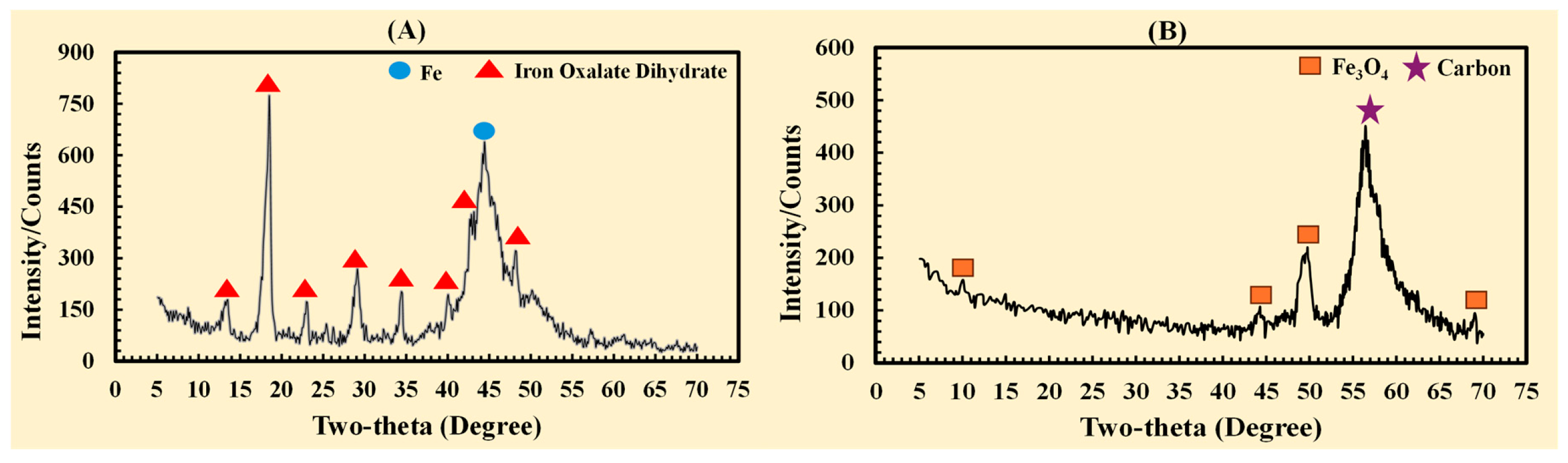
Additionally, XRD analysis was performed on both samples to investigate the structural transformations of iron oxalate. The X-ray diffraction patterns shown in Figure 5 indicated a clear crystalline peak corresponding to iron oxalate in the sample before calcination. After calcination at 250 °C, new peaks were observed, corresponding to magnetite (Fe3O4) and a carbon residue, indicating the transition of iron oxalate to iron oxides.
Figure 5.
XRD analysis ((A) Before calcination, (B) After calcination at 250 °C).
4. Conclusions
This study does not propose novel precipitation chemistry but rather demonstrates an integrated process strategy for real hydrometallurgical effluents derived from NdFeB recycling. The originality lies in the combined optimization of iron recovery, wastewater reuse, sludge minimization, and reagent cost analysis under realistic process conditions. The results show that selective iron recovery prior to lime neutralization significantly reduces secondary sludge production and improves overall process sustainability.
Experimental results showed that iron recovery is strongly influenced by operating conditions. The optimal temperature was identified as 25 °C, at which iron recovery reached 85.3%, while higher temperatures significantly reduced efficiency due to increased solubility of iron oxalate complexes. Regarding reagent dosage, 80% of the stoichiometric oxalic acid amount proved nearly as effective (85.3% recovery) as the fully stoichiometric condition (86.8%), while reducing reagent consumption and secondary calcium citrate sludge formation. The economic assessment confirmed that the 80% condition (45 €/m3) represents a more cost-effective solution compared to the 100% stoichiometric dosage (54 €/m3).
The treated effluent exhibited a substantial reduction in metal concentrations, with residual Fe (5.7 mg/L), Pr (4.3 mg/L), and B (150 mg/L), and a COD of 418 mg/L, supporting its potential reuse within the hydrometallurgical process. High Pr removal (>90%) and partial boron removal were achieved, while complementary studies demonstrated further boron extraction using a phosphonium-based ionic liquid.
Thermal analysis by DSC identified 214.5 °C as the optimal calcination temperature for iron oxalate decomposition. Subsequent calcination and XRD analysis confirmed the formation of iron oxides, increasing the iron content from 25.9% to 55.9% and enhancing its valorization potential as a secondary raw material.
Overall, the proposed approach integrates wastewater treatment with resource recovery under realistic process conditions, contributing to circular hydrometallurgical processing and improved environmental performance in critical material recycling. Future work should include a detailed life cycle assessment and energy–water balance to further quantify environmental sustainability and circularity. Additionally, the precipitates obtained during wastewater treatment could be further processed, offering opportunities to recover valuable resources and enhance the overall sustainability of the process.
Author Contributions
M.U.: Investigation, Formal analysis, Writing—original draft, Writing—review and editing. T.Y.: Formal analysis, Methodology, P.R.: Conceptualization, Methodology, Software, G.S.: Data Curation, Software, F.V.: Conceptualization, Data Curation, Writing—review and editing, Formal analysis, Project administration, Resources, Validation, N.M.I.: Conceptualization, Data Curation, Validation, Writing—review and editing. All authors have read and agreed to the published version of the manuscript.
Funding
This study was developed within the NEW-RE project (number 21116) which was supported and financed by EIT Raw Materials.
Data Availability Statement
The data presented in this study are available on request from the corresponding author. The data are not publicly available due to project-related restrictions.
Acknowledgments
The authors thank all the NEW-RE Consortium partners for collaborating in this research activity.
Conflicts of Interest
The authors declare no conflict of interest.
Abbreviations
The following abbreviations are used in this manuscript:
| REEs | Rare Earth Elements |
| XRD | X-ray Diffraction |
| DSC | Differential Scanning Calorimetry |
| XRF | X-ray Fluorescence |
| EVs | Electric Vehicles |
| HEVs | Hybrid Vehicles |
| HDDs | Hard Disk Drives |
| MRI | Magnetic Resonance Imaging |
| COD | Chemical Oxygen Demand |
| ICP-OES | Inductively Coupled Plasma Optical Emission Spectroscopy |
References
- Liu, Q.; Tu, T.; Guo, H.; Cheng, H.; Wang, X. High-efficiency simultaneous extraction of rare earth elements and iron from NdFeB waste by oxalic acid leaching. J. Rare Earths 2021, 39, 323–330. [Google Scholar] [CrossRef] [Scilit]
- Kumari, A.; Sinha, M.K.; Pramanik, S.; Sahu, S.K. Recovery of rare earths from spent NdFeB magnets of wind turbine: Leaching and kinetic aspects. Waste Manag. 2018, 75, 486–498. [Google Scholar] [CrossRef] [Scilit]
- Ikram, A.; Mehmood, F.; Sheridan, R.S.; Awais, M.; Walton, A.; Eldosouky, A.; Sturm, S.; Kobe, S.; Rozman, K.Z. Particle size dependent sinterability and magnetic properties of recycled HDDR Nd–Fe–B powders consolidated with spark plasma sintering. J. Rare Earths 2020, 38, 90–99. [Google Scholar] [CrossRef] [Scilit]
- Ciacci, L.; Vassura, I.; Cao, Z.; Liu, G.; Passarini, F. Recovering the ‘new twin’: Analysis of secondary neodymium sources and recycling potentials in Europe. Resour. Conserv. Recycl. 2019, 142, 143–152. [Google Scholar] [CrossRef] [Scilit]
- Kim, D.; Powell, L.E.; Delmau, L.H.; Peterson, E.S.; Herchenroeder, J.; Bhave, R.R. Selective Extraction of Rare Earth Elements from Permanent Magnet Scraps with Membrane Solvent Extraction. Environ. Sci. Technol. 2015, 49, 9452–9459. [Google Scholar] [CrossRef] [Scilit] [PubMed]
- He, L.; Xu, Q.; Li, W.; Dong, Q.; Sun, W. One-step separation and recovery of rare earth and iron from NdFeB slurry via phosphoric acid leaching. J. Rare Earths 2022, 40, 338–344. [Google Scholar] [CrossRef] [Scilit]
- Cheng, M.; Li, L.; Xiao, Y.; Liu, H. Hydrometallurgical Recovery Technology for Rare Earth and Iron Separation from Spent NdFeB Magnets. Metals 2022, 15, 1227. [Google Scholar] [CrossRef] [Scilit]
- Klemettinen, A.; Adamski, Z.; Leśniewicz, A.; Rycerz, L. Semicontinuous Process of Rare Earths Recovery from End-of-Life NdFeB Magnets on a Large Laboratory Scale. Minerals 2023, 13, 862. [Google Scholar] [CrossRef] [Scilit]
- Klemettinen, A.; Adamski, Z.; Chojnacka, I.; Le, A.; Rycerz, L. Recovery of Rare Earth Elements from the Leaching Solutions of Spent NdFeB Permanent Magnets by Selective Precipitation of Rare Earth Oxalates. Minerals 2023, 13, 846. [Google Scholar] [CrossRef] [Scilit]
- Yang, Y.; Walton, A.; Sheridan, R.; Güth, K.; Gauß, R.; Gutfleisch, O.; Buchert, M.; Steenari, B.M.; Van Gerven, T.; Jones, P.T.; et al. REE Recovery from End-of-Life NdFeB Permanent Magnet Scrap: A Critical Review. J. Sustain. Metall. 2017, 3, 122–149. [Google Scholar] [CrossRef] [Scilit]
- Lixandru, A.; Venkatesan, P.; Jönsson, C.; Poenaru, I.; Hall, B.; Yang, Y.; Walton, A.; Güth, K.; Gauß, R.; Gutfleisch, O. Identification and recovery of rare-earth permanent magnets from waste electrical and electronic equipment. Waste Manag. 2017, 68, 482–489. [Google Scholar] [CrossRef] [Scilit] [PubMed]
- Xu, Q.; Yang, L.; Wang, D.; Hou, X.; Sun, Y.; Zhou, X.; Zhou, X.; Li, Y. Evaluating the fractionation of ion-adsorption rare earths for in-situ leaching and metallogenic mechanism. J. Rare Earths 2018, 36, 1333–1341. [Google Scholar] [CrossRef] [Scilit]
- Li, C.; Sun, A.; Tian, Z.; Zhang, X.; Ma, B. Efficient reuse of the waste sintered NdFeB magnet with Dy2O3 addition. J. Magn. Magn. Mater. 2018, 462, 41–45. [Google Scholar] [CrossRef] [Scilit]
- Hua, Z.; Wang, J.; Wang, L.; Zhao, Z.; Li, X.; Xiao, Y.; Yang, Y. Selective extraction of rare earth elements from NdFeB scrap by molten chlorides. ACS Sustain. Chem. Eng. 2014, 2, 2536–2543. [Google Scholar] [CrossRef] [Scilit]
- Önal, M.A.R.; Borra, C.R.; Guo, M.; Blanpain, B.; Van Gerven, T. Hydrometallurgical recycling of NdFeB magnets: Complete leaching, iron removal and electrolysis. J. Rare Earths 2017, 35, 574–584. [Google Scholar] [CrossRef] [Scilit]
- Liu, F.; Porvali, A.; Wang, J.L.; Wang, H.; Peng, C.; Wilson, B.P.; Lundström, M. Recovery and separation of rare earths and boron from spent Nd-Fe-B magnets. Miner. Eng. 2020, 145, 106097. [Google Scholar] [CrossRef] [Scilit]
- Cui, H.; Anderson, C. A review of the hydrometallurgical treatment of electronic scrap. In Proceedings of the IPMI’s 41st Annual International Conference, Orlando, FL, USA, 11–13 June 2017; pp. 70–78. [Google Scholar]
- Fogarasi, S.; Imre-Lucaci, F.; Ilea, P.; Imre-Lucaci, Á. The environmental assessment of two new copper recovery processes from Waste Printed Circuit Boards. J. Clean. Prod. 2013, 54, 264–269. [Google Scholar] [CrossRef] [Scilit]
- Rao, M.D.; Singh, K.K.; Morrison, C.A.; Love, J.B. Challenges and opportunities in the recovery of gold from electronic waste. RSC Adv. 2020, 10, 4300–4309. [Google Scholar] [CrossRef] [Scilit]
- Jadhav, U.; Hocheng, H. Hydrometallurgical recovery of metals from large printed circuit board pieces. Sci. Rep. 2015, 5, 14574. [Google Scholar] [CrossRef] [Scilit]
- Allayorov, A. Wastewater Treatment of Hydrometallurgical Productions. EPRA Int. J. Multidiscip. Res. 2023, 9, 184–186. [Google Scholar]
- Iannicelli-Zubiani, E.M.; Giani, M.I.; Recanati, F.; Dotelli, G.; Puricelli, S.; Cristiani, C. Environmental impacts of a hydrometallurgical process for electronic waste treatment: A life cycle assessment case study. J. Clean. Prod. 2017, 140, 1204–1216. [Google Scholar] [CrossRef] [Scilit]
- Hakeem, I.G.; Halder, P.; Aktar, S.; Marzbali, M.H.; Sharma, A.; Surapaneni, A.; Short, G.; Paz-Ferreiro, J.; Shah, K. Investigations into the closed-loop hydrometallurgical process for heavy metals removal and recovery from biosolids via mild acid pre-treatment. Hydrometallurgy 2023, 218, 106044. [Google Scholar] [CrossRef] [Scilit]
- Sudibyo; Junaedi, A.; Handoko, A.S.; Herlina, U.; Darmansyah; Wiranti, T. The laterite hydrometallurgy wastewater treatment using electrocoagulation method. AIP Conf. Proc. 2020, 2232, 040003. [Google Scholar] [CrossRef] [Scilit]
- Binnemans, K.; Jones, P.T. The twelve principles of circular hydrometallurgy. J. Sustain. Metall. 2023, 9, 1–25. [Google Scholar] [CrossRef] [Scilit]
- Chang, L.; Cao, Y.; Fan, G.; Li, C.; Peng, W. A review of the applications of ion floatation: Wastewater treatment, mineral beneficiation and hydrometallurgy. RSC Adv. 2019, 9, 20226–20239. [Google Scholar] [CrossRef] [Scilit]
- Tsani, S.; Koundouri, P.; Akinsete, E. Resource management and sustainable development: A review of the European water policies in accordance with the United Nations’ Sustainable Development Goals. Environ. Sci. Policy 2020, 114, 570–579. [Google Scholar] [CrossRef] [Scilit]
- Ullah, M.; Ippolito, N.M.; Spera, L.; Vegliò, F. Treatment of wastewater produced during the hydrometallurgical extraction of silver from in-mold structural electronics. Case Stud. Chem. Environ. Eng. 2024, 10, 100916. [Google Scholar] [CrossRef] [Scilit]
- Abdulla, G.; Kareem, M.M.; Hashim, K.S.; Muradov, M.; Kot, P.; Mubarak, H.A.; Abdellatif, M.; Abdulhadi, B. Removal of iron from wastewater using a hybrid filter. In IOP Conference Series: Materials Science and Engineering; IOP Publishing: Bristol, UK, 2020; Volume 888, p. 012035. [Google Scholar] [CrossRef] [Scilit]
- Jha, M.K.; Kumari, A.; Panda, R.; Kumar, J.R.; Yoo, K.; Lee, J.Y. Review on hydrometallurgical recovery of rare earth metals. Hydrometallurgy 2016, 165, 2–26. [Google Scholar] [CrossRef] [Scilit]
- Horikawa, T.; Miura, K.; Itoh, M.; Machida, K.I. Effective recycling for Nd-Fe-B sintered magnet scraps. J. Alloys Compd. 2006, 408–412, 1386–1390. [Google Scholar] [CrossRef] [Scilit]
- Romano, P.; Zuffranieri, A.; Rahmati, S.; Adavodi, R.; Ferella, F.; Vegliò, F. Leaching of rare earths from End-of-Life NdFeB magnets with citric acid using full factorial design, response surface methodology, and artificial neural network analysis. Metals 2024, 14, 932. [Google Scholar] [CrossRef] [Scilit]
- Rahmati, S.; Adavodi, R.; Romano, P.; Vegliò, F. Evaluation of the mechanisms of rare earth elements extraction from citrate solutions in the recycling of NdFeB magnets. Process Saf. Environ. Prot. 2025, 195, 106788. [Google Scholar] [CrossRef] [Scilit]
- Rahmati, S.; Birloaga, I.; Romano, P.; Vegliò, F. Optimization of rare earth magnet recovery processes using oxalic acid in precipitation stripping: Insights from experimental investigation and statistical analysis. Heliyon 2024, 10, e34811. [Google Scholar] [CrossRef] [Scilit] [PubMed]
- Hu, C.; Deng, Q.; Jin, Y.; Liu, H.; Xu, D.; Zhong, Y.; Wang, X.; Yang, L. Recovery of iron resources from wet-process phosphoric acid and the preparation of high purity ferrous oxalate: Solvent extraction and photochemical reaction. ACS Sustain. Chem. Eng. 2024, 12, 5061–5074. [Google Scholar] [CrossRef] [Scilit]
- Balintova, M.; Petrilakova, A. Study of pH influence on selective precipitation of heavy metals from acid mine drainage. Chem. Eng. Trans. 2011, 25, 345–350. [Google Scholar] [CrossRef] [Scilit]
- Hu, P.; Zhang, Y.; Liu, T.; Huang, J.; Yuan, Y.; Yang, Y. Separation and recovery of iron impurity from a vanadium-bearing stone coal via an oxalic acid leaching-reduction precipitation process. Sep. Purif. Technol. 2017, 180, 99–106. [Google Scholar] [CrossRef] [Scilit]
- Liu, F.; Peng, C.; Wilson, B.P.; Lundström, M. Oxalic Acid Recovery from High Iron Oxalate Waste Solution by a Combination of Ultrasound-Assisted Conversion and Cooling Crystallization. ACS Sustain. Chem. Eng. 2019, 7, 17372–17378. [Google Scholar] [CrossRef] [Scilit]
- Yang, Y.; Wang, X.; Wang, M.; Wang, H.; Xian, P. Recovery of iron from red mud by selective leach with oxalic acid. Hydrometallurgy 2015, 157, 239–245. [Google Scholar] [CrossRef] [Scilit]
- Pozdnyakov, I.; Sherin, P.; Bazhin, N.; Plyusnin, V. Chemosphere [ Fe(Ox)3]3− complex as a photodegradation agent at neutral pH: Advances and limitations. Chemosphere 2018, 195, 839–846. [Google Scholar] [CrossRef] [Scilit]
- Hoogerstraete, T.V.; Blanpain, B.; Gerven, V. From NdFeB magnets towards the rare-earth oxides: A recycling process consuming only oxalic acid. RSC Adv. 2014, 1, 64099–64111. [Google Scholar] [CrossRef] [Scilit]
- Loughlaimi, I. Enhanced Heavy Metal Removal from Wastewater Produced by Chemical Analysis Laboratory Using Calcium Oxide Precipitation: pH Improvement and Characterization of Precipitated Phases. J. Turk. Chem. Soc. Sect. A Chem. 2024, 11, 83–92. [Google Scholar] [CrossRef] [Scilit]
- “Wikipedia.” [Online]. Available online: https://en.wikipedia.org/wiki/Iron(II)_oxalate (accessed on 4 October 2025).
- Santawaja, P.; Kudo, S.; Tahara, A.; Asano, S.; Hayashi, J.I. Dissolution of Iron Oxides Highly Loaded in Oxalic Acid Aqueous Solution for a Potential Application in Iron-Making. ISIJ Int. 2022, 62, 2466–2475. [Google Scholar] [CrossRef] [Scilit]
- Xiong, Y.; Wang, Y. Experimental and modeling studies of PR and ND oxalate solubility to high ionic strengths: Insight into actinide(III) oxalates. Chem. Geol. 2021, 573, 120200. [Google Scholar] [CrossRef] [Scilit]
- Adavodi, R.; Ullah, M.; Romano, P.; Giovannone, L.; Vegliò, F.; Ippolito, N.M. Boron extraction from wastewater using a phosphonium-based ionic liquid. J. Water Process Eng. 2025, 76, 108223. [Google Scholar] [CrossRef] [Scilit]

Disclaimer/Publisher’s Note: The statements, opinions and data contained in all publications are solely those of the individual author(s) and contributor(s) and not of MDPI and/or the editor(s). MDPI and/or the editor(s) disclaim responsibility for any injury to people or property resulting from any ideas, methods, instructions or products referred to in the content. |
© 2026 by the authors. Licensee MDPI, Basel, Switzerland. This article is an open access article distributed under the terms and conditions of the Creative Commons Attribution (CC BY) license.