Article

Gestational Diabetes Mellitus in Singleton and Twin Pregnancies: A Comparison of Fetomaternal Outcomes


by
Selina Balke
1,*,†,
Izabela A. Kotzott
2,†,
Annette Aigner
3,4,
Petra Weid
1,
Wolfgang Henrich
1,
Joachim W. Dudenhausen
1 and
Josefine T. Königbauer
1
1
Charité—Universitätsmedizin Berlin, Corporate Member of Freie Universität Berlin and Humboldt-Universität zu Berlin, Klinik für Geburtsmedizin, Charitéplatz 1, 10117 Berlin, Germany
2
Charité—Universitätsmedizin Berlin, Corporate Member of Freie Universität Berlin and Humboldt-Universität zu Berlin, Klinik für Gynäkologie mit Brustzentrum, Charitéplatz 1, 10117 Berlin, Germany
3
Charité—Universitätsmedizin Berlin, Corporate Member of Freie Universität Berlin and Humboldt-Universität zu Berlin, Institute of Biometry and Clinical Epidemiology, Charitéplatz 1, 10117 Berlin, Germany
4
Charité—Universitätsmedizin Berlin, Corporate Member of Freie Universität Berlin and Humboldt-Universität zu Berlin, Center for Stroke Research Berlin, Charitéplatz 1, 10117 Berlin, Germany
*
Author to whom correspondence should be addressed.
These authors contributed equally to this work.
Diagnostics 2026, 16(4), 632; https://doi.org/10.3390/diagnostics16040632

Submission received: 1 January 2026 / Revised: 9 February 2026 / Accepted: 10 February 2026 / Published: 22 February 2026
(This article belongs to the Section Clinical Diagnosis and Prognosis)

Abstract

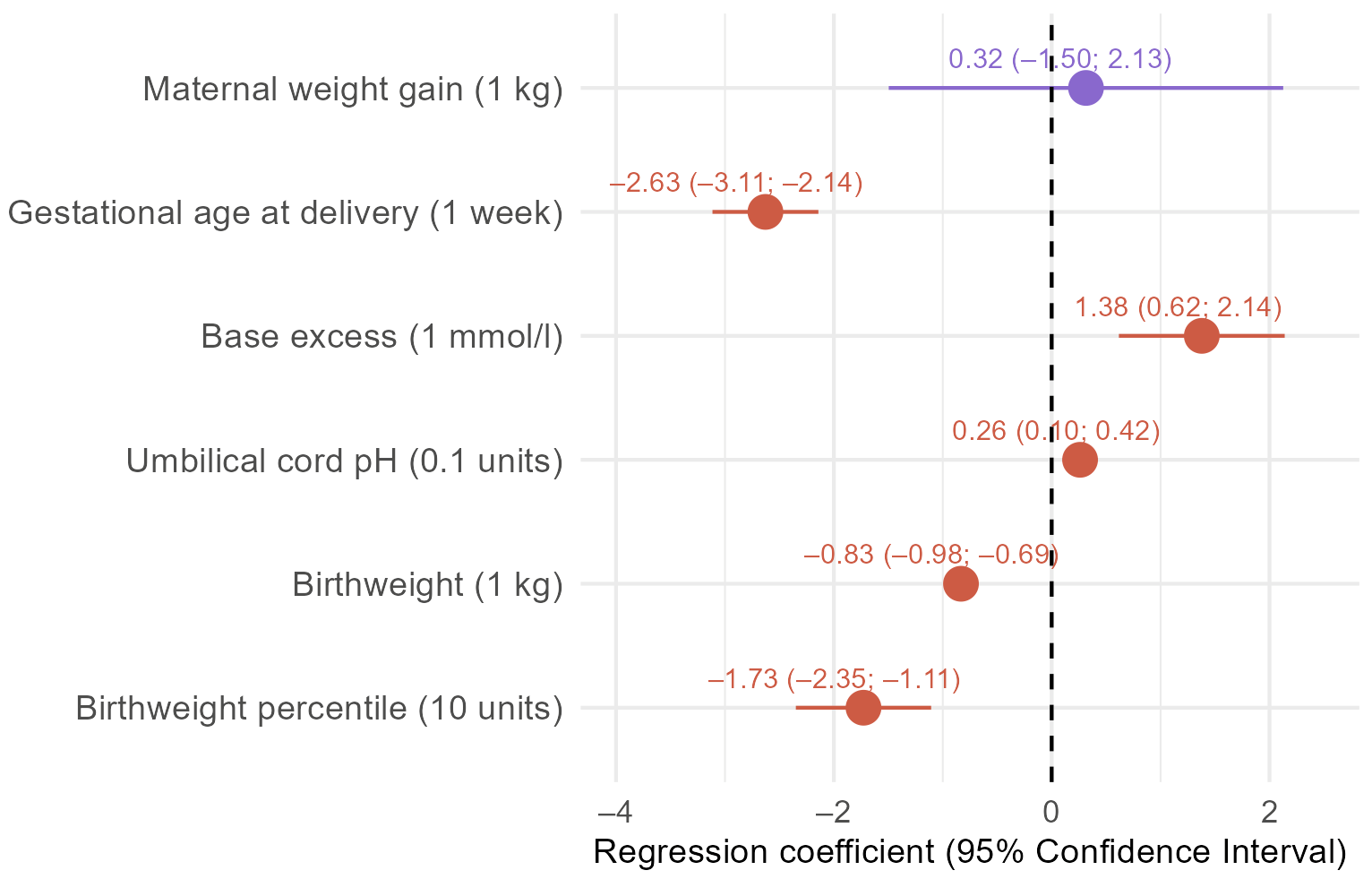
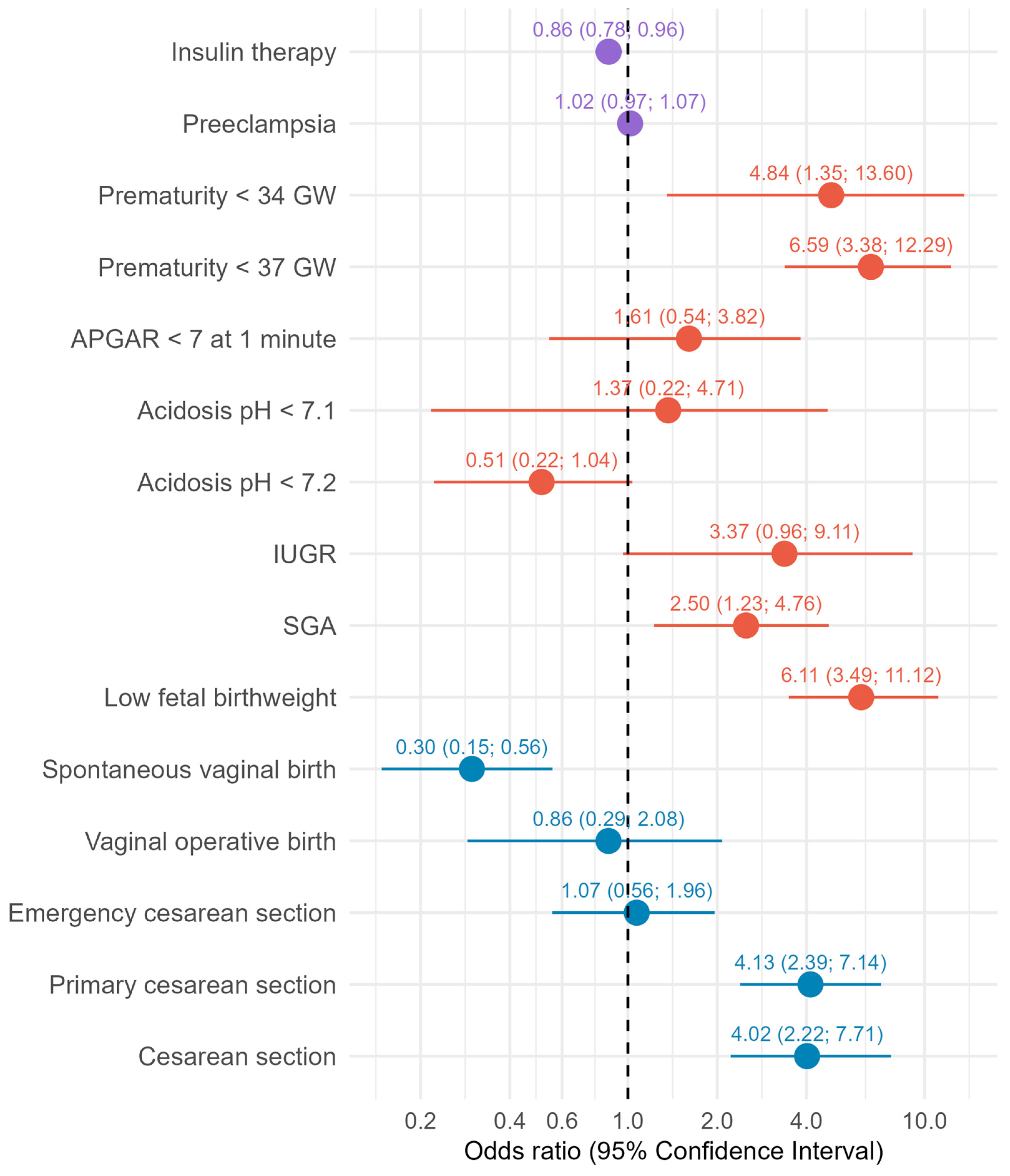
Background: Gestational diabetes mellitus (GDM) complicates a significant number of pregnancies and is associated with both short- and long-term risks for the mother and child. Twin pregnancies are inherently high risk, and the coexistence of GDM may amplify these risks. While the effects of GDM in singleton pregnancies have been widely studied, data on its impact in twin gestations remain limited. The aim of this study was to determine differences regarding metabolic characteristics, treatment requirements, and maternal as well as fetal outcomes between twin and singleton pregnancies with GDM to contribute to improved perinatal care. Methods: This retrospective study included obstetric data from 73 twin pregnancies (146 neonates) and 1664 singleton pregnancies with a GDM diagnosis at a tertiary perinatal center in Berlin, Germany, between 2015 and 2022. Baseline characteristics and perinatal outcomes were assessed. Adjusted multiple linear and logistic regression analyses were used for group comparisons. Results: Women with GDM in twin and singleton pregnancies exhibited comparable glucose values in the 75 g oral glucose tolerance test (OGTT) (median fasting: 95 vs. 96 mg/dL; 1 h: 183 vs. 183 mg/dL; 2 h: 144 vs. 139 mg/dL). Despite this, insulin therapy was required significantly less often in twin (5.5%) compared to singleton pregnancies (22.3%) (OR = 0.86; 95% CI: 0.78–0.96). Among insulin-treated women, combined insulin therapy was most common in twins (75%), while singleton mothers most frequently received long-acting insulin alone (61.7%), followed by combined therapy (31.3%) and short-acting insulin alone (7%). Birthweight was significantly lower in twins (β = –0.83 kg; 95% CI: –0.98 to –0.69), and when evaluated using twin-based growth standards, twins were more likely to be classified as having intrauterine growth restriction (IUGR, <3rd percentile) (OR = 3.37; 95% CI: 0.96–9.11), being small for gestational age (SGA, <10th percentile) (OR = 2.50; 95% CI: 1.23–4.76), or having a birthweight below the 30th percentile (OR = 6.11; 95% CI: 3.49–11.12). No large-for-gestational-age (LGA, >90th percentile) neonates were observed in the twin group. Conclusions: GDM manifests differently in twin and singleton pregnancies. Despite similar OGTT values, twin mothers require insulin less frequently. Growth-related complications such as IUGR and SGA are significantly more frequent in twins, likely reflecting the physiological constraints of multiple gestations rather than GDM itself. Conversely, LGA is predominantly a concern in singleton pregnancies. These findings underscore the need for individualized diagnostic criteria and management strategies for GDM in twin pregnancies.
Keywords: gestational diabetes; GDM; twin; pregnancy; insulin; OGTT; fetal growth gestational diabetes; GDM; twin; pregnancy; insulin; OGTT; fetal growth