


Abstract
This systematic literature review synthesizes available data from published case reports and case studies describing de novo myasthenia gravis (MG) following confirmed SARS-CoV-2 infection, focusing on clinical presentation, immunological characteristics, temporal relationship, management, and outcomes. The study addresses the following research question: What are the clinical, immunological, temporal, and outcome characteristics of de novo MG following SARS-CoV-2 infection based on published case reports and case studies? Following the PRISMA 2020 guidelines, the analysis included 44 studies describing 48 patients. The findings suggest that MG temporally associated with COVID-19 typically occurred within a relatively short latency period, with a median interval of 21 days. Most patients presented with generalized onset and were predominantly positive for AChR-Abs, consistent with the established clinical and serological profile of classical MG, in which AChR-Abs represent the most common subtype, particularly in generalized disease. MuSK and LRP4-positive cases were less frequent; ICU admission, myasthenic crisis, and respiratory failure were frequently reported. Importantly, most patients responded well to conventional MG therapies.
1. Introduction
Since 2020, when the World Health Organization (WHO) declared a pandemic, the outbreak of severe acute respiratory syndrome caused by Coronavirus 2 (SARS-CoV-2), an estimated 778 million confirmed infections and approximately 7.1 million related deaths have been reported worldwide to date [1]. Over the subsequent years, due to its high transmissibility, the novel disease(COVID-19) has rapidly disseminated across the globe [2,3]. Although the coronavirus disease 2019 (COVID-19) pandemic has formally ended, its sequelae persist, and studies continue to reveal novel associations between SARS-CoV-2 infection and different pathologies [4].
COVID-19 initially garnered attention for its predominant respiratory involvement [5], but evidence demonstrated that the virus can infect multiple organ systems [6]. SARS-CoV-2 infection has been linked to a wide spectrum of neurological complications, such as neuropathies, myopathies, MG and Guillain–Barré syndrome [7,8]. Notably, both the central and peripheral nervous systems seem to be involved [9,10,11]. The emergence of SARS-CoV-2 has raised concerns regarding its potential role in triggering autoimmune neuromuscular disorders [12]. As the medical community transitioned into the post-COVID-19 pandemic era, the focus has shifted toward understanding the long-term autoimmune consequences triggered by the virus, including the potential emergence of rare immune-mediated neuromuscular diseases [4].
Myasthenia gravis is an autoimmune neuromuscular disorder marked by fluctuating skeletal muscle weakness involving various muscle groups caused by the pathogenic action of specific autoantibodies, resulting in a reduction in functional acetylcholine receptors (AChR) and structural disruption of the neuromuscular junction [13]. The onset of MG associated with particular infectious events has been documented across multiple case series (CS), but the etiology remains unknown [14,15]. Furthermore, current data do not demonstrate a definitive association between MG and any specific infectious antecedent processes [15]. A possible association between COVID-19 and new-onset MG has been proposed, as well as the occurrence of myasthenic crisis, respiratory failure, and higher mortality, potentially mediated by an exaggerated inflammatory response [16]. Although cases were classified as de novo MG based on the absence of a previously documented diagnosis, the possibility that SARS-CoV-2 infection unmasked pre-existing subclinical disease cannot be excluded. Several biological mechanisms have been proposed to explain the temporal association between SARS-CoV-2 infection and MG onset. Viral infections may promote autoimmunity through mechanisms such as molecular mimicry, epitope spreading, bystander activation, and dysregulated B- and T-cell responses [14]. Since the emergence of SARS-CoV-2, reports have described both worsening of previously stable, established MG and the occurrence of newly diagnosed cases [17]. SARS-CoV-2 infection is characterized by marked immune activation, which may contribute to loss of self-tolerance and autoantibody production in susceptible individuals [18,19]. However, these mechanisms remain hypothetical and have not been definitively demonstrated in MG following COVID-19 [20].
Despite the increasing number of published reports describing MG occurring after SARS-CoV-2 infection, these are limited to individual case reports (CRs) and small case series (CS). Consequently, the clinical presentation, immunological profile, temporal relationship, and therapeutic outcomes of de novo MG in this context have not been systematically characterized. Moreover, distinguishing a true post-infectious autoimmune phenomenon from a concurrent temporal association remains challenging, particularly given the high global prevalence of SARS-CoV-2 infection. The heterogeneity of reported cases, variability in diagnostic confirmation, and inconsistent reporting of key clinical variables further limit the interpretability of the current literature. In this context, a systematic synthesis of individual patient-level data is needed to better delineate the clinical and biological features of MG developing after SARS-CoV-2 infection and to identify patterns that may support or refute a potential association.
Therefore, this systematic literature review (SLR) aims to synthesize available evidence from published CR and CS describing de novo MG following confirmed SARS-CoV-2 infection, focusing on clinical presentation, immunological characteristics, temporal relationship, management, and outcomes. The study addresses the following research question: What are the clinical, immunological, temporal, and outcome characteristics of de novo MG following SARS-CoV-2 infection based on published CRs and CS?
2. Materials and Methods
This review was conducted in accordance with the PRISMA 2020 guidelines (Preferred Reporting Items for Systematic Reviews and Meta-Analyses) [21]. The review protocol was prospectively registered in the PROSPERO database (CRD420261342180). The analysis included published CRs and CS describing SARS-CoV-2 infection followed by new-onset MG, while review articles and consensus statements were used for narrative review. Given the available data, predominantly derived from CRs and CS, this SLR was designed as a descriptive hypothesis-generating synthesis rather than establishing causality, and particular attention was paid to the temporal relationship between SARS-CoV-2 infection and MG onset.
2.1. Inclusion and Exclusion Criteria
In the SLR, six eligibility criteria were applied, all were required for a study to be included: studies reporting adult patients (≥18 years old); studies reporting new-onset MG defined as the first documented clinical diagnosis of MG occurring after SARS-CoV-2 infection, with no prior history or diagnosis of MG reported; studies in which COVID-19 infection was confirmed by polymerase chain reaction (PCR), rapid antigen testing, or serological assays; studies with a CR or CS design; studies published from December 2019 to October 2025; and studies published in English.
Also, the following four exclusion criteria were used: studies reporting cases of exacerbation of pre-existing MG temporally associated with COVID-19; editorials, commentaries and review articles without original case data (used only for narrative review); reports with insufficient information to confirm the absence of pre-existing MG or the diagnosis of both SARS-CoV-2 infection and MG; and epidemiological studies without individual patient-level data confirming temporal association between SARS-CoV-2 infection and MG onset.
2.2. Databases and Citations Search
An electronic search of five bibliographic databases, including PubMed®, Embase®, Ovid®, Scopus® and Web of Science®, was performed on 3 October 2025, for English-language publications using the keywords “myasthenia gravis” combined with “COVID-19”, “SARS-CoV-2”. The used strategy is reported in Table 1. Additionally, the reference lists of the included articles were reviewed for further eligible records.
Table 1.
Search strategies (database®: search string).
To ensure comprehensive retrieval of relevant evidence, two complementary search strategies were developed: a broad strategy and a focused strategy, as follows. The broad search strategy aimed to maximize sensitivity by identifying all potentially relevant records in which MG and COVID-19 were jointly mentioned. The objective of the broad strategy was to capture the full spectrum of reports describing MG temporally associated with SARS-CoV-2 infection, thereby minimizing the risk of missing eligible cases. The focused search strategy was designed to increase specificity by additionally incorporating free-text terms referring to the first episode of MG (e.g., “new-onset,” “de novo,” “first presentation,” “initial presentation”). This strategy targeted studies explicitly describing MG developing for the first time after COVID-19. While narrower in scope, the focused strategy facilitated the identification of cases likely to represent true de novo MG temporally associated with SARS-CoV-2 infection. Both strategies were applied across the five aforementioned databases. The results were combined, exported, deduplicated, and screened according to predefined eligibility criteria.
2.3. Selection of Records
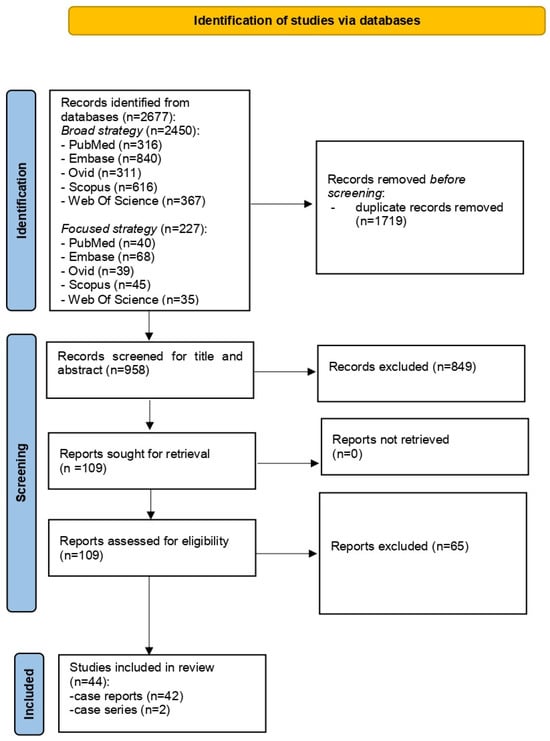
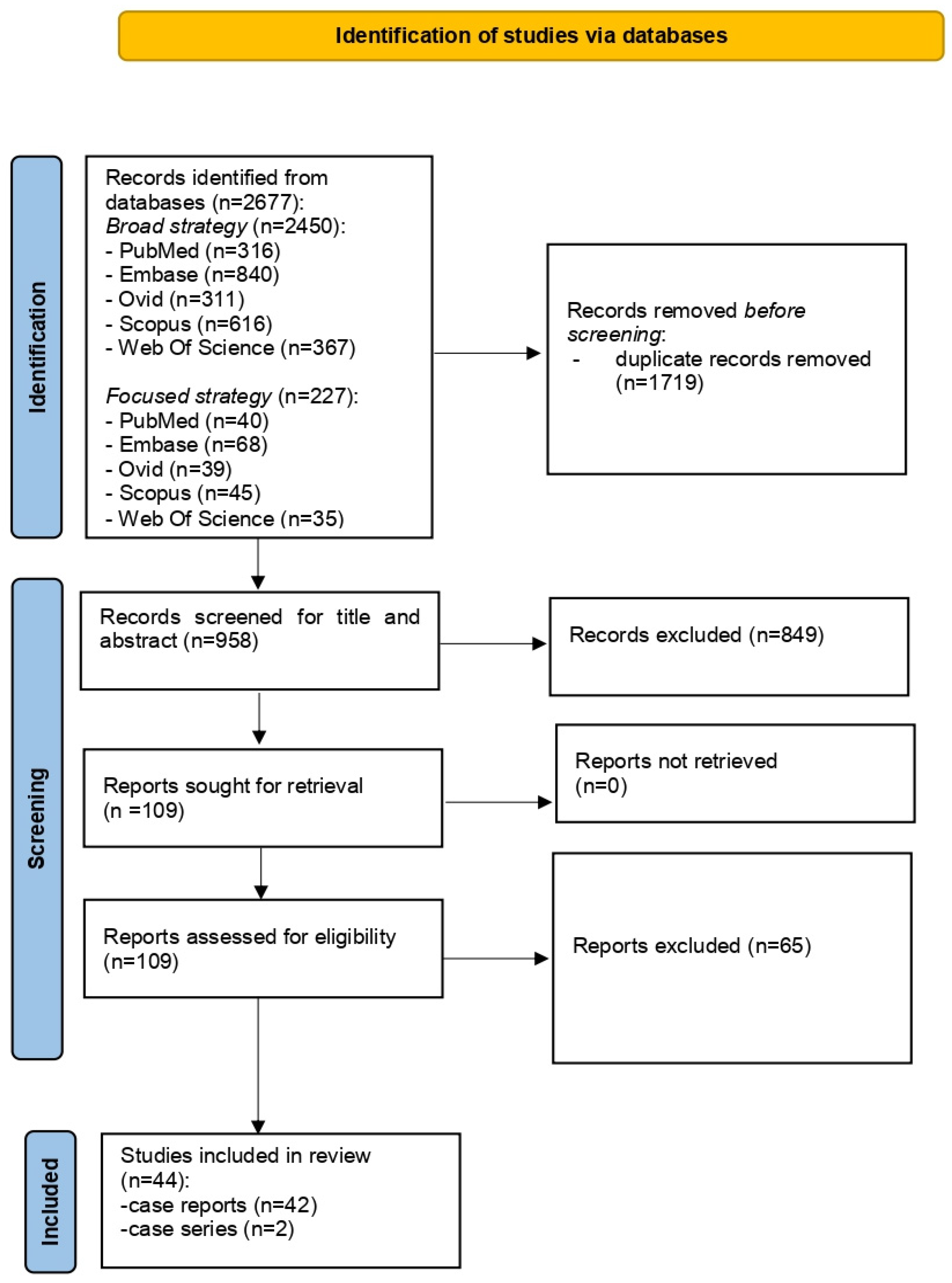
All records retrieved from the database searches and citation screening were imported into Mendeley Reference Manager for deduplication and subsequently transferred to Rayyan QCRI for screening. Titles, abstracts, and full texts were assessed independently by two reviewers according to the predefined eligibility criteria, with disagreements resolved through discussion or consultation with a third reviewer when necessary. Reasons for exclusion at the full-text stage were recorded in accordance with PRISMA guidelines. The study selection process was documented using a PRISMA 2020 flow diagram (Figure 1), and all included studies were grouped for synthesis according to study design.
Figure 1.
PRISMA 2020 flow diagram of the study selection process.
2.4. Data Extraction
The selected studies were reviewed to extract the following variables for further analysis: study characteristics, patient demographics, medical history, COVID-19-related variables, MG clinical and diagnostic features, treatment, and outcomes. Data extraction and methodological quality assessment were performed independently by two reviewers, with disagreements resolved through discussion and, when necessary, consultation with a third reviewer. The Joanna Briggs Institute (JBI) critical appraisal tools for case reports and case series were used [22]. No automated tools were employed during data extraction or quality assessment.
3. Results
3.1. Study Selection and Characteristics
After removing duplicates, 958 unique records were obtained (Figure 1), and, following the screening of titles and abstracts, 109 articles were selected for full-text assessment. Full-text screening excluded 65 original articles [11,12,16,17,20,23,24,25,26,27,28,29,30,31,32,33,34,35,36,37,38,39,40,41,42,43,44,45,46,47,48,49,50,51,52,53,54,55,56,57,58,59,60,61,62,63,64,65,66,67,68,69,70,71,72,73,74,75,76,77,78] (Table 2); thus, 44 studies (CRs and CS), including 48 patients, were included in this SLR [79,80,81,82,83,84,85,86,87,88,89,90,91,92,93,94,95,96,97,98,99,100,101,102,103,104,105,106,107,108,109,110,111,112,113,114,115,116,117,118,119,120,121,122] (Table 3). Of the included studies, 42 were single-patient CRs (n = 42), while two were CS (n = 6) [114,123], highlighting the rarity of the occurrence and the limited level of evidence currently available. Regarding publication type, 15 studies were published as meeting abstracts (MA, 34.0%) [79,80,81,82,83,86,94,100,102,106,108,113,115,117,122] while 29 were full-length journal articles (JAs); all were published between 2020 and 2025 (Table 3). The studies originated from 18 countries; the United States was the most frequently represented (n = 16, 36.4%) [79,81,82,83,90,93,94,100,101,108,113,114,115,116,117,122], followed by Italy (n = 5, 11.4%) and India (n = 4, 9.1%). Sex data were available for 47 of the 48 patients (97.9%), with a slight female predominance (n = 24, 51.0%). Age was reported for all patients, with a median of 61 years (Table 3). The year of onset of MG symptoms following SARS-CoV-2 infection was reported in 16 studies (36.4%), with the earliest onset in 2020 and the latest in 2023. The most frequently reported year of symptom onset was 2020, accounting for 10 studies (62.5%, Table 3).
Table 2.
Excluded reports and reasons.
Table 3.
Characteristics of included studies (n = 44).
3.2. Baseline Characteristics and Comorbidities
Baseline clinical characteristics were variably reported across the included studies. The reported associated autoimmune diseases (ADs) were heterogeneous and did not reveal a consistent pattern. A personal history of ADs was identified in 13.2% (n = 5) of patients with available data (n = 38) [81,92,101,107,119], while a family history of ADs was infrequently documented (n = 2) [96,110]. Similarly, neurological comorbidities (n = 5, 15.2% from the available data) [81,90,95,101,116] and prior or active neoplastic diseases (n = 3, 6.3% from the available data) were identified in a minority of cases [93,94,116] (Supplementary Table S1).
Details on medication exposure known to potentially precipitate or exacerbate MG before diagnosis were available for 27 patients (56.3%). Among patients with available data, nine (33.3%) had received at least one medication potentially associated with MG exacerbation [81,95,98,99,101,105,108,116,121]. Reported agents included glucocorticoids, atorvastatin, azithromycin, unspecified antibiotics, and magnesium supplements. Several of these medications have been previously associated with exacerbation of MG rather than de novo disease induction.
3.3. Characteristics of SARS-CoV-2 Infection and Management
Among the included patients, COVID-19 vaccination status was reported in 26 cases (54.2%). In this group, only four patients (15.4%) were vaccinated against COVID-19 before the onset of MG [80,82,89,91]. The method of SARS-CoV-2 diagnosis confirmation was available in 28 patients (58.3%, Supplementary Table S1). The diagnosis was based on RT-PCR (nasopharyngeal swab, n = 15, 53.6%), on a combination of RT-PCR and chest CT (n = 7, 25.0%), and on serological testing (n = 3, 10.7%, Supplementary Table S1). Information on the severity of previous COVID-19 infection was available for 33 (68.8%) of the evaluated patients. Mild disease was the most frequently reported, being observed in 19 patients (57.6%), followed by severe disease in 11 patients (33.3%), and moderate disease in 3 patients (9.1%).
The treatment for COVID-19 infection was variably reported across the included cases. Among patients with available data on glucocorticoid therapy (n = 25, 52.1%), 8 patients (32.0%) received glucocorticoids as part of COVID-19 management, dexamethasone being the most frequently reported (n = 4), whereas 17 patients (68.0%) did not receive glucocorticoid therapy. Data for antiviral or antibiotic therapy (n = 24, 50.0%), of these 13 patients (54.2%) received antibiotic or antiviral therapy. The most frequently used agent was remdesivir (n = 7), followed by azithromycin (n = 1) and monoclonal antibody therapy (n = 1). Combination therapies were also reported and included hydroxychloroquine with azithromycin (n = 1) and lopinavir/ritonavir with hydroxychloroquine (n = 1).
3.4. Findings Related to MG Following SARS-CoV-2 Infection
3.4.1. Clinical Characteristics of MG
The time interval between the onset or diagnosis of COVID-19 and the development of MG was reported for 37 patients (77.1%). This interval ranged from 5 to 300 days, with a median of 21 days (mean 40 ± 59.2 days), indicating substantial variability in temporal association. Of the patients evaluated, 24 cases (50.0%) had available data reporting the number of days between the initial symptoms of MG and the formal diagnosis. The reported interval ranged from 2 to 210 days; the median time was 10 days (IQR 5–44 days, mean 31.8 ± 52.1 days), suggesting potential diagnostic delays or more severe clinical outcomes in a subset of cases.
The initial clinical presentation of MG was available for 47 patients (97.9%). Generalized onset was observed in 37 patients (78.7%), and ocular MG was noted in 10 patients (21.3%) [85,88,92,96,105,107,109,110,113,116]. Among patients with generalized disease, 8 cases (21.6%) had oculo-bulbar involvement, while 2 patients (5.4%) presented predominantly bulbar symptoms at onset. Notably, in all these cases (n = 10, 21.3%), no limb involvement was present at disease onset.
Regarding the clinical evolution of MG, data were available for 46 patients (95.9%). Generalized MG remained the predominant form during disease evolution, observed in 36 patients (78.3%). Among patients with ocular onset, all cases remained ocular throughout follow-up.
Information on MGFA (Myasthenia Gravis Foundation of America) classification at onset was available for 18 patients (37.5%). When not explicitly reported, MGFA class I was assigned only in cases with clearly described purely ocular involvement, while no further classification was inferred. MGFA class I was the most frequent presentation, noted in 10 patients (55.6%), MGFA class IIb was reported in 4 patients (22.2%), while MGFA class IIa, IIIa, IIIb, and IVb were each reported in one patient (5.6% each), reflecting a broad spectrum of initial disease severity.
Baseline severity scores were reported in 10 cases (20.8%), multiple scoring systems were used across the studies: Myasthenia Gravis Composite score (MGC, n = 4), Myasthenia Gravis Composite Scale (MGCS, n = 3), Myasthenia Gravis Activities of Daily Living (MG-ADL, n = 1), Quantitative Myasthenia Gravis score (QMG, n = 1), and the Besinger score (n = 1). Given the variability of scoring systems and the limited number of reported cases, a standardized and objective comparison of baseline disease severity across patients was not feasible.
3.4.2. MG Diagnostic Findings
Antibody status was available for 45 cases (93.8%). AChR-Abs were the most frequently detected (n = 30, 66.7%), followed by MuSK-Abs (n = 4, 8.9%), and LRP4-Abs (n = 2, 4.5%), while five patients were reported as seronegative (Table 4). Among these, one patient had negative results for AChR-Abs, MuSK-Abs, and LRP4-Abs, two patients were described as seronegative without specification of the tested antibodies, one patient had negative AChR-Abs and MuSK-Abs, and one patient had isolated negative AChR-Abs (Table 4). Double seropositivity was reported in three patients as follows: AChR and MuSK antibodies (n = 1), AChR and anti-titin antibodies (n = 1), and AChR associated with anti-striational antibodies (n = 1) (Table 4). Additionally, one patient was described as seropositive without specification of the antibody subtype. Antibody titers were inconsistently reported across studies (Table 4).
Table 4.
Summary of diagnostic findings in patients with new-onset MG following SARS-CoV-2 infection (n = 48).
Single-fiber electromyography data were reported in 14 patients (29.2%). The test was performed in 8 patients (57.1%). Of these, 7 cases (87.5%) had abnormal findings, while one had a negative result. Data regarding repetitive nerve stimulation were documented in 28 of the 48 patients (58.3%). The test was not performed in 3 patients (10.7%), a decremental response consistent with impaired neuromuscular transmission was observed in 21 cases (75.0%), while negative results were noted in 4 patients (14.3%) (Table 4).
Chest CT imaging data, including pulmonary involvement and thymic status, were available for 36 patients (75.0%). Among these, chest CT was not performed in three patients (8.4%). Of the remaining patients who underwent chest CT, evidence of pneumonia was reported in 14 patients (38.9%), absence of thymic pathology was observed in 25 patients (69.4%), and an anterior mediastinal mass suggestive of thymoma was observed in 6 patients (16.7%). Histopathological confirmation of thymic pathology was noted in three cases and included thymic hyperplasia (n = 1), spindle cell thymoma (n = 1) and WHO Grade B1 thymoma with abundant CD3+ T-cells thymocytes (n = 1). Of these, in one case, thymic pathology was confirmed on both chest CT and biopsy. Another patient had been diagnosed with a benign thymoma six years before the MG onset (Table 4).
Thus, thymic pathology was confirmed in nine patients. Among seven patients (77.8%) who were positive for AChR-Abs, one patient was reported as seropositive without specification of the antibody subtype, while in another case, the presence of MG-specific antibodies was not reported. Thus, thymic pathology was identified in 30.0% of AChR-Abs positive patients (Table 4).
Additional diagnostic methods for MG were available for 37 patients (77.0%). Of these, 12 patients (32.4%) underwent at least one additional diagnostic test with positive results: The ice pack test was the most frequently reported method (n = 5), either performed alone or in combination with the pyridostigmine test (n = 2) or the neostigmine test (n = 1). Also, other diagnostic methods included the neostigmine test, Cogan’s lid twitch sign, the Simpson test, edrophonium chloride testing, fatigue testing, and the Wartenberg test (Table 4).
3.4.3. MG Treatment Data
Details on the use of acetylcholinesterase inhibitors (AChEi) were available for 43 cases (89.6%). Among these, AChEi were used in 36 patients (83.7%). Pyridostigmine was the most frequently prescribed AChEi (n = 34), followed by neostigmine (n = 1) and rivastigmine (n = 1).
When specified, the initial pyridostigmine dose ranged from 30 mg to 540 mg/day. Data on glucocorticoid use as initial treatment for MG were available for 44 patients (91.7%), with glucocorticoids administered in 30 cases (68.2%). Regarding glucocorticoid therapy at discharge, data were available for 28 cases (58.3%), of whom 14 (50.0%) were discharged on this treatment.
Data on intravenous immunoglobulin (IVIG) administration were available for 45/48 patients (93.8%). Of these, 21/45 patients (46.7%) were treated with IVIG. Data regarding the use of plasmapheresis were available for 43 cases (89.6%), and plasmapheresis was required in nine patients (20.9%).
Information on the use of immunosuppressive therapy, including azathioprine (AZA), mycophenolate mofetil (MMF), and other agents, was available for 41 patients (85.4%). Among patients with available data, 11 (26.8%) were treated with immunosuppressives. AZA was the most frequently reported agent (n = 6), followed by MMF (n = 2) and tacrolimus (n = 2). One patient was initially treated with tacrolimus, which was subsequently changed to cyclophosphamide after 4 weeks. Another patient was reported as receiving long-term immunosuppression without further specification.
Findings on additional treatment methods were available for 46 patients (95.8%). Of these, additional interventions were applied in 13 cases (28.3%). The most frequently reported interventions included tracheostomy (n = 5; 10.9%) and thymectomy (n = 4, 8.7%). Other interventions, including the CRISIS management approach, efgartigimod infusions, antibiotic therapy, and hydroxychloroquine, were each reported in single cases.
Adverse events were infrequently reported, which may reflect underreporting rather than a true low incidence, being available in 5 cases (10.4%). Reported adverse events were mainly associated with pyridostigmine, including suboptimal clinical response and intolerance, each observed in two patients. Additionally, one patient developed gastrointestinal side effects, including nausea and diarrhea, associated with the treatment with tacrolimus.
3.4.4. Severe Clinical Course and Respiratory Failure: Interplay Between COVID-19 and MG-Related Complications
A substantial proportion of patients required intensive care unit (ICU) admission, suggesting a severe clinical course. Data on ICU admission were available for 42 cases (87.5%), among whom 20 (47.6%) required ICU care.
Information on the development of myasthenic crisis was available for 39 individuals (81.3%). Of these, the crisis was observed in 17 cases (43.6%).
Respiratory failure was common, often related to MG or an overlap effect of both MG and SARS-CoV-2 infection. Data were available for 44 patients (91.7%), and respiratory failure was reported in 20 cases (45.5%). Among these patients, 11 cases (55.0%) were attributed to MG, while 9 cases (45.0%) were considered to have an overlapping contribution. Notably, one patient developed respiratory failure secondary to a myasthenic crisis occurring two months after diagnosis.
Findings on the need for mechanical ventilation were available for 43 patients (89.6%). Of these, 17 patients (39.5%) required mechanical ventilation, including one patient who required several episodes of ventilatory support.
Data on other associated infections were available for 32 cases (66.7%), of whom two cases (6.3%) were reported as having additional infections.
3.5. Outcome
Clinical outcomes were available for 42 patients (87.5%). Most patients showed clinical improvement (n = 33, 78.6%); complete recovery was observed in five cases (11.9%), spontaneous recovery in two patients (4.8%), and a stable disease course in one patient (2.4%). One patient died one year after MG diagnosis due to multiorgan failure unrelated to the disease. Of the patients with spontaneous recovery, one received no treatment, and another was treated with pyridostigmine 180 mg/day. Reporting of follow-up outcomes using standardized MG severity scales was notably limited, with only six cases (12.5%) available. Among the reported cases, different scoring systems were used, including MG-ADL (n = 1), QMG (n = 1), Besinger score (n = 1), and MGC (n = 3). This variability limits direct comparisons across cases, reflects the absence of standardized reporting practices in the current literature, and highlights an important gap in the available evidence.
Information on residual disability was available for 18 cases (37.5%). Among patients with available data, 9 patients (50.0%) reported residual disability, including ocular involvement (n = 4, 44.4%) and limb weakness (n = 4, 44.4%), followed by dysphagia, dysarthria, and chewing fatigability (each n = 1). Some patients exhibited more than one residual deficit.
4. Discussion
The currently available studies regarding new-onset MG following SARS-CoV-2 infection were synthesized in this SLR, including 44 studies describing 48 patients, the majority being single-patient CRs. The findings suggest that MG developing after COVID-19 typically occurs within a relatively short latency period, with a median interval of 21 days. Most patients presented with generalized onset and were predominantly positive for AChR-Abs, consistent with the established clinical and serological profile of classical MG, in which AChR-Abs represent the most common subtype, particularly in generalized disease [13,14,127]. MuSK- and LRP4-positive cases were less frequent, paralleling the known distribution of antibody subtypes in conventional MG [123,128,129].
Despite similarities in phenotype, a substantial proportion of patients had severe clinical courses, with nearly half requiring ICU admission and more than one-third requiring mechanical ventilation. These findings underscore the potential clinical impact of this association. However, most patients showed clinical improvement following conventional MG therapies, suggesting preserved treatment responsiveness comparable to classical MG [14,130].
The coexistence of MG with other ADs has been reported widely in the literature [131,132]. In this SLR, personal history of ADs was identified in 13.2% of patients with available data, while a family history of ADs was rarely reported, being documented in only two cases. The associated ADs observed included Graves’ disease, Hashimoto’s thyroiditis, GAD-65 seropositive multifocal encephalitis, antiphospholipid syndrome, psoriasis, and autoimmune gastritis. These findings are broadly consistent with larger epidemiological and cohort-based studies, which have identified autoimmune thyroid disease as the most frequent comorbidity in MG, followed by other systemic and neurological autoimmune diseases [131,133]. In a cohort of 796 patients with MG, ADs were reported in 11.6% of cases, with thyroid disorders being the most prevalent. These observations support the concept of a shared autoimmune predisposition in at least a subset of patients with MG.
The wide range of latency intervals observed in this review may reflect the complexity of the underlying pathophysiological mechanisms. SARS-CoV-2 infection may act either as an immunological trigger or as a factor unmasking pre-existing subclinical MG in susceptible individuals [20]. This interpretation is supported by the observation that the clinical phenotype, antibody profile, and thymic abnormalities identified in several patients closely resemble those observed in classical MG, particularly in AChR-positive disease [14,130,134]. Although the temporal relationship may support a possible post-infectious autoimmune phenomenon, a coincidental association cannot be excluded, especially given the high global prevalence of COVID-19 [20].
Our findings also suggest that post-COVID MG may present with a severe clinical course in a considerable proportion of reported cases. Nearly half of the patients required ICU admission, more than 40% developed myasthenic crisis, and a substantial proportion required mechanical ventilation. These proportions appear higher than those typically reported in large MG cohorts, in which myasthenic crisis and respiratory failure occur in a smaller subset of patients over the disease course [13,14,19,130,135]. However, these observations should be interpreted with caution, as the available evidence is largely derived from CR and small CS, which are inherently subject to publication bias, with more severe or unusual cases being preferent ially reported, potentially leading to an overestimation of the severity of MG occurring after SARS-CoV-2 infection in the current literature.
Respiratory impairment in these patients may not be solely attributable to MG. SARS-CoV-2 infection itself can lead to pulmonary involvement, systemic inflammation, and neuromuscular dysfunction, all of which may contribute to respiratory compromise independent of neuromuscular junction failure [6,8,9,48]. In several cases included in this review, respiratory failure was described as having overlapping contributions from both MG and COVID-19, further complicating direct comparisons with conventional MG cohorts.
Despite the severity observed in some patients, the overall therapeutic response appears favorable. Most patients responded to standard MG therapies, including AChEi, glucocorticoids, intravenous immunoglobulin, and plasmapheresis. This suggests that MG developing after SARS-CoV-2 infection does not differ substantially from classical MG in terms of treatment responsiveness, and that established management strategies remain appropriate [13,14,16,20,130].
However, conclusions regarding prognosis should be interpreted cautiously. Baseline disease severity and follow-up outcomes were reported using different assessment instruments, including MG-ADL, QMG, MGC, MGCS, and the Besinger score. In addition, outcome reporting was available for only a limited number of patients. This heterogeneity precludes meaningful quantitative comparisons across studies and limits the ability to draw firm conclusions regarding the long-term prognosis of MG occurring after SARS-CoV-2 infection.
At present, epidemiological evidence supporting a true increase in MG incidence following COVID-19 remains limited and inconclusive [11,73]. While some observational studies and real-world data analyses suggest a possible association, robust population-level data are lacking [11,16,44,65,66,67,73]. Therefore, current evidence supports the biological plausibility of SARS-CoV-2 as a potential immune trigger or disease-unmasking factor, but remains insufficient to establish a definitive causal relationship [20].
Several limitations should be considered when interpreting the findings of this review. First, the available evidence is predominantly derived from CR and small CS, increasing susceptibility to publication and reporting bias. Severe, unusual, or clinically dramatic presentations are more likely to be recognized, reported, and published than mild or self-limited cases. Consequently, the high rates of ICU admission, myasthenic crisis, respiratory failure, and mechanical ventilation observed in this review may overestimate the true severity of MG occurring after SARS-CoV-2 infection. Second, substantial variability existed across the included studies regarding diagnostic evaluation and reporting. Diagnostic confirmation was not standardized, and several studies lacked complete information on antibody testing, electrophysiological assessment, MGFA classification, thymic imaging or histopathological evaluation, and long-term outcomes. This heterogeneity may have influenced case classification, limited the comparability of patients across studies, and affected the interpretation of the findings. Finally, given the high global prevalence of COVID-19, some temporal associations may be coincidental. Moreover, the possibility that SARS-CoV-2 infection may unmask pre-existing subclinical MG rather than induce a truly new autoimmune disorder cannot be excluded.
Future research should focus on multicentre cohort studies and comparative epidemiological analyses to better define the incidence and clinical characteristics of MG following SARS-CoV-2 infection. Prospective studies incorporating standardized diagnostic criteria, antibody panels, electrophysiological testing, and validated outcome measures are needed. In parallel, mechanistic studies exploring molecular mimicry, immune dysregulation, and thymic involvement may provide further insight into the potential link between SARS-CoV-2 infection and MG pathogenesis. Third, clinical severity and outcome measures were inconsistently reported across studies. Different assessment instruments were used, including MG-ADL, QMG, MGC, MGCS, and the Besinger score, while standardized follow-up data were available for only a limited number of patients. As a result, direct comparisons between cases were not feasible, and conclusions regarding prognosis should be interpreted with caution.
5. Conclusions
Reported cases of MG occurring after developing SARS-CoV-2 infection appear to be a rare but clinically relevant condition occurring within weeks after infection, typically presenting as a generalized form, and is most frequently associated with AChR-Abs positivity, closely resembling classical MG phenotypes [14,130].
Although severe clinical evolution, including ICU admission, myasthenic crisis, and respiratory failure, were frequently reported, these findings are likely influenced by publication bias and by the overlapping respiratory burden of COVID-19 itself. Importantly, most patients responded well to conventional MG therapies, suggesting similar treatment responsiveness to classical MG [13,14,130].
The currently available evidence may suggest a possible post-infectious autoimmune phenomenon; however, causality cannot be established based on the currently available evidence. SARS-CoV-2 may act as an immunological trigger or as a factor that unmasks latent autoimmunity in susceptible individuals, but further studies are required to clarify this relationship [20].
Overall, clinicians should remain aware of the possibility of MG in patients presenting with compatible symptoms following COVID-19, as early recognition and appropriate treatment may significantly improve outcomes.
Supplementary Materials
The following supporting information can be downloaded at: https://www.mdpi.com/article/10.3390/life16071100/s1. Table S1. Clinical characteristics of patients with new-onset myasthenia gravis following SARS-CoV-2 infection (n = 48); Table S2. PRISMA 2020 checklist.
Author Contributions
Conceptualization, A.M. and D.I.M.; methodology, A.L.C.; software, I.M.V.; validation, A.M.C., C.C.P. and A.M.; formal analysis, C.C.P.; investigation, A.M.; resources, I.M.V.; data curation, A.L.C.; writing—original draft preparation, A.L.C.; writing—review and editing, A.M.C.; visualization, A.M.; supervision, D.I.M.; project administration, C.C.P. All authors have read and agreed to the published version of the manuscript.
Funding
This research received no external funding.
Institutional Review Board Statement
Not applicable. This study is a systematic review of previously published data and did not involve human participants or identifiable personal data.
Informed Consent Statement
Not applicable.
Data Availability Statement
Data extracted from published studies are contained within the article and Supplementary Materials. Further details are available from the corresponding author upon reasonable request.
Conflicts of Interest
The authors declare no conflicts of interest.
Abbreviations
The following abbreviations are used in this manuscript:
| AChE inhibitors | acetylcholinesterase inhibitors |
| AChR-abs | acetylcholine receptor antibodies |
| AChR | acetylcholine receptor |
| ADs | autoimmune diseases |
| COVID-19 | Coronavirus Disease 2019 |
| CR | case report |
| CS | case series |
| WHO | World Health Organisation |
| MG | myasthenia gravis |
| MuSK-abs | muscle-specific kinase antibodies |
| LRP4-Abs | low-density lipoprotein receptor-related protein 4 antibodies |
| SARS-CoV-2 | severe acute respiratory syndrome coronavirus 2 |
References
- World Health Organization. WHO Coronavirus (COVID-19) Dashboard. Available online: https://covid19.who.int/ (accessed on 30 October 2025).
- Hui, D.S.; Azhar, E.I.; Madani, T.A.; Ntoumi, F.; Kock, R.; Dar, O.; Ippolito, G.; McHugh, T.D.; Memish, Z.A.; Drosten, C.; et al. The continuing 2019-nCoV epidemic threat of novel coronaviruses to global health—The latest 2019 novel coronavirus outbreak in Wuhan, China. Int. J. Infect. Dis. 2020, 91, 264–266. [Google Scholar] [CrossRef] [PubMed]
- Wu, J.T.; Leung, K.; Leung, G.M. Nowcasting and forecasting the potential domestic and international spread of the 2019-nCoV outbreak originating in Wuhan, China: A modelling study. Lancet 2020, 395, 689–697. [Google Scholar] [CrossRef] [PubMed]
- Davis, H.E.; McCorkell, L.; Vogel, J.M.; Topol, E.J. Long COVID: Major findings, mechanisms and recommendations. Nat. Rev. Microbiol. 2023, 21, 133–146. [Google Scholar] [CrossRef] [PubMed]
- Huang, C.; Wang, Y.; Li, X.; Ren, L.; Zhao, J.; Hu, Y.; Zhang, L.; Fan, G.; Xu, J.; Gu, X.; et al. Clinical features of patients infected with 2019 novel coronavirus in Wuhan, China. Lancet 2020, 395, 497–506. [Google Scholar] [CrossRef] [PubMed]
- Thakur, V.; Ratho, R.K.; Kumar, P.; Bhatia, S.K.; Bora, I.; Mohi, G.K.; Saxena, S.K.; Devi, M.; Yadav, D.; Mehariya, S. Multi-Organ Involvement in COVID-19: Beyond Pulmonary Manifestations. J. Clin. Med. 2021, 10, 446. [Google Scholar] [CrossRef] [PubMed]
- Ivan, A.P.; Odajiu, I.; Popescu, B.O.; Davidescu, E.I. COVID-19 Associated Guillain–Barré Syndrome: A Report of Nine New Cases and a Review of the Literature. Medicina 2022, 58, 977. [Google Scholar] [CrossRef] [PubMed]
- Ellul, M.A.; Benjamin, L.; Singh, B.; Lant, S.; Michael, B.D.; Easton, A.; Kneen, R.; Defres, S.; Sejvar, J.; Solomon, T. Neurological associations of COVID-19. Lancet Neurol. 2020, 19, 767–783. [Google Scholar] [CrossRef] [PubMed]
- Guerrero, J.I.; Barragán, L.A.; Martínez, J.D.; Montoya, J.P.; Peña, A.; Sobrino, F.E.; Tovar-Spinoza, Z.; Ghotme, K.A. Central and peripheral nervous system involvement by COVID-19: A systematic review of the pathophysiology, clinical manifestations, neuropathology, neuroimaging, electrophysiology, and cerebrospinal fluid findings. BMC Infect. Dis. 2021, 21, 515. [Google Scholar] [CrossRef] [PubMed]
- Romero-Sánchez, C.M.; Díaz-Maroto, I.; Fernández-Díaz, E.; Sánchez-Larsen, Á.; Layos-Romero, A.; García-García, J.; González, E.; Redondo-Peñas, I.; Perona-Moratalla, A.B.; Del Valle-Pérez, J.A.; et al. Neurologic manifestations in hospitalized patients with COVID-19: The ALBACOVID registry. Neurology 2020, 95, e1060–e1070. [Google Scholar] [CrossRef] [PubMed]
- Huang, Y.; Wu, Y.; Zhou, S.; Que, X.; Jiang, A.; Shi, D.; Lu, T.; Chen, Y.; Lin, Z.; Liu, C.; et al. The characteristics of new-onset myasthenia gravis after COVID-19 outbreak: A cross-sectional study. Virol. J. 2025, 22, 140. [Google Scholar] [CrossRef] [PubMed]
- Tang, K.-T.; Hsu, B.-C.; Chen, D.-Y. Autoimmune and Rheumatic Manifestations Associated With COVID-19 in Adults: An Updated Systematic Review. Front. Immunol. 2021, 12, 645013. [Google Scholar] [CrossRef] [PubMed]
- Dresser, L.; Wlodarski, R.; Rezania, K.; Soliven, B. Myasthenia gravis: Epidemiology, pathophysiology and clinical manifestations. J. Clin. Med. 2021, 10, 2235. [Google Scholar] [CrossRef] [PubMed]
- Gilhus, N.E.; Tzartos, S.; Evoli, A.; Palace, J.; Burns, T.M.; Verschuuren, J.J.G.M. Myasthenia gravis. Nat. Rev. Dis. Primers 2019, 5, 30. [Google Scholar] [CrossRef] [PubMed]
- Leopardi, V.; Chang, Y.-M.; Pham, A.; Luo, J.; Garden, O.A. A Systematic Review of the Potential Implication of Infectious Agents in Myasthenia Gravis. Front. Neurol. 2021, 12, 618021. [Google Scholar] [CrossRef] [PubMed]
- Tugasworo, D.; Kurnianto, A.; Andhitara, Y.; Ardhini, R.; Budiman, J. The relationship between myasthenia gravis and COVID-19: A systematic review. Egypt. J. Neurol. Psychiatry Neurosurg. 2022, 58, 83. [Google Scholar] [CrossRef] [PubMed]
- Suh, J.; Amato, A.A. Neuromuscular complications of coronavirus disease-19. Curr. Opin. Neurol. 2021, 34, 669–674. [Google Scholar] [CrossRef] [PubMed]
- Moss, P. The T cell immune response against SARS-CoV-2. Nat. Immunol. 2022, 23, 186–193. [Google Scholar] [CrossRef]
- Truffault, F.; de Montpreville, V.; Eymard, B.; Sharshar, T.; Le Panse, R.; Berrih-Aknin, S. Thymic Germinal Centers and Corticosteroids in Myasthenia Gravis: An Immunopathological Study in 1035 Cases and a Critical Review. Clin. Rev. Allergy Immunol. 2017, 52, 108–124. [Google Scholar] [CrossRef]
- Shah, S.M.I.; Yasmin, F.; Memon, R.S.; Jatoi, N.N.; Savul, I.S.; Kazmi, S.; Monawwer, S.A.; Bin Zafar, M.D.; Asghar, M.S.; Tahir, M.J.; et al. COVID-19 and myasthenia gravis: A review of neurological implications of the SARS-CoV-2. Brain Behav. 2022, 12, e2789. [Google Scholar] [CrossRef] [PubMed]
- Page, M.J.; McKenzie, J.E.; Bossuyt, P.M.; Boutron, I.; Hoffmann, T.C.; Mulrow, C.D.; Shamseer, L.; Tetzlaff, J.M.; Akl, E.A.; Brennan, S.E.; et al. The PRISMA 2020 statement: An updated guideline for reporting systematic reviews. BMJ 2021, 372, n71. [Google Scholar] [CrossRef] [PubMed]
- Aromataris, E.; Lockwood, C.; Porritt, K.; Pilla, B.; Jordan, Z. JBI Manual for Evidence Synthesis; JBI: North Adelaide, Australia, 2024. [Google Scholar]
- Abbas, O.; Patino, G. Post-infectious onset of myasthenia gravis in patients infected with COVID-19: A literature review. Muscle Nerve 2022, 66, S9. [Google Scholar]
- Alekseeva, T.M.; Topuzova, P.S.; Topuzova, M.P.; Skripchenko, N.V. New onset of generalized myasthenia gravis developed after a new coronavirus infection (COVID-19). J. Infectol. 2021, 13, 127–132. [Google Scholar] [CrossRef]
- Aschman, T.; Mothes, R.; Heppner, F.L.; Radbruch, H. What SARS-CoV-2 does to our brains. Immunity 2022, 55, 1159–1172. [Google Scholar] [CrossRef] [PubMed]
- Cote, J.J.; Granger, P.; Mishra, A.; Sorini, G. COVID-19 in a pregnant cystic fibrosis carrier with myasthenia gravis: A case report. Case Rep. Womens Health 2022, 34, e00406. [Google Scholar] [CrossRef] [PubMed]
- Croitoru, C.G.; Cuciureanu, D.I.; Hodorog, D.N.; Grosu, C.; Cianga, P. Autoimmune myasthenia gravis and COVID-19. A case report-based review. J. Int. Med. Res. 2023, 51. [Google Scholar] [CrossRef]
- Finsterer J: Before blaming severe acute respiratory syndrome coronavirus 2 (SARS-CoV-2) as trigger of new-onset ocular myasthenia, alternative etiologies must be ruled out. Oman J. Ophthalmol. 2024, 17, 416–417. [CrossRef] [PubMed]
- Finsterer, J.; Scorza, F.A. Perspectives of Neuro-COVID: Myasthenia. Front. Neurol. 2021, 12, 635747. [Google Scholar] [CrossRef] [PubMed]
- Finsterer, J.; Scorza, F.A.; Scorza, C.A.; Fiorini, A.C. SARS-CoV-2 and myasthenia. J. Med. Virol. 2021, 93, 4133–4135. [Google Scholar] [CrossRef] [PubMed]
- Goller, A.A.C.; Laksmidewi, A.A.A.P.; Sihanto, R.D. Characteristics of neurologic manifestations in COVID-19 patients at Sanglah Hospital, Denpasar, Indonesia. Rom. J. Neurol./Rev. Romana Neurol. 2022, 21, 162–168. [Google Scholar] [CrossRef]
- Gomez, F.; Mehra, A.; Ensrud, E.; Diedrich, D.; Laudanski, K. COVID-19: A modern trigger for Guillain-Barre syndrome, myasthenia gravis, and small fiber neuropathy. Front. Neurosci. 2023, 17, 1198327. [Google Scholar] [CrossRef] [PubMed]
- Jafari Khaljiri, H.; Jamalkhah, M.; Amini-Harandi, A.; Pakdaman, H.; Moradi, M. Mowla A: Comprehensive Review on Neuro-COVID-19 Pathophysiology and Clinical Consequences. Neurotox. Res. 2021, 39, 1613–1629. [Google Scholar] [CrossRef] [PubMed]
- Hsieh, B.; Smith, A.; Liu, X.; Brown, K.; Biliciler, S.; Nguyen, T. Neuromuscular Manifestations of COVID-19. Neurology 2022, 98, 48. [Google Scholar] [CrossRef]
- Jacob, S.; Kapadia, R.; Soule, T.; Luo, H.; Schellenberg, K.L.; Douville, R.N.; Pfeffer, G. Neuromuscular Complications of SARS-CoV-2 and Other Viral Infections. Front. Neurol. 2022, 13, 914411. [Google Scholar] [CrossRef] [PubMed]
- Di Khor, H.; Lott, P.W.; Daman Huri, S.N.R.; Singh, S.; Iqbal, T. COVID-19 and Crossed Eye: A Case Report and Literature Review. Cureus 2023, 15, e42722. [Google Scholar] [CrossRef] [PubMed]
- Kreinter-Rosembaun, H.; Moutran-Barroso, H.; Augusto-Forero, C.; Gomez-Mazuera, A.; Martinez-Rubio, C. Dropped head syndrome in Myasthenia gravis after a SARS-CoV-2 infection. Rev. Ecuat. Neurol. 2023, 32, 80–84. [Google Scholar] [CrossRef]
- Kushlaf, H. COVID-19 in muscle-specific kinase myasthenia gravis: A case report. Muscle Nerve 2020, 62, E65–E66. [Google Scholar] [CrossRef] [PubMed]
- Maresma, L.M.; Esteve, O.B.; Vilasaró, M.N.; Moreno-Arino, M. Myasthenia gravis associated with SARS-CoV-2 infection: A conjunction of several factors. Rev. Esp. Geriatr. Gerontol. 2020, 55, 360–361. [Google Scholar] [CrossRef] [PubMed]
- Maiolo, C.; Guidi, L.; Maurizi, G.; Ciaprini, C.; Fumagalli, G.; Carvalho, M.P.; De Rosa, M.; Triolo, L. A Case of Thymoma Associated with COVID-19 Pneumonia. In XXIV National Congress of Italian Pulmonology—XLVII ITS-AIPO Congress; Karger Publisher: Basel, Switzerland, 2023; Volume 102, p. 665. [Google Scholar] [CrossRef]
- Mejri, I.; Ben Hmida, L.; Kacem, M.; Msalmani, M.; Snène, H.; Blibech, H.; Ayadi, A.; Zaouali, J.; Moatemri, Z. Case Report: The first reported case of pulmonary alveolar proteinosis with myasthenia gravis in a 27-year-old patient. F1000Research 2022, 11, 1439. [Google Scholar] [CrossRef]
- Memmedova, F.; Sevingil, S.A.; Kaya, F.A.; Akarsu, F.G.; Mehdiyev, Z.; Jafarova, U.; Aykaç, Ö.; Özdemir, A.Ö. Patient Management in Neurology Intensive Care During COVID-19 Pandemic Period. Turk. J. Neurol. 2022, 28, 78–83. [Google Scholar] [CrossRef]
- Mohkhedkar, M.; Venigalla, S.S.K.; Vani, V. Autoantigens that may explain postinfection autoimmune manifestations in patients with coronavirus disease 2019 displaying neurological conditions. J. Infect. Dis. 2021, 223, 536–537. [Google Scholar] [CrossRef] [PubMed]
- Morawiec, N.; Adamczyk, B.; Adamczyk-Sowa, M. COVID-19 and autoimmune diseases of the nervous system—An update. Neurol. Neurochir. Pol. 2023, 57, 77–89. [Google Scholar] [CrossRef] [PubMed]
- Nafari, A.; Shojaei, S.; Khoshnood, R.J.; Ghajarzadeh, M.; Tafreshinejad, A.; Safari, S.; Mirmosayyeb, O. Myasthenia Gravis and COVID-19: A Systematic Review and Meta-analysis. Basic Clin. Neurosci. 2024, 15, 175–184. [Google Scholar] [CrossRef] [PubMed]
- Ng, H.W.; Scott, D.A.R.; Danesh-Meyer, H.V.; Smith, J.R.; McGhee, C.N.; Niederer, R.L. Ocular manifestations of COVID-19. Prog. Retin. Eye Res. 2024, 102, 101285. [Google Scholar] [CrossRef] [PubMed]
- Oliveira, V.; de Seabra, M.; Rodrigues, R.; Carvalho, V.; Mendes, M.; Pereira, D.; Caldeiras, C.; Martins, B.; Silva, R.; Azevedo, A.; et al. Neuro-COVID frequency and short-term outcome in the Northern Portuguese population. Eur. J. Neurol. 2021, 28, 3360–3368. [Google Scholar] [CrossRef] [PubMed]
- Ousseiran, Z.H.; Fares, Y.; Chamoun, W.T. Neurological manifestations of COVID-19: A systematic review and detailed comprehension. Int. J. Neurosci. 2023, 133, 754–769. [Google Scholar] [CrossRef] [PubMed]
- Paliwal, V.K.; Garg, R.K.; Gupta, A.; Tejan, N. Neuromuscular presentations in patients with COVID-19. Neurol. Sci. 2020, 41, 3039–3056. [Google Scholar] [CrossRef] [PubMed]
- Pang, Z.; Tang, A.; He, Y.; Fan, J.; Yang, Q.; Tong, Y.; Fan, H. Neurological complications caused by SARS-CoV-2. Clin. Microbiol. Rev. 2024, 37, e0013124. [Google Scholar] [CrossRef] [PubMed]
- Priyal; Sehgal, V.; Kapila, S.; Taneja, R.; Mehmi, P.; Gulati, N. Review of Neurological Manifestations of SARS-CoV-2. Cureus J. Med. Sci. 2023, 15, e38194. [Google Scholar] [CrossRef] [PubMed]
- Qureshi, K.; Krause, T.S.; Vidlock, K. Worsening Shortness of Breath After A Mild Case of COVID-19. J. Endocr. Soc. 2023, 7, A29. [Google Scholar] [CrossRef]
- Saeedi, N.; Gohari, N.S.F.; Moodi Ghalibaf, A.A.M.; Dehghan, A.; Owlia, M.B. COVID-19 infection: A possible induction factor for development of autoimmune diseases? Immunol. Res. 2023, 71, 547–553. [Google Scholar] [CrossRef] [PubMed]
- Scopelliti, G.; Osio, M.; Arquati, M.; Pantoni, L. Respiratory dysfunction as first presentation of myasthenia gravis misdiagnosed as COVID-19. Neurol. Sci. 2020, 41, 3419–3421. [Google Scholar] [CrossRef] [PubMed]
- Shah, L.K.; Pant, B.; Mony, N.; Mishra, S.; Gaire, J.; Sharma, S. COVID-19 and Sepsis in an Atypical Case of Mixed Connective Tissue Disorder Presenting With a Myasthenic Crisis. Cureus 2022, 14, e29092. [Google Scholar] [CrossRef] [PubMed]
- Silva, B.C.; Duarte, M.; Vicente, P. Myasthenia gravis, a clinical case developed by COVID-19? Eur. J. Case Rep. Intern Med. 2023, 10, 559. [Google Scholar] [CrossRef]
- Singh, K.; Muhammad Abdullah Khan, T.; Ansari, Y.; Bhat, P. Thymoma mimicking a lung mass. Chest 2021, 160, A1666. [Google Scholar] [CrossRef]
- Struhal, W. Almamoori D: A review of the sequelae of post COVID-19 with neurological implications (post-viral syndrome). J. Neurol. Sci. 2025, 474, 123532. [Google Scholar] [CrossRef] [PubMed]
- Taga, A.; Lauria Pinter, G. COVID-19 and the peripheral nervous system. A 2-year review from the pandemic to the vaccine era. J. Peripher. Nerv. Syst. 2022, 27, 4–30. [Google Scholar] [CrossRef] [PubMed]
- Tisdale, A.K.; Dinkin, M.; Chwalisz, B.K. Afferent and Efferent Neuro-Ophthalmic Complications of Coronavirus Disease 19. J. Neuro-Ophthalmol. 2021, 41, 154–165. [Google Scholar] [CrossRef] [PubMed]
- Tsuchida, T.; Hirose, M.; Fujii, H.; Hisatomi, R.; Ishizuka, K.; Inoue, Y.; Katayama, K.; Nakagama, Y.; Kido, Y.; Matsuda, T.; et al. Evaluation of diseases complicating long COVID: A retrospective chart review. J. Gen. Fam. Med. 2024, 25, 324–332. [Google Scholar] [CrossRef] [PubMed]
- Valiuddin, H.M.; Kalajdzic, A.; Rosati, J.; Boehm, K.; Hill, D. Update on neurological manifestations of SARS-CoV-2. West. J. Emerg. Med. 2020, 21, 45–51. [Google Scholar] [CrossRef] [PubMed]
- Vlasenko, A.I.; Portik, O.A.; Bisaga, G.N.; Topuzova, M.P.; Maлько, B.A.; Isabekova, P.S.; Skripchenko, N.V.; Alekseeva, T.M. Relationship between SARS-CoV-2 And autoimmune neurological diseases. J. Infektologii 2022, 14, 65–72. [Google Scholar] [CrossRef]
- Mohseni Afshar, Z.; Sharma, A.; Babazadeh, A.; Alizadeh-Khatir, A.; Sio, T.T.; Moghadam, M.A.T.; Pirzaman, A.T.; Mojadad, A.; Hosseinzadeh, R.; Barary, M.; et al. A review of the potential neurological adverse events of COVID-19 vaccines. Acta Neurol. Belg. 2023, 123, 9–44. [Google Scholar] [CrossRef] [PubMed]
- Khedr, E.M.; Abo-Elfetoh, N.; Deaf, E.; Hassan, H.M.; Amin, M.T.; Soliman, R.K.; Attia, A.A.; Zarzour, A.A.; Zain, M.; Mohamed-Hussein, A.; et al. Surveillance study of acute neurological manifestations among 439 egyptian patients with COVID-19 in assiut and Aswan University Hospitals. Neuroepidemiology 2021, 55, 109–118. [Google Scholar] [CrossRef] [PubMed]
- Patlolla, R.; Thepmankorn, P.; Heshmati, K.; Malerba, S.; Ruane, C.; Arismendi, G.; Souayah, S.; Adam, N.; Souayah, N. Myasthenia Gravis After SARS-CoV-2 Infection: A Cerner Real-World COVID-19 De-identified Dataset Analysis. Neurology 2021, 96, 4382. [Google Scholar] [CrossRef]
- Zarifkar, P.; Peinkhofer, C.; Benros, M.E.; Kondziella, D. Frequency of Neurological Diseases After COVID-19, Influenza A/B and Bacterial Pneumonia. Front. Neurol. 2022, 13, 904796. [Google Scholar] [CrossRef] [PubMed]
- Cristillo, V.; Volonghi, I.; Guso, E.; Arici, D.; Padovani, A. Incidence and clinical characteristics of myastenia gravis patients after COVID-19. Neurol. Sci. 2022, 43, S370–S371. [Google Scholar] [CrossRef] [PubMed]
- Yu, D.; Huang, W.Q.; Zhan, Y.Z.; Xiao, G.H.; Li, J.; Tong, W.C.; Cai, S.X.; Liu, L.Y. Diaphragmatic dysfunction post-COVID-19 infection: Report of two cases. Chin. J. Tuberc. Respir. 2024, 47, 244–248. [Google Scholar] [CrossRef] [PubMed]
- Dewanjee, S.; Jayalakshmi, J.; Kalra, R.S.; Puvvada, N.; Kandimalla, R.; Reddy, P.H. Emerging COVID-19 Neurological Manifestations: Present Outlook and Potential Neurological Challenges in COVID-19 Pandemic. Mol. Neurobiol. 2021, 58, 4694–4715. [Google Scholar] [CrossRef] [PubMed]
- Shi, J.; Danesh-Meyer, H.V. A review of neuro-ophthalmic sequelae following COVID-19 infection and vaccination. Front. Cell. Infect. Microbiol. 2024, 14, 1345683. [Google Scholar] [CrossRef] [PubMed]
- Kopańska, M.; Batoryna, M.; Bartman, P.; Szczygielski, J.; Banaś-Ząbczyk, A. Disorders of the Cholinergic System in COVID-19 Era—A Review of the Latest Research. Int. J. Mol. Sci. 2022, 23, 672. [Google Scholar] [CrossRef] [PubMed]
- Morgan, L.; Hollist, M.; Au, K.; Ayari, L.; Betts, C.; Kirmani, B.F. Neuromuscular Disorders Associated With COVID-19. Neurosci. Insights 2023, 18, 26331055231176252. [Google Scholar] [CrossRef] [PubMed]
- Syed, U.; Subramanian, A.; Wraith, D.C.; Lord, J.M.; McGee, K.; Ghokale, K.; Nirantharakumar, K.; Haroon, S. Incidence of immune-mediated inflammatory diseases following COVID-19: A matched cohort study in UK primary care. BMC Med. 2023, 21, 363. [Google Scholar] [CrossRef] [PubMed]
- Grisanti, S.; Schenone, C.; Biassoni, E.; Bavestrello, G.; Pardini, M.; Aloe, T.; Tagliabue, E.; Barisione, E.; Schenone, A.; Benedetti, L. Neurological complications of COVID-19: A monocentric experience of a neurological outpatient clinic. J. Neurol. Sci. 2021, 429, 119826. [Google Scholar] [CrossRef]
- Kashipazha, D.; Shalilahmadi, D.; Shamsaei, G. N FP: Neurological manifestations in hospitalized COVID-19 patients: A cross-sectional study. Egypt. J. Neurol. Psychiatry Neurosurg. 2024, 60, 41. [Google Scholar] [CrossRef]
- Rodrigues, C.L.; de Freitas, H.C.; Lima, P.R.O.; de Oliveira Júnior, P.H.; Fernandes, J.M.A.; D’Almeida, J.A.C.; Nóbrega, P.R. Myasthenia gravis exacerbation and myasthenic crisis associated with COVID-19: Case series and literature review. Neurol. Sci. 2022, 43, 2271–2276. [Google Scholar] [CrossRef] [PubMed]
- Gasparini, V.; Mattavelli, D.; Pantoni, L. Delayed diagnosis of myasthenia gravis caused by concurrent anxiety symptoms. Neurol. Sci. 2025, 46, 4691–4693. [Google Scholar] [CrossRef] [PubMed]
- Aslan, C.; Nikfarjam, S.; Asadzadeh, M.; Jafari, R. Neurological manifestations of COVID-19: With emphasis on Iranian patients. J. Neurovirol. 2021, 27, 217–227. [Google Scholar] [CrossRef] [PubMed]
- Abdullah, M. Irshad T: The CRISIS Approach When Autonomy and Beneficence Are in Conflict (CS358). J. Pain Symptom Manag. 2023, 65, e569. [Google Scholar] [CrossRef]
- Alboini, P.E.; Inchingolo, V.; Amoruso, L. Musk myasthenia gravis after SARS-CoV-2 infection in a cmt patient: A case report. Neurol. Sci. 2022, 43, S320. [Google Scholar] [CrossRef] [PubMed]
- Ali, S.F.; D’Agostino, T.; Galluzzo, D.; Clara, A.; Gregory, P.; Mozibur, R.; Wong, S.; Feldstein, E.; Henson, T.; Li, J. Thymoma associated with autoimmune multifocal cortical encephalitis and subsequent myasthenia gravis. Ann. Neurol. 2021, 90, S200. [Google Scholar] [CrossRef] [PubMed]
- Mahmoud, A.; Kania, B.; Yucel, D.; Salem, A.; Sanchez, J.; Upadhyay, S. Myasthenia gravis precipitated by asymptomatic COVID-19 infection, vaccine, or both? How genetic predisposition and immune responses play a role in the neuromuscular junction. Chest 2022, 162, A19–A20. [Google Scholar] [CrossRef]
- Annabi-Rabadi, M.; Ahmed, R.; Guzik, H.; Solomon, P. COVID- 19 induced Myasthenic Crisis in an Older Adult. J. Am. Geriatr. Soc. 2023, 71, S91. [Google Scholar] [CrossRef]
- Assini, A.; Gandoglia, I.; Damato, V.; Rikani, K.; Evoli, A.; Del Sette, M. Myasthenia gravis associated with anti-MuSK antibodies developed after SARS-CoV-2 infection. Eur. J. Neurol. 2021, 28, 3537–3539. [Google Scholar] [CrossRef] [PubMed]
- Banerjee, P.; Hassan, H.; Alam, M.S. New-onset ocular myasthenia gravis following SARS-CoV-2 infection. Oman J. Ophthalmol. 2023, 16, 187–188. [Google Scholar] [CrossRef] [PubMed]
- Barroso, H.M.; Rosembaun, H.K.; Mazuera, A.G.; Botero, C.F. Dropped head syndrome in myasthenia gravis after a SARS-CoV-2 infection: Case report. J. Peripher. Nerv. Syst. 2022, 27, S180. [Google Scholar]
- Bhandarwar, A.; Jadhav, S.; Tandur, A.; Dhimole, N.; Wagh, A.; Bhondve, S. Management of thymomatous myasthenia gravis—Case report of a rare COVID-19 infection sequelae. Int. J. Surg. Case Rep. 2021, 81, 105771. [Google Scholar] [CrossRef] [PubMed]
- Brossard-Barbosa, N.; Donaldson, L.; Margolin, E. Seropositive Ocular Myasthenia Gravis Developing Shortly After COVID-19 Infection: Report and Review of the Literature. J. Neuro-Ophthalmol. 2023, 43, e235–e236. [Google Scholar] [CrossRef] [PubMed]
- Castro Silva, B.; Saianda Duarte, M.; Rodrigues Alves, N.; Vicente, P.; Araujo, J. Seronegative Myasthenia Gravis: A Rare Disease Triggered by SARS-CoV-2 or a Coincidence? Cureus 2024, 16, e67511. [Google Scholar] [CrossRef] [PubMed]
- Chatterjee, T.; Kumaran, S.S.; Roy, M. A Case Report and Literature Review of New- Onset Myasthenia Gravis After COVID-19 Infection. Cureus J. Med. Sci. 2022, 14, e33048. [Google Scholar] [CrossRef] [PubMed]
- Croitoru, C.G.; Cuciureanu, D.I.; Prutianu, I.; Cianga, P. Autoimmune myasthenia gravis after COVID-19 in a triple vaccinated patient. Arch. Clin. Cases 2022, 9, 104–107. [Google Scholar] [CrossRef] [PubMed]
- De Giglio, L.; Sadun, F.; Roberti, C.; Polidori, L.; Gilardi, M.; Altavista, M.C.; Pennisi, E.M. Post-COVID simultaneous onset of Graves’ disease and ocular myasthenia gravis in a patient with a complex ocular motility impairment. Eur. J. Ophthalmol. 2023, 33, NP49–NP51. [Google Scholar] [CrossRef] [PubMed]
- Feiz, H.; Castellano, C.; Feiz, L. Complications of Long COVID: Unraveling a Case of Very-Late-Onset Myasthenia Gravis. Cureus 2024, 16, e70552. [Google Scholar] [CrossRef] [PubMed]
- Gigilashvili, M.; Gurgenashvili, K. Unique case of post-COVID-19 myasthenia gravis with spontaneous resolution. Muscle Nerve 2024, 70, 626. [Google Scholar]
- Hiraoka, Y.; Hosoi, Y.; Tsubata, T.; Yanagida, M.; Otake, Y.; Ito, M. Double-seropositive Myasthenia Gravis Following COVID-19. Intern. Med. 2025, 64, 1591–1594. [Google Scholar] [CrossRef] [PubMed]
- Huber, M.; Rogozinski, S.; Puppe, W.; Framme, C.; Höglinger, G.; Hufendiek, K.; Wegner, F. Postinfectious Onset of Myasthenia Gravis in a COVID-19 Patient. Front. Neurol. 2020, 11, 576153. [Google Scholar] [CrossRef] [PubMed]
- Jha, S.; Pendyala, S.K. MuSK Antibody-Positive Myasthenia Gravis with SARS CoV-2 Infection: A Case Report and Literature Review. J. Clin. Neuromuscul. Dis. 2024, 25, 203–205. [Google Scholar] [CrossRef] [PubMed]
- Jõgi, K.; Sabre, L.; Rosental, M.; Leheste, A.-R.; Vilisaar, J. New Onset Generalized Myasthenia Gravis Evolving Following SARS-CoV-2 Infection. COVID 2022, 2, 464–471. [Google Scholar] [CrossRef]
- Karimi, N.; Okhovat, A.A.; Ziaadini, B.; Haghi Ashtiani, B.; Nafissi, S.; Fatehi, F. Myasthenia gravis associated with novel coronavirus2019 infection: A report of three cases. Clin. Neurol. Neurosurg. 2021, 208, 106834. [Google Scholar] [CrossRef] [PubMed]
- Kepfinger, J.; Soller, D.; Pusukur, B.; Blumhof, S. Breathing for Two: A Myasthenic Twist in COVID-19 Pregnancy. Am. J. Respir. Crit. Care Med. 2024, 209, A5626. [Google Scholar] [CrossRef]
- Khairandish, Y.; Baig, A.; Sherratt, J. Chronic Dyspnea Leading to the Diagnosis of LRP4-positive Myasthenia Gravis. Am. J. Respir. Crit. Care Med. 2025, 211, A4158. [Google Scholar] [CrossRef]
- Laizane, A.P.; Blekte, A.; Berzina, A. Myasthenia Gravis presenting as a Dissociative Disorder: A case report of a differential diagnosis. Eur. Psychiatry 2024, 67, S814–S815. [Google Scholar] [CrossRef]
- Minca, A.; Minca, D.I.; Calinoiu, A.L.; Gheorghiță, V.; Popescu, C.C.; Rusu, A.; Cristea, A.M.; Mincă, D.G. Myasthenia Gravis Triggered by a COVID-19 Infection: A Case Report and Literature Review. Cureus J. Med. Sci. 2024, 16, e59538. [Google Scholar] [CrossRef] [PubMed]
- Muhammed, L.; Baheerathan, A.; Cao, M.; Leite, M.I.; Viegas, S. MuSK antibody-associated myasthenia gravis with SARS-CoV-2 infection: A case report. Ann. Intern Med. 2021, 174, 872–873. [Google Scholar] [CrossRef] [PubMed]
- Nakano, Y.; Takeshima, K.; Furukawa, Y.; Morita, S.; Sakata, M.; Matsuoka, T.-A. Concomitant Exacerbation of Graves Orbitopathy and Double-Seronegative Myasthenia Gravis after SARS-CoV-2 Infection. JCEM Case Rep. 2025, 3, luaf019. [Google Scholar] [CrossRef] [PubMed]
- Portugal, E.P.G.; Ortiz, H.S.; Najera, J.G.; Muñoz, E.S.; Nieto, A.L.S.; Osuna, P.P. Myasthenia gravis manifestation and mediastinal tumor finding during COVID-19. Chest 2022, 161, A271. [Google Scholar] [CrossRef]
- Pérez Álvarez, Á.I.; Suárez Cuervo, C.; Fernández Menéndez, S. SARS-CoV-2 infection associated with diplopia and anti-acetylcholine receptor antibodies. Neurol. (Engl. Ed.) 2020, 35, 264–265. [Google Scholar] [CrossRef]
- Perry, J.M.; Spires, H.; Owens, J.T.; Li, J.; Nadkarni, A.P. Seropositive myasthenia gravis as the cause of multiple failed extubations and a prolonged icu stay for COVID-19 pneumonia: A case report and brief literature review. Chest 2022, 162, A810–A811. [Google Scholar] [CrossRef]
- Popescu, C. Spontaneously resolving late-onset ocular myasthenia related to COVID-19. A case report. Acta Myol. 2023, 42, 89–91. [Google Scholar] [CrossRef] [PubMed]
- Rahimian, N.; Alibeik, N.; Pishgar, E.; Dini, P.; Abolmaali, M.; Mirzaasgari, Z. Manifestation of Ocular Myasthenia Gravis as an Initial Symptom of Coronavirus Disease 2019: A Case Report. Iran. J. Med. Sci. 2022, 47, 385–388. [Google Scholar] [CrossRef] [PubMed]
- Muralidhar Reddy, Y.; Santhosh Kumar, B.; Osman, S.; Murthy, J.M.K. Temporal association between SARS-CoV-2 and new-onset myasthenia gravis: Is it causal or coincidental? BMJ Case Rep. 2021, 14, e244146. [Google Scholar] [CrossRef] [PubMed]
- Restivo, D.A.; Centonze, D.; Alesina, A.; Marchese-Ragona, R. Myasthenia gravis associated with SARS-CoV-2 infection. Ann. Intern Med. 2020, 173, 1027–1028. [Google Scholar] [CrossRef] [PubMed]
- Rogers, N.; Crabtree, E. Post COVID-19 Myasthenia Gravis. Neurology 2023, 100, 4929. [Google Scholar] [CrossRef]
- Sadiq, W.; Waleed, M.S.; Rizvi, T.A.; Khan, S.; El Hage, H. Myasthenia Gravis Associated With COVID-19 Infection. Cureus J. Med. Sci. 2023, 15, e39506. [Google Scholar] [CrossRef] [PubMed]
- Sittol, R.; Otuonye, G.; Gayle, L.; Grant, J.; Alfaki, M.; Lisung, F.; Beri, S. Coronavirus uncovers mysterious mediastinal mass: A diagnostic and management dilemma. Chest 2020, 158, A791–A792. [Google Scholar] [CrossRef]
- Sriwastava, S.; Tandon, M.; Kataria, S.; Daimee, M.; Sultan, S. New onset of ocular myasthenia gravis in a patient with COVID-19: A novel case report and literature review. J. Neurol. 2021, 268, 2690–2696. [Google Scholar] [CrossRef] [PubMed]
- Syed, A.; Choudhury, S.; Chohan, A.A.; Dadhwal, R.; Taweesedt, T.P.; Franco, R.; Vakil, A. COVID-19 pneumonia complicated by exacerbation of new diagnosis of myasthenia gravis. Chest 2022, 162, A437. [Google Scholar] [CrossRef]
- Taheri, A.; Davoodi, L.; Soleymani, E.; Ahmadi, N. New-onset myasthenia gravis after novel coronavirus 2019 infection. Respirol. Case Rep. 2022, 10, e0978. [Google Scholar] [CrossRef] [PubMed]
- Tereshko, Y.; Gigli, G.L.; Pez, S.; de Pellegrin, A.; Valente, M. New-onset Myasthenia Gravis after SARS-CoV-2 infection: Case report and literature review. J. Neurol. 2023, 270, 601–609. [Google Scholar] [CrossRef] [PubMed]
- Tugasworo, D.; Kurnianto, A.; Retnaningsih; Andhitara, Y.; Ardhini, R.; Daynuri; Budiman, J. Myasthenia gravis and arrhythmias in COVID-19: A case report. Bali Med. J. 2021, 10, 314–319. [Google Scholar] [CrossRef]
- Valjarević, S.; Lakićević, M.; Jovanović, M.B.; Gavric, J.; Radaljac, D. Emergency Tracheostomy Due to a Myasthenic Crisis in a Post-COVID Patient: Report of a Case. SN Compr. Clin. Med. 2023, 5, 148. [Google Scholar] [CrossRef] [PubMed]
- McConville, J.; Farrugia, M.E.; Beeson, D.; Kishore, U.; Metcalfe, R.; Newsom-Davis, J.; Vincent, A. Detection and characterization of MuSK antibodies in seronegative myasthenia gravis. Ann. Neurol. 2004, 55, 580–584. [Google Scholar] [CrossRef] [PubMed]
- Drakou, E.; Upadrasta, G.; Delfiner, L.; Correa, D.J. Identifying healthcare disparities in myasthenia gravis: A post-COVID-19 pandemic bronx tale. Muscle Nerve 2024, 70, 717–718. [Google Scholar]
- Eliasen, T.U.; Jensen, T.B.; Leth, S.; Dey, N. Myasthenic crisis with respiratory failure caused by COVID-19. Ugeskr. Laeger 2025, 187, V12240851. [Google Scholar]
- Davidy, T.; Zmira, O. Peripheral nervous system manifestations associated with COVID-19. In Autoimmunity, COVID-19, Post-COVID19 Syndrome and COVID-19 Vaccination; Elsevier: Amsterdam, The Netherlands, 2022; pp. 393–399. [Google Scholar]
- Wong, S.; Rechester, O.; Thomas, A. New Diagnosis of Myasthenia Gravis in the Setting of COVID-19 Infection. Neurology 2022, 98, 3473. [Google Scholar] [CrossRef]
- Fambrough, D.M.; Drachman, D.B.; Satyamurti, S. Neuromuscular junction in myasthenia gravis: Decreased acetylcholine receptors. Science 1973, 182, 293–295. [Google Scholar] [CrossRef] [PubMed]
- Hoch, W.; McConville, J.; Helms, S.; Newsom-Davis, J.; Melms, A.; Vincent, A. Auto-antibodies to the receptor tyrosine kinase MuSK in patients with myasthenia gravis without acetylcholine receptor antibodies. Nat. Med. 2001, 7, 365–368. [Google Scholar] [CrossRef] [PubMed]
- Pevzner, A.; Schoser, B.; Peters, K.; Cosma, N.-C.; Karakatsani, A.; Schalke, B.; Melms, A.; Kröger, S. Anti-LRP4 autoantibodies in AChR- and MuSK-antibody-negative myasthenia gravis. J. Neurol. 2012, 259, 427–435. [Google Scholar] [CrossRef] [PubMed]
- Gilhus, N.E.; Verschuuren, J.J. Myasthenia gravis: Subgroup classification and therapeutic strategies. Lancet Neurol. 2015, 14, 1023–1036. [Google Scholar] [CrossRef] [PubMed]
- Shi, J.; Huan, X.; Zhou, L.; Xi, J.; Song, J.; Wang, Y.; Luo, S.; Zhao, C. Comorbid Autoimmune Diseases in Patients With Myasthenia Gravis: A Retrospective Cross-Sectional Study of a Chinese Cohort. Front. Neurol. 2021, 12, 790941. [Google Scholar] [CrossRef] [PubMed]
- Zhu, Y.; Wang, B.; Hao, Y.; Zhu, R. Clinical features of myasthenia gravis with neurological and systemic autoimmune diseases. Front. Immunol. 2023, 14, 1223322. [Google Scholar] [CrossRef] [PubMed]
- Yeh, J.-H.; Kuo, H.-T.; Chen, H.-J.; Chen, Y.-K.; Chiu, H.-C.; Kao, C.-H. Higher risk of myasthenia gravis in patients with thyroid and allergic diseases: A national population-based study. Medicine 2015, 94, e835. [Google Scholar] [CrossRef] [PubMed]
- Murai, H.; Yamashita, N.; Watanabe, M.; Nomura, Y.; Motomura, M.; Yoshikawa, H.; Nakamura, Y.; Kawaguchi, N.; Onodera, H.; Araga, S.; et al. Characteristics of myasthenia gravis according to onset-age: Japanese nationwide survey. J. Neurol. Sci. 2011, 305, 97–102. [Google Scholar] [CrossRef] [PubMed]

Disclaimer/Publisher’s Note: The statements, opinions and data contained in all publications are solely those of the individual author(s) and contributor(s) and not of MDPI and/or the editor(s). MDPI and/or the editor(s) disclaim responsibility for any injury to people or property resulting from any ideas, methods, instructions or products referred to in the content. |
© 2026 by the authors. Licensee MDPI, Basel, Switzerland. This article is an open access article distributed under the terms and conditions of the Creative Commons Attribution (CC BY) license.