


Abstract
Background: Compensatory mutations offer clues in deciphering the role of a particular protein in cellular processes. Here, we investigate an unknown compensatory mutation, present in the BEAFNP6377 fly line, that provides sufficient rescue of the defective ovary phenotype caused by null BEAF alleles to allow the maintenance of fly stocks lacking the chromatin domain insulator proteins Boundary Element-Associated Factors BEAF-32A and BEAF-32B. We call this dominant mutation Tofu. Methods: We employ both classical genetics and genomic sequencing to attempt to identify the mutation. Results: We find evidence that points to a mutation in a predicted Polycomb response element (PRE) upstream of the ribbon transcription factor gene. This may lead to aberrant rib expression, which is otherwise not expressed in adult ovaries. BEAF and Rib colocalize to a set of promoters, suggesting overlap in gene regulation. Conclusions: Tofu could be a PRE mutation leading to the aberrant activation of rib in the ovaries. This could allow Rib to compensate for a lack of BEAF to activate one or more coregulated genes necessary for egg production in flies.
1. Introduction
Boundary Element-Associated Factor of 32 kDa (BEAF) is an insulator-binding protein of Drosophila melanogaster that mainly binds in promoter regions of housekeeping genes [1,2,3]. The BEAF gene is located on the second chromosome. It uses alternative promoters to create two isoforms: BEAF-32A and BEAF-32B. Each isoform has a unique N-terminal BED finger DNA-binding domain of 81 (32A) or 80 (32B) amino acids [4]. The C-terminal 202 amino acids are common to both isoforms [5]. This contains a C-terminal BESS (BEAF, Su(var)3-7, Stonewall) domain that mediates BEAF-BEAF interactions, with a leucine zipper immediately adjacent to the BESS domain that strengthens these interactions [6,7]. Previously, our lab generated and characterized a null allele of BEAF by eliminating the ATG start codons of both the 32A- and 32B-specific exons and introducing two tandem stop codons into the shared exon, BEAFAB-KO (ABKO). Flies homozygous for the ABKO allele are sickly, display a mild rough eye phenotype, and have defects in oogenesis, while males remain fertile. A 32B transgene rescues these phenotypes, while a 32A transgene does not. The ovaries of ABKO flies have malformed egg chambers, displaying variable phenotypes that are most apparent at stage eight of oogenesis. As a result, very few mature oocytes are produced. Because of the sharp loss of fecundity, ABKO homozygotes cannot be maintained as a stock [8].
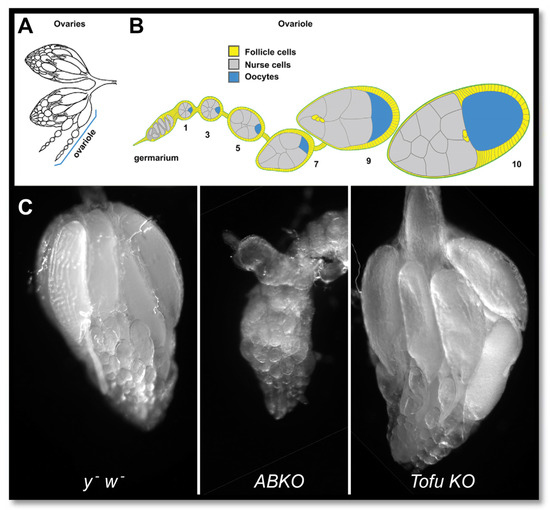
A separate null allele, BEAFNP6377 (NP6377), was generated by the insertion of a GAL4 enhancer trap element containing a mini-white marker gene, P(GawB), near the 5′ end of the exon shared by the 32A and 32B isoforms [9]. Thus, in contrast to the ABKO allele, the NP6377 allele is marked by w. This NP6377 line was used in a study that attributed the striking phenotypes of neoplastic growth and recessive larval lethality to the loss of BEAF [10], which were not observed in our ABKO mutant line. To investigate, we obtained the balanced NP6377 line. We were not able to rescue the phenotypes with two different BEAF transgenes that were able to rescue ABKO flies [11]. The balanced NP6377 and ABKO lines were also crossed in a complementation test, since they were independently generated and so should not have the same second site mutations. The test showed the rescue of the recessive larval lethal and neoplastic growth phenotypes, suggesting that they were not a consequence of the loss of BEAF. Surprisingly, NP6377/ABKO flies were viable, although their ovaries were not completely normal (Figure 1). The defect in fertility caused by the lack of BEAF was suppressed by a dominant mutation from the balanced NP6377 line [11]. We named this mutation Tofu because it allows fly stocks to be maintained without BEAF. By meiotic recombination in the NP6377/ABKO line, we generated ABKO/ABKO (Tofu KO) and NP6377/NP6377 (Tofu NP) lines. The recombinant lines lacked BEAF and any recessive lethal mutations, but they retained the dominant enhancer of fertility mutation and appear to have nearly wild-type fertility. Here, we describe attempts to locate Tofu using two methods: classical genetic mapping via meiotic recombination and high-throughput genomic DNA sequencing.
Figure 1.
Rescue of the BEAFAB-KO ovary phenotype by Tofu. (A) Line drawing of typical fly ovary morphology. Ovaries are composed of several ovarioles, which each produce oocytes. (B) Oocyte development proceeds from the stem cells at the tip of the germarium to the egg chambers, which can be classified as stages by phenotype as numbered. Stage 14 is the mature egg. (C) Ovary phenotypes of 5- to 7-day-old, mated y- w-, ABKO, and Tofu KO flies. Tofu KO ovaries have mature eggs but are atypical. [A and B reproduced with permission from [12].
2. Materials and Methods
2.1. Fly Stocks
Flies were maintained on cornmeal, yeast, and sugar medium with Tegosept (per liter H2O: 60 g cornmeal; 36 g yeast; 42 g sucrose; 7 g agar; 4 g Tegosept). BEAFNP6377/CyO GFP fly stocks were kindly provided by Victor Corces (RRID: DGGR 05221). BEAFAB-KO/CyO GFP fly stocks (CyO GFP from RRID BDSC 5194) were previously generated by our lab [8]. Tofu BEAFN6377P and Tofu BEAFAB-KO lines were created by meiotic recombination from a BEAFAB-KO/BEAFNP6377 stock [11]. Baylor P mapping kit lines (2L: 27E6, 30C1, 33A2, 34B4, 35D2, 36E3, 37B13; 2R: 41D4, 43E11, 47A11, 49E1, 53D4, 55F8, 57E9), P[w+] at 56C6 (RRID: BDSC 18385) and 57B16 (RRID: BDSC 16087), and balancer chromosome lines were obtained from the Bloomington Drosophila Stock Center.
2.2. Fly Genotyping
To detect the ABKO allele, we designed a genotyping primer set consisting of three primers. The BEAF-wt-Bam-5 has 5′ homology to the BamHI site in the WT BEAF allele. The BEAF-mut-5 primer has 5′ homology with the stop codon mutation introduced into the BamHI site of the ABKO allele [8]. The 3′ BEAF-stop+89-3 primer was used with both of these primers to generate a roughly 500 bp product from the corresponding BEAF allele. Genotyping was performed using Phire tissue direct master mix (Thermo-Fisher F-170, Waltham, MA, USA). Briefly, one headless fly was mashed in 20 μL dilution buffer plus 0.5 μL DNARelease additive to release DNA, according to the manufacturer’s protocol. Then, 1 μL was added to 9 μL H2O plus 10 μL 2x Phire tissue direct master mix and heated at 95 °C for 5 min, followed by 35 cycles of 95 °C 10 s denaturation, 60 °C 10 s annealing, and 72 °C 30 s elongation with a 60 s final elongation.
BEAF-wt-Bam-5: GACATCATATACAGCGAGGATCC
BEAF-mut-Bam-5: AAGGACATCATATACAGCGAGTAATG
BEAF-stop+89-3: TTACGACACGCTGATTTGCC
2.3. Genomic DNA Preparation and Analysis
Fifty wandering third-instar larvae from the y- w-, ABKO/CyO-GFP, NP6677/CyO-GFP, Tofu KO, and Tofu NP lines were used for DNA isolation. Larvae homozygous for BEAF knockout alleles were selected from the ABKO/CyO-GFP and NP6677/CyO-GFP lines by lack of GFP expression. Larvae were homogenized in 500 µL of Buffer A (10 mM Tris-Cl pH 7.5, 60 mM NaCl, 10 mM EDTA, 150 µM spermine, 150 µM spermidine, 200 µg/mL Proteinase K). Then, 500 µL of Buffer B (200 mM Tris-Cl (pH 7.5), 30 mM EDTA, 2% SDS, 200 µg/mL Proteinase K) was added, and the samples were incubated for one hour at 37 °C. Samples were purified by phenol extraction, followed by phenol–chloroform–isoamyl alcohol (25:24:1) extraction, and then by chloroform extraction. Samples were ethanol-precipitated and dissolved in 10 mM Tris-Cl pH 7.5.
2.3.1. Illumina Sequencing
Genomic DNA was submitted to the Roy J. Carver Biotechnology Center at the University of Illinois at Urbana. Libraries were prepared from 300 bp to 500 bp fragments for each sample, followed by the paired-end sequencing of 150 bp from each end using an Illumina HiSeq2500 instrument.
2.3.2. Data Analysis
Raw reads were obtained as paired fastq files (deposited at NCBI BioProject accession number PRJNA1069327). Read quality was analyzed using FASTQC v0.11.3 [13]. Reads were aligned to the dmel r6.09 genome [14] using bowtie2 v2.2.5. Samtools v1.2 was used to assess alignment quality and compress sam alignments into bam format. Variant calling was performed using the GATK toolkit v3.4 [15,16,17]. Variant call files (VCF) were compared using bedTools v2.23.0 [18]. Protein coding changes were called with SnpEff v4.1 [19]. SNP density was visualized as bigwig files using 2000 bp windows. File conversion was performed using Unix commands, Kent utilities v302 [20], bedTools, and deepTools v2.0.1 [21]. Data was displayed using IGV v2.3.57 [22].
3. Results
3.1. Tofu Is on Chromosome 2
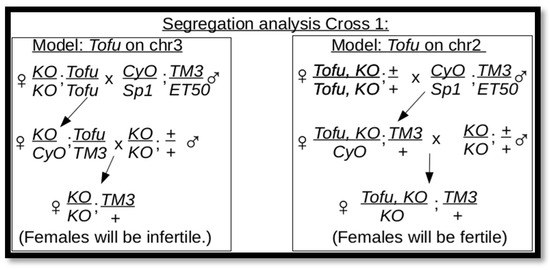
The discovery of the Tofu allele indicated that it was on the same chromosome as BEAF—chromosome 2 [11]. To check this, we performed a chromosome segregation analysis. In the first strategy (Figure 2), Tofu KO flies were mated with a CyO/WgSp-1;TM3/ScmET50 double balancer line. We assayed 200 females from the second cross (one female with three males per vial) and found a fertility rate of 53%. This indicates that Tofu is not on chromosome 3, but it does not clearly support an association with chromosome 2. Tofu could be on chromosome 2 if it was at least partially heterozygous in the Tofu KO stock and/or some of the single-pair mating vials were scored as infertile because the vials were not healthy. The incomplete rescue of ovary function (Figure 1) and other possible unknown fitness issues could also contribute. Tofu could also be on chromosome X or 4.
Figure 2.
Diagram of a segregation cross for chromosomes 2 and 3. The mating strategy takes advantage of the fertility of ABKO males and is divided into two models of expected results. A female fertility rate of 53% was found, rather than the expected 0% or 100%.
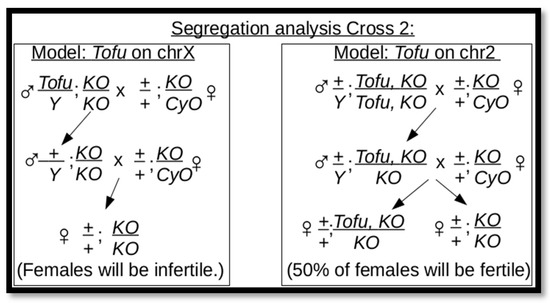
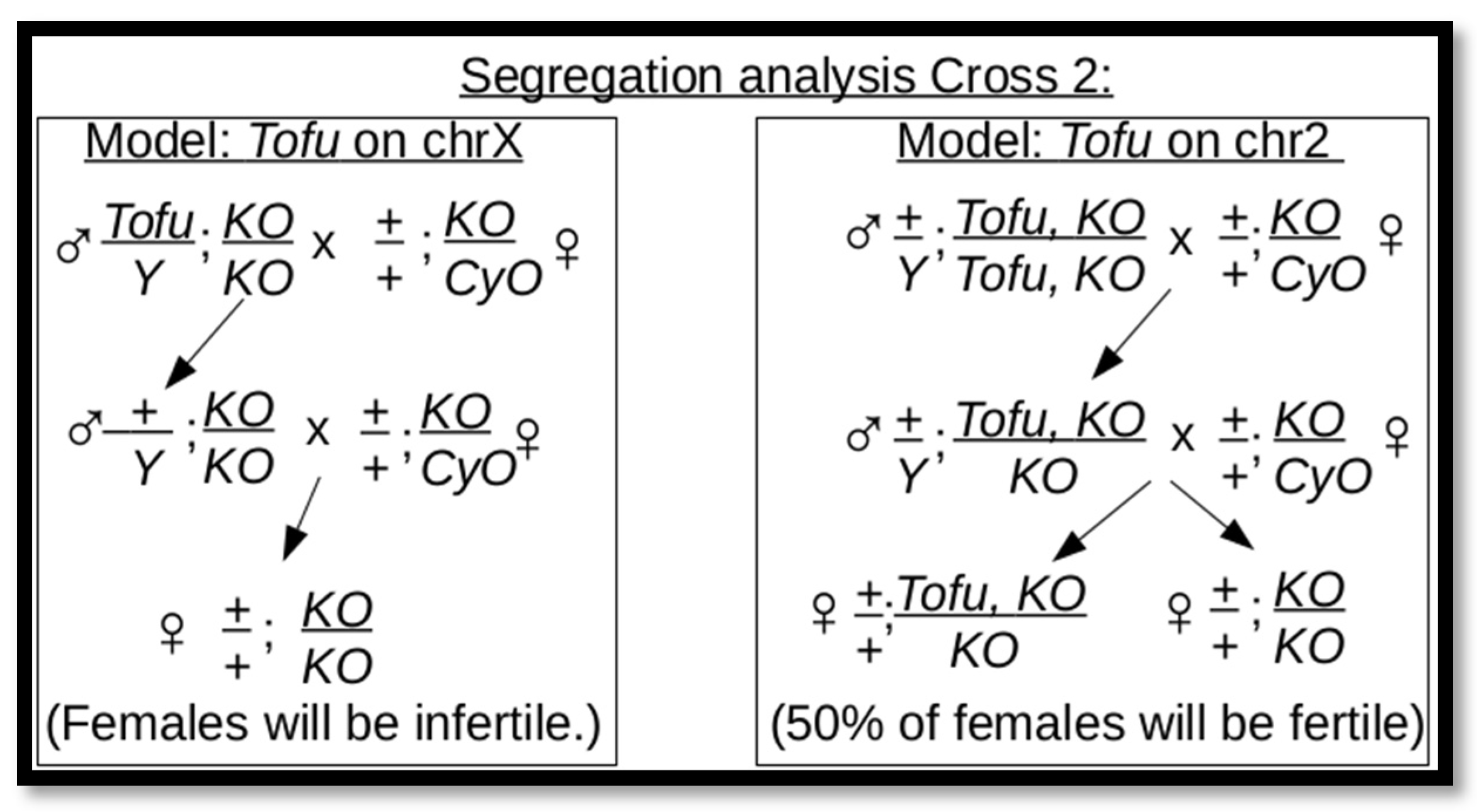
In the second strategy (Figure 3), males of the Tofu KO line were mated to ABKO/CyO virgin females. We assayed 200 female progeny from the second cross and found a fertility rate of 52%. This indicates that Tofu is not on chromosome X and suggests that it is associated with chromosome 2. This strategy does not exclude the possibility that Tofu is on chromosome 4, although, given the small size and low number of genes, this is unlikely. Moreover, single Tofu KO/CyO and Tofu NP/CyO flies could be crossed to CyO/Sp1 for several generations and retain the ability to produce Tofu KO and Tofu NP homozygous lines. If Tofu were on chromosome 4, there would be a 50% chance of losing the ability to produce homozygous lines with each cross after the first cross. By eliminating the other chromosomes, this indicates that Tofu is on the same chromosome as the BEAF alleles.
Figure 3.
Diagram of a segregation cross for chromosomes X and 2. The mating strategy is divided into two models of expected results. A female fertility rate of 52% was found.
3.2. Mapping by Meiotic Recombination
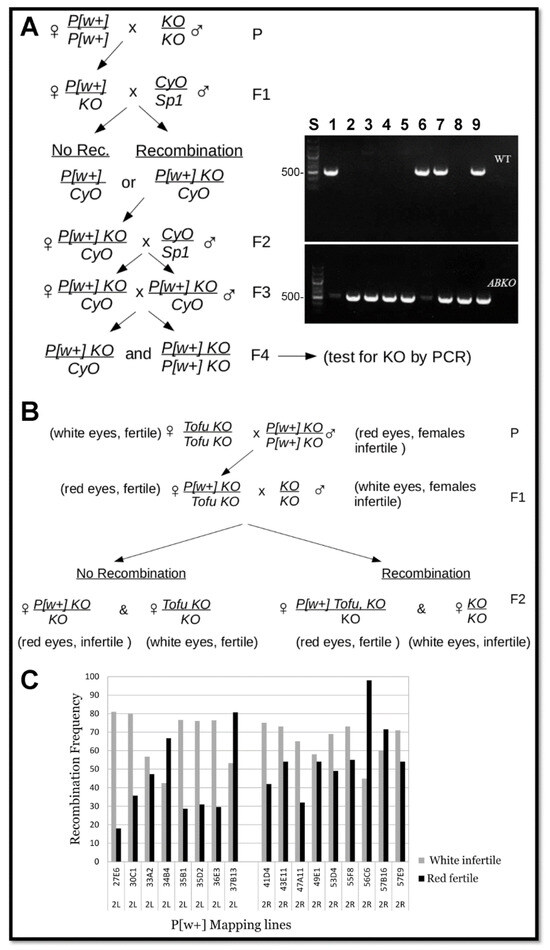
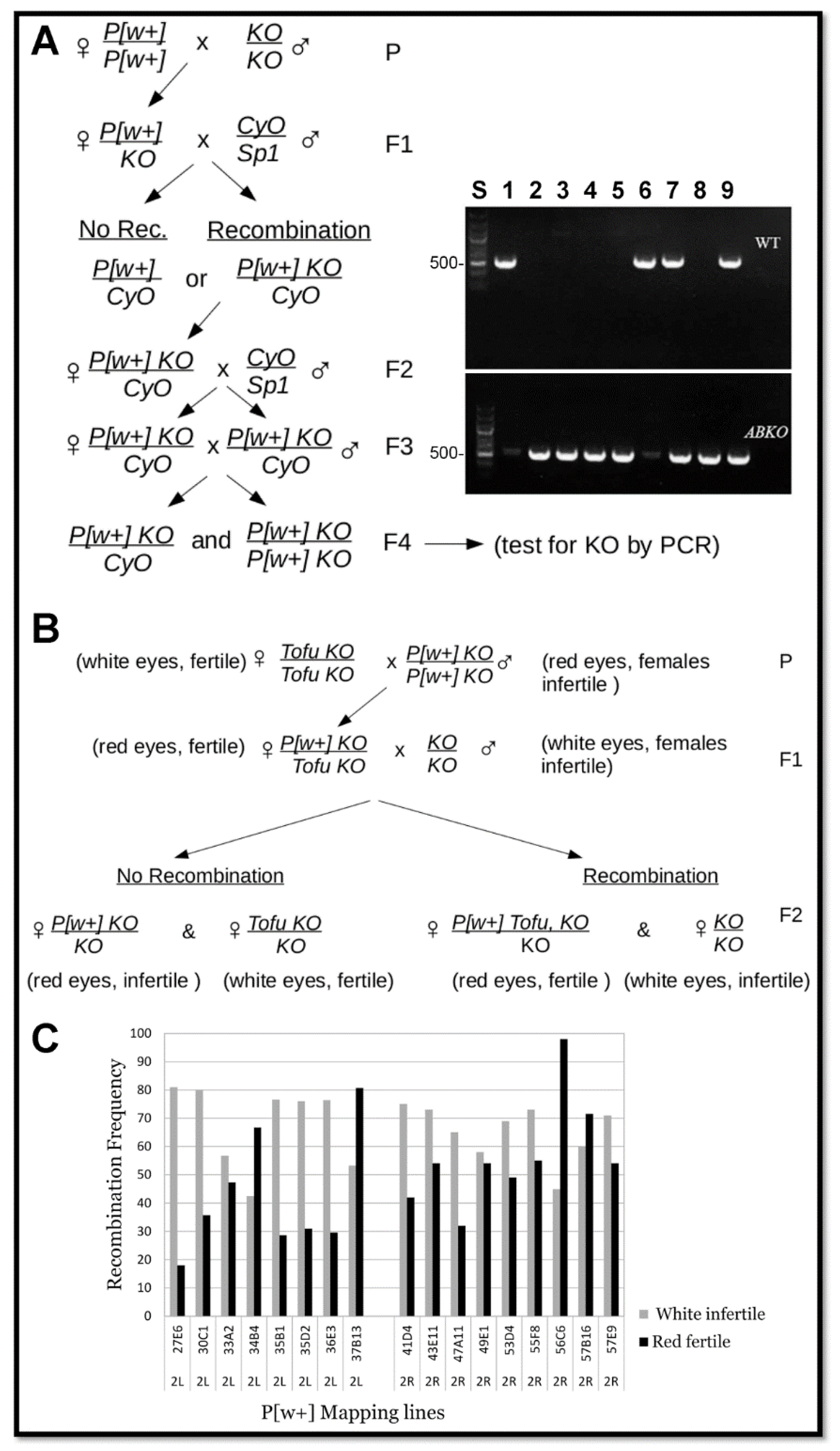
To narrow down the region that contained Tofu, we employed meiotic recombination in females to map genetic linkage. Fly lines with chromosome 2 w+ P element insertions at known cytological locations from the Baylor P mapping kit were used [23]. The ABKO allele was recombined onto the P[w+] chromosome and confirmed by PCR (Figure 4A). This chromosome was then used in the strategy shown in Figure 4B to obtain the recombination frequency of Tofu from the Tofu ABKO chromosome and onto the P[w+] ABKO chromosome, using the fertility of individual females as the phenotype. If Tofu recombined onto the P[w+] chromosome, females with red eyes should have been fertile and those with white eyes should have been infertile. For each P[w+] line, we scored 100 single-pair matings for females with red eyes and 100 for females with white eyes. The anticipated result was that the percentage of fertile females with red eyes would equal the percentage of infertile females with white eyes, and the percentage would be much lower than 50% if P[w+] and Tofu were cytologically close. These single-pair matings proved to be unreliable (Figure 4C), possibly because of unknown genetic interactions with genes from the P[w+] mapping lines or unhealthy environmental conditions in some single-pair mating vials.
Figure 4.
Meiotic recombination mapping strategy. (A) Strategy for recombining P[w+] onto the ABKO chromosome and PCR detection of recombination for 27E6 (535 bp PCR product for wt and ABKO). Agarose gel lanes—S: standard (500 bp marker is indicated); 1: wt fly; 2–8: red-eyed recombination candidate flies (homozygous males except lane 7, which is a female with CyO); lane 9: ABKO/CyO fly. PCR primers used for the wt allele (upper tier) or ABKO allele (lower tier). Recombination occurred for all candidates except lane 6 (wt BEAF in lane 7 is from the CyO chromosome). (B) Mapping strategy. (C) Flies from the mapping strategy were segregated based on eye color and individual females were scored for fertility (White: n = 100; Red: n = 100).
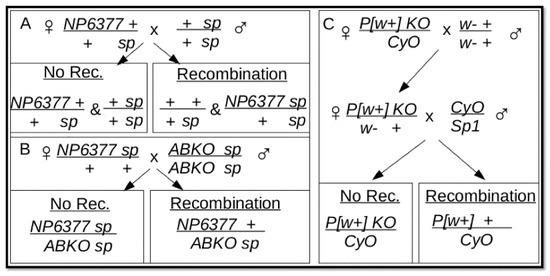
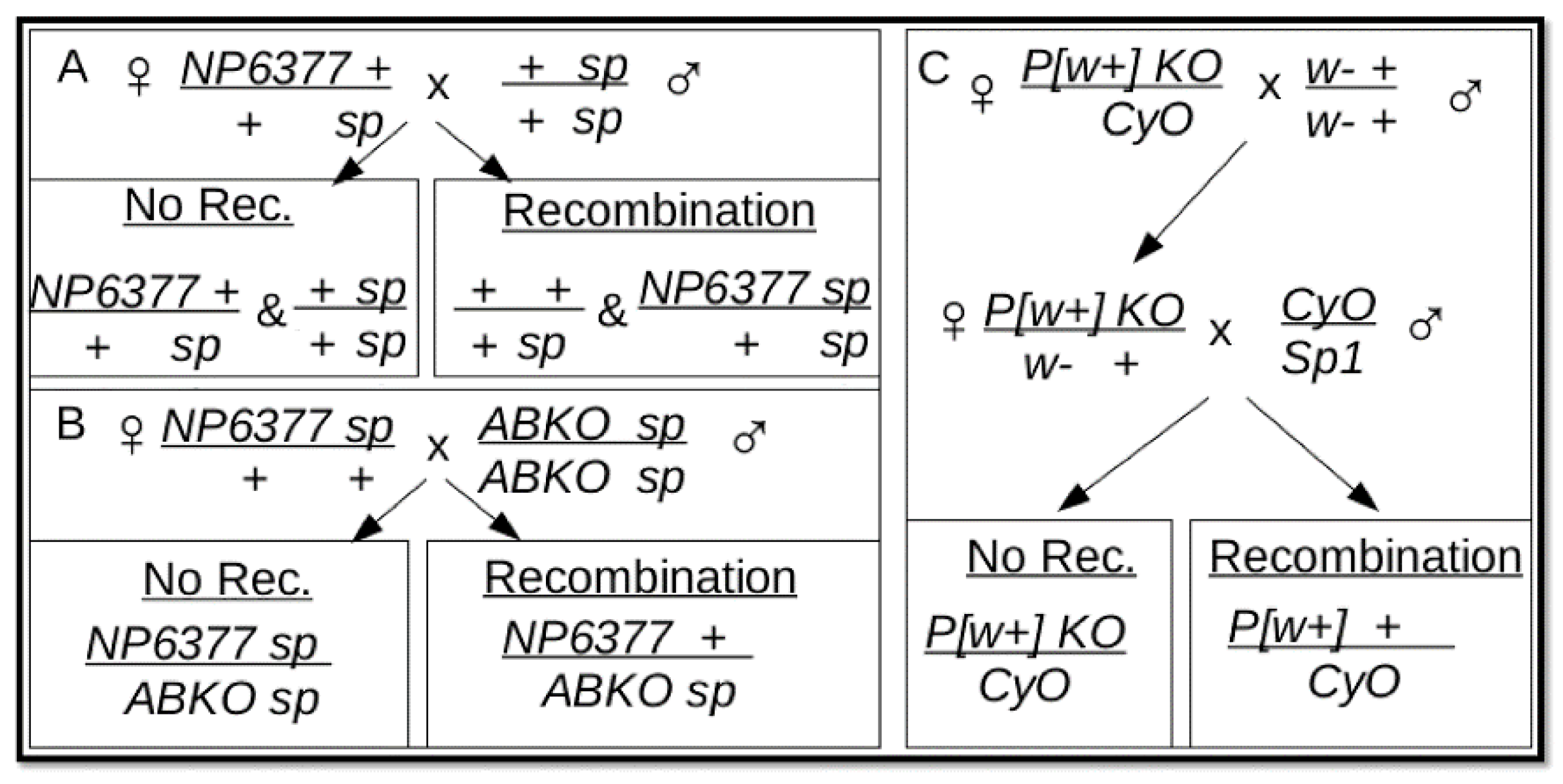
We tested our ability to perform meiotic mapping using two strategies. This also allowed us to determine the recombination frequencies of cytological locations relative to the BEAF gene near the center of chromosome arm 2R at 51C2. First, we used the recessive marker mutation speck (sp), which is in the telomere-proximal 60B12-60C1 region of 2R (~9.3 Mb from BEAF). This mutation was present in our ABKO and Tofu KO lines but not in the NP lines. Using the strategies shown in Figure 5A,B, we found that sp recombined onto the chromosome with NP with a frequency of 49% (n = 305) and off again with a frequency of 56% (n = 111). Second, we used P mapping lines with ABKO recombined onto the two chromosomes with P[w+] inserted nearest to BEAF, 49E1 and 53D4 (~1.8 Mb and 1.5 Mb from BEAF, respectively). Using the strategy shown in Figure 5C and PCR to determine if the ABKO allele was present, we found that ABKO separated from the 49E1 P[w+] with a frequency of 7.6% (n = 79) and from 53D4 P[w+] with a frequency of 11.3% (n = 71). The results demonstrated our ability to identify linked regions, confirming that the failure of our fertility assay was due to problems in accurately scoring fertility. Complex traits such as female fertility could be particularly difficult to score. Contributing factors could include sensitivity to disruption because of incomplete rescue by Tofu or pleiotropic effects on fly fitness in homozygous ABKO flies [8] that might not be rescued by Tofu, combined with single-pair matings where vials are more prone to developing unhealthy environmental conditions.
Figure 5.
Meiotic recombination mapping strategy for BEAF alleles at 51C2 relative to speck at 60B12-60C1 and P[w+] at 49E1 and 53D4. (A) Strategy for detecting recombination of speck (sp) onto the NP6377 chromosome. A recombination rate of 49% was found (n = 305). The w+ transgene in the NP6377 BEAF allele was used for identification. (B) Strategy for detecting recombination of sp from the NP6377 chromosome. A recombination rate of 56% was found (n = 111). (C) Strategy for detecting recombination of P[w+] from the ABKO chromosome. Presence or absence of ABKO was detected by PCR of flies with red eyes, as in Figure 4A. A recombination rate of 7.6% was found for 49E1 (n = 79) and 11.3% for 53D4 (n = 71). Flies in all crosses had a w- chromosome X.
3.3. Genomic Sequencing
In another approach to identifying Tofu candidates, we used genomic sequencing to compare mutations among fly lines. Genomic DNA was isolated from homozygous larvae of five lines: y- w-, ABKO, NP6377, and the two lines generated from recombination—Tofu NP and Tofu KO. The Tofu mutation was in NP6377, Tofu NP, and Tofu KO but not ABKO and y- w-. Illumina sequencing was used to generate paired-end reads of 150 bp per end from 300–500 bp DNA fragments [24]. Sequence reads were aligned to the dm6 genome release for D. melanogaster using bowtie2 after filtering for quality and trimming adapters, resulting in genome coverage of over 40 reads per base (Table 1). Paired-end sequencing improves the alignment accuracy, and an excessive distance between read pairs can indicate an insertion mutation relative to the reference genome [25,26].
Table 1.
Genomic sequencing statistics.
The aligned genomes were used to call variants relative to the dm6 reference genome by using a suite of programs in the genome analysis toolkit, GATK [15,16,17]. The resulting variant call files (VCFs) for each fly line detail the location and sequence change from the reference genome for single-nucleotide polymorphisms (SNPs) and extra bases or missing bases (insertions or deletions, lumped together as INDELs) (Supplementary Files S1–S5). For simplicity of discussion, we will use SNPs to refer to both SNPs and INDELs. The VCFs for each of the five lines had over 700,000 SNPs relative to the reference genome (Table 2). After cross-comparing, we found 61,693 SNPs that fit the pattern for Tofu among the lines sequenced (Supplementary File S6). Of these, 1203 SNPs were localized to chromosome 2—a small number compared to other chromosomes. We reasoned that this was due to recombination-mediated shuffling and selection between the original ABKO and NP6377 chromosomes to place Tofu onto the ABKO chromosome while removing recessive lethal mutations from the NP6377 chromosome.
Table 2.
Chromosome arm sizes and SNP counts per chromosome in sequenced lines.
We used SnpEff to predict the effects of the chromosome 2 SNPs (Supplementary File S7, summarized in Supplementary Table S1). Focusing on protein synthesis, we found that 35 of the SNPs would cause missense, frameshift, or splicing mutations in 17 protein-coding genes. Only two of these genes emerged as likely candidates. One, 18 wheeler (18w), encodes a Toll-like receptor family member and plays a role in various processes, including ovarian follicle cell migration [27]. However, 18w has a conservative Ala1357Val mutation near its C-terminus that might not affect function. The other, hu li tai shao (hts), encodes an adducin homolog that is associated with oocyte fusomes and ring canals and is essential for fertility [28,29]. However, the three missense mutations in hts (Lys1760Glu, Ile1764Met, Thr1773Asn) affect only 1 of 16 splice variants (hts-RP), and this isoform has not been found in the ovaries ([30] and FlyBase JBrowse RNA-seq data). Therefore, we focused on the possibility that Tofu was not a gain-of-function protein-coding mutation.
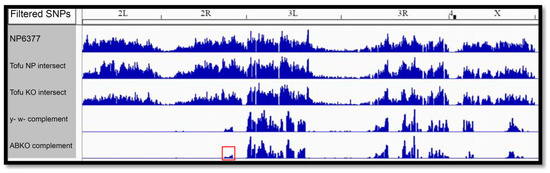
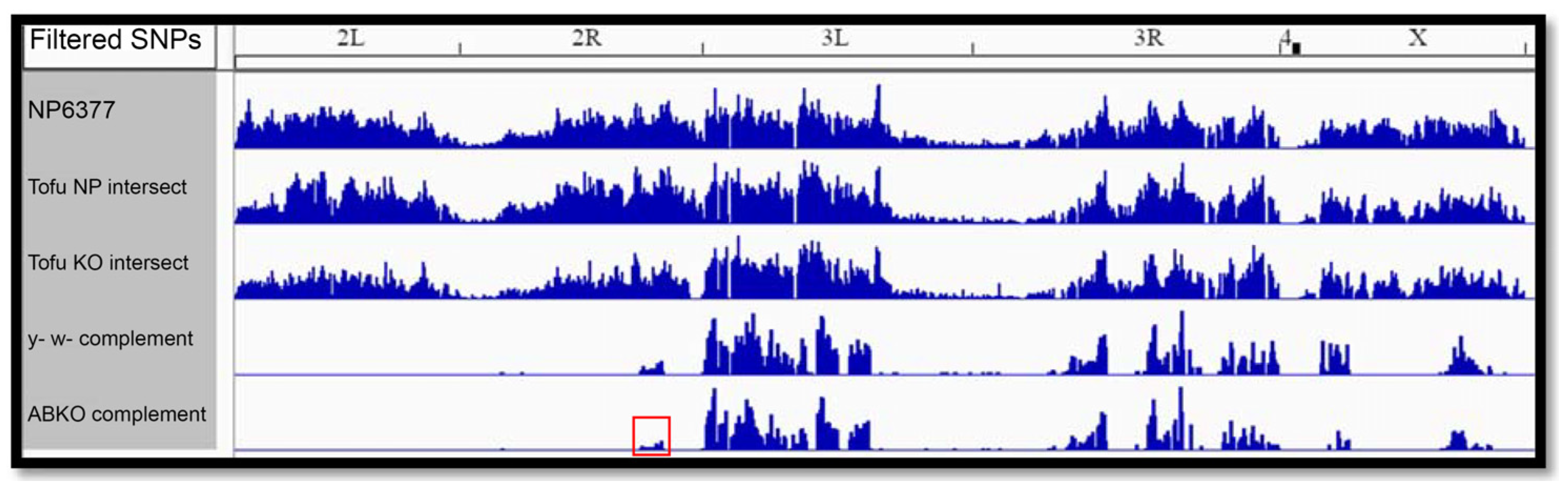
We re-examined the Tofu candidate variants by plotting them using the Integrative Genomics Viewer (IGV) [22]. Meiotic recombination between the original NP6377 and ABKO chromosomes generated the Tofu NP and Tofu KO fly lines by removing one or more recessive lethal mutations from the NP6377 chromosome and transferring Tofu to the ABKO chromosome. We reasoned that this process would also transfer linked variants near Tofu, so the Tofu mutation should lie in a variant-dense region. While there are several variant-dense regions, only one is on chromosome 2 (Figure 6). This region on 2R contains 954 of the 1203 candidate SNPs on the second chromosome, including 32 of the 35 SNPs that changed protein-coding sequences. We refer to this region as the “SNP island”.
Figure 6.
IGV visualization of SNP density. The SNPs are filtered from top (unfiltered) down. The top 3 genomes have Tofu; the bottom 2 do not. The bottom row shows candidate SNPs for Tofu with the 2R SNP island boxed in red.
The SNP island corresponds to cytological regions 55F8-57C3 (dm6 chr2R:18,868,928–21,135,871, nearly 2.3 Mb). The original P-element fly lines that we used were outside of this region, so we obtained P[w+] insertion lines within the SNP island at 56C6 and 57B16. The recombination rates were higher than expected if Tofu is in this region (Figure 4). Because we suspect that Tofu is in this region, these results reinforce our reservations about the reliability of the fertility assay.
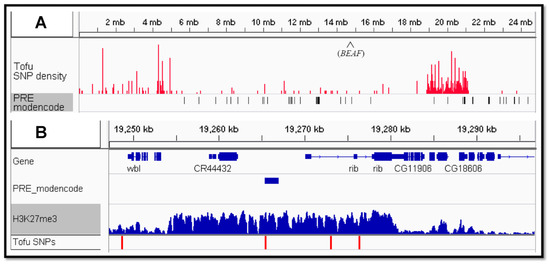
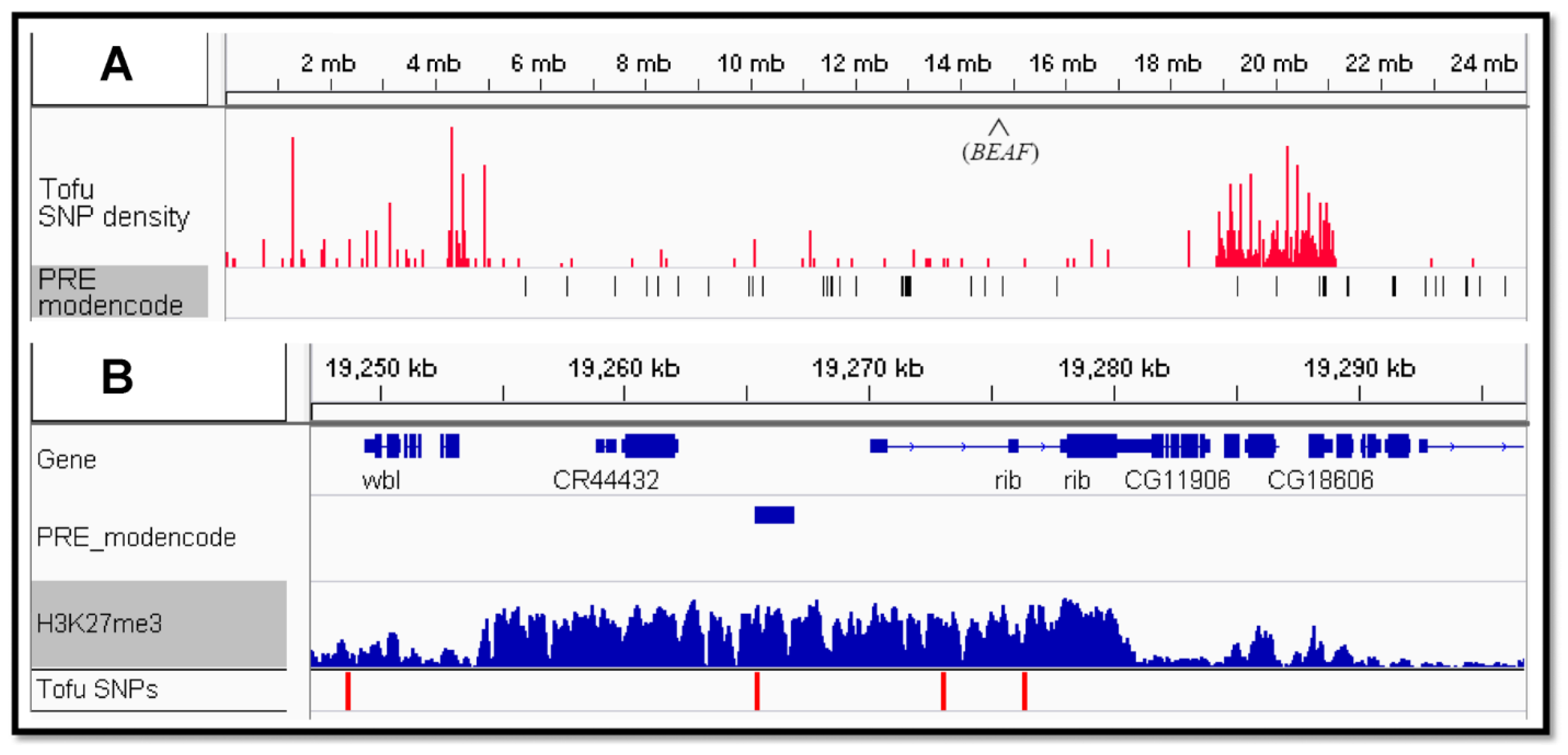
Rather than a mutation in protein-coding sequences, Tofu could be a cis-regulatory element (CRE) mutation. As a dominant mutation, Tofu would likely activate a gene in the ovaries by creating a new enhancer, altering the tissue specificity of an existing enhancer, or inactivating a repressor. The intersection of Tofu candidates with the REDfly database of CREs [31] found 287 SNPs distributed among 181 CREs (Supplementary Table S2). Of these, 247 SNPs and 143 CREs are in the SNP island. The quality of the CRE database is unclear—over half of the CREs with potential Tofu SNPs are over 2 kb, which is large for a regulatory element. In addition, a given CRE can alter target gene expression from great distances, and CRE promoter specificity is not well characterized for most genes, making it difficult to identify target genes. Lastly, it can be difficult to predict if a SNP will alter factor binding. Our initial inspection did not find any strong candidates. Thus, we decided to also look for mutations in Polycomb response elements (PREs). A PRE can facilitate the initiation and spreading of a histone H3K27me3 domain, a mark associated with the repression of genes located in the domain [32]. A PRE mutation could prevent the establishment of a repressive histone H3K27me3 domain, resulting in the increased transcription of genes normally in the domain. This would be consistent with the dominant Tofu mutation. A previous study predicted 537 PREs based on chromatin analysis [33]. We found only two second chromosome predicted PREs with candidate SNPs, and both are within the SNP island region of 2R (Figure 7A; Supplementary Table S3). One is upstream of the gene Act57B, while the other is upstream of the ribbon (rib) BTB/POZ domain transcription factor gene (Figure 7B). While other SNPs could be responsible for restoring female fertility, as described next, we believe that the PRE SNP upstream of rib is a strong candidate.
Figure 7.
An SNP in a predicted PRE upstream of the rib gene is a candidate for the Tofu mutation. (A) IGV screenshot of chromosome 2R showing SNP distribution of Tofu candidates (red) and predicted PREs (black). Note the SNP island centered around 20 Mb. (B) IGV screenshot of the candidate PRE upstream of the rib gene. Data for the histone H3K27me3 mark associated with Polycomb repression is from the ovaries (SRX177656). PRE_modencode data are available at FlyBase.org. PRE SNP: 2R:19,265,447 (AATGCTGCTGCTCGA[T to G]CCTGACAAGCGTGTG).
Our lab previously performed the co-immunoprecipitation of BEAF from Drosophila embryos and, by tandem mass spectrometry, identified around 100 co-immunoprecipitated factors with more than one peptide identified, a Benjamini–Hochberg-corrected p-value less than 0.10, and a ratio of experimental to control IP greater than 1.0 [34]. One of these was rib (three peptides, 1.8-fold enriched, 0.0390 p-value), making the SNP in the upstream PRE a candidate for Tofu. ChIP-seq data from the ovaries (SRX177656) shows that the PRE upstream of rib is in a 25 kb island of the histone H3K27me3 mark that is associated with Polycomb silencing [35], suggesting that rib is normally silenced in the ovaries. Consistent with this, we examined a single-cell atlas of gene expression in the Drosophila ovaries [36] and found that rib expression was not detectable in any adult ovarian cell types. On the other hand, rib is involved in embryonic gonad development [37]. It also has developmental roles in the Malpighian tubules, salivary glands, hindgut, tracheae, and head [38]. The PRE SNP could cause rib to be expressed in adult ovaries, where it could compensate for the loss of BEAF to rescue the fertility defect.
Additional considerations are consistent with the idea that the misexpression of rib in the ovaries could rescue the fertility defect caused by null BEAF mutations. ChIP-seq data from embryonic salivary glands identified 494 Rib-associated genes in the developing glands [39]. We previously generated a list of 3241 BEAF-associated genes from S2 cell ChIP-seq data [34,40] and found overlap with 30% (150) of the Rib-associated genes. A motif related to the BEAF-32B DNA-binding consensus motif, CGATA [3,5], represented around 15% of the occurrences of the top 10 motifs found in the Rib ChIP-seq peaks associated with the 494 genes [39]. A more recent study found that Rib is associated with 73 of 84 ribosomal protein genes that are active in developing salivary glands and increases the expression of these genes, at least partially accounting for the requirement for Rib for salivary gland development [41]. This work failed to detect sequence-specific DNA binding by Rib, suggesting that it is recruited to DNA by other proteins. Our analysis of S2 cell BEAF ChIP-seq data found that BEAF is associated with 61 of these ribosomal protein genes, with both Rib and BEAF found at 53 of these genes. We also demonstrated that BEAF could activate four tested ribosomal protein promoters (RpS12; RpL10Ab; RpLP1; RpL26) in a transient transfection assay [42,43]. BEAF could be one of several factors that helps to recruit Rib to promoters. Other regulators of ribosomal protein gene expression (TRF2, M1BP, DREF) can co-immunoprecipitate Rib, making them additional candidates [41]. If the SNP in the predicted PRE directly upstream of the rib promoter leads to rib activation in the adult ovaries, Rib could replace the function of BEAF at genes such as those encoding ribosomal proteins to largely restore ovary function.
4. Discussion
The fortuitous discovery of Tofu and finding that it is on chromosome 2, as is BEAF, led us to try to determine its location relative to BEAF by meiotic mapping. Our attempts at mapping were unsuccessful due to the difficulty in scoring fertility. Because the BEAFAB-KO and BEAFNP6377 mutations were independently derived [8,9] but the Tofu ABKO and Tofu NP chromosomes were related by recombination, we decided to try using genomic sequencing to identify Tofu.
In retrospect, our genomic sequencing did not sample enough populations containing the Tofu mutation. Genome-wide association studies in humans use many genomes from individuals to identify SNPs associated with a trait. These studies include a minimum of 2000 individuals in each group, often exceeding 100,000 [44,45]. Our analysis was limited to five genomes of pooled populations, and this likely limited our ability to screen SNPs. However, similar pooled sequencing strategies have been employed successfully in Drosophila [46].
Because Tofu is a dominant mutation, we originally focused on SNPs that might cause a gain-of-function protein-coding change. The lack of strong candidates led us to consider cis-regulatory element mutations. We also realized that SNPs near Tofu would likely remain associated with Tofu, so we looked for chromosome 2 SNP islands in our data. There was one island, and it contained 80% of the chromosome 2 SNPs. This did not significantly narrow down the number of SNPs to consider, but it did localize a region that likely contained Tofu. CRE mutations and affected genes can be difficult to identify, but we considered a silencer element or repressive chromatin domain as likely candidates and took advantage of predicted PREs [33]. Only two predicted PREs in the SNP island contained SNPs, leading us to focus on a predicted PRE just upstream of the rib gene. The region around this PRE, including rib, is in a chromatin domain enriched with the repressive histone H3K27me3 modification in the ovaries [35], and rib expression was not detected in a single-cell atlas of ovary gene expression [36]. If Tofu is a PRE mutation that leads to the aberrant activation of rib in the ovaries, it could allow Rib to compensate for a lack of BEAF to activate one or more coregulated genes necessary for egg production in flies.
Different strategies can be used to determine whether the SNP in the predicted PRE allows rib expression in the ovaries to rescue the fertility defect caused by null BEAF mutations. One approach would be to use fluorescence in situ hybridization (FISH) to screen for atypical rib expression in Tofu ovaries. Another approach would be to use the GAL4 UAS system with different GAL4 drivers to determine if UAS::rib expression in different ovary cell types can rescue the ABKO mutation. Another possibility would be to use CRISPR-Cas9 to introduce or correct the PRE mutation and determine the effect on fertility in the presence of a null BEAF mutation. If it is found that Tofu is not a rib ovary misexpression allele and the PRE SNP is not involved, the genome sequences that we have generated provide a valuable resource for identifying other candidates. This could start with a deeper analysis of the SNPs in REDfly CREs.
Supplementary Materials
The following supporting information can be downloaded at https://www.mdpi.com/article/10.3390/genes17030328/s1. File S1. fileS1_np63dm6.raw.snps.indels.vcf: VCF file for the original BEAFNP6377 fly stock with Tofu and at least one recessive lethal mutation; File S2. fileS2_npnpdm6.raw.snps.indels.vcf: VCF file for the fly stock with BEAFNP6377 and Tofu but lacking any recessive lethal mutation; File S3. fileS3_kokodm6.raw.snps.indels.vcf: VCF for the fly stock with the BEAFAB-KO and Tofu alleles; File S4. fileS4_kog30dm6.raw.snps.indels.vcf: VCF for the original fly stock with BEAFAB-KO but lacking Tofu; File S5. fileS5_whitedm6.raw.snps.indels.vcf: VCF for the y- w- fly stock used as a wild-type genome; File S6. fileS6_tofu.vcf: VCF filtered to only retain variants unique to fly stocks with Tofu (present in NP6377, Tofu NP, and Tofu KO but not in ABKO or y- w-); File S7. fileS7_tofuchrom2.vcf: VCF with snpEff analysis of chr2 variants unique to fly stocks with Tofu (present in NP6377, Tofu NP, and Tofu KO but not in ABKO or y- w-); Supplementary Tables S1–S3: Table S1: Excel table summarizing the SnpEff evaluation of chromosome 2 SNPs; Table S2: Excel table of SNPs matched to REDfly CREs; Table S3: Excel table of SNPs matched to PREs.
Author Contributions
Conceptualization, C.M.H. and J.K.M.; methodology, C.M.H. and J.K.M.; validation, C.M.H. and J.K.M.; formal analysis, C.M.H., J.K.M. and M.D.; investigation, C.M.H. and J.K.M.; resources, C.M.H. and M.D.; data curation, C.M.H., J.K.M. and M.D.; writing, original draft preparation, J.K.M.; writing, review and editing, C.M.H.; visualization, C.M.H. and J.K.M.; supervision, C.M.H. and M.D.; project administration, C.M.H.; funding acquisition, C.M.H. All authors have read and agreed to the published version of the manuscript.
Funding
This work was supported by NSF grant 1244100 from the Division of Molecular and Cellular Biosciences.
Institutional Review Board Statement
The research was approved by the Louisiana State University Inter-Institutional Biological and Recombinant DNA Safety Committee (approval code: 00212, approval date: 17 February 2012).
Informed Consent Statement
Not applicable.
Data Availability Statement
The raw WGS genomic sequencing files are available at https://www.ncbi.nlm.nih.gov/bioproject/?term=PRJNA1069327 (accessed on 24 February 2026). Other data presented in this study are included in the article and Supplementary Materials. Further inquiries can be directed to the corresponding author.
Acknowledgments
The authors thank Victor Corces for the BEAFNP6377/CyO GFP fly stock; Peter Klein for assistance with the genome analysis; the Bloomington Drosophila Stock Center (https://bdsc.indiana.edu, NIH grant P40 OD-018537; accessed on 24 February 2026) for the fly stocks; and FlyBase (https://flybase.org, NIH NHGRI grant 5U41HG000739-30; accessed on 24 February 2026) as an essential Drosophila resource.
Conflicts of Interest
The authors declare no conflicts of interest.
References
- Jiang, N.; Emberly, E.; Cuvier, O.; Hart, C.M. Genome-wide mapping of boundary element-associated factor (BEAF) binding sites in Drosophila melanogaster links BEAF to transcription. Mol. Cell Biol. 2009, 29, 3556–3568. [Google Scholar] [CrossRef] [Scilit] [PubMed]
- Cuvier, O.; Hart, C.M.; Laemmli, U.K. Identification of a class of chromatin boundary elements. Mol. Cell Biol. 1998, 18, 7478–7486. [Google Scholar] [CrossRef] [Scilit]
- Zhao, K.; Hart, C.M.; Laemmli, U.K. Visualization of chromosomal domains with boundary element-associated factor BEAF-32. Cell 1995, 81, 879–889. [Google Scholar] [CrossRef] [Scilit]
- Aravind, L. The BED finger, a novel DNA-binding domain in chromatin-boundary-element-binding proteins and transposases. Trends Biochem. Sci. 2000, 25, 421–423. [Google Scholar] [CrossRef] [Scilit]
- Hart, C.M.; Zhao, K.; Laemmli, U.K. The scs’ boundary element: Characterization of boundary element-associated factors. Mol. Cell Biol. 1997, 17, 999–1009. [Google Scholar] [CrossRef] [Scilit]
- Avva, S.V.; Hart, C.M. Characterization of the Drosophila BEAF-32A and BEAF-32B Insulator Proteins. PLoS ONE 2016, 11, e0162906. [Google Scholar] [CrossRef] [Scilit]
- Delattre, M.; Spierer, A.; Hulo, N.; Spierer, P. A new gene in Drosophila melanogaster, Ravus, the phantom of the modifier of position-effect variegation Su(var)3-7. Int. J. Dev. Biol. 2002, 46, 167–171. [Google Scholar] [CrossRef] [Scilit]
- Roy, S.; Gilbert, M.K.; Hart, C.M. Characterization of BEAF Mutations Isolated by Homologous Recombination in Drosophila. Genetics 2007, 176, 801–813. [Google Scholar] [CrossRef] [Scilit]
- Hayashi, S.; Ito, K.; Sado, Y.; Taniguchi, M.; Akimoto, A.; Takeuchi, H.; Aigaki, T.; Matsuzaki, F.; Nakagoshi, H.; Tanimura, T.; et al. GETDB, a database compiling expression patterns and molecular locations of a collection of Gal4 enhancer traps. Genesis 2002, 34, 58–61. [Google Scholar] [CrossRef] [Scilit] [PubMed]
- Gurudatta, B.V.; Ramos, E.; Corces, V.G. The BEAF insulator regulates genes involved in cell polarity and neoplastic growth. Dev. Biol. 2012, 369, 124–132. [Google Scholar] [CrossRef] [Scilit] [PubMed]
- Hart, C.M. Do the BEAF insulator proteins regulate genes involved in cell polarity and neoplastic growth? Dev. Biol. 2014, 389, 121–123. [Google Scholar] [CrossRef] [Scilit] [PubMed]
- Andersen, D.; Horne-Badovinac, S. Influence of ovarian muscle contraction and oocyte growth on egg chamber elongation in Drosophila. Development 2016, 143, 1375–1387. [Google Scholar] [CrossRef] [Scilit]
- Andrews, S. FastQC: A Quality Control Tool for High Throughput Sequence Data [Online]. Available online: http://www.bioinformatics.babraham.ac.uk/projects/fastqc/ (accessed on 24 February 2026).
- Jenkins, V.K.; Larkin, A.; Thurmond, J.; FlyBase, C. Using FlyBase: A Database of Drosophila Genes and Genetics. Methods Mol. Biol. 2022, 2540, 1–34. [Google Scholar]
- Van der Auwera, G.A.; Carneiro, M.O.; Hartl, C.; Poplin, R.; Del Angel, G.; Levy-Moonshine, A.; Jordan, T.; Shakir, K.; Roazen, D.; Thibault, J.; et al. From FastQ data to high confidence variant calls: The Genome Analysis Toolkit best practices pipeline. Curr. Protoc. Bioinform. 2013, 43, 11.10.11–11.10.33. [Google Scholar] [CrossRef] [Scilit]
- DePristo, M.A.; Banks, E.; Poplin, R.; Garimella, K.V.; Maguire, J.R.; Hartl, C.; Philippakis, A.A.; del Angel, G.; Rivas, M.A.; Hanna, M.; et al. A framework for variation discovery and genotyping using next-generation DNA sequencing data. Nat. Genet. 2011, 43, 491–498. [Google Scholar] [CrossRef] [Scilit]
- McKenna, A.; Hanna, M.; Banks, E.; Sivachenko, A.; Cibulskis, K.; Kernytsky, A.; Garimella, K.; Altshuler, D.; Gabriel, S.; Daly, M.; et al. The Genome Analysis Toolkit: A MapReduce framework for analyzing next-generation DNA sequencing data. Genome Res. 2010, 20, 1297–1303. [Google Scholar] [CrossRef] [Scilit]
- Quinlan, A.R. BEDTools: The Swiss-Army Tool for Genome Feature Analysis. Curr. Protoc. Bioinform. 2014, 47, 11.12.11–11.12.34. [Google Scholar] [CrossRef] [Scilit] [PubMed]
- Cingolani, P.; Platts, A.; Wang, L.L.; Coon, M.; Nguyen, T.; Wang, L.; Land, S.J.; Lu, X.; Ruden, D.M. A program for annotating and predicting the effects of single nucleotide polymorphisms, SnpEff: SNPs in the genome of Drosophila melanogaster strain w1118; iso-2; iso-3. Fly 2012, 6, 80–92. [Google Scholar] [CrossRef] [Scilit]
- Kent, W.J.; Zweig, A.S.; Barber, G.; Hinrichs, A.S.; Karolchik, D. BigWig and BigBed: Enabling browsing of large distributed datasets. Bioinformatics 2010, 26, 2204–2207. [Google Scholar] [CrossRef] [Scilit]
- Ramirez, F.; Ryan, D.P.; Gruning, B.; Bhardwaj, V.; Kilpert, F.; Richter, A.S.; Heyne, S.; Dundar, F.; Manke, T. deepTools2: A next generation web server for deep-sequencing data analysis. Nucleic Acids Res. 2016, 44, W160–W165. [Google Scholar] [CrossRef] [Scilit] [PubMed]
- Robinson, J.T.; Thorvaldsdottir, H.; Winckler, W.; Guttman, M.; Lander, E.S.; Getz, G.; Mesirov, J.P. Integrative genomics viewer. Nat. Biotechnol. 2011, 29, 24–26. [Google Scholar] [CrossRef] [Scilit]
- Zhai, R.G.; Hiesinger, P.R.; Koh, T.W.; Verstreken, P.; Schulze, K.L.; Cao, Y.; Jafar-Nejad, H.; Norga, K.K.; Pan, H.; Bayat, V.; et al. Mapping Drosophila mutations with molecularly defined P element insertions. Proc. Natl. Acad. Sci. USA 2003, 100, 10860–10865. [Google Scholar] [CrossRef] [Scilit]
- Bentley, D.R.; Balasubramanian, S.; Swerdlow, H.P.; Smith, G.P.; Milton, J.; Brown, C.G.; Hall, K.P.; Evers, D.J.; Barnes, C.L.; Bignell, H.R.; et al. Accurate whole human genome sequencing using reversible terminator chemistry. Nature 2008, 456, 53–59. [Google Scholar] [CrossRef] [Scilit]
- Langmead, B.; Salzberg, S.L. Fast gapped-read alignment with Bowtie 2. Nat. Methods 2012, 9, 357–359. [Google Scholar] [CrossRef] [Scilit]
- Li, H.; Handsaker, B.; Wysoker, A.; Fennell, T.; Ruan, J.; Homer, N.; Marth, G.; Abecasis, G.; Durbin, R.; 1000 Genome Project Data Processing Subgroup. The Sequence Alignment/Map format and SAMtools. Bioinformatics 2009, 25, 2078–2079. [Google Scholar] [CrossRef] [Scilit]
- Kleve, C.D.; Siler, D.A.; Syed, S.K.; Eldon, E.D. Expression of 18-wheeler in the follicle cell epithelium affects cell migration and egg morphology in Drosophila. Dev. Dyn. 2006, 235, 1953–1961. [Google Scholar] [CrossRef] [Scilit]
- Lin, H.; Yue, L.; Spradling, A.C. The Drosophila fusome, a germline-specific organelle, contains membrane skeletal proteins and functions in cyst formation. Development 1994, 120, 947–956. [Google Scholar] [CrossRef] [Scilit]
- Yue, L.; Spradling, A.C. hu-li tai shao, a gene required for ring canal formation during Drosophila oogenesis, encodes a homolog of adducin. Genes Dev. 1992, 6, 2443–2454. [Google Scholar] [CrossRef] [Scilit]
- Petrella, L.N.; Smith-Leiker, T.; Cooley, L. The Ovhts polyprotein is cleaved to produce fusome and ring canal proteins required for Drosophila oogenesis. Development 2007, 134, 703–712. [Google Scholar] [CrossRef] [Scilit]
- Rivera, J.; Keranen, S.V.E.; Gallo, S.M.; Halfon, M.S. REDfly: The transcriptional regulatory element database for Drosophila. Nucleic Acids Res. 2019, 47, D828–D834. [Google Scholar] [CrossRef] [Scilit]
- Kuroda, M.I.; Kang, H.; De, S.; Kassis, J.A. Dynamic Competition of Polycomb and Trithorax in Transcriptional Programming. Annu. Rev. Biochem. 2020, 89, 235–253. [Google Scholar] [CrossRef] [Scilit]
- Negre, N.; Brown, C.D.; Ma, L.; Bristow, C.A.; Miller, S.W.; Wagner, U.; Kheradpour, P.; Eaton, M.L.; Loriaux, P.; Sealfon, R.; et al. A cis-regulatory map of the Drosophila genome. Nature 2011, 471, 527–531. [Google Scholar] [CrossRef] [Scilit]
- McKowen, J.K.; Avva, S.; Maharjan, M.; Duarte, F.M.; Tome, J.M.; Judd, J.; Wood, J.L.; Negedu, S.; Dong, Y.; Lis, J.T.; et al. The Drosophila BEAF Insulator Protein Interacts with the Polybromo Subunit of the PBAP Chromatin Remodeling Complex. G3 2022, 12, jkac223. [Google Scholar] [CrossRef] [Scilit]
- Peng, J.C.; Valouev, A.; Liu, N.; Lin, H. Piwi maintains germline stem cells and oogenesis in Drosophila through negative regulation of Polycomb group proteins. Nat. Genet. 2016, 48, 283–291. [Google Scholar] [CrossRef] [Scilit]
- Jevitt, A.; Chatterjee, D.; Xie, G.; Wang, X.F.; Otwell, T.; Huang, Y.C.; Deng, W.M. A single-cell atlas of adult Drosophila ovary identifies transcriptional programs and somatic cell lineage regulating oogenesis. PLoS Biol. 2020, 18, e3000538. [Google Scholar] [CrossRef] [Scilit]
- Silva, D.; Olsen, K.W.; Bednarz, M.N.; Droste, A.; Lenkeit, C.P.; Chaharbakhshi, E.; Temple-Wood, E.R.; Jemc, J.C. Regulation of Gonad Morphogenesis in Drosophila melanogaster by BTB Family Transcription Factors. PLoS ONE 2016, 11, e0167283. [Google Scholar] [CrossRef] [Scilit]
- Jack, J.; Myette, G. The genes raw and ribbon are required for proper shape of tubular epithelial tissues in Drosophila. Genetics 1997, 147, 243–253. [Google Scholar] [CrossRef] [Scilit]
- Loganathan, R.; Lee, J.S.; Wells, M.B.; Grevengoed, E.; Slattery, M.; Andrew, D.J. Ribbon regulates morphogenesis of the Drosophila embryonic salivary gland through transcriptional activation and repression. Dev. Biol. 2016, 409, 234–250. [Google Scholar] [CrossRef] [Scilit]
- Liang, J.; Lacroix, L.; Gamot, A.; Cuddapah, S.; Queille, S.; Lhoumaud, P.; Lepetit, P.; Martin, P.G.; Vogelmann, J.; Court, F.; et al. Chromatin immunoprecipitation indirect peaks highlight long-range interactions of insulator proteins and Pol II pausing. Mol. Cell 2014, 53, 672–681. [Google Scholar] [CrossRef] [Scilit]
- Loganathan, R.; Levings, D.C.; Kim, J.H.; Wells, M.B.; Chiu, H.; Wu, Y.; Slattery, M.; Andrew, D.J. Ribbon boosts ribosomal protein gene expression to coordinate organ form and function. J. Cell Biol. 2022, 221, e202110073. [Google Scholar] [CrossRef] [Scilit]
- Dong, Y.; Avva, S.; Maharjan, M.; Jacobi, J.; Hart, C.M. Promoter-Proximal Chromatin Domain Insulator Protein BEAF Mediates Local and Long-Range Communication with a Transcription Factor and Directly Activates a Housekeeping Promoter in Drosophila. Genetics 2020, 215, 89–101. [Google Scholar] [CrossRef] [Scilit]
- Negedu, S.; Vidrine, E.J.; Hart, C.M. Characterization of core promoter activation by the Drosophila insulator-binding protein BEAF. Sci. Rep. 2025, 15, 37129. [Google Scholar] [CrossRef] [Scilit]
- Spencer, C.C.; Su, Z.; Donnelly, P.; Marchini, J. Designing genome-wide association studies: Sample size, power, imputation, and the choice of genotyping chip. PLoS Genet. 2009, 5, e1000477. [Google Scholar] [CrossRef] [Scilit]
- Tam, V.; Patel, N.; Turcotte, M.; Bosse, Y.; Pare, G.; Meyre, D. Benefits and limitations of genome-wide association studies. Nat. Rev. Genet. 2019, 20, 467–484. [Google Scholar] [CrossRef] [Scilit]
- Blumenstiel, J.P.; Noll, A.C.; Griffiths, J.A.; Perera, A.G.; Walton, K.N.; Gilliland, W.D.; Hawley, R.S.; Staehling-Hampton, K. Identification of EMS-induced mutations in Drosophila melanogaster by whole-genome sequencing. Genetics 2009, 182, 25–32. [Google Scholar] [CrossRef] [Scilit]

Disclaimer/Publisher’s Note: The statements, opinions and data contained in all publications are solely those of the individual author(s) and contributor(s) and not of MDPI and/or the editor(s). MDPI and/or the editor(s) disclaim responsibility for any injury to people or property resulting from any ideas, methods, instructions or products referred to in the content. |
© 2026 by the authors. Licensee MDPI, Basel, Switzerland. This article is an open access article distributed under the terms and conditions of the Creative Commons Attribution (CC BY) license.