Vitamin D in Cardiovascular Medicine: From Molecular Mechanisms to Clinical Translation



Abstract
1. Introduction
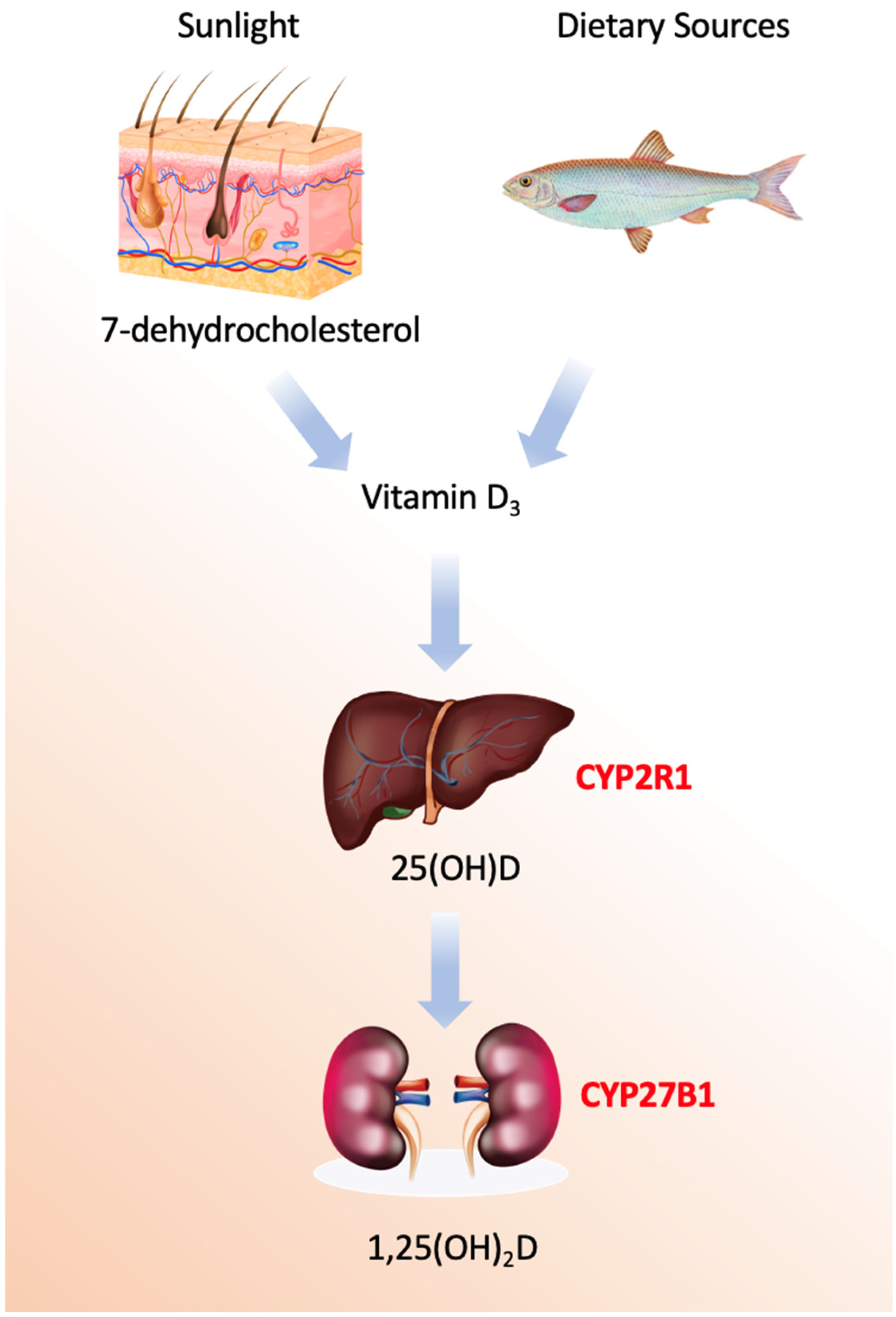
2. Vitamin D Biology and Metabolism
3. Functional Roles of Vitamin D in Cardiovascular Development and Physiology
4. Molecular and Cellular Mechanisms Linking Vitamin D to Cardiovascular Disease
4.1. Immunomodulation and Inflammation
4.2. Oxidative Stress and Mitochondrial Function
4.3. Endothelial Function and Vascular Homeostasis
4.4. Regulation of the Renin–Angiotensin–Aldosterone System
4.5. Myocardial Remodeling and Fibrosis
4.6. Epigenetic Modulation and Gene Expression
4.7. Integration of Molecular Pathways
5. Vitamin D and Specific Cardiovascular Conditions
6. Vitamin D Deficiency as a Cardiovascular Risk Marker
7. Clinical Trials Testing Vitamin D Supplementation in Cardiovascular Disease
7.1. Early Trials and Surrogate Outcomes
7.2. Primary Prevention in Unselected Populations
7.2.1. The VITamin D and OmegA-3 Trial (VITAL)
7.2.2. Vitamin D Assessment Study (ViDA)
7.2.3. D-Health Trial
7.2.4. Finnish Vitamin D Trial (FIND)
7.3. Secondary Prevention and Disease-Specific Trials
Heart Failure Trials (EVITA)
7.4. Meta-Analyses of Randomized Trials
7.5. Interpretation and Sources of Heterogeneity
8. Vitamin D as a Biomarker in Cardiovascular Medicine
9. Special Populations
10. Safety, Toxicity, and Drug Interactions
10.1. Toxicity and Hypercalcemia
10.2. Cardiovascular-Specific Considerations
10.3. Influence of Renal Function
10.4. Drug Interactions
10.5. Formulation and Pharmacokinetics
10.6. Monitoring and Risk Mitigation
11. Precision and Personalized Vitamin D Therapy
12. Future Directions and Research Gaps
13. Conclusions
Author Contributions
Funding
Data Availability Statement
Conflicts of Interest
References
- Holick, M.F. Vitamin D deficiency. N. Engl. J. Med. 2007, 357, 266–281. [Google Scholar] [CrossRef] [PubMed]
- Cui, A.; Zhang, T.; Xiao, P.; Fan, Z.; Wang, H.; Zhuang, Y. Global and regional prevalence of vitamin D deficiency in population-based studies from 2000 to 2022: A pooled analysis of 7.9 million participants. Front. Nutr. 2023, 10, 1070808. [Google Scholar] [CrossRef] [PubMed]
- Dai, L.; Liu, M.; Chen, L. Association of Serum 25-Hydroxyvitamin D Concentrations with All-Cause and Cause-Specific Mortality Among Adult Patients with Existing Cardiovascular Disease. Front. Nutr. 2021, 8, 740855. [Google Scholar] [CrossRef] [PubMed]
- Sha, S.; Xie, R.; Gwenzi, T.; Wang, Y.; Brenner, H.; Schottker, B. Real-world evidence for an association of vitamin D supplementation with atherosclerotic cardiovascular disease in the UK Biobank. Clin. Nutr. 2025, 49, 118–127. [Google Scholar] [CrossRef]
- Wang, L.; Song, Y.; Manson, J.E.; Pilz, S.; Marz, W.; Michaelsson, K.; Lundqvist, A.; Jassal, S.K.; Barrett-Connor, E.; Zhang, C.; et al. Circulating 25-hydroxy-vitamin D and risk of cardiovascular disease: A meta-analysis of prospective studies. Circ. Cardiovasc. Qual. Outcomes 2012, 5, 819–829. [Google Scholar] [CrossRef]
- Amer, M.; Qayyum, R. Relationship between 25-hydroxyvitamin D and all-cause and cardiovascular disease mortality. Am. J. Med. 2013, 126, 509–514. [Google Scholar] [CrossRef]
- Vaes, A.M.M.; Brouwer-Brolsma, E.M.; Toussaint, N.; de Regt, M.; Tieland, M.; van Loon, L.J.C.; de Groot, L. The association between 25-hydroxyvitamin D concentration, physical performance and frailty status in older adults. Eur. J. Nutr. 2019, 58, 1173–1181. [Google Scholar] [CrossRef]
- Mirza, A.M.W.; Almansouri, N.E.; Muslim, M.F.; Basheer, T.; Uppalapati, S.V.; Lakra, S.; Fatima, H.; Adhnon, A.; Filho, I.W.; Mahmood, R.; et al. Effect of vitamin D supplementation on cardiovascular outcomes: An updated meta-analysis of RCTs. Ann. Med. Surg. 2024, 86, 6665–6672. [Google Scholar] [CrossRef]
- Manson, J.E.; Cook, N.R.; Lee, I.M.; Christen, W.; Bassuk, S.S.; Mora, S.; Gibson, H.; Gordon, D.; Copeland, T.; D’Agostino, D.; et al. Vitamin D Supplements and Prevention of Cancer and Cardiovascular Disease. N. Engl. J. Med. 2019, 380, 33–44. [Google Scholar] [CrossRef]
- Chandra, A.; Picard, M.H.; Huang, S.; Gupta, D.K.; Agusala, K.; Buring, J.E.; Lee, I.M.; Cook, N.R.; Manson, J.E.; Thadhani, R.I.; et al. Impact of Vitamin D3 Versus Placebo on Cardiac Structure and Function: A Randomized Clinical Trial. J. Am. Heart Assoc. 2022, 11, e025008. [Google Scholar] [CrossRef]
- Scragg, R.K.R. Overview of results from the Vitamin D Assessment (ViDA) study. J. Endocrinol. Investig. 2019, 42, 1391–1399. [Google Scholar] [CrossRef]
- Zittermann, A.; Ernst, J.B.; Prokop, S.; Fuchs, U.; Dreier, J.; Kuhn, J.; Knabbe, C.; Birschmann, I.; Schulz, U.; Berthold, H.K.; et al. Effect of vitamin D on all-cause mortality in heart failure (EVITA): A 3-year randomized clinical trial with 4000 IU vitamin D daily. Eur. Heart J. 2017, 38, 2279–2286. [Google Scholar] [CrossRef]
- Virtanen, J.K.; Nurmi, T.; Aro, A.; Bertone-Johnson, E.R.; Hypponen, E.; Kroger, H.; Lamberg-Allardt, C.; Manson, J.E.; Mursu, J.; Mantyselka, P.; et al. Vitamin D supplementation and prevention of cardiovascular disease and cancer in the Finnish Vitamin D Trial: A randomized controlled trial. Am. J. Clin. Nutr. 2022, 115, 1300–1310. [Google Scholar] [CrossRef]
- Neale, R.E.; Baxter, C.; Romero, B.D.; McLeod, D.S.A.; English, D.R.; Armstrong, B.K.; Ebeling, P.R.; Hartel, G.; Kimlin, M.G.; O’Connell, R.; et al. The D-Health Trial: A randomised controlled trial of the effect of vitamin D on mortality. Lancet Diabetes Endocrinol. 2022, 10, 120–128. [Google Scholar] [CrossRef] [PubMed]
- Zolek, T.; Kadam, M.; Nadkarni, S.; Yasuda, K.; Chodynski, M.; Krajewski, K.; Michalak, O.; Tobiasz, J.; Kubiszewski, M.; Sakaki, T.; et al. Metabolic Interactions of Side-chain Extended and Unsaturated Vitamin D Analogs with Cytochrome P450 Enzymes: Integrating Theoretical and Experimental Approaches. Biomolecules 2025, 15, 1222. [Google Scholar] [CrossRef] [PubMed]
- Zhang, Y.; Cao, Y.; de Visser, S.P. Vitamin D3 Activation by Cytochrome P450 Enzymes: Differences between Bacterial and Human Calcitriol Biosynthesis. J. Am. Chem. Soc. 2025, 147, 36898–36910. [Google Scholar] [CrossRef] [PubMed]
- Oluwole, D.T.; Ajayi, A.F. Vitamin D3 cholecalciferol via its hydroxylmetabolites, receptors and metabolizing enzymes modulates male reproductive functions. Life Sci. 2025, 373, 123680. [Google Scholar] [CrossRef]
- Jarrar, Y.; Alhammadin, G.; Lee, S.J. Genetic Polymorphisms in Cytochrome P450 Enzymes Involved in Vitamin D Metabolism and the Vitamin D Receptor: Their Clinical Relevance. J. Pers. Med. 2025, 15, 128. [Google Scholar] [CrossRef]
- Cheng, J.B.; Levine, M.A.; Bell, N.H.; Mangelsdorf, D.J.; Russell, D.W. Genetic evidence that the human CYP2R1 enzyme is a key vitamin D 25-hydroxylase. Proc. Natl. Acad. Sci. USA 2004, 101, 7711–7715. [Google Scholar] [CrossRef]
- Lauter, K.; Arnold, A. Analysis of CYP27B1, encoding 25-hydroxyvitamin D-1alpha-hydroxylase, as a candidate tumor suppressor gene in primary and severe secondary/tertiary hyperparathyroidism. J. Bone Miner. Res. 2009, 24, 102–104. [Google Scholar] [CrossRef]
- Wilke, R.A.; Simpson, R.U.; Mukesh, B.N.; Bhupathi, S.V.; Dart, R.A.; Ghebranious, N.R.; McCarty, C.A. Genetic variation in CYP27B1 is associated with congestive heart failure in patients with hypertension. Pharmacogenomics 2009, 10, 1789–1797. [Google Scholar] [CrossRef]
- Kim, D.H.; Meza, C.A.; Clarke, H.; Kim, J.S.; Hickner, R.C. Vitamin D and Endothelial Function. Nutrients 2020, 12, 575. [Google Scholar] [CrossRef]
- Norlin, M.; Wikvall, K. Enzymatic activation in vitamin D signaling—Past, present and future. Arch. Biochem. Biophys. 2023, 742, 109639. [Google Scholar] [CrossRef]
- Ben-Eltriki, M.; Gayle, E.J.; Paras, J.M.; Nyame-Addo, L.; Chhabra, M.; Deb, S. Vitamin D in Melanoma: Potential Role of Cytochrome P450 Enzymes. Life 2024, 14, 510. [Google Scholar] [CrossRef] [PubMed]
- Iriani, A.; Rachman, A.; Fatina, M.K.; Gemilang, R.K.; Trisnandi, A.; Nugraha, M.F.I. Gene expression profiling of vitamin D metabolism enzymes in leukemia and lymphoma patients: Molecular aspect interplay of VDR, CYP2R1, and CYP24A1. Mol. Biol. Rep. 2024, 51, 526. [Google Scholar] [CrossRef] [PubMed]
- Thompson, P.D.; Jurutka, P.W.; Haussler, C.A.; Whitfield, G.K.; Haussler, M.R. Heterodimeric DNA binding by the vitamin D receptor and retinoid X receptors is enhanced by 1,25-dihydroxyvitamin D3 and inhibited by 9-cis-retinoic acid. Evidence for allosteric receptor interactions. J. Biol. Chem. 1998, 273, 8483–8491. [Google Scholar] [CrossRef] [PubMed]
- Voltan, G.; Cannito, M.; Ferrarese, M.; Ceccato, F.; Camozzi, V. Vitamin D: An Overview of Gene Regulation, Ranging from Metabolism to Genomic Effects. Genes 2023, 14, 1691. [Google Scholar] [CrossRef]
- Vrtaric, A.; Grazio, S.; Bozovic, M.; Pavicic, T.; Kavanagh, H.S.; Vajdic, I.D.; Grubisic, F.; Prtenjaca, L.; Gabaj, N.N. The relationship between vitamin D receptor (VDR) genomic polymorphisms, disease activity, and functional ability in patients with psoriatic arthritis. Clin. Rheumatol. 2025, 44, 4033–4041. [Google Scholar] [CrossRef]
- Ibrahim, Y.; Basri, N.I.; Jamil, A.A.M.; Nordin, N. A plethora of laboratory protocols for vitamin D receptor (VDR) gene variants detection: A systematic review of associations with hypertensive disorders of pregnancy. BMC Pregnancy Childbirth 2025, 25, 539. [Google Scholar] [CrossRef]
- Kafentzi, T.; Tsounis, E.P.; Tourkochristou, E.; Avramopoulou, E.; Aggeletopoulou, I.; Geramoutsos, G.; Sotiropoulos, C.; Pastras, P.; Thomopoulos, K.; Theocharis, G.; et al. Genetic Polymorphisms (ApaI, FokI, BsmI, and TaqI) of the Vitamin D Receptor (VDR) Influence the Natural History and Phenotype of Crohn’s Disease. Int. J. Mol. Sci. 2025, 26, 1848. [Google Scholar] [CrossRef]
- Sater, M.S.; Malalla, Z.H.A.; Ali, M.E.; Giha, H.A. Downstream Link of Vitamin D Pathway with Inflammation Irrespective of Plasma 25OHD3: Hints from Vitamin D-Binding Protein (DBP) and Receptor (VDR) Gene Polymorphisms. Biomedicines 2025, 13, 385. [Google Scholar] [CrossRef] [PubMed]
- Heidarzadehpilehrood, R.; Hamid, H.A.; Pirhoushiaran, M. Vitamin D receptor (VDR) gene polymorphisms and risk for polycystic ovary syndrome and infertility: An updated systematic review and meta-analysis. Metab. Open 2025, 25, 100343. [Google Scholar] [CrossRef] [PubMed]
- Martinelli, R.P.; Petroni, C.; Martinez, J.; Cuesta, C.; Esteban, L.; Pacchioni, A.M.; Arias, P. Investigating the association between FOK1 polymorphism in the vitamin D receptor (VDR) gene and type 2 diabetes prevalence: A comprehensive analysis. J. Steroid Biochem. Mol. Biol. 2025, 248, 106692. [Google Scholar] [CrossRef] [PubMed]
- Stanisic, T.; Ewing, E.U.; Lindell, A.; Al-Jaberi, F.; Kongsbak-Wismann, M. Vitamin D3-VDR and vitamin A-RAR affect IL-13 and IFNgamma secretion from human CD4+ T cells directly and indirectly via competition for their shared co-receptor RXR. Scand. J. Immunol. 2025, 101, e13429. [Google Scholar] [CrossRef]
- Usman, H.A.; Sholihah, F.; Dewayani, B.M.; Giovani, O. The Roles of Vitamin D Receptor (VDR) and CD8+ T-Lymphocytes in Acral and Mucosal Melanoma Invasion Depth. J. Cutan. Pathol. 2025, 52, 227–234. [Google Scholar] [CrossRef]
- Retamoso, V.R.; Barbisan, F.; Moro, G.M.; Maurer, P.; Rubio, D.V.; Dos Santos, L.F.V.; Feijoo, L.B.; Frizzo, M.N.; Manica da Cruz, I.B.; Manfredini, V.; et al. VDR, SOD-2, and CYP24A1 Gene Expression in Different Genotypes of BsmI SNP of the Vitamin D Receptor Gene in Individuals with Hypovitaminosis. Nutrients 2023, 15, 3565. [Google Scholar] [CrossRef]
- Seiler, J.; Ebert, R.; Rudert, M.; Herrmann, M.; Leich, E.; Weissenberger, M.; Horas, K. Bone Metastases of Diverse Primary Origin Frequently Express the VDR (Vitamin D Receptor) and CYP24A1. J. Clin. Med. 2022, 11, 6537. [Google Scholar] [CrossRef]
- Vidigal, V.M.; Silva, T.D.; de Oliveira, J.; Pimenta, C.A.M.; Felipe, A.V.; Forones, N.M. Genetic polymorphisms of vitamin D receptor (VDR), CYP27B1 and CYP24A1 genes and the risk of colorectal cancer. Int. J. Biol. Markers 2017, 32, e224–e230. [Google Scholar] [CrossRef]
- Voutsadakis, I.A. Vitamin D receptor (VDR) and metabolizing enzymes CYP27B1 and CYP24A1 in breast cancer. Mol. Biol. Rep. 2020, 47, 9821–9830. [Google Scholar] [CrossRef]
- Iriani, A.; Rachman, A.; Fatina, M.K.; Gemilang, R.K.; Trisnandi, A.; Muskananfola, F.V.; Nugraha, M.F.I. Vitamin D status, vitamin D receptor, CYP2R1, and CYP24A1 profiles in children. Front. Nutr. 2024, 11, 1394367. [Google Scholar] [CrossRef]
- Alshabrawy, A.K.; Cui, Y.; Sylvester, C.; Yang, D.; Petito, E.S.; Barratt, K.R.; Sawyer, R.K.; Heatlie, J.K.; Polara, R.; Sykes, M.J.; et al. Therapeutic Potential of a Novel Vitamin D3 Oxime Analogue, VD1-6, with CYP24A1 Enzyme Inhibitory Activity and Negligible Vitamin D Receptor Binding. Biomolecules 2022, 12, 960. [Google Scholar] [CrossRef]
- Jayaraj, J.M.; Kuriakose, B.B.; Alhazmi, A.H.; Muthusamy, K. Structural and functional insights on vitamin D receptor and CYP24A1 deleterious single nucleotide polymorphisms: A computational and pharmacogenomics perpetual approach. Cell Biochem. Funct. 2021, 39, 874–885. [Google Scholar] [CrossRef] [PubMed]
- Kaukinen, A.; Siiskonen, H.; Pelkonen, J.; Harvima, I.T. Immunoreactivity to CYP24A1, but not vitamin D receptor, is increased in mast cells of keratinocyte skin cancers. Eur. J. Dermatol. 2017, 27, 590–598. [Google Scholar] [CrossRef] [PubMed]
- Kim, J.S.; Roberts, J.M.; Bingman, W.E., 3rd; Shao, L.; Wang, J.; Ittmann, M.M.; Weigel, N.L. The prostate cancer TMPRSS2:ERG fusion synergizes with the vitamin D receptor (VDR) to induce CYP24A1 expression-limiting VDR signaling. Endocrinology 2014, 155, 3262–3273. [Google Scholar] [CrossRef] [PubMed]
- Kwon, H.J. Vitamin D receptor signaling is required for heart development in zebrafish embryo. Biochem. Biophys. Res. Commun. 2016, 470, 575–578. [Google Scholar] [CrossRef]
- Amberntsson, A.; Barebring, L.; Forsby, M.; Winkvist, A.; Kindblom, J.M.; Dangardt, F.; Augustin, H. Maternal vitamin D status during pregnancy in relation to childhood cardiometabolic risk factors: The GraviD-Child prospective cohort study. Clin. Nutr. ESPEN 2025, 66, 460–464. [Google Scholar] [CrossRef]
- Fomovsky, G.M.; Rouillard, A.D.; Holmes, J.W. Regional mechanics determine collagen fiber structure in healing myocardial infarcts. J. Mol. Cell. Cardiol. 2012, 52, 1083–1090. [Google Scholar] [CrossRef]
- Crescioli, C. The Role of Estrogens and Vitamin D in Cardiomyocyte Protection: A Female Perspective. Biomolecules 2021, 11, 1815. [Google Scholar] [CrossRef]
- Cutie, S.; Payumo, A.Y.; Lunn, D.; Huang, G.N. In vitro and in vivo roles of glucocorticoid and vitamin D receptors in the control of neonatal cardiomyocyte proliferative potential. J. Mol. Cell. Cardiol. 2020, 142, 126–134. [Google Scholar] [CrossRef]
- Derakhshanian, H.; Djazayery, A.; Javanbakht, M.H.; Eshraghian, M.R.; Mirshafiey, A.; Jahanabadi, S.; Ghadbeigi, S.; Zarei, M.; Alvandi, E.; Djalali, M. Vitamin D downregulates key genes of diabetes complications in cardiomyocyte. J. Cell Physiol. 2019, 234, 21352–21358. [Google Scholar] [CrossRef]
- Han, Y.; Chen, A.; Umansky, K.B.; Oonk, K.A.; Choi, W.Y.; Dickson, A.L.; Ou, J.; Cigliola, V.; Yifa, O.; Cao, J.; et al. Vitamin D Stimulates Cardiomyocyte Proliferation and Controls Organ Size and Regeneration in Zebrafish. Dev. Cell 2019, 48, 853–863.e5. [Google Scholar] [CrossRef] [PubMed]
- Wu, Y.; Liu, F.; Ma, X.; Adi, D.; Gai, M.T.; Jin, X.; Yang, Y.N.; Huang, Y.; Xie, X.; Li, X.M.; et al. iTRAQ analysis of a mouse acute myocardial infarction model reveals that vitamin D binding protein promotes cardiomyocyte apoptosis after hypoxia. Oncotarget 2018, 9, 1969–1979. [Google Scholar] [CrossRef] [PubMed]
- Chen, S.; Law, C.S.; Grigsby, C.L.; Olsen, K.; Hong, T.T.; Zhang, Y.; Yeghiazarians, Y.; Gardner, D.G. Cardiomyocyte-specific deletion of the vitamin D receptor gene results in cardiac hypertrophy. Circulation 2011, 124, 1838–1847. [Google Scholar] [CrossRef] [PubMed]
- Tishkoff, D.X.; Nibbelink, K.A.; Holmberg, K.H.; Dandu, L.; Simpson, R.U. Functional vitamin D receptor (VDR) in the t-tubules of cardiac myocytes: VDR knockout cardiomyocyte contractility. Endocrinology 2008, 149, 558–564. [Google Scholar] [CrossRef]
- Xiang, G.; Seki, T.; Schuster, M.D.; Witkowski, P.; Boyle, A.J.; See, F.; Martens, T.P.; Kocher, A.; Sondermeijer, H.; Krum, H.; et al. Catalytic degradation of vitamin D up-regulated protein 1 mRNA enhances cardiomyocyte survival and prevents left ventricular remodeling after myocardial ischemia. J. Biol. Chem. 2005, 280, 39394–39402. [Google Scholar] [CrossRef]
- Wang, Y.; De Keulenaer, G.W.; Lee, R.T. Vitamin D3-up-regulated protein-1 is a stress-responsive gene that regulates cardiomyocyte viability through interaction with thioredoxin. J. Biol. Chem. 2002, 277, 26496–26500. [Google Scholar] [CrossRef]
- Jiang, P.; Liu, Y.; Liu, J.; Quan, J. Vitamin D Attenuates Hepatic Sinusoidal Capillarization in Type 2 Diabetes Mellitus- Metabolic Dysfunction-Associated Fatty Liver Disease via Dual Autophagy Activation and Pyroptosis Suppression in Liver Sinusoidal Endothelial Cells. Biomedicines 2025, 13, 1459. [Google Scholar] [CrossRef]
- Gawryjolek, M.; Wicinski, M.; Michalska Gawryjolek, M.; Zabrzynski, J. Vitamin D Supplementation Effects on Markers Related with Endothelial Function and Coagulation in Obese Orthopedic Patients: Insights from Acute and Chronic Cases. Nutrients 2025, 17, 882. [Google Scholar] [CrossRef]
- Chen, Y.; Chen, D.; Peng, Y.; Wang, M.; Wang, W.; Shi, F.; Wang, Y.; Hua, L. The effect of vitamin D supplementation on endothelial function: An umbrella review of interventional meta-analyses. Nutr. Metab. Cardiovasc. Dis. 2025, 35, 103871. [Google Scholar] [CrossRef]
- Song, Y.S.; Jamali, N.; Sorenson, C.M.; Sheibani, N. Vitamin D Receptor Expression Limits the Angiogenic and Inflammatory Properties of Retinal Endothelial Cells. Cells 2023, 12, 335. [Google Scholar] [CrossRef]
- Kose, M.; Senkal, N.; Tukek, T.; Cebeci, T.; Atalar, S.C.; Altinkaynak, M.; Arici, H.; Genc, S.; Catma, Y.; Kocaaga, M.; et al. Severe vitamin D deficiency is associated with endothelial inflammation in healthy individuals even in the absence of subclinical atherosclerosis. Eur. Rev. Med. Pharmacol. Sci. 2022, 26, 7046–7052. [Google Scholar] [CrossRef]
- Sen, A.; Vincent, V.; Thakkar, H.; Abraham, R.; Ramakrishnan, L. Beneficial Role of Vitamin D on Endothelial Progenitor Cells (EPCs) in Cardiovascular Diseases. J. Lipid Atheroscler. 2022, 11, 229–249. [Google Scholar] [CrossRef] [PubMed]
- Cimmino, G.; Conte, S.; Morello, M.; Pellegrino, G.; Marra, L.; Morello, A.; Nicoletti, G.; De Rosa, G.; Golino, P.; Cirillo, P. Vitamin D Inhibits IL-6 Pro-Atherothrombotic Effects in Human Endothelial Cells: A Potential Mechanism for Protection against COVID-19 Infection? J. Cardiovasc. Dev. Dis. 2022, 9, 27. [Google Scholar] [CrossRef] [PubMed]
- Lai, C.C.; Juang, W.C.; Sun, G.C.; Tseng, Y.K.; Jhong, R.C.; Tseng, C.J.; Wong, T.Y.; Cheng, P.W. Vitamin D Attenuates Loss of Endothelial Biomarker Expression in Cardio-Endothelial Cells. Int. J. Mol. Sci. 2020, 21, 2196. [Google Scholar] [CrossRef] [PubMed]
- Duddu, S.; Katakia, Y.T.; Suresh, N.; Chakrabarti, R.; Majumder, S.; Shukla, P.C. Vitamin D attenuates PCSK9-driven phenotypic switch of vascular smooth muscle cells and neointimal hyperplasia via SIRT6 activation. Biochim. Biophys. Acta Mol. Basis Dis. 2025, 1872, 168135. [Google Scholar] [CrossRef]
- Kamboj, K.; Kumar, V.; Yadav, A.K. In Vitro Study of Vitamin D Effects on Immune, Endothelial, and Vascular Smooth Muscle Cells in Chronic Kidney Disease. Int. J. Mol. Sci. 2025, 26, 3967. [Google Scholar] [CrossRef]
- Zhou, W.; Wang, W.; Yuan, X.J.; Xiao, C.C.; Xing, Y.; Ye, S.D.; Liu, Q. The Effects of RBP4 and Vitamin D on the Proliferation and Migration of Vascular Smooth Muscle Cells via the JAK2/STAT3 Signaling Pathway. Oxid. Med. Cell. Longev. 2022, 2022, 3046777. [Google Scholar] [CrossRef]
- Zhang, J.Y.; Wu, P.; Chen, D.; Ning, F.; Lu, Q.; Qiu, X.; Hewison, M.; Tamblyn, J.A.; Kilby, M.D.; Lash, G.E. Vitamin D Promotes Trophoblast Cell Induced Separation of Vascular Smooth Muscle Cells in Vascular Remodeling via Induction of G-CSF. Front. Cell Dev. Biol. 2020, 8, 601043. [Google Scholar] [CrossRef]
- Zhou, W.; Wang, Q. Vitamin D suppresses lipopolysaccharide-induced inflammatory response in vascular smooth muscle cells via inhibition of the p38 MAPK signaling pathway. Pharmazie 2019, 74, 168–174. [Google Scholar] [CrossRef]
- Martinez-Moreno, J.M.; Herencia, C.; Montes de Oca, A.; Munoz-Castaneda, J.R.; Rodriguez-Ortiz, M.E.; Diaz-Tocados, J.M.; Peralbo-Santaella, E.; Camargo, A.; Canalejo, A.; Rodriguez, M.; et al. Vitamin D modulates tissue factor and protease-activated receptor 2 expression in vascular smooth muscle cells. FASEB J. 2016, 30, 1367–1376. [Google Scholar] [CrossRef]
- Andres, V. Vitamin D puts the brakes on angiotensin II-induced oxidative stress and vascular smooth muscle cell senescence. Atherosclerosis 2014, 236, 444–447. [Google Scholar] [CrossRef] [PubMed]
- Valcheva, P.; Cardus, A.; Panizo, S.; Parisi, E.; Bozic, M.; Lopez Novoa, J.M.; Dusso, A.; Fernandez, E.; Valdivielso, J.M. Lack of vitamin D receptor causes stress-induced premature senescence in vascular smooth muscle cells through enhanced local angiotensin-II signals. Atherosclerosis 2014, 235, 247–255. [Google Scholar] [CrossRef] [PubMed]
- Tare, M.; Emmett, S.J.; Coleman, H.A.; Skordilis, C.; Eyles, D.W.; Morley, R.; Parkington, H.C. Vitamin D insufficiency is associated with impaired vascular endothelial and smooth muscle function and hypertension in young rats. J. Physiol. 2011, 589, 4777–4786. [Google Scholar] [CrossRef] [PubMed]
- Grant, W.B.; Boucher, B.J. Evidence that adequate provision of vitamin D reduces cardiovascular disease risks. Eur. J. Intern. Med. 2025, 136, 123–124. [Google Scholar] [CrossRef]
- Zhang, N.; Wang, Y.; Li, W.; Wang, Y.; Zhang, H.; Xu, D.; Chen, R.; Tang, L.; Tang, H. Association between serum vitamin D level and cardiovascular disease in Chinese patients with type 2 diabetes mellitus: A cross-sectional study. Sci. Rep. 2025, 15, 6454. [Google Scholar] [CrossRef]
- Alhazmi, A.S. Protective Effect of Vitamin D Supplementation Against Atherosclerotic Cardiovascular Disease in Type 1 Diabetes Mellitus Model. Endocr. Metab. Immune Disord. Drug Targets 2025, 25, 1262–1272. [Google Scholar] [CrossRef]
- Qian, F.; Guo, Y.; Li, C.; Liu, Y.; Luttmann-Gibson, H.; Gomelskaya, N.; Demler, O.V.; Cook, N.R.; Lee, I.M.; Buring, J.E.; et al. Biomarkers of glucose-insulin homeostasis and incident type 2 diabetes and cardiovascular disease: Results from the Vitamin D and Omega-3 trial. Cardiovasc. Diabetol. 2024, 23, 393. [Google Scholar] [CrossRef]
- Fliri, A.; Kajiji, S. Effects of vitamin D signaling in cardiovascular disease: Centrality of macrophage polarization. Front. Cardiovasc. Med. 2024, 11, 1388025. [Google Scholar] [CrossRef]
- Fadini, G.P.; Marassi, M. Vitamin D and Cardiovascular Risk: Stemming the Tide of Poor Outcomes in Coronary Heart Disease. JACC Adv. 2024, 3, 100803. [Google Scholar] [CrossRef]
- Rivera-Escoto, M.; Campos-Lopez, B.; Pesqueda-Cendejas, K.; Ruiz-Ballesteros, A.I.; Mora-Garcia, P.E.; Meza-Meza, M.R.; Parra-Rojas, I.; Oregon-Romero, E.; Cerpa-Cruz, S.; De la Cruz-Mosso, U. Analysis of Potential Vitamin D Molecule Biomarkers: Association of Calcitriol and Its Hydroxylation Efficiency Ratio with Cardiovascular Disease Risk in Rheumatoid Arthritis Patients. Biomedicines 2024, 12, 273. [Google Scholar] [CrossRef]
- Labi, K.; Lyytinen, A.; Garcia Velazquez, R.; Skogberg, N. The association of serum D-vitamin concentration with 10-year cardiovascular disease event risk among Russian, Somali, and Kurdish origin migrants and the general Finnish population. J. Public Health Res. 2025, 14, 22799036251388590. [Google Scholar] [CrossRef] [PubMed]
- Galleze, A.; Djaballah-Ider, F.Z.; Gouaref, I.; Atmani, S.M.; Allal, K.; Touil-Boukoffa, C.; Belguendouz, H. Involvement of Vitamin D Receptor Gene Polymorphism in Increased Cardiovascular Risk Disease in the Algerian Population. Int. J. Mol. Sci. 2025, 26, 9627. [Google Scholar] [CrossRef] [PubMed]
- Grieco, T.; Paolino, G.; Moliterni, E.; Chello, C.; Sernicola, A.; Brandi, M.L.; Egan, C.G.; Morelli, M.; Nannipieri, F.; Battaglia, S.; et al. Non-Skeletal Roles of Vitamin D in Skin, Gut, and Cardiovascular Disease: Focus on Epithelial Barrier Function and Immune Regulation in Chronic Disease. Int. J. Mol. Sci. 2025, 26, 8520. [Google Scholar] [CrossRef] [PubMed]
- Ayer, A.; Dominguez, A.; Cruz Rodriguez, J.B. Effects of calcium and vitamin D supplementation on cardiovascular disease outcomes: A review of interventional studies. Trends Cardiovasc. Med. 2026, 36, 58–64. [Google Scholar] [CrossRef]
- Vatakencherry, R.M.J.; John, S.; Saraswathy, L.; Bhaskaran, R. The prevalence of vitamin D deficiency and its association to modifiable risk factors of cardiovascular disease among apparently healthy adults in Central Kerala. J. Fam. Med. Prim. Care 2025, 14, 2443–2451. [Google Scholar] [CrossRef]
- Reese, J.A.; Davis, E.; Fretts, A.M.; Ali, T.; Lee, E.T.; Umans, J.G.; Yarden, R.; Zhang, Y.; Peck, J.D. Vitamin D Deficiency and Cardiovascular Disease Risk Factors Among American Indian Adolescents: The Strong Heart Family Study. Prev. Chronic Dis. 2025, 22, E13. [Google Scholar] [CrossRef]
- Zha, X.; Liu, M.; Ruan, S.; Jiang, Y.; Wang, S. Relationship between serum vitamin D levels and pro-inflammatory cytokines in patients with rheumatoid arthritis combined with cardiovascular disease. Clin. Rheumatol. 2025, 44, 3467–3475. [Google Scholar] [CrossRef]
- Gaengler, S.; Sadlon, A.; De Godoi Rezende Costa Molino, C.; Willett, W.C.; Manson, J.E.; Vellas, B.; Steinhagen-Thiessen, E.; Von Eckardstein, A.; Ruschitzka, F.; Rizzoli, R.; et al. Effects of vitamin D, omega-3 and a simple strength exercise programme in cardiovascular disease prevention: The DO-HEALTH randomized controlled trial. J. Nutr. Health Aging 2024, 28, 100037. [Google Scholar] [CrossRef]
- Amadi, C.; Lawson, S.D.; Okafor, J.C.; Agbo, E. Impact of vitamin D and zinc sufficiency on immune responses following COVID-19 vaccinations among healthcare workers. Clin. Exp. Vaccine Res. 2025, 14, 162–168. [Google Scholar] [CrossRef]
- Levin, M.J.; Ginde, A.A.; Schmid, D.S.; Lang, N.; Canniff, J.; Schwartz, R.S.; Weinberg, A. Effect of high dose vitamin D supplementation on subsequent immune responses to administration of the live herpes zoster vaccine to long-term care residents. Vaccine 2024, 42, 2278–2281. [Google Scholar] [CrossRef]
- Jones, A.W.; Mironas, A.; Mur, L.A.J.; Beckmann, M.; Thatcher, R.; Davison, G. Vitamin D status modulates innate immune responses and metabolomic profiles following acute prolonged cycling. Eur. J. Nutr. 2023, 62, 2977–2990. [Google Scholar] [CrossRef] [PubMed]
- Scott, J.M.; Kazman, J.B.; Palmer, J.; McClung, J.P.; Gaffney-Stomberg, E.; Gasier, H.G. Effects of vitamin D supplementation on salivary immune responses during Marine Corps basic training. Scand. J. Med. Sci. Sports 2019, 29, 1322–1330. [Google Scholar] [CrossRef] [PubMed]
- Colotta, F.; Jansson, B.; Bonelli, F. Modulation of inflammatory and immune responses by vitamin D. J. Autoimmun. 2017, 85, 78–97. [Google Scholar] [CrossRef] [PubMed]
- Zdrenghea, M.T.; Makrinioti, H.; Bagacean, C.; Bush, A.; Johnston, S.L.; Stanciu, L.A. Vitamin D modulation of innate immune responses to respiratory viral infections. Rev. Med. Virol. 2017, 27, e1909. [Google Scholar] [CrossRef]
- Chun, R.F.; Liu, N.Q.; Lee, T.; Schall, J.I.; Denburg, M.R.; Rutstein, R.M.; Adams, J.S.; Zemel, B.S.; Stallings, V.A.; Hewison, M. Vitamin D supplementation and antibacterial immune responses in adolescents and young adults with HIV/AIDS. J. Steroid Biochem. Mol. Biol. 2015, 148, 290–297. [Google Scholar] [CrossRef]
- O’Connell, K.; Kelly, S.; Kinsella, K.; Jordan, S.; Kenny, O.; Murphy, D.; Heffernan, E.; O’Laoide, R.; O’Shea, D.; McKenna, C.; et al. Dose-related effects of vitamin D on immune responses in patients with clinically isolated syndrome and healthy control participants: Study protocol for an exploratory randomized double- blind placebo-controlled trial. Trials 2013, 14, 272. [Google Scholar] [CrossRef]
- Nguyen, N.L.; Chen, K.; McAleer, J.; Kolls, J.K. Vitamin D regulation of OX40 ligand in immune responses to Aspergillus fumigatus. Infect. Immun. 2013, 81, 1510–1519. [Google Scholar] [CrossRef]
- Larcombe, L.; Orr, P.; Turner-Brannen, E.; Slivinski, C.R.; Nickerson, P.W.; Mookherjee, N. Effect of vitamin D supplementation on Mycobacterium tuberculosis-induced innate immune responses in a Canadian Dene First Nations cohort. PLoS ONE 2012, 7, e40692. [Google Scholar] [CrossRef]
- Zhang, H.L.; Wu, J. Role of vitamin D in immune responses and autoimmune diseases, with emphasis on its role in multiple sclerosis. Neurosci. Bull. 2010, 26, 445–454. [Google Scholar] [CrossRef]
- Shymanskyi, I.; Lisakovska, O.; Veliky, M.; Mezhenska, O.; Bilous, V.; Siromolot, A.; Khomenko, A.; Labudzynskyi, D.; Horid’ko, T.; Pasichna, E. Vitamin D3 affects liver expression of pro-/anti-inflammatory cytokines and nitric oxide synthases in type 2 diabetes. Exp. Biol. Med. 2025, 250, 10456. [Google Scholar] [CrossRef]
- Mousa, H.; Zughaier, S.M. Vitamin D immune modulation of the anti-inflammatory effects of HDL-associated proteins. Lipids Health Dis. 2025, 24, 257. [Google Scholar] [CrossRef]
- Mokgalaboni, K. Exploring the anti-inflammatory potential of vitamin D in cardiometabolic diseases. Metab. Open 2025, 25, 100348. [Google Scholar] [CrossRef] [PubMed]
- Fenercioglu, A.K. The Anti-Inflammatory Roles of Vitamin D for Improving Human Health. Curr. Issues Mol. Biol. 2024, 46, 13514–13525. [Google Scholar] [CrossRef] [PubMed]
- Martin Gimenez, V.M.; Menendez, S.G.; Holick, M.F.; Manucha, W. Vitamin D: A Repurposed Anti-inflammatory Drug at the Cardiovascular Level. Curr. Protein Pept. Sci. 2023, 24, 533–535. [Google Scholar] [CrossRef] [PubMed]
- Della Nera, G.; Sabatino, L.; Gaggini, M.; Gorini, F.; Vassalle, C. Vitamin D Determinants, Status, and Antioxidant/Anti-inflammatory-Related Effects in Cardiovascular Risk and Disease: Not the Last Word in the Controversy. Antioxidants 2023, 12, 948. [Google Scholar] [CrossRef]
- Aggeletopoulou, I.; Thomopoulos, K.; Mouzaki, A.; Triantos, C. Vitamin D-VDR Novel Anti-Inflammatory Molecules-New Insights into Their Effects on Liver Diseases. Int. J. Mol. Sci. 2022, 23, 8465. [Google Scholar] [CrossRef]
- Krajewska, M.; Witkowska-Sedek, E.; Ruminska, M.; Stelmaszczyk-Emmel, A.; Sobol, M.; Majcher, A.; Pyrzak, B. Vitamin D Effects on Selected Anti-Inflammatory and Pro-Inflammatory Markers of Obesity-Related Chronic Inflammation. Front. Endocrinol. 2022, 13, 920340. [Google Scholar] [CrossRef]
- Ribeiro, V.R.; Romao-Veiga, M.; Nunes, P.R.; Matias, M.L.; Peracoli, J.C.; Peracoli, M.T.S. Vitamin D modulates the transcription factors of T cell subsets to anti-inflammatory and regulatory profiles in preeclampsia. Int. Immunopharmacol. 2021, 101, 108366. [Google Scholar] [CrossRef]
- Hernandez, M.; Recalde, S.; Gonzalez-Zamora, J.; Bilbao-Malave, V.; Saenz de Viteri, M.; Bezunartea, J.; Moreno-Orduna, M.; Belza, I.; Barrio-Barrio, J.; Fernandez-Robredo, P.; et al. Anti-Inflammatory and Anti-Oxidative Synergistic Effect of Vitamin D and Nutritional Complex on Retinal Pigment Epithelial and Endothelial Cell Lines against Age-Related Macular Degeneration. Nutrients 2021, 13, 1423. [Google Scholar] [CrossRef]
- Filippelli, M.; Campagna, G.; Vito, P.; Zotti, T.; Ventre, L.; Rinaldi, M.; Bartollino, S.; dell’Omo, R.; Costagliola, C. Anti-inflammatory Effect of Curcumin, Homotaurine, and Vitamin D3 on Human Vitreous in Patients with Diabetic Retinopathy. Front. Neurol. 2020, 11, 592274. [Google Scholar] [CrossRef]
- Almeida Moreira Leal, L.K.; Lima, L.A.; Alexandre de Aquino, P.E.; Costa de Sousa, J.A.; Jatai Gadelha, C.V.; Felicio Calou, I.B.; Pereira Lopes, M.J.; Viana Lima, F.A.; Tavares Neves, K.R.; Matos de Andrade, G.; et al. Vitamin D (VD3) antioxidative and anti-inflammatory activities: Peripheral and central effects. Eur. J. Pharmacol. 2020, 879, 173099. [Google Scholar] [CrossRef]
- Borzouei, S.; Sheikh, V.; Ghasemi, M.; Zamani, A.; Telikani, Z.; Zareighane, Z.; Salehi, I.; Mozayanimonfared, A.; Amirzargar, M.A.; Alahgholi-Hajibehzad, M. Anti-Inflammatory Effect of Combined Sitagliptin and Vitamin D3 on Cytokines Profile in Patients with Type 2 Diabetes Mellitus. J. Interferon Cytokine Res. 2019, 39, 293–301. [Google Scholar] [CrossRef] [PubMed]
- Hashemi, R.; Morshedi, M.; Asghari Jafarabadi, M.; Altafi, D.; Saeed Hosseini-Asl, S.; Rafie-Arefhosseini, S. Anti-inflammatory effects of dietary vitamin D3 in patients with multiple sclerosis. Neurol. Genet. 2018, 4, e278. [Google Scholar] [CrossRef] [PubMed]
- Liu, W.; Zhang, L.; Xu, H.J.; Li, Y.; Hu, C.M.; Yang, J.Y.; Sun, M.Y. The Anti-Inflammatory Effects of Vitamin D in Tumorigenesis. Int. J. Mol. Sci. 2018, 19, 2736. [Google Scholar] [CrossRef] [PubMed]
- Wei, R.; Christakos, S. Mechanisms Underlying the Regulation of Innate and Adaptive Immunity by Vitamin D. Nutrients 2015, 7, 8251–8260. [Google Scholar] [CrossRef]
- Lang, P.O.; Aspinall, R. Can we translate vitamin D immunomodulating effect on innate and adaptive immunity to vaccine response? Nutrients 2015, 7, 2044–2060. [Google Scholar] [CrossRef]
- Tiosano, D.; Wildbaum, G.; Gepstein, V.; Verbitsky, O.; Weisman, Y.; Karin, N.; Eztioni, A. The role of vitamin D receptor in innate and adaptive immunity: A study in hereditary vitamin D-resistant rickets patients. J. Clin. Endocrinol. Metab. 2013, 98, 1685–1693. [Google Scholar] [CrossRef]
- Hewison, M. Vitamin D and innate and adaptive immunity. Vitam. Horm. 2011, 86, 23–62. [Google Scholar] [CrossRef]
- Adams, J.S.; Hewison, M. Unexpected actions of vitamin D: New perspectives on the regulation of innate and adaptive immunity. Nat. Clin. Pract. Endocrinol. Metab. 2008, 4, 80–90. [Google Scholar] [CrossRef]
- Zhang, C.; Cui, J.; Li, S.; Shen, J.; Luo, X.; Yao, Y.; Shi, H. Combined effects of vitamin D deficiency and systemic inflammation on all-cause mortality and cause-specific mortality in older adults. BMC Geriatr. 2024, 24, 122. [Google Scholar] [CrossRef]
- Li, Q.; Dai, Z.; Cao, Y.; Wang, L. Association of C-reactive protein and vitamin D deficiency with cardiovascular disease: A nationwide cross-sectional study from National Health and Nutrition Examination Survey 2007 to 2008. Clin. Cardiol. 2019, 42, 663–669. [Google Scholar] [CrossRef] [PubMed]
- Giacomoni, J.; Sabatier, J.M. Vitamin D and Mitochondrial Activity Preservation in COVID-19. Infect. Disord. Drug Targets 2025, 25, e190424229153. [Google Scholar] [CrossRef] [PubMed]
- Chang-Chien, J.; Huang, J.L.; Tsai, H.J.; Wang, S.L.; Kuo, M.L.; Yao, T.C. Vitamin D ameliorates particulate matter induced mitochondrial damages and calcium dyshomeostasis in BEAS-2B human bronchial epithelial cells. Respir. Res. 2024, 25, 321. [Google Scholar] [CrossRef] [PubMed]
- Russo, C.; Valle, M.S.; D’Angeli, F.; Surdo, S.; Malaguarnera, L. Resveratrol and Vitamin D: Eclectic Molecules Promoting Mitochondrial Health in Sarcopenia. Int. J. Mol. Sci. 2024, 25, 7503. [Google Scholar] [CrossRef]
- Azizian, S.; Khezri, S.; Shabani, M.; Atashbar, S.; Salimi, A. Vitamin D ameliorates celecoxib cardiotoxicity in a doxorubicin heart failure rat model via enhancement of the antioxidant defense and minimizing mitochondrial dysfunction. Naunyn Schmiedebergs Arch. Pharmacol. 2024, 397, 5861–5873. [Google Scholar] [CrossRef]
- Shahidi, S.; Komaki, A.; Salehi, I.; Soleimani Asl, S.; Habibi, P.; Ramezani-Aliakbari, F. Vitamin D Protects Against Cardiac Hypertrophy Through the Regulation of Mitochondrial Function in Aging Rats. Rejuvenation Res. 2024, 27, 51–60. [Google Scholar] [CrossRef]
- Kim, G.H.; Jeong, H.J.; Lee, Y.J.; Park, H.Y.; Koo, S.K.; Lim, J.H. Vitamin D ameliorates age-induced nonalcoholic fatty liver disease by increasing the mitochondrial contact site and cristae organizing system (MICOS) 60 level. Exp. Mol. Med. 2024, 56, 142–155. [Google Scholar] [CrossRef]
- Olszewska, A.M.; Nowak, J.I.; Krol, O.; Flis, D.; Zmijewski, M.A. Different impact of vitamin D on mitochondrial activity and morphology in normal and malignant keratinocytes, the role of genomic pathway. Free Radic. Biol. Med. 2024, 210, 286–303. [Google Scholar] [CrossRef]
- Mohanad, M.; Mohamed, S.K.; Aboulhoda, B.E.; Ahmed, M.A.E. Neuroprotective effects of vitamin D in an Alzheimer’s disease rat model: Improvement of mitochondrial dysfunction via calcium/calmodulin-dependent protein kinase kinase 2 activation of Sirtuin1 phosphorylation. Biofactors 2024, 50, 371–391. [Google Scholar] [CrossRef]
- Rucatti, G.G.; Munoz-Carvajal, F.; Sanhueza, N.; Oyarce-Pezoa, S.; Cuesta-Astroz, Y.; Murgas, L.; Caru-Ruiz, M.; Martin, A.J.M.; Calegaro-Nassif, M.; SanMartin, C.D.; et al. The Vitamin D Receptor Ortholog Hr96 Modulates Neuronal and Mitochondrial Dynamics in a Drosophila Model of Alzheimer’s Disease. Mol. Neurobiol. 2025, 63, 238. [Google Scholar] [CrossRef]
- Yang, G.; Rizwan, M.; Cheng, K.; Huang, Y.; Wang, C. Vitamin D3 regulates sperm mitochondrial function essential for zebrafish reproductive ability: Insights into non-classical rolesdagger. Biol. Reprod. 2025, 113, 436–449. [Google Scholar] [CrossRef] [PubMed]
- Lu, M.; Zhan, Z.; Li, D.; Chen, H.; Li, A.; Hu, J.; Huang, Z.; Yi, B. Protective role of vitamin D receptor against mitochondrial calcium overload from PM2.5-Induced injury in renal tubular cells. Redox Biol. 2025, 80, 103518. [Google Scholar] [CrossRef] [PubMed]
- Liang, Y.; Zhang, X.; Peng, J.; Liu, J.; Chen, H.; Guo, S. Vitamin D-mediated tsRNA-07804 triggers mitochondrial dysfunction and suppresses non-small cell lung cancer progression by targeting CRKL. J. Cancer Res. Clin. Oncol. 2024, 150, 51. [Google Scholar] [CrossRef] [PubMed]
- Wimalawansa, S.J. Vitamin D Deficiency: Effects on Oxidative Stress, Epigenetics, Gene Regulation, and Aging. Biology 2019, 8, 30. [Google Scholar] [CrossRef]
- Dragoi, C.M.; Diaconu, C.C.; Nicolae, A.C.; Dumitrescu, I.B. Redox Homeostasis and Molecular Biomarkers in Precision Therapy for Cardiovascular Diseases. Antioxidants 2024, 13, 1163. [Google Scholar] [CrossRef]
- Lin, Q.; Li, S.; Jiang, N.; Shao, X.; Zhang, M.; Jin, H.; Zhang, Z.; Shen, J.; Zhou, Y.; Zhou, W.; et al. PINK1-parkin pathway of mitophagy protects against contrast-induced acute kidney injury via decreasing mitochondrial ROS and NLRP3 inflammasome activation. Redox Biol. 2019, 26, 101254. [Google Scholar] [CrossRef]
- Teixeira, T.M.; da Costa, D.C.; Resende, A.C.; Soulage, C.O.; Bezerra, F.F.; Daleprane, J.B. Activation of Nrf2-Antioxidant Signaling by 1,25-Dihydroxycholecalciferol Prevents Leptin-Induced Oxidative Stress and Inflammation in Human Endothelial Cells. J. Nutr. 2017, 147, 506–513. [Google Scholar] [CrossRef]
- Pal, E.; Ungvari, Z.; Benyo, Z.; Varbiro, S. Role of Vitamin D Deficiency in the Pathogenesis of Cardiovascular and Cerebrovascular Diseases. Nutrients 2023, 15, 334. [Google Scholar] [CrossRef]
- Yin, J.; Chen, J.; Chen, Y. Mediation of endothelial activation and stress index in the association between vitamin B6 turnover rate and diabetic retinopathy: An analysis of the National Health and Nutrition Examination Survey. Front. Nutr. 2024, 11, 1490340. [Google Scholar] [CrossRef]
- Liu, Z.; Sun, H.; Chen, Y.; He, J.; Zhu, L.; Yang, B.; Zhao, W. High glucose-induced injury in human umbilical vein endothelial cells is alleviated by vitamin D supplementation through downregulation of TIPE1. Diabetol. Metab. Syndr. 2024, 16, 18. [Google Scholar] [CrossRef]
- Siervo, M.; Hussin, A.M.; Calella, P.; Ashor, A.; Shannon, O.M.; Mendes, I.; Stephan, B.C.; Zheng, D.; Hill, T.; Mathers, J.C. Associations between Aging and Vitamin D Status with Whole-Body Nitric Oxide Production and Markers of Endothelial Function. J. Nutr. 2024, 154, 469–478. [Google Scholar] [CrossRef] [PubMed]
- Hu, Y.; Gu, X.; Zhang, Y.; Ma, W.; Sun, L.; Wang, C.; Ren, B. Adrenomedullin, transcriptionally regulated by vitamin D receptors, alleviates atherosclerosis in mice through suppressing AMPK-mediated endothelial ferroptosis. Environ. Toxicol. 2024, 39, 199–211. [Google Scholar] [CrossRef] [PubMed]
- Wolf, S.T.; Dillon, G.A.; Alexander, L.M.; Jablonski, N.G.; Kenney, W.L. Skin pigmentation is negatively associated with circulating vitamin D concentration and cutaneous microvascular endothelial function. Am. J. Physiol. Heart Circ. Physiol. 2022, 323, 490–498. [Google Scholar] [CrossRef] [PubMed]
- Woo, J.S.; Woo, Y.; Jang, J.Y.; Ha, S.J. Effect of vitamin D on endothelial and ventricular function in chronic heart failure patients: A prospective, randomized, placebo-controlled trial. Medicine 2022, 101, e29623. [Google Scholar] [CrossRef]
- Celebi, G.; Anapali, M.; Dagistanli, F.K.; Akdemir, A.S.; Aydemir, D.; Ulusu, N.N.; Ulutin, T.; Komurcu-Bayrak, E. Effect of vitamin D supplementation on OPG/RANKL signalling activities in endothelial tissue damage in diet-induced diabetic rat model. Pharmacol. Rep. 2022, 74, 124–134. [Google Scholar] [CrossRef]
- Tanaka, K.; Okada, Y.; Hajime, M.; Tanaka, Y. Low Vitamin D Levels are Associated with Vascular Endothelial Dysfunction in Patients with Poorly Controlled Type 2 Diabetes: A Retrospective Study. J. Atheroscler. Thromb. 2022, 29, 242–251. [Google Scholar] [CrossRef]
- Fernandez-Robredo, P.; Gonzalez-Zamora, J.; Recalde, S.; Bilbao-Malave, V.; Bezunartea, J.; Hernandez, M.; Garcia-Layana, A. Vitamin D Protects against Oxidative Stress and Inflammation in Human Retinal Cells. Antioxidants 2020, 9, 838. [Google Scholar] [CrossRef]
- Marampon, F.; Gravina, G.L.; Festuccia, C.; Popov, V.M.; Colapietro, A.; Sanita, P.; Musio, D.; De Felice, F.; Lenzi, A.; Jannini, E.A.; et al. Vitamin D protects endothelial cells from irradiation-induced senescence and apoptosis by modulating MAPK/SirT1 axis. J. Endocrinol. Investig. 2016, 39, 411–422. [Google Scholar] [CrossRef]
- Ponasenko, A.; Sinitskaya, A.; Sinitsky, M.; Khutornaya, M.; Barbarash, O. The Role of Polymorphism in the Endothelial Homeostasis and Vitamin D Metabolism Genes in the Severity of Coronary Artery Disease. Biomedicines 2023, 11, 2382. [Google Scholar] [CrossRef]
- Murugeswari, P.; Vinekar, A.; Prakalapakorn, S.G.; Anandula, V.R.; Subramani, M.; Vaidya, T.A.; Nair, A.P.; Jayadev, C.; Ghosh, A.; Kumaramanickavel, G.; et al. Correlation between tear levels of vascular endothelial growth factor and vitamin D at retinopathy of prematurity stages in preterm infants. Sci. Rep. 2023, 13, 16175. [Google Scholar] [CrossRef]
- Loh, H.H.; Azizan, E.A.; Sukor, N. Connecting the dots: Renin-angiotensin-aldosterone system, vitamin D, and hypertension. J. Hypertens. 2025, 43, 1136–1145. [Google Scholar] [CrossRef] [PubMed]
- Wang, L.; Cook, N.R.; Manson, J.E.; Gaziano, J.M.; Buring, J.E.; Sesso, H.D. Associations of Vitamin D-Related Biomarkers with Hypertension and the Renin-Angiotensin System in Men and Women. Am. J. Hypertens. 2024, 37, 953–961. [Google Scholar] [CrossRef] [PubMed]
- Latic, N.; Erben, R.G. Interaction of Vitamin D with Peptide Hormones with Emphasis on Parathyroid Hormone, FGF23, and the Renin-Angiotensin-Aldosterone System. Nutrients 2022, 14, 5186. [Google Scholar] [CrossRef] [PubMed]
- Kang, E.; Yim, H.E.; Nam, Y.J.; Jeong, S.H.; Kim, J.A.; Lee, J.H.; Son, M.H.; Yoo, K.H. Exposure to airborne particulate matter induces renal tubular cell injury in vitro: The role of vitamin D signaling and renin-angiotensin system. Heliyon 2022, 8, e10184. [Google Scholar] [CrossRef]
- Han, L.; Xu, X.J.; Zhang, J.S.; Liu, H.M. Association between Vitamin D Deficiency and Levels of Renin and Angiotensin in Essential Hypertension. Int. J. Clin. Pract. 2022, 2022, 8975396. [Google Scholar] [CrossRef]
- Su, H.; Liu, N.; Zhang, Y.; Kong, J. Vitamin D/VDR regulates peripheral energy homeostasis via central renin-angiotensin system. J. Adv. Res. 2021, 33, 69–80. [Google Scholar] [CrossRef]
- Chang, J.; Nie, H.; Ge, X.; Du, J.; Liu, W.; Li, X.; Sun, Y.; Wei, X.; Xun, Z.; Li, Y.C. Vitamin D suppresses bleomycin-induced pulmonary fibrosis by targeting the local renin-angiotensin system in the lung. Sci. Rep. 2021, 11, 16525. [Google Scholar] [CrossRef]
- Verdoia, M.; Nardin, M.; Rolla, R.; Negro, F.; Gioscia, R.; Saghir Afifeh, A.M.; Viglione, F.; Suryapranata, H.; Marcolongo, M.; De Luca, G.; et al. Vitamin D levels condition the outcome benefits of renin-angiotensin system inhibitors (RASI) among patients undergoing percutaneous coronary intervention. Pharmacol. Res. 2020, 160, 105158. [Google Scholar] [CrossRef]
- Cui, C.; Xu, P.; Li, G.; Qiao, Y.; Han, W.; Geng, C.; Liao, D.; Yang, M.; Chen, D.; Jiang, P. Vitamin D receptor activation regulates microglia polarization and oxidative stress in spontaneously hypertensive rats and angiotensin II-exposed microglial cells: Role of renin-angiotensin system. Redox Biol. 2019, 26, 101295. [Google Scholar] [CrossRef]
- Turin, A.; Bax, J.J.; Doukas, D.; Joyce, C.; Lopez, J.J.; Mathew, V.; Pontone, G.; Shah, F.; Singh, S.; Wilber, D.J.; et al. Interactions Among Vitamin D, Atrial Fibrillation, and the Renin-Angiotensin-Aldosterone System. Am. J. Cardiol. 2018, 122, 780–784. [Google Scholar] [CrossRef]
- Inaguma, D.; Ito, E.; Koide, S.; Takahashi, K.; Hayashi, H.; Hasegawa, M.; Yuzawa, Y. Combination Therapy with Renin-Angiotensin System Blockers and Vitamin D Receptor Activators for Predialysis Patients Is Associated with the Incidence of Cardiovascular Events after Dialysis Initiation: A Multicenter Nonrandomized Prospective Cohort Study. Cardiorenal Med. 2017, 8, 71–81. [Google Scholar] [CrossRef]
- Eltablawy, N.; Ashour, H.; Rashed, L.A.; Hamza, W.M. Vitamin D protection from rat diabetic nephropathy is partly mediated through Klotho expression and renin-angiotensin inhibition. Arch. Physiol. Biochem. 2018, 124, 461–467. [Google Scholar] [CrossRef] [PubMed]
- Cremer, A.; Tambosco, C.; Corcuff, J.B.; Boulestreau, R.; Gaillard, P.; Laine, M.; Papaioannou, G.; Gosse, P. Investigating the association of vitamin D with blood pressure and the renin-angiotensin-aldosterone system in hypertensive subjects: A cross-sectional prospective study. J. Hum. Hypertens. 2018, 32, 114–121. [Google Scholar] [CrossRef] [PubMed]
- Shi, Y.; Liu, T.; Yao, L.; Xing, Y.; Zhao, X.; Fu, J.; Xue, X. Chronic vitamin D deficiency induces lung fibrosis through activation of the renin-angiotensin system. Sci. Rep. 2017, 7, 3312. [Google Scholar] [CrossRef] [PubMed]
- Chandel, N.; Ayasolla, K.; Wen, H.; Lan, X.; Haque, S.; Saleem, M.A.; Malhotra, A.; Singhal, P.C. Vitamin D receptor deficit induces activation of renin angiotensin system via SIRT1 modulation in podocytes. Exp. Mol. Pathol. 2017, 102, 97–105. [Google Scholar] [CrossRef]
- McMullan, C.J.; Borgi, L.; Curhan, G.C.; Fisher, N.; Forman, J.P. The effect of vitamin D on renin-angiotensin system activation and blood pressure: A randomized control trial. J. Hypertens. 2017, 35, 822–829. [Google Scholar] [CrossRef]
- Canale, D.; de Braganca, A.C.; Goncalves, J.G.; Shimizu, M.H.; Sanches, T.R.; Andrade, L.; Volpini, R.A.; Seguro, A.C. Vitamin D deficiency aggravates nephrotoxicity, hypertension and dyslipidemia caused by tenofovir: Role of oxidative stress and renin-angiotensin system. PLoS ONE 2014, 9, e103055. [Google Scholar] [CrossRef]
- Li, Y.C. Discovery of vitamin D hormone as a negative regulator of the renin-angiotensin system. Clin. Chem. 2014, 60, 561–562. [Google Scholar] [CrossRef]
- Bernini, G.; Carrara, D.; Bacca, A.; Carli, V.; Virdis, A.; Rugani, I.; Duranti, E.; Ghiadoni, L.; Bernini, M.; Taddei, S. Effect of acute and chronic vitamin D administration on systemic renin angiotensin system in essential hypertensives and controls. J. Endocrinol. Investig. 2013, 36, 216–220. [Google Scholar] [CrossRef]
- Li, Y.C.; Qiao, G.; Uskokovic, M.; Xiang, W.; Zheng, W.; Kong, J. Vitamin D: A negative endocrine regulator of the renin-angiotensin system and blood pressure. J. Steroid Biochem. Mol. Biol. 2004, 89–90, 387–392. [Google Scholar] [CrossRef]
- Yuan, W.; Pan, W.; Kong, J.; Zheng, W.; Szeto, F.L.; Wong, K.E.; Cohen, R.; Klopot, A.; Zhang, Z.; Li, Y.C. 1,25-dihydroxyvitamin D3 suppresses renin gene transcription by blocking the activity of the cyclic AMP response element in the renin gene promoter. J. Biol. Chem. 2007, 282, 29821–29830. [Google Scholar] [CrossRef]
- Forman, J.P.; Williams, J.S.; Fisher, N.D. Plasma 25-hydroxyvitamin D and regulation of the renin-angiotensin system in humans. Hypertension 2010, 55, 1283–1288. [Google Scholar] [CrossRef] [PubMed]
- Malek Mahdavi, A. A brief review of interplay between vitamin D and angiotensin-converting enzyme 2: Implications for a potential treatment for COVID-19. Rev. Med. Virol. 2020, 30, e2119. [Google Scholar] [CrossRef] [PubMed]
- Garcia-Escobar, A.; Vera-Vera, S.; Tebar-Marquez, D.; Jurado-Roman, A.; Jimenez-Valero, S.; Galeote, G.; Cabrera, J.A.; Moreno, R. The role of vitamin D/calmodulin/calcium signalling/ACE2 pathway in COVID-19. Br. J. Cardiol. 2023, 30, 11. [Google Scholar] [CrossRef] [PubMed]
- Mehdipoor, M.; Damirchi, A.; Razavi Tousi, S.M.T.; Babaei, P. Concurrent vitamin D supplementation and exercise training improve cardiac fibrosis via TGF-beta/Smad signaling in myocardial infarction model of rats. J. Physiol. Biochem. 2021, 77, 75–84. [Google Scholar] [CrossRef]
- Charytan, D.M.; Padera, R.F.; Helfand, A.M.; Zeisberg, E.M. Association of activated vitamin D use with myocardial fibrosis and capillary supply: Results of an autopsy study. Ren. Fail. 2015, 37, 1067–1069. [Google Scholar] [CrossRef][Green Version]
- Panizo, S.; Barrio-Vazquez, S.; Naves-Diaz, M.; Carrillo-Lopez, N.; Rodriguez, I.; Fernandez-Vazquez, A.; Valdivielso, J.M.; Thadhani, R.; Cannata-Andia, J.B. Vitamin D receptor activation, left ventricular hypertrophy and myocardial fibrosis. Nephrol. Dial. Transplant. 2013, 28, 2735–2744. [Google Scholar] [CrossRef]
- Shen, C.L.; Samathanam, C.; Graham, S.; Dagda, R.Y.; Chyu, M.C.; Dunn, D.M. Green tea polyphenols and 1-alpha-OH-vitamin D3 attenuate chronic inflammation-induced myocardial fibrosis in female rats. J. Med. Food 2012, 15, 269–277. [Google Scholar] [CrossRef]
- Saleh, M.A.; Antar, S.A.; Hazem, R.M.; El-Azab, M.F. Pirfenidone and Vitamin D Ameliorate Cardiac Fibrosis Induced by Doxorubicin in Ehrlich Ascites Carcinoma Bearing Mice: Modulation of Monocyte Chemoattractant Protein-1 and Jun N-terminal Kinase-1 Pathways. Pharmaceuticals 2020, 13, 348. [Google Scholar] [CrossRef]
- Panizo, S.; Carrillo-Lopez, N.; Naves-Diaz, M.; Solache-Berrocal, G.; Martinez-Arias, L.; Rodrigues-Diez, R.R.; Fernandez-Vazquez, A.; Martinez-Salgado, C.; Ruiz-Ortega, M.; Dusso, A.; et al. Regulation of miR-29b and miR-30c by vitamin D receptor activators contributes to attenuate uraemia-induced cardiac fibrosis. Nephrol. Dial. Transplant. 2017, 32, 1831–1840. [Google Scholar] [CrossRef]
- Lohani, M.; Khamjan, N.A.; Dar, S.A.; Aqil, F.; Khan, S.; Jawed, A.; Beigh, S.; Ahmad, I.Z. Structural and functional insights into Vitamin D receptor mutations: An in-silico investigation of polymorphism-induced resistance. Biophys. Chem. 2026, 331, 107579. [Google Scholar] [CrossRef]
- Yuguchi, M.; Takenaka, S.; Nakatani, C.; Nagura, Y.; Sabishiro, H.; Chimura, N.; Kittaka, A.; Takimoto-Kamimura, M.; Kurita, N. Specific interactions between fluorinated vitamin-D3 derivatives and vitamin-D receptor: Molecular mechanics and ab initio fragment molecular orbital calculations. J. Mol. Model. 2026, 32, 41. [Google Scholar] [CrossRef] [PubMed]
- Liang, M.; Yin, S.; Dai, Y.; Xu, F.; Chang, B.; Volarevic, S.; Li, X.; Wu, D.; Li, Z.; Wang, T. Vitamin D Receptor in Cancer: Biological Functions, Mechanistic Insights, and Clinical Relevance. Cancer Manag. Res. 2026, 18, 1–15. [Google Scholar] [CrossRef] [PubMed]
- Guan, L.; Yang, F.; Li, M.; Chen, Y.; Zhao, Z.; Li, H.; Luo, D.; Li, Q.; Chen, Y. The role of vitamin D receptor signaling in hair follicle health and alopecia: Current understanding and therapeutic implications. J. Cell Commun. Signal. 2026, 20, e70060. [Google Scholar] [CrossRef] [PubMed]
- Zhu, H.; Yang, B.; Wang, H.; Nie, P.; Wu, X.; Yong, M.; Jiang, X.; Hu, J. Vitamin D receptor loss promotes endometrial fibrosis via autophagy-mediated epithelial-mesenchymal transition. Genes Dis. 2026, 13, 101803. [Google Scholar] [CrossRef]
- Wang, K.; Zhang, J.H.; Cui, X.N.; Niu, Y.J.; Liu, J.J.; Lu, S.Q.; Liu, X.M.; Zhu, Z.; Cao, Z.B. Aerobic exercise attenuates intramyocellular lipid accumulation by upregulating vitamin D receptor. Mol. Cell. Endocrinol. 2026, 611, 112677. [Google Scholar] [CrossRef]
- Fetahu, I.S.; Hobaus, J.; Kallay, E. Vitamin D and the epigenome. Front. Physiol. 2014, 5, 164. [Google Scholar] [CrossRef]
- Nurminen, V.; Neme, A.; Seuter, S.; Carlberg, C. The impact of the vitamin D-modulated epigenome on VDR target gene regulation. Biochim. Biophys. Acta Gene Regul. Mech. 2018, 1861, 697–705. [Google Scholar] [CrossRef]
- Bischoff-Ferrari, H.A.; Gangler, S.; Wieczorek, M.; Belsky, D.W.; Ryan, J.; Kressig, R.W.; Stahelin, H.B.; Theiler, R.; Dawson-Hughes, B.; Rizzoli, R.; et al. Individual and additive effects of vitamin D, omega-3 and exercise on DNA methylation clocks of biological aging in older adults from the DO-HEALTH trial. Nat. Aging 2025, 5, 376–385. [Google Scholar] [CrossRef]
- Pena-Montero, N.; Linares-Pineda, T.M.; Fernandez-Valero, A.; Lima-Rubio, F.; Fernandez-Ramos, A.M.; Gutierrez-Repiso, C.; Suarez-Arana, M.; Picon-Cesar, M.J.; Molina-Vega, M.; Morcillo, S. Differences in DNA Methylation in Genes Involved in Vitamin D Metabolism Are Related to Insulin Requirement in Pregnant Women with Gestational Diabetes Mellitus. Int. J. Mol. Sci. 2024, 25, 10576. [Google Scholar] [CrossRef]
- Jiang, X.; Xia, L.; Tang, T.; Fan, X.; Wang, R.; Wang, M.; Yang, W.; Yan, J.; Qi, K.; Li, P. Decreased vitamin D bio-availability with altered DNA methylation of its metabolism genes in association with the metabolic disorders among the school-aged children with degree I, II, and III obesity. J. Nutr. Biochem. 2024, 129, 109627. [Google Scholar] [CrossRef] [PubMed]
- Wang, Y.F.; Li, L.; Deng, X.Q.; Fang, Y.J.; Zhang, C.X. Association of DNA methylation of vitamin D metabolic pathway related genes with colorectal cancer risk. Clin. Epigenetics 2023, 15, 140. [Google Scholar] [CrossRef] [PubMed]
- Ong, L.T.C.; Booth, D.R.; Parnell, G.P. Vitamin D and its Effects on DNA Methylation in Development, Aging, and Disease. Mol. Nutr. Food Res. 2020, 64, e2000437. [Google Scholar] [CrossRef] [PubMed]
- Xue, J.; Gharaibeh, R.Z.; Pietryk, E.W.; Brouwer, C.; Tarantino, L.M.; Valdar, W.; Ideraabdullah, F.Y. Impact of vitamin D depletion during development on mouse sperm DNA methylation. Epigenetics 2018, 13, 959–974. [Google Scholar] [CrossRef]
- O’Brien, K.M.; Sandler, D.P.; Xu, Z.; Kinyamu, H.K.; Taylor, J.A.; Weinberg, C.R. Vitamin D, DNA methylation, and breast cancer. Breast Cancer Res. 2018, 20, 70. [Google Scholar] [CrossRef]
- Cousillas Castineiras, A.; Gallardo Martin, E.; Fernandez Montes, A.; Carmona Campos, M.; Covela Rua, M.; Salgado Fernandez, M.; Pellon Augusto, M.L.; Mendez Mendez, J.C.; Brozos Vazquez, E.; Martinez Lago, N. Vitamin D-regulated miRNA expression in tumoral and normal adjacent tissue of localized gastric cancer patients: The impact on survival and time to relapse. Transl. Cancer Res. 2025, 14, 3702–3713. [Google Scholar] [CrossRef]
- Hoseini, Z.; Behpour, N.; Hoseini, R. Aerobic training and vitamin D modulate hepatic miRNA expression to improve lipid metabolism and insulin resistance in type 2 diabetes. Sci. Rep. 2025, 15, 16764. [Google Scholar] [CrossRef]
- Dhar, P.; Moodithaya, S.; Patil, P.; Adithi, K. A hypothesis: MiRNA-124 mediated regulation of sirtuin 1 and vitamin D receptor gene expression accelerates aging. Aging Med. 2024, 7, 320–327. [Google Scholar] [CrossRef]
- Saati-Zarei, A.; Damirchi, A.; Tousi, S.; Babaei, P. Myocardial angiogenesis induced by concurrent vitamin D supplementation and aerobic-resistance training is mediated by inhibiting miRNA-15a, and miRNA-146a and upregulating VEGF/PI3K/eNOS signaling pathway. Pflug. Arch. 2023, 475, 541–555. [Google Scholar] [CrossRef]
- Rendina, D.; D’Elia, L.; Abate, V.; Rebellato, A.; Buondonno, I.; Succoio, M.; Martinelli, F.; Muscariello, R.; De Filippo, G.; D’Amelio, P.; et al. Vitamin D Status, Cardiovascular Risk Profile, and miRNA-21 Levels in Hypertensive Patients: Results of the HYPODD Study. Nutrients 2022, 14, 2683. [Google Scholar] [CrossRef]
- Mohamed, D.I.; Abou-Bakr, D.A.; Ezzat, S.F.; El-Kareem, H.F.A.; Nahas, H.H.A.; Saad, H.A.; Mehana, A.E.; Saied, E.M. Vitamin D3 Prevents the Deleterious Effects of Testicular Torsion on Testis by Targeting miRNA-145 and ADAM17: In Silico and In Vivo Study. Pharmaceuticals 2021, 14, 1222. [Google Scholar] [CrossRef]
- Jonas, M.I.; Kurylowicz, A.; Bartoszewicz, Z.; Lisik, W.; Jonas, M.; Kozniewski, K.; Puzianowska-Kuznicka, M. Vitamin D Receptor Gene Expression in Adipose Tissue of Obese Individuals is Regulated by miRNA and Correlates with the Pro-Inflammatory Cytokine Level. Int. J. Mol. Sci. 2019, 20, 5272. [Google Scholar] [CrossRef] [PubMed]
- Zeljic, K.; Supic, G.; Magic, Z. New insights into vitamin D anticancer properties: Focus on miRNA modulation. Mol. Genet. Genom. 2017, 292, 511–524. [Google Scholar] [CrossRef] [PubMed]
- Bourguignon, L.Y.; Bikle, D. Selective Hyaluronan-CD44 Signaling Promotes miRNA-21 Expression and Interacts with Vitamin D Function during Cutaneous Squamous Cell Carcinomas Progression Following UV Irradiation. Front. Immunol. 2015, 6, 224. [Google Scholar] [CrossRef] [PubMed]
- Jang, B.; Zhang, D.; Ma, Z.; Yang, X.; Liu, L.; Xing, H.; Feng, L.; Song, J.; Zhao, X.; Song, X.; et al. MicroRNAs in vascular smooth muscle cells: Mechanisms, therapeutic potential, and advances in delivery systems. Life Sci. 2025, 364, 123424. [Google Scholar] [CrossRef]
- Li, Y.C.; Chen, Y.; Liu, W.; Thadhani, R. MicroRNA-mediated mechanism of vitamin D regulation of innate immune response. J. Steroid Biochem. Mol. Biol. 2014, 144, 81–86. [Google Scholar] [CrossRef]
- Milan, K.L.; Jayasuriya, R.; Harithpriya, K.; Anuradha, M.; Ramkumar, K.M. MicroRNA-125b regulates vitamin D resistance by targeting CYP24A1 in the progression of gestational diabetes mellitus. J. Steroid Biochem. Mol. Biol. 2024, 239, 106475. [Google Scholar] [CrossRef]
- Carrillo-Lopez, N.; Panizo, S.; Arcidiacono, M.V.; de la Fuente, S.; Martinez-Arias, L.; Ottaviano, E.; Ulloa, C.; Ruiz-Torres, M.P.; Rodriguez, I.; Cannata-Andia, J.B.; et al. Vitamin D Treatment Prevents Uremia-Induced Reductions in Aortic microRNA-145 Attenuating Osteogenic Differentiation despite Hyperphosphatemia. Nutrients 2022, 14, 2589. [Google Scholar] [CrossRef]
- Li, J.; Tiwari, A.; Mirzakhani, H.; Wang, A.L.; Kho, A.T.; McGeachie, M.J.; Litonjua, A.A.; Weiss, S.T.; Tantisira, K.G. Circulating MicroRNA: Incident Asthma Prediction and Vitamin D Effect Modification. J. Pers. Med. 2021, 11, 307. [Google Scholar] [CrossRef]
- Sun, H.; Shi, Y.; Shang, Y.; Chen, X.; Xia, F. MicroRNA-378d inhibits Glut4 by targeting Rsbn1 in vitamin D deficient ovarian granulosa cells. Mol. Med. Rep. 2021, 23, 369. [Google Scholar] [CrossRef]
- He, X.; Sun, Y.; Lei, N.; Fan, X.; Zhang, C.; Wang, Y.; Zheng, K.; Zhang, D.; Pan, W. MicroRNA-351 promotes schistosomiasis-induced hepatic fibrosis by targeting the vitamin D receptor. Proc. Natl. Acad. Sci. USA 2018, 115, 180–185. [Google Scholar] [CrossRef] [PubMed]
- Karkeni, E.; Bonnet, L.; Marcotorchino, J.; Tourniaire, F.; Astier, J.; Ye, J.; Landrier, J.F. Vitamin D limits inflammation-linked microRNA expression in adipocytes in vitro and in vivo: A new mechanism for the regulation of inflammation by vitamin D. Epigenetics 2018, 13, 156–162. [Google Scholar] [CrossRef] [PubMed]
- Aguennouz, M.; Lo Giudice, C.; Licata, N.; Rodolico, C.; Musumeci, O.; Fanin, M.; Migliorato, A.; Ragusa, M.; Macaione, V.; Di Giorgio, R.M.; et al. MicroRNA signatures predict dysregulated vitamin D receptor and calcium pathways status in limb girdle muscle dystrophies (LGMD) 2A/2B. Cell Biochem. Funct. 2016, 34, 414–422. [Google Scholar] [CrossRef] [PubMed]
- Li, F.; Zhang, A.; Shi, Y.; Ma, Y.; Du, Y. 1alpha,25-Dihydroxyvitamin D3 prevents the differentiation of human lung fibroblasts via microRNA-27b targeting the vitamin D receptor. Int. J. Mol. Med. 2015, 36, 967–974. [Google Scholar] [CrossRef]
- Sheane, B.J.; Smyth, P.; Scott, K.; Aziz, R.; Buckley, M.; Lodge, E.; Kiely, N.; Kingston, M.; McGovern, E.; Healy, M.; et al. An Association between MicroRNA-21 Expression and Vitamin D Deficiency in Coronary Artery Disease. Microrna 2015, 4, 57–63. [Google Scholar] [CrossRef]
- Kasiappan, R.; Sun, Y.; Lungchukiet, P.; Quarni, W.; Zhang, X.; Bai, W. Vitamin D suppresses leptin stimulation of cancer growth through microRNA. Cancer Res. 2014, 74, 6194–6204. [Google Scholar] [CrossRef]
- Padi, S.K.; Zhang, Q.; Rustum, Y.M.; Morrison, C.; Guo, B. MicroRNA-627 mediates the epigenetic mechanisms of vitamin D to suppress proliferation of human colorectal cancer cells and growth of xenograft tumors in mice. Gastroenterology 2013, 145, 437–446. [Google Scholar] [CrossRef]
- Jorde, R.; Svartberg, J.; Joakimsen, R.M.; Coucheron, D.H. Plasma profile of microRNA after supplementation with high doses of vitamin D3 for 12 months. BMC Res. Notes 2012, 5, 245. [Google Scholar] [CrossRef]
- Alvarez-Diaz, S.; Valle, N.; Ferrer-Mayorga, G.; Lombardia, L.; Herrera, M.; Dominguez, O.; Segura, M.F.; Bonilla, F.; Hernando, E.; Munoz, A. MicroRNA-22 is induced by vitamin D and contributes to its antiproliferative, antimigratory and gene regulatory effects in colon cancer cells. Hum. Mol. Genet. 2012, 21, 2157–2165. [Google Scholar] [CrossRef]
- Mohri, T.; Nakajima, M.; Takagi, S.; Komagata, S.; Yokoi, T. MicroRNA regulates human vitamin D receptor. Int. J. Cancer 2009, 125, 1328–1333. [Google Scholar] [CrossRef]
- Kawai, T.; Jwa, S.C.; Ogawa, K.; Tanaka, H.; Aoto, S.; Kamura, H.; Morisaki, N.; Fujiwara, T.; Hata, K. Maternal Vitamin D Deficiency Is a Risk Factor for Infants’ Epigenetic Gestational Age Acceleration at Birth in Japan: A Cohort Study. Nutrients 2025, 17, 368. [Google Scholar] [CrossRef] [PubMed]
- Almansour, S.; Alsalamah, A.; Almutlaq, M.; Sheikh, A.; Hamdan, H.Z.; Al-Nafeesah, A.; AlEed, A.; Adam, I.; Al-Wutayd, O. Association of vitamin D deficiency and insufficiency with uncontrolled type 1 diabetes Mellitus among Saudi pediatric patients; a hospital-based retrospective study. Front. Pediatr. 2024, 12, 1479815. [Google Scholar] [CrossRef] [PubMed]
- Bolland, M.J.; Hofman, P.; Grey, A. Prevalence of Vitamin D Deficiency with Biochemical Abnormalities in Children Undergoing Vitamin D Testing. Clin. Endocrinol. 2025, 102, 255–263. [Google Scholar] [CrossRef] [PubMed]
- Moreira, C.F.F.; Proenca da Fonseca, A.C.; Ferreira, A.A.; Nascimento, B.F.; de Araujo, B.B.; Rodrigues Farias, D.; Junior, M.C.; Luescher, J.L.; de Carvalho Padilha, P. Prevalence and factors associated with vitamin D deficiency in children and adolescents with type 1 diabetes mellitus: Baseline data from a clinical trial in Rio de Janeiro. Nutrition 2025, 131, 112634. [Google Scholar] [CrossRef]
- Rosli, N.F.H.; Mohd Nor, N.S.; Adnan, R.A.; Sheikh Abdul Kadir, S.H. A review of vitamin D deficiency and vitamin D receptor polymorphisms in endocrine-related disorders. Clin. Exp. Pediatr. 2025, 68, 30–52. [Google Scholar] [CrossRef]
- Bluher, A.E.; Kearney, T.; Vazifedan, T.; Baldassari, C.M. Vitamin D Deficiency and Pediatric Obstructive Sleep Apnea Severity. JAMA Otolaryngol. Head Neck Surg. 2025, 151, 72–77. [Google Scholar] [CrossRef]
- Herrmann, M.; Keppel, M.H.; Zelzer, S.; Alonso, N.; Cavalier, E.; Kleber, M.; Enko, D.; Scharnagl, H.; Pilz, S.; Marz, W. The role of functional vitamin D deficiency and low vitamin D reservoirs in relation to cardiovascular health and mortality. Clin. Chem. Lab. Med. 2025, 63, 208–219. [Google Scholar] [CrossRef]
- di Filippo, L.; Giustina, A. Vitamin D Deficiency and Type 2 Diabetes: The Dangerous Link Between Two Modern Pandemics. J. Clin. Endocrinol. Metab. 2025, 110, e905–e906. [Google Scholar] [CrossRef]
- Mousa, A.; Naderpoor, N.; Johnson, J.; Sourris, K.; de Courten, M.P.J.; Wilson, K.; Scragg, R.; Plebanski, M.; de Courten, B. Effect of vitamin D supplementation on inflammation and nuclear factor kappa-B activity in overweight/obese adults: A randomized placebo-controlled trial. Sci. Rep. 2017, 7, 15154. [Google Scholar] [CrossRef]
- Forman, J.P.; Curhan, G.C.; Taylor, E.N. Plasma 25-hydroxyvitamin D levels and risk of incident hypertension among young women. Hypertension 2008, 52, 828–832. [Google Scholar] [CrossRef]
- Dorjgochoo, T.; Ou Shu, X.; Xiang, Y.B.; Yang, G.; Cai, Q.; Li, H.; Ji, B.T.; Cai, H.; Gao, Y.T.; Zheng, W. Circulating 25-hydroxyvitamin D levels in relation to blood pressure parameters and hypertension in the Shanghai Women’s and Men’s Health Studies. Br. J. Nutr. 2012, 108, 449–458. [Google Scholar] [CrossRef]
- Mokhtari, E.; Moradmand, Z.; Rouhani, P.; Saneei, P. Circulating levels of 25-hydroxyvitamin D in relation to hypertension in children and adolescents: A systematic review and dose-response meta-analysis of epidemiologic studies with GRADE assessment. J. Transl. Med. 2025, 23, 625. [Google Scholar] [CrossRef] [PubMed]
- Lu, J.; Cao, M.; Zhang, X.; Zhong, W.; Yuan, J.; Zou, Y. Serum 25-hydroxyvitamin D mediates the association of Triglyceride-glucose index with hypertension in US adults from NHANES 2001-2018: A national cross-sectional study. Br. J. Nutr. 2025, 133, 1021–1031. [Google Scholar] [CrossRef] [PubMed]
- Hassan, A.A.; Abdelbagi, O.; Osman, O.E.; Adam, I. Association between serum 25-hydroxyvitamin D concentrations and hypertension among adults in North Sudan: A community-based cross-sectional study. BMC Cardiovasc. Disord. 2023, 23, 402. [Google Scholar] [CrossRef] [PubMed]
- Bae, J.M. Circulating 25-hydroxyvitamin D levels and hypertension risk after adjusting for publication bias. Clin. Hypertens. 2022, 28, 15. [Google Scholar] [CrossRef]
- Liu, Y.; Shi, L.; Lin, Y.; Zhang, M.; Chen, F.; Li, A.; Liu, Y. Relationship between serum 25-hydroxyvitamin D and target organ damage in children with essential hypertension. J. Hum. Hypertens. 2022, 36, 604–609. [Google Scholar] [CrossRef]
- Yilmaz, F.; Sozel, H. Relationship between 25-hydroxyvitamin D and microalbuminuria in patients with newly diagnosed essential hypertension. Clin. Exp. Hypertens. 2021, 43, 217–222. [Google Scholar] [CrossRef]
- Gu, J.W.; Liu, J.H.; Xiao, H.N.; Yang, Y.F.; Dong, W.J.; Zhang, Q.B.; Liu, L.; He, C.S.; Wu, B.H. Relationship between plasma levels of 25-hydroxyvitamin D and arterial stiffness in elderly Chinese with non-dipper hypertension: An observational study. Medicine 2020, 99, e19200. [Google Scholar] [CrossRef]
- Kwak, J.H.; Hong, Y.C.; Choi, Y.H. Serum 25-hydroxyvitamin D and hypertension in premenopausal and postmenopausal women: National Health and Nutrition Examination Surveys 2007–2010. Public Health Nutr. 2020, 23, 1236–1246. [Google Scholar] [CrossRef]
- Kwak, S.Y.; Cho, Y.; Oh, H.; Shin, M.J. Association of circulating 25-hydroxyvitamin D levels with hypertension and blood pressure values in Korean adults: A Mendelian randomization study on a subset of the Korea National Health and Nutrition Survey 2011–2012 population. Nutr. Res. Pract. 2019, 13, 498–508. [Google Scholar] [CrossRef]
- Nakamura, H.; Tsujiguchi, H.; Hara, A.; Kambayashi, Y.; Miyagi, S.; Thu Nguyen, T.T.; Suzuki, K.; Tao, Y.; Sakamoto, Y.; Shimizu, Y.; et al. Dietary Calcium Intake and Hypertension: Importance of Serum Concentrations of 25-Hydroxyvitamin D. Nutrients 2019, 11, 911. [Google Scholar] [CrossRef] [PubMed]
- Lin, T.; Song, Y.; Zhang, X.; Guo, H.; Liu, L.; Zhou, Z.; Wang, B.; Tang, G.; Liu, C.; Yang, Y.; et al. Plasma 25-hydroxyvitamin D concentrations and risk of incident cancer in adults with hypertension: A nested case-control study. Clin. Nutr. 2019, 38, 2381–2388. [Google Scholar] [CrossRef] [PubMed]
- Andrukhova, O.; Slavic, S.; Zeitz, U.; Riesen, S.C.; Heppelmann, M.S.; Ambrisko, T.D.; Markovic, M.; Kuebler, W.M.; Erben, R.G. Vitamin D is a regulator of endothelial nitric oxide synthase and arterial stiffness in mice. Mol. Endocrinol. 2014, 28, 53–64. [Google Scholar] [CrossRef] [PubMed]
- Hiemstra, T.F.; Lim, K.; Thadhani, R.; Manson, J.E. Vitamin D and Atherosclerotic Cardiovascular Disease. J. Clin. Endocrinol. Metab. 2019, 104, 4033–4050. [Google Scholar] [CrossRef]
- Khanolkar, S.; Hirani, S.; Mishra, A.; Vardhan, S.; Hirani, S.; Prasad, R.; Wanjari, M. Exploring the Role of Vitamin D in Atherosclerosis and Its Impact on Cardiovascular Events: A Comprehensive Review. Cureus 2023, 15, e42470. [Google Scholar] [CrossRef]
- Szabo, T.M.; Nagy, E.E.; Kirchmaier, A.; Heidenhoffer, E.; Gabor-Kelemen, H.L.; Frasineanu, M.; Cseke, J.; German-Sallo, M.; Frigy, A. Total 25-Hydroxyvitamin D Is an Independent Marker of Left Ventricular Ejection Fraction in Heart Failure with Reduced and Mildly Reduced Ejection Fraction. Biomolecules 2023, 13, 1578. [Google Scholar] [CrossRef]
- Nagaoka, R.; Katano, S.; Yano, T.; Numazawa, R.; Yamano, K.; Fujisawa, Y.; Honma, S.; Kamoda, T.; Sato, K.; Kouzu, H.; et al. Optimal serum 25-hydroxyvitamin D level to prevent sarcopenia in patients with heart failure: Insights from a dose-response relationship. Nutr. Metab. Cardiovasc. Dis. 2024, 34, 606–617. [Google Scholar] [CrossRef]
- Dantas-Komatsu, R.C.S.; Freire, F.L.A.; de Lira, N.R.D.; Diniz, R.V.Z.; Lima, S.; Pedrosa, L.F.C.; Sena-Evangelista, K.C.M. Vitamin D status and predictors of 25-hydroxyvitamin D levels in patients with heart failure living in a sunny region. Nutr. Hosp. 2021, 38, 349–357. [Google Scholar] [CrossRef]
- Hou, Y.M.; Zhao, J.Y.; Liu, H.Y. Impact of serum 25-hydroxyvitamin D on cardiac prognosis in Chinese patients with heart failure. Br. J. Nutr. 2019, 122, 162–171. [Google Scholar] [CrossRef]
- Lutsey, P.L.; Michos, E.D.; Misialek, J.R.; Pankow, J.S.; Loehr, L.; Selvin, E.; Reis, J.P.; Gross, M.; Eckfeldt, J.H.; Folsom, A.R. Race and Vitamin D Binding Protein Gene Polymorphisms Modify the Association of 25-Hydroxyvitamin D and Incident Heart Failure: The ARIC (Atherosclerosis Risk in Communities) Study. JACC Heart Fail. 2015, 3, 347–356. [Google Scholar] [CrossRef]
- Bansal, N.; Zelnick, L.; Robinson-Cohen, C.; Hoofnagle, A.N.; Ix, J.H.; Lima, J.A.; Shoben, A.B.; Peralta, C.A.; Siscovick, D.S.; Kestenbaum, B.; et al. Serum parathyroid hormone and 25-hydroxyvitamin D concentrations and risk of incident heart failure: The Multi-Ethnic Study of Atherosclerosis. J. Am. Heart Assoc. 2014, 3, e001278. [Google Scholar] [CrossRef] [PubMed]
- di Giuseppe, R.; Buijsse, B.; Hirche, F.; Wirth, J.; Arregui, M.; Westphal, S.; Isermann, B.; Hense, H.W.; Dierkes, J.; Boeing, H.; et al. Plasma fibroblast growth factor 23, parathyroid hormone, 25-hydroxyvitamin D3, and risk of heart failure: A prospective, case-cohort study. J. Clin. Endocrinol. Metab. 2014, 99, 947–955. [Google Scholar] [CrossRef] [PubMed]
- Liu, L.; Chen, M.; Hankins, S.R.; Nunez, A.E.; Watson, R.A.; Weinstock, P.J.; Newschaffer, C.J.; Eisen, H.J.; Drexel Cardiovascular Health Collaborative Education, R.; Evaluation, G. Serum 25-hydroxyvitamin D concentration and mortality from heart failure and cardiovascular disease, and premature mortality from all-cause in United States adults. Am. J. Cardiol. 2012, 110, 834–839. [Google Scholar] [CrossRef] [PubMed]
- DiCarlo, C.; Schmotzer, B.; Vest, M.; Boxer, R. Body mass index and 25 hydroxyvitamin D status in patients with and without heart failure. Congest. Heart Fail. 2012, 18, 133–137. [Google Scholar] [CrossRef]
- Boxer, R.S.; Kenny, A.M.; Cheruvu, V.K.; Vest, M.; Fiutem, J.J.; Pina, I.I. Serum 25-hydroxyvitamin D concentration is associated with functional capacity in older adults with heart failure. Am. Heart J. 2010, 160, 893–899. [Google Scholar] [CrossRef]
- Ford, K.; Latic, N.; Slavic, S.; Zeitz, U.; Dolezal, M.; Andrukhov, O.; Erben, R.G.; Andrukhova, O. Lack of vitamin D signalling per se does not aggravate cardiac functional impairment induced by myocardial infarction in mice. PLoS ONE 2018, 13, e0204803. [Google Scholar] [CrossRef]
- Fanari, Z.; Hammami, S.; Hammami, M.B.; Hammami, S.; Abdellatif, A. Vitamin D deficiency plays an important role in cardiac disease and affects patient outcome: Still a myth or a fact that needs exploration? J. Saudi Heart Assoc. 2015, 27, 264–271. [Google Scholar] [CrossRef]
- Graczyk, S.; Grzeczka, A.; Paslawska, U.; Kordowitzki, P. The Possible Influence of Vitamin D Levels on the Development of Atrial Fibrillation-An Update. Nutrients 2023, 15, 2725. [Google Scholar] [CrossRef]
- Kim, H.A.; Perrelli, A.; Ragni, A.; Retta, F.; De Silva, T.M.; Sobey, C.G.; Retta, S.F. Vitamin D Deficiency and the Risk of Cerebrovascular Disease. Antioxidants 2020, 9, 327. [Google Scholar] [CrossRef]
- Secondulfo, C.; Visco, V.; Virtuoso, N.; Fortunato, M.; Migliarino, S.; Rispoli, A.; La Mura, L.; Stellato, A.; Caliendo, G.; Settembre, E.; et al. Vitamin D: A Bridge between Kidney and Heart. Life 2024, 14, 617. [Google Scholar] [CrossRef]
- Młynarska, E.; Lisińska, W.; Hossa, K.; Krupińska, N.; Jakubowska, P.; Rysz, J.; Franczyk, B. Vitamin D and Chronic Disorders: A Review of Metabolic and Cardiovascular Diseases. Pharmaceuticals 2025, 18, 1467. [Google Scholar] [CrossRef]
- Mun, E.; Kim, K.H.; Choi, J.E.; Park, H.; Lee, H.A.; Kim, H.S. Association between vitamin D status and insulin resistance in Korean adolescents: Differential effects of obesity using non-insulin-based indices. BMC Pediatr. 2026. [Google Scholar] [CrossRef]
- Qu, H.Q.; Connolly, J.J.; Mentch, F.; Glessner, J.; Hakonarson, H. Metabolic remodeling and the modulatory role of vitamin D deficiency in African American children and adolescents with obesity. Int. J. Obes. 2026, 1–11. [Google Scholar] [CrossRef]
- Li, D.; Liu, D.; Wang, Y.; Xu, Q.; Wang, T.; Sun, P.; Yu, X. Vitamin D alleviates obesity-related metabolic abnormalities by modulating the gut microbiota in older female mice on a high-fat diet. Front. Cell. Infect. Microbiol. 2025, 15, 1703497. [Google Scholar] [CrossRef]
- Faghfouri, A.H.; Mahmoudinezhad, M.; Pam, P.; Barazandeh, S.; Faramarzi, F.; Mohammadpour, Y.; Musazadeh, V.; Gheibi, S. Can vitamin D supplementation affect cardiometabolic factors in children and adolescence with overweight and obesity? A grade-assessed systematic review and meta-analysis of randomized controlled trials. BMC Pediatr. 2025, 25, 952. [Google Scholar] [CrossRef] [PubMed]
- Varmaghani, M.; Tajik, A.; Movahedi Aliabadi, M.; Mohammadi, M.; Shobeiri, N.; Soleimanzadeh, M.; Fakhrzadeh, H.; Payab, M.; Ebrahimpour, M.; Moudi, M.; et al. Association between vitamin D deficiency and general and abdominal obesity in older adults: Insights from baseline data of the Birjand Longitudinal Aging Study (BLAS). J. Diabetes Metab. Disord. 2025, 24, 271. [Google Scholar] [CrossRef] [PubMed]
- Bonnet, L.; Hachemi, A.; Karkeni, E.; Couturier, C.; Astier, J.; Defoort, C.; Svilar, L.; Tourniaire, F.; Martin, J.C.; Landrier, J.F. Weight loss normalizes plasma and adipose tissue vitamin D metabolism, and gene expression involved in the vitamin D metabolism in male mice with obesity. Int. J. Obes. 2025, 1–7. [Google Scholar] [CrossRef]
- Liu, C.; Zheng, H.; Xu, W.; Zhu, X.; Li, M.; Liu, L. Exploring the mediating role of serum vitamin D in the link between dietary live microbes intake and obesity: A cross-sectional real-world study. Front. Nutr. 2025, 12, 1588700. [Google Scholar] [CrossRef] [PubMed]
- Ge, L.; Gao, S.; Kia, N.; Wang, Y.; Hua, L. Effect of vitamin D supplementation on body composition, lipid profile, and glycemic indices in patients with obesity-associated metabolic syndrome: A systematic review and meta-analysis. Diabetol. Metab. Syndr. 2025, 17, 287. [Google Scholar] [CrossRef]
- Aldana, A.; Aljaroudi, W.; Estes, C.; Rizvi, F.; Okeke-Moffatt, C.; Minakova, V. Childhood Obesity and Its Correlation with Vitamin D: A Systematic Review. Cureus 2025, 17, e85047. [Google Scholar] [CrossRef]
- Frank, E.; Adjei Boakye, E.; Stack, B.C. Associations of Obesity, Vitamin D, Adjusted Total Calcium, and Parathyroid Hormone in US from NHANES. Horm. Metab. Res. 2025, 57, 409–415. [Google Scholar] [CrossRef]
- Setia, P.; Seth, A.; Singh, R.; Malhotra, R.K.; Singh, P. Efficacy of daily 4000 International Units (IU) versus 6000 IU of oral vitamin D3 in vitamin D deficient children with overweight and obesity: An open-label randomized controlled trial. Clin. Nutr. ESPEN 2025, 68, 806–813. [Google Scholar] [CrossRef]
- Liu, F.; Li, Y.; Liang, C.; Kong, B.; Zhang, Q.; Yin, X.; Wu, B.; Xiong, J.; Yao, P.; Tang, Y.; et al. The Associations of Vitamin D Status and Lifestyle Behaviors with General Obesity and Metabolically Unhealthy Obesity in Chinese Children and Adolescents. Nutrients 2025, 17, 666. [Google Scholar] [CrossRef]
- Lee, M.J. Vitamin D Enhancement of Adipose Biology: Implications on Obesity-Associated Cardiometabolic Diseases. Nutrients 2025, 17, 586. [Google Scholar] [CrossRef] [PubMed]
- Jurgenson, M.; Chithanathan, K.; Orav, A.; Jaako, K.; Viil, J.; Guha, M.; Kask, K.; Zharkovsky, A. Elocalcitol, a fluorinated vitamin D derivative, prevents high-fat diet-induced obesity via SCAP downregulation and miR-146a-associated mechanisms. Front. Pharmacol. 2024, 15, 1505729. [Google Scholar] [CrossRef] [PubMed]
- Ucar, N.; Deeney, J.T.; Pickering, R.T.; Fan, T.Y.; Loo, R.; Mueller, P.M.; Holick, M.F. Interaction of Vitamin D-BODIPY with Fat Cells and the Link to Obesity-associated Vitamin D Deficiency. Anticancer. Res. 2025, 45, 55–63. [Google Scholar] [CrossRef] [PubMed]
- Wang, F.; Bei, L.; Zhang, X.; Fu, Y. Vitamin D Supplementation Reduces Hyperlipidemia and Improves Bone Mass in Pediatric Obesity. Crit. Rev. Immunol. 2025, 45, 31–39. [Google Scholar] [CrossRef] [PubMed]
- Holt, R.; Holt, J.; Jorsal, M.J.; Sandsdal, R.M.; Jensen, S.B.K.; Byberg, S.; Juhl, C.R.; Lundgren, J.R.; Janus, C.; Stallknecht, B.M.; et al. Weight Loss Induces Changes in Vitamin D Status in Women with Obesity but Not in Men: A Randomized Clinical Trial. J. Clin. Endocrinol. Metab. 2025, 110, 2215–2224. [Google Scholar] [CrossRef] [PubMed]
- Yuan, L.; Wang, H.; Luo, Y.; Wang, L. Association between overweight or obesity and vitamin D status in preschool children: An epidemiological survey in Beijing, China, 2021–2023. J. Pediatr. Endocrinol. Metab. 2025, 38, 679–689. [Google Scholar] [CrossRef]
- Luo, W.; Xu, D.; Zhang, J.; Zhou, Y.; Yang, Q.; Lv, Q.; Qu, Z. Low serum 25-hydroxyvitamin D levels are associated with increased cardiovascular morbidity and mortality. Postgrad. Med. 2023, 135, 93–101. [Google Scholar] [CrossRef]
- Zhang, R.; Li, B.; Gao, X.; Tian, R.; Pan, Y.; Jiang, Y.; Gu, H.; Wang, Y.; Wang, Y.; Liu, G. Serum 25-hydroxyvitamin D and the risk of cardiovascular disease: Dose-response meta-analysis of prospective studies. Am. J. Clin. Nutr. 2017, 105, 810–819. [Google Scholar] [CrossRef]
- Engelsen, O. The relationship between ultraviolet radiation exposure and vitamin D status. Nutrients 2010, 2, 482–495. [Google Scholar] [CrossRef]
- Brustad, N.; Fink, N.R.; Stokholm, J.; Bonnelykke, K.; Folsgaard, N.V.; Hougaard, D.; Brix, S.; Lasky-Su, J.; Weiss, S.T.; Chawes, B. Associations of 25 Hydroxyvitamin D and High Sensitivity C-reactive Protein Levels in Early Life. Nutrients 2021, 14, 15. [Google Scholar] [CrossRef]
- De Vita, F.; Lauretani, F.; Bauer, J.; Bautmans, I.; Shardell, M.; Cherubini, A.; Bondi, G.; Zuliani, G.; Bandinelli, S.; Pedrazzoni, M.; et al. Relationship between vitamin D and inflammatory markers in older individuals. Age 2014, 36, 9694. [Google Scholar] [CrossRef] [PubMed]
- Chan, Y.H.; Schooling, C.M.; Zhao, J.; Au Yeung, S.L.; Hai, J.J.; Thomas, G.N.; Cheng, K.K.; Jiang, C.Q.; Wong, Y.K.; Au, K.W.; et al. Mendelian Randomization Focused Analysis of Vitamin D on the Secondary Prevention of Ischemic Stroke. Stroke 2021, 52, 3926–3937. [Google Scholar] [CrossRef] [PubMed]
- Libuda, L.; Naaresh, R.; Ludwig, C.; Laabs, B.H.; Antel, J.; Focker, M.; Hebebrand, J.; Hinney, A.; Peters, T. A mendelian randomization study on causal effects of 25(OH)vitamin D levels on attention deficit/hyperactivity disorder. Eur. J. Nutr. 2021, 60, 2581–2591. [Google Scholar] [CrossRef] [PubMed]
- Hypponen, E.; Zhou, A. Non-linear Mendelian randomization analyses on 25-hydroxyvitamin D and the risk of cardiovascular outcomes. Eur. Heart J. 2025, 46, 4843–4844. [Google Scholar] [CrossRef]
- Li, J.; Song, Z.; Hu, Y.; Yan, J.; Shen, Y.; Qi, Y.; Xu, Q.; Zhang, L.; Zhao, B.; Zhang, M.; et al. Non-linear association between serum 25-hydroxyvitamin D levels and cardiovascular outcomes: Evidence from NHANES and mendelian randomization analysis. Nutr. Metab. Cardiovasc. Dis. 2025, 35, 104155. [Google Scholar] [CrossRef]
- Klingberg, E.; Olerod, G.; Konar, J.; Petzold, M.; Hammarsten, O. Seasonal variations in serum 25-hydroxy vitamin D levels in a Swedish cohort. Endocrine 2015, 49, 800–808. [Google Scholar] [CrossRef]
- Naveed, B.; Fatima, S.A.; Choudhry, F.; Saravanan, P.; Ahmed, A.; Sahar, N.; Shahid, T.; Yousaf, H.; Siddiqui, M.I.; Usman, Z.; et al. Correlation Between Serum Vitamin D Levels and the Severity of Coronary Artery Disease in Patients with Myocardial Infarction. Cureus 2025, 17, e93138. [Google Scholar] [CrossRef]
- Balasubramanian, A.; Kunchala, K.; Shahbaz, A.; Kar, A.; Sankar, J.; Anand, S.; Attalla, M.; Hassan, M.; Mehmood, P.K.; Kunapuli, A.; et al. Association of Vitamin D Deficiency as an Independent Risk Factor for Myocardial Infarction and Its Therapeutic Implications: A Systematic Review. Cureus 2025, 17, e77375. [Google Scholar] [CrossRef]
- Gholami, F.; Moradi, G.; Zareei, B.; Rasouli, M.A.; Nikkhoo, B.; Roshani, D.; Ghaderi, E. The association between circulating 25-hydroxyvitamin D and cardiovascular diseases: A meta-analysis of prospective cohort studies. BMC Cardiovasc. Disord. 2019, 19, 248. [Google Scholar] [CrossRef]
- Grant, W.B.; Boucher, B.J.; Cheng, R.Z.; Pludowski, P.; Wimalawansa, S.J. Vitamin D and Cardiovascular Health: A Narrative Review of Risk Reduction Evidence. Nutrients 2025, 17, 2102. [Google Scholar] [CrossRef]
- Cheng, H.; Sripetchwandee, J.; Pratchayasakul, W.; Chattipakorn, N.; Chattipakorn, S.C. Potential benefits of vitamin D on brain pathologies and cognitive function in metabolic syndrome: Evidence from in vivo and clinical studies. Nutr. Neurosci. 2026, 29, 108–125. [Google Scholar] [CrossRef]
- Wu, B.; Yao, J. A meta-analysis of the effects of vitamin D supplementation on endocrine metabolic and inflammatory markers in patients with polycystic ovarian syndrome. Medicine 2026, 105, e46892. [Google Scholar] [CrossRef] [PubMed]
- Shoier, N.O.; Ghareib, S.A.; Kothayer, H.; Alsemeh, A.E.; El-Sayed, S.S. Vitamin D3 mitigates myopathy and metabolic dysfunction in rats with metabolic syndrome: The potential role of dipeptidyl peptidase-4. Naunyn Schmiedebergs Arch. Pharmacol. 2025, 398, 3697–3715. [Google Scholar] [CrossRef] [PubMed]
- Kamel, F.O.; Mahjoub, S.K.; Ahmad, M.; Jamal, M.H.; Bakhshwin, D.M.; Burzangi, A.S.; Shaker, S.; Magadmi, R. Major risk factors underlying the development of metabolic syndrome in vitamin D-deficient rats. Front. Pharmacol. 2025, 16, 1573332. [Google Scholar] [CrossRef] [PubMed]
- Vazquez-Lorente, H.; Ni, J.; Paz-Graniel, I.; Toledo, E.; Corella, D.; Castaner, O.; Martinez, J.A.; Alonso-Gomez, A.M.; Warnberg, J.; Vioque, J.; et al. Dietary vitamin D intake and 2-year changes in cognitive function in older adults with overweight or obesity and metabolic syndrome. Geroscience 2025, 47, 6139–6156. [Google Scholar] [CrossRef]
- Zhao, Y.; Su, D.; Huang, L.; He, M.; Han, D.; Zhao, D.; Zou, Y.; Zhang, R. Prevalence of metabolic syndrome with different serum vitamin D levels in middle-aged and older adults. Nutr. Metab. 2025, 22, 4. [Google Scholar] [CrossRef]
- Li, Y.; Ma, Z.; Li, Y.; Xiong, T.; Zhang, Z.; Kong, B.; Lu, W.; Zhao, X.; Zheng, R.; Tang, Y.; et al. Cross-sectional and longitudinal associations between serum vitamin D and continuous metabolic syndrome score among children and adolescents: Roles of levels of inflammation in peripheral blood. Nutr. Metab. 2025, 22, 2. [Google Scholar] [CrossRef]
- Nurtazina, A.; Voitsekhovskiy, I.; Toishimanov, M.; Dautov, D.; Karibayev, K.; Smail, Y.; Rakhyzhanova, S.; Adilgozhina, S.; Kanapiyanov, B.; Myrzabayeva, N.; et al. Exploring the Link Between Vitamin B Levels and Metabolic Syndrome Risk: Insights from a Case-Control Study in Kazakhstan. J. Clin. Med. 2024, 13, 7206. [Google Scholar] [CrossRef]
- Aladdin, N.; Ghareib, S.A. Vitamin D3 Exerts a Neuroprotective Effect in Metabolic Syndrome Rats: Role of BDNF/TRKB/Akt/GS3Kbeta Pathway. J. Biochem. Mol. Toxicol. 2024, 38, e70082. [Google Scholar] [CrossRef]
- Hertis Petek, T.; Homsak, E.; Svetej, M.; Marcun Varda, N. Metabolic Syndrome, Inflammation, Oxidative Stress, and Vitamin D Levels in Children and Adolescents with Obesity. Int. J. Mol. Sci. 2024, 25, 10599. [Google Scholar] [CrossRef]
- Vigna, L.; Speciani, M.C.; Tirelli, A.S.; Bravi, F.; La Vecchia, C.; Conte, C.; Gori, F. Vitamin D and Metabolic Syndrome in Working Age Subjects from an Obesity Clinic. Nutrients 2023, 15, 4354. [Google Scholar] [CrossRef]
- Aquino, S.; Cunha, A.; Gomes Lima, J.; Sena-Evangelista, K.; Gouveia Oliveira, A.; Cobucci, R.N.; Fc Pedrosa, L. Effects of vitamin D supplementation on cardiometabolic parameters among patients with metabolic syndrome: A systematic review and GRADE evidence synthesis of randomized controlled trials. Heliyon 2023, 9, e20845. [Google Scholar] [CrossRef] [PubMed]
- Lejman-Larysz, K.; Golara, A.; Baranowska, M.; Kozlowski, M.; Guzik, P.; Szydlowska, I.; Nawrocka-Rutkowska, J.; Sowinska-Przepiera, E.; Cymbaluk-Ploska, A.; Brodowska, A. Influence of Vitamin D on the Incidence of Metabolic Syndrome and Hormonal Balance in Patients with Polycystic Ovary Syndrome. Nutrients 2023, 15, 2952. [Google Scholar] [CrossRef] [PubMed]
- Stepan, M.D.; Vintilescu, S.B.; Streata, I.; Podeanu, M.A.; Florescu, D.N. The Role of Vitamin D in Obese Children with Non-Alcoholic Fatty Liver Disease and Associated Metabolic Syndrome. Nutrients 2023, 15, 2113. [Google Scholar] [CrossRef] [PubMed]
- Alzaim, M.; Al-Daghri, N.M.; Sabico, S.; Fouda, M.A.; Al-Musharaf, S.; Khattak, M.N.K.; Mohammed, A.K.; Al-Ajlan, A.; Binjawhar, D.N.; Wood, R. Corrigendum: The association between FokI vitamin D receptor polymorphisms with metabolic syndrome among pregnant Arab women. Front. Endocrinol. 2023, 14, 1200121. [Google Scholar] [CrossRef]
- Abboud, M.; Rizk, R.; Haidar, S.; Mahboub, N.; Papandreou, D. Association between Serum Vitamin D and Metabolic Syndrome in a Sample of Adults in Lebanon. Nutrients 2023, 15, 1129. [Google Scholar] [CrossRef]
- Amirkhizi, F.; Khademi, Z.; Hamedi Shahraki, S.; Rahimlou, M. Vitamin D insufficiency and its association with adipokines and atherogenic indices in patients with metabolic syndrome: A case-control study. Front. Endocrinol. 2023, 14, 1080138. [Google Scholar] [CrossRef]
- Scragg, R. Clinical trials of vitamin D supplementation and cardiovascular disease: A synthesis of the evidence. J. Steroid Biochem. Mol. Biol. 2025, 250, 106733. [Google Scholar] [CrossRef]
- Cheng, X.; Chen, Z.; Fang, Y.; Zhang, Q.; Chen, B.; Xi, W.; Pan, Z.; Guo, L. Effect of vitamin D supplementation for major adverse cardiovascular events: A meta-analysis based on randomised controlled trials. Br. J. Nutr. 2025, 134, 124–133. [Google Scholar] [CrossRef]
- Ruiz-Garcia, A.; Pallares-Carratala, V.; Turegano-Yedro, M.; Torres, F.; Sapena, V.; Martin-Gorgojo, A.; Martin-Moreno, J.M. Vitamin D Supplementation and Its Impact on Mortality and Cardiovascular Outcomes: Systematic Review and Meta-Analysis of 80 Randomized Clinical Trials. Nutrients 2023, 15, 1810. [Google Scholar] [CrossRef]
- Pei, Y.Y.; Zhang, Y.; Peng, X.C.; Liu, Z.R.; Xu, P.; Fang, F. Association of Vitamin D Supplementation with Cardiovascular Events: A Systematic Review and Meta-Analysis. Nutrients 2022, 14, 3158. [Google Scholar] [CrossRef] [PubMed]
- Barbarawi, M.; Kheiri, B.; Zayed, Y.; Barbarawi, O.; Dhillon, H.; Swaid, B.; Yelangi, A.; Sundus, S.; Bachuwa, G.; Alkotob, M.L.; et al. Vitamin D Supplementation and Cardiovascular Disease Risks in More Than 83 000 Individuals in 21 Randomized Clinical Trials: A Meta-analysis. JAMA Cardiol. 2019, 4, 765–776. [Google Scholar] [CrossRef] [PubMed]
- Ortiz-Prado, E.; Vasconez-Gonzalez, J.; Izquierdo-Condoy, J.S.; Suarez-Sangucho, I.A.; Prieto-Marin, J.G.; Villarreal-Burbano, K.B.; Barriga-Collantes, M.A.; Altamirano-Castillo, J.A.; Borja-Mendoza, D.A.; Pazmino-Almeida, J.C.; et al. Cholecalciferol (vitamin D3): Efficacy, safety, and implications in public health. Front. Nutr. 2025, 12, 1579957. [Google Scholar] [CrossRef] [PubMed]
- Giustina, A.; Bilezikian, J.P.; Adler, R.A.; Banfi, G.; Bikle, D.D.; Binkley, N.C.; Bollerslev, J.; Bouillon, R.; Brandi, M.L.; Casanueva, F.F.; et al. Consensus Statement on Vitamin D Status Assessment and Supplementation: Whys, Whens, and Hows. Endocr. Rev. 2024, 45, 625–654. [Google Scholar] [CrossRef]
- Marquess, K.M.; Kuiper, J.R.; Etzel, T.M.; Lanphear, B.P.; Hoofnagle, A.N.; Calafat, A.M.; Botelho, J.C.; Ospina, M.; Sjodin, A.; Quiros-Alcala, L.; et al. Associations of endocrine disrupting chemical biomarkers and their mixture with vitamin D biomarker concentrations in childhood: The HOME Study. Environ. Res. 2026, 288, 123316. [Google Scholar] [CrossRef]
- Zheng, X.; Kawakami-Shinoda, Y.; Takiwaki, M.; Abe, K.; Arai, H. Effects of consuming fish on vitamin D status and use of urinary vitamin D metabolite as a noninvasive biomarker. J. Med. Investig. 2025, 72, 308–315. [Google Scholar] [CrossRef]
- Chorti, A.; Cheva, A.; Boulogeorgou, K.; Chatzikyriakidou, A.; Achilla, C.; Tsalkatidou, D.; Krokou, D.; Bakkar, S.; Theodossis, P. Vitamin D receptor: A possible biomarker for sporadic parathyroid adenoma? Updates Surg. 2025, 77, 1201–1204. [Google Scholar] [CrossRef]
- Niedziela, N.; Nowak-Kiczmer, M.; Malciene, L.; Stasiolek, M.; Niedziela, J.T.; Czuba, Z.P.; Lis, M.; Sowa, A.; Adamczyk-Sowa, M. Serum Vitamin D3 as a Potential Biomarker for Neuronal Damage in Smoldering Multiple Sclerosis. Int. J. Mol. Sci. 2024, 25, 10502. [Google Scholar] [CrossRef]
- Wu, J.; Yang, D.; Zhang, Y.; Ji, L.; Tong, X.; Chen, G.; Yang, F. From deep learning discovery to clinical validation: A new composite marker predicts mortality in type 2 diabetes. Cardiovasc. Diabetol. Endocrinol. Rep. 2025, 11, 17. [Google Scholar] [CrossRef]
- Hamayal, M.; Khurshied, S.; Zahid, M.A.; Khurshid, N.; Shahid, W.; Ali, M.; Ahmed, H.; Nisa, M. Exploring the Significance of Vitamin D Levels as a Biomarker in Ear Diseases: A Narrative Review. Cureus 2024, 16, e54812. [Google Scholar] [CrossRef]
- Yeaman, F.; Nguyen, A.; Abasszade, J.; Gupta, S.; Bell, S.; Moore, G. Assessing vitamin D as a biomarker in inflammatory bowel disease. JGH Open 2023, 7, 953–958. [Google Scholar] [CrossRef]
- Gonzalez Rojo, P.; Perez Ramirez, C.; Galvez Navas, J.M.; Pineda Lancheros, L.E.; Rojo Tolosa, S.; Ramirez Tortosa, M.D.C.; Jimenez Morales, A. Vitamin D-Related Single Nucleotide Polymorphisms as Risk Biomarker of Cardiovascular Disease. Int. J. Mol. Sci. 2022, 23, 8686. [Google Scholar] [CrossRef] [PubMed]
- Bueno, A.C.; Stecchini, M.F.; Marrero-Gutierrez, J.; More, C.B.; Leal, L.F.; Gomes, D.C.; de Lima Neto, D.F.; Brandalise, S.R.; Cardinalli, I.A.; Yunes, J.A.; et al. Vitamin D receptor hypermethylation as a biomarker for pediatric adrenocortical tumors. Eur. J. Endocrinol. 2022, 186, 573–585. [Google Scholar] [CrossRef] [PubMed]
- Bivona, G.; Gambino, C.M.; Lo Sasso, B.; Scazzone, C.; Giglio, R.V.; Agnello, L.; Ciaccio, M. Serum Vitamin D as a Biomarker in Autoimmune, Psychiatric and Neurodegenerative Diseases. Diagnostics 2022, 12, 130. [Google Scholar] [CrossRef] [PubMed]
- Cusato, J.; Bertani, L.; Antonucci, M.; Tomasello, C.; Caviglia, G.P.; Dibitetto, S.; Massano, A.; Mangia, M.; Mula, J.; Ceccarelli, L.; et al. Vitamin D-Related Genetics as Predictive Biomarker of Clinical Remission in Adalimumab-Treated Patients Affected by Crohn’s Disease: A Pilot Study. Pharmaceuticals 2021, 14, 1230. [Google Scholar] [CrossRef]
- Kotsiou, O.S.; Siachpazidou, D.I.; Pastaka, C.; Gogou, E.; Stavrou, V.; Kechagia, M.; Varsamas, C.; Hatzoglou, C.; Gourgoulianis, K.I. Association between Interleukin-6 and vitamin D serum levels in patients with obstructive sleep apnea syndrome and impact of long-term continuous positive airway pressure therapy on biomarker levels. Respir. Physiol. Neurobiol. 2022, 296, 103806. [Google Scholar] [CrossRef]
- Barcelo, A.; Morell-Garcia, D.; Ribot, C.; De la Pena, M.; Pena-Zarza, J.A.; Alonso-Fernandez, A.; Gimenez, P.; Pierola, J. Vitamin D as a biomarker of health in snoring children: A familial aggregation study. Pediatr. Res. 2022, 91, 1176–1181. [Google Scholar] [CrossRef]
- Martinez-Aguilar, M.M.; Aparicio-Bautista, D.I.; Ramirez-Salazar, E.G.; Reyes-Grajeda, J.P.; De la Cruz-Montoya, A.H.; Antuna-Puente, B.; Hidalgo-Bravo, A.; Rivera-Paredez, B.; Ramirez-Palacios, P.; Quiterio, M.; et al. Serum Proteomic Analysis Reveals Vitamin D-Binding Protein (VDBP) as a Potential Biomarker for Low Bone Mineral Density in Mexican Postmenopausal Women. Nutrients 2019, 11, 2853. [Google Scholar] [CrossRef]
- Bivona, G.; Lo Sasso, B.; Iacolino, G.; Gambino, C.M.; Scazzone, C.; Agnello, L.; Ciaccio, M. Standardized measurement of circulating vitamin D [25(OH)D] and its putative role as a serum biomarker in Alzheimer’s disease and Parkinson’s disease. Clin. Chim. Acta 2019, 497, 82–87. [Google Scholar] [CrossRef]
- Azzam, E.Z.; Ata, M.N.; Younan, D.N.; Salem, T.M.; Abdul-Aziz, A.A. DObesity: Relationship between vitamin D deficiency, obesity and sclerostin as a novel biomarker of bone metabolism. J. Clin. Transl. Endocrinol. 2019, 17, 100197. [Google Scholar] [CrossRef]
- Shadid, I.L.C.; Guchelaar, H.J.; Weiss, S.T.; Mirzakhani, H. Vitamin D beyond the blood: Tissue distribution of vitamin D metabolites after supplementation. Life Sci. 2024, 355, 122942. [Google Scholar] [CrossRef] [PubMed]
- Parikh, S.; Guo, D.H.; Pollock, N.K.; Petty, K.; Bhagatwala, J.; Gutin, B.; Houk, C.; Zhu, H.; Dong, Y. Circulating 25-hydroxyvitamin D concentrations are correlated with cardiometabolic risk among American black and white adolescents living in a year-round sunny climate. Diabetes Care 2012, 35, 1133–1138. [Google Scholar] [CrossRef] [PubMed]
- Grant, W.B.; Karras, S.N.; Bischoff-Ferrari, H.A.; Annweiler, C.; Boucher, B.J.; Juzeniene, A.; Garland, C.F.; Holick, M.F. Do studies reporting ‘U’-shaped serum 25-hydroxyvitamin D-health outcome relationships reflect adverse effects? Derm.-Endocrinol. 2016, 8, e1187349. [Google Scholar] [CrossRef] [PubMed]
- Koplin, J.J.; Suaini, N.H.; Vuillermin, P.; Ellis, J.A.; Panjari, M.; Ponsonby, A.L.; Peters, R.L.; Matheson, M.C.; Martino, D.; Dang, T.; et al. Polymorphisms affecting vitamin D-binding protein modify the relationship between serum vitamin D (25[OH]D3) and food allergy. J. Allergy Clin. Immunol. 2016, 137, 500–506.e4. [Google Scholar] [CrossRef]
- Powe, C.E.; Evans, M.K.; Wenger, J.; Zonderman, A.B.; Berg, A.H.; Nalls, M.; Tamez, H.; Zhang, D.; Bhan, I.; Karumanchi, S.A.; et al. Vitamin D-binding protein and vitamin D status of black Americans and white Americans. N. Engl. J. Med. 2013, 369, 1991–2000. [Google Scholar] [CrossRef]
- Zhu, K.; Knuiman, M.; Divitini, M.; Hung, J.; Lim, E.M.; Cooke, B.R.; Walsh, J.P. Serum 25-hydroxyvitamin D as a predictor of mortality and cardiovascular events: A 20-year study of a community-based cohort. Clin. Endocrinol. 2018, 88, 154–163. [Google Scholar] [CrossRef]
- Trovato, B.; Godos, J.; Varrasi, S.; Roggio, F.; Castellano, S.; Musumeci, G. Physical Activity, Sun Exposure, Vitamin D Intake and Perceived Stress in Italian Adults. Nutrients 2023, 15, 2301. [Google Scholar] [CrossRef]
- Jastrzebska, J.; Skalska, M.; Radziminski, L.; Lopez-Sanchez, G.F.; Weiss, K.; Hill, L.; Knechtle, B. Changes of 25(OH)D Concentration, Bone Resorption Markers and Physical Performance as an Effect of Sun Exposure, Supplementation of Vitamin D and Lockdown among Young Soccer Players during a One-Year Training Season. Nutrients 2022, 14, 521. [Google Scholar] [CrossRef]
- Sledzinska, K.; Landowski, P.; Zmijewski, M.A.; Kaminska, B.; Kowalski, K.; Liberek, A. Diet, Sun, Physical Activity and Vitamin D Status in Children with Inflammatory Bowel Disease. Nutrients 2022, 14, 1029. [Google Scholar] [CrossRef]
- Husain, N.E.; Suliman, A.A.; Abdelrahman, I.; Bedri, S.A.; Musa, R.M.; Osman, H.E.; Mustafa, A.H.; Gafer, N.; Farah, E.; Satir, A.A.; et al. Serum vitamin D level, sun-exposed area, dietary factors, and physical activity as predictors of invasive breast cancer risk among Sudanese women: A case-control study. J. Fam. Med. Prim. Care 2019, 8, 1706–1714. [Google Scholar] [CrossRef]
- Mortensen, C.; Molgaard, C.; Hauger, H.; Kristensen, M.; Damsgaard, C.T. Sun behaviour and physical activity associated with autumn vitamin D status in 4-8-year-old Danish children. Public Health Nutr. 2018, 21, 3158–3167. [Google Scholar] [CrossRef] [PubMed]
- Al-Othman, A.; Al-Musharaf, S.; Al-Daghri, N.M.; Krishnaswamy, S.; Yusuf, D.S.; Alkharfy, K.M.; Al-Saleh, Y.; Al-Attas, O.S.; Alokail, M.S.; Moharram, O.; et al. Effect of physical activity and sun exposure on vitamin D status of Saudi children and adolescents. BMC Pediatr. 2012, 12, 92. [Google Scholar] [CrossRef] [PubMed]
- Saeki, C.; Kanai, T.; Nakano, M.; Oikawa, T.; Torisu, Y.; Saruta, M.; Tsubota, A. Low Serum 25-Hydroxyvitamin D Levels Are Related to Frailty and Sarcopenia in Patients with Chronic Liver Disease. Nutrients 2020, 12, 3810. [Google Scholar] [CrossRef] [PubMed]
- Snellman, G.; Byberg, L.; Lemming, E.W.; Melhus, H.; Gedeborg, R.; Mallmin, H.; Wolk, A.; Michaelsson, K. Long-term dietary vitamin D intake and risk of fracture and osteoporosis: A longitudinal cohort study of Swedish middle-aged and elderly women. J. Clin. Endocrinol. Metab. 2014, 99, 781–790. [Google Scholar] [CrossRef]
- Ish-Shalom, S.; Segal, E.; Salganik, T.; Raz, B.; Bromberg, I.L.; Vieth, R. Comparison of daily, weekly, and monthly vitamin D3 in ethanol dosing protocols for two months in elderly hip fracture patients. J. Clin. Endocrinol. Metab. 2008, 93, 3430–3435. [Google Scholar] [CrossRef]
- Nguyen, T.V.; Esteban, L.M.; White, C.P.; Grant, S.F.; Center, J.R.; Gardiner, E.M.; Eisman, J.A. Contribution of the collagen I alpha1 and vitamin D receptor genes to the risk of hip fracture in elderly women. J. Clin. Endocrinol. Metab. 2005, 90, 6575–6579. [Google Scholar] [CrossRef]
- Rossini, M.; Alberti, V.; Flor, L.; Masiero, L.; Giannini, S.; Gatti, D.; Adami, S. Effect of oral vitamin D2 yearly bolus on hip fracture risk in elderly women: A community primary prevention study. Aging Clin. Exp. Res. 2004, 16, 432–436. [Google Scholar] [CrossRef]
- Harwood, R.H.; Sahota, O.; Gaynor, K.; Masud, T.; Hosking, D.J.; Nottingham Neck of Femur, S. A randomised, controlled comparison of different calcium and vitamin D supplementation regimens in elderly women after hip fracture: The Nottingham Neck of Femur (NONOF) Study. Age Ageing 2004, 33, 45–51. [Google Scholar] [CrossRef]
- Meyer, H.E.; Smedshaug, G.B.; Kvaavik, E.; Falch, J.A.; Tverdal, A.; Pedersen, J.I. Can vitamin D supplementation reduce the risk of fracture in the elderly? A randomized controlled trial. J. Bone Miner. Res. 2002, 17, 709–715. [Google Scholar] [CrossRef]
- Lips, P.; Graafmans, W.C.; Ooms, M.E.; Bezemer, P.D.; Bouter, L.M. Vitamin D supplementation and fracture incidence in elderly persons. A randomized, placebo-controlled clinical trial. Ann. Intern. Med. 1996, 124, 400–406. [Google Scholar] [CrossRef]
- Lamberg-Allardt, C.; von Knorring, J.; Slatis, P.; Holmstrom, T. Vitamin D status and concentrations of serum vitamin D metabolites and osteocalcin in elderly patients with femoral neck fracture: A follow-up study. Eur. J. Clin. Nutr. 1989, 43, 355–361. [Google Scholar] [PubMed]
- Lips, P.; van Ginkel, F.C.; Jongen, M.J.; Rubertus, F.; van der Vijgh, W.J.; Netelenbos, J.C. Determinants of vitamin D status in patients with hip fracture and in elderly control subjects. Am. J. Clin. Nutr. 1987, 46, 1005–1010. [Google Scholar] [CrossRef] [PubMed]
- Bosworth, C.; de Boer, I.H. Impaired vitamin D metabolism in CKD. Semin. Nephrol. 2013, 33, 158–168. [Google Scholar] [CrossRef] [PubMed]
- Mirhosseini, N.; Rainsbury, J.; Kimball, S.M. Vitamin D Supplementation, Serum 25(OH)D Concentrations and Cardiovascular Disease Risk Factors: A Systematic Review and Meta-Analysis. Front. Cardiovasc. Med. 2018, 5, 87. [Google Scholar] [CrossRef]
- Faraji, S.; Alizadeh, M. Mechanistic Effects of Vitamin D Supplementation on Metabolic Syndrome Components in Patients with or without Vitamin D Deficiency. J. Obes. Metab. Syndr. 2020, 29, 270–280. [Google Scholar] [CrossRef]
- Pandey, A.; Kitzman, D.W.; Houston, D.K.; Chen, H.; Shea, M.K. Vitamin D Status and Exercise Capacity in Older Patients with Heart Failure with Preserved Ejection Fraction. Am. J. Med. 2018, 131, 1515.e11–1515.e19. [Google Scholar] [CrossRef]
- El Khoudary, S.R.; Samargandy, S.; Zeb, I.; Foster, T.; de Boer, I.H.; Li, D.; Budoff, M.J. Serum 25-hydroxyvitamin-D and nonalcoholic fatty liver disease: Does race/ethnicity matter? Findings from the MESA cohort. Nutr. Metab. Cardiovasc. Dis. 2020, 30, 114–122. [Google Scholar] [CrossRef]
- Vasil, N.; Razzaque, M.S. Decoding Vitamin D Intake: How Much Is Too Much? Adv. Exp. Med. Biol. 2026, 1493, 5–12. [Google Scholar] [CrossRef]
- Obolonczyk, L.; Berendt-Obolonczyk, M.; Sworczak, K.; Karwacka-Bujak, I.; Majerowska, E.; Renke, M. Can vitamin D supplementation be dangerous? 25-Hydroxyvitamin D and 1,25-hydroxyvitamin D concentration in healthy population and primary hyperparathyroidism: A single-center experience and literature review. Front. Endocrinol. 2025, 16, 1700345. [Google Scholar] [CrossRef]
- Sosa-Henriquez, M.; Torregrosa-Suau, O.; Gomez de Tejada-Romero, M.J.; Cancelo-Hidalgo, M.J.; Tarazona-Santabalbina, F.J.; Etxebarria-Foronda, I.; Diaz-Guerra, G.M.; Valdes-Llorca, C. Rethinking Vitamin D Deficiency: Controversies and Practical Guidance for Clinical Management. Nutrients 2025, 17, 3573. [Google Scholar] [CrossRef]
- Pludowski, P.; Takacs, I.; Boyanov, M.; Belaya, Z.; Diaconu, C.C.; Mokhort, T.; Zherdova, N.; Rasa, I.; Payer, J.; Pilz, S. Clinical Practice in the Prevention, Diagnosis and Treatment of Vitamin D Deficiency: A Central and Eastern European Expert Consensus Statement. Nutrients 2022, 14, 1483. [Google Scholar] [CrossRef] [PubMed]
- Bacchetta, J.; Edouard, T.; Laverny, G.; Bernardor, J.; Bertholet-Thomas, A.; Castanet, M.; Garnier, C.; Gennero, I.; Harambat, J.; Lapillonne, A.; et al. Vitamin D and calcium intakes in general pediatric populations: A French expert consensus paper. Arch. Pediatr. 2022, 29, 312–325. [Google Scholar] [CrossRef] [PubMed]
- Ghio, G.A.; Dominguez-Alvaro, M.; Rodriguez, I.H.; Fernandez-Fernandez, E.; Silva-Diaz, M.; Belzunegui, J.M.; Moriano, C.; Martin, J.S.; Narvaez, J.; Agirregoikoa, E.G.; et al. Can Vitamin D Reduce Glucocorticoid-Induced Adverse Effects in Patients with Giant Cell Arteritis? Results from 1568 Patients in the Spanish ARTESER Registry. Nutrients 2025, 17, 3291. [Google Scholar] [CrossRef] [PubMed]
- Burt, L.A.; Billington, E.O.; Rose, M.S.; Kremer, R.; Hanley, D.A.; Boyd, S.K. Adverse Effects of High-Dose Vitamin D Supplementation on Volumetric Bone Density Are Greater in Females than Males. J. Bone Miner. Res. 2020, 35, 2404–2414. [Google Scholar] [CrossRef]
- Razzaque, M.S. Can adverse effects of excessive vitamin D supplementation occur without developing hypervitaminosis D? J. Steroid Biochem. Mol. Biol. 2018, 180, 81–86. [Google Scholar] [CrossRef]
- Gebremedhen, A.I.; Souleymane, M.; Shanti, I.; Fetle, Y.; Teka, S.; Roy, S.; Lynch, D.R. HSR25-202: Epidemiology and Outcomes of Ventricular Arrhythmias in Patients with Hypercalcemia of Malignancy: A Population-Based Study. J. Natl. Compr. Cancer Netw. 2025, 23, HSR25-202. [Google Scholar] [CrossRef]
- Wollersheim, T.; Frank, S.; Muller, M.C.; Skrypnikov, V.; Carbon, N.M.; Pickerodt, P.A.; Spies, C.; Mai, K.; Spranger, J.; Weber-Carstens, S. Measuring Energy Expenditure in extracorporeal lung support Patients (MEEP)—Protocol, feasibility and pilot trial. Clin. Nutr. 2018, 37, 301–307. [Google Scholar] [CrossRef]
- Thangavel, A.R.; Vasudevan, A. Hypotension associated with high cardiac output and low systemic vascular resistance in a patient with hyperparathyroidism and hypercalcemia. J. Anaesthesiol. Clin. Pharmacol. 2022, 38, 150–152. [Google Scholar] [CrossRef]
- Ding, G.X.; Feng, C.C.; Song, N.H.; Fang, Z.J.; Xia, G.W.; Jiang, H.W.; Hua, L.X.; Ding, Q. Paraneoplastic symptoms: Cachexia, polycythemia, and hypercalcemia are, respectively, related to vascular endothelial growth factor (VEGF) expression in renal clear cell carcinoma. Urol. Oncol. 2013, 31, 1820–1825. [Google Scholar] [CrossRef]
- Kahonen, M.; Nappi, S.; Jolma, P.; Hutri-Kahonen, N.; Tolvanen, J.P.; Saha, H.; Koivisto, P.; Krogerus, L.; Kalliovalkama, J.; Porsti, I. Vascular influences of calcium supplementation and vitamin D-induced hypercalcemia in NaCl-hypertensive rats. J. Cardiovasc. Pharmacol. 2003, 42, 319–328. [Google Scholar] [CrossRef]
- Hong, M.K.; Vossoughi, J.; Haudenschild, C.C.; Wong, S.C.; Zuckerman, B.D.; Leon, M.B. Vascular effects of diet-induced hypercalcemia after balloon artery injury in giant Flemish rabbits. Am. Heart J. 1995, 130, 758–764. [Google Scholar] [CrossRef] [PubMed]
- Lee, M.; Lee, H.I.; Song, K.; Choi, H.S.; Suh, J.; Kim, S.H.; Chae, H.W.; Kang, H.C.; Lee, J.S.; Kim, H.D.; et al. Association of hypercalciuria with vitamin D supplementation in patients undergoing ketogenic dietary therapy. Front. Nutr. 2022, 9, 970467. [Google Scholar] [CrossRef] [PubMed]
- Letavernier, E.; Daudon, M. Vitamin D, Hypercalciuria and Kidney Stones. Nutrients 2018, 10, 366. [Google Scholar] [CrossRef] [PubMed]
- Nudy, M.; Schnatz, P.F. Effects of vitamin D and calcium supplementation on hypercalcemia and hypercalciuria. Menopause 2014, 21, 1165–1166. [Google Scholar] [CrossRef]
- Bevilacqua, M.; Dominguez, L.J.; Gandolini, G.; Valdes, V.; Vago, T.; Righini, V.; Barrella, M.; Barbagallo, M. Vitamin D substrate-product relationship in idiopathic hypercalciuria. J. Steroid Biochem. Mol. Biol. 2009, 113, 3–8. [Google Scholar] [CrossRef]
- Bai, S.; Favus, M.J. Vitamin D and calcium receptors: Links to hypercalciuria. Curr. Opin. Nephrol. Hypertens. 2006, 15, 381–385. [Google Scholar] [CrossRef]
- Saad, N.S.; Mashali, M.A.; Repas, S.J.; Janssen, P.M.L. Altering Calcium Sensitivity in Heart Failure: A Crossroads of Disease Etiology and Therapeutic Innovation. Int. J. Mol. Sci. 2023, 24, 17577. [Google Scholar] [CrossRef]
- Jorgensen, H.S.; Vervloet, M.; Cavalier, E.; Bacchetta, J.; de Borst, M.H.; Bover, J.; Cozzolino, M.; Ferreira, A.C.; Hansen, D.; Herrmann, M.; et al. The role of nutritional vitamin D in chronic kidney disease-mineral and bone disorder in children and adults with chronic kidney disease, on dialysis, and after kidney transplantation-a European consensus statement. Nephrol. Dial. Transplant. 2025, 40, 797–822. [Google Scholar] [CrossRef]
- Christodoulou, M.; Aspray, T.J.; Schoenmakers, I. Vitamin D Supplementation for Patients with Chronic Kidney Disease: A Systematic Review and Meta-analyses of Trials Investigating the Response to Supplementation and an Overview of Guidelines. Calcif. Tissue Int. 2021, 109, 157–178. [Google Scholar] [CrossRef]
- Hernandez-Lorca, M.; Timon, I.M.; Ballester, P.; Henarejos-Escudero, P.; Garcia-Munoz, A.M.; Victoria-Montesinos, D.; Barcina-Perez, P. Dietary Modulation of CYP3A4 and Its Impact on Statins and Antidiabetic Drugs: A Narrative Review. Pharmaceuticals 2025, 18, 1351. [Google Scholar] [CrossRef]
- Chandler, P.D.; Scott, J.B.; Drake, B.F.; Ng, K.; Forman, J.P.; Chan, A.T.; Bennett, G.G.; Hollis, B.W.; Giovannucci, E.L.; Emmons, K.M.; et al. Risk of hypercalcemia in blacks taking hydrochlorothiazide and vitamin D. Am. J. Med. 2014, 127, 772–778. [Google Scholar] [CrossRef] [PubMed]
- Skversky, A.L.; Kumar, J.; Abramowitz, M.K.; Kaskel, F.J.; Melamed, M.L. Association of glucocorticoid use and low 25-hydroxyvitamin D levels: Results from the National Health and Nutrition Examination Survey (NHANES): 2001–2006. J. Clin. Endocrinol. Metab. 2011, 96, 3838–3845. [Google Scholar] [CrossRef]
- Jodar, E.; Campusano, C.; de Jongh, R.T.; Holick, M.F. Calcifediol: A review of its pharmacological characteristics and clinical use in correcting vitamin D deficiency. Eur. J. Nutr. 2023, 62, 1579–1597. [Google Scholar] [CrossRef] [PubMed]
- Houghton, L.A.; Vieth, R. The case against ergocalciferol (vitamin D2) as a vitamin supplement. Am. J. Clin. Nutr. 2006, 84, 694–697. [Google Scholar] [CrossRef] [PubMed]
- Dutta, S.; Sudharma, A.A.; Aboo, S.; Jatavath, S.; Siginam, S.; Patil, P.B.; Vadakattu, S.S.; Surekha, M.V.; Reddy, G.B.; Ismail, A. Vitamin D3 (cholecalciferol) is more efficacious than Vitamin D2 (ergocalciferol) at regulating calcium absorption and bone quality in rats. J. Steroid Biochem. Mol. Biol. 2025, 254, 106837. [Google Scholar] [CrossRef]
- Lai, J.; Yu, X.; Prabahar, K.; Hernandez-Wolters, B.; Kord-Varkaneh, H.; Jin, H.; Xing, Y. Effects of Vitamin D2 (Ergocalciferol) on Parathyroid Hormone, Calcium, and Phosphorus in Humans: A Systematic Review and Meta-Analysis of Randomized Controlled Trials. Nutr. Rev. 2025, nuaf102. [Google Scholar] [CrossRef]
- Scragg, R.; Stewart, A.W.; Waayer, D.; Lawes, C.M.M.; Toop, L.; Sluyter, J.; Murphy, J.; Khaw, K.T.; Camargo, C.A., Jr. Effect of Monthly High-Dose Vitamin D Supplementation on Cardiovascular Disease in the Vitamin D Assessment Study: A Randomized Clinical Trial. JAMA Cardiol. 2017, 2, 608–616. [Google Scholar] [CrossRef]
- Wang, X.; Hu, Y.; Yun, S.; Zhu, K.; Zheng, M.; Wei, Q.; Pan, S.; Xu, Y. Muscle function mediates the association between vitamin D deficiency and hip fracture risk: A retrospective study in older adults. Front. Endocrinol. 2025, 16, 1658529. [Google Scholar] [CrossRef]
- Uberti, F.; Trotta, F.; Pagliaro, P.; Bisericaru, D.M.; Cavalli, R.; Ferrari, S.; Penna, C.; Matencio, A. Developing New Cyclodextrin-Based Nanosponges Complexes to Improve Vitamin D Absorption in an In Vitro Study. Int. J. Mol. Sci. 2023, 24, 5322. [Google Scholar] [CrossRef]
- Aggeletopoulou, I.; Kalafateli, M.; Geramoutsos, G.; Triantos, C. Recent Advances in the Use of Vitamin D Organic Nanocarriers for Drug Delivery. Biomolecules 2024, 14, 1090. [Google Scholar] [CrossRef]
- Uberti, F.; Trotta, F.; Cavalli, R.; Galla, R.; Caldera, F.; Ferrari, S.; Mule, S.; Brovero, A.; Molinari, C.; Pagliaro, P.; et al. Enhancing Vitamin D3 Efficacy: Insights from Complexation with Cyclodextrin Nanosponges and Its Impact on Gut-Brain Axes in Physiology and IBS Syndrome. Int. J. Mol. Sci. 2024, 25, 2189. [Google Scholar] [CrossRef]
- Moravkar, K.; Ipar, V.; Patil, K.R.; Chalikwar, S.; Nirbhavane, P. Nanovesicles-enabled concurrent delivery of cyclosporine and Vitamin D for topical treatment of psoriasis. J. Drug Target. 2025, 1–12. [Google Scholar] [CrossRef]
- Erem, E.; Ozkan, G.; Sahin-Yesilcubuk, N.; Kilic-Akyilmaz, M. Stability, bioaccessibility and bioavailability of vitamins in different delivery systems. Food Chem. 2025, 492, 145452. [Google Scholar] [CrossRef]
- Moutzouri, E.; Beglinger, S.; Feller, M.; Eichenberger, A.; Dalleur, O.; Knol, W.; Emmelot-Vonk, M.; O’Mahony, D.; Boland, B.; Aubert, C.E.; et al. Inappropriate vitamin D supplementation among multimorbid older patients: A multicountry analysis. BMC Geriatr. 2025, 25, 541. [Google Scholar] [CrossRef]
- Christakos, S.; Dhawan, P.; Verstuyf, A.; Verlinden, L.; Carmeliet, G. Vitamin D: Metabolism, Molecular Mechanism of Action, and Pleiotropic Effects. Physiol. Rev. 2016, 96, 365–408. [Google Scholar] [CrossRef]
- Sallinen, R.J.; Dethlefsen, O.; Ruotsalainen, S.; Mills, R.D.; Miettinen, T.A.; Jaaskelainen, T.E.; Lundqvist, A.; Kyllonen, E.; Kroger, H.; Karppinen, J.I.; et al. Genetic Risk Score for Serum 25-Hydroxyvitamin D Concentration Helps to Guide Personalized Vitamin D Supplementation in Healthy Finnish Adults. J. Nutr. 2021, 151, 281–292. [Google Scholar] [CrossRef]
- Slusher, A.L.; McAllister, M.J.; Huang, C.J. A therapeutic role for vitamin D on obesity-associated inflammation and weight-loss intervention. Inflamm. Res. 2015, 64, 565–575. [Google Scholar] [CrossRef]

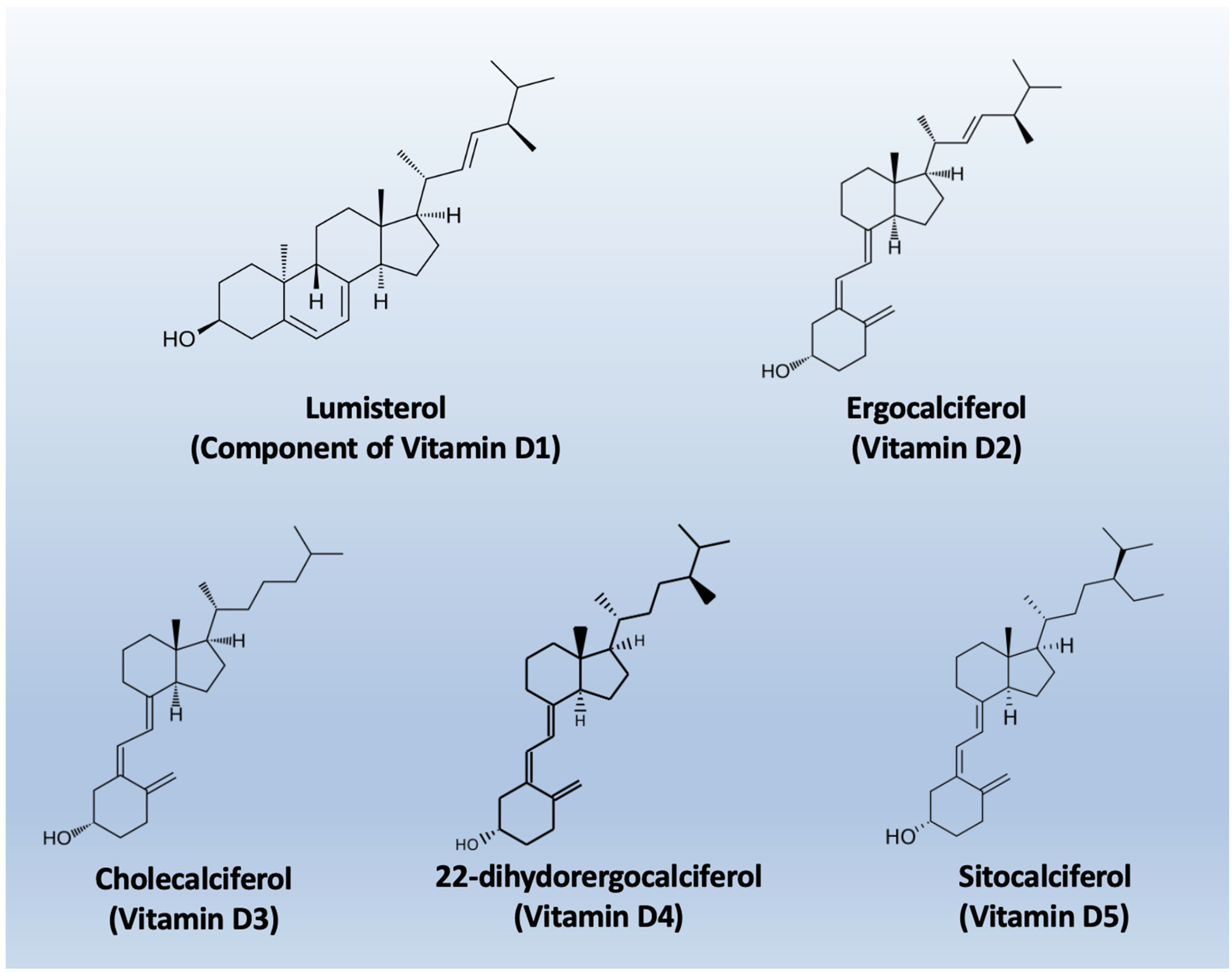

| Term | Chemical Name and Composition | Primary Function | Clinical Relevance |
|---|---|---|---|
| VITAMIN D1 | Mixture of ergocalciferol and lumisterol (1:1) | Historical compound initially identified as “vitamin D” | No current clinical use; obsolete classification |
| VITAMIN D2 | Ergocalciferol (derived from ergosterol, plant/fungal source) | Converted in liver to 25(OH)D2 and subsequently to active metabolites | Less potent than D3 in raising and sustaining serum 25(OH)D; still used in some prescription supplements |
| VITAMIN D3 | Cholecalciferol (derived from 7-dehydrocholesterol in skin via UVB exposure; also dietary) | Primary physiologic precursor of vitamin D metabolism in humans | Preferred form in supplementation; more effective than D2 for improving vitamin D status |
| VITAMIN D4 | 22-Dihydroergocalciferol | Minor sterol-derived vitamin D analog | No established clinical role; mainly of biochemical interest |
| VITAMIN D5 | Sitocalciferol (derived from 7-dehydrositosterol) | Experimental vitamin D analog | Limited human data; investigated mainly in preclinical studies |
| 25(OH)D | 25-Hydroxyvitamin D (calcidiol) | Major circulating storage form of vitamin D | Gold-standard biomarker of vitamin D status; low levels associated with cardiometabolic and cardiovascular risk |
| 1,25(OH)2D | 1,25-Dihydroxyvitamin D (calcitriol) | Active hormonal form binding the VDR | Mediates genomic and non-genomic effects in cardiovascular, renal, immune, and skeletal systems |
| 24,25(OH)2D | 24,25-Dihydroxyvitamin D | Inactive metabolite produced by CYP24A1 | Marker of vitamin D catabolism; used to assess vitamin D metabolic balance |
| VDR | Vitamin D Receptor (nuclear receptor) | Transcriptional mediator of 1,25(OH)2D signaling | Expressed in cardiomyocytes, vascular cells, and immune cells; involved in inflammation, fibrosis, and remodeling |
| DBP | Vitamin D–Binding Protein | Plasma transport protein for vitamin D metabolites | Determines circulating bioavailable vitamin D; genetic variants influence individual responses |
| BIOAVAILABLE VITAMIN D | Free + albumin-bound 25(OH)D (not DBP-bound) | Biologically accessible fraction of circulating vitamin D | May better reflect tissue-level activity than total 25(OH)D in some populations |
| VITAMIN D STATUS CATEGORIES | Serum 25(OH)D thresholds | Clinical classification of vitamin D sufficiency | Sufficient > 30 ng/mL (>75 nmol/L); Insufficient 20–30 ng/mL (50–75 nmol/L); Deficient < 20 ng/mL (<50 nmol/L); thresholds impact trial interpretation |
| Component | Description | Key Molecules | Cardiovascular Implications |
|---|---|---|---|
| SOURCES | Vitamin D can be obtained from diet, supplements, and skin synthesis | Vitamin D2 (ergocalciferol), Vitamin D3 (cholecalciferol) | D3 is synthesized in the skin via UVB exposure; dietary intake often inadequate to reach sufficiency alone |
| SKIN SYNTHESIS | Conversion of 7-dehydrocholesterol to vitamin D3 upon UVB exposure | 7-dehydrocholesterol, UVB | Influenced by latitude, season, skin pigmentation, age; deficiency linked to higher CVD risk in observational studies |
| HEPATIC 25-HYDROXYLATION | First hydroxylation step forming the main circulating form, 25(OH)D | CYP2R1, CYP27A1 | Serum 25(OH)D is used clinically to assess vitamin D status; low levels associate with hypertension, endothelial dysfunction |
| CIRCULATING TRANSPORT | Vitamin D metabolites circulate bound to carrier proteins | Vitamin D–binding protein (DBP), albumin | DBP polymorphisms can alter bioavailable vitamin D and may modulate CVD risk |
| RENAL 1α-HYDROXYLATION | Formation of the active hormone, 1,25-dihydroxyvitamin D [1,25(OH)2D] | CYP27B1 | 1,25(OH)2D regulates calcium-phosphate homeostasis, vascular smooth muscle function, and RAAS activity |
| CATABOLISM -INACTIVATION | Conversion to inactive metabolites for clearance | CYP24A1 | Dysregulation can lead to excess or deficiency; genetic variations may influence cardiovascular outcomes. |
| TARGET RECEPTOR BINDING | Genomic and non-genomic effects via the vitamin D receptor (VDR) | VDR (nuclear receptor) | VDR expressed in endothelial cells, cardiomyocytes, vascular smooth muscle; mediates transcription of genes affecting inflammation, fibrosis, and cardiac remodeling. |
| NON-GENOMIC ACTIONS | Rapid signaling pathways independent of gene transcription | Membrane VDR, caveolin-1, PLC/PKC pathways | Modulates calcium handling, vascular tone, and cardiomyocyte contractility; contributes to cardiovascular homeostasis. |
| SYSTEMIC EFFECTS | Regulation of calcium-phosphate metabolism, immune modulation, RAAS suppression | PTH, renin, cytokines | Vitamin D deficiency may contribute to hypertension, endothelial dysfunction, atherosclerosis, and heart failure risk. |
| Trial | Intervention | Primary CVD Outcome(s) | Key Results | Ref. |
|---|---|---|---|---|
| VITAMIN D AND OMEGA-3 TRIAL (VITAL) (GENERAL ADULTS, PRIMARY PREVENTION) | Vitamin D3 2000 IU daily vs. placebo | Composite MI, stroke, CVD death | No significant reduction: HR 0.97 (95% CI: 0.85–1.12), p = 0.69 | [9] |
| VIDA STUDY (GENERAL ADULTS, PRIMARY PREVENTION) | Monthly high-dose vitamin D3 (200,000 IU loading then 100,000 IU monthly) vs. placebo | Major cardiovascular events | No significant effect: HR 1.02 (95% CI: 0.87–1.20) | [11] |
| D-HEALTH TRIAL (OLDER ADULTS, PRIMARY PREVENTION) | Monthly vitamin D3 60,000 IU vs. placebo | Major cardiovascular events | HR 0.91 (95% CI: 0.81–1.01); MI HR 0.81 (95% CI: 0.67–0.98) but overall not statistically conclusive | [14] |
| FIND (FINNISH OLDER ADULTS) | Daily vitamin D3 1600 IU or 3200 IU vs. placebo | Major CVD events | No significant reduction (HRs ~0.97–0.84 NS) | [13] |
| EVITA (HEART FAILURE) (ADVANCED HF WITH LOW 25(OH)D) | Vitamin D3 4000 IU daily vs. placebo | All-cause mortality and cardiovascular complications | No significant difference: HR 1.09 (95% CI: 0.69–1.71) | [12] |
| Meta-Analysis | Number of Rcts Included | Primary Cardiovascular Findings | Key Effect Sizes | Ref. |
|---|---|---|---|---|
| META-ANALYSIS OF RCTS FOR MACE | 5 RCTs | No significant reduction in major adverse cardiovascular events (MACE) | HR ~0.96 for MACE (p = 0.77); MI HR ~0.88 (p = 0.061, borderline); no stroke or CVD death benefit | [312] |
| UPDATED CVD OUTCOMES META-ANALYSIS | >10 RCTs with cardiovascular endpoints | No significant effect on MI, stroke, or cardiovascular death | RR ~0.99 for MACE; no significant differences in MI, stroke, HF, or CVD death | [8] |
| LARGE SYSTEMATIC REVIEW (80 RCTS) | 80 RCTs with >160,000 participants | Lower all-cause mortality; no significant CVD outcome reduction | OR 0.95 for all-cause mortality (p = 0.013); no significant CVD morbidity/mortality reduction | [313] |
| SYSTEMATIC REVIEW OF CVD MORTALITY AND MI/STROKE | 9–14 RCTs | No reduction in CVD mortality or MI/stroke | RR ~0.96–1.05 across endpoints | [314] |
Disclaimer/Publisher’s Note: The statements, opinions and data contained in all publications are solely those of the individual author(s) and contributor(s) and not of MDPI and/or the editor(s). MDPI and/or the editor(s) disclaim responsibility for any injury to people or property resulting from any ideas, methods, instructions or products referred to in the content. |
© 2026 by the authors. Licensee MDPI, Basel, Switzerland. This article is an open access article distributed under the terms and conditions of the Creative Commons Attribution (CC BY) license.
Share and Cite
Varzideh, F.; Mone, P.; Kansakar, U.; Santulli, G. Vitamin D in Cardiovascular Medicine: From Molecular Mechanisms to Clinical Translation. Nutrients 2026, 18, 499. https://doi.org/10.3390/nu18030499
Varzideh F, Mone P, Kansakar U, Santulli G. Vitamin D in Cardiovascular Medicine: From Molecular Mechanisms to Clinical Translation. Nutrients. 2026; 18(3):499. https://doi.org/10.3390/nu18030499
Chicago/Turabian StyleVarzideh, Fahimeh, Pasquale Mone, Urna Kansakar, and Gaetano Santulli. 2026. "Vitamin D in Cardiovascular Medicine: From Molecular Mechanisms to Clinical Translation" Nutrients 18, no. 3: 499. https://doi.org/10.3390/nu18030499
APA StyleVarzideh, F., Mone, P., Kansakar, U., & Santulli, G. (2026). Vitamin D in Cardiovascular Medicine: From Molecular Mechanisms to Clinical Translation. Nutrients, 18(3), 499. https://doi.org/10.3390/nu18030499