


Abstract
The transition from a linear to a circular economy has intensified interest in environmentally friendly business models and policy instruments that support sustainable production and consumption. While prior research has largely examined green labels at the micro level, focusing on consumer perceptions and purchase intentions, limited evidence exists on their macro-level role in circular economic performance. This study tests the hypothesis that higher EU Ecolabel diffusion is positively associated with circular material use rates (CMUR) across European Union Member States over the period 2010–2024. This study does not directly measure business models but examines macro-level indicators associated with their development. Using panel data from Eurostat and the European Commission’s EU Ecolabel catalogue, ecolabel intensity is operationalized as the logarithm of total licenses per country. Pooled OLS models with year fixed effects and country-clustered standard errors are estimated, first in baseline specification and then with controls for GDP per capita, environmental tax revenues, manufacturing value added, and R&D intensity. Results reveal a positive and statistically significant relationship between ecolabel intensity and circular material use rates, remaining robust after including macroeconomic controls. These findings suggest that green labeling is associated with circular economy performance and may reflect an institutional dimension aligned with circular economy governance. The results are also consistent with patterns associated with environmentally friendly business models at the macro level. This study contributes by providing a macro-level, cross-country analysis of the relationship between EU Ecolabel diffusion and circular economy performance, incorporating key structural controls.
1. Introduction
Industrialization, rapid population growth, urbanization, and changes in consumption patterns have led to the rapid depletion of natural resources and the deepening of environmental problems on a global scale. Climate change, the increase in carbon emissions, the decline in biodiversity, and the significant rise in waste generation have made it necessary to reconsider the balance between economic growth and environmental sustainability. Recent scholarly work emphasizes that this shift requires a radical departure from the traditional “take–make–use–dispose” linear model toward a systemic integration of sustainability and circular economy (CE) principles into business development [1]. In this process, both policymakers and businesses have turned toward developing new approaches to make production and consumption systems more sustainable. Among these approaches, environmentally friendly business models and the circular economy concept have come to the forefront. The traditional linear economy model places intense pressure on natural resources. In contrast, the circular economy model aims to use resources more efficiently, extending product life cycles and reintegrating waste into the economy [2]. In this transformation process, businesses are required not only to revise their production techniques but also to restructure their value creation mechanisms, supply chain configurations, and communication with consumers. For instance, the adoption of circular business models often involves a shift in how value is proposed, created, and delivered, moving beyond purely financial metrics to include environmental and social dimensions [3]. At this point, environmentally friendly business models stand out as one of the key instruments for establishing an economic structure aligned with sustainable development goals.
In recent years, with the growing awareness of sustainability, consumer preferences have changed significantly. Consumers now pay attention not only to traditional criteria such as price and quality but also to the environmental impacts of products, the transparency of production processes, and the social responsibility orientation of firms. This transformation has encouraged businesses to adopt instruments that make their environmental performance more visible. One such instrument is the green label (eco-label), which has become an important mechanism that certifies the environmentally friendly characteristics of products and services and provides assurance to consumers. Green labels enable firms to concretely demonstrate their commitments to environmental sustainability while also assisting consumers in making informed purchasing decisions. In this respect, green labeling is considered not merely a marketing tool but also a policy and managerial instrument that contributes to the dissemination of a culture of sustainable production and consumption. Furthermore, within the framework of circular economy governance, labels serve as critical communication and transparency tools that facilitate the transition to more resource-efficient market structures [3]. Particularly in European Union countries, the strengthening of sustainability policies has led to the wider adoption of green label practices, which have increasingly attracted attention as a determining factor in the development of environmentally friendly business models.
Beyond the identified gap in the literature, the research is also motivated by the growing need to better understand the macro-level dynamics of the circular economy transition. While existing studies predominantly focus on consumer behavior and purchase intentions, such micro-level analyses are insufficient to explain structural changes in production systems, resource efficiency, and material cycles at the country level. The transition to a circular economy requires coordinated policy frameworks, institutional capacity, and market-wide mechanisms that cannot be fully captured through individual-level behavior alone. Evaluating these macro-level developments is essential, as EU countries exhibit diverse approaches to resource management and waste production based on their national strategies and technological advancements [2]. In this context, examining eco-label diffusion at the macro level provides policy-relevant insights. Understanding whether ecolabel prevalence is associated with circular material use performance can help inform European Union policy instruments, particularly in areas such as sustainable production, certification systems, and green public procurement. Previous assessments of CE development in the EU suggest that leading countries often balance high economic activity with robust environmental practices, highlighting the importance of standardized indicators for measuring progress [4]. Such evidence is important for assessing whether eco-labeling schemes function as part of broader circular economy governance structures.
In addition, this study contributes by conceptualizing EU Ecolabel diffusion not merely as a product-level certification mechanism, but as a proxy for broader institutional and governance dynamics related to sustainability. Rather than treating eco-labels solely as market-based signals to consumers, the study interprets their diffusion as reflecting the presence of regulatory alignment, policy support, and institutional capacity for implementing circular economy principles. In this sense, EU Ecolabel diffusion may capture an institutional dimension of circular economic governance that has received limited attention in existing literature.
Existing research on green labels has mainly focused on studying their effects at the micro level (e.g., consumer behavior, intention to purchase, and brand image), with only limited research having been done at a macro-level. This study aims to determine if the diffusion of EU Ecolabels is associated with Circular Material Use Rates (CMUR) in EU Member States. The diffusion of EU Ecolabels will be treated as a macro-level indicator of Circular Economy performance, and not as a direct cause or effect relationship between them. This research extends existing studies on eco-labels from a micro to a macro level, focusing on the diffusion of these labels and their impact on the circular economy. The study examines the relationship between eco-label diffusion and circular economy indicators in European Union countries by using cross-country panel data. This cross-country panel analysis includes multiple structural controls that demonstrate the robustness of the relationship. This research does not provide direct evidence of a transformation in business models but does provide evidence at the macro level that supports these business model transformations.
2. Theoretical Framework and Literature Review
2.1. Overview of Green Labels and Environmentally Friendly Business Models
In recent years, increasing population growth, excessive consumption, environmental pollution, environmental degradation, and the deterioration of ecological balance have led to environmental pollution and climate change, making issues of sustainability and environmental awareness increasingly important. For this reason, countries have taken action to mitigate climate change, reduce carbon emissions, and combat the global climate crisis [5] (p. 1279). Concerns such as environmental pollution and the destruction of natural resources have directed both businesses and consumers toward sustainable practices and have brought initiatives aimed at reducing the environmental impacts of products to the forefront. The growing tendency of consumers toward sustainable consumption [6] has shifted firms’ strategies toward adopting environmentally friendly measures [7] (p. 4272). All these developments have gradually increased interest in green products. The underlying reason for this growing interest is pollution and climate change, which have evolved into global social concerns [8]. Compared to conventional products, green products contribute to combat climate change by generating lower carbon emissions [9].
With the increasing demand for green products, the concept of the green label (eco-label) has become an important issue. Essentially, a green label refers to a label attached to products that are believed to cause less harm to the natural environment during their production and use compared to others [10]. The green label system is implemented to protect the environment and ensure safe consumption for consumers [11] (p. 3175). Firms use green labels to indicate that their products possess characteristics that contribute to environmental protection [12]. Emphasizing the use of green labels as a marketing and communication tool in promoting green products has led to a significant increase in the acquisition of such labels [6,13,14]. Statistical records indicate a 54% growth in certified eco-labels between 2006 and 2021 [15]. The Eco-Label Index represents the largest global directory of eco-labels. According to data from March 2024, it currently tracks 456 eco-labels across 199 countries and 25 industry sectors [16].
Green labels provide information about environmental benefits and certification [17] and guarantee the credibility of such claims [18]. Chekima et al. [19] observed that green-labeled products serve as a sign capable of clearly communicating eco-features and effectively teaching consumers how to recognize environmentally friendly products [20]. Therefore, green labels provide visible support for environmental protection practices and the production of environmentally friendly products [21] (p. 1497). Green labels identify products, materials, or businesses that comply with standards defined by specific organizations or governmental institutions [22] (p. 400). These labels influence consumer choices by informing them about sustainability [23] (p. 430). The green label (eco-label) is a labeling system indicating that products and services are environmentally responsible. The historical development of these labels has paralleled the rise in environmental awareness, particularly during the second half of the twentieth century. Initial initiatives regarding green labeling began in the 1970s. Increasing environmental problems and climate change prompted the United States and its affiliated public authorities to take action [24].
The first green label in history, the Blue Angel, was introduced in 1978 by the German government. Environmental criteria were established by an independent body, and producers meeting these criteria were awarded the “Blue Angel” label. Producers were thus able to place this label on their product packaging to demonstrate that they produced environmentally friendly goods. Following Germany, Scandinavian countries introduced their own green labels in 1989 [25]. As the international agenda concerning climate and energy issues intensified, one of the most significant legal regulations regarding international green labeling within the scope of the European Union was enacted. The “Eco Label” system entered into force through Council Regulation No. 880/92 of 23 March 1992 [24]. Accordingly, in 1992, the European Union and the United Nations introduced their own green labels [25]. The European Union’s green labeling scheme, known as the EU Ecolabel, was initiated to enable consumers to identify greener products and services [26]. Over the following decades, green labeling became an effective tool in reaching environmentally conscious consumers in the global market and in efforts to reduce environmental degradation [27].
Green labels indicate that the strategies adopted by firms implementing environmentally friendly business models are verified by third parties as transparent and credible. Beyond transparency and credibility, there is a strong link between green labeling and environmentally friendly business models. This is because green labeling functions as a tool that encourages firms to embrace environmental sustainability while enabling consumers to make environmentally responsible choices.
Environmentally friendly business models encompass business strategies that adopt sustainable development goals, protect natural resources, reduce carbon footprints, and improve waste management practices. Firms that adopt such strategies are characterized as “green entrepreneurs” or “ecopreneurs.” When establishing their ventures, green entrepreneurs draw upon various environmentally sensitive theoretical and practical applications, focusing on the development of by-products and services that do not pollute air, contaminate water, or reduce soil fertility [28] (p. 1841). In other words, ecopreneurship or green entrepreneurship concerns environmentally friendly ways of conducting business. Within the business environment, emphasis is placed on environmental sustainability as a pathway to progress. Such entrepreneurs create opportunities to develop green technologies, use technology to promote environmental sustainability, and transform existing businesses into environmentally friendly structures [29] (p. 159).
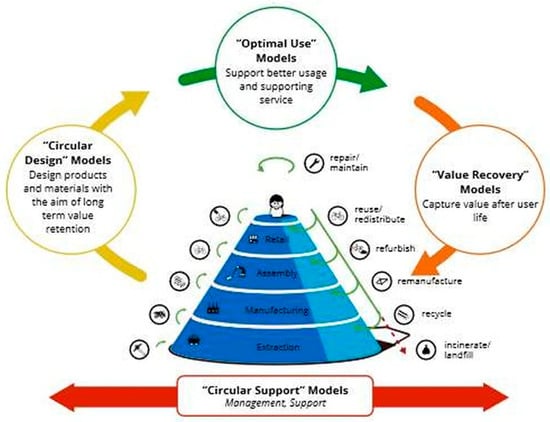
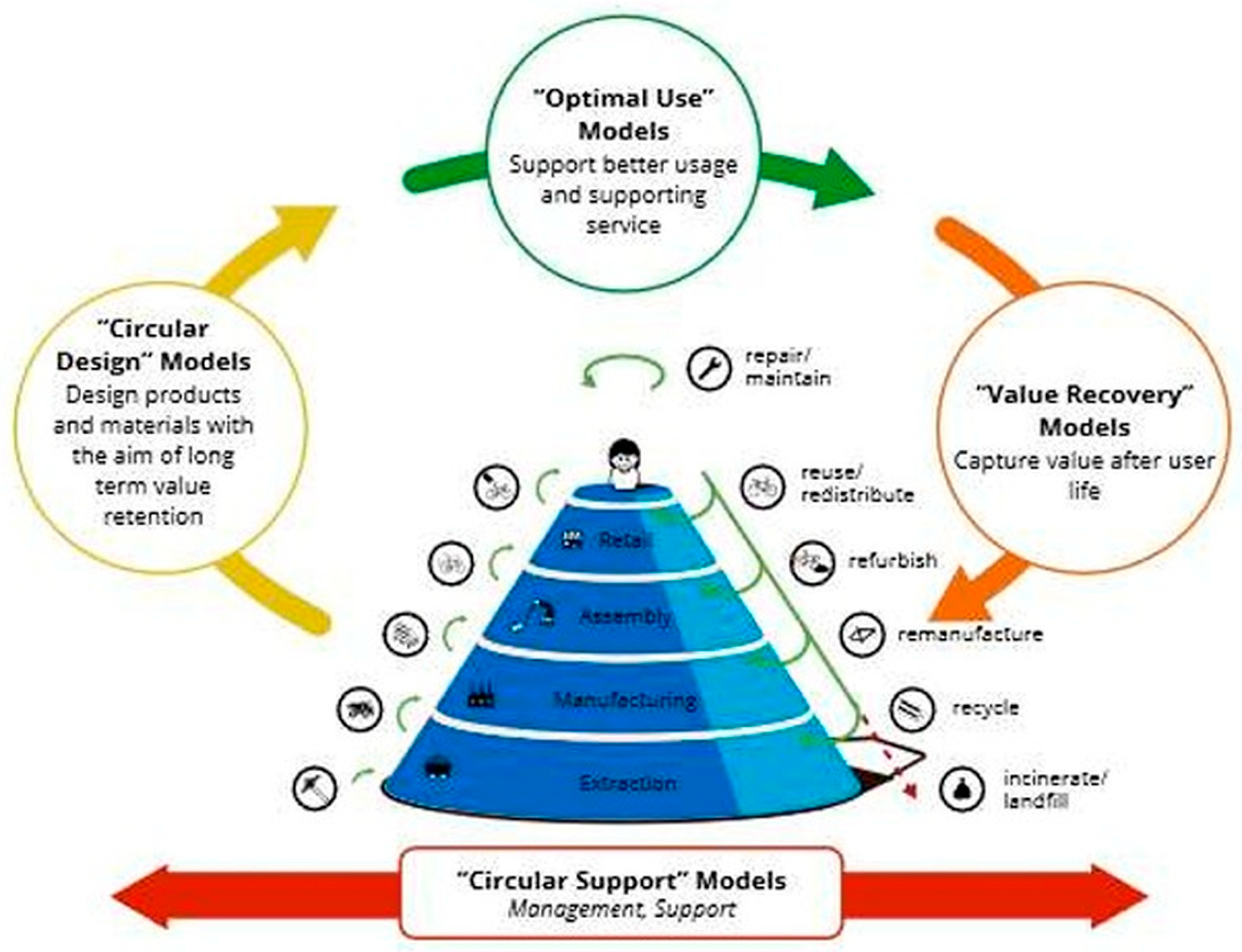
In today’s digital era, firms adopted various business models to gain competitive advantage, enhance resource efficiency, and reduce carbon footprints and energy consumption. These models aim not only for long-term success but also for generating environmental and social benefits. When developing sustainable or environmentally friendly business models, it is first necessary to identify the environmental and social benefits of the products or services offered by the firm. In conducting their activities, firms should aim to use resources more efficiently and minimize the consumption of water, energy, and raw materials. Minimizing harmful environmental impacts is of critical importance. In firms adopting environmentally friendly business models, ensuring environmental and social sustainability throughout all stages of the supply network is encouraged, along with the development of innovative and green-labeled products and services [30]. Undoubtedly, the circular economy business model stands at the forefront of environmentally friendly business models. In a report published in 2019 by the European Commission’s Expert Group on Circular Economy Financing to accelerate the transition to a circular economy, the circular economy business model was categorized into four sections and fourteen sub-dimensions. Accordingly, the circular economy business model was defined under four main categories: circular design and production models, circular use models, circular value recovery models, and circular support models (see Figure 1).
Figure 1.
Circular and sustainable business models. Source: [31].
The common feature of these models is that they incorporate the 9R strategies and principles identified within the circular economy framework: Refuse, Rethink, Reduce, Re-use, Repair, Refurbish, Remanufacture, Repurpose, and Recycle. Koçan et al. [32] (p. 539), in their study, presented the fundamental principles of the circular economy as defined by the Ellen MacArthur Foundation. These principles are listed as the power of inner circles, the impact of lengthening cycles, the power of cascading use, the power of pure inputs, and the necessity of systemic change. The circular economy aims to increase the economic value of materials or products, minimize the loss of social value worldwide, improve working conditions in the raw material supply process, and create environmental value by reducing the use of natural resources [33] (p. 2036).
Examples of firms adopting the circular economy business model include ÇEVKO, Exitcom Recycling, and Ecording in Türkiye, as well as Ecoalf in Spain, Orange Fiber in Italy, and Too Good to Go operating in Spain and Portugal. These firms produce new sustainable products by recycling plastic, paper, metal, and organic waste. In addition to the circular economy business model, environmentally friendly business models also include green energy and carbon-neutral business models; sustainable agriculture and food models; green logistics and transportation models; green finance and sustainability-oriented investment models; green technology-focused business models; and business models centered on the production of environmentally friendly products and services (green-labeled products and services).
2.2. Economic and Strategic Role of Green Labeling for Businesses
Today, consumers no longer expect businesses merely to engage in production; they also expect them to be sensitive to the environment in which they operate [34] (pp. 125–144). Fundamentally, consumers’ purchasing behaviors are changing, and they increasingly prefer to establish relationships with and purchase from businesses that demonstrate social responsibility and environmental sensitivity [35] (p. 231). This situation has been recognized by businesses, leading to an awareness that environmentally friendly practices can attract conscious consumers, provide competitive advantages, and thereby enhance economic performance. In this context, changing conditions in recent years have pushed firms toward developments in green marketing and green labeling practices.
Green labeling is a voluntary environmental performance certification and labeling method applied worldwide. A green label identifies products or services that have been proven to be environmentally preferable within a specific category [36]. As consumers’ concerns about the environmental impacts of the goods and services they purchase have increased, green labels have emerged as a performance tool that supports sustainable purchasing decisions (International Organization for Standardization).
In general, consumers encounter certain challenges, such as cost considerations when purchasing green products and are often unable to verify whether these products are produced in accordance with appropriate sustainability standards [37,38]. Green labels are green marketing tools designed to identify green products and distinguish them from conventional products [39] (p. 1191). For this reason, businesses have become increasingly dependent on green labels to demonstrate and certify that their products are produced in an environmentally friendly manner in accordance with required standards [18]. Environmentally friendly labels provide consumers with reliable symbols that assure them of the environmental friendliness of the products they purchase [15]. Therefore, the purpose of eco-labels is to reduce consumers’ uncertainty and skepticism when evaluating and purchasing green products [14]. Accordingly, through the presence of eco-labels, businesses can strengthen consumer trust [40] and positively influence consumers’ perceptions of these products [41]. According to Panopoulos et al. [42], green labels function as a strategic method used by organizations to positively influence consumers who wish to purchase products that reduce environmental impact.
The popularity of eco-labels responds to marketers’ beliefs that eco-labels legitimize business practices and help firms gain competitive advantage [20]. Along with the development of green technologies, the preference for green products has increased, providing new employment opportunities in business fields and supporting economic growth [43] (p. 1130). Pathak et al. [7] (4272) argue that the use of eco-labels as signals for green information transfer is necessary for contemporary business strategies. These labels can eliminate product-related uncertainties, generate positive advertising appeal, and assist consumers in making environmentally positive purchasing decisions [14,15,16,17,18,19]. With the adoption of green labeling, businesses begin to recognize, understand, and manage social and environmental risks, thereby increasing their likelihood of attracting the attention of both national and international investors. This situation provides competitive advantage to both sectors and countries [24]. Eco-labels therefore constitute visible support for environmental protection practices and the production of environmentally friendly products and serve as an important instrument in overcoming market failures arising from information asymmetries in environmental products [21].
Green labels have been widely embraced by conscious consumers and producers seeking to gain reputation. Businesses worldwide use eco-labels as a marketing strategy to persuade consumers to choose products with lower environmental impact [39] (p. 1191). While environmentally conscious consumers are satisfied with responsible production processes, producers gain competitive advantage in the market by fulfilling their social responsibility activities through green label certification. On another point, green labeling increases firms’ economic performance. Ma et al. [44] found that green label certification in China resulted in improvements in long-term profitability. Similarly, Rennings [45] and Hart and Ahuja [46] found that green innovation factors positively affect firms’ economic performance. Kim et al. [47] simulated how market share changes when a green label is added to first- and second-class energy-efficient air purification devices and demonstrated that green labeling has a positive effect on consumer preference and, consequently, increases the firm’s market share.
In conclusion, green labeling helps firms present an environmentally friendly image to all stakeholders (consumers, competitors, government, national and international investors). This situation reduces consumer information asymmetry and strengthens trust in the firm. Moreover, environmentally friendly approaches create competitive advantage over rivals, enhance brand value, and thereby strengthen corporate reputation. Numerous studies support that green label certification increases firm profitability. It can therefore be stated that the use of green labels provides both environmental and economic advantages to businesses.
2.3. Review of Empirical Studies and Research Gap
As a result of a comprehensive literature search conducted in the Web of Science (WOS) database using the keyword “green label” and covering all available years, a total of 512 studies were identified. However, following the adoption of the European Green Deal by the European Commission in December 2019, the certification of green-labeled products has been increasingly preferred by companies, leading to a significant rise in its prevalence. Accordingly, the literature search was limited to studies published in 2020 and thereafter, and the search was repeated. This refined search yielded 178 studies.
The identified studies were examined, and those most relevant to the subject of this research, particularly the most recent and highly cited works, are summarized below.
Ollitervo et al. [48] investigated the effects of eco-labels and packaging materials on consumers’ purchase intentions within the context of gift-giving. Using a newly developed theoretical framework, the authors conducted three experiments to test their hypotheses. The findings revealed that eco-labels and packaging materials did not exert a direct interactive effect on purchase intention. However, the combination of eco-label and environmentally friendly packaging indirectly influenced purchase intention by enhancing consumers’ perceptions of environmental friendliness. Fretes et al. [49] examined four factors influencing the purchasing behaviors of 329 adolescents aged 10–14. The results indicated that price was the most influential determinant of purchasing behavior, followed by product type and environmental sustainability as measured through eco-labels. The study demonstrates that at least some young consumers are responsive to labeling interventions.
Zhan et al. [50] explored the relationship between carbon labels under sustainable eco-labeling schemes in China and consumers’ willingness to pay a price premium. The findings suggest that when consumers are aware of carbon labels, they perceive the labeled products as higher in quality and are therefore willing to pay higher prices. Boe-Lillegraven and Demmers [51] analyzed consumers’ responses to different types and combinations of eco-labels, as well as the influence of label meaning and information regarding specific shopping goals on label preferences. The results indicate that firm-level eco-labels serve as important complements to product-level eco-labels. Moreover, both corporate labeling strategies and policymakers’ efforts to promote responsible consumption significantly shape label preferences.
Haga [52] conducted an experimental study to test claims that environmentally friendly labels influence individuals due to moral perceptions. Participants were asked to evaluate photographs illuminated by either an eco-labeled desk lamp or a non-labeled lamp. The results showed that when the lamp was labeled as environmentally friendly, participants attributed more positive traits to individuals in the photographs. Furthermore, they evaluated the light from the eco-labeled lamp as more comfortable and claimed that it enhanced visibility. Phuong et al. [53] drawing on the Theory of Planned Behavior, analyzed factors affecting consumers’ intentions to purchase green products in Hanoi. Based on survey data collected from 580 customers, the findings revealed that environmental attitude, social influence, trust, environmental concern, green promotion, and eco-labels significantly influence green consumption behavior. Among these factors, environmental attitude exerted the strongest effect. Yang et al. [54] investigated the impact of consumers’ information acquisition capabilities on their trust in eco-labels and the underlying mechanisms. A survey of 1072 urban and rural consumers in Inner Mongolia, China, was analyzed using structural equation modeling. The results demonstrated that information acquisition capability, institutional trust, and label knowledge have significant direct effects on trust in eco-labels.
Ko and Phua [55] examined whether information presented in social media advertisements sufficiently communicates a product’s environmental friendliness and how such information affects perceived product quality, perceived healthiness, and advertising effectiveness. Their findings indicate that advertisements containing persuasive information about eco-labels lead to higher purchase intentions. Yildiz et al. [56] explored whether displaying a green label on hotel websites encourages environmentally conscious tourists to make online reservations and assessed the impact of perceived eco-labels on sustainable hotel booking intentions. The results showed that awareness of a hotel’s green label positively influences tourists’ sustainable booking intentions and increases trust in the hotel.
Kumar et al. [57] examined the effects of three dimensions of green information quality—persuasiveness, completeness, and credibility—on green brand evaluation, as well as whether these effects are mediated by green brand credibility. The findings revealed that green brand credibility mediates the effects of green information quality dimensions on green brand evaluation. Additionally, consumer knowledge mediates the effects of persuasiveness and completeness on green brand credibility, while eco-label credibility mediates the effects of persuasiveness and credibility on green brand credibility. Gao et al. [58] aimed to identify the impact of eco-label policies on different products using game theory and mathematical programming methods. Their findings suggest that increasing green standards can continuously enhance the environmental benefits of development-intensive green products. However, for marginal cost-intensive green products, raising green standards may not always be beneficial. Consequently, eco-label policies may need to vary across product categories.
Overall, the reviewed studies predominantly address the relationship between eco-labels and consumer purchasing behavior. Beyond the identified limitation, a broader examination of the literature reveals that existing studies are either bibliometric analyses or primarily focused on consumer behavior. While the existing literature predominantly focuses on micro-level outcomes such as consumer behavior and purchase intention, macro-level empirical evidence remains limited. In this context, the present study contributes by examining the association between EU Ecolabel diffusion and circular material use at the country level, thereby extending the literature beyond individual-level analysis.
Upon synthesizing the literature more closely, there are approximately three broad thematic categories represented in the literature on eco-labels. The first group consists of studies focused on how eco-labels affect consumers’ perception of a product’s quality, credibility, and brand evaluation. The second group of studies focuses on the behavioral outcomes resulting from purchases made with an eco-label, as to whether eco-labels affect a consumer’s intention to purchase an item and their willingness to pay for it, ultimately indicating that eco-labels help guide consumer purchase decisions under the circumstance of information asymmetry. The third group of studies examines the policy- and market-level implications of eco-labels, where eco-labels act as signals to encourage sustainable consumption and development of green markets. Although each of these literature groupings creates a contribution to the understanding of eco-labels, the majority of the studies focus on the micro level; however, there is a scarcity of empirical evidence indicating whether the micro level constructs studied in the existing literature translate to macro-level outcomes, such as improvements in circularity with material flows and overall circular economy performance. As a result, the present study seeks to provide this macro-level analytical perspective.
Much of the existing research has focused on consumer-level effects, which contribute to the broader understanding of structural changes that occur at the macro-level related to circular economies. Findings regarding how eco-labels shape consumer behavior provide support for the direction of firms’ production practices and for the use of new technologies developed with environmental implications. That is, it follows that any behavioral changes at the micro-level may eventually lead to changes at the macro-level in how materials are used for production (also known as systems of material use). However, there is not much evidence in the literature to support the existence of a relationship between individual circular behaviors and aggregate indicators of the circular economy on a national scale. To fill this void, we need to expand our focus from analyzing individuals’ behaviors to performing global comparisons of best practice circular economy systems; i.e., the overall goal of this study is to broaden the perspective of existing research in terms of the overall relationship between micro and macro systems of production and material usage associated with circular economies.
2.4. Hypothesis Development
Based on the theoretical arguments and the identified gap in the literature, this study develops the following hypotheses. Eco-labels are widely recognized as signals of environmental performance and may be associated with broader sustainability outcomes. While previous studies have primarily examined micro-level effects, their implications can be extended to macro-level circular economy indicators.
H1.
Higher EU Ecolabel diffusion is positively associated with circular material use rates in EU countries.
To assess the robustness of this relationship, the following hypothesis is proposed:
H2.
The positive association between EU Ecolabel diffusion and circular material use rates remains significant after controlling for macroeconomic and structural factors.
3. Materials and Methods
3.1. Data Sources and Variable Definitions
This study examines the association between EU Ecolabel diffusion and circular material use performance across European Union Member States. The dependent variable is the circular material use rate (CMUR), obtained from Eurostat’s circular economy monitoring framework (dataset code: cei_srm030). CMUR measures the share of material input derived from recycled waste relative to total material use, expressed as a percentage.
EU Ecolabel intensity is constructed using the European Commission’s official EU Ecolabel product catalogue export (ECAT, “most recent export”). As the ECAT dataset does not provide complete historical award dates for licenses, ecolabel intensity is operationalized as a country-level stock variable, defined as the total number of distinct EU Ecolabel license numbers recorded in the dataset. To reduce skewness and account for diminishing marginal effects, the following logarithmic transformation is applied:
ecolabel_ln_i = ln(1 + licences_i)
Macro-level control variables are obtained from Eurostat:
- GDP per capita (nama_10_pc), measured in PPS per inhabitant where available (a consistent priority rule is applied across countries),
- Environmental tax revenues as a percentage of GDP (env_ac_tax, tax category ENV, unit PC_GDP),
- Manufacturing value added share derived from (nama_10_a64),
- Gross domestic expenditure on R&D as a percentage of GDP (rd_e_gerdtot).
The panel covers EU Member States over the period 2010–2024, based on the latest available Eurostat data. It should be noted that observations for the most recent years (2023–2024) may include provisional or estimated values, depending on Eurostat reporting practices.
3.2. Research Design and Data Processing
The empirical analysis follows a structured workflow:
- Data was collected from Eurostat and the ECAT database.
- Country codes and time variables were harmonized.
- Variables were constructed and transformed (log transformation for ecolabels).
- Datasets were merged into a panel structure.
- Missing values were handled using available-case analysis.
This stepwise procedure ensures transparency and replicability of the analysis.
3.3. Econometric Specification and Model Justification
Because the EU Ecolabel variable is derived from a catalogue snapshot, it is time-invariant within countries. As a result:
- A country’s fixed effects model cannot be used, as it would absorb the main explanatory variable.
- A random effects model was considered, but its core assumption—that unobserved country-specific effects are uncorrelated with regressors—is unlikely to hold in this context. Factors such as institutional quality, environmental policy orientation, and regulatory capacity are plausibly correlated with ecolabel diffusion.
Accordingly, the study employs pooled OLS with year fixed effects, which allows identification through cross-country variation while controlling for common macroeconomic shocks.
The baseline model is specified as:
CMURit = β1ecolabel_lni + τt + εit
The extended model includes macroeconomic controls:
CMURit = β1ecolabel_lni + β2GDPit + β3EnvTaxit + β4ManufShareit + β5RDit + τt + εit
All models are estimated using R statistical software (version 4.5.1) with the fixest package [59,60]. Standard errors are clustered at the country level to account for heteroskedasticity and serial correlation.
To ensure the robustness of the model, several diagnostic checks were performed. Multicollinearity among explanatory variables was assessed, and no severe multicollinearity was detected. In addition, heteroscedasticity and autocorrelation issues were addressed by using robust standard errors. Given the time-invariant nature of the main independent variable, a fixed effects model could not be implemented. A random effects specification was considered; however, the structure of the data and the research focus supported the use of a pooled OLS model.
3.4. Model Diagnostics and Robustness Considerations
Several diagnostic checks were conducted to ensure model validity:
- Multicollinearity was assessed using the Variance Inflation Factor (VIF), with no evidence of problematic collinearity among regressors.
- Heteroskedasticity and autocorrelation were addressed using country-clustered standard errors.
- Alternative model specifications were tested to verify the stability of the ecolabel coefficient.
Despite these steps, the analysis remains subject to endogeneity concerns, including potential reverse causality and omitted variable bias. Therefore, results are interpreted as associations rather than causal effects.
4. Results
The empirical results should be interpreted as evidence of statistical association rather than causality, given the cross-sectional nature of the main explanatory variable and the pooled estimation strategy. Table 1 reports the baseline and extended model estimations examining the relationship between EU Ecolabel intensity and circular material use rate (CMUR). In the baseline model, which includes year fixed effects and country-clustered standard errors, ecolabel intensity is positively and statistically significantly associated with CMUR (β = 1.965, p < 0.01). This suggests that countries with higher levels of ecolabel diffusion tend to exhibit higher levels of circular material use.
Table 1.
Association between EU Ecolabel intensity and Circular Material Use Rate (CMUR).
In the extended specification, which includes GDP per capita, environmental tax intensity, manufacturing share, and R&D intensity, the ecolabel coefficient remains positive and statistically significant (β = 1.715, p < 0.01). The magnitude decreases modestly, indicating that part of the relationship may be mediated by macroeconomic and structural factors, but the core association remains robust.
A notable difference between Model 1 and Model 2 concerns the number of observations (375 vs. 1772). This difference arises from the structure and availability of the underlying data. The baseline model is estimated on a restricted sample of observations for which both CMUR and the ecolabel variable are jointly available in a consistent format. By contrast, the extended model incorporates additional macroeconomic variables that are reported more consistently across country–year observations in Eurostat, thereby allowing for a broader unbalanced panel. To ensure that this difference does not affect the validity of the results, additional robustness checks were conducted on comparable subsamples, confirming that the sign, magnitude, and statistical significance of the ecolabel coefficient remain stable across specifications. Therefore, the variation in sample size does not alter the main inference of the study.
Interestingly, none of the macroeconomic control variables reach conventional levels of statistical significance. Diagnostic tests indicate that this is not driven by multicollinearity. Instead, this finding suggests that ecolabel intensity may capture a dimension of institutional and policy-related sustainability capacity that is not fully reflected in standard macroeconomic indicators. The explanatory power of the model increases from R2 = 0.227 in the baseline to R2 = 0.336 in the extended model, indicating improved model fit without altering the main inference.
To further assess robustness, alternative specifications were examined, and the positive association between ecolabel intensity and CMUR remained consistent. However, due to the time-invariant nature of the ecolabel variable, dynamic or lagged models could not be implemented. This limitation is acknowledged and discussed in subsequent sections.
A regional perspective further strengthens the interpretation of the results. Western and Northern European countries generally exhibit higher levels of EU Ecolabel diffusion alongside higher circular material use rates, whereas Central and Eastern European countries tend to display lower values for both indicators. These differences likely reflect variations in institutional quality, environmental policy implementation, and market readiness for circular economy practices. Importantly, the positive association between ecolabel intensity and circular material use appears to be present across both regional groups, suggesting that eco-certification operates as a consistent structural indicator of circular economy performance. However, the magnitude of this relationship may differ across regions, indicating potential heterogeneity in the effectiveness of eco-labeling schemes. These findings suggest potential regional heterogeneity, which may be further explored in future research.
5. Discussion
The findings indicate a robust positive association between EU Ecolabel intensity and circular material use performance. Importantly, this relationship persists after accounting for income levels, environmental taxation, industrial composition, and innovation intensity. The findings indicate a robust positive association between EU Ecolabel intensity and circular material use performance. Importantly, this relationship persists after accounting for income levels, environmental taxation, industrial composition, and innovation intensity.
This research has yielded results that are generally in agreement with past studies about eco-labels and their importance in determining sustainability. Past studies found that eco-labels have a positive influence on consumer trust, as well as perceived quality of the product, and willingness to buy it, thus promoting responsible use of the environment. However, those studies have only explored the micro-level mechanisms of eco-labels; therefore, this study’s results provide the first indication that these micro-level mechanisms are also present at the macro-level about circular material usage. This transition from micro to macro dynamics is crucial, as recent literature suggests that integrating circular economy (CE) principles into business development requires a systemic approach that goes beyond individual products to influence broader market structures [1]. Thus, the current results expand upon the existing literature by not only providing additional cross-national evidence to support previous micro-level findings, but also to support prior findings by demonstrating how these mechanisms aggregate into national-level circular performance.
This study is subject to an important limitation related to potential endogeneity and spurious correlation. The positive relationship seen between ecolabel diffusion and the use of circular materials may represent a self-reinforcing mechanism rather than a true one-way causal effect. Ecolabels have the potential to influence firms and countries to adopt sustainable/circular practices, but countries with a stronger sustainability orientation, regulatory capacity or widespread environmental awareness would have higher levels of use of circular materials and might also support the adoption of ecolabels at the same time. This is consistent with recent observations that EU countries exhibit significant heterogeneity in their CE implementation, driven by diverging national strategies, technological advancements, and socio-economic contexts [2]. This indicates that reverse causation and omitted variable bias may exist. Even if the model has economic control variables—GDP of per capita, environmental tax, manufacturing share, and R&D intensity—differences between countries that come from structural differences might be accounted for; however, there may still be institutional and cultural factors that are influencing both the ecolabel diffusion rates and the performance of circular economies around the world, which cannot be directly observed. For instance, the maturity of circular governance and the specific focus of national waste management policies can lead to varying performance levels across Member States [4]. Therefore, the findings should be interpreted as evidence of a structural association rather than a definitive causal relationship.
From an institutional perspective, ecolabel schemes function as market-based governance instruments that reduce information asymmetries between producers and consumers. In the context of circular business models, such instruments are vital for restructuring value creation mechanisms, shifting focus from pure financial gain to integrated environmental value [3]. Certification criteria may promote design-for-recycling, material efficiency, and lifecycle transparency, thereby facilitating circular material flows. Countries with higher ecolabel diffusion may exhibit stronger institutional capacity, regulatory alignment, and supply-chain coordination mechanisms supportive of circular economy transitions. The alignment of national labeling practices with broader EU circular guidelines further reinforces this institutional capacity, acting as a catalyst for resource efficiency [2].
The non-significance of macro controls does not imply that economic development or innovation are irrelevant for circularity. Rather, it suggests that ecolabel intensity reflects an institutional layer of sustainability governance not fully captured by standard macroeconomic indicators. This underscores the role of eco-labels as a specialized “communication and labeling” block within circular business frameworks, directly impacting how sustainability is operationalized at the market level [3]. Given the cross-sectional nature of the ecolabel measure, the results should be interpreted as structural cross-country evidence rather than causal within-country dynamics. Future research could incorporate historical license award data to introduce temporal variation and strengthen identification strategies.
6. Policy Implications
Empirical evidence suggests that ecolabel schemes can operate as practical instruments within circular economy strategies.
First, policymakers may consider expanding the uptake of the EU Ecolabel by providing targeted support mechanisms, especially to small and medium-sized businesses (SMEs). Supporting SMEs through reducing certification costs and lowering administrative barriers is one way to increase the participation of SMEs without reducing the standards of certification. Policy support could be in the form of targeted financial instruments such as tax incentives or direct subsidies to lower certification costs. Since environmental tax revenue is included as a control variable in the empirical model, a second consideration is if some of this revenue could also be allocated to providing support for eco-label certification. Allocating some of the revenues from environmentally related taxes to help finance the adoption of the EU Ecolabel will potentially reinforce the objectives of the circular economy and ensure there is policy coherence between environmental taxation and sustainability-oriented certification systems. In addition, given that GDP per capita was not statistically significant in the model, it means that ecolabel diffusion is not entirely based on the level of economic development. Therefore, the support mechanisms available to promote ecolabels should not only target more developed economies but also take into account the requirements and capabilities of countries at different stages along the economic development continuum.
Second, public procurement policies can anchor demand by integrating EU Ecolabel criteria into tender specifications. Such demand-side reinforcement can amplify market signals and accelerate circular production practices. In this context, Member States with relatively low circular material use performance may consider adopting more targeted procurement strategies, such as setting indicative targets or minimum shares for eco-labelled products in public tenders. While such measures should be designed carefully to avoid market distortions, they may help stimulate demand and support the diffusion of environmentally certified products.
Thirdly, Member States’ differing rates of diffusion of ecolabelling suggest a need to increase the capabilities of Competent Bodies and to create more unified promotional strategies throughout the EU. Better coordination of their administrative systems and the way in which they operate has the potential to increase the diffusion of certification in areas of lower adoption/better use regions. The results demonstrate that enabling the use of circular materials is unlikely to be achieved solely through the EC Ecolabel system, as well as demonstrating that improved coordination between the EC Labelling Programme and Current and Future EU Policy objectives on sustainable development will create greater impacts for each of these forms of action. In addition, institutional mentoring programmes could be developed between EU Ecolabel “champion” countries and Member States with lower adoption rates. Such knowledge-sharing mechanisms may support capacity building, facilitate the transfer of best practices, and enhance the effectiveness of ecolabel implementation across the Union.
Overall, ecolabel diffusion appears to be aligned with measurable improvements in circular material use performance at the macro level.
7. Conclusions
This study provides cross-country panel evidence that EU Ecolabel diffusion is positively associated with circular material use rates across EU Member States. The empirical findings provide support for Hypothesis 1 (H1), indicating that higher levels of ecolabel diffusion are associated with improved circular material use performance within the analyzed sample. Furthermore, the persistence of this relationship after the inclusion of macroeconomic and structural controls provides support for Hypothesis 2 (H2), suggesting that the observed association remains robust across model specifications. These findings should be interpreted as evidence of a structural association rather than a causal relationship.
The results suggest that ecolabel schemes function not merely as informational devices but as institutional components embedded within broader circular economic governance systems. While causal claims require further temporal refinement, the consistent association across specifications supports the strategic relevance of eco-certification mechanisms in advancing circular economy transition objectives. Given the cross-sectional nature of the ecolabel variable in the current dataset, lagged specifications could not be implemented. Future research could incorporate time-varying measures of ecolabel adoption to examine potential temporal dynamics and better assess whether changes in certification precede improvements in circular material use.
8. Limitations and Future Research
Two main limitations should be acknowledged. First, ecolabel intensity is measured as a catalogue snapshot and does not vary over time within countries in the current dataset. This lack of temporal variation restricts the ability to control for unobserved country-specific factors, such as institutional structures, regulatory frameworks, or cultural differences. As a result, the estimated coefficients should be interpreted with caution, as the analysis may be subject to omitted variable bias arising from unobserved heterogeneity across countries. Second, the analysis does not incorporate micro-level firm data that could clarify the mechanisms linking certification and material circularity. In addition, the observed relationship may reflect reverse causality, as countries with more advanced circular economy structures may also be more likely to adopt EU Ecolabel schemes. Therefore, the results should be interpreted as evidence of association rather than causal direction.
Future research could integrate archived catalogue exports or license award dates to construct dynamic measures of ecolabel diffusion. Additionally, firm-level analyses may help identify whether certification primarily affects product design, supply-chain structure, or consumer demand channels. Furthermore, differences in data availability across Eurostat indicators and Member States may result in an unbalanced panel structure across countries and years. While the analysis includes all available observations, this may affect the representativeness of the sample and should be considered when interpreting the results.
To fix these limitations in future studies, researchers could use causal identification techniques (e.g., instrumental variable methods), dynamic panel models, or take advantage of the time variation in ecolabel acceptance. Also, by integrating into their econometric models the indicators of institutional quality, the existence of environmental awareness and the intensity of environmental policies, researchers will reduce omitted variable bias.
Finally, another limitation of the study relates to potential heterogeneity across countries. The current analysis does not explicitly distinguish between different regional groups within the European Union, such as Eastern and Western Europe, nor does it examine potential non-linear or threshold effects in the relationship between ecolabel diffusion and circular material use. Exploring whether the strength of this association varies across country groups or exhibits threshold dynamics could provide valuable additional insights and represents a promising direction for future research. Future research could also explore sectoral differences in the effects of eco-label diffusion, given that the EU Ecolabel covers diverse product categories such as manufacturing, textiles, and tourism services. In particular, examining whether the relationship between ecolabel diffusion and circular material use is stronger in manufacturing sectors compared to service-oriented sectors would provide valuable insights. In addition, further research could investigate the interaction between national sustainability policies and EU-level certification schemes. Understanding how national subsidies, incentives, or regulatory frameworks influence the diffusion and effectiveness of EU Ecolabel programs may offer important contributions to macro-level policy design.
Author Contributions
Conceptualization, E.A.; methodology, A.M.G.; validation, E.A., A.M.G. and E.S.A.; formal analysis, A.M.G.; investigation, E.A., A.M.G. and E.S.A.; resources, E.S.A.; data curation, A.M.G.; writing—original draft preparation, E.A. and A.M.G.; writing—review and editing, A.M.G. and E.S.A.; supervision, E.A., A.M.G. and E.S.A.; project administration, E.A. All authors have read and agreed to the published version of the manuscript.
Funding
This research received no external funding.
Institutional Review Board Statement
Not applicable.
Informed Consent Statement
Not applicable.
Data Availability Statement
The data supporting the findings of this study are publicly available. Circular material use rate (dataset code: cei_srm030), GDP per capita (nama_10_pc), environmental tax revenues (env_ac_tax), manufacturing value added (nama_10_a64), and R&D expenditure (rd_e_gerdtot) were obtained from the Eurostat database (https://ec.europa.eu/eurostat, accessed on 6 March 2026). EU Ecolabel licence data were derived from the European Commission’s official EU Ecolabel product catalogue export (ECAT “most recent export”), available via the European Commission environment portal. All datasets were accessed in February 2026.
Conflicts of Interest
The authors declare no conflicts of interest.
Abbreviations
The following abbreviations are used in this manuscript:
| CMUR | Circular Material Use Rates |
| EU | European Union |
| R&D | Research and Development |
| GDP | Gross Domestic Product |
| OLS | Ordinary Least Squares |
| ÇEVKO | Foundation for Environmental Protection and Packaging Waste Recovery |
| ECAT | Ecolabel Catalogue Export |
| PPS | Purchasing Power Standard |
References
- Rosário, A.T.; Lopes, P.; Rosário, F.S. Sustainability and the Circular Economy Business Development. Sustainability 2024, 16, 6092. [Google Scholar] [CrossRef] [Scilit]
- Nowak-Marchewka, K.; Osmólska, E.; Stoma, M. Progress and Challenges of Circular Economy in Selected EU Countries. Sustainability 2025, 17, 320. [Google Scholar] [CrossRef] [Scilit]
- Jayakodi, S.; Senaratne, S.; Perera, S. Circular Economy Business Model in the Construction Industry: A Systematic Review. Buildings 2024, 14, 379. [Google Scholar] [CrossRef] [Scilit]
- Grybaitė, V.; Burinskienė, A. Assessment of Circular Economy Development in the EU Countries Based on SAW Method. Sustainability 2024, 16, 9582. [Google Scholar] [CrossRef] [Scilit]
- Yao, F.; Li, B.; Lv, Y.; Qin, X.D. Eco-labels and sales mode selection strategies for e-commerce platform supply chain. Manag. Decis. Econ. 2025, 46, 1278–1296. [Google Scholar] [CrossRef] [Scilit]
- Kumar, A.; Prakash, G.; Kumar, G. Does environmentally responsible purchase intention matter for consumers? A predictive sustainable model developed through an empirical study. J. Retail. Consum. Serv. 2021, 58, 102270. [Google Scholar] [CrossRef] [Scilit]
- Pathak, K.; Prakash, G.; Jain, M.; Agarwal, R.; Attri, R. Do eco labels matter for green business strategy and sustainable consumption? A mixed method investigation on green products. Bus. Strategy Environ. 2024, 33, 4271–4291. [Google Scholar] [CrossRef] [Scilit]
- Akdoğan, L. Yeşil Reklamlara Yönelik Tutumun Yeşil Ürün Satın Alma Niyetine Etkisinde Çevresel Sorumluluğun Aracılık Rolü: Y Kuşağı Üzerine Bir Araştırma. Unpublished Ph.D. Thesis, Institute of Graduate Education, Hasan Kalyoncu University, Gaziantep, Türkiye, 2021. [Google Scholar]
- Krahmann, E. Green consumer markets in the fight against climate change. In Explaining EU Internal Security Cooperation; Routledge: London, UK, 2017; pp. 102–119. [Google Scholar]
- Eko Etiket. Available online: https://tr.wikipedia.org/wiki/Eko_etiket (accessed on 9 March 2025).
- Oh, M.; Shin, J.; Park, P.J.; Kim, S. Does eco-innovation drive sales and technology investment? Focusing on eco-label in Korea. Bus. Strategy Environ. 2020, 29, 3174–3186. [Google Scholar] [CrossRef] [Scilit]
- Nguyen-Viet, B. Understanding the influence of eco-label and green advertising on green purchase intention: The mediating role of green brand equity. J. Food Prod. Mark. 2022, 28, 87–103. [Google Scholar] [CrossRef] [Scilit]
- Rex, E.; Baumann, H. Beyond ecolabels: What green marketing can learn from conventional marketing. J. Clean. Prod. 2007, 15, 567–576. [Google Scholar] [CrossRef] [Scilit]
- Testa, F.; Iraldo, F.; Vaccari, A.; Ferrari, E. Why eco-labels can be effective marketing tools: Evidence from a study on Italian consumers. Bus. Strategy Environ. 2015, 24, 252–265. [Google Scholar] [CrossRef] [Scilit]
- D’Souza, C.; Taghian, M.; Brouwer, A.R. Ecolabels information and consumer self-confidence in decision making: A strategic imperative. J. Strateg. Mark. 2021, 29, 141–157. [Google Scholar] [CrossRef] [Scilit]
- Ecolabel Index. Available online: https://www.ecolabelindex.com/ (accessed on 1 March 2025).
- Maniatis, P. Investigating factors influencing consumer decision-making while choosing green products. J. Clean. Prod. 2016, 132, 215–228. [Google Scholar] [CrossRef] [Scilit]
- Atkinson, L.; Rosenthal, S. Signaling the green sell: The influence of eco-label source, argument specificity, and product involvement on consumer trust. J. Advert. 2014, 43, 33–45. [Google Scholar] [CrossRef] [Scilit]
- Chekima, B.; Wafa, S.A.W.S.K.; Igau, O.A.; Chekima, S.; Sondoh, S.L., Jr. Examining green consumerism motivational drivers: Does premium price and demographics matter to green purchasing? J. Clean. Prod. 2016, 112, 3436–3450. [Google Scholar] [CrossRef] [Scilit]
- Taufique, K.M.R.; Siwar, C.; Talib, B.; Sarah, F.H.; Chamhuri, N. Synthesis of constructs for modeling consumers’ understanding and perception of eco-labels. Sustainability 2014, 6, 2176–2200. [Google Scholar] [CrossRef] [Scilit]
- Chang, H.H.; Tsai, S.H.; Huang, C.C. Sustainable development: The effects of environmental policy disclosure in advertising. Bus. Strategy Environ. 2019, 28, 1497–1506. [Google Scholar] [CrossRef] [Scilit]
- Lou, X.; Xu, Y. Consumption of sustainable denim products: The contribution of blockchain certified eco-labels. J. Theor. Appl. Electron. Commer. Res. 2024, 19, 396–411. [Google Scholar] [CrossRef] [Scilit]
- Geldres-Weiss, V.V.; Nicolas, C.; Massa, N.P. Toward a sustainable research agenda on food eco-labelling in the business and management research domain. Eur. J. Manag. Bus. Econ. 2024, 33, 429–444. [Google Scholar] [CrossRef] [Scilit]
- Eko Etiket Rehberi. Available online: https://www.skdturkiye.org/eko-etiket-rehberi/ (accessed on 8 March 2025).
- Escarus. Available online: https://escarus.com/ (accessed on 9 March 2025).
- Çevre, Şehircilik ve İklim Değişikliği Bakanlığı. Available online: http://csb.gov.tr (accessed on 13 February 2025).
- Babu, S. A Brief History of Ecolabels and Sustainability Standards. Eco-Intelligent. 2020. Available online: https://eco-intelligent.com/2020/04/07/history-ecolabels-and-sustainability-standards/ (accessed on 7 March 2025).
- Ulusoy, T.; Saeed, M. İklim girişimciliği nedir?: Yeşil girişimcilik ile benzerlikler ve farklılıklar açısından teorik bir değerlendirme. Soc. Sci. Stud. J. 2024, 8, 1840–1846. [Google Scholar] [CrossRef] [Scilit]
- Aydın, S. Eko-Girişimcilik ve Sürdürülebilirlik. In Ekonomik Dönüşüm ve Sürdürülebilirlik; Ağcakaya, S., Ed.; Nobel Bilimsel Eserler: Ankara, Türkiye, 2024; pp. 159–174. [Google Scholar]
- Yeşil Girişimcilik ve Sürdürülebilir İş Modelleri. Available online: https://www.girisimup.com/yesil-girisimcilik-surdurulebilir-is-modelleri/ (accessed on 4 March 2025).
- European Commission. Categorisation System for the Circular Economy: A Sector-Agnostic Approach for Activities Contributing to the Circular Economy; Publications Office of the European Union: Brussels, Belgium, 2020. [Google Scholar] [CrossRef]
- Koçan, A.; Gültekin, D.G.; Baştuğ, M. Yeni ekonomi ve iş modelleri: Döngüsel ekonomi ve paylaşım ekosistemleri. In Proceedings of the Uluslararası Ekonomi Araştırmaları ve Finansal Piyasalar Kongresi, Gaziantep, Türkiye, 7–9 November 2019; pp. 528–548. [Google Scholar]
- Aysan Özdemir, Z.H.; Gür, B. Döngüsel ekonomi: Avrupa Birliği çalışmaları. İstanbul Ticaret Üniversitesi Sos. Bilim. Derg. 2024, 23, 2031–2048. [Google Scholar] [CrossRef] [Scilit]
- Akkoyunlu, G.; Kalyoncuoğlu, S. İşletmelerin kurumsal sosyal sorumluluk çalışmalarının marka algısı üzerine etkisinin değerlendirilmesi. Niğde Üniversitesi İktisadi Ve İdari Bilim. Fakültesi Derg. 2014, 7, 125–144. [Google Scholar]
- Bahçecik, D.; Talebi, N. Yeşil pazarlama: İşletmelerin yeşil pazarlamaya yönelme nedenleri. Anadolu Bil Mesl. Yüksekokulu Derg. 2020, 15, 223–247. [Google Scholar] [CrossRef] [Scilit]
- What is Ecolabelling? Available online: https://globalecolabelling.net/about/what-is-ecolabelling/ (accessed on 9 March 2025).
- Darnall, N.; Carmin, J. Greener and cleaner? The signaling accuracy of US voluntary environmental programs. Policy Sci. 2005, 38, 71–90. [Google Scholar] [CrossRef] [Scilit]
- Spielmann, N. Green is the new white: How virtue motivates green product purchase. J. Bus. Ethics 2021, 173, 759–776. [Google Scholar] [CrossRef] [Scilit]
- Velasco, F.; Itani, O.S.; Cajina, P. Ecolabel persuasion effect across cultures: A comprehensive meta-analysis. Int. Mark. Rev. 2024, 41, 1190–1217. [Google Scholar] [CrossRef] [Scilit]
- Papista, E.; Dimitriadis, S. Consumer–green brand relationships: Revisiting benefits, relationship quality and outcomes. J. Prod. Brand Manag. 2019, 28, 166–187. [Google Scholar] [CrossRef] [Scilit]
- Paparoidamis, N.G.; Tran, H.T.T. Making the world a better place by making better products: Eco-friendly consumer innovativeness and the adoption of eco-innovations. Eur. J. Mark. 2019, 53, 1546–1584. [Google Scholar] [CrossRef] [Scilit]
- Panopoulos, A.; Poulis, A.; Theodoridis, P.; Kalampakas, A. Influencing green purchase intention through eco labels and user-generated content. Sustainability 2023, 15, 764. [Google Scholar] [CrossRef] [Scilit]
- Çuhadar, M.; Kaytancı, M. Tüketicilerin yeşil ürün satın alma davranışlarında etkili olan faktörlerin belirlenmesi. Turk. J. Agric. Nat. Sci. 2023, 10, 1129–1136. [Google Scholar] [CrossRef] [Scilit]
- Ma, D.; Ye, J.M.; Zhang, Y.R. Can firm exploit economic gains from eco-innovation? An empirical investigation of listed companies in China. Transform. Bus. Econ. 2018, 17, 33–53. [Google Scholar]
- Rennings, K. Redefining innovation—Eco-innovation research and the contribution from ecological economics. Ecol. Econ. 2000, 32, 319–332. [Google Scholar] [CrossRef] [Scilit]
- Hart, S.L.; Ahuja, G. Does it pay to be green? An empirical examination of the relationship between emission reduction and firm performance. Bus. Strategy Environ. 1996, 5, 30–37. [Google Scholar] [CrossRef]
- Kim, K.W.; Ahn, K.; Yang, H.J.; Lee, S.; Park, J.D.; Kim, W.K.; Kim, J.T.; Jung, M.H.; Kim, H.J.; Kim, Y.H.; et al. Humidifier disinfectant–associated children’s interstitial lung disease. Am. J. Respir. Crit. Care Med. 2014, 189, 48–56. [Google Scholar] [CrossRef] [Scilit]
- Ollitervo, V.; Sipilä, J.; Terho, H. The package says more than a thousand words: The effect of eco-labelling and package material on consumer’s purchase intentions. J. Consum. Behav. 2025, 24, 1421–1440. [Google Scholar] [CrossRef] [Scilit]
- Fretes, G.; Wilson, N.L.W.; Corvalan, C.; Economos, C.D.; Cash, S.B. Front-of-pack labels and young consumers: An experimental investigation of nutrition and sustainability claims in Chile. Food Qual. Prefer. 2025, 127, 105432. [Google Scholar] [CrossRef] [Scilit]
- Zhan, Y.; Ren, Y.; Xu, J. Willingness to pay a premium for eco-label products in China: A mediation model based on quality value. Sci. Rep. 2025, 15, 1783. [Google Scholar] [CrossRef] [Scilit]
- Boe-Lillegraven, S.; Demmers, J. Leveling up on labels? Consumer preferences for firm-level eco-labels as substitutes for or complements to product-level eco-labels. Corp. Soc. Responsib. Environ. Manag. 2025, 32, 1920–1944. [Google Scholar] [CrossRef] [Scilit]
- Haga, A. Morally “loaded” labels in the built environment influence perceptions and social judgments. Front. Psychol. 2024, 15, 1294220. [Google Scholar] [CrossRef] [Scilit]
- Phuong, T.T.L.; Truong, D.D.; Huong, T.T.L.; Dat, T.T.; Anh, C.P.; Huyen, N.N. An empirical analysis of factors affecting green consumption behaviors of customers in Hanoi, Vietnam. Appl. Ecol. Environ. Res. 2024, 22, 6149–6171. [Google Scholar] [CrossRef] [Scilit]
- Yang, Y.; Xue, F.; Qiao, G. The impact of information acquisition ability on consumers’ trust in eco-labels in China: Insight of food sustainability. Front. Sustain. Food Syst. 2024, 8, 1449848. [Google Scholar] [CrossRef] [Scilit]
- Ko, Y.J.; Phua, J. Effects of eco-labels and perceived influencer expertise on perceived healthfulness, perceived product quality and behavioral intention. J. Curr. Issues Res. Advert. 2024, 45, 369–387. [Google Scholar] [CrossRef] [Scilit]
- Yildiz, H.; Tahali, S.; Trichina, E. The adoption of the green label by SMEs in the hotel sector: A leverage for reassuring their customers. J. Enterp. Inf. Manag. 2024, 37, 1627–1657. [Google Scholar] [CrossRef] [Scilit]
- Kumar, P.; Polonsky, M.; Dwivedi, Y.K.; Kar, A. Green information quality and green brand evaluation: The moderating effects of eco-label credibility and consumer knowledge. Eur. J. Mark. 2021, 55, 2037–2071. [Google Scholar] [CrossRef] [Scilit]
- Gao, J.Z.; Xiao, Z.D.; Wei, H.X.; Zhou, G.H. Dual-channel green supply chain management with eco-label policy: A perspective of two types of green products. Comput. Ind. Eng. 2020, 146, 106613. [Google Scholar] [CrossRef] [Scilit]
- Posit Team. RStudio: Integrated Development Environment for R; Posit Software, PBC: Boston, MA, USA, 2024; Available online: https://posit.co/ (accessed on 15 February 2026).
- R Core Team. R: A Language and Environment for Statistical Computing; R Foundation for Statistical Computing: Vienna, Austria, 2025; Available online: https://www.R-project.org/ (accessed on 15 February 2026).

Disclaimer/Publisher’s Note: The statements, opinions and data contained in all publications are solely those of the individual author(s) and contributor(s) and not of MDPI and/or the editor(s). MDPI and/or the editor(s) disclaim responsibility for any injury to people or property resulting from any ideas, methods, instructions or products referred to in the content. |
© 2026 by the authors. Licensee MDPI, Basel, Switzerland. This article is an open access article distributed under the terms and conditions of the Creative Commons Attribution (CC BY) license.