


Abstract
This qualitative study analyzes the perceived effects of the Quiero Mi Barrio—I love my neighborhood—(PQMB) urban regeneration program on the physical and social environments and residents’ quality of life in two deprived neighborhoods in Temuco, Chile, where PQMB was implemented in 2007 and 2015, using a phenomenological approach and a gender perspective. PQMB is a state-led program that combines improvements in urban infrastructure with participatory processes aimed at strengthening community life. Data were collected through interviews, focus groups, and non-participant observations. The findings indicate improvements in public spaces, increased social interaction, and enhanced community cohesion, although these effects were unevenly distributed. Women and older adults experienced greater benefits due to higher participation and leadership in neighborhood organizations, while younger residents’ involvement was more limited and focused on the use of sports facilities. Differences between neighborhoods highlight the importance of time and institutional continuity in maintaining program-related effects. The study shows that changes in the built environment interact with participation patterns and community organization, shaping how residents experience improvements in quality of life. However, the sustainability of these effects depends on long-term institutional support and communities’ capacity to sustain collective action and influence local decision-making beyond the formal closure of interventions.
1. Introduction
1.1. Urban Regeneration, Gender, and Social Sustainability
Urban regeneration (UR) programs involve implementing strategies and actions to improve the social, physical, environmental, and economic conditions of deprived and deteriorated urban areas [1]. In Latin America, degraded and socioeconomically disadvantaged urban areas often experience inefficient housing policies and the neglect of neighborhood infrastructure [2]. The cumulative effect of the lack of basic facilities and services [3] creates difficulties in accessing healthy environments, which has an impact on the health and quality of life of residents [4].
UR interventions have the potential to improve people’s health and quality of life through various complex mechanisms. These include providing access to physical environments, such as parks or sports infrastructure [5,6]; the possibility of increasing social interaction [7]; and increased safety [8]. These mechanisms have different impacts depending on axes of power or oppression, such as gender, social class, ethnicity, or age [9].
Gender-responsive urban planning is based on the recognition that cities are not neutral spaces, but rather reflect and reproduce power relations, social divisions, and structural inequalities, including those linked to gender [10]. Various studies have shown that urban organization, planning policies, and territorial interventions tend to be based on models of space use that do not consider the diversity of experiences, needs, and daily responsibilities of the population, particularly those associated with reproductive and care work [11,12]. In the case of gender, public spaces are often designed for uses related to productive work predominantly carried out by men. Meanwhile, needs related to the reproductive sphere—predominantly carried out by women—are not considered. These are instead relegated to the domestic sphere even though many care activities take place in public spaces [13]. One example is the poor maintenance of pavements used for everyday mobility, including grocery shopping and accompanying children and older adults. Therefore, the absence of design criteria related to care limits equitable access to urban spaces and reproduces gender inequalities [13]. From this perspective, the analysis of urban regeneration processes requires attention not only to immediate outcomes but also to their social sustainability, understood as the capacity of interventions to produce lasting, equitable, and inclusive effects on everyday life and social relations [14].
1.2. Quality of Life, Health, and Urban Environments
UR interventions can improve quality of life for the affected population. In this study, quality of life is conceptualized in line with the World Health Organization’s definition, which explicitly considers health as a core and integral component of quality of life, rather than as a separate entity. It defines quality of life as “an individual’s perception of their position in life in the context of the culture and value systems in which they live and in relation to their goals, expectations, standards and concerns” [15]. It is a multidimensional and complex concept that includes personal aspects such as physical health (e.g., pain, discomfort, energy, rest), psychological health (e.g., self-esteem, positive feelings, reflection), autonomy or degree of independence (e.g., mobility, daily activities), social relationships (e.g., social support, personal relationships), aspects of the environment (e.g., safety, financial resources, pollution), and spiritual life [15].
Urban environments play a central role in shaping these dimensions, particularly in deprived neighborhoods where access to safe, accessible, and well-maintained public spaces is often limited. Urban regeneration programs can therefore act as potential agents of change by redistributing infrastructure and public resources towards historically excluded areas [16,17]. Such interventions may contribute to improvements in quality of life by facilitating social interaction, supporting everyday care practices and strengthening community life. At the same time, their capacity to produce lasting and equitable benefits raises critical questions regarding social sustainability, institutional continuity, and the persistence of gendered inequalities over time.
1.3. Quiero Mi Barrio Urban Regeneration Program
In Chile, urban planning policies prior to the 1990s were primarily focused on increasing housing supply, with limited attention to housing quality or the surrounding neighborhood environment [18]. As a result, new neighborhoods were built on the urban periphery, many of which have since faced challenges related to housing standards, spatial segregation, and limited access to services and facilities [18]. Since the early 1990s, local intersectoral action has underpinned state programs, taking the form of integrated intervention networks focused on individual and family support. Since 2006, the Ministry of Housing and Urban Development (MINVU; from its acronym in Spanish “Ministerio de Vivienda y Urbanismo de Chile”) has been implementing the “I Love My Neighborhood Program” (PQMB; from its acronym in Spanish “Programa Quiero mi Barrio”) in neighborhoods with the greatest socioeconomic deprivation [19]. By 2025, more than 500 neighborhoods nationwide will have been targeted for intervention. The PQMB aims to improve the quality of life of residents in neighborhoods experiencing urban decay and social vulnerability. Specific interventions vary according to the needs and decisions of each neighborhood and fall into two categories: the physical environment and the social environment. Interventions in the physical environment include the improvement of squares, green areas, and neighborhood infrastructure. Interventions in the social environment include actions that aim to strengthen leadership and reinforce a sense of belonging to the territory [19]. The interventions are chosen by the residents of the neighborhood through participatory community-based processes, which are maintained throughout the implementation of the program. Although the PQMB is a nationally designed policy framework (top-down), its implementation relies on participatory mechanisms at the neighborhood level, creating a hybrid model that combines institutional direction with community-based decision-making processes.
The criteria for selecting neighborhoods to participate in the PQMB have changed over time. Initially, they were selected directly by MINVU, based on urban and social criteria. Currently, the selection is made through an application submitted by the neighborhoods themselves at the national level, requiring them to be located in priority areas defined by MINVU. These are identified through a composite index based on four indicators: overcrowding; precarious and/or substandard housing; low educational attainment of the head of household (adult who contributes the most income); and percentage of inactive or unemployed young people in the area [19].
During the implementation of the PQMB, a Neighborhood Development Council (CVD; from its acronym in Spanish “Consejo Vecinal de Desarrollo”) is organized in each neighborhood. This is a working group that acts on behalf of the neighborhood and is made up of representatives of social organizations in the area and relevant local actors [19]. This community organization is different from the Neighborhood Councils (JJVV; from its acronym in Spanish “Junta de Vecinos”), which are formal neighborhood organizations that have existed in Chile since 1968 and whose function is to promote community life and dialogue with the authorities [20]. Both bodies interact during the implementation of PQMB interventions, although the CVD tends to disband once the intervention has been completed [21]. This temporal dynamic highlights a structural tension between time-limited institutional interventions and the expectation that community participation and collective organization will be sustained over the long term.
1.4. Study Objective
The objective of this study is to analyze how urban regeneration interventions are experienced and interpreted by residents in two neighborhoods in the municipality of Temuco (Chile) that underwent PQMB interventions in 2007 and 2015. It further aims to assess how these experiences reveal gendered dynamics affecting quality of life, considering time as a key analytical dimension to examine the social sustainability of perceived impacts.
2. Materials and Methods
2.1. Study Design
This study adopts a qualitative multiple-case design with a phenomenological approach, aimed at understanding the experiences and perceptions of residents regarding changes in the physical and social environment in two neighborhoods that underwent PQMB (I Love My Neighborhood Program) interventions in Temuco (Chile). Two neighborhoods intervened at different points in time were selected to incorporate analytical contrast, enabling exploration of how institutional continuity, social dynamics, and gendered experiences evolve under different post-intervention trajectories. The study design acknowledges that experiences and perceptions of the urban environment and quality of life are mediated by social factors such as gender, as a social determinant that structures practices, roles, and ways of inhabiting the territory. Gender was not treated merely as a descriptive variable but as a relational and structural dimension shaping roles, norms, and power relations within the neighborhood context. Although efforts were made to avoid assuming gender as exclusively binary, participants self-identified within binary categories during data collection, reflecting prevailing sociocultural norms in the study setting. Age was also considered an intersecting dimension influencing experiences and perceptions. While ethnicity and class are highly relevant in the Chilean urban context, this study prioritized gender as the primary analytical lens due to the research objective and sample composition. These dimensions are acknowledged as important avenues for future research. The analysis focuses on the meanings attributed by participants to these changes, recognizing that these experiences are constructed in relation to specific social, territorial, and biographical contexts. In line with this, the concept of “quality of life” is approached as a historical and cultural construction of values, subject to variations according to time, space, and personal and collective imaginaries [22]. In line with previous conceptualizations of urban social sustainability that emphasize social interaction, participation, and sense of place [14,23], this study operationalizes social sustainability through three empirical dimensions: (1) stability and transformation of social ties, (2) gendered participation in community life, and (3) residents’ sense of belonging and identification with the neighborhood over time.
2.2. Scope of Study
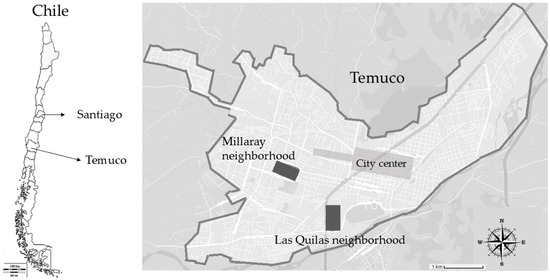
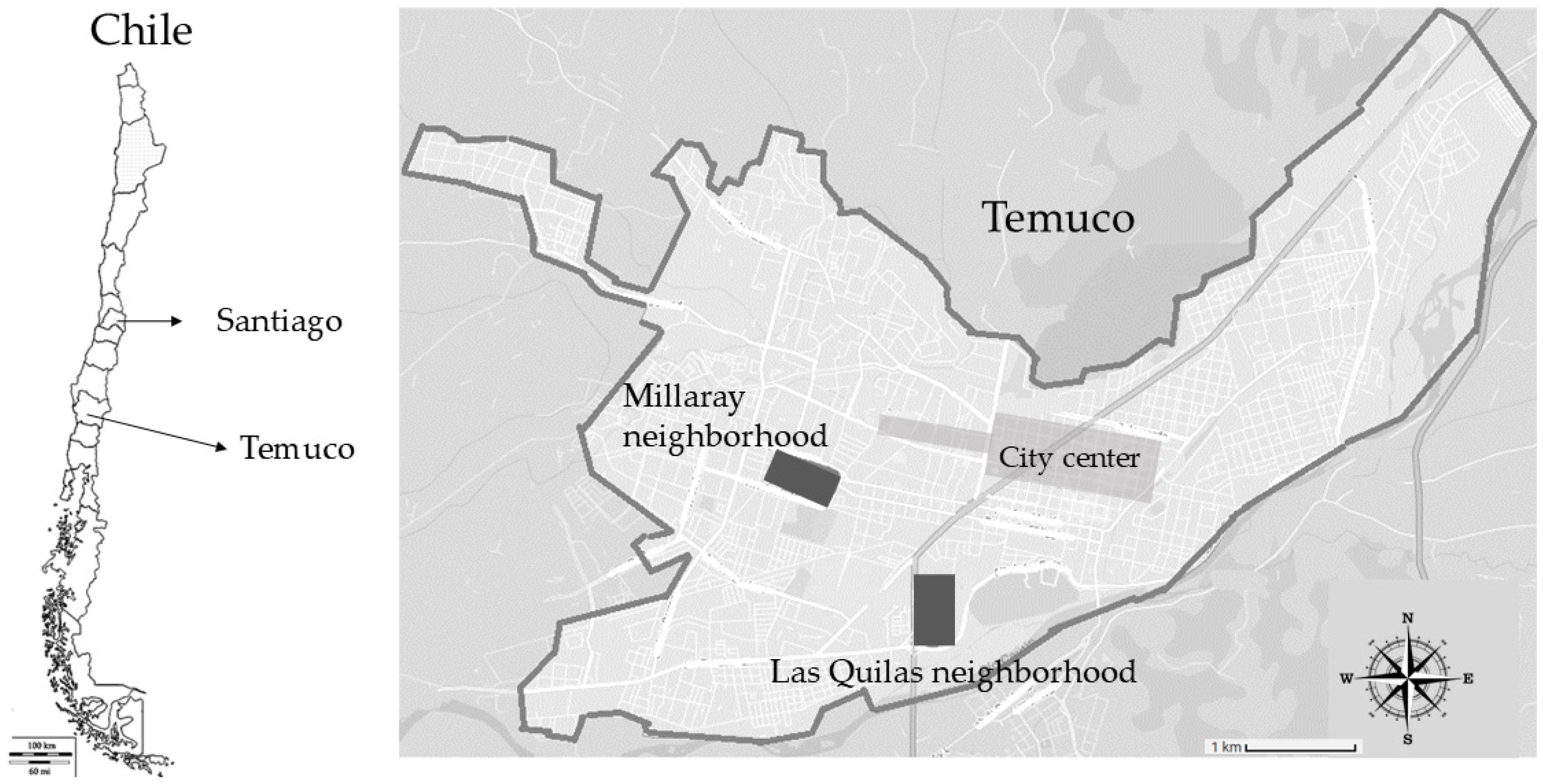
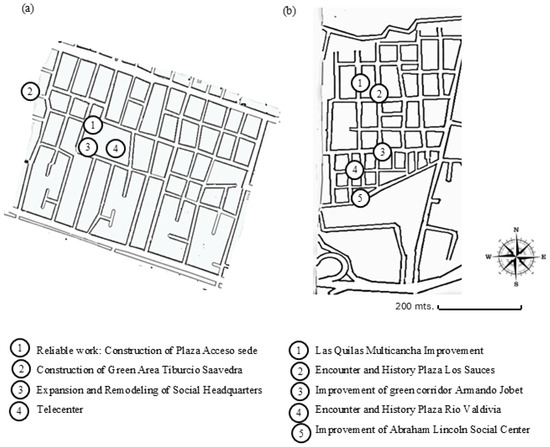
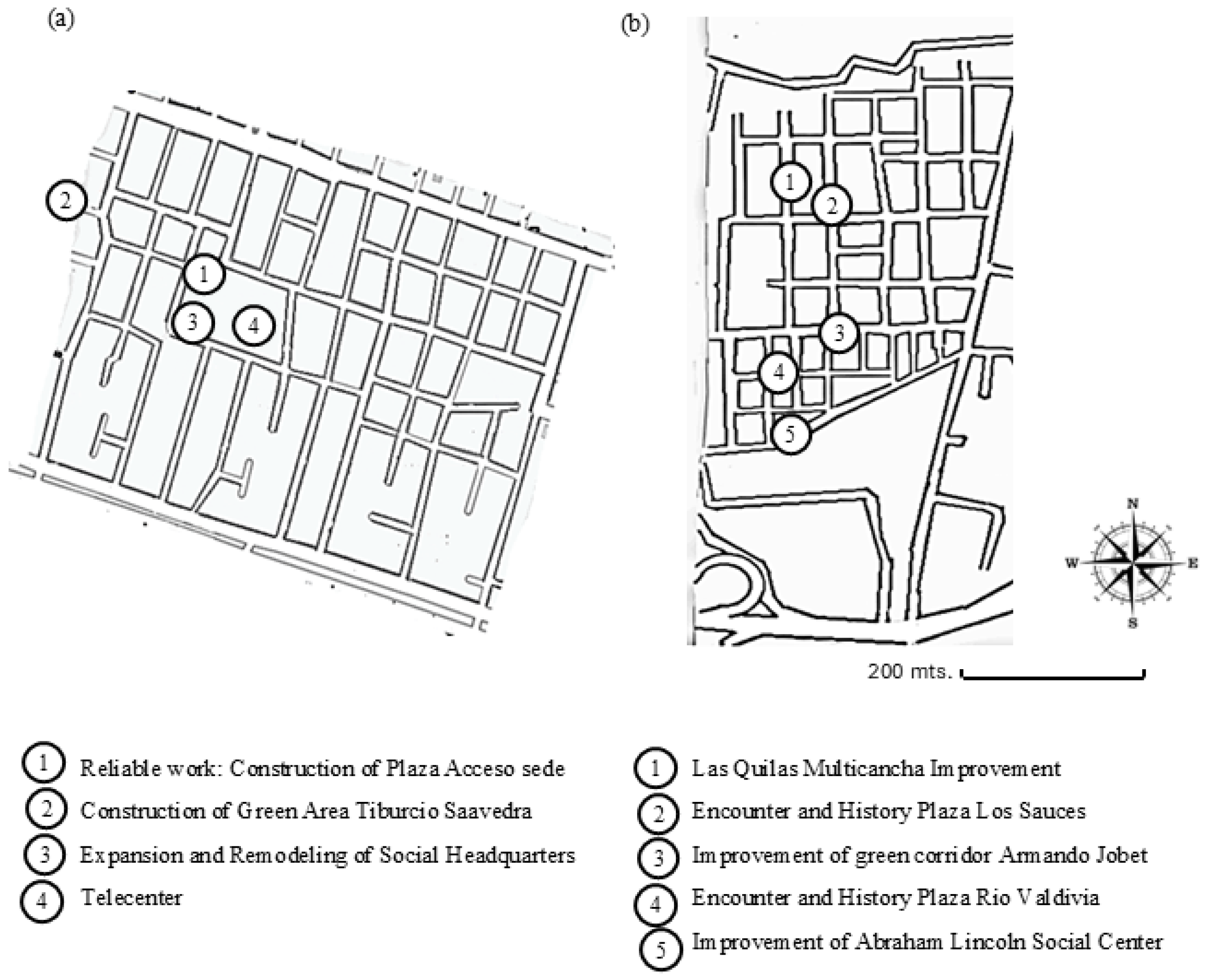
Chile, located in southern Latin America, is characterized by significant socioeconomic and territorial inequalities, which are reflected in high levels of urban segregation [24]. In this context, the city of Temuco, located 621 km south of Santiago de Chile with a population of 282,415 inhabitants [25], has a sizeable Mapuche population and significant socioeconomic gaps between neighborhoods, which creates a diverse and socially heterogeneous urban setting [26]. The two neighborhoods analyzed are located within the urban area (Figure 1). The inclusion of two neighborhoods enables analytical contrasts across similar socioeconomic contexts of interventions at different moments in time. Table 1 presents the sociodemographic characteristics of both neighborhoods at the time of intervention [27,28]. The interventions in both neighborhoods were defined through participatory processes, although constrained by program budgets. The Millaray neighborhood (BM) underwent an intervention in 2007, having been selected by MINVU (Ministry of Housing and Urban Development) as a pilot neighborhood. The works carried out included the construction of an access plaza to the social center and a green area on Tiburcio Saavedra Street, as well as the expansion and remodeling of the Social Center (Figure 2a). In addition, leadership workshops and activities such as outings and parties were organized for the neighborhood. The Las Quilas neighborhood (BLQ), nominated by neighborhood organizations and then selected by MINVU, underwent an intervention in 2015. This neighborhood comprises two merged neighborhood units: the Las Quilas sector and the Abraham Lincoln sector. The works carried out included the improvement of the Las Quilas multi-purpose sports field (sports center), two squares, the Armando Jobet green corridor, a community center, and the installation of street lighting (Figure 2b). Additionally, workshops on medicinal herbs were held, mosaics and planters were installed on Armando Jobet Street, recycling points were set up, and gardens with medicinal plants were constructed. The spaces chosen for improvement are publicly owned and maintained by the municipality, and constitute key sites for everyday interaction, mobility, and community activities within each neighborhood.
Figure 1.
Location of the city of Temuco and the neighborhoods covered by the Quiero Mi Barrio program studied.
Table 1.
Sociodemographic characteristics of the two neighborhoods at the time of intervention.
Figure 2.
Maps of the Millaray (a) and Las Quilas (b) neighborhoods with details of the urban interventions of the Quiero Mi Barrio Program.
2.3. Study Population
The study population consisted of residents of the two neighborhoods involved in the PQMB in Temuco, Chile (Millaray and Las Quilas), as well as key agents who worked on the program. Key agents included both local residents holding formal leadership roles and professionals linked to the program or local institutions. Both neighborhoods are characterized by a strong presence of older residents and women actively involved in community life, particularly in care-related and organizational roles. These neighborhoods were selected to enable analytical contrasts and to examine how the program may produce different perceived effects on the physical and social environment, the use of regenerated spaces, and community participation dynamics in each case. Millaray and Las Quilas belong to the same municipality and have similar socioeconomic characteristics [25], but they underwent interventions at different times [29]. The fieldwork was carried out between June 2018 and September 2019, prior to the 2019 social unrest in Chile and the COVID-19 pandemic, so the experiences and perceptions gathered reflect a time prior to these events.
2.4. Sampling
Key agents related to the PQMB were first identified and interviewed: current leaders of the JJVV (Neighborhood Councils), local MINVU managers, and social workers from the health centers in each neighborhood. A theoretical sample of residents was then selected and contacted through these key agents, as well as professionals from the health centers in each neighborhood, and then through a snowball strategy. The sampling strategy reflected the diversity in terms of gender, age, and community roles in each of the two neighborhoods, which allowed for the observation of different experiences regarding the use of urban space. The final sample was determined by thematic saturation, considering gender diversity. Participants’ occupations reflected the prevailing socioeconomic characteristics of both neighborhoods, which are marked by a high presence of retired individuals, informal workers, and care-related activities, particularly among women. This profile is consistent with broader patterns of socio-spatial segregation in the urban context studied. Despite efforts to include a wide age range, residents aged between 20 and 50 years were underrepresented. Consequently, older and more socially active residents were more likely to participate and to provide detailed accounts of community dynamics.
2.5. Data Collection
The information collection techniques included: (1) semi-structured individual interviews, aimed at exploring personal experiences regarding the use of and participation in neighborhood spaces; (2) focus groups, aimed at exploring experiences and meanings associated with social participation; and (3) non-participant observations, carried out with the aim of recording the characteristics of the spaces involved and the uses made of them.
For individual interviews and focus groups, a semi-structured topic guide was used to explore the dynamics of relationships and uses of space in neighborhoods; perceived changes in the physical and social environment; participation in social organizations; participation in the PQMB; and perceived changes after its implementation in both individual and community life. The interviews were conducted in locations convenient for the participants: in health facilities or in their homes. The focus group meetings were held in community centers in each neighborhood, where two members of the research team collected the data. The interviews and focus group meetings lasted between 30 and 90 min, were audio-recorded and transcribed verbatim. In total, 22 individual interviews were conducted with residents (10 men and 12 women), and 6 individual interviews were held with key agents (4 women and 2 men) (Table 2). The focus groups were composed of 12 women in BLQ (between 55 and 80 years) and 5 women and 5 men in BM (between 58 and 83 years).
Table 2.
Profiles of residents interviewed by neighborhoods covered by the Quiero Mi Barrio Program.
Four non-participatory field observations were conducted at different times of the year to capture variations in the use of public spaces, two in each neighborhood in the intervention areas: in BM, these took place in the square and on Tiburcio Saavedra Street; in BLQ, on the multi-purpose sports field and in a square. An observation script was used to explore the different relationships with the environment and between neighborhood residents depending on the time of year. Each observation lasted one hour and was conducted between 3 p.m. and 6 p.m. in January (summer) and April (autumn) 2019. The observations were recorded in a field notebook. Details of the scripts and guidelines for each technique are presented in Appendix A.
2.6. Data Analysis and Information Quality
Data from interviews, focus groups, and observations were analyzed in an integrated manner, allowing for dialogue between different techniques. This triangulation of data sources strengthened the credibility and rigor of the findings. All empirical material generated from individual interviews, focus groups, and non-participant observations was transcribed in full and analyzed by thematic content analysis, using Atlas.ti® software (version 7.5.7). The analytic process considered the information gathered from all three data collection techniques, bringing the discourses and observations into dialogue in order to identify patterns, convergences, and divergences in the experiences reported. During the analysis, gender-related differences emerged in the use of spaces, community participation, and everyday experiences, which were considered analytically. Gender was examined based on participants’ self-identification during data collection, which in practice corresponded to binary categories. Age emerged as an intersecting dimension shaping experiences and was also considered analytically.
The analysis was iterative and developed through constant comparison between data, codes, and categories. The codes were agreed upon by the research team, and the categories were generated in a mixed manner, based on the scripts and analysis of the information, until thematic saturation was achieved. Data quality was ensured through triangulation of techniques (interviews, focus groups, observation) and analytical triangulation among different members of the research team. The analysis took into account potential biases related to memory and participant selection, which are further discussed in the limitations section.
During the collection of information, analysis, and writing, a continuous process of reflexivity was maintained [30]. The different disciplinary backgrounds of the authors (public health, political science, anthropology, psychology, statistics, and medicine) and their origins (Spain, Argentina, and Chile) enriched the interpretations.
2.7. Ethical Considerations
The study was approved by the Scientific Ethics Committee of the Araucanía Sur Health Service Directorate, Chile (Exempt Resolution No. J1-544). All informants signed an informed consent form. Confidentiality and anonymity were guaranteed.
3. Results
The results are organized around three interrelated dimensions that reflect the interaction between social practices, spatial transformations, and temporal trajectories in the neighborhoods studied. Rather than treating social and physical changes as separate domains, the findings demonstrate how interventions in the built environment reconfigured everyday practices, patterns of participation, and forms of neighborhood identification. The built environment is therefore approached not as a neutral backdrop to social life, but as an active element shaping gendered responsibilities, social cohesion, and the sustainability of collective action over time.
Findings are presented comparatively between the two neighborhoods and interpreted through a gender perspective, with time considered a key dimension shaping the durability of perceived effects. Supporting quotes and observations from interviews, focus groups, and fieldwork are presented in Table 3, Table 4 and Table 5.
Table 3.
Direct quotes related to the category “Social transformations and gendered participation dynamics”.
Table 4.
Textual quotations related to the category “Built environment, spatial practices and neighborhood identity”.
Table 5.
Textual quotations related to the category “Temporal trajectories and institutional continuity”.
By way of context, the Millaray neighborhood (BM)—targeted by the PQMB in 2007—was described as a neighborhood with an aging population. Among the people interviewed, especially older adults, a recurring discourse emerged according to which “the past was better” in terms of neighborhood unity, with the perception that the present has given way to more individualized forms of relationship. In this context, the Neighborhood Council was identified by many of the people interviewed as one of the few social spaces in which they continue to participate, with varying frequency.
In contrast to BM, in the Las Quilas neighborhood (BLQ), most of the people interviewed were part of a formal neighborhood organization, such as the “Luz del Alba” women’s association, neighborhood associations, or sports groups. According to the neighborhood assessment carried out by the PQMB social worker, there were around 24 active organizations in BLQ, mainly promoted by the Neighborhood Development Council (CVD), neighborhood associations and senior citizens’ clubs. Participants emphasized that this higher level of organizational participation predated the intervention and coexisted with it, rather than being directly attributable to the program. These pre-existing organizational differences shaped how each neighborhood experienced and sustained the effects of the intervention over time.
3.1. Social Transformations and Gendered Participation Dynamics (Table 3)
3.1.1. Community Participation and Gendered Leadership
In both neighborhoods, but especially in BLQ, an increase in social cohesion was observed after the program’s implementation. People described greater daily communication between neighbors, which facilitated the building of trust and a perception of safety. Participation in meetings, activities, and informal gatherings allowed people to get to know each other, identify themselves as part of the same territory, and care for one another. This dynamic was associated with greater peace of mind and mutual support, especially in situations of illness or specific need. However, in the case of BM, neighborhood cohesion emerged mainly in the discourse of people who participated in the Neighborhood Council or other neighborhood organizations.
Although there were differences in the program’s impact between neighborhoods, some common results were observed. The PQMB intervention favored the renewal of neighborhood leadership and the strengthening of active leadership, mainly exercised by women, who took on roles of organization, mediation, and support for community activities, often described as an extension of everyday care and community work. This pattern reflects a persistent gendered division of labor within the neighborhood context, where women’s community leadership was frequently articulated as a continuation of unpaid care responsibilities. While this strengthened collective organization, it also reinforced the concentration of social and emotional labor among women. The presidents of the JJVVs were highlighted as committed, available, and capable of articulating collective solutions. The continuity of these leaders was valued positively, as it allowed for a participatory and inclusive climate in neighborhood management.
The program encouraged residents from both neighborhoods to participate in various activities, such as workshops, celebrations, sports, and community events. The community center became the main meeting place for groups with different interests. These activities provided opportunities to socialize, break out of the domestic routine—especially for women—and stay active.
Overall, community participation functioned both as a source of social cohesion and as a space where pre-existing gender roles and power relations were reproduced, particularly through the concentration of organizational and care-related responsibilities among women.
3.1.2. Dynamics of Social Ties in Everyday Life
Participation in community activities was seen as a source of well-being, motivation, and companionship, which was associated with feelings of happiness, relaxation, and encouragement. Participating in workshops, outings, or meetings was described as a way to “clear one’s mind” and “feel good,” especially among women, many of whom were older adults. Social interaction was identified as key to avoiding isolation and improving mood. These experiences were closely linked to participants’ perceptions of improved quality of life, particularly through enhanced social ties and emotional well-being.
3.2. Built Environment, Spatial Practices, and Neighborhood Identity (Table 4)
3.2.1. Infrastructure, Accessibility, and Connectivity
The renovation of community centers, squares, sports fields, and green areas was widely appreciated by residents, particularly due to their role in facilitating everyday social interaction and organized activities. The community centers in both neighborhoods became key spaces for socializing, meetings, and organizational activities. In addition, the creation of a telecenter, especially in BM, provided access to printing and digital literacy services, which was perceived as a significant help for older people. Access to these infrastructures also intersected with gendered routines, as women—particularly those involved in caregiving roles—reported more frequent use of community centers for meetings and support activities.
3.2.2. Physical Activity and Gendered Appropriation of Space
The creation of sports facilities, especially the multi-purpose court in BLQ, encouraged physical activity, games, and community events. Use of these spaces revealed clear gender and age differences in their appropriation. Young people, predominantly young males, were the primary users for sports activities. Women’s engagement with regenerated spaces was more frequently linked to caregiving, accompaniment of children, or participation in organized community activities. The multi-purpose court was described as a central place for socializing and exercise, where those who attended reported feeling more relaxed, motivated, and energetic. These findings suggest that regenerated spaces were not neutral settings, but arenas where age and gender norms shaped patterns of visibility, mobility, and appropriation.
3.2.3. Public Space, Everyday Use, and Territorial Identification
Public spaces functioned not only as sites for physical activity but also as spaces for care, encounter, and social reproduction. The use of green spaces showed differences according to gender and stage of life, associated with physical activity, rest, care, and sociability. In both neighborhoods, squares and green areas were perceived as relevant spaces for everyday life, although with different uses. Firstly, these spaces were used for physical activity and body care, including walking, use of exercise machines, and sports, especially among young people and adult women, who associated these uses with feelings of well-being, relaxation, and motivation. Gender and age emerged as key dimensions shaping how regenerated spaces were experienced and used.
Likewise, green areas were described as spaces for leisure, rest, and emotional well-being, particularly by older people, both men and women, who valued the presence of shade, seating, and the possibility of sitting down to rest or stroll with family members. These everyday uses contributed to a positive perception of the neighborhood environment and favorable changes in mood.
The squares also functioned as spaces for meeting and socializing, especially among older women, encouraging spontaneous interaction between neighbors, everyday conversation, and, in some cases, community and organizational activities.
However, differences were observed in the use of some transformed spaces between neighborhoods. In BM, certain green areas were described as being used mainly by residents of the immediate surroundings, while others reported restricted use or avoidance of these spaces, perceiving them as unwelcoming or “not their own”. These perceptions shaped unequal processes of appropriation of public space and influenced everyday mobility and use.
One notable aspect was the remodeling of Armando Jobet Street in BLQ, which connected previously separate sectors of the neighborhood. People described this transformation as a milestone that allowed sectors to be “united,” increasing the sense of community and territorial identity. This transformation was associated with positive perceptions of the neighborhood and everyday well-being. The removal of physical barriers was interpreted as an opportunity to participate and share more intensely with other residents.
3.3. Temporal Trajectories and Institutional Continuity (Table 5)
Continuities and Discontinuities of Urban Policy and Practice
Participants’ accounts revealed clear differences between the two neighborhoods associated with the time elapsed since the PQMB intervention. In the neighborhood which had experienced intervention earlier (BM), several participants referred to a loss of continuity in community dynamics following the formal closure of the program, describing feelings of abandonment linked to the withdrawal of technical teams and the dissolution of the CVD (Neighborhood Development Council). In this context, the loss of institutional continuity was accompanied by processes of progressive disengagement among some residents.
While many of the social and physical improvements promoted by the intervention continued to be valued, their persistence appeared uneven. Limited recognition of program-related activities among less socially active residents, together with restricted or avoided use of certain regenerated spaces, pointed to fragile processes of appropriation and engagement over time.
In contrast, in the neighborhood which had undergone intervention more recently (BLQ), participants more frequently described sustained use of public spaces and stronger perceptions of territorial identity, particularly in relation to interventions that improved connectivity and removed physical barriers within the neighborhood. These experiences suggest that the sustainability of perceived effects was closely linked to the temporal dimension of the intervention and to the continuity of institutional and community support. Importantly, the capacity to sustain collective dynamics over time was not evenly distributed but often relied on the continued involvement of women leaders and care-oriented community actors. This indicates that the long-term social sustainability of regeneration processes remained embedded within pre-existing gendered responsibilities.
4. Discussion
Overall, the findings of this study indicate that perceived improvements in quality of life associated with the PQMB urban regeneration program emerged from the interaction between changes in the built environment and evolving patterns of community participation and collective organization. These effects were not experienced uniformly across the population but varied according to gender, age, and degree of community engagement. Women and older adults, who were more actively involved in neighborhood organizations and collective activities, reported greater benefits in terms of social cohesion, use of public spaces, and emotional well-being. In contrast, men and younger residents tended to engage with the program in more sporadic ways, primarily through the use of sports facilities, with limited involvement in organizational processes. Importantly, the sustainability of these perceived benefits over time differed between the two neighborhoods, highlighting the relevance of institutional continuity, collective engagement, and the temporal dimension of urban regeneration processes.
This discussion is structured around three interrelated dimensions emerging from the findings: (1) gendered participation dynamics, (2) the role of built environment transformations in everyday life, and (3) the temporal and institutional conditions shaping long-term social sustainability. Together, these dimensions provide insights into the broader challenges of neighborhood regeneration policies in Chile.
Addressing the first dimension—gendered participation dynamics—the results show that women took on a central role in community dynamics, leading organizations, participating in decision-making, and supporting collective activities. As observed in the results, this female leadership was key to creating support networks, sustaining neighborhood participation, and strengthening a sense of belonging. These practices can be interpreted as an extension of care work from the domestic sphere to the neighborhood, a phenomenon widely described in the literature on community participation in urban contexts. Previous studies have highlighted the leading role of women in community work and collective care, even in scenarios of increasing incorporation of women into the labor market, which in some cases puts pressure on the time available for territorial participation and can lead to an overload of unpaid work [31]. In this sense, women’s sustained involvement in community life reflects not only commitment, but also the persistence of gendered power relations that shape the distribution of care, leadership, and social responsibility. Gender therefore operates not merely as a descriptive category, but as a structural dimension influencing participation and the allocation of unpaid community work [32,33]. In Chile, female leadership has a long history, especially in more deprived neighborhoods, where women have taken on organizational roles to support families and communities [34]. This pattern was observed again during the COVID-19 pandemic through initiatives such as communal soup kitchens [35]. These findings suggest that urban regeneration unfolds within gendered social structures rather than neutral contexts, intersecting with existing power relations that shape access to time, mobility, and collective participation.
Within this gendered participatory landscape, a key element—especially in one of the neighborhoods—was the increased sense of belonging and cohesion associated with the participatory nature of the program and the possibility of collectively deciding on the works to be carried out. From an analytical perspective, neighborhood participation emerged as a key mechanism linking the program to well-being through the development of support and trust networks among residents. These dynamics were primarily driven by women who actively participated in community organizations and shared spaces. In other studies, social support has been shown to have positive effects on quality of life through care, guidance, and accompaniment [4,36], while trust fosters social interaction and facilitates the circulation of information [37]. In this study, participation and collective work were described as facilitators for achieving common goals during the implementation of the program; however, the reports also highlight difficulties in sustaining these dynamics once the intervention was completed. This loss of continuity suggests that the positive effects on social cohesion may be fragile and depend both on institutional support and on the capacity of community actors to sustain collective work overtime—which is not always equitably distributed across gender and age groups. While community participation may temporarily extend some benefits beyond the formal closure of the program, social sustainability—understood as the maintenance of social cohesion and collective capacity to work toward the common good—remains at risk in the absence of mechanisms to monitor and reinforce program effects.
Looking more closely at longer-term dynamics in the neighborhood that underwent intervention earlier (BM), non-participating residents described changes in everyday social relations, with greater prioritization of domestic life over shared outdoor activities. Although participants often attributed these shifts to population aging and difficulties sustaining community leadership, they can also be read within broader sociocultural processes of increasing individualization in neoliberal urban contexts. These processes have contributed to the weakening of collective forms of social life [38,39,40]. In the Chilean context, these dynamics have been reinforced by an urban and social model that has promoted the privatization of everyday life and a retreat into the domestic sphere [39], affecting women and men differently in their willingness and opportunities for community participation. From this perspective, although programs that promote community work can generate specific improvements in participation and the social environment, they may be insufficient to reverse long-term cultural and structural trends. In this study, the community center emerged as a key space mediating between individual trajectories and collective practices, highlighting both its potential and its vulnerability in sustaining social cohesion over time [41].
By contrast, in the neighborhood that underwent intervention more recently (BLQ), the notion of a “united neighborhood” remained more prominent, and collective projects with shared benefits—such as medicinal gardens and recycling points—were still active one year after the program’s completion. This sustained use of communal initiatives suggests a stronger short-term continuity of program-related practices, particularly in contexts where collective decision-making and local organization were reinforced. In line with previous research, a stronger sense of belonging has been associated with better health outcomes in other contexts [42]. In this case, physical spaces—such as the multi-purpose sports field—were transformed into infrastructures that facilitated community action and local empowerment processes [40]. Women’s leadership was central to sustaining these dynamics through organizing activities and promoting participation. Empowerment, understood as the process by which individuals and communities gain control over their affairs [43], can be a powerful tool for making transformations that improve quality of life [44]. However, these empowerment dynamics appear to be contingent on continued institutional support, adequate maintenance of physical spaces, and the persistence of community leadership. Without these conditions, the capacity of urban regeneration interventions to generate lasting improvements in quality of life remains uncertain.
The temporal dimension becomes even more visible when considering the time elapsed since the intervention. In the neighborhood that received earlier intervention (BM), references to the PQMB were less frequent, and participants who had been actively involved during the intervention period described feelings of abandonment following the withdrawal of the technical team, a pattern previously identified in program evaluations [21]. In contrast, in the neighborhood that underwent intervention more recently (BLQ), collective projects and organizational dynamics remained more visible, suggesting a stronger short-term continuity of program-related practices. These differences may be partly explained by different stages of post-intervention development, but also by contextual factors related to neighborhood selection: while BM was designated as a pilot area, BLQ was selected through a competitive process, potentially reflecting a higher initial level of organization and commitment among local leaders. Taken together, these findings highlight how the sustainability of urban regeneration benefits depends not only on physical investments, but also on institutional continuity and the uneven capacity of community actors to sustain collective action over time [45,46]. This interpretation aligns with broader research on urban regeneration, which emphasizes that long-term sustainability is contingent upon governance arrangements and post-intervention institutional support rather than infrastructure alone [47].
Intergenerational participation further complicates the sustainability of collective action. Participation was concentrated among older residents, aligning with evidence that community engagement and accessible public spaces can support well-being and autonomy in later life [48,49]. Residents aged 20–50 were comparatively less visible in neighborhood organizations and were also underrepresented in the interview sample. This pattern likely reflects work-related mobility, commuting demands, and time constraints associated with employment and caregiving responsibilities during this life stage. In contrast, younger residents mainly participated through sports activities, with limited involvement in formal community structures. Beyond the absence of youth-targeted strategies [50], this may also reflect broader shifts toward more individualized forms of participation [40]. From a social sustainability perspective, low intergenerational involvement may weaken the continuity of collective action after program closure, increasing reliance on a smaller group of active residents—often women and older adults—to sustain neighborhood initiatives over time, reinforcing the concentration of community responsibility within specific social groups and potentially affecting long-term stability.
Several limitations should be acknowledged when interpreting these findings. One of them is the potential for recall bias regarding program activities, particularly in the neighborhood intervened earlier. While physical improvements remained visible, social initiatives without documentary records may have been less consistently remembered. In addition, the fieldwork was conducted prior to the 2019 social unrest in Chile and the COVID-19 pandemic [51]; therefore, findings reflect perceptions situated within that pre-crisis context. Although this study adopts a gender-sensitive perspective, other intersectional dimensions such as class or origin were not examined in depth, given the qualitative scope and sample size. Moreover, participants self-identified within binary gender categories, limiting the analysis of how urban regeneration may differentially affect gender-diverse individuals. Finally, the underrepresentation of residents aged 20–50 years may have shaped the findings toward the perspectives of older and more socially active residents. Although the transferability of these findings is context-bound, they may offer analytical insights into gendered participation and social sustainability in comparable urban regeneration contexts.
5. Conclusions
This study highlights that the long-term effects of urban regeneration programs cannot be understood solely through improvements in the built environment or short-term perceptions of neighborhood change. Rather, their sustainability depends on how interventions reshape—or fail to reshape—local power relations, patterns of participation, and the capacity of communities to influence decisions that affect their everyday lives.
The comparison between two neighborhoods intervened at different moments illustrates that the benefits of regeneration are not simply preserved over time. As institutional presence fades, the continuity of collective initiatives and the maintenance of shared spaces become increasingly dependent on local actors. This dynamic reveals how regeneration processes may inadvertently transfer responsibilities for sustaining improvements to community members without necessarily strengthening their influence over broader urban decisions.
The findings also show that these dynamics are shaped by existing social roles and patterns of participation, including gendered forms of involvement in neighborhood life. In practice, responsibilities related to community organization, care for shared spaces, and everyday neighborhood management often fall unevenly across residents, reflecting broader social norms that structure participation and leadership.
From this perspective, socially sustainable regeneration requires more than participatory activities during project implementation. It requires recognizing community knowledge, supporting long-term collective capacities, and creating institutional arrangements that enable communities to shape the decisions that affect their territories.
Urban regeneration policies should therefore move beyond narrowly defined neighborhood improvements and engage with the broader structural conditions that shape urban inequalities. Strengthening community influence over planning processes and valuing lived experience as a form of knowledge may contribute to more equitable and durable improvements in wellbeing.
Future research should continue exploring how participation, power, and intergenerational dynamics evolve after the formal completion of regeneration programs, particularly in relation to their implications for social sustainability and health equity.
Author Contributions
Conceptualization, N.L.-C., M.G. and V.P.-B.; methodology, N.L.-C. and V.P.-B.; formal analysis, N.L.-C., M.G., C.J.-A., V.P. and V.P.-B.; investigation, N.L.-C.; data curation, N.L.-C.; writing—original draft preparation, N.L.-C.; writing—review and editing, N.L.-C., M.G., C.J.-A., V.P. and V.P.-B.; supervision, M.G. and V.P.-B. All authors have read and agreed to the published version of the manuscript.
Funding
This work was funded by the National Research and Development Agency (ANID) of Chile/Scholarship Program/DOCTORATE SCHOLARSHIPS CHILE/2017—72180058.
Institutional Review Board Statement
This study was approved by the Scientific Ethics Committee of the Araucanía Sur Health Service Directorate, Chile (Exempt Resolution No. J1-544, date 5 March 2019). All informants signed an informed consent form. Confidentiality and anonymity were guaranteed.
Informed Consent Statement
Informed consent was obtained from all subjects involved in the study.
Data Availability Statement
The data presented in this study are not publicly available due to ethical and privacy considerations. The qualitative data consist of interview and focus group transcripts that contain information that could compromise participant confidentiality.
Acknowledgments
The authors thank Vicente López Contreras for his support in data collection and critical review of the manuscript. We also thank Jenna Fults for her careful review of the English language and stylistic improvements.
Conflicts of Interest
The authors declare no conflicts of interest.
Abbreviations
The following abbreviations are used in this manuscript:
| PQMB | Quiero Mi Barrio Program (I Love My Neighborhood) |
| MINVU | Ministry of Housing and Urban Development |
| BLQ | Las Quilas Neighborhood |
| BM | Millaray Neighborhood |
| CVD | Neighborhood Development Council |
| JJVV | Neighborhood Councils |
| CODELO | Local Health Development Council |
| CECOSF | Community Family Health Center |
Appendix A
Appendix A.1. Interview Script for Key Informants
Objectives:
- To understand the sociodemographic composition of the neighborhoods from the perspective of different local actors.
- To explore perceptions of the implementation of the *Quiero Mi Barrio* Program (PQMB) from multiple stakeholder perspectives.
- To identify perceived changes in the neighborhood following the implementation of the PQMB.
Participants:
- CESFAM social worker (AS): length of professional involvement in the neighborhood.
- SERVIU official (FS): years of participation in the PQMB.
- Social leader (SL): length of residence in the neighborhood and duration of leadership role.
Appendix A.1.1. Block 1. Neighborhood Composition
Objective. To describe the social and demographic characteristics of the neighborhood and its internal dynamics.
Example topics explored:
- Gender composition of the neighborhood and presence of LGBTI+ groups.
- Age distribution (children, adolescents, adults, older adults) and predominant age groups.
- Ethnic composition, including self-identified Mapuche population and related cultural practices.
- Educational level of residents and access to educational opportunities.
- Occupational profile of residents (employment, retirement, local economic activities).
- Presence and evolution of migrant populations.
- Community and neighborhood organizations: type, level of activity, representativeness, and main neighborhood assets.
Appendix A.1.2. Block 2. Implementation of the Quiero Mi Barrio Program (PQMB)
Objective: To explore perceptions of the implementation process of the PQMB.
Example topics explored:
- Strengths and weaknesses of the program implementation (physical, social, and organizational dimensions).
- Challenges encountered during implementation (e.g., logistics, community engagement).
- Neighborhood participation during program implementation.
- Representativeness of different social groups in decision-making processes.
- Changes in the profile of participants throughout the different phases of the program.
Appendix A.1.3. Block 3. Perceived Changes Following the PQMB
Objective: To identify changes in the neighborhood attributed to the PQMB.
Example topics explored:
- Changes in the sociodemographic profile of residents after the intervention.
- Evolution of neighborhood participation in community activities and organizations.
- Use, care, and maintenance of public spaces and infrastructure.
- Continuity of activities initiated during the PQMB.
- Emergence of new leadership or increased interest in participation and local decision-making.
Closing:
Participants were thanked for their contribution and informed about the aims of the study and the dissemination of results.
Appendix A.2. Interview Script for Neighborhood Residents
Appendix A.2.1. Block 0. Introduction and Characterization
Interviewer introduction, explanation of study objectives, signing of informed consent, and permission to record the interview.
Sociodemographic characteristics: age, education, occupation, neighborhood of residence, household composition, length of residence in the neighborhood, Mapuche identity.
Appendix A.2.2. Block 1. Life in the Neighborhood
Objective: To explore perceptions of current neighborhood life, including use of public spaces, social relations, and quality of life.
Example questions:
- Description of a typical weekday and weekend in the neighborhood.
- Perceptions of living in the neighborhood (safety, quality of life, positive and negative aspects).
- Description of neighborhood life and social activities among residents.
- Use of public spaces (e.g., squares, sports fields, community centers): frequency of use, activities performed, and groups using these spaces.
- Social relationships with neighbors: interaction, trust, mutual support, and conflicts.
Appendix A.2.3. Block 2. Changes in the Physical and Social Environment
Objective: To understand perceptions of changes in renovated spaces and their impact on social relationships, well-being, and quality of life.
Example questions:
- Perceived changes in public spaces and the neighborhood over time (e.g., squares, sports facilities, community centers, housing, services).
- Timing and agents of these changes (e.g., municipality, neighborhood initiatives, public programs).
- Changes in the use of public spaces following physical interventions.
- Perceived impact of these changes on daily routines, safety, social interaction, and well-being.
- Perceived effects on neighborly relationships and social cohesion.
Appendix A.2.4. Block 3. Formal Participation and Quiero Mi Barrio Program (PQMB)
Objective: To explore formal participation in community groups and experiences related to the PQMB.
Example questions:
- Participation in neighborhood or community groups: motivations, roles, and duration.
- Meaning of participation and perceived effects on quality of life.
- Awareness of and participation in the PQMB.
- Perceptions of inclusion, decision-making processes, and experiences during program activities.
- Role of PQMB activities as spaces for social interaction and community building.
Appendix A.2.5. Block 4. Evaluation of the PQMB
Objective: To assess satisfaction with and perceptions of the PQMB interventions.
Example questions:
- Overall memories and evaluation of the PQMB.
- Perceived effects of physical and social interventions on daily life and neighborly relations.
- Positive and negative aspects of the program.
- Elements of the program should be maintained or modified.
Appendix A.2.6. Block 5. Proposals
Objective: To identify perceived needs and proposals to improve health and quality of life in the neighborhood.
Example questions:
- Suggested improvements for the neighborhood and public spaces.
- Perceived actions needed to improve quality of life and social relationships among residents.
Appendix A.2.7. Closing
The interviewer thanks the participant for their contribution, asks for permission to make contact if clarification is needed after transcription, and informs them that study results will be shared with the community once available.
Appendix A.3. Focus Group Questions
- What would you say is the distinctive feature of the neighborhood?
- Which spaces do you think are most used in the neighborhood? Who uses them?
- How do residents participate in the neighborhood?
- Has it always been this way? Where did interactions take place before?
- Do you remember any interventions in the neighborhood that led to these changes?
- Have the uses of physical spaces in the neighborhood changed?/How have they changed?
- Have relations between neighbors in the neighborhood changed?/How have they changed?
- Were there changes in quality of life after the changes in the neighborhood? How did quality of life change? Mood? Physical activity?
Appendix A.4. Field Observation Notes Guide
- Date:
- Time:
- Place:
- Observer:
- Duration:
- Purpose of observation:
- Initial: To evaluate the type of use of spaces, the characteristics of the users
- and the type of relationships established there.
- Focus of observation:
- Observation:
- ○
- Place of observation: The renovated squares and remodeled community centers.
- ○
- Setting: Observe the space: cleanliness, rubbish, presence of animals (stray dogs), describe number of benches, playground equipment.
- ○
- People: Observe people (gender, age, migrant, ethnicity) Type of activity (sitting and watching, reading, looking at mobile phones, talking, walking, cycling, using the machines) Type of interactions (alone, playing on the machines, playing on the multi- purpose court) Quantify the number of people passing by, or the approximate time they spend in the space.
- ○
- Comments, incidents:
References
- Ince, C.D.; Aslan, B. Monitoring the effects of land sizes on private property transformation in an urban regeneration project by regression analysis: Erenler Cedit case study, Kocaeli. Sustain. Cities Soc. 2019, 50, 101632. [Google Scholar] [CrossRef] [Scilit]
- Moris, R. Construir ciudades. Mejoramiento de barrios y calidad de vida urbana. EURE 2011, 37, 169–172. [Google Scholar] [CrossRef] [Scilit]
- Buvinic, M.; Morrison, A.; Shifter, M. La Violencia en América Latina y el Caribe: Un Marco de Referencia para la Acción; Banco Interam Desarro: Washington, DC, USA, 1999; Volume 35, Available online: https://publications.iadb.org/es/publicacion/15120/la-violencia-en-america-latina-y-el-caribe-un-marco-de-referencia-para-la-accion (accessed on 30 October 2022).
- Diez Roux, A.V.; Mair, C. Neighborhoods and health. Ann. N. Y. Acad. Sci. 2010, 1186, 125–145. [Google Scholar] [CrossRef] [Scilit]
- Feng, J.; Glass, T.A.; Curriero, F.C.; Stewart, W.F.; Schwartz, B.S. The built environment and obesity: A systematic review of the epidemiologic evidence. Health Place 2010, 16, 175–190. [Google Scholar] [CrossRef] [Scilit]
- Stephen, A. A systematic review of the evidence on the effect of the built and physical environment on mental health. J. Public Ment. Health 2007, 6, 14–27. [Google Scholar]
- Berkman, L.F.; Kawachi, I. Social Epidemiology; Oxford University Press: Oxford, UK, 2000; Volume 1, pp. 1–414. [Google Scholar]
- Curl, A.; Kearns, A.; Mason, P.; Egan, M.; Tannahill, C.; Ellaway, A. Physical and mental health outcomes following housing improvements: Evidence from the GoWell study. J. Epidemiol. Community Health 2015, 69, 12–19. [Google Scholar] [CrossRef] [Scilit] [PubMed]
- López, N.; Gadsden, V.L. Health inequities, social determinants, and intersectionality. In Perspectives on Health Equity and Social Determinants of Health; National Academies Press: Washington, DC, USA, 2023; pp. 9–30. [Google Scholar]
- UN-HABITAT. Gender Issue Guide: Urban Planning and Design; UN-HABITAT: Nairobi, Kenya, 2012; pp. 5–18. [Google Scholar]
- The World Bank. Manual para la Planificación y el Diseño Urbano con Perspectiva de Género; The World Bank: Washington, DC, USA, 2020; pp. 25–55. [Google Scholar]
- Balbo, M.; Jordán, R.; Simioni, D. La Ciudad Inclusiva; CEPAL: Santiago, Chile, 2003; pp. 237–258. [Google Scholar]
- Col·lectiu Punt 6. Urbanismo Feminista: Por Una Transformacion Radical de los Espacios de Vida; Virus Editorial: Barcelona, Spain, 2019. [Google Scholar]
- Eizenberg, E.; Jabareen, Y. Social Sustainability: A New Conceptual Framework. Sustainability 2017, 9, 68. [Google Scholar] [CrossRef] [Scilit]
- WHO Quality of Life Assessment Group. ¿Qué calidad de vida? Foro Mund. Salud 1996, 17, 385–387. Available online: https://apps.who.int/iris/handle/10665/55264 (accessed on 25 October 2022).
- European Union Regional Policy. Cities of Tomorrow: Challenges, Visions, Ways Forward; European Commission: Brussels, Belgium, 2011; pp. 65–89. [Google Scholar]
- Andersen, H.T.; Van Kempen, R. New trends in urban policies in Europe: Evidence from the Netherlands and Denmark. Cities 2003, 20, 77–86. [Google Scholar] [CrossRef] [Scilit]
- Ulriksen, C. Genealogía del primer programa chileno de recuperación de barrios vulnerables “quiero mi barrio” en su primera generación 2006–2010. Rev. INVI 2019, 34, 9–49. [Google Scholar] [CrossRef] [Scilit]
- Saborido, M.; De la Barrera, R.; Saavedra, F. Informe Final de Evaluación. Evaluación de Programas Gubernamentales. Programa de Recuperación de Barrios; Ministerio de Vivienda y Urbanismo de Chile: Santiago, Chile, 2017. Available online: https://www.dipres.gob.cl/597/articles-163123_informe_final.pdf (accessed on 2 November 2022).
- Delamaza Escobar, G.; Corvera Vergara, M.T. Juntas de Vecinos en Chile. 50 Años Historias y Desafíos de Participación; Biblioteca del Congreso Nacional de Chile: Santiago, Chile, 2018; Available online: https://www.bcn.cl/publicaciones/detalle.html?s=Historia,%20Cultura%20y%20Patrimonio&ss=Historia%20pol%C3%ADtica&handle=10221.1/72045 (accessed on 2 November 2022).
- Greene, M.; Wagemann Farfán, E.; Cortese Mena, C.; Reyes Saldías, J.; Ormeño Matus, N.; Fernández Belmar, A. Sustentabilidad a Escala de Barrio: Re-Visitando el Programa “Quiero mi Barrio”; CEDEUS: Santiago, Chile, 2019. [Google Scholar]
- Cardona, D.; Agudelo, H.B. Construcción cultural del concepto calidad de vida. Rev. Fac. Nac. Salud Pública 2009, 23, 79–90. Available online: http://www.scielo.org.co/scielo.php?script=sci_arttext&pid=S0120-386X2005000100008&lng=en&nrm=iso&tlng=es (accessed on 25 October 2022). [CrossRef] [Scilit]
- Dempsey, N.; Bramley, G.; Power, S.; Brown, C. The Social Dimension of Sustainable Development: Defining Urban Social Sustainability. Sustain. Dev. 2011, 19, 289–300. [Google Scholar] [CrossRef] [Scilit]
- Mac-Clure, Ó.; Rubén, C. Desigualdades sociales y tipos de territorios en Chile. Polis Rev. Latinoam. 2013, 12, 467–490. [Google Scholar] [CrossRef] [Scilit]
- Instituto Nacional de Estadística de Chile. Entrega Resultados Definitivos Censo 2017. 2018. Available online: http://www.censo2017.cl/wp-content/uploads/2018/05/presentacion_de_la_segunda_entrega_de_resultados_censo2017.pdf (accessed on 10 December 2022).
- Ministerio de Salud de Chile. Diagnósticos Regionales en Salud con Enfoque en Determinantes Sociales: Región de la Araucanía; Ministerio de Salud de Chile: Santiago, Chile, 2023.
- Modesto, F.; Jofré, J.; Peña, C.; Nahuelpi, M.I. Estudio Técnico de Base del Plan de Gestion de Contrato de Barrio Millaray, Comuna de Temuco, Región de la Araucanía; Ministerio de Vivienda y Urbanismo: Santiago, Chile, 2008; pp. 23–29+146–153.
- Mora Sepulveda, S.; Rocha Leal, P. Estudio Ténico de Base Barrio Las Quilas, IX Región de la Araucanía. Programa de Recuperación de Barrios; Ministerio de Vivienda y Urbanismo: Santiago, Chile, 2015; pp. 8–12.
- Razo-González, A.M.; Díaz-Castillo, R.; Morales-Rossell, R.; Cerda-Barceló, R.; Angélica, M.; González, M.R. Metaanálisis del concepto de calidad de vida en América Latina. Una nueva propuesta: Sentido de vida. Rev. CONAMED 2014, 19, 149–156. [Google Scholar]
- Berenguera, A.; Fernández de Sanmamed, M.; Pons, M.; Pujol, E.; Rodríguez, D.; Saura, S. Escuchar, Observar y Comprender. Recuperando la Narrativa en las Ciencias de la Salud. Aportaciones de la Investigación Cualitativa; Institut Universitari d’Investigació en Atenció Primària Jordi Gol (IDIAP J. Gol): Barcelona, Spain, 2014; pp. 10–219. Available online: https://idiapjgol.org/ (accessed on 10 December 2022).
- Instituto Nacional de Estadísticas de Chile. Enfoque Estadístico: Género y Empleo; Instituto Nacional de Estadísticas de Chile: Santiago, Chile, 2017.
- Holt-Lunstad, J. Social Integration, Social Networks, and Health. In International Encyclopedia of the Social & Behavioral Sciences, 2nd ed.; Elsevier: Amsterdam, The Netherlands, 2015; Volume 21, pp. 365–370. [Google Scholar] [CrossRef] [Scilit]
- Shields, M. Community belonging and self-perceived health. Health Rep. 2008, 19, 51–60. [Google Scholar] [PubMed]
- Palacios Sepulveda, F. La Participación y Rol de las Mujeres de Sectores Populares en Ollas Comunes: Juntos en Comunidad; UDLA: Santiago, Chile, 2020. [Google Scholar]
- di Giminiani, P.; Pérez, M.; Quezada, C. Nueva normalidad, vieja precariedad: La crisis pandémica en Santiago de Chile. City Soc. 2020, 33. [Google Scholar] [CrossRef] [Scilit]
- Kawachi, I.; Berkman, L.F. Neighborhoods and Health; Oxford University Press: Oxford, UK, 2003; pp. 1–352. [Google Scholar]
- Soares, M.C.; Henrique, C. El acceso a la información como determinante social de la salud [Access to information as a social determinant of health]. Salud Colect. 2011, 7, 9–18. [Google Scholar]
- Morales, N. Convivencia ciudadana y mejoramiento de barrios en Chile. In Equidad de Género: Compartiendo la Ciudad y Sus Barrios; Saborido, M., Rodríguez, A., Segovia, O., Eds.; SUR—Corporación de Estudios Sociales y Educación: Providencia, Chile, 2009. [Google Scholar]
- Rodríguez, A.; Rodríguez, P.; Saborido, M.; Segovia, O.; Miresi, L. Violencia visible e invisible en Santiago neoliberal. Medio Ambiente Urban. 2015, 82, 51–68. [Google Scholar]
- Popay, J.; Whitehead, M.; Ponsford, R.; Egan, M.; Mead, R. Power, control, communities and health inequalities I: Theories, concepts and analytical frameworks. Health Promot. Int. 2021, 36, 1253–1263. [Google Scholar] [CrossRef] [Scilit]
- Klinenberg, E. Palacios del Pueblo: Políticas para una Sociedad Más Igualitaria; Capitán Swing Libros: Madrid, Spain, 2021. [Google Scholar]
- Kitchen, P.; Williams, A.; Chowhan, J. Sense of Community Belonging and Health in Canada: A Regional Analysis. Soc. Indic. Res. 2012, 107, 103–126. [Google Scholar] [CrossRef] [Scilit]
- Woodall, J.; Raine, G.; South, J.; Warwick-Booth, L. Empowerment and Health and Wellbeing. Evidence Review; Centre for Health Promotion Research, Leeds Metropolitan University: Leeds, UK, 2010; Volume 2, pp. 24–56. [Google Scholar]
- Zambrano Constanzo, A.; Henríquez Fernández, D. Trazando rutas para el empoderamiento de la comunidad en barrios de la Región de la Araucanía: Aporte desde la investigación acción. Rev. Interam. Psicol. 2019, 53, 329–342. [Google Scholar] [CrossRef] [Scilit]
- Blanco, I.; Bonet, J.; Walliser, A. Urban governance and regeneration policies in historic city centres. In Urban Challenges in Spain and Portugal; Routledge: London, UK, 2016. [Google Scholar]
- Cornwall, A. Unpacking ‘Participation’: Models, meanings and practices. Community Dev. J. 2008, 43, 269–283. [Google Scholar] [CrossRef] [Scilit]
- Colantonio, A.; Dixon, T.J. Urban Regeneration & Social Sustainability: Best Practice from European Cities. In Urban Regeneration & Social Sustainability; John Wiley & Sons: Hoboken, NJ, USA, 2011. [Google Scholar]
- Rojas Dunlop, I.J. Juntas de Vecinos: Características y alcances de la participación social en organizaciones comunitarias territoriales. Rev. CUHSO 2014, 24, 135–160. [Google Scholar] [CrossRef] [Scilit]
- Zapata Farías, H. Adulto mayor: Participación e identidad. Rev. Psicol. 2012, 10, 189–198. [Google Scholar] [CrossRef] [Scilit]
- Jacques-Aviñó, C.; Pons-Vigués, M.; Mcghie, J.E.; Rodríguez-Giralt, I.; Medina-Perucha, L.; Mahtani-Chugani, V.; Pujol-Ribera, E.; Ossó, A.B. Participación pública en los proyectos de investigación: Formas de crear conocimiento colectivo en salud. Gac. Sanit. 2020, 34, 200–203. [Google Scholar] [CrossRef] [Scilit]
- Gonzalez Suazo, L. Desde el Estallido Social Chileno a la Pandemia COVID-19: Aproximaciones de un Cambio Profundo. Rev. Comun. Salud. 2020, 10, 417–429. [Google Scholar] [CrossRef] [Scilit]

Disclaimer/Publisher’s Note: The statements, opinions and data contained in all publications are solely those of the individual author(s) and contributor(s) and not of MDPI and/or the editor(s). MDPI and/or the editor(s) disclaim responsibility for any injury to people or property resulting from any ideas, methods, instructions or products referred to in the content. |
© 2026 by the authors. Licensee MDPI, Basel, Switzerland. This article is an open access article distributed under the terms and conditions of the Creative Commons Attribution (CC BY) license.