


Abstract
Coastal land reclamation is widely implemented to support coastal development, yet its effects on microbial indicators in coupled surface water–groundwater systems remain poorly understood. This study examined the spatiotemporal variability of four microbial indicators and their environmental associations using 46 months of monthly monitoring (April 2016–January 2020) in eastern Guanghai Bay, China. Total bacterial counts, fecal coliforms, Escherichia coli, and total coliforms were analyzed using multivariate statistical methods. Surface water exhibited elevated levels of fecal indicators, with consistently higher pollution levels in the Xiaoma River than in the Dama River and clear seasonal variation associated with climatic and hydrological conditions. Groundwater showed pronounced spatial heterogeneity: Wells 1 and 2 exhibited relatively elevated microbial contamination, whereas Well 3 maintained persistently low microbial levels under high-salinity and high-alkalinity conditions. These patterns suggest that reclamation may be associated with groundwater microbial distribution through changes in groundwater transport pathways and hydrochemical conditions, while anthropogenic pressures also played an important role in shaping contamination patterns. These findings offer practical insights for groundwater protection and sustainable management in reclaimed coastal environments.
1. Introduction
Coastal land reclamation is widely implemented to alleviate land resource constraints and support urbanization and industrial development in coastal regions worldwide [1,2,3]. Over recent decades, reclamation activities have accelerated globally. Estimates indicate that between 1990 and 2015, the total reclaimed area in China exceeded 6418.9 km2 [4], with Shenzhen alone accounting for approximately 8500 hm2 [5]. While coastal reclamation expands available land resources and promotes regional economic growth, it also has significant impacts on coastal water environments by altering shoreline morphology, topography, and hydrodynamic conditions [6,7,8].
Previous studies have demonstrated that coastal reclamation can significantly alter coastal hydrological systems and ecological environments. From a hydrodynamic perspective, investigations in Fujian coastal bays, Xiangshan Port (Zhejiang), and Jinzhou Bay (Liaoning) have shown that reclamation activities affect regional water quality dynamics by reducing bay volume, weakening current intensity, and decreasing water exchange capacity and environmental carrying capacities [9,10,11]. Guo et al. reported that reclamation projects may disturb natural groundwater flow patterns, leading to rises in groundwater levels and migration of the freshwater–saltwater interface, thereby affecting regional hydrological balance [12]. In terms of biogeochemical processes, Kim et al. suggested that reclamation alters the distribution and transformation pathways of subsurface organic matter, with groundwater physicochemical characteristics jointly influenced by reclamation activities, seawater intrusion, and land-use practices [13]. Meanwhile, reclamation-induced fluctuations in soil salinity and other environmental variables further regulate microbial community structure and species differentiation [14]. At the ecosystem level, coastal reclamation significantly affects the ecological integrity of coastal wetlands by modifying hydrological regimes and salinity distributions. Concurrent changes in hydrology and salinity can reshape wetland ecological processes and spatial patterns [15,16,17,18], with the magnitude of impact closely related to reclamation scale as well as the properties and permeability of reclamation materials [19].
Although previous studies have extensively documented the effects of coastal reclamation on hydrological processes, water quality dynamics, and ecosystem structure, microbial responses remain comparatively understudied. Specifically, the long-term spatio-temporal variability of microbial indicators, their relationships with environmental factors, and their interactions within surface water–groundwater (SW–GW) systems remain poorly understood. As key indicators of water quality and public health risk, microbial distributions directly affect drinking water safety, agricultural irrigation, and coastal eco-system stability [20]. Microbial patterns within SW–GW systems and their potential controlling factors have rarely been characterized through long-term observations, especially in reclamation areas where hydrogeological conditions and hydraulic connectivity may be substantially altered.
Guanghai Bay, located in the Pearl River Delta region of China, represents a typical coastal reclamation area characterized by strong hydraulic connectivity between SW–GW. Reclamation activities in this region have been intensive and sustained over long periods, providing representative conditions for examining water environmental responses in reclaimed coastal settings. Based on 46 months of monitoring (April 2016–January 2020), this study investigates the spatiotemporal variability of microbial indicators in the SW–GW system, examines their relationships with environmental factors, and evaluates site-specific interaction patterns within the SW–GW system. Specifically, this study addresses the following questions: (1) What are the spatiotemporal patterns of microbial indicators in surface water and groundwater in the reclamation areas? (2) How do microbial indicators relate to environmental factors at different sites? (3) What do the observed site differences suggest about the possible influences on microbial distribution within the SW–GW system? The findings provide a scientific basis for identifying and managing water environmental risks in coastal reclamation regions and contribute to sustainable groundwater management. More broadly, this study provides long-term observational evidence of how microbial indicators may vary across coupled surface water–groundwater systems under reclamation-related hydrogeological and hydrochemical conditions, offering useful reference information for similar reclaimed coastal environments.
2. Research Area and Methods
2.1. Study Area
The study was conducted in the Guanghai Bay reclamation area located along the southwestern coast of Guangdong Province, China. The region is characterized by a sub-tropical monsoon climate, with a mean annual temperature of 22–24 °C and annual precipitation ranging from 1800 to 2300 mm. Rainfall is primarily concentrated during summer and autumn (May–October). Guanghai Bay is a typical semi-enclosed bay with a mean tidal range of approximately 1.41 m and is dominated by a semidiurnal tidal regime.
From the start of reclamation activities through December 2015, the reclaimed area in the Guanghai reclamation zone of Taishan reached approximately 596 hm2. By December 2019, the total reclaimed area had expanded to 694 hm2. The seaward boundary of the reclamation area is protected by a rockfill revetment structure, whereas the riverward embankment was constructed using mixed fill materials, consisting primarily of construction waste.
2.2. Sampling Design and Procedures
2.2.1. Sampling Sites
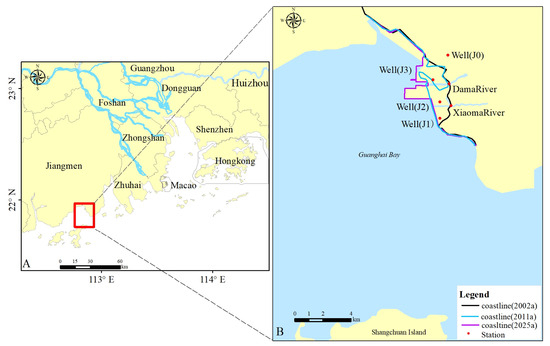
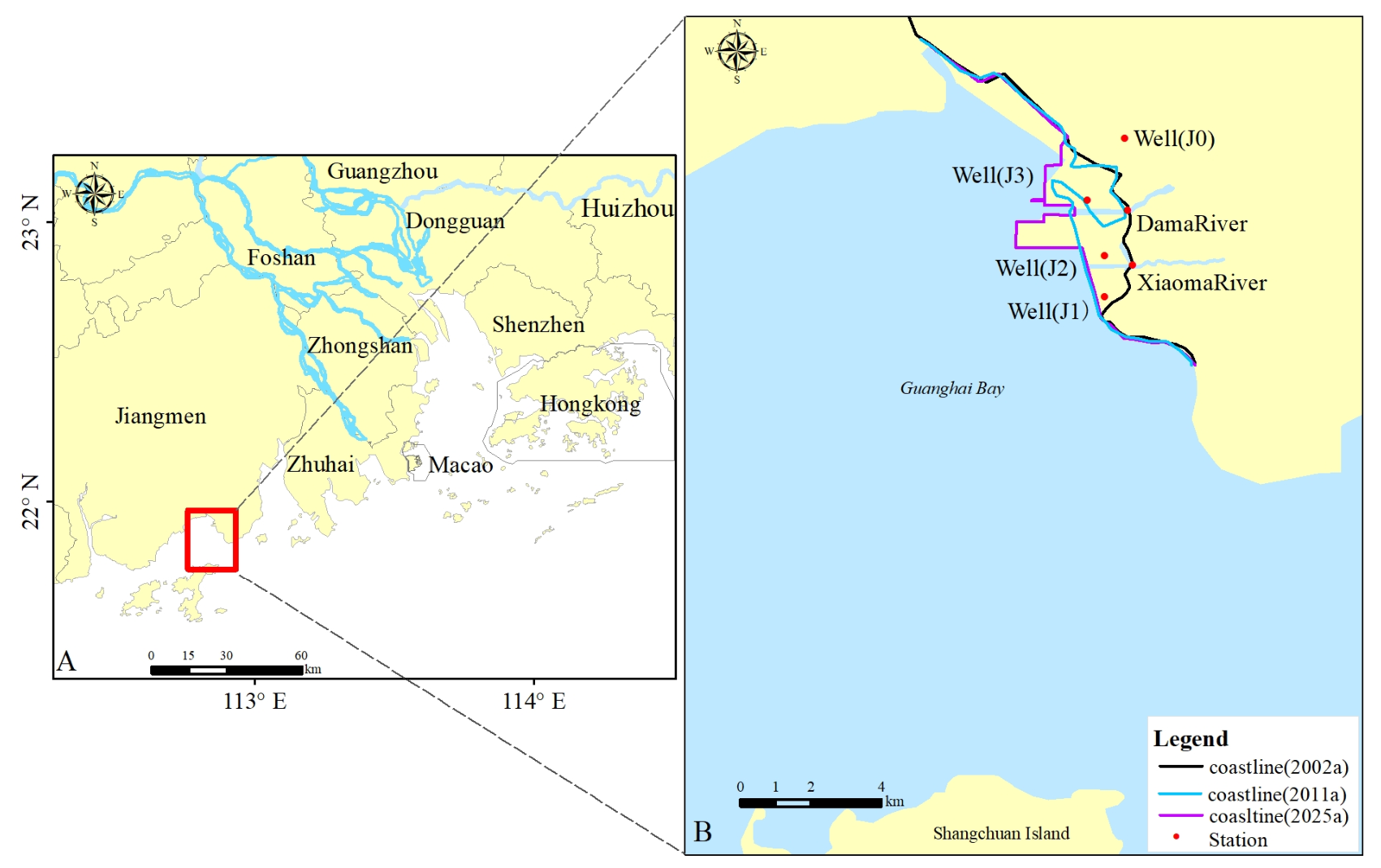
Six sampling sites were established in this study based on regional topography, surface water distribution, hydrogeological conditions, and the spatial extent of the reclamation influence (Figure 1). These included four groundwater monitoring wells (J0–J3) and two surface-water sites, Xiaoma River (XMH) and Dama River (DMH).
Figure 1.
Locations of the sampling sites in the Guanghai Bay reclamation area.
Control well J0 is located in Changsha Village, west of Chixi Town, and was originally constructed in the 1950s. Before the introduction of piped water supply, it served as a major local drinking-water source and is currently used only for daily cleaning and poultry farming. Owing to its greater distance from the adjacent tidal rivers and Guanghai Bay (3.6 km from XMH, 2.0 km from DMH, and 2.3 km from Guanghai Bay), J0 served as a regional background reference site with minimal direct influence from reclamation activities.
The three monitoring wells installed within the reclamation area were J1, J2, and J3. Wells J1–J3 are dedicated groundwater quality monitoring wells established within the reclamation area. J1 was commissioned in May 2008 and had been in operation for more than 11 years by the end of the monitoring period. It is the monitoring well closest to Guanghai Bay (0.3 km) and is surrounded by construction vehicle maintenance facilities. Well J2 was commissioned in May 2009 and had been in operation for more than 10 years; it is the well closest to the XMH tidal River (0.3 km). J3 was commissioned in November 2013 and had been in operation for more than 6 years; it is the well closest to the DMH tidal channel (0.3 km). The monitoring wells had total depths of 7.84 m (J1), 10.19 m (J2), and 7.67 m (J3). For comparison, the background well J0 had a total depth of 3.57 m. Well screens were installed near the base of the aquifer layers to represent groundwater conditions within the main permeable strata.
The aquifer materials associated with the four wells differ among sites. J1 is screened in a medium-sand aquifer, J2 in a coarse-sand aquifer, and J3 in a coarse sandy-gravel aquifer, whereas J0 represents a background groundwater setting with relatively finer-grained sediments. Estimated hydraulic conductivity and groundwater seepage velocity also differed among the four monitoring wells, ranging from 0.00223 to 0.00658 m/s and from 0.000857 to 0.00214 m/s, respectively (Table S1).
The two surface-water sampling sites, XMH and DMH, are two parallel tidal channels, approximately 1.5 km apart, both intersecting the reclamation area. Samples were collected from the middle reaches of each channel to ensure watershed representativeness while maintaining field accessibility.
Collectively, the six sites encompass groundwater monitoring locations both inside and outside the reclamation area, representing different spatial relationships among the wells, the tidal channels, and the bay. This configuration provides a basis for comparing microbial and environmental characteristics across contrasting hydrogeological settings within the reclaimed coastal system.
2.2.2. Sampling Period and Sample Collection
Sampling was conducted monthly from April 2016 to January 2020, yielding a total of 46 sampling campaigns. All samples were collected during low-tide periods to reduce short-term variability associated with tidal-stage differences and improve temporal and spatial comparability among sampling campaigns.
- Surface-water sampling
Surface water samples were collected in strict accordance with the Technical Specifications for Surface Water and Wastewater Monitoring (HJ/T 91–2002) [21]. Samples were collected at approximately 0.5 m below the water surface using sterile 500 mL sampling bottles to avoid surface scum interference and floating debris.
- Groundwater sampling
Groundwater sampling followed the Technical Specification for Groundwater Environmental Monitoring (HJ/T 164–2004) [22]. Shallow groundwater samples were collected after well purging. All four wells were constructed with cement casings, and no obvious casing deterioration was observed during the monitoring period. Prior to sampling, each monitoring well was purged by pumping a volume equivalent to three times the standing water volume to remove stagnant water. Sampling commenced only after the water-level fluctuations were less than 0.1 m, indicating hydraulic stabilization. The screened sections were positioned near the bottom of the aquifer and intersected the main water-bearing sandy intervals. Groundwater samples were collected by pumping into sterile sampling bottles from depths greater than 0.5 m below the groundwater table.
- Sample preservation and transport
Immediately after collection, all samples were stored at 4 °C in the dark and transported to the laboratory. Microbiological analyses were completed within 24 h to suppress microbial metabolic activity and preserve sample integrity.
2.2.3. Analytical Parameters and Methods
Microbial indicators and environmental variables were measured during each sampling campaign. All laboratory analyses were conducted at the South China Sea Ecological Center, Ministry of Natural Resources, Guangzhou, China. All analytical procedures were conducted in strict accordance with national standards or internationally accepted protocols.
- Microbial indicators
Four microbial indicators were selected to evaluate fecal pollution and overall microbial contamination: Fecal coliforms (FC), Escherichia coli (E. coli), total coliforms (TC), and total bacterial counts (TBC).
Fecal coliforms (FC) were quantified using Petrifilm™ Coliform Count Plates (3M, USA). One milliliter of each water sample was evenly distributed on the plates and incubated at 44.0 ± 0.5 °C for 24 ± 2 h to preferentially select thermotolerant coliform bacteria. After incubation, typical red colonies within the growth area were counted and expressed as colony-forming units (CFU/mL).
Escherichia coli (E. coli) was quantified using Petrifilm™ E. coli/Coliform Count Plates (3M, USA) [23]. One milliliter of the sample was evenly distributed on the plates and incubated at 37 ± 0.5 °C for 24 ± 2 h. Colonies exhibiting blue or dark-blue coloration with gas formation under UV (365 nm) illumination were counted as E. coli (CFU/mL).
Total coliforms (TC) were enumerated using Petrifilm™ Coliform Count Plates (3M, USA). One milliliter of the sample was inoculated onto each plate, evenly spread, and incubated at 37 ± 0.5 °C for 24 ± 2 h. Red to dark-red colonies with gas formation were recorded as TC (CFU/mL).
Total bacterial counts (TBC) were determined using Petrifilm™ Aerobic Count Plates (3M, USA). One milliliter of the sample was evenly spread on each plate and incubated at 37 ± 0.5 °C for 48 ± 2 h. All visible red colonies within the growth area were counted, excluding edge-touching colonies, and expressed as CFU/mL.
- Environmental variables
Environmental variables were analyzed to characterize physicochemical conditions influencing microbial indicators, encompassing physical parameters, chemical variables, heavy metals, and organic pollutants.
Physical parameters included water temperature (Tem, °C), measured using a mercury thermometer (precision ±0.1 °C); turbidity (Tur, NTU), determined colorimetrically using a UV-2150 (UNICO Instrument Co., Ltd., Shanghai, China); and total dissolved solids (TDS, ppm), measured in situ using a YSI EXO3 multiparameter analyzer (Xylem Analytics, Yellow Springs, OH, USA). All measurements were conducted in triplicate, with relative standard deviations (RSD) less than 5%.
Chemical parameters included salinity (‰), measured using a Guildline 8410A salinometer (Guildline Instruments Ltd., Smiths Falls, ON, Canada); dissolved oxygen (DO, %), determined with a YSI 550A-25 DO meter (Xylem Analytics, Yellow Springs, OH, USA); pH, measured potentiometrically using a PHBJ-260 (Qingdao Mingbo Environmental Technology Co., Ltd., Qingdao, China); and chemical oxygen demand (COD, mg/L), determined by the alkaline potassium permanganate method. Nitrate (NO3−–N), nitrite (NO2−–N), and ammonium (NH4+–N) were analyzed by flow injection analysis using a BDFIA-800 (Beijing Baode Instrument Co., Ltd., Beijing, China), with detection limits of 0.00060, 0.00072, and 0.00108 mg/L, respectively.
Heavy metals and organic pollutants were quantified after digestion with mixed nitric–perchloric acid (3:1, v/v). Arsenic (As), zinc (Zn), lead (Pb), copper (Cu), cadmium (Cd), and chromium (Cr) were measured by ICP-MS (Agilent 7900, Agilent Technologies, Santa Clara, CA, USA), with detection limits ≤ 0.01 μg/L; mercury (Hg) was measured by atomic fluorescence spectrometry (AFS-9560, Haiguang Instrument Co., Ltd., Beijing, China), with a detection limit of 0.007 μg/L. Polycyclic aromatic hydrocarbons (PAHs) were preconcentrated by solid-phase extraction and analyzed by GC-MS (Agilent 7890A, Agilent Technologies, Santa Clara, CA, USA), with detection limits ranging from 0.01 to 0.05 μg/L.
2.3. Data Treatment and Statistical Analysis
Microbial data exhibited skewed distributions; therefore, all microbial indicators were log10(x + 1) transformed prior to statistical analysis to improve normality and reduce the influence of extreme values [24].
Hierarchical cluster analysis was conducted using Python 3.14 (SciPy library) with 219 average linkage to identify similarities in microbial characteristics among sampling sites [25].
Pearson correlation analysis was performed using SPSS 28.0, with significance thresholds set at p < 0.05 and p < 0.01. This analysis was used to examine linear associations between microbial indicators and environmental variables and to establish a basis for subsequent multivariate analyses [26].
Before conducting the RDA, multicollinearity among environmental variables was evaluated using variance inflation factors (VIF). Variables with VIF values greater than 10 were excluded to avoid strong multicollinearity, and all variables retained in the final RDA models showed VIF values below this threshold. Redundancy analysis (RDA) was performed in R 4.4.2 to quantify the extent to which environmental variables explained the spatial distribution of microbial indicators [27]. Environmental variables included salinity, pH, COD, PAHs, nitrogen species, and heavy metals, and were selected based on their significant correlations with microbial indicators. Monte Carlo permutation tests (n = 999, α = 0.05) were used to evaluate the significance of explanatory variables. The first two RDA axes were used for interpretation because they accounted for most of the constrained variation. As RDA assumes linear relationships between response and explanatory variables, the results were interpreted in conjunction with site conditions and temporal patterns.
2.4. Quality Control and Quality Assurance (QC/QA)
Blank samples (sterile water) were included in each analytical batch (≤20 samples) to detect potential contamination. All samples were analyzed in triplicate, with RSD values maintained below 15%. Duplicate samples (≥10% per batch) were included, spiked recovery tests were conducted, yielding recovery rates from 80% to 130%. Relative deviations were ≤10% for concentrations > 1.0 μg/L and ≤20% for concentrations between 0.01 and 1.0 μg/L.
The detection limit of the Petrifilm™ enumeration method was approximately 1 CFU/mL under the applied plating conditions. Microbiological analyses were performed in triplicate, and sterile procedures were applied during sample handling and incubation. Blank control plates were periodically used to check potential contamination, and incubation conditions followed the manufacturer’s instructions.
Monthly sampling over 46 consecutive months provided a basis for examining spatial patterns and seasonal and interannual variability in microbial indicators within the surface water–groundwater system. All samples were collected during low tide to reduce tidal stage variability and improve comparability among sampling campaigns. It should be noted that this sampling design was not intended to resolve short-term fluctuations caused by tidal oscillations, rainfall events, or other high-frequency hydrodynamic processes.
3. Results
3.1. Microbial Characteristics of Surface Water and Groundwater
3.1.1. Site-Specific Differences in Microbial Indicators
The concentrations of four microbial indicators at six sampling sites are summarized in Table 1. Microbial indicators differed markedly among sampling sites and were generally higher in surface water than in groundwater, with FC in J2 being a notable exception. Clear differences were also observed among groundwater wells. J1 showed the highest mean total bacterial count (TBC) concentration (1340 CFU/mL), whereas J2 exhibited the highest mean FC concentration (692 CFU/mL). In contrast, J3 consistently showed the lowest microbial levels, with mean FC and total coliform (TC) concentrations of only 0.19 and 0.27 CFU/mL, respectively; E. coli was rarely detected, and the mean TBC was limited to 36 CFU/mL.
Table 1.
Concentrations of microbial indicators at different sampling stations.
Among the two surface-water sites, mean concentrations of all four microbial indicators were higher at XMH than at DMH. Mean FC, E. coli, TC, and TBC concentrations at XMH were 339, 158, 343, and 1264 CFU/mL, respectively, compared with 132, 57, 123, and 704 CFU/mL at DMH. Notably, E. coli and TC concentrations in surface water were markedly higher than those in most groundwater wells. The site-specific pattern was characterized by elevated microbial levels in surface water, distinct differences among ground-water wells, and a marked contrast between J1/J2 and J3.
3.1.2. Temporal Variation in Microbial Indicators
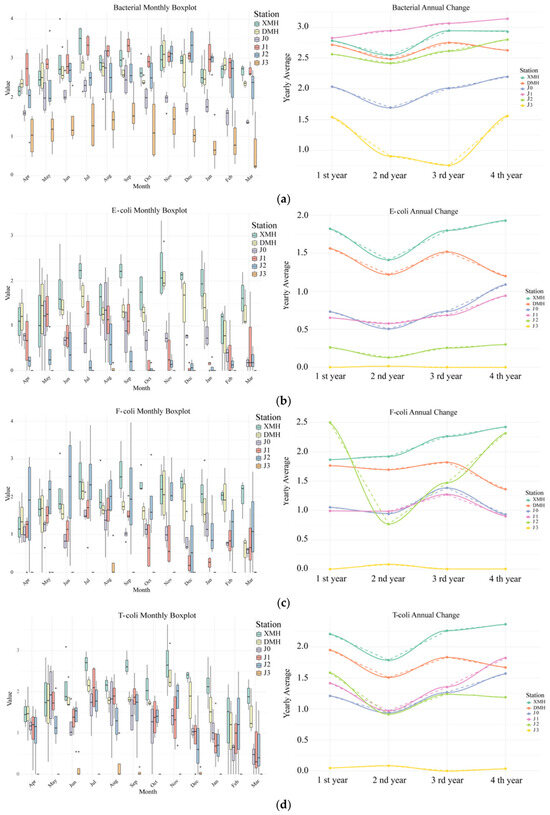
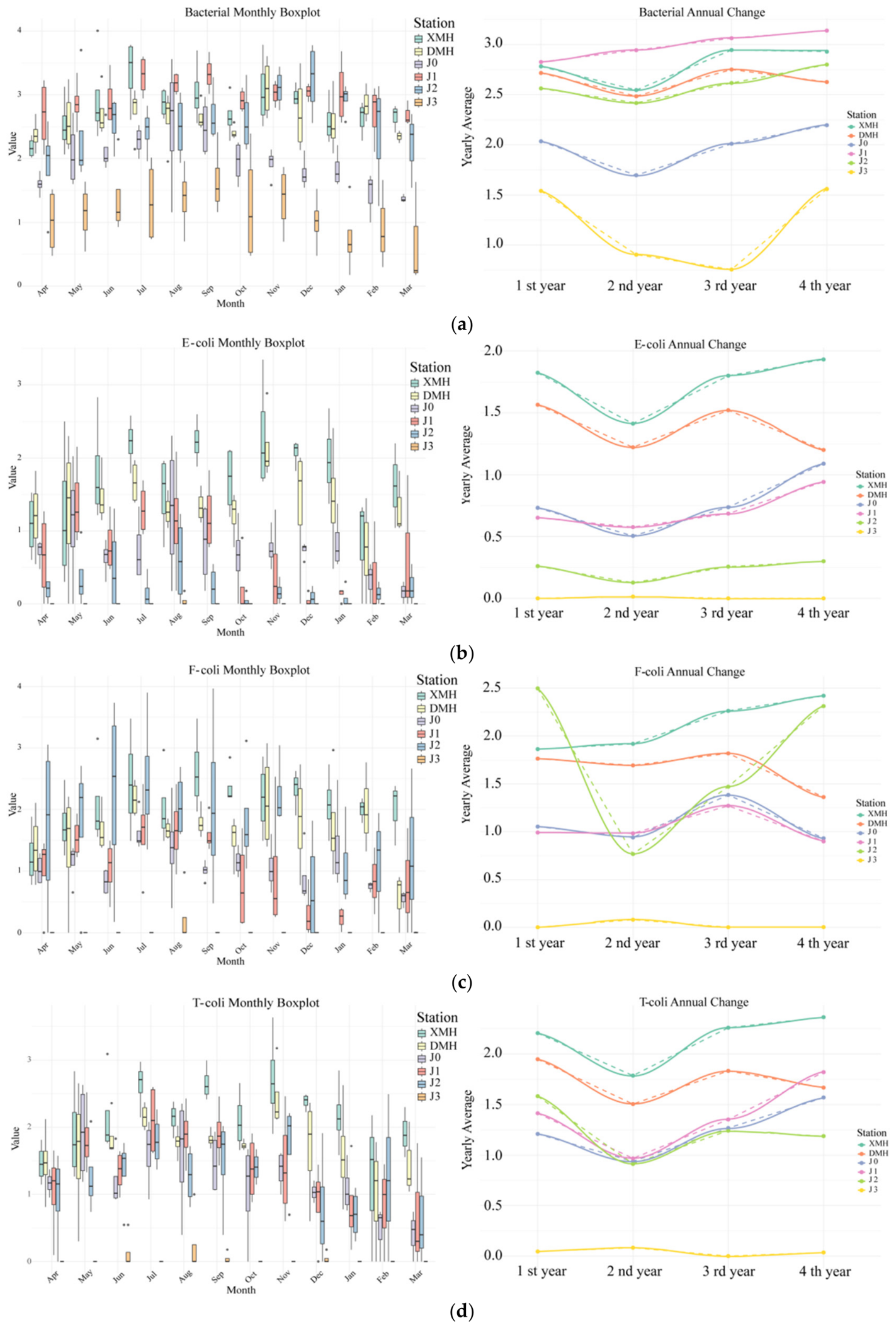
All four microbial indicators exhibited temporal variation over the 46-month monitoring period (Figure 2). Microbial concentrations were generally lower in winter and spring and higher in summer and autumn, although the timing and magnitude of peaks varied among indicators and sampling sites. At the annual scale, mean concentrations of the four indicators fluctuated across the monitoring period, with FC at XMH displaying particularly pronounced interannual variation. The fourth-year mean FC concentration reached 815.26 CFU/mL, markedly exceeding the value recorded during the previous three years. In addition, TBC remained at relatively high levels during the third and fourth years at XMH and in J0, J1, and J2, whereas E. coli and TC exhibited comparatively less consistent interannual trends.
Figure 2.
Temporal variation of four microbial indicators at the six sampling sites. (a) Monthly boxplots and annual changes in TBC; (b) Monthly boxplots and annual changes in E. coli; (c) Monthly boxplots and annual changes in FC; (d) Monthly boxplots and annual changes in TC.
Seasonal variation was also evident for all four indicators. FC and TBC tended to reach higher levels during summer, with the monthly mean FC peaking at 963 CFU/mL in September and TBC reaching its highest value of 3482 CFU/mL in July. By comparison, E. coli and TC generally remained elevated from summer through autumn, with peak values occurring slightly later in some months, most commonly in autumn. At both surface-water sites, FC and TC also exhibited secondary increases in spring, with concentrations higher than those in winter but lower than those in summer and autumn.
Temporal variability differed among sampling sites. XMH and J0 and J2 showed relatively large month-to-month and year-to-year fluctuations, whereas DMH varied within a narrower range and J3 remained comparatively low throughout most of the monitoring period. The overall temporal pattern was characterized by a common warm-season increase superimposed on clear site-specific differences in fluctuation amplitude.
3.1.3. Microbial Water Quality Status
Surface-water classification showed poorer microbial quality at XMH than at DMH (Table 2). Over the 46-month monitoring period, FC concentrations at XMH ranged from 5 to 2998 CFU/mL (mean: 339 CFU/mL), and 76.09% of observations were classified as below Class V. At DMH, FC concentrations ranged from non-detectable to 1185 CFU/mL (mean: 132 CFU/mL), and with 50.00% of observations below Class V. Microbial conditions were poorer at XMH than at DMH.
Table 2.
Classification of fecal coliform levels in surface water at the two sampling sites (%).
Mean E. coli concentrations in surface water, after conversion from CFU/mL to CFU/100 mL, were approximately 15,800 CFU/100 mL at XMH and 5700 CFU/100 mL at DMH. Both values substantially exceeded the U.S. Environmental Protection Agency (EPA) reference levels for freshwater recreational waters [28].
Groundwater classification showed that J3 had the best microbial quality among the four monitoring wells (Table 3). Mean TC and TBC concentrations in J3 were 0.27 CFU/mL and 36 CFU/mL, respectively; 91.12% of TC observations and 91.30% of TBC observations fell within Class I. By contrast, J0, J1, and J2 showed poorer microbial status. Mean TBC concentrations in these wells were 238, 1340, and 900 CFU/mL, respectively, and the proportions of Class V months for TBC were 4.35%, 54.35%, and 28.26%, respectively. For TC, the proportions of Class V months reached 95.56% in J0, 88.89% in J1, and 91.11% in J2. The groundwater classification results were consistent with the concentration patterns, highlighting a marked contrast between J3 and the other three wells.
Table 3.
Classification of total coliforms and total bacterial counts in groundwater (%).
According to international drinking-water guidelines issued by the World Health Organization and the U.S. Environmental Protection Agency (EPA), total coliforms should be absent from potable groundwater, with a guideline value of 0 CFU/100 mL, whereas total bacterial count is generally used as a descriptive indicator rather than a health-based compliance parameter [29,30]. In the present study, microbial concentrations were measured using Petrifilm™ plates and are reported as CFU/mL; therefore, the CFU/100 mL values cited here represent guideline benchmarks for reference rather than converted monitoring results. Over the 46-month monitoring period, TC remained detectable in J0, J1, and J2, and these wells did not meet the international non-detection benchmark for total coliforms. In contrast, J3 with near-zero TC levels most closely approached this benchmark. Mean TBC concentrations were highest in J1 (1340 CFU/mL) and J2 (900 CFU/mL), intermediate in J0 (238 CFU/mL), and lowest in J3 (36 CFU/mL). This pattern was consistent with the groundwater classification results based on the Chinese groundwater quality Standard (GB 14848–2017) [31]. These results highlight the value of long-term microbial monitoring for sustainable groundwater quality management in coastal reclamation regions.
3.2. Environmental Background Characteristics
Environmental conditions differed markedly among sampling sites (Supplementary Tables S2 and S3). Across all sampling sites, water temperature ranged from 16.4 to 32.7 °C, pH from 6.59 to 12.96, salinity from 0 to 23.67‰, and dissolved oxygen (DO) from 3.0 to 106%. Substantial physicochemical variation was observed between surface water and groundwater and among individual wells. Surface-water sites showed relatively high and variable salinity, whereas groundwater wells showed pronounced site-to-site differences in pH, TDS, DO, and turbidity. In particular, J3 showed high pH, TDS, and COD values together with low DO, while J1–J3 generally showed higher COD than the two surface-water sites. Among nutrient-related variables, nitrate was highest in J0, whereas COD was elevated in J1, J2, and especially J3; phosphate remained low across all sites. For heavy metals and PAHs, groundwater wells exhibited greater between-site variability than surface water. Mean Hg and As concentrations were generally higher in J1–J3 than in XMH and DMH, J2 showed relatively elevated As and Cu, along with moderately high Zn concentrations, and J3 was distinguished by the highest mean Ni and PAHs concentrations. Detailed values are provided in Supplementary Tables S2 and S3.
3.3. Statistical Analyses of Microbial Distribution Patterns and Environmental Relationships
3.3.1. Statistical Patterns of Microbial Distribution Among Sampling Sites
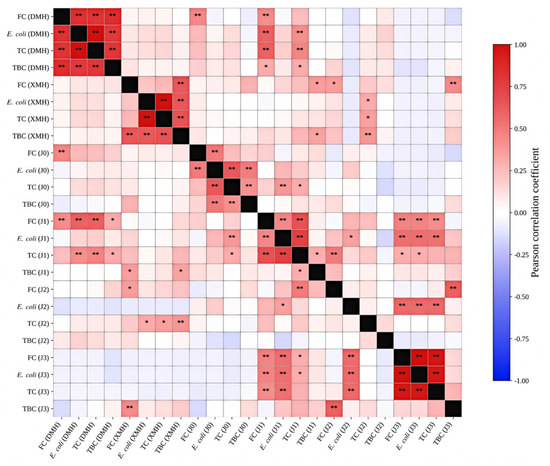
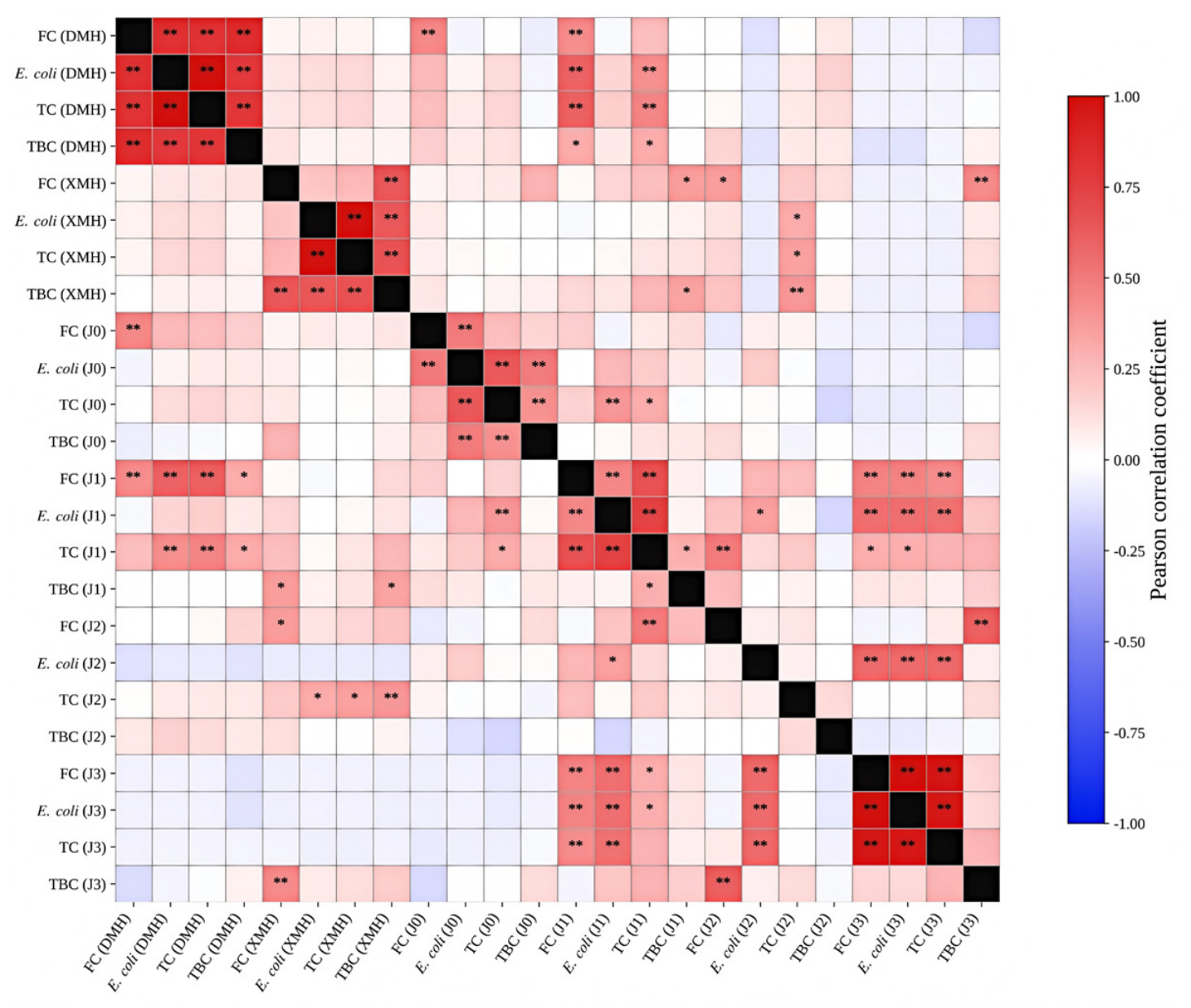
Pearson correlation analysis revealed clear differences in correlation strength among microbial indicators across sampling stations (Figure 3). Strong within-site correlations were observed, particularly at DMH and XMH, where FC, E. coli, and TC showed highly significant positive correlations. At DMH and XMH, E. coli and TC were strongly and significantly positively correlated, with correlation coefficients of 0.993 and 0.990, respectively (p < 0.01 for both). Strong within-site correlations were also observed in J1 and J0, especially between E. coli and TC. Cross-site correlations were fewer and generally weaker. The most prominent cross-site relationships included that between FC in J1 and TC in DMH (r = 0.594, p < 0.01) and that between TC in J2 and TBC in XMH (r = 0.378, p < 0.01), with significant cross-site correlations restricted to a limited number of station pairs.
Figure 3.
Pearson correlation matrix of microbial indicators among sampling stations. Note: * and ** denote significant (p < 0.05) and highly significant (p < 0.01) correlations, respectively).
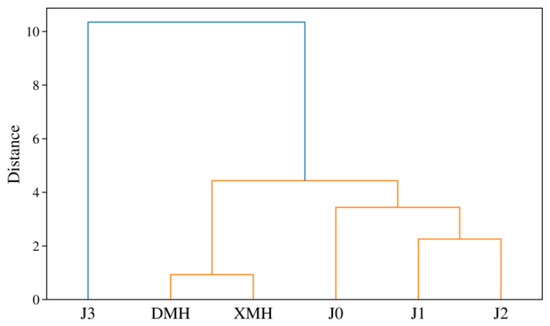
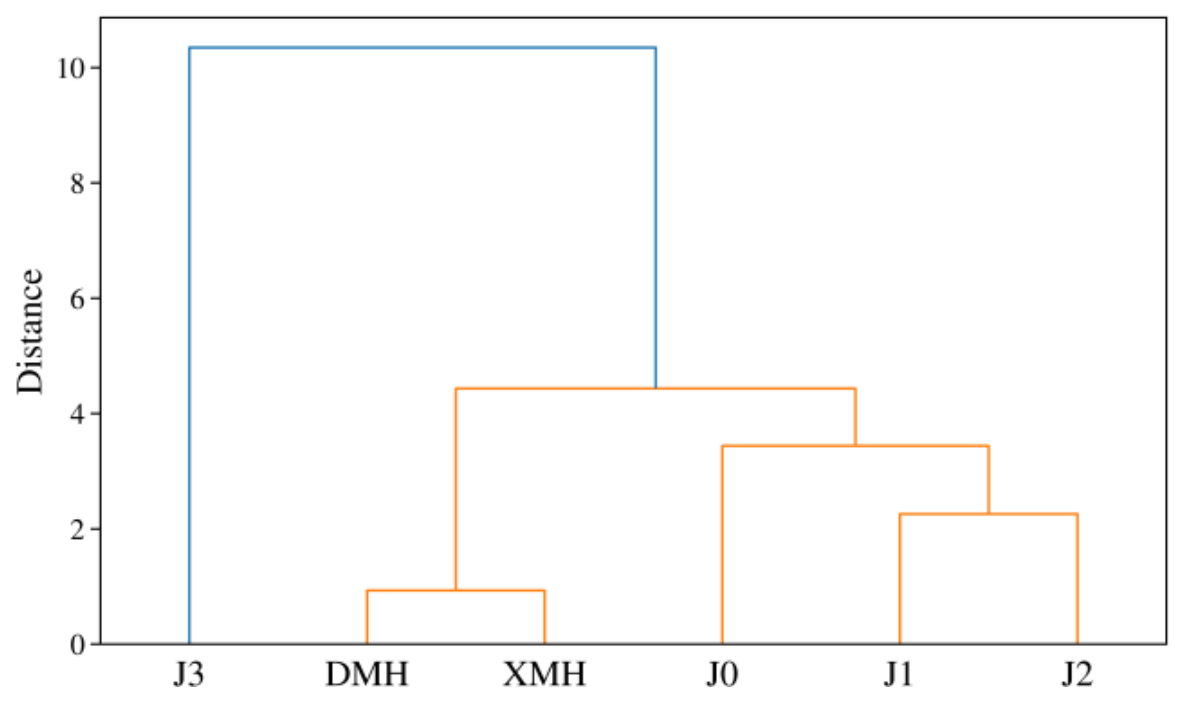
Hierarchical cluster analysis further revealed distinct grouping patterns among sampling stations (Figure 4). XMH and DMH formed the closest cluster, corresponding to the smallest linkage distance in the matrix (0.934). Among groundwater wells, J1 and J2 clustered first (distance = 2.259), and J0 subsequently joined this group (distance = 3.286–3.596). In contrast, J3 remained clearly separated from all other stations, merging with the remaining groups only at the largest linkage distance. The dendrogram thus distinguished three major groupings: a surface-water cluster (XMH–DMH), a groundwater cluster comprising J0–J2, and the isolated J3 well.
Figure 4.
Hierarchical cluster analysis of microbial indicators across sampling sites.
3.3.2. Statistical Relationships Between Microbial Indicators and Environmental Factors
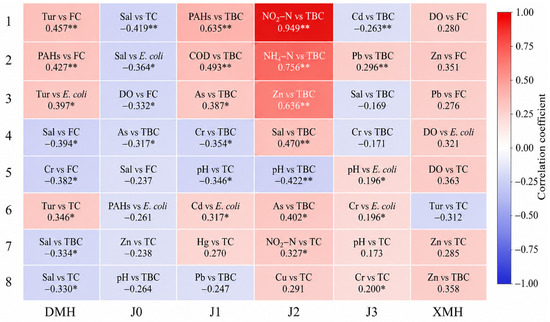
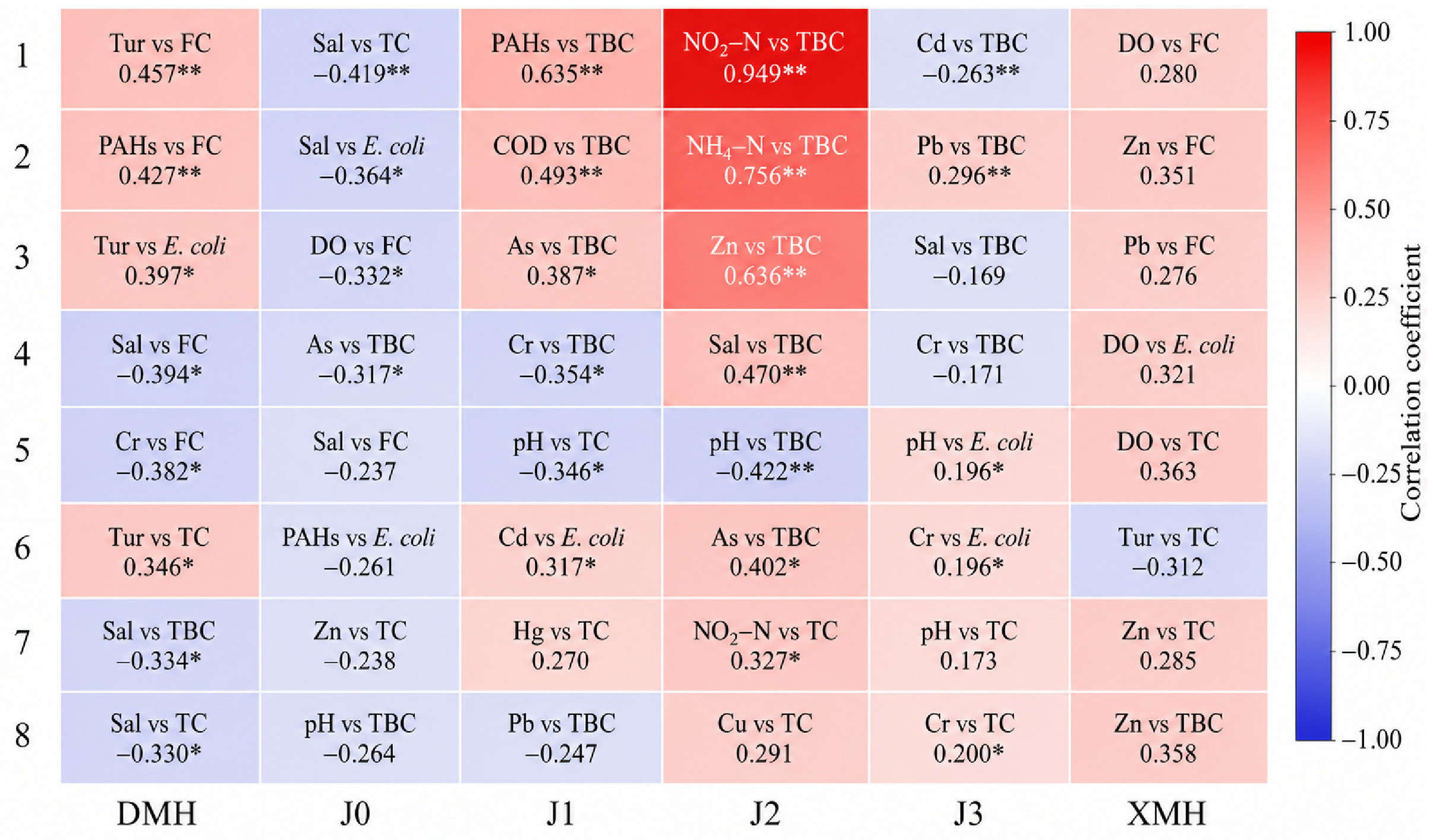
Pearson correlation analysis revealed site-specific relationships between microbial indicators and environmental variables (Figure 5). In DMH, FC was significantly positively correlated with turbidity and PAHs. In J0, several environmental variables showed negative correlations with TC, FC, or E. coli. In J1, total bacterial counts (TBC) were significantly positively correlated with PAHs, COD, and As. In J2, TBC showed significant positive correlations with salinity, NO2−–N, and NH4+–N. In J3, most correlations were comparatively weak, with only a limited number of significant associations. The strength and direction of correlations varied among sampling sites.
Figure 5.
Heatmap showing the eight strongest correlations between microbial indicators and environmental variables across different sampling stations. Note: Asterisks indicate statistically significant correlations (* for p < 0.05; ** for p < 0.01). Due to the large number of environmental variables, only the eight strongest correlations are shown.
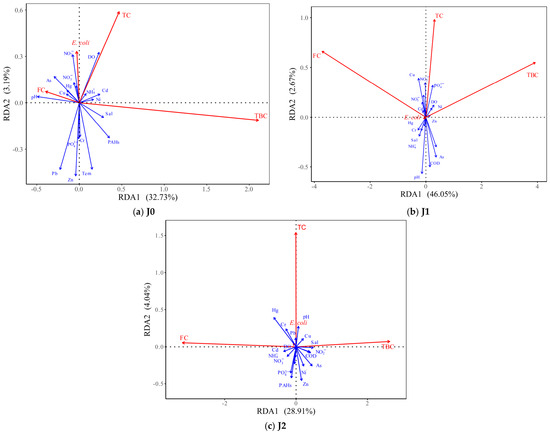
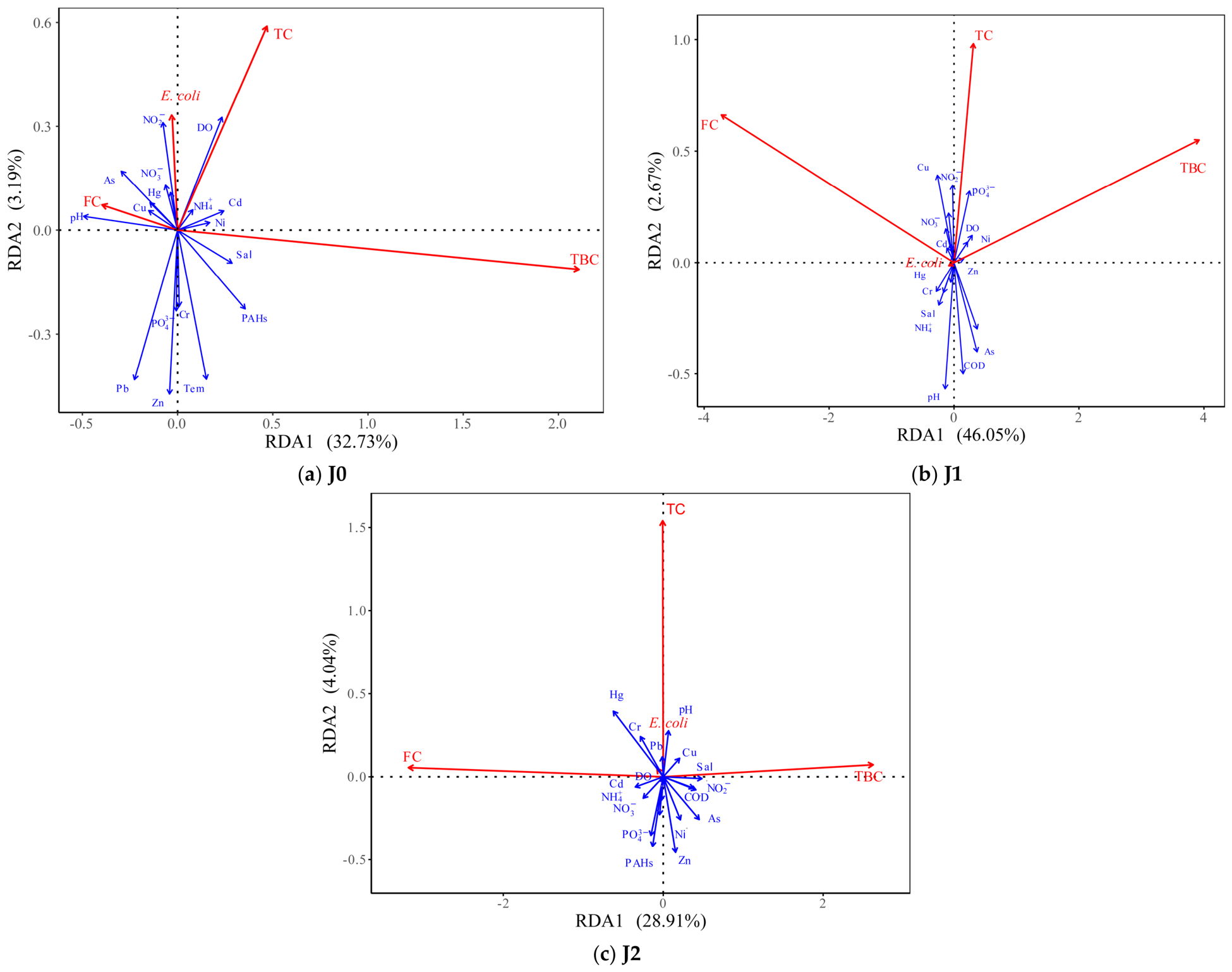
RDA ordinations further showed that relationships between microbial indicators and environmental factors differed among wells (Figure 6). In J0, the first two axes explained 35.92% of the total variation, with RDA1 and RDA2 accounting for 32.73% and 3.19%, respectively. Environmental vectors such as Pb, pH, Zn, temperature, and DO were distributed mainly along the first axis, whereas the microbial indicator vectors were clustered near the center of the ordination.
Figure 6.
Redundancy analysis (RDA) of relationships between microbial indicators and environmental factors in groundwater wells: (a) J0; (b) J1; and (c) J2. Note: Red arrows indicate microbial indicators, whereas blue arrows indicate environmental variables.
In J1, the first two axes explained 48.72% of the total variation, with 46.05% explained by RDA1 and 2.67% by RDA2. Compared with J0, the environmental vectors in J1 were more clearly separated along the first axis. The TC vector was oriented opposite to the pH, COD, and As vectors, whereas the other microbial indicator vectors were distributed closer to the center of the ordination.
In J2, the first two axes explained 32.95% of the total variation, with 28.91% explained by RDA1 and 4.04% by RDA2. The environmental vectors were distributed over a narrower range than in J0 and J1. The Hg vector was aligned mainly along the first ordination axis, whereas the microbial indicator vectors were distributed in different directions.
Across the three wells, most samples were concentrated near the origin, whereas several samples were displaced along RDA1 or RDA2 (Figure 6). RDA was not conducted for J3 due to the low detection frequency of microbial indicators.
4. Discussion
4.1. Characteristics of Microbial Indicators in Surface Water
Microbial indicators remained at relatively high levels at both surface-water sites throughout the monitoring period, with consistently higher concentrations at XMH than at DMH (Table 1; Figure 2). This contrast suggests that site-specific controls influenced microbial conditions in surface water.
This between-site difference is consistent with the hydrodynamic contrasts measured in the two rivers (Table S1). At XMH, flow velocity ranged from 0.20 to 0.40 m/s and discharge from 0.50 to 3.00 m3/s, whereas at DMH, flow velocity ranged from 0.25 to 0.46 m/s and discharge from 2.00 to 8.00 m3/s. The higher flow velocity and discharge in DMH are consistent with stronger dilution and flushing capacity, which may have reduced the persistence and accumulation of microorganisms in the water column.
The elevated microbial levels observed at both surface-water sites are also consistent with previous studies showing that stormflow events can transport substantial microbial loads from agricultural catchments to receiving streams [32], and that fecal-indicator concentrations in surface waters are often associated with livestock intensity, land-use practices, and anthropogenic disturbance in coastal watersheds [33,34]. Although the sources of microbial contamination were not directly identified in the present study, these findings provide useful context for interpreting overall microbial conditions in surface water. Surface-water microbial indicators also exhibited a consistent seasonal pattern, with generally lower levels during winter and spring and higher levels in summer and autumn (Figure 2). Temperature is known to affect the persistence of E. coli in aquatic environments [35], while rainfall and runoff can substantially influence fecal-indicator concentrations in rivers [36]. The seasonal elevation observed during the warm and wet season in the present study is consistent with these broader patterns.
Over the 46-month monitoring period, interannual fluctuations in surface-water microbial indicators did not show a clear temporal correspondence with the progression of reclamation construction (Figure 2). The available monitoring record does not clearly separate potential reclamation-related influences from background variability, and the observed variation in surface-water microbial indicators therefore cannot be clearly linked to reclamation activities alone.
4.2. Characteristics of Groundwater Microbial Indicators Across Monitoring Wells
Compared with surface water, microbial indicators in groundwater exhibited greater variability among monitoring wells. As shown in Figure 1, the wells differ in their positions relative to nearby rivers, Guanghai Bay, and the reclamation area, and the observed variability was consistent with differences in hydrogeological setting, groundwater flow conditions, proximity to nearby surface-water bodies, and local disturbance history.
Microbial contamination was more pronounced in J1 and J2 than in the other ground-water wells, with Class V total coliforms comprising 88.89% and 91.11% of samples, respectively. Correlation analysis showed a highly significant positive association between FC in J1 and TC in DMH. A significant positive association was also observed between TC in J2 and TBC in XMH (Figure 3), suggesting that microbial patterns in J1 and J2 were not independent of conditions at the adjacent surface-water sites.
Hydraulic analysis showed clear differences in groundwater transport conditions among wells. J1 had a moderate permeability coefficient (0.00223 m/s) and a relatively low groundwater flow velocity (0.00112 m/s), whereas J2 had a higher permeability coefficient (0.00401 m/s) and a faster groundwater flow velocity (0.00182 m/s). This contrast suggests a stronger role of advective transport in J2, whereas the relatively lower groundwater flow velocity in J1 may favor longer local water retention.
The two wells also differ in their positions relative to nearby water bodies: J1 is closest to Guanghai Bay (0.3 km), whereas J2 is closest to XMH (0.3 km). Considered together with the different correlation patterns shown in Figure 3, these observations suggest that J1 and J2 were unlikely to have been associated with identical environmental controls. Reclamation-related geomorphic changes and local hydrological disturbances may have altered groundwater transport and residence conditions around these monitoring wells, although direct stratigraphic and hydraulic evidence for this interpretation is currently lacking.
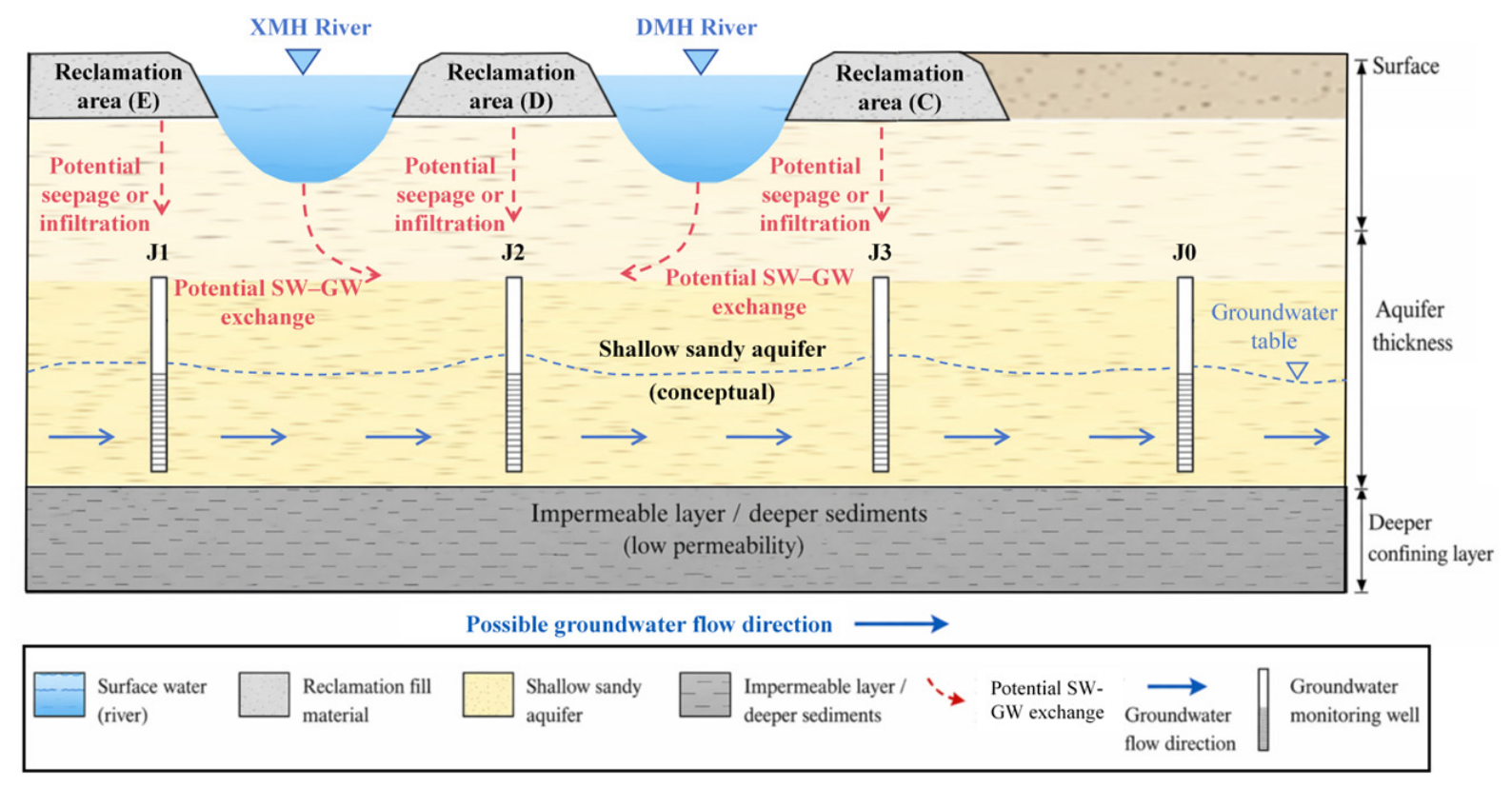
To illustrate the hydrogeological context of the study area, a conceptual schematic model of potential surface water–groundwater (SW–GW) exchanges is presented in Figure 7. The model summarizes the relative positions of tidal channels, reclaimed land, shallow aquifers, and groundwater monitoring wells (J0–J3), and illustrates possible conceptual pathways of groundwater flow and SW–GW exchange in the coastal reclamation environment. Because direct hydraulic measurements, such as tracer tests or groundwater gradient monitoring, were not available in the present monitoring program, the schematic model represents a conceptual interpretation based on site characteristics, spatial relationships among monitoring sites, and statistical correspondences observed in the monitoring data rather than direct confirmation of specific groundwater flow pathways.
Figure 7.
Conceptual schematic model illustrating the hydrogeological context and potential surface water–groundwater (SW–GW) exchanges in the Guanghai Bay reclamation area. Note: This conceptual schematic is based on site characteristics and monitoring well locations and is not intended to represent a quantitative groundwater flow model.
Environmental associations also differed between J1 and J2 (Figure 5). TBC in J1 was significantly positively correlated with As, COD, and PAHs, whereas TBC in J2 was significantly associated with salinity, NO2−–N, and NH4+–N. These differences suggest that microbial occurrence in J1 and J2 was influenced by different combinations of environmental conditions and groundwater transport characteristics. In addition, all four monitoring wells were constructed with cement casings; no obvious casing deterioration was observed during the monitoring period, and pumping conditions remained stable, indicating that casing-related structural differences were unlikely to be a major source of the observed inter-well variation.
Microbial indicators in J3 remained at persistently low levels throughout the monitoring period, making it a significant low-concentration zone in the groundwater system. Hydraulic analysis showed that J3 had the highest permeability coefficient (0.00658 m/s) and the fastest groundwater flow velocity (0.00214 m/s) among the four wells, conditions that would typically favor solute transport. However, J3 also showed strong alkalinity and high salinity, with pH ranging from 9.55 to 12.96, and salinity and TDS were substantially higher than those in other monitoring wells (Table S2). This combination indicates that hydrodynamic conditions alone cannot explain the groundwater microbial pattern at this site. The persistently low microbial abundance in J3 was more likely governed by the extreme physicochemical environment, probably related to the combined influence of alkaline material leaching and seawater intrusion, as reported in previous studies [37,38].
J0, used here as a background reference well, showed a contrasting pattern of relatively low TBC but high TC occurrence. J0 is farther from both the bay and nearby rivers than the other wells and had moderate permeability (0.00277 m/s) and a relatively low groundwater flow velocity (0.000857 m/s), suggesting relatively limited direct influence from nearby surface water. The surrounding cohesive soils may also have restricted the vertical migration of particulate microorganisms, which may help explain the low TBC. In contrast, the proportion of Class V total coliforms at J0 reached 95.56%, indicating marked coliform contamination and microbiological impairment at this site [39]. Field observations identified small-scale livestock breeding near J0, suggesting a plausible local source of groundwater microbial contamination at this site, consistent with previous studies identifying livestock activities as important sources of fecal contamination [39]. This result indicates that even outside the area more directly affected by reclamation, local background pollution sources may still play an important role in shaping groundwater microbial conditions.
4.3. Correlation Patterns of Microbial Indicators Within the SW–GW System
Correlation and clustering analyses revealed clear differences in how microbial indicators were related across sampling sites within the SW–GW system. The strongest coherence was observed between the two surface-water sites. Highly significant positive correlations (p < 0.01) were detected among the four microbial indicators at both XMH and DMH, and cluster analysis placed the two sites close together within the same branch (Figure 4). This consistency likely reflects similarities in pollution background and environmental setting between the two rivers, which are geographically proximate and likely subject to similar surrounding pollution pressures and climatic-hydrological forcing, which may help explain their comparable microbial behavior.
A different relationship pattern was observed between surface water and selected groundwater wells. In the correlation analysis, DMH was associated with J1, whereas XMH was associated with J2 (Figure 3). The XMH–J2 correspondence is broadly consistent with their relative spatial positions, while the DMH–J1 association suggests that site proximity alone may not fully account for the observed pattern. The two wells also differ in hydrogeological characteristics, particularly in permeability coefficient, groundwater flow velocity, and their positions relative to nearby water bodies. These differences may have influenced the degree to which each well reflected adjacent surface-water conditions, suggesting that the observed surface water–groundwater correspondences may be governed by different controls at the two wells. Although these correlations do not by themselves demonstrate hydraulic exchange or microbial transport pathways, they suggest that microbial variation in J1 and J2 may have been linked to conditions at the adjacent surface-water sites. Similar patterns of variability in groundwater microbial communities associated with environmental drivers have also been reported in other aquifer systems [40,41,42]. Further evaluation would require additional hydrological evidence and dedicated field-based or quantitative approaches for characterizing groundwater–surface water interactions.
J3 showed a contrasting pattern. Microbial indicators in J3 remained persistently low and showed little correlation with those at the other sampling sites, and J3 formed a distinct cluster in the analysis (Figure 4). This relative isolation is consistent with the distinctive hydrochemical conditions at J3, where elevated alkalinity and salinity were likely associated with the relatively low microbial abundance observed at this site. Although J3 was characterized by high permeability and relatively rapid groundwater flow, microbial abundance remained persistently low, suggesting that physicochemical inhibition, rather than transport limitation alone, was likely the dominant influence on microbial occurrence at this site.
The correlation and clustering results suggest three broad relationship patterns within the SW–GW system: strong coherence within surface water, selective correspondences between surface-water and groundwater sites, and the relative isolation of J3. The processes underlying these patterns, however, remain unresolved.
4.4. Common and Site-Specific Effects of Environmental Factors on Microbial Distribution
Broad physicochemical conditions were relevant across the groundwater system, but the relationships between microbial indicators and environmental variables were not uniform among wells (Figure 6). The RDA patterns indicate site-specific associations between groundwater microbial indicators and environmental variables rather than a single common driver. Although the explained variance of the first two RDA axes was moderate (<50% in some wells), the ordination results still reveal site-specific associations between microbial indicators and environmental variables. Therefore, the RDA results should be interpreted as statistical associations between microbial indicators and environmental variables rather than direct evidence of causal processes.
At J0, the relatively dispersed environmental vectors and limited separation among microbial indicators indicate weakly differentiated controls. At J1, the clearer separation of environmental vectors and the opposite orientation of TC relative to pH, COD, and As suggest a more structured set of local environmental relationships. At J2, the comparatively simple ordination pattern, with Hg aligned along the main gradient, indicates a narrower range of dominant associations. Elevated salinity and pH in some wells may be associated with the combined influence of saline water input and alkaline material leaching [37,38]. In coastal reclamation environments, cement-containing fill materials may release alkaline components during weathering and leaching processes, which can increase groundwater pH.
Pearson correlation analysis further revealed additional site-specific relationships between microbial indicators and environmental variables. In J1, microbial occurrence appeared to be associated with indicators of organic contamination and trace-element-related hydrochemical conditions, suggesting that microbial occurrence at this site may reflect the combined influence of organic contamination and trace-element-related hydrochemical conditions. Similar shifts in groundwater microbial communities under contaminant-affected hydrochemical conditions have also been reported in previous studies [43,44]. At J2, TBC was significantly positively associated with salinity, NO2−–N and NH4+–N, indicating that local hydrochemical conditions and nitrogen enrichment may be associated with microbial occurrence under site-specific groundwater conditions, as nitrogen availability is known to regulate microbial processes in groundwater systems [45]. These contrasting patterns indicate that environmental influences on groundwater microorganisms were spatially differentiated rather than uniform across wells.
J3 represented a more extreme case. As most microbial indicators in J3 were below detection limits, interpretation of this well is limited, and RDA was not performed for this site (Figure 6). The persistently low microbial abundance in J3, together with the extreme alkalinity and salinity of J3, suggests that physicochemical stress was an important control on microbial occurrence [37,38]. However, the bulk microbial indicators used in this study provide limited mechanistic resolution. Whether heavy metals exert selective inhibition, whether microorganisms develop tolerance, and whether multiple contaminants acted synergistically or migrated together remain questions to be addressed using community-level or process-based approaches.
These results suggest that groundwater microbial distribution reflected both broad physicochemical background conditions and well-specific environmental associations. No single environmental factor explained microbial patterns across all wells; rather, the dominant relationships varied by site, while nutrients, organic matter, trace elements, and physicochemical conditions showed localized associations with microbial occurrence.
Together, these observations support a differentiated view of environmental controls on groundwater microorganisms and suggest that microbial variability in reclaimed coastal groundwater systems may reflect localized hydrochemical and hydrological conditions rather than a single uniform environmental gradient. At the same time, the results indicate that indicator-based monitoring alone remains insufficient to resolve the detailed mechanisms involved.
4.5. Exploratory Framework of Ecological Risk Patterns Associated with Reclamation
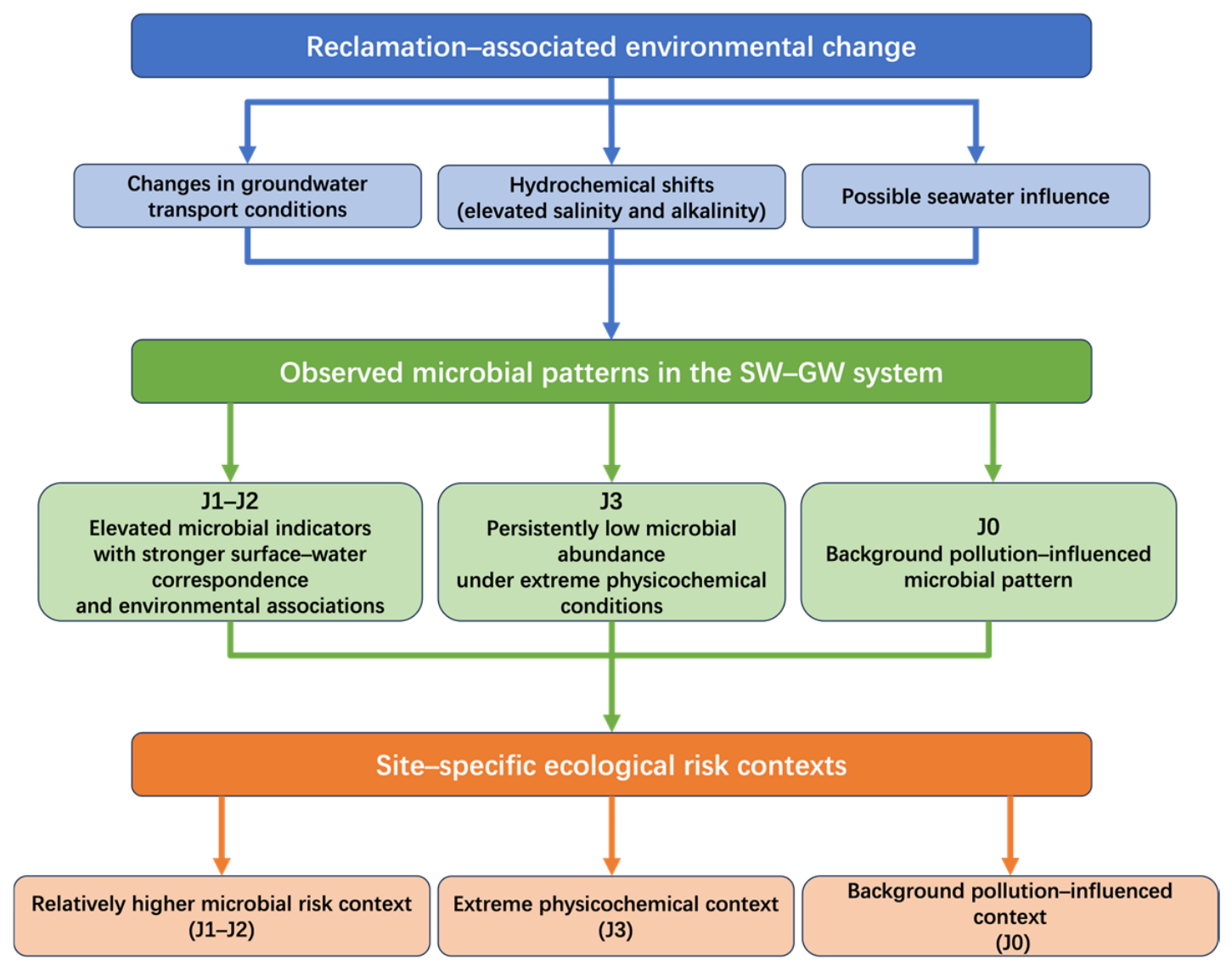
A conceptual framework summarizing reclamation-associated environmental change, observed microbial patterns, and site-specific ecological risk contexts in the surface water–groundwater (SW–GW) system is presented in Figure 8. The observed site differences suggest that reclamation may have influenced microbial distribution through associated changes in groundwater transport and hydrochemical conditions. Within the scope of the present study, this pattern can be interpreted as an exploratory sequence in which alterations in groundwater transport and hydrochemistry were followed by microbial response.
Figure 8.
Conceptual framework summarizing the relationships among microbial indicators, environmental factors, and reclamation influences.
J1 and J2 may be considered as relatively higher-risk sites within the present study area, as they exhibited elevated microbial indicators along with stronger correspondences to nearby surface-water sites and local environmental variables. J3 represented a more extreme physicochemical setting, where high salinity and alkalinity appeared to suppress microbial occurrence despite relatively high permeability and groundwater flow velocity. In contrast, J0 can be interpreted as a background pollution-influenced site, where long-term non-reclamation sources may have contributed to groundwater microbial impairment.
These categories summarize the observed site patterns from a management perspective rather than defining fixed or universally applicable risk classes. The framework remains exploratory and specific to the present study area, particularly given the limited number of groundwater wells and the absence of direct hydraulic, tracer, and microbial community evidence. Further evaluation would require denser spatial sampling, ground-water level monitoring, tracer-based verification, and community-level microbial analyses. In this context, groundwater microbial indicators provide sensitive information on microbiological water quality and potential contamination sources. More broadly, biological response indicators at higher trophic levels, such as fish-based bioindicators, have also been used to reflect hydrochemical variability and ecosystem-level responses to water quality conditions [46]. Integrating microbial monitoring with broader biological indicators may provide a more comprehensive assessment of ecological conditions in coastal water systems. Although derived from a single reclamation setting, this framework provides a conceptual reference for interpreting how microbial variability, hydrochemical heterogeneity, and site-specific risk patterns may be linked in other reclaimed coastal environments.
4.6. Implications for Monitoring and Risk Management
The results provide several implications for monitoring and risk management in coastal reclamation areas, although these should be interpreted in the context of a single case study with limited spatial coverage.
For sites represented by J1 and J2, where microbial indicators were relatively elevated and associations with nearby surface-water sites were stronger, the results suggest that management attention should focus on the potential linkage between local surface-water quality and groundwater microbial conditions. In such settings, integrated monitoring of surface water and groundwater may be particularly important, along with close attention to domestic wastewater and agricultural non-point source inputs in adjacent areas.
For conditions represented by J3, the findings highlight the importance of tracking physicochemical extremes, particularly elevated salinity and alkalinity, in addition to microbial indicators alone. In similar settings, long-term monitoring may be useful for determining whether persistent hydrochemical stress continues to constrain groundwater microbial occurrence and whether such conditions remain spatially localized. For conditions represented by J0, the results indicate that local background pollution sources may remain important even outside the area more directly associated with reclamation. This suggests that microbial risk management in coastal reclamation settings should not focus exclusively on engineering-disturbed zones, but should also consider surrounding areas that may be affected by long-term local contamination.
More broadly, the present case suggests that monitoring strategies in reclamation areas may be more effective when differentiated according to local hydrochemical conditions, proximity to surface-water bodies, and well-specific microbial patterns, rather than being applied as a single uniform scheme. The feasibility, scale, and effectiveness of any specific intervention would nonetheless require additional technical, practical, and governance assessment. The long-term observational framework adopted in this study may also provide a practical reference for designing integrated microbial monitoring strategies in other coastal reclamation areas characterized by strong surface water–groundwater interactions.
5. Conclusions
Based on 46 months of monthly monitoring and multivariate statistical analyses, this study demonstrated clear spatial and temporal variability in microbial indicators within the SW–GW system of the Guanghai Bay reclamation area. In surface water, microbial pollution was consistently higher in the Xiaoma River than in the Dama River, with generally higher levels in summer and autumn and lower levels in winter and spring.
Groundwater microbial conditions differed markedly among wells. J1 and J2 showed relatively elevated contamination levels, whereas J3 maintained persistently low microbial abundance under high-salinity and high-alkalinity conditions, and J0 reflected the continued influence of local background pollution sources. Cross-site statistical relationships indicated strong coherence within surface water, selective correspondences between J1 and DMH and between J2 and XMH, and the relative isolation of J3. Associations between microbial indicators and environmental variables were also site-specific.
These findings indicate that groundwater microbial patterns in the study area were shaped by multiple factors rather than a single common driver. Differences among sites suggest that reclamation may be associated with variations in groundwater microbial distribution, potentially linked to differences in groundwater transport conditions and hydrochemical environments. Ongoing background anthropogenic pressures also appear to play an important role in shaping microbial patterns. As these interpretations are derived mainly from long-term monitoring data and statistical relationships, the specific pathways and mechanisms require further verification. Nevertheless, the present study provides relatively rare long-term observational evidence of microbial variability, differentiated SW–GW relationships, and site-specific environmental associations within a coastal reclamation system. These results provide useful reference information for sustainable groundwater monitoring and management in similar coastal environments.
Supplementary Materials
The following supporting information can be downloaded at: https://www.mdpi.com/article/10.3390/su18115618/s1, Table S1: Hydrodynamic parameters of Xiaoma River (XMH) and Dama River (DMH), and hydrogeological parameters of the monitoring wells in the study area; Table S2: Concentrations of physicochemical parameters and nutrients at each sampling site; Table S3: Concentrations of heavy metals and PAHs at each sampling site.
Author Contributions
Conceptualization, W.T.; Methodology, H.W. and G.W.; Software, C.L.; Formal analysis, X.P. and J.Y.; Investigation, H.W., J.Y. and S.L.; Resources, H.W. and W.T.; Data curation, H.W., G.W., X.P., W.Y. and W.T.; Writing—original draft preparation, H.W. and G.W.; Writing—review and editing, X.P., J.Y. and W.T.; Visualization, G.W., W.Y. and S.L.; Project administration, W.T.; Funding acquisition, C.L. All authors have read and agreed to the published version of the manuscript.
Funding
This research was funded by Guangdong Basic and Applied Basic Research Foundation, grant number 2022B1515130001.
Data Availability Statement
The original contributions presented in this study are included in the article/Supplementary Material. Further inquiries can be directed to the corresponding author.
Conflicts of Interest
The authors declare no conflict of interest.
References
- Subraelu, P.; Ebraheem, A.A.; Sherif, M.; Sefelnasr, A.; Yagoub, M.M.; Rao, K.N. Land in water: The study of land reclamation and artificial islands formation in the UAE coastal zone: A remote sensing and GIS perspective. Land 2022, 11, 2024. [Google Scholar] [CrossRef]
- Chee, S.Y.; Tan, M.L.; Tew, Y.L.; Sim, Y.K.; Yee, J.C.; Chong, A.K.M. Between the devil and the deep blue sea: Trends, drivers, and impacts of coastal reclamation in Malaysia and way forward. Sci. Total Environ. 2023, 858, 159889. [Google Scholar] [CrossRef] [PubMed]
- Sengupta, D.; Choi, Y.R.; Tian, B.; Brown, S.; Meadows, M.; Hackney, C.R.; Banerjee, A.; Li, Y.; Chen, R.; Zhou, Y. Mapping 21st century global coastal land reclamation. Earth’s Future 2023, 11, e2022EF002927. [Google Scholar] [CrossRef]
- Xu, N.; Gong, P. Significant coastline changes in China during 1991–2015 tracked by Landsat data. Sci. Bull. 2018, 63, 883–886. [Google Scholar] [CrossRef] [PubMed]
- Chen, S.R.; Shen, T.Y.; Wang, J.B.; Shi, Z.; Gou, A. Evolution and driving factors of the reclamation in Shenzhen from 1979 to 2020. Mar. Geol. Front. 2025, 41, 43–53. [Google Scholar]
- Van Maren, D.S.; Schrijvershof, R.A.; Beemster, J.; Zhu, C.; Xie, D.; Zhou, Z.; Colina Alonso, A.; Hoitink, A.J.F. Land reclamation impacts on tidal landscape evolution. Rev. Geophys. 2025, 63, e2024RG000860. [Google Scholar] [CrossRef]
- Scherpereel, C.; Alosairi, Y.; Lambrechts, J.; Hanert, E. Hydrodynamic impacts of bridge construction and land reclamation on water residence time and flushing processes in Kuwait Bay. Mar. Pollut. Bull. 2025, 214, 117716. [Google Scholar] [CrossRef] [PubMed]
- Shen, C.; Fan, Y.; Wang, X.; Song, W.; Li, L.; Lu, C. Effects of land reclamation on a subterranean estuary. Water Resour. Res. 2022, 58, e2022WR032164. [Google Scholar] [CrossRef]
- Bao, X.W.; Qiao, L.L. Hydrodynamic Impact Assessment of Reclamation Planning in the Bays of Fujian Province; Science Press: Beijing, China, 2008. (In Chinese) [Google Scholar]
- Zeng, X.M.; Guan, W.B.; Pan, C. Cumulative influence of long term reclamation on hydrodynamics in the Xiangshangang Bay. J. Mar. Sci. 2011, 1, 73–83. [Google Scholar]
- Liu, M.; Xi, X.H.; Lei, L.Y.; Zhang, X.; Bi, Y.P. The effects of coastal reclamation on hydrodynamics in Jinzhou Bay. J. Dalian Ocean Univ. 2013, 28, 110–114. [Google Scholar]
- Guo, H.; Jiao, J.J. Impact of coastal land reclamation on ground water level and the sea water interface. Groundwater 2007, 45, 362–367. [Google Scholar] [CrossRef]
- Kim, R.H.; Kim, J.H.; Ryu, J.S.; Koh, D.-C. Hydrogeochemical characteristics of groundwater influenced by reclamation, seawater intrusion, and land use in the coastal area of Yeonggwang, Korea. Geosci. J. 2019, 23, 603–619. [Google Scholar] [CrossRef]
- Kim, K.; Samaddar, S.; Chatterjee, P.; Krishnamoorthy, R.; Jeon, S.; Sa, T. Structural and functional responses of microbial community with respect to salinity levels in a coastal reclamation land. Appl. Soil Ecol. 2019, 137, 96–105. [Google Scholar] [CrossRef]
- Glamore, W.; Rayner, D.; Ruprecht, J.; Sadat-Noori, M.; Khojasteh, D. Eco-hydrology as a driver for tidal restoration: Observations from a Ramsar wetland in eastern Australia. PLoS ONE 2021, 16, e0254701. [Google Scholar] [CrossRef]
- Chen, K.; Jiao, J.J. Metal concentrations and mobility in marine sediment and groundwater in coastal reclamation areas: A case study in Shenzhen, China. Environ. Pollut. 2008, 151, 576–584. [Google Scholar] [CrossRef]
- Xiong, G.; Chen, G.; Wu, J.; Fu, T.; Yang, Y.; Xu, X.; Zhu, X.; Yu, H.; Liu, S.; Gao, M.; et al. Seawater intrusion-retreat processes and groundwater evolution in intruded coastal aquifers with land reclamation: A case study of Eastern Jiangsu, China. Lithosphere 2022, 2021, 1308487. [Google Scholar] [CrossRef]
- Herbert, E.R.; Boon, P.; Burgin, A.J.; Neubauer, S.C.; Franklin, R.B.; Ardón, M.; Hopfensperger, K.N.; Lamers, L.P.M.; Gell, P. A global perspective on wetland salinization: Ecological consequences of a growing threat to freshwater wetlands. Ecosphere 2015, 6, 206. [Google Scholar] [CrossRef]
- Jiao, J.J.; Nandy, S.; Li, H. Analytical studies on the impact of land reclamation on ground water flow. Groundwater 2001, 39, 912–920. [Google Scholar] [CrossRef]
- Saxena, G.; Bharagava, R.N.; Kaithwas, G.; Raj, A. Microbial indicators, pathogens and methods for their monitoring in water environment. J. Water Health 2015, 13, 319–339. [Google Scholar] [CrossRef] [PubMed]
- HJ/T 91-2002; Technical Specification for Surface Water and Wastewater Monitoring. China Environmental Science Press: Beijing, China, 2002.
- HJ/T 164-2004; Technical Specification for Groundwater Environmental Monitoring. China Environmental Science Press: Beijing, China, 2004.
- 3M Company. Petrifilm™ E. coli/Coliform Count Plates Instruction Manual; 3M Microbiology: St. Paul, MN, USA, 2018. [Google Scholar]
- Kay, D.; Crowther, J.; Stapleton, C.M.; Wyer, M.D.; Fewtrell, L.; Edwards, A.; Francis, C.A.; McDonald, A.T.; Watkins, J.; Wilkinson, J. Faecal indicator organism concentrations in sewage and treated effluents. Water Res. 2008, 42, 442–454. [Google Scholar] [CrossRef]
- Lee, H.; Kim, H.K.; Noh, H.J.; Byun, Y.J.; Chung, H.-M.; Kim, J.-I. Source identification and assessment of heavy metal contamination in urban soils based on cluster analysis and multiple pollution indices. J. Soils Sediments 2021, 21, 1947–1961. [Google Scholar] [CrossRef]
- Tao, W.; Li, H.; Peng, X.; Zhang, W.; Lou, Q.; Gong, J.; Ye, J. Characteristics of Heavy Metals in Seawater and Sediments from Daya Bay (South China): Environmental Fates, Source Apportionment and Ecological Risks. Sustainability 2021, 13, 10237. [Google Scholar] [CrossRef]
- Yang, C.; Zeng, Z.; Zhang, H.; Gao, D.; Wang, Y.; He, G.; Liu, Y.; Wang, Y.; Du, X. Distribution of sediment microbial communities and their relationship with surrounding environmental factors in a typical rural river, Southwest China. Environ. Sci. Pollut. Res. 2022, 29, 84206–84225. [Google Scholar] [CrossRef]
- U.S. Environmental Protection Agency. Recreational Water Quality Criteria; Office of Water, U.S. Environmental Protection Agency: Washington, DC, USA, 2012.
- World Health Organization. Guidelines for Drinking-Water Quality, 4th ed.; World Health Organization: Geneva, Switzerland, 2017. [Google Scholar]
- U.S. Environmental Protection Agency. Revised Total Coliform Rule and Total Coliform Rule; U.S. Environmental Protection Agency: Washington, DC, USA, 2013.
- GB/T 14848-2017; Standard for Groundwater Quality. Standards Press of China: Beijing, China, 2017.
- Davies-Colley, R.J.; Nagels, J.W.; Lydiard, E. Stormflow-dominated loads of faecal pollution from an intensively dairy-farmed catchment. Water Sci. Technol. 2008, 57, 1519–1523. [Google Scholar] [CrossRef] [PubMed]
- Crowther, J.; Kay, D.; Wyer, M.D. Faecal-indicator concentrations in waters draining lowland pastoral catchments in the UK: Relationships with land use and farming practices. Water Res. 2002, 36, 1725–1734. [Google Scholar] [CrossRef]
- Mallin, M.A.; Williams, K.E.; Esham, E.C.; Lowe, R.P. Effect of human development on bacteriological water quality in coastal water-sheds. Ecol. Appl. 2000, 10, 1047–1056. [Google Scholar] [CrossRef]
- Blaustein, R.A.; Pachepsky, Y.; Hill, R.L.; Shelton, D.R. Escherichia coli survival in waters: Temperature dependence. Water Res. 2013, 47, 569–578. [Google Scholar] [CrossRef]
- Islam, M.M.M.; Hofstra, N.; Islam, M.A. The impact of environmental variables on faecal indicator bacteria in the Betna River Basin, Bangladesh. Environ. Process. 2017, 4, 319–332. [Google Scholar] [CrossRef]
- Sampathkumar, B.; Khachatourians, G.G.; Korber, D.R. High pH during trisodium phosphate treatment causes membrane damage and destruction of Salmonella enterica serovar Enteritidis. Appl. Environ. Microbiol. 2003, 69, 122–129. [Google Scholar] [CrossRef]
- Cole, M.B.; Jones, M.V.; Holyoak, C. The effect of pH, salt concentration and temperature on the survival and growth of Listeria monocytogenes. J. Appl. Microbiol. 1990, 69, 63–72. [Google Scholar] [CrossRef]
- Zarić, G.; Cocoli, S.; Šarčević, D.; Vještica, S.; Prodanović, R.; Puvača, N.; Carić, M. Escherichia coli as microbiological quality water indicator: A high importance for human and animal health. J. Hell. Vet. Med. Soc. 2023, 74, 6117–6124. [Google Scholar] [CrossRef]
- Knobloch, S.; Klonowski, A.M.; Tómasdóttir, S.; Kristjánsson, B.R.; Guðmundsson, S.; Marteinsson, V.Þ. Microbial intrusion and seasonal dynamics in the groundwater microbiome of a porous basaltic rock aquifer used as municipal water reservoir. FEMS Microbiol. Ecol. 2021, 97, fiab014. [Google Scholar] [CrossRef]
- Tripathi, M.; Yadav, P.K.; Chahar, B.R.; Dietrich, P. A review on groundwater–surface water interaction highlighting the significance of streambed and aquifer properties on the exchanging flux. Environ. Earth Sci. 2021, 80, 604. [Google Scholar] [CrossRef]
- Griebler, C.; Lueders, T. Microbial biodiversity in groundwater ecosystems. Freshw. Biol. 2009, 54, 649–677. [Google Scholar] [CrossRef]
- Griebler, C.; Avramov, M. Groundwater ecosystem services: A review. Freshw. Sci. 2015, 34, 355–367. [Google Scholar] [CrossRef]
- Hemme, C.L.; Tu, Q.; Shi, Z.; Qin, Y.; Gao, W.; Deng, Y.; Van Nostrand, J.D.; Wu, L.; He, Z.; Chain, P.S.G.; et al. Comparative metagenomics reveals impact of contaminants on groundwater microbiomes. Front. Microbiol. 2015, 6, 1205. [Google Scholar] [CrossRef] [PubMed]
- Reed, D.W.; Smith, J.M.; Francis, C.A.; Fujita, Y. Responses of ammonia-oxidizing bacterial and archaeal populations to organic nitrogen amendments in low-nutrient groundwater. Appl. Environ. Microbiol. 2010, 76, 2517–2523. [Google Scholar] [CrossRef]
- Zakharov, V.M.; Holoborodko, A.; Kovalchuk, N.; Klymenko, M.; Hrytsenko, O.; Bondar, O. Dominant Meristic Traits of Fish and Their Association with Habitat Water Quality Parameters: A Case Study. Fishes 2025, 10, 561. [Google Scholar] [CrossRef]

Disclaimer/Publisher’s Note: The statements, opinions and data contained in all publications are solely those of the individual author(s) and contributor(s) and not of MDPI and/or the editor(s). MDPI and/or the editor(s) disclaim responsibility for any injury to people or property resulting from any ideas, methods, instructions or products referred to in the content. |
© 2026 by the authors. Licensee MDPI, Basel, Switzerland. This article is an open access article distributed under the terms and conditions of the Creative Commons Attribution (CC BY) license.