


Abstract
To maximize profits without sacrificing quality, the concept of sustainable construction must be adopted across a project’s whole lifespan. Although adopting the idea of passive design in developing countries is incomplete, these studies have focused on the reasons for doing so. In contrast, there is limited evidence to completely analyze the influence of integrating passive design on the project sustainable success (PSS) of projects throughout their existence. This study focuses on the hurdles to passive design adoption in Pakistani building projects. It evaluates the impact of overcoming passive design (PD) adoption barriers on project sustainability success (PSS) during the duration of the project. Therefore, a more comprehensive literature assessment is required for conceptual model construction. Using a survey assessment instrument, Structural Equation Modeling (SEM) was constructed (i.e., a questionnaire). A total of 156 construction experts in Pakistan provided information. The result of the model demonstrated that the elimination of PD implementation obstacles had a moderate to high impact on PSS throughout the building structure’s lifetime. These results provide the foundation for legislation in a number of Asian nations about the efficient completion of projects via the removal of obstacles for the use of passive design. Similarly, the adoption of passive design will increase the success of the construction project.
1. Introduction
As a result of climate change, there is an increasing need for passive climatic design, and architects must create comfortable structures with little energy use and minimal environmental effect. Existing structures in locations with a hot climate do not function well, necessitating the deployment of energy-intensive mechanical systems to provide a living, pleasant environment. The goal of climatically responsive design is to modify the environment such that it is always inside or as near to the comfort zone as feasible [1].
E. Li et al. (2013) described sustainable design as the creation of energy-efficient, healthy, pleasant, adaptable, and long-lasting structures [2]. Chen et al. (2015) highlighted that climatic architecture has become a worry for many architects, and when most of them realize the value of working with the environment and not against it, the word will be renamed architecture [3].
The local climate and renewable energy challenges are seldom considered in contemporary Pakistan’s architecture, and these topics are overlooked and hardly explored. Whereas Pakistan’s vernacular architecture offers passive design solutions for reduced energy usage and creates buildings that are in tune with the local environment, Ameur et al. (2020) verified that present Pakistan’s design prioritizes aesthetics above consideration of local climatic conditions, and that structures employ bricks with a high thermal mass value and wide windows, which increases the thermal energy consumption outside the building [4]. They said that architects are moving away from basic vernacular design, which is characterized by high energy usage and a culture of upkeep [1].
Heat waves have a significantly greater effect in metropolitan areas due to the worldwide increase in average temperature as a result of environmental change [4]. Many man-made buildings in cities, for instance, take longer to cool down at night than their natural counterparts, which might have negative effects on people’s health. As a result, it might need more energy to chill the environment [5]. According to Booth et al. (2021), the solution to this problem is urban passive design building, which utilizes the sun and wind for heating and cooling while decreasing unwanted heat input and loss via orientation, thermal mass, insulation, and glass [6]. It predicted heat loss and gain, all of which may help lessen the severity of UHI’s effects in densely populated areas [7]. Passive design is known to be significant for handling water demand and also making the construction aesthetic. It is effectively indicated that the technology can help in creating a positive impact on the overall construction sector [8]. Variables such as environmental context, employed design type, and management style affect the extent to which passive design may be advantageous [9]. Samodra (2017) indicated there were no benefits to a deterministic design’s use of passive design. As an example, it was suggested that PD may reduce energy use by 33–66% [10].
Concerning sustainable development characteristics, PD offers high installation potential, whether for refortified or new constructions. PD may be applied to a much larger surface area and involve less technical complexity [11]. This makes it a viable alternative to existing structures [12]. Despite the facts, there are several obstacles to PD implementation. According to the available literature, detailed assessments that scrutinize PD implementation difficulties are lacking [13]. Furthermore, the existing results of studies on this issue have limited scopes and have addressed constraints that may not be applicable in other scenarios, such as climatic and governmental settings [14]. Without admitting that there is a problem, no solution can be found. Consequently, analyzing these obstacles might establish the groundwork for future study on how to resolve these challenges, and is ultimately a step toward increasing the use of PDs. The existing research gap can only be fulfilled by a new study that is specifically focused on identifying the barriers of implementing passive design in Pakistan.
With this in mind, we present the following research questions and their corresponding goals, which were developed from scratch for this study based on the existing literature: What are the current roadblocks to PD’s implementation? Given the Pakistani setting, how may these obstacles be exhaustively identified and the most critical ones reserved? Consequently, this research applied the combined SEM-PLS approach, resulting in a comprehensive list of obstacles [15]. Following an explanation of the research issue to be addressed and the resulting aim, the following portions of this article were separated into three subsections. In Section 2, the literature review is summarized. It refers to the PD installation research obstacles and identifies the potential barriers. The study’s methodology and its applications are detailed in depth in Section 3. The Section 4 elaborates and interprets the study results. In Section 5, conclusions, limits, and future research directions are presented.
2. Related Studies
2.1. Overall Sustainable Success
In contrast, it is difficult to modernize the project’s tactical goals and methodologies for sustainability. Environmental, economic, and public health aspects should be explored in a balanced manner. The expansion of sustainability principles in the construction sector has led to the investigation of persuasion tactics for incorporating this view into general operational settings [16]. Sustainability can be enhanced with the adoption of passive design interventions, but it is always dependent on the ability of construction businesses to implement such interventions [17]. The effect of PD on building projects may be correlated with three crucial sustainability measurements: environmental, economic, and public safety [18].
2.2. Economic
The economic advantages are one of the most important aspects supporting PD use in sustainable building practices. Due to its consistent function in estimating the cost of risk management, it is one of the most widespread applications. The estimation of project costs and required finances may be segmented into several stages for planning and budgeting purposes. Four-dimensional models are commonly known to be significant for the construction industry in the modern world [19]. This constitutes a more professional approach in construction, as it is also important for adopting new technologies. This approach may aid the scheme in being stable and lucrative, but it will not be taken seriously as a methodology until it takes environmental advantages into account and helps advance the idea of quality of life via tactics that prioritize human well-being and communal value [20]. Future prediction, for example, stimulates discovery and fosters collaboration among concerned parties; therefore, PD acceptance of other project components may play a crucial role in economic feasibility. Additionally, it might speed up the building process, save costs, and simplify administration [21,22].
2.3. Environmental
In PD, the necessary information for performance financing is established during the proposal phase, while engineers may use PD to assess construction performance as early as the planning stages. Therefore, they can swiftly analyze proposal alternatives and make the optimal selection to reflect an eco-friendly and sustainable design. The value of sustainability’s social component may be gauged by looking at how it contributes to sustainability’s other goals: higher living standards, more comfort, and better health [23,24].
Similarly, several types of software, such as Ecotec, Revit, and Autodesk, include conventional tools that analyze data and evaluate the sustainability qualities of a project [25]. Similarly, they assist architects and engineers in monitoring sustainable energy use and maximizing resource utilization [26,27]. These software tools may include data to accomplish a sustainable project by analyzing solar routes, shading strategies, and the heating, cooling, and orientation of buildings.
2.4. Safety Management
Sustainable safety management occurs “when formal and informal processes, structures, and relationships actively support the capabilities of current and future generations to maintain healthy, safe communities”. Equality, diversity, connectivity, democracy, and a high standard of living are hallmarks of thriving, long-lasting communities. The value of sustainability’s social component may be gauged by looking at how it contributes to sustainability’s other goals: higher living standards, more comfort, and better health [28].
Regarding sustainability, safety principles have emphasized a variety of hypotheses and explanations. Regarding their contact with PD, they may be divided into two groups: dependent and autonomous characteristics [29,30]. There are additional qualitative aspects of independent safety and sustainability that may be measured via various dimensions, and PD may offer such characteristics of the environment, such as energy performance and lightning [31]. According to research, boosting productivity and health may be achieved by fortifying certain ecological infrastructure via the use of workable project design [32,33]. However, hazardous conditions may lead to health problems such as pain, stress, and absenteeism [33,34]. Therefore, the global effects of such assessments benefit the whole community. Additionally, certain methods of feasible design may increase the public worth of human life. For instance, it might promote energy efficiency, lessen exposure to toxins associated with the building’s operation, and improve the natural environment.
2.5. The Association Concerning PD Implementation on Project Sustainable Success (PSS)
One of the primary goals of passive climatic design is to optimize the built environment by making use of natural elements, particularly weather patterns. By minimizing the demand for fossil fuels to heat and cool buildings and the requirement for energy to support lights, passive solar heating and passive ventilation both contribute to the creation of sustainable structures [2,35]. An increasing number of books, studies, and research centers are highlighting the value of passive design in creating comfortable indoor environments without the need for additional heating and cooling systems [36].
Climate-responsive design is an example of a key component of the “environmental framework” being created to lessen negative effects on the environment and improve people’s quality of life. Natural ventilation, which makes use of nighttime air and the evaporative action of water such as fountains and pools, is the easiest method to keep a home cool, as discussed by Puri and Khanna (2017) and Randjelovic et al. (2021) [14,16]. Similarly, Q. Zhang and Yu Lau (2017) suggested that there are two ways to create thermal comfort within a building: first, via the use of passive controls, such as shielding windows from the sun, installing night vents, and making use of thermal mass [37]. Mechanical cooling may be utilized to take heat from within and release it outside, while dense and high heat capacity interior walls and ceilings limit peaks and preserve the lower temperature reached with night ventilation.
Project Sustainability Success (PSS) refers to the degree to which a building project achieves its sustainability goals and objectives throughout its entire lifespan, from construction to operation and eventual decommissioning [38]. The ultimate goal of PSS is to create buildings that are not only environmentally responsible but also economically viable and socially equitable, while meeting the needs of the present without compromising the ability of future generations to meet their own needs [39].
This study addresses a research gap in understanding the correlation between overcoming obstacles to implementing passive design (PD) and achieving sustainability in building construction. While previous research has identified barriers to PD implementation, there is limited empirical evidence on how overcoming these barriers can lead to successful sustainable building outcomes [40,41]. This lack of literature hinders our understanding of the factors that contribute to a project’s sustainability success [42,43]. To bridge this gap, this study aims to provide empirical proof of the relationship between overcoming obstacles to PD implementation and achieving sustainable building goals. The objective is to inform industry, government, and academia about the importance of overcoming barriers to passive design strategies in promoting sustainable building practices and achieving sustainability objectives.
There are obstacles to PD acceptance, much as there are to the adoption of other UGI technologies used in buildings, such as PD [44,45]. It is widely believed that the increased complexity of installing PD is one of the biggest obstacles to their widespread use. Another major limitation to PD’s wider applicability is the money needed to keep running maintenance. Planning processes in modern construction can be enhanced with the implementation of modern interventions such as passive designing. This is because the technique for maintaining PD is often viewed as complex [46,47]. A further barrier to PD acceptance is consciousness of energy conservation; however, new technologies have eliminated this problem. Two further factors that prevent widespread use of PD are excessive cost and compliance with climatic conditions. Temperature, humidity, and wind are the three most important criteria in developing PD design [48,49]. On the other hand, proper climatic attributes are involved with floral growth. To that end, scarcity of methodological instruments and standardization is considered a significant barrier to the installation of PD [50].
It is the primary factor that determines whether a customer will embrace PD. While PD is seen as a sustainable alternative to traditional construction materials, its broad adoption is hampered by a lack of rules and incentives specified by knowledgeable policymakers (such as saleable and residential factors). It is a major challenge in developing countries, since stakeholders in the construction industry tend to prioritize short-term gains over long-term strategic ones when it comes to executing and structuring projects [51]. Investors are hesitant to use PD because they are unfamiliar with the technology, which is similar to the resistance to using UGI techniques [52]. This is due in part to the fact that PD is still a relatively new technology, and it highlights the need for government inducements to sway investors’ perceptions when weighing the merits of traditional methods against those of PD [53]. Other factors that have been identified as impediments to PD adoption include a lack of knowledge and skill among engineers and a lack of local access to operational apparatuses. Workers may be put in harm’s way because of the intricate methods required for a functional PD application, i.e., the necessity for elaborate auxiliary structures [54].
The overall research suggests that PD adoption has been understudied. In addition, the scattered nature of the published research on the uptake of PD includes a wide range of unique articles and papers. It seems that not enough study has been conducted; it is difficult to obtain large-scale studies that discover and analyze existing obstructions. Therefore, it is reasonable and seems incontestable to perform more research in this fruitful field [55]. These investigations will pave the path for the widespread implementation of green building practices in the construction industry and strengthen ties between politicians and significant investors [10,56]. Consequently, based on the preliminary literature research, the hypotheses of this study are as shown in Figure 1: H1—there is a substantial association between overcoming obstacles to the adoption of PD and PSS.
Figure 1.
Hypothesis indicating the relationship among obstacles to the adoption of passive design construction and project sustainability success.
3. Methodology
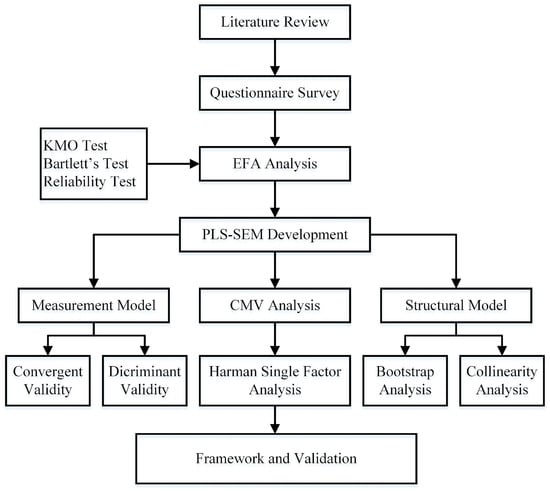
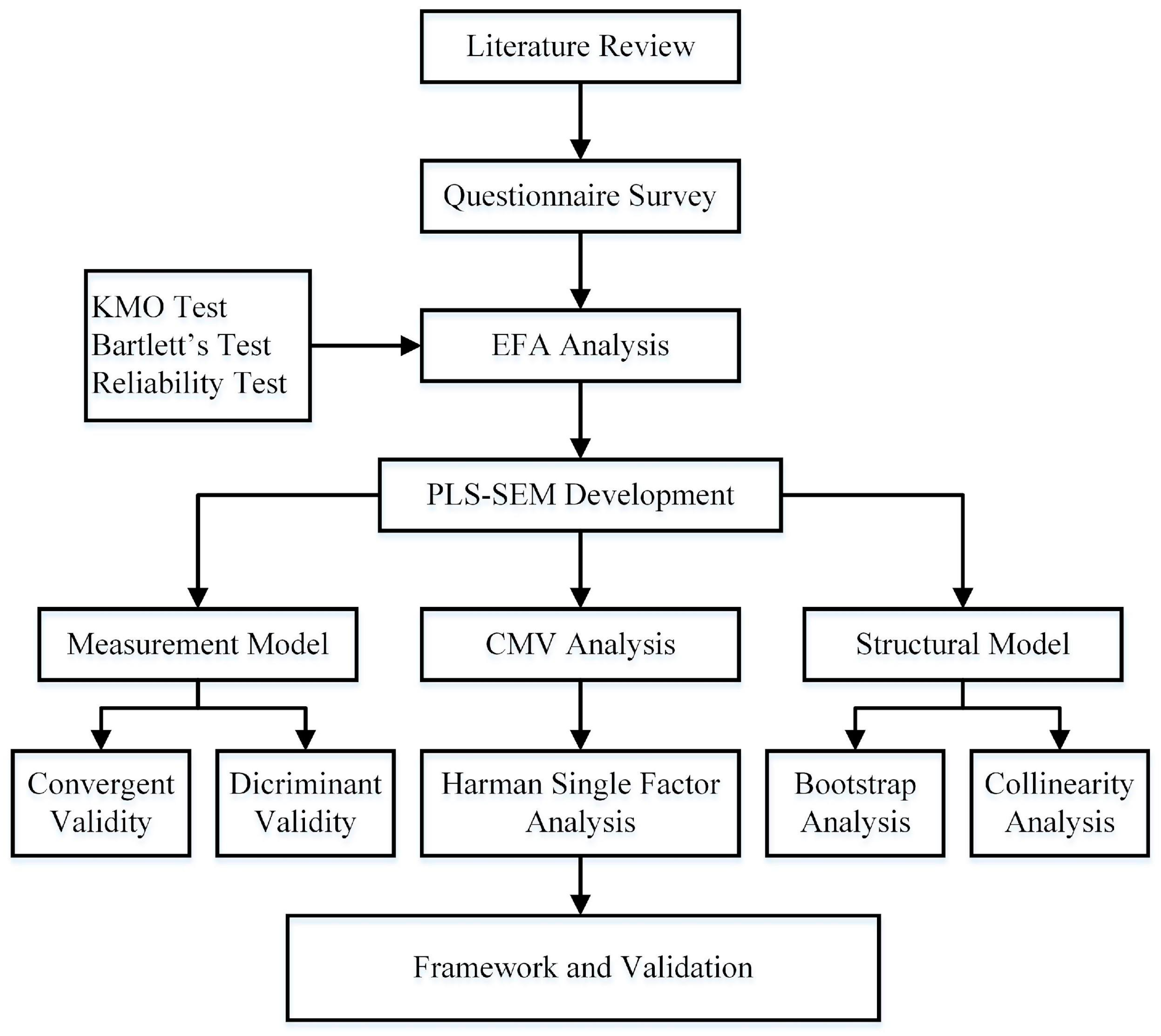
By identifying the barriers to passive design construction, this research aims to improve the overall success rate of construction projects in Pakistan. Figure 2 shows the stages of the analysis used in this research; it was adapted from the works [11,12]. Previous research was conducted to determine what factors could be holding back the widespread use of passive design. This led to the creation and use of a questionnaire survey instrument to gather information on the passive design barriers. Some things that have been easier to gauge obligations to in the questionnaire tool are (i) economic perspectives, knowledge, and conventions; (ii) interdependence, especially across cause-and-effect interfaces. The study collected data from builders, designers, architects, and quantity surveyors on their perspectives of their roles in the plan delivery process. The construction business includes the likes of conventional builders, supervisors, recognizable subcontractors, managers, employees, and even operators of the construction site. Several obstacles to the widespread use of PD have been found, and they are summarized in Table 1 and Table 2, showing the sustainability success factors for any construction project.
Figure 2.
Flow chart of the work.
Table 1.
Factors evaluated from literature studies affecting the implementation of passive design construction within the Pakistani construction industry.
Table 2.
Factors evaluated from literature studies that are considered as overall project sustainability success.
3.1. EFA Assessment and Construct Design
Among factor analyses, Exploratory Factor Analysis (EFA) and Confirmatory Factor Analysis (CFA) are the most prevalent. In this investigation, we employed CFA to dissect a multivariate hypothesis and determine its most important parts. Conversely, EFA has made use of data about the connections between and the different parts of a number of fundamental frameworks [7,88]. Principal component analysis (PCA) may be used to find the first solution inside EFA without the requirement for a hypothesis to be established beforehand. Research claims that principal component analysis (PCA) is the most-used EFA form since it is the default form in many statistical software packages [4,89]. Because of its ability to evenly distribute work, the Varimax rotation method has mostly replaced the direct method [1,90]. For factor analysis, however, Varimax rotation is superior. Common but unexplained, this approach reduces parts. The use of separate samples from all of the relevant collections allows for the evaluation of variables. Thus, the research data for this study comes from the 21 factors studied and the 156 questionnaires distributed to respondents, both of which are appropriate for factor analysis.
3.2. Building of a PLS-SEM Model
SEM-PLS, which combines structural equation modeling with partial least squares, has recently attracted a lot of attention in the academic community, particularly in the fields of business and social science. Several studies using the SEM-PLS approach have appeared in recent issues of high-impact SSCI journals. We performed state-of-the-art data analysis by using SEM for forecasting (SMART-PLS 4). The benefits of SEM PLS over covariance-based SEM (CB SEM) were first praised. Both methods have their uses, although the distinctions are subtle. The structural and measurement method was used for the statistical analysis in this research [5].
3.2.1. Common Method Bias
Common Method Variance needs to be measured when the independent and dependent variables in the measurement model are evaluated in the main questionnaire survey. Sometimes, problems arise when field data are overstated or prevent the extent of analyzed relationships [37,91]. Given that every piece of information included in the analysis comes from a single person’s perspective, this may be very relevant to the research at hand. As a result, addressing these concerns is essential for spotting any discrepancy in the data. Researchers described and used a typical one-factor test in this research [38,39,40]. Component analysis yielded a specific factor that explained a greater proportion of the variation.
3.2.2. Analytical Model
The relationship between the variables and the underlying framework is represented in an analytical model. The following sections present the findings leading to development of structural models.
3.2.3. Convergent Validity (CV)
To what extent do two or more indicators or thresholds for the same concept agree with one another? That is what we mean when we talk about convergent validity. It is shown to be a special case of CV. There are three tests that may be used to calculate the CV of the estimated construct in PLS. The average variance uses, Cronbach’s alpha, Average Variance Explained (AVE), and Composite Reliability (CR) ratings. Researchers proposed a Composite Reliability (CR) value of 0.7 as the upper limit of “moderate” composite dependability [41,42]. Between 0.60 and 0.70, values are generally appropriate for any kind of experimental investigation. The final test format was AVE. The CV metric is a standard tool for measuring the reliability of a model’s components. A CV greater than 0.50 is considered exceptional.
3.2.4. Discriminant Validity
Discriminant validity (DV) is the demonstration that no dimension identifies the SEM-measured oddity and that the assessed occurrence is systematically exclusive. According to the Research proposal, unusually large correlations between indicators or tools are necessary for DV to be applied.
3.2.5. Functioning Model
Using the SEM method, the major purpose of this research is to identify impediments to passive design’s (PD’s) adoption. Path coefficients must be determined and quantified for this purpose. Therefore, we constructed a causal chain between £, PD adoption hurdles, and references [43,44]. Therefore, the linear equation may be used to describe the found structural connection as an internal relationship between the £, µ, and €1 rule in the operational model.
where the route coefficient connecting PD’s adoption obstacles is (β), and (€1) represents the projected residual variation in the structural strength. Similar to the regression weight in a multi-regression model (β), the standardized regression weight is β. The indications must be contemporaneous with the model’s predictions and experientially meaningful. How to determine the relevance of path coefficient β is the most significant challenge. Regarding CFA, the SmartPLS 4 software package used bootstrapping techniques to estimate the standard errors of route coefficients [45,46]. In total, 5000 subsamples were analyzed. In contrast, the measurements for testing hypotheses are explained in references [47,48,49]. The suggested structural equations for PD adoption barrier constructs in the PLS model, which reveal the inherent relationships between the variables, were established. Algebraic Expression (1).
μ = β£ + €1
4. Results
4.1. EFA Analysis
This study focused on the adoption of passive design (PD) and challenges to implementation, notably in Pakistani construction enterprises. Due to the vast number of participants in the Pakistani construction business, this research methodology was used. EFA samples ought to have between 45 and 61 observations. They did well in the evaluation; however, their answers were short [50,51]. In the survey’s preliminary portion, the participant’s demographic characteristics were recorded (or questionnaire). The ensuing components were associated with implementation obstacles and Project Sustainable Success (PSS). A Likert Scale with five points was employed. Five (excellent), four (good), three (average), two (fair), and one (poor) were the replies (very low). The literature on this survey tool is extensive. There have been several uses of a variety of well-defined correlation factorability constructions.
Sampling adequacy is an important factor when it comes to determining the validity of collected data to be used in EFA analysis. The Kaiser–Meyer–Olkin (KMO) test is commonly conducted for this parameter, while it is also combined with Bartlett’s test of sphericity. Both of these validation tests were conducted to further strengthen the rationale behind conducting EFA. It might help you determine whether the data you have collected or the sample plan you have developed are enough for factor analysis. Using KMO = 0.64, we determined that 64% of the data obtained fulfilled the requirements for factor analysis. All considered p-values were less than 0.001, and the results gave a Chi2 score of 751. This investigation required the use of Bartlett’s test (p < 0.001). Thus, it implies that the data matrix has a considerable association [52,53].
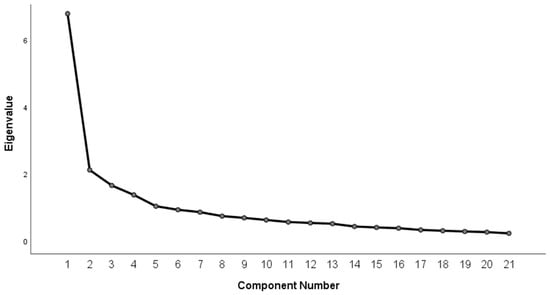
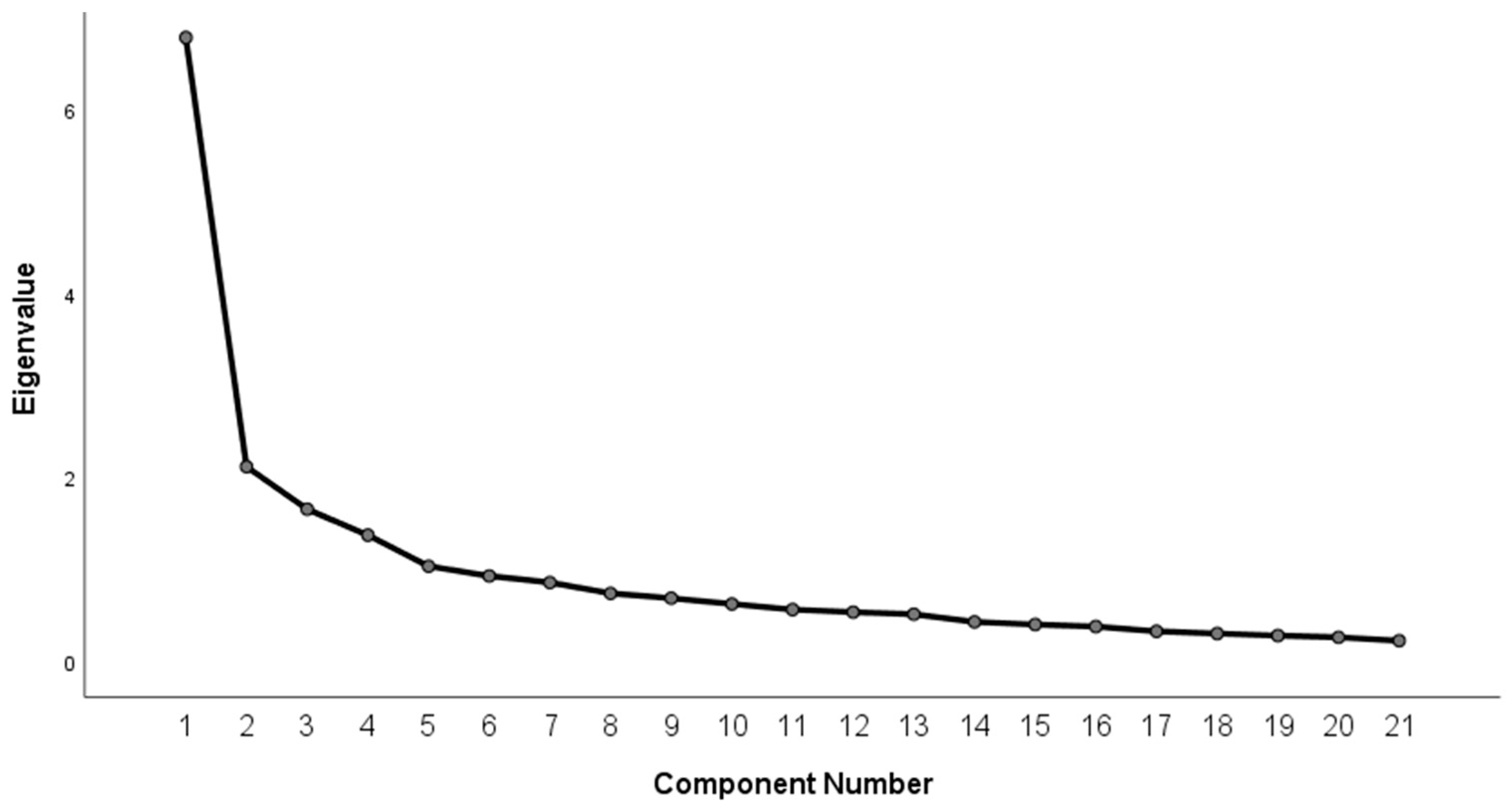
In addition, it demonstrated that, at a significance level of 5%, the correlation matrix of all itemized items is strongly associated. Therefore, the EFA was declared suitable, and these findings were consistent with previous research. The variance explained the areas of hurdles to the implementation of PD in the construction sector. The PCA found four elements (or components) with eigenvalues greater than one. These variables explained 17.418%, 17.272%, 11.363%, and 10.708% of the variation, respectively. The scree test clearly separated after the second component, as seen in Figure 3. Figure 3 indicates the scree plot, providing a representation of valid constructs. Given the obvious attenuation of the curve’s slope at the point of contact, the analysis will likely have to provide numerous contributing components to explain this behavior. Obstacles to PD’s implementation in Pakistan’s construction sector are shown by a spinning varimax factor matrix [54,55]. This model is useful for demonstrating the impact of PD on the Pakistani construction industry, and it has four major obstacles. Table 3 summarizes the component grouping based on alternating varimax. Every variable has been extensively considered in just one of the collections. The relevance of addressing these elements is shown by the preceding interpretation of the four primary categories. In contrast, there is no established procedure for identifying factors. Consequently, it was determined that identifying these components or elements meditatively was appropriate for this investigation. Table 4 presents the discovered and inferred respective factors. These obstacles included resource, technology, policy, and functional constructs.
Figure 3.
Scree Plot.
Table 3.
Exploratory Factor Analysis output.
Table 4.
Categorization of barriers generated from EFA Analysis.
4.2. Common Method Bias
Here, the authors employed the Harman single-factor analysis to examine the variation in the standard approach. The CMB has no influence on the data if the overall variance of the factor is less than 50%. The results indicated, shown in Table 5, that the variance was best described by a single set of factors or components accounting for 29.100% of the total. The fact that it was below 50% showed that the CMB had no bearing on the current outcomes.
Table 5.
CMV output.
4.3. Analytical Method
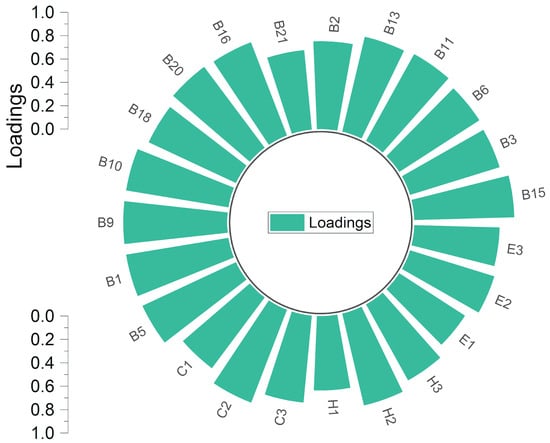
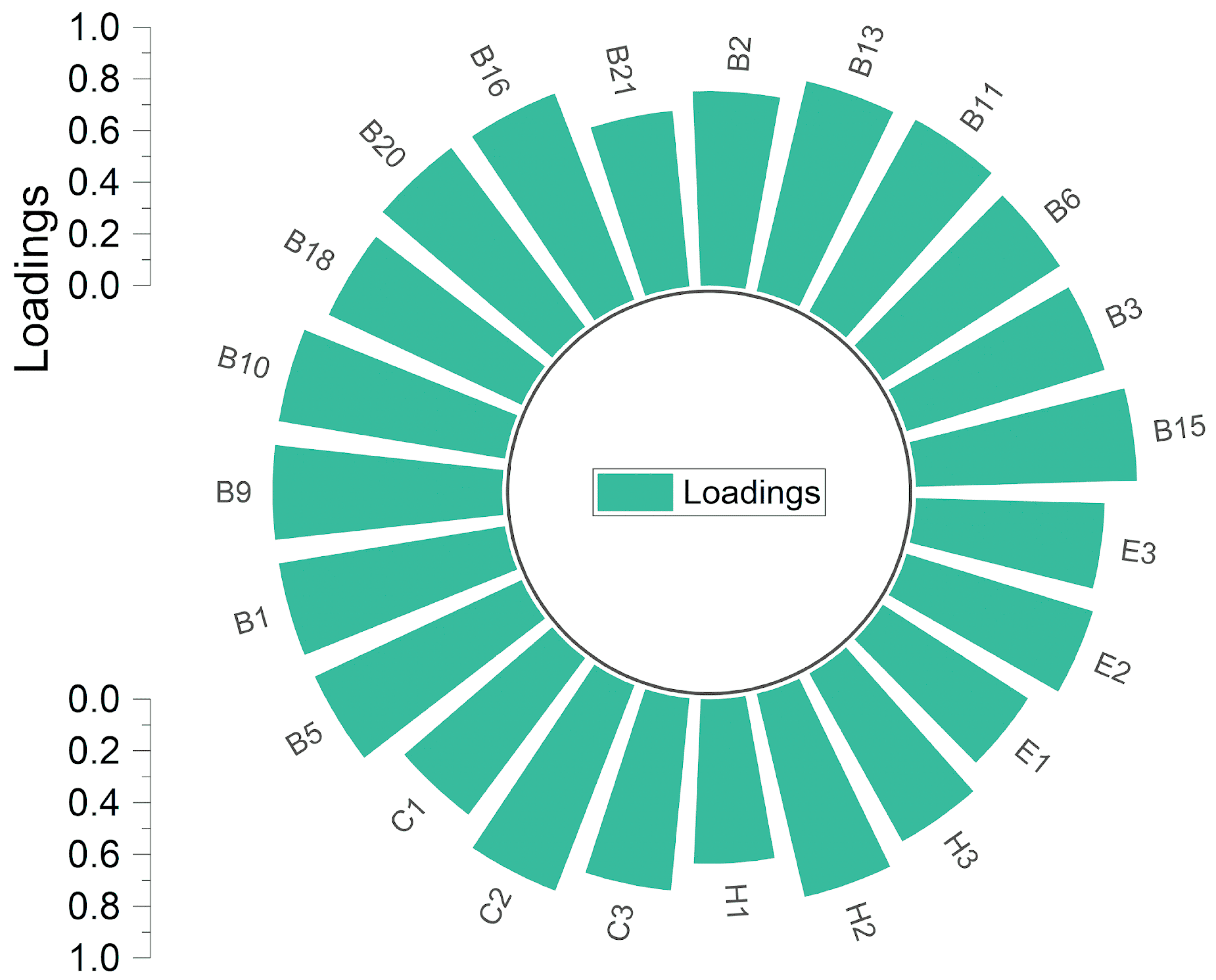
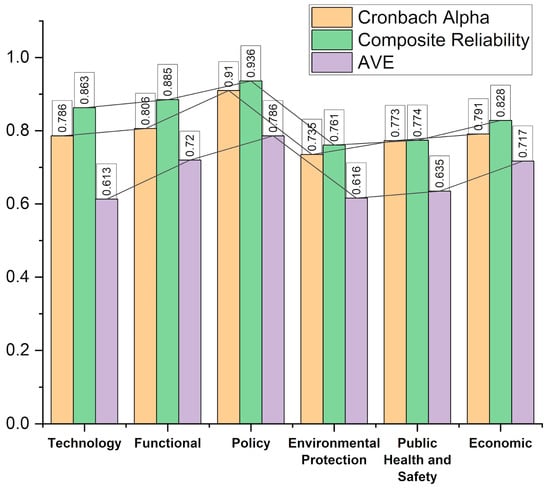
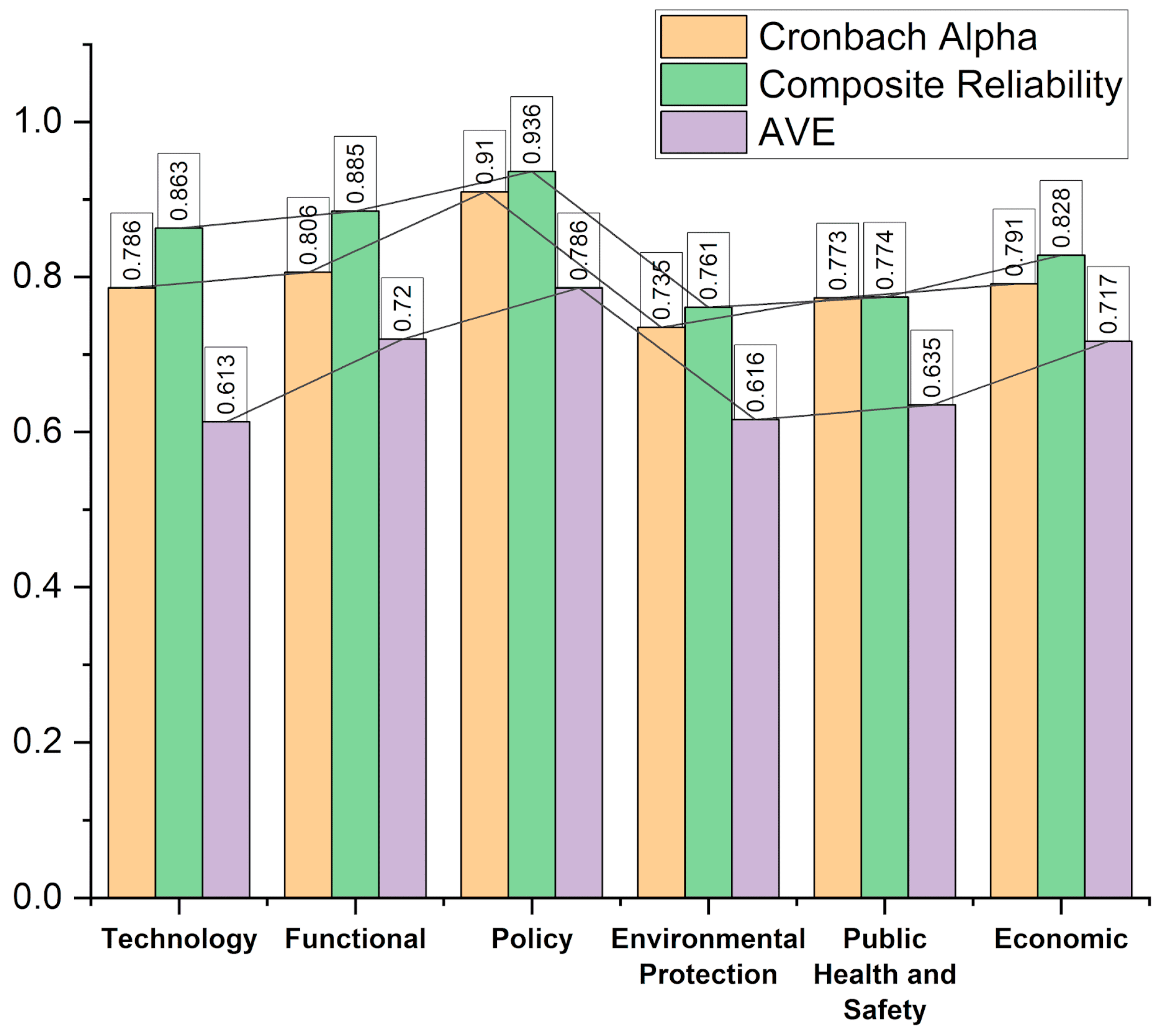
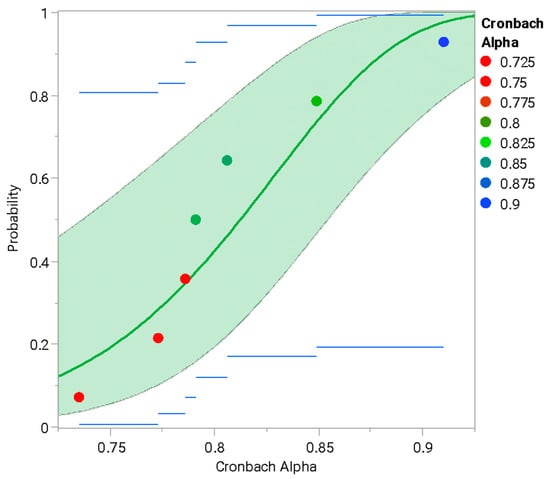
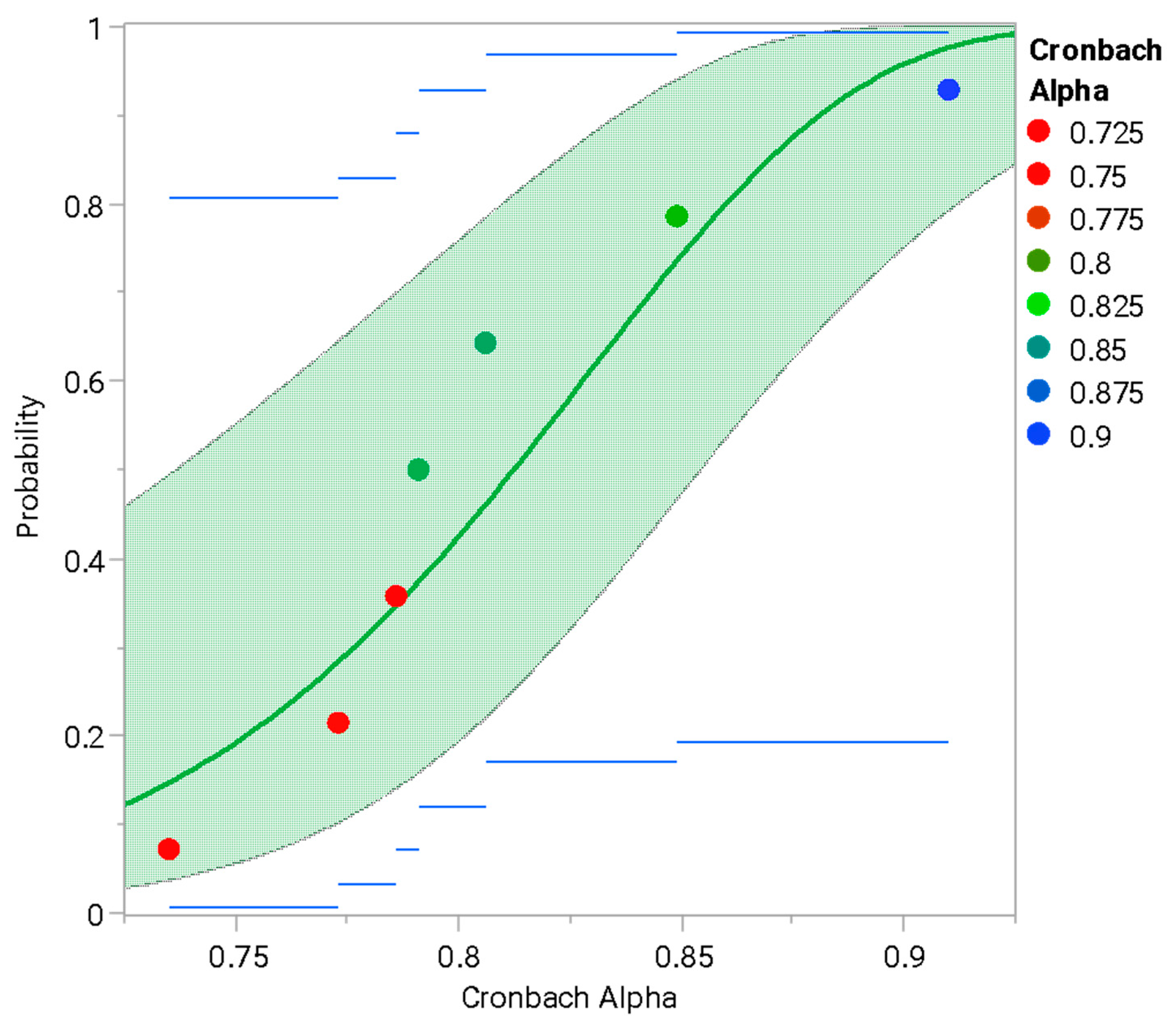
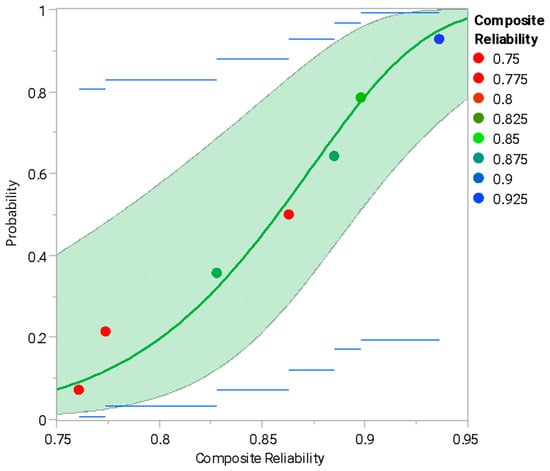
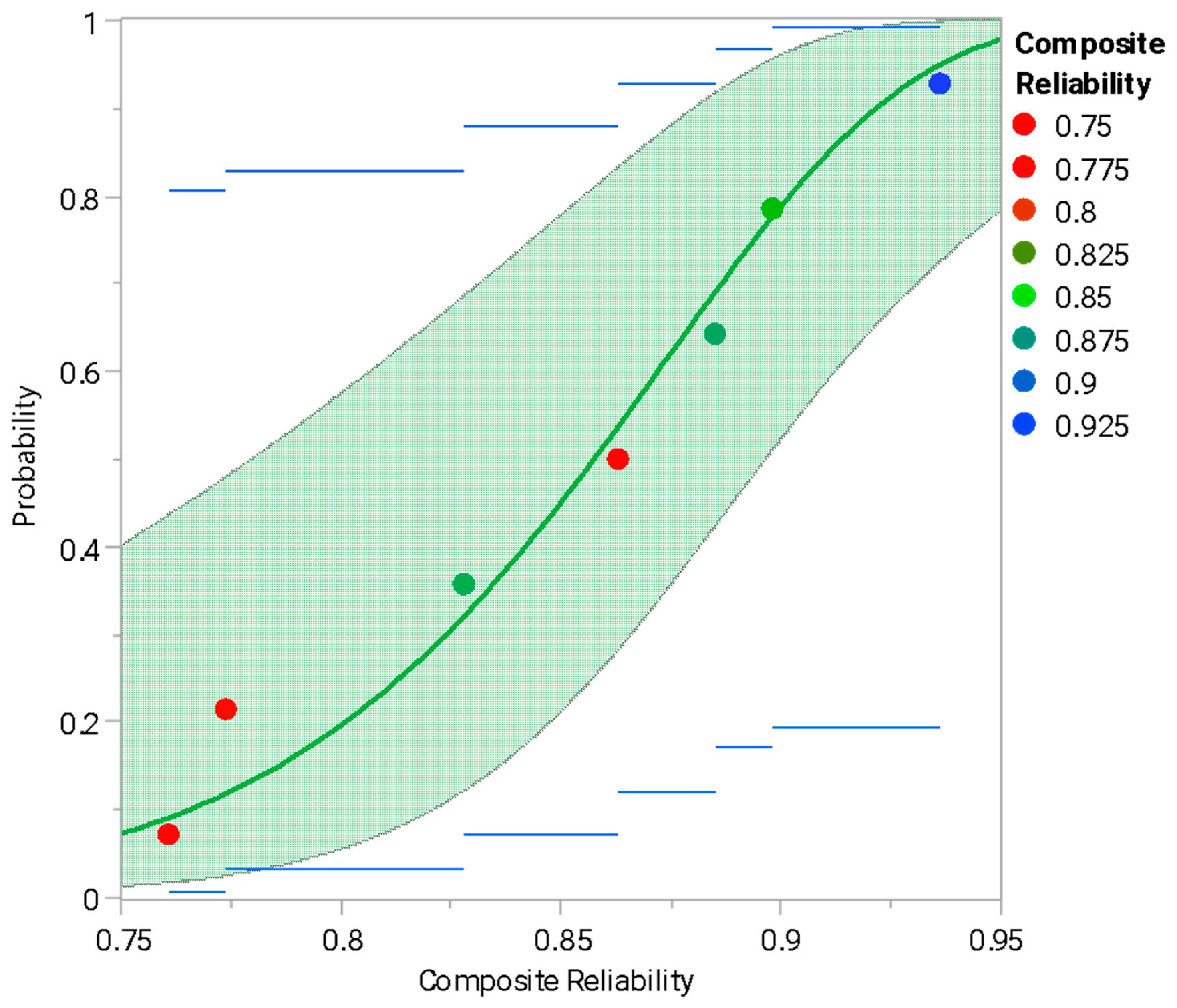
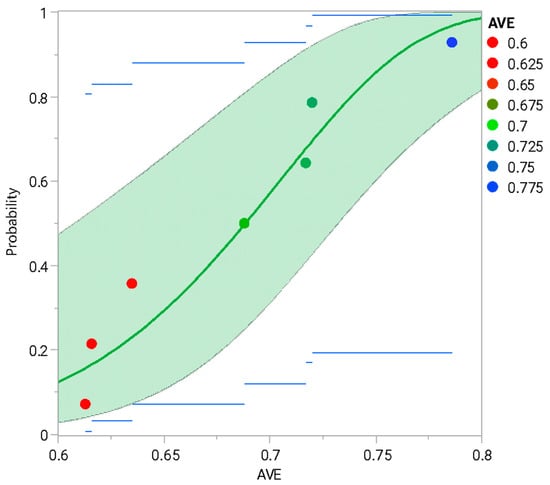
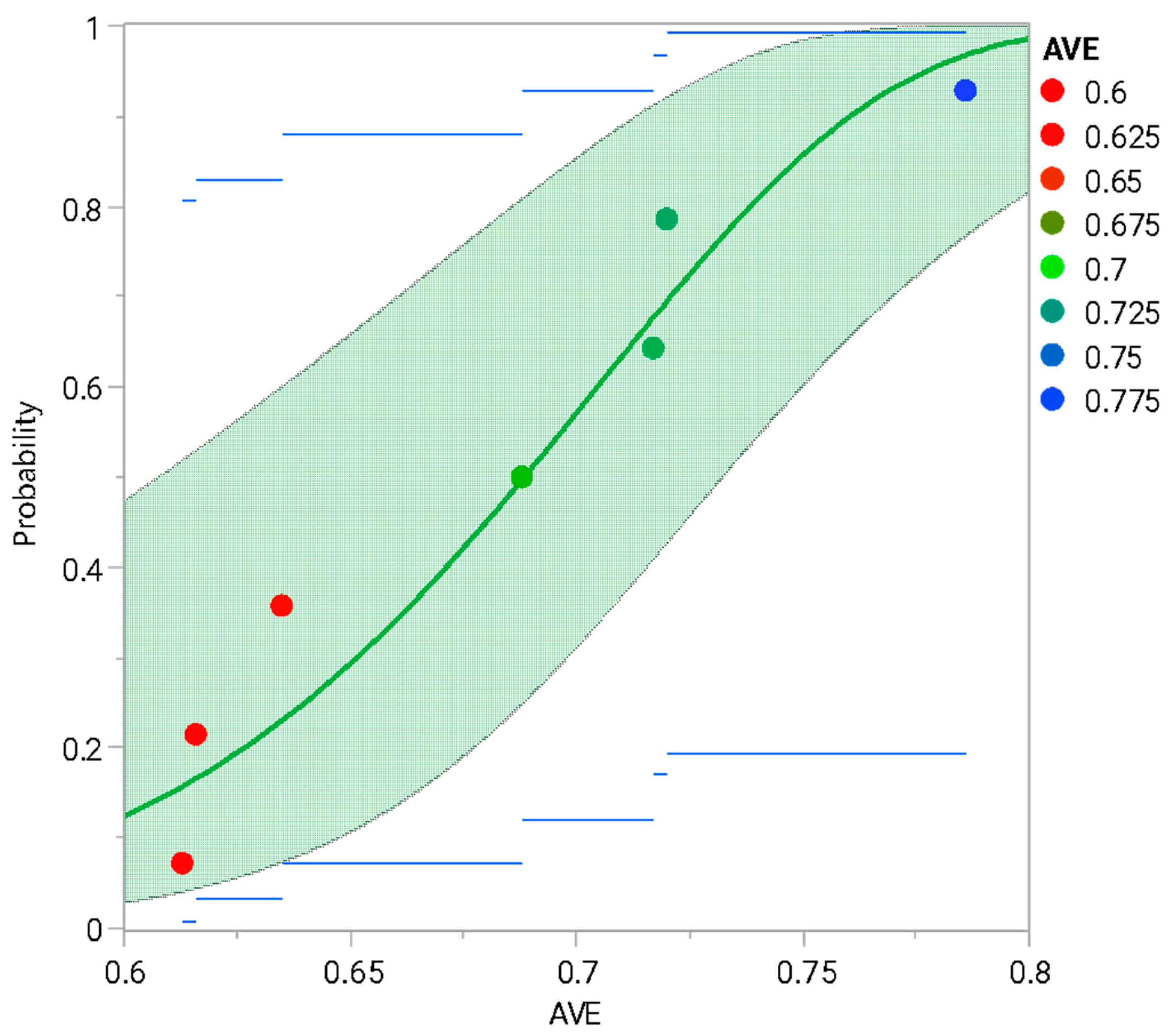
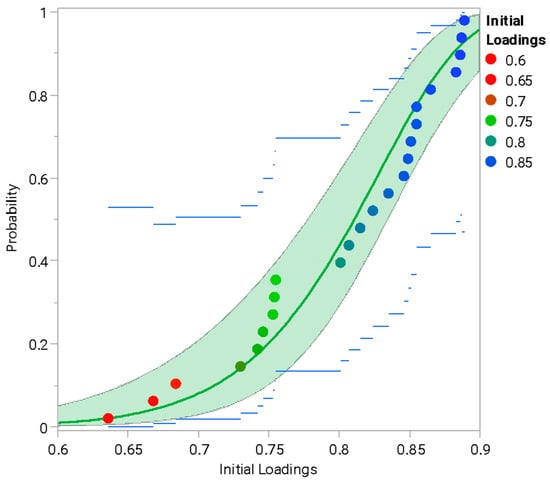
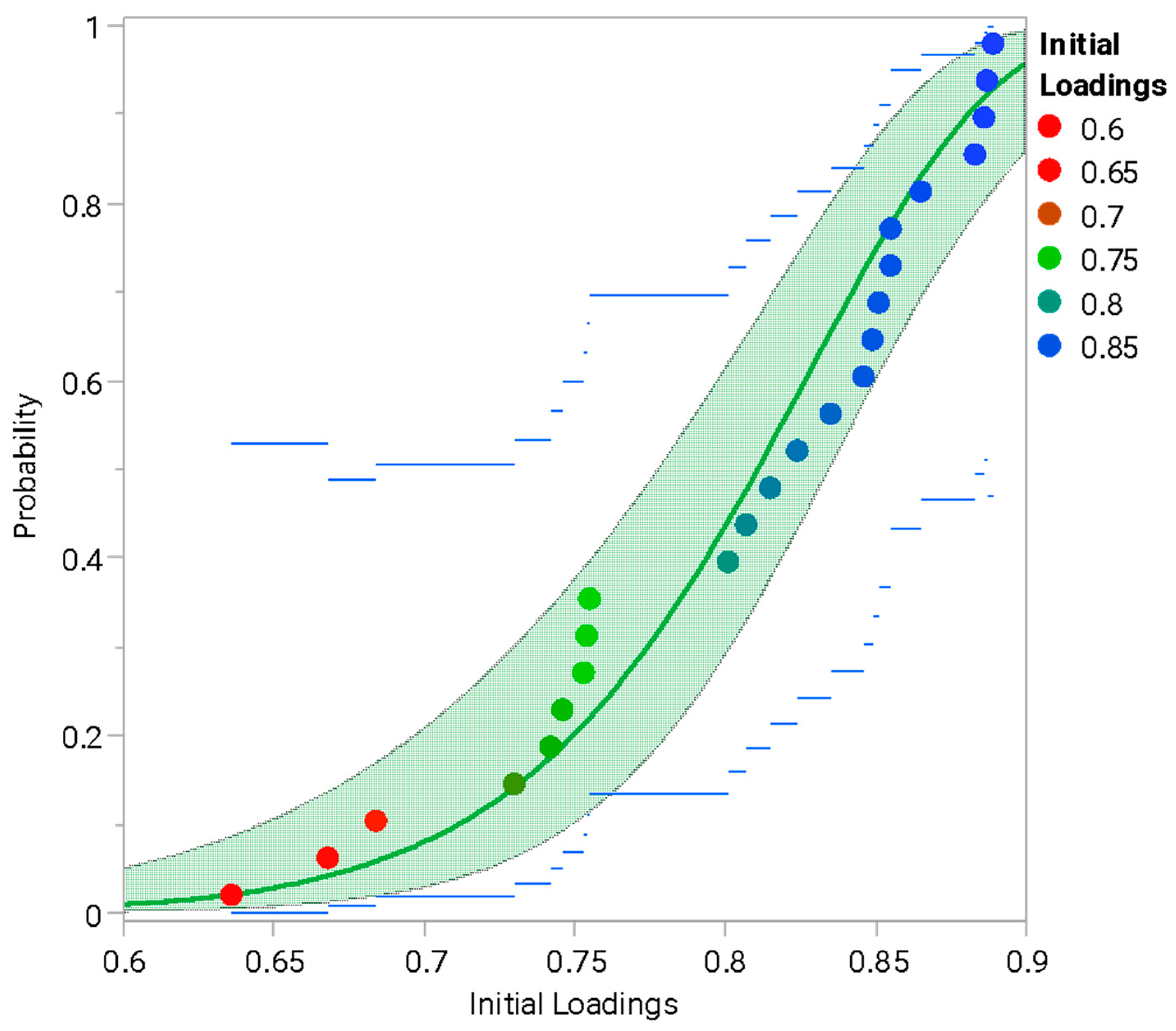
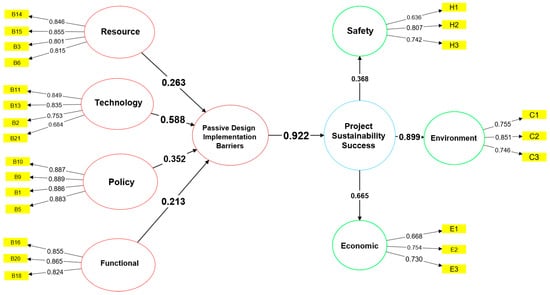
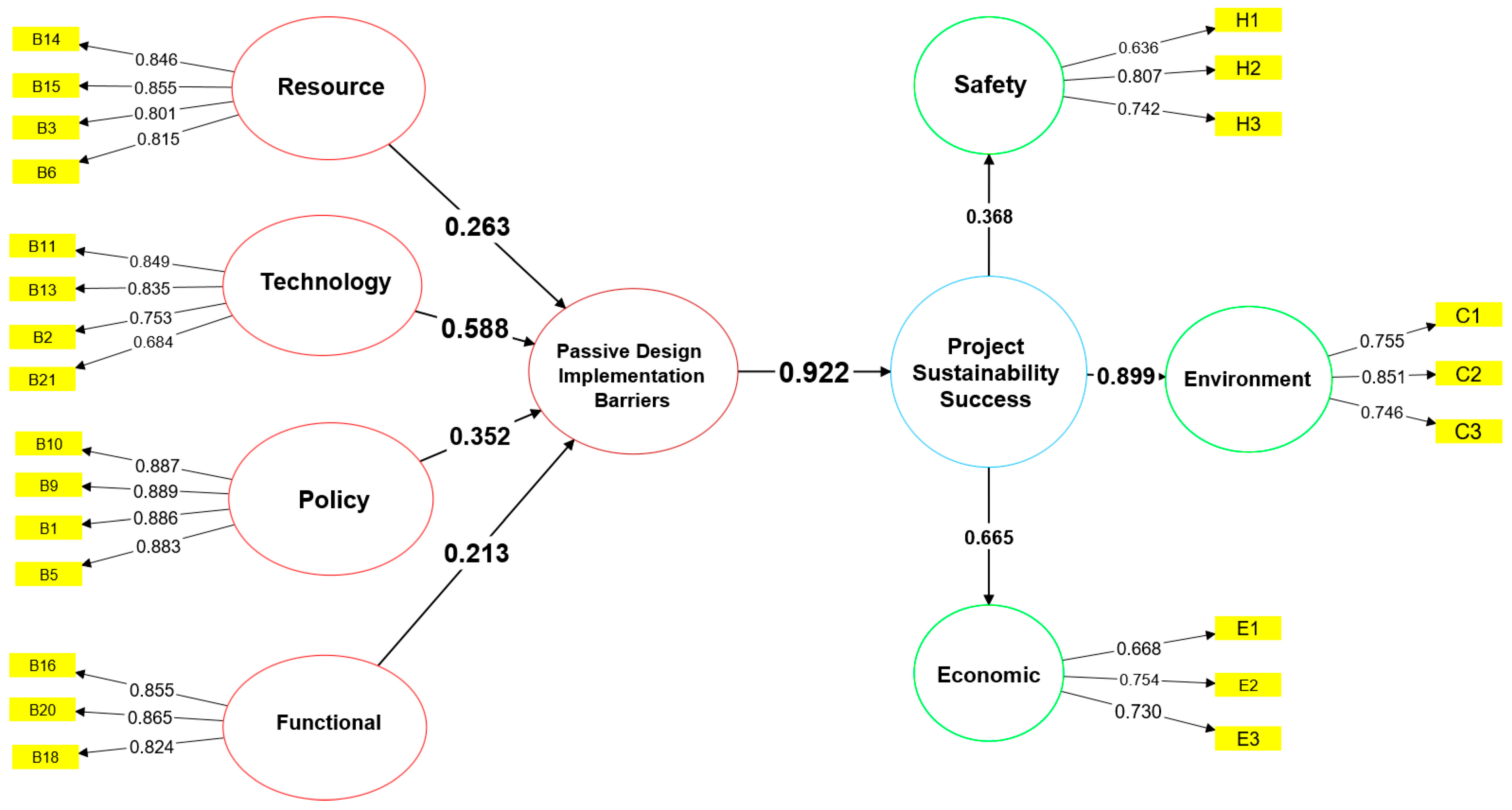
Convergent validity, discriminant validity, and internal consistency (IC) were calculated to examine the theoretical analytical models and instruments used in SEM-PLS (IC). As a result of this examination, it has been determined that all of the analytic model’s constructs are within acceptable bounds and limitations. Table 6 further showed that all analytical structures were AVE-compliant. Greater than 0.5 is preferable for AVE. Table 6 demonstrates that the estimated AVE values were higher than 50%. These findings provide credence to the idea that the investigative framework is stable and consistent [10,56]. Additionally, it was shown that the calculated methodical structures are accurate for the specific model constructions considered. When the external loadings of the model constructs are high, it means that the variables of interest are strongly linked to that construct. Variables with external loads <0.4 must be deleted from the measurement scale on a regular basis. The trend of item loadings, CA, CR, and AVE are indicated in Figure 4 and Figure 5. Probability curves of Cronbach alpha, Composite Reliability, AVE, and initial loadings are presented in Figure 6, Figure 7, Figure 8 and Figure 9. All the results are in the expected range, which further confirmed the validity of all constructs. Figure 10 indicates the model after SEM analysis.
Table 6.
Constructed with Cronbach alpha, Composite Reliability, and AVE.
Figure 4.
Variation in item loadings.
Figure 5.
Trend of CA, CR, and AVE.
Figure 6.
Probability curve of Cronbach alpha.
Figure 7.
Probability curve of Composite Reliability.
Figure 8.
Probability curve of AVE.
Figure 9.
Probability curve of initial loadings.
Figure 10.
PLS-SEM algorithm analysis.
Discriminant validity (DV) assessments are gaining traction in structural equation modeling studies and are used to ensure the assessed constructions are indeed unique or distinct. In this study, the DV was analyzed using the following methodologies: Cross loading; HTMT; and Fornell-Larcker Criterion.
Table 7 displays the calculated DVs of the PSS and constructs using Fornell and Larker’s criteria, where the AVE is a more focused measurement as compared with the obtained results. However, it also helped in the cross validation of components and all its associated factors. The Heterotrait-Monotrait Criterion Ratio was used as the second technique for this study (HTMT). Different binary components are involved in the results and, therefore, the evaluation of discriminant validity was carried out further to compute the results and also incorporate variance measurements related to SEM [11,12]. The researchers proposed using p-values between 0.85 and 0.90 to verify the two-way nature of the data. It is hypothesized that the model’s structures are conceptually and strikingly similar; if this is not the case, then the HTMT values should be lower than 0.90 and 0.85. HTMT found sufficient DV for all constructs and variables it analyzed (Table 8).
Table 7.
Fornell larker criterion for the determination of discriminant validity.
Table 8.
HTMT Analysis for discriminant validity.
In addition, a cross-loading criterion study was performed to assess the PD adoption obstacles and PSS components. It was used to compare the latent construct’s variable loading to the sum of all other cross-loadings obtained from previous models. All the construct indicator loadings are larger than the cross-loadings of the other hidden variables by row, as seen in Table 9. Therefore, each model’s construct’s unidimensionality may be analyzed. Path analysis for formative constructs is indicated in Table 10.
Table 9.
Cross-loading analysis for discriminant validity.
Table 10.
Path analysis using bootstrapping analysis for the determination of obstacle constructs and implementation constructs for PD.
4.4. Second Order Analysis
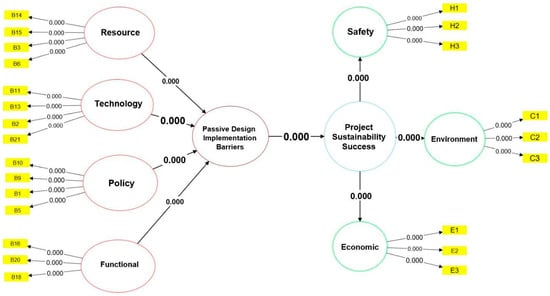
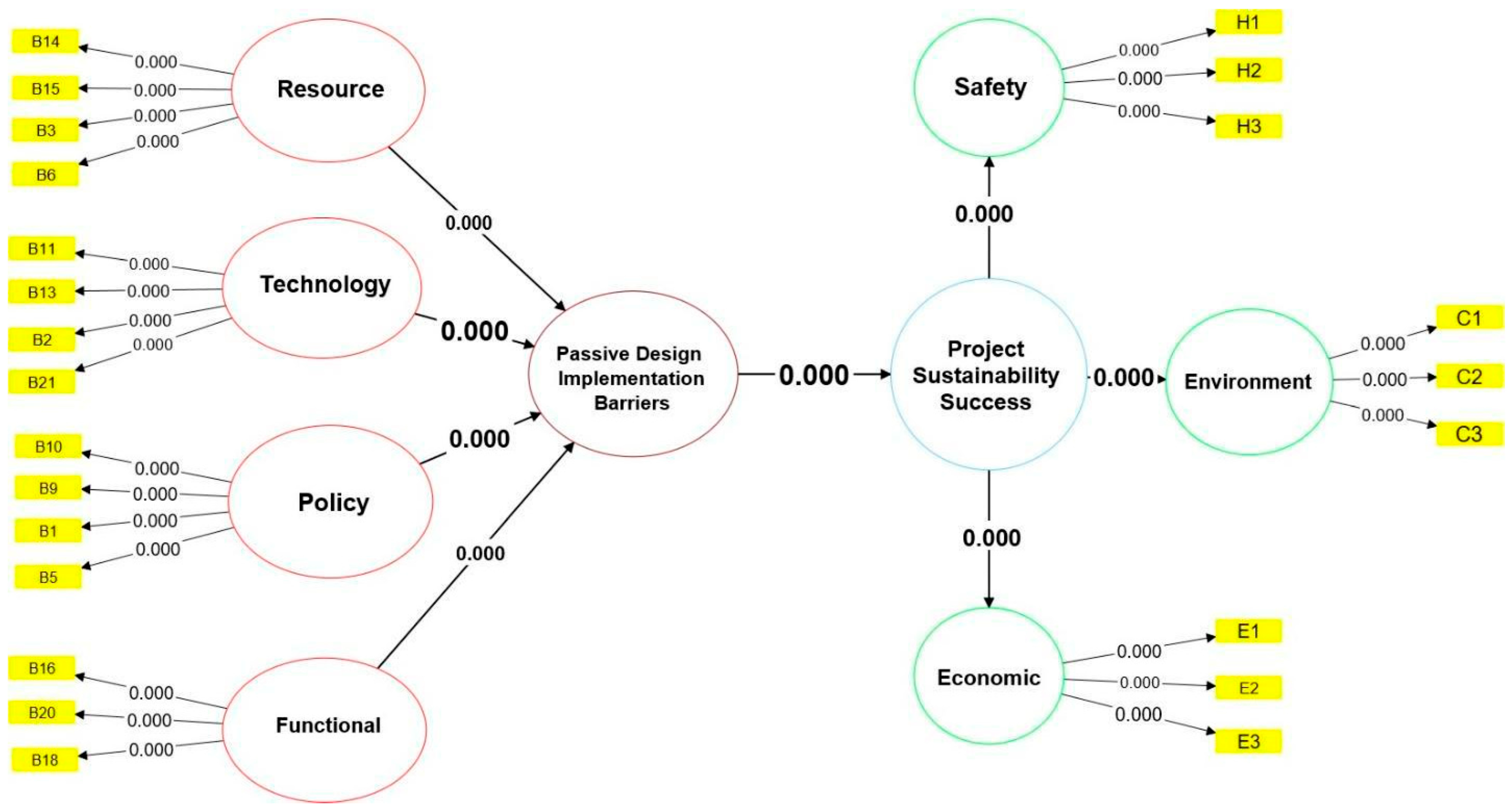
In this work, the components for PD barriers were formative, and large correlations between the assessments of formative analytical models were often unanticipated. Likewise, the substantial link between determinative factors showed collinearity and was consequently seen as difficult. Because this research is concerned with the reflective-definitive form of the first-order concept, the value of the variable inflation factor (VIF) was calculated to establish the degree of collinearity between the formative variables in the model’s construct. The findings showed that absolute VIF values were much lower than 3.5. It was expected that the model’s components each had a unique contribution to the problems associated with PD adoption [13,14]. However, there was a statistically significant route coefficient for four first-order PD barrier sub-scales: resources, technologies, policies, and functional processes (β). It seems that each component of the model constructs added something unique to the problems with PD’s actual implementation [15,16]. Figure 11 shows that the four first-order PD subscales—resource, technology, policy, and functional process—each exhibited a substantial route coefficient (β), indicating that they had a high outer weight.
Figure 11.
Bootstrapping analysis for path coefficient determination.
4.5. Analysis of the Structural Model
An extra crucial part of this research was verifying the working hypothesis. Within the framework and from the vantage point of the bootstrapping technique, the implications of the model’s premise were confirmed. A data set’s statistical credibility and validity may be evaluated with the use of the bootstrapping method. As such, the path coefficient (i.e., the outer weight and p-value) was evaluated using a 95% confidence interval (CI0.95). By randomly resampling the original data, a large number of identical replication samples may be generated using the bootstrapping method [17,18]. As a result, the route coefficient’s correctness may be evaluated to ensure that the data set is credible. The path coefficient is the numerical difference between the several possible routes. It measures the amount of effect one variable has on another. As indicated in Figure 11, the natural connection between PSS and £ (overcoming PD adoption hurdles construct) was proposed. The structural connection between the µ, £, and €1 equations in the structural model has been designated as the inner connection. This is represented by a linear equation:
µ = β £ + ∈ 1
One way to depict the expected cumulative residual variance is with the symbol, where one is an illustration of the route coefficient linking the PD adoption obstacles. As a result, multiple regression analysis has the same significance as standardized regression. Its imprint has to be statistically significant and in line with the model’s forecast. Therefore, the question of how to weigh the route coefficient’s influence remained (β). Regarding CFA, the SmartPLS 4 package used a bootstrapping approach to obtain the route coefficient error. Based on studies, 5000 sun samples were used in this investigation. Path analysis for a reflective construct is indicated in Table 11. Consequently, it was used to develop the t-test statistics for hypothesis testing. For the PLS model, a single structural equation was created to solve the difficulties of PD acceptance. The equation’s relationship to the structure was elucidated (1). Internal variable and path significant p-values were also determined using standard deviations. Figure 11 presents the statistical findings of the bootstrapping technique. There were positive and statistically significant outcomes after overcoming barriers to PD acceptance and implementing PSS (β = 0.5, ρ = 0.0005). Therefore, the two fundamental focuses of this investigation—PSS and removing barriers to PD adoption—are consistent with one another [19,20].
Table 11.
Path analysis results for reflective constructs.
4.5.1. Structural Model’s Exploratory Strength
Calculating the value of R2 for the internal factors is one of the most crucial PLS-SEM evaluations. PSS was identified as the primary conditional variable in this investigation, and the model results showed that its adjusted R2 and R2 values were 0.53. This investigation revealed that the internal dependent variable (barriers to PD adoption) may be responsible for half of PSS, as indicated in Table 12. This suggests that the size range proposed by PD barriers (which is moderate to high) is adequate.
Table 12.
R2 strength.
4.5.2. Predictive Relevance Analysis
The PLS-SEM approach analyzes the structural model’s forecasting capability. Blindfolding was used to create the cross-validated redundancy metrics for each of the dependent components. The data suggested that the Q2 figures of a project’s success had a statistically significant value of 0.264, as indicated in Table 13. IVs were shown to be a major predictor of DV.
Table 13.
Endogenous latent variable Q2.
4.5.3. Analysis of Importance and Performance Matrix (IPMA)
By showing how the independent construct influences the dependent construct, the SEM-PLS method demonstrates that the independent construct is essential to the model’s explanatory capacity. As a consequence of accurately representing the variable’s performance, IPMA improves the SEM-PLS outcome, as indicated in Table 14. Two parts of the IPMA outcomes—performance and relevance—need to be understood for successful supervision planning. Together, the variable rankings of the optimum value constructions and the effects (or importance) of the overall structural model bring attention to the most important factors for boosting management operations [21,22]. The IPMA was utilized as a conditional framework for problems with PD’s widespread implementation. The proposed model demonstrates the efficacy and significance of the internal variable (obstacles to PD adoption). As a result, we found that every single one of the variables was very significant (1.334) and had excellent relative performance (52.626).
Table 14.
IPMA analysis.
5. Discussion
A partial least squares structural equation model was used to examine the association between the constructs (overcoming PD and PSS). Resource, Technology, Policy, and functional barriers in that sequence of influence was not surprising in overcoming the PD obstacles. Our study shows that eliminating just 50% of these PD barriers may greatly boost PSS. Improving PSS is critically dependent on overcoming PD barriers. However, the statistics indicated that β = 0.90% is necessary to surpass the 1 DP barrier [23]. Due to this, the PSS enhancement level will also increase. However, the suggested paradigm highlights the fundamental issues of passive design that must be addressed. According to Nguanso et al. (2020) and Pajek et al. (2022), buildings are expensive to construct in developing nations; it becomes highly uncertain when no modern approach for design and construction is used. This relates to the indication of significant issues with passive design, which may increase in future construction work [20,23].
One of the biggest problems, according to research conducted in Malaysia, is the lack of financial incentives to help with the high cost of initial investment. Researchers came to a similar conclusion, saying that the high upfront costs caused by passive design buildings’ distinctive construction methods are the biggest obstacle to their widespread adoption in the United States. Data from Analytics, according to McGraw Hill Construction, show that there are four major obstacles that limit widespread implementation of PD [24,25]. For starters, becoming green is seen as something only for large-scale projects that can afford the higher start-up costs, public ignorance, and lack of government backing or incentives. According to a number of studies, many property managers and owners are put off by the hefty price tag associated with using passive design construction techniques.
Economic viability is prioritized above other considerations. Passive design buildings are known to incur higher construction costs than conventional structures. Moreover, according to Elzeyadi and Batool (2017) and Puri and Khanna (2017), significant issues exist in terms of implementing passive design in construction that relate to a creating negative impact on construction projects [16,76]. The initial investment was also determined to be the most important factor of green implementations in a study that focused on the United States and Hong Kong. Because PD buildings have a longer payback time, developers often opt for conventional structures. High continuing maintenance costs are a further obstacle. For example, the need for periodic maintenance may increase the cost of a PD work.
It is vital to develop and implement crucial project management concepts, tools, and processes for the successful implementation of passive design structures. The intricacy of the technology involved in PD applications is one of the greatest hurdles. (Kaboré et al. (2018) and Zahiri and Altan (2020) confirmed this notion by emphasizing the difficulty of the building processes and procedures necessitated by the usage of PD technology [39,63]. As a result, it is crucial to train and educate all personnel involved in the administration of the project. Financial and other incentives provided by the government have a significant impact in fostering PD traits. The lack of government and other responsible party support for environmentally friendly initiatives, such as financial incentives and education programs, is a major barrier to the growth of such projects.
6. Conclusions
Analysis suggests that underdeveloped countries, in particular, should prioritize decreasing barriers to PD adoption. However, this tactic seldom appears in the developing world’s building sector. The quantitative method used in this research was administering a questionnaire throughout the country of Pakistan. This study employed the SEM-PLS approach to generate a model that is supported by real-world data from the Pakistani construction sector. The model’s findings will help those in the building sector remove barriers that prevent more widespread use of passive design, which ultimately help the project managers to greatly adopt passive design in construction projects in Pakistan. Although the analysis of barriers to PD adoption in Pakistan’s construction sector is the exclusive subject of this research, the results may be applied to other developing nations with similar circumstances to Pakistan where equivalent analyses are missing. The outcomes are presented below.
6.1. Implications
Overall, this study contributes to the reduction in passive design implementation barriers for developing or underdeveloped countries. The model demonstrates the complexity and difficulty in enacting strategies to decrease GHG emissions. If policymakers and appropriate authorities can come up with a strategy to address these PD barriers, it might facilitate their use in the AECO industry. The research also assessed the chemistry between PSS and PD adoption hurdles in the Malaysian construction sector. All of the primary obstacles to implementing PD in the construction industry were first analyzed in this study. Future research into the challenges the AECO has in adopting PD has a firm grounding in the findings of this study.
Thus, the hypothesized theories in this research provided a statistical framework for identifying the barriers to PD acceptance that need to be addressed in order to promote sustained deployment in Pakistan and other developing countries. The same is true of our investigation, which contributes to the literature via both empirical and theoretical means:
- New ideas are proposed by this study that can be highly useful for future studies focusing on increasing the theoretical research gap. Throughout the project’s duration, the findings can be used to take timely actions in mitigating the barriers.
- Developed countries are already adopting passive designing at a large scale and the barriers are low, which does not come under the future relation with this study. In contrast, strong literature from emerging countries, such as Pakistan, is scarce. This research has narrowed the gap by analyzing the most significant challenges to PD deployment using PSS.
- The study’s recommendations, a novel estimation methodology developed for the construction industry, allow for foresight into how PD adoption barriers may affect PSS over the whole scope of a project’s lifespan in the AECO sector.
- According to experts, this idea will help speed up the spread of PD in underdeveloped nations. This practical input examines the theoretical ties between PD adoption barriers and PSS throughout the building project’s lifespan. Not a lot of research has been conducted on this in the past; thus, there is room for more information.
6.2. Managerial Suggestions
Using the derived inferences about decision-making, building professionals may examine the impact of PD adoption hurdles on PSS across the construction project’s lifecycle.
- For AECO businesses, this presents a number of obstacles to PD adoption that may be overcome with the right tools and strategies, ultimately leading to happier customers as a result of improved quality visualization.
- It facilitates decision-making in the analysis of PD adoption hurdles on PSS throughout the lifespan of a building project.
6.3. Limitations and Future Implications
Despite its merits, this study has several caveats that need to be taken into account while planning for the next step in the field. This study was restricted at first in its scope due to its location-based parameters. Since this is the case, it might be tough to extrapolate from the current results. Pakistani building industry experts participated in this research. For a more reliable generalization of research findings, it would be necessary for future research to increase the geographical scope of this study by integrating more locations in Pakistan and other developing countries with comparable characteristics. Second, there was a lack of context on the acceptance of PD in this study’s background and methodology. As a result, future research should be longitudinal to offer a complete picture of the connection between PD adoption barriers and PSS over the whole construction project’s lifespan. Third, the PLS-SEM method was used to conceptually conceive the connection between PD implementation barriers and PSS in the building project’s lifecycle. Therefore, future studies should focus on identifying the level of sustainable implementation through theory adoption, such as the technology acceptance model (TAM), the technology organization and environment model (TOEM), and the innovation diffusion theory (IDT).
Author Contributions
Conceptualization, A.W. and I.O.; methodology, A.W.; software, A.W.; validation, A.W., I.O. and N.S.; formal analysis, A.W.; investigation, A.W.; resources, A.W.; data curation, A.W.; writing—original draft preparation, A.W.; writing—review and editing, H.A. and B.O.; visualization, A.W.; supervision, I.O. and N.S.; project administration, A.W. All authors have read and agreed to the published version of the manuscript.
Funding
This research received no external funding.
Informed Consent Statement
Informed consent was obtained from all subjects involved in the study.
Data Availability Statement
Data is not available for public access as it contains the responses from people, who signed consent which guaran-tees privacy and confidentiality.
Conflicts of Interest
The authors declare no conflict of interest.
References
- Al-Tamimi, N. Passive Design Strategies for Energy Efficient Buildings in the Arabian Desert. Front. Built Environ. 2022, 7, 805603. [Google Scholar] [CrossRef] [Scilit]
- Li, E.; Akashi, Y.; Sumiyoshi, D. Passive Design Strategy on Residential Buildings for Sustainable Development of Lhasa. J. Environ. Eng. 2013, 78, 471–480. [Google Scholar] [CrossRef] [Scilit]
- Chen, X.; Yang, H.; Lu, L. A Comprehensive Review on Passive Design Approaches in Green Building Rating Tools. Renew. Sustain. Energy Rev. 2015, 50, 1425–1436. [Google Scholar] [CrossRef] [Scilit]
- Ameur, M.; Kharbouch, Y.; Mimet, A. Optimization of Passive Design Features for a Naturally Ventilated Residential Building According to the Bioclimatic Architecture Concept and Considering the Northern Morocco Climate. Build. Simul. 2020, 13, 677–689. [Google Scholar] [CrossRef] [Scilit]
- Alemu, A.T.; Saman, W.; Belusko, M. Airflow and Temperature Modelling of Sustainable Buildings at the Design Stage Can Prevent Unintended Consequences of Passive Features. Procedia Eng. 2017, 180, 601–610. [Google Scholar] [CrossRef] [Scilit]
- Booth, C.A.; Rasheed, S.; Mahamadu, A.M.; Horry, R.; Manu, P.; Awuah, K.G.B.; Aboagye-Nimo, E.; Georgakis, P. Insights into Public Perceptions of Earthship Buildings as Alternative Homes. Buildings 2021, 11, 377. [Google Scholar] [CrossRef] [Scilit]
- Azimi Fereidani, N.; Rodrigues, E.; Gaspar, A.R. A Review of the Energy Implications of Passive Building Design and Active Measures under Climate Change in the Middle East. J. Clean. Prod. 2021, 305, 127152. [Google Scholar] [CrossRef] [Scilit]
- Borrallo-Jiménez, M.; LopezDeAsiain, M.; Esquivias, P.M.; Delgado-Trujillo, D. Comparative Study between the Passive House Standard in Warm Climates and Nearly Zero Energy Buildings under Spanish Technical Building Code in a Dwelling Design in Seville, Spain. Energy Build. 2022, 254, 111570. [Google Scholar] [CrossRef] [Scilit]
- Bughio, M.; Khan, M.S.; Mahar, W.A.; Schuetze, T. Impact of Passive Energy Efficiency Measures on Cooling Energy Demand in an Architectural Campus Building in Karachi, Pakistan. Sustainability 2021, 13, 7251. [Google Scholar] [CrossRef] [Scilit]
- Samodra, F.X.T.B. Analysis of Resilient Design by Thermoacoustic Adaptation of Tropical Urban Model. J. Archit. Urban. 2017, 41, 305–315. [Google Scholar] [CrossRef] [Scilit]
- Salameh, M.; Taleb, H. Courtyard as Passive Design Solution for School Buildings in Hot Area. In Proceedings of the 2nd World Congress on Civil, Structural, and Environmental Engineering (CSEE’17), Barcelona, Spain, 2–4 April 2017. [Google Scholar]
- Rossi, M.M.; Oliveira Favretto, A.P.; Grassi, C.; DeCarolis, J.; Cho, S.; Hill, D.; Soares Chvatal, K.M.; Ranjithan, R. Metamodels to Assess the Thermal Performance of Naturally Ventilated, Low-Cost Houses in Brazil. Energy Build. 2019, 204, 109457. [Google Scholar] [CrossRef] [Scilit]
- Rañeses, M.K.; Chang-Richards, A.; Wang, K.I.K.; Dirks, K.N. Housing for Now and the Future: A Systematic Review of Climate-Adaptive Measures. Sustainability 2021, 13, 6744. [Google Scholar] [CrossRef] [Scilit]
- Randjelovic, D.; Vasov, M.; Ignjatovic, M.; Stojiljkovic, M.; Bogdanovic, V. Investigation of a Passive Design Approach for a Building Facility: A Case Study. Energy Sources Part A Recover. Util. Environ. Eff. 2021. [Google Scholar] [CrossRef] [Scilit]
- Qiu, Z.; Wang, J.; Yu, B.; Liao, L.; Li, J. Identification of Passive Solar Design Determinants in Office Building Envelopes in Hot and Humid Climates Using Data Mining Techniques. Build. Environ. 2021, 196, 107566. [Google Scholar] [CrossRef] [Scilit]
- Puri, R.G.; Khanna, A.S. Intumescent Coatings: A Review on Recent Progress. J. Coat. Technol. Res. 2017, 14, 1–20. [Google Scholar] [CrossRef] [Scilit]
- Prieto, A.; Knaack, U.; Auer, T.; Klein, T. COOLFACADE: State-of-the-Art Review and Evaluation of Solar Cooling Technologies on Their Potential for Façade Integration. Renew. Sustain. Energy Rev. 2019, 101, 395–414. [Google Scholar] [CrossRef] [Scilit]
- Pitts, A. Passive House and Low Energy Buildings: Barriers and Opportunities for Future Development within UK Practice. Sustainability 2017, 9, 272. [Google Scholar] [CrossRef] [Scilit]
- Pajek, L.; Potočnik, J.; Košir, M. The Effect of a Warming Climate on the Relevance of Passive Design Measures for Heating and Cooling of European Single-Family Detached Buildings. Energy Build. 2022, 261, 111947. [Google Scholar] [CrossRef] [Scilit]
- Pajek, L.; Košir, M. Exploring Climate-Change Impacts on Energy Efficiency and Overheating Vulnerability of Bioclimatic Residential Buildings under Central European Climate. Sustainability 2021, 13, 6791. [Google Scholar] [CrossRef] [Scilit]
- Ozarisoy, B.; Altan, H. Systematic Literature Review of Bioclimatic Design Elements: Theories, Methodologies and Cases in the South-Eastern Mediterranean Climate. Energy Build. 2021, 250, 111281. [Google Scholar] [CrossRef] [Scilit]
- Oluwatayo, A.; Pirisola, O. Impact of Passive Energy Strategies on Workers Productivity in Tropical Climate. IOP Conf. Ser. Mater. Sci. Eng. 2021, 1107, 012210. [Google Scholar] [CrossRef] [Scilit]
- Nguanso, C.; Taweekun, J.; Dai, Y.; Ge, T. The Criteria of Passive and Low Energy in Building Design for Tropical Climate in Thailand. Int. J. Integr. Eng. 2020, 12, 241–252. [Google Scholar]
- Mushtaha, E.; Salameh, T.; Kharrufa, S.; Mori, T.; Aldawoud, A.; Hamad, R.; Nemer, T. The Impact of Passive Design Strategies on Cooling Loads of Buildings in Temperate Climate. Case Stud. Therm. Eng. 2021, 28, 101588. [Google Scholar] [CrossRef] [Scilit]
- Mukhtar, A.; Yusoff, M.Z.; Ng, K.C. The Potential Influence of Building Optimization and Passive Design Strategies on Natural Ventilation Systems in Underground Buildings: The State of the Art. Tunn. Undergr. Sp. Technol. 2019, 92, 103065. [Google Scholar] [CrossRef] [Scilit]
- Mateus, R.; Silva, S.M.; de Almeida, M.G. Environmental and Cost Life Cycle Analysis of the Impact of Using Solar Systems in Energy Renovation of Southern European Single-Family Buildings. Renew. Energy 2019, 137, 82–92. [Google Scholar] [CrossRef] [Scilit]
- Mahmoud, R.; Kamara, J.M.; Burford, N. Opportunities and Limitations of Building Energy Performance Simulation Tools in the Early Stages of Building Design in the UK. Sustainability 2020, 12, 9702. [Google Scholar] [CrossRef] [Scilit]
- Mahar, W.A.; Verbeeck, G.; Reiter, S.; Attia, S. Sensitivity Analysis of Passive Design Strategies for Residential Buildings in Cold Semi-Arid Climates. Sustainability 2020, 12, 1091. [Google Scholar] [CrossRef] [Scilit]
- Waqar, A.; Khan, M.B.; Othman, I.; Mansoor, M.S.; Shafiq, N. A Systematic Literature Review on Risk Analysis of Health and Safety in Oil Refinery and Onshore Pipeline Construction Projects. In Proceedings of the 2022 International Conference on Data Analytics for Business and Industry, ICDABI 2022, Sakhir, Bahrain, 25–26 October 2022. [Google Scholar]
- Ma, J.; Liu, J.; Liu, Y.; Wan, W.L. Architectural Design of Passive Solar Residential Building. Therm. Sci. 2015, 19, 1415–1418. [Google Scholar] [CrossRef] [Scilit]
- Lu, X.; Xu, P.; Wang, H.; Yang, T.; Hou, J. Cooling Potential and Applications Prospects of Passive Radiative Cooling in Buildings: The Current State-of-the-Art. Renew. Sustain. Energy Rev. 2016, 65, 1079–1097. [Google Scholar] [CrossRef] [Scilit]
- Waqar, A.; Othman, I.; Almujibah, H.; Khan, M.B.; Alotaibi, S.; Elhassan, A.A.M. Factors Influencing Adoption of Digital Twin Advanced Technologies for Smart City Development: Evidence from Malaysia. Buildings 2023, 13, 775. [Google Scholar] [CrossRef] [Scilit]
- Lin, Y.; Zhao, L.; Yang, W.; Hao, X.; Li, C.Q. A Review on Research and Development of Passive Building in China. J. Build. Eng. 2021, 42, 102509. [Google Scholar] [CrossRef] [Scilit]
- Lin, Y.; Zhao, L.; Liu, X.; Yang, W.; Hao, X.; Tian, L. Design Optimization of a Passive Building with Green Roof through Machine Learning and Group Intelligent Algorithm. Buildings 2021, 11, 192. [Google Scholar] [CrossRef] [Scilit]
- Li, S.; Liu, L. Social Benefit Evaluation of Passive Design of Green Buildings. E3S Web Conf. 2019, 118, 03047. [Google Scholar] [CrossRef] [Scilit]
- Li, N.; Peng, Z.; Dai, J.; Li, Z. Performance-Oriented Passive Design Strategies for Shape and Envelope Structure of Independent Residential Buildings in Yangtze River Delta Suburbs. Sustainability 2022, 14, 4571. [Google Scholar] [CrossRef] [Scilit]
- Zhang, Q.; Yu Lau, S.S. Let in the Wind: A Passive Design Paradigm for Large Buildings in the Inner City of Shanghai and Singapore. WIT Trans. Ecol. Environ. 2017, 223, 215–225. [Google Scholar] [CrossRef] [Scilit]
- Zhang, J.; Wang, R.; Ma, M.; Xu, C. Passive Design Method of Transition Space Based on Temperature Buffer Gradient. J. Shenyang Jianzhu Univ. 2020, 36, 140–147. [Google Scholar] [CrossRef]
- Zahiri, S.; Altan, H. Improving Energy Efficiency of School Buildings during Winter Season Using Passive Design Strategies. Sustain. Build. 2020, 5, 1. [Google Scholar] [CrossRef] [Scilit]
- Yi, C.Y.; Peng, C. Microclimate Change Outdoor and Indoor Coupled Simulation for Passive Building Adaptation Design. Procedia Comput. Sci. 2014, 32, 691–698. [Google Scholar] [CrossRef] [Scilit]
- Xue, Q.; Wang, Z.; Chen, Q. Multi-Objective Optimization of Building Design for Life Cycle Cost and CO2 Emissions: A Case Study of a Low-Energy Residential Building in a Severe Cold Climate. In Building Simulation; Tsinghua University Press: Beijing, China, 2022. [Google Scholar] [CrossRef] [Scilit]
- Waqar, A.; Qureshi, A.H.; Alaloul, W.S. Barriers to Building Information Modeling (BIM) Deployment in Small Construction Projects: Malaysian Construction Industry. Sustainability 2023, 15, 2477. [Google Scholar] [CrossRef] [Scilit]
- Yao, G.; Chen, Y.; Xie, W.; Chen, N.; Rui, Y.; Luo, P. Research on Collaborative Design of Performance-Refined Zero Energy Building: A Case Study. Energies 2022, 15, 7185. [Google Scholar] [CrossRef] [Scilit]
- Waqar, A.; Othman, I.; Shafiq, N.; Mansoor, M.S. Applications of AI in Oil and Gas Projects towards Sustainable Development: A Systematic Literature Review. Artif. Intell. Rev. 2023. [Google Scholar] [CrossRef] [Scilit]
- Waqar, A.; Othman, I. Impact of 3D Printing on the Overall Project Success of Residential Construction Projects Using Structural Equation Modelling. Int. J. Environ. Res. Public Health 2023, 20, 3800. [Google Scholar] [CrossRef] [Scilit]
- Waqar, A.; Khan, M.B.; Shafiq, N.; Skrzypkowski, K.; Zagórski, K.; Zagórska, A. Assessment of Challenges to the Adoption of IOT for the Safety Management of Small Construction Projects in Malaysia: Structural Equation Modeling Approach. Appl. Sci. 2023, 13, 3340. [Google Scholar] [CrossRef] [Scilit]
- Waqar, A.; Bheel, N.; Shafiq, N.; Othman, I.; Khan, M.B.; Mansoor, M.S.; Benjeddou, O.; Yaseen, G. Effect of Volcanic Pumice Powder Ash on the Properties of Cement Concrete Using Response Surface Methodology. J. Build. Pathol. Rehabil. 2023, 8, 17. [Google Scholar] [CrossRef] [Scilit]
- Waqar, A.; Bheel, N.; Almujibah, H.R.; Benjeddou, O.; Alwetaishi, M.; Ahmad, M.; Sabri, M.M.S. Effect of Coir Fibre Ash (CFA) on the Strengths, Modulus of Elasticity and Embodied Carbon of Concrete Using Response Surface Methodology (RSM) and Optimization. Results Eng. 2023, 17, 100883. [Google Scholar] [CrossRef] [Scilit]
- Krechowicz, M. Qualitative Risk Assessment of Passive House Design and Construction Processes. In IOP Conference Series: Materials Science and Engineering, Proceedings of the 5th World Multidisciplinary Civil Engineering-Architecture-Urban Planning Symposium–WMCAUS, Prague, Czech Republic, 15–19 June 2020; IOP Publishing Ltd.: Bristol, UK, 2020. [Google Scholar]
- Wang, X.; Mai, X.; Lei, B.; Bi, H.; Zhao, B.; Mao, G. Collaborative Optimization between Passive Design Measures and Active Heating Systems for Building Heating in Qinghai-Tibet Plateau of China. Renew. Energy 2020, 147, 683–694. [Google Scholar] [CrossRef] [Scilit]
- Tu, Y.; Wang, R.; Zhang, Y.; Wang, J. Progress and Expectation of Atmospheric Water Harvesting. Joule 2018, 2, 1452–1475. [Google Scholar] [CrossRef] [Scilit]
- Tian, Z.; Zhang, X.; Jin, X.; Zhou, X.; Si, B.; Shi, X. Towards Adoption of Building Energy Simulation and Optimization for Passive Building Design: A Survey and a Review. Energy Build. 2018, 158, 1306–1316. [Google Scholar] [CrossRef] [Scilit]
- Sun, X.; Gou, Z.; Lau, S.S.Y. Cost-Effectiveness of Active and Passive Design Strategies for Existing Building Retrofits in Tropical Climate: Case Study of a Zero Energy Building. J. Clean. Prod. 2018, 183, 35–45. [Google Scholar] [CrossRef] [Scilit]
- Sohail, M. An Attempt to Design a Naturally Ventilated Tower in Subtropical Climate of the Developing Country; Pakistan. Environ. Clim. Technol. 2017, 21, 47–67. [Google Scholar] [CrossRef] [Scilit]
- Soehartanto, T. Passive Design (Building Envelope) Impact to Cooling Load of Researh Centre Building ITS. IOP Conf. Ser. Mater. Sci. Eng. 2019, 588, 012012. [Google Scholar] [CrossRef] [Scilit]
- Shams, S.; Rahman, M.M. Green Building. In Sustainable Utilization of Natural Resources; CRC Press: Boca Raton, FL, USA, 2017; ISBN 9781498761840. [Google Scholar]
- Lee, J. Multi-Objective Optimization Case Study with Active and Passive Design in Building Engineering. Struct. Multidiscip. Optim. 2019, 59, 507–519. [Google Scholar] [CrossRef] [Scilit]
- Kumareswaran, K.; Rajapaksha, I.; Jayasinghe, G.Y. Energy Poverty, Occupant Comfort, and Wellbeing in Internally Displaced People’s Residences in Sri Lanka. Energy Build. 2021, 236, 110760. [Google Scholar] [CrossRef] [Scilit]
- Khan, M.; Waqar, A.; Bheel, N.; Shafiq, N.; Sor, N.; Radu, D.; Benjeddou, O. Optimization of Fresh and Mechanical Characteristics of Carbon Fiber-Reinforced Concrete Composites Using Response Surface Technique. Buildings 2023, 13, 852. [Google Scholar] [CrossRef] [Scilit]
- Ullah, M.I.; Bashmail, A.B.S.; Akram, M.; Nanchari, K. Integrated Approach Utilizing Passive Design Principles for Construction of Affordable Housing. Int. J. Res. Appl. Sci. Eng. Technol. 2022, 10, 2381–2389. [Google Scholar] [CrossRef] [Scilit]
- Khalid, A. Passive Design, Urban-Rural Architectural Morphology for Subtropics. Eur. J. Sustain. Dev. 2020, 9, 376. [Google Scholar] [CrossRef] [Scilit]
- Kang, J.E.; Ahn, K.U.; Park, C.S.; Schuetze, T. Assessment of Passive vs. Active Strategies for a School Building Design. Sustainability 2015, 7, 15136–15151. [Google Scholar] [CrossRef] [Scilit]
- Kaboré, M.; Bozonnet, E.; Salagnac, P.; Abadie, M. Indexes for Passive Building Design in Urban Context—Indoor and Outdoor Cooling Potentials. Energy Build. 2018, 173, 315–325. [Google Scholar] [CrossRef] [Scilit]
- Jung, Y.; Heo, Y.; Lee, H. Multi-Objective Optimization of the Multi-Story Residential Building with Passive Design Strategy in South Korea. Build. Environ. 2021, 203, 108061. [Google Scholar] [CrossRef] [Scilit]
- Ibem, E.O.; Udezi, B.E.; Oti, O.M.; Fakorede, O.A. Assessment of Architects’ Knowledge of Passive Design Strategies in Terminal Buildings among Architectural Firms in Lagos State. IOP Conf. Ser. Mater. Sci. Eng. 2019, 640, 012038. [Google Scholar] [CrossRef] [Scilit]
- Holstov, A.; Farmer, G.; Bridgens, B. Sustainable Materialisation of Responsive Architecture. Sustainability 2017, 9, 435. [Google Scholar] [CrossRef] [Scilit]
- Harkouss, F.; Fardoun, F.; Biwole, P.H. Passive Design Optimization of Low Energy Buildings in Different Climates. Energy 2018, 165, 591–613. [Google Scholar] [CrossRef] [Scilit]
- Hareen, C.H.B.V.; Mohan, S.C. Energy-Based Seismic Retrofit and Design of Building Frames with Passive Dampers. Eng. Struct. 2022, 250, 113412. [Google Scholar] [CrossRef] [Scilit]
- Hammad, A.W.A.; Figueiredo, K.; Rosa, A.C.; Vazquez, E.; Haddad, A. Enhancing the Passive Design of Buildings: A Mixed Integer Non-Linear Programming Approach for the Selection of Building Materials and Construction Building Systems. Energy Rep. 2021, 7, 8162–8175. [Google Scholar] [CrossRef] [Scilit]
- Gondal, I.A.; Syed Athar, M.; Khurram, M. Role of Passive Design and Alternative Energy in Building Energy Optimization. Indoor Built Environ. 2021, 30, 278–289. [Google Scholar] [CrossRef] [Scilit]
- Gou, S.; Nik, V.M.; Scartezzini, J.L.; Zhao, Q.; Li, Z. Passive Design Optimization of Newly-Built Residential Buildings in Shanghai for Improving Indoor Thermal Comfort While Reducing Building Energy Demand. Energy Build. 2018, 169, 484–506. [Google Scholar] [CrossRef] [Scilit]
- Godlewski, T.; Mazur, Ł.; Szlachetka, O.; Witowski, M.; Łukasik, S.; Koda, E. Design of Passive Building Foundations in the Polish Climatic Conditions. Energies 2021, 14, 7855. [Google Scholar] [CrossRef] [Scilit]
- Figueiredo, A.; Rebelo, F.; Castanho, R.A.; Oliveira, R.; Lousada, S.; Vicente, R.; Ferreira, V.M. Implementation and Challenges of the Passive House Concept in Portugal: Lessons Learnt from Successful Experience. Sustainability 2020, 12, 8761. [Google Scholar] [CrossRef] [Scilit]
- Fernandez-Antolin, M.M.; del Río, J.M.; Costanzo, V.; Nocera, F.; Gonzalez-Lezcano, R.A. Passive Design Strategies for Residential Buildings in Different Spanish Climate Zones. Sustainability 2019, 11, 4816. [Google Scholar] [CrossRef] [Scilit]
- Emdadi, Z.; Maleki, A.; Azizi, M.; Asim, N. Evaporative Passive Cooling Designs for Buildings. Strateg. Plan. Energy Environ. 2019, 38, 63–80. [Google Scholar] [CrossRef] [Scilit]
- Elzeyadi, I.; Batool, A. Learning from the Vernacular: The Impacts of Massive Perforated Screen Shades on Building Energy Savings and Thermal Comfort in Two Different Hot Climate Zones. In Proceedings of the 2nd International Conference on Energy and Indoor Environment for Hot Climates—ASHRAE, HotClimates 2017, Doha, Qatar, 26–27 February 2017. [Google Scholar]
- Elshafei, G.; Vilcekova, S.; Zelenakova, M.; Negm, A.M. Towards an Adaptation of Efficient Passive Design for Thermal Comfort Buildings. Sustainability 2021, 13, 9570. [Google Scholar] [CrossRef] [Scilit]
- Elliott, H.; Eon, C.; Breadsell, J.K. Improving City Vitality through Urban Heat Reduction with Green Infrastructure and Design Solutions: A Systematic Literature Review. Buildings 2020, 10, 219. [Google Scholar] [CrossRef] [Scilit]
- El-Dabaa, R.; Abdelmohsen, S.; Mansour, Y. Programmable Passive Actuation for Adaptive Building Façade Design Using Hygroscopic Properties of Wood. Wood Mater. Sci. Eng. 2021, 16, 246–259. [Google Scholar] [CrossRef] [Scilit]
- Dai, J.; Jiang, S. Passive Space Design, Building Environment and Thermal Comfort: A University Building under Severe Cold Climate, China. Indoor Built Environ. 2021, 30, 1323–1343. [Google Scholar] [CrossRef] [Scilit]
- Correa, E.P.; Ramirez, L.J. Passive Design Strategies for Building Envelopes in Different Orientations. Int. J. Sustain. Build. Technol. Urban Dev. 2017, 8, 217–227. [Google Scholar] [CrossRef] [Scilit]
- Convertino, F.; Vox, G.; Schettini, E. Thermal Barrier Effect of Green Façades: Long-Wave Infrared Radiative Energy Transfer Modelling. Build. Environ. 2020, 177, 106875. [Google Scholar] [CrossRef] [Scilit]
- Chen, X.; Yang, H.; Wang, T. Developing a Robust Assessment System for the Passive Design Approach in the Green Building Rating Scheme of Hong Kong. J. Clean. Prod. 2017, 153, 176–194. [Google Scholar] [CrossRef] [Scilit]
- Chen, X.; Huang, J.; Yang, H.; Peng, J. Approaching Low-Energy High-Rise Building by Integrating Passive Architectural Design with Photovoltaic Application. J. Clean. Prod. 2019, 220, 313–330. [Google Scholar] [CrossRef] [Scilit]
- Chel, A.; Kaushik, G. Renewable Energy Technologies for Sustainable Development of Energy Efficient Building. Alex. Eng. J. 2018, 57, 655–669. [Google Scholar] [CrossRef] [Scilit]
- Chang, H.; Hou, Y.; Lee, I.; Liu, T.; Acharya, T.D. Feasibility Study and Passive Design of Nearly Zero Energy Building on Rural Houses in Xi’an, China. Buildings 2022, 12, 341. [Google Scholar] [CrossRef] [Scilit]
- Carlosena, L.; Andueza, Á.; Torres, L.; Irulegi, O.; Hernández-Minguillón, R.J.; Sevilla, J.; Santamouris, M. Experimental Development and Testing of Low-Cost Scalable Radiative Cooling Materials for Building Applications. Sol. Energy Mater. Sol. Cells 2021, 230, 111209. [Google Scholar] [CrossRef] [Scilit]
- Arif, S.; Khan, A.; Mushtaq, M.; Alamgir, K. Orientation and House Plan Configuration for Energy Conservation in Pakistan. Pak. J. Sci. 2013, 65, 2. [Google Scholar]
- Anwar, M.W.; Ali, Z.; Javed, A.; Din, E.U.; Sajid, M. Analysis of the Effect of Passive Measures on the Energy Consumption and Zero-Energy Prospects of Residential Buildings in Pakistan. Build. Simul. 2021, 14, 1325–1342. [Google Scholar] [CrossRef] [Scilit]
- Al-Haroun, Y.A.M. Designing a Sustainable House in Kuwait. Civ. Eng. Archit. 2021, 9, 1012–1025. [Google Scholar] [CrossRef] [Scilit]
- Zhou, P.; Zhang, C.; Wang, J. Influence of the Passive Design of a Building Facade on the Indoor Thermal Comfort of Residential Buildings. E3S Web Conf. 2021, 237, 03006. [Google Scholar] [CrossRef] [Scilit]



Disclaimer/Publisher’s Note: The statements, opinions and data contained in all publications are solely those of the individual author(s) and contributor(s) and not of MDPI and/or the editor(s). MDPI and/or the editor(s) disclaim responsibility for any injury to people or property resulting from any ideas, methods, instructions or products referred to in the content. |
© 2023 by the authors. Licensee MDPI, Basel, Switzerland. This article is an open access article distributed under the terms and conditions of the Creative Commons Attribution (CC BY) license (https://creativecommons.org/licenses/by/4.0/).