


Abstract
Factors affecting rainwater resource management for the present and future include population growth, urbanization, and climate change. Rainwater harvesting (RWH) allows multiple urban water-related issues to be mitigated. In this study, a spreadsheet-based daily water balance model was developed to analyze the existing laws and regulations regarding the storage tank size of RWH facilities. Six buildings at different locations were selected for this study. Two are office buildings, two are school buildings, and two are sports buildings. The term “RWH facility evaluation criteria” is collectively used for rainwater supply satisfaction rate, rainwater guarantee rate, and rainwater utilization rate. A green roof can hold the rainwater for some time, reducing the peak flow and runoff volume. The results provide evidence that, among the selected studied buildings, buildings having a combination of a green roof and RWH facility score the highest in terms of RWH facility evaluation criteria, even though the actual tank size is much smaller than the standard tank size. This is the case with the Yesan County Office, in which a green roof connected to a small (66 m3) rainwater storage tank is installed. As a green roof can decrease the runoff volume, the rainwater can be managed efficiently with less pumping energy and only a small storage tank.
1. Introduction
Due to global climate change and unplanned urbanization, the problem of water scarcity has arisen [1,2,3]. By 2050, because of rapid population growth in urban areas, urban water demand is anticipated to increase by 80%, globally [4]. Furthermore, climate change will cause more extreme weather events around the world, such as floods and droughts, putting additional stress on water and non-water infrastructures [5]. Therefore, diversified development strategies are needed to reduce the probability of these potential disasters and to develop sustainable urban water systems [6,7,8,9,10].
Rainwater harvesting (RWH) allows us to simultaneously address multiple urban water-related issues [11]. In a rainwater harvesting system, precipitation is collected from rooftops, courtyards, terraces, and other impervious building surfaces and transferred through a network of pipes into a storage tank [12]. The captured rainwater can be used for different purposes, such as toilet flushing, road cleaning, garden irrigation, laundry, car washing, and other incidental uses, such as firefighting [2]. The positive effect of RWH on sustainable water supply and stormwater runoff reduction is well-supported by research studies [13,14,15,16,17].
The performance of an RWH system is contingent on the local regional rainfall, roof catchment area, size of rainwater storage tanks, and water demand pattern [18,19,20,21]. RWH studies are currently mainly focused on two major categories, the optimal sizing of rainwater harvesting tanks [22,23,24,25,26] and the use of modeling methods to assess the effectiveness of RWH systems [27,28,29,30]. Several approaches have been used to analyze RWH systems. However, the most common approach is using a daily water balance model [31].
In South Korea, guidelines regarding rainwater utilization facilities were introduced in the water supply law of 2001 [32]. In 2003, the Ministry of Environment recommended further research on rainwater utilization in the programs for expansion policy of rainwater utilization facilities [33]. In 2010, the Waterworks Act was enacted for the efficient management of rainwater in urban areas [34]. In 2014, the Promotion and Support of Water Reuse Act made the installation of rainwater utilization facilities in public buildings over a certain size mandatory [35]. Furthermore, in accordance with the Green Buildings Support Act, to control rainwater runoff on-site, the Green Standard for Energy and Environmental Design (G-SEED) was revised in 2016 [36]. As required by the laws and regulations mentioned above, rainwater utilization facilities have been installed in several buildings in South Korea. However, the stored rainwater has not been utilized because of energy problems, lack of manpower, and maintenance problems. A detailed analysis of the underutilization of stored rainwater is needed.
Based on the above literature review, it would seem that previous studies optimize the RWH system storage tank size based on the amount of water saved and reliability [23]. However, studies to analyze RWH system storage tank size based on RWH facility evaluation criteria have rarely been reported [37]. The focus of this current study is to analyze the effect of the existing laws and regulations regarding tank size on RWH facility evaluation criteria in a comparison between actual tank sizes and standard tank sizes considering different water demand scenarios. In addition, the effect of various rainwater tank sizes on RWH facility evaluation criteria is examined to investigate the suitable range of storage tank sizes. To this end, we developed a spreadsheet-based daily water balance model to compute the RWH facility evaluation criteria for an RWH facility in different types of buildings.
2. Materials and Methods
2.1. Case Study Description
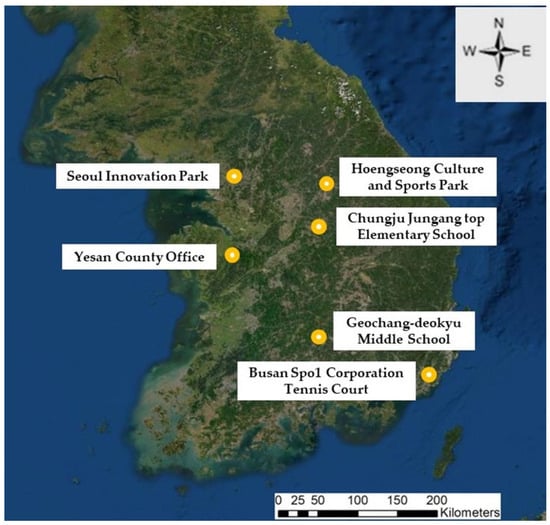
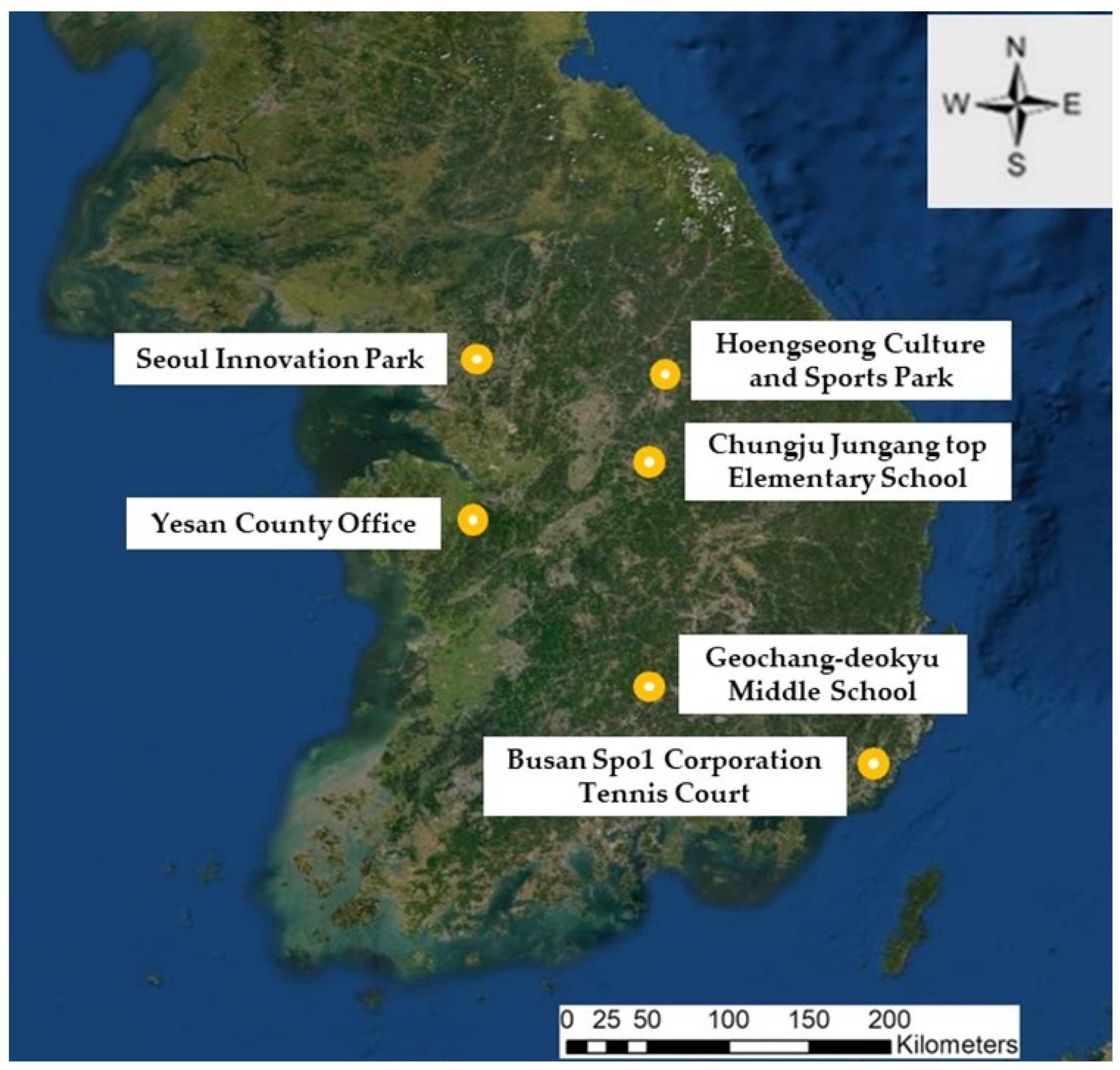
RWH facilities are installed in several buildings in South Korea for rainfall-runoff mitigation and water storage. Six buildings at different locations were selected for this study. Two are office buildings, two are school buildings and two are sports buildings. Figure 1 shows the locations of the selected six studied buildings, while Table 1 includes information about the building’s name and type, the nearest rain station’s name, location, latitude and longitude coordinates, the distance of the building from the rain station, and the average annual rainfall for a 10-year period (January 2011 to December 2020). Further details i.e., the rainfall capture area, the actual rainwater tank size, and the standard tank size of each selected studied building are provided in Table 5. The standard tank size (m3) must be at least the size of the roof area (m2) multiplied by 0.05 (m), as defined in Table 2.
Figure 1.
The regional location map of selected six studied buildings.
Table 1.
Summary of selected building’s location and rainfall data.
Table 2.
Details of RWH facilities-related laws and guidelines from the Ministry of Environment [35].
2.2. Rainwater Harvesting-Related Laws and Regulations
To enhance the reuse of rainwater and minimize rainwater runoff, the Ministry of Environment (MoE) promulgated the “Promotion and Support of Water Re-use” law in 2014 for the installation of rainwater utilization facilities at different types of buildings, such as public buildings, sports complexes, gymnasiums, apartment complexes, dormitories, schools, and golf courses. MoE guidelines about the type of buildings, its specified roof area, and management standards for rainwater utilization are summarized in Table 2.
To mitigate rainwater runoff on-site the Green Standard for Energy and Environmental Design (G-SEED) was modified in 2016. These standards are intended to restore the city’s natural hydrological cycle. Below is an explanation of the rating criterion score in buildings: the application of stormwater management techniques (such as rain garden, green roof, etc.) will obtain 5 credits; the usage of rainwater and groundwater infiltration (permeable pavement trench, rainwater utilization system, etc.) will obtain 4 credits; the usage of water-saving devices in buildings will obtain 3 credits; the use of water consumption monitoring equipment will obtain 2 credits, and the usage of treated wastewater sewage and gray water will obtain 1 credit. G-SEED guidelines about the storage and use of rainwater and ground infiltration are summarized in Table 3.
Table 3.
The Green Standard for Energy and Environmental Design (G-SEED) certificate entry requirements for utilization of rainwater and effluent groundwater [36].
2.3. Methodology of the Study
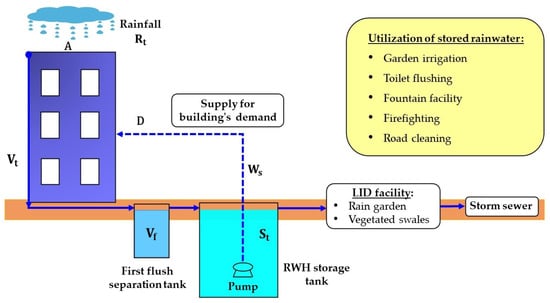
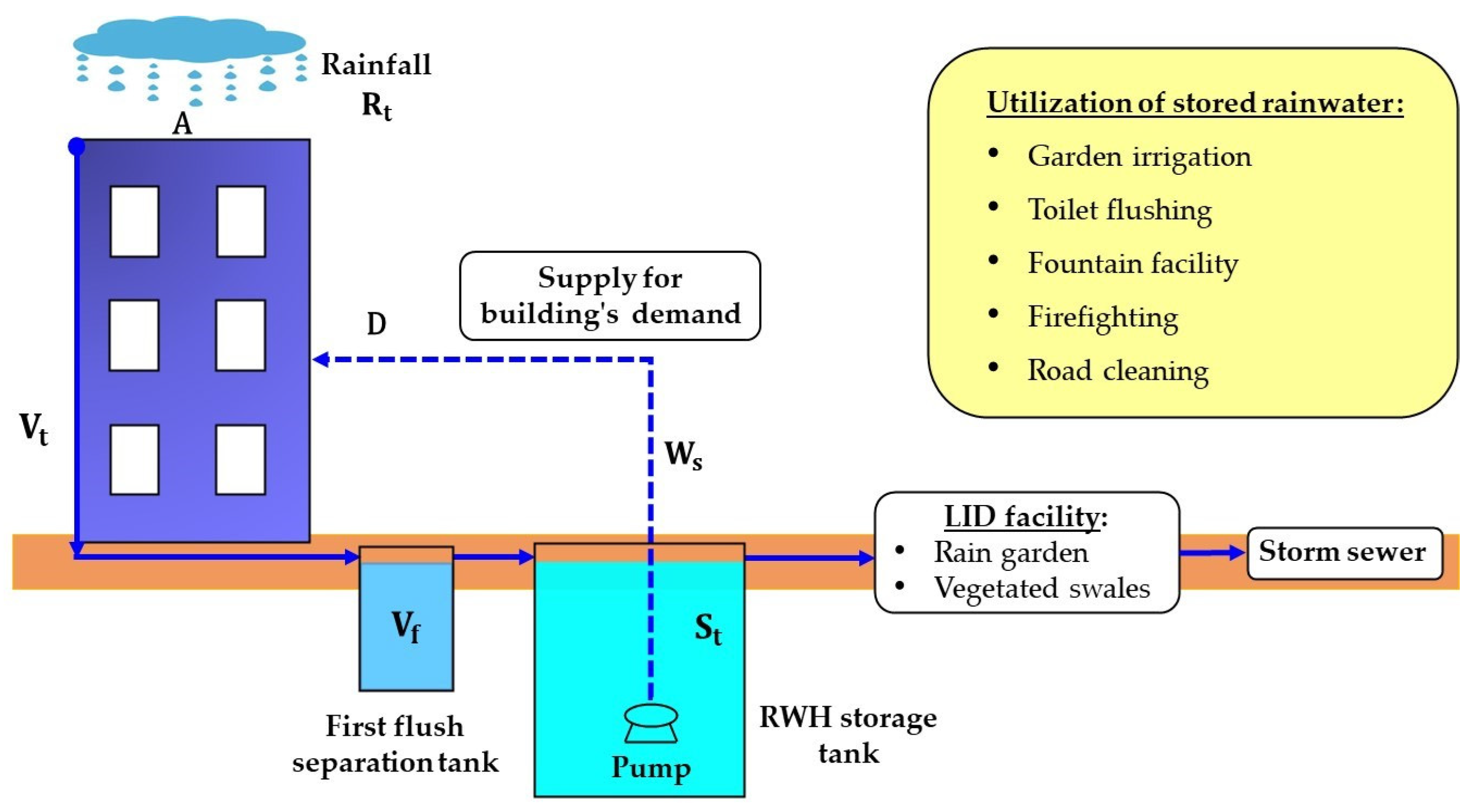
In this study, we developed a spreadsheet-based daily water balance model to analyze the effect of the current laws and regulations regarding tank size on RWH facility evaluation criteria. The model developed in the present study calculated the rainwater utilization rate considering different water demand scenarios in contrast with existing methods. The existing methods do not consider water demand, but only the rainfall data and rainwater storage tank size [38]. In addition, the RWH facility evaluation criteria score was calculated for actual and standard tank sizes considering different water demand scenarios. The model developed in the present study also calculated the RWH facility evaluation criteria score considering various rainwater tank sizes to investigate the suitable range of storage tank sizes. As shown in Figure 2, the rainfall runoff is collected from the rooftop of the building and supplied to the rainwater storage tank. First flush rainfall (10 mm), which contains contaminants, is collected in the first flush separation tank. The stored rainwater is commonly used for the non-potable purposes in buildings [39]. It should be stated that the water demand was calculated based on the specific use; more information about water end-use purposes in each type of selected studied building is provided in Table 4. The values for high, medium, and low, demand were assumed to be 75%, 50%, and 25% of the calculated model water demand, respectively. The storage tank size is considered well-designed if its size matches the standard tank size, or if it scores higher on the RWH facility evaluation criteria.
Figure 2.
Graphical representation of daily water balance model for rainwater harvesting facilities (It = rainfall (mm) on the day t, A = catchment area (m2), Vt = harvested rainwater, Vf = volume (m3) of the first flush separation tank, St = water stored in the rainwater storage tank (m3) after the end of the day t, Ws = rainwater supplied to the building (m3), D = daily rainwater demand (m3), and LID facility = Low Impact Development facility).
Table 4.
Harvested rainwater utilization purpose and water demand in each type of building.
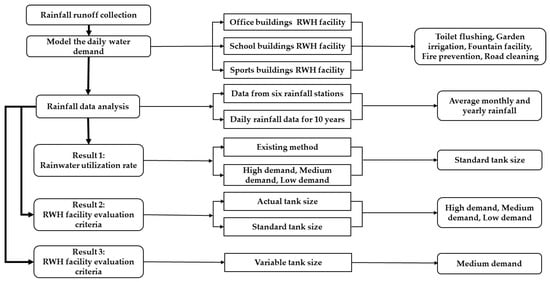
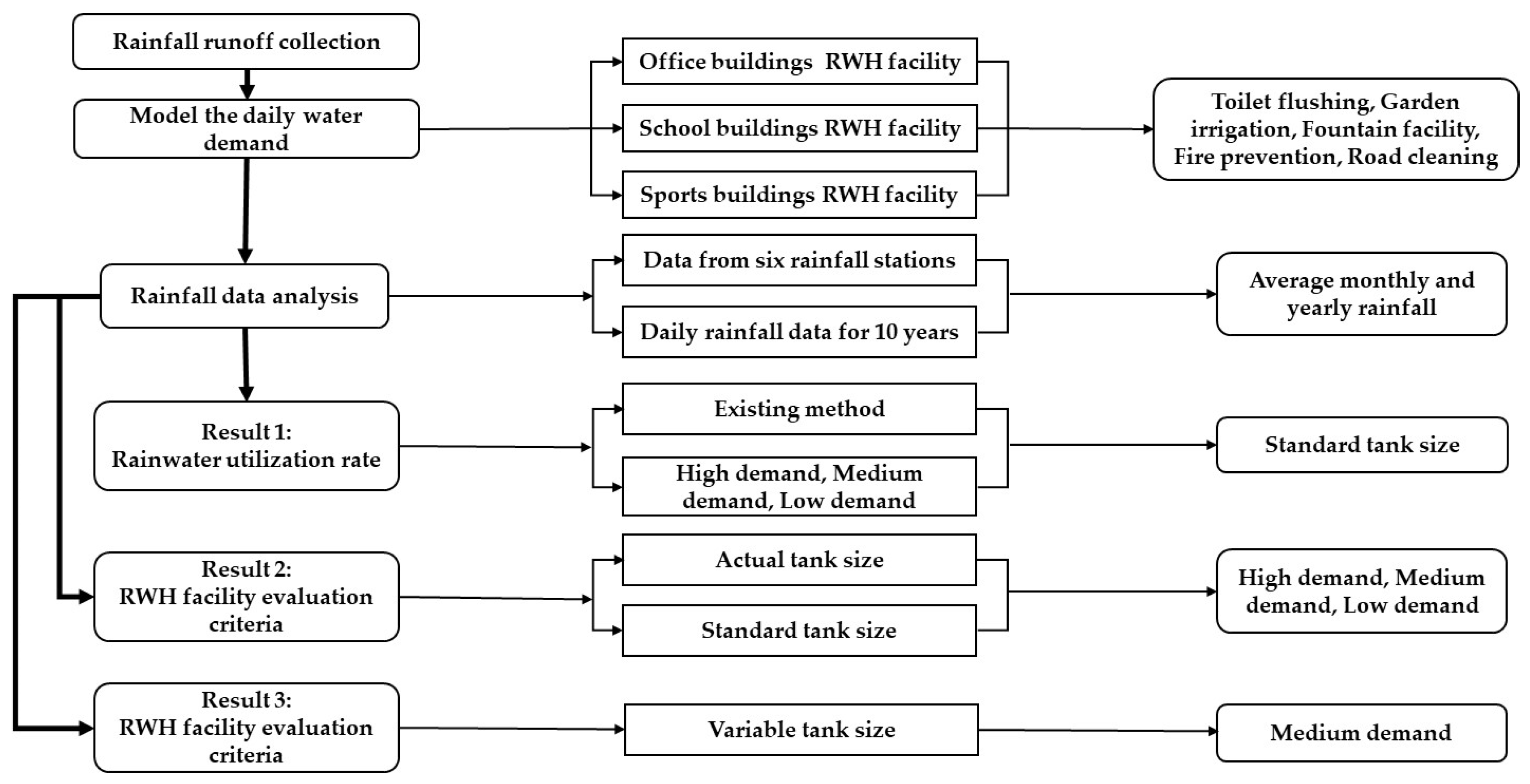
Further, the regional local rainfall data was collected from the Korea Meteorological Administration (KMA) [40] and used as input in the calculations. In addition, the RWH facility evaluation criteria were calculated for each selected building considering variable water demand and tank size. It should be mentioned that the standard tank size was calculated based on 50 mm of rainfall. More details about the standard tank size estimation are provided in Table 2. The procedure used in this study is summarized in Figure 3.
Figure 3.
The methodological framework for this study.
2.4. Daily Water Balance Simulation Model
In the present study, a spreadsheet-based daily water balance model was established to analyze the effect of the existing laws and regulations regarding tank size on RWH facility evaluation criteria. The input data for the simulation model were rooftop area, daily rainfall, and runoff coefficient; while the variable input data were considering different water demand, actual and standard tank size, and variable tank size. The fundamental concept underlying the model is that the rainwater falling on the roof area first flows into a first flush separation tank before flowing into a rainwater storage tank. Water is pumped from the rainwater storage tank for the intended purpose. Details about the rainwater utilization purpose and water demand in each type of selected building are shown in Table 4.
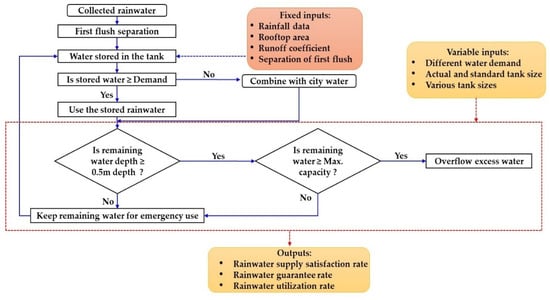
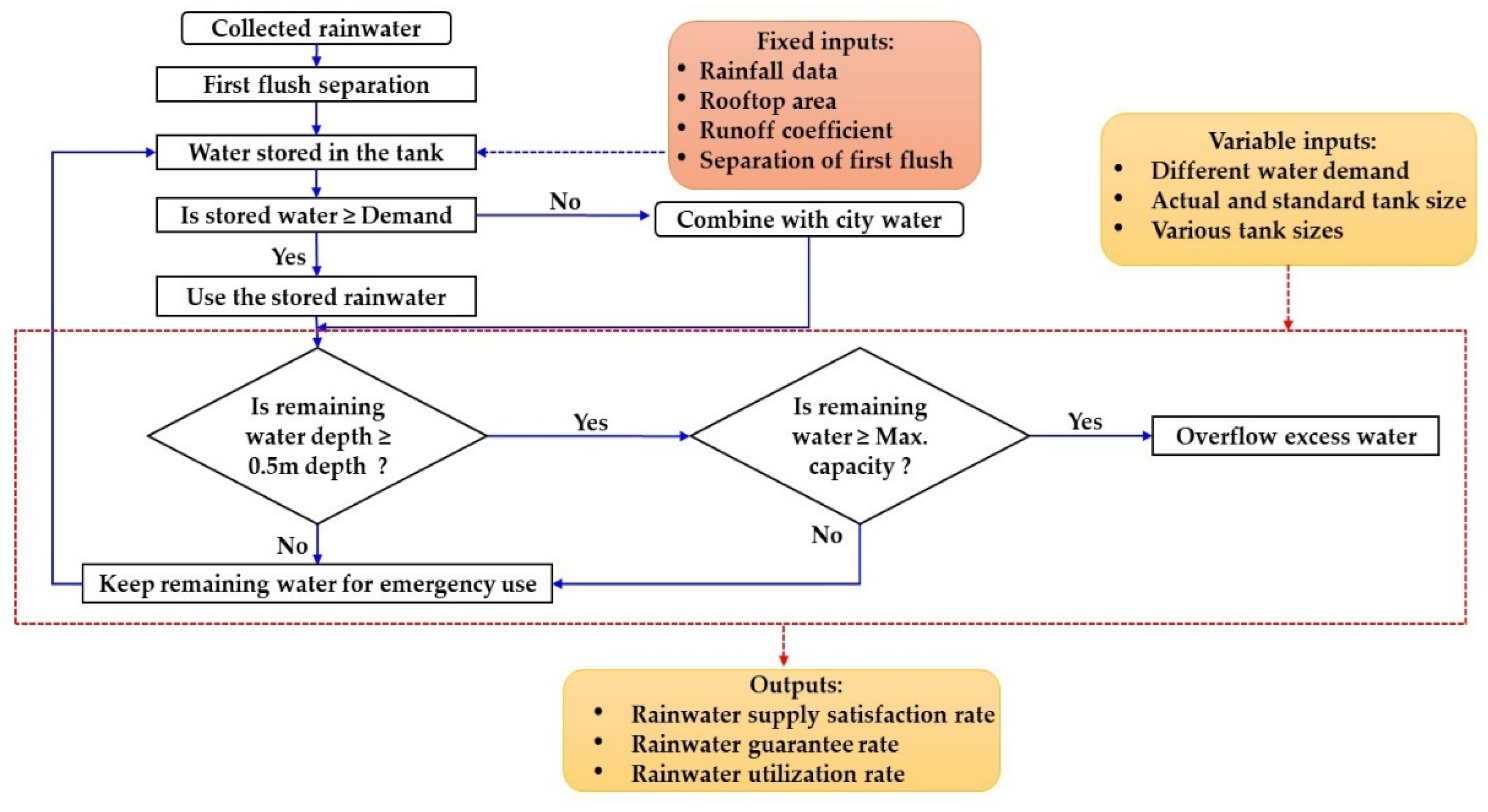
Figure 4 shows the logical flow chart of the simulation model to calculate the RWH facility evaluation criteria of an RWH system. It was assumed that the rainwater storage tank has a structure that can block sunlight; therefore, the water losses due to evaporation from the storage tank were not considered. In addition, the present study considered a roof runoff coefficient of 0.90 for a concrete/asphalt roof [41], while a runoff coefficient of 0.25 was used to calculate the runoff from a green roof [42]. In the calculation for the volume of the harvested rainwater, if the captured rainfall was less than the first flush volume, the amount of the harvested rainwater was considered to be zero. However, if it was greater than the volume of the first flush, the amount of rainfall collected was estimated using Equation (1). It should be stated that the first flush volume is dependent on the duration of any dry period, therefore, a more comprehensive strategy is required to manage the water quality. However, because the focus of this study is to analyze the effect of the existing laws and regulations regarding tank size on RWH facility evaluation criteria, therefore, water quality was not considered in the present study.
Figure 4.
The simulation model methodology flowchart to visualize the daily water balance model developed in this study based on the RWH facility’s fixed inputs, variable inputs, and outputs.
The equation for cumulative runoff collected from a flat building rooftop is:
where Vt is the harvested rainwater (m3) on the day t from the catchment area, It is the rainfall (mm) on the day t, If is first flush rainfall (10 mm), A is the catchment area (m2), and Rc is the runoff coefficient (0.90). for .
The cumulative water stored in the tank is calculated using the following equation:
where St is the cumulative water stored in the rainwater storage tank (m3) after the end of the day t, Vt is the harvested rainwater (m3) on the day t, St−1 is the stored water in the tank (m3) at the beginning of the day t, D is the daily rainwater demand (m3), and C is the capacity of rainwater tank (m3).
The equations for calculating RWH facility evaluation criteria are:
2.5. Rainfall Data Collection and Trend Analysis
In the present study, rainfall data were obtained from the Korea Meteorological Administration (KMA) [39], for a 10-year period (January 2011 to December 2020). It should be mentioned that the rainfall data in the present study are collected from the rain station nearest to the selected RWH facility building location. The rainfall data have been used as input in the calculations.
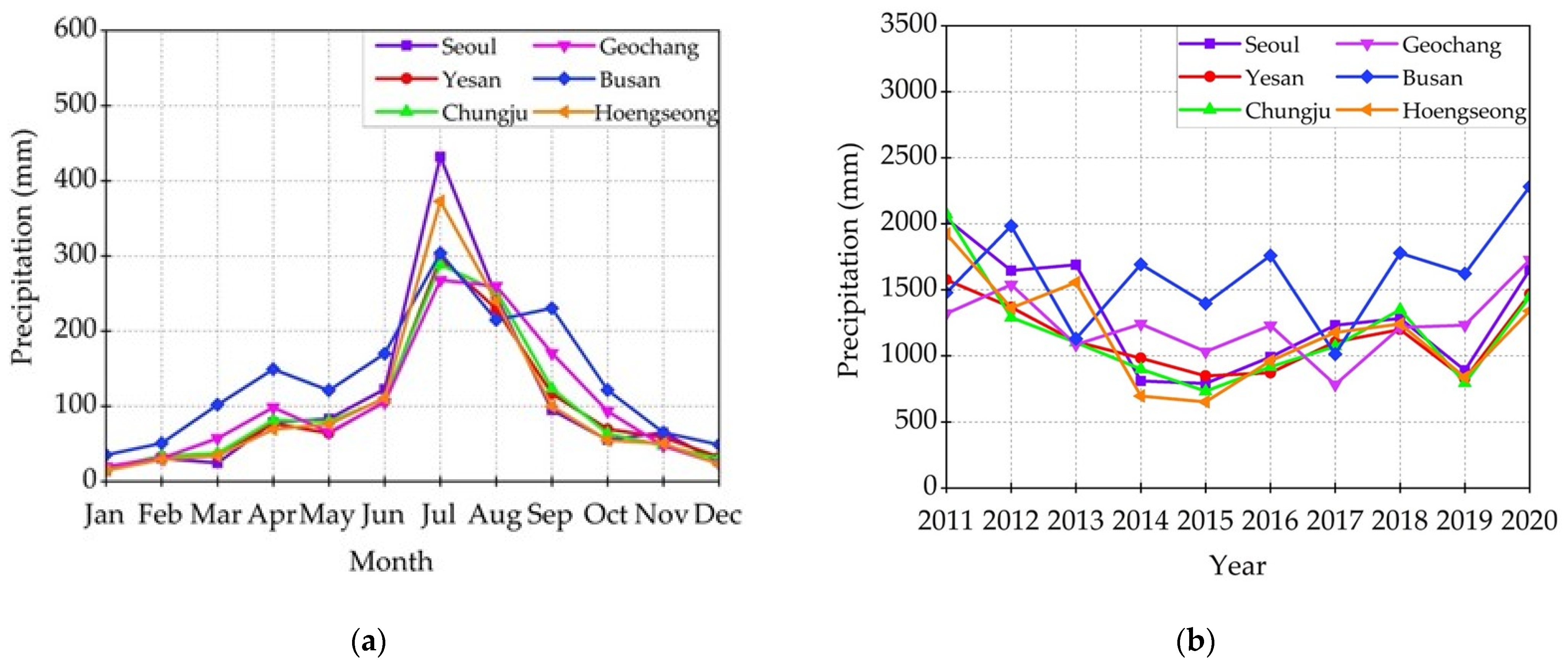
Figure 5a represents the monthly average rainfall data of six studied locations. It can be observed from Figure 5a that there is significant seasonal variation and 69% of the total rainfall is concentrated in the northern hemisphere summer. In mid-June, the monsoon season usually begins, which lasts for about seven weeks. Figure 5b shows the average annual rainfall data for the six studied locations over the 10-year period (January 2011 to December 2020). Busan, which is in the southeast part of Korea, has a higher annual rainfall than the other locations.
Out of all six studied locations, Busan has the highest ten-year average annual rainfall (1,613 mm) whereas Yesan has the lowest (1,135 mm). The average annual rainfall over the entire country is approximately 1,270 mm.
Figure 5.
Average rainfall of the rain station nearest to locations of the selected buildings (years 2011–2020) (a) Average monthly rainfall (b) Average annual rainfall.
3. Results and Discussion
3.1. Effects of Water Demand Scenario on RWH Facilities Utilization Rate
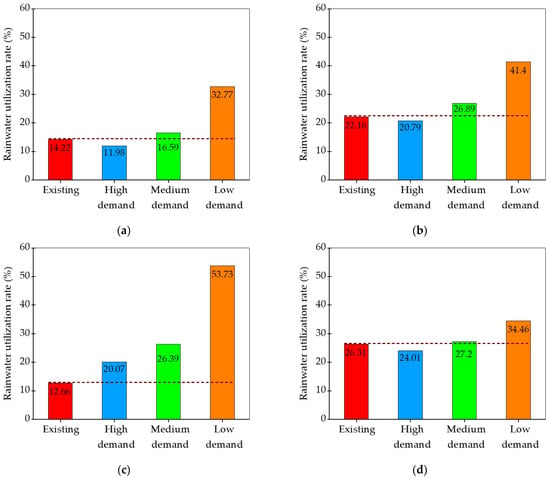
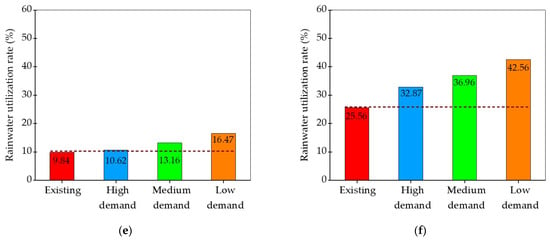
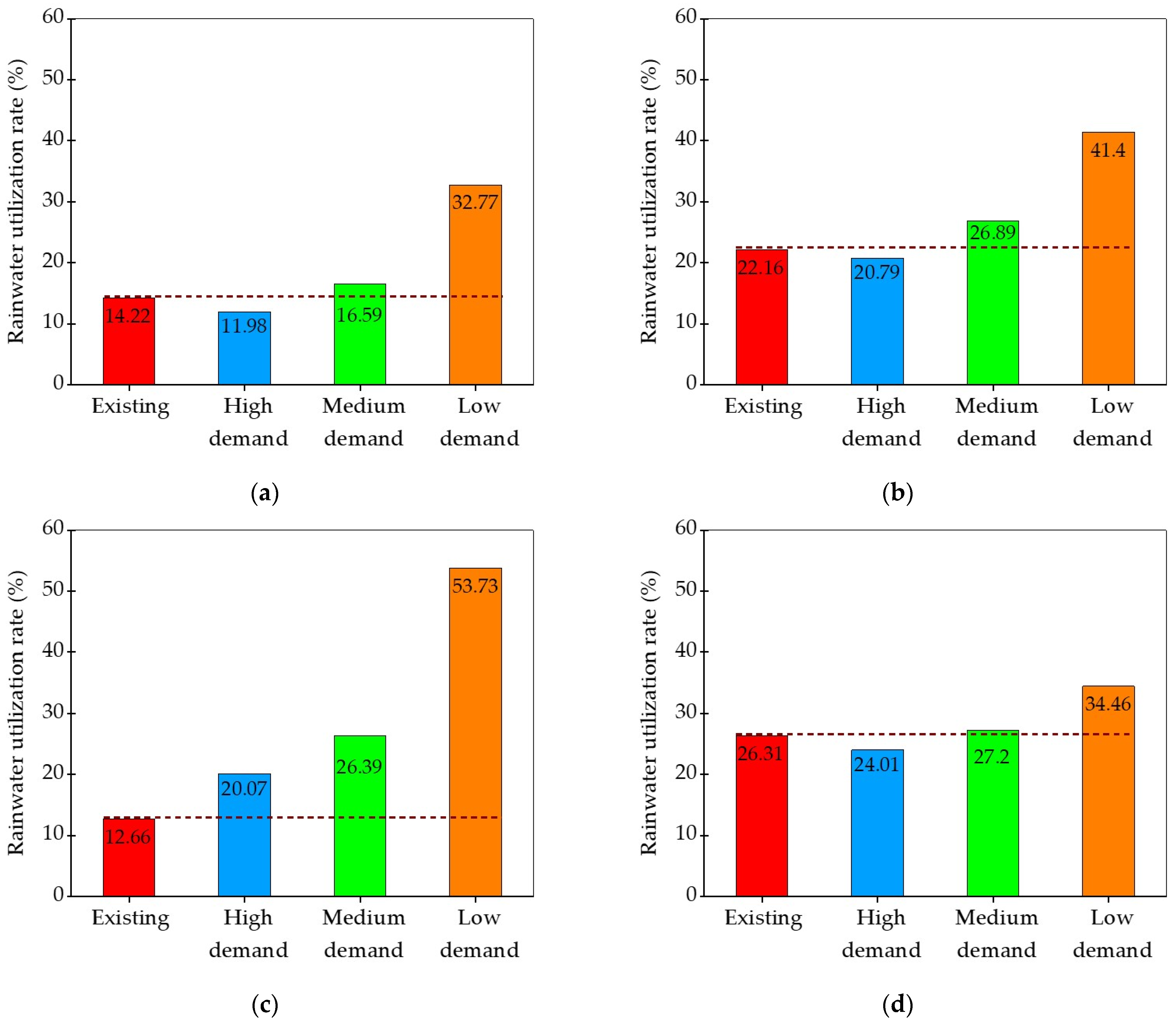
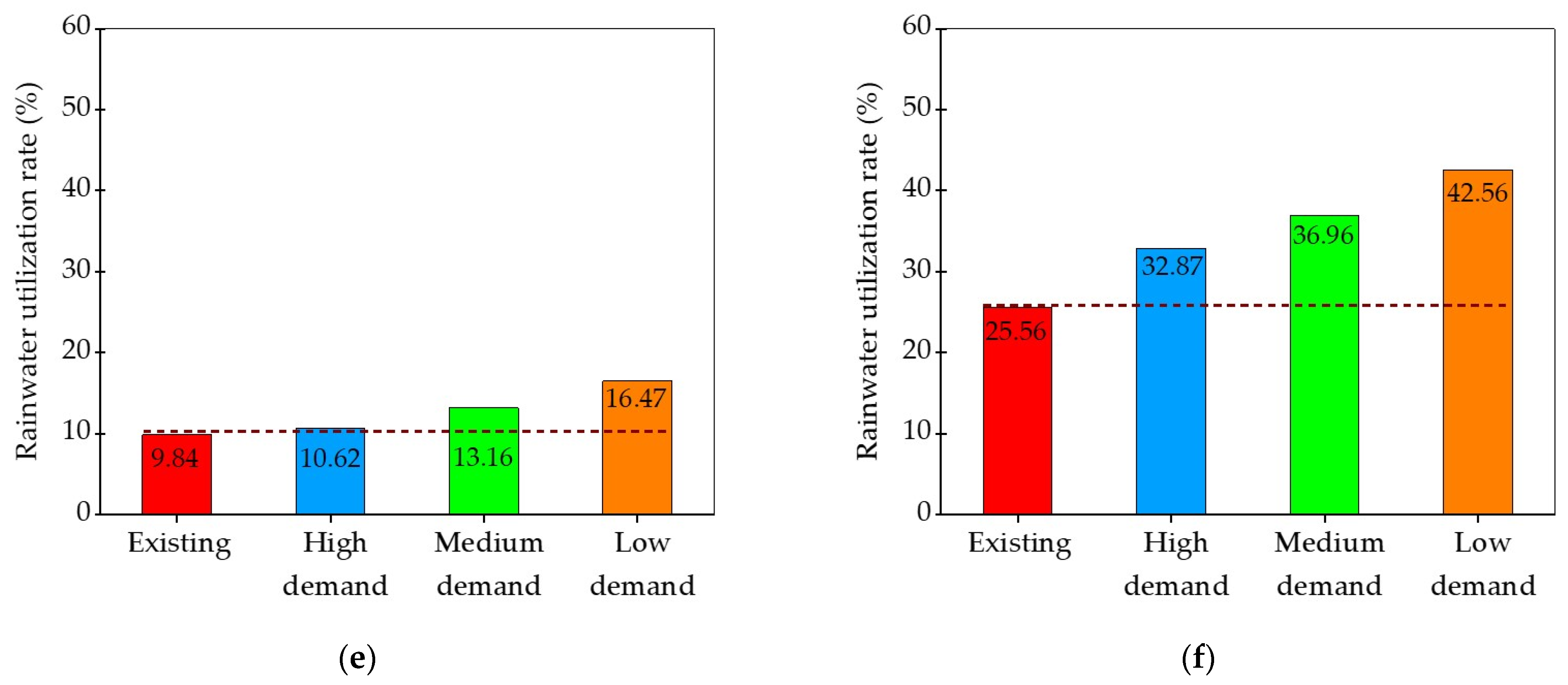
The rainwater utilization rate for the selected studied buildings is shown in Figure 6a–f. Two different methods have been used to calculate the rainwater utilization rate of the RWH facilities. The existing method calculated the rainwater utilization rate considers only the rainfall data and rainwater storage tank size [38]. Some other research studies have also considered similar existing methods [43,44]. The method developed in the present study calculates the rainwater utilization rate considering variable water demand. The dotted lines in Figure 6 show the “existing method” reference level. As shown in Figure 6a–f, for each selected studied building the rainwater utilization rate generally has the highest value for low water demand. We found that it’s better to use high water demand in the monsoon season while using low water demand in the dry season.
Figure 6.
RWH facility rainwater utilization rate of the selected studied buildings using the existing method and the different water demand scenarios proposed in the current study. (a) Seoul Innovation Park; (b) Yesan County Office; (c) Chungju Jungang Top Elementary School; (d) Geochang-deokyu Middle School; (e) Busan Spo1 Corporation Tennis Court; (f) Hoengseong Culture and Sports Park.
3.2. Comparison of Actual and Standard Tank Size Effect on RWH Facility Evaluation Criteria Considering Different Water Demand Scenarios
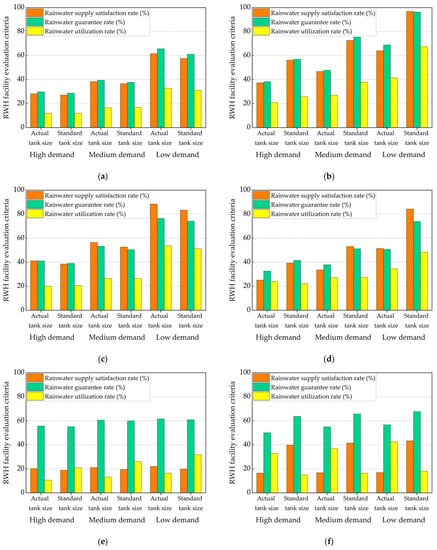
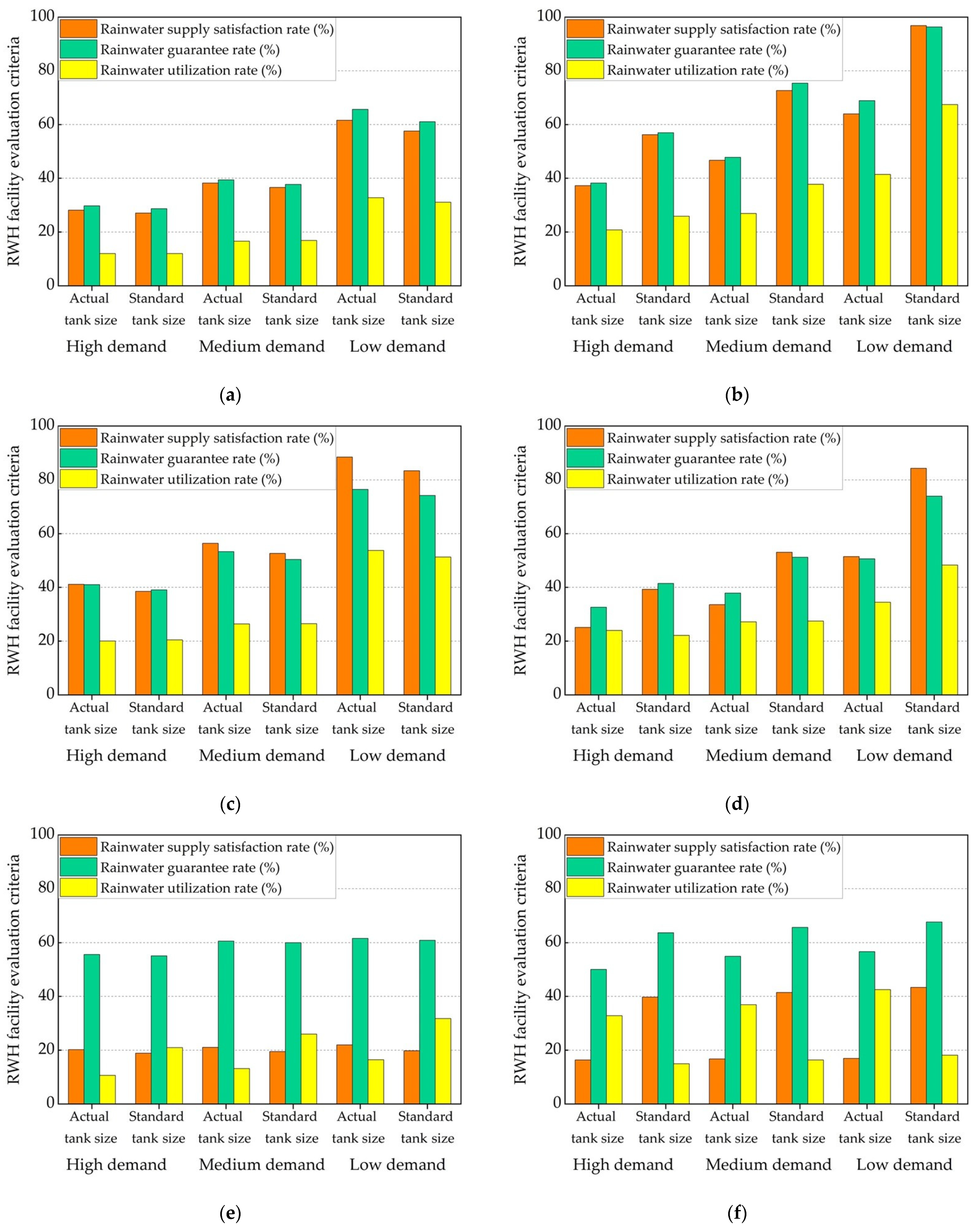
Figure 7a–f shows the RWH facility evaluation criteria of the selected studied buildings. The RWH facility evaluation criteria were calculated for actual and standard tank size considering various water demand scenarios. Table 5 shows the details about the catchment area, actual, and standard tank size of each selected studied building. As shown in Figure 7a–f, for each selected studied building, the RWH facility evaluation criteria generally have the highest value for low water demand. Furthermore, as shown in Table 5, the actual tank size of the RWH facility in Seoul Innovation Park and Chungju Jungang Top Elementary School is relatively well-designed. While, in the case of Geochang-deokyu Middle School, and Hoengseong Culture and Sports Park, the storage actual tank size is smaller than the standard set, whereas, in Busan Spo1 Corporation Tennis Court, the actual tank size is larger than the standard set.
Figure 7.
Selected studied buildings, RWH facility evaluation criteria considering actual and standard tank size with different water demand scenarios. (a) Seoul Innovation Park; (b) Yesan County Office; (c) Chungju Jungang Top Elementary School; (d) Geochang-deokyu Middle School; (e) Busan Spo1 Corporation Tennis Court; (f) Hoengseong Culture and Sports Park.
Table 5.
Details of runoff catchment area, actual tank size, and standard tank size of selected studied buildings.
In addition, and more importantly, we found that the actual tank size of the RWH facility in the Yesan County Office is much smaller than the standard tank size, but scores highest on the RWH facility evaluation criteria among all the selected studied buildings. In the Yesan County Office, the RWH facility is designed according to the guidelines of the Green Standard for Energy and Environmental Design (G-SEED). A summary of G-SEED guidelines is provided in Table 3. In the Yesan County Office, a green roof connected to a small rainwater storage tank is installed. As green roofs can mitigate the rainfall-runoff volume [45], the rainwater can be managed efficiently with less pumping energy and a small RWH facility storage tank size.
3.3. Effects of Tank Size Variation on RWH Facility Evaluation Criteria
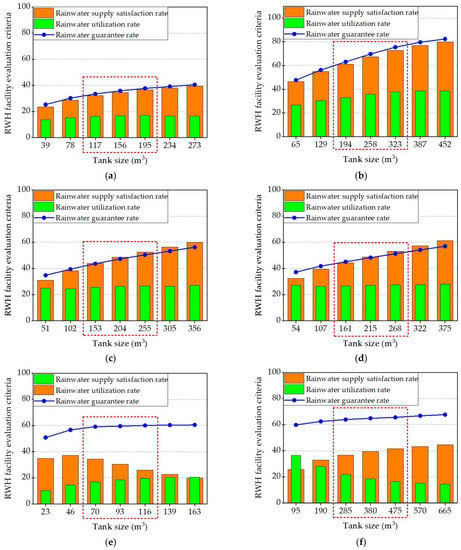
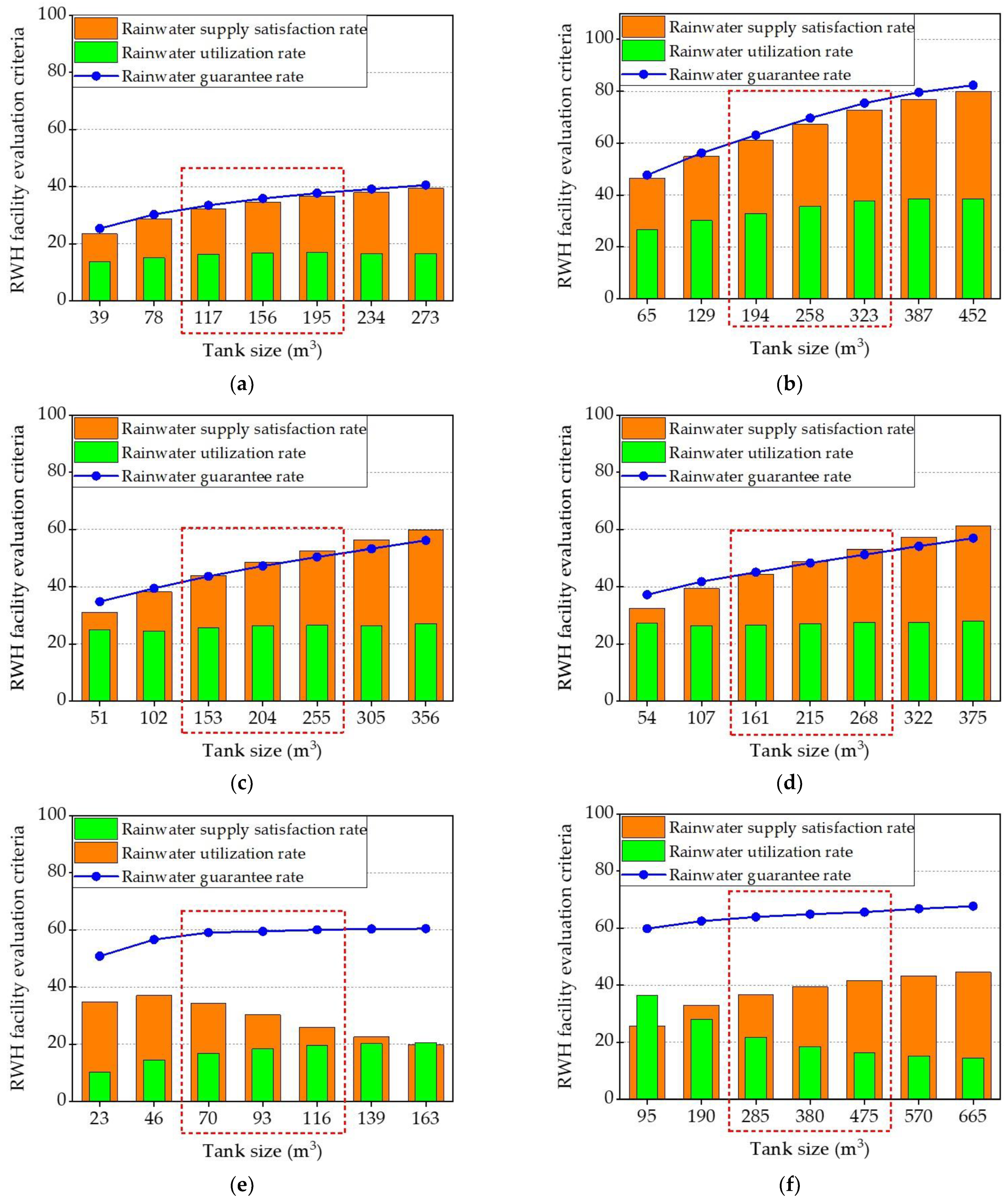
Figure 8a–f shows the effects of tank size variation on the RWH facility evaluation criteria for all selected studied buildings. Table 6 shows the rainwater storage tank size in each selected studied building. The size of the tank was calculated based on the assumed applied value of rainfall, ranging between 10 and 70 mm. The results shown in Figure 8a–c was calculated based on medium water demand. In addition, according to guidelines from the Ministry of Environment (MoE), rainwater storage tank size should be calculated based on 50 mm of rainfall whereas, according to guidelines from the Green Standard for Energy and Environmental Design (G-SEED), rainwater storage tank size should be calculated based on 30 mm of rainfall. More information about the MoE and G-SEED guidelines regarding rainwater storage tank size is provided in Table 2 and Table 3, respectively. From Figure 8a–f, for each selected studied building, rainwater storage tank size calculated based on 30 mm to 50 mm of rainfall was found suitable. Increasing the storage tank size calculated based on rainfall of more than 50 mm does not have a large impact on the RWH facility evaluation criteria scores.
Figure 8.
Selected studied buildings, RWH facility evaluation criteria considering variable tank size (based on 10 mm to 70 mm of rainfall, red dashed box shows tank size based on 30–50 mm of rainfall). (a) Seoul Innovation Park; (b) Yesan County Office; (c) Chungju Jungang Top Elementary School; (d) Geochang-deokyu Middle School; (e) Busan Spo1 Corporation Tennis Court; (f) Hoengseong Culture and Sports Park.
Table 6.
Tank size of each selected studied building based on the applied value of rainfall depth.
4. Conclusions
This study analyzed the effect of the current laws and regulations regarding tank size on RWH facility evaluation criteria using the daily water balance model. The study considered daily rainfall data, collected from the Korea Meteorological Administration for a 10-year period (January 2011 to December 2020). The collected daily rainfall data were used as input in the calculations of RWH facility evaluation criteria. Based on the analysis of the results we can conclude that:
- It is better to use a high-water demand scenario in the monsoon season while using a low water demand scenario in the dry season;
- Among the selected studied buildings, a building having the combination of a green roof and an RWH facility scores highest on the RWH facility evaluation criteria even though the actual tank size is much smaller than the standard tank size;
- For each selected studied building, a rainwater storage tank size calculated based on 30 mm to 50 mm of rainfall was found suitable.
More crucially, having a green roof connected to a small rainwater storage tank is recommended. As a green roof can mitigate the rainfall-runoff volume, the rainwater can be managed efficiently with less pumping energy and only a small storage tank. The findings suggest a potential solution to the important issue of managing rainwater with small amounts of energy, less maintenance, and a small storage tank size. Our methodology of assessing RWH facility tank size will be of interest to policymakers working on urban rainwater management. However, future research should concentrate on investigating the optimum conditions for a combination of a green roof and a small rainwater storage tank to efficiently manage rainwater for different types of buildings.
Author Contributions
The paper was guided by R.K.; A.K. and Y.P., monitored the data and analyzed the results. J.P. developed the spreadsheet-based model. The whole manuscript was composed and written by A.K. All authors have read and agreed to the published version of the manuscript.
Funding
This research was funded by the Korea Environmental Industry and Technology Institute (KEITI) as “Smart Urban Water Resources Management Program” (2019002950004).
Institutional Review Board Statement
Not applicable.
Informed Consent Statement
Not applicable.
Data Availability Statement
The rainfall data used can be obtained from the Korea Meteorological Administration.
Acknowledgments
The authors would like to express gratitude to the Korea Environmental Industry and Technology Institute (KEITI) for project funding.
Conflicts of Interest
The authors declare no conflict of interest.
References
- Pokhrel, Y.; Felfelani, F.; Satoh, Y.; Boulange, J.; Burek, P.; Gädeke, A.; Gerten, D.; Gosling, S.N.; Grillakis, M.; Gudmundsson, L. Global terrestrial water storage and drought severity under climate change. Nat. Clim. Chang. 2021, 11, 226–233. [Google Scholar] [CrossRef] [Scilit]
- GhaffarianHoseini, A.; Tookey, J.; GhaffarianHoseini, A.; Yusoff, S.M.; Hassan, N.B. State of the art of rainwater harvesting systems towards promoting green built environments: A review. Desalin. Water Treat. 2016, 57, 95–104. [Google Scholar] [CrossRef] [Scilit]
- Schewe, J.; Heinke, J.; Gerten, D.; Haddeland, I.; Arnell, N.W.; Clark, D.B.; Dankers, R.; Eisner, S.; Fekete, B.M.; Colón-González, F.J. Multimodel assessment of water scarcity under climate change. Proc. Natl. Acad. Sci. USA 2014, 111, 3245–3250. [Google Scholar] [CrossRef] [Scilit] [PubMed]
- Flörke, M.; Schneider, C.; McDonald, R.I. Water competition between cities and agriculture driven by climate change and urban growth. Nat. Sustain. 2018, 1, 51–58. [Google Scholar] [CrossRef] [Scilit]
- Stott, P. How climate change affects extreme weather events. Science 2016, 352, 1517–1518. [Google Scholar] [CrossRef] [Scilit] [PubMed]
- Ritchie, H.; Roser, M. Urbanization. Our World in Data. 2018. Available online: https://ourworldindata.org/urbanization (accessed on 6 July 2022).
- Kirshen, P.; Caputo, L.; Vogel, R.M.; Mathisen, P.; Rosner, A.; Renaud, T. Adapting urban infrastructure to climate change: A drainage case study. J. Water Resour. Plan. Manag. 2015, 141, 04014064. [Google Scholar] [CrossRef] [Scilit]
- Zevenbergen, C.; Fu, D.; Pathirana, A. Transitioning to sponge cities: Challenges and opportunities to address urban water problems in China. Water 2018, 10, 1230. [Google Scholar] [CrossRef] [Scilit]
- Shafique, M.; Kim, R. Low impact development practices: A review of current research and recommendations for future directions. Ecol. Chem. Eng. S 2015, 22, 543–563. [Google Scholar] [CrossRef] [Scilit]
- Han, M. Progress of multipurpose and proactive rainwater management in Korea. Environ. Eng. Res. 2013, 18, 65–69. [Google Scholar] [CrossRef] [Scilit]
- Campisano, A.; Butler, D.; Ward, S.; Burns, M.J.; Friedler, E.; DeBusk, K.; Fisher-Jeffes, L.N.; Ghisi, E.; Rahman, A.; Furumai, H. Urban rainwater harvesting systems: Research, implementation and future perspectives. Water Res. 2017, 115, 195–209. [Google Scholar] [CrossRef] [Scilit]
- Richards, S.; Rao, L.; Connelly, S.; Raj, A.; Raveendran, L.; Shirin, S.; Jamwal, P.; Helliwell, R. Sustainable water resources through harvesting rainwater and the effectiveness of a low-cost water treatment. J. Environ. Manag. 2021, 286, 112223. [Google Scholar] [CrossRef] [Scilit] [PubMed]
- Ennenbach, M.W.; Concha Larrauri, P.; Lall, U. County-scale rainwater harvesting feasibility in the United States: Climate, collection area, density, and reuse considerations. JAWRA J. Am. Water Resour. Assoc. 2018, 54, 255–274. [Google Scholar] [CrossRef] [Scilit]
- Jones, M.P.; Hunt, W.F. Performance of rainwater harvesting systems in the southeastern United States. Resour. Conserv. Recycl. 2010, 54, 623–629. [Google Scholar] [CrossRef] [Scilit]
- Rostad, N.; Foti, R.; Montalto, F.A. Harvesting rooftop runoff to flush toilets: Drawing conclusions from four major US cities. Resour. Conserv. Recycl. 2016, 108, 97–106. [Google Scholar] [CrossRef] [Scilit]
- Ward, S.; Memon, F.; Butler, D. Performance of a large building rainwater harvesting system. Water Res. 2012, 46, 5127–5134. [Google Scholar] [CrossRef] [Scilit]
- Zhang, Y.; Chen, D.; Chen, L.; Ashbolt, S. Potential for rainwater use in high-rise buildings in Australian cities. J. Environ. Manag. 2009, 91, 222–226. [Google Scholar] [CrossRef] [Scilit]
- Wang, R.; Zimmerman, J.B. Economic and environmental assessment of office building rainwater harvesting systems in various US cities. Environ. Sci. Technol. 2015, 49, 1768–1778. [Google Scholar] [CrossRef] [Scilit] [PubMed]
- Imteaz, M.A.; Shanableh, A.; Rahman, A.; Ahsan, A. Optimisation of rainwater tank design from large roofs: A case study in Melbourne, Australia. Resour. Conserv. Recycl. 2011, 55, 1022–1029. [Google Scholar] [CrossRef] [Scilit]
- Londra, P.; Theocharis, A.; Baltas, E.; Tsihrintzis, V. Optimal sizing of rainwater harvesting tanks for domestic use in Greece. Water Resour. Manag. 2015, 29, 4357–4377. [Google Scholar] [CrossRef] [Scilit]
- Semaan, M.; Day, S.D.; Garvin, M.; Ramakrishnan, N.; Pearce, A. Optimal sizing of rainwater harvesting systems for domestic water usages: A systematic literature review. Resour. Conserv. Recycl. X 2020, 6, 100033. [Google Scholar] [CrossRef] [Scilit]
- Shadeed, S.; Alawna, S. Optimal Sizing of Rooftop Rainwater Harvesting Tanks for Sustainable Domestic Water Use in the West Bank, Palestine. Water 2021, 13, 573. [Google Scholar] [CrossRef] [Scilit]
- Imteaz, M.A.; Shadeed, S. Superiority of water balance modelling for rainwater harvesting analysis and its application in deriving generalised equation for optimum tank size. J. Clean. Prod. 2022, 342, 130991. [Google Scholar] [CrossRef] [Scilit]
- Kim, J.E.; Teh, E.X.; Humphrey, D.; Hofman, J. Optimal storage sizing for indoor arena rainwater harvesting: Hydraulic simulation and economic assessment. J. Environ. Manag. 2021, 280, 111847. [Google Scholar] [CrossRef] [Scilit] [PubMed]
- Abdulla, F. Rainwater harvesting in Jordan: Potential water saving, optimal tank sizing and economic analysis. Urban Water J. 2020, 17, 446–456. [Google Scholar] [CrossRef] [Scilit]
- Campisano, A.; Modica, C. Optimal sizing of storage tanks for domestic rainwater harvesting in Sicily. Resour. Conserv. Recycl. 2012, 63, 9–16. [Google Scholar] [CrossRef] [Scilit]
- Rahman, A. Recent advances in modelling and implementation of rainwater harvesting systems towards sustainable development. Water 2017, 9, 959. [Google Scholar] [CrossRef] [Scilit]
- Khan, Z.; Alim, M.A.; Rahman, M.M.; Rahman, A. A continental scale evaluation of rainwater harvesting in Australia. Resour. Conserv. Recycl. 2021, 167, 105378. [Google Scholar] [CrossRef] [Scilit]
- Preeti, P.; Rahman, A. A case study on reliability, water demand and economic analysis of rainwater harvesting in Australian capital cities. Water 2021, 13, 2606. [Google Scholar] [CrossRef] [Scilit]
- Siddiqui, R.; Siddiqui, S. Assessing the rooftop rainwater harvesting potential in urban residential areas of Pakistan: A case study of model town, Lahore, Pakistan. Int. J. Econ. Environ. Geol. 2019, 9, 11–19. [Google Scholar]
- Imteaz, M.A.; Ahsan, A.; Naser, J.; Rahman, A. Reliability analysis of rainwater tanks in Melbourne using daily water balance model. Resour. Conserv. Recycl. 2011, 56, 80–86. [Google Scholar] [CrossRef] [Scilit]
- Lee, J.Y.; Han, M.Y.; Kim, H. Review on codes and application of urban rainwater harvesting utilization: Focused on case study in South Korea. Int. J. Urban Sci. 2010, 14, 307–319. [Google Scholar] [CrossRef] [Scilit]
- Kim, K.; Yoo, C. Hydrological modeling and evaluation of rainwater harvesting facilities: Case study on several rainwater harvesting facilities in Korea. J. Hydrol. Eng. 2009, 14, 545–561. [Google Scholar] [CrossRef] [Scilit]
- Choi, S. Policy Improvement for Promotion of Urban Water Circulation. 2018. Available online: https://archives.kdischool.ac.kr/handle/11125/34610 (accessed on 25 June 2022).
- Center, K.L.I. Promotion and Support of Water Reuse Act. Available online: https://www.law.go.kr/LSW/eng/engMain.do?eventGubun=060124 (accessed on 21 July 2022).
- Kim, R. Low impact development and green infrastructure in South Korea: Trends and future directions. Ecol. Resilient Infrastruct. 2016, 3, 80–91. [Google Scholar] [CrossRef] [Scilit]
- Palla, A.; Gnecco, I.; Lanza, L.; La Barbera, P. Performance analysis of domestic rainwater harvesting systems under various European climate zones. Resour. Conserv. Recycl. 2012, 62, 71–80. [Google Scholar] [CrossRef] [Scilit]
- Lee, C.M.; Cheong, Y.K. A Study on the Rational Scale Estimation of Rainwater Harvesting Facilities on Condominium Complex. J. Korean Soc. Hazard Mitig. 2017, 17, 297–303. [Google Scholar] [CrossRef] [Scilit]
- Kolavani, N.J.; Kolavani, N.J. Technical feasibility analysis of rainwater harvesting system implementation for domestic use. Sustain. Cities Soc. 2020, 62, 102340. [Google Scholar] [CrossRef] [Scilit]
- Administration, K.M. Meteorological Information. Available online: https://data.kma.go.kr/ (accessed on 17 October 2021).
- Farreny, R.; Morales-Pinzón, T.; Guisasola, A.; Tayà, C.; Rieradevall, J.; Gabarrell, X. Roof selection for rainwater harvesting: Quantity and quality assessments in Spain. Water Res. 2011, 45, 3245–3254. [Google Scholar] [CrossRef] [Scilit]
- Baek, S.-Y.; Kim, H.-W.; Kim, M.-K.; Han, M.-Y. Runoff reduction effect of rainwater retentive green roof. KIEAE J. 2016, 16, 67–71. [Google Scholar]
- Khanal, G.; Thapa, A.; Devkota, N.; Paudel, U.R. A review on harvesting and harnessing rainwater: An alternative strategy to cope with drinking water scarcity. Water Supply 2020, 20, 2951–2963. [Google Scholar] [CrossRef] [Scilit]
- Palla, A.; Gnecco, I.; Lanza, L. Non-dimensional design parameters and performance assessment of rainwater harvesting systems. J. Hydrol. 2011, 401, 65–76. [Google Scholar] [CrossRef] [Scilit]
- Shafique, M.; Lee, D.; Kim, R. A field study to evaluate runoff quantity from blue roof and green blue roof in an urban area. Int. J. Control Autom. 2016, 9, 59–68. [Google Scholar] [CrossRef] [Scilit]

Publisher’s Note: MDPI stays neutral with regard to jurisdictional claims in published maps and institutional affiliations. |
© 2022 by the authors. Licensee MDPI, Basel, Switzerland. This article is an open access article distributed under the terms and conditions of the Creative Commons Attribution (CC BY) license (https://creativecommons.org/licenses/by/4.0/).