


Abstract
Background: Tacrolimus dose optimization remains challenging due to its narrow therapeutic range and multiple influencing variables. This systematic review aimed to identify effective analytical modeling techniques for optimal tacrolimus dose prediction in solid organ transplant recipients. Methods: Two independent researchers conducted a comprehensive review of studies examining analytical models that optimize tacrolimus dosing, searching Medline, Scopus, Embase, Web of Science, and PubMed. Results: In total, 115 studies met the inclusion criteria. Pharmacokinetic models (74 studies), particularly two-compartment with Bayesian forecasting, were most frequently used. Machine learning (ML) approaches, with increasing adoption, have demonstrated promising improved predictive accuracy. Key predictive variables included CYP3A5 genotype, hematocrit levels, post-operative days, and weight; however, the significance of genomic features seemed to diminish progressively as therapeutic drug monitoring calibrates dosing in the months following post-transplant. Only ten studies performed external validation, and none incorporated adherence data or predicted long-term graft outcomes. Conclusions: Clinical deployment of predictive models for tacrolimus dosing remains uncommon. In research, pharmacokinetic models remain prevalent, with ML approaches showing early incremental promise. Limited external validation raises generalizability concerns. Future research should prioritize outcome-based evaluation metrics rather than error metrics.
1. Introduction
Tacrolimus is a calcineurin inhibitor frequently used as an immunosuppressive agent in solid organ transplantation to prevent graft rejection for kidney, liver, pancreas, heart, and lung transplant recipients [1,2]. Tacrolimus has a narrow therapeutic window with serious complications from under- or overdosing [3]. Overdosing can induce significant nephro- and neurotoxicity [4,5], while underdosing may lead to organ rejection [4,6,7]. Optimal dosing is challenging due to complex pharmacokinetics and drug–drug and food–drug interactions [4,5].
Initial dosing is typically patient weight-based, followed by iterative adjustments informed by trough blood concentration measurements. Unfortunately, this approach often fails to reach target concentrations [8], with studies showing that only 37% of kidney transplant recipients achieve target ranges when following the traditional weight-based dosing [8,9]. Target ranges are evidence-based and vary by organ and post-transplant periods. Furthermore, patient responses vary substantially, due to factors including genetics (CYP3A4 and CYP3A5 polymorphism) [10,11,12], demographics [12,13,14], laboratory parameters (albumin, hematocrit, and liver function) [12,15], and various drugs (notably CYP3A inhibitors like fluconazole) [15] and food interactions (e.g., grapefruit) [16,17].
The variability of blood tacrolimus concentration is further exacerbated by complex pharmacokinetics. After oral administration, it is absorbed through the intestines at a rate varying by individual, distributed by binding to erythrocytes and plasma proteins, metabolized through CYP3A enzymes, and excreted mainly through biliary routes [18]. The key pharmacokinetic parameters are defined in Table 1.
Table 1.
Single-compartment pharmacokinetic parameters’ definitions.
While a single-compartment model uses pharmacokinetic parameters to predict future drug concentrations, tacrolimus behavior is often more complex [15]. To address these challenges, researchers have developed more sophisticated models, including multi-compartment models, Bayesian estimation, ML approaches, and statistical models [19,20,21,22]. These models integrate multiple compartments associated with tacrolimus metabolism, storage, and clearance to more accurately model concentrations at arbitrary time intervals [18,21,23,24].
Conversely, trough-level concentrations represent the most simplified tacrolimus pharmacokinetic model, evaluating blood concentrations immediately preceding the next dose (example at 12 or 24 h post dose depending on formulation). Trough levels are relatively easily measured in the outpatient setting. The patient response to tacrolimus can be succinctly summarized as the ratio of trough-level concentrations to prescribed dose (C/D) once sufficient dosing cycles have elapsed to reach a steady state (e.g., after at least 7 days since last dose change).
Despite numerous studies exploring predictive models for tacrolimus dosing, a comprehensive synthesis of modeling approaches is lacking [18,19,21,22,25,26,27,28,29,30]. This systematic review explores the literature on various endpoints, including concentration, trough, and dose prediction studies, beyond the pharmacokinetic modeling methods that are widely investigated. We include ML approaches and summarize the most significant predictors influencing tacrolimus blood concentrations, describe the importance of genomics, and synthesize existing evidence to guide the future development of predictive models as clinical dosing decision aids. Our review is complementary to other reviews, such as the work of Hoffert et al. (2024) [31] and Lloberas et al. (2025) [32], in that we identify a larger corpus of studies incorporating both popPK and ML approaches, and systematically explore endpoints, predictive covariates, and error structures.
2. Materials and Methods
This systematic review followed the Preferred Reporting Items for Systematic Reviews and Meta-Analyses (PRISMA, Supplementary Material S1) [33] guidelines and was registered with the International Prospective Register of Systematic Reviews (PROSPERO) [34] (CRD42024537212). The protocol was previously published [35].
2.1. Inclusion Criteria
We used PICO (Population, Intervention, Comparison, Outcome) criteria to select the right studies: Population: Adult patients (≥18 years) who underwent solid organ transplantation (e.g., kidney, liver) with analytical tacrolimus dose/concentration prediction models. Intervention: Analytical models or methods (statistical, ML, Bayesian, or kinetic) for tacrolimus dose prediction and/or maintenance of its blood concentration. Comparison: Alternative methods, such as clinician discretion. Outcomes: Significant covariates influencing tacrolimus concentration, and metrics used to evaluate model performance.
2.2. Types of Included Studies
Experimental study designs, including before-and-after studies, cross-sectional studies, cohort studies, qualitative studies, and randomized control trials (RCTs), in English or French, were included regardless of the publication year.
2.3. Search Strategy
Systematic searches were conducted in databases including Ovid/MEDLINE, PubMed/MEDLINE, Scopus, Web of Science, and Embase (1946–11 March 2024) in collaboration with a librarian (RS). Search terms included controlled terms and free-text terms: ‘tacrolimus’, ’dose prediction’, ‘machine learning’, ‘Bayesian theorem’, and ‘kinetic modeling’. Search was limited to human and adult studies. The full search strategy is in Supplementary Material S2. Grey literature was explored through Google Scholar. Conference abstracts published within two years of the search date (published in and after January 2022) were included.
2.4. Study Selection and Eligibility Criteria
Studies were imported into the Covidence software © 2024 [36] for screening. Duplicates were identified through Covidence or through manual screening. Two independent reviewers (EA, MMK) performed title–abstract and full-text screening; disagreements were resolved by a third reviewer (AB). Data extraction was performed using the Joanna Briggs Institute Meta-Analysis of Statistics Assessment and Review instrument [37] (Supplementary Material S3). Four reviewers (EA, NB, MMK, NA) extracted data; discrepancies were resolved by EA.
2.5. Quality of Evidence and Risk-of-Bias Assessment
Evidence quality was assessed using the Grading of Recommendations Assessment, Development and Evaluation (GRADE) [38]. Risk of bias was assessed using the Joanna Briggs Institute (JBI) Critical Appraisal Checklist for Systematic Reviews and Research Syntheses [37] by two independent reviewers (EA, NB). Disagreements were resolved through discussion.
2.6. Data Synthesis
A narrative synthesis was conducted. Only four studies had sufficient data for meta-analyses; due to this limitation, we refrained from conducting a meta-analysis.
3. Results
3.1. Study Characteristics
A total of 115 studies were included for narrative synthesis (Table 2, Figure 1). The predominant focus was on kidney (74 studies) and liver (25 studies) transplant recipients (Figure 2A). Most studies were retrospective in design (101 studies), with only six prospective and four clinical trials (Figure 2B).
Table 2.
Characteristics of the included studies. Gradient Boosted Decision Tree (GBDT), Random Forest (RF), support vector regression (SVR), K-nearest neighbor (KNN), Least Absolute Shrinkage and Selection Operator (LASSO) regression, ridge regression (RR), linear regression (LR), TabNet (Tabular Network), multiple linear regression (MLR), Limited Sampling Strategies (LSSs), Bayesian estimation (BE), multivariate linear regression (MLR), artificial neural network (ANN), regression tree (RT), multivariate adaptive regression splines (MARSs), boosted regression tree (BRT), Bayesian additive regression trees (BARTs), physiologically based pharmacokinetic (PBPK), multilayer perceptron regression (MLP), one-compartment (1CMT), two-compartment (2CMT), mean error (ME), mean absolute error (MAE), mean relative error (MRE), root mean squared error (RMSE), prediction error (PE%), absolute prediction error (APE%), individual PE% (IPE%), median IPE% (MIPE%), median absolute IPE% (MAIPE), F20 of IPE% (IF20%), F30 of IPE% (IF30%), standard error (SE%), %PRED20 (percentage of measured blood levels predicted within a 20% interval), mean relative deviations (MRDs), geometric mean fold errors (GMFEs), bias (median percentage predictive error), imprecision (median absolute percentage predictive error), root-mean-squared error of cross-validation (RMSECV), goodness-of-fit plots (GOF), visual predictive checks (VPCs), Therapeutic Drug Monitoring (TDM).
Figure 1.
PRISMA flow diagram for study selection.
Figure 2.
Characteristics of the included studies (n = 115). Panel (A) shows the distribution of the transplanted organs studied, with 74 (64%) exploring kidney transplant recipients as their primary population, and “other” referring to multiorgan studies. Panel (B) shows different study methodologies, with the vast majority (88%) being retrospective in design. Panel (C) is a histogram of study population sizes, which ranged from 10 to 5439 patients. Panel (D) summarizes the post-transplant follow-up period of patients in each study. Panel (E) summarizes the tacrolimus formulations studied, with immediate release being the most common (56%). Panel (F) summarizes the tacrolimus blood concentration measurement methods used in each study, with immunoassay techniques being the most common (51%). Panel (G) is a histogram of the distribution of male percentage population across studies, with a median of 67% male population for model development. Panel (H) summarizes the number of studies with over 60% male population (n = 70) and one study with below a 40% male population.
Patient cohort sizes varied widely (10–5439 with a median of 66 patients, Figure 2C); as did post-operative follow-up periods, spanning from early post-operative days (0–14 days in 8 studies) to long-term (>1 year in 14 studies), with 41 studies focusing on the first 3 months of the post-transplant period (Figure 2D). Sixty-four studies investigated the immediate-release formulation (Prograf®), followed by the extended-release (Advagraf®, 17 studies) (Figure 2E). Tacrolimus trough whole-blood concentrations were most commonly measured using immunoassays (59 studies, Figure 2F) or mass spectrometry (31 studies). The median male population for model development was 67% (Figure 2G), and 70 studies (75%) had a male-dominant cohort (i.e., ≥60% male population, Figure 2H). The largest number of studies originated from China (28), followed by France (21 studies) (Figure 3).
Figure 3.
Frequency of study countries and their geographic distributions included in the review (n = 115).
3.2. Quality Appraisal of Studies
Following JBI critical appraisal guidelines, 99 papers (86%) were scored as a high risk of bias (>60%), mainly due to a failure to provide a clear description of dataset split or patient censoring methods. Moreover, 64 studies (56%) failed to explicitly state the inclusion criteria; however, all studies specified the participants’ characteristics (Supplementary Material S3).
3.3. Prediction Targets
Prediction targets varied amongst the studies, underscoring different clinical objectives for tacrolimus management. These were divided into concentration prediction (to illustrate hourly concentration changes post-dose, for long- and short-term management), trough prediction (to predict the lowest concentration in the blood before next dosing, for long- and short-term management), and dose recommendation. Trough prediction is fundamentally different from (hourly) concentration prediction, as trough prediction captures a single blood sample prediction before the next dose is administered. Concentration prediction, using area under the curve (AUC) calculations, measures the systemic drug exposure over an entire period between two dosing events, which requires multiple blood samples collected at specific timepoints (specific post-dose hours, Figure 4D).
Figure 4.
Distribution of different modeling techniques. Panel (A) compares overall modeling approaches in reviewed studies (n = 115), with the most common approach (n = 74, 64%) being popPK modeling. Panel (B) compares different compartmental models, with 29 studies utilizing two-compartment models, followed by 23 utilizing one-compartment models. Panel (C) shows various ML approaches (XGBoost = Extreme Gradient Boosting, LASSO = Least Absolute Shrinkage and Selection Operator, SVM = Support Vector Machine, SVR = Support Vector Regression, KNN = K-Nearest Neighbor, MARS = Multivariate Adaptive Regression Spline, TabNet = Tabular Network, CatBoost = Categorical Boosting, AdaBoost = Adaptive Boosting, BART = Bayesian Additive Regression Trees, LightGBM = Light Gradient Boosting Machine, BRT= Boosted Regression Trees) explored, with Neural Networks and XGBoost being the most common. Panel (D) shows predicted target based on sampling strategies where hourly sampling is used in AUC prediction studies and pharmacokinetic parameter predictions, and daily sampling is used to trough or concentration prediction studies.
In AUC modeling, the input data should be verified for an accurate dose and collection time, as a sample collection time mismatch could result in substantial shifts in AUC predictions. Trough prediction models are slightly more flexible regarding sampling time mismatch, but do not capture intra-dose variabilities, especially in inpatient and immediate post-transplant populations due to the tacrolimus half-life.
No studies predicted long-term (>1 year) outcomes like graft survival directly. Clinical thresholds for safe or unsafe predictions were explicitly incorporated in 44 studies, typically defining therapeutic blood concentration ranges (e.g., 8–12 ng/mL in early post-transplant, 5–10 ng/mL later).
3.4. Tacrolimus Concentration Prediction
Forty studies predicted 12 or 24 h average tacrolimus blood levels (i.e., between dosing) [13,25,27,28,29,47,52,53,59,60,64,70,75,80,88,97,98,99,102,106,111,113,115,116,117,118,119,120,121,125,126,127,129,130,132,138,139,140,141]. For AUC12 prediction, C2 (concentration at two hours post-dose) was most frequently concluded to be the optimal single-point surrogate (18 studies), followed by C4 (12 studies) [47,60,64,88,99,111,115,118,121,125,126,127,129,138]. Multi-point strategies (C0 + C2 + C4) improved accuracy in eight studies. For AUC24, C2 and C2.5 were strong predictors (10 studies), alongside C0 and C3 [53,70,97,102,116,121,125,141].
3.5. Tacrolimus Trough and Dose Prediction
The next-day trough prediction was modeled in 31 studies. Hybrid targets combining dose recommendation and response prediction were explored in 15 of these studies. Twenty–seven studies focused on the next dose (for different post-transplant periods) [10,12,14,18,21,29,43,55,56,65,66,71,74,81,90,94,96,101,105,108,112,113,134,135] or initial-dose [10,39,44,72,76,93,128] prediction, emphasizing short-term inpatient management.
3.6. Modeling Techniques
Population pharmacokinetic (popPK) models dominated (74 studies), especially using two-compartment models (29 studies) [12,13,18,22,27,39,41,42,44,45,52,55,92,115,118,121,122,124,130,135,141] followed by one-compartment modeling (23 studies, Figure 4B) [29,45,57,61,66,71,78,79,81,82,89,91,92,96,97,98,112,113,115,116,123,127,141,142]. Bayesian estimation was frequently paired with two-compartment popPK models (29 studies), using NONMEM® (58 studies), or Pmetric (12 studies). Gérard et al. developed a 13-compartment physiologically based pharmacokinetic (PBPK) model [76], and Pei et al. used a 15-compartment model [110], representing the most complex structural approaches. All of these models processed longitudinal data over the entire available history, including demographics and tacrolimus concentration.
3.7. Post-Transplant Phase Modeling
Studies can be categorized into three modeling approached according to how post-transplant phases are managed: phase-specific models [45,113] that are designed for a specific time window, temporal covariate unified models [40,122] to capture post-transplant trajectory, and stable-only models [12,102] that deliberately exclude early stages. None of the three categories are restricted to inpatient or outpatient settings. Tacrolimus CL/F undergoes substantial changes from immediate to stable post-operative periods due to hepatic regeneration and hematocrit recovery, which directly influences model selection.
The clinical utility of CYP3A5 genotyping is equally phase-dependent. High-dose corticosteroids early post-transplant pharmacologically increase CYP3A4 expression, masking genotypic differences [122]. Woillard et al. (2011) further observed that the dose-requirement advantage of CYP3A5 expressors disappears by 6–12 months once therapeutic drug monitoring has stabilized individual doses [130].
Collectively, these suggest that model selection and the relevance of specific covariates should therefore always be considered relative to the post-transplant phase for which a model was developed and validated.
Figure 5 summarizes modeling techniques over the past 30 years. ML approaches to modeling tacrolimus levels were described as early as 1999 [58] but then fell dormant. Coinciding with the rise of ML in general, 10 of 50 studies (20%) published after 2020 used ML. XGBoost [21,74,91,128,132,134,135,143] and Artificial Neural Networks (ANNs) [21,58,74,135] were the most commonly (4 studies each) explored ML methods (Figure 4C).
Figure 5.
Trend of publications using different modeling techniques in recent years.
3.8. Predictive Covariates
Eighty-three studies explored significant predictors affecting tacrolimus. The CYP3A5 genotype appeared in 66 of these studies and ranked highest in covariate analyses, reflecting its central role in tacrolimus metabolism by CYP3A [18,51,54,64,67,74,84,107,122,144]. However, the significance of the CYP3A genotype varied by predictive target (Figure 6).
Figure 6.
The significance of CYP3A5 in different studies by target predictions. This figure summarizes CYP3A5 inclusion as a predictive covariate for different endpoints.
CYP3A5 expressers were consistently reported to require 1.2–2.2 times higher doses to achieve a target blood level. However, the clinical utility of CYP3A5 genotyping varied with the post-transplant timeframe. Of 52 studies examining CYP3A5 temporal significance, 22 studies found no significant benefit at any timepoint, 18 studies showed a sustained benefit beyond the first week post-transplant [39,40,43,50,54,78,81,84,89,96,102,107,119,135,137,144], while 12 reported diminishing predictive value after the initial post-transplant period [12,27,61,63,67,71,75,82,86,118,121,127]. Niioka et al. specifically demonstrated that CYP3A5 genotype utility was most pronounced after day 14 post-transplant [107]. Notably, Kirubakaran et al., 2023 [86], and Storset et al., 2022, found that once trough concentration history becomes available, phenotypical response data may supersede genomics for daily dose adjustments. In liver transplant recipients, the donor CYP3A5 genotype might be particularly important beyond the first 3 months as hepatic metabolism influences tacrolimus clearance [75,102].
For AUC prediction, recent trough levels and dose history became more predictive than genomics, suggesting that phenotypic response data encompass more pharmacokinetic information than the genotype alone.
Hematocrit (39 studies) consistently affected the clearance rate (CL/F) as tacrolimus mechanistically binds to red blood cells. Post-operative days (POD) followed (36 studies), representing the time-dependent recovery of hepatic enzyme activity. Weight (28 studies) consistently affected the volume of distribution (Vd). Demographics, including age (21 studies) and sex (11 studies), were significant, representing age- and sex-related metabolic changes, followed by serum albumin and serum creatinine (27 studies combined), representing hepatic and kidney function. Co-medication including azole antifungals (20 studies) was highlighted as a significant covariate, consistent with their role as CYP3A inhibitors.
Figure 7 summarizes the frequency of studies that incorporated each covariate in their final model.
Figure 7.
Frequency of different covariates and their categories used in final model development.
The CYP3A5 * 1 allele in kidney and liver studies is reported to be the most clinically important, with effects ranging from 26% to an over 3-fold increase in CL/F depending on the population (Supplementary Material S6). This large variability likely suggests that model estimates are sensitive towards population compositions, time post-transplant, and how CYPS3A5 genotypes are split. Reséndiz-Galván et al. reported a 30% vs. 39% hematocrit, the second most frequent covariate, to result in approximately 8–10% higher CL/F, which reflects a mechanistic tacrolimus behavior of having fewer red blood cells, resulting in faster free drug clearance.
3.9. Model Performance, Calibration, and Error Handling
3.9.1. Performance Metrics
Performance metrics varied by modeling technique, with studies either assessing the performance in achieving target concentrations or evaluating the dosing accuracy in retrospective data. These metrics fell into three main categories: (1) bias/precision metrics indicating prediction error including median prediction error (MPE) and mean absolute prediction error (MAPE) (78 studies); (2) model fit metrics assessing correlation between predicted and observed values (R2, RMSE or root mean square error) (52 studies); and (3) clinical metrics (fraction within acceptable ranges (prediction errors within ±20% of the actual values or F20, and prediction errors within ±30% of the actual values or F30)) to evaluate target achievement and maintenance (29 studies). Complete definitions for these metrics are provided in Supplementary Material S4. Tables S10 and S11 in Supplementary Material S6 compare the error metrics between popPK and ML models for kidney and liver models.
3.9.2. Model Calibration
Model calibration (agreement between observed and predicted probability) was assessed through visual predictive checks (VPCs) in 42 studies and goodness-of-fit plots (GOF) in 58 studies. Notably, calibration at extreme values (very high or very low concentrations) was rarely explicitly studied, revealing a potentially important negligence of extreme concentration scenarios, where clinical consequences could be most severe.
3.9.3. Residual Error Handling
Residual errors between model-predicted and measured blood concentrations were reported in 92 studies. popPK models frequently (65 of 74 studies) reported residual errors. ML and regression methods (18 studies) relied on residual error-based regularization (L1/L2) to prevent overfitting (e.g., by tree pruning).
3.10. External Validation and Generalizability
Thirty-eight studies performed internal validation using bootstrapping. Only ten studies evaluated model performance on external data, showing limited transferability and generalizability within and across different organs, as these models performed poorly on external validation data [18,25,26,27,28,29,30,51,56].
The externally validated model development studies shared several distinguishing characteristics, including larger and more diverse development cohorts (e.g., Al-Kofahi et al. 2021: n = 608 development, n = 1361 external validation recipients), the CYP3A5 genotype and multi-covariate physiological frameworks within their covariate structures, and in some cases, prospective validation designs [51,71]. Their reported validation performance was, on balance, superior to internally validated models of a similar scale (Supplementary Material S6). However, standalone evaluation studies caution strongly against interpreting single-population external validation as evidence of broad generalizability. For instance, Methaneethorn et al., 2022 [101], found only 3 of 10 published models acceptable in a Thai kidney transplant cohort, and Kirubakaran et al., 2022 [19], found that all 17 evaluated models were systematically underpredicted in patients receiving concomitant azole antifungal therapy, regardless of the original validation status. Across external validation studies, prediction errors within ±30% of actual values (F30) were achieved in fewer than 50% of the predictions, with individual patient prediction errors ranging from 60% to ≥200% [18]. Zhao et al., 2016 [18], demonstrated that Bayesian priors can significantly boost performance in externally validated models, suggesting that incorporating prior population information may improve generalizability.
3.11. Interpretability
Interpretability, the extent to which humans can explain ML models’ decision-making, was limited to feature importance in three of the tree-based models [91,121,132]. We note an absence of commonly used interpretability tools in the literature, such as SHapley Additive exPlanation (SHAP) analysis and permutation feature importance (PFI).
3.12. Data and Modeling Availability
Eight studies indicated willingness to share their trained model upon request [95,98,114,115,116,117,119,141]. Three studies have source code available upon request [106,132,133]. Exceptionally, Loer et al., 2023, provided an open-access GitHub repository with full model implementation [95]. Mathematical descriptions for the popPK models were available within the manuscript for 102 studies.
3.13. Confidence in Evidence
The assessment of the quality of evidence using GRADE demonstrates a high certainty of evidence for analytical models of tacrolimus dose and concentration prediction, and identification of significant influencing factors on tacrolimus pharmacokinetics characteristics (Supplementary Material S5). Moderate certainty exists for AUC prediction due to concerns regarding patient population bias and lack of generalizability. Low certainty exists for pharmacokinetics parameter prediction studies due to the risk of bias and imprecision.
4. Discussion
This systematic review of 115 studies, aggregating different endpoints (AUC, trough, pharmacokinetic parameters, and dose predictions) and time windows, revealed that despite decades of modeling research, widespread clinical adoption of tacrolimus dosing models remains elusive. While popPK models dominate, ML approaches have become increasingly prevalent in the past 5 years (10 of 50 studies published since 2020). No studies employed RL, an approach well-suited for sequential decision-making, despite RL’s success in other therapeutic drug monitoring, such as warfarin (Patel et al.) [145].
4.1. Limited External Validation
A significant finding is the lack of external validation through clinical trials and meta-analysis. Despite Shi et al.’s clinical trial demonstrating the superiority of the model-based dosing over clinician dosing in achieving target therapeutic ranges, their small inpatient sample size inhibits generalization [14]. We found that meta-analysis of existing studies could not be completed due to the limited clinical validation, with different endpoints and limited sample sizes within each study.
Only ten studies reported external validation, raising generalizability concerns [18]. Zhao et al. evaluated 16 popPK (dose recommendation for kidney transplant recipients) and showed poor external predictability (F30 under 50%), with improvements when using Bayesian forecasting with 2–3 prior troughs [18]. This likely highlights that models capture training population-specific patterns rather than generalizable ones [18,56].
Among the externally validated development studies, shared characteristics, including larger development cohorts and multi-center populations, potentially contributed to superior transferability. However, standalone evaluation studies, e.g., Methaneethorn et al. [101] in a kidney cohort, or Kirubakaran et al. [19] in heart transplant recipients, demonstrated that external validation success in one population does not guarantee generalizable performance, highlighting that generalizability should be prospectively demonstrated.
4.2. Modeling Approaches
popPK modeling techniques are the most prevalent and validated, especially two-compartment models with Bayesian estimation, providing mechanistic insight into tacrolimus kinetics [122]. However, ML methods, especially XGBoost, NN, and hybrid popPK-ML models, have recently gained attention, showing competitive performance. ML approaches can handle high-dimensional, complex, nonlinear relationships without prior assumptions [21,135]. While ML models have been reported to have achieved accurate predictions (Zhang et al.’s TabNet [135] and Huo et al.’s LSTM [146]), these finding have not yet been replicated through external validation and therefore remain far from clinical use.
The head-to-head studies [121,132] compared PK to ML models, showing ML had incremental improvement over Bayesian estimation for dose prediction. Given the marginal improvements in accuracy reported for ML models over PK methods, the trade-off between interpretability and complexity should be considered. ML models demonstrated mechanistically meaningful covariates, which suggest that interpretability loss is marginal compared to the improved accuracy. Nevertheless, ML models incorporating PK models may benefit from both improved performance and interpretability.
4.3. Predictive Variables
Strong predictors include CYP3A5 genotypes, hematocrit, POD, and weight. Clinical utility of genetic testing faces significant challenges due to its limited availability and cost [147]. Despite CYP3A5 expressors requiring 1.2–2.2 times higher doses [78,81,82], the clinical impact of genomic testing might not be significant beyond initial dosing [9,148]. Recent studies, like that of Hue et al., achieved a strong predictive performance without genomics, suggesting that prior dose response data accounts for genomic and other variables sufficient to empower day-to-day dose adjustments beyond the first few days of tacrolimus initiation.
Several standard-of-care variables are consistently predictive. Hematocrit affects tacrolimus distribution, as tacrolimus binds to red blood cells [78] and patient weight influences Vd and CL/F [50,54,84,90,102,105]. However, clinicians often adapt individual dosing by accounting for additional factors, such as data collection issues (e.g., sample collection timing mismatch), patient adherence to instructions, social factors, the evolving patient health status, and foreseeable changes to the patient state. These nuanced factors are often only captured in unstructured data (e.g., clinical notes) and are therefore not leveraged by current modeling approaches. No studies incorporated clinical notes or adherence data, despite medication adherence being a known confounding determinant of tacrolimus variability and long-term graft survival [149,150]. For all modeling types, undetected non-adherence is a significant silent predictor, because, for instance, a model will interpret a subtherapeutic trough as requiring an increased dose, whereas the true issue is a missed or late prior dose. Future work could endeavor to quantify adherence in outpatient settings in structured fields using tracking apps or smart medication dispensers, or develop long-acting injectables that can be better controlled. Nevertheless, patient compliance is a well-recognized challenge in medicine that does not have simple solutions.
4.4. Outcomes
No studies predicted long-term clinical outcomes such as graft survival. Current models (90 studies) predict short-term targets such as the next-day concentration, whereas the ultimate goal of a transplant is long-term graft survival.
Model calibrations at extreme concentrations were limited [18,39,56,110,135], and the error was not stratified by subgroups [18,39,56,110,135]. While extreme values (demonstrating high-risk zones) represent a small fraction of the cases, these are where clinical consequences may be the most severe. Future work should weigh these extreme events more heavily or employ a priori limits to avoid unintended model predictions and consequences.
Current evaluation methods primarily rely on error-based metrics comparing predicted and observed values. When values are the prescribed dose, error-based metrics reflect the modeling of prescription patterns. For therapeutic drug monitoring in prospective studies, this approach also has limitations, as the target concentration is only a population estimate—not an exact patient-specific target. Alongside error-based metrics, more clinically meaningful evaluations, interventional prospective trials, and clinically relevant therapeutic-based metrics such as F20/F30 or time in the therapeutic range (TTR) [151] should be incorporated for model-based dosing methods. Likewise, in future prospective studies, patient outcomes such as symptoms, survival and quality of life should be considered. These outcome-based metrics should be incorporated alongside error metrics, to improve suboptimal clinical decisions as well as account for long-term transplant outcomes, especially in dose optimization models.
4.5. Suggestions for Future Research
Our findings underscore the importance of incorporating clinically relevant covariates in predictive models, including the retrospective dose response, hematocrit, body weight, and POD. Future research should transition to using more holistic evaluation methods to directly measure successful tacrolimus therapy delivery rather than comparing the model to the standard of care. Sequential modeling approaches, such as RL methods [152,153], should be explored to better account for the long-term clinical outcome of a transplant. Most importantly, this review found a lack of external validation and clinical translation. The absence of externally validated models is an important barrier to prospective clinical evaluation [32]. Future research should focus on comprehensive external validation, sequential decision-making modeling, and integrating other real-world clinical factors that influence dosing decisions, including those derived from non-structured clinical reports. To make ML models interpretable, future research should include interpretability tools such as SHAP or PFI when reporting modeling results. Finally, similar to the work of Loer et al., open-source code and implementation should be adopted as best practices in clinical data science and AI.
4.6. Limitations and Strengths of This Review
This review was limited to English and French studies. Furthermore, despite our intentions, ultimately, there were insufficient studies for a meta-analysis. However, we found a consistent pattern of increasingly complex modeling methods with no significantly demonstrated clinical benefits, largely due to a lack of external validation or clinical trials. This highlights study challenges rather than methodological limitations, which will require greater collaboration between clinics to overcome. Lastly, we used the JBI Appraisal Tool instead of PROBAST (Prediction model Risk of Bias ASsessment Tool) as we explored a variety of study designs for the prediction models.
5. Conclusions
Tacrolimus concentration predictions and dosing recommendations are commonly explored using population-based pharmacokinetic models, with recent ML approaches showing promise for incremental improvement. The field is currently limited by minimal demonstration of generalizability through external validation. Future models may benefit from incorporating underutilized data sources such as patient adherence, exploring sequential decision-making models like reinforcement learning, and modeling beyond the critical period of the first three months post-transplant to account for long-term transplant outcomes. Lastly, this field could benefit from reproducibility through the open sharing of data and models.
Ultimately, for clinical translation, modeling approaches should demonstrate a strong performance in multicenter clinical trials across different populations. To achieve this, there needs to be standardized external validation focused on the clinically relevant performance. Lastly, integration with electronic medical record systems is essential to enable efficient clinical implementation.
Supplementary Materials
The following supporting information can be downloaded at https://www.mdpi.com/article/10.3390/pharmaceutics18040430/s1, Supplementary Material S1 includes PRISMA checklist. Supplementary Material S2 includes the Medline search strategy. Supplementary Material S3 includes Table S1: Critical appraisal for non-randomized control trials, and Table S2: Critical appraisal for randomized control trials. Supplementary Material S4 includes Table S3. Definition of performance metrics used in the literature, Table S4: Model fit metrics, Table S5: Validation metrics, Table S6: Summary statistics, and Table S7. Meta analysis metrics. Supplementary Material S5 includes Table S8. GRADE certainty of evidence ratings. Supplementary Material S6 includes Table S9. CYP3A5 Genotype Effect on CL/F, the Most Dominant Covariate, Table S10. Machine Learning Models, Predictive Performance (Kidney and Liver Transplant). NR indicates that the metric was not reported (not that it was zero or not applicable), Table S11. Population Pharmacokinetic (popPK) Models’ Predictive Performance (Kidney and Liver Transplant). NR indicates that the metric was not reported (not that it was zero or not applicable), Table S12. External Validation Studies of Tacrolimus Population Pharmacokinetic Models. Model-Development Studies with External Validation (n = 7), Table S13. External Validation Studies of Tacrolimus Population Pharmacokinetic Models. Standalone External Evaluation Papers (n = 5).
Author Contributions
E.A. and R.K. contributed to the conception of the research question. E.A., N.B., A.B., M.M.K. and N.M.A. contributed to the development and implementation of search strategies, eligibility criteria, and methodology for data synthesis. E.A., A.B., C.R.M., J.R.G., B.R., H.A., M.M.K., S.H., A.A., G.L.H. and R.K. contributed to the drafting of the manuscript and provided approval for the final version of this manuscript. All authors have read and agreed to the published version of the manuscript.
Funding
This review is funded by the Ottawa Hospital Academic Medical Organization (TOHAMO) Innovation Fund and the Ottawa Hospital Division of Medicine ELEVATE grant.
Institutional Review Board Statement
Not applicable.
Informed Consent Statement
Not applicable.
Data Availability Statement
The original contributions presented in this study are included in the article. Further inquiries can be directed to the corresponding authors.
Acknowledgments
We acknowledge the OHRI1 librarian, Risa Shorr, who guided us in developing the search strategies. Risa Shorr contributed to extracting data from the databases.
Conflicts of Interest
The authors declare they have no competing interests. R.K. received revenue shares and is a consultant to Jubilant DraxImage Inc. for Rubidium-82 generators and elution systems. R.K. performs collaborative research and receives in-kind support from Hermes Medical Solutions. R.K. consults for Boston Scientific. The remaining authors of this manuscript have no conflicts of interest to disclose as described by the MDPI Pharmaceutics Journal.
Abbreviations
The following abbreviations are used in this manuscript:
| %PRED20 | Percentage of measured blood levels predicted within ±20% interval |
| 1CMT | One compartment |
| 2CMT | Two compartments |
| AdaBoost | Adaptive Boosting |
| ANN | Artificial neural network |
| APE% | Absolute prediction error |
| AST | Aspartate aminotransferase |
| AUC | Area under concentration curve |
| BART | Bayesian additive regression tree |
| BE | Bayesian estimation |
| Bias | Median percentage predictive error |
| BRT | Boosted regression tree |
| CatBoost | Categorical Boosting |
| F20 | Prediction errors within ±20% of the actual values |
| F30 | Prediction errors within ±30% of the actual values |
| GBDT | Gradient boosted decision tree |
| GBM | Gradient boosting machine |
| GMFEs | Geometric mean fold errors |
| GOF | Goodness-of-fit plots |
| IF20% | F20 of individual prediction error% |
| IF30% | F30 of individual prediction error% |
| Imprecision | Median absolute percentage predictive error |
| IPE% | Individual prediction error% |
| KNN | K-nearest neighbor |
| LASSO | Least Absolute Shrinkage and Selection operator regression |
| LightGBM | Light Gradient Boosting Machine |
| LR | Linear regression |
| LSS | Limited sampling strategy |
| LSTM | Long short-term memory |
| MAE | Mean absolute error |
| MAIPE | Median absolute individual prediction error% |
| MARS | Multivariate adaptive regression spline |
| ME | Mean error |
| MIPE% | Median individual prediction error% |
| ML | Machine learning |
| MLP | Multilayer perceptron regression |
| MLR | Multiple linear regression |
| MPE | Median prediction error |
| MRDs | Mean relative deviations |
| MRE | Mean relative error |
| MSE | Mean squared error |
| PBPK | Physiologically based pharmacokinetic |
| PE | Prediction error |
| PK | Pharmacokinetics |
| POD | Post-operative days |
| popPK | Population pharmacokinetics |
| RF | Random forest |
| RL | Reinforcement learning |
| RMSE | Root mean square error |
| RMSECV | Root-mean-squared error of cross-validation |
| RR | Ridge regression |
| RT | Regression tree |
| SE | Standard error |
| SVM | Support vector machine |
| SVR | Support vector regression |
| TabNet | Tabular network |
| TDM | Therapeutic drug monitoring |
| TTR | Time in therapeutic range |
| VPC | Visual predictive check |
| XGBoost | Extreme gradient boosting |
References
- Bowman, L.J.; Brennan, D.C. The Role of Tacrolimus in Renal Transplantation. Expert Opin. Pharmacother. 2008, 9, 635–643. [Google Scholar] [CrossRef] [Scilit]
- Johnston, A. Equivalence and Interchangeability of Narrow Therapeutic Index Drugs in Organ Transplantation. Eur. J. Hosp. Pharm. 2013, 20, 302–307. [Google Scholar] [CrossRef] [Scilit] [PubMed]
- Ericson, J.E.; Zimmerman, K.O.; Gonzalez, D.; Melloni, C.; Guptill, J.T.; Hill, K.D.; Wu, H.; Cohen-Wolkowiez, M. A Systematic Literature Review Approach to Estimate the Therapeutic Index of Selected Immunosuppressant Drugs Following Renal Transplantation. Ther. Drug Monit. 2017, 39, 13. [Google Scholar] [CrossRef] [Scilit] [PubMed]
- Staatz, C.; Taylor, P.; Tett, S. Low Tacrolimus Concentrations and Increased Risk of Early Acute Rejection in Adult Renal Transplantation. Nephrol. Dial. Transpl. 2001, 16, 1905–1909. [Google Scholar] [CrossRef] [Scilit] [PubMed]
- Song, W.; Lao, Q.; Hu, J.; Li, D.; Du, Y.; Zhu, H. Correction to “Lower Tacrolimus Time in Therapeutic Range Is Associated with Inferior Outcomes in Adult Liver Transplant Recipients”. Basic Clin. Pharmacol. Toxicol. 2023, 133, 208. [Google Scholar] [CrossRef] [Scilit]
- Gaynor, J.J.; Ciancio, G.; Guerra, G.; Sageshima, J.; Roth, D.; Goldstein, M.J.; Chen, L.; Kupin, W.; Mattiazzi, A.; Tueros, L.; et al. Lower Tacrolimus Trough Levels Are Associated with Subsequently Higher Acute Rejection Risk during the First 12 Months after Kidney Transplantation. Transpl. Int. 2016, 29, 216–226. [Google Scholar] [CrossRef] [Scilit]
- Braithwaite, H.E.; Darley, D.R.; Brett, J.; Day, R.O.; Carland, J.E. Identifying the Association between Tacrolimus Exposure and Toxicity in Heart and Lung Transplant Recipients: A Systematic Review. Transpl. Rev. 2021, 35, 100610. [Google Scholar] [CrossRef] [Scilit]
- Zhang, X.; Lin, G.; Tan, L.; Li, J. Current Progress of Tacrolimus Dosing in Solid Organ Transplant Recipients: Pharmacogenetic Considerations. Biomed. Pharmacother. 2018, 102, 107–114. [Google Scholar] [CrossRef] [Scilit]
- Shuker, N.; Bouamar, R.; van Schaik, R.H.N.; Clahsen-van Groningen, M.C.; Damman, J.; Baan, C.C.; van de Wetering, J.; Rowshani, A.T.; Weimar, W.; van Gelder, T.; et al. A Randomized Controlled Trial Comparing the Efficacy of Cyp3a5 Genotype-Based with Body-Weight-Based Tacrolimus Dosing After Living Donor Kidney Transplantation. Am. J. Transpl. 2016, 16, 2085–2096. [Google Scholar] [CrossRef] [Scilit]
- Kirubakaran, R.; Stocker, S.L.; Hennig, S.; Day, R.O.; Carland, J.E. Population Pharmacokinetic Models of Tacrolimus in Adult Transplant Recipients: A Systematic Review. Clin. Pharmacokinet. 2020, 59, 1357–1392. [Google Scholar] [CrossRef] [Scilit]
- Bergmann, T.K.; Hennig, S.; Barraclough, K.A.; Isbel, N.M.; Staatz, C.E. Population Pharmacokinetics of Tacrolimus in Adult Kidney Transplant Patients: Impact of CYP3A5 Genotype on Starting Dose. Ther. Drug Monit. 2014, 36, 62–70. [Google Scholar] [CrossRef] [Scilit] [PubMed]
- Åsberg, A.; Midtvedt, K.; Van Guilder, M.; Størset, E.; Bremer, S.; Bergan, S.; Jelliffe, R.; Hartmann, A.; Neely, M.N. Inclusion of CYP3A5 Genotyping in a Nonparametric Population Model Improves Dosing of Tacrolimus Early after Transplantation. Transpl. Int. 2013, 26, 1198. [Google Scholar] [CrossRef] [Scilit] [PubMed]
- Tornatore, K.M.; Meaney, C.J.; Attwood, K.; Brazeau, D.A.; Wilding, G.E.; Consiglio, J.D.; Gundroo, A.; Chang, S.S.; Gray, V.; Cooper, L.M.; et al. Race and Sex Associations with Tacrolimus Pharmacokinetics in Stable Kidney Transplant Recipients. Pharmacotherapy 2022, 42, 94–105. [Google Scholar] [CrossRef] [Scilit] [PubMed]
- Shi, B.; Liu, Y.; Liu, D.; Yuan, L.; Guo, W.; Wen, P.; Su, Z.; Wang, J.; Xu, S.; Xia, J.; et al. Genotype-Guided Model Significantly Improves Accuracy of Tacrolimus Initial Dosing after Liver Transplantation. EClinicalMedicine 2022, 55, 101752. [Google Scholar] [CrossRef] [Scilit]
- Staatz, C.E.; Tett, S.E. Clinical Pharmacokinetics and Pharmacodynamics of Tacrolimus in Solid Organ Transplantation. Clin. Pharmacokinet. 2012, 43, 623–653. [Google Scholar] [CrossRef] [Scilit]
- Van Gelder, T. Drug Interactions with Tacrolimus. Drug Saf. 2002, 25, 707–712. [Google Scholar] [CrossRef] [Scilit]
- Miedziaszczyk, M.; Bajon, A.; Jakielska, E.; Primke, M.; Sikora, J.; Skowrońska, D.; Idasiak-Piechocka, I. Controversial Interactions of Tacrolimus with Dietary Supplements, Herbs and Food. Pharmaceutics 2022, 14, 2154. [Google Scholar] [CrossRef] [Scilit]
- Zhao, C.Y.; Jiao, Z.; Mao, J.J.; Qiu, X.Y. External Evaluation of Published Population Pharmacokinetic Models of Tacrolimus in Adult Renal Transplant Recipients. Br. J. Clin. Pharmacol. 2016, 81, 891–907. [Google Scholar] [CrossRef] [Scilit]
- Kirubakaran, R.; Hennig, S.; Maslen, B.; Day, R.O.; Carland, J.E.; Stocker, S.L. Evaluation of Published Population Pharmacokinetic Models to Inform Tacrolimus Dosing in Adult Heart Transplant Recipients. Br. J. Clin. Pharmacol. 2022, 88, 1751–1772. [Google Scholar] [CrossRef] [Scilit]
- Sridharan, K.; Shah, S. Developing Supervised Machine Learning Algorithms to Evaluate the Therapeutic Effect and Laboratory-Related Adverse Events of Cyclosporine and Tacrolimus in Renal Transplants. Int. J. Clin. Pharm. 2023, 45, 659–668. [Google Scholar] [CrossRef] [Scilit]
- Tang, J.; Liu, R.; Zhang, Y.-L.; Liu, M.-Z.; Hu, Y.-F.; Shao, M.-J.; Zhu, L.-J.; Xin, H.-W.; Feng, G.-W.; Shang, W.-J.; et al. Correction: Corrigendum: Application of Machine-Learning Models to Predict Tacrolimus Stable Dose in Renal Transplant Recipients. Sci. Rep. 2018, 8, 46936. [Google Scholar] [CrossRef] [Scilit]
- Woillard, J.-B.; Saint-Marcoux, F.; Debord, J.; Åsberg, A. Pharmacokinetic Models to Assist the Prescriber in Choosing the Best Tacrolimus Dose. Pharmacol. Res. 2018, 130, 316–321. [Google Scholar] [CrossRef] [Scilit]
- Brunet, M.; Van Gelder, T.; Åsberg, A.; Haufroid, V.; Hesselink, D.A.; Langman, L.; Lemaitre, F.; Marquet, P.; Seger, C.; Shipkova, M.; et al. Therapeutic Drug Monitoring of Tacrolimus-Personalized Therapy: Second Consensus Report. Ther. Drug Monit. 2019, 41, 261–307. [Google Scholar] [CrossRef] [Scilit] [PubMed]
- Song, X.W.; Liu, F.H.; Gao, H.E.; Yan, M.L.; Zhang, F.Y.; Zhao, J.; Qin, Y.P.; Li, Y.; Zhang, Y. Compare the Performance of Multiple Machine Learning Models in Predicting Tacrolimus Concentration for Infant Patients with Living Donor Liver Transplantation. Pediatr. Transpl. 2023, 27, e14379. [Google Scholar] [CrossRef] [Scilit] [PubMed]
- Op Den Buijsch, R.A.M.; Van De Plas, A.; Stolk, L.M.L.; Christiaans, M.H.L.; Van Hooff, J.P.; Undre, N.A.; Van Dieijen-Visser, M.P.; Bekers, O. Evaluation of Limited Sampling Strategies for Tacrolimus. Eur. J. Clin. Pharmacol. 2007, 63, 1039–1044. [Google Scholar] [CrossRef] [Scilit] [PubMed]
- Kirubakaran, R.; Singh, R.M.; Carland, J.E.; Day, R.O.; Stocker, S.L. Evaluation of Published Population Pharmacokinetic Models to Inform Tacrolimus Therapy in Adult Lung Transplant Recipients. Ther. Drug Monit. 2024, 46, 434–445. [Google Scholar] [CrossRef] [Scilit]
- Barraclough, K.A.; Isbel, N.M.; Kirkpatrick, C.M.; Lee, K.J.; Taylor, P.J.; Johnson, D.W.; Campbell, S.B.; Leary, D.R.; Staatz, C.E. Evaluation of Limited Sampling Methods for Estimation of Tacrolimus Exposure in Adult Kidney Transplant Recipients. Br. J. Clin. Pharmacol. 2011, 71, 207–223. [Google Scholar] [CrossRef] [Scilit]
- Catic-Dordevic, A.; Pavlovic, I.; Pavlovic, D.; Stefanovic, N.; Mikov, M.; Cvetkovic, T.; Velickovic-Radovanovic, R. Evaluation of Gender-Based Limited Sampling Methods for Tacrolimus Exposure after Renal Transplantation Using the Monte Carlo Simulation. Pharmazie 2018, 73, 482–485. [Google Scholar] [CrossRef] [Scilit]
- Saint-Marcoux, F.; Debord, J.; Parant, F.; Labalette, M.; Kamar, N.; Rostaing, L.; Rousseau, A.; Marquet, P. Development and Evaluation of a Simulation Procedure to Take into Account Various Assays for the Bayesian Dose Adjustment of Tacrolimus. Ther. Drug Monit. 2011, 33, 171–177. [Google Scholar] [CrossRef] [Scilit]
- Brooks, E.; Tett, S.E.; Isbel, N.M.; McWhinney, B.; Staatz, C.E. Evaluation of Bayesian Forecasting Methods for Prediction of Tacrolimus Exposure Using Samples Taken on Two Occasions in Adult Kidney Transplant Recipients. Ther. Drug Monit. 2021, 43, 238–246. [Google Scholar] [CrossRef] [Scilit]
- Hoffert, Y.; Dia, N.; Vanuytsel, T.; Vos, R.; Kuypers, D.; Van Cleemput, J.; Verbeek, J.; Dreesen, E. Model-Informed Precision Dosing of Tacrolimus: A Systematic Review of Population Pharmacokinetic Models and a Benchmark Study of Software Tools. Clin. Pharmacokinet. 2024, 63, 1407–1421. [Google Scholar] [CrossRef] [Scilit] [PubMed]
- Lloberas, N.; Fernández-Alarcón, B.; Vidal-Alabró, A.; Colom, H. State of Art of Dose Individualization to Support Tacrolimus Drug Monitoring: What’s Next? Transpl. Int. 2025, 38, 14201. [Google Scholar] [CrossRef] [Scilit] [PubMed]
- Page, M.J.; McKenzie, J.E.; Bossuyt, P.M.; Boutron, I.; Hoffmann, T.C.; Mulrow, C.D.; Shamseer, L.; Tetzlaff, J.M.; Akl, E.A.; Brennan, S.E.; et al. The PRISMA 2020 Statement: An Updated Guideline for Reporting Systematic Reviews. BMJ 2021, 372, n71. [Google Scholar] [CrossRef] [Scilit] [PubMed]
- Centre for Reviews and Dissemination (CRD) & University of York. (n.d.). International Prospective Register of Systematic Reviews. Available online: https://www.crd.york.ac.uk/prospero/ (accessed on 27 March 2026).
- Amooei, E.; Buh, A.; Klamrowski, M.M.; Shorr, R.; McCudden, C.R.; Green, J.R.; Rashidi, B.; Sood, M.M.; Hoar, S.; Akbari, A.; et al. Analytical Modelling Techniques for Enhancing Tacrolimus Dosing in Solid Organ Transplantation: A Systematic Review Protocol. BMJ Open 2024, 14, e088775. [Google Scholar] [CrossRef] [Scilit]
- Covidence Systematic Review Software, Veritas Health Innovation, Melbourne, Australia. Available online: www.covidence.org (accessed on 14 July 2024).
- Barker, T.H.; Habibi, N.; Aromataris, E.; Stone, J.C.; Leonardi-Bee, J.; Sears, K.; Hasanoff, S.; Klugar, M.; Tufanaru, C.; Moola, S.; et al. The Revised JBI Critical Appraisal Tool for the Assessment of Risk of Bias for Quasi-Experimental Studies. JBI Evid. Synth. 2024, 22, 378–388. [Google Scholar] [CrossRef] [Scilit]
- Guyatt, G.H.; Oxman, A.D.; Vist, G.E.; Kunz, R.; Falck-Ytter, Y.; Alonso-Coello, P.; Schünemann, H.J. GRADE: An Emerging Consensus on Rating Quality of Evidence and Strength of Recommendations. BMJ 2008, 336, 924–926. [Google Scholar] [CrossRef] [Scilit]
- Abderahmene, A.; Francke, M.I.; Andrews, L.M.; Hesselink, D.A.; Amor, D.; Sahtout, W.; Ajmi, M.; Mastouri, H.; Bouslama, A.; Zellama, D.; et al. A Population Pharmacokinetic Model to Predict the Individual Starting Dose of Tacrolimus for Tunisian Adults after Renal Transplantation. Ther. Drug Monit. 2024, 46, 57–66. [Google Scholar] [CrossRef] [Scilit]
- Al-Kofahi, M.; Oetting, W.S.; Schladt, D.P.; Remmel, R.P.; Guan, W.; Wu, B.; Dorr, C.R.; Mannon, R.B.; Matas, A.J.; Israni, A.K.; et al. Precision Dosing for Tacrolimus Using Genotypes and Clinical Factors in Kidney Transplant Recipients of European Ancestry. J. Clin. Pharmacol. 2021, 61, 1035–1044. [Google Scholar] [CrossRef] [Scilit]
- Allard, M.; Puszkiel, A.; Conti, F.; Chevillard, L.; Kamar, N.; Noe, G.; White-Koning, M.; Thomas-Schoemann, A.; Simon, T.; Vidal, M.; et al. Pharmacokinetics and Pharmacodynamics of Once-Daily Prolonged-Release Tacrolimus in Liver Transplant Recipients. Clin. Ther. 2019, 41, 882–896.e3. [Google Scholar] [CrossRef] [Scilit]
- Andreu, F.; Colom, H.; Grinyo, J.M.; Torras, J.; Cruzado, J.M.; Lloberas, N. Development of a Population PK Model of Tacrolimus for Adaptive Dosage Control in Stable Kidney Transplant Patients. Ther. Drug Monit. 2015, 37, 246–255. [Google Scholar] [CrossRef] [Scilit]
- Andreu, F.; Colom, H.; Elens, L.; van Gelder, T.; van Schaik, R.H.N.; Hesselink, D.A.; Bestard, O.; Torras, J.; Cruzado, J.M.; Grinyó, J.M.; et al. A New CYP3A5*3 and CYP3A4*22 Cluster Influencing Tacrolimus Target Concentrations: A Population Approach. Clin. Pharmacokinet. 2017, 56, 963–975. [Google Scholar] [CrossRef] [Scilit] [PubMed]
- Andrews, L.M.; Hesselink, D.A.; van Schaik, R.H.N.; van Gelder, T.; de Fijter, J.W.; Lloberas, N.; Elens, L.; Moes, D.J.A.R.; de Winter, B.C.M. A Population Pharmacokinetic Model to Predict the Individual Starting Dose of Tacrolimus in Adult Renal Transplant Recipients. Br. J. Clin. Pharmacol. 2019, 85, 601–615. [Google Scholar] [CrossRef] [Scilit] [PubMed]
- Antignac, M.; Hulot, J.S.; Boleslawski, E.; Hannoun, L.; Touitou, Y.; Farinotti, R.; Lechat, P.; Urien, S. Population Pharmacokinetics of Tacrolimus in Full Liver Transplant Patients: Modelling of the Post-Operative Clearance. Eur. J. Clin. Pharmacol. 2005, 61, 409–416. [Google Scholar] [CrossRef] [Scilit] [PubMed]
- Antignac, M.; Fernandez, C.; Barrou, B.; Roca, M.; Favrat, J.L.; Urien, S.; Farinotti, R. Prediction Tacrolimus Blood Levels Based on the Bayesian Method in Adult Kidney Transplant Patients. Eur. J. Drug Metab. Pharmacokinet. 2011, 36, 25–33. [Google Scholar] [CrossRef] [Scilit]
- Barraclough, K.A.; Isbel, N.M.; Johnson, D.W.; Hawley, C.M.; Lee, K.J.; McWhinney, B.C.; Ungerer, J.P.; Campbell, S.B.; Leary, D.R.; Staatz, C.E. A Limited Sampling Strategy for the Simultaneous Estimation of Tacrolimus, Mycophenolic Acid and Unbound Prednisolone Exposure in Adult Kidney Transplant Recipients. Nephrology 2012, 17, 294–299. [Google Scholar] [CrossRef] [Scilit]
- Barraclough, K.A.; Metz, D.; Staatz, C.E.; Gorham, G.; Carroll, R.; Majoni, S.W.; Cherian, S.; Swaminathan, R.; Holford, N. Important Lack of Difference in Tacrolimus and Mycophenolic Acid Pharmacokinetics between Aboriginal and Caucasian Kidney Transplant Recipients. Nephrology 2022, 27, 771–779. [Google Scholar] [CrossRef] [Scilit]
- Ben Fredj, N.; Woillard, J.B.; Debord, J.; Chaabane, A.; Boughattas, N.; Marquet, P.; Saint-Marcoux, F.; Aouam, K. Modeling of Tacrolimus Exposure in Kidney Transplant According to Posttransplant Time Based on Routine Trough Concentration Data. Exp. Clin. Transpl. 2016, 14, 394–400. [Google Scholar]
- Ben-Fredj, N.; Hannachi, I.; Chadli, Z.; Ben-Romdhane, H.; A Boughattas, N.; Ben-Fadhel, N.; Aouam, K. Dosing Algorithm for Tacrolimus in Tunisian Kidney Transplant Patients: Effect of CYP 3A4*1B and CYP3A4*22 Polymorphisms. Toxicol. Appl. Pharmacol. 2020, 407, 115245. [Google Scholar] [CrossRef] [Scilit]
- Ben-Fredj, N.; Hannachi, I.; Ben-Romdhane, H.; Ben-Fadhel, N.; Chaabane, A.; Chadly, Z.; Boughattas, N.; Aouam, K. A Prospective Validation of a Population Pharmacokinetic Model of Tacrolimus in Tunisian Kidney Transplant Patients. Transpl. Immunol. 2023, 80, 101906. [Google Scholar] [CrossRef] [Scilit]
- Benkali, K.; Premaud, A.; Picard, N.; Rerolle, J.-P.; Toupance, O.; Hoizey, G.; Turcant, A.; Villemain, F.; Le Meur, Y.; Marquet, P.; et al. Tacrolimus Population Pharmacokinetic-Pharmacogenetic Analysis and Bayesian Estimation in Renal Transplant Recipients. Clin. Pharmacokinet. 2009, 48, 805–816. [Google Scholar] [CrossRef] [Scilit]
- Benkali, K.; Rostaing, L.; Premaud, A.; Woillard, J.B.; Saint-Marcoux, F.; Urien, S.; Kamar, N.; Marquet, P.; Rousseau, A. Population Pharmacokinetics and Bayesian Estimation of Tacrolimus Exposure in Renal Transplant Recipients on a New Once-Daily Formulation. Clin. Pharmacokinet. 2010, 49, 683–692. [Google Scholar] [CrossRef] [Scilit] [PubMed]
- Birdwell, K.A.; Grady, B.; Choi, L.; Xu, H.; Bian, A.; Denny, J.C.; Jiang, M.; Vranic, G.; Basford, M.; Cowan, J.D.; et al. The Use of a DNA Biobank Linked to Electronic Medical Records to Characterize Pharmacogenomic Predictors of Tacrolimus Dose Requirement in Kidney Transplant Recipients. Pharmacogenet. Genom. 2012, 22, 32–42. [Google Scholar] [CrossRef] [Scilit] [PubMed]
- Cai, N.; Zhang, X.; Zheng, C.; Zhu, L.; Zhu, M.; Cheng, Z.; Luo, X. A Novel Random Forest Integrative Approach Based on Endogenous CYP3A4 Phenotype for Predicting Tacrolimus Concentrations and Dosages in Chinese Renal Transplant Patients. J. Clin. Pharm. Ther. 2020, 45, 318–323. [Google Scholar] [CrossRef] [Scilit] [PubMed]
- Cai, X.; Li, R.; Sheng, C.; Tao, Y.; Zhang, Q.; Zhang, X.; Li, J.; Shen, C.; Qiu, X.; Wang, Z.; et al. Systematic External Evaluation of Published Population Pharmacokinetic Models for Tacrolimus in Adult Liver Transplant Recipients. Eur. J. Pharm. Sci. 2020, 145, 105237. [Google Scholar] [CrossRef] [Scilit]
- Cai, X.-J.; Li, R.-D.; Li, J.-H.; Tao, Y.-F.; Zhang, Q.-B.; Shen, C.-H.; Zhang, X.-F.; Wang, Z.-X.; Jiao, Z. Prospective Population Pharmacokinetic Study of Tacrolimus in Adult Recipients Early after Liver Transplantation: A Comparison of Michaelis-Menten and Theory-Based Pharmacokinetic Models. Front. Pharmacol. 2022, 13, 1031969. [Google Scholar] [CrossRef] [Scilit]
- Chen, H.Y.; Chen, T.C.; Min, D.I.; Fischer, G.W.; Wu, Y.M. Prediction of Tacrolimus Blood Levels by Using the Neural Network with Genetic Algorithm in Liver Transplantation Patients. Ther. Drug Monit. 1999, 21, 50–56. [Google Scholar] [CrossRef] [Scilit]
- Chen, Y.H.; Zheng, K.L.; Chen, L.Z.; Dai, Y.P.; Fei, J.G.; Qiu, J.; Li, J. Clinical Pharmacokinetics of Tacrolimus After the First Oral Administration in Combination with Mycophenolate Mofetil and Prednisone in Chinese Renal Transplant Recipients. Transpl. Proc. 2005, 37, 4246–4250. [Google Scholar] [CrossRef] [Scilit]
- Chen, B.; Shi, H.-Q.; Liu, X.-X.; Zhang, W.-X.; Lu, J.-Q.; Xu, B.-M.; Chen, H. Population Pharmacokinetics and Bayesian Estimation of Tacrolimus Exposure in Chinese Liver Transplant Patients. J. Clin. Pharm. Ther. 2017, 42, 679–688. [Google Scholar] [CrossRef] [Scilit]
- Chen, L.; Yang, Y.; Wang, X.; Wang, C.; Lin, W.; Jiao, Z.; Wang, Z. Wuzhi Capsule Dosage Affects Tacrolimus Elimination in Adult Kidney Transplant Recipients, as Determined by a Population Pharmacokinetics Analysis. Pharmacogenom. Pers. Med. 2021, 14, 1093–1106. [Google Scholar] [CrossRef] [Scilit]
- Choshi, H.; Miyoshi, K.; Tanioka, M.; Arai, H.; Hayashi, T.; Umeda, M.; Ryuko, T.; Ujike, H.; Kawana, S.; Kubo, Y.; et al. Development of a Tacrolimus Dosing Simulation Tool After Lung Transplantation by Artificial Neural Network. J. Heart Lung Transpl. 2024, 43, S643–S644. [Google Scholar] [CrossRef] [Scilit]
- Damon, C.; Luck, M.; Toullec, L.; Etienne, I.; Buchler, M.; Hurault de Ligny, B.; Choukroun, G.; Thierry, A.; Vigneau, C.; Moulin, B.; et al. Predictive Modeling of Tacrolimus Dose Requirement Based on High-Throughput Genetic Screening. Am. J. Transpl. 2017, 17, 1008–1019. [Google Scholar] [CrossRef] [Scilit]
- Dansirikul, C.; Staatz, C.E.; Duffull, S.B.; Taylor, P.J.; Lynch, S.V.; Tett, S.E. Sampling Times for Monitoring Tacrolimus in Stable Adult Liver Transplant Recipients. Ther. Drug Monit. 2004, 26, 593–599. [Google Scholar] [CrossRef] [Scilit] [PubMed]
- Decrocq-Rudler, M.-A.; Chan Kwong, A.H.-X.P.; Meunier, L.; Fraisse, J.; Ursic-Bedoya, J.; Khier, S. Can We Predict Individual Concentrations of Tacrolimus after Liver Transplantation? Application and Tweaking of a Published Population Pharmacokinetic Model in Clinical Practice. Ther. Drug Monit. 2021, 43, 490–498. [Google Scholar] [CrossRef] [Scilit] [PubMed]
- Du, Y.; Song, W.; Xiong, X.; Ge, W.; Zhu, H. Population Pharmacokinetics and Dosage Optimisation of Tacrolimus Coadministration with Wuzhi Capsule in Adult Liver Transplant Patients. Xenobiotica 2022, 52, 274–283. [Google Scholar] [CrossRef] [Scilit] [PubMed]
- Du, W.; Wang, X.; Zhang, D.; Zuo, X. Genotype-Guided Model for Prediction of Tacrolimus Initial Dosing After Lung Transplantation. J. Clin. Pharmacol. 2024, 2024, 719–727. [Google Scholar] [CrossRef] [Scilit]
- Du, Y.; Zhang, Y.; Yang, Z.; Li, Y.; Wang, X.; Li, Z.; Ren, L.; Li, Y. Artificial Neural Network Analysis of Determinants of Tacrolimus Pharmacokinetics in Liver Transplant Recipients. Ann. Pharmacother. 2023, 58, 469–479. [Google Scholar] [CrossRef] [Scilit]
- Elens, L.; van Schaik, R.H.; Panin, N.; de Meyer, M.; Wallemacq, P.; Lison, D.; Mourad, M.; Haufroid, V. Effect of a New Functional CYP3A4 Polymorphism on Calcineurin Inhibitors’ Dose Requirements and Trough Blood Levels in Stable Renal Transplant Patients. Pharmacogenomics 2011, 12, 1383–1396. [Google Scholar] [CrossRef] [Scilit]
- El-Nahhas, T.; Popoola, J.; MacPhee, I.; Johnston, A. Limited Sampling Strategies for Estimation of Tacrolimus Exposure in Kidney Transplant Recipients Receiving Extended-Release Tacrolimus Preparation. Clin. Transl. Sci. 2022, 15, 70–78. [Google Scholar] [CrossRef] [Scilit]
- Faelens, R.; Luyckx, N.; Kuypers, D.; Bouillon, T.; Annaert, P. Predicting Model-Informed Precision Dosing: A Test-Case in Tacrolimus Dose Adaptation for Kidney Transplant Recipients. CPT Pharmacomet. Syst. Pharmacol. 2022, 11, 348–361. [Google Scholar] [CrossRef] [Scilit]
- Francke, M.I.; Hesselink, D.A.; Andrews, L.M.; Van Gelder, T.; Keizer, R.J.; De Winter, B.C.M. Model-Based Tacrolimus Follow-up Dosing in Adult Renal Transplant Recipients: A Simulation Trial. Ther. Drug Monit. 2022, 44, 606–614. [Google Scholar] [CrossRef] [Scilit]
- Francke, M.I.; Visser, W.J.; Severs, D.; de Mik-van Egmond, A.M.E.; Hesselink, D.A.; De Winter, B.C.M. Body Composition Is Associated with Tacrolimus Pharmacokinetics in Kidney Transplant Recipients. Eur. J. Clin. Pharmacol. 2022, 78, 1273–1287. [Google Scholar] [CrossRef] [Scilit] [PubMed]
- Fu, Q.; Jing, Y.; Liu, G.; Jiang, X.; Liu, H.; Kong, Y.; Hou, X.; Cao, L.; Deng, P.; Xiao, P.; et al. Machine Learning-Based Method for Tacrolimus Dose Predictions in Chinese Kidney Transplant Perioperative Patients. J. Clin. Pharm. Ther. 2022, 47, 600–608. [Google Scholar] [CrossRef] [Scilit] [PubMed]
- Gaïes, E.; Mongi Bacha, M.; Woillard, J.-B.; Eljebari, H.; Helal, I.; Abderrahim, E.; Jebabli, N.; Saint-Marcoux, F.; Marquet, P.; Abdallah, B.; et al. Tacrolimus Population Pharmacokinetics and Bayesian Estimation in Tunisian Renal Transplant Recipients. Fundam. Clin. Pharmacol. 2013, 26, 116. [Google Scholar]
- Gérard, C.; Stocco, J.; Hulin, A.; Blanchet, B.; Verstuyft, C.; Durand, F.; Conti, F.; Duvoux, C.; Tod, M. Determination of the Most Influential Sources of Variability in Tacrolimus Trough Blood Concentrations in Adult Liver Transplant Recipients: A Bottom-up Approach. AAPS J. 2014, 16, 379–391. [Google Scholar] [CrossRef] [Scilit] [PubMed]
- Grover, A.; Frassetto, L.A.; Benet, L.Z.; Chakkera, H.A. Pharmacokinetic Differences Corroborate Observed Low Tacrolimus Dosage in Native American Renal Transplant Patients. Drug Metab. Dispos. 2011, 39, 2017–2019. [Google Scholar] [CrossRef] [Scilit]
- Han, N.; Ha, S.; Yun, H.; Kim, M.G.; Min, S.; Ha, J.; Lee, J.I.; Oh, J.M.; Kim, I. Population Pharmacokinetic–Pharmacogenetic Model of Tacrolimus in the Early Period after Kidney Transplantation. Basic Clin. Pharmacol. Toxicol. 2014, 114, 400–406. [Google Scholar] [CrossRef] [Scilit]
- Han, Y.; Zhou, H.; Cai, J.; Huang, J.; Zhang, J.; Shi, S.-J.; Liu, Y.-N.; Zhang, Y. Prediction of Tacrolimus Dosage in the Early Period after Heart Transplantation: A Population Pharmacokinetic Approach. Pharmacogenomics 2019, 20, 21–35. [Google Scholar] [CrossRef] [Scilit]
- Itohara, K.; Yano, I.; Nakagawa, S.; Yonezawa, A.; Omura, T.; Imai, S.; Nakagawa, T.; Sawada, A.; Kobayashi, T.; Tochio, A.; et al. Extrapolation of Physiologically Based Pharmacokinetic Model for Tacrolimus from Renal to Liver Transplant Patients. Drug Metab. Pharmacokinet. 2022, 42, 100423. [Google Scholar] [CrossRef] [Scilit]
- Ji, E.; Kim, M.G.; Oh, J.M. CYP3A5 Genotype-Based Model to Predict Tacrolimus Dosage in the Early Postoperative Period after Living Donor Liver Transplantation. Ther. Clin. Risk Manag. 2018, 14, 2119–2126. [Google Scholar] [CrossRef] [Scilit]
- Jing, Y.; Kong, Y.; Hou, X.; Liu, H.; Fu, Q.; Jiao, Z.; Peng, H.; Wei, X. Population Pharmacokinetic Analysis and Dosing Guidelines for Tacrolimus Co-Administration with Wuzhi Capsule in Chinese Renal Transplant Recipients. J. Clin. Pharm. Ther. 2021, 46, 1117–1128. [Google Scholar] [CrossRef] [Scilit]
- Kim, I.-W.; Moon, Y.J.; Ji, E.; Kim, K.I.; Han, N.; Kim, S.J.; Shin, W.G.; Ha, J.; Yoon, J.-H.; Lee, H.S.; et al. Clinical and Genetic Factors Affecting Tacrolimus Trough Levels and Drug-Related Outcomes in Korean Kidney Transplant Recipients. Eur. J. Clin. Pharmacol. 2012, 68, 657–669. [Google Scholar] [CrossRef] [Scilit]
- Kim, I.; Noh, H.; Ji, E.; Han, N.; Hong, S.H.; Ha, J.; Burckart, G.J.; Oh, J.M. Identification of Factors Affecting Tacrolimus Level and 5-Year Clinical Outcome in Kidney Transplant Patients. Basic Clin. Pharmacol. Toxicol. 2012, 111, 217–223. [Google Scholar] [CrossRef] [Scilit]
- Kim, J.H.; Han, N.; Kim, M.G.; Kim, Y.W.; Jang, H.; Yun, H.Y.; Yu, M.Y.; Kim, I.W.; Kim, Y.S.; Oh, J.M. Model Based Development of Tacrolimus Dosing Algorithm Considering CYP3A5 Genotypes and Mycophenolate Mofetil Drug Interaction in Stable Kidney Transplant Recipients. Sci. Rep. 2019, 9, 11740. [Google Scholar] [CrossRef] [Scilit] [PubMed]
- Kirubakaran, R.; Uster, D.W.; Hennig, S.; Carland, J.E.; Day, R.O.; Wicha, S.G.; Stocker, S.L. Adaptation of a Population Pharmacokinetic Model to Inform Tacrolimus Therapy in Heart Transplant Recipients. Br. J. Clin. Pharmacol. 2023, 89, 1162–1175. [Google Scholar] [CrossRef] [Scilit] [PubMed]
- Kuypers, D.R.J.; Vanrenterghem, Y. Time to Reach Tacrolimus Maximum Blood Concentration, Mean Residence Time, and Acute Renal Allograft Rejection: An Open-Label, Prospective, Pharmacokinetic Study in Adult Recipients. Clin. Ther. 2004, 26, 1834–1844. [Google Scholar] [CrossRef] [Scilit] [PubMed]
- Langers, P.; Press, R.R.; den Hartigh, J.; Cremers, S.C.L.M.; Baranski, A.G.; Lamers, C.B.H.W.; Hommes, D.W.; van Hoek, B. Flexible Limited Sampling Model for Monitoring Tacrolimus in Stable Patients Having Undergone Liver Transplantation with Samples 4 to 6 Hours after Dosing Is Superior to Trough Concentration. Ther. Drug Monit. 2008, 30, 456–461. [Google Scholar] [CrossRef] [Scilit]
- Li, D.; Lu, W.; Zhu, J.-Y.; Gao, J.; Lou, Y.-Q.; Zhang, G.-L. Population Pharmacokinetics of Tacrolimus and CYP3A5, MDR1 and IL-10 Polymorphisms in Adult Liver Transplant Patients. J. Clin. Pharm. Ther. 2007, 32, 505–515. [Google Scholar] [CrossRef] [Scilit]
- Li, L.; Li, C.-J.; Zheng, L.; Zhang, Y.-J.; Jiang, H.-X.; Si-Tu, B.; Li, Z.-H. Tacrolimus Dosing in Chinese Renal Transplant Recipients: A Population-Based Pharmacogenetics Study. Eur. J. Clin. Pharmacol. 2011, 67, 787–795. [Google Scholar] [CrossRef] [Scilit]
- Li, Z.; Li, R.; Niu, W.; Zheng, X.; Wang, Z.; Zhong, M.; Qiu, X. Population Pharmacokinetic Modeling Combined with Machine Learning Approach Improved Tacrolimus Trough Concentration Prediction in Chinese Adult Liver Transplant Recipients. J. Clin. Pharmacol. 2023, 63, 314–325. [Google Scholar] [CrossRef] [Scilit]
- Ling, J.; Dong, L.-L.; Yang, X.-P.; Qian, Q.; Jiang, Y.; Zou, S.-L.; Hu, N. Effects of CYP3A5, ABCB1 and POR*28 Polymorphisms on Pharmacokinetics of Tacrolimus in the Early Period after Renal Transplantation. Xenobiotica 2020, 50, 1501–1509. [Google Scholar] [CrossRef] [Scilit]
- Liu, J.; Chen, D.; Yao, B.; Guan, G.; Liu, C.; Jin, X.; Wang, X.; Liu, P.; Sun, Y.; Zang, Y. Effects of Donor–Recipient Combinational CYP3A5 Genotypes on Tacrolimus Dosing in Chinese DDLT Adult Recipients. Int. Immunopharmacol. 2020, 80, 106188. [Google Scholar] [CrossRef] [Scilit]
- Lloberas, N.; Grinyó, J.M.; Colom, H.; Vidal-Alabró, A.; Fontova, P.; Rigo-Bonnin, R.; Padró, A.; Bestard, O.; Melilli, E.; Montero, N.; et al. A Prospective Controlled, Randomized Clinical Trial of Kidney Transplant Recipients Developed Personalized Tacrolimus Dosing Using Model-Based Bayesian Prediction. Kidney Int. 2023, 104, 840–850. [Google Scholar] [CrossRef] [Scilit] [PubMed]
- Loer, H.L.H.; Feick, D.; Rudesheim, S.; Selzer, D.; Schwab, M.; Teutonico, D.; Frechen, S.; van der Lee, M.; Moes, D.J.A.R.; Swen, J.J.; et al. Physiologically Based Pharmacokinetic Modeling of Tacrolimus for Food-Drug and CYP3A Drug-Drug-Gene Interaction Predictions. CPT Pharmacomet. Syst. Pharmacol. 2023, 12, 724–738. [Google Scholar] [CrossRef] [Scilit] [PubMed]
- Macchi-Andanson, M.; Charpiat, B.; Jelliffe, R.W.; Ducerf, C.; Fourcade, N.; Baulieux, J. Failure of Traditional Trough Levels to Predict Tacrolimus Concentrations. Ther. Drug Monit. 2001, 23, 129–133. [Google Scholar] [CrossRef] [Scilit] [PubMed]
- Marquet, P.; Albano, L.; Woillard, J.B.; Rostaing, L.; Kamar, N.; Sakarovitch, C.; Gatault, P.; Buchler, M.; Charpentier, B.; Thervet, E.; et al. Comparative Clinical Trial of the Variability Factors of the Exposure Indices Used for the Drug Monitoring of Two Tacrolimus Formulations in Kidney Transplant Recipients. Pharmacol. Res. 2018, 129, 84–94. [Google Scholar] [CrossRef] [Scilit]
- Marquet, P.; Destère, A.; Monchaud, C.; Rérolle, J.P.; Buchler, M.; Mazouz, H.; Etienne, I.; Thierry, A.; Picard, N.; Woillard, J.B.; et al. Clinical Pharmacokinetics and Bayesian Estimators for the Individual Dose Adjustment of a Generic Formulation of Tacrolimus in Adult Kidney Transplant Recipients. Clin. Pharmacokinet. 2021, 60, 611–622. [Google Scholar] [CrossRef] [Scilit]
- Mathew, B.S.; Fleming, D.H.; Jeyaseelan, V.; Chandy, S.J.; Annapandian, V.M.; Subbanna, P.K.; John, G.T. A Limited Sampling Strategy for Tacrolimus in Renal Transplant Patients. Br. J. Clin. Pharmacol. 2008, 66, 467–472. [Google Scholar] [CrossRef] [Scilit]
- Matsuda, Y.; Nakagawa, S.; Yano, I.; Masuda, S.; Imai, S.; Yonezawa, A.; Yamamoto, T.; Sugimoto, M.; Tsuda, M.; Tsuzuki, T.; et al. Effect of Itraconazole and Its Metabolite Hydroxyitraconazole on the Blood Concentrations of Cyclosporine and Tacrolimus in Lung Transplant Recipients. Biol. Pharm. Bull. 2022, 45, 397–402. [Google Scholar] [CrossRef] [Scilit]
- Methaneethorn, J.; Lohitnavy, M.; Onlamai, K.; Leelakanok, N. Predictive Performance of Published Tacrolimus Population Pharmacokinetic Models in Thai Kidney Transplant Patients. Eur. J. Drug Metab. Pharmacokinet. 2022, 47, 105–116. [Google Scholar] [CrossRef] [Scilit]
- Moes, D.J.A.R.; Van Der Bent, S.A.S.; Swen, J.J.; Van Der Straaten, T.; Inderson, A.; Olofsen, E.; Verspaget, H.W.; Guchelaar, H.J.; Den Hartigh, J.; Van Hoek, B. Population Pharmacokinetics and Pharmacogenetics of Once Daily Tacrolimus Formulation in Stable Liver Transplant Recipients. Eur. J. Clin. Pharmacol. 2016, 72, 163–174. [Google Scholar] [CrossRef] [Scilit]
- Musuamba, F.T.; Mourad, M.; Haufroid, V.; Delattre, I.K.; Verbeeck, R.K.; Wallemacq, P. Time of Drug Administration, CYP3A5 and ABCB1 Genotypes, and Analytical Method Influence Tacrolimus Pharmacokinetics: A Population Pharmacokinetic Study. Ther. Drug Monit. 2009, 31, 734–742. [Google Scholar] [CrossRef] [Scilit]
- Musuamba, F.T.; Mourad, M.; Haufroid, V.; De Meyer, M.; Capron, A.; Delattre, I.K.; Verbeeck, R.K.; Wallemacq, P. Statistical Tools for Dose Individualization of Mycophenolic Acid and Tacrolimus Co-Administered during the First Month after Renal Transplantation. Br. J. Clin. Pharmacol. 2013, 75, 1277–1288. [Google Scholar] [CrossRef] [Scilit] [PubMed]
- Nanga, T.M.; Doan, T.T.P.; Marquet, P.; Musuamba, F.T. Toward a Robust Tool for Pharmacokinetic-Based Personalization of Treatment with Tacrolimus in Solid Organ Transplantation: A Model-Based Meta-Analysis Approach. Br. J. Clin. Pharmacol. 2019, 85, 2793–2823. [Google Scholar] [CrossRef] [Scilit] [PubMed]
- Nguyen, T.D.; Smith, N.M.; Attwood, K.; Gundroo, A.; Chang, S.; Yonis, M.; Murray, B.; Tornatore, K.M. Bayesian Optimization of Tacrolimus Exposure in Stable Kidney Transplant Patients. Pharmacother. J. Hum. Pharmacol. Drug Ther. 2023, 43, 1032–1042. [Google Scholar] [CrossRef] [Scilit] [PubMed]
- Niioka, T.; Kagaya, H.; Saito, M.; Inoue, T.; Numakura, K.; Habuchi, T.; Satoh, S.; Miura, M. Capability of Utilizing CYP3A5 Polymorphisms to Predict Therapeutic Dosage of Tacrolimus at Early Stage Post-Renal Transplantation. Int. J. Mol. Sci. 2015, 16, 1840–1854. [Google Scholar] [CrossRef] [Scilit]
- Oteo, I.; Lukas, J.C.; Leal, N.; Suarez, E.; Valdivieso, A.; Gastaca, M.; Ortiz De Urbina, J.; Calvo, R. Tacrolimus Pharmacokinetics in the Early Post-Liver Transplantation Period and Clinical Applicability via Bayesian Prediction. Eur. J. Clin. Pharmacol. 2013, 69, 65–74. [Google Scholar] [CrossRef] [Scilit]
- Pankewycz, O.; Onan, E.; Rucker, D.; Wang, D.; Gruessner, A.; Gruessner, R.; Laftavi, M.R. A New Model to Determine Optimal Exposure to Tacrolimus and Mycophenolate Mofetil after Renal Transplantation. Clin. Transpl. 2020, 34, e13893. [Google Scholar] [CrossRef] [Scilit]
- Pei, L.; Li, R.; Zhou, H.; Du, W.; Gu, Y.; Jiang, Y.; Wang, Y.; Chen, X.; Sun, J.; Zhu, J. A Physiologically Based Pharmacokinetic Approach to Recommend an Individual Dose of Tacrolimus in Adult Heart Transplant Recipients. Pharmaceutics 2023, 15, 2580. [Google Scholar] [CrossRef] [Scilit]
- Ragette, R.; Kamler, M.; Weinreich, G.; Teschler, H.; Jakob, H. Tacrolimus Pharmacokinetics in Lung Transplantation: New Strategies for Monitoring. J. Heart Lung Transpl. 2005, 24, 1315–1319. [Google Scholar] [CrossRef] [Scilit]
- Reséndiz-Galván, J.E.; Medellín-Garibay, S.E.; Milán-Segovia, R.d.C.; Niño-Moreno, P.d.C.; Isordia-Segovia, J.; Romano-Moreno, S. Dosing Recommendations Based on Population Pharmacokinetics of Tacrolimus in Mexican Adult Patients with Kidney Transplant. Basic Clin. Pharmacol. Toxicol. 2019, 124, 303–311. [Google Scholar] [CrossRef] [Scilit]
- Riff, C.; Debord, J.; Monchaud, C.; Marquet, P.; Woillard, J.B. Population Pharmacokinetic Model and Bayesian Estimator for 2 Tacrolimus Formulations in Adult Liver Transplant Patients. Br. J. Clin. Pharmacol. 2019, 85, 1740–1750. [Google Scholar] [CrossRef] [Scilit] [PubMed]
- Rong, Y.; Mayo, P.; Ensom, M.H.H.; Kiang, T.K.L. Population Pharmacokinetic Analysis of Immediate-Release Oral Tacrolimus Co-Administered with Mycophenolate Mofetil in Corticosteroid-Free Adult Kidney Transplant Recipients. Eur. J. Drug Metab. Pharmacokinet. 2019, 44, 409–422. [Google Scholar] [CrossRef] [Scilit] [PubMed]
- Saint-Marcoux, F.; Knoop, C.; Debord, J.; Thiry, P.; Rousseau, A.; Estenne, M.; Marquet, P. Pharmacokinetic Study of Tacrolimus in Cystic Fibrosis and Non-Cystic Fibrosis Lung Transplant Patients and Design of Bayesian Estimators Using Limited Sampling Strategies. Clin. Pharmacokinet. 2005, 44, 1317–1328. [Google Scholar] [CrossRef] [Scilit] [PubMed]
- Saint-Marcoux, F.; Debord, J.; Undre, N.; Rousseau, A.; Marquet, P. Pharmacokinetic Modeling and Development of Bayesian Estimators in Kidney Transplant Patients Receiving the Tacrolimus Once-Daily Formulation. Ther. Drug Monit. 2010, 32, 129–135. [Google Scholar] [CrossRef] [Scilit]
- Saint-Marcoux, F.; Woillard, J.-B.; Jurado, C.; Marquet, P. Lessons from Routine Dose Adjustment of Tacrolimus in Renal Transplant Patients Based on Global Exposure. Ther. Drug Monit. 2013, 35, 322–327. [Google Scholar] [CrossRef] [Scilit]
- Scholten, E.M.; Cremers, S.C.L.M.; Schoemaker, R.C.; Rowshani, A.T.; Van Kan, E.J.; Den Hartigh, J.; Paul, L.C.; De Fijter, J.W. AUC-Guided Dosing of Tacrolimus Prevents Progressive Systemic Overexposure in Renal Transplant Recipients. Kidney Int. 2005, 67, 2440–2447. [Google Scholar] [CrossRef] [Scilit]
- Smith, N.; Nguyen, T.; Tornatore-Morse, K. Prospective Validation of Maximum A Posteriori-Bayesian Estimation of Tacrolimus Exposure in Stable Kidney Transplant Recipients. Clin. Pharmacol. Ther. 2023, 113, S9. [Google Scholar] [CrossRef] [Scilit]
- Stifft, F.; Vandermeer, F.; Neef, C.; van Kuijk, S.; Christiaans, M.H.L. A Limited Sampling Strategy to Estimate Exposure of Once-Daily Modified Release Tacrolimus in Renal Transplant Recipients Using Linear Regression Analysis and Comparison with Bayesian Population Pharmacokinetics in Different Cohorts. Eur. J. Clin. Pharmacol. 2020, 76, 685–693. [Google Scholar] [CrossRef] [Scilit]
- Storas, A.M.; Asberg, A.; Halvorsen, P.; Riegler, M.A.; Strumke, I. Predicting Tacrolimus Exposure in Kidney Transplanted Patients Using Machine Learning. In Proceedings of the 2022 IEEE 35th International Symposium on Computer-Based Medical Systems (CBMS), Online, 21–23 July 2022; Institute of Electrical and Electronics Engineers Inc.: Piscataway, NJ, USA, 2022; pp. 38–43. [Google Scholar]
- Størset, E.; Holford, N.; Hennig, S.; Bergmann, T.K.; Bergan, S.; Bremer, S.; Åsberg, A.; Midtvedt, K.; Staatz, C.E. Improved Prediction of Tacrolimus Concentrations Early after Kidney Transplantation Using Theory-Based Pharmacokinetic Modelling. Br. J. Clin. Pharmacol. 2014, 78, 509–523. [Google Scholar] [CrossRef] [Scilit]
- Vadcharavivad, S.; Praisuwan, S.; Techawathanawanna, N.; Treyaprasert, W.; Avihingsanon, Y. Population Pharmacokinetics of Tacrolimus in Thai Kidney Transplant Patients: Comparison with Similar Data from Other Populations. J. Clin. Pharm. Ther. 2016, 41, 310–328. [Google Scholar] [CrossRef] [Scilit] [PubMed]
- Valdivieso, N.; Oteo, I.; Valdivieso, A.; Lukas, J.C.; Leal, N.; Gastaca, M.; de Urbina, J.O.; Calvo, R.; Suarez, E. Tacrolimus Dose Individualization in “de Novo” Patients after 10 Years of Experience in Liver Transplantation: Pharmacokinetic Considerations and Patient Pathophysiology. Int. J. Clin. Pharmacol. Ther. 2013, 51, 606–614. [Google Scholar] [CrossRef] [Scilit]
- Van Boekel, G.A.J.; Donders, A.R.T.; Hoogtanders, K.E.J.; Havenith, T.R.A.; Hilbrands, L.B.; Aarnoutse, R.E. Limited Sampling Strategy for Prolonged-Release Tacrolimus in Renal Transplant Patients by Use of the Dried Blood Spot Technique. Eur. J. Clin. Pharmacol. 2015, 71, 811–816. [Google Scholar] [CrossRef] [Scilit] [PubMed]
- Velickovic-Radovanovic, R.M.; Paunovic, G.; Mikov, M.; Djordjevic, V.; Stojanovic, M.; Catic-Djordjevic, A.; Cvetkovic, T. Clinical Pharmacokinetics of Tacrolimus after the First Oral Administration in Renal Transplant Recipients on Triple Immunosuppressive Therapy. Basic Clin. Pharmacol. Toxicol. 2010, 106, 505–510. [Google Scholar] [CrossRef] [Scilit] [PubMed]
- Velickovic-Radovanovic, R.; Mikov, M.; Catic-Djordjevic, A.; Stefanovic, N.; Mitic, B.; Paunovic, G.; Cvetkovic, T. Gender-Dependent Predictable Pharmacokinetic Method for Tacrolimus Exposure Monitoring in Kidney Transplant Patients. Eur. J. Drug Metab. Pharmacokinet. 2015, 40, 95–102. [Google Scholar] [CrossRef] [Scilit]
- Wang, P.; Zhang, Q.; Tian, X.; Yang, J.; Zhang, X. Tacrolimus Starting Dose Prediction Based on Genetic Polymorphisms and Clinical Factors in Chinese Renal Transplant Recipients. Genet. Test. Mol. Biomark. 2020, 24, 665–673. [Google Scholar] [CrossRef] [Scilit]
- Wang, X.-H.; Shao, K.; An, H.-M.; Zhai, X.-H.; Zhou, P.-J.; Chen, B. The Pharmacokinetics of Tacrolimus in Peripheral Blood Mononuclear Cells and Limited Sampling Strategy for Estimation of Exposure in Renal Transplant Recipients. Eur. J. Clin. Pharmacol. 2022, 78, 1261–1272. [Google Scholar] [CrossRef] [Scilit]
- Woillard, J.B.; De Winter, B.C.M.; Kamar, N.; Marquet, P.; Rostaing, L.; Rousseau, A. Population Pharmacokinetic Model and Bayesian Estimator for Two Tacrolimus Formulations—Twice Daily Prograf® and Once Daily Advagraf®. Br. J. Clin. Pharmacol. 2011, 71, 391–402. [Google Scholar] [CrossRef] [Scilit]
- Woillard, J.B.; Debord, J.; Monchaud, C.; Saint-Marcoux, F.; Marquet, P. Population Pharmacokinetics and Bayesian Estimators for Refined Dose Adjustment of a New Tacrolimus Formulation in Kidney and Liver Transplant Patients. Clin. Pharmacokinet. 2017, 56, 1491–1498. [Google Scholar] [CrossRef] [Scilit]
- Woillard, J.-B.; Labriffe, M.; Debord, J.; Marquet, P. Tacrolimus Exposure Prediction Using Machine Learning. Clin. Pharmacol. Ther. 2021, 110, 361–369. [Google Scholar] [CrossRef] [Scilit]
- Woillard, J.B.; Monchaud, C.; Saint-Marcoux, F.; Labriffe, M.; Marquet, P. Can the Area under the Curve/Trough Level Ratio Be Used to Optimize Tacrolimus Individual Dose Adjustment? Transplantation 2023, 107, E27–E35. [Google Scholar] [CrossRef] [Scilit] [PubMed]
- Lee, J.-M.; Yoon, S.B.; Lee, H.-C.; Jung, C.-W.; Hong, S.K.; Cho, J.-H.; Yi, N.-J.; Lee, K.-W. Machine-Learning Models toPredict Tacrolimus Dosage in Liver Transplant Recipients. Korean J. Transplant. 2020, 34, S147. [Google Scholar] [CrossRef] [Scilit]
- Zhang, Q.; Tian, X.; Chen, G.; Yu, Z.; Zhang, X.; Lu, J.; Zhang, J.; Wang, P.; Hao, X.; Huang, Y.; et al. A Prediction Model for Tacrolimus Daily Dose in Kidney Transplant Recipients with Machine Learning and Deep Learning Techniques. Front. Med. 2022, 9, 813117. [Google Scholar] [CrossRef] [Scilit] [PubMed]
- Zhang, S.-F.; Tang, B.-H.; Wei, A.-H.; Du, Y.; Guan, Z.-W.; Li, Y. Effect of Drug Combination on Tacrolimus Target Dose in Renal Transplant Patients with Different CYP3A5 Genotypes. Xenobiotica 2022, 52, 312–321. [Google Scholar] [CrossRef] [Scilit]
- Zhu, H.; Wang, M.; Xiong, X.; Du, Y.; Li, D.; Wang, Z.; Ge, W.; Zhu, Y. Plasma Metabolomic Profiling Reveals Factors Associated with Dose-Adjusted Trough Concentration of Tacrolimus in Liver Transplant Recipients. Front. Pharmacol. 2022, 13, 1045843. [Google Scholar] [CrossRef] [Scilit]
- Zhu, L.; Wang, H.; Rao, W.; Qu, W.; Sun, L. A Limited Sampling Strategy for Tacrolimus in Liver Transplant Patients. Int. J. Clin. Pharmacol. Ther. 2013, 51, 509–512. [Google Scholar] [CrossRef] [Scilit]
- Brooks, J.T.; Keizer, R.J.; Long-Boyle, J.R.; Kharbanda, S.; Dvorak, C.C.; Friend, B.D. Population Pharmacokinetic Model Development of Tacrolimus in Pediatric and Young Adult Patients Undergoing Hematopoietic Cell Transplantation. Front. Pharmacol. 2021, 12, 750672. [Google Scholar] [CrossRef] [Scilit]
- Musuamba, F.T.; Guy-Viterbo, V.; Reding, R.; Verbeeck, R.K.; Wallemacq, P. Population Pharmacokinetic Analysis of Tacrolimus Early after Pediatric Liver Transplantation. Ther. Drug Monit. 2014, 36, 54–61. [Google Scholar] [CrossRef] [Scilit]
- Woillard, J.B.; Debord, J.; Monchaud, C.; Saint-Marcoux, F.; Marquet, P. Development of a Population Model and a Bayesian Estimator for Envarsus in Liver Transplantation. Fundam. Clin. Pharmacol. 2017, 31, 42. [Google Scholar]
- Lemaitre, F.; Bezian, E.; Goldwirt, L.; Fernandez, C.; Farinotti, R.; Varnous, S.; Urien, S.; Antignac, M. Population Pharmacokinetics of Everolimus in Cardiac Recipients: Comedications, ABCB1, and CYP3A5 Polymorphisms. Ther. Drug Monit. 2012, 34, 686–694. [Google Scholar] [CrossRef] [Scilit]
- Yoon, S.B.; Lee, J.-M.; Jung, C.-W.; Suh, K.-S.; Lee, K.-W.; Yi, N.-J.; Hong, S.K.; Choi, Y.; Hong, S.Y.; Lee, H.-C. Machine-Learning Model to Predict the Tacrolimus Concentration and Suggest Optimal Dose in Liver Transplantation Recipients: A Multicenter Retrospective Cohort Study. Sci. Rep. 2024, 14, 19996. [Google Scholar] [CrossRef] [Scilit] [PubMed]
- Yoon, S.B.; Yang, S.M.; Jung, C.W.; Yoon, H.K.; Lee, H.C. Machine-Learning Models to Predict Tacrolimus Concentration in Liver Transplant Recipients. Intensive Care Med. Exp. 2022, 10, 40. [Google Scholar] [CrossRef] [Scilit]
- Patel, K.; Connor, A.A.; Kodali, S.; Mobley, C.M.; Victor, D.; Hobeika, M.J.; Dib, Y.; Saharia, A.; Cheah, Y.L.; Simon, C.J.; et al. From Prediction to Practice: A Narrative Review of Recent Artificial Intelligence Applications in Liver Transplantation. Artif. Intell. Surg. 2025, 5, 298–321. [Google Scholar] [CrossRef] [Scilit]
- Huo, M.; Perez, S.; Awdishu, L.; Kerr, J.S.; Xie, P.; Khan, A.; Mekeel, K.; Nemati, S. AI-Driven Tacrolimus Dosing in Transplant Care: Cohort Study. JMIR AI 2025, 4, e67302. [Google Scholar] [CrossRef] [Scilit]
- Phillips, K.A.; Deverka, P.A.; Hooker, G.W.; Douglas, M.P. Genetic Test Availability and Spending: Where Are We Now? Where Are We Going? Health Aff. 2018, 37, 710–716. [Google Scholar] [CrossRef] [Scilit]
- Provenzani, A.; Santeusanio, A.; Mathis, E.; Notarbartolo, M.; Labbozzetta, M.; Poma, P.; Provenzani, A.; Polidori, C.; Vizzini, G.; Polidori, P.; et al. Pharmacogenetic Considerations for Optimizing Tacrolimus Dosing in Liver and Kidney Transplant Patients. World J. Gastroenterol. 2013, 19, 9156–9173. [Google Scholar] [CrossRef] [Scilit]
- Gwinner, W.; Anaokar, S.; Blogg, M.; Hermann, B.; Repetur, C.D.P.; Schiffer, M. Long-Term Outcomes with Prolonged-Release Tacrolimus in Kidney Transplantation: A Retrospective Real-World Data Analysis. Ann. Transpl. 2024, 29, e942167. [Google Scholar] [CrossRef] [Scilit]
- Corr, M.; Walker, A.; Maxwell, A.P.; McKay, G.J. Non-Adherence to Immunosuppressive Medications in Kidney Transplant Recipients- a Systematic Scoping Review. Transpl. Rev. 2025, 39, 100900. [Google Scholar] [CrossRef] [Scilit]
- Augustin, D.; Lambert, B.; Robinson, M.; Wang, K.; Gavaghan, D. Simulating Clinical Trials for Model-Informed Precision Dosing: Using Warfarin Treatment as a Use Case. Front. Pharmacol. 2023, 14, 1270443. [Google Scholar] [CrossRef] [Scilit]
- De Carlo, A.; Tosca, E.M.; Fantozzi, M.; Magni, P. Reinforcement Learning and PK-PD Models Integration to Personalize the Adaptive Dosing Protocol of Erdafitinib in Patients with Metastatic Urothelial Carcinoma. Clin. Pharmacol. Ther. 2024, 115, 825–838. [Google Scholar] [CrossRef] [Scilit]
- Tosca, E.M.; De Carlo, A.; Ronchi, D.; Magni, P. Model-Informed Reinforcement Learning for Enabling Precision Dosing Via Adaptive Dosing. Clin. Pharmacol. Ther. 2024, 116, 619–636. [Google Scholar] [CrossRef] [Scilit]
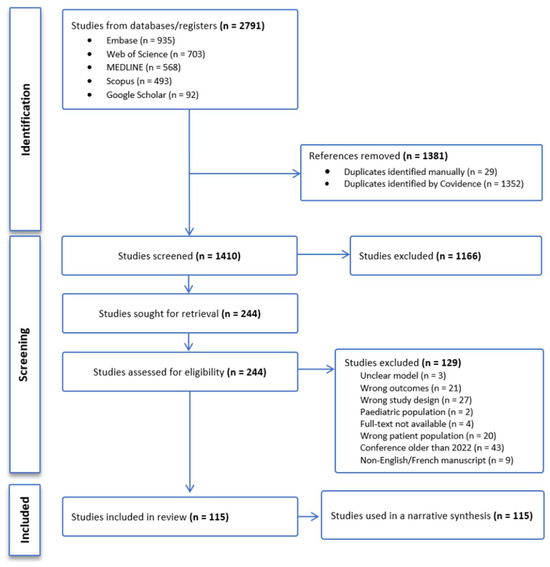
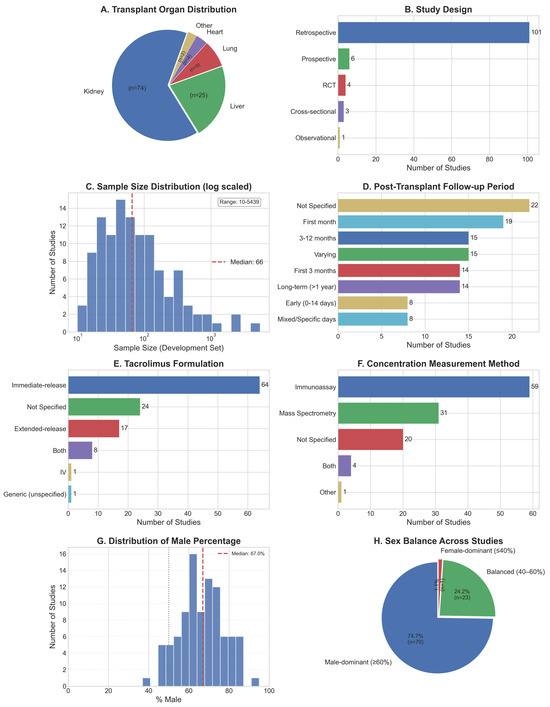
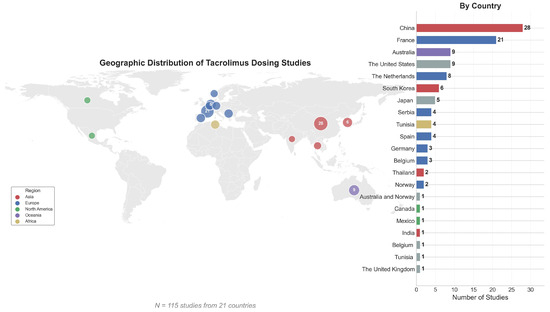
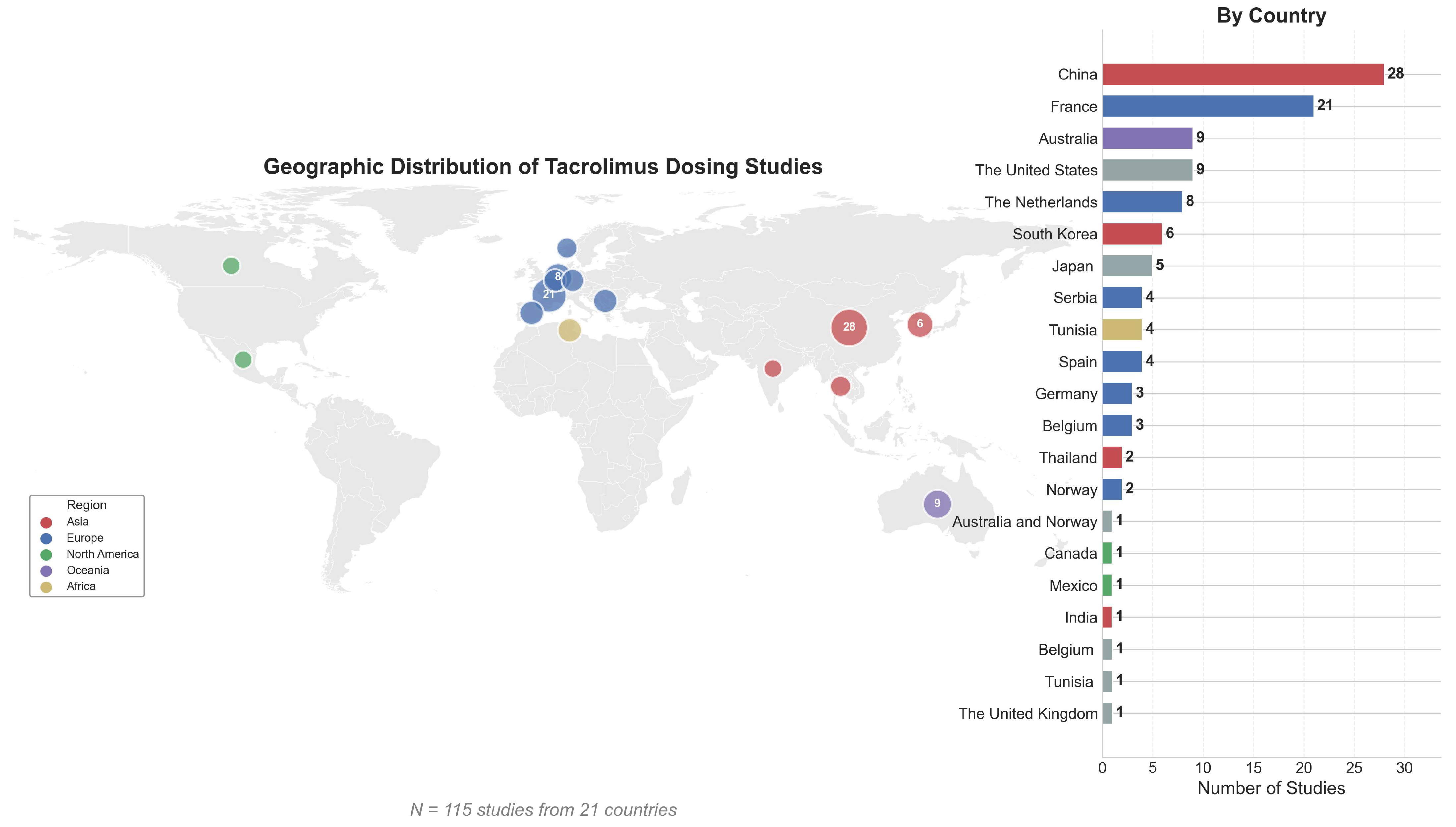
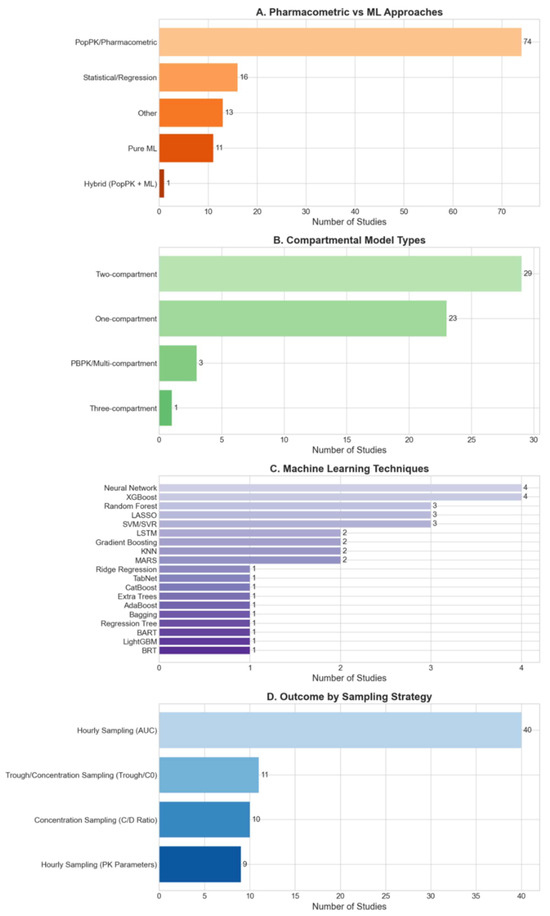
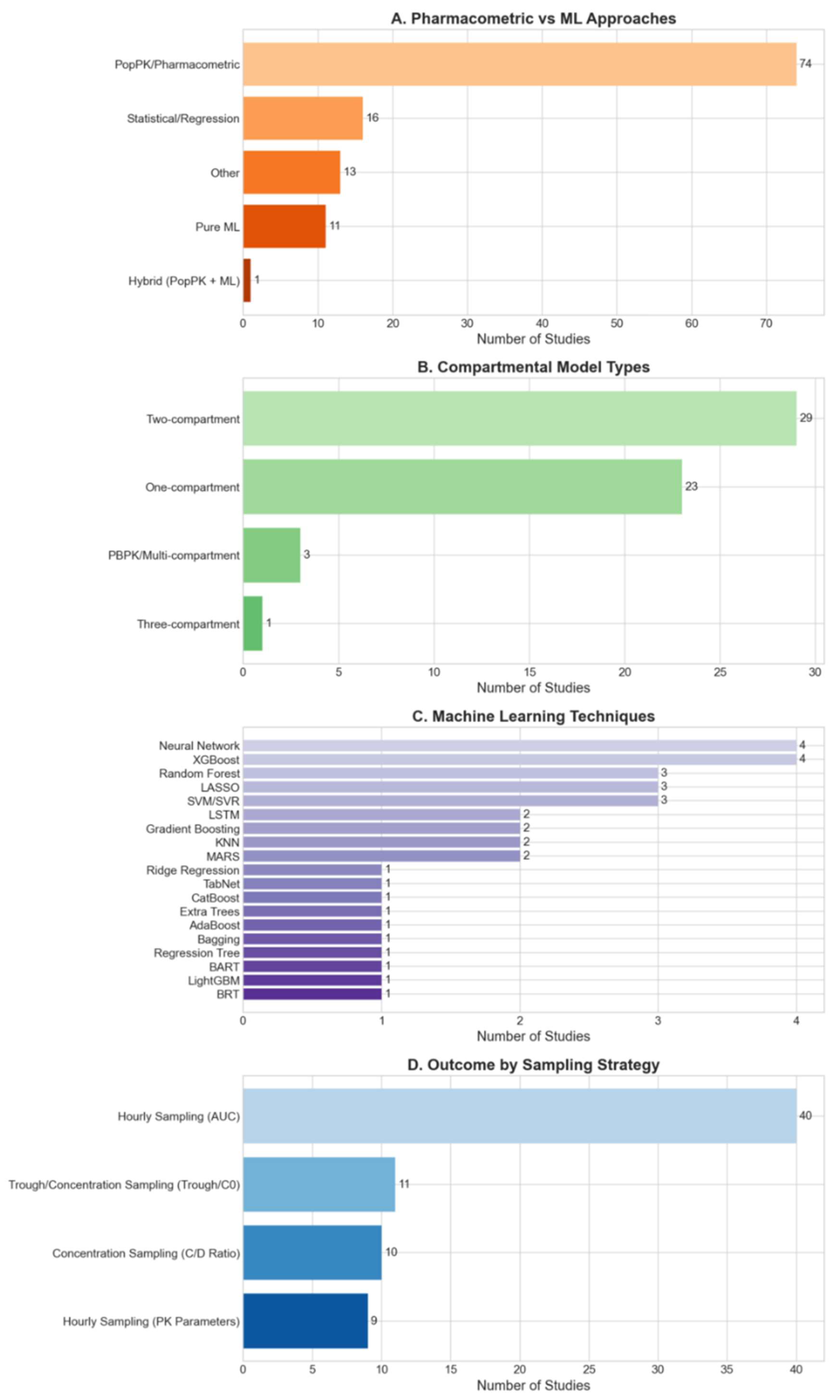
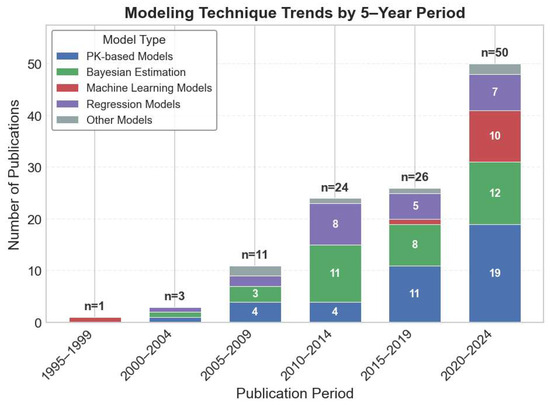
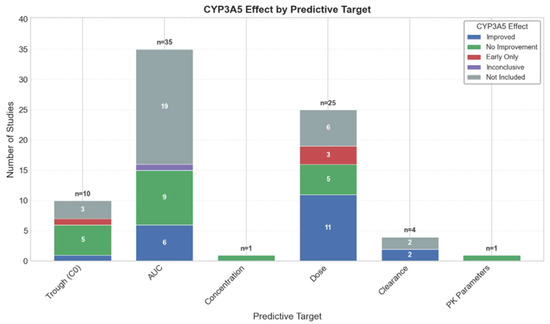
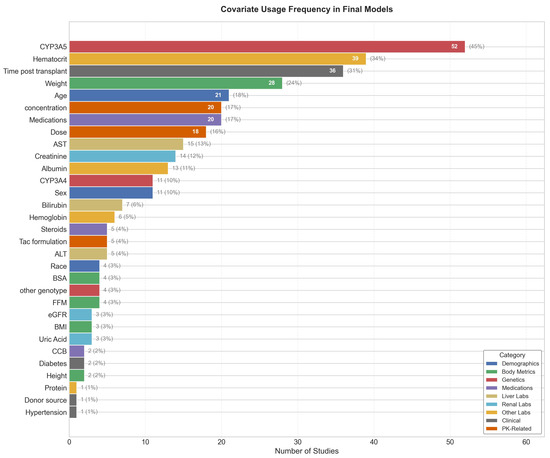
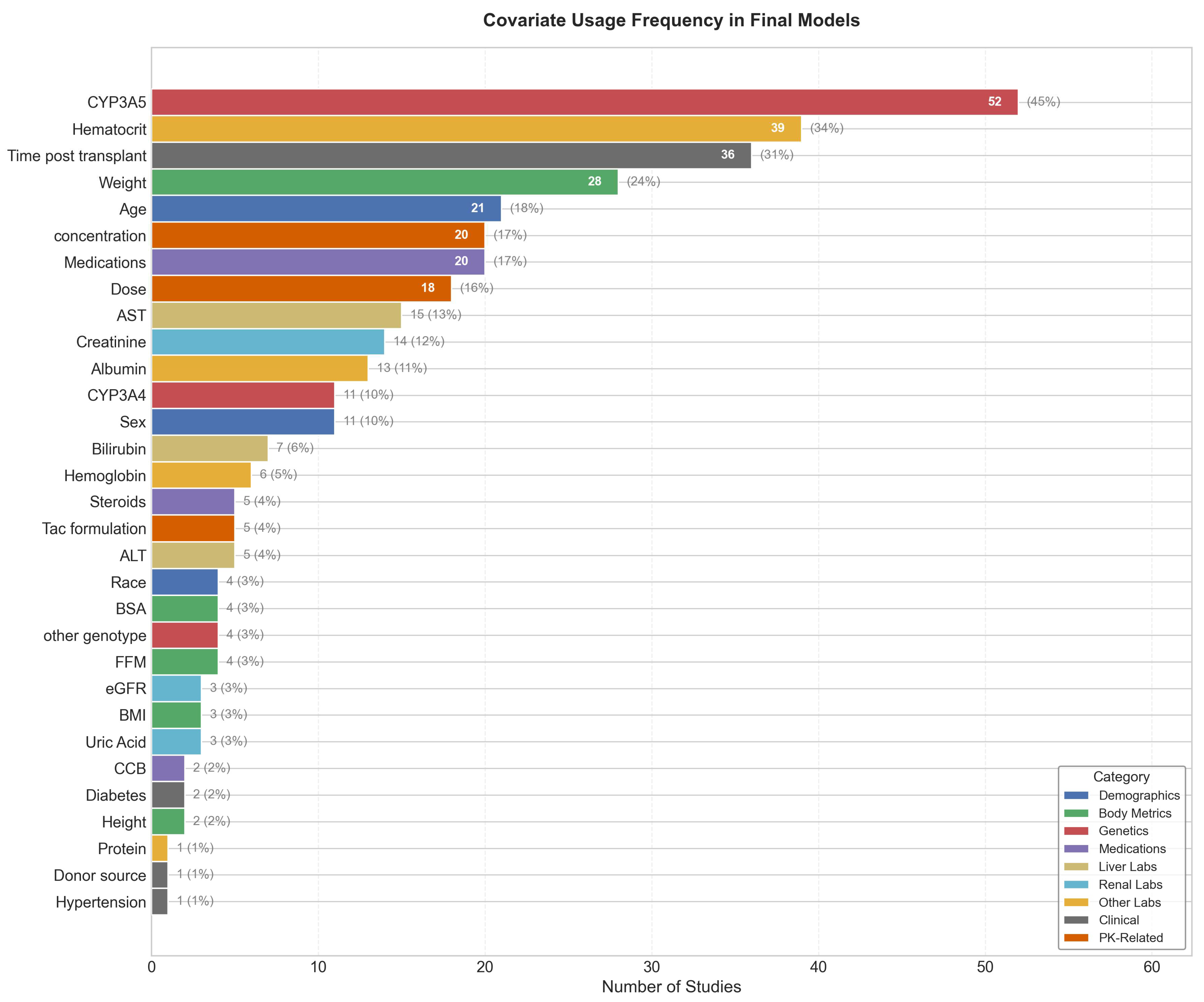

Disclaimer/Publisher’s Note: The statements, opinions and data contained in all publications are solely those of the individual author(s) and contributor(s) and not of MDPI and/or the editor(s). MDPI and/or the editor(s) disclaim responsibility for any injury to people or property resulting from any ideas, methods, instructions or products referred to in the content. |
© 2026 by the authors. Licensee MDPI, Basel, Switzerland. This article is an open access article distributed under the terms and conditions of the Creative Commons Attribution (CC BY) license.