


Abstract
Sustainability constitutes a strategic priority not only at the level of practical implementation but also within the framework of legal regulations and policy-making processes. Within the scope of this study, the forest-related legal frameworks of selected countries from Asia and Europe have been examined. To ensure consistency and objectivity in the analysis, a set of evaluation criteria was established, with particular attention paid to their international recognition and legitimacy. In this context, the criteria developed by the Food and Agriculture Organization and Forest Europe were adopted. Based on these internationally accepted standards, the forest legislation of the selected countries was assessed and analyzed using the EFLD (Environmental and Forest Law Department) scoring methodology to determine the extent to which sustainability is integrated into their legal systems. Six criteria were defined and evaluated separately for each country based on the overall average. It was concluded that Türkiye and Kazakhstan’s forest legislation aligns with sustainability criteria compared to other countries’ legislation, Lithuania and Iran’s forest legislation is close to the overall average, and Poland’s forest legislation requires more explicit and progressive provisions in terms of sustainability.
1. Introduction
With the intensification of global environmental crises in the 21st century, the management of natural resources has evolved into not only an ecological concern but also a socioeconomic and political imperative. In this context, Sustainable Forest Management (SFM) refers to the planning and implementation of forest ecosystems in a manner that ensures the preservation of their biological diversity, productivity, regeneration capacity, and essential ecological functions for future generations [1,2]. SFM represents a comprehensive paradigm that extends beyond the conventional timber-oriented forestry model. It encompasses the protection of carbon sinks, climate change mitigation, rural development, and participatory management approaches grounded in community engagement [3,4,5].
The Forest Principles Declaration (Non-Legally Binding Authoritative Statement of Principles for a Global Consensus on the Management, Conservation and Sustainable Development of All Types of Forests) and Agenda 21, adopted during the United Nations Conference on Environment and Development (UNCED) held in Rio de Janeiro in 1992, marked the first global consensus documents on sustainable forest management [6,7]. Building upon these foundational texts, the Ministerial Conference on the Protection of Forests in Europe (MCPFE), held in Helsinki in 1993 under the leadership of European countries, Canada, and Russia, emphasized that sustainable forest management must be both traceable and measurable. This conference provided the first formal platform for the development of six core criteria that define and operationalize SFM [8,9].
The criteria proposed by MCPFE are defined as follows: the maintenance of forest resources, ecosystem health and vitality, productive functions, biological diversity, protective functions, and socioeconomic benefits [8,9]. Following these developments, similar criteria and indicator systems have been established in various regions worldwide [7]. The International Tropical Timber Organization (ITTO) contributed to this process by developing indicators specific to tropical forests, while regional initiatives such as the Montreal Process, the Tarapoto Process, and the Dry-Zone Africa Process introduced frameworks tailored to regional forestry dynamics.
To integrate these diverse approaches under a unified framework, the Food and Agriculture Organization (FAO) published the Core Set of Indicators in 2003, which aimed to harmonize criteria and indicators globally [1,3,10]. Subsequently, in 2015, Forest Europe updated the outcomes of earlier initiatives and introduced a modernized monitoring framework comprising six core criteria. These criteria have since served as key references for shaping national forest policies and ensuring transparency within international forest reporting mechanisms [7,8].
The Forest Europe criteria have indicators grouped qualitatively and quantitatively. The 2015 updated pan-European set of indicators for SFM consists of 34 quantitative indicators and 11 qualitative indicators (45 indicators in total) [8]. The analysis of the current status of these indicators will be the subject of another study. In order to provide an overview at this stage, the number of indicators based on official current data is given below.
- Criterion 1 has 4 indicators: Forest area, Growing stock, Age structure &/or diameter, Distribution, Forest carbon.
- Criterion 2 has 5 indicators: Deposition & concentration of air pollutants, Soil condition, Defoliation, Forest damage, Forest land degradation.
- Criterion 3 has 4 indicators: Increment and fellings, Roundwood, Non-timber goods, Services.
- Criterion 4 has 10 indicators: Diversity of tree species, Regeneration, Naturalness, Introduced tree species, Deadwood, Genetic resources, Forest fragmentation, Threatened forest species, Protected forests, Common forest bird species.
- Criterion 5 has 1 indicator: Protective forests—soil, water and other ecosystem functions—infrastructure and managed natural resources.
- Criterion 6 has 10 indicators: Forest holdings, Contribution of forest sector to GDP, Net revenue, Investments in forests and forestry, Forest sector workforce, Occupational safety and health, Wood consumption, Trade in wood, Wood energy, Recreation in forests.
Sustainability is very important in forest management, which involves long-term and multiple utilization of forest ecosystems. When planning these multiple uses, including social demands, sustainability must be included. If sustainability is missing in planning, total value generation will not be improved [11]. The report of the CICI international conference, published as an important document in 2003, sets out the initial criteria, highlighting in particular the importance of the “legal, institutional, and policy framework”. In line with this, international efforts have focused particularly on accelerating countries’ adaptation processes [12,13,14,15,16].
The evolution of forest legislation in the European Countries indicates that understanding of how natural resources are to be used in a sustainable manner depends on a given economic and social context [17]. Since 2017, the UNFF has increasingly focused on the Global Forest Goals as the primary framework to ensure the sustainability of forests in the future [18].
The primary objective of this study is to investigate the reflection of sustainability, as explained and applied by forestry science, in legislation. This is because laws are the most effective tools for ensuring that the criteria and results established by science can be applied in real life. For the protection and sustainability of forests, these criteria must be included in legal texts. As stated in the study, the six basic criteria established by international mechanisms based on scientific grounds can be effectively implemented if they are included in the laws. Considering the periods when these criteria were established, it is possible to argue the hypothesis that there are deficiencies in the legislation of many countries in this regard. The purpose of this study is to ensure that these identified gaps are effectively addressed in legislation and that sustainable forest management is effectively supported by legal grounds.
In the present study, the forest legislation of five countries was examined based on the six primary SFM criteria established by FAO and Forest Europe. Two of the countries are in Europe, two are in Asia, and one country is located at the point where Asia and Europe meet. Furthermore, some of the selected countries also possess both public and private forest ownership. Therefore, the legal status and ownership of forests extending from Asia to Europe were also analyzed when determining whether they have sustainable forest legislation in place. Although some of the countries in this study are not located in the European continent, it was based on the idea that the success of researching compliance with the six criteria accepted by the FAO could be debated for countries located in Europe or elsewhere.
The increasing number of private forest owners in Europe and their intensive operations in various formats are of concern to policy makers and forestry sector representatives. Increasing demand and societal expectations for forest products are not limited to timber services. In order to manage forests effectively, forests need to be categorized according to their purpose [19,20]. This research has the unique value of evaluating not only European countries and Asian countries that are not members of Forest Europe criteria, but also Türkiye, which is a member of both Forest Europe and the Near East Process together with Asian countries. Although not a signatory member of the Forest Europe process, studies on the success of the SFM criteria, which are also accepted by the FAO, have been conducted in Asian countries and summarized below.
According to Chan (2017), when considering forest concession systems in Southeast Asia, it has been observed that despite minor progress, sustainability goals often conflict with commercial interests [21]. Even when laws and regulations exist, lack of transparency and participation in implementation, particularly weakening the rights of local communities, remains a significant issue. This poses clear risks in terms of socioeconomic functions and biodiversity conservation, as outlined in the Forest Europe criteria [21]. According to El-Lakany (2016), a more general international perspective was presented, comparing Asian countries’ SFM practices with global norms [22]. Here, the health and vitality of forest ecosystems and their protective functions have come to the fore. Accordingly, it has been emphasized that legal and institutional frameworks should not remain merely on paper, and that it is important to address capacity gaps in practice and ensure long-term policy commitment. This confirms the general observation that many countries in Asia, despite having legal frameworks in place, face implementation and enforcement challenges [22]. According to Hodges and Koonnathamdee (2009), the role of governments in Asia highlights the importance of public policies and regional coordination [23]. From this perspective, governance and coordination are seen to have an indirect impact among all the criteria of Forest Europe. In other words, without government support and regional cooperation, biodiversity cannot be protected, and socioeconomic benefits cannot be distributed fairly. The lack of political will and international cooperation, in particular, hinders sustainable forest management in Asia [23].
2. Examining National Legal Frameworks Through the SFM Criteria
This research will establish a basis for measuring progress in SFM for each country by re-measuring these countries using the same methodology after future legislative amendments. In other words, when the legal framework is measured again in the future, the degree of progress can be determined. The analysis of each criterion is separate and serves as an initial comparative study that will contribute to SFM experts and legal professionals. As forest laws are updated, each country can achieve the sustainability of monitoring its own development.
Forest law and SFM criteria show significant differences in practice in Asian countries. Looking at Forest Europe’s six criteria, biological diversity and ecosystem health, as well as socioeconomic functions, stand out as critical weaknesses. Conversely, strengthening government policies, increasing regional coordination, and more effective participation of local communities play a key role in the success of SFM in Asia. Due to the multiple use/utilization areas, flora and fauna elements that are significantly damaged in Türkiye should be included as a main subject in SFM processes for more effective conservation [5]. Although not directly related to this topic, similar comparative publications are as follows:
According to Linser and Wolfslehner (2022), indicators and policies regarding how the six criteria are applied at the national level across Europe have been examined, but not legally scrutinized [7]. Marić et al. (2023) conducted a field study on the recognition, applicability, and importance of criteria for forest professionals at the constitutional level [24]. This manuscript, which examined both the degree of understanding and the differences in practical application of the six criteria, found low applicability and high importance [24]. The capacity of forestry policies to turn into concrete actions at the national level is directly linked to institutional infrastructure, governance forms, and regional expectations. The basis for achieving this lies not only in central strategies but also in the flexibility and compatibility of implementation tools at the local and national levels. In this context, analyses based on examples from different countries show that the gap between global goals and local realities must be closed [25,26]. This manuscript compared 164 SFM standards worldwide using multivariate statistics. It analyzed the geographically based differences in criterion-indicator systems, socioeconomic priorities, and areas where ecological emphasis should be placed [25]. No other publication has been found that legally examines the Forest Europe criteria, including countries that are part of the process and those that are not, beyond these three approaches.
The main purpose of this study is to analyze the impact of the Forest Europe criteria, which are internationally accepted by the FAO, on national laws. The study provides basic information on forest legislation as outlined below. The study examines sustainability criteria in forest legislation and provides recommendations on this subject. There are six basic criteria examined in the study. These criteria can be summarized as follows: Forest Resources and Contribution to the Global Carbon Cycle, Forest Health, Vitality and Integrity, Forest Production Capacity and Functions, Forest Biodiversity, Protective Functions of Forests, Socioeconomic Functions of Forests. The reflection of these criteria in the legislation forms the basis of the study. These criteria are standard not only for European forestry but also for comparing SFM practices on a global scale. The fact that countries with different ecological, economic, and political structures, such as Türkiye, Lithuania, Poland, Kazakhstan, and Iran, can be analyzed under the same indicator structure highlights the international importance of this standard. The presence of these elements in the legal texts was investigated, and an assessment was made regarding the degree of their applicability to forests. This is because forest legislation aims to protect forests and ensure their sustainability by defining what constitutes a forest. While production and sustainability are emphasized in some forest laws, protection and sustainability are prioritized in others. The study also evaluated which of these principles are the objectives of the laws.
The full legal texts of forest laws from Türkiye, Lithuania, Poland, Kazakhstan, and Iran were analyzed by academics accordingly. Evaluation was conducted using the scoring method detailed in the Section 3. Prior to the analysis, a brief overview of the forest legislation of each country included in the study is provided below. The fundamental principles of the forest laws in the selected countries are summarized below.
Türkiye
Constitutional Provision: Article 169 of the Constitution guarantees the protection of forests and assigns responsibility to the state [27,28].
Ownership: Almost all forests are state-owned (99%); private ownership is strictly regulated [29].
Core Legal Principles: Forest boundaries cannot be reduced except in exceptional circumstances; forest-related crimes are excluded from general amnesties. In accordance with Article 2 and Additional Article 16 of the Law, areas that have lost their forest status shall be excluded from the forest [30].
Rural Support: Special provisions exist to promote the development of forest villages [31].
Afforestation Policy: Restoration and reforestation of degraded forest lands constitute key policy priorities [32].
Legislative Amendments: The Forest Law has undergone 46 amendments to date [33].
Lithuania
Legislative Objective: Aims to ensure sustainable forest use, biodiversity conservation, and improved environmental quality.
Governing Authorities: Ministry of Environment, State Forest Enterprise, State Forest Service, and private forest owners.
EU Harmonization: Fully aligned with EU forestry legislation and directives.
Private Forests: Private ownership plays a significant role; socioeconomic research on private forestry remains limited but essential. Half of the timber harvest comes from private forests. In other words, the decisions of the private sector directly determine the country’s supply of timber and biomass.
Public Recreation: Forests designated for recreational purposes are prioritized for public access and cultural preservation.
Ownership: 49.7 per cent private forests, 50.3 per cent state-owned forest [34].
Legislative Dynamics: The Law on Forests has been amended and supplemented annually to address evolving environmental, economic, and social needs [35].
Poland
Historical Background: Rooted in 18th-century legal traditions; the post-1991 Law restructured forest governance.
Institutional Management: The State Forests represent the State Treasury and are managed through regional directorates.
EU Harmonization: Fully aligned with EU forestry legislation and directives.
Constitutional Status: Forests are protected as national assets, though not explicitly referenced in the Constitution.
Ownership: 79.6 per cent of forested areas are state-owned [36].
Legal Amendments: To date, 89 amendments have been made to the Law, which now balances ecological and economic priorities [37].
Iran
Ownership Structure: All forests, rangelands, and shrublands are state-owned.
Administrative Authority: The Natural Resources and Watershed Management Organization (NRWO) oversees management through 33 provincial offices.
Forest Regions: Includes Hyrcanian, Zagros, Arasbarani, Iran–Turanian, and Persian Gulf & Sea of Oman zones.
Environmental Challenges: Major threats include overgrazing, unsustainable agriculture, excessive groundwater extraction, and desertification.
Recent Policy Shifts: Industrial logging has been prohibited in the Caspian forests, A process of transformation towards sustainable forest management is underway in national forest policy.
Legislative Amendments: The Law on the Conservation and Exploitation of Forests and Rangelands (1967) has been amended twice [38].
Kazakhstan
Legislative Structure: The Forest Law comprises 118 articles across 9 sections and 20 chapters; amended 54 times [39].
Governing Authority: Forest policy is administered by the Ministry of Ecology and Natural Resources.
Key Provisions: Focuses on forest use rights, state monitoring, forest cadastre, reforestation, and afforestation.
Ownership: All forests, are state-owned.
Constitutional Gap: The absence of a constitutional clause on forest protection is considered a legal shortcoming [40].
Forest Coverage: State forest fund covers 11.3% of national territory, though actual forest cover is approximately 5% [41].
The types of forest ownership vary among the selected countries. However, as they are all governed by forest legislation, the results have been considered within the framework of each country’s own legislation. Constitutional guarantees remove the protection of forests from the short-term economic or political decisions of governments and make it a state policy. For this reason, it has also been investigated whether countries’ forest laws have a constitutional basis. Table 1 provides a comparative summary of the legal basis, implementing authorities, and general sustainability approaches of countries’ forest laws [33,35,37,38,39].
Table 1.
Comparison of Forest Laws of Countries.
Table 1 provides an overview of the prominent management approaches in countries’ forest laws in terms of the implementation of SFM criteria. When looking at the years of the Forest Law, some may appear outdated. For example, the laws of Iran and Türkiye came into force in the years indicated and have, of course, undergone numerous amendments according to their scope. In other words, they are current texts that are still in use today.
3. Materials and Methods
The study is based on six criteria defined for sustainable forest management within the Forest Europe process [8]. These criteria have also been adopted by international FAO (2020) [42].
In the spring term of 2025, 10 experts working in the field of forest law from 5 countries gathered for methodology meetings for this article and shared their scores. The forest laws of the countries analyzed in the study were scored using six basic criteria [Supplementary Materials]. In this study, the EFLD (Environmental Forest Law Department) methodology, which is widely accepted in the literature, was used to analyze legal regulations and policy texts. In line with this method, the forest legislation of five countries was first subjected to a qualitative examination regarding issues such as constitutional safeguards, ownership, and forest area. The analysis process was designed as a comparative approach aiming to reveal the parallels between the content analysis of legal texts and the current Global Forest Goals. After scoring, each country was evaluated according to its own conditions. Thus, the reflections of the theoretical legal framework on practical management decisions and judicial oversight were evaluated from a holistic perspective. The scoring used the EFLD scoring criteria summarized in Table 2 [5,43,44].
Table 2.
Main criteria used in the analysis.
The criteria defined below have been scored for each article of the relevant country’s legislation. Each article of the relevant country’s forest law has been scored separately for the six criteria listed below, and the average has been calculated. This method has been used to analyze the impact of laws on sustainability not only as a whole but also article by article. The scoring does not include legal provisions containing official provisions (such as the date of entry into force, the date of repeal, etc.). The general description of the six criteria used for scoring is as follows:
Criterion 1: Forest Resources and Contribution to the Global Carbon Cycle
The criterion of forest resources and their contribution to the global carbon cycle focuses primarily on the condition and richness of forest areas, with the amount of carbon in forests being considered an important parameter [42]. Four indicators have been identified under this criterion [9,45].
When it comes to the planning and use of forest resources based on the principle of sustainability, the first thing that comes to mind is forest management plans. Management is the most important discipline in forestry [7,24,46]. The Constitution’s explicit provisions on forests and the Forest Law’s requirement for management plans provide a strong legal basis for this discipline [33,39].
Criterion 2: Forest Health, Vitality and Integrity
The criterion of forest health, vitality, and integrity complements Criterion 1. It provides information on the status of forest resources and the factors threatening them. Five indicators have been identified under this criterion [9,42,45].
When managed sustainably, forest ecosystems are among the most important biological resources that function in an ecologically, economically, and socio-culturally interconnected and balanced manner. This natural resource is negatively affected by biotic and abiotic harmful factors, but it can be rehabilitated due to its renewable nature [33,47].
The negative impacts on the health, vitality, and integrity of forests also adversely affect the potential of ecosystems, their contributions to the global carbon cycle, biodiversity, and other criteria [37,39].
To evaluate sustainable forest management criteria, measurable indicators that constitute each criterion are required. In this context, monitoring forest health and vitality requires the collection of various parameters related to biotic and abiotic factors. Therefore, determining the current state of forest ecosystem health and vitality and monitoring their development over time is essential [7].
Criterion 3: Forest Production Capacity and Functions
This criterion focuses on the capacity of all goods and services derived from forests. Four indicators have been identified under this criterion [9,45].
Forests provide many goods and services, both monetizable and non-monetizable, used in various sectors, primarily wood products. A significant portion of the financing required for sustainable forest management is derived from the sale of forest products [39,46]. Under this criterion, both economic efficiency and the income derived by local communities from this production are evaluated [48].
Criterion 4: Forest Biodiversity
As is well known, the loss of biological diversity is one of the most important global environmental issues. This criterion is aimed at monitoring the state of biological diversity in forests and forest areas [49]. Ten indicators have been identified under this criterion [9,45].
Urbanization, transportation, and industrial development continue to cause habitat loss and fragmentation. Pollution, water use, climate change, and invasive species are increasing pressure on ecosystems and living organisms. The lack of clarity in responsibilities among ministries, lack of expertise, and insufficient financial resources are limiting the scale of conservation efforts [39].
Criterion 5: Protective Functions of Forests
This criterion primarily covers forests that are designated or managed for the protection of other resources such as soil and water. An indicator has been established under this criterion [9,45].
The protective functions of forests include nature conservation, erosion prevention, water resource regulation, aesthetics, improvement of rural living quality, climate regulation effects (carbon sequestration, oxygen production), and scientific research [39,50].
Criterion 6: Socioeconomic Functions of Forests
The contributions of forests to society and the national economy are assessed under this criterion. Ten indicators have been identified under this criterion [9,45].
The contribution of forest resources to the national economy, employment, and rural development, their importance in supply–demand balance, and institutional, financial, legal, and research and development capacities form the core components of the sector’s socioeconomic functions. The national-level indicator values of these components provide insight into whether the country’s forestry sector is progressing toward sustainable management [35,42].
Managing forests in an environmentally appropriate and socially and economically beneficial manner to society is the foundation of modern forest management philosophy. In today’s world, deforestation due to agricultural use and settlement, the rapid increase in demand for wood raw materials, and excessive and uncontrolled logging for economic reasons are placing increasing pressure on the world’s forests. Global climate change and environmental disasters have elevated the ecological function of forests above other functions. Forests have become the most important tool in combating climate change and ensuring water and food security. Any negative decision regarding forests anywhere in the world has global consequences that affect all of humanity [45,51,52].
The findings on each country’s performance according to the 6 Forest Europe criteria were synthesized with local expert analyses; bringing these interpretations together created an application-oriented, multinational reference framework for strategic sustainable forest management and conservation strategies.
4. Results
Forest covers approximately 31% of the land areas, representing a total area of 4.06 billion hectares. This ratio indicates that approximately 0.52 hectares of forest area falls per capita [53]. Knowing the forest area percentages of these five countries, which were examined from a legal and administrative perspective in this study, is also important for future research. Table 3 shows the forest area percentages of Poland [36], Türkiye [53], Lithuania [54], Kazakhstan [55,56,57], and Iran [58]. In order for this to be used as a resource for future research related to forestry in every country, the total forest area of five countries in hectares for the year 2025 was divided by the current population of each country, and the approximate forest area per capita for 2025 is shown in Table 3. Forest area per capita (ha); calculated by dividing the total forest area (ha) by the population (million).
Table 3.
Forest percentages of five examined countries.
As can be seen from the sustainability table of the country legislation presented in the Supplementary Materials of the study, all articles of forest laws applicable to flora and fauna have been scored. In order to see the differences between countries more clearly and to be able to interpret the average weights, the total examined number of articles in each law is as follows: Iran 59, Türkiye 110, Poland 41, Lithuania 26, Kazakhstan 86.
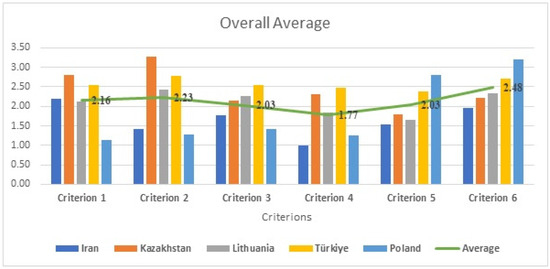
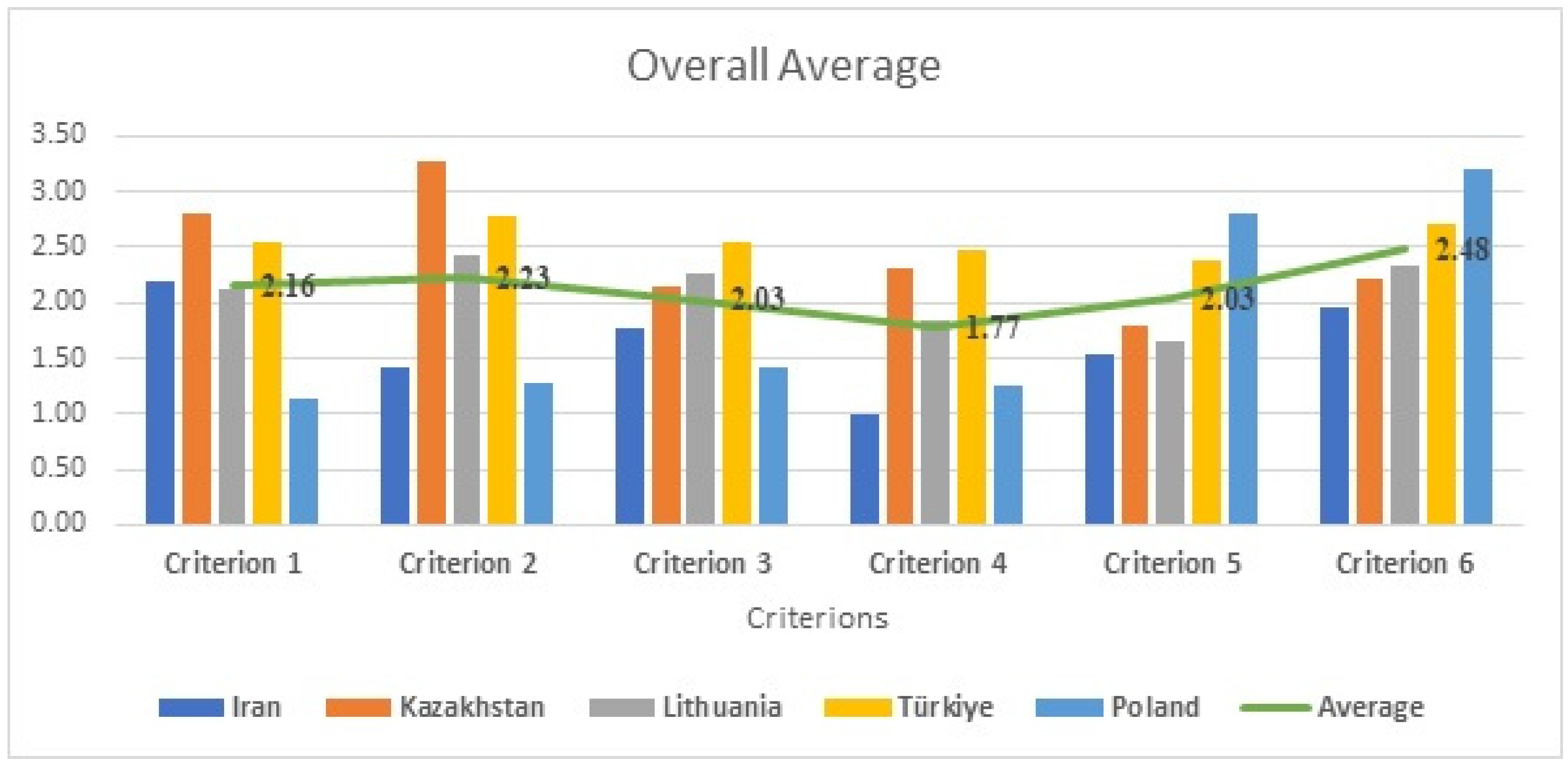
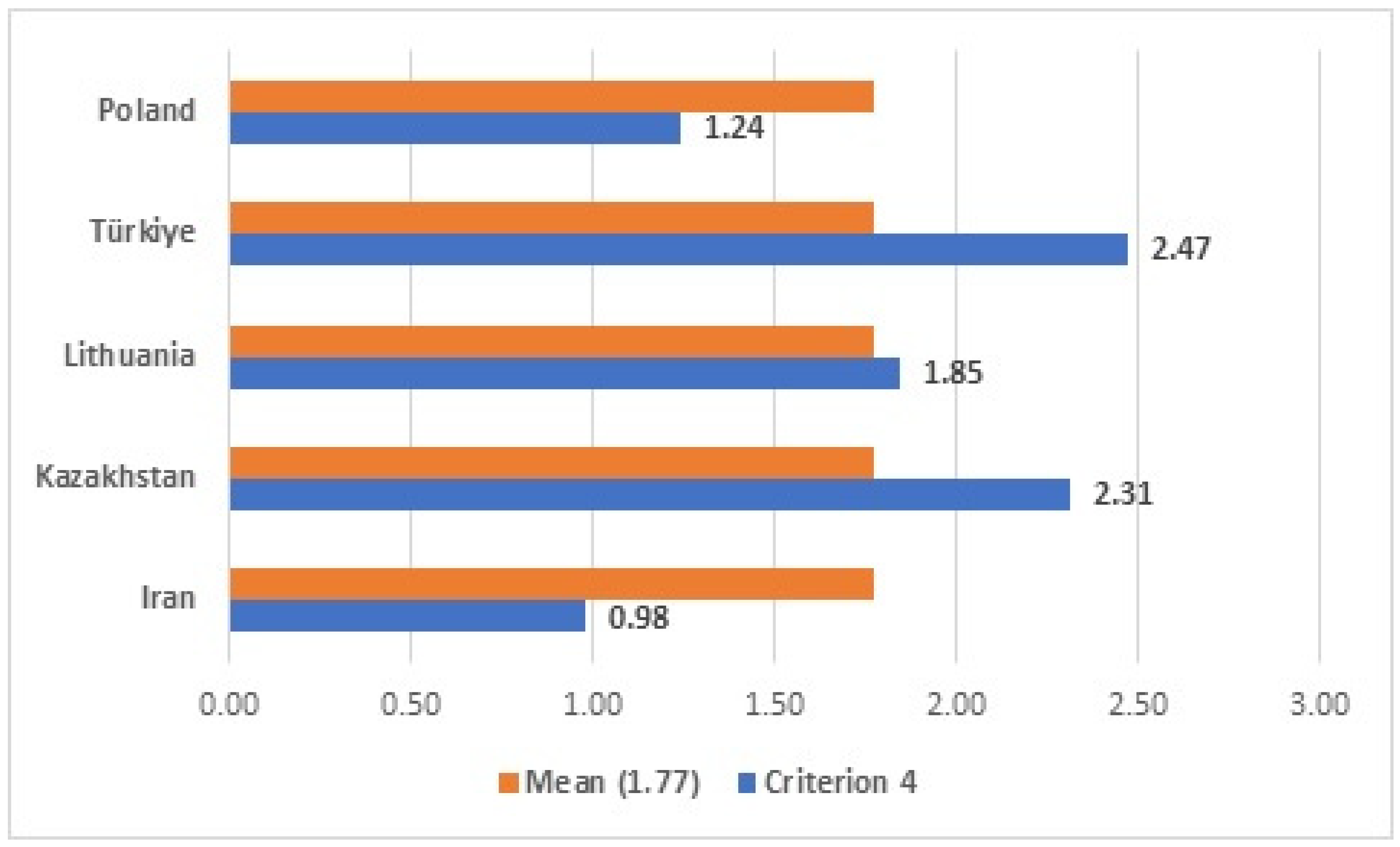
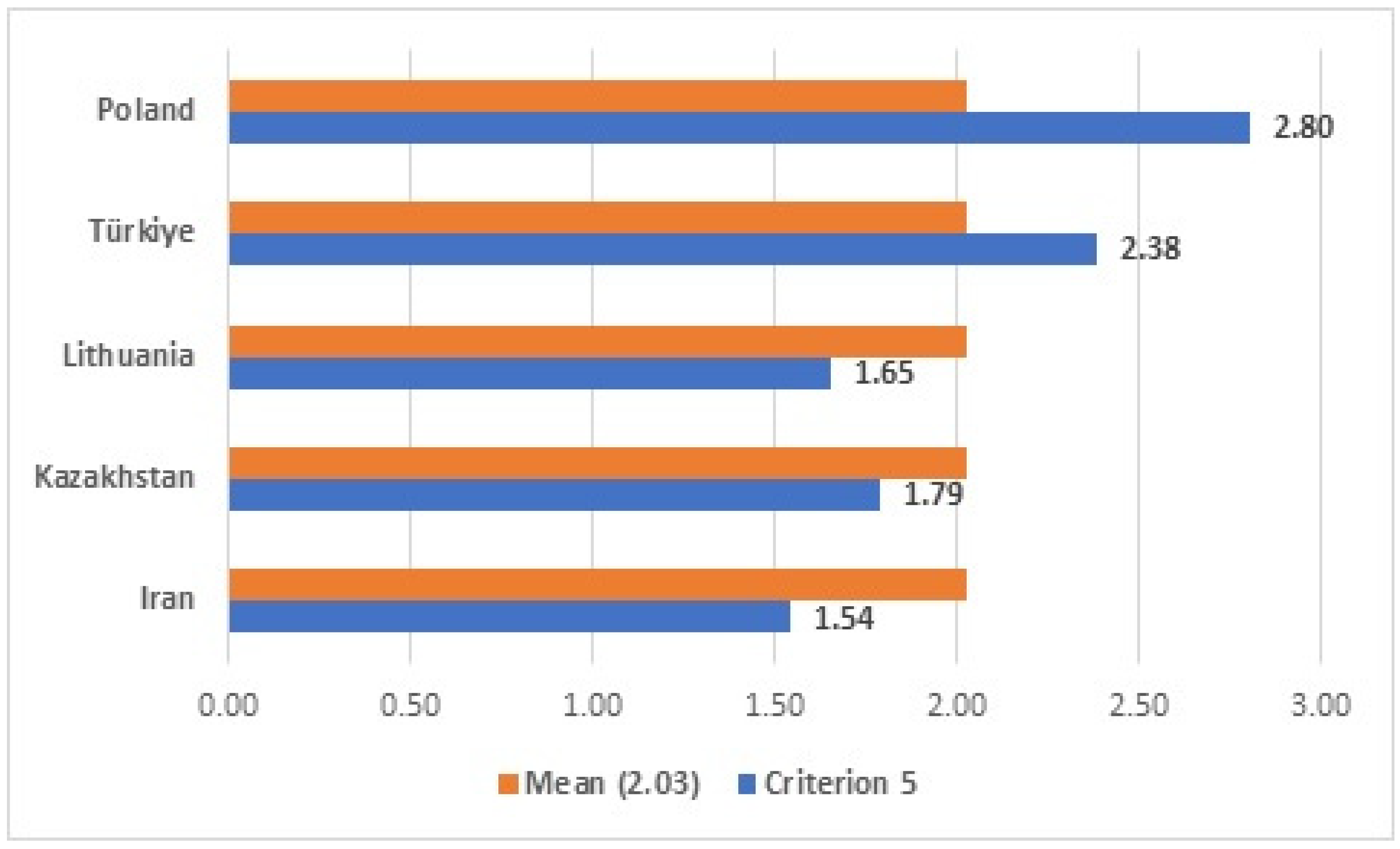
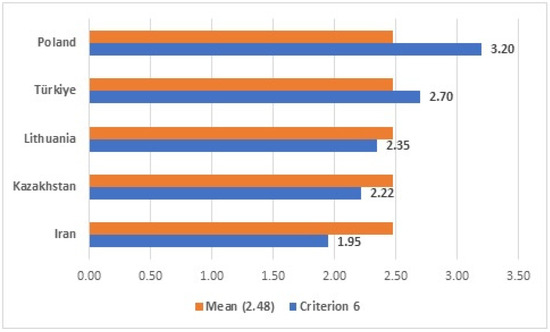
Based on the scoring and overall results, the average score for all criteria is 2.16 for “forest resources and contribution to the global carbon cycle” (criterion 1), 2.23 for “forest health, vitality, and integrity” (criterion 2), 2.03 for “forest production capacity and functions” (criterion 3), 1.77 for “forest biological diversity” (criterion 4), 2.03 for “protective functions of forests” (criterion 5), and 2.48 for “socioeconomic functions of forests” (criterion 6). The overall results of the analysis of the country’s legislation are shown in Figure 1. The sustainability of each country’s legislation has also been evaluated below.
Figure 1.
The average score for all criteria.
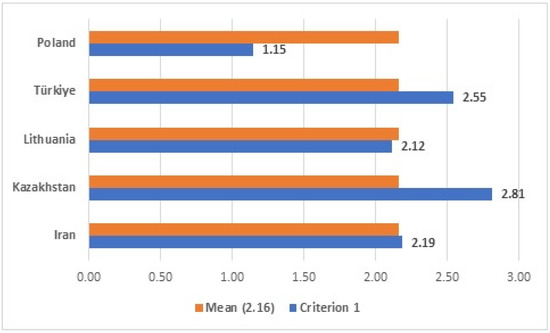
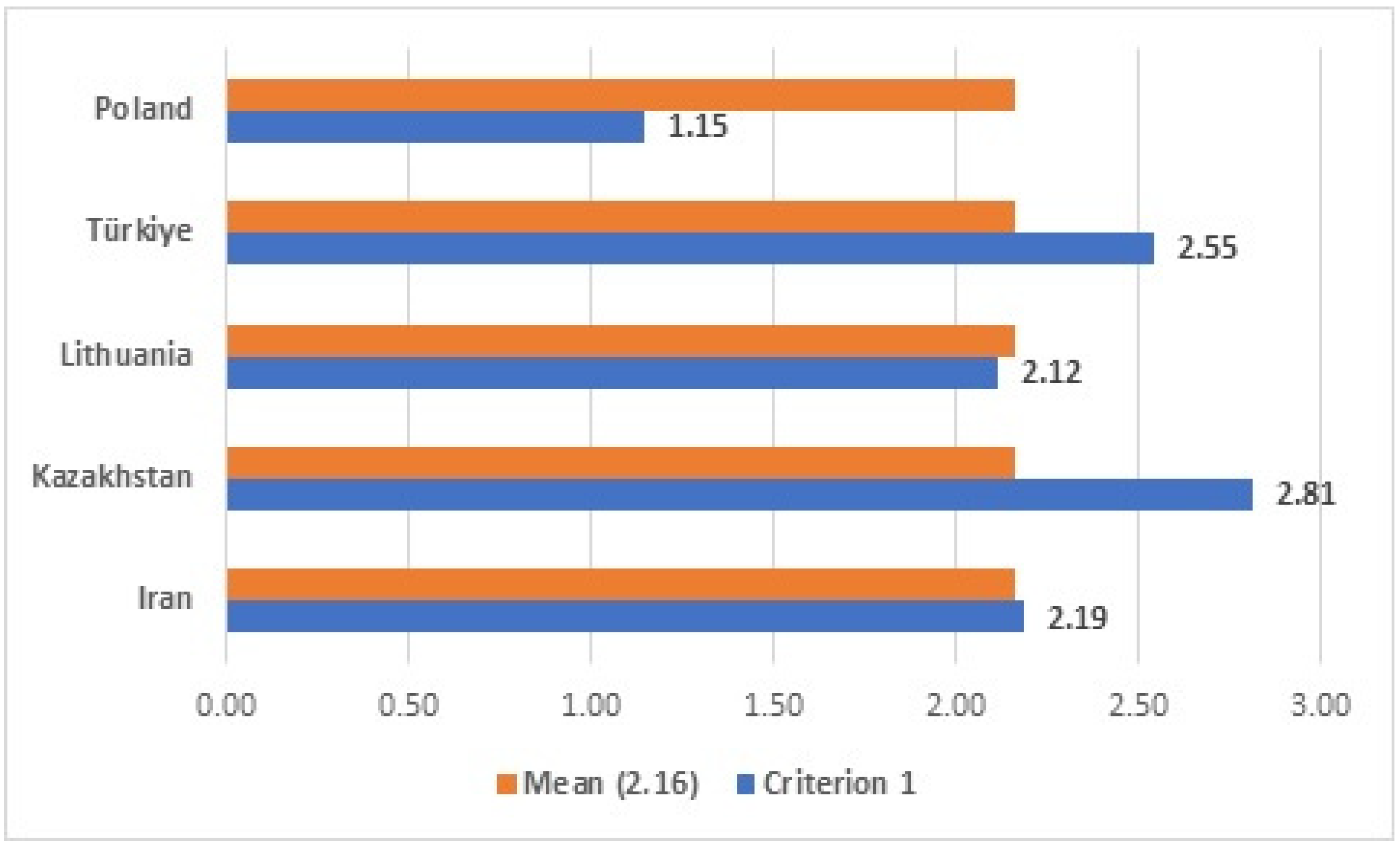
An analysis of laws related to the contribution of forest resources to the global carbon cycle has revealed that the forest laws of Kazakhstan, Türkiye, and Iran are above average due to their effective and clear provisions on afforestation and forest protection, as well as the dominance of state forestry in the field of forest protection. It has also been determined that Lithuania’s forest legislation is close to the average, while Poland’s is below average (Figure 2).
Figure 2.
Forest Resources and Contribution to the Global Carbon Cycle (Criterion 1).
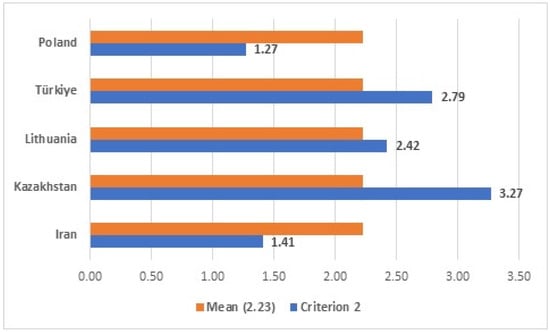
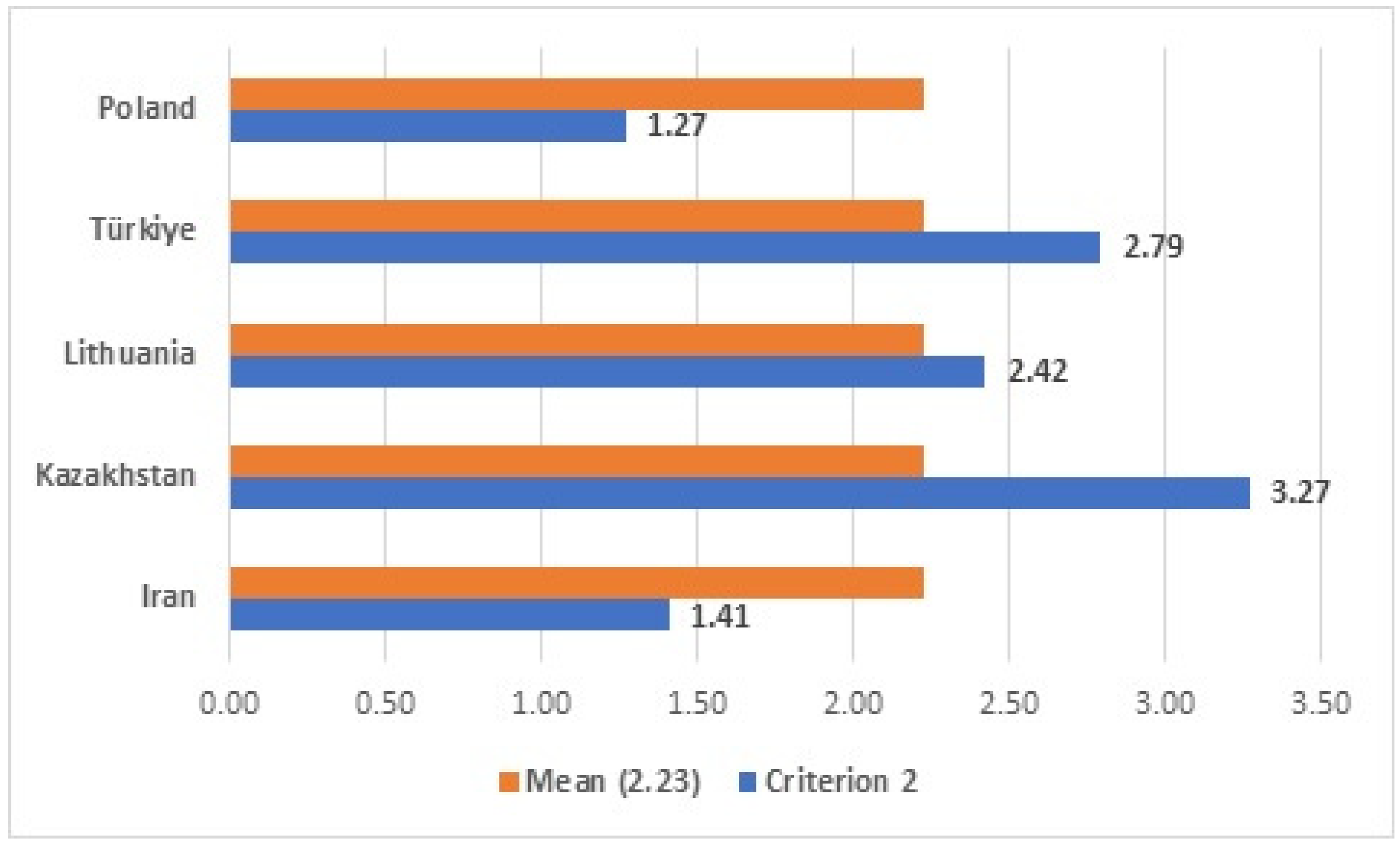
As can be seen in Figure 3 below, the forest legislation of Kazakhstan, Türkiye and Lithuania is above average in terms of forest vitality, health, and integrity. The forest legislation of Iran and Poland, on the other hand, lacks effective provisions regarding forest integrity and health.
Figure 3.
Forest Health, Vitality, and Integrity (Criterion 2).
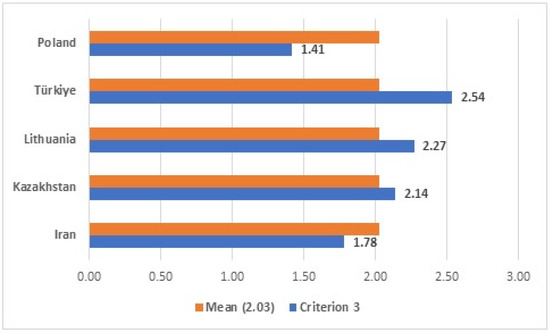
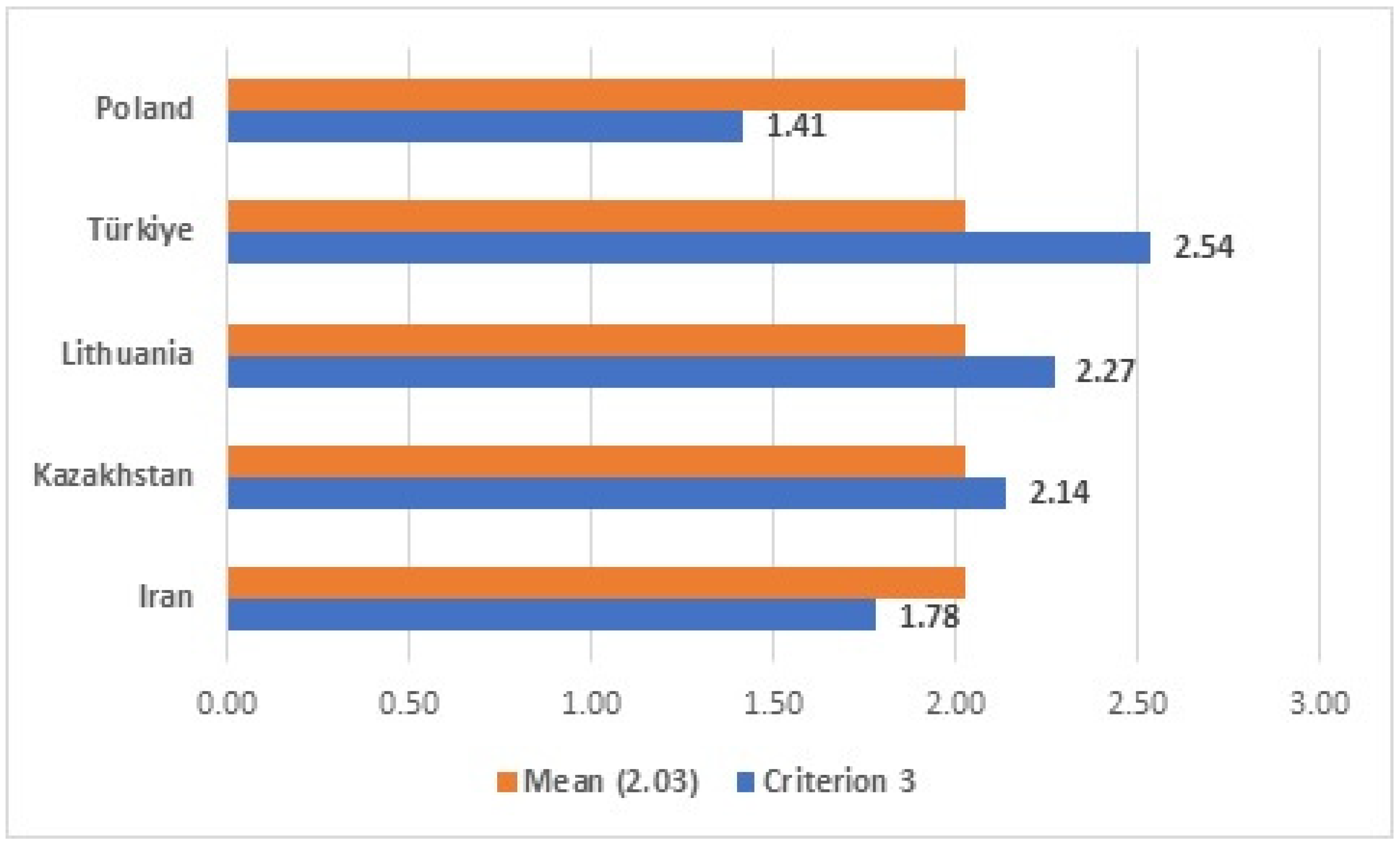
In terms of forest production, capacity, and functions, Türkiye, Lithuania, and Kazakhstan’s forest legislation is above average (Figure 4). It has been concluded that countries above average have legal regulations related to forest production and scored above average.
Figure 4.
Forest Production Capacity and Functions (Criterion 3).
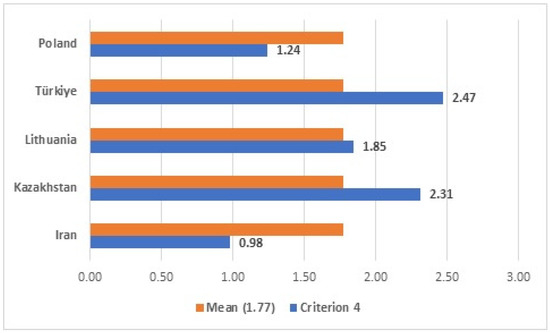
Türkiye, Kazakhstan, and Lithuania were found to be above average in terms of forest biodiversity, while Poland and Iran were found to be below average (Figure 5). The forest definitions of countries that scored above average were examined. This rate was found to be high in legislation encompassing a wide range of forest definitions and biodiversity.
Figure 5.
Forest Biodiversity (Criterion 4).
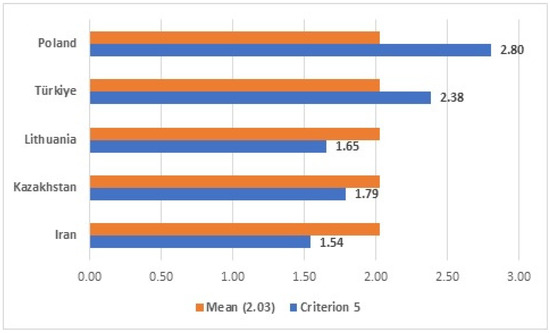
This criterion, which analyzes the effectiveness of provisions such as nature conservation, erosion prevention, and water resource regulation among the protective functions of forests, is examined in Figure 6. While effective provisions are found in the forest laws of Poland and Türkiye, particularly regarding erosion and water resource protection, it has been observed that important provisions are lacking in the legislation of other countries.
Figure 6.
Protective Functions of Forests (Criterion 5).
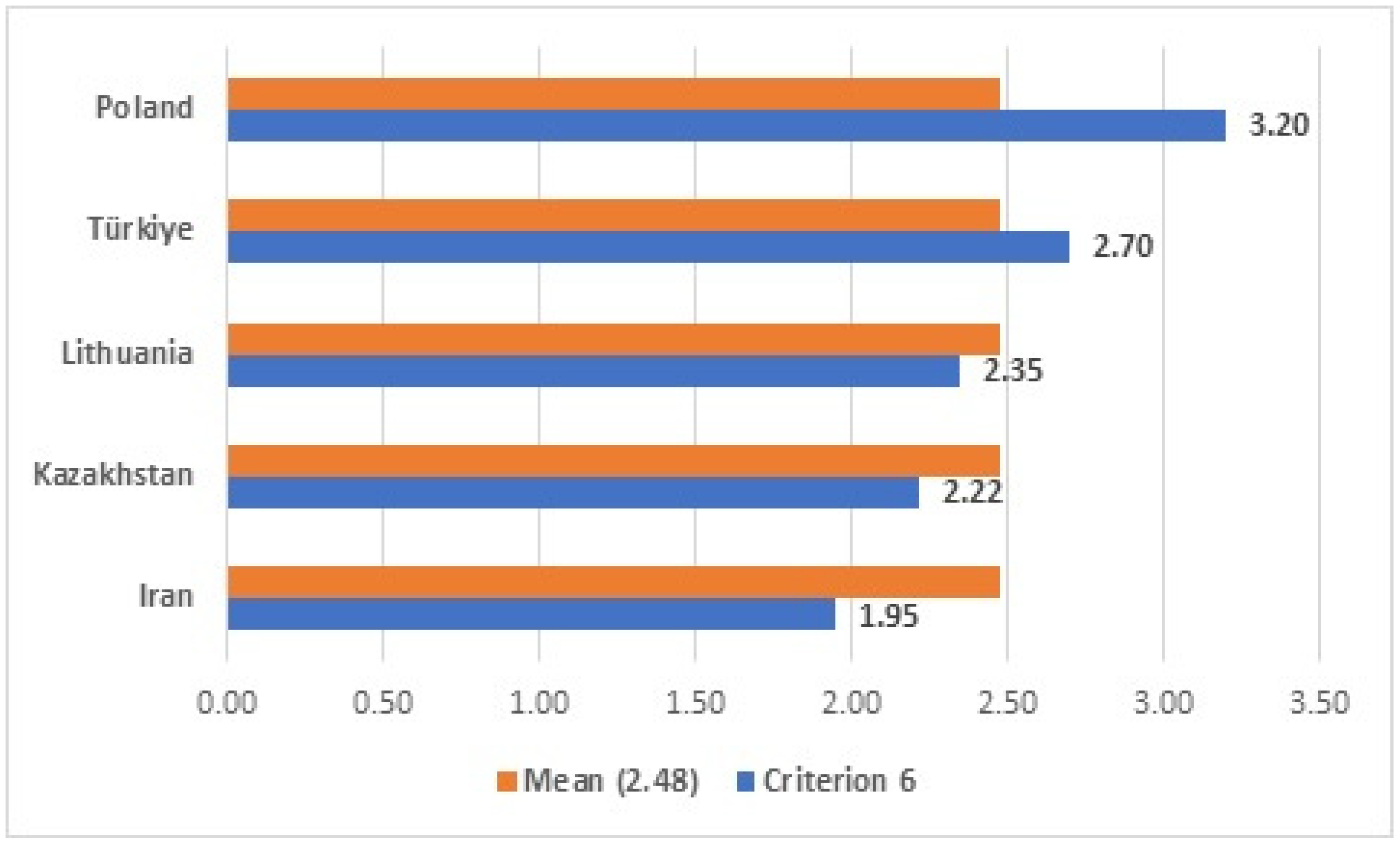
The contributions of forests to society and the national economy have been assessed under this criterion. It is observed that the legislation of Poland and Türkiye contains more effective provisions in this regard (Figure 7). In particular, the legislation of these countries contains effective regulations aimed at strengthening the economic situation of people living in and around forests.
Figure 7.
Socioeconomic Functions of Forests (Criterion 6).
5. Discussion
The SFM processes that these countries are involved in are diverse (Near East process, Forest Europe Process, Tropical Timber Process, etc.). The SFM structure is dynamic, and both the number of indicators and process memberships can change from year to year. Forest Europe’s six globally recognized criteria enable countries with such different conditions to be assessed using a common language of sustainability, thereby supporting the harmonization of international forestry policies.
It is clear from the results of this study and the discussions presented below that the legislation of the countries examined is close to sustainability criteria in terms of forest protection. As is known, the study analyzed the provisions and effects of forest laws and aimed to provide a legislation-focused interpretation of forest sustainability.
In this section of the study, the Forest Europe global criteria are first explained separately for each country and for each criterion below. They are also interpreted in terms of common concerns and weaknesses. In the subsequent Conclusion section, these discussions are interpreted for five countries and presented together with recommendations.
Forests in Türkiye are largely state-owned, and forest policy and implementation are managed by the General Directorate of Forestry; Türkiye has actively contributed to Forest Europe processes and the preparation of SFM indicators [9]. Legislation and practices traditionally emphasize multifunctional forest management and ecosystem services such as erosion and water protection; SFM indicators have been prepared and are being implemented in some forest management plans. The potential for recreation and rural development is high. However, development work is still ongoing in the areas of indicator monitoring, local implementation, and stakeholder participation. The 2020 SFM Türkiye report noted that there are problems accessing data on plant and animal species, particularly birds and mammals, within the scope of Forest Europe [9]. It appears that little progress has been made in the last five years. In Türkiye, both timber production is increasing and the management of non-timber forest products (NTFP) is becoming increasingly important. Although this situation has not yet been clarified in inventory surveys in Türkiye, it means that compliance with and protectionism under the law are prioritized and that comparison with other countries such as Iran and Kazakhstan, as seen in Figure 5, is important. Although Türkiye has a strong national structure and technical capacity, monitoring and transparency, public participation at the local level, and the tracking of certain socio-cultural indicators are weak.
Lithuania’s Forest Law explicitly establishes the SFM principle as a legal objective; the law aims to ensure equal SFM conditions across different types of ownership [35]. Due to the influence of EU membership, biodiversity, multi-purpose management, reforestation, and SFM financing are taken into account in legislation and national programs; there are also efforts to achieve compatibility with environmental networks such as NATURA 2000. Forest area is increasing above the EU average. Certification is widespread, and recreation is strong. While legislation is generally compatible with SFM, coordination between recreation and conservation balance and private forest owners needs to be strengthened in the field. Support for small-scale private forest owners’ SFM practices (technical and financial) and reducing conflicts with sustainable biofuel/material policies should be improved. Forests have a strong position in recreation and the rural economy. Understanding private forest owners’ management styles is therefore critical, as their decisions directly impact public access to timber and non-timber forest product resources and the preservation of biodiversity beyond industrial production.
In Poland, since the 1990s, forest law has emphasized a shift from production-oriented approaches to multifunctional sustainability, with State Forests playing a significant role [20,36]. Forest areas in the country are stable or increasing. The vast majority of Polish forests are state forests (79.6%), which is unusual among EU member states [36]. The inventory system is robust, and multifunctional protective functions, community participation, and recreation have developed. Polish practices are consistent with European SFM criteria (biodiversity, production, water-soil protection, socioeconomic functions, etc.); examples of strong institutional capacity and public communication exist. However, epidemics, insect pests, and climate-related risks are creating new pressures on management [36]. Furthermore, although the protection of the production functions of forests in Poland is consistent with EU biomass policies and industrial production capacity is strong, there has been a minor problem in recent years. Following logging in Europe’s last virgin forests, the European Commission referred Poland to the European Court of Justice (CJEU) on the grounds that the amended forestry law was incompatible with the Birds and Habitats Directives and that the public could not challenge forest management plans in court. The CJEU ruled that Poland had violated its obligations to protect natural habitats and that forest plans must be subject to judicial review. Following this decision, although the Polish government has moved towards developing processes similar to Environmental Impact Assessments and more protective measures, judicial oversight is still not fully ensured. Although the new reform package proposed in 2024 includes “genuine participation” in the planning process, stronger protection measures, and judicial control mechanisms, it is considered that the standards of protection is still not fully achieved. The judicial exclusion of forest management plans from public scrutiny in 2017 occurred at a critical juncture when the UNFF shifted its focus toward the ‘Global Forest Goals’ to ensure the sustainability of forests in the future. This Polish court ruling represents a challenge to Global Forest Goal 6, which emphasizes the importance of inclusive governance and multi-stakeholder participation. Consequently, the lack of judicial review in the Białowieża case underscores a tension between national property rights and the international sustainability frameworks promoted by the UN Strategic Plan for Forests 2017–2030. Although institutional capacity, education, and communication are strengths in Poland, it has been observed that there is a need to focus more on disaster management in areas such as adaptation to climate change and integrated pest management.
Kazakhstan’s Forest Law contains detailed regulations aimed at protecting, rationally using, and regenerating forests; the state forest fund plays an important role [56]. Of forests, 61% are managed primarily for water and soil conservation. There is a low forest cover rate and limited growth [60]. Legal texts explicitly emphasize SFM principles (conservation, production, regeneration, soil-water conservation); however, geographical distribution (steppe and semi-arid regions) and vast areas create difficulties in implementation. Fires, grazing pressure, illegal logging, and limited monitoring infrastructure are main concerns [41,57,61]. Forest production is limited and geared toward meeting local needs. Although Kazakhstan’s legislation contains strong norms; implementation capacity, monitoring, and integration with local communities need to be strengthened. Priority should be given to increasing capacity for fire management, drought mitigation, social benefits, and geographic monitoring via satellite.
Iran has a historical tradition of nationalizing forests and a forest law tradition dating back to the 1940s; in recent years, programs such as Regional Forest Resource Management Plans (FRMP) have begun to be implemented alongside SFM objectives [46]. It is known that 7% of forest areas across Iran decreased between 1986 and 2019, while agricultural and settlement areas increased by 37% [58]. Accordingly, a conservation-oriented approach has been adopted. Although SFM objectives exist officially, pressures such as erosion, unregulated and excessive grazing, illegal use, and drought-related forest degradation make it difficult to achieve SFM goals in practice. Furthermore, institutional capacity and local community participation can be limited in some areas [46,58]. The effectiveness of FRMPs in Iran varies regionally; the importance of improvements in participatory planning, integrated pasture-forest management, and economic alternatives (income diversification for local communities, NTFP, etc.) is highlighted. Forests in many regions are only protected, resulting in low production and economic use; integration and participation of local communities are limited.
Across five countries, certain habitats being under pressure, wildfires, insect infestations, desertification, and erosion have been identified as common concerns. Work undertaken on these issues directly impacts both conservation and utilization capacity. Forest Europe’s six criteria provide a common framework that enables comparison between these countries; at the same time, their compatibility with FAO global indicators gives them reference value in terms of international forest policy.
6. Conclusions
The following conclusions have been reached as a result of the legal analysis above. In general, it has been observed that the forest legislation of Türkiye and Kazakhstan stands out in terms of compliance with sustainability criteria and the fulfillment of the objectives set out in the basic criteria. In this context, the impact of state forestry is particularly important. The existence of forest organizations established for the protection of forests and their impact on their protective functions should also be noted separately. In particular, it is understood that the forest organization established in 1839 and responsible for the management of Türkiye’s forests has influenced forest legislation and that its protective function has been prioritized, as it possesses sufficient personnel, equipment, and experience [62,63]. The following assessments have been made based on the criteria below.
In terms of the contribution of forest resources to the global carbon cycle, the provisions of the forest laws of Kazakhstan, Türkiye, and Iran are close to sustainability in terms of the establishment of new forests for the protection and sustainability of forest resources, forest management, determination of forest diversity mix in forests, and classification of forests according to forest ownership structures. While the forest laws of Lithuania and Poland also incorporate a sustainable approach into legislation, it is understood that Poland’s forest law is inadequate. It can be argued that Polish forest legislation should include more specific provisions on the establishment of new forests, forest management, the determination of forest diversity in forests, and the classification of forests according to forest ownership structures in order to ensure the sustainability of the contribution of forest resources to the global carbon cycle.
Forest health and integrity refer to the effects of biotic and abiotic factors on forests. Fire is one of the most significant threats in this context. One of the most common, but potentially devastating, perturbations on ecosystem dynamics is fire, both natural and anthropogenic [64]. Forest fires release harmful pollutants, endangering public health and incurring substantial healthcare costs [65,66,67]. Natural forest fires law as a catalyst for the necessary environmental change by causing the renewal of soil and air chemistry and recycling of the available nutrients. Wildfires cause replenishment of streamside vegetation and fire-adapted plants being dispersed, remove low-growing underbrush, clean the forest floor of debris, and nourish the soil. However, in recent years, some wildfires became so large and so severe that they caused strong and profound changes in the structural and functional processes of forest ecosystems and wildlife [68].
Timely maintenance of forests is crucial to reduce fire-prone combustible environments. In minimizing biotic and abiotic damage, the forest legislation of Kazakhstan, Türkiye, and Lithuania was found to be above average in terms of forest vitality, health, and integrity, while the legislation of Iran and Poland was found to be weak in this regard. It may be recommended that countries with weak legislation on these and similar issues incorporate international agreements, particularly the Paris Agreement, into their domestic law. The provisions of international agreements could make effective contributions to legislation on both climate change and sustainability.
Effective provisions related to forest integrity and health are particularly lacking. The implementation of forestry measures, the adoption of effective legislation on forest damage control, and the adoption of effective deterrent measures against forest fires and crimes are crucial for the health and integrity of forests. Countries with inadequate legislation should implement effective regulations in this regard.
Regarding forest production, capacity, and functions, contributions to the forest products sector and the diversification of NTFPs are among the priority issues. Additionally, the development of forestry services without harming forests is important. Services such as ecotourism, nature parks, and honey forests are examples of this. The forest legislation of Türkiye, Lithuania, and Kazakhstan contains effective provisions specific to timber production and NTFPs. The forest legislation of Iran and Poland, on the other hand, needs effective new legal regulations on sustainable forest production and functional diversity.
Regarding forest biological diversity, reforestation using silvicultural techniques, establishing genetic conservation forests, ensuring the security of forest tree seeds and seed sources, increasing the number of protected forests, and protecting forest fauna during these processes are essential. In this context, the forest legislation of Türkiye, Kazakhstan, and Lithuania contains effective provisions in this regard. The forest legislation of Iran and Poland should develop effective provisions in this regard. In addition, it has been found that forest laws generally lack effective provisions related to fauna and primarily aim to protect flora. Separating wildlife and fauna from forest legislation, which views forests as a habitat, is a significant shortcoming.
The protective functions of forests include erosion, pastures, avalanche hazards, and the protection of forest water resources and watersheds. In particular, the forest laws of Poland and Türkiye contain effective provisions on erosion and water resource protection. The protective functions of forests are an integral part of legislation, as the protection of forests is parallel to the protection of soil, air, and water. More effective provisions are needed in the forest legislation of Iran, Lithuania, and Kazakhstan in this regard. These issues are particularly prominent in the fight against climate change, and the comprehensive protection of natural resources is the goal.
The contribution of forests to society and the national economy is the most important and effective criterion for sustainability. A balance must be achieved between economic benefits and protection. The demand for timber raw materials and the granting of rights to use forest lands for construction, demolition, and economic activities are considered negative points in this regard. It can be stated that the legislation of Poland and Türkiye grants-controlled permits in this regard. However, it can also be stated that this balance is not clearly reflected in the forest legislation of Kazakhstan, Lithuania, and Iran. Legislation should contain effective provisions for the protection of forests, and it should not be forgotten that forests are a fundamental source of life.
In light of the conclusions reached above, a general assessment reveals that this study addresses the impact of forest laws on the sustainability of forests. The effect of criteria established by international organizations in accordance with forestry science on these laws has been examined in accordance with the provisions of the forest laws of the selected countries. In countries with high rates of forest fires and forest crimes, the legal framework consistently has an effective impact. It is understood that countries with a wide legal definition of forest are more advantageous and more compatible with SFM criteria. For example, in Turkish legislation, as in the case of reforestation of burned forests, the law has a direct impact on the sustainability of forests. As mentioned above, shortcomings have been identified for each country. In line with the hypothesis of the study, it is understood that the legislation of countries with shortcomings in terms of the criteria determined by forestry science regarding the sustainability of forests need new legal regulations. The laws must be updated in accordance with international standards and principles.
Supplementary Materials
The following supporting information can be downloaded at: https://www.mdpi.com/article/10.3390/f17010082/s1, Table S1: Iran Forest Law; Table S2: Kazakhstan Forest Law; Table S3: Lithuania Forest Law; Table S4: Poland Forest Law; Table S5: Türkiye Forest Law.
Author Contributions
Conceptualization, O.D.E., Ç.U., N.V. and D.P.; methodology, O.D.E., Ç.U. and N.V.; software, Ç.U. and O.D.E.; validation, O.D.E., D.P., M.Š., Z.B.U., H.R.A.S. and M.C.; formal analysis, O.D.E., Ç.U. and N.V.; investigation, O.D.E., Ç.U. and N.V.; resources, N.V., M.Š., Z.B.U., H.R.A.S. and M.C.; data curation, O.D.E. and Ç.U.; writing—original draft preparation, O.D.E., Ç.U., N.V. and D.P.; writing—review and editing, M.Š., M.A. and O.B.; visualization, O.D.E. and Ç.U.; supervision, O.D.E. and Ç.U.; project administration, O.D.E., Ç.U., N.V. and D.P.; funding acquisition, D.P., M.Š., M.A. and O.B. All authors have read and agreed to the published version of the manuscript.
Funding
This research received no external funding.
Data Availability Statement
The data presented in this study are available on request from the corresponding author due to reasonable request.
Acknowledgments
The authors have reviewed and edited the output and take full responsibility for the content of this publication.
Conflicts of Interest
The authors declare no conflicts of interest.
Abbreviations
The following abbreviations are used in this manuscript:
| CICI | International Conference on the Contribution of Criteria and Indicators for SFM |
| EFLD | Environmental and Forest Law Department |
| FAO | Food and Agriculture Organization |
| ITTO | International Tropical Timber Organization |
| MCPFE | Ministerial Conference on the Protection of Forests in Europe |
| NRWO | Natural Resources and Watershed Management Organization |
| SFE | State Forest Enterprise |
| SFM | Sustainable Forest Management |
| UNCED | United Nations Conference on Environment and Development |
| UNFF | United Nations Forum on Forests |
References
- Larrubia, C.J.; Kane, K.R.; Wolfslehner, B.; Rametsteiner, E. Using Criteria and İndicators for Sustainable Forest Management; Forestry Policy and Institutions Working Paper; FAO: Rome, Italy, 2017; 85p, Available online: https://openknowledge.fao.org/items/61b6ab0d-8da0-43a2-b4ea-3c8bf0dfd062 (accessed on 26 June 2025).
- Kumar, M.; Singh, M.P.; Singh, H.; Dhakate, P.M.; Ravindranath, N.H. Forest working plan for the sustainable management of forest and biodiversity in India. J. Sustain. For. 2020, 39, 1–22. [Google Scholar] [CrossRef] [Scilit]
- Gündoğan, A.C.; Turhan, D.E.; Aydın, C.İ.; Berke, M.Ö. 100 Maddede Sürdürülebilirlik Rehberi; The 100 Bullet Points Guide to Sustainability; Ekologos Sürdürülebilirlik Hizmetleri: Istanbul, Turkey, 2016. (In Turkish) [Google Scholar]
- Yousefpour, R.; Nakamura, N.; Matsumura, N. Forest management approaches for climate change mitigation and adaptation: A comparison between Germany and Japan. J. Sustain. For. 2020, 39, 635–653. [Google Scholar] [CrossRef] [Scilit]
- Uyar, Ç.; Perkumienė, D.; Skema, M.; Aleinikovas, M. An International Perspective on the Status of Wildlife in Türkiye’s Sustainable Forest Management Processes. Forests 2024, 15, 2195. [Google Scholar] [CrossRef] [Scilit]
- Rashid, A.M.; Ahmed Khan, N.; Hossain, M. Legal and Policy Issues of Non-wood Forest Products (NWFPs) for Sustainable Conservation and Livelihoods: A Global Perspective. In Non-Wood Forest Products of Asia: Knowledge, Conservation and Livelihood; Springer International Publishing: Cham, Switzerland, 2022; pp. 1–11. [Google Scholar]
- Linser, S.; Wolfslehner, B. National implementation of the Forest Europe Indicators for sustainable forest management. Forests 2022, 13, 191. [Google Scholar] [CrossRef] [Scilit]
- Forest Europe. Updated Pan-European indicators for sustainable forest management. In Proceedings of the Seventh Ministerial Conference, Madrid, Spain, 20–21 October 2015; pp. 20–21. Available online: https://foresteurope.org/wp-content/uploads/2017/03/CI_4pages.pdf (accessed on 5 May 2025).
- Sürdürülebilir Orman Yönetimi Kriter ve Göstergeleri Türkiye Raporu, 2019, T.C. Tarım ve Orman Bakanlığı, Strateji Geliştirme Dairesi Başkanlığı. (Turkish Report on Sustainable Forest Management Criteria and Indicators 2019). 2020. Available online: https://www.ogm.gov.tr/tr/e-kutuphane/kitaplik/ulusal-duzey-surdurulebilir-orman-yonetimi (accessed on 12 June 2025).
- Gough, A.D.; Innes, J.L.; Allen, S.D. Development of common indicators of sustainable forest management. Ecol. Indic. 2008, 8, 425–430. [Google Scholar] [CrossRef] [Scilit]
- Başkent, E.Z. Ormancılık Sektörünün Lokomotifi; Planlama. Anadolu Orman Araştırmaları Derg. 2015, 1, 1–7. [Google Scholar]
- FAO. Sustainable Forest Management; FAO: Rome, Italy, 2024; Available online: https://www.fao.org/sustainable-forests-management/en/ (accessed on 28 August 2025).
- CICI. Report of the International Conference on the Contribution of Criteria and Indicators for Sustainable Forest Management: The Way Forward. In Proceedings of the CICI-2003, Guatemala City, Guatemala, 3–7 February 2003; Volume 2. Available online: http://www.fao.org/docrep/005/J0077E/J0077E00.htm#TopOfPage (accessed on 29 August 2025).
- Akyol, A.; Tolunay, A. Sürdürülebilir orman yönetimi ölçüt ve göstergelerinin Türkiye için modellenmesi. SDÜ Orman Fakültesi Derg. 2014, 15, 21–32. (In Turkish) [Google Scholar] [CrossRef] [Scilit]
- Innes, J.L. Criteria and indicators of sustainable forest management. In Sustainable Forest Management; Routledge: London, UK, 2016; pp. 53–63. [Google Scholar]
- Castañeda, F. Criteria and İndicators for Sustainable Forest Management: International Processes, Current Status and the Way Ahead; Unasylva-FAO: Rome, Italy, 2000; Volume 51, pp. 34–40. [Google Scholar]
- Schmithüsen, F.J.; Herbst, P.; Le Master, D.C. Forging a New Framework for Sustainable Forestry: Recent Developments in European Forest Law; ETH Zurich: Zurich, Switzerland, 2000; Volume 10, p. 354. [Google Scholar]
- Mackenzie, C.P. Future prospects for international forest law. Int. For. Rev. 2012, 14, 249–257. [Google Scholar] [CrossRef] [Scilit]
- Roitsch, D.; Abruscato, S.; Lovrić, M.; Lindner, M.; Orazio, C.; Winkel, G. Close-to-nature forestry and intensive forestry–Two response patterns of forestry professionals towards climate change adaptation. For. Policy Econ. 2023, 154, 103035. [Google Scholar] [CrossRef] [Scilit]
- Niedziałkowski, K.; Chmielewski, P. Challenging the dominant path of forest policy? Bottom-up, citizen forest management initiatives in a top-down governance context in Poland. For. Policy Econ. 2023, 154, 103009. [Google Scholar] [CrossRef] [Scilit]
- Chan, B. Southeast Asian forest concessions: Small steps forward. Int. For. Rev. 2017, 19, 27–35. [Google Scholar] [CrossRef] [Scilit]
- El-Lakany, H. Sustainable forest management (SFM) from an international perspective. In Sustainable Forest Management; Routledge: London, UK, 2016; pp. 292–310. [Google Scholar]
- Hodges, D.G.; Koonnathamdee, P. Sustainable Forest Management in Asia: The Role of Governments, Public Policy, and Regional Coordination. 2009. Available online: https://www.researchgate.net/publication/228778443_Sustainable_Forest_Management_in_Asia_The_Role_of_Governments_Public_Policy_and_Regional_Coordination (accessed on 4 January 2026).
- Marić, B.; Bećirović, D.; Brajić, A.; Delić, S.; Pezdevšek Malovrh, Š.; Avdibegović, M. Pan-European Criteria for Sustainable Forest Management-Attitudes of Forestry Professionals in the Federation of Bosnia and Herzegovina. South-East Eur. For. SEEFOR 2023, 14, 1–14. [Google Scholar] [CrossRef] [Scilit]
- Holvoet, B.; Muys, B. Sustainable forest management worldwide: A comparative assessment of standards. Int. For. Rev. 2004, 6, 99–122. [Google Scholar] [CrossRef] [Scilit]
- Wolfslehner, B.; Pülzl, H.; Kleinschmit, D.; Aggestam, F.; Winkel, G.; Candel, J.; Eckerberg, K.; Feindt, P.; McDermott, C.; Secco, L.; et al. European Forest Governance Post-2020; From Science to Policy 10; European Forest Institute: Joensuu, Finland, 2020. [Google Scholar] [CrossRef]
- Constitution of the Republic of Türkiye. 1982. Available online: https://www.mevzuat.gov.tr/mevzuat?MevzuatNo=2709&MevzuatTur=1&MevzuatTertip=5 (accessed on 12 June 2025).
- Gencay, G.; Birben, U.; Aydin, A. To be “a developed country” or not to be? The effect of the Paris agreement on Turkish forest law. Environ. Monit. Assess. 2019, 191, 219. [Google Scholar] [CrossRef] [Scilit]
- Birben, Ü.; Elvan, O.D.; Aydın, A.; Perkumienė, D.; Škėma, M.; Aleinikovas, M. Property Rights for Forest Carbon: A Conceptual Perspective. Sustainability 2025, 17, 442. [Google Scholar] [CrossRef] [Scilit]
- Ayanoğlu, S.; Güneş, Y. Orman Suçları: Course Book; IU Orman Fakültesi Publishing: Istanbul, Turkey, 2003. [Google Scholar]
- Yildirim, H.T.; Erol, S.Y. Non-wood forest products as instrument for rural development: Perspective of forest villagers from Istanbul. J. Environ. Prot. Ecol. 2018, 19, 1182–1192. [Google Scholar]
- Sharma, A.; Tracy, J.; Panwar, P. Ecological restoration of degraded forests for achieving land degradation neutrality. In Land Degradation Neutrality: Achieving SDG 15 by Forest Management; Springer Nature: Singapore, 2022; pp. 191–204. [Google Scholar]
- Republic of Türkiye Forest Law, 1956, Law No. 6831. Available online: https://www.mevzuat.gov.tr/mevzuat?MevzuatNo=6831&MevzuatTur=1&MevzuatTertip=3 (accessed on 3 July 2025). (In Turkish)
- State Forest Service. Oficialioji Lietuvos Miškų Statistika. 2025. Available online: https://amvmt.lrv.lt/lt/ (accessed on 24 December 2025).
- The Republic of Lithuania Forestry Law. 1995. Available online: https://e-seimas.lrs.lt/portal/legalAct/lt/TAD/TAIS.6036 (accessed on 3 May 2025).
- Kaliszewski, A.; Jabłoński, M. Is It Possible for Poland to Achieve the Policy Goal of 33% Forest Cover by Mid-Century? Sustainability 2022, 14, 6541. [Google Scholar] [CrossRef] [Scilit]
- The Act on Forests of September 28, Poland Forest Law. (Dziennik Ustaw No. 2024). 1991; Item 530; Government Legislation Centre. Available online: https://isap.sejm.gov.pl/isap.nsf/DocDetails.xsp?id=WDU19911010444 (accessed on 4 January 2026).
- The Law on the Conservation and Exploitation of Forests and Rangelands. 1967. Iran Legislation. Available online: https://www.fao.org/faolex/results/details/en/c/LEX-FAOC159662 (accessed on 4 January 2026).
- Forest Code of the Republic of Kazakhstan. 2003. Adilet Legal Information System. Available online: https://adilet.zan.kz/eng/docs/K030000477_ (accessed on 2 August 2025).
- Constitution of the Republic of Kazakhstan. Official Website of the President of the Republic of Kazakhstan. 1995. Available online: https://www.akorda.kz/en/official_documents/constitution (accessed on 2 August 2025).
- Kazakhstan’s Forest Fund: How Many Trees Will Be Planted? 26 September 2024. Available online: https://www.inform.kz/ru/lesnoy-fond-kazahstana-skolko-derevev-budet-visazheno-fb18d8? (accessed on 4 January 2026).
- FAO. Global Forest Resources Assessment. (Main Report). 2020. Available online: https://openknowledge.fao.org/handle/20.500.14283/ca9825en (accessed on 26 June 2025). [CrossRef] [Scilit]
- Turker, Y.O.; Aydin, A. How ready is the Turkish Legislation for the green deal? Energy Clim. Change 2022, 3, 100084. [Google Scholar]
- Uyar, Ç.; Elvan, O.D. Legal analysis of the CITES convention in terms of Turkish administrative and judicial processes. Ternational Environ. Agreem. Politics Law Econ. 2024, 24, 515–538. [Google Scholar] [CrossRef] [Scilit]
- Forest Europe Liaison Unit Bratislava. State of Europe’s Forests 2020. Updated Pan-European Indicators for Sustainable Forest Management 2020. Available online: https://foresteurope.org/publications_type/state-of-europes-forests-2020/ (accessed on 5 July 2025).
- Zohdi, M.; Arzani, H.; Javadi, S.A.; Jalili, A.; Khorshidi, G. Government and range management in Iran (policy, laws and plans). Appl. Ecol. Environ. Res. 2018, 16, 4637–4654. [Google Scholar] [CrossRef] [Scilit]
- Seidl, R.; Thom, D.; Kautz, M.; Martin-Benito, D.; Peltoniemi, M.; Vacchiano, G.; Wild, J.; Ascoli, D.; Petr, M.; Honkaniemi, J.; et al. Forest disturbances under climate change. Nat. Clim. Change 2017, 7, 395–402. [Google Scholar] [CrossRef] [Scilit]
- Belcher, B.; Schreckenberg, K. Commercialisation of non-timber forest products: A reality check. Dev. Policy Rev. 2007, 25, 355–377. [Google Scholar] [CrossRef] [Scilit]
- Watson, J.E.; Venter, O.; Lee, J.; Jones, K.R.; Robinson, J.G.; Possingham, H.P.; Allan, J.R. Protect the last of the wild. Nature 2018, 563, 27–30. [Google Scholar] [CrossRef] [Scilit]
- Bruijnzeel, L.A. Hydrological functions of tropical forests: Not seeing the soil for the trees? Agric. Ecosyst. Environ. 2004, 104, 185–228. [Google Scholar] [CrossRef] [Scilit]
- Akyol, A.; Tolunay, A. Modelling of sustainable forest management criteria and indicators for Turkey. Turk. J. For. 2014, 15, 21–32. [Google Scholar] [CrossRef] [Scilit]
- Şener, F.N.; Tolunay, A. Sürdürülebilir orman yönetimi süreçlerinde Türkiye’nin konum analizi. Bartın Orman Fakültesi Derg. 2016, 18, 146–157. [Google Scholar] [CrossRef] [Scilit]
- Ünlü, M. Orman varlığı ve orman yangınlarının etkisi. Int. J. Geogr. Geogr. Educ. 2025, 55, 212–229. [Google Scholar] [CrossRef] [Scilit]
- Petrokas, R.; Manton, M.; Kulbokas, G.; Muraškienė, M. Development of Forest Tree Species Composition: Selected Results of the National Forest Inventory of Lithuania. Plants 2025, 14, 667. [Google Scholar] [CrossRef] [Scilit]
- Raihan, A.; Tuspekova, A. Dynamic impacts of economic growth, energy use, urbanization, agricultural productivity, and forested area on carbon emissions: New insights from Kazakhstan. World Dev. Sustain. 2022, 1, 100019. [Google Scholar] [CrossRef] [Scilit]
- UNECE. State of Forests in the Caucasus and Central Asia. 2020. Available online: https://land.unece.org/forests/en/knowledge-hub/forest-landscape-restoration/forest-and-forest-landscape-restoration-caucasus-and-central-asia/state-forest-caucasus-and-central-asia-and-restoration-outlook (accessed on 28 May 2025).
- FAO. Kazakhstan Forest Area. 2023. Available online: https://www.theglobaleconomy.com/Kazakhstan/forest_area/#:~:text=Forest%20area%2C%20percent%20of%20total%20land%20area&text=The%20latest%20value%20from%202023,to%202023%20is%201.2%20percent (accessed on 29 May 2025).
- Hosseini, S.; Amirnejad, H.; Azadi, H. Impacts of Hyrcanian Forest ecosystem loss: The case of Northern Iran. Environ. Dev. Sustain. 2025, 27, 14397–14418. [Google Scholar] [CrossRef] [Scilit]
- Global Forest Resources Assessment. Country Report Kazakhstan. Forest Resources Assessment Programme. 2015. Available online: https://openknowledge.fao.org/server/api/core/bitstreams/142332ec-7aab-4454-8c2d-039509c6437a/content (accessed on 24 December 2025).
- FAO. Global Forest Resources Assessment; FAO: Rome, Italy, 2025; 210p, ISBN 978-92-5-140082-1. [Google Scholar] [CrossRef] [Scilit]
- Bureau of National Statistics of the Republic of Kazakhstan. Environmental Statistics: Forest Fund and Forest Resources; Bureau of National Statistics of the Republic of Kazakhstan: Astana, Kazakhstan, 2025. Available online: https://online.zakon.kz/document/?doc_id=1041486#sub_id=0 (accessed on 2 August 2025).
- Erdönmez, C.; Coşkun, A.A. Sustainability in Turkish forest legislation and administration. In Proceedings of the XII World Forestry Congress, Quebec City, QC, Canada, 21–28 September 2003; Volume 100. [Google Scholar]
- Yurtoğlu, N. Atatürk Döneminde Türkiye’de Orman ve Ormancılık Politikası (1920–1938). Atatürk Araştırma Merk. Derg. 2023, 39, 125–176. [Google Scholar] [CrossRef] [Scilit]
- Neary, D.G.; Klopatek, C.C.; DeBano, L.F.; Ffolliott, P.F. Fire effects on belowground sustainability: A review and synthesis. For. Ecol. Manag. 1999, 122, 51–71. [Google Scholar] [CrossRef] [Scilit]
- Fowler, C.T. Human health impacts of forest fires in the southern United States: A literature review. J. Ecol. Antropol. 2003, 7, 39–59. [Google Scholar] [CrossRef] [Scilit]
- Soontha, L.; Bhat, M.Y. Preserving health, protecting economies: Mitigating the impact of forest fires on healthcare expenditure and environmental sustainability. Sustain. Dev. 2024, 32, 2066–2084. [Google Scholar] [CrossRef] [Scilit]
- Cisneros, R.; Schweizer, D.; Tarnay, L.; Navarro, K.; Veloz, D.; Procter, C.T. Climate change, forest fires, and health in California. In Climate Change and Air Pollution: The İmpact on Human Health in Developed and Developing Countries; Springer International Publishing: Cham, Switzerland, 2017; pp. 99–130. [Google Scholar]
- Oliveira, M.; Delerue-Matos, C.; Pereira, M.C.; Morais, S. Environmental particulate matter levels during 2017 large forest fires and megafires in the center region of Portugal: A public health concern? Int. J. Environ. Res. Public Health 2020, 17, 1032. [Google Scholar] [CrossRef] [Scilit] [PubMed]

Disclaimer/Publisher’s Note: The statements, opinions and data contained in all publications are solely those of the individual author(s) and contributor(s) and not of MDPI and/or the editor(s). MDPI and/or the editor(s) disclaim responsibility for any injury to people or property resulting from any ideas, methods, instructions or products referred to in the content. |
© 2026 by the authors. Licensee MDPI, Basel, Switzerland. This article is an open access article distributed under the terms and conditions of the Creative Commons Attribution (CC BY) license.