Article

Color Change of Ash, Oak, and Walnut Wood Through Heat Treatment

Department of Wood Processing and Wood Products Design, Faculty of Furniture Design and Wood Engineering, Transilvania University of Brasov, 500068 Brasov, Romania
*
Author to whom correspondence should be addressed.
Forests 2026, 17(1), 83; https://doi.org/10.3390/f17010083
Submission received: 10 December 2025 / Revised: 30 December 2025 / Accepted: 6 January 2026 / Published: 8 January 2026
(This article belongs to the Special Issue Wood Drying and Other Heat Treatments of Wood)

Abstract

The objective of this study was to determine the total color change and mass loss that heat treatment with six different combinations of temperature and time induces in ash (Fraxinus excelsior L.), oak (Quercus robur L.) and walnut (Juglans regia L.) wood. As a result, a color palette was established for the three hardwood species, which are of interest for the furniture industry. Each color was associated with the obtained mass loss to present valuable information on how much the mechanical strength of the heat-treated material was affected. This study is of potential interest for furniture designers, as it promotes the color versatility of wood species without the addition of chemical substances.

1. Introduction

Wood is a material present in a wide range of applications both indoors and outdoors. Its excessive exploitation has led to deforestation and unexpected climatic phenomena [1]. Conversely, as the demand for sustainable materials continues to grow, wood will increasingly replace conventional materials with high environmental impacts [2,3,4], and so, the availability of heavily exploited wood species will be even more reduced. One solution to this problem could be to apply methods to improve the performance of wood from less-used species for certain applications. Different technologies for wood treatment have been introduced to the market, among which the most well-known are acetylation and furfurylation, based on treating wood with various chemical substances [5,6,7]. Unlike these, the thermal modification of wood is an environmentally friendly preservation method, which does not require chemical reagents. In this process, wood is exposed to elevated temperatures (typically between 160 and 240 °C) in a controlled atmosphere (often with low oxygen or with steam) for a short period of time. The thermal modification of wood has emerged as a promising technology in response to growing sustainability goals and increasing environmental awareness. By using controlled heat rather than chemical additives, this technology has become increasingly relevant and appreciated for several reasons, especially for improving dimensional stability [8,9,10], some mechanical parameters [11,12], durability, and resistance to moisture and biological attack [13,14,15], as well as esthetic enhancement by color darkening [16,17,18].
Color is one of the most influential esthetic properties affecting consumers’ preferences for wood products, and the ability to modify wood color without chemical additives is increasingly valued in environmentally conscious markets. One of the most notable and commercially attractive results of thermal treatment is the darkening of the natural color of wood, which can increase its esthetic appeal and enables the valorization of low-value, fast-growing, or less-used wood species. Wood darkens during the thermal treatment because of the chemical transformations in its main structural components as well as its extractive substances. Heat causes the degradation of hemicelluloses and the condensation and polymerization of lignin, leading to the formation of darker chromophoric compounds [19,20]. As a result, thermally treated wood typically develops a richer, deeper brown color. Extractives also oxidize, caramelize, or migrate within the wood, further influencing the final shade [18,21]. The darkening intensity depends on the treatment temperature, duration, species, and atmosphere, enabling manufacturers to tailor esthetic outcomes without the need for chemical stains or dyes.
Most studies concerning the thermal treatment of wood focused on pine, spruce, beech, birch, and poplar wood species. Only a few studies explicitly pursued the effects of the thermal treatment of hardwoods like ash, oak, and walnut. All three species are valuable European hardwood species. They are favored for furniture and interior design due to their distinctive colors and grains, which influence and imprint personality to any interior space. The available studies focused on some of their properties like durability, mechanical behavior [22], structural and chemical changes [23,24], adhesion and finishing [25], water resistance, and color [26].
In this study, walnut, oak, and ash wood were thermally modified to evaluate their color response, with the goal of enhancing their suitability for interior design applications, where warm appearance and color esthetics are essential. The objective was to quantify the color changes in the CIE L*a*b* color space resulting from six different heat-treatment schedules and to determine the corresponding levels of color intensity produced by each schedule. In addition, the relationship between mass loss and color change was examined to better understand how thermal degradation influences the visual characteristics of these species.

2. Materials and Methods

The materials used in this research consisted of ash, oak and walnut heartwood with a moisture content of 8 ± 2%. Thirty samples with dimensions of 60 × 30 × 25 mm were cut from five different randomly selected boards, provided by “Craiul Muntilor” wood processing company (Ramnicu Valcea, Romania). The samples were heat treated under six different treatment conditions, combining two temperature levels and three durations (Table 1). Five replicates of each species were used for each treatment.
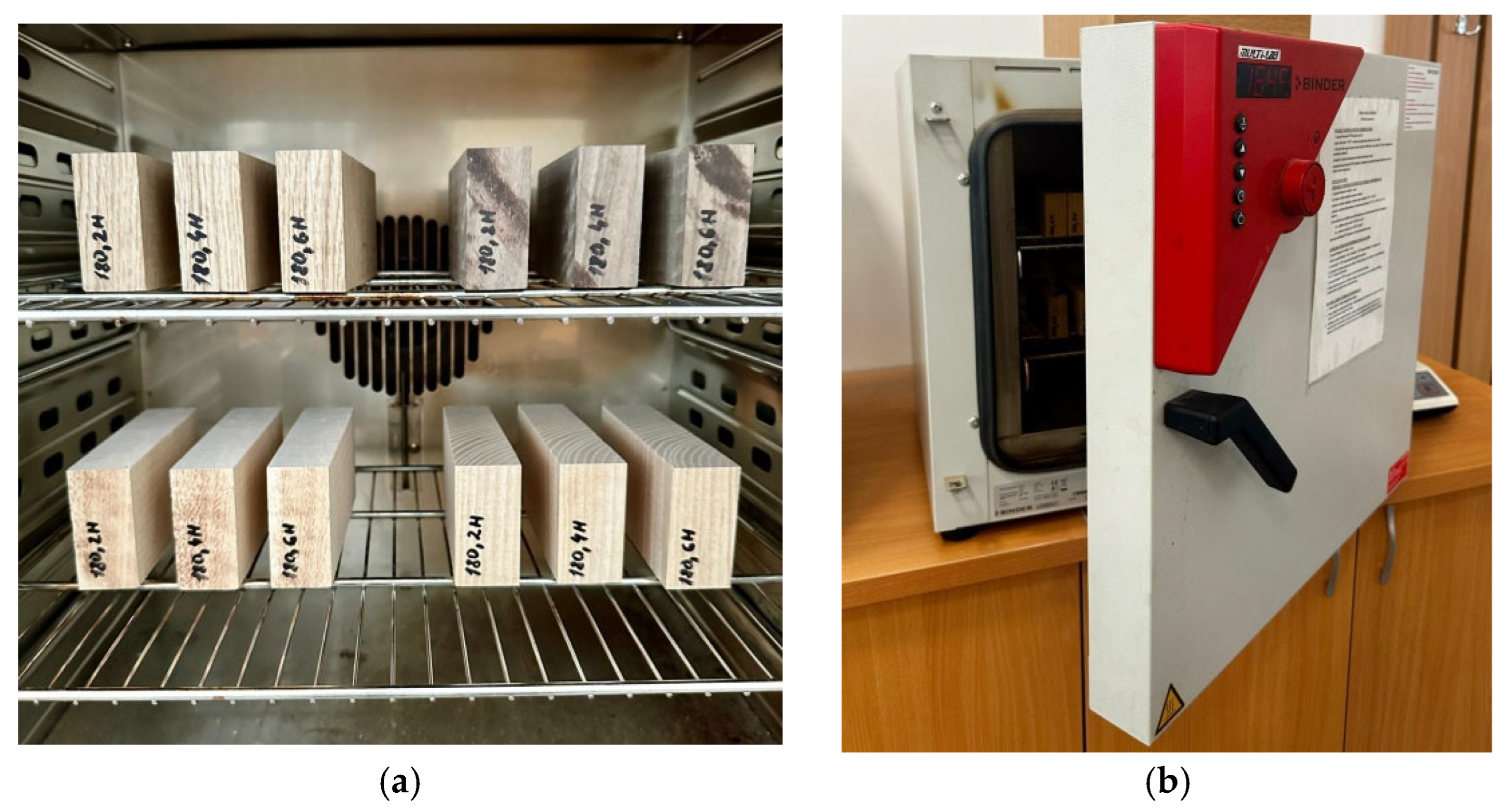
The heat treatment was performed in an electric oven from Binder (Tuttlingen, Germany) (Figure 1). The time of exposure was considered after the expected temperature was reached in the oven.
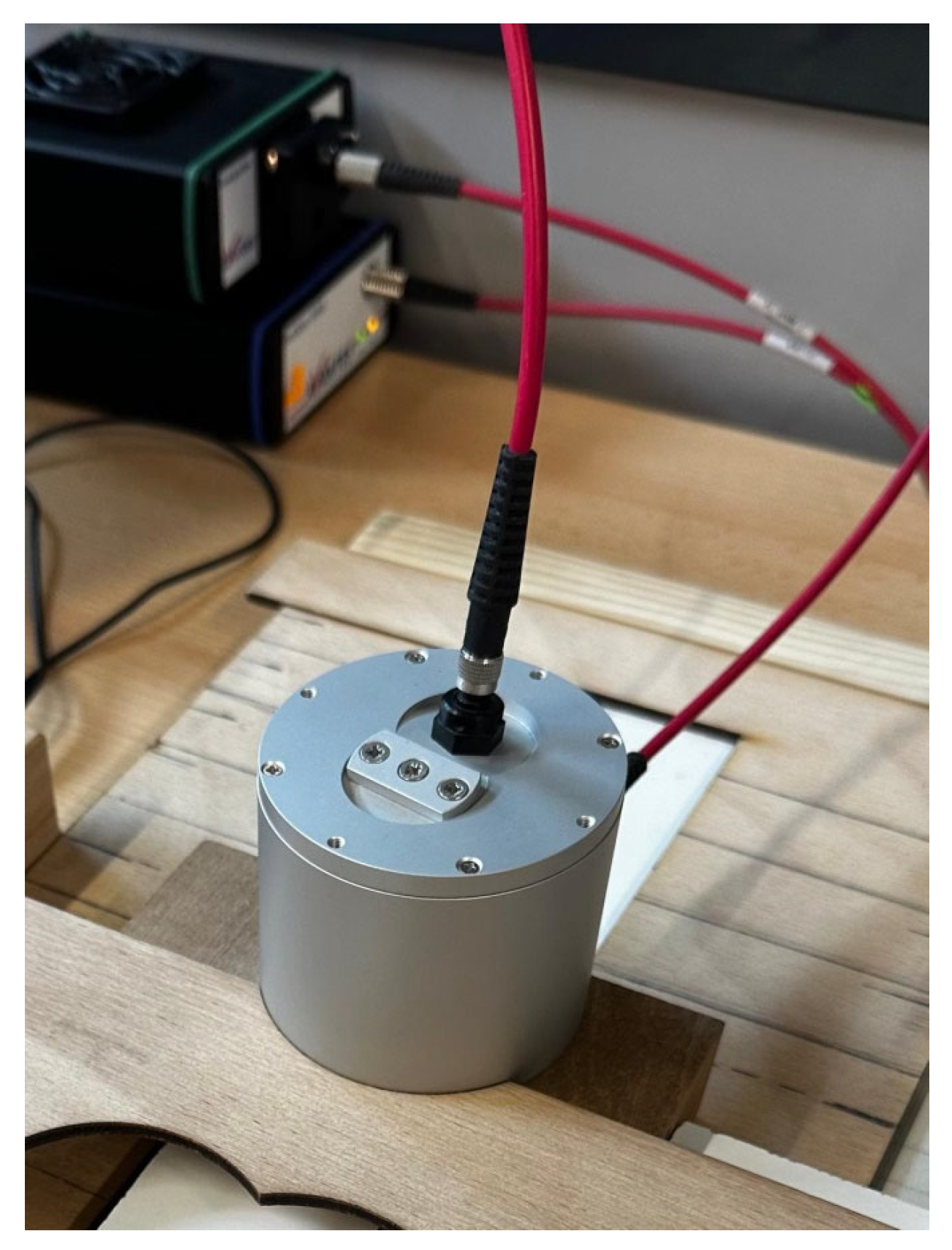
The color of the specimens was measured before and after the heat treatment by means of a UV–VIS spectrophotometer, type AvaSpec—USB2 from AVANTES (Apeldoom, The Netherlands), equipped with an integrated AVA measuring sphere with a diameter of 80 mm (Figure 2). This equipment uses D65 illuminant (which simulates natural light) at an observation angle of 2 degrees, as required by the standards in force. The equipment is equipped with AVASOFT version 7.7 software. A positioning device was used to ensure that the measurement is performed every time on the same spot in the center of the specimen.
The color coordinates in the CIE L*a*b* system [27], measured before and after treating the wood samples, allowed for us to obtain the total change in color (ΔE) caused by each heat treatment:
E = L 2 + a 2 + b 2
where:
ΔL is the difference in luminosity:
ΔL = LTLU
Δa is the difference in red-green chroma:
Δa = aTaU
Δb is the difference in yellow-blue chroma:
Δb = bTbU
where the subscript “T” refers to the heat-treated sample, and the subscript “U” refers to the same point of the same sample in the untreated state.
Before being heat-treated, the samples were oven-dried and the oven-dry mass (m0) was weighed at a precision of 0.01 g by using an AWS AD2000 scale from AXIS (Gdansk, Poland). After each heat treatment, the specimens were weighed again using the same scale. Then, the mass loss (ML) corresponding to each heat-treatment regime was calculated using the following equation:
M L = m 0 m T m 0 · 100   [ % ]
The mass loss (ML) is a key indicator of the treatment efficiency. A high mass loss (ML > 10%) indicates advanced degradation of the wood compounds, and a significant lowering of the mechanical strengths of the material [28]. The value ML = 5%–6% is considered to offer an ideal balance, where the benefits of the heat treatment (increased water resistance and dimensional stability) are gained without compromising the structural strength.
Two-way analysis of variance (ANOVA) was applied in SPSS v17 for the statistical interpretation of the recorded data. The Post Hoc Tukey Honestly Significant Difference (HSD) test was applied to statistically compare the differences between the mean values of the analyzed groups [29].

3. Results

3.1. Mass Loss

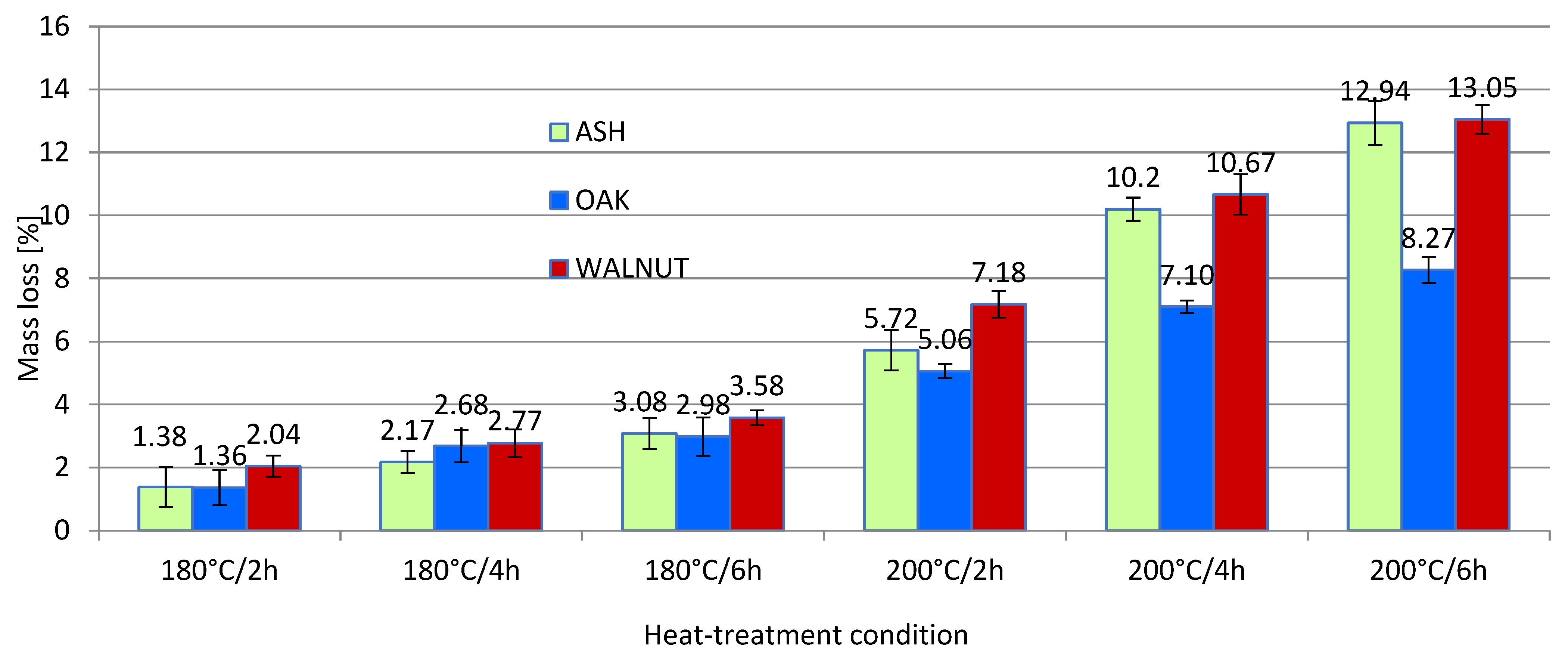
The average values of the mass loss due to the heat treatment are shown in Figure 3.
The results clearly show that, under the same heat-treatment conditions, oak wood registered the lowest mass losses and walnut the highest. The mass loss increases with increasing temperature and with increasing treatment duration. Among the two treatment parameters (temperature and duration), temperature has a stronger influence: for all species, the mass loss values registered at 200 °C/2 h were double the values at 180 °C/6 h. Similar results were obtained by [26], who obtained a mass loss of 2.4% and 3.1% at 180 °C for oak and walnut, respectively, with an increase at 7.02% at 210 °C for walnut. This mass loss is initially determined by the degradation of hemicelluloses, which begin to degrade between 160 °C and 180 °C, and as the temperature increases above 200 °C, additional degradation of lignin and cellulose occurs, leading to a further reduction in mass [23,24,26].
At 180 °C, all mass loss values are below 5%, suggesting an insufficient treatment to reach benefits in terms of dimensional stabilization [28]. The optimum values (around 5%–6%) were obtained at 200 °C/2 h for ash and oak. For walnut, the optimum temperature turns out to be 190 °C, since the treatment at 180 °C was too weak, while the treatment at 200 °C was too strong even for 2 h.
Table 2 presents the results of the ANOVA test performed on the mass loss values. Since the p-value is less than 0.05 (α-level), it can be stated that both the species and the heat-treating regime significantly influence the mass loss. Also, an interaction was found between the analyzed species and the applied treatment conditions, which indicates that each wood species influences the mass loss depending on the applied treatment conditions.
The Post Hoc analysis showed that there is a significant difference between the analyzed species (the greatest difference being between oak and walnut wood).

3.2. Color Change

The results of the spectrophotometric color evaluation of the samples before and after the heat treatment are presented in Table 3.
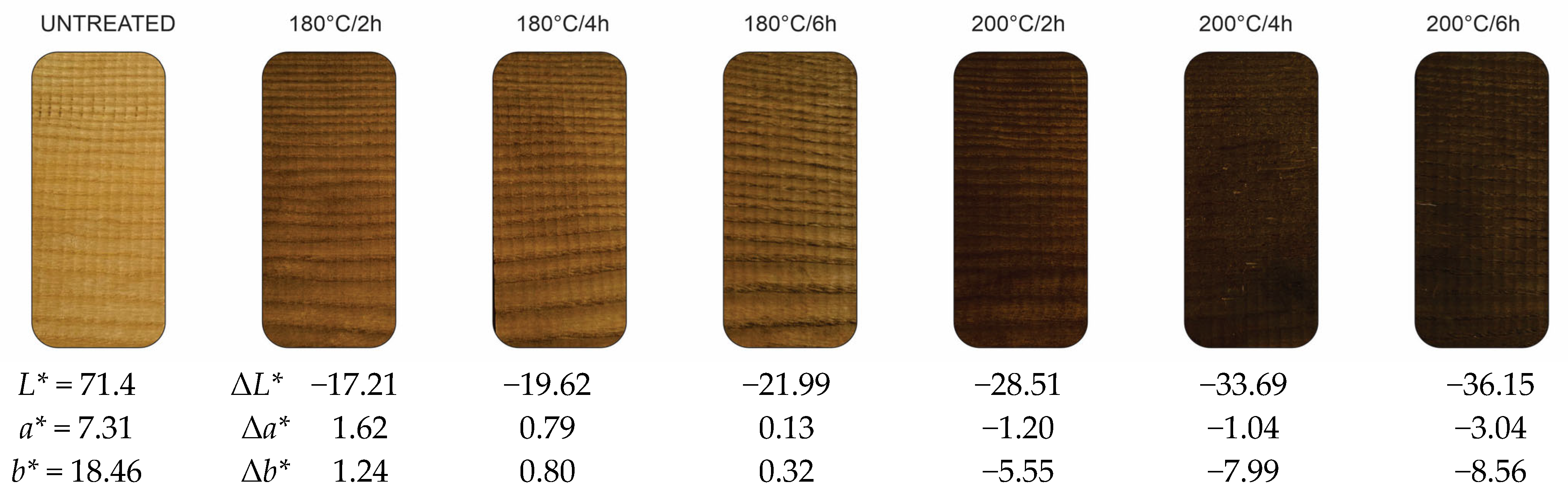
Dry untreated ash wood has a light, creamy color (average color coordinates: L* = 71.4, a* = 7.31 and b* = 18.46), which provides bright and modern esthetics. Through the heat treatment, the lightness (L*) decreases steeply. Both the a* and b* values slightly increase at 180 °C, making the appearance of wood more vivid. At 200 °C, both values decrease, especially the b* value, as the wood color moves towards dark-brownish shades (Figure 4).
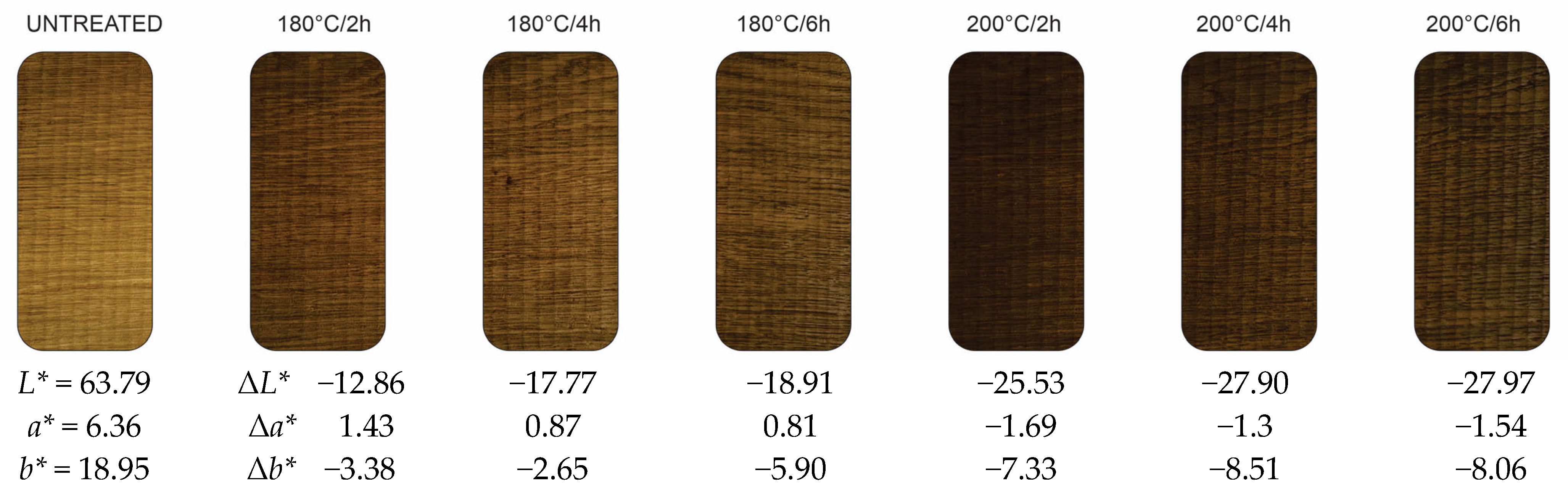
Dry untreated oak wood is characterized by warm, honeyed tones (average color coordinates: L* = 63.79, a* = 6.36 and b* = 18.95). As also observed in the case of ash, the heat treatment increases the lightness, but to a lower extent than in the case of ash wood. As also observed with ash wood, the a* value slightly increases at 180 °C, and it slightly decreases at 200 °C. The b* value decreases substantially both with increasing temperature and increasing duration (Figure 5). This means a decreasing yellowness with increasing treatment temperature, which is more evident than for other species The loss of brightness after exposure to elevated temperatures suggests the generation of some types of chromophores in the degradation, condensation, and oxidation progress [30]. Similar results were obtained by [31].
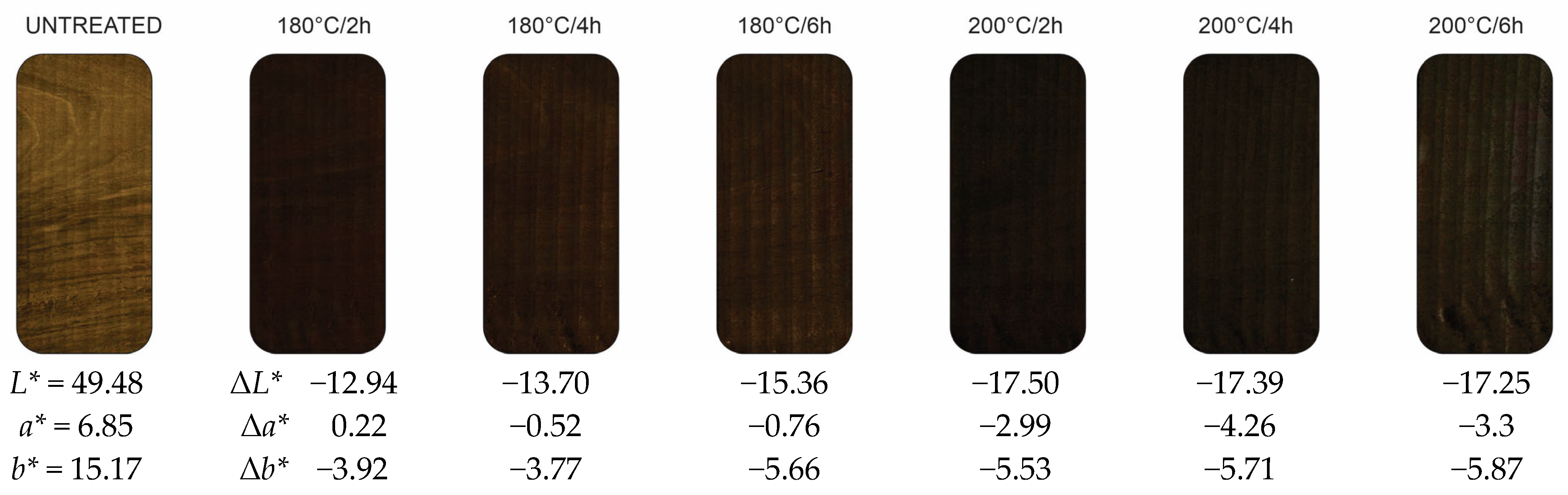
The rich, dark brown color of walnut wood (average color coordinates: L* = 49.79, a* = 6.85 and b* = 15.17) creates a luxurious feel even in an untreated state. A much lower initial lightness than that of the other two species can be observed, which is the reason why the darkening degree (ΔL*) after the heat treatment is lower with this species: the color saturates in the dark tone, and so, the lightness modification remains almost constant (Figure 6).
Table 4 presents the total color change values (ΔE), calculated based on the measurements performed by means of the spectrophotometer.
Table 5 presents the results of the ANOVA test performed on the total color change values. Since the p-value in Table 5 is less than 0.05 (α-level), it can be stated that the species and the heat-treatment regimes applied significantly influence the color change.
The Post Hoc analysis showed that there is a significant difference between the analyzed species (the greatest difference being between ash and walnut wood).
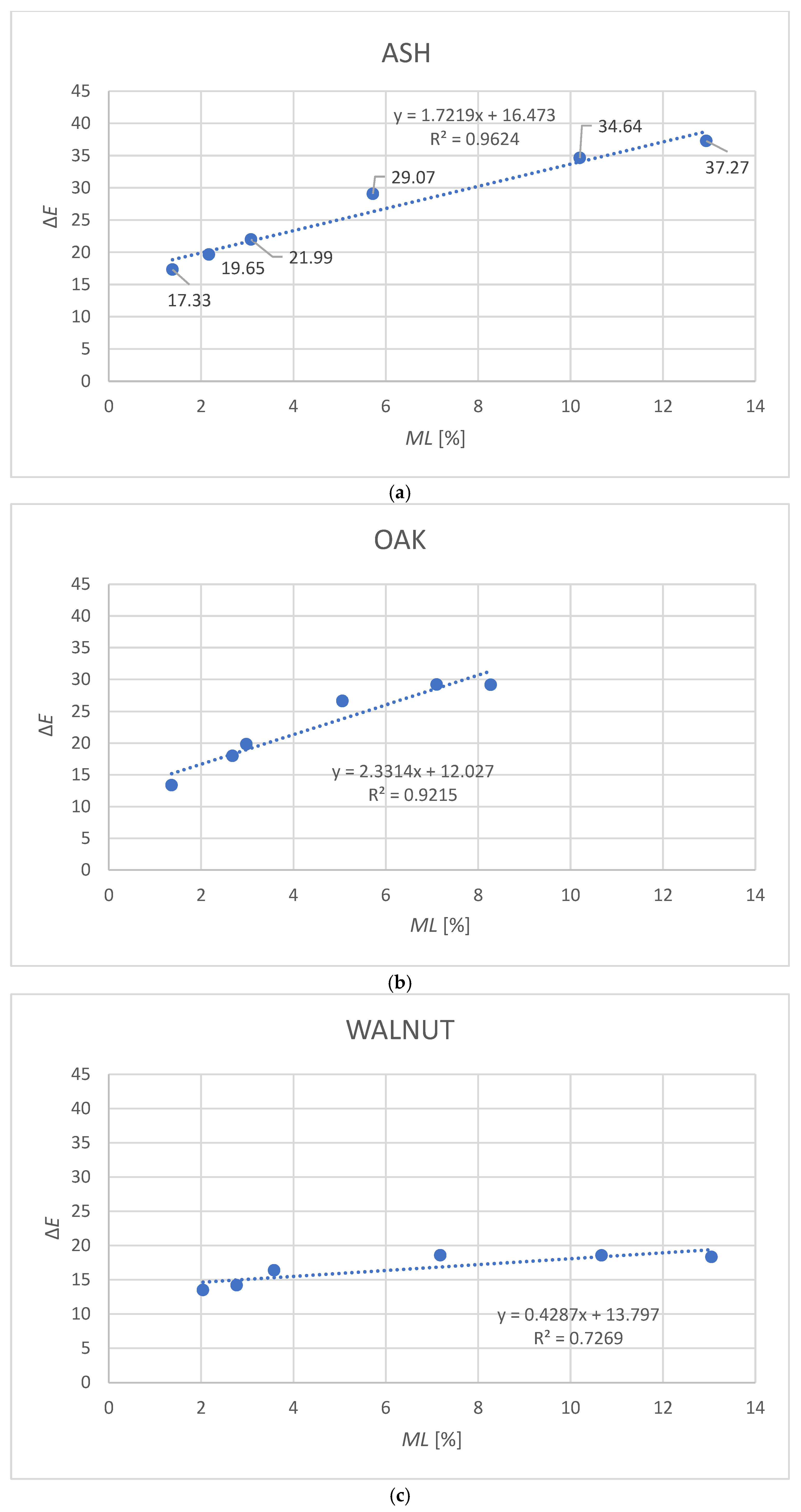
Further, the correlation between the total color change and the mass loss (characterizing the severity of the heat-treatment conditions) was analyzed. Based on the graphs in Figure 7, there is a highly positive correlation between the two parameters for all three species analyzed. The strongest correlation was obtained in the case of ash wood (R = 0.97), followed by oak wood (R = 0.95) and then by walnut (R = 0.84). In the case of walnut wood (Figure 7c), due to the natural darker color, the wood darkens considerably even with the mildest heat-treatment conditions, so it is difficult to distinguish differences when applying higher temperatures or longer durations.

4. Conclusions

Heat treatment offers an attractive way to modify the color of wood, making it attractive both for outdoor applications (since heat-treated wood has an increased hydrophobicity) and for interior design applications, where esthetic appearance is particularly important. At the same time, the mass loss observed during the experimental tests provides valuable information about changes in the wood structure and potential reductions in mechanical strength. Therefore, although darker heat-treated wood may provide desirable visual qualities, the degree of mass loss must be carefully considered to ensure that the treated material is suitable for a particular use—whether for load-bearing furniture elements or for purely decorative, non-structural components.

Author Contributions

Conceptualization, E.-C.B., O.Z. and M.C.; methodology, E.-C.B. and M.C.; software, B.B. and S.G.; validation, M.C.; formal analysis, E.-C.B. and M.C.; investigation, E.-C.B., C.M. and S.G.; resources, C.M.; data curation, M.C.; writing—original draft preparation, S.G. and C.M.; writing—review and editing, M.C.; visualization, O.Z.; supervision, E.-C.B. All authors have read and agreed to the published version of the manuscript.

Funding

This research received no external funding.

Data Availability Statement

The original contributions presented in this study are included in the article. Further inquiries can be directed to the corresponding author.

Conflicts of Interest

The authors declare no conflicts of interest.

References

  1. Almeida, E.; Lagoa, D.; Vasudhevan, T. Hidden Harms: The Economic and Financial Consequences of Deforestation and Its Underlying Drivers; CETEx and Grantham Research Institute on Climate Change and the Environment, London School of Economics and Political Science: London, UK, 2024. [Google Scholar]
  2. Linkevičius, E.; Žemaitis, P.; Aleinikovas, M. Sustainability Impacts of Wood- and Concrete-Based Frame Buildings. Sustainability 2023, 15, 1560. [Google Scholar] [CrossRef]
  3. Tupenaite, L.; Kanapeckiene, L.; Naimaviciene, J.; Kaklauskas, A.; Gecys, T. Timber Construction as a Solution to Climate Change: A Systematic Literature Review. Buildings 2023, 13, 976. [Google Scholar] [CrossRef]
  4. Churkina, G.; Organschi, A.; Reyer, C.P.O.; Ruff, A.; Vinke, K.; Lu, Z.; Reck, B.K.; Graedel, T.E.; Schnellnhuber, H.J. Buildings as a global carbon sink. Nat. Sustain. 2020, 3, 269–276. [Google Scholar] [CrossRef]
  5. Rowell, R.M. Acetylation of wood. For. Prod. J. 2006, 56, 4–12. [Google Scholar]
  6. Minato, K.; Ito, Y. Analysis of the factors influencing the acetylation rate of wood. J. Wood Sci. 2004, 50, 519–523. [Google Scholar] [CrossRef]
  7. Lande, S.; Westin, M.; Schneider, M. Development of modified wood products based on furan chemistry. Mol. Cryst. Liq. Cryst. 2008, 484, 367–378. [Google Scholar] [CrossRef]
  8. Tomak, E.D.; Ermeydan, M.A. Measuring dimensional stability of thermally modified ayous and iroko wood: Comparison of the three test methods. Cellulose 2025, 32, 2581–2597. [Google Scholar] [CrossRef]
  9. Gennari, E.; Picchio, R.; Monaco, A.L. Water absorption behaviour and dimensional stability of a thermally modified tropical hardwood (Triplochiton scleroxylon K. Schum). Environ. Sci. Proc. 2022, 13, 10822–10826. [Google Scholar]
  10. Priadi, T.; Sholihah, M.; Karlinasari, L. Water absorption and dimensional stability of heat-treated fast-growing hardwoods. J. Korean Wood Sci. Technol. 2019, 47, 567–578. [Google Scholar] [CrossRef]
  11. Tang, J.; Zhan, T.; Li, Z.; Jiang, J.; Lyu, J. Optimization of dimensional stability and mechanical performance of thermally modified wood using cyclic-gradient thermal treatment. Constr. Build. Mater. 2025, 458, 139596. [Google Scholar] [CrossRef]
  12. Lekounougou, S.; Kocaefe, D. Effect of thermal modification temperature on the mechanical properties, dimensional stability, and biological durability of black spruce (Picea mariana). Wood Mater. Sci. Eng. 2014, 9, 59–66. [Google Scholar] [CrossRef]
  13. Gao, J.; Kim, J.S.; Terziev, N.; Cuccui, I.; Daniel, G. Effect of thermal modification on the durability and decay patterns of hardwoods and softwoods exposed to soft rot fungi. Int. Biodeterior. Biodegrad. 2018, 127, 35–45. [Google Scholar] [CrossRef]
  14. Ayata, U.; Akcay, C.; Esteves, B. Determination of decay resistance against Pleurotus ostreatus and Coniophora puteana fungus of heat-treated scotch pine, oak and beech wood species. Maderas Cienc. Y Tecnol. 2017, 19, 309–316. [Google Scholar] [CrossRef]
  15. Brischke, C.; Hanske, M. Durability of untreated and thermally modified reed (Phragmites australis) against brown, white and soft rot causing fungi. Ind. Crops Prod. 2016, 91, 49–55. [Google Scholar] [CrossRef]
  16. Jančíková, V.; Jablonský, M. Thermal Modification of Wood—A Review. Sustain. Chem. 2025, 6, 19. [Google Scholar] [CrossRef]
  17. Cirule, D.; Sansonetti, E.; Andersone, I.; Kuka, E.; Andersons, B. Enhancing Thermally Modified Wood Stability against Discoloration. Coatings 2021, 11, 81. [Google Scholar] [CrossRef]
  18. Tuong, V.M.; Jian, L. Effect of heat treatment on the change in color and dimensional stability of acacia hybrid wood. BioResources 2010, 5, 1257–1267. [Google Scholar] [CrossRef]
  19. De Oliveira Lopes, J.; Cáceres, C.B.; Hernándes, R.E.; Garcia, R.A. Effect of the thermal treatment on the chemical components, sorption, and shrinkage properties of Tectona grandis juvenile wood. Maderas. Cienc. Y Tecnol. 2022, 24, 1–16. [Google Scholar]
  20. Hill, C.; Altgen, M.; Rautkari, L. Thermal modification of wood—A review: Chemical changes and hygroscopicity. J. Mater. Sci. 2021, 56, 6581–6614. [Google Scholar] [CrossRef]
  21. Hu, C.; Jiang, G.; Xiao, M.; Zhou, J. Effects of heat treatment on water-soluble extractives and color changes of merbau heartwood. J. Wood Sci. 2012, 58, 465–469. [Google Scholar] [CrossRef]
  22. Hannouz, S.; Collet, R.; Butaud, J.-C.; Bleron, L.; Candelier, K. Mechanical characterization of heat-treated ash wood in relation with structural timber standards. Pro Ligno 2015, 11, 3–10. [Google Scholar]
  23. Výbohová, E.; Kučerová, V.; Andor, T.; Balážová, Ž.; Veľková, V. The effect of heat treatment on the chemical composition of ash wood. BioResources 2018, 13, 8394–8408. [Google Scholar] [CrossRef]
  24. Kubovský, I.; Kačíková, D.; Kačík, F. Structural changes of oak wood main components caused by thermal modification. Polymers 2020, 12, 485. [Google Scholar] [CrossRef]
  25. Gurleyen, L.; Ayata, U.; Esteves, B.; Gurleyen, T.; Cakıcıer, N. Effects of thermal modification of oak wood upon selected properties of coating systems. BioResources 2019, 14, 1838–1849. [Google Scholar] [CrossRef]
  26. Hasanagić, R.; Mujanić, S.; Bahmani, M.; Humar, M. Effects of thermal modification on the water resistance and color stability of wood species from Bosnia and Herzegovina. Les/Wood 2025, 74, 19–30. [Google Scholar] [CrossRef]
  27. ISO/CIE 11664-4; 2019 Colorimetry—Part 4: CIE 1976 L*a*b* Color Space. ISO: Geneva, Switzerland; CIE: Vienna, Austria, 2019.
  28. Pétrissans, A.; Younsi, R.; Chaouch, M.; Gérardin, P.; Pétrissans, M. Wood thermodegradation: Experimental analysis and modeling of mass loss kinetics. Maderas Cienc. Tecnol. 2014, 16, 133–148. [Google Scholar]
  29. Pallant, J. SPSS Survival Manual: A Step-by-Step Guide to Data Analysis Using SPSS Version 15; McGraw Hill Education: New York, NY, USA, 2007. [Google Scholar]
  30. Jurczyková, T.; Šárovec, O.; Kačík, F.; Hájková, K.; Jurczyk, T.; Hrčka, R. Chromophores’ Contribution to Color Changes of Thermally Modified Tropical Wood Species. Polymers 2023, 15, 4000. [Google Scholar] [CrossRef]
  31. Barcik, S.; Gašparík, M.; Razumov, M.E. Effect of temperature on the color changes of wood during thermal modification. Cellul. Chem. Technol. 2015, 49, 789–798. [Google Scholar]
Figure 1. Heat treatment of the wood specimens (a) in an electric oven with a thermostat (b).
Forests 17 00083 g001
Figure 2. UV–VIS spectrophotometer type AvaSpec—USB2 from AVANTES.
Forests 17 00083 g002
Figure 3. Average mass loss as a function of the heat-treatment conditions for ash, oak, and walnut wood.
Forests 17 00083 g003
Figure 4. Color change of ash wood after the heat treatment under various conditions.
Forests 17 00083 g004
Figure 5. Color change of oak wood after the heat treatment under various conditions.
Forests 17 00083 g005
Figure 6. Color change of walnut wood after the heat treatment under various conditions.
Forests 17 00083 g006
Figure 7. Correlation between mass loss and total color change for heat-treated ash (a), oak (b) and walnut (c) wood.
Forests 17 00083 g007
Table 1. Heat-treatment conditions applied within the experimental research.
Temperature [°C]Duration [h]
1802; 4; 6
2002; 4; 6
Table 2. ANOVA test results concerning the mass loss values.
SourceType III Sum of SquaresdfMean SquareFp-ValuePartial Eta Squared
Corrected Model1312.3611777.1981568.8330.0000.997
Intercept2903.12312903.12358,998.0690.0000.999
Species60.785230.392617.6400.0000.945
Schedule1185.0875237.0174816.7350.0000.997
Species × Schedule66.489106.649135.1210.0000.949
Error3.543720.049
Total4219.02790
Corrected Total1315.90489
Table 3. Color assessment (L*a*b* color coordinates) of untreated and heat-treated ash, oak, and walnut wood—average values (standard deviations).
SpeciesHeat-Treatment ConditionsBefore Heat TreatmentAfter Heat Treatment
L* a* b* L* a* b*
Ash180 °C/2 h72.06 (2.44)6.57 (0.62)17.99 (1.49)54.85 (2.37)8.19 (0.34)19.23 (0.25)
180 °C/4 h71.15 (1.62)7.25 (0.64)18.40 (1.37)51.53 (2.54)8.04 (0.52)19.20 (0.48)
180 °C/6 h71.33 (0.93)7.87 (0.72)17.92 (2.62)49.34 (1.89)8.00 (0.24)18.24 (0.65)
200 °C/2 h70.79 (2.11)7.81 (1.05)19.58 (1.56)42.28 (1.19)6.61 (0.54)14.03 (1.87)
200 °C/4 h71.89 (1.93)6.98 (1.01)18.82 (1.61)38.20 (1.66)5.94 (0.38)10.83 (2.43)
200 °C/6 h71.20 (2.27)7.39 (1.01)18.07 (1.58)35.05 (0.95)4.35 (0.69)9.51 (2.72)
Oak180 °C/2 h62.26 (1.34)6.19 (0.65)18.76 (0.42)49.40 (1.71)7.62 (0.31)15.38 (1.57)
180 °C/4 h64.35 (3.15)6.42 (0.30)17.81 (0.78)46.58 (1.25)7.29 (0.60)15.16 (0.53)
180 °C/6 h62.67 (1.18)6.42 (0.25)19.80 (0.72)43.76 (1.58)7.23 (0.82)13.90 (0.99)
200 °C/2 h64.02 (3.09)6.60 (0.85)19.34 (0.49)38.49 (0.58)4.91 (0.81)12.01 (1.00)
200 °C/4 h64.98 (2.76)6.12 (0.48)19.24 (0.54)37.08 (0.83)4.82 (0.53)10.73 (1.08)
200 °C/6 h64.43 (2.09)6.40 (0.75)18.77 (0.76)36.46 (0.96)4.86 (0.33)10.71 (0.96)
Walnut180 °C/2 h49.20 (0.65)4.03 (0.91)10.95 (1.26)36.26 (0.77)4.25 (0.47)7.03 (0.57)
180 °C/4 h49.79 (1.23)4.48 (0.28)10.74 (0.39)36.09 (0.59)3.96 (0.41)6.97 (1.10)
180 °C/6 h49.54 (1.27)3.79 (1.06)12.28 (0.72)34.18 (0.85)3.03 (1.14)6.62 (1.85)
200 °C/2 h49.76 (2.26)4.09 (1.28)11.85 (0.82)32.26 (0.66)1.10 (0.68)6.32 (1.62)
200 °C/4 h49.39 (1.69)5.27 (0.95)10.68 (1.13)32.00 (0.79)1.01 (0.49)4.97 (0.30)
200 °C/6 h49.17 (1.39)3.82 (0.36)11.25 (1.60)31.92 (0.53)0.52 (0.41)5.38 (0.33)
Table 4. Total color change of wood as a function of the heat-treatment conditions—average values (standard deviations).
SpeciesHeat-Treatment ConditionsTotal Color Change (ΔE)
Ash180 °C/2 h17.33 (4.32)
180 °C/4 h19.65 (3.20)
180 °C/6 h21.99 (2.77)
200 °C/2 h29.07 (2.43)
200 °C/4 h34.64 (2.33)
200 °C/6 h37.27 (2.83)
Oak180 °C/2 h13.37 (1.60)
180 °C/4 h17.99 (2.76)
180 °C/6 h19.83 (1.17)
200 °C/2 h26.62 (2.96)
200 °C/4 h29.20 (1.73)
200 °C/6 h29.15 (2.98)
Walnut180 °C/2 h13.52 (0.90)
180 °C/4 h14.22 (4.85)
180 °C/6 h16.39 (1.87)
200 °C/2 h18.59 (2.30)
200 °C/4 h18.57 (2.61)
200 °C/6 h18.52 (1.13)
Table 5. ANOVA test results concerning the color change values.
SourceType III Sum of SquaresdfMean SquareFp-ValuePartial Eta Squared
Corrected Model3574.50217210.26512.2850.0000.744
Intercept41,633.719141,633.7192432.5150.0000.971
Species1250.5652625.28336.5330.0000.504
Schedule2011.4865402.29723.5050.0000.620
Species × Schedule312.4501031.2451.8260.0710.202
Error1232.3167217.116
Total46,440.53790
Corrected Total4806.81889
Disclaimer/Publisher’s Note: The statements, opinions and data contained in all publications are solely those of the individual author(s) and contributor(s) and not of MDPI and/or the editor(s). MDPI and/or the editor(s) disclaim responsibility for any injury to people or property resulting from any ideas, methods, instructions or products referred to in the content.