


Abstract
This paper examines whether broad enterprise AI adoption in Europe is best understood as an isolated technology decision or as the outcome of a wider bundle of digital capabilities. Using harmonized Eurostat data for European enterprises, the analysis builds a repeated cross-section at the country–size-class–year level and models high AI adoption with a combination of random forest and elastic-net estimation. The dependent variable captures enterprises using at least one AI technology, while the explanatory set focuses on cloud adoption, cloud CRM, cloud ERP, cloud database hosting, cloud security, cloud software use, e-sales intensity, and enterprise size. The findings reveal a stable predictive structure and consistent classification performance across specifications. Across models, cloud CRM and e-sales emerge as the strongest predictors of high AI adoption, followed by general cloud use and selected data-related cloud capabilities. This ordering remains largely stable in threshold-sensitivity checks based on alternative definitions of high adoption. The pattern also remains visible when country controls are removed, which suggests that the result is not merely a reflection of national heterogeneity. The paper contributes by shifting attention from broad claims about “digital readiness” to a narrower and more operational notion of capability complementarity: AI uptake tends to cluster where firms already possess customer-facing, cloud-based, and commercially digital infrastructures. In that sense, the paper offers a transparent, reproducible, and policy-relevant account of the digital foundations of enterprise AI adoption in Europe.
1. Introduction
Artificial intelligence is no longer a peripheral topic in European business digitalization. Official Eurostat releases show a sharp recent increase in enterprise AI use in the European Union, alongside a steady expansion in paid cloud computing services. In 2025, roughly one-fifth of EU enterprises with at least 10 employees reported using AI technologies, while more than half reported using paid cloud services. The same official statistical architecture also indicates that AI uptake and cloud use are markedly uneven across size classes, with larger enterprises consistently ahead of smaller ones [1]. These developments make the current moment analytically interesting. The relevant question is no longer whether AI matters in principle, but which underlying digital capabilities most reliably distinguish enterprise environments where AI uptake becomes widespread from those where it does not [2,3,4].
The existing literature offers several useful starting points, but it also leaves an important empirical space open. A substantial part of the AI-adoption literature has been organized around organizational adoption frameworks such as TOE and related extensions, often using surveys, case evidence, or sector-specific settings. That literature has clarified that AI adoption depends on more than technical availability alone; organizational readiness, external pressure, managerial support, skills, and complementary digital assets all matter [5,6,7,8]. Related work has moved from adoption to consequences and shows that AI can be associated with stronger firm outcomes when it is combined with other digital assets (i.e., IoT and big data analytics), rather than treated as a standalone investment [9]. Moreover, investigations into AI within customer relationship management have emphasized that CRM-related infrastructures serve as particularly conducive environments for AI integration, as they amalgamate customer data, standardize processes and facilitate decision support in a manner that renders AI both beneficial and operationally actionable [10]. In a way, this research aligns with the digital transformation literature that perceives technology advancement as cumulative and reliant on capabilities, and not as a series of discrete adoptions [11,12,13,14].
Even with these advancements, three gaps remain. First, much of the literature is still dominated by reviews, survey-based designs, or country- and sector-specific applications, which makes cross-country comparison difficult and often limits reproducibility. Second, the discussion of complementarity is usually broad. Much of the literature still discusses AI adoption in broad terms—digital transformation, organizational readiness, or capability development—while paying less attention to the concrete operational arrangements through which AI is actually taken up inside firms [15,16,17,18]. Third, although explainability now occupies a more visible place in discussions of organizational AI, empirical studies of enterprise adoption do not always combine predictive models with forms of interpretation that make it clear which capabilities matter most and how their importance is ordered [19,20,21].
This paper addresses those gaps with a deliberately narrower design. It uses public, harmonized Eurostat indicators to model enterprise AI adoption across European country–size-class–year cells. The dependent variable is Eurostat’s official indicator for enterprises using at least one AI technology. The explanatory set does not attempt to capture every possible antecedent of AI adoption. Instead, it focuses on a coherent family of digital-business capabilities that can plausibly operate as immediate complements to AI: general cloud use, cloud CRM, cloud ERP, cloud database hosting, cloud security software, cloud software applications, and e-sales. This choice reflects both theory and measurement logic, and it is made deliberately rather than by omission. Workforce skills, organizational culture, and institutional or legal conditions are clearly relevant in the wider AI-adoption literature, but they are less directly observable in a harmonized and reproducible cross-country design of the kind used here. By contrast, cloud-based functions and e-sales capture operational capabilities that sit much closer to the day-to-day environments in which AI tools can actually be deployed, integrated, and used. If AI becomes economically useful inside firms, it is likely to do so where data are already organized, customer interaction is already digitized, and core software functions are already delivered through scalable digital infrastructures. In other words, the paper does not treat AI adoption as a self-contained event, but as the expression of a broader capability configuration. Eurostat’s indicator design makes this kind of capability mapping feasible in a way that is transparent and replicable [2,3].
The paper makes three contributions. The first is empirical. It offers a pan-European, reproducible account of enterprise AI adoption using official public data rather than proprietary surveys or isolated case studies. The second is conceptual. It argues that the most useful way to think about enterprise AI adoption in this setting is not as a diffuse measure of “digital readiness,” but as a more specific pattern of capability complementarity centered on customer-facing and cloud-based infrastructures. The third is methodological. Instead of choosing between predictive performance and interpretability, the paper combines them. Random forest estimation is used to recover flexible predictive rankings, while elastic net estimation is used to test whether the same variables remain salient in a more parsimonious structure. In this respect, the paper aligns with the broader argument that interpretable evidence is not a cosmetic add-on but an essential part of useful organizational analytics [20]. These contributions position the paper at the intersection of enterprise digitalization research, AI-adoption studies, and interpretable business analytics.
The empirical evidence supports a clear conclusion. High AI adoption is not most strongly associated with broad structural descriptors alone. It is most strongly associated with cloud CRM, e-sales intensity, general cloud use, and selected cloud-based data capabilities. That pattern remains visible when country controls are removed, which suggests that the signal is not reducible to national context. The paper, therefore, advances a simple but consequential claim: in the European enterprise setting, AI uptake appears to build on an identifiable digital-commercial and cloud-enabled foundation rather than emerging as an isolated technological leap. This is the central argument developed and tested in the sections that follow.
2. Literature Review and Hypotheses
2.1. AI Adoption as an Organizational and Capability Problem
The literature on enterprise AI adoption has moved well beyond the early view that adoption is primarily a matter of technological availability or cost reduction. Recent reviews and empirical studies increasingly treat AI uptake as an organizational problem shaped by complementary assets, managerial readiness, data availability, and implementation conditions. Cubric’s tertiary study shows that business research on AI adoption has been dominated by a broad set of enablers and barriers, but also notes that the evidence base remains fragmented and often optimistic relative to practice. More recent work focusing on SMEs reaches a similar conclusion: AI adoption is usually constrained not by a single missing technology, but by a wider combination of organizational, legal, and capability-related conditions. Recent synthesis work points in the same direction and suggests that the determinants literature is increasingly organized around recurring clusters such as technological readiness, organizational resources, environmental pressures, governance, and implementation barriers, rather than around a single generic model of adoption [15]. Recent SME-oriented evidence also indicates that these conditions interact with firm size and organizational context, which reinforces the idea that AI uptake is shaped by capability configurations rather than by technology availability alone [17]. The same logic appears in sector-specific evidence. Yang et al. show, in a professional-service setting, that AI adoption is shaped by a combination of technological affordances, organizational support, and environmental pressures rather than by a narrow technical trigger alone. These studies point to a common implication for the present paper: AI adoption is unlikely to be well explained if it is treated as an isolated yes-or-no technology choice. It is more plausibly embedded in a broader digital capability structure [6,8,16,22]. That broader reading is also reinforced by newer capability-based work, which places AI adoption within a wider process of organizational transformation involving complementary assets, resource orchestration, and dynamic capability development [23,24]. This broader reading is also consistent with the longer technology-adoption tradition. From the organizational side, the TOE framework emphasizes that adoption depends on the joint configuration of technological, organizational, and environmental conditions [25,26]. From the acceptance side, TAM and UTAUT underline that perceived usefulness, ease of use, and facilitating conditions remain central when technologies move from availability to actual use [27,28]. Recent AI-specific work sharpens the same point by stressing AI readiness, data quality, managerial support, and AI-specific resource orchestration as preconditions for implementation [29,30,31,32].
That conclusion is useful, but it also leaves an important empirical gap. Much of the current literature identifies broad drivers of AI adoption, yet fewer studies isolate which operational capabilities are most immediately associated with higher adoption environments in a harmonized cross-country setting. Put differently, the literature is often rich in frameworks and barriers, but thinner on reproducible comparative evidence showing which concrete digital capabilities tend to co-occur with enterprise AI uptake. This is especially true when the objective is not to explain a single industry or one national case, but to compare enterprise environments across countries and size classes using a common public statistical architecture [8,16]. The same limitation is visible in more recent domain-specific studies. Work on AI adoption in HR ecosystems and supply-chain settings continues to underline the importance of organizational fit, data readiness, and process integration, but it also shows how context-dependent those conditions are, which makes harmonized comparative evidence on concrete operational capabilities especially valuable [33,34]. The gap is especially visible against the wider digital transformation literature, which argues that competitive advantage increasingly depends on bundles of digital capabilities, business-model adaptation, and organizational reconfiguration rather than on isolated technologies taken one by one [11,13,35,36].
2.2. Cloud Adoption as a Foundation for AI Uptake
A natural starting point for narrowing that broader discussion is the literature on cloud computing adoption. Long before AI became central to enterprise digital strategy, studies on cloud adoption emphasized that firms do not adopt cloud services randomly. Adoption tends to reflect perceived usefulness, organizational readiness, cost–benefit considerations, and environmental conditions, often interpreted through TOE- and TAM-based frameworks. Gangwar et al. and Skafi et al. both show that cloud adoption is shaped by a mix of technological, organizational, and contextual drivers rather than by technology supply alone. In practical terms, cloud adoption matters because it provides scalable computing resources, standardized software access, and a more structured data environment. Those are precisely the kinds of infrastructural conditions under which AI applications become easier to deploy and integrate into routine business activity [37,38]. Earlier cloud studies reach a similar conclusion. Ref. [39], for example, show that relative advantage, compatibility, top-management support, technology readiness, and competitive pressure all shape cloud uptake at the firm level. This reinforces the idea that cloud capability is itself an organizational accomplishment rather than a purely technical procurement choice.
This line of reasoning matters for the present study because it suggests that general cloud use should not be treated as a neutral control. It is better understood as a baseline organizational capability that may lower the threshold for AI uptake. Yet the cloud literature also implies that not all cloud functions are equivalent. A firm that merely uses some cloud services may be less prepared for AI deployment than a firm that uses cloud services to manage customer information, data storage, enterprise processes, or software delivery. That distinction is central to the logic of the present paper. Rather than using a single broad proxy for digitalization, the analysis decomposes cloud use into a set of operational sub-capabilities. In doing so, it asks whether AI adoption is more closely associated with generic cloud presence or with more specific cloud-enabled business functions [37,38]. This is also consistent with broader work on digital business strategy and digital transformation, which treats scalable digital infrastructures as foundational assets for new business models, data-driven processes, and advanced analytics [11,12,13].
This leads to the first expectation:
H1.
General cloud use is positively associated with the probability of high enterprise AI adoption.
2.3. Customer-Facing Digital Systems and the Special Role of CRM
If cloud adoption provides the infrastructural base, customer-facing digital systems may provide the more immediate organizational context in which AI becomes economically useful. The CRM literature has increasingly argued that AI is especially valuable where firms already collect, organize, and act on customer information in a systematic way. Ref. [10] show that CRM is one of the settings in which AI is easiest to put to work, precisely because customer data, routine processes, and decision needs are already met here. Alnofeli et al. arrive at much the same conclusion in their review of AI in CRM. What matters, in their account, is not automation by itself, but the fact that customer-information systems, analytical capacity, and fast commercial response are already tied together. For that reason, CRM should not be treated as just another software category. It is one of the business areas in which AI can be used most directly in targeting, recommendations, service, personalization, and ongoing customer management [10,40]. The same idea runs through the marketing literature. There, AI tends to be most useful when firms already rely on digital customer interfaces, continuous data flows, and established decision routines. This is especially evident in work on marketing strategy, where personalization, segmentation, recommendation, and service design are treated as central organizational uses of AI rather than as side applications [41,42,43].
That reasoning has a clear implication for the present paper. Among cloud-enabled capabilities, cloud CRM should be especially informative because it captures more than basic technological adoption. It reflects a customer-data infrastructure that is already organized, digitized, and linked to operational decisions. If AI adoption depends on the existence of practical use contexts, one would expect cloud CRM to be more strongly associated with high AI uptake than more generic cloud functions. This is particularly plausible in a business-economy aggregate where customer engagement and information processing cut across a wide range of activities [10,40]. Seen this way, CRM is not merely a channel technology; it is a concrete manifestation of commercially actionable data and process integration, which is precisely the type of capability bundle that AI systems can augment most easily.
Accordingly, the second hypothesis is formulated more sharply:
H2.
Cloud CRM is positively associated with the probability of high enterprise AI adoption.
A stronger comparative version follows directly from the same literature:
H3.
Cloud CRM has a stronger association with high enterprise AI adoption than more generic cloud-use indicators.
2.4. Digital Sales Capability and Commercially Actionable Data
A related but distinct stream of work concerns e-commerce and digital selling. Studies of e-commerce adoption have repeatedly shown that online selling is not merely a sales-channel decision. It typically reflects a broader digital reconfiguration involving transaction systems, customer interfaces, data capture, and organizational responsiveness. Ref. [44] describe e-commerce as an “escape hatch” for SME resilience, but the broader implication of their review is that firms engaged in online sales tend to operate with more developed digital interfaces and more routinized digital processes. That makes e-sales relevant here, not because online selling is synonymous with AI, but because it signals the existence of digitally mediated customer interaction and commercially actionable data. Firms that already sell through digital channels are more likely to have the data flows, process discipline, and commercial incentives that make AI adoption meaningful in practice [44]. The SME e-commerce literature reaches a similar conclusion from an adoption perspective. Integrated TOE-based accounts show that online selling is shaped by combinations of organizational capability, managerial support, trust, and environmental conditions, rather than by technical feasibility alone [45].
This argument also helps distinguish the present paper from the broader “digital maturity” literature. The key issue is not whether firms are digitally advanced in some vague sense. The more specific issue is whether they possess capabilities that make AI applications operationally worthwhile. E-sales is one such capability because it places firms in a setting where customer behavior, transactions, and digital touchpoints can be monitored and acted upon. For that reason, a positive association between e-sales and high AI adoption is theoretically plausible and empirically testable [10,44]. In that sense, e-sales is closely aligned with what digital business strategy research treats as a commercially embedded capability: it is not just a distribution mechanism, but part of a wider architecture of customer interaction, data generation, and value capture [11,13].
This leads to the next hypothesis:
H4.
E-sales intensity is positively associated with the probability of high enterprise AI adoption.
2.5. Data and Process Capabilities as Complements to AI
The literature also suggests that AI adoption should be easier where firms possess stronger internal data and process infrastructures. In AI-adoption research, this usually appears under broader labels such as organizational readiness, information quality, digital assets, or process formalization. In more practical terms, however, those ideas often map onto concrete enterprise functions such as database hosting, ERP integration, security software, and business-process support. Even if the literature does not always test these functions in a harmonized comparative design, it consistently treats them as enabling conditions for enterprise AI use. This is visible both in the broader AI-adoption literature, which highlights complementary organizational and informational assets, and in the cloud-adoption literature, where enterprise-process integration and data management repeatedly emerge as part of the rationale for digital transformation [6,22,37,38]. A related literature on big data analytics arrives at a similar conclusion. The business value of advanced analytics depends on the combination of data resources, technical skills, organizational alignment, and complementary business processes rather than on data volume alone [46,47,48].
The present paper suggests that cloud database hosting, cloud ERP, and cloud security should matter not because they directly encode AI, but because they approximate a firm environment in which data and processes are already organized in ways that reduce friction for AI deployment. These are not expected to dominate customer-facing capabilities such as CRM, but they should still contribute positively once the model moves beyond a single broad cloud-use measure. Put differently, these variables proxy the organizational depth of digitalization rather than its mere presence.
This expectation is formalized as follows:
H5.
Cloud-based data and process capabilities, particularly database hosting, ERP, and security functions, are positively associated with the probability of high enterprise AI adoption.
2.6. Size Heterogeneity and the Role of Organizational Scale
Finally, research on AI adoption in SMEs and professional service firms indicates that organizational size continues to matter, even as access to digital technologies becomes more widespread. Larger firms generally benefit from greater slack resources, more structured decision-making procedures, larger budgets dedicated to digitalization, and stronger internal capacities for implementation. The existing literature on AI uptake among SMEs repeatedly highlights scale as an important conditioning factor in the adoption process. Firm size influences the ability to absorb and integrate new technologies, both directly—through the availability of financial and human resources—and indirectly through complementary organizational capabilities. This does not imply that smaller firms are unable to adopt AI. What the evidence points to, instead, is that higher or more advanced AI uptake is observed more often in larger organizations, once other influences are held constant [8,16,22]. Recent work on SMEs reaches much the same conclusion, but adds an important qualification. Size seems to matter less on its own than through what it makes possible inside the firm: the development, coordination, and maintenance of the supporting capabilities that allow AI to be implemented in a workable way [17,23].
This expectation also fits earlier evidence from cloud and enterprise-system adoption, where firm size often proxies for slack resources, implementation routines, and managerial formalization [39], as well as newer AI research that highlights leadership support, readiness, and resource orchestration as recurring conditions of adoption [5,30,31].
That argument is not the centerpiece of the paper, but it is important enough to be stated explicitly because the empirical design compares country–size-class cells rather than individual firms. If the capability-based story is correct, size should matter, but it should not fully displace the role of cloud and digital-sales variables.
This yields the final hypothesis:
H6.
Larger enterprise size classes are more likely to belong to the high-AI-adoption group than smaller size classes.
2.7. Positioning of the Present Study
The literature points in a fairly clear direction, but the available evidence remains uneven. The AI-adoption literature provides broad frameworks and lists of drivers; the cloud literature clarifies infrastructural conditions; the CRM and e-commerce literatures highlight customer-facing digital contexts; and the explainability literature argues for models that remain interpretable rather than purely predictive. What is still less common is a comparative empirical design that brings these threads together using public, harmonized indicators and asks which digital capabilities most consistently signal high-AI-adoption environments across European enterprises. This gap has become more visible in recent literature, which has broadened the catalogue of AI-adoption determinants but still relies heavily on review-based syntheses, sector-specific settings, and country- or firm-level applications rather than harmonized comparative evidence on operational digital capabilities [15,33,34]. The present paper addresses that gap by focusing on a narrow bundle of operational capabilities and by combining random forest estimation with elastic-net regularization so that predictive performance and interpretability are considered jointly rather than separately [20]. In that sense, the study also responds to wider calls for more operational and measurable accounts of digital capability formation, rather than treating adoption as a black-box organizational outcome [12,13,31].
Figure 1 summarizes the conceptual architecture of the study. The framework links enterprise AI adoption to a narrower bundle of operational digital capabilities rather than to a diffuse notion of digital readiness. Broad cloud use is treated as a foundational digital infrastructure, customer-facing digital capability is captured primarily through cloud CRM and e-sales, and data/process capability is approximated through cloud ERP, database hosting, security software, and cloud software applications. Enterprise size is included as an important conditioning dimension because the empirical design compares country–size-class–year cells rather than individual firms. The arrows in the figure represent hypothesized positive associations in the predictive framework developed in this paper, not structural causal effects. In this way, the figure clarifies how H1–H6 fit together and how the paper moves from the broader literature on digital transformation and AI adoption to the narrower empirical architecture tested below.
Figure 1.
Conceptual framework linking cloud sophistication, customer-facing digital capability, data/process capability, enterprise size, and high enterprise AI adoption. Source: Author’s own work. Note: The arrows represent hypothesized predictive associations derived from the literature review and tested in the empirical analysis. They should not be interpreted as structural causal effects.
3. Methods
3.1. Data and Sample
The analysis uses official Eurostat enterprise ICT data and is built entirely from public sources accessed through the Eurostat API. Three datasets are combined, and their source codes are now stated explicitly for clarity and reproducibility. The first is Eurostat’s enterprise AI-use table isoc_eb_ai, from which the paper extracts the indicator E_AI_TANY, defined as enterprises using at least one AI technology. The second is the cloud-computing table isoc_cicce_use, which provides both a general measure of cloud adoption and several cloud-service subcomponents. The third is the enterprise e-commerce table isoc_ec_esels, from which the paper uses the share of enterprises making e-sales. All three datasets were downloaded programmatically from Eurostat’s public Statistics API through the get_eurostat() function in R. In this sense, the 2025 values used in the paper are not drawn from a separate unpublished source, but from the official Eurostat online database available at the time of extraction. This common statistical infrastructure is particularly useful for the present purpose because it offers harmonized indicators across countries, enterprise size classes, and years, using a consistent survey framework for enterprise digitalization [2,4,49,50,51]. For the 2025 wave in particular, the AI-use observations correspond to Eurostat’s 2025 enterprise ICT survey reporting on artificial intelligence in enterprises, while the cloud and e-sales variables were retrieved from the corresponding official Eurostat online tables in the same enterprise digitalization system.
To ensure comparability across the three tables, the sample is restricted to the common business-economy aggregate available in all of them, namely C10-S951_X_K. After merging the three sources and dropping incomplete observations, the final estimation sample is a repeated cross-section at the country–size-class–year level. Because the 2024 wave is unusually thin after harmonization, the main estimation sample retains 2021, 2023, and 2025 only. The exclusion of 2024, thus, reflects post-harmonization sample thinness rather than a substantive preference for particular waves. The retained years preserve a cleaner common-support structure across the three Eurostat domains merged in the final estimating sample. The random forest is used as the primary flexible ranking device under potential nonlinearities and interactions, while the elastic net serves as its parsimonious and interpretable complement in a setting with correlated capability indicators. The resulting dataset contains 512 observations, covering 36 countries, 8 enterprise size classes, and 3 years. The sector dimension is not used in the estimating equations because, after harmonization, the merged sample collapses to a single aggregate business category rather than a set of disaggregated industries. This also means that the unit of analysis is explicitly aggregate rather than firm-level. The paper, therefore, does not identify which individual firms adopt AI, nor does it estimate firm-level behavioral responses. Instead, it compares country–size-class–year cells that differ in their observed levels of AI use and digital capability composition.
The outcome variable is constructed in two steps. First, the continuous AI-use measure records the percentage of enterprises in each country–size-class–year cell that report using at least one AI technology. Second, a binary variable, high AI adoption, is defined as belonging to the top quartile of that annual distribution. This within-year rule is deliberate. Eurostat reports a rapid rise in AI use among European enterprises in recent years, so a fixed threshold would blur relative adoption differences across waves. The within-year top-quartile rule instead identifies the enterprise environments that sit at the upper end of the annual adoption distribution in each observed wave [2,3]. The paper does not treat this cutoff as uniquely dictated by theory. It is used as an upper-tail classification rule that matches the empirical purpose of the study, namely to distinguish relatively high-adoption enterprise environments from the rest of the annual distribution while preserving a meaningful positive class for probabilistic classification. To assess whether the results depend excessively on this choice, the analysis also reports threshold-sensitivity checks based on alternative within-year cutoffs, including the upper tercile and the median split; these results are presented in Appendix A Table A6 and Table A7. This outcome should also be interpreted in light of the underlying statistical architecture. The Eurostat indicator used here captures whether enterprises report using at least one AI technology, not the financial intensity of AI investment, the number of AI applications deployed, or the degree to which AI is embedded in core business processes. The paper therefore focuses on relative variation in observed AI use across comparable country–size-class–year cells, rather than on the internal depth of AI integration within firms.
The explanatory variables focus on a narrow set of digital capabilities that are plausible operational complements to AI adoption. This selection is not intended to exhaust the wider set of determinants discussed in the literature, such as skills, managerial support, organizational culture, or regulation. Rather, it isolates the subset of predictors that can be measured consistently across countries, size classes, and years within the merged Eurostat framework, and that are sufficiently proximate to enterprise digital operations to be meaningful in a predictive setting. The first is e-sales intensity, measured as the percentage of enterprises receiving orders electronically. The second is a general measure of cloud use. The remaining variables capture specific cloud-enabled functions: cloud CRM, cloud ERP, cloud database hosting, cloud security software, and cloud software applications. The wider Eurostat enterprise ICT survey also covers related domains such as ICT skills and internet access/use, but not all candidate controls align equally well with the final harmonized country–size-class–year sample used in this paper. For that reason, the main specification remains centered on a compact and operationally interpretable capability bundle, while additional design-compatible controls are considered in robustness analysis rather than folded into the core model mechanically. This design follows the view that AI adoption is unlikely to be a purely isolated technology decision. Rather, it is expected to emerge where customer interaction, data management, and software delivery are already organized through scalable digital infrastructures. That reading is consistent with both the enterprise ICT literature and the Eurostat reporting system, which tracks AI, cloud use, and e-commerce as closely related dimensions of enterprise digitalization [2,3,6,10].
3.2. Empirical Strategy
The empirical design is predictive rather than causal, and it is also deliberately framed around a harmonized adoption indicator rather than a deeper measure of AI intensity. The same logic applies to controls: the paper prioritizes predictors that can be merged cleanly within the common Eurostat enterprise ICT architecture and then evaluates additional design-compatible controls through targeted robustness checks. The paper, therefore, does not estimate treatment effects or structural elasticities. Instead, it asks a narrower question: which observable digital capabilities best distinguish country–size-class cells with relatively high AI uptake from those with lower uptake? To operationalize that distinction, the continuous AI-use indicator is first transformed into a binary outcome. Let denote the percentage of enterprises in country , size class , and year that use at least one AI technology. The indicator of high AI adoption is then defined as
where is the within-year 75th percentile of the AI-adoption distribution. This within-year threshold is intended to capture relative leadership in AI uptake within each observed wave, rather than imposing a fixed cutoff on a rapidly changing adoption landscape.
To answer the empirical question, the paper combines two complementary methods. The first is a random forest classifier, used to recover flexible nonlinear predictive relationships and to rank predictors through permutation importance. Random forests are well-suited to this task because they can absorb interactions and nonlinearities without requiring them to be specified ex ante while still providing transparent post-estimation rankings of predictor relevance [52]. In the implementation, the forest is estimated as a probability-classification model and tuned through a stratified five-fold cross-validation procedure over alternative values of mtry and minimum node size. The final specification retains 1000 trees, mtry = 2, and a minimum node size of 5. Predictor importance is evaluated through permutation importance in the tuned model. For each observation, the predicted probability of belonging to the high-adoption group is computed as the average class-probability prediction across the trees in the ensemble, as shown below:
where denotes the class-probability prediction from tree , and is the vector of digital-capability predictors and controls for observation . Predictive quality is summarized with the out-of-bag Brier score,
which is a natural metric for probabilistic classification because it evaluates the distance between predicted probabilities and realized outcomes.
The second method is elastic-net logistic regression, estimated by cross-validation. This step serves two purposes. First, it checks whether the variables highlighted by the forest remain visible in a more parsimonious penalized model. Second, it helps stabilize coefficient selection in the presence of correlated digital indicators, which is particularly relevant here because several cloud-capability variables are conceptually related. Estimation follows the coordinate-descent approach implemented in glmnet, with the mixing parameter set at , so that the penalty combines lasso-type sparsity and ridge-type shrinkage [53]. Formally, the elastic-net logit estimator solves
where
The first component is the log-likelihood for binary choice, while the second is the elastic-net penalty, with chosen by cross-validation.
Two elastic-net specifications are reported. The full model includes digital-capability variables together with country, size-class, and year controls. The capability-only model removes country effects and keeps only digital variables, size classes, and years. This second specification is especially informative because it reveals whether the capability pattern survives once the model is no longer allowed to rely on cross-national heterogeneity. The hypotheses are evaluated through a convergence-of-evidence logic across the two modeling frameworks. H1, H2, H4, and H5 are supported when the corresponding capability variables appear as positively salient predictors across the random-forest ranking and the elastic-net specification. H3 is evaluated comparatively rather than through a formal cross-model equality test: cloud CRM is treated as more strongly associated with high AI adoption when it occupies a more prominent position than broader cloud-use indicators in the permutation-importance ranking and remains among the strongest retained coefficients in the penalized model. These comparative statements are, therefore, ranking-based rather than parameter-equality tests. H6 is assessed more cautiously, since enterprise size enters the model as a conditioning dimension rather than as the paper’s primary capability construct; support for H6 is, therefore, judged from the retained size-class pattern in the penalized model together with the broader descriptive evidence on size-related differences in AI uptake. Throughout, the interpretation remains predictive. Positive coefficients indicate that a variable is associated with a higher probability of belonging to the high-AI-adoption group, not that it causes that outcome in a structural sense.
Because several cloud-related indicators capture overlapping dimensions of enterprise digitalization, the analysis also reports multicollinearity diagnostics for the main numeric capability variables. These diagnostics are used to inform interpretation rather than to impose a purely mechanical exclusion rule, in line with the caution against context-free VIF thresholds in the regression literature [54,55].
To assess robustness, the analysis supplements the benchmark specification with threshold-sensitivity checks, a broadband-augmented capability model, and appendix diagnostics on model tuning and collinearity. The paper adopts a deliberately conservative interpretability strategy. Although additional post-estimation tools such as partial dependence analysis may be informative in some predictive settings, the correlated structure of the cloud-capability block and the aggregate nature of the data make marginal response surfaces harder to interpret reliably here. For that reason, the paper centers its interpretability claims on permutation-based predictor ranking and the retained structure of the elastic-net model while leaving richer post-estimation interpretability tools to future work. Finally, the paper deliberately combines predictive performance with interpretability. This is not simply a stylistic choice. In an applied setting of enterprise digitalization, a model that predicts well but says little about the underlying capability structure is of limited analytical value. For that reason, the random forest is used to identify the ranking of predictors, while the elastic net is used to verify whether the same variables remain salient in a more interpretable structure. This logic is consistent with the broader methodological argument that interpretable evidence should play a central role in empirical machine-learning applications, especially when the aim is explanation-oriented business analytics rather than pure forecasting alone [20,56].
4. Empirical Results
Table 1 reports the structure of the final estimation sample. As shown in Panel A, the merged dataset contains 512 observations, 36 countries, 8 size classes, and 3 retained years. The estimation sample is, therefore, not a long panel in the classical sense, but a compact repeated cross-section built from harmonized enterprise ICT indicators. Panel B shows the class composition of the binary outcome. The positive class, defined as the top quartile of the annual AI-adoption distribution, contains 130 observations, while the remaining 382 observations fall into the lower-adoption group. The yearly balance is remarkably stable: each retained wave contains roughly one quarter high-adoption cells and three quarters lower-adoption cells. That stability is useful because it reduces the risk that the results are driven by a single unusually dense or unusually sparse year.
Table 1.
Estimation sample and class composition.
The first substantive evidence comes from the random forest. The forest is tuned by stratified five-fold cross-validation before final estimation. The selected specification retains 1000 trees, mtry = 2, and a minimum node size of 5. As reported in Table 2, Panel A, the tuned model achieves an out-of-bag Brier score of 0.0567, slightly improving on the untuned benchmark. More informative than the absolute metric, however, is the ordering of predictors reported in Table 2, Panel B and visualized in Figure 2. The ranking is not diffuse. Cloud CRM is the most important predictor, followed closely by e-sales intensity and then general cloud use. A second tier includes cloud software applications, enterprise size, cloud database hosting, and cloud ERP. By contrast, year contributes almost nothing once the rest of the model is in place. The pattern is, therefore, concentrated rather than generic. High AI adoption is most closely aligned with customer-facing cloud capability, digital selling, and a broader cloud-enabled operating base. The selected hyperparameter settings used in the final forest are reported in Appendix A Table A3.
Table 2.
Random-forest classification results.
Figure 2.
Permutation importance of digital-capability predictors in the random-forest model. Source: Author’s own work.
The analysis also evaluates the sensitivity of the classification rule to alternative within-year thresholds. As reported in Appendix A Table A6, cloud CRM remains the top predictor under all three threshold definitions considered, while e-sales remains among the leading predictors under the upper-tercile and upper-quartile rules. The median split produces a broader ranking in which database and security-related cloud functions move upward, suggesting a less sharply differentiated capability profile once the outcome is no longer defined as an upper-tail adoption group. Appendix A Table A7 shows the same point from the elastic-net perspective: the quartile and tercile specifications preserve the paper’s main commercial-cloud structure more clearly than the median split. For that reason, the quartile rule is retained as the main specification, while the appendix demonstrates that the central findings are not an artifact of a single arbitrary threshold.
That same pattern reappears in the penalized regressions. Table 3, Panel A reports the full elastic-net model, which includes country, size, and year controls. The model retains positive coefficients for e-sales, cloud CRM, general cloud use, cloud database hosting, and cloud software applications. Among the focal predictors, the strongest positive coefficients are attached to e-sales and cloud CRM, followed by cloud database hosting and then more moderate contributions from general cloud use and cloud software applications. Country coefficients absorb an important part of cross-national heterogeneity, as one would expect in a European dataset, but they do not eliminate the digital-capability variables from the model. In other words, national context matters, yet the capability bundle remains visible even after those controls are introduced.
Table 3.
Elastic-net estimates.
The sharper test appears in Table 3, Panel B, which removes country effects and leaves the model to rely much more directly on the capability variables themselves. The result is telling. Cloud CRM remains the strongest retained digital coefficient, while e-sales, general cloud use, cloud ERP, cloud database hosting, and cloud security software all remain positive. The fact that this pattern survives once country controls are removed is one of the central findings of the paper. It suggests that the predictive architecture is not merely a reflection of country-level digital leaders and laggards. Instead, there appears to be a more general capability structure underlying high AI adoption. Enterprise environments with stronger digitally mediated customer management, stronger digital sales channels, and broader cloud-enabled infrastructure are systematically more likely to belong to the high-adoption group. The negative retained coefficients on the later year dummies should not be read as contradicting the well-documented rise in absolute AI adoption over time. Because the dependent variable is defined within year, the year coefficients capture residual differences in upper-tail classification after conditioning on the capability variables and size controls, not the unconditional trend in AI uptake. They, therefore, reflect relative rather than absolute adoption dynamics.
An additional robustness exercise augments the capability-based specification with a broadband connectivity control drawn from the same Eurostat enterprise ICT survey architecture. This extension leaves the estimation sample essentially unchanged and does not alter the central ranking of predictors. In the random-forest model, cloud CRM and e-sales remain the two strongest predictors, followed by general cloud use, while broadband enters only as a lower-order contributor. The corresponding elastic-net robustness check leads to the same substantive conclusion: the main cloud- and sales-related capability variables remain in the model, whereas the broadband term does not displace the paper’s core predictive structure. This result suggests that the main findings are not merely standing in for a more generic connectivity effect. The detailed results of this augmentation are reported in Appendix A Table A1 and Table A2.
The analysis also documents the collinearity structure of the main capability predictors. As reported in Appendix A Table A4, the pairwise correlations among the cloud-related variables are generally high, especially between overall cloud use and cloud software applications, and between cloud CRM and the broader process- and data-oriented cloud functions. Appendix A Table A5 shows the same point from a regression-based perspective: several variance inflation factors are elevated, with the largest values observed for cloud software applications, general cloud use, cloud security, and cloud CRM. This result calls for caution in reading individual coefficients as if they reflected fully separable technology choices. At the same time, it does not require the analysis to stop at that point. In a predictive setting, the more relevant issue is whether a correlated capability structure still contains usable classification information, and whether shrinkage methods can help identify which components remain retained once that structure is estimated jointly [53,57,58]. In that sense, the present paper treats the cloud variables as an interdependent capability bundle rather than as a set of isolated regressors. The detailed correlation matrix and variance inflation factors are reported in Appendix A Table A4 and Table A5, respectively.
The size effects are also informative, though they are not the core of the paper. The capability-only model shows that the largest enterprise category retains a strongly positive coefficient, while some intermediate categories remain negative relative to the omitted reference class. This is consistent with the descriptive Eurostat evidence that larger firms adopt AI more widely than smaller ones, but the contribution of the present paper lies elsewhere. Size matters, yet it does not displace the central role of the digital-capability variables. The most consistent result remains the prominence of cloud CRM and e-sales, followed by broader cloud functionality. Eurostat’s own enterprise AI releases likewise document strong size gradients in adoption, with large enterprises clearly ahead of smaller firms in recent waves [3].
The results support a complementarity reading of enterprise AI adoption. The evidence does not suggest that AI diffuses primarily as a stand-alone technology shock. Rather, it appears to cluster where firms already possess a specific combination of customer-facing digital systems, cloud-based data organization, and digitally enabled commercial channels. This is a more precise conclusion than the broad claim that “digitally mature firms adopt more AI.” What matters here is not digitalization in the abstract, but a narrower and more operational bundle of complementary capabilities. The threshold-sensitivity checks reported in Appendix A Table A6 and Table A7 point in the same direction: the paper’s core result is most clearly expressed when the outcome is defined as an upper-tail adoption environment, rather than as a simple above-median split. Figure 3, which plots the non-zero coefficients from the capability-only elastic net, makes that logic especially clear: the strongest retained coefficients belong to cloud CRM, e-sales, and selected cloud-service capabilities, not to generic temporal shifts.
Figure 3.
Non-zero coefficients from the capability-only elastic-net model. Source: Author’s own work. Note: The figure displays the retained predictors associated with the probability of belonging to the high-AI-adoption group after penalized variable selection.
The results should nevertheless be read with the appropriate restraint. The design is predictive, not causal. The merged sample is restricted to the common Eurostat business-economy aggregate, and the sector dimension disappears after harmonization.
5. Discussion
The discussion should be read within the limits of a predictive design. The reported findings identify robust associations and classification patterns across country–size-class–year cells, but they do not establish causal effects; stronger causal inference would require a different design, such as richer longitudinal firm-level data, natural experiments, or credible instrumental variation. Accordingly, the discussion refers to predictive association, classification salience, and retained signal rather than causal effect, mechanism in the strict identification sense, or treatment impact.
5.1. Interpretation of the Findings in Relation to Prior Literature
The results support an interpretation of enterprise AI adoption in Europe. Across both the random-forest and elastic-net specifications, the variables that matter most are not generic descriptors of national context alone, nor a diffuse notion of digitalization. The strongest and most stable signals are concentrated in a narrower set of cloud-enabled and commercially oriented capabilities, above all cloud CRM, e-sales intensity, and general cloud use, with cloud database hosting, and in some specifications cloud ERP and cloud security, also contributing positively. The evidence is well-aligned with recent research on AI adoption at the enterprise level. Rather than treating AI as a stand-alone technology that firms simply decide to install or not, that literature increasingly emphasizes the surrounding organizational and informational conditions that make adoption possible in practice [6,16,22]. Much the same point appears in the broader digital transformation literature, where the emphasis is not on isolated tools, but on the combinations of capabilities, process changes, and organizational coordination through which firms turn digital technologies into economic value [11,12,13,31]. In this respect, the findings also resonate with more recent studies that interpret AI uptake as depending less on technological availability per se and more on readiness, supporting resources, and the firm’s capacity to integrate new tools into existing routines. In that sense, the present results extend prior studies by showing, within a harmonized European setting, that the most visible correlates of high-AI-adoption environments are not broad readiness labels in the abstract, but a narrower bundle of customer-facing, cloud-enabled, and commercially actionable capabilities [15,17,23]. At the same time, the level of inference remains aggregate: the paper characterizes high-adoption enterprise environments observed at the country–size-class–year level, not the adoption behavior of individual firms. This distinction matters for interpretation. The reported associations describe aggregate enterprise environments and should not be read as direct evidence on how any individual firm would respond to a change in cloud CRM, e-sales, or other digital capabilities. The results are, therefore, best understood as patterns of co-occurrence within harmonized enterprise cells rather than as firm-level behavioral relationships.
The results should also be read against the broader implementation frictions that enterprises face when moving from interest in AI to actual organizational use. Recent research consistently shows that AI adoption is often constrained by shortages of relevant expertise, weak data readiness, integration difficulties with existing systems, implementation costs, and governance concerns linked to privacy, legal uncertainty, and responsible use [7,16,22,30]. Seen in that light, the prominence of cloud CRM, e-sales, and broader cloud-enabled business functions becomes easier to interpret. These variables are not merely markers of digital advancement in a generic sense. They are closer to the organizational conditions that can make AI usable in practice: structured customer information, more standardized digital routines, commercially actionable data, and a more serviceable technological base for deployment. The paper does not model those barriers as a separate explanatory block, because its empirical purpose is narrower and predictive. Even so, the barriers literature helps explain why AI adoption tends to cluster where enterprises already possess stronger cloud-based and commercially digital operating capabilities. This interpretation is also consistent with recent domain-specific studies showing that, although the broad categories of barriers recur across settings, their practical expression depends on the organizational domain in which AI is introduced. Research on HR ecosystems and supply-chain settings, for example, points to the importance of data quality, process fit, integration readiness, and governance constraints, which makes it plausible that enterprises with stronger cloud-based and commercially digital routines are better positioned to report AI use [33,34].
The first hypothesis proposed that general cloud use would be positively associated with the probability of high enterprise AI adoption. The evidence supports H1. In the random-forest model, overall cloud use is one of the three most important predictors, and in the elastic-net models, it retains a positive coefficient in both the full and capability-only specifications. Substantively, this is plausible. The cloud-adoption literature has long argued that cloud computing offers scalable infrastructure, easier software access, and more structured digital environments, all of which reduce the practical barriers to implementing more advanced technologies. In that sense, the result suggests that cloud use functions as a foundational correlate of high-AI-adoption environments rather than merely as a parallel dimension of digitalization [37,38]. In broader strategic terms, the result suggests that general cloud use functions as a baseline digital infrastructure on top of which more specialized analytical capabilities can be deployed, rather than as a marginal add-on to otherwise unchanged business processes [11,12].
The second hypothesis stated that cloud CRM would be positively associated with high AI adoption. Here, the evidence is especially strong. H2 is clearly supported. Cloud CRM emerges as the single most important predictor in the permutation-importance ranking and also carries one of the strongest positive coefficients in both elastic-net specifications. This is one of the sharpest findings in the paper. It suggests that high-AI-adoption environments are especially likely to be observed where enterprises already possess digital systems that organize customer information and connect it to routine decisions. That interpretation closely matches the CRM literature, which treats customer-relationship infrastructures as especially fertile ground for AI because they combine data availability, operational relevance, and decision support in one domain [10]. The result also resonates with the emerging marketing-AI literature, where AI is most valuable not in abstraction, but where customer interfaces, data streams, and decision routines are already digitized and analytically usable [41]. What the present study adds is a more comparative and operational confirmation of that claim. Much of the existing CRM–AI literature is conceptual, case-based, or domain-specific. Here, by contrast, CRM-related cloud capability remains the clearest empirical signal even in a harmonized cross-country setting, which gives the complementarity argument a broader comparative footing.
The third hypothesis made a stronger comparative claim, namely that cloud CRM would have a stronger association with high AI adoption than more generic cloud indicators. The results again support the hypothesis. H3 is supported. In the random forest, cloud CRM ranks ahead of general cloud use and all other cloud-service subcomponents. In the capability-only elastic net, it remains the strongest retained digital predictor. This matters because it sharpens the interpretation of the study. The findings do not simply show that cloud capability matters in general. They suggest that the most informative cloud dimension is the one most directly tied to customer-facing information and relationship processes. The paper, therefore, moves the discussion from broad claims about digital readiness toward a more specific argument about which cloud functions are most tightly linked to AI uptake. That emphasis is also consistent with Eurostat’s enterprise AI reporting, which shows that marketing, sales, and business-administration uses are among the most common purposes for AI in enterprises [2,3]. In that respect, the evidence is more consistent with a capability-complementarity account than with a generic technology-presence account: what matters most is not simply access to cloud infrastructure, but access to the particular customer-data infrastructures through which AI can be operationalized.
The fourth hypothesis stated that e-sales intensity would be positively associated with high AI adoption. The evidence strongly supports H4. E-sales ranks second in the random forest and retains one of the largest positive coefficients in both elastic-net models. This is an important complement to the cloud CRM result. Whereas CRM reflects the organization of customer information, e-sales reflects the digitalization of the commercial interface itself. The e-commerce literature has often emphasized that online selling is not simply a sales-channel choice but part of a broader reconfiguration involving transactions, customer touchpoints, and digital data flows. The present results fit that logic closely. Enterprises are more likely to fall into the high-AI-adoption group when they already operate in commercially digital environments where transactions and interactions are mediated electronically [44]. This interpretation is also in line with digital business strategy research, which treats digitally mediated customer interaction and transaction capability as part of a wider architecture of value creation and data generation, not merely as a distribution channel [11,13].
The fifth hypothesis proposed that data- and process-oriented cloud capabilities, especially database hosting, ERP, and security functions, would be positively associated with high AI adoption. The evidence supports H5, although less strongly than H2 and H4. Cloud database hosting is retained positively in both elastic-net specifications, while cloud ERP and cloud security become visible, especially in the capability-only model. In the random forest, these variables occupy a second tier below cloud CRM, e-sales, and general cloud use. This is a plausible pattern. It would have been surprising if process and security functions had dominated customer-facing capabilities, but their persistence in the penalized models suggests that AI adoption is also linked to a more internally prepared data and process environment. That interpretation is in line with the broader adoption literature, which treats AI implementation as easier where data systems and business processes are already formalized and digitally integrated [6,37,38]. The result also mirrors the AI-capability literature, which argues that organizational value from AI depends on combinations of data resources, technical infrastructure, and managerial integration rather than on algorithmic sophistication alone [31]. In that respect, the result also complements recent capability-based studies that emphasize AI adoption as part of a broader organizational-development process rather than as a single technological event. The present findings suggest that this broader capability logic remains visible even when the analysis is restricted to a compact and harmonized public-data setting [23].
The sixth hypothesis concerned size heterogeneity and proposed that larger enterprise size classes would be more likely to fall into the high-AI-adoption group. The evidence offers qualified support for H6. The largest size category remains positively associated with high AI adoption, and this is consistent with Eurostat’s descriptive evidence that larger enterprises use AI more widely than smaller ones. At the same time, the pattern across intermediate size classes is not monotonic, with some middle categories carrying negative coefficients relative to the omitted reference class. The defensible conclusion is, therefore, not that size works in a simple linear way, but that scale still matters while coexisting with stronger capability effects. Although larger firms are generally more likely to adopt AI, the most persistent signals in the models come from cloud-based customer, commercial, and data infrastructures rather than from size by itself [3,16,22]. This is in line with firm-level research suggesting that size usually reflects broader advantages such as resource availability, implementation capacity, and organizational preparedness, but does not in itself show which concrete digital arrangements actually support AI uptake [5,30,39]. A similar point appears in more recent work on SMEs, where size matters mainly because it helps firms assemble and coordinate the complementary capabilities, readiness conditions, and implementation routines on which adoption depends, rather than because size alone provides a sufficient explanation [17,23].
The hypothesis tests support the central argument of the paper. High AI adoption is not most closely associated with abstract digital maturity or with country effects alone. It is linked to a more specific capability bundle, namely cloud-based customer management, digital sales readiness, general cloud uptake, and a supporting layer of data- and process-oriented cloud functions. This is the main conceptual implication of the study. The evidence points to capability complementarity rather than isolated technology adoption. AI appears to spread most readily where enterprises already possess the infrastructures that make its use practical, commercially relevant, and operationally embedded. This interpretation also fits the recent Eurostat figures. Across Europe, AI use has expanded at the same time as cloud adoption has become more widespread, but the pattern is far from uniform across firm sizes and business settings [2,4,51]. The results, therefore, suggest that firms usually reach AI after other digital capabilities are already in place. In that sense, AI adoption looks less like a first step and more like a later stage in a longer process of digital development [12,13].
5.2. Implications for Research and Policy
This interpretation also clarifies the paper’s contribution relative to the existing literature. Much prior research identifies broad drivers and barriers, especially in reviews and survey-based studies. The present analysis does something narrower but more concrete. It shows, using harmonized public indicators, that the strongest empirical correlates of high AI adoption in European enterprises are not broad digitalization measures in the abstract, but specific cloud-enabled and commercially actionable capabilities. This is where the paper most clearly complements the recent literature. Recent reviews have expanded the map of AI-adoption determinants, but they also show a field that remains fragmented across sectors, methods, and conceptual vocabularies [15]. Recent SME- and capability-oriented studies likewise emphasize readiness, complementary resources, and organizational conditions, but they do so mostly in country-specific, sector-specific, or firm-level settings [17,23,33]. The present analysis adds a different kind of contribution: it identifies, within a harmonized European framework, which observable operational capabilities most consistently co-occur with relatively high AI-adoption environments. That distinction matters for future research and policy alike. For research, it suggests that the next step is to study the sequencing and interaction of complementary digital capabilities rather than treating AI adoption as a single event. For policy, it implies that AI diffusion may be supported less effectively by treating AI as a stand-alone frontier technology and more effectively by strengthening the customer-data, e-commerce, and cloud-process infrastructures on which AI applications can realistically build [10,44]. In this sense, the paper responds to calls for more operational accounts of digital capability formation, rather than leaving adoption in the status of a black-box organizational outcome [12,31].
5.3. Limitations, Boundary Conditions, and Future Research
The complementarity interpretation advanced in this paper is subject to clear boundary conditions. It is derived from aggregate country–size-class–year evidence, from a harmonized public-measurement framework, and from a predictor set centered on operational digital capabilities rather than on the full organizational environment. The results, therefore, support a bounded complementarity claim: in this setting, high AI adoption tends to cluster with customer-facing cloud systems, digital sales readiness, and supporting cloud-based data and process functions. They do not, by themselves, establish whether these capabilities substitute for other organizational assets, or whether the same capability ordering would hold in more disaggregated firm- or sector-level settings.
At the same time, the discussion must remain proportionate to the design. The paper is predictive, not causal. It does not show that an increase in e-sales or cloud CRM will mechanically generate a corresponding increase in AI adoption. Nor does it recover sector-specific mechanisms, because the harmonized sample collapses to the common aggregate business-economy category available across the relevant Eurostat tables. The findings should, therefore, be read as evidence about the structure of association rather than treatment effects. The paper, therefore, does not claim that raising cloud CRM by a given amount would mechanically produce a specific increase in AI adoption, and it does not draw conclusions about individual firms. A related limitation is that the dependent variable captures observed use of at least one AI technology at the aggregate enterprise-cell level, not AI investment intensity, the number of distinct AI applications, or the degree of integration into core operational processes. A further limitation concerns sectoral aggregation. Because the harmonized sample collapses to the common business-economy aggregate available across the merged Eurostat tables, the analysis cannot identify whether the predictive role of cloud CRM, e-sales, or cloud-based data and process functions differs systematically across industries. This is not a minor issue. Recent literature increasingly suggests that AI adoption is context-dependent rather than uniform, with adoption conditions varying across organizational domains according to differences in data structures, operational routines, process architectures, and implementation barriers [15,33,34]. The present results should, therefore, be read as characterizing aggregate enterprise environments rather than sector-specific adoption regimes. A natural next step for future research would be to test whether the capability structure documented here remains stable, or instead changes materially, once more disaggregated sector-level data can be harmonized across the relevant AI, cloud, and digital-sales indicators.
The present design is, therefore, best read as identifying the predictors of relatively high reported AI-use environments, rather than the predictors of deeper organizational embedding of AI. Thus, what the study does establish, with consistency across two different modeling strategies, is that high AI adoption in European enterprises is most strongly associated with cloud sophistication and digital commercial readiness. This relationship should be understood in a setting where adoption is also shaped by wider organizational frictions, including skills shortages, data and integration constraints, cost pressures, and governance concerns of the kind emphasized in recent AI-readiness and AI-adoption research [7,16,22,30]. Even with that caution, the consistency of the results across a nonlinear classifier and a penalized logistic model gives the core pattern credibility. The same variables remain central even when country controls are removed, which is why the paper can make a stronger claim than a purely descriptive cross-country comparison. From a methodological standpoint, that also supports the paper’s choice to combine predictive performance with an interpretable model structure, in line with the broader argument made by [20]. It also aligns with the growing view that organizational analytics should not trade away interpretability too quickly when the objective is explanation-oriented inquiry rather than prediction alone [41].
A final implication concerns how enterprise AI adoption is conceptualized. The results suggest that AI adoption is best viewed neither as an autonomous leap into frontier technology nor as a simple by-product of general digitalization. It is better understood as the extension of an existing digital-commercial architecture into more advanced analytical and decision-support functions. That interpretation is consistent with the strongest results in the paper and provides a coherent basis for the concluding section, which can now draw out the implications for theory, policy, and future empirical work. That is also why the paper’s main contribution is not simply to show that “digital firms use more AI,” but to identify a narrower pathway through which AI uptake appears to become organizationally plausible in practice.
6. Conclusions
This paper examined which digital capabilities most clearly distinguish enterprise environments with relatively high AI uptake in Europe. High AI adoption is not most closely associated with digitalization in a broad sense. It is linked to a narrower capability bundle centered on cloud CRM, e-sales intensity, general cloud use, and selected cloud-based data and process functions. Across both the random-forest and elastic-net models, these variables remain the most informative predictors, suggesting that AI adoption is better understood as an extension of an already developed digital-commercial architecture than as an isolated technological step.
This shifts the discussion away from abstract claims about “AI readiness” toward a more concrete view of the conditions under which AI use becomes more likely. Enterprises are more likely to appear in the upper tier of AI adoption when they already manage customer relationships through cloud-based systems, operate through digital sales channels, and rely on cloud infrastructures that support data handling and business processes. In that sense, the paper contributes a more precise interpretation of capability complementarity. AI appears to build on an existing organizational base in which customer information, commercial interaction, and digital infrastructure are already sufficiently developed to make more advanced analytical tools usable.
The paper also contributes methodologically. By combining a nonlinear classifier with a penalized and interpretable regression framework, it shows that predictive performance and substantive interpretation do not have to be treated as competing goals. The same core variables remain visible across both approaches, which reduces the risk that the results are driven by a single model specification.
If the objective is to understand or support enterprise AI diffusion, attention should not be directed only toward AI technologies themselves. At least in the European setting examined here, the more relevant question is whether firms already possess the cloud-enabled customer, commercial, and data capabilities on which AI applications can realistically build. That is where the clearest empirical signal appears, and it is also where the paper makes its main contribution.
Funding
This work was funded by the EU’s NextGenerationEU instrument through the National Recovery and Resilience Plan of Romania—Pillar III-C9-I8, managed by the Ministry of Research, Innovation and Digitalization, within the project with code CF 158/31.07.2023, contract no. 760248/28.12.2023.
Data Availability Statement
The analysis uses public Eurostat data through the Eurostat API. The exact datasets coding is given in Section 3.1.
Conflicts of Interest
The author declares no conflicts of interest.
Abbreviations
The following abbreviations are used in this manuscript:
| Abbreviation/Code | Meaning |
| AI | Artificial intelligence |
| CRM | Customer relationship management |
| ERP | Enterprise resource planning |
| RF | Random forest |
| ENet | Elastic net |
| OOB | Out-of-bag |
| EU | European Union |
| ICT | Information and communication technology |
| E_AI_TANY | Enterprises using at least one AI technology |
| E_CC | Enterprises buying any cloud computing services |
| E_CC_PCRM | Enterprises buying cloud computing services used for CRM software |
| E_CC_PERP | Enterprises buying cloud computing services used for ERP software |
| E_CC_PDB | Enterprises buying cloud computing services used for hosting databases |
| E_CC_PSEC | Enterprises buying cloud computing services used for security software applications |
| E_CC_PSOFT | Enterprises buying cloud computing services used for software applications |
| E_AESELL/esales_pct | Percentage of enterprises in each country–size-class–year cell that report making e-sales |
| ai_pct | Percentage of enterprises using at least one AI technology |
| high_ai | Binary indicator equal to 1 for the top quartile of annual AI adoption |
| geo | Country code |
| size_emp | Enterprise size class |
| year | Observation year |
| C10-S951_X_K | Common aggregate of business activities used across merged ICT tables |
Appendix A
Appendix A reports robustness checks that extend the main capability-based specification with additional design-compatible controls from the Eurostat enterprise ICT architecture.
Table A1.
Random-forest robustness with broadband connectivity control.
Table A2.
Elastic-net robustness with broadband connectivity control.
Table A3.
Selected hyperparameters for the tuned random-forest model.
Table A4.
Pairwise correlations among the main digital-capability predictors.
Table A5.
Variance inflation factors for the main digital-capability predictors.
Table A6.
Threshold sensitivity of the random-forest predictor ranking.
Table A7.
Threshold sensitivity of the capability-only elastic-net model.
References
- Tudor, C.; Florescu, M.; Polychronidou, P.; Stamatiou, P.; Vlachos, V.; Kasabali, K. Cloud adoption in the digital era: An interpretable machine learning analysis of national readiness and structural disparities across the EU. Appl. Sci. 2025, 15, 8019. [Google Scholar] [CrossRef] [Scilit]
- Eurostat. 20% of EU Enterprises Use AI Technologies. Eurostat News. 2025. Available online: https://ec.europa.eu/eurostat/web/products-eurostat-news/w/ddn-20251211-2 (accessed on 11 March 2026).
- Eurostat. Use of Artificial Intelligence in Enterprises. Statistics Explained. 2025. Available online: https://ec.europa.eu/eurostat/statistics-explained/index.php?title=Use_of_artificial_intelligence_in_enterprises (accessed on 11 March 2026).
- Eurostat. Cloud Computing—Statistics on the Use by Enterprises. Statistics Explained. 2026. Available online: https://ec.europa.eu/eurostat/statistics-explained/index.php?title=Cloud_computing_-_statistics_on_the_use_by_enterprises (accessed on 11 March 2026).
- Chatterjee, S.; Rana, N.P.; Dwivedi, Y.K.; Baabdullah, A.M. Understanding AI adoption in manufacturing and production firms using an integrated TAM–TOE model. Technol. Forecast. Soc. Change 2021, 170, 120880. [Google Scholar] [CrossRef] [Scilit]
- Cubric, M. Drivers, barriers and social considerations for AI adoption in business and management: A tertiary study. Technol. Soc. 2020, 62, 101257. [Google Scholar] [CrossRef] [Scilit]
- Sánchez, E.; Calderón, R.; Herrera, F. Artificial intelligence adoption in SMEs: Survey based on TOE–DOI framework, primary methodology and challenges. Appl. Sci. 2025, 15, 6465. [Google Scholar] [CrossRef] [Scilit]
- Schwäke, J.; Peters, A.; Kanbach, D.K.; Kraus, S.; Jones, P. The new normal: The status quo of AI adoption in SMEs. J. Small Bus. Manag. 2024, 63, 1297–1331. [Google Scholar] [CrossRef] [Scilit]
- Ardito, L.; Filieri, R.; Raguseo, E.; Vitari, C. Artificial intelligence adoption and revenue growth in European SMEs: Synergies with IoT and big data analytics. Internet Res. 2024, 35, 1508–1534. [Google Scholar] [CrossRef] [Scilit]
- Ledro, C.; Nosella, A.; Vinelli, A.; Dalla Pozza, I.; Souverain, T. Artificial intelligence in customer relationship management: A systematic framework for a successful integration. J. Bus. Res. 2025, 199, 115531. [Google Scholar] [CrossRef] [Scilit]
- Bharadwaj, A.; El Sawy, O.A.; Pavlou, P.A.; Venkatraman, N. Digital business strategy: Toward a next generation of insights. MIS Q. 2013, 37, 471–482. [Google Scholar] [CrossRef] [Scilit]
- Vial, G. Understanding digital transformation: A review and a research agenda. J. Strateg. Inf. Syst. 2019, 28, 118–144. [Google Scholar] [CrossRef] [Scilit]
- Verhoef, P.C.; Broekhuizen, T.; Bart, Y.; Bhattacharya, A.; Dong, J.Q.; Fabian, N.; Haenlein, M. Digital transformation: A multidisciplinary reflection and research agenda. J. Bus. Res. 2021, 122, 889–901. [Google Scholar] [CrossRef] [Scilit]
- Horobet, A.; Tudor, C.D.; Dincă, Z.; Dumitrescu, D.G.; Stoica, E.A. Artificial intelligence and smart manufacturing: An analysis of strategic and performance narratives. Amfiteatru Econ. 2024, 26, 440–457. [Google Scholar] [CrossRef] [Scilit]
- Khanfar, A.A.; Kiani Mavi, R.; Iranmanesh, M. Determinants of artificial intelligence adoption: Research themes and future directions. Inf. Technol. Manag. 2024, 27, 31–51. [Google Scholar] [CrossRef] [Scilit]
- Oldemeyer, L.; Jede, A.; Teuteberg, F. Investigation of artificial intelligence in SMEs: A systematic review of the state of the art and the main implementation challenges. Manag. Rev. Q. 2025, 75, 1185–1227. [Google Scholar] [CrossRef] [Scilit]
- Badghish, S.; Soomro, Y.A. Artificial intelligence adoption by SMEs to achieve sustainable business performance: Application of Technology–Organization–Environment framework. Sustainability 2024, 16, 1864. [Google Scholar] [CrossRef] [Scilit]
- Pinto, A.S.; Abreu, A.; Cota, M.P.; Paiva, J. A meta analysis of TOE factors driving organizational adoption of artificial intelligence across industries. Discov. Artif. Intell. 2025. [Google Scholar] [CrossRef] [Scilit]
- Haefner, N.; Parida, V.; Gassmann, O.; Wincent, J. Implementing and scaling artificial intelligence: A review, framework, and research agenda. Technol. Forecast. Soc. Change 2023, 197, 122878. [Google Scholar] [CrossRef] [Scilit]
- Rudin, C. Stop explaining black box machine learning models for high stakes decisions and use interpretable models instead. Nat. Mach. Intell. 2019, 1, 206–215. [Google Scholar] [CrossRef] [Scilit] [PubMed]
- Chaudhary, S.; Khalil, A.; Attri, R.; Ractham, P. Deploying explainable AI in entrepreneurial organizations: Role of the human-AI interface. Technol. Forecast. Soc. Change 2025, 220, 124324. [Google Scholar] [CrossRef] [Scilit]
- Yang, J.; Blount, Y.; Amrollahi, A. Artificial intelligence adoption in a professional service industry: A multiple case study. Technol. Forecast. Soc. Change 2024, 201, 123251. [Google Scholar] [CrossRef] [Scilit]
- Cimino, A.; Corvello, V.; Troise, C. Artificial intelligence adoption for sustainable growth in SMEs: An extended dynamic capability framework. Corp. Soc. Responsib. Environ. Manag. 2025, 32, 6120–6138. [Google Scholar] [CrossRef] [Scilit]
- Mostafiz, M.I.; Ahmed, F.U.; Ahammad, M.F. Entrepreneurial cognition and artificial intelligence adoption: Contingency role of innovation ecosystem resource mobilization and entrepreneurial bricolage. RD Manag. 2025, 55, 1754–1772. [Google Scholar] [CrossRef] [Scilit]
- Tornatzky, L.G.; Fleischer, M.; Chakrabarti, A.K. The Processes of Technological Innovation; Lexington Books: Lanham, MD, USA, 1990. [Google Scholar]
- Oliveira, T.; Martins, M.F. Literature review of information technology adoption models at firm level. Electron. J. Inf. Syst. Eval. 2011, 14, 110–121. [Google Scholar]
- Davis, F.D. Perceived usefulness, perceived ease of use, and user acceptance of information technology. MIS Q. 1989, 13, 319–340. [Google Scholar] [CrossRef] [Scilit]
- Venkatesh, V.; Morris, M.G.; Davis, G.B.; Davis, F.D. User acceptance of information technology: Toward a unified view. MIS Q. 2003, 27, 425–478. [Google Scholar] [CrossRef] [Scilit]
- Alsheibani, S.; Cheung, Y.; Messom, C. Artificial Intelligence Adoption: AI-Readiness at Firm-Level. In Proceedings of the Pacific Asia Conference on Information Systems (PACIS 2018); Article 37; Association for Information Systems: Atlanta, GA, USA, 2018; Available online: https://research.monash.edu/en/publications/artificial-intelligence-adoption-ai-readiness-at-firm-level/ (accessed on 11 March 2026).
- Jöhnk, J.; Weißert, M.; Wyrtki, K. Ready or not, AI comes—An interview study of organizational AI readiness factors. Bus. Inf. Syst. Eng. 2021, 63, 5–20. [Google Scholar] [CrossRef] [Scilit]
- Mikalef, P.; Gupta, M. Artificial intelligence capability: Conceptualization, measurement calibration, and empirical study on its impact on organizational creativity and firm performance. Inf. Manag. 2021, 58, 103434. [Google Scholar] [CrossRef] [Scilit]
- Ali, W.; Khan, A.Z. Factors influencing readiness for artificial intelligence: A systematic literature review. Data Sci. Manag. 2025, 8, 224–236. [Google Scholar] [CrossRef] [Scilit]
- Singh, A.; Pandey, J. Artificial intelligence adoption in extended HR ecosystems: Enablers and barriers. An abductive case research. Front. Psychol. 2024, 14, 1339782. [Google Scholar] [CrossRef] [Scilit] [PubMed]
- Vishwakarma, L.P.; Singh, R.K.; Mishra, R. Exploring the motivations behind artificial intelligence adoption for building resilient supply chains: A systematic literature review and future research agenda. J. Enterp. Inf. Manag. 2024, 37, 1374–1398. [Google Scholar] [CrossRef] [Scilit]
- Teece, D.J. Business models and dynamic capabilities. Long Range Plan. 2018, 51, 40–49. [Google Scholar] [CrossRef] [Scilit]
- Nambisan, S.; Wright, M.; Feldman, M. The digital transformation of innovation and entrepreneurship: Progress, challenges and key themes. Res. Policy 2019, 48, 103773. [Google Scholar] [CrossRef] [Scilit]
- Gangwar, H.; Date, H.; Ramaswamy, R. Understanding determinants of cloud computing adoption using an integrated TAM–TOE model. J. Enterp. Inf. Manag. 2015, 28, 107–130. [Google Scholar] [CrossRef] [Scilit]
- Skafi, M.; Yunis, M.M.; Zekri, A. Factors influencing SMEs’ adoption of cloud computing services in Lebanon: An empirical analysis using TOE and contextual theory. IEEE Access 2020, 8, 79169–79181. [Google Scholar] [CrossRef] [Scilit]
- Low, C.; Chen, Y.; Wu, M. Understanding the determinants of cloud computing adoption. Ind. Manag. Data Syst. 2011, 111, 1006–1023. [Google Scholar] [CrossRef] [Scilit]
- Alnofeli, K.K.; Akter, S.; Yanamandram, V. Unlocking the power of AI in CRM: A comprehensive multidimensional exploration. J. Innov. Knowl. 2025, 10, 100731. [Google Scholar] [CrossRef] [Scilit]
- Davenport, T.; Guha, A.; Grewal, D.; Bressgott, T. How artificial intelligence will change the future of marketing. J. Acad. Mark. Sci. 2020, 48, 24–42. [Google Scholar] [CrossRef] [Scilit]
- Huang, M.-H.; Rust, R.T. A strategic framework for artificial intelligence in marketing. J. Acad. Mark. Sci. 2021, 49, 30–50. [Google Scholar] [CrossRef] [Scilit]
- Haleem, A.; Javaid, M.; Qadri, M.A.; Singh, R.P.; Suman, R. Artificial intelligence (AI) applications for marketing: A literature-based study. Int. J. Intell. Netw. 2022, 3, 119–132. [Google Scholar] [CrossRef] [Scilit]
- Costa, J.; Castro, R. SMEs must go online—E-commerce as an escape hatch for resilience and survivability. J. Theor. Appl. Electron. Commer. Res. 2021, 16, 3043–3062. [Google Scholar] [CrossRef] [Scilit]
- Awa, H.O.; Ojiabo, O.U.; Emecheta, B.C. Integrating TAM, TPB and TOE frameworks and expanding their characteristic constructs for e-commerce adoption by SMEs. J. Sci. Technol. Policy Manag. 2015, 6, 76–94. [Google Scholar] [CrossRef] [Scilit]
- Wamba, S.F.; Akter, S.; Edwards, A.; Chopin, G.; Gnanzou, D. How “big data” can make big impact: Findings from a systematic review and a longitudinal case study. Int. J. Prod. Econ. 2015, 165, 234–246. [Google Scholar] [CrossRef] [Scilit]
- Akter, S.; Wamba, S.F.; Gunasekaran, A.; Dubey, R.; Childe, S.J. How to improve firm performance using big data analytics capability and business strategy alignment? Int. J. Prod. Econ. 2016, 182, 113–131. [Google Scholar] [CrossRef] [Scilit]
- Maroufkhani, P.; Wagner, R.; Wan Ismail, W.K.; Baroto, M.B.; Nourani, M. Big data analytics and firm performance: A systematic review. Information 2019, 10, 226. [Google Scholar] [CrossRef] [Scilit]
- Eurostat. Artificial Intelligence by Size Class of Enterprise (isoc_eb_ai). Eurostat Data Browser. 2025. Available online: https://ec.europa.eu/eurostat/databrowser/product/page/ISOC_EB_AI (accessed on 3 April 2026).
- Eurostat. E-Commerce Statistics. Statistics Explained. 2026. Available online: https://ec.europa.eu/eurostat/statistics-explained/index.php?title=e-commerce_statistics (accessed on 11 March 2026).
- Eurostat. Digital Economy and Society Statistics—Enterprises. Statistics Explained. 2026. Available online: https://ec.europa.eu/eurostat/statistics-explained/index.php?title=Digital_economy_and_society_statistics_-_enterprises (accessed on 11 March 2026).
- Breiman, L. Random forests. Mach. Learn. 2001, 45, 5–32. [Google Scholar] [CrossRef] [Scilit]
- Friedman, J.H.; Hastie, T.; Tibshirani, R. Regularization paths for generalized linear models via coordinate descent. J. Stat. Softw. 2010, 33, 1–22. [Google Scholar] [CrossRef] [Scilit]
- O’Brien, R.M. A caution regarding rules of thumb for variance inflation factors. Qual. Quant. 2007, 41, 673–690. [Google Scholar] [CrossRef] [Scilit]
- Dormann, C.F.; Elith, J.; Bacher, S.; Buchmann, C.; Carl, G.; Carré, G.; García Marquéz, J.R.; Gruber, B.; Lafourcade, B.; Leitão, P.J.; et al. Collinearity: A review of methods to deal with it and a simulation study evaluating their performance. Ecography 2013, 36, 27–46. [Google Scholar] [CrossRef] [Scilit]
- Nasir, M.; Summerfield, N.S.; Simsek, S. An interpretable machine learning methodology to generate interaction effect hypotheses from complex datasets. Decis. Sci. 2024, 55, 549–576. [Google Scholar] [CrossRef] [Scilit]
- Shmueli, G. To explain or to predict? Stat. Sci. 2010, 25, 289–310. [Google Scholar] [CrossRef] [Scilit]
- Zou, H.; Hastie, T. Regularization and variable selection via the elastic net. J. R. Stat. Soc. Ser. B 2005, 67, 301–320. [Google Scholar] [CrossRef] [Scilit]
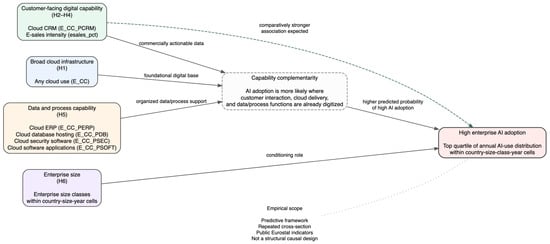
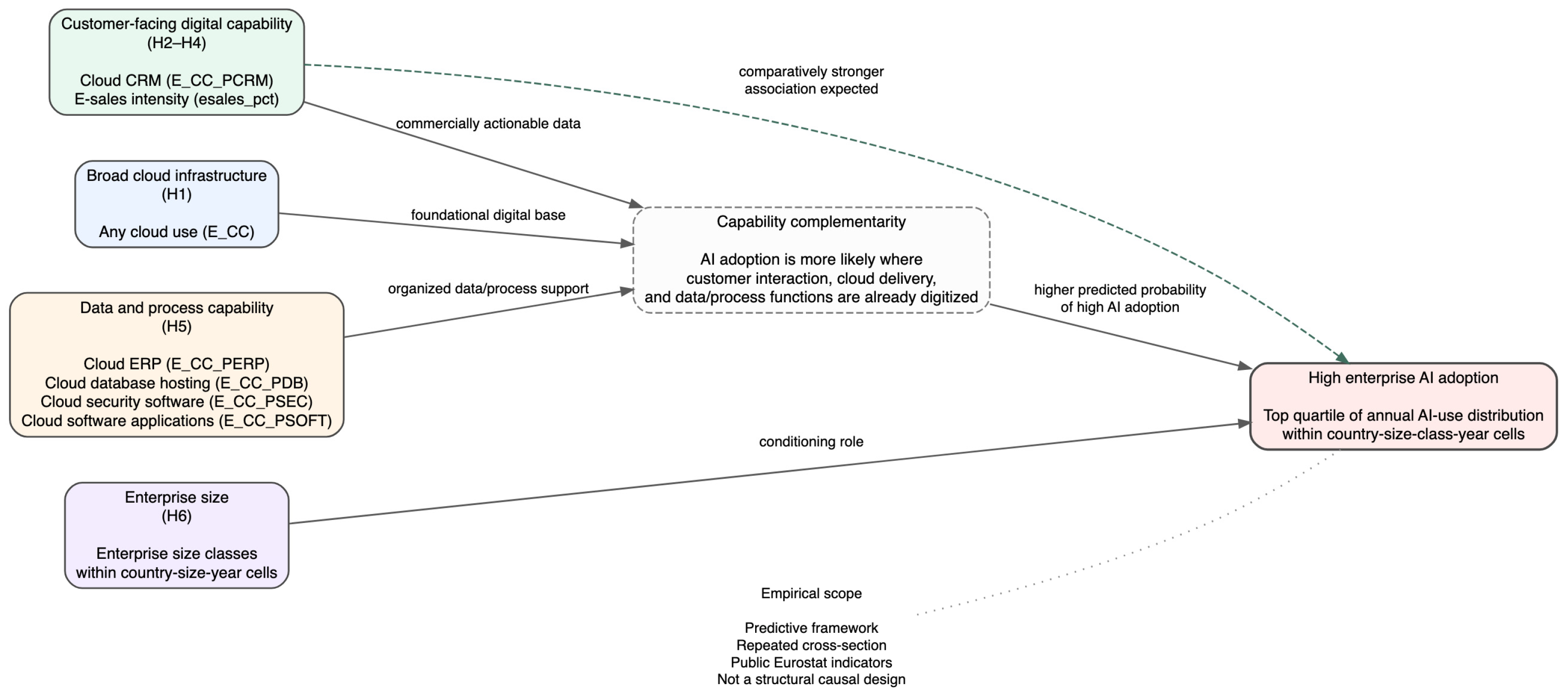
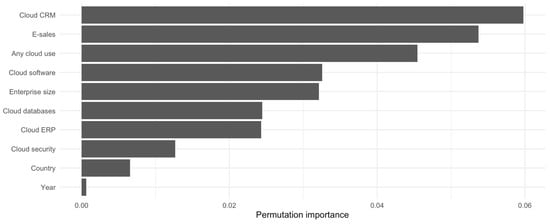
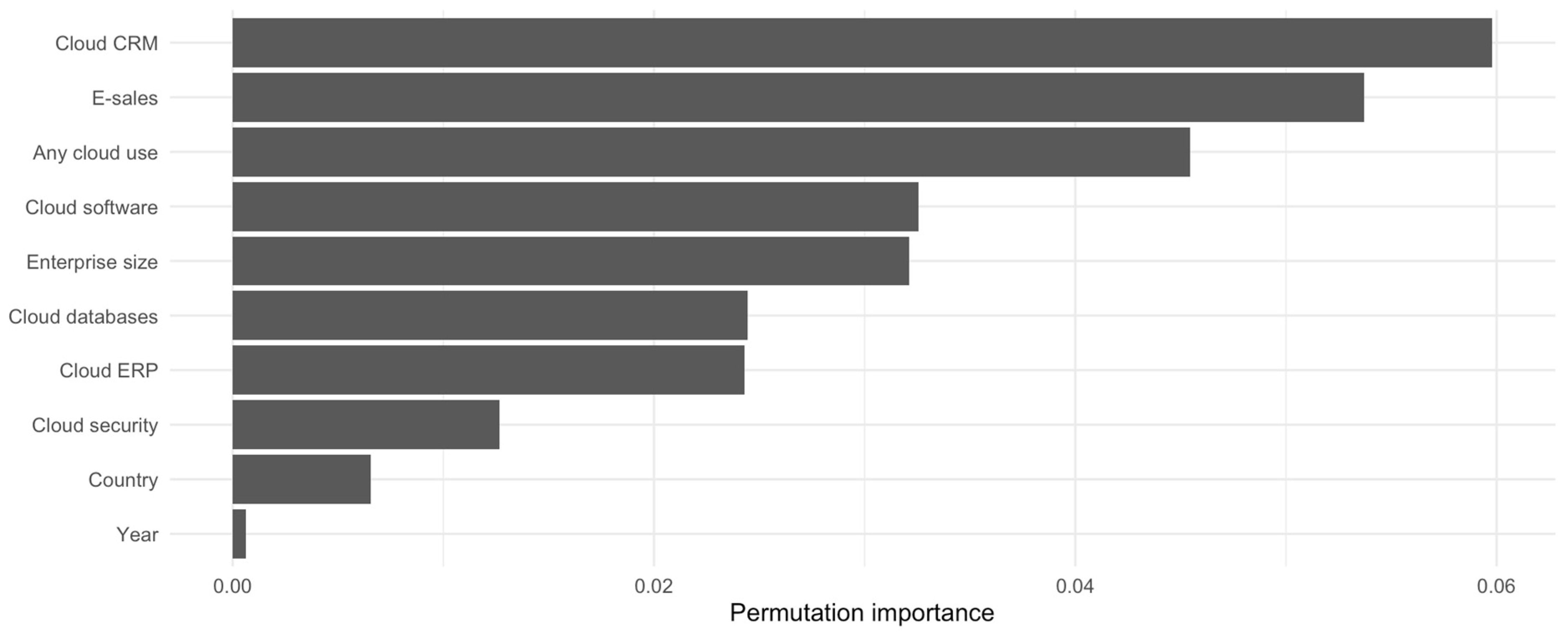
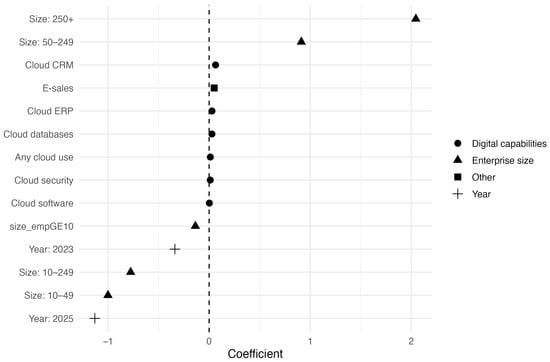
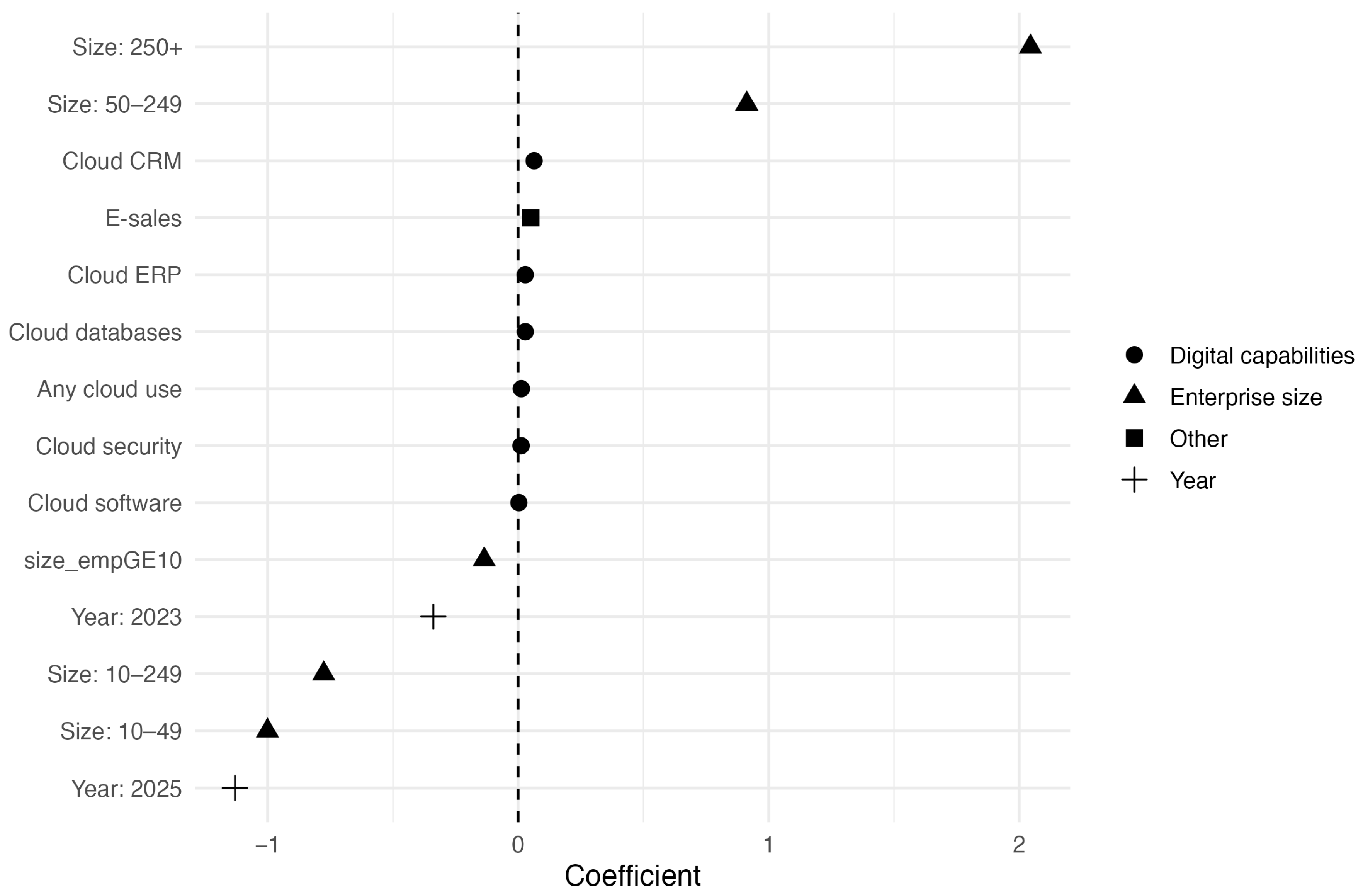

Disclaimer/Publisher’s Note: The statements, opinions and data contained in all publications are solely those of the individual author(s) and contributor(s) and not of MDPI and/or the editor(s). MDPI and/or the editor(s) disclaim responsibility for any injury to people or property resulting from any ideas, methods, instructions or products referred to in the content. |
© 2026 by the author. Licensee MDPI, Basel, Switzerland. This article is an open access article distributed under the terms and conditions of the Creative Commons Attribution (CC BY) license.