


Abstract
This paper examines how emerging economies, with a focus on India, transition from being primarily recipients of capital to becoming outward investors. It investigates whether domestic institutional governance, rather than rapid liberalization or extensive investment treaty networks, accounts for the sustained growth of both inward FDI and outward ODI. The study combines a detailed timeline of institutional developments with structural break tests, vector autoregression (VAR), and dynamic panel GMM analysis. This approach tracks the timing, spread, and longevity of reforms like the shift from FERA to FEMA and the digitalization of administration, examining their effect on capital flow patterns. Results show that major turning points in India’s FDI and ODI movements correspond with key governance reforms, such as replacing the Foreign Exchange Regulation Act with the Foreign Exchange Management Act, unifying investment policies, digitizing administration, and renegotiating treaties post-2016. Improvements in governance have a more significant and enduring impact on FDI than macroeconomic factors, while clearer regulation and stronger institutions are vital for boosting ODI. Once domestic institutional capacity is taken into account, the number of investment treaties does not significantly influence capital movements. The paper introduces a “transferability matrix” that highlights effective, low-cost reforms, such as civil penalty systems and digital governance, which other emerging economies can implement. It stresses that integrating into global capital markets depends more on developing solid domestic regulations than on rapid deregulation. The study also advances previous research by (1) combining FDI and ODI within a single institutional framework explaining both flows; (2) moving beyond static, perception-based measures to develop a comprehensive timeline showing how regulatory credibility is built over three decades; and (3) providing empirical proof that credible domestic institutions can replace large treaty networks in ensuring capital mobility.
1. Introduction
In addition to rapid liberalization and economic stability, openness to world trade is widely regarded as a major determinant of foreign investment in emerging markets. Economies with deregulated capital accounts, low regulatory barriers, and a commitment to world trade are expected to attract more foreign capital, experience greater technological diffusion, and achieve higher rates of economic growth (Chakrabarti, 2001; Dunning & Lundan, 2011). Following the 1991 balance-of-payments crisis, India adopted a macroeconomic liberalization programme consistent with these expectations (Ahluwalia, 2002). Yet India’s subsequent capital-flow trajectory has repeatedly deviated from the predictions of simple liberalization-based models.
Despite a large body of research linking capital inflows to deregulation and openness, there is no reliable framework that predicts the magnitude or stability of foreign direct investment based solely on liberalization (Globerman & Shapiro, 2002). More puzzling, India’s emergence as a net outward investor occurred during a period of rising regulation and institutional deepening rather than rapid deregulation (Kumar, 2008; Pradhan, 2011). This coexistence of sustained inward investment, growing outward investment, and only gradual capital account opening raises questions that conventional models do not fully address.
This study is motivated by that contradiction. Existing work often treats liberalization, governance quality, and capital mobility as separate or loosely connected processes. In contrast, this paper examines whether the credibility and sequencing of institutional reforms can explain why India sustained inward capital flows while evolving into an overseas direct investment source. The central claim is that institutional governance should not be viewed as a static attribute or a background condition, but rather as a dynamic process that shapes investor expectations over time.
The study primarily examines India’s institutional path, treating it as a key case for assessing broader theories of capital flows in emerging economies. It uses comparative data from other major emerging markets to determine whether the observed institutional effects are specific to India or indicative of broader processes. However, the analysis focuses mainly on India’s reform experience rather than developing a cross-country typology.
In India, credibility was not built through broad deregulation. Instead, it developed gradually by shifting from discretionary controls to rule-based management. The change from the Foreign Exchange Regulation Act (FERA) to the Foreign Exchange Management Act (FEMA) signified a move from criminalizing violations to facilitating compliance. This shift was further supported by sector-specific liberalization, consolidation of investment rules, digitalisation of administrative processes, and treaty adjustments after 2016 (Majumdar, 2008).
The observed data support this interpretation. Between 2000 and 2025, India attracted approximately USD 1.09 trillion in foreign direct investment, accounting for a significant portion of total FDI in emerging Asia (DPIIT, 2025). During the same period, outward direct investment grew from almost negligible in the 1990s to USD 41.6 billion in fiscal year 2024–25 (EY, 2025). These investment flows stayed relatively stable even during the global financial crisis and the COVID-19 pandemic. Importantly, inward investment did not drop sharply after India’s 2016 withdrawal from several bilateral investment treaties or after the earlier retrospective taxation issues, events that typical treaty-focused explanations would link to investor withdrawal (Cotula, 2016; Skovgaard Poulsen, 2015).
Comparative experiences highlight why India deserves closer attention. China’s surge in outward investment is mainly driven by state-led initiatives and strategic asset acquisitions (Buckley et al., 2007; Pan et al., 2020). Brazil and Indonesia have repeatedly faced regulatory reversals, which have undermined long-term investor confidence (Sudarya & Prayuti, 2025; Sornarajah, 2010). While Vietnam has successfully attracted manufacturing FDI, this has not translated into comparable outward investment or deeper capital markets (Ikebe, 2023; Phan, 2024). India’s situation is different not because it lacks policy challenges, but because ongoing reforms have gradually decreased uncertainty without fully liberalizing the capital account.
This study enhances the existing literature in three key ways. First, it moves beyond the typical approach of analyzing foreign direct investment and overseas direct investment separately by creating an integrated institutional framework that accounts for both flows together. Second, instead of relying solely on static or perception-based governance indicators, it employs a detailed institutional timeline from 1991 to 2025, combined with dynamic empirical methods to track how credibility develops over time. Third, it directly investigates whether domestic institutional strength can replace the need for extensive investment treaty networks, rather than assuming treaty effects are either exogenous or consistently positive.
To address these issues, the study proceeds in three stages. It first constructs a comprehensive timeline of regulatory, administrative, digital, and treaty-related reforms to identify periods of institutional consolidation. It then applies structural break tests, vector autoregression with impulse-response and variance-decomposition analysis, and dynamic panel GMM estimation to assess how these reforms relate to changes in capital-flow behaviour. Finally, it develops a transferability matrix to distinguish which elements of India’s institutional approach may be adapted by other emerging economies and which remain context-specific.
2. Literature Review and Conceptual Gaps
2.1. FDI Determinants in Emerging Economies: The Importance of Governance
Initial research on foreign direct investment in emerging economies relies primarily on traditional frameworks that emphasize ownership, location, and internalization benefits. Dunning’s OLI paradigm remains central to explaining why firms undertake foreign investment by combining firm-specific assets with host-country characteristics (Dunning & Lundan, 2008). While analytically useful, the OLI framework largely presumes a functioning institutional environment and offers limited insight into how regulatory uncertainty, enforcement credibility, or administrative capacity affect investment decisions in practice (W. J. Henisz & Williamson, 1999).
Subsequent empirical studies extended this literature by explicitly incorporating institutional variables. Cross-country analyses show that indicators such as the rule of law, regulatory quality, and government effectiveness are positively associated with FDI inflows, even after controlling for market size and factor costs (Busse & Hefeker, 2007; Globerman & Shapiro, 2002). These findings challenged earlier views that macroeconomic fundamentals alone were sufficient to attract capital. Research also showed that policy predictability and transparency can partially offset structural disadvantages in low-income economies (Asiedu, 2001).
Much of this literature remains descriptive in two ways. First, it often views governance as a static trait rather than a process shaped by the sequence of reforms. Second, widely used indicators, especially perception-based ones such as the Worldwide Governance Indicators (WGI), may not accurately reflect administrative learning, implementation capacity, or swift institutional changes. Recent research highlights concerns that these indices respond slowly to reforms and perform poorly during crises or rapid policy shifts (IMF Working Papers, 2025; Nagasivam et al., 2022).
Research conducted after 2020 has increasingly highlighted these limitations. Data from pandemic-era investments indicate that countries with stronger administrative capacity and clearer regulatory communication exhibited greater investment resilience, despite limited differences in common governance scores (Buitrago & Ricardo, 2025). This line of work suggests that institutional credibility may influence outcomes through mechanisms not fully reflected in perception-based indices, a topic that has received little attention in earlier FDI studies.
India’s experience illustrates this gap. Rising FDI inflows in the early 2000s were more closely associated with regulatory consolidation and administrative reform than with changes in market size. Episodes of policy ambiguity, such as retrospective taxation, led to temporary slowdowns in investment despite continued economic growth (Murthy & Bhasin, 2015). These patterns suggest that governance dynamics, rather than levels, merit closer attention.
2.2. Overseas Direct Investment (ODI) by Emerging Economies: Building Capabilities and Home-Country Limitations
Research on outward direct investment (ODI) from emerging economies has largely progressed independently from the FDI literature. Initial studies on Chinese outward investment focused on resource-seeking, market access, and strategic asset acquisition as primary motives (Buckley et al., 2007; Rui & Yip, 2008). Subsequently, research viewed ODI as a tool for latecomer firms to enhance capabilities and overcome competitive disadvantages (Luo & Tung, 2007).
A recurring theme in this literature is the critical role of home-country institutions. Factors such as regulatory barriers, capital controls, approval procedures, and the depth of financial markets significantly influence the size and composition of ODI (Wang et al., 2012). In the case of India, Pradhan (2011) observed that clearer overseas investment policies were correlated with increased outward investment in sectors such as pharmaceuticals, automotive parts, and IT services, indicating that institutional clarity often precedes international expansion.
Despite these insights, the ODI literature has two limitations. Firstly, it often treats home-country institutions as constraints rather than as evolving enablers of outward investment. Secondly, empirical studies rarely integrate ODI analysis with inward investment trends, implicitly assuming that the drivers of FDI and ODI are unrelated. Recent studies challenge this view, demonstrating that productivity improvements and capability upgrades from ODI rely on domestic financial regulation and capital account management (Knoerich & Benson, 2025). However, comprehensive empirical integration of these aspects remains scarce.
2.3. Institutional Economics, Governance, and Capital Mobility
Institutional economics offers a broader framework for understanding how governance shapes capital mobility. North’s argument that institutions reduce transaction costs by establishing predictable rules has direct implications for foreign investment, which entails long-term, sunk commitments under uncertainty (North, 1990). Subsequent work emphasized political constraints, policy reversibility, and enforcement credibility as key determinants of investor confidence (W. Henisz, 2000).
Recent studies clarify these insights by differentiating between formal rules and administrative capacity. Empirical data suggest that poor implementation can weaken well-designed institutions, particularly in emerging economies (World Bank Group, 2017). Research after 2020 shows that transparency and clear regulatory communication became vital during crises, influencing investment decisions beyond macroeconomic factors (IMF Working Papers, 2025; UNCTAD, 2020). Given that foreign direct investment inherently involves substantial transaction costs for investors, who must evaluate the quality of the host country’s legal system, determine whether contracts will be enforceable, and assess the likelihood of future policy changes, the role that institutions play in reducing these costs would likely enhance the attractiveness of foreign direct investment (Khan et al., 2023; Touchton, 2023).
This literature supports the view that capital governance does not equate to non-intervention. Instead, it involves predictable, rule-based management of capital flows, including some controls, which can help reduce volatility and promote stability (Borio, 2011). However, few studies examine how these governance strategies evolve over time or how they collectively influence both inward and outward capital movements.
2.4. Investment Treaties and Their Contested Effects
The effectiveness of bilateral investment treaties remains a subject of ongoing debate and contestation. Early empirical work yielded mixed evidence, with treaty effects often dependent on source-country characteristics and the credibility of enforcement (Salacuse & Sullivan, 2005). The results suggest that BIT quality and the availability of capital in the source country are far more important than the mere presence of a BIT. Additionally, UNCTAD (2003) demonstrated that the rapid expansion of BITs during the 1990s and 2000s resulted in more signatory pairs and, consequently, increased empirical FDI among them; however, this does not necessarily imply that BITs themselves lead to additional FDI. Later studies emphasized that treaty design and domestic institutions condition investor responses (Allee & Peinhardt, 2011). However, Poulsen (2017) points out that many emerging economies frequently overestimate the regulatory and financial costs associated with Investor-State Dispute Settlement (ISDS) provisions, and therefore, overly ambitious treaty commitments can ultimately lead to a net welfare loss.
More recent research has shifted from simple treaty counts to examining interaction effects between treaty provisions and governance quality (Li et al., 2024; Zhu et al., 2025). These studies suggest that treaties may reinforce, rather than substitute for, domestic institutional strength. India’s recent experience with BITs is an excellent example of the complex and contested nature of debates surrounding BITs. Since 2016, the Government of India has introduced a new Model BIT, emphasizing balanced relationships between the host state and investors, and has withdrawn from approximately 60 pre-existing treaties, renegotiating several of the remaining ones (Ranjan, 2017).
Choudhury (2019) conducted an in-depth legal analysis of these renegotiations and concluded that the new Indian approach focuses on the host state’s regulatory policy space while providing protection for investors’ rights. Contrary to what would be expected based on traditional models of BITs, i.e., reduced FDI resulting from withdrawal from such treaties, India’s foreign direct investment has remained relatively stable since the introduction of the new Model BIT and has even shown some signs of increasing. Therefore, it appears that the changes made to the BITs were a result of India’s increasing institutional confidence, rather than the cause of it, thus rendering broader external legal arrangements for FDI less necessary. At the same time, newer critiques question whether treaty effects are overstated in environments where domestic regulatory credibility is already established. This perspective remains underdeveloped in empirical research, particularly in economies transitioning to outward investors.
2.5. Identified Research Gaps
This literature reveals three main gaps. First, most research examines FDI and ODI independently, despite both being influenced by similar institutional factors. Second, institutional reform is often viewed as a single-level change rather than a sequential process where credibility builds over time. Third, although the impact of treaties is often discussed, few studies examine whether robust domestic institutions can supplant extensive treaty networks.
By addressing these issues, this research highlights institutional sequencing as the key process connecting inward and outward capital movement in emerging economies, with India serving as the main case study.
3. Theoretical Framework
Explaining India’s shift from a capital-dependent FDI host to an emerging outward investor requires a framework that integrates institutional change, firm-level strategic behaviour, and state coordination. No single theoretical approach fully captures these dynamics; therefore, this study synthesizes insights from institutional economics, the OLI paradigm, and developmental-state theory into a unified conceptual structure.
3.1. Institutional Economics: Reducing Transaction Costs and Building Credibility
Formal institutions influence economic behaviour by establishing the rules and procedures that oversee market activities. These rules are upheld by courts, regulators, and administrative bodies, which add credibility to commitments and decrease transaction costs (Hodgson, 2006; North, 1990; Ostrom, 2009; Robinson & Acemoglu, 2012). Since foreign direct investment involves long-term, mostly irreversible commitments, investors are especially vulnerable to uncertainties arising from discretionary regulation, policy reversals, or weak enforcement capabilities.
The Indian government made a significant institutional change from the Foreign Exchange Regulation Act (FERA), enacted in 1973, to the Foreign Exchange Management Act (FEMA), enacted in 1999. Under FERA, violations were treated as criminal offences. It also granted the government discretionary power, which raised the uncertainty cost (τu) for foreign investors (FERA, 1973). Under FEMA, the control paradigm shifted to a management paradigm. Criminal liability under FERA was replaced by civil liability under FEMA. Additionally, all transactions were clearly defined under FEMA, unlike under FERA. The reporting requirements and other standards for permissible transactions were also clearly defined. This further reduced the cost of navigating India’s bureaucracy (FEMA, 1999).
Building on evidence that FDI in emerging markets relies on macroeconomic fundamentals and institutional quality (IMF, 2003; Mahmood et al., 2019; Saha et al., 2022), this paper represents foreign investment behaviour using the functional form:
where K denotes traditional determinants (market size, factor costs), M captures macroeconomic stability, ρ reflects political stability, and IC represents institutional credibility. Extensive research demonstrates that governance improvements lower uncertainty-related transaction costs and strengthen the credibility of the regulatory environment (North, 1990; Globerman & Shapiro, 2002; Busse & Hefeker, 2007; Gourinchas, 2025). This provides a theoretical prediction that is fundamental to our empirical approach.
This prediction, while not directly testable in the present study, motivates our empirical approach of comparing governance-variable effects to macroeconomic-variable effects in VAR models.
3.2. The OLI Paradigm
Dunning’s OLI paradigm accounts for outward investment by highlighting ownership (O), location (L), and internalization (I) advantages (Dunning, 2000; Dunning & Lundan, 2008). Although originally used to analyze firm-level internationalization, this framework is now expanded to include the influence of home-country institutions in shaping these benefits. For example, the OLI Framework explains why Pharmaceutical Companies (with Proprietary Drug Formulations and Manufacturing Expertise) would be interested in Foreign Markets.
In India, institutional reforms have influenced all three OLI components. Ownership advantages expanded as post-1991 reforms improved firms’ access to finance, enabled cross-border acquisitions, and facilitated the accumulation of capabilities. Location advantages for Indian firms investing abroad became easier to evaluate as FEMA clarified permissible ODI routes and reporting procedures, reducing informational frictions. Internalization incentives strengthened as clearer regulations, improved capital-market access, and diplomatic facilitation lowered the transaction costs associated with establishing foreign subsidiaries relative to licencing or arm’s-length contracting.
These mechanisms are empirically implemented using sectoral capacity indicators, capital market development measures, and regulatory clarity variables, which are incorporated into the ODI models. By connecting OLI components to tangible institutional and sectoral proxies, the framework views outward investment not as a purely external reaction to global opportunities but as something influenced by domestic institutional support.
3.3. Developmental State Theory
Although India is not a traditional developmental state, elements of developmental-state theory help explain how policy sequencing and administrative strengthening influenced capital mobility (Amsden, 1992; Wade, 2004; Johnson, 2007; Evans, 1995). A few features stand out:
Strategic sequencing: Reforms were introduced in a deliberate sequence, including macroeconomic stabilization (early 1990s), institutional foundation-building (FEMA, 1999), sectoral liberalization (2000s), and administrative digitalization (2010s). This sequence reduced volatility risks associated with premature liberalization and gradually enhanced institutional credibility.
State-supported corridors: Diplomatic and regulatory initiatives, including early BIT expansion, later treaty recalibration, and the creation of GIFT City, demonstrate state coordination in channelling capital flows toward strategic objectives.
Administrative capacity-building: Reforms to the Foreign Investment Promotion Board (FIPB), strengthening regulators such as the Securities and Exchange Board of India (SEBI), the Reserve Bank of India (RBI), and the Competition Commission of India (CCI), as well as the digitalization of investment processes, have enhanced institutional delivery. Developmental-state theory emphasizes that implementation capacity, rather than formal rule changes alone, influences investment outcomes.
Macroprudential restraint: India’s reluctance to pursue full capital account convertibility before developing adequate financial infrastructure reflects a traditional developmental-state focus on stability rather than rapid liberalization.
To align theoretical mechanisms with empirical tests, the study explicitly maps institutional concepts to observable proxies. Institutional credibility and predictability, central to institutional economics, are proxied by governance and operational predictability indicators, as well as administrative capacity measures. Developmental-state mechanisms, particularly sequencing and implementation capacity, are captured by structural break timing and persistence effects in dynamic models. The OLI paradigm’s relevance to ODI is operationalized through sectoral capacity, regulatory clarity, and capital-market development variables, which reflect ownership advantages, internalization incentives, and home-country institutional support. This mapping ensures that the hypotheses derived from theory are directly testable within the empirical framework.
4. Research Questions and Hypotheses
The purpose of this study was to investigate the impact of institutional development in India on its transition from an inward-oriented recipient of foreign direct investment (FDI) to a nation that both receives and sources capital. This study will examine four research questions to analyze this transition; RQ1 examines how reforms in India have increased FDI inflows through the implementation of FEMA, sectoral-cap rationalization, and administrative modernization; RQ2 examines whether improvements in domestic governance, the development of capital markets, and the level of regulatory clarity have also increased the ongoing growth of outward direct investment (ODI); RQ3 examines how treaty structures, regulatory transparency, and diplomatic efforts have influenced the geographic and sectoral distribution of ODI; RQ4 identifies which components of India’s institutional structure could potentially be applied to other emerging economies.
Two hypotheses are grounded in the theoretical model developed for this study. Hypothesis 1 (H1) states that improved governance quality will have a greater and longer-lasting impact on FDI than macroeconomic fundamentals (expressed as ∂FDI/∂IC > ∂FDI/∂M). This hypothesis connects institutional economics with VAR impulse-response and variance-decomposition analyses to examine the relationship between governance and macroeconomic shocks across various time horizons. Hypothesis 2 (H2) states that growth in ODI is driven by regulatory clarification and institutional capacity building rather than by global opportunity cycles. This hypothesis connects the expanded OLI framework and developmental-state logic to the ODI dynamic panel estimates, explicitly including governance, regulatory clarity, sectoral capacity, and capital market development as explanatory variables.
5. Research Methodology
This study employs a mixed-methods approach to examine the relationship between institutional sequencing and capital mobility in India from 2000 to 2025. It combines qualitative analysis of institutional changes with quantitative data on capital flows, using methodological triangulation. This approach aligns with the research question, which focuses on the timing and credibility of institutional reforms and their visible impact on capital flows. Econometric techniques are used to examine dynamic relationships, while the institutional timeline helps identify reform phases that numerical data alone cannot reveal (Krippendorff, 2019). The goal is not to emphasize statistical complexity but to cross-verify institutional changes with capital-flow patterns using methods that answer different types of questions (Creswell, 2014). Data on Foreign Direct Investment (FDI) and Overseas Direct Investment (ODI) are obtained from the Department for Promotion of Industry and Internal Trade (DPIIT) and the Reserve Bank of India (RBI). Institutional quality is measured through a Governance and Operational Predictability (GOP) Index and an Administrative Capacity (AC) Index, complemented by the Worldwide Governance Indicators (WGI).
6. Analytical Framework
This section outlines the analytical framework used to assess whether institutional reforms, particularly regulatory clarity, administrative capacity, and treaty restructuring, have altered the pattern of India’s inward and outward capital flows. The framework integrates structural break analysis, dynamic multivariate modelling, and panel-based causal inference to identify institutional effects distinct from macroeconomic influences.
6.1. Structural Break Detection: Bai–Perron Multiple-Break Test
To detect regime shifts in capital flows without prior assumptions of reform impact dates, the study uses the Bai and Perron (1998) multiple structural break test (Bai & Perron, 1998). The approach is well-suited to situations where break dates are not known in advance and may arise from sequential policy changes, regulatory reforms, or external shocks. The model estimates:
where represents the logarithmically differenced FDI or ODI series, represents a vector of independent variables or an explicit time trend. are regime-specific coefficients. denotes the last year of each regime, and is the error term. This facilitates the mapping of statistically significant inflexion points to specific regulatory milestones, such as the transition from FERA to FEMA regime (Bai & Perron, 2003).
6.2. Vector Autoregression (VAR) Model with Impulse Response Function Analysis
A six-variable Vector Autoregression (VAR) model captures the complex interaction among governance quality, treaty exposure, and macroeconomic volatility. The VAR model provides a flexible framework for examining dynamic relationships among multiple endogenous variables, eliminating the need for strong prior identification assumptions (Sims, 1980). The six-variable VAR model is specified as:
The vector consists of , namely inward and outward capital flows, institutional governance measures, treaty exposure, administrative capacity, and exchange-rate volatility. The optimal lag length is set at p = 2, based on Akaike Information Criterion (AIC) comparisons across candidate lag structures. All variables, except are expressed in logarithmic form to improve interpretability, reduce heteroskedasticity, and ensure stationarity. The stationarity of each series is verified using both the augmented Dickey–Fuller (ADF) and KPSS tests, ensuring that the VAR system satisfies the necessary statistical properties for valid inference.
6.3. Impulse Response Function (IRF) Analysis
The IRF traces the response of each endogenous variable to a one-standard-deviation shock (innovation) to each other variable in the system. The IRF is constructed from the moving-average representation of the VAR:
where denote the MA (moving average) coefficients derived from the autoregressive coefficient matrices , and is the vector of reduced-form innovations. The IRFs describe, for example, how FDI respond over h periods (where h = 0, 1, 2, …, 24 months) following a one-standard-deviation shock to governance quality? Formally, the impulse response of FDI at the horizon to a governance shock can be written as:
where is a selection vector extracting the FDI component from the system, is the -step-ahead MA coefficient matrix, and is the contemporaneous impact matrix (often derived from the Cholesky factorisation of the innovation covariance matrix), which maps orthogonalised shocks into the reduced-form disturbances (Kilian, 1998; Sims, 1980).
Impulse response analysis is suitable because the research concentrates on how governance reforms are transmitted over time, rather than on immediate correlations. The hypothesis that governance improvements stimulate FDI is supported if the impulse response of FDI to governance shocks is: (i) positive; (ii) statistically significant (95% confidence intervals exclude zero); and (iii) sufficiently persistent, meaning the effect remains significantly different from zero over several subsequent periods. Similarly, IRF analysis of ODI responses to governance shocks is used to test the hypothesis that regulatory clarity and institutional strengthening also facilitate outward investment behaviour.
6.4. Variance Decomposition (VDC) Analysis
Variance decomposition (VDC) analysis quantifies the relative importance of shocks in explaining the forecast-error variance of other variables in the VAR system. For FDI, the -step-ahead forecast-error variance contributed by shocks to the variable is given by:
where is the selection vector extracting the FDI equation, is the -period moving-average coefficient matrix derived from the VAR, and is the contemporaneous impact matrix that maps orthogonalised shocks into reduced-form innovations. The numerator captures the cumulative contribution of shocks to the variable over horizon , while the denominator represents the total forecast-error variance for FDI. This decomposition answers the question: what proportion of FDI variance is explained by governance shocks, macroeconomic shocks, and other factors? If the institutional-governance hypothesis is correct, we expect governance innovations to explain a substantially larger proportion of FDI forecast-error variance at longer horizons (12+ quarters), indicating that institutional improvements exert cumulative effects on investment behaviour.
6.5. Dynamic Panel Estimation: Arellano–Bond GMM
To test the hypothesis that institutional improvements have persistent effects on both inward and outward investment, this study employs dynamic panel estimation using the Arellano and Bond (1991) difference GMM estimator (Arellano & Bond, 1991).
The rationale for dynamic panel methods is that capital flows likely exhibit persistence (FDI in year t correlates with FDI in year t − 1, given stability of the investor base), necessitating the inclusion of lagged dependent variables in specifications. Ordinary Least Squares (OLS) estimation of dynamic panel models generates biassed coefficients due to correlation between the lagged dependent variable and the error term. Arellano–Bond difference GMM addresses this by differencing the model and using lagged levels as instruments, generating consistent estimates even in the presence of lagged-dependent-variable bias.
The dynamic panel model is specified as:
where indexes countries in the comparison group (India, China, Brazil, Vietnam, Indonesia, and South Africa) and indexes time. The institutional variables include governance and operational predictability (), treaty-network evolution (), and administrative capacity (). The vector contains macroeconomic controls (GDP growth, inflation, foreign-exchange volatility). The coefficient captures the persistence of FDI flows, enabling the model to test for path dependence. Country-specific effects and time-period effects control for unobserved heterogeneity and global shocks, respectively. The model is estimated in first differences to eliminate fixed effects, with lagged dependent variables from t − 2 and earlier periods used as instruments, following the Arellano–Bond recommendations. System GMM (Blundell–Bond) estimates are also computed as a robustness check, as system GMM may be more efficient when the lagged dependent variable is highly persistent (Blundell & Bond, 1998). Given the shorter ODI panel, ODI results are interpreted as indicating direction and relative importance rather than precise long-run magnitudes. Emphasis is placed on the consistency of signs, significance, and stability across specifications.
6.6. Validity and Reliability Considerations
Internal validity is enhanced through methodological triangulation, which connects reforms to flow inflexions; VAR dynamics reveal propagation mechanisms; and GMM estimation isolates persistent institutional effects. These approaches collectively reduce concerns about spurious correlation.
External validity recognizes that India’s institutional setup might not entirely apply elsewhere; however, pinpointing which reform aspects are context-specific versus widely transferable improves policy relevance.
Measurement reliability is supported by using internationally standardized FDI/ODI statistics (RBI, DPIIT) and validated governance indicators (WGI). Alternative specifications and robustness checks address concerns about indicator noise.
Although multiple empirical techniques are employed, they are not used to extract additional degrees of freedom from the same variation. Rather, each method addresses a distinct inferential question: structural break analysis identifies timing, VAR/IRF captures dynamic propagation, variance decomposition assesses relative importance across horizons, and dynamic GMM tests persistence under cross-country controls. The consistency of results across these approaches reduces, rather than increases, the risk of overfitting.
7. Result and Analysis
This section presents the empirical findings following the order of the theoretical framework and hypotheses introduced earlier. The analysis begins by investigating whether significant shifts in India’s inward and outward capital flows align with identifiable phases of institutional reform, applying structural break tests. Next, it examines the dynamic impacts of governance, treaty exposure, and macroeconomic volatility on capital flows through vector autoregression, impulse response analysis, and variance decomposition, emphasizing the persistence and strength of institutional influences. Finally, dynamic panel GMM estimates expand the investigation beyond India to determine if governance mechanisms remain relevant in similar emerging economies. Overall, these findings aim to evaluate not only the importance of institutional governance for capital mobility but also how and over what timeframe its effects unfold compared to other factors.
7.1. Structural Breaks in FDI
The Bai–Perron multiple-break test, applied to logarithmically differenced FDI and ODI series, detects statistically significant regime shifts that closely correspond with institutional milestones. Figure 1 shows FDI inflows from 2000 to 2025, with estimated structural breaks overlaid. Rather than a smooth or monotonic trend, the figure highlights distinct phases in the evolution of FDI, marked by changes in both the level and growth pattern of foreign direct investment (FDI) inflows. The early segment reflects relatively modest and volatile inflows, consistent with a regulatory environment characterized by discretionary controls and higher uncertainty. The first major structural break coincides with the transition from the FERA regime to the FEMA framework, after which FDI inflows exhibit a sustained upward shift. This change appears less abrupt than a liberalization shock and more consistent with a gradual reduction in regulatory uncertainty.
Figure 1.
Illustrates India’s FDI inflows with structural breaks overlaid, highlighting regime shifts in line with institutional reforms.
Table 1 presents the results from the Bai and Perron (1998) multiple structural break test applied to logarithmically differenced annual FDI inflows from RBI and DPIIT administrative data for 2000–2025. The test identifies four statistically significant regime shifts (p < 0.01) corresponding to major institutional reforms: the FEMA transition (1999–2000), sectoral liberalization through automatic route approvals (2005–2007), administrative consolidation via FDI Policy Circulars (2010–2014), and bilateral investment treaty recalibration post-2016. Sup-F statistics for all breaks exceed the 5% critical value (10.8), confirming genuine structural change rather than statistical anomalies. The mean FDI levels show the magnitude of the shift following each institutional milestone.
Table 1.
Detecting Structural Breaks in India’s FDI Inflows Using the Bai–Perron Multiple-Break Test.
First Structural Break in 2005: Sectoral liberalization measures and automatic route approvals are driving increased FDI inflows. Table 1 shows Bai–Perron structural break results for India’s FDI inflows, highlighting significant shifts in their level or growth over time. These breakpoints correspond to key periods of institutional and regulatory reforms, indicating that changes in FDI patterns result from structural adjustments rather than short-term shocks.
The 2005 structural break corresponds to the sectoral liberalization measures undertaken by the Government through Foreign Exchange Management Act (FEMA) notifications, which removed or relaxed foreign ownership caps in sectors such as Telecommunications, Financial Services, and Manufacturing. The sharp increase in mean annual FDI inflows of 156%, from approximately USD 8 billion between 2000 and 2005 to USD 20.5 billion immediately following 2005, indicates that the clarity of regulatory rules and processes on the part of the Government has positively impacted investors’ willingness to invest their capital.
Second Structural Break in 2012: Continued High FDI Flows Amidst Policy Disruptions
The 2012 structural break marks the establishment of a higher and more stable regime for FDI inflows. Between 2006 and 2011, FDI inflows fluctuated widely (ranging from USD 15 billion to USD 38 billion), primarily due to volatile global conditions post-crisis and domestic concerns over retrospective taxation. From 2012 onwards, FDI remained relatively stable, ranging from USD 30 to 45 billion. It is reasonable to believe that pre-2012 institutional improvements, i.e., the combined FDI Policy Circulars of 2010 and the streamlining of administrative processes for approval of foreign investments under FIPB, have continued to support investor confidence and, therefore, the relatively stable level of FDI inflows throughout the post-policy dispute period. Thus, the structural break highlights the country’s institutional resilience and the maturity of the transparency framework in withstanding episodic disruptions.
Third Structural Break in 2016: An Increase of About 50% in Average Annual FDI Due to the Building of Domestic Institutional Capacity, Not Due to Treaties
The third structural break in 2016 marks an upward shift in the average annual FDI inflow from approximately $32.7 billion to $48.2 billion, a total increase of about 50%. During this period, India began withdrawing from multiple Bilateral Investment Treaties (BIT). Therefore, the third structural break contradicts the conventional wisdom that BIT withdrawals will negatively affect investment inflows. However, it is consistent with the initiation of several domestic institutional capacity-building programmes aimed at improving the predictability of government actions, reducing administrative transaction costs, and enhancing the regulatory credibility of the Indian government, even as the country’s external treaty coverage was decreasing.
Fourth Structural Break in 2023: A Substantial Increase in FDI After the COVID-19 Pandemic and Within a Stronger Institutional Framework
The fourth structural break in 2023 also marks a significant rise in the mean FDI inflows to approximately $63.1 billion, an increase of approximately 31% over the previous cycle. There are several potential reasons for the rise in FDI inflows, including post-COVID-19 economic growth, changes in global supply chains, capital reallocation from China to India driven by geopolitical considerations, and the implementation of India’s Production-Linked Incentive (PLI) Schemes. However, the rapid response of FDI inflows to the exogenous shocks suggests that the previously developed institutions amplified the multiplier effect of these shocks on the economy, indicating that institutional quality acts as a multiplier of both cyclical and geopolitical events.
Statistical Validity: The Bai–Perron tests indicate that the breaks occur at statistically highly significant points, producing sequential F-statistics ranging from 42 to 87, all of which exceed the 5% critical value of 10.8. The breaks identified by the Bai–Perron tests are consistent across a wide range of alternative models, including various lag lengths, specifications for whether to model breaks in levels or first differences, and the inclusion of additional variables. Therefore, the consistency of the results across numerous alternative models provides strong evidence that the structural breaks represent true regime shifts in the data, rather than statistical anomalies.
7.2. ODI Trajectory and Sectoral Dynamics
The ODI analysis shows less extensive historical data but a notable recent increase. Table 2 outlines the evolution of India’s outward direct investment over time, highlighting a transition from minimal overseas engagement to consistent, increasingly varied ODI flows. The trend suggests that ODI growth is gradual rather than sudden, indicating that outward investment depends on cumulative regulatory improvements, sectoral capacity, and access to global finance, rather than solely on short-term global market opportunities.
Table 2.
Trends in India’s Outward Direct Investment Flows and Growth Patterns (FY 2019–2025).
Interpretation of the ODI Trajectory
The ODI series exhibits three distinct phases:
- COVID-19 Pandemic contraction (2020): Outflows decreased as global uncertainty and domestic disruptions limited cross-border expansion.
- Recovery and steady acceleration (2021–2023): ODI rebounded rapidly, driven by resumed acquisitions, improved financing conditions, and stabilizing global markets.
- Rapid expansion and surge (2024–2025): Outflows more than doubled from 2022 levels, marking India’s most significant outward-investment expansion to date.
This pattern supports the institutional-facilitation hypothesis. Reforms implemented from 2022 onward, including streamlined FEMA ODI amendments, clearer rules for multi-layered corporate structures, and the rise in GIFT City as a competitive ODI structuring hub (with registrations increasing between 2022–23 and 2024–25), significantly reduced administrative barriers. These institutional improvements appear to have lowered the uncertainty costs of outward expansion, enabling firms to internationalize more aggressively as post-pandemic conditions normalize.
7.3. Sectoral Composition of ODI
India’s ODI focuses on sectors where Indian companies are competitively positioned, such as IT Services, Pharmaceuticals, and Financial Services. Table 3 shows that India’s outward direct investment is concentrated primarily in sectors such as IT services, pharmaceuticals, financial services, and manufacturing. This pattern reveals that ODI is more focused on sectors with clearer regulations, well-developed firm capabilities, and easier access to international finance. This aligns with the institutional and capability-based explanations discussed in the theoretical framework. That ODI is directed to the USA, Singapore, and the UAE as destinations, which is evidence of market-seeking (IT and financial services markets in the USA), hub-leverage (financial infrastructure and structuring advantages in Singapore and the UAE), and asset-seeking (for technology in Germany and other advanced economies). This is consistent with the hypothesis that ODI is not simply a random investment decision but an indication of domestic institutional capacity and the specific area(s) of sectoral competitiveness.
Table 3.
Distribution of Indian Outward Direct Investment by Sector and Region (FY 2024–2025).
The sectoral distribution of ODI aligns with the institutional frameworks outlined in the theoretical model, extending beyond mere descriptive patterns. Sectors such as IT services, pharmaceuticals, and financial services, which exhibit higher outward investment activity, also benefit from more consistent regulations, easier access to international finance, and more advanced corporate capabilities. This suggests that sectoral ODI is influenced not only by opportunistic motives but also by the varying strength of domestic institutional support. While the aggregated data limits firm-specific insights, the sectoral emphasis reinforces the view that outward investment is more deeply rooted in the development of home-country institutions than in fluctuating global opportunity cycles.
7.4. Impulse Response Function Analysis: VAR Model Results
The VAR model traces how innovations to governance indicators propagate through the system to influence capital flows. Figure 2 presents impulse response functions of FDI inflows to a one-standard-deviation shock to the Governance and Operational Predictability (GOP) Index, with 95% confidence intervals.
Figure 2.
IRF illustrating FDI response to governance quality shock over 12 quarters from VAR analysis.
Table 4 shows impulse response function (IRF) estimates from a six-variable VAR model [FDI, ODI, GOP Index, Treaty Count, AC Index, FX Volatility; lag p = 2], tracking how log-FDI inflows react over 12 quarters (36 months) to a one-standard-deviation positive shock in the Governance and Operational Predictability (GOP) Index. All estimates include 95% bootstrapped confidence intervals (1000 replications). The Cholesky ordering is: FDI → ODI → GOP → TR → AC → FXV, assuming FDI responds immediately to governance shocks, while governance is considered predetermined in the short term. IRF values show elasticities: a coefficient of 0.082 means that a 1 standard deviation (about 0.15 points) increase in the GOP Index correlates with an 8.2% rise in FDI. Significance is confirmed when the 95% confidence interval does not include zero.
Table 4.
Impulse Response Functions–FDI Reactions to a One-Standard-Deviation Governance Shock in a Six-Variable VAR System.
Table 4 presents the impulse response estimates from the VAR model used to test Hypothesis 1. The results indicate that governance-related shocks have a more persistent positive effect on FDI inflows than macroeconomic shocks, supporting the hypothesis that institutional governance exerts a stronger and longer-lasting influence on inward investment dynamics. These are some important results from the IRF:
Timing: The relationship between good governance and FDI suggests that changes in governance affect FDI flows with a lag of up to 3 quarters. It takes time for investors to become aware of changes in a country’s governance, conduct their due diligence, and obtain internal approval within their company to make an informed investment decision. Therefore, the initial reaction should not be expected to occur immediately (at quarter 0).
Maximum Response: The peak effect occurs approximately in the third quarter following the governance shock, as indicated by the IRF’s maximum value of 0.082. In terms of elasticities, a one standard deviation improvement in governance (about 0.15 on the standardized GOP index) leads to an 8.2% increase in FDI. Given that average FDI flows are approximately USD 40 billion, we can estimate that a one-standard-deviation improvement in governance would result in additional FDI inflows of around USD 3.3 billion.
Persistence: Unlike macroeconomic shocks (which usually have short-lived effects on FDI), the positive effects of improved governance on FDI are more persistent. Better institutions build long-term investor confidence, thereby supporting higher FDI inflows over longer time horizons rather than producing FDI peaks.
Confidence Intervals: The 95% confidence intervals remain positive across the 3–12 quarters post-shock, thereby rejecting the null hypothesis that good governance has no influence on FDI. These results provide very robust empirical support for the existence of a significant institutional channel through which foreign direct investment flows into countries.
7.5. Variance Decomposition: Measuring the Relative Impact of Institutional and Macroeconomic Shocks
Variance decomposition (VDC) is used to measure the proportion of forecast-error variance in FDI inflows that is attributable to shocks in each variable of the VAR system. Table 5 presents the forecast-error variance decomposition (FEVD) for log-FDI inflows based on the six-variable VAR model. It quantifies how shocks to each variable contribute to explaining the variance in FDI forecast errors at horizons of 1, 2, 4, 8, 12, and 20 quarters. The FEVD addresses the question: “What percentage of unexpected fluctuations in FDI results from governance shocks, treaty shocks, and macroeconomic shocks?”
Table 5.
Variance Decomposition of Forecast Errors for FDI Inflows in a Six-Variable VAR System.
Short-Horizon Dominance of Own-Shocks: In the short term (1–2 quarters), FDI inflows are primarily influenced by innovations in the FDI process itself (90–94%). This reflects investor inertia; once capital deployment decisions are made, they tend to remain in place in the near term.
Progressive Governance Importance: Governance shocks explain an increasingly larger share of FDI variance as the forecast horizon lengthens. Governance accounts for only 3.2% of the variance at a 1-quarter horizon but rises to 32.1% at a 20-quarter horizon. This growing significance at longer horizons suggests that governance influences accumulate over time through credibility rather than through immediate investment decisions.
Institutional Primacy in Relation to Macroeconomics Factors: By the 12-quarter horizon, governance shocks (28.6%) explain significantly more FDI variance than FX volatility (4.2%) by approximately a 7:1 ratio. Similarly, administrative-capacity shocks (8.5%) significantly surpass the effects of FX volatility. This supports the hypothesis that institutional factors are more crucial determinants of India’s long-term FDI trajectory than macroeconomic variables.
The result aligns with the theoretical inequality:
showing that shocks to institutional credibility have more lasting and significant impacts on FDI than shocks to macroeconomic stability.
Treaty Significance: Bilateral investment treaty shocks account for only 5–6% of long-term FDI variance, supporting the finding that treaty networks are less critical than governance depth for sustaining capital flows.
7.6. Dynamic Panel Estimation Results: Institutional Factors Influencing FDI
The dynamic panel model examines whether institutional improvements, while controlling for other factors, have statistically significant positive effects on both FDI and ODI across a comparative sample of emerging economies. Table 6 displays the dynamic panel GMM estimates used to test Hypothesis 1 across selected emerging economies. The findings indicate that institutional governance is a consistently significant factor influencing FDI inflows, even after accounting for macroeconomic variables and treaty exposure. This supports the idea that governance impacts are not limited to India alone.
Table 6.
Arellano–Bond Dynamic Panel Estimates (Dependent Variable: Log FDI Inflows).
Model Diagnostics
- Hansen J-test: , → Instruments valid;
- Arellano–Bond AR(2) test: , → No second-order autocorrelation;
- Observations: 84 (6 countries × 14 years).
Governance as the Main Institutional Factor Influencing FDI: The GOP coefficient (0.285, ) is the most statistically significant institutional variable in the model. Interpreted elastically, a one-unit increase in the standardized governance index is associated with a 28.5% rise in FDI inflows, assuming all other factors remain constant. With a typical governance variation of 0.1 across emerging economies, a 0.1-unit increase roughly corresponds to a 2.85% rise in FDI, equating to USD 1.1–3.3 billion, depending on the baseline inflows. The empirical evidence confirms that an institution’s ability to make predictable decisions is a crucial factor in determining the amount of money investors will invest in a country, consistent with the theory.
Coefficient on Lagged FDI (FDI Persistence with α = 0.642): The high level of the coefficient on lagged FDI indicates that FDI flows are highly persistent. Therefore, the elasticity of current FDI with respect to prior-period FDI is approximately 64.2%. The high level of this elasticity illustrates the persistence of the investor base and the time-consuming nature of capital deployment. The coefficient is well below 1, consistent with mean reversion in FDI; however, it does indicate some short-term momentum.
Strong Supporting Evidence for Institutional Capacity: The coefficient on institutional capacity (0.142, p = 0.028) is both statistically significant and positive, providing good support for the idea that the capacity to implement institutions has a greater influence on investment than the mere existence of institutions. Additionally, as institutions’ capacity increases by 0.01, FDI increases by 1.42%.
No Statistical Significance from Treaty Ratio: Although the statistical analysis controls for several variables, including governance, institutional capacity, macroeconomic conditions, and persistence, the effect of BIT networks on FDI is not statistically significant. This result has significant implications for theory. Even when taking into account all the previously mentioned factors, the evidence suggests that India experienced a stabilization or an increase in FDI inflows subsequent to the termination of its BITs, primarily due to an improvement in domestic institutional quality becoming the primary factor in forming investor expectations.
Macroeconomic Indicators Anticipated Trends: Positive effects on FDI from GDP growth (0.156, p = 0.005); Negative effects on FDI from FX volatility (−0.087, p = 0.008); Marginally insignificant negative effect on FDI from inflation (p = 0.141).
Model Validity Tests: Hansen’s J-test (χ2 = 18.3, p = 0.687) indicates that the instrumentation is appropriate (i.e., the null hypothesis of overidentification validity can not be rejected at standard significance levels). The Arellano–Bond AR(2) test (z = −0.38, p = 0.707) provides no evidence of serial correlation in first-differenced residuals, indicating that the GMM estimation technique was used appropriately.
Robustness Test Using System GMM Estimation: To assess whether the estimation methodology affected the findings, system GMM estimates were generated. The governance coefficient was nearly identical in magnitude across the two models (0.298 vs. 0.285). Thus, the findings suggest that improvements in governance have a consistent and substantial impact on FDI inflows across emerging market panels.
7.7. Dynamic Panel Analysis of ODI Determinants
The same dynamic panel framework is used to analyze ODI outflows, with the dependent variable being the log of ODI. Table 7 presents the dynamic panel GMM estimates used to evaluate Hypothesis 2. The ODI panel is shorter than FDI due to data availability constraints; results are interpreted as indicative of medium-term institutional effects rather than definitive long-run dynamics. The specification includes: (1) lagged log-ODI (persistence), (2) GOP Index (home-country governance quality), (3) Sectoral Capacity Index (firm technological/capital competitiveness by sector), (4) Capital-Market Development (depth of financial markets for cross-border finance), (5) Destination Market Size (sales opportunities abroad), and (6) Regulatory Clarity (home-country ODI policy transparency). All governance and institutional variables are lagged one period to partially mitigate endogeneity.
Table 7.
Dynamic Panel Analysis results.
Model Diagnostics
- Hansen J-test: , → Instruments valid;
- AR(2) test: , → No second-order autocorrelation;
- Observations: 48 (6 countries × 8 years).
Key ODI Findings:
The effects of governance are much larger for ODI than they are for FDI—The GOP coefficient for ODI is 0.418, while the GOP coefficient for FDI is 0.285. Thus, the importance of governance clarity for outward investment is greater than it is for inward investment. These findings confirm theoretical expectations: the greater the uncertainty faced by outward investors (Indian firms investing abroad) in foreign markets, the greater their need for clarity from their home-country institutions regarding issues such as the types of outward investments allowed and how such investments will be reported and approved.
Sectoral Capacity Index—Most Important Predictor: A sectoral capacity index was included in the ODI model (sectoral capacity indexes measure whether Indian firms have competitive advantages in particular sectors) and had a coefficient of 0.267 (p < 0.01). Thus, there is evidence that ODI is an indicator of capability development in the home country, as sectors where Indian firms possess a competitive advantage experience higher levels of ODI. ODI is not merely a random or arbitrary investment; rather, it is a way of positioning oneself internationally based on the competitive advantages of the firm’s home country.
Significant growth in the development of the home country’s capital market: The coefficient associated with the development of the domestic capital market (0.189, p < 0.01) indicates that the level of development of a home country’s capital market positively affects the amount of outward investment from that country. This finding demonstrates that deeper capital markets provide financing and enable companies to restructure themselves to become more suitable for internationalization.
Score for Regulatory Clarity–Significant: A score measuring the extent to which ODI regulations were clear (i.e., which types of ODI are permitted and which are restricted; which countries are open to ODI and which are closed to ODI, etc.) had a coefficient of 0.156 (p < 0.01). Thus, this variable captures the effect of the post-2016 ODI regulations and the 2022–23 FEMA amendments, which clearly defined the procedures for making outward investments.
The empirical findings should be viewed with caution. To evaluate their robustness, the VAR estimates were recalculated with different lag lengths and variable orderings. While coefficient sizes vary, the main pattern that governance-related shocks dominate and persist remains qualitatively stable. Variance decomposition also shows that institutional variables consistently account for a larger share of long-term FDI variation than macroeconomic volatility across specifications.
Sensitivity to outliers was assessed by examining capital-flow series during periods of extreme global stress, such as the global financial crisis and the COVID-19 pandemic. Removing individual peak or trough years does not alter the direction of governance effects, indicating that results are not driven by isolated data points. However, given the annual data frequency and limited sample size, formal outlier-robust methods were not employed. Therefore, findings should be viewed as indicative of underlying dynamics rather than precise elasticities.
Endogeneity between governance and capital flows remains a key challenge. Better governance can attract investment, and ongoing investment can strengthen institutions. While dynamic models, lagged variables, and the timing of structural breaks help address this issue, they do not fully resolve it. As a result, the findings are best understood as evidence of dynamic alignment and persistence rather than strict causality.
8. Discussion
8.1. Mechanisms, Causality, and Policy Implications
The empirical findings convey a clear message that India’s rise, as both a major recipient and an increasingly important source of global capital, is best explained not by cyclical macroeconomic movements or the pace of liberalization, but by sustained, sequenced improvements in institutional governance. Structural-break analysis shows that major inflexion points in India’s FDI and ODI series closely correspond with the implementation of institutional reforms, including FEMA (1999–2000), sectoral-cap rationalization (2005–2007), enhanced transparency measures (2010–2014), and restructuring of bilateral investment treaties (2016–2017). These breakpoints do not align with macroeconomic volatility or external global shocks, thereby supporting the main hypothesis that institutional credibility is the key factor influencing long-term capital flow performance.
The dynamic interaction, as supported by the VAR model, lends credence to this interpretation. Governance shocks lead to strong, positive, and statistically persistent increases in both inward and outward investments, whereas macroeconomic shocks (e.g., foreign exchange volatility) fade quickly and have no lasting impact. These patterns empirically confirm the theoretical prediction that, for emerging economies at India’s stage of institutional development, the elasticity of FDI with respect to institutional credibility exceeds its elasticity with respect to macroeconomic factors stability:
Impulse-response functions reveal that governance improvements generate effects lasting 8–12 quarters, consistent with the long-horizon nature of investment planning. In contrast, macroeconomic shocks generate short-lived responses that fade within a few quarters. Variance decomposition further corroborates that governance shocks account for over 32% of long-horizon FDI variance, significantly overshadowing the contributions of macroeconomic factors. Meanwhile, treaty shocks explain only 5–6%, confirming that treaty networks play a secondary role when domestic regulatory institutions are sufficiently credible.
Dynamic panel GMM estimates provide an additional layer of causal support. After controlling for persistence, time effects, and macroeconomic fundamentals, governance quality remains a robust and statistically significant predictor of both FDI and ODI. Notably, the Treaty Ratio variable becomes insignificant, reinforcing the empirical finding that India’s post-2016 withdrawal from numerous investment treaties did not deter inflows. Instead, investor confidence was anchored by the strength of domestic institutions, regulatory clarity, administrative coherence, and predictable enforcement. Similarly, the strong positive effect of governance and sectoral capacity on ODI indicates that outward expansion by Indian firms is driven not by opportunistic global cycles but by the maturation of home-country institutional and financial systems.
8.2. Transferability of India’s Institutional Governance Model
Table 8 evaluates 10 institutional reforms implemented by India from 1991 to 2025, translating empirical findings into policy insights. Each reform is assessed across four dimensions: (1) Feasibility, considering fiscal and organizational costs; (2) Transferability, indicating whether the reform is specific to India or broadly applicable; (3) Evidence Strength, based on empirical validation and categorized as Strong (statistically significant), Moderate (significant in subsamples), or Weak (marginal); and (4) Expected Impact, estimating the potential increase in FDI/ODI if the reform is adopted. Reforms are ranked by the product of feasibility, transferability, and evidence strength, creating a priority matrix for peer economies. This matrix highlights “low-cost, high-impact” reforms suitable for resource-limited settings and “high-cost, strategic” reforms that require strong institutional capacity, directly addressing RQ4 on policy transferability.
Table 8.
Transferability Matrix—Evaluation of India’s Institutional Reforms for Adoption by Other Emerging Economies.
Highly transferable reform components, for example, civil penalty schemes, consolidated circulars, electronic filing systems, independent regulatory bodies, and international standards of transparency, provide a basic framework for investors by offering clarity, predictability, and equity in the administrative process. As such, they are highly adoptable across countries and have relatively low adoption costs. Medium-transfer components, such as rationally scaled caps and greater depth in capital markets, can also be very effective; however, their effectiveness will depend on an industry’s domestic structure and financial capabilities. They will be most successful if they are sequenced appropriately and supported by other reforms, rather than simply copied and implemented.
Low-transferability reforms, for example, India’s approach to recalibrating treaties, developmental-state targeted strategies, and democratic accountability, will rely on the underlying institutional and structural characteristics of a country’s political economy and its long-term institutional history. Therefore, it is likely that simply copying any of these elements would not yield the same results in another country. Policymakers would instead need to identify and focus on general strategic principles, such as the strategic use of treaties, sectoral priorities proportionate to the scope of each sector, and institutional accountability, and then adapt the implementation of those principles to the specific limitations and objectives of each country.
9. Conclusions
This study examined how India’s institutional development altered its role in global capital flows, focusing on four key questions regarding inward investment, outward mobilization, treaty frameworks, and the transferability of its institutional model. Using multiple empirical methods, including structural-break identification, vector autoregression with impulse-response analysis, variance decomposition, and dynamic panel GMM estimation, the results consistently support the main idea of Hypothesis 1: that improvements in regulatory predictability, administrative transparency, and institutional coherence have a stronger and more lasting impact on FDI inflows than traditional macroeconomic factors. This demonstrates, in response to RQ1, that the shift from FERA to FEMA, sectoral reforms, and digital administrative changes did not occur in isolation but as a series of institutional upgrades that shaped investor expectations and lowered uncertainty costs. Governance shocks not only led to significant increases in FDI but also had longer-lasting effects than shocks to GDP growth, exchange rate volatility, or other macroeconomic variables.
RQ2 findings support Hypothesis 2: India’s outward investment is shaped primarily by domestic institutional maturity. ODI inflexions coincide with post-2016 FEMA clarifications, improved reporting rules, and financial market developments, including the establishment of GIFT City. Dynamic panel GMM estimates show that governance quality, administrative capacity, and sectoral capability are significant predictors of ODI, while global opportunity variables play a secondary role. This suggests that ODI reflects the development of capability and regulatory clarity, rather than opportunistic shifts in global conditions.
RQ3 is addressed by the insignificance of treaty variables in dynamic panel models. India’s bilateral investment treaties have far less explanatory power than domestic regulatory transparency. Investor behaviour responds more strongly to predictable approval systems, clear sectoral rules, and lower administrative ambiguity than to treaty density. The stability of FDI and ODI after India’s treaty withdrawals further supports this understanding.
Finally, RQ4 is addressed through the transferability matrix, which distinguishes high-transferability reforms (such as civil penalties, consolidated circulars, digital filing systems, independent regulators, and transparency standards) from context-dependent elements, including capital-market deepening, sectoral targeting, and treaty recalibration. The matrix provides a structured framework for policymakers to evaluate which aspects of India’s model can be adapted to other institutional environments.
The study shows that institutional governance, rather than rapid liberalization or treaty expansion, is the key to stable and scalable capital mobility. India’s experience demonstrates that patient, sequenced, credibility-enhancing reforms offer a replicable path for emerging economies seeking deeper integration into global capital markets while maintaining regulatory autonomy.
10. Research Limitations
The results should also be considered in light of their limitations. Given the limited time span of available ODI data, the ODI results are interpreted as indicative of medium-term institutional effects rather than definitive long-run dynamics. The first limitation of this study is that the dynamic panel and vector autoregression (VAR) analysis rely on annual data from 2000 to 2025, resulting in a relatively small number of observations for time-series inference. Higher-frequency data would be desirable, as they could provide additional information on structural breaks and improve the quality of the dynamic models; however, comparable quarterly governance indexes are available for most developing countries. A second limitation of this study is that the Worldwide Governance Indicators used to measure governance have been extensively validated and rely on aggregate expert opinions rather than specific measures of institutions. Robustness checks using alternative indexes, such as V-Dem (Varieties of Democracy) and UNDP (United Nations Development Programme), reveal a consistent direction of effect across indexes but suggest some ambiguity regarding the magnitude of the effect. The third limitation is that although the dynamic panel includes controls for observable governance and macroeconomic variables as well as country-specific effects, there may be additional unobservable sources of variation, such as firm-specific internationalization strategies, geopolitical connections, or reputation spillover effects, that affect capital inflows. Lastly, while the study improves causal inference by using a combination of structural break-dating, impulse response functions, and generalized method of moments (GMM) estimation, it recognizes that it cannot achieve absolute causal certainty, as all non-experimental institutional studies can only establish associations among variables and cannot establish them definitively.
11. Future Research Directions
The study has also identified areas for future research and development. The first area of potential additional inquiry is examining ODI decision-making at the firm level. Analyzing firm-level ODI decision-making will provide a better understanding of how regulatory clarity affects business internationalization. Studies of large multinational corporations in India, particularly as they respond to reform (such as the 2022 FEMA regulations allowing for multi-layered structures), will help identify the micro-level processes and mechanisms that may be hidden within aggregated data.
A second area of potential future research involves systematically analyzing heterogeneity across sectors. Industries have different levels of capital, information, and regulatory requirements; therefore, governance effects may differ significantly across sectors (i.e., IT Services, Pharmaceuticals, Automotive Manufacturing, Real Estate). Disaggregated FDI and ODI data can help determine whether governance effects vary across different sectors.
Thirdly, conducting investor survey research may directly inform understanding of how investors perceive the institutional factors that affect investment location decisions and how those perceptions may change over time.
In addition to future research to strengthen the internal validity of the study’s findings, comparative research will enhance the external validity. The natural experiment of countries undergoing digital governance or regulatory streamlining reforms (i.e., Malaysia, Indonesia) provides an opportunity to examine whether similar institutional reforms yield comparable responses in foreign direct investment flows into these countries. Furthermore, as India’s overseas direct investment (ODI) portfolio continues to mature, analyzing the long-term performance of overseas investments enabled by improved governance, compared with other forms of ODI, will clarify whether improved institutional conditions enable higher-quality and larger-volume investments. Finally, while considerable focus has been placed on the timing of liberalizing a country’s capital account, there is less research on the sequencing of such liberalization. A historical analysis of India’s gradualist approach, liberalizing the current account before fully opening the capital account, will provide insight into whether the sequential approach taken by India represents an optimal strategy or is influenced by the unique constraints of each individual economy. This will provide additional insight into emerging markets as they plan and implement their own liberalization strategies.
Author Contributions
Conceptualization, R.S., N.R., H.T., H.B. and S.D.; Methodology, R.S. and H.T.; Validation, R.S., N.R. and H.T.; Formal analysis, R.S. and N.R.; Investigation, R.S.; Resources, R.S. and H.B.; Data curation, R.S., H.T. and N.R.; Writing—original draft, R.S.; Writing—review and editing, R.S. and N.R.; Visualization, R.S. and H.B.; Supervision, H.B. and S.D.; Project administration, R.S. All authors have read and agreed to the published version of the manuscript.
Funding
This research received no external funding.
Institutional Review Board Statement
Not applicable.
Informed Consent Statement
Not applicable.
Data Availability Statement
The data presented in this study are openly available in the database of the Reserve Bank of India at https://rbi.org.in/Scripts/Statistics.aspx and https://rbi.org.in/Scripts/BS_PressReleaseDisplay.aspx (Accessed on 19 August 2025).
Conflicts of Interest
The authors declare no conflicts of interest.
References
- Ahluwalia, M. S. (2002). Economic reforms in India since 1991: Has gradualism worked? Journal of Economic Perspectives, 16(3), 67–88. [Google Scholar] [CrossRef] [Scilit]
- Allee, T., & Peinhardt, C. (2011). Contingent credibility: The impact of investment treaty violations on foreign direct investment. International Organization, 65(3), 401–432. [Google Scholar] [CrossRef] [Scilit]
- Amsden, A. H. (1992). Asia’s next giant: South Korea and late industrialization (1st ed.). Oxford University Press. [Google Scholar] [CrossRef] [Scilit]
- Arellano, M., & Bond, S. (1991). Some tests of specification for panel data: Monte Carlo evidence and an application to employment equations. The Review of Economic Studies, 58(2), 277. [Google Scholar] [CrossRef] [Scilit]
- Asiedu, E. (2001). On the determinants of foreign direct investment to developing countries: Is Africa different? SSRN Electronic Journal, 30, 107–119. [Google Scholar] [CrossRef] [Scilit]
- Bai, J., & Perron, P. (1998). Estimating and testing linear models with multiple structural changes. Econometrica, 66(1), 47. [Google Scholar] [CrossRef] [Scilit]
- Bai, J., & Perron, P. (2003). Computation and analysis of multiple structural change models. Journal of Applied Econometrics, 18(1), 1–22. [Google Scholar] [CrossRef] [Scilit]
- Blundell, R., & Bond, S. (1998). Initial conditions and moment restrictions in dynamic panel data models. Journal of Econometrics, 87(1), 115–143. [Google Scholar] [CrossRef] [Scilit]
- Borio, C. (2011). Implementing a macroprudential framework: Blending boldness and realism. Capitalism and Society, 6(1), 1–25. [Google Scholar] [CrossRef] [Scilit]
- Buckley, P. J., Clegg, L. J., Cross, A. R., Liu, X., Voss, H., & Zheng, P. (2007). The determinants of Chinese outward foreign direct investment. Journal of International Business Studies, 38(4), 499–518. [Google Scholar] [CrossRef] [Scilit]
- Buitrago, R., & Ricardo, E. (2025). Institutional quality and investment disputes in emerging and frontier economies. International Business Review, 34(6), 102462. [Google Scholar] [CrossRef] [Scilit]
- Busse, M., & Hefeker, C. (2007). Political risk, institutions and foreign direct investment. European Journal of Political Economy, 23(2), 397–415. [Google Scholar] [CrossRef] [Scilit]
- Chakrabarti, A. (2001). The determinants of foreign direct investments: Sensitivity analyses of cross-country regressions. Kyklos, 54(1), 89–114. [Google Scholar] [CrossRef] [Scilit]
- Choudhury, B. (2019). International investment law and non-economic issues. SSRN Electronic Journal, 53(1), 1–62. [Google Scholar] [CrossRef] [Scilit]
- Cotula, L. (2016). Bounded rationality and economic diplomacy: The politics of investment treaties in developing countries. By Lauge N.S. Poulsen. Journal of International Economic Law, 19(4), 901–906. [Google Scholar] [CrossRef] [Scilit]
- Creswell, J. W. (2014). Research design: Qualitative, quantitative and mixed methods approaches (4th ed.). Sage. [Google Scholar]
- DPIIT. (2025). FDI factsheet. Government of India, Ministry of Commerce & Industry. Available online: https://www.ibef.org/economy/foreign-direct-investment (accessed on 3 October 2025).
- Dunning, J. H. (2000). The eclectic paradigm as an envelope for economic and business theories of MNE activity. International Business Review, 9(2), 163–190. [Google Scholar] [CrossRef] [Scilit]
- Dunning, J. H., & Lundan, S. M. (2008). Institutions and the OLI paradigm of the multinational enterprise. Asia Pacific Journal of Management, 25(4), 573–593. [Google Scholar] [CrossRef] [Scilit]
- Dunning, J. H., & Lundan, S. M. (2011). Multinational enterprises and the global economy (2nd ed., paperback edition). Edward Elgar. [Google Scholar]
- Evans, P. B. (1995). Embedded autonomy: States and industrial transformation. Princeton University Press. [Google Scholar]
- EY. (2025). India abroad: Navigating the global landscape for overseas investment. Available online: https://www.ey.com/content/dam/ey-unified-site/ey-com/en-in/insights/tax/2025/documents/ey-india-abroad-navigating-the-global-landscape-for-overseas-investment.pdf (accessed on 16 January 2026).
- FEMA. (1999). Foreign exchange management act, 1999. Available online: https://rbi.org.in/Scripts/Act.aspx (accessed on 19 August 2025).
- FERA. (1973). Foreign exchange regulation act, 1973. Available online: https://www.rbi.org.in/scripts/ECMUserView.aspx?CatID=12&Id=21 (accessed on 19 August 2025).
- Globerman, S., & Shapiro, D. (2002). Global foreign direct investment flows: The role of governance infrastructure. World Development, 30(11), 1899–1919. [Google Scholar] [CrossRef] [Scilit]
- Gourinchas, P.-O. (2025). Global economic outlook shows modest change amid policy shifts and complex forces. IMF. Available online: https://www.imf.org/en/blogs/articles/2025/10/14/global-economic-outlook-shows-modest-change-amid-policy-shifts-and-complex-forces (accessed on 3 October 2025).
- Henisz, W. (2000). The institutional environment for multinational investment. Journal of Law, Economics, and Organization, 16(2), 334–364. [Google Scholar] [CrossRef] [Scilit]
- Henisz, W. J., & Williamson, O. E. (1999). Comparative economic organization—Within and between countries. Business and Politics, 1(3), 261–277. [Google Scholar] [CrossRef] [Scilit]
- Hodgson, G. M. (2006). What are institutions? Journal of Economic Issues, 40(1), 1–25. [Google Scholar] [CrossRef] [Scilit]
- Ikebe, R. (Ed.). (2023). Foreign direct investment and the industrialisation of Viet Nam. Economic Research Institute for ASEAN and East Asia (ERIA). Available online: https://www.eria.org/uploads/VN2045-Front_Matters.pdf (accessed on 3 October 2025).
- IMF. (2003). Foreign direct investment in emerging market countries [Report of the Working Group of the Capital Markets Consultative Group]. Available online: https://www.imf.org/external/np/cmcg/2003/eng/091803.pdf (accessed on 3 October 2025).
- IMF Working Papers. (2025). Forging strength: Exploring the dynamic interplay between institutions and state capacity (No. WP/25/117). International Monetary Fund.
- Johnson, C. A. (2007). MITI and the Japanese miracle: The growth of industrial policy, 1925–1975 (Reprinted). Stanford University Press. [Google Scholar]
- Khan, H., Dong, Y., Bibi, R., & Khan, I. (2023). Institutional quality and foreign direct investment: Global evidence. Journal of the Knowledge Economy, 15(3), 10547–10591. [Google Scholar] [CrossRef] [Scilit]
- Kilian, L. (1998). Small-sample confidence intervals for impulse response functions. Review of Economics and Statistics, 80(2), 218–230. [Google Scholar] [CrossRef] [Scilit]
- Knoerich, J., & Benson, D. (2025). Home-country effects of outward foreign direct investment: A systematic review of empirical and policy evidence. International Business Review, 35(1), 102529. [Google Scholar] [CrossRef] [Scilit]
- Krippendorff, K. (2019). Content analysis: An introduction to its methodology. SAGE Publications, Inc. [Google Scholar] [CrossRef] [Scilit]
- Kumar, N. (2008). Internationalization of Indian enterprises: Patterns, strategies, ownership advantages, and implications. Asian Economic Policy Review, 3(2), 242–261. [Google Scholar] [CrossRef] [Scilit]
- Li, S., Urata, S., & Zhao, L. (2024). Does the quality of bilateral investment treaties matter for outward foreign direct investment? International Review of Economics & Finance, 91, 207–218. [Google Scholar] [CrossRef] [Scilit]
- Luo, Y., & Tung, R. L. (2007). International expansion of emerging market enterprises: A springboard perspective. Journal of International Business Studies, 38(4), 481–498. [Google Scholar] [CrossRef] [Scilit]
- Mahmood, N., Shakil, M. H., Akinlaso, I. M., & Tasnia, M. (2019). Foreign direct investment and institutional stability: Who drives whom? Journal of Economics, Finance and Administrative Science, 24(47), 145–156. [Google Scholar] [CrossRef] [Scilit]
- Majumdar, S. K. (2008). Foreign exchange legislation transformation and enterprise demography in India. European Journal of Law and Economics, 25(1), 39–56. [Google Scholar] [CrossRef] [Scilit]
- Murthy, K. V. B., & Bhasin, N. (2015). The impact of bilateral tax treaties: A multi-country analysis of FDI inflows into India. The Journal of International Trade & Economic Development, 24(6), 751–766. [Google Scholar] [CrossRef] [Scilit]
- Nagasivam, A., Fryatt, R., De Habich, M., & Johns, B. (2022). Exploring the relationship between national governance indicators and speed of initial government response to COVID-19 in low- and middle-income countries. Public Health in Practice, 4, 100309. [Google Scholar] [CrossRef] [Scilit]
- North, D. C. (1990). Institutions, institutional change and economic performance (1st ed.). Cambridge University Press. [Google Scholar] [CrossRef] [Scilit]
- Ostrom, E. (2009). Understanding institutional diversity. Princeton University Press. [Google Scholar] [CrossRef] [Scilit]
- Pan, C., Wei, W. X., Muralidharan, E., Liao, J., & Andreosso-O’Callaghan, B. (2020). Does China’s outward direct investment improve the institutional quality of the belt and road countries? Sustainability, 12(1), 415. [Google Scholar] [CrossRef] [Scilit]
- Phan, M. D. (2024). Vietnam’s strategies for attracting foreign direct investment with emphasis on the high- tech sectors. University of Birmingham. [Google Scholar] [CrossRef]
- Poulsen, L. S. (2017). Bounded rationality and economic diplomacy: The politics of investment treaties in developing countries (1st paperback ed.). Cambridge University Press. [Google Scholar]
- Pradhan, J. P. (2011). Emerging multinationals: A comparison of Chinese and Indian outward foreign direct investment. Institutions and Economies (Formerly Known as International Journal of Institutions and Economies), 3(1), 113–148. [Google Scholar]
- Ranjan, P. (2017). The 2016 Indian model bilateral investment treaty: A critical deconstruction. SSRN Electronic Journal, 38(1), 1–53. [Google Scholar] [CrossRef] [Scilit]
- Robinson, J., & Acemoglu, D. (2012). Why nations fail: The origins of power, prosperity, and poverty. Random House. Available online: http://www.randomhouse.com (accessed on 3 October 2025).
- Rui, H., & Yip, G. S. (2008). Foreign acquisitions by Chinese firms: A strategic intent perspective. Journal of World Business, 43(2), 213–226. [Google Scholar] [CrossRef] [Scilit]
- Saha, S., Sadekin, M. N., & Saha, S. K. (2022). Effects of institutional quality on foreign direct investment inflow in lower-middle income countries. Heliyon, 8(10), e10828. [Google Scholar] [CrossRef] [Scilit]
- Salacuse, J. W., & Sullivan, N. P. (2005). Do BIT’s really work?: An evaluation of bilateral Investment treaties and their grand bargain. Harvard International Law Journal, 46, 67–130. [Google Scholar]
- Sims, C. A. (1980). Macroeconomics and reality. Econometrica, 48(1), 1. [Google Scholar] [CrossRef] [Scilit]
- Skovgaard Poulsen, L. N. (2015). Bounded rationality and economic diplomacy: The politics of investment treaties in developing countries (1st ed.). Cambridge University Press. [Google Scholar] [CrossRef] [Scilit]
- Sornarajah, M. (2010). The international law on foreign investment (3rd ed.). Cambridge University Press. [Google Scholar] [CrossRef] [Scilit]
- Sudarya, A., & Prayuti, Y. (2025). Regulatory challenges and shifting domestic investment behaviour in Indonesia: A legal and economic analysis towards golden Indonesia 2045. Journal of Law, Politic and Humanities, 6(1), 966–973. [Google Scholar] [CrossRef] [Scilit]
- Touchton, M. (2023). Government checks and balances, policy credibility, and foreign direct investment: A cross-national investigation. Economies, 11(10), 249. [Google Scholar] [CrossRef] [Scilit]
- UNCTAD (Ed.). (2003). FDI policies for development: National and international perspectives. United Nations. [Google Scholar]
- UNCTAD. (2020). World investment report 2020: International production beyond the pandemic. United Nations. [Google Scholar]
- Wade, R. (2004). Governing the market: Economic theory and the role of government in East Asian industrialization. Princeton University Press. [Google Scholar]
- Wang, C., Hong, J., Kafouros, M., & Wright, M. (2012). Exploring the role of government involvement in outward FDI from emerging economies. Journal of International Business Studies, 43(7), 655–676. [Google Scholar] [CrossRef] [Scilit]
- World Bank Group. (2017). World development report 2017: Governance and the law. World Bank. [Google Scholar] [CrossRef] [Scilit]
- Zhu, Z., Kim, C.-B., & Hwang, J. (2025). The impact of heterogeneity in bilateral investment treaties on foreign direct investment. Journal of Applied Economics, 28(1), 2485243. [Google Scholar] [CrossRef] [Scilit]
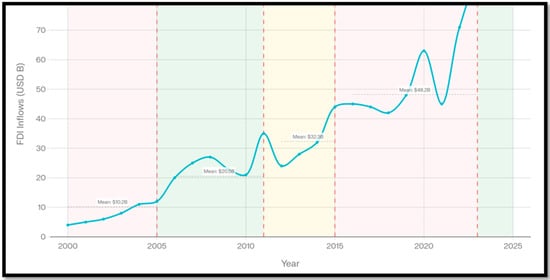
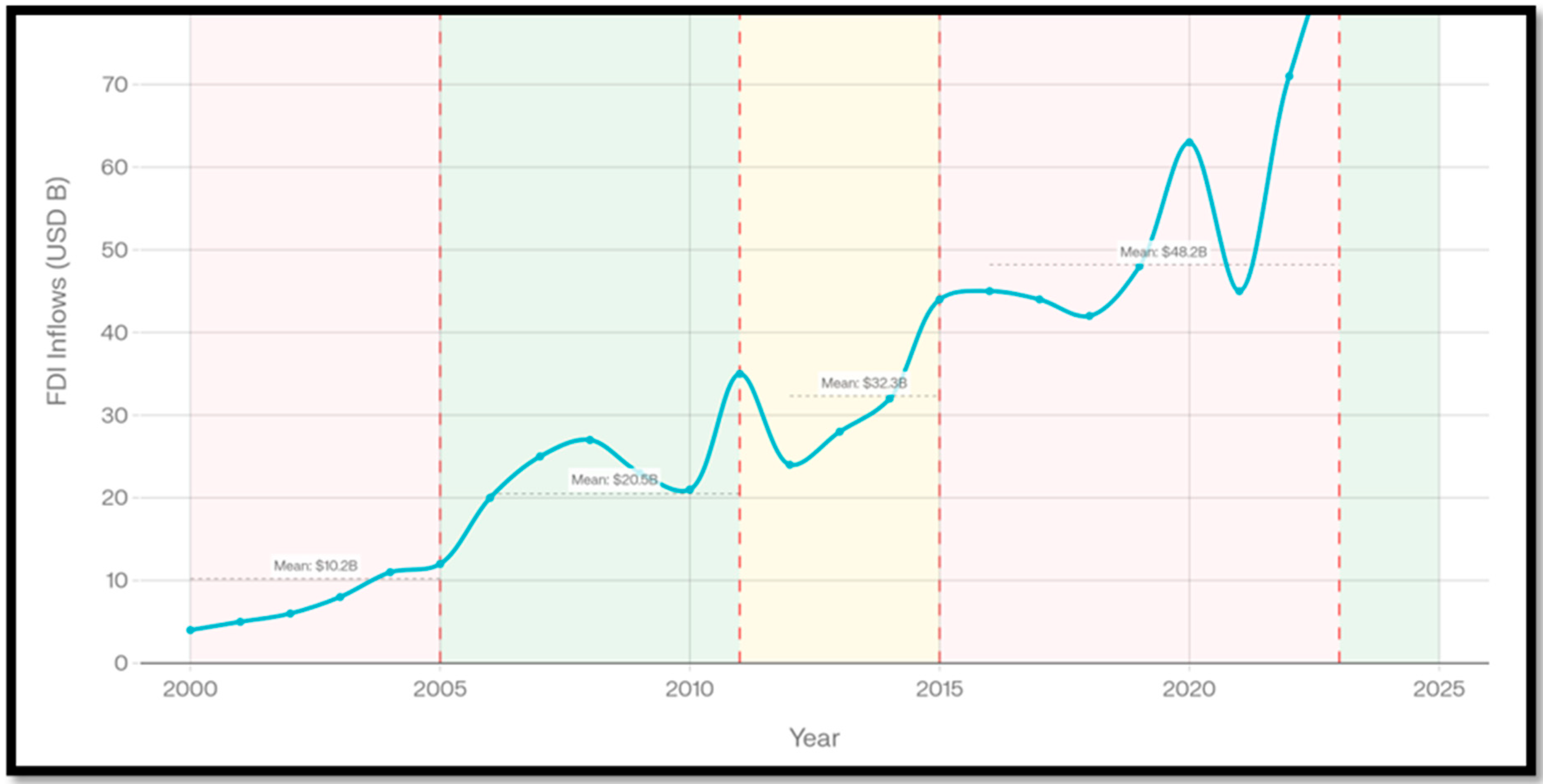
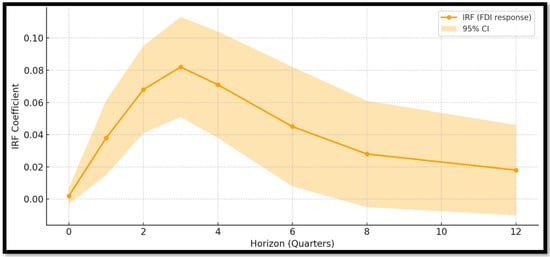
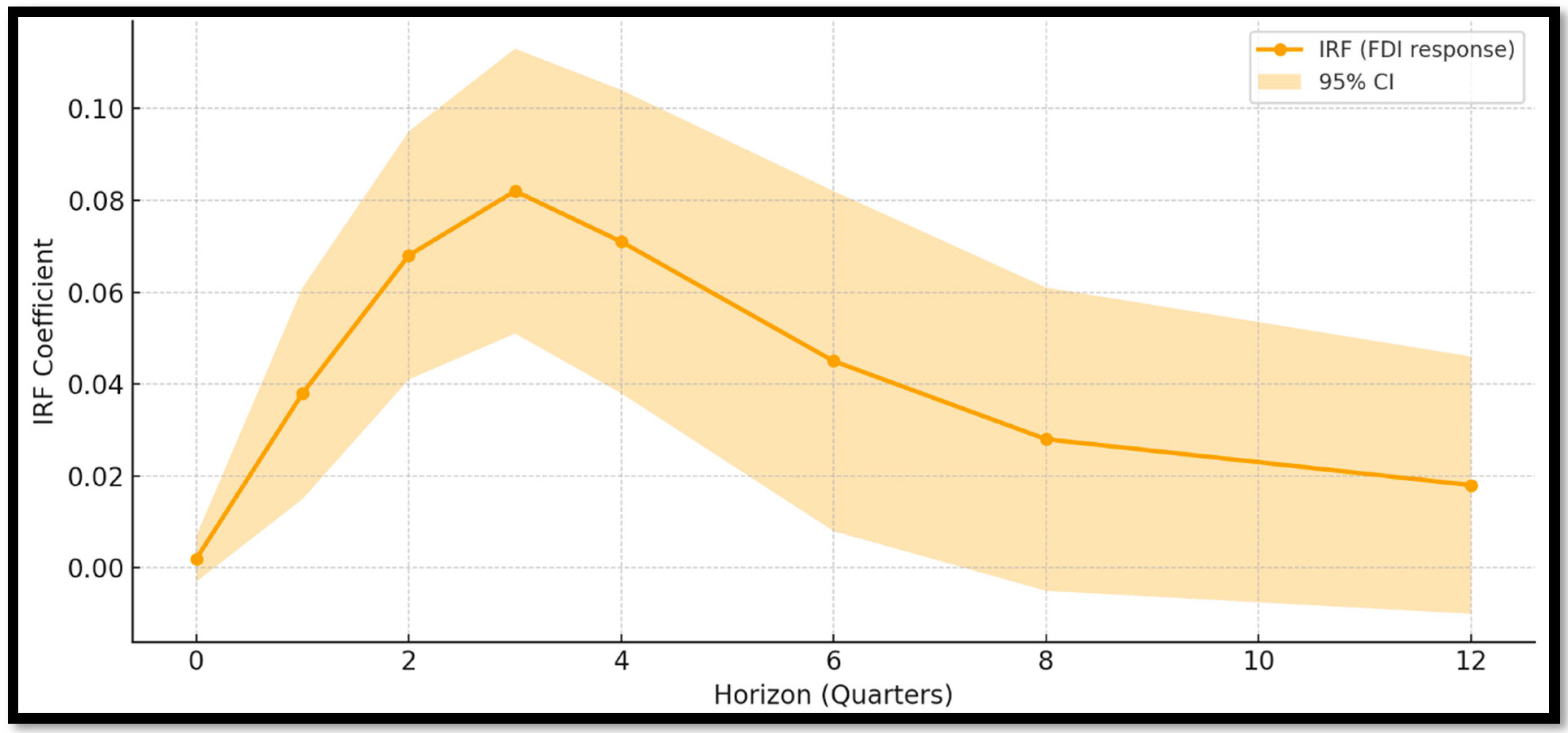

Disclaimer/Publisher’s Note: The statements, opinions and data contained in all publications are solely those of the individual author(s) and contributor(s) and not of MDPI and/or the editor(s). MDPI and/or the editor(s) disclaim responsibility for any injury to people or property resulting from any ideas, methods, instructions or products referred to in the content. |
© 2026 by the authors. Licensee MDPI, Basel, Switzerland. This article is an open access article distributed under the terms and conditions of the Creative Commons Attribution (CC BY) license.