


Abstract
Administrations mandated to adopt audit technologies frequently achieve formal compliance while sustaining persistent gaps between policy and operational practice, a pattern that individual-level technology acceptance models cannot explain. This theory-building study develops an integrated framework combining institutional logics (IL) with Williamson’s new institutional economics (NIE) to explain how sociocultural pressures and economic constraints jointly produce and sustain these gaps. Using an abductive research design, we analyze Computer-Assisted Audit Tools and Techniques (CAATTs) implementation in Indonesia’s tax administration through document analysis and focus group discussions spanning three decades, constructing five propositions that specify the conditions under which collaborative, competing, and decoupling logics emerge, persist, and transition. The analysis reveals that regulatory absence produces collaborative logics as practitioners pool search costs through informal coordination, regulatory formalization triggers competing logics by shifting costs from search to enforcement, and the resulting cost gap between symbolic and substantive compliance produces decoupling that persists until governance investments reduce it. The study contributes to compliance risk governance by identifying the causal mechanisms through which institutional pressures and economic constraints interact during mandated technology adoption, offering testable propositions applicable to regulated organizations managing policy-practice gaps.
Keywords:
audit technology; computer-assisted audit tools and techniques (CAATTs); institutional logics; new institutional economics; tax governance; compliance risk; risk governance; theory building JEL Classification:
B52; H83; M42; O33
1. Introduction
Tax administrations worldwide face a recurring implementation pattern: formal compliance with technology mandates coexists with persistent gaps between mandated standards and operational practice. Regulations are issued, guidelines are published, training is conducted. And yet auditors continue using workarounds, informal methods, and partial implementations that diverge from what formal policy prescribes. This pattern, which we term compliance without substantive adoption, is consequential for tax governance because it creates compliance risk that standard accountability mechanisms cannot detect. External oversight that measures formal compliance (regulations issued, systems deployed, units notified) reports success; operational audit quality, which depends on substantive practice, remains uneven. At its core, this is a technology adoption problem, but one that operates at the organizational level under mandated conditions, not at the individual level under voluntary ones. Undetected compliance–practice gaps erode audit quality, compromise revenue assurance, and undermine the credibility of tax enforcement.
Prevailing models of technology adoption are not designed to explain this gap. The Technology Acceptance Model (TAM) (Davis, 1989), the Unified Theory of Acceptance and Use of Technology (UTAUT) (Venkatesh et al., 2003), and their extensions share a foundational assumption: that adoption outcomes are primarily determined by individual-level perceptions of usefulness and ease of use operating within relatively stable institutional environments (for comprehensive reviews, see Lai, 2017; Taherdoost, 2018). This assumption is productive for voluntary adoption contexts but becomes problematic in regulated settings where the question is not whether practitioners intend to adopt but why organizations sustain gaps between formal compliance and operational practice despite regulatory mandates, institutional support, and demonstrated technological benefit.
Two research traditions address parts of this problem but not its entirety. Technology adoption studies in accounting information systems have applied diverse frameworks, including institutional theory (Alsharari, 2017; Currie & Swanson, 2009), sociomateriality (Orlikowski & Scott, 2008), and dual-factor models (Henderson et al., 2016), to explain how contextual factors shape the uptake of computer-assisted audit tools and techniques (CAATTs) (see also Bierstaker et al., 2014; Krieger et al., 2021). While these studies identify relevant organizational and social factors, they treat economic constraints (transaction costs, enforcement costs, contractual incompleteness) as background conditions rather than as forces that actively shape adoption outcomes. Conversely, institutional economics research (Williamson, 1998, 2000) explains how transaction costs and governance structures influence organizational arrangements but does not account for the legitimacy motives and sociocultural pressures that drive organizations to comply formally even when substantive implementation is economically costly. Neither tradition alone can explain why organizations sustain the gap between formal compliance and operational practice, or under what conditions that gap narrows.
These limitations are especially visible in tax administration, where legally binding technology mandates, scarce implementation resources, and accountability systems that reward formal over substantive compliance operate simultaneously (Hinkley, 2023; Rekunenko et al., 2025). To address this, we integrate institutional logics (IL) (Thornton et al., 2012; Thornton & Ocasio, 1999, 2008) with Williamson’s (1998, 2000) new institutional economics (NIE). IL explains how organizations seek legitimacy through alignment with regulative, normative, and cultural–cognitive pressures (Scott, 2014), capturing the sociocultural forces that generate formal compliance. NIE specifies how transaction costs and contractual incompleteness constrain the range of feasible organizational arrangements (Greif & Kingston, 2011; Williamson, 2000), capturing the economic forces that determine whether formal compliance translates into substantive practice. By integrating these frameworks, we advance a core theoretical claim: compliance–adoption gaps are predictable outcomes of cost structures, not implementation failures. They emerge when the transaction costs of substantive implementation exceed the costs of symbolic compliance, and persist until governance investments alter the cost gap. Institutional pressures set the possible logic configurations, but transaction costs determine which logic dominates in practice. This claim generates five propositions specifying the conditions under which collaborative, competing, and decoupling logics emerge, persist, and transition.
We examine this integration through the implementation of CAATTs in the Directorate General of Taxes (DGT), Indonesia’s primary tax administration agency. The DGT constitutes a revelatory case (Yin, 2018) for three reasons. First, it underwent a complete technology transition from ad hoc, individually driven audit tool use to mandated digital audit procedures over three decades, providing longitudinal visibility into the full cycle of technology institutionalization. Second, despite formal legal recognition of electronic evidence under Law No. 6 of 1983 as last amended by Law No. 7 of 2021 concerning General Provisions and Tax Procedures (hereafter, KUP Law), disparities between mandated standards and operational practice persisted for more than a decade—an extreme case of the compliance–adoption gap our framework seeks to explain. Third, recent regulatory reforms under Minister of Finance Regulation 15/2025 on Tax Examination Procedures and a nationwide e-Audit training initiative provide access to an ongoing governance intervention designed to reduce this compliance–practice gap, enabling assessment of the resolution mechanism our propositions predict. The resource constraints of a large developing-country bureaucracy (limited training infrastructure, uneven technology deployment, competing budget priorities) widen the cost gap between symbolic and substantive compliance, making the gap more persistent and observable than in tax administrations with larger implementation budgets and established training infrastructure.
The single-case design reflects the study’s theory-building orientation: the depth of process tracing required to identify causal mechanisms across three decades of institutional change takes priority over the breadth a comparative design would provide (Eisenhardt, 1989; Eisenhardt & Graebner, 2007; Siggelkow, 2007). Our aim is analytical generalization, not statistical generalization (Flyvbjerg, 2006): the mechanisms operate at a level of abstraction that enables readers to assess their applicability in other regulated settings (Campbell, 1986).
This study makes three contributions. First, we derive five propositions from the empirical case that specify the conditions under which collaborative, competing, and decoupling logics emerge, persist, and transition during mandated technology adoption. Unlike existing plural-logics typologies that treat logic configurations as discrete organizational states (Greenwood et al., 2008; Pache & Santos, 2013), our framework explains their simultaneous operation across different organizational domains and the economic conditions triggering transitions between them. Second, we reframe decoupling, the gap between formal compliance and operational practice, as a predictable transaction cost equilibrium rather than an implementation failure. This challenges the prevailing assumption in the technology adoption literature that persistent compliance–practice gaps indicate inadequate implementation (Bierstaker et al., 2014; Krieger et al., 2021), and redirects intervention strategy from enforcement toward governance investment. Third, we demonstrate how assigning IL and NIE distinct analytical roles, IL as the interpretive lens and NIE as the causal mechanism, addresses the difficulty of combining sociocultural and rational-choice perspectives (Okhuysen & Bonardi, 2011), providing a replicable integration strategy for institutional research in accounting, tax governance, and public administration. By operating at the organizational level under mandated conditions, the framework also addresses the explanatory gap left by individual-level acceptance models.
The remainder of this paper proceeds as follows. We first develop our integrated theoretical framework, examining IL and NIE’s respective strengths and assumptive limits before specifying how they combine. We then describe our research methodology and the context of CAATT implementation in Indonesian tax administration. Next, we analyze the evolution of CAATT adoption, demonstrating how each proposition manifests across implementation phases with evidence from documentary analysis and focus group discussions. Finally, we discuss the findings’ implications for governance policy and practice, and specify limitations and directions for future research.
2. Theoretical Foundations and Their Limitations
The puzzle of compliance without substantive adoption sits at the intersection of two research traditions that rarely engage each other’s core concerns. We define technology implementation gaps as persistent discrepancies between formally mandated technology standards and actual operational practice, occurring at the organizational level under mandated conditions. The pattern extends beyond technology as Giannopoulos et al. (2025) find that formal governance mechanisms in Greek firms operate as symbolic devices of legitimacy rather than effective controls, paralleling the formal–substantive disconnect we examine here. Institutional logics (IL) research explains how organizations respond to competing legitimacy demands in regulated environments, while new institutional economics (NIE) explains how transaction costs and governance structures shape the economic feasibility of organizational arrangements. Each tradition captures part of the phenomenon but embeds assumptions that prevent it from explaining the whole. Consistent with guidelines for developing theoretical foundations (Lim, 2026), we structure this section by first identifying the explanatory strengths of each lens, then specifying the limitations that necessitate integration, and finally articulating how the present study applies and contributes back to both frameworks.
2.1. Institutional Logics: Explanatory Strengths and Assumptive Limits
Institutional logics are the socially constructed assumptions, values, and beliefs that shape behavior, determine legitimacy, and influence organizational practices (Friedland & Alford, 1991; Thornton et al., 2012; Thornton & Ocasio, 1999, 2008). Organizations operate within institutional fields where multiple logics may coexist, compete, or be selectively adopted (Canhilal et al., 2016; Cortes Ferreira, 2017; Greenwood et al., 2008; Reay & Hinings, 2009) and the ability to manage such plural logics determines their ability to adapt and maintain legitimacy (Berg Johansen & Waldorff, 2017; Collins & Mulligan, 2014; DiMaggio & Powell, 1983). Outcomes depend on whether organizations integrate, balance, or separate competing logics (Berg Johansen & Waldorff, 2017; Fligstein, 2001; Nielsen & Jensen, 2011). These logics are rooted in broader institutional pressures. Scott’s (2014) three-pillar framework, regulative, normative, and cultural–cognitive, distinguishes three bases of legitimacy: conformity to rules and laws backed by sanctions, social obligation embedded in professional and moral norms, and taken-for-granted shared understandings (see Table 1).
Table 1.
Pillars of institution.
These pillars correspond to DiMaggio and Powell’s (1983) coercive, normative, and mimetic isomorphic pressures, but an institutional logics perspective allows that organizations exposed to similar pressures may enact different configurations depending on their institutional conditions (Ashworth et al., 2009). The IL perspective has been applied in accounting and information systems research to examine how institutional pressures shape management control practices (Damayanthi & Gooneratne, 2017; Scapens, 1994), how competing logics influence organizational hybridity (Berg Johansen & Waldorff, 2017), and how legitimacy-seeking behavior drives technology adoption in regulated environments (Alsharari, 2017; Currie & Swanson, 2009; Schiavi et al., 2024). This body of work demonstrates that organizations facing technology mandates do not simply adopt or reject; they negotiate between coexisting logics, sometimes integrating new practices with established routines and sometimes maintaining formal compliance while resisting substantive change (Pache & Santos, 2013). In tax administration, this negotiation matters because the gap between formal compliance and operational practice affects audit quality, revenue assurance, and the credibility of tax enforcement. In short, IL explains what configurations emerge and why organizations respond differently to the same mandates, but not what determines which configuration prevails.
However, IL treats the economic costs of institutional responses (search costs, enforcement costs, adaptation costs) as contextual background rather than as forces that determine which logics emerge and persist. IL can characterize how organizations respond to competing logics (integration, compartmentalization, decoupling) and explains that decoupling arises under conflicting institutional demands (Meyer & Rowan, 1977; Pache & Santos, 2013), but it cannot explain why one configuration dominates, when decoupling emerges rather than genuine integration, or why some organizations sustain it for years while others transition. Damayanthi and Gooneratne’s (2017) review suggests that the interaction between institutional pressures and economic constraints receives limited systematic attention in the management control literature. Where persistent compliance–practice gaps are addressed in the technology adoption literature, they are typically attributed to implementation failures such as inadequate planning, insufficient resources, or organizational resistance (Krieger et al., 2021; Bierstaker et al., 2014), rather than recognized as predictable outcomes of underlying cost structures. The answer, we argue, depends on economic conditions that IL does not theorize.
2.2. New Institutional Economics: Explanatory Strengths and Assumptive Limits
Williamson’s (1998, 2000) framework identifies four levels of institutional analysis operating at different temporal scales (see Figure 1): social embeddedness (informal norms, customs, and trust evolving over extended periods), institutional environment (formal rules, laws, and property rights changing over decades), governance structures (contract enforcement, monitoring, and conflict resolution adjusting within years), and resource allocation (economic activity responding continuously to operational conditions).
Figure 1.
Four Levels of Social Analysis. From (Williamson, 2000).
Central to this framework are two concepts that bear directly on the compliance–adoption puzzle. Transaction costs, the costs of searching for information, negotiating agreements, enforcing contracts, and monitoring compliance, shape which governance structures organizations adopt (Williamson, 1979, 1981). Contractual incompleteness, the inability to anticipate all contingencies in institutional arrangements, creates implementation gaps that require ongoing adaptation (Williamson, 2000). Together, these concepts explain why organizations shift between governance arrangements as the costs of one structure exceed those of alternatives.
NIE provides two explanatory strengths that other institutional frameworks lack. First, it supplies a causal mechanism, transaction costs, that explains why organizations shift between governance arrangements rather than merely describing which arrangements exist. Second, Williamson’s multi-level architecture connects macro-institutional constraints to micro-level organizational choices, providing the cross-level linkage that technology adoption research in accounting has called for (Scapens, 2006). These strengths apply directly to tax governance, where transaction costs are pervasive: monitoring taxpayer compliance, enforcing regulations, coordinating across units, and adapting to legislative changes. Contractual incompleteness manifests in the gap between what tax legislation mandates and what operational procedures can anticipate, a gap that audit technology is intended to reduce but that, as we will demonstrate, technology mandates can also create. Recent applications of NIE to digital transformation in regulated environments emphasize that technology adoption is inseparable from governance arrangements that manage risk, uncertainty, and institutional accountability (Natsvaladze, 2024; Scapens, 2006).
However, NIE assumes that actors are boundedly rational but efficiency-seeking: organizations adopt governance structures that minimize transaction costs relative to alternatives. This assumption cannot account for a central feature of the compliance–adoption puzzle. Organizations often persist with economically suboptimal arrangements because those arrangements serve legitimacy functions, such as professional identity, collegial norms, or resistance to perceived external burden, that fall outside NIE’s analytical vocabulary. In mandated technology adoption, organizations maintain costly informal practices alongside formal compliance structures not because they are unaware of the inefficiency, but because the informal practices fulfill institutional needs. NIE can identify these arrangements as suboptimal and predict their eventual replacement, but it cannot explain why they persist or why some organizations transition faster than others. The answer lies in institutional pressures that NIE does not treat as independent causal forces (Eulerich et al., 2023; Henderson et al., 2016; Krieger et al., 2021).
2.3. Integrating Institutional Logics and NIE: Alignment, Equilibria, and Tensions in Technology Adoption
Neither IL nor NIE alone can explain the compliance–adoption pattern documented in our analysis. IL explains that organizations decouple formal policy from operational practice, but not when or why decoupling persists versus resolves, because it does not model the economic costs that sustain or erode the gap. NIE explains that organizations seek efficient governance arrangements, but not why they sustain inefficient ones that serve legitimacy functions, because it does not model the institutional pressures that make symbolic compliance rational. The phenomenon requires a framework that captures their interaction: legitimacy-seeking behavior generates transaction costs (maintaining compliance without substantive change is costly), and economic constraints shape which institutional logics become dominant (resource limitations determine whether organizations can afford genuine integration or must settle for symbolic compliance).
The call for such integration is not new. Orlikowski and Barley (2001) argued for bridging information technology research and organizational theory by linking material artifacts with institutional structures and governance arrangements. Subsequent work in accounting and information systems has shown that both institutional and economic factors matter for technology adoption (Krieger et al., 2021; Scapens, 2006). However, this work has typically integrated at the descriptive level, showing that institutional pressures and economic constraints coexist as influences on adoption, rather than specifying how they interact to produce particular logic configurations under particular conditions. Our integration addresses this gap by assigning IL and NIE distinct but interlocking analytical roles.
The integration builds on the structural alignment between IL’s multiple levels of analysis and NIE’s four levels of social analysis. Following Okhuysen and Bonardi’s (2011) typology for combining theoretical lenses, we assign each perspective a distinct analytical role based on complementary assumptions. IL’s societal, field, and organizational levels correspond to NIE’s social embeddedness, institutional environment, governance structures, and resource allocation. Table 2 maps this alignment.
Table 2.
Alignment of Williamson’s Four Levels of Social Analysis with Institutional Logics Concepts.
Building on Greif and Kingston’s (2011) distinction between institutions as rules and institutions as equilibria, we conceptualize each logic configuration as an institutional equilibrium sustained by its transaction cost structure (see Figure 2). Collaborative logics are configurations where informal coordination minimizes search costs; competing logics are unstable configurations where regulatory change destabilizes the cost structure; decoupling is a configuration where symbolic compliance minimizes total costs relative to substantive implementation. Transitions between configurations are triggered by changes in transaction costs, not by institutional pressures alone, because institutional pressures set the parameters within which economic forces determine the outcome. These configurations persist not because they are unchanging but because the cost of transitioning to an alternative exceeds the cost of maintaining the current arrangement.
Figure 2.
Institutional Dynamics and Equilibrium Across Levels of Social Analysis (adapted from Williamson, 2000).
This integration does not eliminate the tension between the two frameworks. NIE prioritizes economic rationality; IL recognizes that actors’ responses to institutional norms do not always align with economic efficiency. Rather than treating this tension as a contradiction, we treat it as productive: organizations are simultaneously efficiency-seeking and legitimacy-seeking, and the compliance–adoption gap emerges precisely where these orientations conflict. IL serves as the primary analytical framework, identifying the logic configurations and their institutional drivers. NIE provides the complementary causal mechanism, specifying why particular configurations emerge under particular economic conditions. This is a division of analytical labor, not a hierarchy of importance: IL without NIE cannot explain the timing, persistence, or resolution of logic configurations, and NIE without IL cannot explain why symbolic compliance exists as a feasible organizational option.
The next section specifies our research methodology. Because the goal is to explain why particular configurations emerge under particular conditions, the analysis produces propositions that specify conditions, causal mechanisms, and boundary conditions (Eisenhardt, 1989; Eisenhardt & Graebner, 2007; Whetten, 1989). Five propositions are derived from the empirical case, each linking a logic configuration to the transaction cost dynamics that produce and sustain it. In terms of theory development, this integration constitutes a theoretical extension through synthesis (Lim, 2026): it combines two established frameworks to explain a phenomenon that neither can address independently, generating empirically testable propositions applicable to other mandated adoption contexts.
3. Research Context and Methodology
3.1. CAATTs in Audit Technology Landscape1
Computer-Assisted Audit Tools and Techniques (CAATTs) are computer-based methods that automate audit tasks such as validating calculations, identifying samples, and testing complete datasets rather than relying on sampling alone (Arens et al., 2000; Coderre, 2009; Hunton et al., 2004). In tax audits, CAATTs enable auditors to gather and analyze evidence from electronic sources and financial records at volumes that manual methods cannot handle efficiently (IOTA, 2010; OECD, 2010). CAATTs enhance audit effectiveness (Eulerich & Kalinichenko, 2018; Pedrosa & Costa, 2012), yet adoption gaps persist in regulated settings.
3.2. CAATT Implementation in Indonesian Tax Administration
In the Indonesian tax administration, the DGT employed CAATTs to enhance audit efficiency and effectiveness in the self-assessment tax system adopted in 19832. Foundational tax laws (the KUP Law, Income Tax Law, and VAT/Luxury Sales Tax Law) established a legal framework anticipating technology integration in audits, first realized in the mid-1990s when DGT equipped auditors with laptops and specialized software. The 2007 KUP Law amendment was pivotal: it legally recognized electronic data in audits, acknowledged computerized accounting systems, and accepted electronic evidence, establishing the legal necessity for CAATTs in tax compliance. Subsequent ministerial regulations (KMK-545, PMK-199, PMK-17, and PMK-15) clarified operational requirements and auditor proficiency standards. Circular letters (SE-65/PJ/2013, SE-25/PJ/2013, and SE-10/PJ/2017) provided detailed procedures for using CAATTs and processing electronic audit evidence, though they specified workflows without prescribing particular tools, leading organizations to develop in-house and crowdsourced solutions. Figure 3 illustrates the resulting hybrid infrastructure, showing two primary data inputs, audited taxpayer data and internal data, processed through acquisition, transformation, analysis, and reporting stages using both commercial tools (FTK Imager, Power Query) and custom applications (Apiseta, eAudit Utilities). Table 3 lists the regulatory documents analyzed, including official titles and access links.
Figure 3.
Use of in-house-developed tax audit tools.
Table 3.
Primary Document Sources.
3.3. Research Design
This study follows a theory-building research strategy in which propositions are the intended output (Eisenhardt, 1989; Eisenhardt & Graebner, 2007). In Colquitt and Zapata-Phelan’s (2007) taxonomy of empirical theoretical contributions, the study is a “builder”: it uses case-based empirical evidence to develop new theoretical constructs and propositions rather than to test existing theory. The propositions are not derived deductively from the IL-NIE framework and then tested against data; they are generated abductively (Dubois & Gadde, 2002; Sætre & Ven, 2021). The integrated framework directs analytical attention to institutional and economic dynamics, but the propositions themselves, their conditions, mechanisms, and boundaries, emerge from systematic engagement with the empirical material. The compliance–adoption gap serves as the anomaly that existing frameworks cannot adequately explain, and the propositions specify the conditions under which that anomaly takes different forms.
We employed an interpretive single-case study design (Yin, 2018) using the integrated IL-NIE framework as our analytical lens. The DGT case was selected as a revelatory case providing longitudinal access to the full cycle of mandated technology institutionalization, from ad hoc adoption in the 1990s through ongoing governance interventions in 2025. Figure 4 presents the methodological framework illustrating the iterative relationship between data collection, reduction, presentation, and verification (adapted from Creswell (2018) and Miles et al. (2019)).
Figure 4.
Data analysis techniques adapted from Miles et al. (2019) and Creswell (2018).
The research design is interpretive in orientation (Walsham, 1995, 2006): we treat the regulatory documents and practitioner accounts not as objective records of implementation events but as evidence of the institutional logics and economic conditions that shaped organizational responses to technology mandates. This interpretive stance aligns with the asymmetric integration specified in our theoretical framework, where IL provides the interpretive lens and NIE supplies the causal mechanism.
3.4. Data Collection
We employ two primary data collection methods, document analysis and focus group discussions, supplemented by observations from CAATT implementation workshops.
3.4.1. Document Analysis
Following Bowen’s (2009) systematic approach, we analyzed legal provisions, regulatory instruments, and technical documentation to trace the institutional environment’s evolution across the full adoption timeline. Documents served three functions: establishing the regulatory context within which CAATT adoption occurred, identifying changes in the formal institutional framework that altered the transaction cost structure for practitioners, and providing a chronological scaffold against which FGD participants’ accounts could be situated. The documents span four categories: laws and amendments (primarily the KUP Law and its 2007 amendment recognizing electronic evidence), ministerial regulations (KMK-545, PMK-199, PMK-17, PMK-15), circular letters providing operational procedures (SE-65, SE-25, SE-10), and technical documentation including system reports and implementation guidelines. Document analysis has a recognized limitation: official documents represent the formal institutional position and may not capture informal dynamics. We address this by complementing documentary evidence with practitioner perspectives through focus group discussion.
3.4.2. Focus Group Discussion
In this theory-building design, the focus group discussion (FGD) serves a generative function: practitioner accounts are the empirical material from which propositions are constructed, not examples selected after propositions were formulated (Eisenhardt & Graebner, 2007). We conducted an FGD with ten tax professionals directly involved in CAATT implementation: one senior deputy director, one senior head of section, three audit supervisors, and five e-auditors. Participants were purposively selected for extensive experience (minimum 15 years) and senior roles spanning from the early GAS introduction in the 1990s through the 2025 e-Audit training initiative. The FGD format was chosen over individual interviews because the interactive dynamic enables participants to build on and challenge each other’s accounts, producing richer reconstruction of shared organizational history than individual recall alone (Kitzinger, 1995; Morgan et al., 1998). In theory-building research, the relevant criterion is whether the evidence is sufficient to specify propositions, not whether it represents a population (Eisenhardt, 1989). The participants’ combined experience and senior operational roles provided the process detail needed to identify the conditions, mechanisms, and boundaries each proposition specifies.
The session lasted approximately two hours, using a semi-structured guide organized around five domains: experiences with CAATT implementation across career stages, institutional support and barriers, organizational culture’s influence on adoption, technology integration challenges, and alignment between formal requirements and operational realities. The session was audio-recorded with informed consent and transcribed verbatim, with participant identities anonymized.
3.4.3. Observational Data
The lead researcher participated in multiple e-Audit workshops focused on CAATT procedures, tool techniques, and training material development. These observations were not formally coded as primary data but informed the analysis in two ways: they provided first-hand exposure to the operational realities practitioners described in the FGD, and they revealed the gap between formal workshop content and actual implementation practice. This insider access to DGT, including familiarity with audit operations and professional relationships with FGD participants, enabled the depth of access that justifies single-case selection (Yin, 2018). We managed the tension between insider knowledge and interpretive objectivity by using the IL-NIE framework as a disciplining lens: the framework required abstracting from operational familiarity to institutional and economic categories, preventing the analysis from defaulting to practitioner narrative rather than theoretical explanation.
3.5. Analytical Process
Consistent with the theory-building strategy described above, the analytical process was designed to generate propositions from data rather than to test pre-specified hypotheses. Analysis proceeded through three iterative phases. First, we conducted systematic document analysis following Bowen (2009), tracing the evolution of legal provisions to identify changes in the institutional environment and their implications for transaction cost structures at each of Williamson’s four levels. This produced the chronological frame, the regulatory timeline mapped against NIE levels, that structures the analysis in Section 4.
Second, we analyzed the FGD transcript through iterative coding oriented by the theoretical framework. Initial coding identified practitioner accounts of how institutional conditions and economic constraints shaped technology use across career stages. Axial coding organized these into three recurrent patterns: coordination under regulatory absence (collaborative logic), friction between formal requirements and established practice (competing logic), and gaps between mandated procedures and operational implementation (decoupling logic). Throughout, we attended to the economic reasoning implicit in practitioner accounts, including references to costs, workarounds, resource constraints, and trade-offs between formal compliance and operational effectiveness.
Third, we integrated documentary and FGD evidence to construct propositions through an abductive cycle. Each data source served a distinct evidentiary function: documentary analysis established what changed and when (the regulatory conditions forming each proposition’s antecedent), FGD data revealed how practitioners responded and why (the causal mechanisms each proposition specifies), and observational data corroborated the gap between formal procedures and operational practice. When a pattern identified in one source (e.g., cost-driven workarounds in FGD data) was confirmed against the others (e.g., regulations creating the cost conditions, workshop observations confirming the workaround), we formulated a proposition specifying its conditions, mechanism, and boundaries. This design triangulates across three data sources (Denzin, 2012; Patton, 1999). No proposition rests on a single source.
4. Integrating Institutional Logics and NIE: A Proposition-Based Analysis of CAATT Implementation at DGT
The evolution of CAATT adoption in Indonesia’s tax system provides the empirical basis from which our integrated IL-NIE propositions are derived. Table 4 maps this evolution across key timeframes, linking institutional changes, governance challenges, and economic considerations to NIE’s four levels of social analysis. Rather than narrating chronologically, we organize the analysis around the five logic configurations the case reveals, presenting the evidence from each period and then stating the proposition each pattern generates. This presentation mirrors the abductive process through which the propositions were constructed: pattern identification preceded proposition formulation.
Table 4.
Institutional Logic–NIE Framework Analysis of CAATT Implementation.
Over three decades, CAATT adoption in Indonesia’s tax audit environment evolved from ad hoc, individually driven practice into a structured, legally supported process. At the core of this transition lies a shift in both institutional logics and transaction cost structures. The analysis that follows traces how each logic configuration emerged, persisted, and gave way to successor configurations as cost structures changed.
4.1. Collaborative Logic as Informal Governance Under Regulatory Absence
The introduction of General Audit Software (GAS), specifically IDEA and ACL, to DGT in the 1990s occurred in a regulatory vacuum. No legislation recognized electronic evidence as valid in tax audits, and no procedural guidelines specified how auditors should use these tools. GAS was not formally mandated; it was introduced as part of a broader modernization agenda, with the expectation of eventual adoption but without regulatory obligation. This distinction matters for the proposition’s scope: the mechanism operates not only under formal mandates but under any condition where technology use is organizationally expected and regulatory guidance is absent. In NIE terms, this absence at the institutional environment level (Level 2) produced severe contractual incompleteness: the rules governing technology use in tax audits simply did not exist.
This regulatory gap imposed direct costs on individual auditors. Each auditor who attempted to use GAS had to determine independently what methods were appropriate, what outputs constituted valid evidence, and how digital tools could fit with established paper-based procedures. As one participant described: “When I first became an assistant auditor, I learned on my own—Interactive Data Extraction and Analysis.” These are search and negotiation costs in their most direct form. Field-level logics compounded the problem: the prevailing professional belief that existing manual tools were “good enough” meant there was no institutional pressure to resolve the ambiguity.
Under these conditions, collaborative logic emerged, not through managerial directive but through economic necessity. The cost of isolated individual experimentation exceeded the cost of informal coordination, and auditors formed practitioner communities that pooled search costs and developed shared approaches to integrating GAS with existing audit workflows. As one FGD participant recalled: “The auditor community initially came from ACL training conducted by what was then the intelligence directorate. After that, the community of auditors began to form.” Another described building tools to address unmet needs: “The background of why I made this application was initially because of data needs that weren’t provided to tax auditors.”
These communities served as an informal governance structure at NIE Level 3: not formally authorized but functionally operative. They reduced search and negotiation costs by creating shared reference points for technology use. For tax governance, this pattern represents an informal risk mitigation strategy: practitioners developed shared standards to manage the compliance risk created by regulatory absence, substituting professional coordination for institutional accountability structures that did not yet exist. However, because the collaborative structure lacked enforcement authority, compliance with community-developed practices remained voluntary, and adoption depended on individual willingness rather than organizational systems.
The 1990s period thus reveals a consistent mechanism: regulatory absence generates high individual-level transaction costs, which create economic incentives for informal coordination. The resulting collaborative logic had two functions: practitioners established professional norms for appropriate practice (a legitimacy function) while shared knowledge reduced the search burden (a cost-reduction function). The limitation, fragmented enforcement, becomes important in the next period, when regulatory formalization disrupts these informal arrangements. This pattern yields the study’s first proposition:
Proposition 1.
When formal regulatory frameworks for organizationally expected technology are absent or underdeveloped, collaborative logics emerge through practitioner-driven knowledge sharing that functions as informal governance, reducing search and negotiation costs while leaving enforcement fragmented.
4.2. Competing Logic Triggered by Regulatory Formalization
The Early 2000s: A Partial Case
The early 2000s present an intermediate case. Technologically, auditors advanced beyond basic GAS use, developing innovations such as printer-emulators to capture electronic data from taxpayer systems. Institutionally, however, the regulatory environment remained unchanged. No legislation recognized electronic evidence, and no procedural standards governed its use.
What shifted was the cost structure within the collaborative arrangement itself. As technology advanced, the informal standards developed by practitioner communities became insufficient. New tools raised questions about data formats, evidentiary validity, and cross-system compatibility that informal governance could not answer with authority. Growing complexity outpaced what informal coordination could manage.
This produced competing logics: one oriented toward technological advancement, the other anchored in established routines and the caution bred by regulatory silence. Auditors who innovated operated without standardized reference points, exposing themselves to professional risk. Those who adhered to manual practices avoided that risk but forfeited efficiency gains. Neither group had institutional backing, and practices diverged across the organization based on local risk tolerance rather than organizational policy. Search costs remained high (no formal standards existed), and enforcement costs now increased as diverse practices created coordination problems that supervisors bore the cost of resolving.
Documentary evidence for this period is thinner; analytical claims are inferred from structural conditions rather than the density of primary evidence available for later periods. This period partially illustrates the competing-logic mechanism but with an important nuance. The evidence from the next period (2007–2013) will show that competing logics intensify when regulatory formalization delegitimizes entrenched practices. The early 2000s show they can also emerge from technological change within regulatory stasis: the informal governance structure became inadequate not because new rules displaced it but because the problems exceeded its capacity. The early 2000s thus serve as a boundary condition: competing logics can emerge from technological complexity alone, but they intensify when regulatory formalization adds a delegitimization mechanism.
2007–2013: The Full Mechanism
The 2007–2013 period delivers the full competing-logic mechanism. The amendment of the KUP Law, recognizing electronic evidence as legally valid in tax audits, was a decisive change at the institutional environment level (NIE Level 2). For the first time, formal rules specified that electronic data could serve as audit evidence, and a cascade of implementing instruments followed: Ministerial Regulations PMK-199, PMK-17, and PMK-15 established procedural requirements, while the e-Audit Manual (SE-25) translated these into operational guidelines. Contractual incompleteness, which had persisted for over a decade, was substantially reduced.
This regulatory formalization simultaneously legitimized new practices and delegitimized established informal ones. The collaborative arrangements that auditors had built through practitioner communities (shared methods, informal standards, community-validated approaches) were no longer the only available reference points. Formal guidelines now specified what constituted appropriate practice, and those specifications did not always align with what communities had developed informally. Auditors who had operated as pioneers under regulatory absence were now required to conform to standards they had not authored.
The result was competing logics of a different character than those of the early 2000s. The earlier competition was between innovation and caution within a regulatory vacuum, a horizontal tension among practitioners with different risk tolerances. The post-KUP Law competition was between formal institutional requirements and established professional routines, a vertical tension between organizational mandates and field-level practice. The early 2000s competition fragmented practice but produced no enforcement mechanism because there was nothing to enforce. The post-2007 competition was backed by regulatory authority, meaning that non-compliance now carried institutional consequences.
The transaction cost profile shifted accordingly. Search costs declined: auditors could now consult formal guidelines rather than relying on informal networks. Negotiation costs declined: standards were externally specified, not internally negotiated. But enforcement costs rose sharply, as the organization had to monitor compliance with new procedures, manage the transition of established practitioners to unfamiliar methods, and resolve conflicts between formal requirements and operational realities. As one FGD participant captured the tension: “When security is maintained too high by leadership, but doesn’t accommodate usability, users will find ways to get work done.” The workaround this participant described is not resistance to technology; it reflects enforcement costs exceeding the cost of informal adaptation. From a tax governance perspective, the organization’s formal compliance posture improved (rules existed and were institutionally backed), but operational compliance risk increased as enforcement costs incentivized workarounds that formal monitoring could not fully capture.
What distinguishes this period is that collaborative and competing logics operated concurrently. The formal frameworks promoted integration: they gave auditors a shared vocabulary, common procedures, and institutional backing for technology use, extending the collaborative function that practitioner communities had served informally. Practitioners continued building tools to reduce operational costs within this evolving structure. As one participant described: “Then, around 2012, it started developing further among the auditors—some started developing what is called eAudit utilities. Its function was to extract internal data within DJP. (we are able to) made tools to speed up the data extraction process plus its processing.”. These utilities illustrate the collaborative mechanism operating alongside regulatory formalization: auditors invested in shared tools that reduced search and processing costs even as formal standards introduced new enforcement pressures. At the same time, implementation generated friction as auditors adjusted established workflows to meet new requirements. The same regulatory change that enabled collaboration at the standard-setting level produced competition at the practice level, suggesting the domain-level coexistence observed in 2017–2025.
Across both sub-periods, the evidence points to a consistent mechanism: regulatory formalization shifts the composition of transaction costs from search and negotiation toward enforcement and monitoring, producing competing logics as the organization reconciles new formal requirements with entrenched practice. The early 2000s show that this competition can begin under technological complexity alone; the 2007–2013 period shows that formal regulatory change intensifies it by adding a delegitimization mechanism. This yields the second proposition:
Proposition 2.
The introduction of formal regulatory frameworks for mandated technology triggers competing logics by simultaneously legitimizing new practices and delegitimizing entrenched informal arrangements, generating enforcement costs as organizations reconcile formal requirements with established routines.
4.3. Decoupling as Transaction Cost Management
The 2013–2017 period is where the compliance–adoption puzzle, the central phenomenon this paper seeks to explain, is most visible. The SE-10 Technical Guidelines for Field Audits represented the most detailed formalization to date, specifying practices for securing data, enforcing evidence standards, and integrating CAATTs into routine audit workflows. By this point, the institutional environment (Level 2) had matured: electronic evidence was legally recognized, ministerial regulations were in place, and operational manuals existed. Regulatory gaps at the rule level had been largely closed. On paper, DGT had a complete framework for technology-enabled auditing.
Yet operational practice did not follow. Infrastructure remained inadequate in many audit units. Training had not reached sufficient depth or breadth to equip the full auditor workforce. Workflow redesign, the most resource-intensive component of substantive implementation, had barely begun in many offices. Internal assessments confirmed the gap. As one senior official reported: “Although regulations have been prepared, the understanding among auditors is not the same. From the survey results, the implementation of e-audit in accordance with existing regulations is still quite low.”.
The gap between what the Technical Guidelines prescribed and what auditors did in practice was wide and persistent. One FGD participant described the reality: “The weakness is that what we have now, the application does not provide data when we need it in tabular form. What we see on screen, we copy-paste to Excel then enter the numbers one by one into our examination working papers in our tax office.”. This is not resistance to technology. It is the result of incomplete implementation: practitioners use workarounds because the formal system does not yet support their actual task requirements.
The IL-NIE framework explains why this gap emerged and persisted. Full compliance with the Technical Guidelines required simultaneous investment across two NIE levels: governance structures (Level 3) needed redesign (new training programs, monitoring systems, technical support, capability assessments), and resource allocation (Level 4) had to shift (budgets redirected toward hardware, software, and workflow integration). These investments represent the transaction costs of substantive implementation, and they are upfront: the organization must pay them before realizing efficiency gains. One participant described the constraint directly: “For infrastructure, indeed this is quite challenging, quite tough, because it’s related to the budget. This is one of the issues — how we can conduct e-audit if the infrastructure itself is not sufficiently supportive, both from the application side and from the hardware side.”
Symbolic compliance, by contrast, was cheap. DGT could report that Technical Guidelines had been issued, audit units notified, and CAATTs formally incorporated into the audit process. The reporting structures that satisfied institutional accountability requirements were already in place. Maintaining formal compliance while deferring the costly investments required for substantive change was the lower-cost strategy in the short run. In tax governance terms, this cost gap creates a specific form of compliance risk: the organization satisfies accountability requirements at the reporting level while operational audit quality remains uneven, a gap invisible to external oversight mechanisms that measure formal compliance but do not assess actual practice. The organization decoupled not to avoid compliance but because the cost gap was large and the governance mechanisms needed to close it had not yet been built.
Decoupling persisted because the formal frameworks grew clearer but clarity of rules does not by itself reduce the cost of following them. Without mandatory training covering the full workforce, infrastructure upgrades across all audit units, and capability assessments that would make the gap visible, there was no mechanism to reduce the cost of substantive implementation. This distinction between regulatory gaps (resolved by rule clarification) and implementation costs (resolved by governance investment) is central to understanding why decoupling persists after regulatory ambiguity has been addressed.
The decoupling pattern identified here recurs in modified form in the 2017–2025 period, where the source of the cost gap shifts from material infrastructure to human capital. The mechanism, persistence until governance investments reduce the cost gap, applies in both periods, but the type of governance investment required differs. This variation within a single mechanism demonstrates the pattern’s generality while specifying its context-dependence. The evidence from both periods converges on a third proposition:
Proposition 3.
Decoupling between formal policy and operational practice emerges when the transaction costs of full substantive implementation exceed the perceived costs of maintaining symbolic compliance, and persists until governance investments reduce the cost gap.
4.4. Logic Transitions and Simultaneity
The 2017–2025 period is analytically distinctive because it exhibits two phenomena that earlier periods only hinted at: a clear logic transition driven by economic conditions, and sustained coexistence of logics across organizational domains. Both require explanation, and together they demonstrate why the IL-NIE integration is necessary: neither framework alone can account for what occurred.
By 2017, the institutional environment for CAATTs had stabilized: legal recognition of electronic evidence was settled, ministerial regulations were in place, and technical guidelines governed operational practice. Yet the organization did not converge on a single logic. Instead, two logics operated concurrently, each in a different organizational domain.
In the domain of technology integration, the daily workflow of applying CAATTs to audit tasks, collaborative logic prevailed. Transaction costs in this domain had declined steadily: search costs were low (standards existed and were widely known), negotiation costs were minimal (procedures were externally specified), and enforcement costs had moderated as compliance became routine. Auditors used CAATTs not because they were mandated to but because the tools had become embedded in how audit work was done. As one participant observed: “Sampling techniques—if we use e-audit, it seems to become irrelevant. Because when we talk about sampling, it means we have limitations in processing a data population. But with e-audit, we are able to process data, including data of very large sizes.” The collaborative logic that had emerged informally in the 1990s had been formalized and institutionalized.
In the domains of capability development, training, skill acquisition, and mindset adaptation, decoupling persisted, but the source of decoupling had shifted. In 2013–2017, decoupling stemmed from infrastructure and training deficits, material constraints at the governance and resource allocation levels. By 2017–2025, the material infrastructure had improved substantially. What remained was a human capital gap: cultural resistance among some experienced auditors, generational differences in technology fluency, and uneven skill development across organizational units. Formal policies assumed a workforce uniformly capable of technology-enabled auditing. Actual capability remained unevenly distributed.
This was not a deliberate strategy but an emergent outcome of different cost conditions across domains. In the technology integration domain, the costs of substantive compliance had fallen below the costs of maintaining alternative practices, making genuine integration the lower-cost path. In the capability development domain, the costs of closing the human capital gap remained high relative to the costs of tolerating uneven implementation. Each domain settled on the logic that its cost structure favored.
For tax administration policy, this domain-level variation means that aggregate compliance metrics can mask significant differences in operational capability. A tax authority may report high formal compliance with technology mandates while specific organizational domains, particularly those requiring human capital development, remain substantially decoupled from policy intent. This coexistence pattern yields the fourth:
Proposition 4.
In mandated technology adoption, multiple logic configurations operate simultaneously within the same organization when different organizational domains face different transaction cost structures, each domain adopting the configuration that minimizes its domain-specific costs.
The transition within the technology integration domain provides evidence for a fifth pattern. The shift from competing logics (2007–2013) through decoupling (2013–2017) to collaborative logic (2017–2025) tracked the declining cost of substantive compliance in that domain. As formal standards became familiar, infrastructure improved, and a critical mass of auditors gained proficiency, the cost of genuine integration fell below the cost of maintaining workarounds or symbolic compliance. The regulatory mandate had been stable since the KUP Law amendment; the trigger was a shift in relative costs, not institutional pressure. This yields the fifth proposition. This yields the fifth proposition:
Proposition 5.
Transitions between dominant logic configurations are triggered by changes in the relative transaction costs associated with maintaining versus abandoning each configuration, not by changes in institutional pressures alone.
The 2025 PMK-15 Regulation
PMK-15 (2025) reinforced the definition and scope of electronic data in tax audits by referencing the KUP Law rather than the broader ITE Law, creating a tax-specific legal framework that addressed litigation risks unique to tax enforcement. This move is best understood as institutional differentiation rather than decoupling: it did not create a gap between formal policy and operational practice but established a separate regulatory domain to reduce legal uncertainty in tax-specific proceedings.
In parallel, the organization launched an e-Audit training program targeting all tax audit units, a governance investment at Level 4 designed to close the capability gaps that had sustained decoupling. As one senior official described, the initiative targets three fronts simultaneously: “First, from the human resources side, tax auditor competencies. Then also from the infrastructure side or audit tools or other supporting things that need improvement. Another one is related to regulatory support.” This multi-level investment represents the mechanism through which Proposition 3 predicts decoupling resolves. Whether the training program achieves this remains to be assessed, but its design reflects the economic logic the proposition specifies. The 2025 developments illustrate both propositions operating concurrently: Proposition 5 in the continued trajectory of declining costs driving logic transition in technology integration, and Proposition 4 in the persistence of domain-level differentiation across governance levels.
4.5. What the Analysis Demonstrates
The DGT case does not simply illustrate the IL-NIE framework; it provides the empirical basis from which the framework’s propositions are derived. Across three decades of CAATT implementation, a consistent pattern emerges: the dominant logic configuration in each period and each organizational domain corresponds to the transaction cost structure that configuration minimizes. This is the paper’s core theoretical claim, and it holds across all five periods despite substantial variation in regulatory context, technological complexity, and organizational capacity.
The five propositions form a connected sequence: regulatory absence creates collaborative governance (P1), formalization disrupts it by shifting costs from search to enforcement (P2), the resulting cost gap between symbolic and substantive compliance produces decoupling (P3), different domains settle on different configurations based on their cost structures (P4), and transitions between configurations are triggered when those costs shift, not when institutional pressures change (P5). Each proposition builds on the limitations of the preceding configuration. Table 5 consolidates the five propositions, specifying for each the triggering condition, causal mechanism, expected outcome, and boundary conditions, alongside the evidence base from which each was derived.
Table 5.
Consolidated Propositions, Mechanisms, and Evidence Base.
Two observations about the overall pattern are worth highlighting. First, the relationship between institutional logics and transaction costs is not one-directional. Institutional changes (regulatory formalization) alter cost structures, but cost structures also determine which logics can be sustained. The KUP Law amendment reduced contractual incompleteness, but it was the resulting shift in the composition of transaction costs, from search costs to enforcement costs, that produced competing logics. This two-way relationship is what the IL-NIE integration captures that neither framework captures alone.
Across the full case, institutional pressures set the menu of possible logic configurations, but transaction costs determine which logic dominates in practice, when transitions occur, and where within the organization each configuration takes hold. This integration addresses key IL limitations (underspecifying mechanisms, timing, and persistence of decoupling) by importing NIE’s cost-based causality, while addressing NIE’s inability to explain why organizations sustain economically suboptimal arrangements that serve legitimacy functions.
5. Conclusions, Limitations, and Future Research
5.1. Conclusions
This study set out to explain why organizations mandated to adopt technology achieve formal compliance while sustaining persistent gaps between policy and operational practice. The IL-NIE framework developed here provides a mechanism-based answer. Compliance–adoption gaps are not implementation failures caused by inadequate planning or insufficient commitment. They are predictable outcomes that emerge when the costs of substantive implementation exceed the costs of symbolic compliance, and that persist until governance investments alter the cost gap.
The analysis of CAATT implementation in Indonesia’s DGT across three decades generated five propositions specifying the conditions under which each logic configuration emerges. Collaborative logics arise under regulatory absence as practitioners pool search costs through informal coordination (P1). Competing logics emerge when formalization shifts costs from search to enforcement (P2). Decoupling persists when substantive compliance costs exceed symbolic ones (P3). Multiple configurations coexist when cost structures differ across domains (P4). Transitions track changes in relative transaction costs, not institutional pressure alone (P5). Beyond these empirical propositions, the study demonstrates that positioning IL as the interpretive lens and NIE as the causal mechanism provides a replicable strategy for combining sociocultural and economic perspectives in institutional research (Okhuysen & Bonardi, 2011).
The progression from regulatory absence through formalization to institutionalization does not eliminate implementation gaps; it changes their source. In the 1990s, gaps stemmed from absent rules; in 2007–2013, from the collision between new rules and established practice; in 2013–2017, from insufficient investment in putting the rules into operation; and in 2017–2025, from human capital deficits that investment in material infrastructure does not address. Each resolution generates a new form of gap at a different level of the institutional architecture. This recurring quality suggests that compliance–adoption gaps are not problems to be solved definitively but tensions to be managed through continuous governance adjustment.
This pattern is not confined to tax administration. The three logics identified in this study (collaborative, competing, and decoupling) function as process logics: they describe how organizations respond to mandated practice changes regardless of the field. They are distinct from sector-specific content logics such as professional logics in healthcare (Reay & Hinings, 2009), market logics in finance (Thornton et al., 2012), or state logics in public administration (Friedland & Alford, 1991). In financial services, Basel capital adequacy and anti-money laundering regulations generate compliance–practice gaps when the cost of embedding risk controls into operational workflows exceeds the cost of maintaining reporting-level compliance (Pol, 2020; Power, 2007). In public financial management, mandated accounting standards and internal control frameworks face analogous decoupling in resource-constrained agencies (van Helden & Uddin, 2016). Process logics can operate within any of these content logic environments, determined not by sector-specific norms but by the transaction cost structure of substantive versus symbolic compliance.
Three implications follow for governance policy and practice. First, decoupling is a cost-structure outcome rather than an implementation failure. Tax administrations seeking to close compliance–practice gaps should prioritize governance investments that reduce the cost of substantive implementation (systematic training, infrastructure deployment, capability assessment) rather than intensifying enforcement of formal compliance. Enforcement addresses the symptom (non-compliance with mandated procedures) but not the cause (the cost gap that makes substantive compliance more expensive than symbolic conformity). The 2025 e-Audit training initiative at DGT represents this governance-investment approach.
Second, the domain-level coexistence identified in Proposition 4 implies that aggregate compliance reporting can disguise significant operational variation. A tax authority may demonstrate high formal compliance with technology mandates while specific domains, particularly those dependent on human capital development rather than material infrastructure, remain substantially decoupled. Governance frameworks that measure operational practice at the domain level, not just formal compliance at the organizational level, are better positioned to detect these gaps.
Third, the recurring quality of compliance–adoption gaps implies that risk-based governance must be adaptive. Static technology mandates that assume a stable end-state of “full adoption” mischaracterize the challenge. The framework can be applied as a compliance risk assessment tool through four steps: (1) map the institutional pressures that define compliance expectations within the regulatory environment; (2) identify which process logic characterizes each organizational domain’s response; (3) analyze the transaction cost structure to determine where substantive implementation costs exceed symbolic compliance costs; and (4) assess risk exposure by identifying domains where decoupling persists, since these are where formal reporting does not reflect operational practice.
5.2. Limitations and Boundary Conditions
The propositions are subject to specifiable boundary conditions. The economic contingency mechanism (Proposition 5) is strongest in mandated adoption contexts where institutional pressures are relatively stable, allowing cost dynamics to drive logic transitions. In settings where institutional pressures themselves shift rapidly, such as during major regulatory transformation or political disruption, the interaction between institutional and economic forces may operate differently than our framework predicts.
The study draws on focus group discussions and documentary analysis from a specific institutional context. While participants spanned the full adoption timeline, FGD data reflect a single collection period and are subject to retrospective reconstruction, particularly for earlier periods. We addressed this by corroborating participant accounts against the documentary record: regulatory timelines, official circulars, and implementation reports provided independent verification of the institutional changes participants described. The early 2000s analysis rests on thinner primary evidence than other periods and is accordingly qualified as a partial case (Section 4.2).
Proposition 4 (domain-level coexistence) is the most forward-looking of the five propositions. The e-Audit training initiative it partly addresses was still unfolding at the time of data collection, and its empirical grounding is more preliminary than that of Propositions 1 through 3. It requires future longitudinal testing to establish whether domain-level cost differences stabilize or resolve (Whetten, 1989).
The Indonesian regulatory context constitutes a scope condition. Three features, the civil law tradition, centralized administration, and hierarchical bureaucratic culture, may widen the cost gap between symbolic and substantive compliance, making decoupling more persistent and observable than in settings with stronger enforcement traditions or greater practitioner autonomy. This is what makes DGT a revelatory case for theory building (Yin, 2018), but it also means the magnitude and duration of compliance–practice gaps may differ in common law systems or decentralized tax administrations. The mechanisms themselves, that transaction costs determine which logic configurations emerge, persist, and transition, are specified at a level of abstraction intended for analytical generalization across regulated organizations managing mandated practice changes (Campbell, 1986; Flyvbjerg, 2006).
5.3. Future Research
Three directions would extend this work. First, Proposition 3 (decoupling as cost management) is directly testable through comparative analysis of organizations that invested in governance mechanisms (training mandates, infrastructure deployment) versus those that relied on enforcement of formal compliance. Such comparison would test whether governance investment reduces decoupling more effectively than enforcement intensity, as our framework predicts.
Second, the process/content logic distinction warrants examination across regulatory contexts. Applying the four-step framework to mandated practices in financial services (Basel risk reporting, AML controls), public financial management (internal control frameworks), or regulatory compliance in other resource-constrained settings would test whether the same process logics emerge under similar cost structures despite different content logics. Such comparative work would also clarify the framework’s usefulness as a compliance risk assessment tool across sectors.
Third, the pattern of each resolution generating new gaps at different institutional levels suggests a dynamic modeling opportunity. Longitudinal studies tracking the migration of compliance–practice gaps across institutional levels as governance interventions are implemented would provide the temporal data needed to formalize this recurring pattern.
Author Contributions
Conceptualization, A.D. and T.P.; Methodology, A.D. and T.P.; Investigation, A.D. and T.P.; Resources, A.D. and T.P.; Data curation, A.D. and T.P.; Writing—original draft, A.D. and T.P.; Writing—review & editing, T.P.; Visualization, A.D. All authors have read and agreed to the published version of the manuscript.
Funding
This research received no external funding.
Institutional Review Board Statement
The study was conducted in accordance with the Declaration of Helsinki, and approved by the Institutional Review Board of Indonesia’s Directorate General of Taxes (DGT) (No. S-2768/RISET/PJ.09/2024, dated 11 November 2024), authorizing the conduct of the focus group discussion at the Directorate of Audit and Collection.
Informed Consent Statement
Informed consent was obtained from all subjects involved in the study.
Data Availability Statement
The data supporting the findings of this study are not publicly available due to privacy and ethical restrictions. The study relies on focus group discussion transcripts involving government officials whose participation was subject to confidentiality commitments. Requests for further information may be directed to the corresponding author.
Acknowledgments
The authors thank Suahasil Nazara, Affan Nuruliman, Marasi Napitupulu, and Agus Budiharjo for their institutional support, and the e-auditors at the Directorate General of Taxes for their participation in this study. We also thank the three anonymous reviewers for their constructive feedback.
Conflicts of Interest
The authors declare no conflict of interest. The views expressed in this paper are those of the authors and do not necessarily represent the views of the institutions with which the authors are affiliated.
Notes
| 1 | According to AICPA (2017), Audit Data Analytics (ADAs) share similarities with Computer-Assisted Audit Techniques (CAATTs). While ADAs could theoretically be performed manually to discover patterns and identify anomalies in data, they typically require computer implementation. ADAs can be viewed as an evolutionary advancement of CAATTs, enhancing auditors’ capabilities through data visualization techniques and supporting broader audit objectives. Recent studies have further examined the maturity levels and utilization factors of Generalized Audit Software in various contexts (Ahmi & Kent, 2012; Kartikasary et al., 2021; Smidt et al., 2019). |
| 2 | The self-assessment tax system in Indonesia, implemented after the tax reform of 1983, is a collection system that gives taxpayers the responsibility and trust to calculate, pay, and report their own tax obligations independently based on applicable tax laws and regulations. This system is primarily applied to central taxes such as Income Tax (PPh) and Value Added Tax (VAT), with the government acting only in a supervisory capacity through tax audits and investigations (Law Number 16 of 2009 concerning General Provisions and Tax Procedures). |
References
- Ahmi, A., & Kent, S. (2012). The utilisation of generalized audit software (GAS) by external auditors. Managerial Auditing Journal, 28(2), 88–113. [Google Scholar] [CrossRef] [Scilit]
- AICPA. (2017). AICPA guide to audit data analytics. AICPA. [Google Scholar]
- Alsharari, N. (2017). Institutional logics and ERP implementation in public sector agency. The Journal of Developing Areas, 51, 417–425. [Google Scholar] [CrossRef] [Scilit]
- Arens, A. A., Loebbecke, J. K., Elder, R. J., & Beasley, M. S. (2000). Auditing and assurance services (8th ed.). Prentice Hall. [Google Scholar]
- Ashworth, R., Boyne, G., & Delbridge, R. (2009). Escape from the iron cage? Organizational change and isomorphic pressures in the public sector. Journal of Public Administration Research and Theory, 19(1), 165–187. [Google Scholar] [CrossRef] [Scilit]
- Berg Johansen, C., & Waldorff, S. B. (2017). What are institutional logics—And where is the perspective taking us? Academy of Management Proceedings, 2015(1), 14380. [Google Scholar] [CrossRef] [Scilit]
- Bierstaker, J., Janvrin, D., & Lowe, D. J. (2014). What factors influence auditors’ use of computer-assisted audit techniques? Advances in Accounting, 30(1), 67–74. [Google Scholar] [CrossRef] [Scilit]
- Bowen, G. A. (2009). Document analysis as a qualitative research method. Qualitative Research Journal, 9(2), 27–40. [Google Scholar] [CrossRef] [Scilit]
- Campbell, D. T. (1986). Relabeling internal and external validity for applied social scientists. New Directions for Program Evaluation, 1986(31), 67–77. [Google Scholar] [CrossRef] [Scilit]
- Canhilal, S. K., Lepori, B., & Seeber, M. (2016). Decision-making power and institutional logic in higher education institutions: A comparative analysis of European universities. In Towards a comparative institutionalism: Forms, dynamics and logics across the organizational fields of health care and higher education (Vol. 45, pp. 169–194). Emerald Group Publishing Limited. [Google Scholar] [CrossRef] [Scilit]
- Coderre, D. G. (2009). Internal audit efficiency through automation. John Wiley & Sons, Inc. [Google Scholar]
- Collins, T., & Mulligan, E. (2014). Ireland’s introduction of transfer pricing: A new institutional theory perspective. In Accounting, finance and governance review, special issue on taxation. Irish Accounting and Finance Association. [Google Scholar]
- Colquitt, J. A., & Zapata-Phelan, C. P. (2007). Trends in theory building and theory testing: A five-decade study of the academy of management journal. Academy of Management Journal, 50(6), 1281–1303. [Google Scholar] [CrossRef] [Scilit]
- Cortes Ferreira, L. (2017). Using institutional logics as cultural resources: A micro-perspective on organizational hybridity [Ph.D. thesis, University of Nottingham]. Available online: http://eprints.nottingham.ac.uk/40568/ (accessed on 5 May 2025).
- Creswell, J. W. (2018). Research design: Qualitative, quantitative, and mixed methods approaches (5th ed.). SAGE Publications. [Google Scholar]
- Currie, W. L., & Swanson, E. B. (2009). Special issue on institutional theory in information systems research: Contextualizing the IT artefact. Journal of Information Technology, 24(4), 283–285. [Google Scholar] [CrossRef] [Scilit]
- Damayanthi, S., & Gooneratne, T. (2017). Institutional logics perspective in management control research. Journal of Accounting & Organizational Change, 13, 520–547. [Google Scholar] [CrossRef] [Scilit]
- Davis, F. D. (1989). Perceived usefulness, perceived ease of use, and user acceptance of information technology. MIS Quarterly, 13(3), 319. [Google Scholar] [CrossRef] [Scilit]
- Denzin, N. K. (2012). Triangulation 2.0. Journal of Mixed Methods Research, 6(2), 80–88. [Google Scholar] [CrossRef] [Scilit]
- DiMaggio, P. J., & Powell, W. W. (1983). The iron cage revisited: Institutional isomorphism and collective rationality in organizational fields. American Sociological Review, 48(2), 147–160. [Google Scholar] [CrossRef] [Scilit]
- Dubois, A., & Gadde, L.-E. (2002). Systematic combining: An abductive approach to case research. Journal of Business Research, Markets as Networks, 55(7), 553–560. [Google Scholar] [CrossRef] [Scilit]
- Eisenhardt, K. M. (1989). Building theories from case study research. Academy of Management Review, 14(4), 532–550. [Google Scholar] [CrossRef] [Scilit]
- Eisenhardt, K. M., & Graebner, M. E. (2007). Theory building from cases: Opportunities and challenges. Academy of Management Journal, 50(1), 25–32. [Google Scholar] [CrossRef] [Scilit]
- Eulerich, M., & Kalinichenko, A. (2018). The current state and future directions of continuous auditing research: An analysis of the existing literature. Journal of Information Systems, 32(3), 31–51. [Google Scholar] [CrossRef] [Scilit]
- Eulerich, M., Masli, A., Pickerd, J., & Wood, D. A. (2023). The impact of audit technology on audit task outcomes: Evidence for technology-based audit techniques. Contemporary Accounting Research, 40(2), 981–1012. [Google Scholar] [CrossRef] [Scilit]
- Fligstein, N. (2001). Institutional entrepreneurs and cultural frames—The case of the European Union’s single market program. European Societies, 3(3), 261–287. [Google Scholar] [CrossRef] [Scilit]
- Flyvbjerg, B. (2006). Five misunderstandings about case-study research. Qualitative Inquiry, 12(2), 219–245. [Google Scholar] [CrossRef] [Scilit]
- Friedland, R., & Alford, R. (1991). Bringing society back in: Symbols, practices and institutional contradictions. In W. Powell, & P. Dimaggio (Eds.), The new institutionalism in organizational analysis (pp. 232–263). University of Chicago Press. [Google Scholar]
- Giannopoulos, V., Vlachakou, M., Kariofyllas, S., & Makris, I. (2025). Corporate governance and tax avoidance: Evidence from Greek service-sector firms. Journal of Risk and Financial Management, 18(10), 538. [Google Scholar] [CrossRef] [Scilit]
- Greenwood, R., Oliver, C., Suddaby, R., & Sahlin-Andersson, K. (2008). The SAGE handbook of organizational institutionalism. SAGE. [Google Scholar]
- Greif, A., & Kingston, C. (2011). Institutions: Rules or equilibria? In Political economy of institutions, democracy and voting (pp. 13–43). Springer. [Google Scholar] [CrossRef] [Scilit]
- Henderson, D. L., III, Bradford, M., & Kotb, A. (2016). Inhibitors and enablers of GAS usage: Testing the dual factor theory. Journal of Information Systems, 30(3), 135–155. [Google Scholar] [CrossRef] [Scilit]
- Hinkley. (2023). Technology in the public sector and the future of government work. UC Berkeley Labor Center. Available online: https://laborcenter.berkeley.edu/wp-content/uploads/2023/01/Technology-in-the-public-sector-and-the-future-of-government-work.pdf (accessed on 17 April 2025).
- Hunton, J. E., Bryant, S. M., & Bagranoff, N. (2004). Core concepts of information technology auditing. John Wiley & Sons, Inc. [Google Scholar]
- IOTA. (2010). Audit procedures—EDP audit. IOTA Report for Tax Administrations. Intra-European Organisation of Tax Administrations. [Google Scholar]
- Kartikasary, M., Laurens, S., & Sitinjak, M. (2021). Factors affecting the use of generalized audit software in audit process in Indonesia. Accounting, 7, 819–824. [Google Scholar] [CrossRef] [Scilit]
- Kitzinger, J. (1995). Qualitative research: Introducing focus groups. BMJ, 311(7000), 299–302. [Google Scholar] [CrossRef] [Scilit]
- Krieger, F., Drews, P., & Velte, P. (2021). Explaining the (non-)adoption of advanced data analytics in auditing. A process theory. International Journal of Accounting Information Systems, 41, 100511. [Google Scholar] [CrossRef] [Scilit]
- Lai, P. C. (2017). The literature review of technology adoption models and theories for the novelty technology. Journal of Information Systems and Technology Management: JISTEM, 14(1), 21–38. [Google Scholar] [CrossRef] [Scilit]
- Lim, W. M. (2026). Theory and theory development: Guidelines for establishing theoretical gaps, foundations, contributions, and implications. Journal of Business Research, 202, 115745. [Google Scholar] [CrossRef] [Scilit]
- Meyer, J. W., & Rowan, B. (1977). Institutionalized organizations: Formal structure as myth and ceremony. American Journal of Sociology, 83(2), 340–363. [Google Scholar] [CrossRef] [Scilit]
- Miles, M. B., Huberman, A. M., & Saldaña, J. (2019). Qualitative data analysis—A methods sourcebook (4th ed.). SAGE Publications. [Google Scholar]
- Morgan, D. L., Krueger, R. A., & King, J. A. (1998). The focus group guidebook. Sage. Available online: https://books.google.com/books?hl=en&lr=&id=YzjzGJd-OtoC&oi=fnd&pg=PR9&dq=The+Focus+Group+Guidebook&ots=C_OPh9Dzqa&sig=vVvcYfje04nX4vYF3myvK-We1aI (accessed on 6 May 2025).
- Natsvaladze, M. (2024). The new institutional economics and digitalization. In R. C. Geibel, & S. Machavariani (Eds.), Digital management to shape the future (pp. 31–40). Springer Nature Switzerland. [Google Scholar] [CrossRef] [Scilit]
- Nielsen, J. A., & Jensen, T. B. (2011, July 6–9). Translating dominant institutional logics in practice: A case study of mobile technology institutionalization in home care. 27th EGOS Colloquium, Gothenburg, Sweden. [Google Scholar]
- OECD. (2010). Tax compliance and tax accounting systems. In Forum on tax administration. OECD. [Google Scholar]
- Okhuysen, G., & Bonardi, J.-P. (2011). The challenges of building theory by combining lenses. Academy of Management Review, 36(1), 6–11. [Google Scholar] [CrossRef] [Scilit]
- Orlikowski, W. J., & Barley, S. R. (2001). Technology and institutions: What can research on information technology and research on organizations learn from each other? MIS Quarterly, 25(2), 145–165. [Google Scholar] [CrossRef] [Scilit]
- Orlikowski, W. J., & Scott, S. V. (2008). Sociomateriality: Challenging the separation of technology, work and organization. The Academy of Management Annals, 2(1), 433–474. [Google Scholar] [CrossRef]
- Pache, A.-C., & Santos, F. (2013). Embedded in hybrid contexts: How individuals in organizations respond to competing institutional logics. In Institutional logics in action (Vol. 39, part B, pp. 3–35). Emerald Group Publishing Limited. [Google Scholar] [CrossRef] [Scilit]
- Patton, M. Q. (1999). Enhancing the quality and credibility of qualitative analysis. Health Services Research, 34(5), 1189–1189. [Google Scholar] [PubMed]
- Pedrosa, I., & Costa, C. J. (2012). Computer assisted audit tools and techniques in real world: CAATT’s applications and approaches in context. International Journal of Computer Information Systems and Industrial Management Applications, 4, 161–168. [Google Scholar]
- Pol, R. F. (2020). Anti-money laundering: The world’s least effective policy experiment? Together, we can fix it. Policy Design and Practice, 3(1), 73–94. [Google Scholar] [CrossRef] [Scilit]
- Power, M. (2007). Organized uncertainty: Designing a world of risk management. Oxford University Press. [Google Scholar]
- Reay, T., & Hinings, C. R. (2009). Managing the rivalry of competing institutional logics. Organization Studies, 30(6), 629–652. [Google Scholar] [CrossRef] [Scilit]
- Rekunenko, I., Koldovskyi, A., Hordiienko, V., Yurynets, O., Khalaf, B. A., & Ktit, M. (2025). Technology adoption in government management: Public sector transformation analysis. Journal of Governance and Regulation, 14(1), 150. [Google Scholar] [CrossRef] [Scilit]
- Sætre, A. S., & Ven, A. V. d. (2021). Generating theory by abduction. Academy of Management Review, 46, 684–701. [Google Scholar] [CrossRef] [Scilit]
- Scapens, R. W. (1994). Never mind the gap: Towards an institutional perspective on management accounting practice. Management Accounting Research, 5(3–4), 301–321. [Google Scholar] [CrossRef] [Scilit]
- Scapens, R. W. (2006). Understanding management accounting practices: A personal journey. The British Accounting Review, 38(1), 1–30. [Google Scholar] [CrossRef] [Scilit]
- Schiavi, G. S., Behr, A., & Marcolin, C. B. (2024). Institutional theory in accounting information systems research: Shedding light on digital transformation and institutional change. International Journal of Accounting Information Systems, 52, 100662. [Google Scholar] [CrossRef] [Scilit]
- Scott, W. R. (2014). Institutions and organizations: Ideas and interests (4th ed.). Sage. [Google Scholar]
- Siggelkow, N. (2007). Persuasion with case studies. Academy of Management Journal, 50(1), 20–24. [Google Scholar] [CrossRef] [Scilit]
- Smidt, L., Ahmi, A., Steenkamp, L., van der Nest, D. P., & Lubbe, D. (2019). A maturity-level assessment of generalised audit software: Internal audit functions in Australia. Australian Accounting Review, 29(3), 516–531. [Google Scholar] [CrossRef] [Scilit]
- Taherdoost, H. (2018). A review of technology acceptance and adoption models and theories. In Procedia manufacturing, 11th International Conference Interdisciplinarity in Engineering, INTER-ENG 2017, 5–6 October 2017, Tirgu Mures, Romania (Vol. 22, pp. 960–967). Elsevier. [Google Scholar] [CrossRef] [Scilit]
- Thornton, P. H., & Ocasio, W. (1999). Institutional logics and the historical contingency of power in organizations: Executive succession in the higher education publishing industry, 1958–1990. American Journal of Sociology, 105(3), 801–843. [Google Scholar] [CrossRef] [Scilit]
- Thornton, P. H., & Ocasio, W. (2008). Institutional logics. In The Sage handbook of organizational institutionalism (Vol. 840, pp. 99–128). Sage. [Google Scholar]
- Thornton, P. H., Ocasio, W., & Lounsbury, M. (2012). Introduction to the institutional logics perspective. In The institutional logics perspective: A new approach to culture, structure and process. Oxford University Press. [Google Scholar] [CrossRef] [Scilit]
- van Helden, J., & Uddin, S. (2016). Public sector management accounting in emerging economies: A literature review. Critical Perspectives on Accounting, Public Sector Accounting in Emerging Economies—Part 2, 41, 34–62. [Google Scholar] [CrossRef] [Scilit]
- Venkatesh, V., Morris, M. G., Davis, G. B., & Davis, F. D. (2003). User acceptance of information technology: Toward a unified view. MIS Quarterly, 27(3), 425. [Google Scholar] [CrossRef] [Scilit]
- Walsham, G. (1995). Interpretive case studies in IS research: Nature and method. European Journal of Information Systems, 4(2), 74–81. [Google Scholar] [CrossRef] [Scilit]
- Walsham, G. (2006). Doing interpretive research. European Journal of Information Systems, 15, 320–330. [Google Scholar] [CrossRef] [Scilit]
- Whetten, D. A. (1989). What constitutes a theoretical contribution? Academy of Management Review, 14(4), 490–495. [Google Scholar] [CrossRef] [Scilit]
- Williamson, O. E. (1979). Transaction-cost economics: The governance of contractual relations. The Journal of Law & Economics, 22(2), 233–261. [Google Scholar]
- Williamson, O. E. (1981). The economics of organization: The transaction cost approach. American Journal of Sociology, 87(3), 548–577. [Google Scholar] [CrossRef] [Scilit]
- Williamson, O. E. (1998). Transaction cost economics: How it works; where it is headed. De Economist, 146(1), 23–58. [Google Scholar] [CrossRef] [Scilit]
- Williamson, O. E. (2000). The new institutional economics: Taking stock, looking ahead. Journal of Economic Literature, 38(3), 595–613. [Google Scholar] [CrossRef] [Scilit]
- Yin, R. K. (2018). Case study research and applications: Design and methods. Sage Books. [Google Scholar]
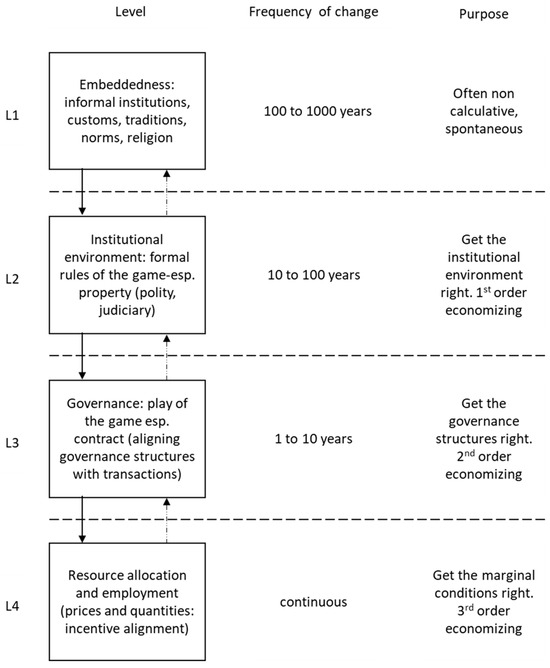
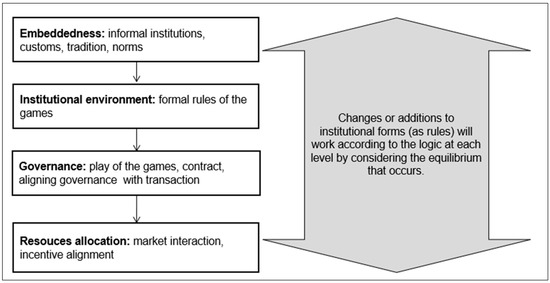
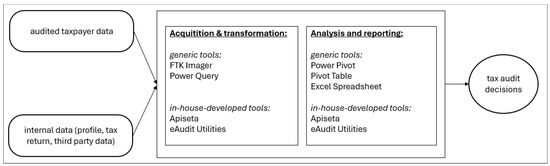
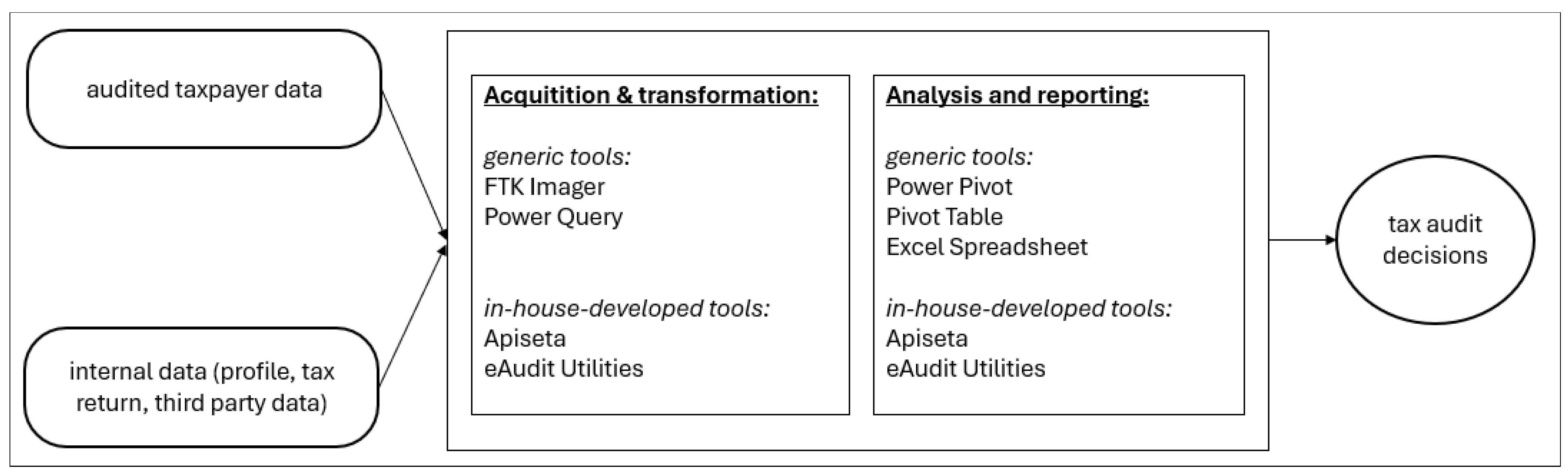
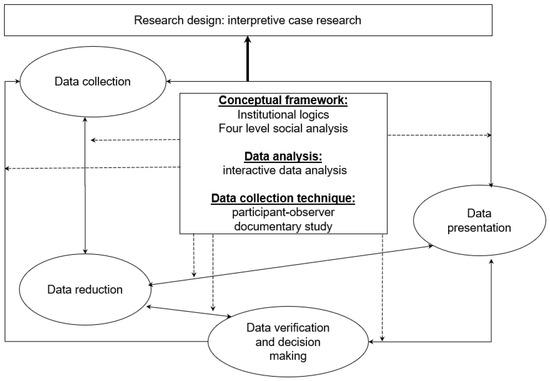
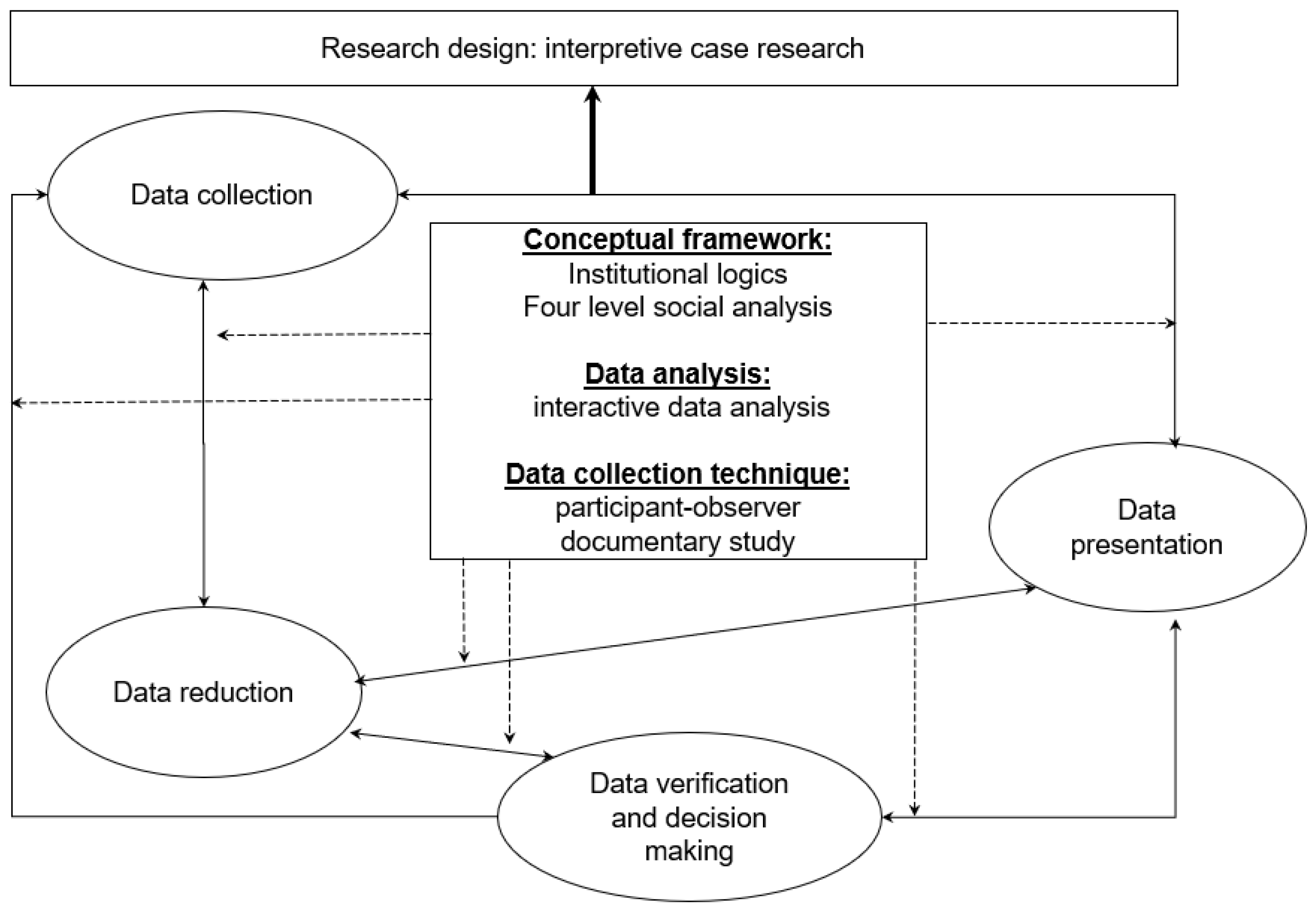

Disclaimer/Publisher’s Note: The statements, opinions and data contained in all publications are solely those of the individual author(s) and contributor(s) and not of MDPI and/or the editor(s). MDPI and/or the editor(s) disclaim responsibility for any injury to people or property resulting from any ideas, methods, instructions or products referred to in the content. |
© 2026 by the authors. Licensee MDPI, Basel, Switzerland. This article is an open access article distributed under the terms and conditions of the Creative Commons Attribution (CC BY) license.