


Physical Activity in the COVID-19 Era and Its Impact on Adolescents’ Well-Being

Abstract
1. Introduction
2. Materials and Methods
2.1. Eligibility Criteria
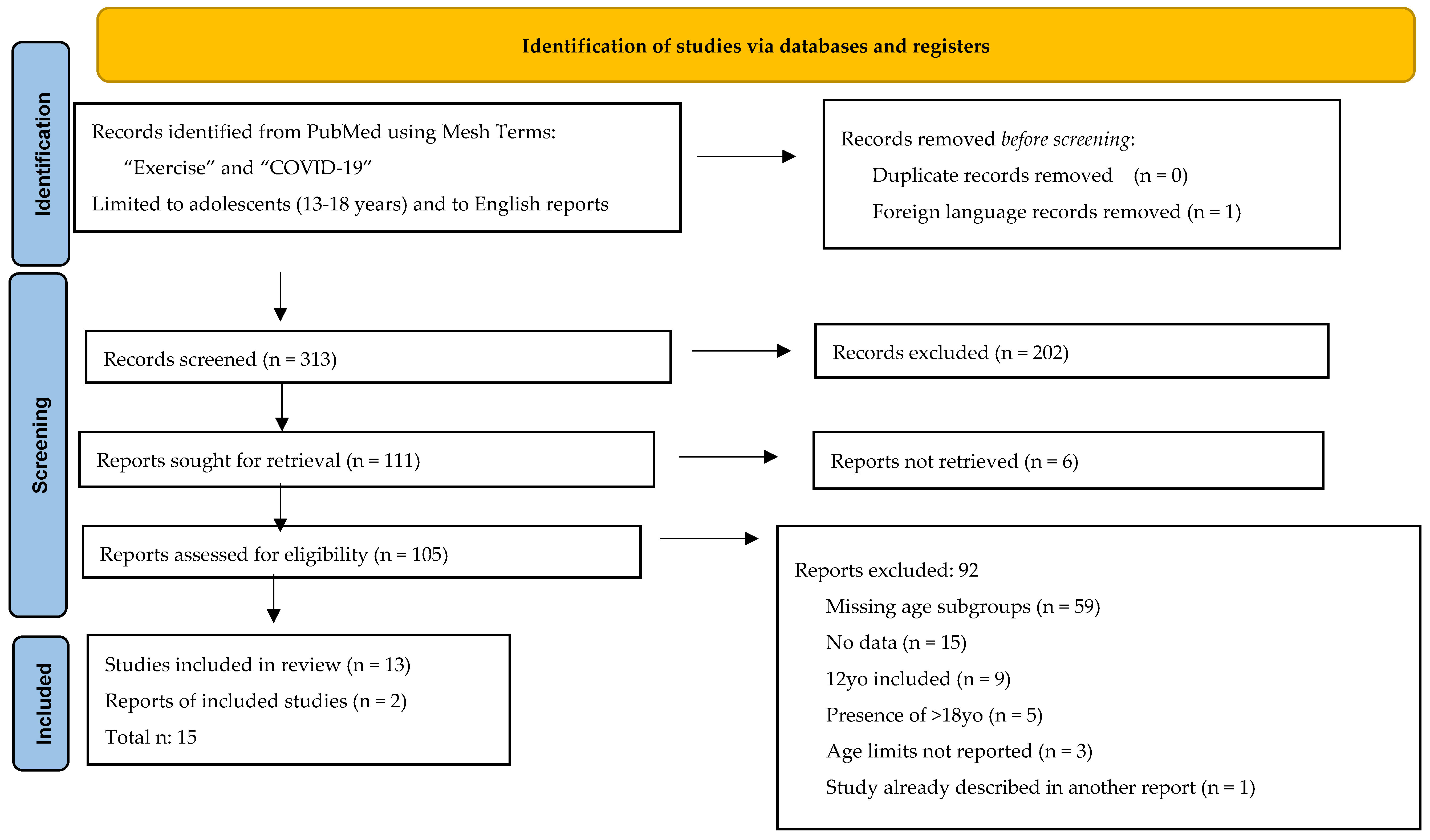
- − Adolescents aged between 13 and 18;
- − Full-length articles;
- − Language used: English;
- − Available data reporting PA before and during the COVID-19 pandemic.
- − Reports not pertinent to the field of investigation;
- − Reports without sample size’s age range;
- − Reports involving a selected group (i.e., with chronic disease);
- − Reports without data.
2.2. Selection Process
2.3. Data Collection Process and Data Items
2.4. Data Synthesis
2.5. Synthesis Method
3. Results
4. Discussion
5. Conclusions
- Increase education on the benefits of a regular PA and the risks of sedentary behavior;
- Promote support from family, friends, and teachers;
- Increase PA at school, as a part of the academic program;
- Increase availability of equipment and facilities to practice PA,
- Promote at-home PA options involving adolescents in informal exercise practice or online tutoring video/group fitness activities.
Author Contributions
Funding
Institutional Review Board Statement
Informed Consent Statement
Data Availability Statement
Conflicts of Interest
References
- Caspersen, C.J.; Powell, K.E.; Christenson, G.M. Physical activity, exercise, and physical fitness: Definitions and distinctions for health-related research. Public Health Rep. 1985, 100, 126–131. [Google Scholar] [PubMed]
- WHO. WHO Guidelines on Physical Activity and Sedentary Behaviour for Children and Adolescents, Adults and Older Adults. Available online: https://www.who.int/docs/default-source/physical-activity/call-for-consultation/draft-guideline-on-physical-activity-and-sedentray-behaviour.pdf?sfvrsn=ddf523d5_4#:~:text=For%20children%20and%20adolescents%2C%20sedentary,and%20community%20settings%20and% (accessed on 2 February 2023).
- Poitras, V.J.; Gray, C.E.; Borghese, M.M.; Carson, V.; Chaput, J.-P.; Janssen, I.; Katzmarzyk, P.T.; Pate, R.R.; Connor Gorber, S.; Kho, M.E.; et al. Systematic review of the relationships between objectively measured physical activity and health indicators in school-aged children and youth. Appl. Physiol. Nutr. Metab. 2016, 41 (Suppl. S3), S197–S239. [Google Scholar] [CrossRef] [PubMed]
- Chaput, J.-P.; Willumsen, J.; Bull, F.; Chou, R.; Ekelund, U.; Firth, J.; Jago, R.; Ortega, F.B.; Katzmarzyk, P.T. 2020 WHO guidelines on physical activity and sedentary behaviour for children and adolescents aged 5–17 years: Summary of the evidence. Int. J. Behav. Nutr. Phys. Act. 2020, 17, 141. [Google Scholar] [CrossRef] [PubMed]
- WHO. Physical Activity. Available online: https://www.who.int/news-room/fact-sheets/detail/physical-activity (accessed on 6 January 2023).
- Bull, F.C.; Al-Ansari, S.S.; Biddle, S.; Borodulin, K.; Buman, M.P.; Cardon, G.; Carty, C.; Chaput, J.-P.; Chastin, S.; Chou, R.; et al. World Health Organization 2020 guidelines on physical activity and sedentary behaviour. Br. J. Sports Med. 2020, 54, 1451–1462. [Google Scholar] [CrossRef]
- Thomas, G.; Bennie, J.A.; De Cocker, K.; Castro, O.; Biddle, S.J.H. A Descriptive Epidemiology of Screen-Based Devices by Children and Adolescents: A Scoping Review of 130 Surveillance Studies Since 2000. Child Indic. Res. 2020, 13, 935–950. [Google Scholar] [CrossRef]
- Guthold, R.; Stevens, G.A.; Riley, L.M.; Bull, F.C. Global trends in insufficient physical activity among adolescents: A pooled analysis of 298 population-based surveys with 1.6 million participants. Lancet Child Adolesc. Health 2020, 4, 23–35. [Google Scholar] [CrossRef]
- Dumith, S.C.; Gigante, D.P.; Domingues, M.R.; Kohl, H.W., III. Physical activity change during adolescence: A systematic review and a pooled analysis. Int. J. Epidemiol. 2011, 40, 685–698. [Google Scholar] [CrossRef] [PubMed]
- Bozzola, E.; Ferrara, P.; Spina, G.; Villani, A.; Roversi, M.; Raponi, M.; Corsello, G.; Staiano, A.; Chiarelli, F.; Cavallo, F.; et al. The pandemic within the pandemic: The surge of neuropsychological disorders in Italian children during the COVID-19 era. Ital. J. Pediatr. 2022, 48, 126. [Google Scholar] [CrossRef]
- Morres, I.; Galanis, E.; Hatzigeorgiadis, A.; Androutsos, O.; Theodorakis, Y. Physical Activity, Sedentariness, Eating Behaviour and Well-Being during a COVID-19 Lockdown Period in Greek Adolescents. Nutrients 2021, 13, 1449. [Google Scholar] [CrossRef] [PubMed]
- Tricco, A.C.; Lillie, E.; Zarin, W.; O’Brien, K.K.; Colquhoun, H.; Levac, D.; Moher, D.; Peters, M.D.J.; Horsley, T.; Weeks, L.; et al. PRISMA Extension for Scoping Reviews (PRISMA-ScR): Checklist and Explanation. Ann. Intern. Med. 2018, 169, 467–473. [Google Scholar] [CrossRef] [PubMed]
- Emily Jones, M. LibGuides: Creating a PRISMA Flow Diagram: PRISMA 2020. Available online: https://guides.lib.unc.edu/prisma/step-by-step (accessed on 6 December 2022).
- Arundell, L.; Salmon, J.; Timperio, A.; Sahlqvist, S.; Uddin, R.; Veitch, J.; Ridgers, N.D.; Brown, H.; Parker, K. Physical activity and active recreation before and during COVID-19: The Our Life at Home study. J. Sci. Med. Sport 2022, 25, 235–241. [Google Scholar] [CrossRef] [PubMed]
- Braksiek, M.; Lindemann, U.; Pahmeier, I. Physical Activity and Stress of Children and Adolescents during the COVID-19 Pandemic in Germany—A Cross-Sectional Study in Rural Areas. Int. J. Environ. Res. Public Health 2022, 19, 8274. [Google Scholar] [CrossRef] [PubMed]
- Bronikowska, M.; Krzysztoszek, J.; Łopatka, M.; Ludwiczak, M.; Pluta, B. Comparison of Physical Activity Levels in Youths before and during a Pandemic Lockdown. Int. J. Environ. Res. Public Health 2021, 18, 5139. [Google Scholar] [CrossRef]
- Chaffee, B.W.; Cheng, J.; Couch, E.T.; Hoeft, K.S.; Halpern-Felsher, B. Adolescents’ Substance Use and Physical Activity Before and During the COVID-19 Pandemic. JAMA Pediatr. 2021, 175, 715–722. [Google Scholar] [CrossRef]
- Elnaggar, R.K.; Alqahtani, B.A.; Mahmoud, W.S.; ElFakharany, M.S. Physical Activity in Adolescents During the Social Distancing Policies of the COVID-19 Pandemic. Asia Pac. J. Public Health 2020, 32, 491–494. [Google Scholar] [CrossRef] [PubMed]
- Frömel, K.; Groffik, D.; Valach, P.; Šafář, M.; Mitáš, J. The Impact of Distance Education during the COVID-19 Pandemic on Physical Activity and Well-Being of Czech and Polish Adolescents. J. Sch. Health 2022, 92, 1137–1147. [Google Scholar] [CrossRef]
- Gilic, B.; Zenic, N.; Separovic, V.; Savicevic, A.J.; Sekulic, D. Evidencing the influence of pre-pandemic sports participation and substance misuse on physical activity during the COVID-19 lockdown: A prospective analysis among older adolescents. Int. J. Occup. Med. Environ. Health 2021, 34, 151–163. [Google Scholar] [CrossRef] [PubMed]
- Al Hourani, H.; Alkhatib, B.; Abdullah, M. Impact of COVID-19 Lockdown on Body Weight, Eating Habits, and Physical Activity of Jordanian Children and Adolescents. Disaster Med. Public Health Prep. 2022, 16, 1855–1863. [Google Scholar] [CrossRef] [PubMed]
- Kang, S.; Sun, Y.; Zhang, X.; Sun, F.; Wang, B.; Zhu, W. Is Physical Activity Associated with Mental Health among Chinese Adolescents during Isolation in COVID-19 Pandemic? J. Epidemiol. Glob. Health 2021, 11, 26–33. [Google Scholar] [CrossRef] [PubMed]
- Kesic, M.G.; Gilic, B.; Zovko, I.C.; Drid, P.; Korovljev, D.; Sekulic, D. Differential impact of COVID-19 lockdown on physical activity in younger and older adolescents–prospective study. Med. Pracy 2021, 72, 633–643. [Google Scholar] [CrossRef] [PubMed]
- Lu, C.; Chi, X.; Liang, K.; Chen, S.-T.; Huang, L.; Guo, T.; Jiao, C.; Yu, Q.; Veronese, N.; Soares, F.C.; et al. Moving More and Sitting Less as Healthy Lifestyle Behaviors are Protective Factors for Insomnia, Depression, and Anxiety Among Adolescents During the COVID-19 Pandemic. Psychol. Res. Behav. Manag. 2020, 13, 1223–1233. [Google Scholar] [CrossRef]
- Minuto, N.; Bassi, M.; Montobbio, C.; Vinci, F.; Mercuri, C.; Perri, F.N.; Cabri, M.; Calevo, M.G.; D’Annunzio, G.; Maghnie, M. The Effect of Lockdown and Physical Activity on Glycemic Control in Italian Children and Young Patients With Type 1 Diabetes. Front. Endocrinol. 2021, 12, 690222. [Google Scholar] [CrossRef] [PubMed]
- Schmidt, S.C.E.; Anedda, B.; Burchartz, A.; Eichsteller, A.; Kolb, S.; Nigg, C.; Niessner, C.; Oriwol, D.; Worth, A.; Woll, A. Physical activity and screen time of children and adolescents before and during the COVID-19 lockdown in Germany: A natural experiment. Sci. Rep. 2020, 10, 21780. [Google Scholar] [CrossRef]
- Shepherd, H.; Evans, T.; Gupta, S.; McDonough, M.; Doyle-Baker, P.; Belton, K.; Karmali, S.; Pawer, S.; Hadly, G.; Pike, I.; et al. The Impact of COVID-19 on High School Student-Athlete Experiences with Physical Activity, Mental Health, and Social Connection. Int. J. Environ. Res. Public Health 2021, 18, 3515. [Google Scholar] [CrossRef]
- Tulchin-Francis, K.; Stevens, W., Jr.; Gu, X.; Zhang, T.; Roberts, H.; Keller, J.; Dempsey, D.; Borchard, J.; Jeans, K.; VanPelt, J. The impact of the coronavirus disease 2019 pandemic on physical activity in U.S. children. J. Sport Health Sci. 2021, 10, 323–332. [Google Scholar] [CrossRef] [PubMed]
- Bozzola, E.; Spina, G.; Ruggiero, M.; Vecchio, D.; Caruso, C.; Bozzola, M.; Staiano, A.M.; Agostiniani, R.; Del Vecchio, A.; Banderali, G.; et al. Media use during adolescence: The recommendations of the Italian Pediatric Society. Ital. J. Pediatr. 2019, 45, 149. [Google Scholar] [CrossRef]
- Bozzola, E. Media Use during Childhood and Adolescence. Int. J. Environ. Res. Public Health 2021, 18, 967. [Google Scholar] [CrossRef]
- Spina, G.; Bozzola, E.; Ferrara, P.; Zamperini, N.; Marino, F.; Caruso, C.; Antilici, L.; Villani, A. Children and Adolescent’s Perception of Media Device Use Consequences. Int. J. Environ. Res. Public Health 2021, 18, 3048. [Google Scholar] [CrossRef] [PubMed]
- de Greeff, J.W.; Bosker, R.J.; Oosterlaan, J.; Visscher, C.; Hartman, E. Effects of physical activity on executive functions, attention and academic performance in preadolescent children: A meta-analysis. J. Sci. Med. Sport 2018, 21, 501–507. [Google Scholar] [CrossRef]

| Authors | Setting and Year of Publication | Type of Study | Participants (Age Range) Sex (F; M) | Type of Physical Activity (PA) | Findings |
|---|---|---|---|---|---|
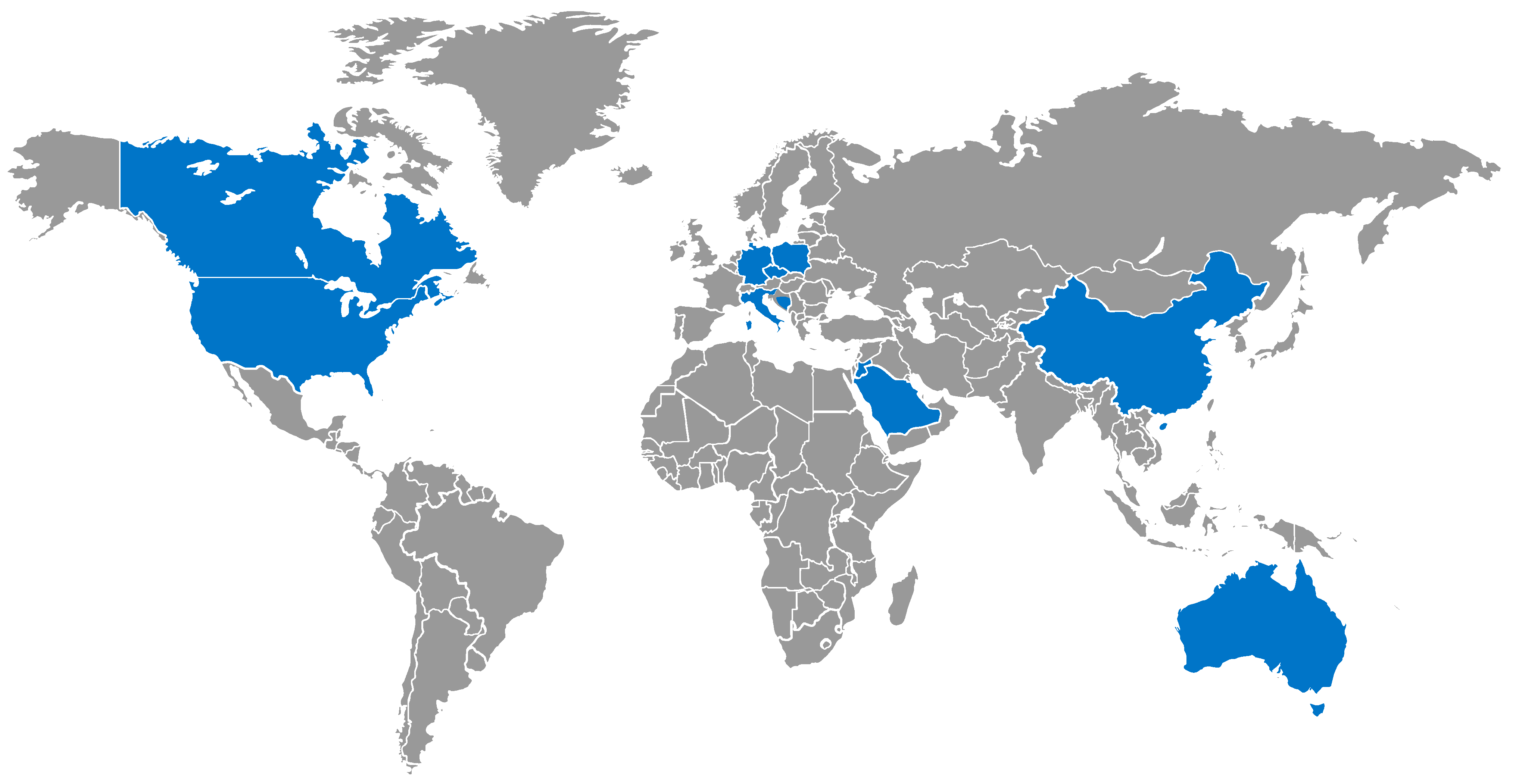
| Arundell L et al. [14] | Australia, 2022 | Survey | 1296 participants (13–17 years) F = 903; M = 393 | MVPA a and muscle strengthening | During the lockdown, adolescent males were 88% less likely to meet Australian guideline recommendations regarding moderate to vigorous physical activity (MVPA) and muscle strengthening. |
| Braksiek M et al. [15] | Germany, 2022 | Survey | 295 participants (14–17 years) F = 148; M = 147 | Average active days meeting the WHO guidelines b | The proportion of active adolescents during lockdown was low, ranging from 7.4% to 12.4%. Well-being and low levels of sadness positively correlated with PA; well-being was significantly lower than the average pre-pandemic status. No increased anger or higher anxiety was reported. |
| Bronikowska M et al. [16] | Poland, 2021 | Survey | 127 participants (14–16 years) F = 66; M = 61 | MVPA a | In total, 50% of active adolescents in the pre-pandemic time significantly decreased their level of MPVA below the WHO’s recommendations b (p = 0.01). |
| Chaffe BW et al. [17] | USA, 2021 | Prospective cohort study | 1006 participants (14–16 years) F = 623; M = 371; not specified = 12 | PA for at least 20 min with sweat or heavy breathing (days/week) | PA decreased from 54% in pre-pandemic time to 38% after the stay-at-home order. No significant variations in the use of tobacco, cannabis, or alcohol were reported after restriction. |
| Elnaggar RK et al. [18] | Saudi Arabia, 2020 | Survey | 63 participants (14–18 years) F = 29; M = 34 | Broad jump: explosive strength, sit-up: evaluated muscle endurance, sit-and-reach: assessed flexibility, and multilevel fitness: quantified aerobic endurance | PA levels decreased after COVID-19 onset. The changes were gender-related and the decrease was significant in males (p < 0.001). |
| Fromel K et al. [19] | Czech Republic and Poland, 2022 | Survey | 1349 participants (15–18 years) F = 723; M = 626 | School PA, transportation PA, recreation PA, vigorous PA, moderate PA, walking, and overall Weekly PA | There was a significant decrease in PA during the pandemic. The most significant decrease, 30%, was reported in boys walking. Students with lower levels of well-being reported higher sedentary habits. Well-being decreased during the pandemic in both boys (from 65.6% to 50%) and girls (from 43.8% to 34.9%). Moreover, an increase in weight was noted: the percentage of overweight/obesity moved from 24.3% to 30.8% in boys (p < 0.01) and from 12.9% to 14.1% in girls. |
| Gilic B et al. [20] | Bosnia and Herzegovina, 2021 | Prospective analysis | 661 participants (15–18 years) F = 292; M = 369 | Sufficient PA: PAQ-A c score > 2.73 | PA significantly decreased during the COVID-19 pandemic, reaching an insufficient level in 48% of adolescents (versus 24% in the pre-pandemic period). The sufficient PA level significantly decreased from 67% to 37% in boys and from 28% to 9% in girls. Smoking cigarettes had a negative effect on PA levels. |
| Al Hourani et al. [21] | Jordan, 2021 | Cross-sectional study | 232 participants (13–17 years) | Playing time | During the lockdown, obesity increased from 12.9% to 16.4% and the time spent on a screen for more than 4 h a day increased to 49.1% from 22.4% at baseline. Almost half of the participants (42.7%) had no PA during the COVID-19 pandemic (vs. the pre-pandemic value of 19%). |
| Kang S et al. [22] | China, 2020 | Survey | 4898 participants (14–18 years) F = 2539; M = 2359 | Total MVPA a divided into: vigorous, moderate, and walking. Sedentary time | After the onset of COVID-19, the MVPA of adolescents was 23 ± 52.5 min/day, with significantly higher sedentary levels in girls than in boys (p < 0.01). Girls also had higher scores of tension, anger, and confusion than boys (p < 0.01). Higher levels of PA were significantly associated with lower levels of negative mood scores (anger, fatigue, depression, and confusion) and higher positive mood scores (vigor and self-esteem) (p < 0.01). |
| Kesic GM et al. [23] | Bosnia and Herzegovina, 2021 | Prospective analysis | 859 participants (14–18 years) F = 371; M = 483 | Sufficient PA: PAQ-A c score > 2.73 | During the lockdown, sufficient PA levels significantly declined from 55% to 35% in the youngest, aged 14–16 years, and from 43% to 28% in those aged 16–18 years. Sufficient PA levels during lockdown were more likely in males (in the youngest group) and in the case of higher maternal education or parental care (in the older group). |
| Lu C et al. [24] | China, 2020 | Cross-sectional study | 965 participants (15–17 years) F = 409; M = 556 | Physical activity time (PAT) (h/d): <1.5 h/d (low PAT) ≥1.5 h/d (high PAT) Sitting time (ST) (h/d): <4 h/d (low ST) ≥4 h/d (high ST) | In total, 49.9% of the sample size spent less than 1.5 h/day on PA. A low PA correlated with COVID-19 fear, insomnia, and depressive and anxiety symptoms (p < 0.01). Those with high PAT reported fewer opportunities to develop insomnia symptoms and depressive symptoms than those with low PAT (p < 0.05). In addition, compared to the group with unhealthy behaviors (low PAT + high ST), participants with healthy behaviors (high PAT + low ST) had a lower prevalence of insomnia (p < 0.001), depressive (p < 0.001), and anxiety symptoms (p < 0.05). |
| Minuto N et al. [25] | Italy, 2021 | Retrospective study | 57 participants (14–18 years) | No physical activity, PA < 3 h per week, and intense PA ≥ 3 h per week | A reduction in the weekly sports hours was observed (5.14 ± 4.20 at T= and 2.72 ± 3.40 at T1 p < 0.0001) during the COVID-19 lockdown and more adolescents became sedentary (14% at T0 versus 40.4% at T1). |
| Schmidt SCE et al. [26] | Germany, 2020 | Survey | 404 participants (14–17 years) F = 226; M = 178 | Days active/week, PA guideline adherence b, sports (minutes/day), and habitual activity (minutes/day): playing outside, walking and cycling, gardening, and housework | PA decreased (−21.1 min/day in males and −11.2 min/day in females) and recreational screen time increased (+79.2 min/day in males and +67.8). |
| Shepherd HA et al. [27] | Canada, 2021 | Survey | 20 participants (15–17 years) F = 10; M = 10 | School extra-curricular sports | During COVID-19 restrictions, adolescents playing sports decreased their amount and intensity of PA, also reporting variations in social connections and mental health, with increased loneliness and anxiety. Prior to COVID-19 restrictions, PA helped them to manage their emotions, decreased their stress, and supported their physical and mental wellness. |
| Tulchin-Francis et al. [28] | USA, 2021 | Survey | 207 participants (14–18 years) | mGodinLSI d: LPA e, MVPA a | PA scores declined significantly during the pandemic. Specifically, the MVPA score decreased to 25.6%. High stress levels had been reported but were not gender-related. |
Disclaimer/Publisher’s Note: The statements, opinions and data contained in all publications are solely those of the individual author(s) and contributor(s) and not of MDPI and/or the editor(s). MDPI and/or the editor(s) disclaim responsibility for any injury to people or property resulting from any ideas, methods, instructions or products referred to in the content. |
© 2023 by the authors. Licensee MDPI, Basel, Switzerland. This article is an open access article distributed under the terms and conditions of the Creative Commons Attribution (CC BY) license (https://creativecommons.org/licenses/by/4.0/).
Share and Cite
Bozzola, E.; Barni, S.; Ficari, A.; Villani, A. Physical Activity in the COVID-19 Era and Its Impact on Adolescents’ Well-Being. Int. J. Environ. Res. Public Health 2023, 20, 3275. https://doi.org/10.3390/ijerph20043275
Bozzola E, Barni S, Ficari A, Villani A. Physical Activity in the COVID-19 Era and Its Impact on Adolescents’ Well-Being. International Journal of Environmental Research and Public Health. 2023; 20(4):3275. https://doi.org/10.3390/ijerph20043275
Chicago/Turabian StyleBozzola, Elena, Sarah Barni, Andrea Ficari, and Alberto Villani. 2023. "Physical Activity in the COVID-19 Era and Its Impact on Adolescents’ Well-Being" International Journal of Environmental Research and Public Health 20, no. 4: 3275. https://doi.org/10.3390/ijerph20043275
APA StyleBozzola, E., Barni, S., Ficari, A., & Villani, A. (2023). Physical Activity in the COVID-19 Era and Its Impact on Adolescents’ Well-Being. International Journal of Environmental Research and Public Health, 20(4), 3275. https://doi.org/10.3390/ijerph20043275

