


Abstract
Patient-centred care by a coordinated primary care team may be more effective than standard care in chronic disease management. We synthesised evidence to determine whether patient-centred medical home (PCMH)-based care models are more effective than standard general practitioner (GP) care in improving biomedical, hospital, and economic outcomes. MEDLINE, CINAHL, Embase, Cochrane Library, and Scopus were searched to identify randomised (RCTs) and non-randomised controlled trials that evaluated two or more principles of PCMH among primary care patients with chronic diseases. Study selection, data extraction, quality assessment using Joanna Briggs Institute (JBI) appraisal tools, and grading of evidence using Grading of Recommendations, Assessment, Development, and Evaluation (GRADE) approach were conducted independently. A quantitative synthesis, where possible, was pooled using random effects models and the effect size estimates of standardised mean differences (SMDs) and odds ratios (ORs) with 95% confidence intervals were reported. Of the 13,820 citations, we identified 78 eligible RCTs and 7 quasi trials which included 60,617 patients. The findings suggested that PCMH-based care was associated with significant improvements in depression episodes (SMD −0.24; 95% CI −0.35, −0.14; I2 = 76%) and increased odds of remission (OR 1.79; 95% CI 1.46, 2.21; I2 = 0%). There were significant improvements in the health-related quality of life (SMD 0.10; 95% CI 0.04, 0.15; I2 = 51%), self-management outcomes (SMD 0.24; 95% CI 0.03, 0.44; I2 = 83%), and hospital admissions (OR 0.83; 95% CI 0.70, 0.98; I2 = 0%). In terms of biomedical outcomes, with exception to total cholesterol, PCMH-based care led to significant improvements in blood pressure, glycated haemoglobin, and low-density lipoprotein cholesterol outcomes. The incremental cost of PCMH care was identified to be small and significantly higher than standard care (SMD 0.17; 95% CI 0.08, 0.26; I2 = 82%). The quality of individual studies ranged from “fair” to “good” by meeting at least 60% of items on the quality appraisal checklist. Additionally, moderate to high heterogeneity across studies in outcomes resulted in downgrading the included studies as moderate or low grade of evidence. PCMH-based care has been found to be superior to standard GP care in chronic disease management. Results of the review have important implications that may inform patient, practice, and policy-level changes.
1. Introduction
Chronic diseases have contributed to increased mortality and morbidity worldwide with the disease burden accelerating across both developed and developing nations [1,2]. The Global Burden of Diseases (GBD) Study in 2017 reported that chronic diseases accounted for 41% of increased disability and 73% of all deaths [1,2]. Moreover, with increasing life expectancy and ageing population, the global prevalence of multiple chronic conditions or multimorbidity is also on the rise, further exacerbating complications in quality and delivery of care [3,4]. As a result, patients with one or more chronic diseases often experience poor mental and physical functioning with increased psychological distress affecting their overall health-related quality of life (HRQoL) [5,6]. In addition to negative health outcomes, chronic diseases also contribute to significant economic ramifications to both patients and health care system in the form of increased health care utilisation and costs of care [7,8].
The long-term nature of chronic diseases and complexities of care require health care systems, worldwide, to revisit guidelines on effective chronic disease management [7]. The health and economic repercussions of chronic diseases are partly connected to the fragmented design and delivery of health care systems to focus on “single disease framework” as opposed to a “whole-person approach” [9]. However, there has been an increasing advocacy towards shift from a reactive health care system to one that is proactive, enabling an integrated systems approach towards chronic disease management [10]. In view of this, the World Health Organisation (WHO) and other leading organisations have acknowledged the importance of primary care as an ideal setting to facilitate patient-centred care, which could result in better patient outcomes [11,12]. There is a large body of evidence suggesting that coordinated team-based approaches in primary care are effective in chronic disease management [13,14].
The patient-centred medical home (PCMH) model is one of the chronic care models (CCM) that has reportedly shown to provide a multidimensional solution to effectively managing chronic illness and multimorbidity in primary care [15]. This enhanced primary care model typically consists of a general practitioner (GP)-led care, as part of a multidisciplinary team (MDT) that aims to provide patient-centred care that is also comprehensive and coordinated, with emphasis on self-management and patient education [12]. There is a growing body of literature, particularly in United States and several parts of United Kingdom and other European countries, reporting the effectiveness of PCMH care models in improving biomedical [16,17], HRQoL [18,19], hospital [20,21], and economic outcomes [22] compared to standard GP care.
A comprehensive systematic review and meta-analysis of PCMH care published in 2013 [23] reported improvements in patient experiences and some reduction in health utilisation among patients with multimorbidity. However, the effect of PCMH models on patients with single-disease care management was not reviewed. Whilst the review focuses on clinical quality and processes of care, there was insufficient evidence to estimate biomedical outcomes and quality of life. In addition, the review also included patients from non-primary care settings such as tertiary care hospitals, thereby limiting understanding of the true effectiveness of PCMH model in primary care settings. The current review was warranted as there has been increased advocacy for PCMH-based care models resulting in a number of new studies evaluating PCMH models being published since 2013 [18,19,20,21].
A systematic review and meta-analysis was conducted to assess the effectiveness of PCMH-based models of care when compared to standard GP care in improving biomedical, hospital, and economic outcomes of primary care patients with one or more chronic diseases. The findings of this review may help inform guidelines and practices.
2. Methods
This review conformed to the Preferred Reporting Items for Systematic Reviews and Meta-Analyses (PRISMA) guidelines [24]. The systematic review protocol (CRD42018085378), registered in the International Prospective Register of Systematic Reviews (PROSPERO) database, has been published elsewhere [25].
2.1. Search Strategy
We conducted literature searches on electronic databases including MEDLINE, CINAHL, Embase, Cochrane library, and Scopus from inception until 31 March 2020. The search strategy and syntaxes were developed in collaboration with an experienced university librarian. The syntax explored a broad range of terms used in definitions of PCMH, collaborative care, chronic care models, RCTs, and Quasi trials (full electronic search strings are listed in Table A1). We supplemented electronic searches by hand-searching bibliographies of several key systematic reviews [23,26,27,28] and retrieved studies to identify any relevant articles missed by the search strategy. Endnote (Version X9, Thompson Reuters, New York, NY, USA) software was used for reference management.
2.2. Eligibility Criteria and Study Selection
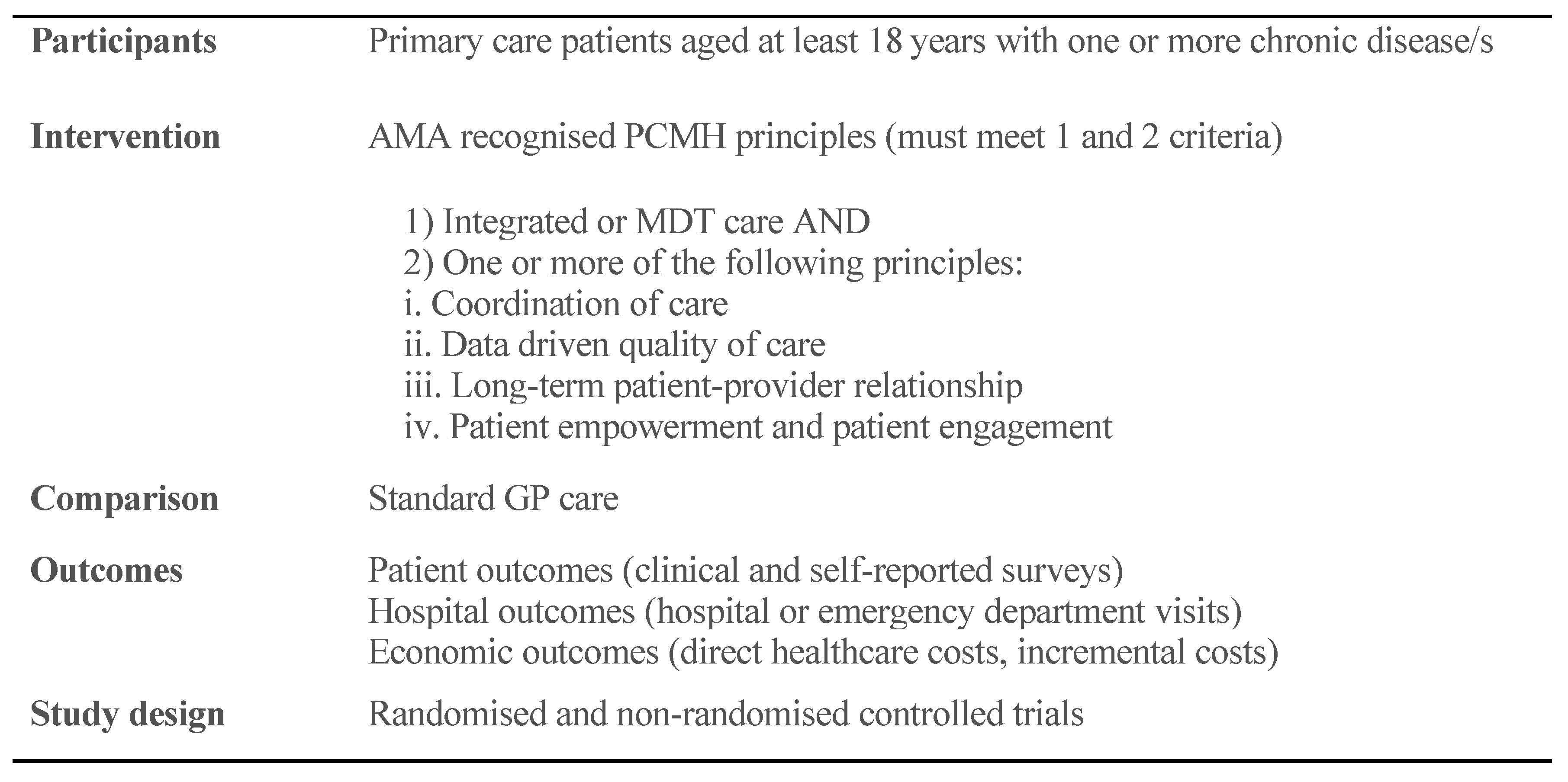
A detailed inclusion and exclusion criteria along with explanation of core PCMH principles is reported elsewhere [25]. A summary of Population, Interventions, Comparators, Outcomes, and Study designs (PICOS) framework is presented in Figure 1. Two reviewers (JRJ and KP) independently screened the titles and abstracts of all articles for eligibility. Following the title and abstract screening, a full text screening was conducted on articles which passed the title and abstract screening by two reviewers (JRJ and HJ) independently. Discrepancies were resolved and clarified through discussion.
Figure 1.
Summary of Population, Interventions, Comparators, Outcomes, and Study designs (PICOS) components. Outcomes included but not limited to patient, hospital, and economic outcomes.
2.3. Data Extraction
Data extraction of included articles was carried out independently by two reviewers (JRJ and HJ) using Excel spreadsheet (Microsoft Excel, Microsoft Corporation). Data extracted from included articles included key characteristics: first author and publication year; country of origin; sample size, age, and gender distribution; chronic disease profile; baseline characteristics reported as mean (SD) or proportions; PCMH components implemented; duration of follow-up; and outcomes. Whilst data extraction was performed using a customised spreadsheet, the Centre for Reviews and Dissemination’s (CRD) guidance for undertaking reviews in health care was followed [29]. Authors of studies with missing data were contacted by email up to two times; however, no response was received.
2.4. Quality Assessment and Risk of Bias
Two reviewers (JRJ and HJ) independently evaluated the methodological validity of included articles using relevant Joanna Briggs Institute (JBI) critical appraisal checklists (RCTs, quasi trials, and economic evaluations) [30,31]. Quality of studies were rated as good (≥8), fair (6–7), or poor (≤5) based on the summary scores. We also used risk of bias in non-randomised studies of interventions (ROBINS-I) tool to supplement JBI appraisal for non-randomised trials [32]. Additionally, the quality of evidence across included studies reporting similar outcomes was determined by applying the Grading of Recommendations Assessment, Development and Evaluation (GRADE) criteria [33]. The overall GRADE quality of evidence from the tables takes into account three factors which include (i) the average quality across the studies for each particular outcome, (ii) the level of heterogeneity between the studies, and (iii) the total number of studies reporting a particular outcome.
2.5. Outcomes
Outcomes identified from the studies include changes in mean differences or proportion of patients achieving recommended levels in
- (1).
- Biomedical outcomes—blood pressure (BP); glycated haemoglobin (HbA1c); low density lipoprotein cholesterol (LDL-C); high density lipoprotein cholesterol (HDL-C); and serum total cholesterol.
- (2).
- Self-reported health assessments (using validated questionnaires)—depression; HRQoL (overall, mental and physical functioning components); and self-management.
- (3).
- Health utilisation outcomes—hospital admissions; emergency department visits; and medications use.
- (4).
- Economic outcomes—incremental cost-effectiveness ratio (ICER) which is defined as the difference in total cost of an intervention (compared to standard care) divided by the difference in health outcome measure [22].
2.6. Data Analysis
Data of included studies were pooled together using the inverse-variance method of random-effects meta-analysis [34]. Standardised mean differences (SMD) for continuous data and odds ratios (ORs) for dichotomous data, with 95% confidence intervals (CI), were calculated and graphically presented as forest plots. Statistical heterogeneity was calculated using I2 and Cochran’s Q statistics. Subgroup analyses were considered for outcomes with substantial heterogeneity (I2 ≥ 85%). Publication bias for outcomes with at least 6 studies was assessed using funnel plots and Egger’s test of asymmetry [35]. All analyses were conducted using RevMan version 5.3 (The Nordic Cochrane Centre, Copenhagen, Denmark) and R version 4.0 software (R Foundation for Statistical Computing, Vienna, Austria).
3. Results
3.1. Literature Search
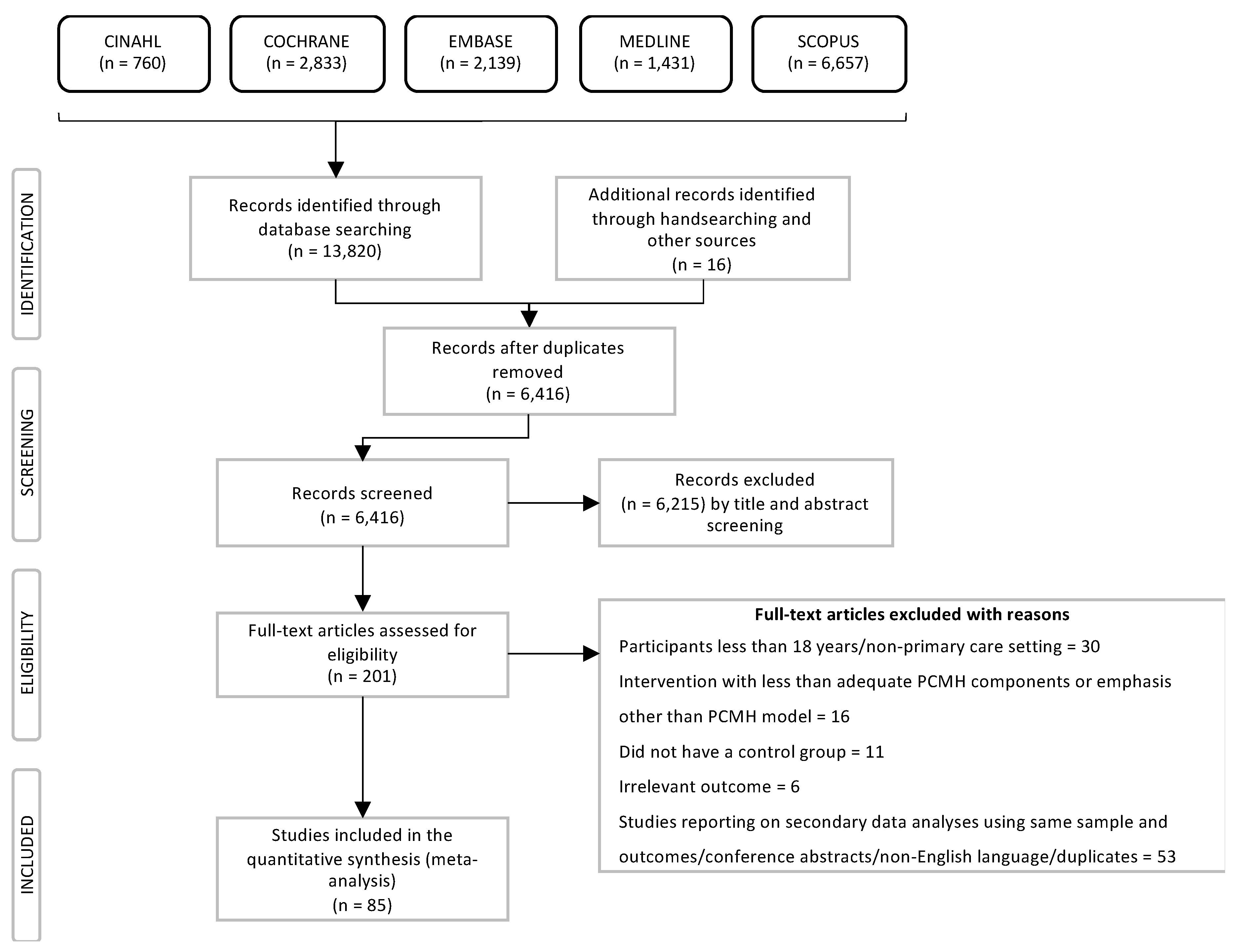
The electronic database search resulted in 13,820 citations and an additional 16 citations from hand searching key systematic reviews. After exclusion of duplicate records, 6416 articles were screened by titles and abstracts with 201 articles determined to be eligible for full-text assessment. Of these, 85 studies met the eligibility criteria and were included in our systematic review. Flowchart of the selection process from initial identification to inclusion is shown in Figure 2. Main reasons for exclusion included patients treated in non-primary care settings, not meeting minimum PCMH components or focused on intervention other than PCMH model, lack of control group, and other reasons (list of excluded articles; see Table A2).
Figure 2.
Preferred Reporting Items for Systematic Reviews and Meta-Analyses (PRISMA) Flowchart.
3.2. Descriptive Data Synthesis
The characteristics of included studies are presented in the Appendix A Table A3 and Table A4. Of the 85 studies included in the review, 78 studies were RCTs [13,14,16,18,19,20,22,36,37,38,39,40,41,42,43,44,45,46,47,48,49,50,51,52,53,54,55,56,57,58,59,60,61,62,63,64,65,66,67,68,69,70,71,72,73,74,75,76,77,78,79,80,81,82,83,84,85,86,87,88,89,90,91,92,93,94,95,96,97,98,99,100,101,102,103,104,105,106] and 7 studies were of non-RCTs, including quasi trials [17,21,107,108] or cohort studies with a control group [109,110,111]. The 85 studies enrolled a total of 60,617 patients with sample sizes ranging from 40 to 8366. Whilst 79 studies had sufficient data for quantitative data synthesis, 6 studies [81,85,95,97,103,107] did not have usable data and therefore, the findings were narratively summarised.
The common inclusion criteria for all 85 studies was primary care patients with diagnosis of one or more chronic conditions, whereas the predominant reason for exclusion was patients with cognitive impairment and terminal illness. In terms of the chronic disease profile of the participants in the included articles, 46% of articles were based on participants with single chronic condition whereas 54% reported on one or more conditions. The most prevalent conditions were mental illness (59%), type 2 diabetes (33%), cardiovascular diseases (CVD) including hypertension (20%), musculoskeletal disorders (6%), and chronic obstructive pulmonary disease (COPD) (6%) (Table A3 and Table A4).
More than half the studies (52%) were conducted in the United States. The mean age of patients ranged between 30 and 83 years. In terms of gender distribution, most of the studies had slightly more women than men, except for studies conducted in Veterans Affairs (VA) primary care settings [16,50,52,53,56]. The duration of follow-up varied from 3 to 48 months. Out of 85 articles included for review, in addition to MDT care, 95% of studies reported coordinated care, patient engagement and education, and self-management; 20% reported continuity of care and long-term patient provider relationship; and only 9% of studies included data driven quality of care (Table A3 and Table A4).
3.3. Quality Assessment and Risk of Bias
Quality assessment and risk of bias for individual studies are reported in the Appendix A Table A5, Table A6, Table A7, Table A8. The overall quality of studies ranged from “fair” to “good” by meeting at least 60% of items on the checklist. Two studies [62,104] were rated as poor due to general lack of information on randomisation, unclear methodology, and clarity of results. Given the nature of PCMH-based intervention, most trials employed a cluster randomisation method where a group of patients were seen by the same GP or same general practice providing PCMH care. Thereby, blinding of patients or GPs was not applicable and, as a result, items related to blinding were not necessarily graded down. However, only 32 studies reported blinding of outcome assessment whilst other studies were graded down in quality. The quality of evidence across included studies assessed using GRADE approach is presented in Table 1.
Table 1.
Grading of Recommendations, Assessment, Development, and Evaluation (GRADE) assessment of randomised controlled trials reporting effectiveness of patient-centred medical home (PCMH) vs. standard general practitioner (GP) care on outcomes of interest.
3.4. Depression Outcomes
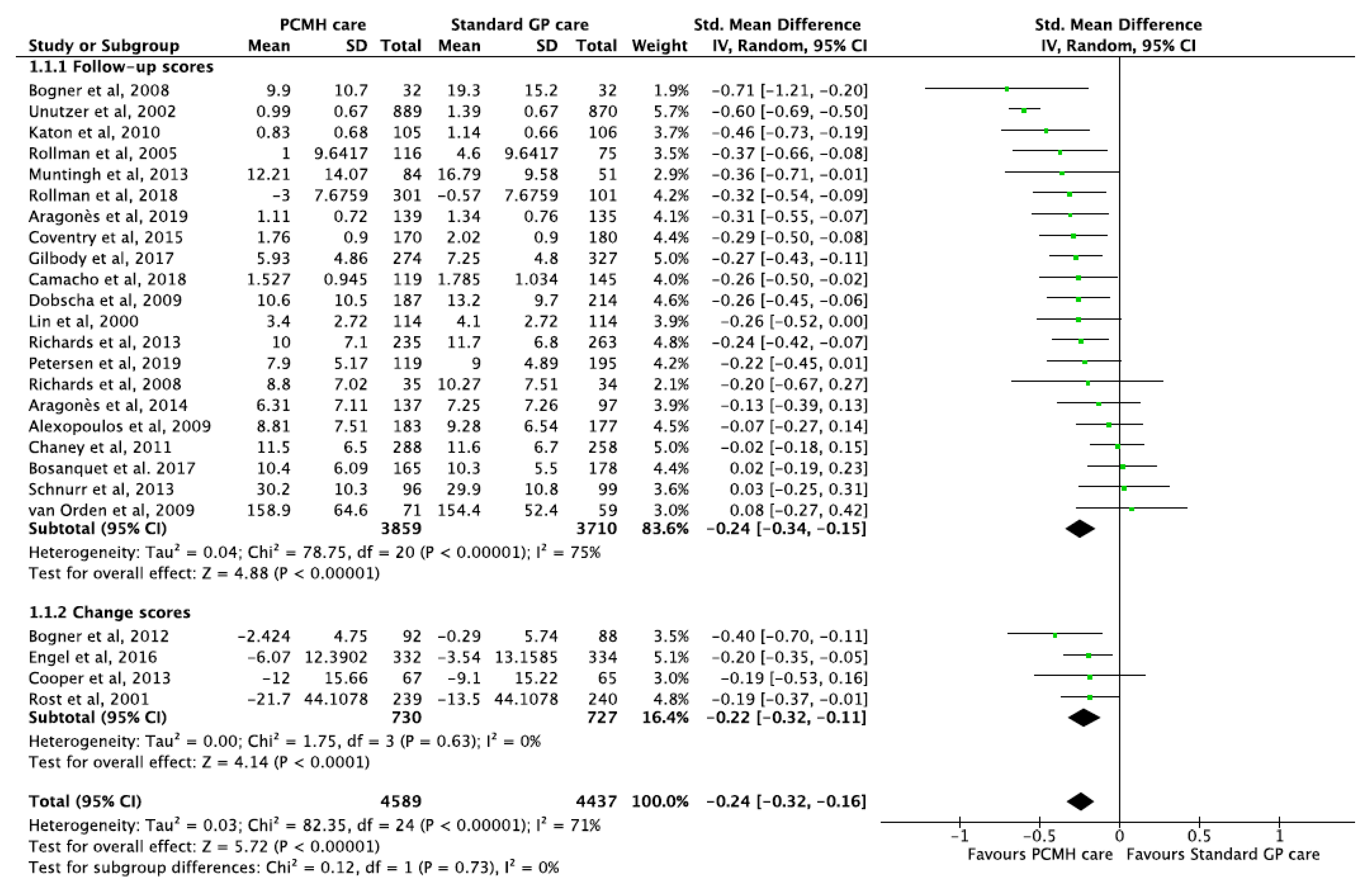
Meta-analysis of thirty-one studies [13,14,18,19,36,38,40,42,43,46,50,51,53,55,57,63,67,68,70,76,78,83,84,86,87,88,91,93,100,102,109] of patients with minor or major depression episodes after PCMH-based care reported significant improvement in depression scores compared to patients with standard primary care. With the exceptions of three studies [46,91,102], twenty-two studies reporting changes in mean differences (continuous data) of depression scores showed significant reduction with a pooled SMD of −0.24 (95% CI −0.35, −0.14; p-value < 0.001) (Figure 3).
Figure 3.
Forest plots of depression outcomes between the PCMH care and Standard GP care.
Six studies reported that PCMH care was associated with significantly increased odds of remission of depression with pooled OR 1.79 (95% CI 1.46, 2.21; p-value < 0.001) (Figure 3). Additionally, one other study [85] reported significant improvements among patients with anxiety and mood disorders with an effect size of 0.30 (95% CI 0.05, 0.55; p-value = 0.02) compared to standard care. Given most studies consistently reported improvements, the GRADE of evidence was classified as moderate quality (Table 1).
3.5. Quality of Life Outcomes
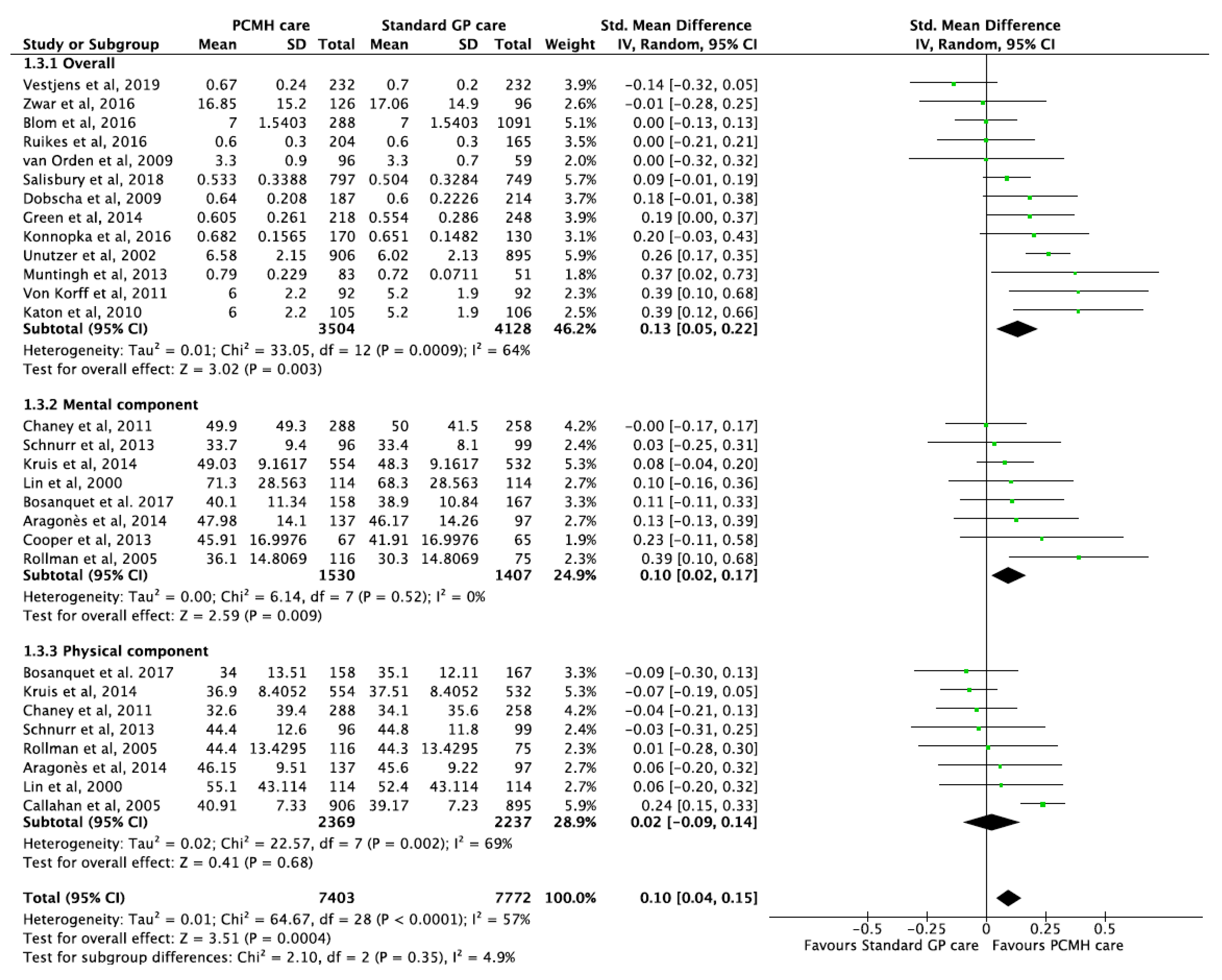
Twenty-two studies [18,19,21,22,41,46,49,50,51,53,59,68,72,76,86,89,91,100,102,105,106,108] evaluated the effectiveness of PCMH-based care on HRQoL (overall, physical component and mental component). Patients enrolled in PMCH-based care reported small but significant improvements in HRQoL compared to standard care with a pooled SMD of 0.10 (95% CI 0.04, 0.15; p-value < 0.001) (Figure 4). Additionally, one other study [85] reported significant improvements with an effect size of 0.38 (95 % CI 0.13, 0.63; p-value = 0.003). Moderate heterogeneity was observed among included studies (I2 = 57%), but test for sub-group differences were not significant. The GRADE of evidence was classified as moderate quality (Table 1).
Figure 4.
Forest plots of Quality of life (QoL) outcomes between the PCMH care and Standard GP care.
3.6. Blood Pressure Outcomes
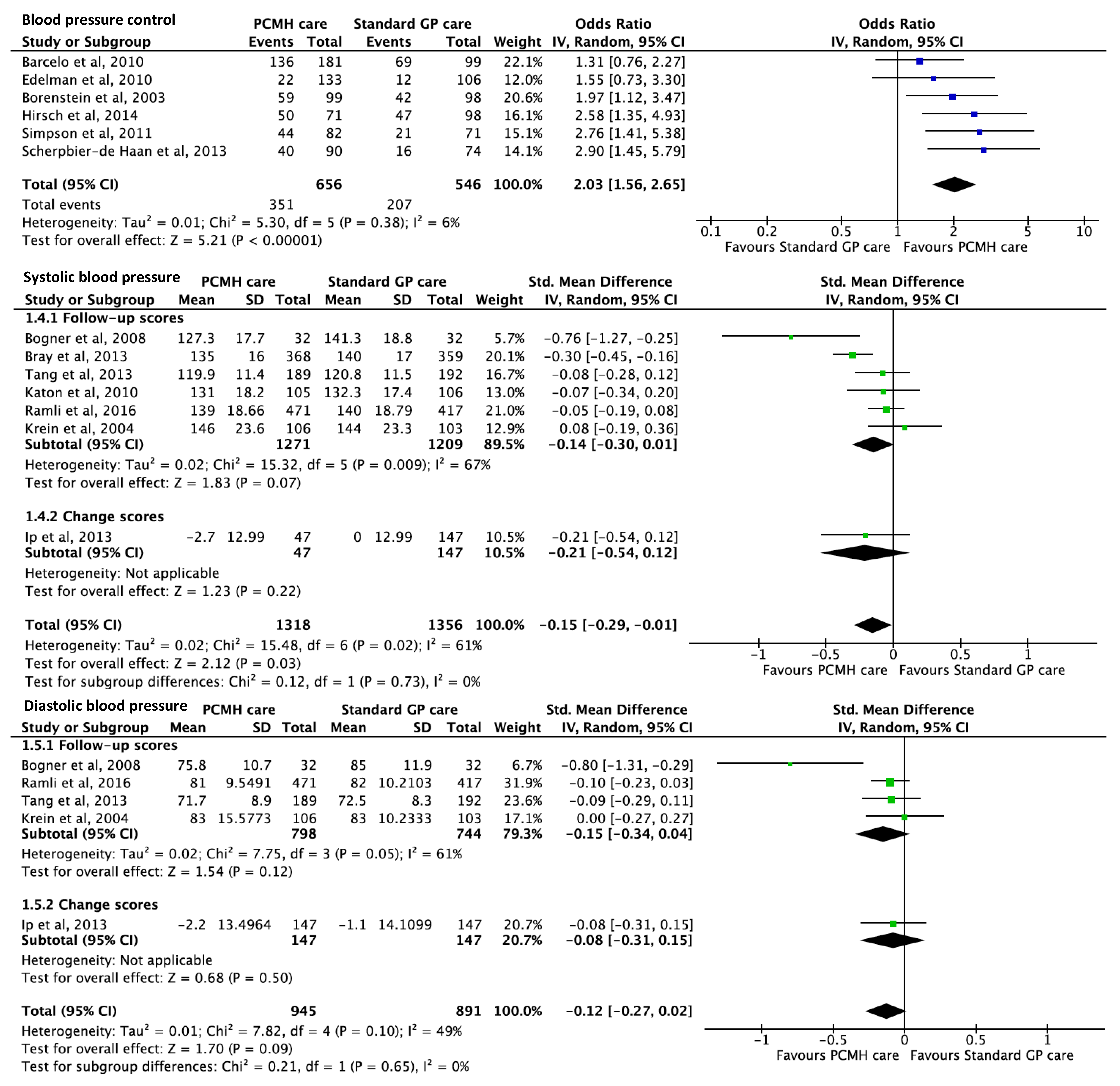
Thirteen studies [16,17,39,42,45,61,64,68,71,82,90,94,96] reported on the effect of PCMH care on blood pressure outcomes. Six studies reported that PCMH care was associated with significantly increased odds of BP control with pooled OR 2.03 (95% CI 1.56, 2.65; p-value < 0.001) (Figure 5). Seven studies reported significant improvements in systolic blood pressure (SBP), in favour of PCMH care, with pooled estimates of SMD −0.15 (95% CI −0.29, −0.01; p-value = 0.03). Similar reduction was observed across five studies reporting on diastolic blood pressure (DBP), but the pooled estimate of SMD −0.12 (95% CI −0.27, 0.02; p-value = 0.09) failed to meet significance (Figure 5). The GRADE of evidence was classified as moderate quality (Table 1).
Figure 5.
Forest plots of blood pressure outcomes between the PCMH care and Standard GP care. BP control refers to blood pressure levels within the guideline’s recommended range.
3.7. Glycated Haemoglobin Outcomes
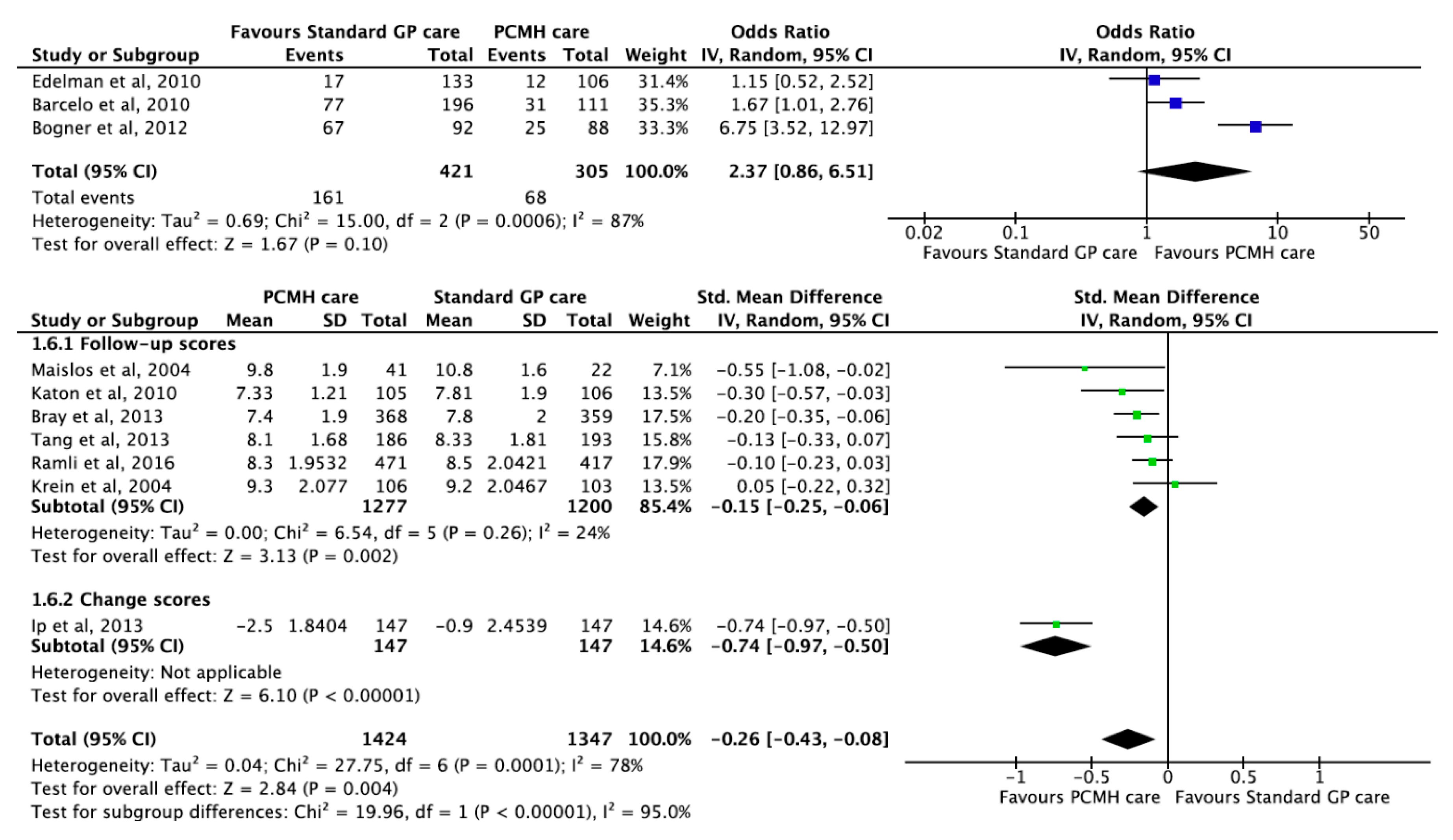
Ten studies [16,17,39,43,64,68,71,77,82,96] reported on the effect of PCMH care on HbA1c outcomes. HbA1c levels were recorded among patients with a positive diagnosis of Type 2 diabetes. Three studies reported that PCMH care was associated with increased odds of glycaemic control with pooled OR 2.37 (95% CI 0.86, 6.51; p-value = 0.100). However, the pooled estimate was not statistically significant (Figure 6). The substantial heterogeneity of 87% in the three studies reporting ORs was due to a shorter follow-up duration of three months reported by Bogner et al. [43] compared to the other two studies which had follow-up duration of 12 to 13 months. Seven studies reported significant improvements in HbA1c, in favour of PCMH care with pooled estimates of SMD −0.26 (95% CI −0.43, −0.08; p-value = 0.004) (Figure 6). Given the substantial amount of heterogeneity, the GRADE of evidence was classified as low quality (Table 1).
Figure 6.
Forest plots of HbA1c outcomes between the PCMH care and Standard GP care. HbA1c control refers to HbA1c levels within the guideline’s recommended range.
3.8. Cholesterol Outcomes
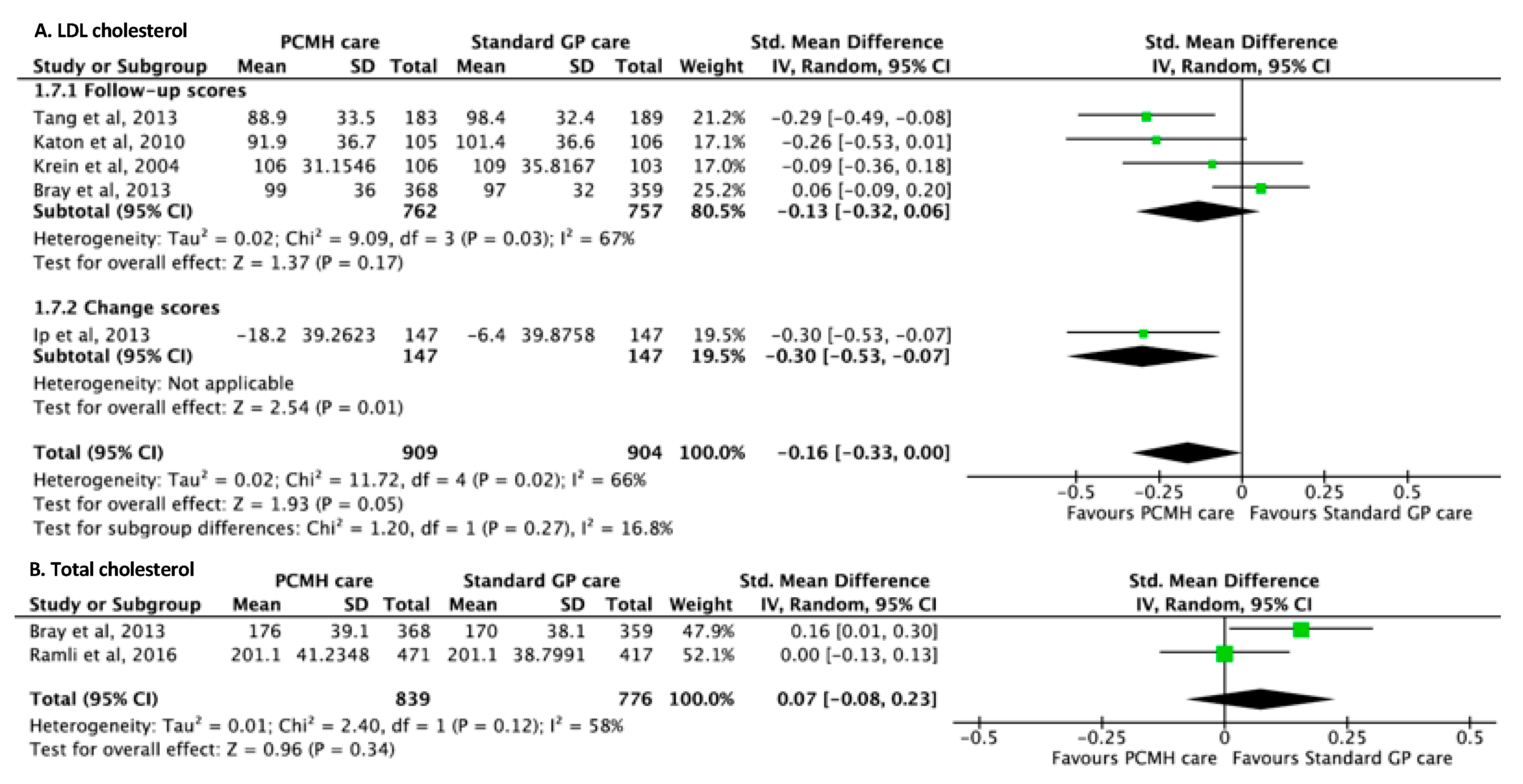
For LDL-cholesterol outcomes, five studies [17,64,68,71,96] reported significant improvements in favour of PCMH care with pooled SMD of −0.16 (95% CI −0.33, −0.00; p-value = 0.05) compared to standard GP care. Test for subgroup difference between follow-up and change scores showed no statistical significance (I2 = 16.8%, p-value = 0.27) (Figure 7A). For total cholesterol outcomes, two studies [17,82] reported a non-significant increase in total cholesterol with a pooled SMD of 0.07 (95% CI −0.08, 0.23; p-value = 0.34) (Figure 7B). The GRADE of evidence of both LDL and total cholesterol outcomes were classified as low quality given the limited number of studies (Table 1).
Figure 7.
Forest plots of (A) LDLcholesterol and (B) Total cholesterol outcomes between the PCMH care and Standard GP care.
3.9. Hospital Admissions
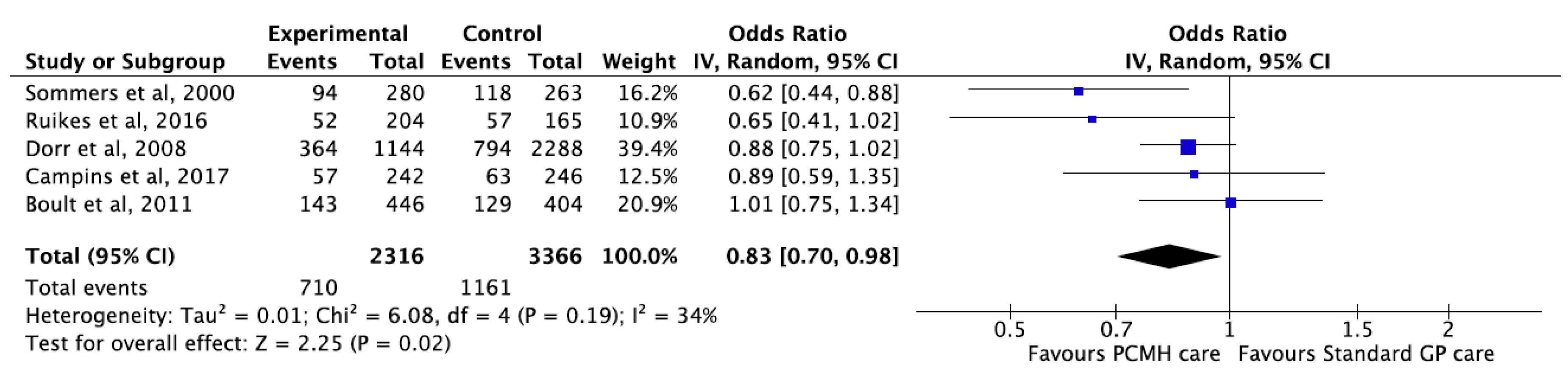
Five studies [20,21,48,54,111] reported that PCMH care was associated with significant reduction in hospital admissions compared to standard care with pooled OR 0.83 (95% CI 0.70, 0.98; p-value = 0.02) (Figure 8). Additionally, one study [110] reported a reduction in mean hospital admission rates related to diabetic complications 12 months after PCMH based care compared to standard care. Nonetheless, the change in mean difference failed to meet statistical significance. The GRADE of evidence was classified as moderate quality (Table 1).
Figure 8.
Forest plot for hospital admissions between PMCH care and Standard GP care.
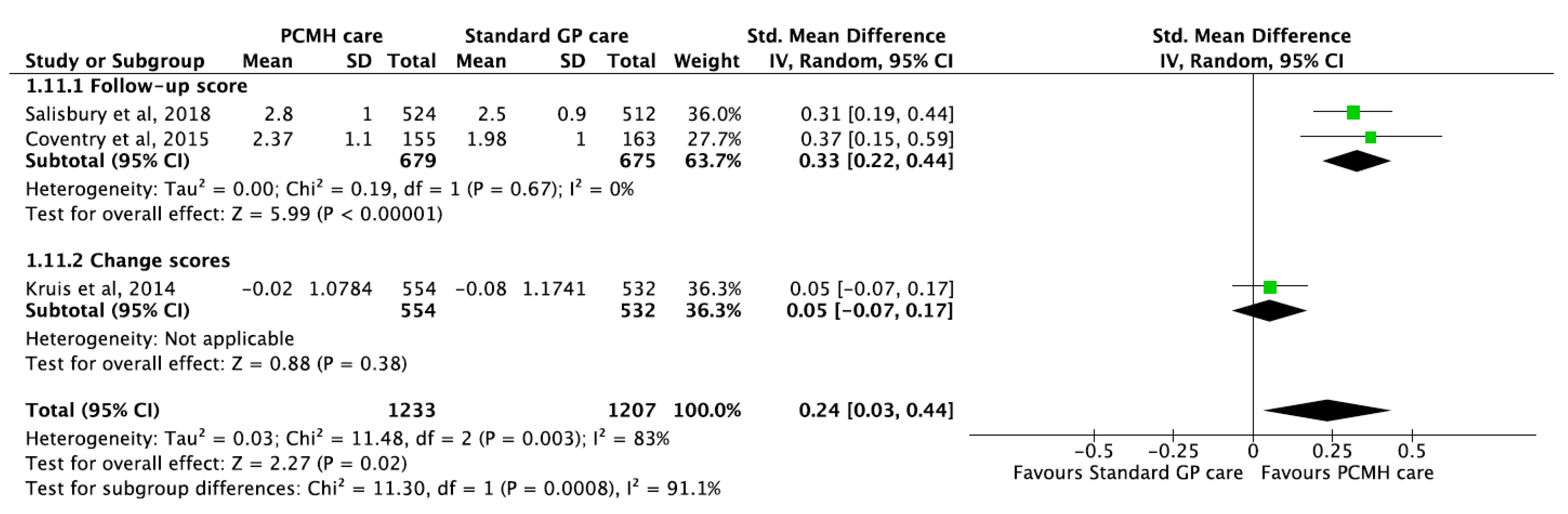
3.10. Self-Management Outcomes
Three studies [14,72,89] reported significant improvements in self-management scores in favour of PCMH care compared to standard care with pooled estimates of SMD 0.24 (95% CI 0.03, 0.44; p-value < 0.001) (Figure 9). Given the substantial amount of heterogeneity (I2 = 83%), the GRADE of evidence was classified as low quality (Table 1).
Figure 9.
Forest plots of self-management outcomes (Patient Assessment of Care for Chronic Conditions (PACIC) scores) between the PCMH care and Standard GP care.
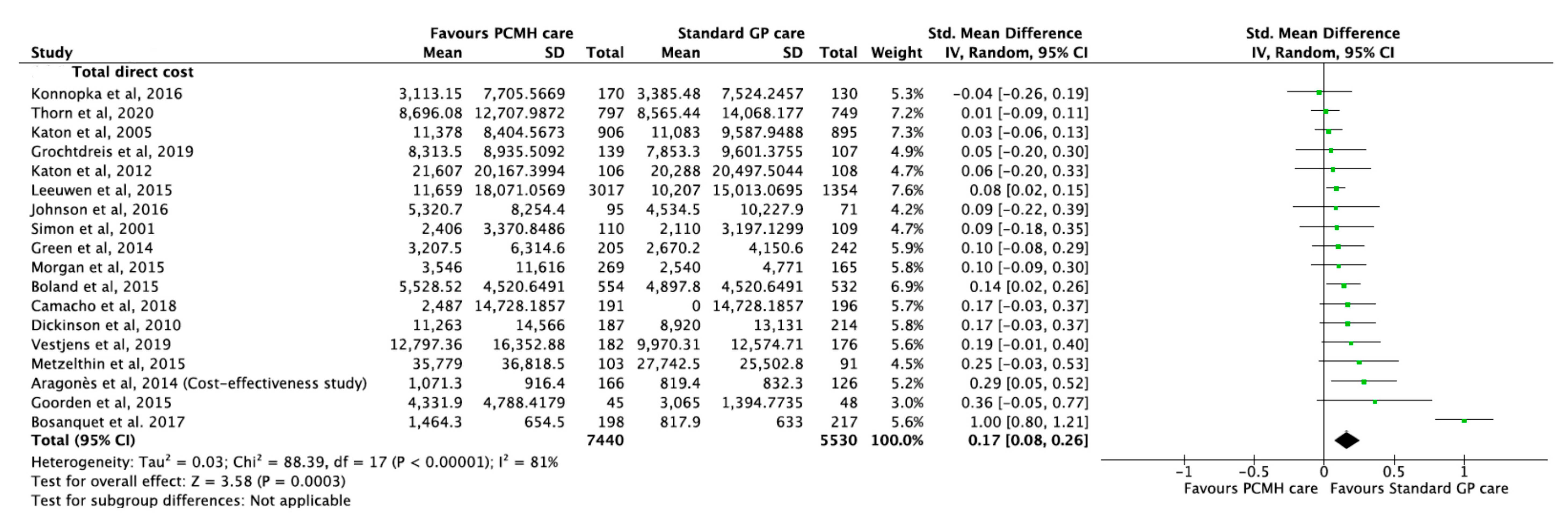
3.11. Economic Outcomes
A total of 18 studies [13,22,37,44,46,52,58,59,60,65,66,69,73,79,80,92,98,108] reported cost-effectiveness of PCMH-based models of care compared to standard care. To avoid bias in analysis, all currencies were converted to US Dollars at the time of the respective trials and cost effectiveness was measured in terms of incremental cost of intervention. The incremental cost of PCMH care was small but significantly higher than standard care with a pooled estimate of 0.17 (95% CI 0.08, 0.26; p-value < 0.001) (Figure 10). The substantial heterogeneity of 81% was due to higher costs of intervention reported by Bosanquet et al. [46]. The GRADE of evidence was classified as low quality (Table 1).
Figure 10.
Forest plots of incremental cost of intervention between the PCMH care and Standard GP care.
A summary of results from meta-analyses (where possible) and individual studies from randomised and non-randomised controlled trials are presented in Table 2.
Table 2.
Summary of findings from meta-analyses (where possible) or individual studies from randomised and non-randomised controlled trials.
3.12. Publication Bias
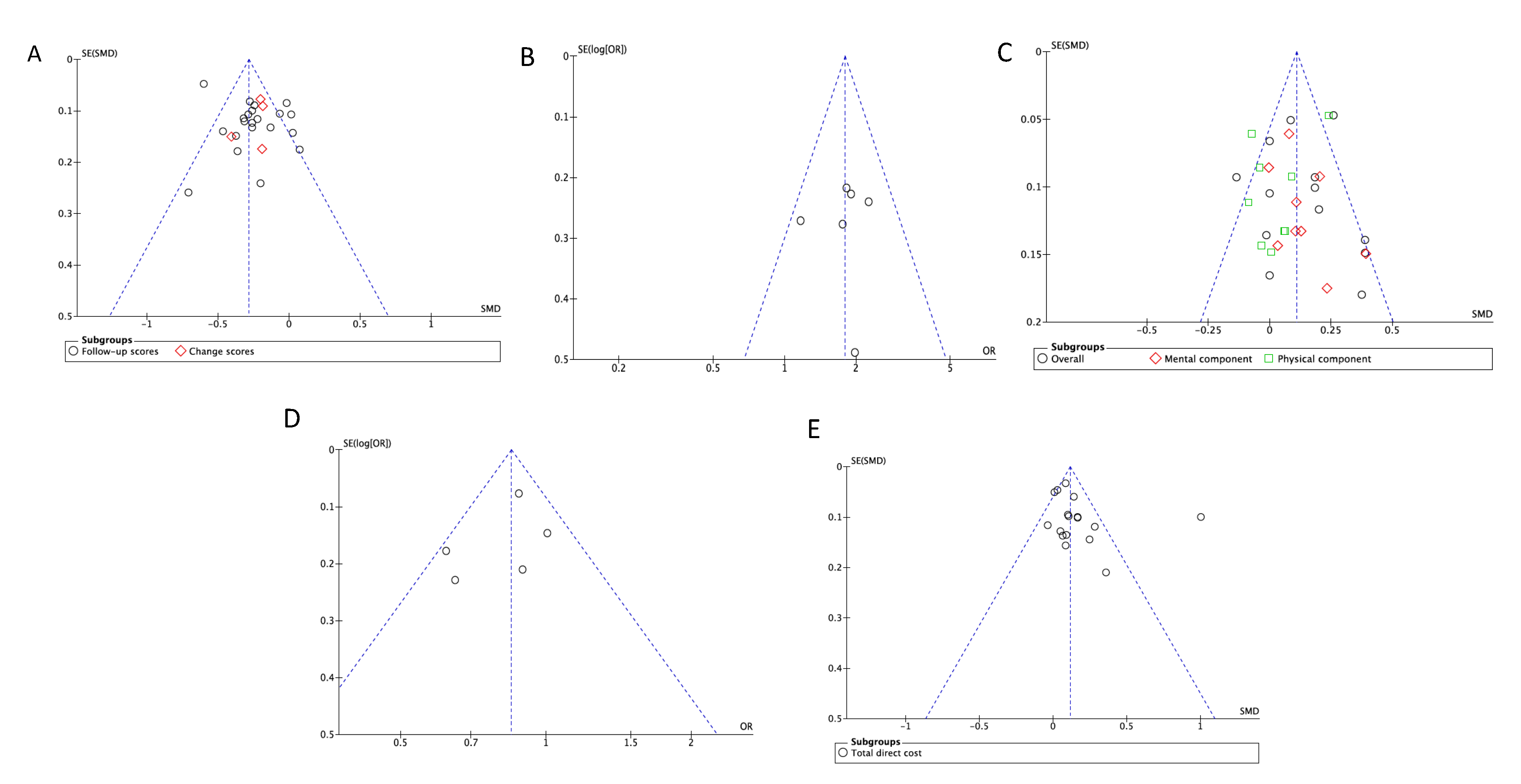
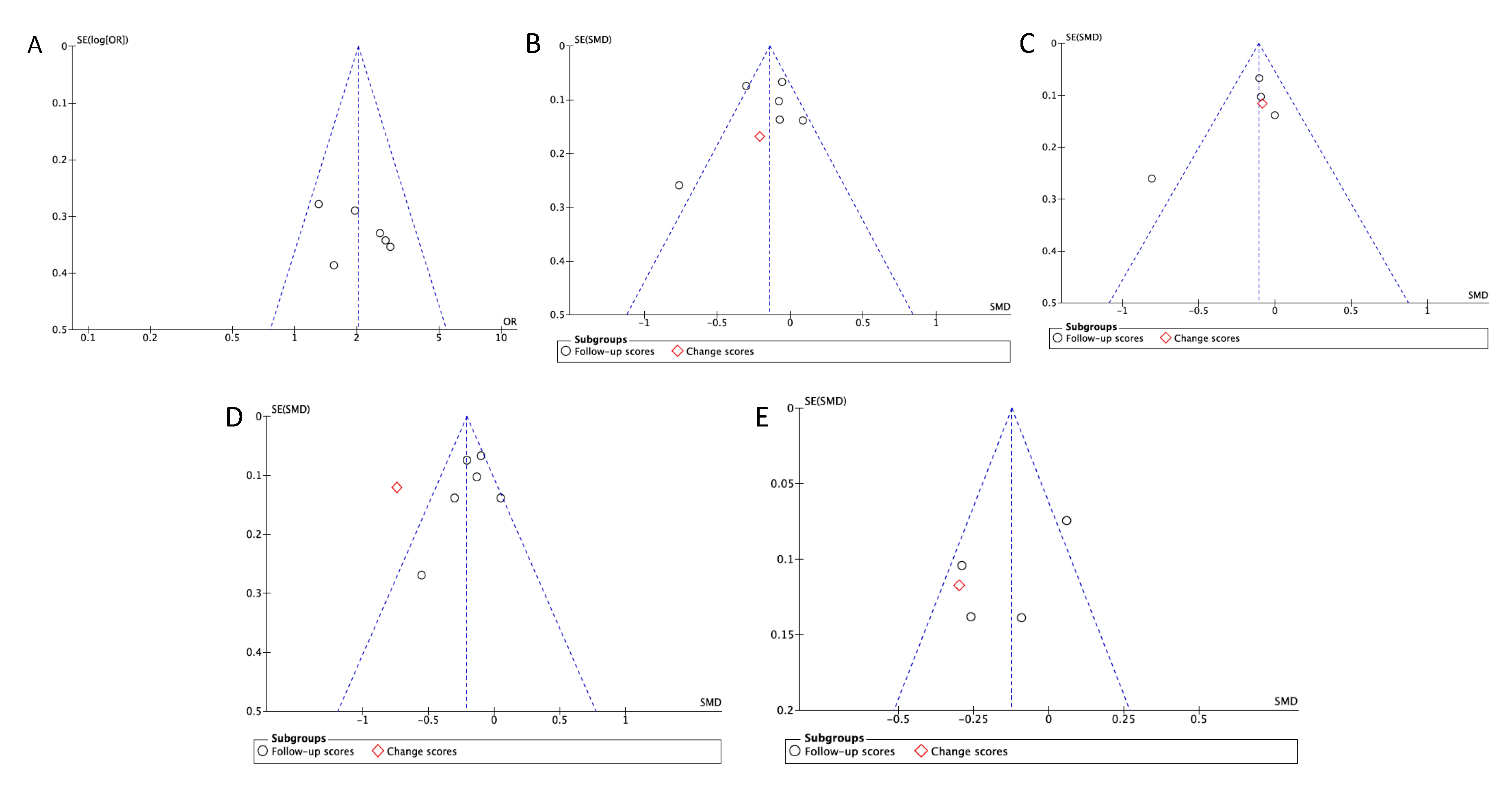
Six or more articles with similar outcomes were inspected for publication bias visually by using funnel plots and statistically by determining the significance from Egger’s test of asymmetry. Visual inspection of included studies reporting similar outcomes did not indicate any obvious sign of asymmetry (Figure 11 and Figure 12). Consistent with visual findings, no evidence of publication bias was detected with Egger’s test, as all outcomes had p > 0.05, showing evidence of funnel plot symmetry (Table 2).
Figure 11.
Funnel plots assessing asymmetry of depression, QoL, hospital admissions, and cost outcomes between the PCMH care and Standard GP care. (A)—Depression (SMD); (B)—Depression (OR); (C)—Quality of Life (SMD); (D)—Hospital admissions (OR); (E)—Direct costs.
Figure 12.
Funnel plots assessing asymmetry of biomedical outcomes between the PCMH care and Standard GP care. (A)—Blood pressure (SMD); (B)—Systolic blood pressure (OR); (C)—Diastolic blood pressure (SMD); (D)—HbA1C (OR); (E)—LDL cholesterol.
4. Discussion
4.1. Summary of Findings
This systematic review comprehensively summarised current evidence on the effectiveness of PCMH-based models on chronic disease management among primary care patients. Compared to standard GP care, PCMH-based care led to significant improvements in depression episodes, quality of life, HbA1c, LDL cholesterol, hospital admissions, and self-management outcomes. Whilst PCMH care was significantly associated with increased odds of blood pressure control, reductions in both pooled estimates of SBP and DBP were not statistically significant. In contrast, the findings suggest that PCMH-based interventions have higher costs and was not cost-effective when compared to standard care. Additionally, the narrative synthesis of studies also corroborated with pooled estimates of the meta-analyses.
4.2. Consistency with Other Systematic Reviews
The most commonly reported PCMH principles in the included studies were patient engagement through education and self-management, and care coordination in addition to team-based care. Findings of this review, underscoring these PMCH elements in primary care, are consistent with previous systematic reviews reporting quality of care and overall patient experiences [26,112]. In terms of study outcomes, depression and HRQoL were frequently reported outcomes in the included studies. Systematic reviews focusing on depression outcomes as a result of collaborative care reported similar improvements, which were consistent with our pooled estimates of SMDs and ORs [113,114]. Similarly, our review showed small but significant improvements in the self-reported HRQoL and self-management scores, which is consistent with previous reviews [115,116]. Variabilities in the duration of intervention and baseline severity of chronic illness may explain smaller pooled estimates of HRQoL outcome.
Changes in biomedical outcomes are common measures employed in evaluating the effectiveness of chronic disease management interventions. With the exception of total cholesterol outcomes, findings of our studies were consistent with previous reviews [117,118], showing improvements in biomedical outcomes in favour of PCMH-based care compared to standard care. In terms of cost-effectiveness of PCMH-based models, some meta-analytic reviews on economic evaluations showed that PCMH care was associated with decreases in total costs compared to standard care [119,120]. However, our review supports evidence from prior reviews [115,121], suggesting that PCMH-based care was not associated with improvement in cost outcomes compared to standard care. This discordance could be due to the variability in the initial and sustained amount of costs incurred as a result of additional staffing and other infrastructure as well as the sample of patients and their comorbidity profile in the included trials [121].
4.3. Strengths and Limitations
Quality assessment for risk of bias was assessed within and across studies of similar outcomes. As aforementioned, blinding of patients and GPs was not possible due to the nature of intervention and design of trials, as reported in other systematic reviews conducted in primary care settings [114,122]. A substantial amount of heterogeneity was observed for measures of depression, HbA1c, and incremental cost of intervention, justifying the choice of random effects model. Higher heterogeneity is expected when pooling results of complex interventions, given the varying levels of intensity of different interventions, follow-up times, chronic disease profile of participants, and country’s primary care setting [115]. Nonetheless, pooled estimates are to be interpreted with caution given unexplained variation observed in outcomes with higher heterogeneity. The review did not consider unpublished data or non-English language studies given the exhaustive number of citations identified. This may have had potential impact on effect size estimates.
Whilst previous reviews and meta-analyses on collaborative care for either single specific disease or multimorbidity have been studied, this review provides a comprehensive current evidence with quantitative synthesis on the effectiveness of PCMH-based care models exclusively on primary care patients with one or more chronic diseases. Other strengths include a registered and published protocol, with a peer-reviewed search strategy, conducted on a wide range of electronic databases.
4.4. Patient, Provider, and Policy-Level Implications and Future Directions
Findings of our systematic review have important implications at patient, practice, and policy-level. The evidence may inform patients on the enhanced biomedical outcomes and quality of life resulting from improved education and self-management support. The transformational changes at practice level may enable GPs to better target and deliver care according to the level and complexity of different patients [123]. Additionally, our study findings may also impact policy and implementation guidelines given the growing advocacy towards patient-centred care. Future research should focus on evaluating sustained benefits of PCMH-based care as well as supporting holistic experiences of patients receiving patient-centred care.
5. Conclusions
Current evidence suggests that PCMH-based care showed significant improvements in depression, HRQoL, self-management, biomedical, and health utilisation outcomes compared to standard GP care. Whilst studies included for pooled estimates showed consistent trend for several outcomes, high heterogeneity in some outcomes resulted in low to moderate grade of evidence, limiting firmer conclusion from the pooled evidence. Further research is needed to evaluate the long-term cost-effectiveness of PCMH-based care after the initial higher costs incurred for intervention, which may prove to be more cost-effective than standard care.
Author Contributions
Conceptualization, J.R.J.; methodology, J.R.J. and K.A.; formal analysis, J.R.J. and K.A.; investigation, J.R.J., K.P., and H.J.; data curation, J.R.J., K.P., and H.J.; writing—original draft preparation, J.R.J.; writing—review and editing, J.R.J., W.K.T., and K.A.; and supervision, W.K.T. and K.A. All authors have read and agreed to the published version of the manuscript.
Funding
J.R.J.’s PhD scholarship was provided by Capital Markets Cooperative Research Centre (Now Rozetta Institute). The funders did not have any role in the design, methods, analysis, or preparation of this manuscript.
Acknowledgments
The authors would like to express their gratitude to Katrina Chaudhary (Librarian, School of Science and Health, Western Sydney University) and Lily Collison (Librarian, School of Medicine, Western Sydney University) for their help in developing search terms and guidance during the initial search process. We are also particularly grateful to Evan Atlantis for his valuable expertise and feedback provided for this study.
Conflicts of Interest
The authors declare no conflict of interest.
Appendix A
Table A1.
Search strategy.
Table A2.
List of excluded articles from full-text screening stage with an overarching reason.
Table A3.
Characteristics of randomised controlled trials reviewed.
Table A4.
Characteristics of non-randomised controlled trials reviewed.
Table A5.
Quality assessment of randomised controlled studies using Joanna Briggs Institute (JBI) critical appraisal checklist.
Table A6.
Quality assessment of non-randomised controlled studies using JBI critical appraisal checklist.
Table A7.
Quality assessment of studies on economic evaluation using JBI critical appraisal checklist.
Table A8.
Quality assessment of non-randomised controlled studies using Risk of Bias In Non-randomised Studies of Interventions (ROBINS-I) tool.
References
- Hay, S.I.; Abajobir, A.A.; Abate, K.H.; Abbafati, C.; Abbas, K.M.; Abd-Allah, F.; Abdulkader, R.S.; Abdulle, A.M.; Abebo, T.A.; Abera, S.F. Global, regional, and national disability-adjusted life-years (DALYs) for 333 diseases and injuries and healthy life expectancy (HALE) for 195 countries and territories, 1990–2016: A systematic analysis for the Global Burden of Disease Study 2016. Lancet 2017, 390, 1260–1344. [Google Scholar] [CrossRef] [Scilit]
- Naghavi, M.; Abajobir, A.A.; Abbafati, C.; Abbas, K.M.; Abd-Allah, F.; Abera, S.F.; Aboyans, V.; Adetokunboh, O.; Afshin, A.; Agrawal, A. Global, regional, and national age-sex specific mortality for 264 causes of death, 1980–2016: A systematic analysis for the Global Burden of Disease Study 2016. Lancet 2017, 390, 1151–1210. [Google Scholar] [CrossRef] [Scilit]
- van Oostrom, S.H.; Gijsen, R.; Stirbu, I.; Korevaar, J.C.; Schellevis, F.G.; Picavet, H.S.J.; Hoeymans, N. Time trends in prevalence of chronic diseases and multimorbidity not only due to aging: Data from general practices and health surveys. PLoS ONE 2016, 11, e0160264. [Google Scholar] [CrossRef] [Scilit] [PubMed]
- Afshar, S.; Roderick, P.J.; Kowal, P.; Dimitrov, B.D.; Hill, A.G. Multimorbidity and the inequalities of global ageing: A cross-sectional study of 28 countries using the World Health Surveys. BMC Public Health 2015, 15, 776. [Google Scholar] [CrossRef] [Scilit] [PubMed]
- Fortin, M.; Lapointe, L.; Hudon, C.; Vanasse, A.; Ntetu, A.L.; Maltais, D. Multimorbidity and quality of life in primary care: A systematic review. Health Qual. Life Outcomes 2004, 2, 51. [Google Scholar] [CrossRef] [Scilit]
- Megari, K. Quality of life in chronic disease patients. Health Psychol. Res. 2013, 1, e27. [Google Scholar] [CrossRef]
- McPhail, S.M. Multimorbidity in chronic disease: Impact on health care resources and costs. Risk Manag. Healthc. Policy 2016, 9, 143. [Google Scholar] [CrossRef] [Scilit]
- Vogeli, C.; Shields, A.E.; Lee, T.A.; Gibson, T.B.; Marder, W.D.; Weiss, K.B.; Blumenthal, D. Multiple chronic conditions: Prevalence, health consequences, and implications for quality, care management, and costs. J. Gen. Intern. Med. 2007, 22, 391–395. [Google Scholar] [CrossRef] [Scilit]
- Barnett, K.; Mercer, S.W.; Norbury, M.; Watt, G.; Wyke, S.; Guthrie, B. Epidemiology of multimorbidity and implications for health care, research, and medical education: A cross-sectional study. Lancet 2012, 380, 37–43. [Google Scholar] [CrossRef] [Scilit]
- Coleman, K.; Austin, B.T.; Brach, C.; Wagner, E.H. Evidence on the chronic care model in the new millennium. Health Aff. 2009, 28, 75–85. [Google Scholar] [CrossRef] [Scilit]
- World Health Organisation. Multimorbidity: Technical Series on Safer Primary Care. Geneva. 2016. Available online: https://apps.who.int/iris/bitstream/handle/10665/252275/9789241511650-eng.pdf?sequence=1 (accessed on 13 April 2020).
- Australian Medical Association. AMA Position Statement on the Medical Home-2015. Available online: https://ama.com.au/position-statement/ama-position-statement-medical-home (accessed on 12 April 2020).
- Camacho, E.M.; Davies, L.M.; Hann, M.; Small, N.; Bower, P.; Chew-Graham, C.; Waheed, W. Long-term clinical and cost-effectiveness of collaborative care (versus usual care) for people with mental–physical multimorbidity: Cluster-randomised trial. Br. J. Psychiatry 2018, 213, 1–8. [Google Scholar] [CrossRef] [Scilit] [PubMed]
- Coventry, P.; Lovell, K.; Dickens, C.; Bower, P.; Chew-Graham, C.; McElvenny, D.; Baguley, C. Integrated primary care for patients with mental and physical multimorbidity: Cluster randomised controlled trial of collaborative care for patients with depression comorbid with diabetes or cardiovascular disease. BMJ 2015, 350, h638. [Google Scholar] [CrossRef] [Scilit] [PubMed]
- Maeng, D.D.; Graf, T.R.; Davis, D.E.; Tomcavage, J.; Bloom, F.J., Jr. Can a patient-centered medical home lead to better patient outcomes? The quality implications of Geisinger’s ProvenHealth Navigator. Am. J. Med. Qual. 2012, 27, 210–216. [Google Scholar] [CrossRef] [Scilit]
- Edelman, D.; Fredrickson, S.K.; Melnyk, S.D.; Coffman, C.J.; Jeffreys, A.S.; Datta, S.; Stein, J. Medical clinics versus usual care for patients with both diabetes and hypertension: A randomized trial. Ann. Intern. Med. 2010, 152, 689–696. [Google Scholar] [CrossRef] [Scilit] [PubMed]
- Bray, P.; Cummings, D.M.; Morrissey, S.; Thompson, D.; Holbert, D.; Wilson, K.; Tanenberg, R. Improved outcomes in diabetes care for rural African Americans. Ann. Fam. Med. 2013, 11, 145–150. [Google Scholar] [CrossRef] [Scilit]
- Aragonès, E.; Caballero, A.; Piñol, J.-L.; López-Cortacans, G. Persistence in the long term of the effects of a collaborative care programme for depression in primary care. J. Affect. Disord. 2014, 166, 36–40. [Google Scholar] [CrossRef] [Scilit]
- Muntingh, A.; Van Der Feltz-cornelis, C.; Van Marwijk, H.; Spinhoven, P.; Assendelft, W.; De Waal, M.; Van Balkom, A. Effectiveness of collaborative stepped care for anxiety disorders in primary care: A pragmatic cluster randomised controlled trial. Psychother. Psychosom. 2014, 83, 37–44. [Google Scholar] [CrossRef] [Scilit]
- Campins, L.; Serra-Prat, M.; Gózalo, I.; López, D.; Palomera, E.; Agustí, C.; REMEI Group. Randomized controlled trial of an intervention to improve drug appropriateness in community-dwelling polymedicated elderly people. Fam. Pract. 2017, 34, 36–42. [Google Scholar] [CrossRef] [Scilit]
- Ruikes, F.G.; Zuidema, S.U.; Akkermans, R.P.; Assendelft, W.J.; Schers, H.J.; Koopmans, R.T. Multicomponent program to reduce functional decline in frail elderly people: A cluster controlled trial. J. Am. Board Fam. Med. 2016, 29, 209–217. [Google Scholar] [CrossRef] [Scilit]
- Konnopka, A.; König, H.-H.; Kaufmann, C.; Egger, N.; Wild, B.; Szecsenyi, J.; Schaefert, R. Cost-utility of a specific collaborative group intervention for patients with functional somatic syndromes. J. Psychosom. Res. 2016, 90, 43–50. [Google Scholar] [CrossRef] [Scilit]
- Jackson, G.L.; Powers, B.J.; Chatterjee, R.; Bettger, J.P.; Kemper, A.R.; Hasselblad, V.; Gray, R. The patient-centered medical Home: A Systematic review. Ann. Intern. Med. 2013, 158, 169–178. [Google Scholar] [CrossRef] [Scilit] [PubMed]
- Moher, D.; Shamseer, L.; Clarke, M.; Ghersi, D.; Liberati, A.; Petticrew, M.; Stewart, L.A. Preferred reporting items for systematic review and meta-analysis protocols (PRISMA-P) 2015 statement. Syst. Rev. 2015, 4, 1. [Google Scholar] [CrossRef] [PubMed]
- John, J.R.; Ghassempour, S.; Girosi, F.; Atlantis, E. The effectiveness of patient-centred medical home model versus standard primary care in chronic disease management: Protocol for a systematic review and meta-analysis of randomised and non-randomised controlled trials. Syst. Rev. 2018, 7, 1–6. [Google Scholar] [CrossRef] [Scilit] [PubMed]
- Rathert, C.; Wyrwich, M.D.; Boren, S.A. Patient-centered care and outcomes: A systematic review of the literature. Med. Care Res. Rev. 2013, 70, 351–379. [Google Scholar] [CrossRef] [Scilit] [PubMed]
- Hoff, T.; Weller, W.; DePuccio, M. The patient-centered medical home: A review of recent research. Med. Care Res. Rev. 2012, 69, 619–644. [Google Scholar] [CrossRef] [Scilit] [PubMed]
- Bernstein, K.M.; Manning, D.A.; Julian, R.M. Multidisciplinary teams and obesity: Role of the modern patient-centered medical home. Prim. Care 2016, 43, 53–59. [Google Scholar] [CrossRef] [Scilit]
- Tacconelli, E. Systematic reviews: CRD’s guidance for undertaking reviews in health care. Lancet Infect Dis. 2010, 10, 226. [Google Scholar] [CrossRef] [Scilit]
- Aromataris, E.; Munn, Z. Joanna Briggs Institute Reviewer’s Manual; The Joanna Briggs Institute: Adelaide, SA, Australia, 2017; p. 299. [Google Scholar]
- Gomersall, J.S.; Jadotte, Y.T.; Xue, Y.; Lockwood, S.; Riddle, D.; Preda, A. Conducting systematic reviews of economic evaluations. Int. J. Evid. Based Healthc. 2015, 13, 170–178. [Google Scholar] [CrossRef] [Scilit]
- Sterne, J.A.; Hernán, M.A.; Reeves, B.C.; Savović, J.; Berkman, N.D.; Viswanathan, M.; Carpenter, J.R. ROBINS-I: A tool for assessing risk of bias in non-randomised studies of interventions. BMJ 2016, 355, i4919. [Google Scholar] [CrossRef] [Scilit]
- Guyatt, G.H.; Oxman, A.D.; Vist, G.E.; Kunz, R.; Falck-Ytter, Y.; Alonso-Coello, P.; Schünemann, H.J. GRADE: An emerging consensus on rating quality of evidence and strength of recommendations. BMJ 2008, 336, 924–926. [Google Scholar] [CrossRef] [Scilit]
- Higgins, J.P.; Thompson, S.G. Quantifying heterogeneity in a meta-analysis. Stat. Med. 2002, 21, 1539–1558. [Google Scholar] [CrossRef] [Scilit] [PubMed]
- Egger, M.; Smith, G.D.; Schneider, M.; Minder, C. Bias in meta-analysis detected by a simple, graphical test. BMJ 1997, 315, 629–634. [Google Scholar] [CrossRef] [Scilit] [PubMed]
- Alexopoulos, G.S.; Reynolds, C.F.; Bruce, M.L.; Katz, I.R.; Raue, P.J.; Mulsant, B.H.; PROSPECT Group. Reducing suicidal ideation and depression in older primary care patients: 24-month outcomes of the PROSPECT study. Am. J. Psychiatry 2009, 166, 882–890. [Google Scholar] [CrossRef] [Scilit] [PubMed]
- Aragones, E.; Lopez-Cortacans, G.; Sanchez-Iriso, E.; Pinol, J.L.; Caballero, A.; Salvador-Carulla, L.; Cabasés, J. Cost-effectiveness analysis of a collaborative care programme for depression in primary care. J. Affect. Disord. 2014, 159, 85–93. [Google Scholar] [CrossRef] [Scilit]
- Aragones, E.; Rambla, C.; Lopez-Cortacans, G.; Tome-Pires, C.; Sanchez-Rodriguez, E.; Caballero, A.; Miró, J. Effectiveness of a collaborative care intervention for managing major depression and chronic musculoskeletal pain in primary care: A cluster-randomised controlled trial. J. Affect. Disord. 2019, 252, 221–229. [Google Scholar] [CrossRef] [Scilit] [PubMed]
- Barceló, A.; Cafiero, E.; De Boer, M.; Mesa, A.E.; Lopez, M.G.; Jiménez, R.A.; Bonfil, G.M. Using collaborative learning to improve diabetes care and outcomes: The VIDA project. Prim. Care Diabetes 2010, 4, 145–153. [Google Scholar] [CrossRef] [Scilit] [PubMed]
- Björkelund, C.; Svenningsson, I.; Hange, D.; Udo, C.; Petersson, E.L.; Ariai, N.; Wallin, L. Clinical effectiveness of care managers in collaborative care for patients with depression in Swedish primary health care: A pragmatic cluster randomized controlled trial. BMC Fam. Pract. 2018, 19, 28. [Google Scholar] [CrossRef] [Scilit]
- Blom, J.; Elzen, W.D.; Houwelingen, A.H.V.; Heijmans, M.; Stijnen, T.; Van Den Hout, W.; Gussekloo, J. Effectiveness and cost-effectiveness of a proactive, goal-oriented, integrated care model in general practice for older people. A cluster randomised controlled trial: Integrated systematic care for older people-the ISCOPE study. Age Ageing 2016, 45, 30–41. [Google Scholar] [CrossRef] [Scilit]
- Bogner, H.R.; de Vries, H.F.; Bogner, H.R.; de Vries, H.F. Integration of depression and hypertension treatment: A pilot, randomized controlled trial. Ann. Fam. Med. 2008, 6, 295–301. [Google Scholar] [CrossRef] [Scilit]
- Bogner, H.R.; Morales, K.H.; de Vries, H.F.; Cappola, A.R.; Bogner, H.R.; Morales, K.H.; Cappola, A.R. Integrated management of type 2 diabetes mellitus and depression treatment to improve medication adherence: A randomized controlled trial. Ann. Fam. Med. 2012, 10, 15–22. [Google Scholar] [CrossRef] [Scilit]
- Boland, M.R.S.; Kruis, A.L.; Tsiachristas, A.; Assendelft, W.J.J.; Gussekloo, J.; Blom, C.M.G.; Rutten-van Mölken, M.P. Cost-effectiveness of integrated COPD care: The RECODE cluster randomised trial. BMJ Open 2015, 5, e007284. [Google Scholar] [CrossRef] [Scilit] [PubMed]
- Borenstein, J.E.; Graber, G.; Saltiel, E.; Wallace, J.; Ryu, S.; Jackson, A.; Weingarten, S.R. Physician-pharmacist comanagement of hypertension: A randomized, comparative trial. Pharmacotherapy 2003, 23, 209–216. [Google Scholar] [CrossRef] [Scilit] [PubMed]
- Bosanquet, K.; Adamson, J.; Atherton, K.; Bailey, D.; Baxter, C.; Beresford-Dent, J.; Ekers, D. Collaborative care for Screen-Positive EldeRs with major depression (CASPER plus): A multicentred randomised controlled trial of clinical effectiveness and cost-effectiveness. Health Technol. Assess 2017, 21, 1–252. [Google Scholar] [CrossRef] [Scilit] [PubMed]
- Boult, C.; Reider, L.; Frey, K.; Left, B.; Boyd, C.M.; Wolff, J.L.; Scharfstein, D. Early Effects of “Guided Care” on the Quality of Health Care for Multimorbid Older Persons: A Cluster-Randomized Controlled Trial. J. Gerontol. A Biol. Sci. Med. Sci. 2008, 63, 321–327. [Google Scholar] [CrossRef] [Scilit] [PubMed]
- Boult, C.; Reider, L.; Leff, B.; Frick, K.D.; Boyd, C.M.; Wolff, J.L.; Scharfstein, D. The effect of guided care teams on the use of health services: Results from a cluster-randomized controlled trial. Arch. Intern. Med. 2011, 171, 460–466. [Google Scholar] [CrossRef] [Scilit]
- Callahan, C.M.; Kroenke, K.; Counsell, S.R.; Hendrie, H.C.; Perkins, A.J.; Katon, W.; IMPACT investigators. Treatment of depression improves physical functioning in older adults. J. Am. Geriatr. Soc. 2005, 53, 367–373. [Google Scholar] [CrossRef] [Scilit]
- Chaney, E.F.; Rubenstein, L.V.; Liu, C.-F.; Yano, E.M.; Bolkan, C.; Lee, M.; Uman, J. Implementing collaborative care for depression treatment in primary care: A cluster randomized evaluation of a quality improvement practice redesign. Implement Sci. 2011, 6, 121. [Google Scholar] [CrossRef] [Scilit]
- Cooper, L.A.; Ghods Dinoso, B.K.; Ford, D.E.; Roter, D.L.; Primm, A.B.; Larson, S.M.; Wang, N.Y. Comparative effectiveness of standard versus patient-centered collaborative care interventions for depression among African Americans in primary care settings: The BRIDGE Study. Health Serv. Res. 2013, 48, 150–174. [Google Scholar] [CrossRef] [Scilit]
- Dickinson, K.C.; Sharma, R.; Duckart, J.P.; Corson, K.; Gerrity, M.S.; Dobscha, S.K. VA healthcare costs of a collaborative intervention for chronic pain in primary care. Med. Care 2010, 48, 38–44. [Google Scholar] [CrossRef] [Scilit]
- Dobscha, S.K.; Corson, K.; Perrin, N.A.; Hanson, G.C.; Leibowitz, R.Q.; Doak, M.N.; Gerrity, M.S. Collaborative care for chronic pain in primary care: A cluster randomized trial. JAMA 2009, 301, 1242–1252. [Google Scholar] [CrossRef] [Scilit]
- Dorr, D.A.; Wilcox, A.B.; Brunker, C.P.; Burdon, R.E.; Donnelly, S.M. The effect of technology-supported, multidisease care management on the mortality and hospitalization of seniors. J. Am. Geriatr. Soc. 2008, 56, 2195–2202. [Google Scholar] [CrossRef] [Scilit]
- Engel, C.C.; Jaycox, L.H.; Freed, M.C.; Bray, R.M.; Brambilla, D.; Zatzick, D.; Belsher, B.E. Centrally assisted collaborative telecare for posttraumatic stress disorder and depression among military personnel attending primary care a randomized clinical trial. JAMA Intern. Med. 2016, 176, 948–956. [Google Scholar] [CrossRef] [Scilit] [PubMed]
- Fihn, S.D.; Bucher, J.B.; McDonell, M.; Diehr, P.; Rumsfeld, J.S.; Doak, M.; Lee, P.I. Collaborative care intervention for stable ischemic heart disease. Arch. Intern. Med. 2011, 171, 1471–1479. [Google Scholar] [CrossRef] [Scilit] [PubMed]
- Gilbody, S.; Lewis, H.; Adamson, J.; Atherton, K.; Bailey, D.; Birtwistle, J.; Foster, D. Effect of Collaborative Care vs Usual Care on Depressive Symptoms in Older Adults With Subthreshold Depression: The CASPER Randomized Clinical Trial. JAMA 2017, 317, 728–737. [Google Scholar] [CrossRef] [Scilit] [PubMed]
- Goorden, M.; Huijbregts, K.M.; van Marwijk, H.W.; Beekman, A.T.; van der Feltz-Cornelis, C.M.; Hakkaart-van Roijen, L. Cost-utility of collaborative care for major depressive disorder in primary care in the Netherlands. J. Psychosom. Res. 2015, 79, 316–323. [Google Scholar] [CrossRef] [Scilit] [PubMed]
- Green, C.; Richards, D.A.; Hill, J.J.; Gask, L.; Lovell, K.; Chew-Graham, C.; Kessler, D. Cost-effectiveness of collaborative care for depression in UK primary care: Economic evaluation of a randomised controlled trial (CADET). PLoS ONE 2014, 9, e104225. [Google Scholar] [CrossRef] [Scilit] [PubMed]
- Grochtdreis, T.; Brettschneider, C.; Bjerregaard, F.; Bleich, C.; Boczor, S.; Harter, M.; Scherer, M. Cost-effectiveness analysis of collaborative treatment of late-life depression in primary care (GermanIMPACT). Eur. Psychiatry 2019, 57, 10–18. [Google Scholar] [CrossRef] [Scilit]
- Hirsch, J.D.; Steers, N.; Adler, D.S.; Kuo, G.M.; Morello, C.M.; Lang, M.; Mangione, C. A randomized controlled trial of primary care based pharmacist-physician collaborative medication therapy management for hypertension. J. Gen. Intern. Med. 2013, 28, S12. [Google Scholar]
- Hsu, C.-C.; Tai, T.-Y. Long-term glycemic control by a diabetes case-management program and the challenges of diabetes care in Taiwan. Diabetes Res. Clin. Pract. 2014, 106 (Suppl. 2), S328–S332. [Google Scholar] [CrossRef] [Scilit]
- Huijbregts, K.M.; de Jong, F.J.; van Marwijk, H.W.; Beekman, A.T.; Adèr, H.J.; Hakkaart-van Roijen, L.; van der Feltz-Cornelis, C.M. A target-driven collaborative care model for Major Depressive Disorder is effective in primary care in the Netherlands. A randomized clinical trial from the depression initiative. J. Affect. Disord. 2013, 146, 328–337. [Google Scholar] [CrossRef] [Scilit]
- Ip, E.J.; Shah, B.M.; Yu, J.; Chan, J.; Nguyen, L.T.; Bhatt, D.C. Enhancing diabetes care by adding a pharmacist to the primary care team. Am. J. Health Syst. Pharm. 2013, 70, 877–886. [Google Scholar] [CrossRef] [Scilit] [PubMed]
- Johnson, J.A.; Lier, D.A.; Soprovich, A.; Al Sayah, F.; Qiu, W.; Majumdar, S.R. Cost-effectiveness evaluation of collaborative care for diabetes and depression in primary care. Am. J. Prev. Med. 2016, 51, e13–e20. [Google Scholar] [CrossRef] [Scilit] [PubMed]
- Katon, W.; Russo, J.; Lin, E.H.B.; Schmittdiel, J.; Ciechanowski, P.; Ludman, E.; Von Korff, M. Cost-effectiveness of a multicondition collaborative care intervention: A randomized controlled trial. Arch. Gen. Psychiatry 2012, 69, 506–514. [Google Scholar] [PubMed]
- Katon, W.; Von Korff, M.; Lin, E.; Simon, G.; Walker, E.; Unützer, J.; Ludman, E. Stepped collaborative care for primary care patients with persistent symptoms of depression: A randomized trial. Arch. Gen. Psychiatry 1999, 56, 1109–1115. [Google Scholar] [CrossRef] [Scilit]
- Katon, W.J.; Lin, E.H.; Von Korff, M.; Ciechanowski, P.; Ludman, E.J.; Young, B.; McCulloch, D. Collaborative care for patients with depression and chronic illnesses. N. Engl. J. Med. 2010, 363, 2611–2620. [Google Scholar] [CrossRef] [Scilit] [PubMed]
- Katon, W.J.; Schoenbaum, M.; Fan, M.Y.; Callahan, C.M.; Williams, J.; Hunkeler, E.; Unützer, J. Cost-effectiveness of improving primary care treatment of late-life depression. Arch. Gen. Psychiatry 2005, 62, 1313–1320. [Google Scholar] [CrossRef] [Scilit]
- Katon, W.J.; Von Korff, M.; Lin, E.H.; Simon, G.; Ludman, E.; Russo, J.; Bush, T. The Pathways Study: A randomized trial of collaborative care in patients with diabetes and depression. Arch. Gen. Psychiatry 2004, 61, 1042–1049. [Google Scholar] [CrossRef] [Scilit] [PubMed]
- Krein, S.L.; Klamerus, M.L.; Vijan, S.; Lee, J.L.; Fitzgerald, J.T.; Pawlow, A.; Hayward, R.A. Case management for patients with poorly controlled diabetes: A randomized trial. Am. J. Med. 2004, 116, 732–739. [Google Scholar] [CrossRef] [Scilit]
- Kruis, A.L.; Boland, M.R.; Assendelft, W.J.; Gussekloo, J.; Tsiachristas, A.; Stijnen, T.; Bush, T. Effectiveness of integrated disease management for primary care chronic obstructive pulmonary disease patients: Results of cluster randomised trial. BMJ 2014, 349, g5392. [Google Scholar] [CrossRef] [Scilit]
- Leeuwen, K.M.; Bosmans, J.E.; Jansen, A.P.D.; Hoogendijk, E.O.; Muntinga, M.E.; Hout, H.P.J.; van Tulder, M.W. Cost-Effectiveness of a Chronic Care Model for Frail Older Adults in Primary Care: Economic Evaluation Alongside a Stepped-Wedge Cluster-Randomized Trial. J. Am. Geriatr. Soc. 2015, 63, 2494–2504. [Google Scholar] [CrossRef] [Scilit]
- Lin, E.H.; Tang, L.; Katon, W.; Hegel, M.T.; Sullivan, M.D.; Unützer, J. Arthritis pain and disability: Response to collaborative depression care. Gen. Hosp. Psychiatry 2006, 28, 482–486. [Google Scholar] [CrossRef] [Scilit]
- Lin, E.H.; Von Korff, M.; Ciechanowski, P.; Peterson, D.; Ludman, E.J.; Rutter, C.M.; McCulloch, D.K. Treatment adjustment and medication adherence for complex patients with diabetes, heart disease, and depression: A randomized controlled trial. Ann. Fam. Med. 2012, 10, 6–14. [Google Scholar] [CrossRef] [Scilit]
- Lin, E.H.; Von Korff, M.; Russo, J.; Katon, W.; Simon, G.E.; Unützer, J.; Ludman, E.J. Can depression treatment in primary care reduce disability? A stepped care approach. Arch. Fam. Med. 2000, 9, 1052–1058. [Google Scholar] [CrossRef] [Scilit]
- Maislos, M.; Weisman, D. Multidisciplinary approach to patients with poorly controlled type 2 diabetes mellitus: A prospective, randomized study. Acta Diabetol. 2004, 41, 44–48. [Google Scholar] [CrossRef] [Scilit]
- Menchetti, M.; Sighinolfi, C.; Di Michele, V.; Peloso, P.; Nespeca, C.; Bandieri, P.V.; Gotelli, S. Effectiveness of collaborative care for depression in Italy. A randomized controlled trial. Gen. Hosp. Psychiatry 2013, 35, 579–586. [Google Scholar] [CrossRef] [Scilit]
- Metzelthin, S.F.; van Rossum, E.; Hendriks, M.R.; De Witte, L.P.; Hobma, S.O.; Sipers, W.; Kempen, G.I. Reducing disability in community-dwelling frail older people: Cost-effectiveness study alongside a cluster randomised controlled trial. Age Ageing 2015, 44, 390–396. [Google Scholar] [CrossRef] [Scilit]
- Morgan, R.O.; Bass, D.M.; Judge, K.S.; Liu, C.F.; Wilson, N.; Snow, A.L.; Kunik, M.E. A Break-Even Analysis for Dementia Care Collaboration: Partners in Dementia Care. J. Gen. Intern. Med. 2015, 30, 804–809. [Google Scholar] [CrossRef] [Scilit]
- Pyne, J.M.; Rost, K.M.; Zhang, M.; Williams, D.K.; Smith, J.; Fortney, J. Cost-effectiveness of a primary care depression intervention. J. Gen. Intern. Med. 2003, 18, 432–441. [Google Scholar] [CrossRef] [Scilit]
- Ramli, A.S.; Selvarajah, S.; Daud, M.H.; Haniff, J.; Abdul-Razak, S.; Tg-Abu-Bakar-Sidik, T.M.; Shafie, A.A. Effectiveness of the EMPOWER-PAR Intervention in Improving Clinical Outcomes of Type 2 Diabetes Mellitus in Primary Care: A Pragmatic Cluster Randomised Controlled Trial. BMC Fam. Pract. 2016, 17, 157. [Google Scholar] [CrossRef] [Scilit]
- Richards, D.A.; Hill, J.J.; Gask, L.; Lovell, K.; Chew-Graham, C.; Bower, P.; Cape, J.; Pilling, S.; Araya, R.; Kessler, D.; et al. Clinical effectiveness of collaborative care for depression in UK primary care (CADET): Cluster randomised controlled trial. BMJ 2013, 347, 9. [Google Scholar] [CrossRef] [Scilit]
- Richards, D.A.; Lovell, K.; Gilbody, S.; Gask, L.; Torgerson, D.; Barkham, M.; Fletcher, J. Collaborative care for depression in UK primary care: A randomized controlled trial. Psychol. Med. 2008, 38, 279–287. [Google Scholar] [CrossRef] [Scilit]
- Rollman, B.; Belnap, B.; Mazumdar, S.; Abebe, K.; Karp, J.; Lenze, E.; Schulberg, H.C. Telephone-Delivered Stepped Collaborative Care for Treating Anxiety in Primary Care: A Randomized Controlled Trial. J. Gen. Intern. Med. 2017, 32, 245–255. [Google Scholar] [CrossRef] [Scilit] [PubMed]
- Rollman, B.L.; Belnap, B.H.; Mazumdar, S.; Houck, P.R.; Zhu, F.; Gardner, W.; Shear, M.K. A randomized trial to improve the quality of treatment for panic and generalized anxiety disorders in primary care. Arch. Gen. Psychiatry 2005, 62, 1332–1341. [Google Scholar] [CrossRef] [Scilit]
- Rollman, B.L.; Herbeck Belnap, B.; Abebe, K.Z.; Spring, M.B.; Rotondi, A.J.; Rothenberger, S.D.; Karp, J.F. Effectiveness of Online Collaborative Care for Treating Mood and Anxiety Disorders in Primary Care: A Randomized Clinical Trial. JAMA Psychiatry 2018, 75, 56–64. [Google Scholar] [CrossRef] [Scilit]
- Rost, K.; Nutting, P.; Smith, J.; Werner, J.; Duan, N. Improving depression outcomes in community primary care practice: A randomized trial of the quEST intervention. Quality Enhancement by Strategic Teaming. J. Gen. Intern. Med. 2001, 16, 143–149. [Google Scholar] [CrossRef]
- Salisbury, C.; Mei-See, M.; Bower, P.; Guthrie, B.; Chaplin, K.; Gaunt, D.M.; Lee, V. Management of multimorbidity using a patient-centred care model: A pragmatic cluster-randomised trial of the 3D approach. Lancet 2018, 392, 41–50. [Google Scholar] [CrossRef] [Scilit]
- Scherpbier-de Haan, N.D.; Vervoort, G.M.; van Weel, C.; Braspenning, J.C.; Mulder, J.; Wetzels, J.F.; de Grauw, W.J. Effect of shared care on blood pressure in patients with chronic kidney disease: A cluster randomised controlled trial. Br. J. Gen. Pract. 2013, 63, e798–e806. [Google Scholar] [CrossRef] [Scilit]
- Schnurr, P.P.; Friedman, M.J.; Oxman, T.E.; Dietrich, A.J.; Smith, M.W.; Shiner, B.; Thurston, V. RESPECT-PTSD: Re-engineering systems for the primary care treatment of PTSD, a randomized controlled trial. J. Gen. Intern. Med. 2013, 28, 32–40. [Google Scholar] [CrossRef] [Scilit]
- Simon, G.E.; Katon, W.J.; Von Korff, M.; Unutzer, J.; Lin, E.H.; Walker, E.A.; Ludman, E. Cost-effectiveness of a collaborative care program for primary care patients with persistent depression. Am. J. Psychiatry 2001, 158, 1638–1644. [Google Scholar] [CrossRef] [Scilit]
- Simon, G.E.; Ludman, E.J.; Tutty, S.; Operaskalski, B.; Von Korff, M.; Simon, G.E.; Von Korff, M. Telephone psychotherapy and telephone care management for primary care patients starting antidepressant treatment: A randomized controlled trial. JAMA 2004, 292, 935–942. [Google Scholar] [CrossRef] [Scilit]
- Simpson, S.H.; Majumdar, S.R.; Tsuyuki, R.T.; Lewanczuk, R.Z.; Spooner, R.; Johnson, J.A. Impact of adding a pharmacist to primary care teams on blood pressure control in people with type 2 diabetes: A randomized controlled trial (ISRCTN97121854). Can. J. Diabetes 2009, 33, 198–199. [Google Scholar] [CrossRef] [Scilit]
- Smith, S.M.; Bury, G.; O’Leary, M.; Shannon, W.; Tynan, A.; Staines, A.; Thompson, C. The North Dublin randomized controlled trial of structural diabetes shared care. Fam. Pract. 2004, 21, 39–45. [Google Scholar] [CrossRef] [Scilit] [PubMed]
- Tang, P.C.; Overhage, J.M.; Chan, A.S.; Brown, N.L.; Aghighi, B.; Entwistle, M.P.; Perkins, A.J. Online disease management of diabetes: Engaging and motivating patients online with enhanced resources-diabetes (EMPOWER-D), a randomized controlled trial. J. Am. Med. Inform. Assoc. 2013, 20, 526–534. [Google Scholar] [CrossRef] [Scilit] [PubMed]
- Taylor, K.I.; Oberle, K.M.; Crutcher, R.A.; Norton, P.G. Promoting health in type 2 diabetes: Nurse-physician collaboration in primary care. Biol. Res. Nurs. 2005, 6, 207–215. [Google Scholar] [CrossRef] [Scilit] [PubMed]
- Thorn, J.; Man, M.S.; Chaplin, K.; Bower, P.; Brookes, S.; Gaunt, D.; Lee, V. Cost-effectiveness of a patient-centred approach to managing multimorbidity in primary care: A pragmatic cluster randomised controlled trial. BMJ Open 2020, 10, 1. [Google Scholar] [CrossRef] [Scilit]
- Uijen, A.A.; Bischoff, E.W.; Schellevis, F.G.; Bor, H.H.; van den Bosch, W.J.; Schers, H.J. Continuity in different care modes and its relationship to quality of life: A randomised controlled trial in patients with COPD. Br. J. Gen. Pract. 2012, 62, e422–e428. [Google Scholar] [CrossRef] [Scilit]
- Unutzer, J.; Katon, W.; Callahan, C.M.; Williams, J.W., Jr.; Hunkeler, E.; Harpole, L.; Areán, P.A. Collaborative care management of late-life depression in the primary care setting: A randomized controlled trial. JAMA 2002, 288, 2836–2845. [Google Scholar] [CrossRef] [Scilit]
- Unutzer, J.; Katon, W.J.; Fan, M.Y.; Schoenbaum, M.C.; Lin, E.H.B.; Della Penna, R.D.; Powers, D. Long-term cost effects of collaborative care for late-life depression. Am. J. Manag. Care 2008, 14, 95–100. [Google Scholar]
- van Orden, M.; Hoffman, T.; Haffmans, J.; Spinhoven, P.; Hoencamp, E.; van Orden, M.; Hoencamp, E. Collaborative mental health care versus care as usual in a primary care setting: A randomized controlled trial. Psychiat. Serv. 2009, 60, 74–79. [Google Scholar] [CrossRef]
- Vera, M.; Perez-Pedrogo, C.; Huertas, S.E.; Reyes-Rabanillo, M.L.; Juarbe, D.; Huertas, A.; Chaplin, W. Collaborative care for depressed patients with chronic medical conditions: A randomized trial in Puerto Rico. Psychiat. Serv. 2010, 61, 144–150. [Google Scholar] [CrossRef]
- Von Korff, M.; Katon, W.; Bush, T.; Lin, E.H.; Simon, G.E.; Saunders, K.; Unutzer, J. Treatment costs, cost offset, and cost-effectiveness of collaborative management of depression. Psychosom. Med. 1998, 60, 143–149. [Google Scholar] [CrossRef] [Scilit] [PubMed]
- Von Korff, M.; Katon, W.J.; Lin, E.H.; Ciechanowski, P.; Peterson, D.; Ludman, E.J.; Rutter, C.M. Functional outcomes of multi-condition collaborative care and successful ageing: Results of randomised trial. BMJ 2011, 343, d6612. [Google Scholar] [CrossRef] [Scilit] [PubMed]
- Zwar, N.A.; Bunker, J.M.; Reddel, H.K.; Dennis, S.M.; Middleton, S.; van Schayck, O.C.; Xuan, W. Early intervention for chronic obstructive pulmonary disease by practice nurse and GP teams: A cluster randomized trial. Fam. Pract. 2016, 33, 663–670. [Google Scholar] [CrossRef] [Scilit] [PubMed]
- Kravetz, J.D.; Walsh, R.F. Team-based hypertension management to improve blood pressure control. Prim. Care Community Health 2016, 7, 272–275. [Google Scholar] [CrossRef] [Scilit]
- Vestjens, L.; Cramm, J.M.; Birnie, E.; Nieboer, A.P. Cost-effectiveness of a proactive, integrated primary care approach for community-dwelling frail older persons. Cost Eff. Resour. Allocat. 2019, 17, 14. [Google Scholar] [CrossRef] [Scilit]
- Petersen, I.; Bhana, A.; Fairall, L.R.; Selohilwe, O.; Kathree, T.; Baron, E.C.; Lund, C. Evaluation of a collaborative care model for integrated primary care of common mental disorders comorbid with chronic conditions in South Africa. BMC Psychiat. 2019, 19, 107. [Google Scholar] [CrossRef] [Scilit]
- Seidu, S.; Bodicoat, D.H.; Davies, M.J.; Daly, H.; Stribling, B.; Farooqi, A.; Khunti, K. Evaluating the impact of an enhanced primary care diabetes service on diabetes outcomes: A before–after study. Prim. Care Diabetes 2017, 11, 171–177. [Google Scholar] [CrossRef] [Scilit]
- Sommers, L.S.; Marton, K.I.; Barbaccia, J.C.; Randolph, J. Physician, nurse, and social worker collaboration in primary care for chronically ill seniors. Arch. Intern. Med. 2000, 160, 1825–1833. [Google Scholar] [CrossRef] [Scilit]
- DePuccio, M.J.; Hoff, T.J. Medical home interventions and quality outcomes for older adults: A systematic review. Qual. Manag. Healthc. 2013, 22, 327–340. [Google Scholar] [CrossRef] [Scilit]
- Gilbody, S.; Bower, P.; Fletcher, J.; Richards, D.; Sutton, A.J. Collaborative care for depression: A cumulative meta-analysis and review of longer-term outcomes. Arch. Intern. Med. 2006, 166, 2314–2321. [Google Scholar] [CrossRef] [Scilit]
- Tully, P.J.; Baumeister, H. Collaborative care for comorbid depression and coronary heart disease: A systematic review and meta-analysis of randomised controlled trials. BMJ Open 2015, 5, e009128. [Google Scholar] [CrossRef] [Scilit] [PubMed]
- Stokes, J.; Panagioti, M.; Alam, R.; Checkland, K.; Cheraghi-Sohi, S.; Bower, P. Effectiveness of case management for ‘at risk’ patients in primary care: A systematic review and meta-analysis. PLoS ONE 2015, 10, e0132340. [Google Scholar] [CrossRef] [Scilit] [PubMed]
- Brady, T.J.; Murphy, L.; O’Colmain, B.J.; Beauchesne, D.; Daniels, B.; Greenberg, M.; Chervin, D. A meta-analysis of health status, health behaviors, and health care utilization outcomes of the chronic disease self-management program. Prev. Chronic Dis. 2013, 10, E07. [Google Scholar] [CrossRef] [Scilit]
- Tan, E.C.; Stewart, K.; Elliott, R.A.; George, J. Pharmacist services provided in general practice clinics: A systematic review and meta-analysis. Res. Soc. Adm. Pharm. 2014, 10, 608–622. [Google Scholar] [CrossRef] [Scilit] [PubMed]
- Reynolds, R.; Dennis, S.; Hasan, I.; Slewa, J.; Chen, W.; Tian, D.; Hasan, I. A systematic review of chronic disease management interventions in primary care. BMC Fam. Pract. 2018, 19, 11. [Google Scholar] [CrossRef] [Scilit]
- Milbank Memorial Fund. The Impact of Primary Care Practice Transformation on Cost, Quality, and Utilization. 2017. Available online: https://www.pcpcc.org/sites/default/files/resources/pcmh_evidence_report_08-1-17%20FINAL.pdf (accessed on 20 March 2020).
- Veet, C.A.; Radomski, T.R.; D’Avella, C.; Hernandez, I.; Wessel, C.; Swart, E.C.; Parekh, N. Impact of Healthcare Delivery System Type on Clinical, Utilization, and Cost Outcomes of Patient-Centered Medical Homes: A Systematic Review. J. Gen. Intern. Med. 2020, 35, 1276–1284. [Google Scholar] [CrossRef] [Scilit]
- Peikes, D.; Zutshi, A.; Genevro, J.L.; Parchman, M.L.; Meyers, D.S. Early evaluations of the medical home: Building on a promising start. Am. J. Manag. Care 2012, 18, 105. [Google Scholar]
- Ekers, D.; Murphy, R.; Archer, J.; Ebenezer, C.; Kemp, D.; Gilbody, S. Nurse-delivered collaborative care for depression and long-term physical conditions: A systematic review and meta-analysis. J. Affect. Disord. 2013, 149, 14–22. [Google Scholar] [CrossRef] [Scilit]
- Primary Health Care Advisory Group Report. Better Outcomes for People with Chronic and Complex Health Conditions. 2015. Available online: https://www1.health.gov.au/internet/main/publishing.nsf/Content/76B2BDC12AE54540CA257F72001102B9/$File/Primary-Health-Care-Advisory-Group_Final-Report.pdf (accessed on 21 April 2020).













© 2020 by the authors. Licensee MDPI, Basel, Switzerland. This article is an open access article distributed under the terms and conditions of the Creative Commons Attribution (CC BY) license (http://creativecommons.org/licenses/by/4.0/).