


Abstract
Background: This study aimed to investigate the current status and perceptions of nutrition education among sports majors and workers in Korea to provide information that can be utilized in educational curriculums of universities and other external institutions for sports nutrition education. Methods: This study included Korean adults aged over 19 years who majored in physical education at a university. The questionnaire consisted of questions regarding demographic characteristics (10 questions), nutritional awareness (20 questions), and the General Nutrition Knowledge Questionnaire (GNKQ, 88 questions). This survey was conducted entirely online using simple random sampling, and 706 responses were included in the final data analysis. An independent sample t-test and one-way ANOVA were conducted to confirm group differences. Post hoc pairwise comparisons with a Tukey adjustment were conducted. The statistical significance level for all data was set at p < 0.05. Results: Approximately 42% of the participants completed nutrition classes at the university and 19.4% at other institutions. The assessment of their nutritional knowledge level was 3.06 ± 1.08 points (p < 0.001) on a 5-point Likert scale, with participants who had completed nutrition classes scoring higher (p < 0.001).The GNKQ also found that participants who received nutrition classes scored higher in all sections, including the total scores (total score, p = 0.011; one section, p = 0.030; three sections, p < 0.001). Conclusion: Nutrition is a crucial aspect that cannot be excluded from physical education. Therefore, government and university institutions must increase lecture hours and hands-on opportunities by incorporating diverse educational curricula in physical education-related departments. This approach will help create a safer and more systematic sports environment and positively impact healthcare policies.
1. Introduction
“Sports nutrition is a concept that encompasses sports medicine, sports science, diet, cultural influence, and even the mass media [1,2].” One key consideration in sports nutrition is ensuring adequate energy intake to meet energy requirements and achieve optimal energy availability (EA) [3]. In sports activities, balanced nutrition can help maintain growth, proper body composition [4], and directly influences performance, competition outcomes, and the athlete’s achievements [5]. Conversely, a nutritional misalignment or improper feeding can degrade the human body’s growth, development, and motor functions [6], and can contribute to health problems such as diabetes, obesity, sarcopenia, and osteoporosis [7]. As such, nutritional treatment and knowledge are essential to enjoy sports safely and pleasantly and are necessary knowledge for everyone who is active, including professional athletes.
Thus, nutrition is a crucial aspect of sports and necessitates the continuous development of its educational curriculum. Previous studies have reported that nutritional education interventions in team sports athletes have the effect of improving eating habits, nutritional knowledge, and body composition [8], and it has been proven that coaches’ nutritional knowledge influences athletes’ weight loss patterns [9]. Moreover, studies related to nutritional knowledge and its impact on performance [10] are continuously being conducted, including the assessment of sports nutritional knowledge, dietary practices, and sources of nutritional information. However, previous studies related to nutritional education methods, perceptions, and educational levels have been limited to doctors, medical workers [11], and healthcare workers [12].
As shown in previous studies, despite the strong need and demand for nutrition education in the sports environment, research conducted on the actual status and perception of nutrition education among physical education majors and workers is currently insufficient. Moreover, to our knowledge, there is limited research on nutrition education in countries that have developed specialized elite sports systems focused on early talent identification and intensive training for international competitions, including Korea, and continue to make significant investments in sports.
Therefore, this study investigated the actual status and perception of nutritional education among Korean physical education majors and workers, pursuing two objectives. First, our study aimed to understand the current status of sports nutrition education and the perception status of physical education workers; second, it aimed to confirm the applicability of future sports nutrition education and provide information that can be used for the educational curriculum of universities and other external institutions.
2. Materials & methods
2.1. Participants
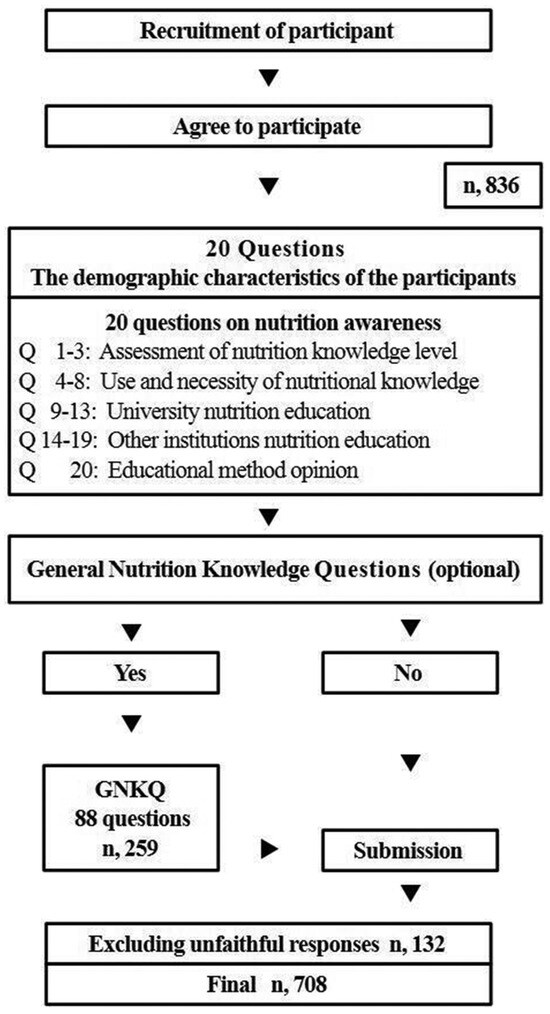
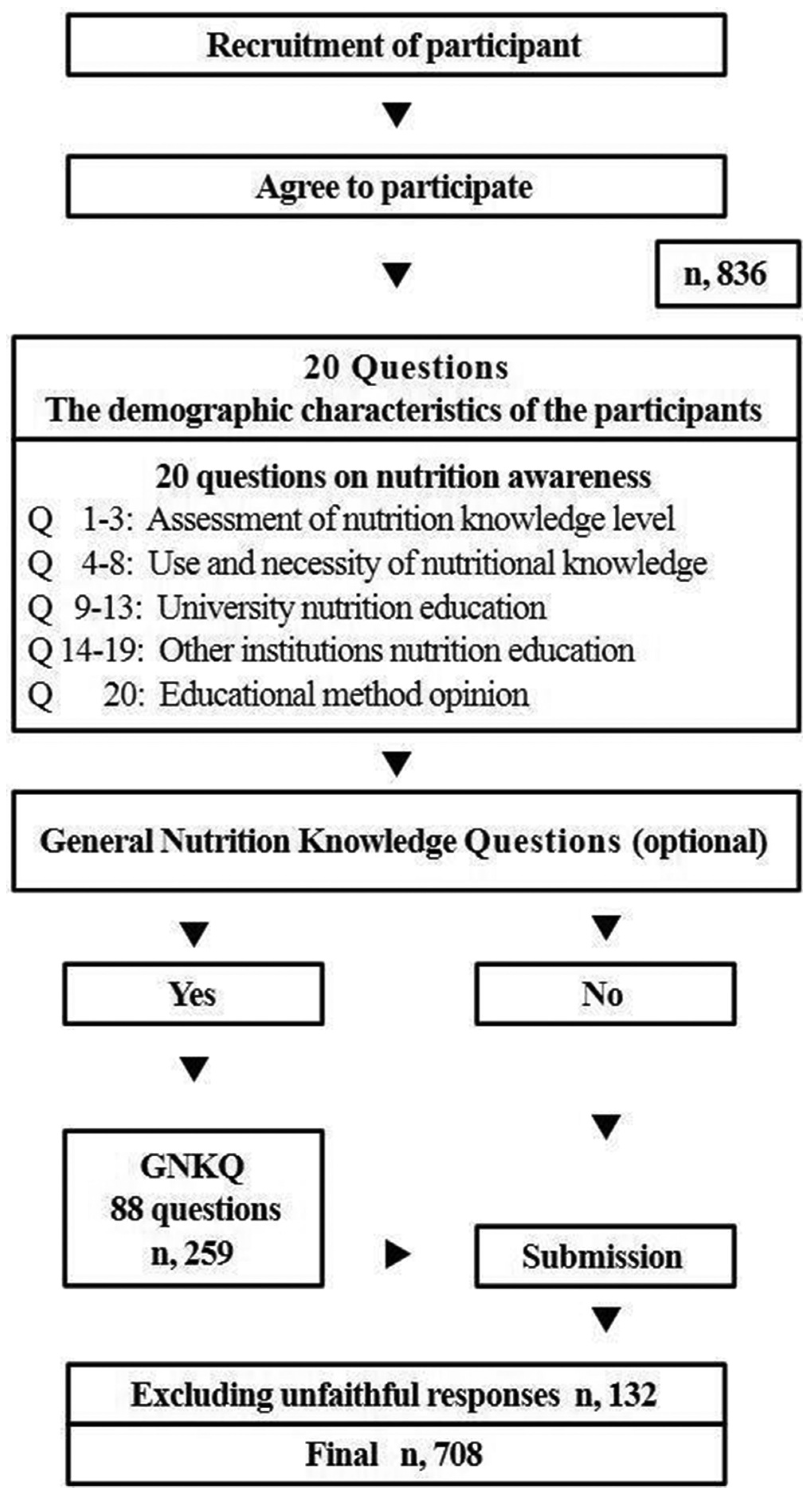
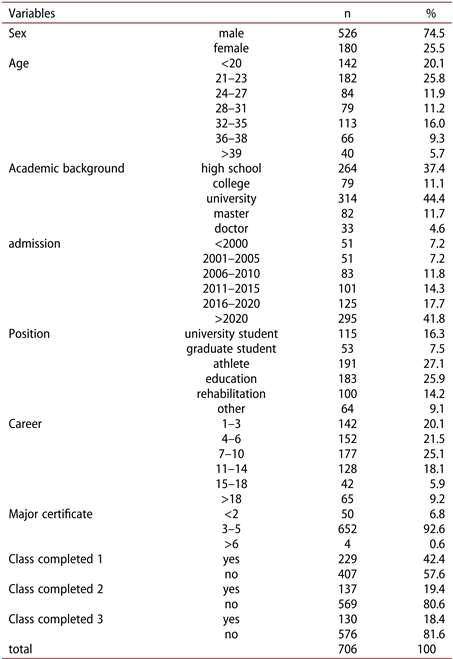
This study was conducted with Korean adults over the age of 19 who majored in physical education at a university. The participants of the study were not limited to individuals from a specific university or institution. The research team formed a questionnaire and employed simple random sampling to distribute it to approximately 60 sports facilities, including universities, gyms, elite athlete teams, and sports organizations. This survey was conducted entirely online, and a total of 706 responses were included in the final data analysis. We excluded 132 responses that were deemed unfaithful based on the following criteria: (1) all responses were marked identically, (2) short-answer responses were left blank, or (3) inconsistent or false information was provided regarding age, career, or affiliation. The participants who completed the survey were divided into six groups according to the occupation group they are currently engaged in (1, college student; 2, graduate student; 3, athlete; 4, education; 5, treatment and rehabilitation; 6, others). The demographic characteristics of the study participants are presented in Table 1.
Table 1.
The demographic characteristics of the participants.
2.2. Ethical approval
The study was conducted in accordance with the guidelines of the Declaration of Helsinki and was approved by the Air Force Aerospace Medical Center Institution Bioethics Committee (ASMC-23-IRB-012; date of approval, 26/01/24).
2.3. Questionnaire organization and procedures
All surveys were conducted 100% online using Google Forms (https://workspace.google.com/products/forms/). Participants who received the questionnaire first read the research explanation included within it and confirmed their agreement to participate. The explanatory statements included the following: 1. All data collected in the study will be used solely for research purposes; 2. Participation in the study is completely voluntary; 3. The survey does not require the participants’ names, addresses, or contact information; 4. Participants can withdraw from the study or choose not to submit their responses at any point after starting the survey. After participants have read the explanation and pressed start, the questionnaire can then be accessed. A questionnaire on demographic characteristics (10 questions) and nutritional recognition (20 questions) was administered. Participants evaluated their nutrition awareness and knowledge using a 5-point Likert scale (1 = strongly disagree, 5 = strongly agree). Mean scores above 3 were interpreted as moderate to high levels of knowledge, whereas scores below 3 indicated lower awareness or perception. Once all surveys were completed, participants were asked to choose whether to complete a nutrition knowledge test through the General Nutrition Knowledge Questionnaire (GNKQ) or close the survey. Participants who completed the nutrition perception survey or nutrition knowledge score submitted the questionnaire by directly pressing “Submit.” The completed questionnaire was anonymized and saved by Google Privacy Policy (https://policies.google.com/privacy?hl=en). The composition and progress of the questionnaire are shown in Figure 1.
Figure 1.
Composition and progress of the questionnaire.
2.4. Nutrition knowledge analysis
Participants assessed their nutritional knowledge using a General Nutrition Knowledge Questionnaire. During the Sunhae Study, a Korean version of the GNKQ was developed [13]. The GNKQ consists of 88 items divided into four sections. One point was awarded for each correct answer and zero points were awarded for uncertain or incorrect answers. The total score (out of 88) was recorded as the percentage of correct responses. The questionnaire is organized as follows: Section 1 (18 questions): Dietary recommendations; Section 2 (36 questions): Food groups; Section 3 (13 questions): Healthy food choices; Section 4 (21 questions): Diet-, disease-, and weight-related.
2.5. Validation of the validity and reliability of the survey
The questionnaire used in this study was newly constructed and utilized existing studies that have investigated nutritional perceptions as a reference [14,15]. To verify the accuracy of the content, we conducted a three-step Delphi survey with a group of ten experts consisting of researchers in the fields of motor physiology, motor nutrition, and nutritional biochemistry. In addition, pre-verification was conducted with approximately 40 college students according to the factor development and validity verification procedures. The reliability of the questionnaire was assessed using a validation procedure conducted prior to the start of the study, and pre-validation confirmed that the reliability coefficient of this questionnaire was appropriate (r = 0.79–0.85). In the case of GNKQ, we did not use a separate verification procedure because previous studies have verified its validity and reliability.
2.6. Statistical analysis
SPSS WIN 26.0 program (version 26.0; IBM Corp., Armonk, NY, USA) was used for data processing. The collected data showed a normal distribution and data with missing values were removed for accurate statistical analysis. The ratio of each group was confirmed using descriptive statistics and frequency analysis, and the averages and standard deviations of the questionnaire contents were calculated. A one-way ANOVA was conducted to confirm the differences between study participants (groups), and post hoc pairwise comparisons with a Tukey adjustment were conducted. In addition, an independent samples t-test was conducted for nutrition class completion, nutrition recognition, and nutrition knowledge analysis. The statistical significance level for all data was set at p < 0.05.
3. Results
Table 1 shows the demographic characteristics of the participants. As a result of the analysis, 526 men (74.5%) and 180 women (25.5%) answered the questionnaire. Regarding age distribution, the age group between 21 and 23 was the highest at 182 (25.8%). However, an even age distribution was also found across other age groups. Regarding academic background, high school graduates (n = 264, 37.4%) were most common after bachelor’s degrees (n = 314, 44.4%). The reason for high school graduation as the highest academic background is that university students have yet to accomplish their university degrees, and athletes enter elite teams immediately after high school graduation. Regarding the current occupation position, it was found that there were many workers in the education field (n = 183, 25.9%) after athletes (n = 191, 27.1%), but it was also confirmed that jobs were evenly distributed.
Looking at the status of the participants’ nutrition classes, 229 people completed only college classes, confirming that approximately 42% of participants completed nutrition classes at university. Moreover, 19.4% of participants completed it at other institutions, and 18.4% of participants completed it in universities and other institutions, which was lower than the percentage completed at universities. Table 1 presents the demographic characteristics of the other variables.
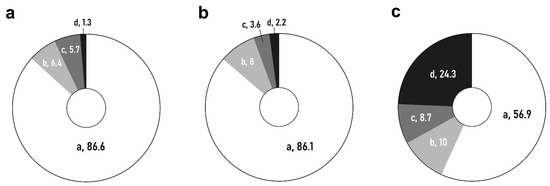
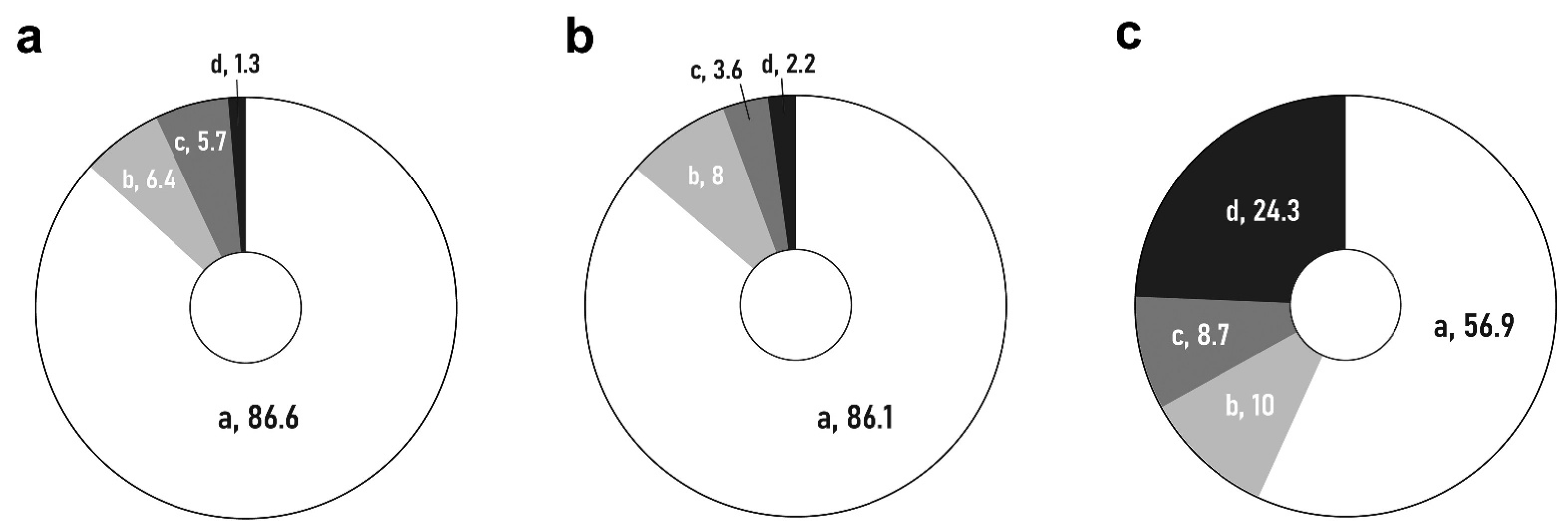
Figure 2 depicts the nutrition class methods used by universities and other institutions. In the case of nutrition classes, it was confirmed that theoretical education was overwhelmingly high at 86.6% in universities and 86.1% in other institutions. However, regarding effective teaching methods, only 56.9% chose theoretical training, 24.3% chose field-oriented clinical nutrition practice, and 10% chose papers and current research, indicating a preference for other teaching methods (Figure 2).
Figure 2.
Nutrition class methods at universities and other institutions: (a) University education method: a, theory lecture; b, Seminar-style lecture with applications and latest papers; c, video, and 3d program utilization; d, clinical nutrition-based lecture; (b) Other institutions education method: a, theory lecture; b, Seminar-style lecture with applications and latest papers; c, video, and 3d program utilization; d, clinical nutrition-based lecture; (c) Educational method considered to be effective: a, theory lecture; b, Seminar-style lecture with applications and latest papers; c, video, and 3d program utilization; d, clinical nutrition-based lecture.
Table 2 represents participants’ levels of awareness of nutrition education. First, the overall average evaluation of one’s nutritional knowledge level was 3.06 ± 1.0. For the athletes, the average evaluation of one’s nutritional knowledge level was 2.76 ± 1.14. These findings indicate that the level of nutritional knowledge that participants perceived was higher than 3 points (normal) in all fields except athletes (p < 0.001). However, questions about “agreeing on the need for nutritional knowledge in exercise performance” and “the level of nutritional knowledge is necessary for improving athletic ability and performing tasks” showed an average of less than two points, and it was found that they realized the need in all fields (p < 0.001). In particular, it was confirmed that the rehabilitation field showed a high level of agreement in “agreeing on the need for nutritional knowledge in exercise performance” (1.36 ± 0.62) and “the level of nutritional knowledge is necessary for improving motor ability and performing tasks” (1.25 ± 0.48). Finally, it was confirmed that most of the questions about whether anatomical knowledge was used in practice were in the late two points on average and were used in practice but not actively (p < 0.001) (Table 2).
Table 2.
The participants’ level of awareness of nutrition education.
Table 3 shows the differences in the level of perception of nutrition education between those who have taken nutrition classes at universities or external institutions and those who have not. In the case of participants who took nutrition classes, their perceived level of nutritional knowledge was less than 3, a higher score than the group who did not complete nutrition classes (mid-3 points) (p < 0.001). In addition, it was confirmed that the participants who completed a nutrition class scored higher in agreement with the statements “agree on the necessity of nutritional knowledge in exercise performance” (p < 0.001), “nutritional knowledge level is necessary for improving motor ability and performing tasks” (p < 0.001), and “whether anatomical knowledge is used in practice” (p < 0.001) compared to those who did not (Table 3).
Table 3.
Differences in the level of awareness of nutrition education according to the completion of nutrition education.
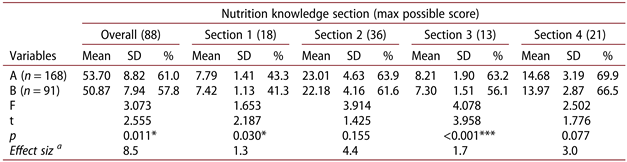
Finally, Table 4 shows the difference in nutritional knowledge scores between those who had taken nutrition classes at universities or external institutions and those who had not. The analysis confirmed that participants who took nutrition classes had higher scores in all sections, including the total score. Statistically significant differences were observed in the total score (p = 0.011), Section 1 (p = 0.030), and Section 3 (p < 0.001).
Table 4.
Differences in the general nutrition knowledge questionnaire score according to the completion of nutrition education.
4. Discussion
Korea’s growth in sports began in the 1960s, with the revitalization of elite sports. With the continuous support of the state, elite sports have grown to include approximately 380,000 registered athletes in 70 sports registered by the Korean Sport & Olympic Committee as of 2024 [16]. The Korean delegation won 13 gold medals, 9 silver medals, and 10 bronze medals, ranking eighth overall in the 2024 Paris Olympics [17]. With the development of elite sports, various sports-related departments are operating across the country, and as of 2024, 435 sports-related departments have opened at approximately 245 universities. [18]
Nevertheless, looking at the current status of domestic sports majors, it was found that universities (42.2%) and external institutions (19.4%) have low sports nutrition class completion rates. Although Korea maintains an elite sports system, only a few professors majoring in sports nutrition are available in sports-related departments and only a few sports nutrition classes are offered in universities and other institutions. In addition to the certification that exists as a national qualification, it has been confirmed that nutrition-related lectures are included in the training courses of the Korea Sports Trainer Association (KATA), Korea Physical Fitness Management Association (KACEP), and Korea Physical Fitness Management Association (KCA); however, only one to two hours are allocated. Previous studies have shown that nutritional knowledge can be improved even in a 90-minute [19] education period; however, this is not enough time to learn a wide range of topics related to sports nutrition, and there will be limitations for learners in applying nutritional knowledge to the field. Therefore, at least 380–490 minutes of education [20] is considered appropriate for nutrition education.
The results of this study confirmed that theoretical lectures were overwhelmingly high in the case of nutrition classes conducted by universities (86.6%) and other institutions (86.1%). However, when asked about effective pedagogy, only 56.9% of participants answered that theoretical lectures were effective. Moreover, it was confirmed that the preference for field-oriented clinical nutrition practice was 24.3%, and the preference for paper and current research-based lectures was 9.6%, indicating a difference between actual education practices and the needs of the participants. To narrow this gap, it is necessary to develop effective educational content for learners along with teaching and learning methods through the Center for Teaching and Learning (CTL) in university institutions, which is considered to improve the fieldwork performance of major participants.
The above results appear to be the same for the participants’ awareness of nutrition education. Participants averaged 3.06 when asked about their level of nutritional knowledge and indicated that the level of knowledge they perceived was approximately average. Previous studies have shown that students believe that if nutrition is not properly integrated into the curriculum, nutrition education and knowledge will be lacking [21]. This leads to a lack of confidence in nutritional knowledge [22], and similar results were expected in this study. However, many participants agreed that nutritional knowledge was necessary for exercise performance, and the need for nutritional education was further raised.
In addition, it was confirmed that participants who completed the nutrition class were more confident in their nutrition knowledge and more aware of the importance of nutrition in the sports field. Physical education is a complex study involving various disciplines. Because basic studies in physical education are the basis for interdisciplinary convergence, problems can be solved from a physical perspective and expanded to other subjects through subject learning [23]. Therefore, when a physical education major decides on a career path, differences in nutritional knowledge can indicate differences in job selection and play a major role in choosing a major-related job [24].
Lastly, participants who took nutrition classes scored higher in the GNKQ. A high level of nutritional knowledge allows healthy municipal habits and activities to be maintained [25] and plays an important role in essential nutritional intake for sports activities [7]. In addition, prior research has emphasized that high nutrition knowledge can have a positive effect on players as coaches educate athletes on nutrition and increase the competitiveness of athletes with low nutrition knowledge [9]. Despite the recent increase in the rate of acquiring nutritional knowledge online [26], it was confirmed that the expansion of education conducted by specialized institutions such as universities is important for accurate information learning.
This study has the advantage of being the first to investigate the nutritional perception and knowledge of physical education majors and workers, but there are also several limitations. First, it was conducted only for Korean residents through an online survey. In addition, it is limited in the number of participants and does not compare students with other majors. Therefore, follow-up research will require joint research with other countries that also share an elite sports culture, potentially recruiting more participants.
5. Conclusion
This study investigated the current status and perception of nutrition education among sports majors and workers in Korea. This study was conducted to provide information that can be applied to the educational curriculum of universities and other external institutions for sports nutrition education. Nutrition is a crucial factor that cannot be excluded from physical education. Therefore, it is essential to implement measures that develop the sports world and enhance participants’ abilities in maintaining proper nutrition. Government and university institutions need to increase lecture hours and hands-on opportunities by utilizing various educational curricula in physical education-related departments. In addition, introducing a more systematic national certification system and integrating specialized courses with corporations can help train professionals effectively in the long run. This will help create a safer and more systematic sports environment while positively impacting healthcare policies.
Author Contributions
All authors were well informed of the World Medical Education Declaration of Helsinki (Ethical Principles for Medical Research Involving Human Participants) and confirmed that this study firmly fulfilled the declaration. None of the authors has financial or private relationships with commercial, academic, or political organizations or people that may have improperly influenced this research. The overall planning of the research, data acquisition, analysis, interpretation, and major drafting of the manuscript were performed by K. L. L. provided nutritional and physical education opinions for the conception, overall organization, revision, and direct supervision of the research, which was undertaken by J. Y. S.
Funding
This research was supported by the Basic Science Research Program of the National Research Foundation of Korea (NRF), funded by the Ministry of Education [NRF-2022R1I1A1A01063123].
Data availability statement
The data presented in this study are available on request from the corresponding author.
Acknowledgments
We thank all the students and school officials who helped with the survey.
Disclosure statement
No potential conflict of interest was reported by the author(s).
References
- Vitale, K.; Getzin, A. Nutrition and supplement update for the endurance athlete: review and recommendations. Nutrients 2019, 11(6), 1289. [Google Scholar] [CrossRef] [Scilit] [PubMed]
- Lee, Y.S.; Lee, D.R.; Lee, H.R.; et al. Nutritional knowledge, eating habits, factors affecting muscle damage, and antioxidant enzyme levels of Korean wrestlers. Phys Act Nutr. 2024, 28(1), 052–058. [Google Scholar] [CrossRef] [Scilit] [PubMed]
- Sims, S.T.; Kerksick, C.M.; Smith-Ryan, A.E.; et al. International society of sports nutrition position stand: nutritional concerns of the female athlete. J Int Soc Sports Nutr. 2023, 20(1), 2204066. [Google Scholar] [CrossRef] [Scilit] [PubMed]
- Iglesias-Gutiérrez, E.; García-Rovés, P.M.; Rodríguez, C.; et al. Food habits and nutritional status assessment of adolescent soccer players. A necessary and accurate approach. Can J Appl Physiol. 2005, 30(1), 18–32. [Google Scholar] [CrossRef] [Scilit] [PubMed]
- Lee, D.R.; Lee, H.R.; Sung, J.Y. Changes in physical activity and eating behavior after coronavirus pandemic: an online survey of elite Korean male athletes. Journal of Men’s Health 2024, 20(9), 103–110. [Google Scholar] [CrossRef] [Scilit]
- Fraile-Bermúdez, A.B.; Kortajarena, M.; Zarrazquin, I.; et al. Physical activity and dietary habits related to cardiovascular risk in independent community-living older women. Exp Gerontol. 2017, 92, 46–51. [Google Scholar] [CrossRef] [Scilit] [PubMed]
- Concha-Cisternas, Y.; Guzmán-Muñoz, E.; Valdés-Badilla, P.; et al. Levels of physical activity and excess body weight in university students. Rev Med Chil. 2018, 146(8), 840–849. [Google Scholar] [CrossRef] [Scilit] [PubMed]
- Sánchez-Díaz, S.; Yanci, J.; Castillo, D.; et al. Effects of nutrition education interventions in team sport players. A systematic review. Nutrients 2020, 12(12), 3664. [Google Scholar] [CrossRef] [Scilit] [PubMed]
- Sung, J.Y.; Lee, J.H.; Lee, K.L. Analysis of the diet, weight-loss behavior, and nutritional knowledge of athletes and coaches in weightclass sports: influence of a coach’s nutritional knowledge on athletes. J Int Soc Sports Nutr. 2024, 21(1), 2405159. [Google Scholar] [CrossRef] [Scilit] [PubMed]
- Klein, D.J.; Eck, K.M.; Walker, A.J.; et al. Assessment of sport nutrition knowledge, dietary practices, and sources of nutrition information in NCAA division III collegiate athletes. Nutrients 2021, 13(9), 2962. [Google Scholar] [CrossRef] [Scilit] [PubMed]
- Blunt, S.B.; Kafatos, A. Clinical nutrition education of doctors and medical students: solving the catch 22. Adv Nutr. 2019, 10(2), 345–350. [Google Scholar] [CrossRef] [Scilit] [PubMed]
- Shinozaki, N.; Wang, H.C.; Yuan, X.; et al. Current status of education and research on public health nutrition in Japan: comparison with South Korea, Taiwan, and mainland China. BMC Nutr. 2019, 5(1), 10. [Google Scholar] [CrossRef] [Scilit] [PubMed]
- Sung, J.Y.; Lee, K.L. Physical strength, body composition, and G-test results of air force cadets based on nutrition knowledge differences. Sci Rep. 2024, 14(1), 3083. [Google Scholar] [CrossRef] [Scilit]
- Ruszkiewicz, K.; Jagielski, P.; Traczyk, I. Glycemic control and awareness among diabetic patients of nutrition recommendations in diabetes. Rocz Panstw Zakl Hig. 2020, 71(2), 191–196. [Google Scholar] [CrossRef] [Scilit] [PubMed]
- Robinson, K.; Reilly, J.M. Assessing the impact of nutrition training among medical students. PriMER 2024, 8, 24. [Google Scholar] [CrossRef] [Scilit] [PubMed] [PubMed Central]
- Korean sport & Olympic committee player registration status. Available online: https://g1.
- Olympic Games Paris. 2024. Available online: https://www.olympics.com/ko/olympic-games.
- Current status of the college physical education department. Available online: https://www.
- Chapman, P.; Toma, R.B.; Tuveson, R.V.; et al. Nutrition knowledge among adolescent high school female athletes. Adolescence 1997, 32(126), 437–446. [Google Scholar] [PubMed]
- Patton-Lopez, M.M.; Manore, M.M.; Branscum, A.; et al. Changes in sport nutrition knowledge, attitudes/beliefs and behaviors following a two-year sport nutrition education and life-skills intervention among high school soccer players. Nutrients 2018, 10(11), 1636. [Google Scholar] [CrossRef] [Scilit] [PubMed]
- Cooke, N.K.; Ash, S.L.; Goodell, L.S. Medical students’ perceived educational needs to prevent and treat childhood obesity. Educ Health (Abingdon). 2017, 30(2), 156–162. [Google Scholar] [CrossRef] [Scilit] [PubMed]
- Broad, J.; Wallace, M. Nutrition and public health in medical education in the UK: reflections and next steps. Public Health Nutr. 2018, 21(13), 2523–2525. [Google Scholar] [CrossRef] [Scilit] [PubMed]
- Rollo, I.; Carter, J.M.; Close, G.L.; et al. Role of sports psychology and sports nutrition in return to play from musculoskeletal injuries in professional soccer: an interdisciplinary approach. Eur J Sport Sci. 2021, 21(7), 1054–1063. [Google Scholar] [CrossRef] [Scilit] [PubMed]
- Spittle, M.; Spittle, S. Content of curriculum in physical education teacher education: expectations of undergraduate physical education students. Asia-Pac J Teach Educ. 2016, 44(3), 257–273. [Google Scholar] [CrossRef] [Scilit]
- Thompson, C.; Vidgen, H.A.; Gallegos, D.; et al. Validation of a revised general nutrition knowledge questionnaire for Australia. Public Health Nutr. 2021, 24(7), 1608–1618. [Google Scholar] [CrossRef] [Scilit]
- Bakhtiar, M.; Masud-Ur-Rahman, M.; Kamruzzaman, M.; et al. Determinants of nutrition knowledge, attitude, and practices of adolescent sports trainee: a cross-sectional study in Bangladesh. Heliyon 2021, 7(4), A3:e06637. [Google Scholar] [CrossRef] [Scilit] [PubMed]



© 2025 The Author(s). Published by Informa UK Limited, trading as Taylor & Francis Group. This is an Open Access article distributed under the terms of the Creative Commons Attribution-NonCommercial License (http://creativecommons.org/licenses/by-nc/4.0/), which permits unrestricted non-commercial use, distribution, and reproduction in any medium, provided the original work is properly cited. The terms on which this article has been published allow the posting of the Accepted Manuscript in a repository by the author(s) or with their consent.