Unraveling Translational Insights into Systemic Multi-Organ Toxicity of Cytosine Arabinoside (Ara-C): A Systematic Review of Preclinical Animal Evidence

 ,
,  , ,
, ,  ,
,  , and
, and 
Abstract
1. Introduction
2. Materials and Methods
2.1. Identifying Research Questions
2.2. Identifying Relevant Studies
2.3. Study Selection—Eligibility and Screening
2.4. Data Charting
2.5. Collating, Summarizing, and Reporting Results
2.6. Study Quality and Risk of Bias Assessment
3. Results
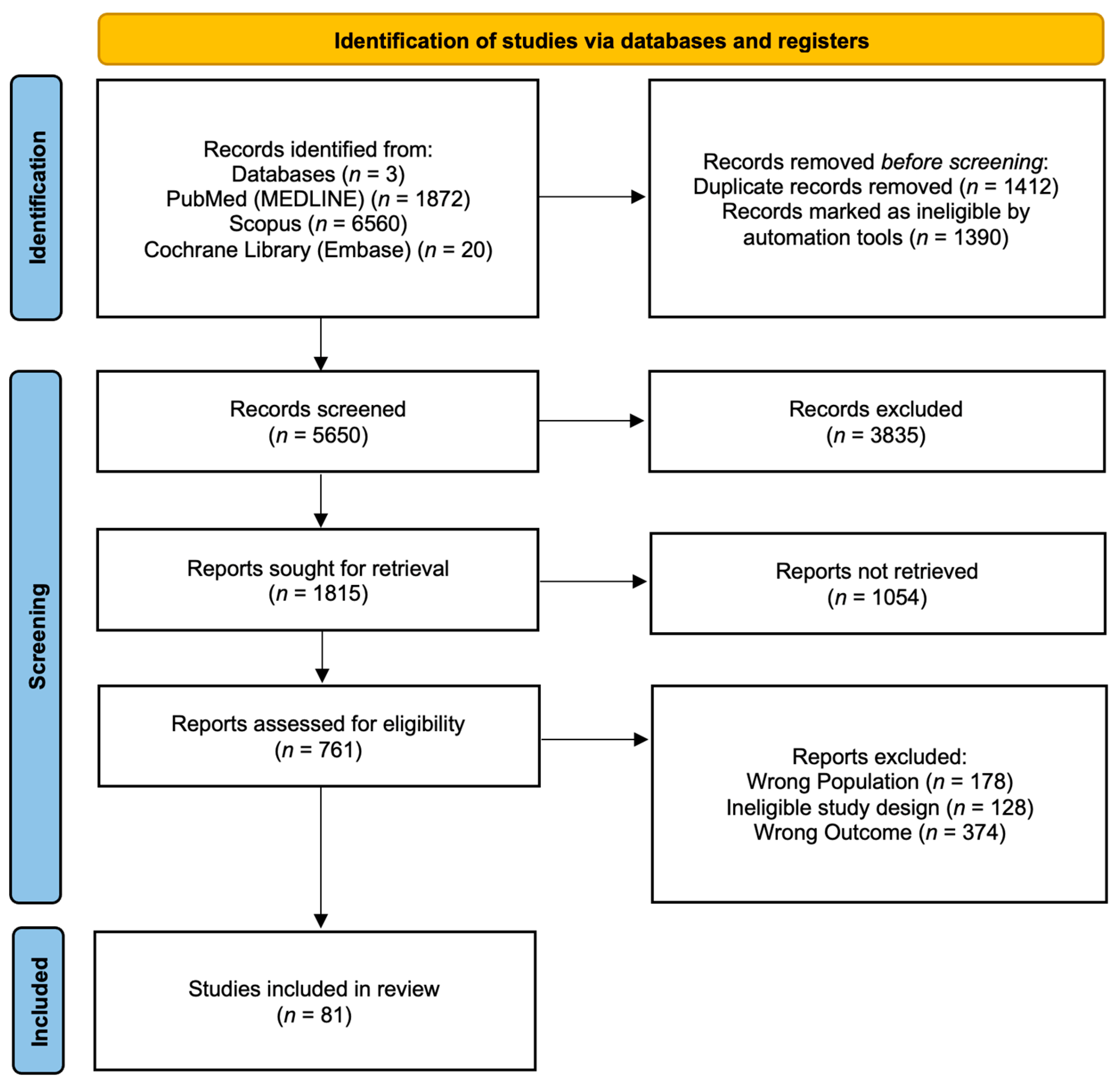
3.1. Study Selection
3.2. Study Characteristics
3.3. Risk of Bias and Study Quality
3.4. Spectrum of Organ Toxicities
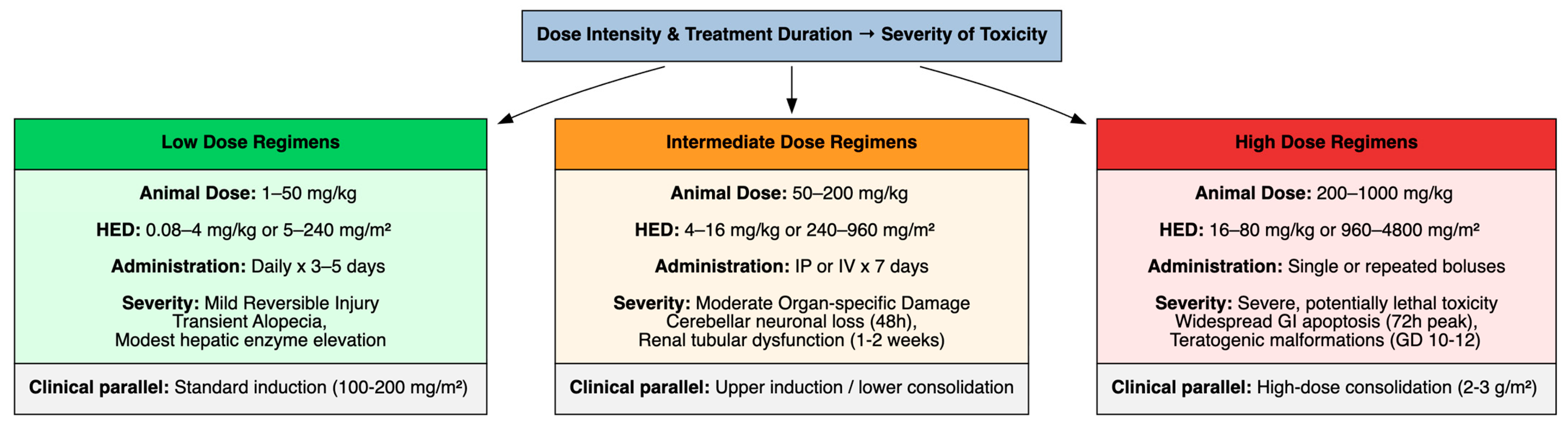
3.5. Dose–Response Relationships, Treatment Schedules and Human Equivalent Dose Translation
3.6. Histopathological, Biochemical and Functional Endpoints
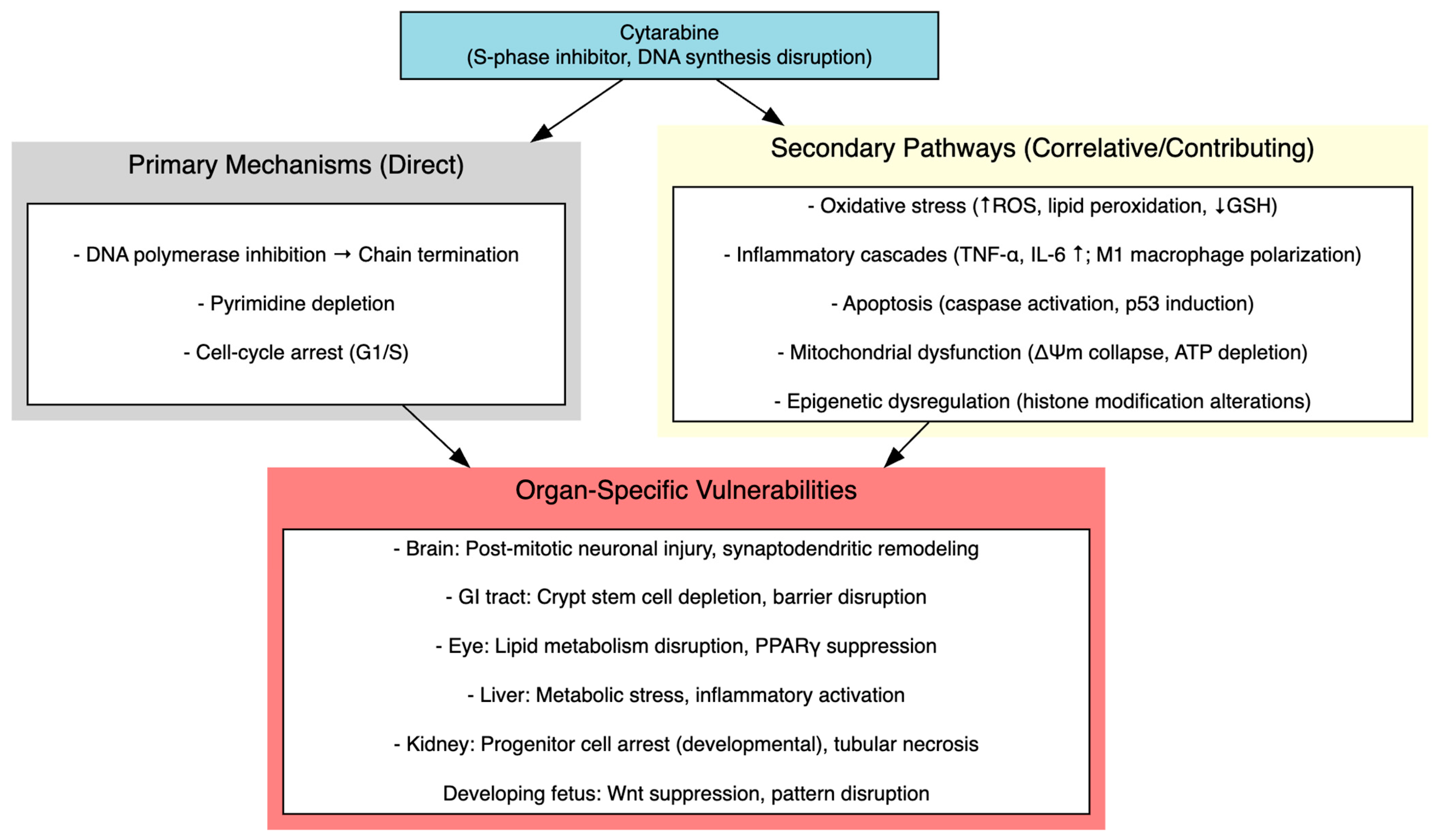
3.7. Molecular and Cellular Mechanisms
4. Discussion
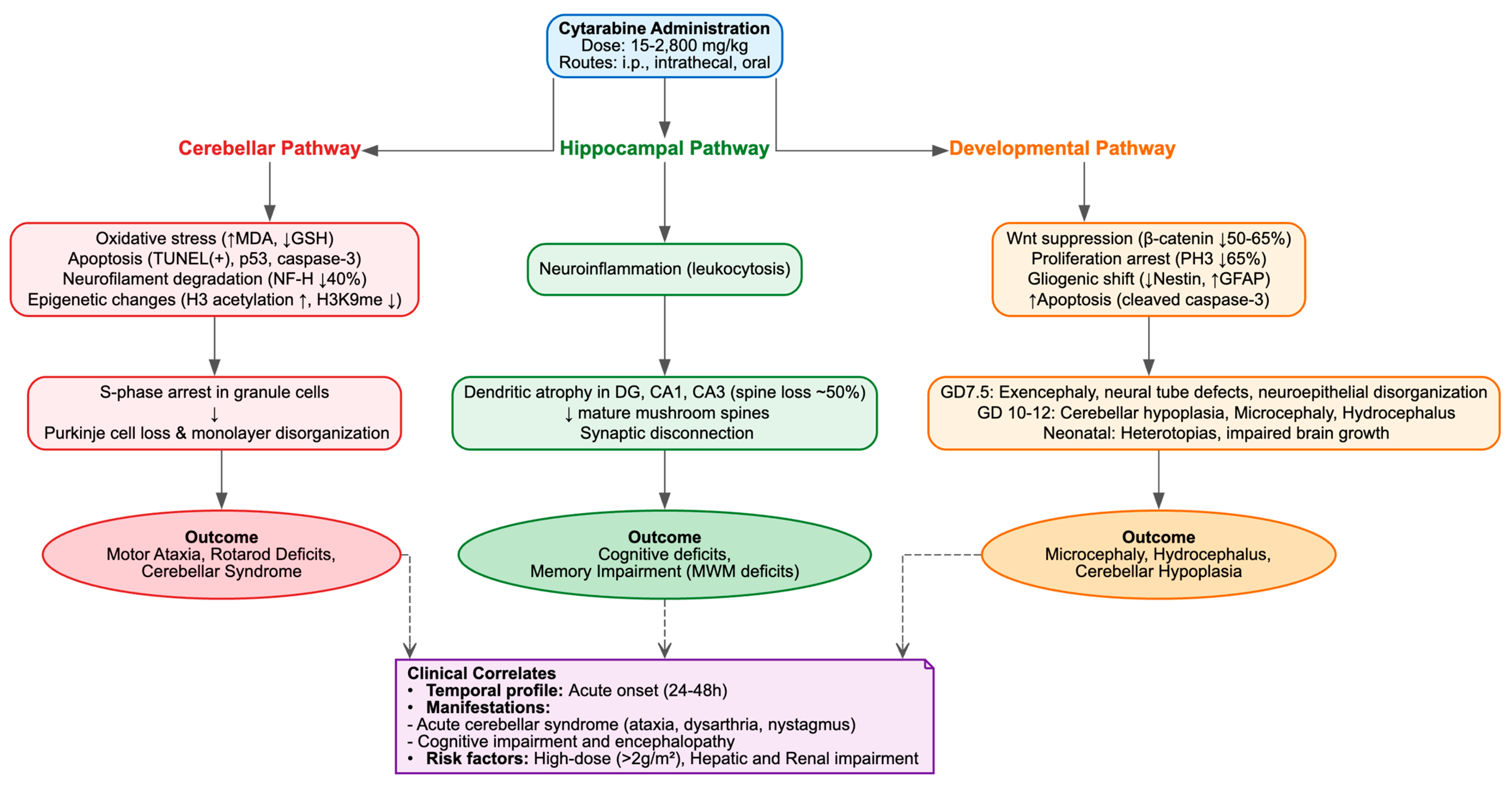
4.1. Cytarabine-Induced Neurotoxicity
4.2. Cytarabine-Induced Gastrointestinal Toxicity
4.3. Cytarabine-Induced Ocular Toxicity
4.4. Cytarabine-Induced Alopecia
4.5. Cytarabine-Induced Hepatotoxicity
4.6. Cytarabine-Induced Renal Toxicity
4.7. Cytarabine-Induced Developmental Toxicity
4.8. Other Cytarabine-Induced Toxicities
4.9. Limitations
4.10. Translational Implications and Future Perspectives
5. Conclusions
Supplementary Materials
Author Contributions
Funding
Data Availability Statement
Conflicts of Interest
Abbreviations
| ↓ | Decreased |
| ↑ | Increased |
| AML | Acute Myeloid Leukemia |
| Ara-C | Cytarabine (Cytosine Arabinoside) |
| ara-CTP | Cytarabine Triphosphate |
| CDA | Cytidine Deaminase |
| i.p. | Intraperitoneal |
| i.v. | Intravenous |
| s.c. | Subcutaneous |
| i.t. | Intrathecal |
| GD | Gestational Day |
| MWM | Morris Water Maze |
| ACC | Anterior Cingulate Cortex |
| DG | Dentate Gyrus |
| CA1/CA3 | Cornu Ammonis regions of hippocampus |
| NF | Neurofilament |
| NF-H/NF-M/NF-L | Neurofilament Heavy/Medium/Light isoforms |
| MDA | Malondialdehyde |
| GSH | Glutathione (reduced) |
| GSSG | Glutathione disulfide (oxidized) |
| SOD | Superoxide Dismutase |
| CAT | Catalase |
| GSH-Px | Glutathione Peroxidase |
| TBARS | Thiobarbituric Acid Reactive Substances |
| ROS | Reactive Oxygen Species |
| ΔΨm | Mitochondrial Membrane Potential |
| TUNEL | Terminal deoxynucleotidyl transferase dUTP Nick End Labeling |
| H3K9me | Histone H3 Lysine 9 Methylation |
| H3K4me | Histone H3 Lysine 4 Methylation |
| H3 acetylation | Histone H3 Acetylation |
| GFAP | Glial Fibrillary Acidic Protein |
| PH3 | Phospho-Histone H3 |
| Wnt | Wingless/Integrated signaling pathway |
| JAK-STAT | Janus Kinase—Signal Transducer and Activator of Transcription |
| JNK | c-Jun N-terminal Kinase |
| IMD | Immune Deficiency pathway (Drosophila) |
| TNF-α | Tumor Necrosis Factor alpha |
| IL-6/IL-10 | Interleukin-6/Interleukin-10 |
| PPARγ | Peroxisome Proliferator-Activated Receptor gamma |
| AQP5 | Aquaporin 5 |
| α-SMA | Alpha-Smooth Muscle Actin |
| PCNA | Proliferating Cell Nuclear Antigen |
| ZO-1 | Zonula Occludens-1 |
| VE-cadherin | Vascular Endothelial Cadherin |
| VEGFR2 | Vascular Endothelial Growth Factor Receptor 2 |
| AKT | Protein Kinase B |
| FoxO1/FoxO3a | Forkhead Box O1/O3a |
| Keap1 | Kelch-like ECH-associated protein 1 |
| Nrf2 | Nuclear Factor Erythroid 2–Related Factor 2 |
| HO-1 | Heme Oxygenase-1 |
| OSI | Oxidative Stress Index |
| TOS | Total Oxidant Status |
| AST | Aspartate Aminotransferase |
| ALT | Alanine Aminotransferase |
| ALP | Alkaline Phosphatase |
| GGTP | Gamma-Glutamyl Transpeptidase |
| HGF | Hepatocyte Growth Factor |
| Bcl-2 | B-cell lymphoma 2 (anti-apoptotic protein) |
| NOS | Newcastle–Ottawa Scale |
| ARRIVE | Animal Research: Reporting of In Vivo Experiments |
| SYRCLE | Systematic Review Centre for Laboratory Animal Experimentation |
| CAMARADES | Collaborative Approach to Meta-Analysis and Review of Animal Data from Experimental Studies |
| PRISMA | Preferred Reporting Items for Systematic Reviews and Meta-Analyses |
| PROSPERO | International Prospective Register of Systematic Reviews |
| GRADE | Grading of Recommendations Assessment, Development and Evaluation |
| PICO | Population, Intervention, Comparator, Outcome |
| EM | Electron Microscopy |
| IHC | Immunohistochemistry |
| H&E | Hematoxylin and Eosin |
| SCF | Stem Cell Factor |
| GDNF | Glial cell line-Derived Neurotrophic Factor |
| MCSF | Macrophage Colony-Stimulating Factor |
| FSH | Follicle-Stimulating Hormone |
| LH | Luteinizing Hormone |
| 3β-HSD/17β-HSD | 3β-/17β-Hydroxysteroid Dehydrogenase |
| ABP | Androgen-Binding Protein |
| NAC | N-Acetylcysteine |
| AHCC | Active Hexose Correlated Compound |
| ALA | Alpha-Lipoic Acid |
| AS-IV | Astragaloside IV |
| GQBZP | Guiqi Baizhu Prescription |
| LP | Lienal Peptide |
| AgNPs | Silver Nanoparticles |
| BADGE | Bisphenol A Diglycidyl Ether (PPARγ antagonist) |
| CPX-351 | Liposomal Cytarabine + Daunorubicin formulation |
| HU | Hydroxyurea |
| Ara-CP | Cytarabine Palmitate (long-acting formulation) |
| Ara-A | Adenine Arabinoside |
| Ara-U | Uracil Arabinoside |
| CdR | Deoxycytidine |
| dCMP/CMP/CDP/CR/TdR | Deoxycytidine Monophosphate/Cytidine Monophosphate/Cytidine Diphosphate/Cytidine/Thymidine |
| 5-aza-C | 5-Azacytidine |
| 3MG | 3-O-Methylglucose |
| NE | Norepinephrine |
| DA | Dopamine |
| 5-HT | Serotonin |
| 5-HIAA | 5-Hydroxyindoleacetic Acid |
| CNPase | 2′,3′-Cyclic-Nucleotide 3′-Phosphodiesterase |
| MAP-2 | Microtubule-Associated Protein 2 |
| VZ | Ventricular Zone |
| IZ | Intermediate Zone |
| GE | Ganglionic Eminence |
| EGL | External Granular Layer |
| IGL | Internal Granular Layer |
| ML | Molecular Layer |
| BM | Bone Marrow |
| HSC | Hematopoietic Stem Cell |
| HPC | Hematopoietic Progenitor Cell |
| CFU | Colony-Forming Unit |
| WBC | White Blood Cell |
| Hb | Hemoglobin |
| TAS | Total Antioxidant Status |
| tGSH | Total Glutathione |
| NF-κB | Nuclear Factor kappa-light-chain-enhancer of activated B cells |
| SDS | Sodium Dodecyl Sulfate |
| TEM | Transmission Electron Microscopy |
| EB | Embryoid Body |
| mESC | Mouse Embryonic Stem Cell |
| CFS | Corneal Fluorescein Staining |
| AWAT2 | Acyl-CoA:Wax Alcohol Acyltransferase 2 |
| SOAT1 | Sterol O-Acyltransferase 1 |
| ELOVL4 | Elongation of Very Long Chain Fatty Acids Protein 4 |
| HMGCR | 3-Hydroxy-3-Methylglutaryl-CoA Reductase |
| SDH | Succinate Dehydrogenase |
| AER | Apical Ectodermal Ridge |
| SCFAs | Short-Chain Fatty Acids |
References
- Di Francia, R.; Crisci, S.; De Monaco, A.; Cafiero, C.; Re, A.; Iaccarino, G.; De Filippi, R.; Frigeri, F.; Corazzelli, G.; Micera, A.; et al. Response and Toxicity to Cytarabine Therapy in Leukemia and Lymphoma: From Dose Puzzle to Pharmacogenomic Biomarkers. Cancers 2021, 13, 966. [Google Scholar] [CrossRef] [PubMed]
- Li, A.; Fridley, B.; Kalari, K.; Jenkins, G.; Batzler, A.; Safgren, S.; Hildebrandt, M.; Ames, M.; Schaid, D.; Wang, L. Gemcitabine and Cytosine Arabinoside Cytotoxicity: Association with Lymphoblastoid Cell Expression. Cancer Res. 2008, 68, 7050–7058. [Google Scholar] [CrossRef] [PubMed]
- Gökbuget, N.; Hoelzer, D. Treatment of Adult Acute Lymphoblastic Leukemia. Semin. Hematol. 2009, 46, 64–75. [Google Scholar] [CrossRef] [PubMed]
- Friedberg, J.W. Relapsed/Refractory Diffuse Large B-Cell Lymphoma. Hematology/the Education Program of the American Society of Hematology. Am. Soc. Hematol. Educ. Program 2011, 2011, 498–505. [Google Scholar] [CrossRef]
- Burnett, A.; Wetzler, M.; Löwenberg, B. Therapeutic Advances in Acute Myeloid Leukemia. J. Clin. Oncol. 2011, 29, 487–494. [Google Scholar] [CrossRef]
- Evrard, A.; Lacarelle, B.; Ciccolini, J. Severe or Lethal Toxicities with Nucleosidic Analogs: Time for Action. Pharmacogenomics 2013, 14, 227–230. [Google Scholar] [CrossRef]
- Chagnon, K.; Boissel, N.; Raffoux, E.; Dombret, H.; Tazi, A.; Bergeron, A. A New Pattern of Cytosine-Arabinoside-Induced Lung Toxicity. Br. J. Haematol. 2009, 147, 771–774. [Google Scholar] [CrossRef]
- Ciccolini, J.; Evrard, A.; M’Batchi, L.; Pourroy, B.; Mercier, C.; Iliadis, A.; Lacarelle, B.; Verschuur, A.; Ouafik, L.; André, N. CDA Deficiency as a Possible Culprit for Life-Threatening Toxicities after Cytarabine plus 6-Mercaptopurine Therapy: Pharmacogenetic Investigations. Pharmacogenomics 2012, 13, 393–397. [Google Scholar] [CrossRef]
- Baker, W.J.; Royer, G.L.; Weiss, R.B. Cytarabine and Neurologic Toxicity. J. Clin. Oncol. 1991, 9, 679–693. [Google Scholar] [CrossRef]
- Mayer, R.J.; Davis, R.B.; Schiffer, C.A.; Berg, D.T.; Powell, B.L.; Schulman, P.; Omura, G.A.; Moore, J.O.; McIntyre, O.R.; Frei, E. Intensive Postremission Chemotherapy in Adults with Acute Myeloid Leukemia. N. Engl. J. Med. 1994, 331, 896–903. [Google Scholar] [CrossRef]
- McGrail, L.H.; Sehn, L.H.; Weiss, R.B.; Robson, M.R.; Antin, J.H.; Byrd, J.C. Pancreatitis during Therapy of Acute Myeloid Leukemia: Cytarabine Related? Ann. Oncol. 1999, 10, 1373–1376. [Google Scholar] [CrossRef] [PubMed]
- McBride, C.E.; Yavorski, R.T.; Moses, F.M.; Robson, M.E.; Solimando, D.A.; Byrd, J.C. Acute Pancreatitis Associated with Continuous Infusion Cytarabine Therapy: A Case Report. Cancer 1996, 77, 2588–2591. [Google Scholar] [CrossRef]
- Powell, B.L.; Zekan, P.J.; Muss, H.B.; Richards, F.; Lyerly, E.S.; Capizzi, R.L. Ara-C Syndrome during Low-dose Continuous Infusion Therapy. Med. Pediatr. Oncol. 1986, 14, 310–312. [Google Scholar] [CrossRef] [PubMed]
- Moore, J.O.; George, S.L.; Dodge, R.K.; Amrein, P.C.; Powell, B.L.; Kolitz, J.E.; Baer, M.R.; Davey, F.R.; Bloomfield, C.D.; Larson, R.A.; et al. Sequential Multiagent Chemotherapy Is Not Superior to High-Dose Cytarabine Alone as Postremission Intensification Therapy for Acute Myeloid Leukemia in Adults under 60 Years of Age: Cancer and Leukemia Group B Study 9222. Blood 2005, 105, 3420–3427. [Google Scholar] [CrossRef]
- Konstantinidis, I.; Tsokkou, S.; Grigoriadis, S.; Chrysavgi, L.; Gavriilaki, E. Cardiotoxicity in Acute Myeloid Leukemia in Adults: A Scoping Study. Cancers 2024, 16, 2474. [Google Scholar] [CrossRef]
- Nagahata, Y.; Kondo, T.; Ono, Y.; Hiramoto, N.; Kitano, T.; Hishizawa, M.; Yamashita, K.; Hashimoto, H.; Ishikawa, T.; Takaori-Kondo, A. High-Dose Cytarabine Chemotherapy (≥4 g/M2/Day) before Allogeneic Hematopoietic Stem Cell Transplantation for Non-Core-Binding-Factor AML in the First Complete Remission. Leuk. Lymphoma 2020, 61, 3128–3136. [Google Scholar] [CrossRef]
- Page, M.J.; McKenzie, J.E.; Bossuyt, P.M.; Boutron, I.; Hoffmann, T.C.; Mulrow, C.D.; Shamseer, L.; Tetzlaff, J.M.; Akl, E.A.; Brennan, S.E.; et al. The PRISMA 2020 Statement: An Updated Guideline for Reporting Systematic Reviews. BMJ 2021, 372, 71. [Google Scholar] [CrossRef]
- Richardson, W.S.; Wilson, M.C.; Nishikawa, J.; Hayward, R.S. The Well-Built Clinical Question: A Key to Evidence-Based Decisions. ACP J. Club 1995, 123, A12-3. [Google Scholar] [CrossRef]
- Hooijmans, C.R.; Rovers, M.M.; De Vries, R.B.M.; Leenaars, M.; Ritskes-Hoitinga, M.; Langendam, M.W. SYRCLE’s Risk of Bias Tool for Animal Studies. BMC Med. Res. Methodol. 2014, 14, 43. [Google Scholar] [CrossRef]
- Bahor, Z.; Liao, J.; Currie, G.; Ayder, C.; MacLeod, M.; McCann, S.K.; Bannach-Brown, A.; Wever, K.; Soliman, N.; Wang, Q.; et al. Development and Uptake of an Online Systematic Review Platform: The Early Years of the CAMARADES Systematic Review Facility (SyRF). BMJ Open Sci. 2021, 5, e100103. [Google Scholar] [CrossRef]
- Wells, G.A.; Shea, B.; O’Connell, D.; Peterson, J.; Welch, V.; Losos, M.; Tugwell, P. The Newcastle-Ottawa Scale (NOS) for Assessing the Quality of Nonrandomised Studies in Meta-Analyses. Available online: https://ohri.ca/en/who-we-are/core-facilities-and-platforms/ottawa-methods-centre/newcastle-ottawa-scale (accessed on 19 November 2025).
- Alexander, T.C.; Simecka, C.M.; Kiffer, F.; Groves, T.; Anderson, J.; Carr, H.; Wang, J.; Carter, G.; Allen, A.R. Changes in Cognition and Dendritic Complexity Following Intrathecal Methotrexate and Cytarabine Treatment in a Juvenile Murine Model. Behav. Brain Res. 2018, 346, 21–28. [Google Scholar] [CrossRef] [PubMed]
- Fremouw, T.; Fessler, C.L.; Ferguson, R.J.; Burguete, Y. Recent and Remote Spatial Memory in Mice Treated with Cytosine Arabinoside. Pharmacol. Biochem. Behav. 2012, 100, 451–457. [Google Scholar] [CrossRef] [PubMed]
- Li, C.Q.; Liu, D.; Huang, L.; Wang, H.; Zhang, J.Y.; Luo, X.G. Cytosine Arabinoside Treatment Impairs the Remote Spatial Memory Function and Induces Dendritic Retraction in the Anterior Cingulate Cortex of Rats. Brain Res. Bull. 2008, 77, 237–240. [Google Scholar] [CrossRef] [PubMed]
- Guzmán, D.C.; Herrera, M.O.; Peraza, A.V.; Brizuela, N.O.; García, E.H.; Olguín, H.J.; Mejía, G.B.; del Ángel, D.S.; Ochoa, A.R. Cambios Bioquímicos e Histológicos Producidos Por Edulcorantes y Citarabina En El Cerebro de Ratas Jóvenes. Nutr. Hosp. 2018, 35, 194–200. [Google Scholar] [CrossRef]
- Calderón Guzmán, D.; Osnaya Brizuela, N.; Ortíz Herrera, M.; Juárez Olguín, H.; Hernández García, E.; Valenzuela Peraza, A.; Barragán Mejía, G. Oleic Acid Protects Against Oxidative Stress Exacerbated by Cytarabine and Doxorubicin in Rat Brain. Anticancer Agents Med. Chem. 2016, 16, 1491–1495. [Google Scholar] [CrossRef]
- Patel, R.S.; Rachamalla, M.; Chary, N.R.; Shera, F.Y.; Tikoo, K.; Jena, G. Cytarabine Induced Cerebellar Neuronal Damage in Juvenile Rat: Correlating Neurobehavioral Performance with Cellular and Genetic Alterations. Toxicology 2012, 293, 41–52. [Google Scholar] [CrossRef]
- Koros, C.; Kitraki, E. Neurofilament Isoform Alterations in the Rat Cerebellum Following Cytosine Arabinoside Administration. Toxicol. Lett. 2009, 189, 215–218. [Google Scholar] [CrossRef]
- Koros, C.; Papalexi, E.; Anastasopoulos, D.; Kittas, C.; Kitraki, E. Effects of AraC Treatment on Motor Coordination and Cerebellar Cytoarchitecture in the Adult Rat: A Possible Protective Role of NAC. Neurotoxicology 2007, 28, 83–92. [Google Scholar] [CrossRef]
- Guan, Z.; Liang, Y.; Zhu, Z.; Yang, A.; Li, S.; Guo, J.; Wang, F.; Yang, H.; Zhang, N.; Wang, X.; et al. Cytosine Arabinoside Exposure Induced Cytotoxic Effects and Neural Tube Defects in Mice and Embryo Stem Cells. Ecotoxicol. Environ. Saf. 2023, 262, 115141. [Google Scholar] [CrossRef]
- Salimi, A.; Shabani, M.; Nikjou, A.; Choupani, M.; Biniyaz, M. Exploring the Possible Mitoprotective and Neuroprotective Potency of Thymoquinone, Betanin, and Vitamin D against Cytarabine-Induced Mitochondrial Impairment and Neurotoxicity in Rats’ Brain. J. Biochem. Mol. Toxicol. 2023, 37, e23256. [Google Scholar] [CrossRef]
- Takano, T.; Akahori, S.; Takeuchi, Y.; Ohno, M. Neuronal Apoptosis and Gray Matter Heterotopia in Microcephaly Produced by Cytosine Arabinoside in Mice. Brain Res. 2006, 1089, 55–66. [Google Scholar] [CrossRef] [PubMed]
- Yamauchi, H.; Katayama, K.I.; Ueno, M.; Uetsuka, K.; Nakayama, H.; Doi, K. Involvement of P53 in 1-β-d-Arabinofuranosylcytosine-Induced Rat Fetal Brain Lesions. Neurotoxicol. Teratol. 2004, 26, 579–586. [Google Scholar] [CrossRef] [PubMed]
- Shimada, M.; Wakaizumi, S.; Kasubuchi, Y.; Kusonoki, T. Cytarabine and Its Effect on Cerebellum of Suckling Mouse. Arch. Neurol. 1975, 32, 555–559. [Google Scholar] [CrossRef] [PubMed]
- Percy, D.H.; Albert, D.M. Developmental Defects in Mice and Rats Treated Postnatally with Cytosine Arabinoside. Exp. Mol. Pathol. 1974, 21, 381–397. [Google Scholar] [CrossRef]
- Percy, D.H. Teratogenic Effects of the Pyrimidine Analogues 5-lododeoxyuridine and Cytosine Arabinoside in Late Fetal Mice and Rats. Teratology 1975, 11, 103–117. [Google Scholar] [CrossRef]
- Guzmán, D.C.; Brizuela, N.O.; Herrera, M.O.; Olguín, H.J.; Peraza, A.V.; Ruíz, N.L.; Mejía, G.B. Intake of Oligoelements with Cytarabine or Etoposide Alters Dopamine Levels and Oxidative Damage in Rat Brain. Sci. Rep. 2024, 14, 10835. [Google Scholar] [CrossRef]
- Narang, H.K. Pathological Findings of Adenine Arabinoside (Ara-A) and Cytarabine (Ara-C) in the Treatment of Herpes Simplex Encephalitis in Rabbit Model. Antivir. Res. 1982, 2, 53–67. [Google Scholar] [CrossRef]
- Matsutani, T.; Tamaru, M.; Hayakawa, Y.; Nagayoshi, M.; Nakahara, T.; Tsukada, Y. A Neurochemical Study of Developmental Impairment of the Brain Caused by the Administration of Cytosine Arabinoside during the Fetal or Neonatal Period of Rats. Neurochem. Res. 1983, 8, 1295–1306. [Google Scholar] [CrossRef]
- Yamano, T.; Shimada, M.; Ohota, S.; Abe, Y.; Nakao, K.; Ohoya, N. Formation of Heterotopic Granule Cell in Mouse Cerebellum after Neonatal Administration of Cytosine Arabinoside. Acta Neuropathol. 1980, 49, 29–34. [Google Scholar] [CrossRef]
- Kasubuchi, Y.; Wakaizumi, S.; Shimada, M.; Kusunoki, T. Cytosine Arabinoside-induced Transplacental Dysgenetic Hydrocephalus in Mice. Teratology 1977, 16, 63–70. [Google Scholar] [CrossRef]
- ADLARD, B.P.F.; DOBBING, J.; SANDS, J. A Comparison of the Effects of Cytosine Arabinoside and Adenine Arabinoside on Some Aspects of Brain Growth and Development in the Rat. Br. J. Pharmacol. 1975, 54, 33. [Google Scholar] [CrossRef]
- Elmer, G.I.; Sydnor, J.; Guard, H.; Hercher, E.; Vogel, M.W. Altered Prepulse Inhibition in Rats Treated Prenatally with the Antimitotic Ara-C: An Animal Model for Sensorimotor Gating Deficits in Schizophrenia. Psychopharmacology 2004, 174, 177–189. [Google Scholar] [CrossRef] [PubMed]
- Yamano, T.; Shimada, M.; Abe, Y.; Ohta, S.; Ohno, M. Destruction of External Granular Layer and Subsequent Cerebellar Abnormalities. Acta Neuropathol. 1983, 59, 41–47. [Google Scholar] [CrossRef] [PubMed]
- de Souza Silva, P.M.; de Sousa, R.V.; Simão, A.A.; Cesar, P.H.S.; Trento, M.V.C.; Marcussi, S. Protective Effect of β-D-Glucan and Glutamine on the Genomic Instability Induced by Cytarabine/Ara-C in BALB/c Mice. Int. J. Biol. Macromol. 2018, 117, 559–564. [Google Scholar] [CrossRef] [PubMed]
- Li, J.J.; Li, Y.L.; Chu, W.; Li, G.Q.; Zhang, M.; Dong, J.J.; Li, L.; Li, C.H.; Zhang, J.B.; Li, J.W.; et al. Astragaloside IV Alleviates Cytarabine-Induced Intestinal Mucositis by Remodeling Macrophage Polarization through AKT Signaling. Phytomedicine 2023, 109, 154605. [Google Scholar] [CrossRef]
- Ramos, M.G.; Bambirra, E.A.; Cara, D.C.; Vieira, E.C.; Alvarez-Leite, J.I. Oral Administration of Short-Chain Fatty Acids Reduces the Intestinal Mucositis Caused by Treatment with Ara-C in Mice Fed Commercial or Elemental Diets. Nutr. Cancer 1997, 28, 212–217. [Google Scholar] [CrossRef]
- Ramos, M.G.; Bambirra, E.A.; Nicoli, J.R.; Cara, D.C.; Vieira, E.C.; Alvarez-Leite, J. Protection by Short-Chain Fatty Acids against 1-β-D-Arabinofuranosylcytosine-Induced Intestinal Lesions in Germfree Mice. Antimicrob. Agents Chemother. 1999, 43, 950–953. [Google Scholar] [CrossRef]
- Chu, W.; Li, Y.-L.; Li, J.-J.; Lin, J.; Li, M.; Wang, J.; He, J.-Z.; Zhang, Y.-M.; Yao, J.; Jin, X.-J.; et al. Guiqi Baizhu Prescription Ameliorates Cytarabine-Induced Intestinal Mucositis by Targeting JAK2 to Inhibit M1 Macrophage Polarization. Biomed. Pharmacother. 2023, 164, 114902. [Google Scholar] [CrossRef]
- Al-Jammas, S.; Al-Allaf, L.I.K.; Saeed, M.G. Attenuating Effects of α-Tocopherol on Cytarabine-Induced Toxicity in Parotid Salivary Gland of Rabbits: A Histological and Immunohistochemical Study. Iran. J. Vet. Med. 2024, 18, 33–42. [Google Scholar] [CrossRef]
- Minden, M.D.; Audiger, C.; Chabot-Roy, G.; Lesage, S.; Delisle, J.S.; Biemans, B.; Dimitriadou, V. The Long-Acting Glucagon-Like Peptide-2 Analog Apraglutide Enhances Intestinal Protection and Survival After Chemotherapy and Allogeneic Transplantation in Mice. Ann. Transpl. 2024, 29, e945249. [Google Scholar] [CrossRef]
- Porsani, M.Y.H.; Paludetti, M.; Orlando, D.R.; Peconick, A.P.; Costa, R.C.; Oliveira, L.E.D.; Zangeronimo, M.G.; Sousa, R.V. Protective Effect of β-Glucan and Glutamine on Intestinal and Immunological Damage in Mice Induced by Cytarabine (Ara-C). Pesqui. Veterinária Bras. 2017, 37, 977–983. [Google Scholar] [CrossRef][Green Version]
- Elli, M.; Aydin, O.; Bilge, S.; Bozkurt, A.; Dagdemir, A.; Pinarli, F.G.; Acar, S. Protective Effect of Vitamin A on ARA-C Induced Intestinal Damage in Mice. Tumori 2009, 95, 87–90. [Google Scholar] [CrossRef] [PubMed]
- Chwalinski, S.; Potten, C.S. Crypt Base Columnar Cells in Ileum of BDF1 Male Mice—Their Numbers and Some Features of Their Proliferation. Am. J. Anat. 1989, 186, 397–406. [Google Scholar] [CrossRef] [PubMed]
- Han, S.; Xiu, M.; Li, S.; Shi, Y.; Wang, X.; Lin, X.; Cai, H.; Liu, Y.; He, J. Exposure to Cytarabine Causes Side Effects on Adult Development and Physiology and Induces Intestinal Damage via Apoptosis in Drosophila. Biomed. Pharmacother. 2023, 159, 114265. [Google Scholar] [CrossRef]
- Chen, T.S. Effects of Arabinosyl Cytosine and 5-Azacytidine on the Intestinal Absorption of Nutrients. Toxicol. Appl. Pharmacol. 1982, 62, 73–80. [Google Scholar] [CrossRef]
- Liu, R.; Xue, J.; Han, J.; Tu, M.; Wang, W.; Chen, Z.; Qian, X.; Xiao, B.; Liang, L. Cytarabine Chemotherapy Induces Meibomian Gland Dysfunction. Ocul. Surf. 2024, 34, 444–458. [Google Scholar] [CrossRef]
- Balci, Y.I.; Acer, S.; Yagci, R.; Kucukatay, V.; Sarbay, H.; Bozkurt, K.; Polat, A. N-Acetylcysteine Supplementation Reduces Oxidative Stress for Cytosine Arabinoside in Rat Model. Int. Ophthalmol. 2017, 37, 209–214. [Google Scholar] [CrossRef]
- Rootman, J.; Gudauskas, G.; Kumi, C. Subconjunctival versus Intravenous Cytosine Arabinoside: Effect of Route of Administration and Ocular Toxicity. Investig. Ophthalmol. Vis. Sci. 1983, 24, 1607–1611. [Google Scholar]
- Diets-Ouwehand, J.J.A.T.; de Keizer, R.J.W.; Vrensen, G.F.J.M.; Groen-Jansen, S.; van Best, J.A. Toxicity of 1-(β-d-Arabinofuranosyl)Cytosine after Intravitreal Injection in the Rabbit Eye. Graefe’s Arch. Clin. Exp. Ophthalmol. 1992, 230, 488–495. [Google Scholar] [CrossRef]
- Percy, D.H.; Danylchuk, K.D. Experimental Retinal Dysplasia Due to Cytosine Arabinoside. Investig. Ophthalmol. Vis. Sci. 1977, 16, 353–364. [Google Scholar]
- Shimada, M.; Wakaizumi, S.; Kasubuchi, Y.; Kusunoki, T.; Nakamura, T. Cytosine Arabinoside and Rosette Formation in Mouse Retina. Nature 1973, 246, 151–152. [Google Scholar] [CrossRef]
- Kaufman, H.E.; Capella, J.A.; Maloney, E.D.; Robbins, J.E.; Cooper, G.M.; Uotila, M.H. Corneal Toxicity of Cytosine Arabinoside. Arch. Ophthalmol. 1964, 72, 535–540. [Google Scholar] [CrossRef] [PubMed]
- Jimenez, J.J.; Huang, H.S. IL-1 Synergizes with ARA-C in Aborting the Development of Chloroleukemia While Protecting from ARA-C-Induced Alopecia in the Rat Model. Cytokine 1992, 4, 551–554. [Google Scholar] [CrossRef] [PubMed]
- Jimenez, J.J.; Huang, H.S.; Yunis, A.A. Treatment with Imuvert/JV-Acetylcysteine Protects Rats from Cyclophosphamide/Cytarabine-Induced Alopecia: Original Article. Cancer Investig. 1992, 10, 271–276. [Google Scholar] [CrossRef] [PubMed]
- Jimenez, J.J.; Sawaya, M.E.; Yunis, A.A. Interleukin 1 Protects Hair Follicles from Cytarabine (ARA-C)-Induced Toxicity in Vivo and in Vitro. FASEB J. 1992, 6, 911–913. [Google Scholar] [CrossRef]
- Sun, B.; Wakame, K.; Sato, E.; Nishioka, H.; Aruoma, O.I.; Fujii, H. The Effect of Active Hexose Correlated Compound in Modulating Cytosine Arabinoside-Induced Hair Loss, and 6-Mercaptopurine- and Methotrexate-Induced Liver Injury in Rodents. Cancer Epidemiol. 2009, 33, 293–299. [Google Scholar] [CrossRef]
- Hussein, A.M. Protection Against Cytosine Arabinoside-Induced Alopecia By Minoxidil in a Rat Animal Model. Int. J. Dermatol. 1995, 34, 470–473. [Google Scholar] [CrossRef]
- Hagiwara, S.; Uchida, T.; Koga, H.; Inomata, M.; Yoshizumi, F.; Moriyama, M.; Kitano, S.; Noguchi, T. The α-Lipoic Acid Derivative Sodium Zinc Dihydrolipoylhistidinate Reduces Chemotherapy-Induced Alopecia in a Rat Model: A Pilot Study. Surg. Today 2011, 41, 693–697. [Google Scholar] [CrossRef]
- Sun, F.; Li, N.; Tong, X.; Zeng, J.; He, S.; Gai, T.; Bai, Y.; Liu, L.; Lu, K.; Shen, J.; et al. Ara-c Induces Cell Cycle G1/S Arrest by Inducing Upregulation of the INK4 Family Gene or Directly Inhibiting the Formation of the Cell Cycle-Dependent Complex CDK4/Cyclin D1. Cell Cycle 2019, 18, 2293. [Google Scholar] [CrossRef]
- Kolure, R.; Nachammai, V.; Manjula, S.N.; Godela, R.; Bhavani, D.S.; Rajendra, Y. Hepatoprotective Effect of Swertiamarin from Cytarabine Induced Hepatotoxicity in Pregnant Rats. Res. J. Pharm. Technol. 2023, 16, 5707–5712. [Google Scholar] [CrossRef]
- Al-Jammas, S.; Al-Saraj, A. The Histological Changes Induced by Cytarabine on Rabbits Livers (with and without Vitamin E Administration). Iraqi J. Vet. Sci. 2020, 34, 9–13. [Google Scholar] [CrossRef]
- Dudina, M.O.; Suslova, I.R.; Khalzova, M.S.; Dergunova, J.V.; Kogan, E.A.; Roshchin, D.A.; Samyshina, E.A.; Morozov, M.A.; Dydykin, S.S. Molecular and Cellular Mechanisms of Acute Cytotoxic Liver Damage as Potential Biological Targets for Magnesium-Containing Cell-Protective Drug. Res. Results Pharmacol. 2018, 4, 9–15. [Google Scholar] [CrossRef][Green Version]
- Palo, A.K.; Sahoo, D.; Choudhury, R.C. Cytosine Arabinoside-Induced Cytogenotoxicity in Bone Marrow and Spermatogonial Cells of Mice and Its Potential Transmission through the Male Germline. Mutat. Res. 2009, 673, 29–36. [Google Scholar] [CrossRef] [PubMed]
- Lee, J.Y.; Han, A.R.; Hwang, H.-S.; Kim, D.C.; Min, W.S.; Kim, H.J. Role of CXCR4 Antagonist in Megakaryocyte Reinstatement with Increased Sinusoidal Vessel Density. In Oxygen Transport to Tissue XL; Advances in Experimental Medicine and Biology; Springer: Cham, Switzerland, 2018; Volume 1072, pp. 419–422. [Google Scholar] [CrossRef]
- Castañeda-Yslas, I.Y.; Torres-Bugarín, O.; Arellano-García, M.E.; Ruiz-Ruiz, B.; García-Ramos, J.C.; Toledano-Magaña, Y.; Pestryakov, A.; Bogdanchikova, N. Protective Effect of Silver Nanoparticles Against Cytosine Arabinoside Genotoxicity: An In Vivo Micronucleus Assay. Int. J. Environ. Res. Public Health 2024, 21, 1689. [Google Scholar] [CrossRef]
- Zhu, R.J.; Wu, M.Q.; Li, Z.J.; Zhang, Y.; Liu, K.Y. Hematopoietic Recovery Following Chemotherapy Is Improved by BADGE-Induced Inhibition of Adipogenesis. Int. J. Hematol. 2013, 97, 58–72. [Google Scholar] [CrossRef]
- Wang, J.; Zheng, M.; Min, Q.; Gao, Y.; Sun, W. The Dual Regulatory Function of Lienal Peptide on Immune System. Int. Immunopharmacol. 2018, 55, 245–253. [Google Scholar] [CrossRef]
- Bilgin, A.O.; Mammadov, R.; Suleyman, B.; Unver, E.; Ozcicek, F.; Soyturk, M.; Cimen, F.K.; Kurt, N.; Suleyman, H. Effect of Rutin on Cytarabine-Associated Pulmonary Oedema and Oxidative Stress in Rats. Acad. Bras. Cienc. 2020, 92, e20190261. [Google Scholar] [CrossRef]
- Namoju, R.; Chilaka, N.K. Alpha-Lipoic Acid Ameliorates Cytarabine-Induced Developmental Anomalies in Rat Fetus. Hum. Exp. Toxicol. 2021, 40, 851–868. [Google Scholar] [CrossRef]
- Zhao, X.; Yang, W.; Li, G.; Dong, H.; Hou, J.; Cao, Z.; Guan, D. Expression of Fibroblast Growth Factor 4 in a Rat Model of Polydactyly of the Thumb Induced by Cytarabine. Med. Sci. Monit. 2020, 26, e926953. [Google Scholar] [CrossRef]
- Chilaka, K.N.; Namoju, R. Maternal Supplementation of Alpha-Lipoic Acid Ameliorates Prenatal Cytarabine-Induced Mutilation in Reproductive Development and Function in F1 Male Adult Rats. Naunyn Schmiedebergs Arch. Pharmacol. 2024, 397, 4035–4053. [Google Scholar] [CrossRef]
- Yamauchi, H.; Katayama, K.; Yasoshima, A.; Uetsuka, K.; Nakayama, H.; Doi, K. 1-β-D-Arabinofuranosylcytosine (Ara-C)-Induced Apoptosis in the Rat Fetal Tissues and Placenta. J. Toxicol. Pathol. 2003, 16, 223–229. [Google Scholar] [CrossRef][Green Version]
- Kochhar, D.M.; Penner, J.D.; McDay, J.A. Limb Development in Mouse Embryos. II. Reduction Defects, Cytotoxicity and Inhibition of DNA Synthesis Produced by Cytosine Arabinoside. Teratology 1978, 18, 71–92. [Google Scholar] [CrossRef] [PubMed]
- Manson, J.M.; Dourson, M.L.; Smith, C.C. Effects of Cytosine Arabinoside on in Vivo and in Vitro Mouse Limb Development. Vitr. J. Tissue Cult. Assoc. 1977, 13, 434–442. [Google Scholar] [CrossRef]
- Rahman, M.E.; Ishikawa, H.; Watanabe, Y.; Endo, A. Carpal and Tarsal Bone Anomalies in Mice Induced by Maternal Treatment of Ara-C. Reprod. Toxicol. 1994, 8, 41–47. [Google Scholar] [CrossRef] [PubMed]
- Rahman, M.E.; Ishikawa, H.; Watanabe, Y.; Endo, A. Carpal and Tarsal Bone Development Is Highly Sensitive to Three Antiproliferative Teratogens in Mice. Reprod. Toxicol. 1996, 10, 485–489. [Google Scholar] [CrossRef]
- Chiang, H.; Wu, R.Y.; Shao, B.J.; Fu, Y.D.; Yao, G.D.; Lu, D.J. Pulsed Magnetic Field from Video Display Terminals Enhances Teratogenic Effects of Cytosine Arabinoside in Mice. Bioelectromagnetics 1995, 16, 70–74. [Google Scholar] [CrossRef]
- Chiba, K.; Ishikawa, H.; Rahman, M.E.; Endo, A. Neonatal Mouse Hip Joint and Hindlimb Anomalies Induced by Prenatal Exposure to Ara-C. Reprod. Toxicol. 1996, 10, 215–219. [Google Scholar] [CrossRef]
- Ritter, E.J.; Scott, W.J.; Wilson, J.G. Teratogenesis and Inhibition of DNA Synthesis Induced in Rat Embryos by Cytosine Arabinoside. Teratology 1971, 4, 7–13. [Google Scholar] [CrossRef]
- Ritter, E.J.; Scott, W.J.; Wilson, J.G. Relationship of Temporal Patterns of Cell Death and Development to Malformations in the Rat Limb. Possible Mechanisms of Teratogenesis with Inhibitors of DNA Synthesis. Teratology 1973, 7, 219–225. [Google Scholar] [CrossRef]
- Scott, W.J.; Ritter, E.J.; Wilson, J.G. Studies on Induction of Polydactyly in Rats with Cytosine Arabinoside. Dev. Biol. 1975, 45, 103–111. [Google Scholar] [CrossRef]
- Goto, T.; Endo, A. Dose- and Stage-related Sex Difference in the Incidence of Cytosine Arabinoside Induced Digit Anomalies in the Mouse Fetus. Teratology 1987, 35, 35–40. [Google Scholar] [CrossRef] [PubMed]
- Endo, A.; Sakai, N.; Ohwada, K. Analysis of Diurnal Difference in Teratogen (Ara-C) Susceptibility in Mouse Embryos by a Progressive Phase-shift Method. Teratog. Carcinog. Mutagen. 1987, 7, 475–482. [Google Scholar] [CrossRef] [PubMed]
- Rahman, M.E.; Ishikawa, H.; Watanabe, Y.; Endo, A. Stage Specificity of Ara-C Induced Carpal and Tarsal Bone Anomalies in Mice. Reprod. Toxicol. 1995, 9, 289–296. [Google Scholar] [CrossRef] [PubMed]
- Chaube, S.; Kreis, W.; Uchida, K.; Murphy, M.L. The Teratogenic Effect of 1-β-d-Arabinofuranosylcytosine in the Rat: Protection by Deoxycytidine. Biochem. Pharmacol. 1968, 17, 1213–1226. [Google Scholar] [CrossRef]
- Nair, A.; Jacob, S. A Simple Practice Guide for Dose Conversion between Animals and Human. J. Basic Clin. Pharm. 2016, 7, 27. [Google Scholar] [CrossRef]
- Damon, L.E.; Mass, R.; Linker, C.A. The Association between High-Dose Cytarabine Neurotoxicity and Renal Insufficiency. J. Clin. Oncol. 1989, 7, 1563–1568. [Google Scholar] [CrossRef]
- Salinsky, M.C.; Levine, R.L.; Aubuchon, J.P.; Schutta, H.S. Acute Cerebellar Dysfunction with High-Dose ARA-C Therapy. Cancer 1983, 51, 426–429. [Google Scholar] [CrossRef]
- Phillips, N.S.; Stratton, K.L.; Williams, A.L.M.; Ahles, T.; Ness, K.K.; Cohen, H.J.; Edelstein, K.; Yasui, Y.; Oeffinger, K.; Chow, E.J.; et al. Late-Onset Cognitive Impairment and Modifiable Risk Factors in Adult Childhood Cancer Survivors. JAMA Netw. Open 2023, 6, E2316077. [Google Scholar] [CrossRef]
- Yamauchi, H.; Katayama, K.I.; Ueno, M.; Uetsuka, K.; Nakayama, H.; Doi, K. Involvement of P53 in 1-β-d-Arabinofuranosylcytosine-Induced Trophoblastic Cell Apoptosis and Impaired Proliferation in Rat Placenta. Biol. Reprod. 2004, 70, 1762–1767. [Google Scholar] [CrossRef]
- Camera, A.; Andretta, C.; Villa, M.R.; Volpicelli, M.; Picardi, M.; Rossi, M.; Rinaldi, C.R.; Cioppa, P.D.; Ciancia, R.; Selleri, C.; et al. Intestinal Toxicity during Induction Chemotherapy with Cytarabine-Based Regimens in Adult Acute Myeloid Leukemia. Hematol. J. 2003, 4, 346–350. [Google Scholar] [CrossRef]
- Slavin, R.E.; Dias, M.A.; Saral, R. Cytosine Arabinoside Induced Gastrointestinal Toxic Alterations in Sequential Chemotherapeutic Protocols.A Clinical-Pathologic Study of 33 Patients. Cancer 1978, 42, 1747–1759. [Google Scholar] [CrossRef] [PubMed]
- Park, M.R.; Lee, H.J.; Jang, H.M.; Kim, N.H.; Lee, J.S.; Jeong, Y.T.; Kim, I.; Choi, S.H.; Seo, K.S.; Kim, D.H. Cytarabine Induces Cachexia with Lipid Malabsorption via Zippering the Junctions of Lacteal in Murine Small Intestine. J. Lipid Res. 2023, 64, 100387. [Google Scholar] [CrossRef] [PubMed]
- Dekker, I.M.; Bruggink, H.; van der Meij, B.S.; Wierdsma, N.J. State of the Art: The Role of Citrulline as Biomarker in Patients with Chemotherapy- or Graft-versus-Host-Disease-Induced Mucositis. Curr. Opin. Clin. Nutr. Metab. Care 2021, 24, 416–427. [Google Scholar] [CrossRef] [PubMed]
- Higa, G.M.; Gockerman, J.P.; Hunt, A.L.; Jones, M.R.; Horne, B.J. The Use of Prophylactic Eye Drops during High-Dose Cytosine Arabinoside Therapy. Cancer 1991, 68, 1691–1693. [Google Scholar] [CrossRef]
- Guthoff, T.; Tietze, B.; Meinhardt, B.; Becher, J.; Guthoff, R. Cytosine-Arabinoside-Induced Keratopathy: A Model of Corneal Proliferation Kinetics. Ophthalmologica 2010, 224, 308–311. [Google Scholar] [CrossRef]
- Jimenez-Cauhe, J.; Lo Sicco, K.I.; Shapiro, J.; Hermosa-Gelbard, A.; Burgos-Blasco, P.; Melian-Olivera, A.; Ortega-Quijano, D.; Pindado-Ortega, C.; Buendia-Castaño, D.; Asz-Sigall, D.; et al. Characterization and Management of Adverse Events of Low-Dose Oral Minoxidil Treatment for Alopecia: A Narrative Review. J. Clin. Med. 2025, 14, 1805. [Google Scholar] [CrossRef]
- Kearney, C.A.; Gordon, A.; Markova, A.; Freites-Martinez, A.; Tattersall, I.W.; Shapiro, J.; Lacouture, M.E.; Lo Sicco, K.I. Low-Dose Oral Minoxidil during Chemotherapy: A Review of the Mechanism and Current Evidence. Ski. Appendage Disord. 2025; Online ahead of print. [Google Scholar] [CrossRef]
- Hospira, Inc. Cytarabine Injection, Solution for Injection, 20 Mg/ML; Prescribing In-Formation; Revised December 2022; Hospira, Inc.: Lake Forest, IL, USA, 2022. [Google Scholar]
- Choi, E.K.; Kim, I.-R.; Chang, O.; Kang, D.; Nam, S.-J.; Lee, J.E.; Lee, S.K.; Im, Y.-H.; Park, Y.H.; Yang, J.-H.; et al. Impact of Chemotherapy-Induced Alopecia Distress on Body Image, Psychosocial Well-Being, and Depression in Breast Cancer Patients. Psychooncology 2014, 23, 1103–1110. [Google Scholar] [CrossRef]
- Chiche, E.; Rahmé, R.; Bertoli, S.; Dumas, P.-Y.; Micol, J.-B.; Hicheri, Y.; Pasquier, F.; Peterlin, P.; Chevallier, P.; Thomas, X.; et al. Real-Life Experience with CPX-351 and Impact on the Outcome of High-Risk AML Patients: A Multicentric French Cohort. Blood Adv. 2021, 5, 176–184. [Google Scholar] [CrossRef]
- National Institute of Diabetes and Digestive and Kidney Diseases. Cytarabine. In LiverTox: Clinical and Research Information on Drug-Induced Liver Injury; National Institute of Diabetes and Digestive and Kidney Diseases: Bethesda, MD, USA, 2017. [Google Scholar]
- Fu, S.H.; Flannery, A.H.; Thompson Bastin, M.L. Acute Hepatotoxicity After High-Dose Cytarabine for the Treatment of Relapsed Acute Myeloid Leukemia: A Case Report. Hosp. Pharm. 2019, 54, 160–164. [Google Scholar] [CrossRef]
- Laharwal, M.M.; Law, C.S.; Orosz, E.; Patel, A.V. S2680 Isolated Direct Hyperbilirubinemia Due to Cytarabine Administration. Am. J. Gastroenterol. 2020, 115, S1404. [Google Scholar] [CrossRef]
- da Lyrio, R.M.C.; Rocha, B.R.A.; Corrêa, A.L.R.M.; Mascarenhas, M.G.S.; Santos, F.L.; da Maia, R.H.; Segundo, L.B.; de Almeida, P.A.A.; Moreira, C.M.O.; Sassi, R.H. Chemotherapy-Induced Acute Kidney Injury: Epidemiology, Pathophysiology, and Therapeutic Approaches. Front. Nephrol. 2024, 4, 1436896. [Google Scholar] [CrossRef]
- Tanaka, M.; Kanamori, H.; Yamaji, S.; Mishima, A.; Fujita, H.; Fujisawa, S.; Murata, T.; Koharazawa, H.; Matsuzaki, M.; Mohri, H. Low-Dose Cytarabine-Induced Hepatic and Renal Dysfunction in a Patient with Myelodysplastic Syndrome. Anticancer Drugs 1999, 10, 289–291. [Google Scholar] [CrossRef]
- Khaleel, B.; Lunenfeld, E.; Kapelushnik, J.; Huleihel, M. Effect of Granulocyte Colony-Stimulating Factor on the Development of Spermatogenesis in the Adulthood of Juvenile AML Mice Model Treated with Cytarabine. Int. J. Mol. Sci. 2023, 24, 12229. [Google Scholar] [CrossRef]
- Orth, J.M.; Gunsalus, G.L.; Lamperti, A.A. Evidence from Sertoli Cell-Depleted Rats Indicates That Spermatid Number in Adults Depends on Numbers of Sertoli Cells Produced during Perinatal Development. Endocrinology 1988, 122, 787–794. [Google Scholar] [CrossRef]
- Watanabe, S.; Sato, S.; Nagase, S.; Saito, T. A Novel Note on the Effect of Ara-C on the Polyamine Content of the Male Accessory Organs of the Rat. Biochem. Pharmacol. 1992, 44, 593–596. [Google Scholar] [CrossRef]
- Cano, F.; Pannel, R.; Follows, G.A.; Rabbitts, T.H. Preclinical Modeling of Cytosine Arabinoside Response in Mll-Enl Translocator Mouse Leukemias. Mol. Cancer Ther. 2008, 7, 730–735. [Google Scholar] [CrossRef] [PubMed][Green Version]





| P (Population) | Preclinical animal models (mice, rats, rabbits, drosophila) of all species and breeds |
| I (Intervention) | Administration of cytosine arabinoside (Ara-C) |
| C (Comparator) | Control groups with no agent administered. |
| O (Outcome) | Main toxicity of cytarabine addressed; biochemical markers results (if available); histopathology results (if available); immunohistochemistry results (if available); proposed pathophysiological mechanisms (if available). |
| Outcome (Toxicity Type) | Number of Studies (Animals) | Summary of Findings | Certainty of Evidence (GRADE) | Reasons for Rating | |
|---|---|---|---|---|---|
| Primary Pathologies Observed | Key Mechanistic Drivers | ||||
| Neurotoxicity | 23 (n ≈ 300–600; primarily mice and rats) | Cerebellar degeneration (Purkinje cell loss), dendritic atrophy, cognitive deficits, ataxia. | Oxidative stress, apoptosis (p53, caspase-3), epigenetic modification, NF-H degradation. | ⊕⊕◯◯ Low | Downgraded one level for risk of bias (unclear randomization/blinding in >70% of studies) and one level for indirectness (preclinical models). No serious inconsistency or imprecision. |
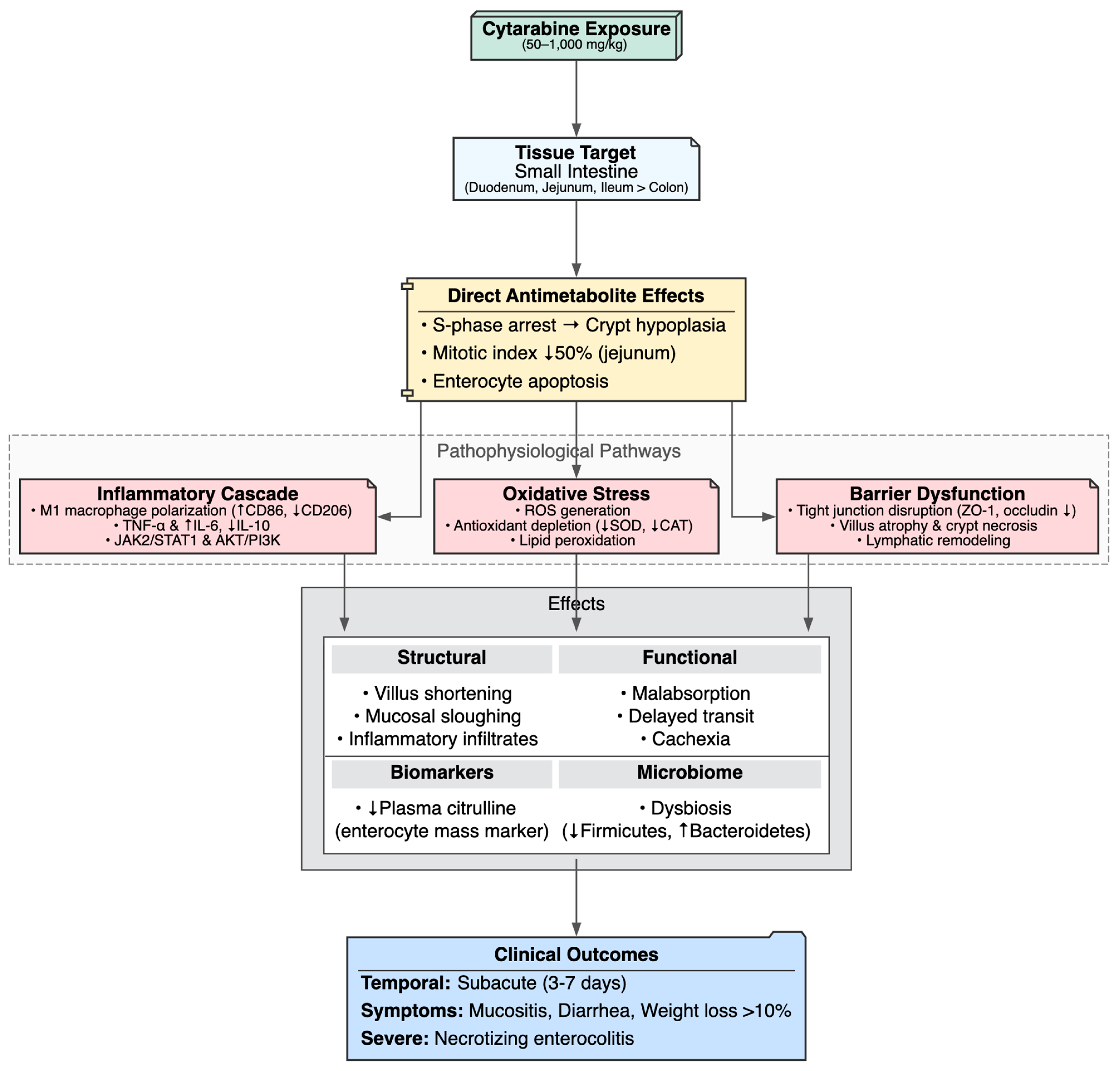
| Gastrointestinal toxicity | 11 (n ≈ 200–400; mice, rats, Drosophila) | Mucositis, villus atrophy/blunting, crypt necrosis, malabsorption, barrier failure. | Inflammation (TNF-α, IL-6), M1 macrophage polarization, oxidative stress, apoptosis. | ⊕⊕◯◯ Low | Downgraded one level for risk of bias and one level for indirectness. Minor inconsistency in severity across doses; no serious imprecision. |
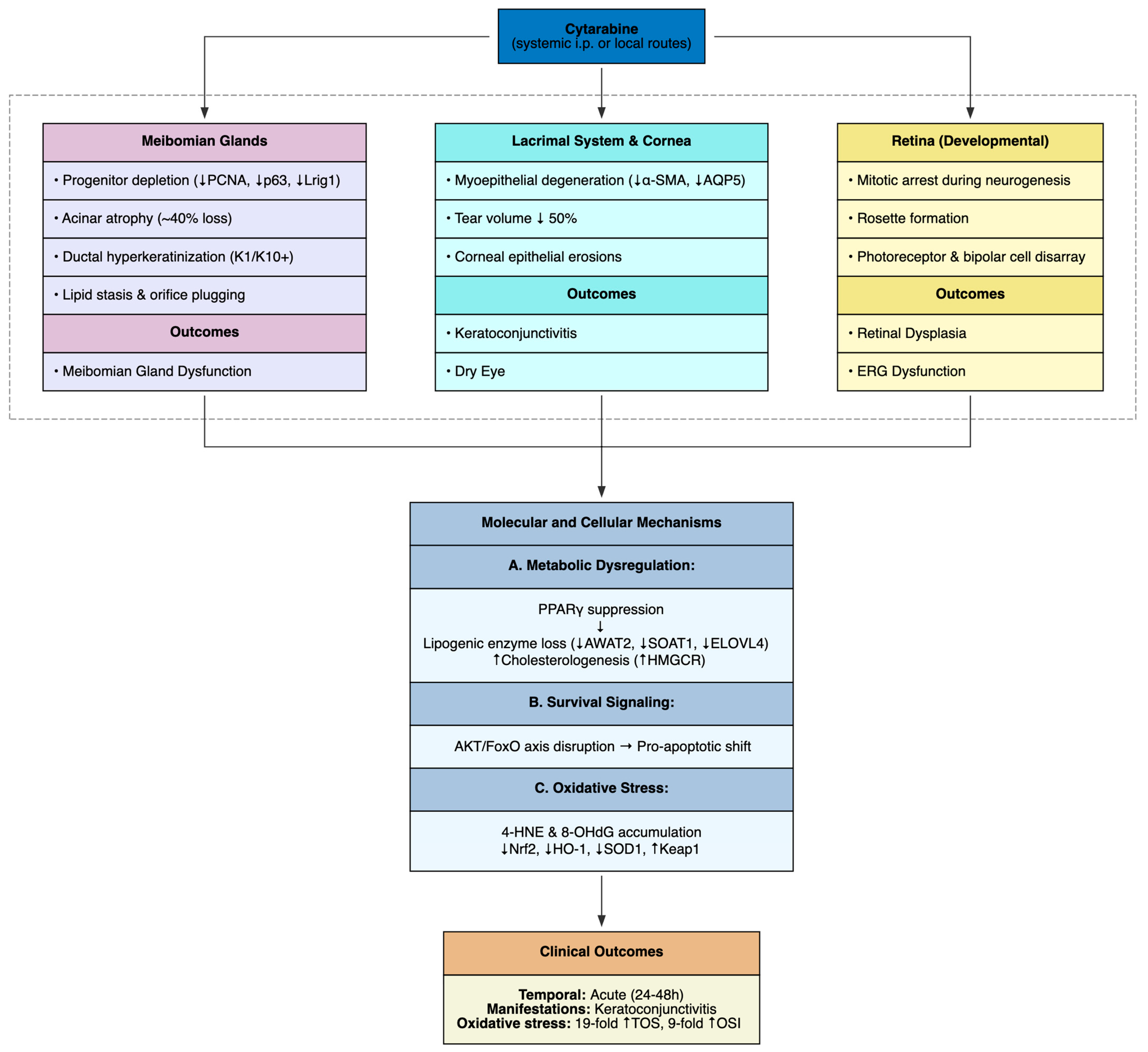
| Ocular toxicity | 8 (n ≈ 150–300; mice, rats, rabbits) | Meibomian gland dysfunction, corneal epithelial erosion, retinal dysplasia. | Lipid metabolic dysregulation (PPARγ suppression), oxidative stress, stem cell depletion. | ⊕⊕◯◯ Low | Downgraded one level for risk of bias and one level for indirectness. Consistent findings but small samples contribute to imprecision. |
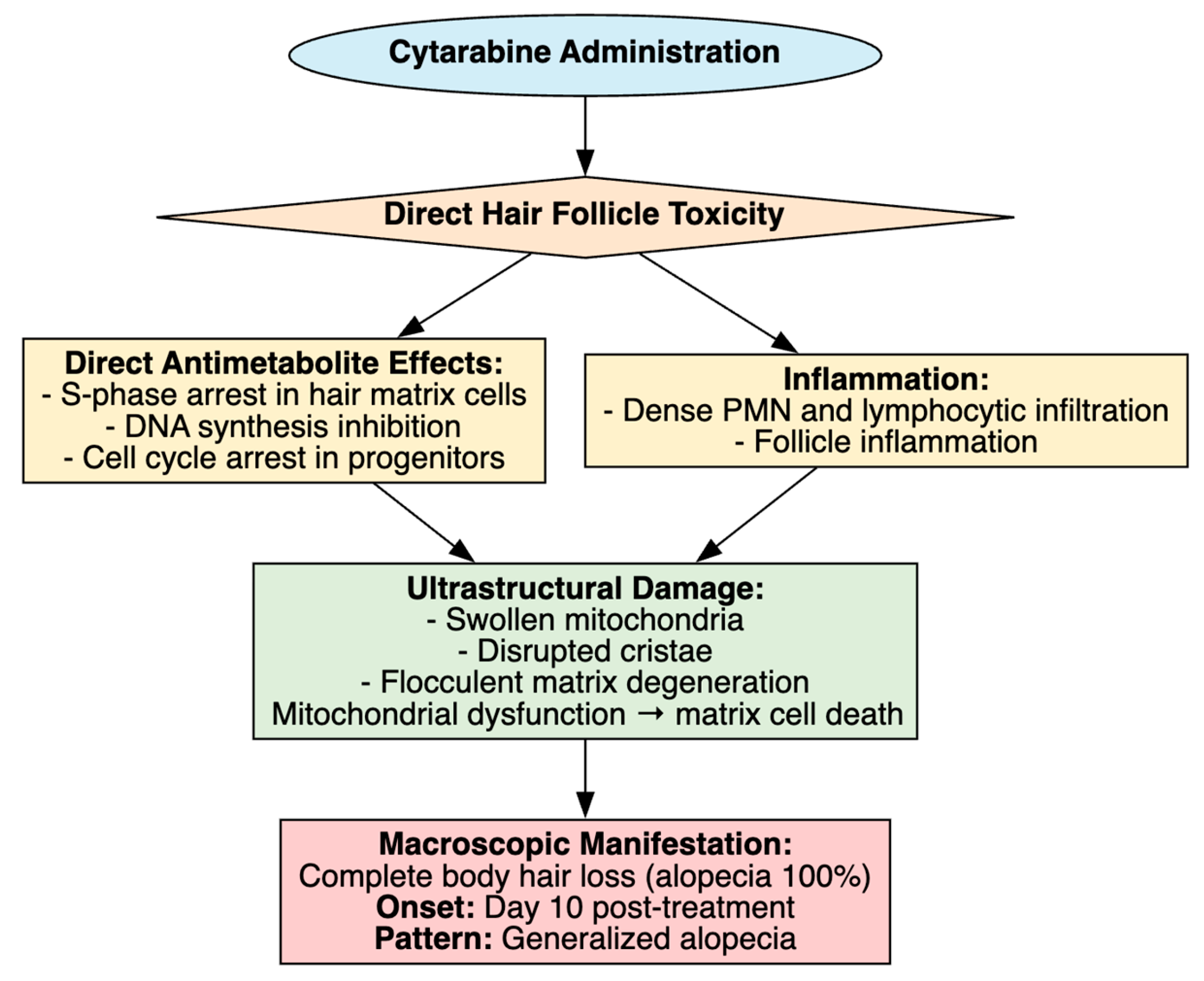
| Alopecia | 6 (n ≈ 100–200; primarily rats) | Macroscopic hair loss in 100% of exposed animals, with histopathology showing follicular inflammation. | Direct cytotoxicity to hair matrix cells, inflammation (IL-1 dependent). | ⊕◯◯◯ Very low | Downgraded one level for risk of bias, one for indirectness, and one for imprecision (small cohorts, qualitative assessments). Potential publication bias. |
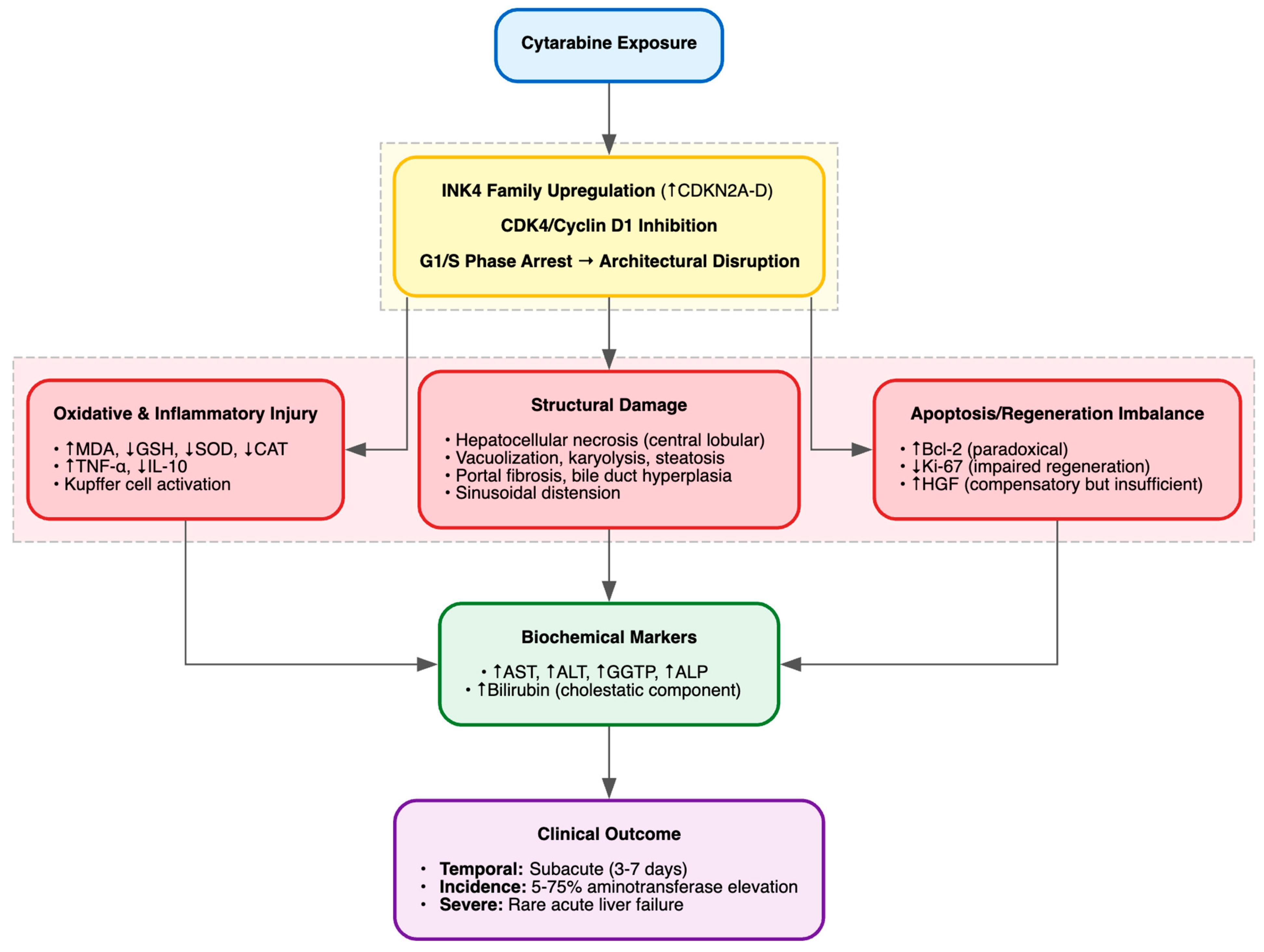
| Hepatotoxicity | 4 (n ≈ 80–150; mice, rats, rabbits) | Hepatocellular necrosis, steatosis, fibrosis, enzyme elevation (ALT/AST). | Oxidative stress, G1/S cell cycle arrest (INK4 upregulation). | ⊕◯◯◯ Very low | Downgraded one level for risk of bias, one for indirectness, and one for imprecision (few studies, sparse quantitative data). |
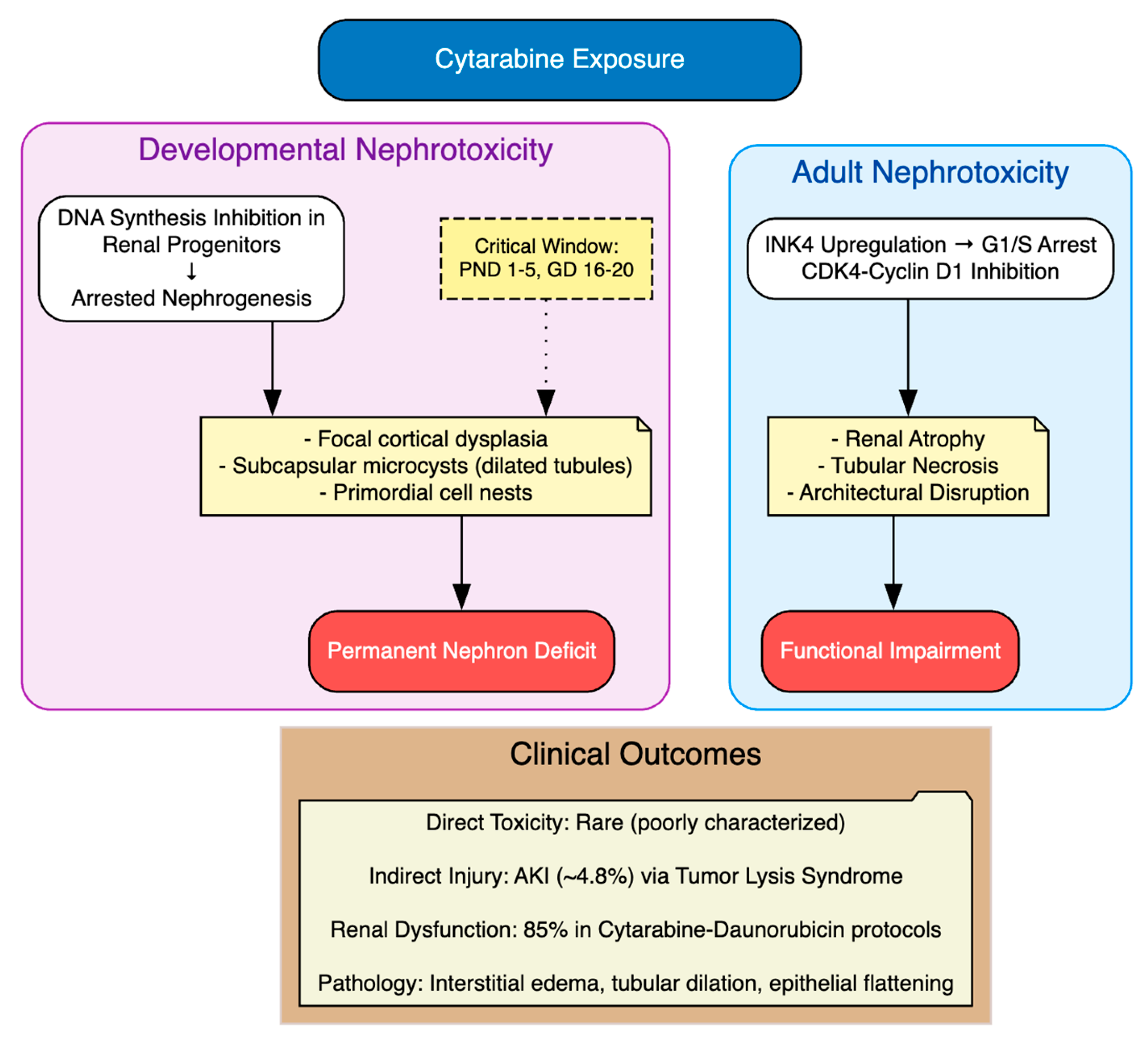
| Nephrotoxicity | 3 (n ≈ 60–100; mice, rats) | Tubular necrosis, renal atrophy, developmental nephron deficit. | Inhibition of proliferation, developmental arrest, DNA synthesis inhibition. | ⊕◯◯◯ Very low | Downgraded one level for risk of bias, one for indirectness, and one for imprecision (limited studies, small samples). |
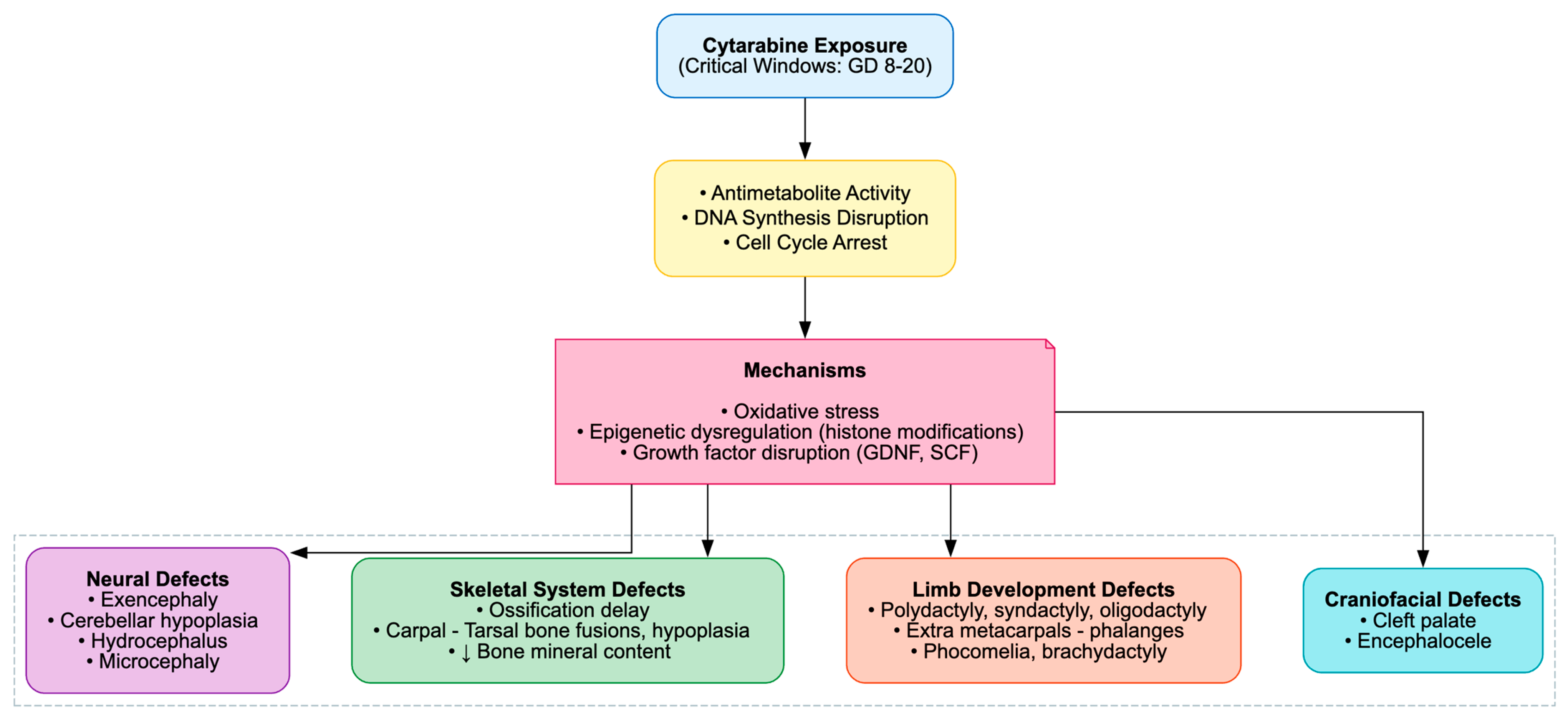
| Developmental toxicity | 27 (n ≈ 500–800; rodents, Drosophila) | Teratogenicity (limb defects, cleft palate), skeletal dysplasia, fetal growth restriction. | Wnt signaling suppression, massive apoptosis in limb buds, DNA synthesis inhibition. | ⊕⊕◯◯ Low | Downgraded one level for risk of bias and one for indirectness. Some inconsistency in timing/dose effects; no serious imprecision despite overlaps. |
| Author, Year | Animal Model | Dosing Regimen | Primary Pathologies Observed | Key Mechanistic and Molecular Drivers |
|---|---|---|---|---|
| Alexander TC et al., 2018 [22] | Juvenile male C57BL/6 mice (P21) | 5 mg/kg Ara-C + 10 mg/kg MTX, i.t. weekly × 3 wks | Cognitive impairment (MWM deficits); Dendritic atrophy in hippocampus; Selective loss of mature mushroom spines in DG, CA1, CA3. | Synaptic remodeling without necrosis; Dendritic retraction; Systemic and intrathecal inflammation (elevated leukocytes); Disruption of synaptic plasticity. |
| Fremouw T et al., 2012 [23] | Male C57BL/6J mice (8 wks) | 275 mg/kg i.p. daily × 5 days | Significant weight loss (~9%); Numerical trends toward cognitive deficit (though not statistically significant in this specific protocol). | Systemic metabolic stress affecting cognition; Potential threshold effect for measurable memory decline. |
| Li CQ et al., 2008 [24] | Male Sprague–Dawley rats | 400 mg/kg i.p. daily × 5 days | Impaired remote spatial memory; Apical dendritic retraction in Anterior Cingulate Cortex (shorter length, fewer branches/spines). | Selective dendritic remodeling in cortical layer II/III pyramidal neurons; Synaptic plasticity disruption in executive centers. |
| Patel RS et al., 2012 [27] | Juvenile Sprague–Dawley rats | 50, 100, or 200 mg/kg i.p. daily for 5 or 14 days | Motor deficits (rotarod, gait); Purkinje cell misalignment/loss; Granule cell depletion in all lobes. | Oxidative stress (↑ MDA, ↓ GSH); DNA damage (Comet assay); Apoptosis (↑ p53, caspase-3); Epigenetic changes (↑ H3 acetylation, ↑ H3K4me, ↓ H3K9me). |
| Koros C et al., 2007 [29] | Adult male Wistar rats | 400 mg/kg i.p. daily × 5 days | Ataxic gait; Rotarod deficits; Purkinje cell monolayer disruption; Granule cell cytotoxicity. | Cytoskeletal disruption (↓ Neurofilament in molecular layer); Dysregulation of calcium buffering (↑ Calbindin in Purkinje cells). |
| Koros C et al., 2009 [28] | Adult male Wistar rats | 400 mg/kg i.p. daily × 5 days | Selective reduction in Neurofilament-Heavy (NF-H) isoform (~40%); Loss of axonal NF immunoreactivity. | Selective proteolysis or synthesis inhibition of NF-H isoform; Oxidative stress (mitigated by NAC). |
| Guzmán DC et al., 2018 [25] | Male Wistar rats (4 wks) | 0.6 g/kg i.v. daily × 5 days | Neuronal pyknosis, cell shrinkage, vacuolization in cortex, striatum, cerebellum/medulla. | Neurotransmitter depletion (↓ Dopamine, ↓ 5-HIAA); Oxidative stress (↑ TBARS, ↓ GSH). |
| Guzmán DC et al., 2016 [26] | Male Wistar rats (~100 g) | 70 mg/kg i.p. daily × 5 days | Biochemical alterations in brain regions (no histology). | Oxidative/Nitrosative stress; Monoamine depletion (↓ Dopamine); Na+, K+-ATPase inhibition. |
| Guzmán DC et al., 2024 [37] | Female Wistar rats (4 wks) | 0.08 mM single i.p. injection | Altered dopamine levels in striatum/cerebellum; Oxidative stress markers. | Disruption of dopaminergic metabolism; Modulation of oxidative damage by oligoelements. |
| Salimi A et al., 2023 [31] | Adult male Wistar rats | 70 mg/kg i.p. daily × 5 days | Midbrain neuronal loss; Cytoplasmic depletion; Granule layer fragmentation. | Mitochondrial dysfunction (↓ SDH, swelling, ROS generation, ΔΨm collapse); Oxidative stress; AChE/BChE inhibition. |
| Takano T et al., 2006 [32] | Pregnant ICR mice (offspring analyzed) | 30 mg/kg i.p. on GD 13.5 and 14.5 | Microcephaly; Gray-matter heterotopia; Disrupted cortical lamination; Subependymal nodules. | Massive apoptosis in proliferative zones (VZ/IZ); Failure of radial glial scaffold (↓ Nestin); Premature neuronal differentiation; Disrupted migration. |
| Yamauchi H et al., 2004 [33] | Pregnant Slc: Wistar rats | 100 mg/kg i.p. daily × 7 days (GD13 assessment) | Neuroepithelial apoptosis in ventricular zone; Suppression of mitoses. | p53-dependent apoptosis (↑ p53 protein, ↑ p21/bax mRNA); Cell cycle arrest in fetal brain. |
| Shimada M et al., 1975 [34] | Newborn ICR-JCL mice | 30 or 50 mg/kg s.c. on PND 2–4 | Cerebellar hypoplasia; EGL necrosis; Heterotopic granule cells; Disorganized Purkinje layer. | Acute necrosis of External Granular Layer (EGL); Aberrant migration of regenerating granule cells; Persistent dysplasia. |
| Yamano T et al., 1980 [40] | ICR-JCL mouse pups | 30 mg/kg s.c. on PND 2–4 | Heterotopic granule cells in molecular layer; Disorganized Purkinje layer. | Synaptic mismatch (Granule cells synapse on mossy fibers in molecular layer); EGL disruption preventing normal migration. |
| Yamano T et al., 1983 [44] | ICR-JCL suckling mice | 30 mg/kg s.c. daily × 3 days (various schedules) | Timing-dependent cerebellar dysplasia; Heterotopias; Purkinje dendritic arborization defects. | Critical window of EGL destruction determines severity of cytoarchitectural disarray; Purkinje cell defects secondary to granule cell loss. |
| Matsutani T et al., 1983 [39] | Wistar-Imamichi rats (Fetal or Neonatal) | 280 mg/kg i.p. (Fetal) or 30 mg/kg s.c. (Neonatal) | Cerebellar hypoplasia; Ataxia; Altered DNA content and monoamine levels. | Growth retardation; Disrupted monoamine neurotransmitter development (↑ NE, 5-HT relative to tissue weight). |
| Kasubuchi Y et al., 1977 [41] | ICR-JCL mice | 30 mg/kg i.p. on GD 13.3–14 | Transplacental dysgenetic hydrocephalus; Matrix zone destruction; Cystic lesions. | S-phase specific necrosis of ventricular matrix cells; Ependymal denudation leading to aqueduct stenosis/hydrocephalus. |
| Percy DH et al., 1974 [35] | Mice and Rats (Postnatal) | 3.125–50 mg/kg s.c. daily × 5 days | Cerebellar hypoplasia; Loss of lamination; Retinal/Renal dysplasia. | Inhibition of postnatal gliogenesis/neurogenesis; Dose-dependent arrest of developmental sequences. |
| Percy DH, 1975 [36] | Mice and Rats (Prenatal) | 12.5–50 mg/kg s.c. daily × 3 days | Segmental cerebellar hypoplasia; Retinal dysplasia; Renal microcysts. | Stage-dependent teratogenicity matching organogenesis windows; Cellular necrosis in proliferative zones. |
| Narang HK, 1982 [38] | New Zealand albino rabbits | 10–20 mg/kg s.c. (various schedules) | Optic nerve atrophy; Spongy degeneration; Gliosis; Neurologic signs (ataxia). | Macrophage infiltration; Demyelination/remyelination attempts; Synergistic toxicity with HSV infection context. |
| Elmer GI et al., 2004 [43] | Pregnant Sprague–Dawley rats | 30 mg/kg i.p. on GD 19.5 & 20.5 | Adult-onset sensorimotor gating deficits (PPI); Subtle hippocampal disorganization. | Disruption of late-stage neurogenesis; Dopaminergic/Glutamatergic signaling perturbation (schizophrenia model). |
| Adlard BP et al., 1975 [42] | Lister hooded rats | 50 mg/kg (prenatal) or 250 mg/kg (postnatal) | Impaired brain growth; Cerebellar stunting; Learning deficits in T-maze. | Growth retardation; Permanent cognitive sequelae from developmental insult; Toxicity > Adenine Arabinoside (Ara-A). |
| Guan Z et al., 2023 [30] | Pregnant C57BL/6 mice | Single i.p. 22.5 mg/kg (optimal for NTD) | Neural Tube Defects (Exencephaly); Disorganized neuroepithelium. | Suppression of Wnt/β-catenin signaling; Premature differentiation (Gliogenic shift); Apoptosis (Caspase-3). |
| Author, Year | Animal Model | Dosing Regimen | Primary Pathologies Observed | Key Mechanistic and Molecular Drivers |
|---|---|---|---|---|
| Li JJ et al., 2023 [46] | Male C57BL/6 mice | 100 mg/kg i.p. daily × 7 days | Ileal villus shortening/flattening; Crypt necrosis; Epithelial vacuolation; Muscularis edema; Weight loss. | M1 Macrophage polarization (↑ CD86, iNOS); Pro-inflammatory cytokines (↑ TNF-α, IL-6, ↓ IL-10); AKT signaling suppression; Tight junction loss (↓ ZO-1/Occludin). |
| de Souza Silva PM et al., 2018 [45] | BALB/c mice | 1.8 mg/mouse i.p. q12h × 4 doses | 50% loss of mitotic activity in crypts; Leukopenia; DNA damage in leukocytes. | Genotoxicity (DNA strand breaks); Mitotic arrest in crypt progenitors; Synergism with dietary modulation. |
| Ramos MG et al., 1997 [47] | Swiss NMRI mice | 3.6 mg/day i.p. × 2–4 days | Villus shortening; Enterocyte necrosis; Lamina propria inflammation; Hepatic necrosis. | Nutritional modulation (worsened by elemental diet); SCFA deficiency; Inflammation. |
| Ramos MG et al., 1999 [48] | Germ-free mice | 3.6 mg/day i.p. × 2 days | Severe villus shortening; Enterocyte loss/necrosis; Inflammation. | Mucosal atrophy independent of microbiome; Mitigation by exogenous SCFAs; Epithelial necrosis. |
| Chu W et al., 2023 [49] | Male C57BL/6 mice | 100 mg/kg i.p. daily × 7 days | Villus atrophy; Crypt necrosis; Epithelial vacuolization; Edema; Anorexia. | M1 Macrophage polarization via JAK2/STAT1 signaling; Inflammation (↑ TNF-α, IL-6, ↓ IL-10); iNOS activation. |
| Minden MD et al., 2024 [51] | Male BALB/c mice | 30 mg/kg i.p. BID × 5 days (High toxicity model) | 100% mortality by Day 3; Severe crypt/villus destruction; Dysbiosis. | Enterocyte mass depletion (↓ Plasma Citrulline); Gut microbiota shift (↓ Firmicutes, ↑ Bacteroidetes); Rescue by GLP-2 analog. |
| Park M-R et al., 2023 [104] | Male C57BL/6 mice | 100 mg/kg i.v. daily × 4 days | Cachexia with lipid malabsorption (retained fecal lipids); Chylomicron retention in enterocytes. | Lymphatic vessel remodeling (Lacteal junction “zippering” via VE-cadherin); VEGFR2/AKT phosphorylation; Impaired lipid transport; Mitochondrial/Golgi stress. |
| Porsani MYH et al., 2017 [52] | Male Balb/C mice | 15 mg/kg i.p. q12h × 4 doses | Reduced villus height/width and crypt depth; Leukopenia. | Immune suppression (↓ IL-10, ↑ IFN-γ); Synergistic protection by β-glucan/glutamine. |
| Elli M et al., 2009 [53] | Male BALB/c mice | 3.6 mg/mouse i.p. daily × 5 days | Marked villus atrophy; Crypt hyperplasia; Inflammatory infiltrate. | Mucosal injury mitigated by Vitamin A; Enterocyte loss. |
| Chwalinski S et al., 1989 [54] | Male BDF1 mice | 200 + 100 µg/g i.p. (12 h apart) | Selective destruction of crypt cells above Paneth zone; Paneth cells spared. | S-phase specific cytotoxicity; Regeneration originates from surviving Paneth/stem cell zone; Spatial specificity of apoptosis. |
| Han S et al., 2023 [55] | Drosophila melanogaster | 1–10 mM in food (continuous) | Midgut shortening; Epithelial edema; Microvilli truncation; Mitochondrial rupture. | Oxidative stress (↑ ROS, GST); Innate immune activation (Toll, IMD); Apoptosis (Reaper, Drice); JAK-STAT/JNK signaling upregulation. |
| Chen T, 1982 [56] | Male Swiss-Webster mice | 50 mg/kg i.p. daily × 5 days | Impaired active transport of Glucose, Amino acids, Electrolytes (Na+, Cl−). | Functional transporter defect; Reduced transmucosal potential difference; Altered mucosal electrophysiology. |
| Author, Year | Animal Model | Dosing Regimen | Primary Pathologies Observed | Key Mechanistic and Molecular Drivers |
|---|---|---|---|---|
| Liu et al., 2024 [57] | Male C57BL/6J mice | 50 mg/kg i.p. daily × 7 days | Meibomian Gland Dysfunction (plugging, atrophy); Lacrimal gland hyposecretion; Corneal epithelial defects. | Suppression of PPARγ signaling; Altered lipid metabolism (↓ AWAT2, ↑ Cholesterol); Ductal hyperkeratinization (↑K1/K10); Oxidative stress (↑ 4-HNE, ↓ Nrf2); ↓ AKT/FoxO signaling. |
| Balci YI et al., 2017 [58] | Mature Wistar rats | 400 mg/kg i.p. daily × 5 days | Oxidative stress in cornea/conjunctiva (Biochemical assessment). | Oxidative injury (↑ Total Oxidant Status, ↑ Oxidative Stress Index); Mitigated by NAC. |
| Rootman J et al., 1983 [59] | Female NZ White rabbits | 37.5 mg/kg Subconjunctival vs. IV | Focal superficial conjunctival erosions; Transient infiltrates (Subconjunctival route). | Local toxicity due to high tissue concentration (15× higher in anterior chamber vs. IV); Polymorphonuclear infiltration; Route-dependent toxicity. |
| Diets-Ouwehand J et al., 1992 [60] | Chinchilla rabbits | 600–2700 µg Intravitreal | Blood–retina barrier leakage (Fluorescein); ERG deficits (b-wave reduction); Synaptic pedicle disorganization (EM). | Retinal neurotoxicity at high local doses; Synaptic vesicle disorganization; Barrier breakdown; Photoreceptor dysfunction. |
| Percy DH et al., 1977 [61] | Newborn Sprague–Dawley rats | 15 mg/kg s.c. PND 1–5 | Retinal dysplasia; Rosette formation; Photoreceptor misalignment; Pigment epithelium reaction. | Disruption of postnatal retinal histogenesis; Phagocyte infiltration; Persistent cellular degeneration; Bipolar cell displacement. |
| Shimada M et al., 1973 [62] | Newborn ICR-JCL mice | 30–50 mg/kg s.c. PND 2–4 | Widespread rosette formation in outer nuclear layer; Heterotopic ganglion cells. | Selective necrosis of undifferentiated outer nuclear layer; Failure of differentiation; Heterotopic migration. |
| Kaufman HE et al., 1964 [63] | NZ White rabbits | 1.0% Ophthalmic drops q2h × 5 days | Corneal epithelial opacities (“glittering”); Punctate staining; Iritis. | Inhibition of DNA synthesis in corneal epithelium; Megaloblastic epithelial changes; Loss of glycolytic enzymes; Basal cell toxicity. |
| Percy DH, 1975 [36] | Rats (Prenatal exposure) | 50 mg/kg s.c. GD 18–20 | Retinal dysplasia; Central retinal thinning; Rosette formation. | Teratogenic disruption of late-fetal retinal layering; Dose-dependent severity. |
| Author, Year | Animal Model | Dosing Regimen | Primary Pathologies Observed | Key Mechanistic and Molecular Drivers |
|---|---|---|---|---|
| Jimenez JJ et al., 1992 [64] | Fisher rats (7 days old) | 20 mg/kg i.p. daily × 7 days | Complete body alopecia (100% incidence). | Direct cytotoxicity to hair matrix; Protection by IL-1β (induced quiescence/G1 arrest). |
| Jimenez JJ et al., 1992 [65] | Sprague-Dawley rats | 50 mg/kg Ara-C + 50 mg/kg CTX | 100% alopecia (macroscopic). | Synergistic toxicity with cyclophosphamide; Protection by ImuVert/NAC (Antioxidant/Immune modulation). |
| Sun B et al., 2009 [67] | Sprague–Dawley rat pups | 30 mg/kg i.p. daily × 7 days | Severe alopecia (75–100% loss); Follicle atrophy; Loss of follicle number. | Hair follicle toxicity mitigated by AHCC (immunostimulant/antioxidant). |
| Hussein AM, 1995 [68] | Sprague–Dawley rat pups | 75 mg/kg i.p. daily × 5 days | 100% complete alopecia. | Hair follicle arrest; Protection by Minoxidil (Topical or SC). |
| Hagiwara S et al., 2011 [69] | Wistar rat pups | 20 mg/kg i.p. daily × 7 days | Complete alopecia; Dense inflammatory infiltrates in follicles. | Mitochondrial damage (swelling, disrupted cristae) in hair matrix cells; Inflammation; Protection by zinc/lipoic acid derivative. |
| Jimenez JJ et al., 1992 [66] | Rats | In vitro and In vivo | Protection of hair follicles. | Mechanism confirmation: IL-1 protects by arresting cells in G1, evading S-phase toxicity. |
| Author, Year | Animal Model | Dosing Regimen | Primary Pathologies Observed | Key Mechanistic and Molecular Drivers |
|---|---|---|---|---|
| Kolure R et al., 2023 [71] | Pregnant Sprague Dawley rats | 25 mg/kg p.o. daily GD 8–20 | Hepatic vacuolization; Disrupted lobular architecture; Pycnotic nuclei; Sinusoidal dilation. | Oxidative stress (↑ MDA, ↓ SOD/CAT/GSH); Serum enzyme elevation (AST/ALT/ALP); Maternal toxicity. |
| Saif A-J et al., 2020 [72] | NZ White rabbits | 50 mg/kg i.p. daily × 7 days | Coagulative necrosis of periportal hepatocytes; Portal fibrosis; Bile duct hyperplasia; Congestion. | Inflammatory infiltration (Mononuclear/Kupffer cells); Fibrotic remodeling; Sinusoidal distension. |
| Dudina MO et al., 2018 [73] | Wistar rats | 2 g/m2 i.v. daily × 5 days | Centrilobular necrosis; Steatosis; Portal fibrosis; Vacuolization; Karyolysis. | Pro-inflammatory cytokines (↑ TNF-α, ↓ IL-10); Apoptosis/Survival imbalance (↑ Bcl-2, ↓ Ki-67); ↑ HGF (repair response); Enzyme leakage. |
| Sun F et al., 2019 [70] | BALB/c nude mice | 2.5 mg/kg i.p. daily × 20 days | Liver atrophy; Weight loss. | G1/S cell cycle arrest; Upregulation of INK4 family inhibitors (CDKN2A–D); Suppression of CDK4/Cyclin D1 complex. |
| Author, Year | Animal Model | Dosing Regimen | Primary Pathologies Observed | Key Mechanistic and Molecular Drivers |
|---|---|---|---|---|
| Sun F et al., 2019 [70] | BALB/c nude mice | 2.5 mg/kg i.p. daily × 20 days | Renal atrophy; Inflammation; Structural disruption. | Induction of cell cycle inhibitors (INK4 family); Impaired tissue growth/maintenance; CDK4/Cyclin D1 suppression. |
| Percy DH et al., 1974 [35] | Mice and Rats (Postnatal) | 3.125–50 mg/kg s.c. PND 1–5 | Focal cortical dysplasia; Subcapsular nests of primordial cells; Glomerular arrest. | Arrest of postnatal nephrogenesis; Inhibition of DNA synthesis in cortex; Dose-dependent dysplasia. |
| Percy DH, 1975 [36] | Rats (Prenatal) | 50 mg/kg s.c. GD 18–20 | Focal subcapsular microcysts; Dilated tubules; Vacuolated epithelium. | Teratogenic disruption of renal development; Cystogenesis; Primordial cell nests indicating arrest. |
| Author, Year | Animal Model | Dosing Regimen | Primary Pathologies Observed | Key Mechanistic and Molecular Drivers |
|---|---|---|---|---|
| Namoju R et al., 2021 [80] | Pregnant rats | 12.5–25 mg/kg i.p. GD 8–14 | Limb reduction defects; Oligodactyly; Impaired ossification; Resorptions. | Placental oxidative stress (↑ MDA, ↓ GSH); Maternal toxicity; Reduced bone Ca/P content. |
| Zhao X et al., 2020 [81] | Pregnant Sprague–Dawley rats | 100 mg/kg i.p. single dose (GD 11–14) | Thumb polydactyly/syndactyly (peak at GD 12.5); Extra metacarpals. | Expansion of FGF4 expression domain in limb bud; Persistence of AER; Disrupted patterning. |
| Chilaka KN et al., 2024 [82] | Pregnant rats | 12.5–25 mg/kg i.p. GD 8–21 | F1 male reproductive toxicity (Testicular atrophy, sperm defects). | Oxidative stress in fetal testis; Hormonal disruption (↓ Testosterone, FSH, LH); Sertoli/Leydig cell damage; Altered steroidogenic enzymes. |
| Yamauchi H et al., 2003 [83] | Pregnant Wistar rats | 250 mg/kg i.p. GD 13 | Fetal hypoplasia; Placental labyrinth thinning; Widespread apoptosis. | Acute apoptosis in neuroepithelium and mesenchyme (3–12 h post dose); TUNEL+ cells in multiple fetal tissues. |
| Kochhar DM et al., 1978 [84] | Pregnant ICR mice | 2–200 mg/kg i.p. GD 10.5–12 | Limb defects (micromelia to adactyly); Embryolethality. | DNA synthesis inhibition; Mesenchymal necrosis; Stage-dependent phenotype; AER thickening. |
| Manson JM et al., 1977 [85] | Pregnant ICR mice | 40 mg/kg i.p. GD 10–12 | Limb blisters; Adactyly. | Mesenchymal necrosis; Blisters represent fluid accumulation over necrotic tissue; In vitro correlation. |
| Rahman ME et al., 1994 [86] | Pregnant ICR mice | 5 mg/kg i.p. GD 10.5 | Carpal/Tarsal bone fusions and absence; Oligodactyly. | Specific sensitivity of carpal/tarsal ossification centers; Correlation with digit defects. |
| Rahman ME et al., 1996 [87] | Pregnant ICR mice | 0.5–2.0 mg/kg i.p. GD 10.5 | Carpal/Tarsal anomalies (independent of digit defects). | High sensitivity of wrist/ankle bones to antiproliferative agents compared to digits. |
| Chiang H et al., 1995 [88] | Pregnant Swiss mice | 10 mg/kg i.p. GD 9 | Cleft palate; Cleft lip; Resorptions. | Synergism with pulsed magnetic fields enhancing teratogenicity. |
| Chiba K et al., 1996 [89] | Pregnant ICR mice | 5–7.5 mg/kg i.p. GD 8–11 | Hip joint anomalies (dysplasia, pseudoarthrosis); Femoral defects. | Disruption of hip/femur ossification centers; Co-occurrence with hindlimb defects. |
| Ritter EJ et al., 1971 [90] | Pregnant Wistar rats | 25–200 mg/kg i.p. GD 12 | Limb malformations; Growth retardation; Resorptions. | Correlation between duration of DNA synthesis inhibition and teratogenicity severity. |
| Ritter EJ et al., 1973 [91] | Pregnant Wistar rats | 200 mg/kg (Ara-CP) GD 12 | Ectrodactyly. | Delayed/Prolonged DNA synthesis inhibition by palmitate ester leading to specific limb defects. |
| Scott WJ et al., 1975 [92] | Pregnant rats | 100 mg/kg i.p. GD 10–11 | Polydactyly (Preaxial). | Synchronized S-phase peaks; Lack of normal preaxial cell death zone; Ectodermal ridge thickening. |
| Goto T et al., 1987 [93] | Pregnant ICR mice | 2.5–10 mg/kg i.p. GD 9.5–10.5 | Polydactyly/Oligodactyly. | Sex differences in susceptibility (Males > Females for oligodactyly); Dose-dependent shift in lesion type. |
| Endo A et al., 1987 [94] | Pregnant CD-1 mice | 5 mg/kg i.p. GD 11 | Digit defects; Cleft palate. | Circadian susceptibility. |
| Rahman ME et al., 1995 [95] | Pregnant ICR mice | 5 mg/kg i.p. GD 9.5–12.5 | Carpal/Tarsal fusions. | Broad critical period for carpal/tarsal defects compared to digits. |
| Chaube S et al., 1968 [96] | Pregnant Wistar rats | 2.5–900 mg/kg i.p. GD 5–12 | Cleft palate; Encephalocele; Limb deformities. | Prevention by Deoxycytidine (CdR); Lack of deaminase in embryo leads to high drug exposure. |
| Guan Z et al., 2023 [30] | Pregnant C57BL/6 mice | 22.5 mg/kg i.p. GD 7.5 | Neural Tube Defects (Exencephaly); Growth retardation. | Inhibition of Wnt/β-catenin; Gliogenic shift; Apoptosis (Caspase-3). |
| Yamauchi H et al., 2004 [101] | Wistar Pregnant rats | 250 mg/kg i.p. single on GD13 | Placental injury: labyrinth zone trophoblastic cell apoptosis, labyrinth thinning | p53 peak at 1–3 h; Proliferation fell by 3–6 h; Apoptosis (TUNEL, caspase-3) at 6 h; p21, cyclin G1, fas mRNAs peak at 9 h |
| Author, Year | Animal Model | Dosing Regimen | Primary Pathologies Observed | Key Mechanistic and Molecular Drivers |
|---|---|---|---|---|
| Bilgin AO et al., 2020 [79] | Male Wistar rats | 200 mg/kg i.p. daily × 14 days | Pulmonary edema; Alveolar hemorrhage; Inflammation. | Lung oxidative stress (↑ MDA, ↓ GSH); Inflammation (↑ TNF-α, NF-κB); Mitigated by Rutin. |
| Saif A-J et al., 2024 [50] | NZ White rabbits | 60 mg/kg i.p. daily × 10 days | Parotid gland acinar necrosis; Ductal necrosis; Stromal thickening. | Inflammation (↑ TNF-α); Apoptosis (Bcl-2 modulation); Fibrosis. |
| Khaleel B et al., 2022 [118] | Juvenile C57BL/6 mice | 140 mg/kg i.p. × 3 doses | Testicular atrophy; Seminiferous tubule apoptosis; Permanent Loss of spermatogonia. | Niche disruption: ↓ GDNF, ↓ SCF, ↓ IL-10. |
| Orth JM et al., 1988 [119] | Rat pups (PND 2) | Intratesticular injection | Reduced adult Sertoli cell number (−54%); Reduced testis size. | Selective inhibition of Sertoli cell proliferation in neonatal period; ↓ ABP. |
| Watanabe S et al., 1992 [120] | Male Sprague–Dawley rats | 63 mg/kg s.c. daily × 5 days | Atrophy of prostate and seminal vesicles; Weight loss. | Polyamine dysregulation (↑ Putrescine/Spermidine ratio). |
| Palo AK et al., 2009 [74] | Swiss albino mice | 100–200 mg/kg i.p. single | Bone marrow chromosomal aberrations; Germ cell genotoxicity. | Clastogenicity (Breaks, fragments); Micronuclei formation. |
| Lee JY et al., 2018 [75] | C57BL/6J mice | 100 mg/kg i.p. single | Bone marrow sinusoidal collapse; Megakaryocyte depletion. | Vascular niche disruption; CXCL12/CXCR4 axis. |
| Zhu RJ et al., 2013 [77] | Female C57BL/6J mice | 0.5 g/kg i.p. daily × 4 days | Marrow adipogenesis (Fatty marrow); Sinus dilation; Hemorrhage. | Adipocyte hyperplasia via PPARγ; Inhibition of hematopoiesis by fatty marrow; Rescued by PPARγ antagonist. |
| Wang J et al., 2018 [78] | Male C57BL/6 mice | 250 mg/kg i.p. daily × 3 days | Immunosuppression (Lymphoid depletion (T/B/NK)). | Functional immune impairment. |
| Castañeda-Yslas IY et al., 2024 [76] | Male BALB/c mice | 6 mg/kg i.p. (single or ×3) | Myelosuppression; Genotoxicity (Micronucleated erythrocytes). | Genotoxicity; DNA strand breaks |
| Cano F et al., 2008 [121] | Translocator mice | 100 mg/kg i.v. daily × 5 days | Granulocyte clearance; Spleen size normalization (Efficacy model). | Therapeutic cytoreduction; Used to validate leukemia model efficacy. |
Disclaimer/Publisher’s Note: The statements, opinions and data contained in all publications are solely those of the individual author(s) and contributor(s) and not of MDPI and/or the editor(s). MDPI and/or the editor(s) disclaim responsibility for any injury to people or property resulting from any ideas, methods, instructions or products referred to in the content. |
© 2025 by the authors. Licensee MDPI, Basel, Switzerland. This article is an open access article distributed under the terms and conditions of the Creative Commons Attribution (CC BY) license.
Share and Cite
Konstantinidis, I.; Tsokkou, S.; Keramas, A.; Makedou, K.; Gavriilaki, E.; Delis, G.; Papamitsou, T. Unraveling Translational Insights into Systemic Multi-Organ Toxicity of Cytosine Arabinoside (Ara-C): A Systematic Review of Preclinical Animal Evidence. Curr. Issues Mol. Biol. 2026, 48, 4. https://doi.org/10.3390/cimb48010004
Konstantinidis I, Tsokkou S, Keramas A, Makedou K, Gavriilaki E, Delis G, Papamitsou T. Unraveling Translational Insights into Systemic Multi-Organ Toxicity of Cytosine Arabinoside (Ara-C): A Systematic Review of Preclinical Animal Evidence. Current Issues in Molecular Biology. 2026; 48(1):4. https://doi.org/10.3390/cimb48010004
Chicago/Turabian StyleKonstantinidis, Ioannis, Sophia Tsokkou, Antonios Keramas, Kali Makedou, Eleni Gavriilaki, Georgios Delis, and Theodora Papamitsou. 2026. "Unraveling Translational Insights into Systemic Multi-Organ Toxicity of Cytosine Arabinoside (Ara-C): A Systematic Review of Preclinical Animal Evidence" Current Issues in Molecular Biology 48, no. 1: 4. https://doi.org/10.3390/cimb48010004
APA StyleKonstantinidis, I., Tsokkou, S., Keramas, A., Makedou, K., Gavriilaki, E., Delis, G., & Papamitsou, T. (2026). Unraveling Translational Insights into Systemic Multi-Organ Toxicity of Cytosine Arabinoside (Ara-C): A Systematic Review of Preclinical Animal Evidence. Current Issues in Molecular Biology, 48(1), 4. https://doi.org/10.3390/cimb48010004