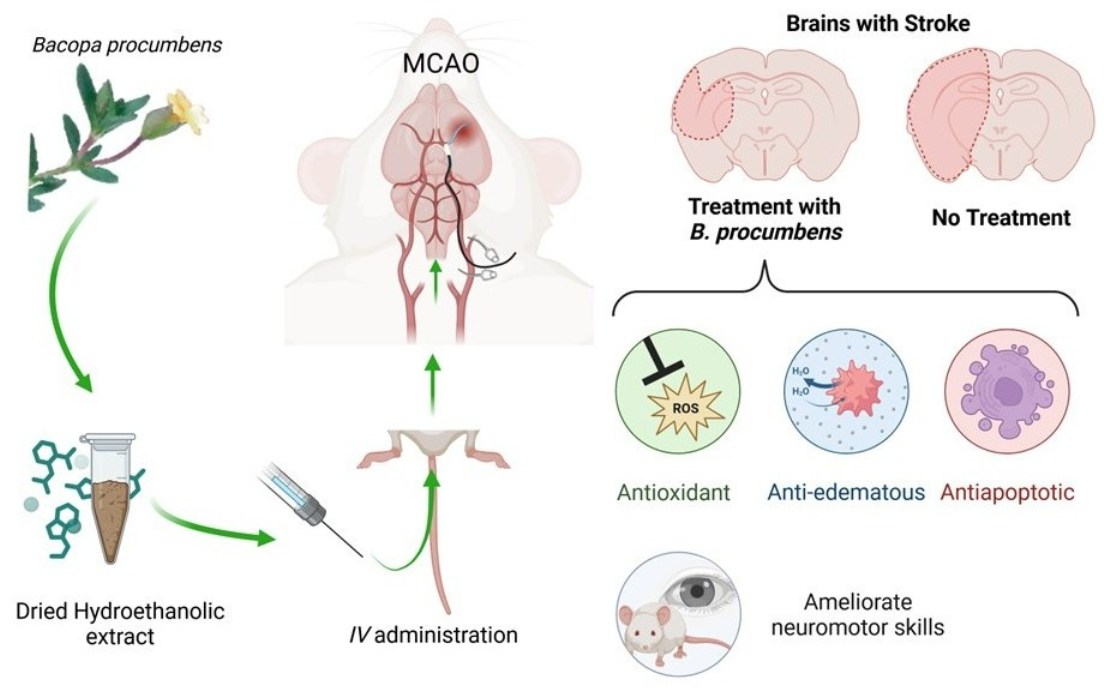
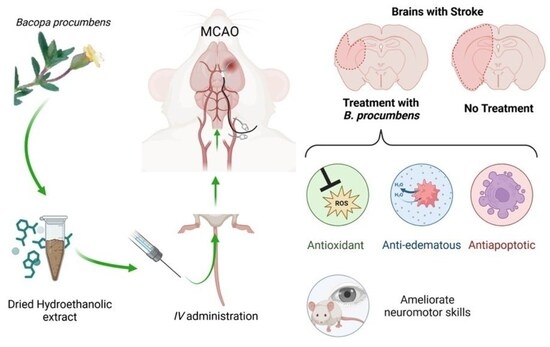
Extract of Bacopa procumbens Mitigates Brain Injury and Improves Functional Outcomes Following Ischemia–Reperfusion

 ,
,  ,
,  , , , and
Abstract
1. Introduction
2. Results
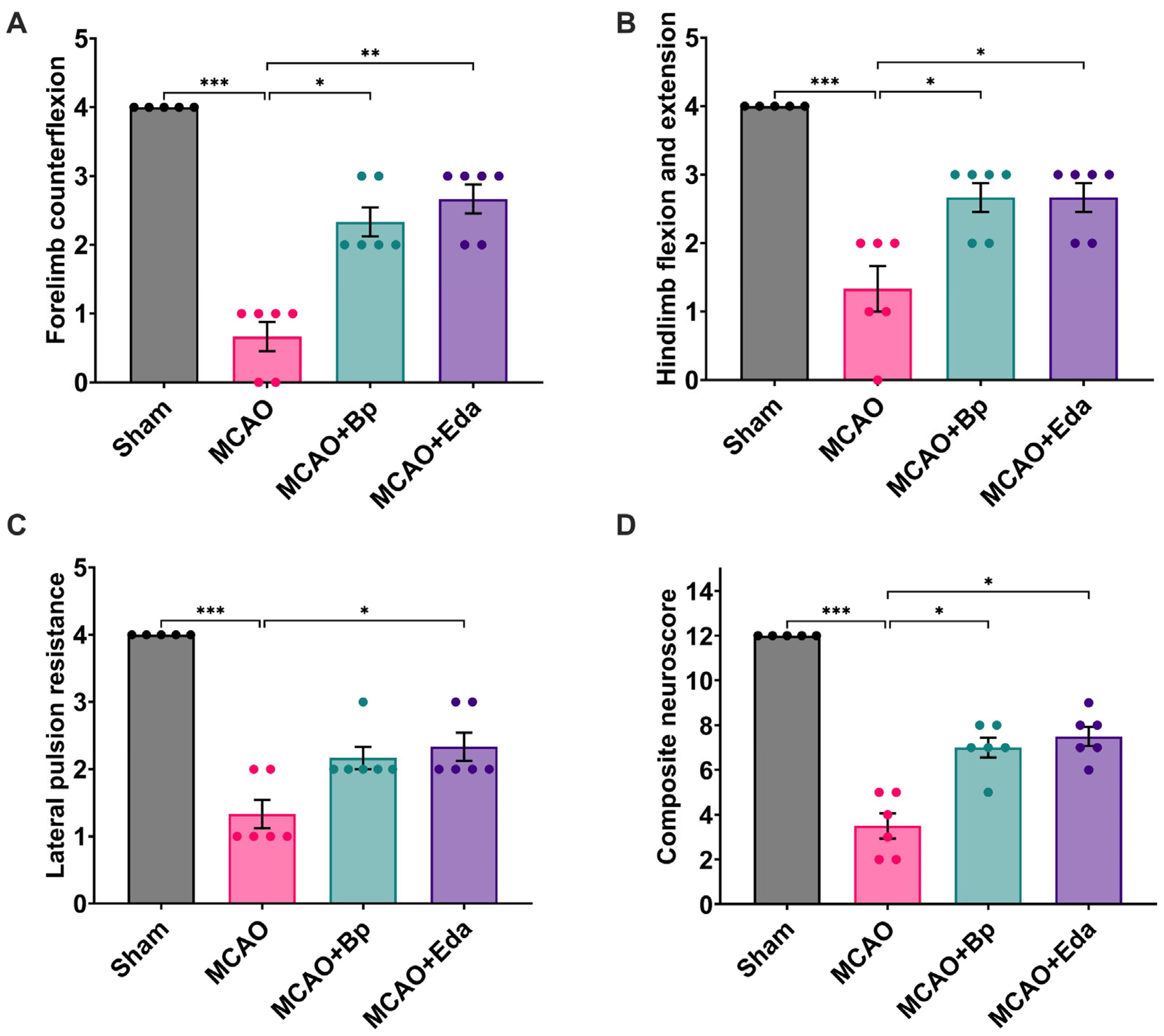
2.1. B. procumbens Enhances Neurological Recovery After MCAO
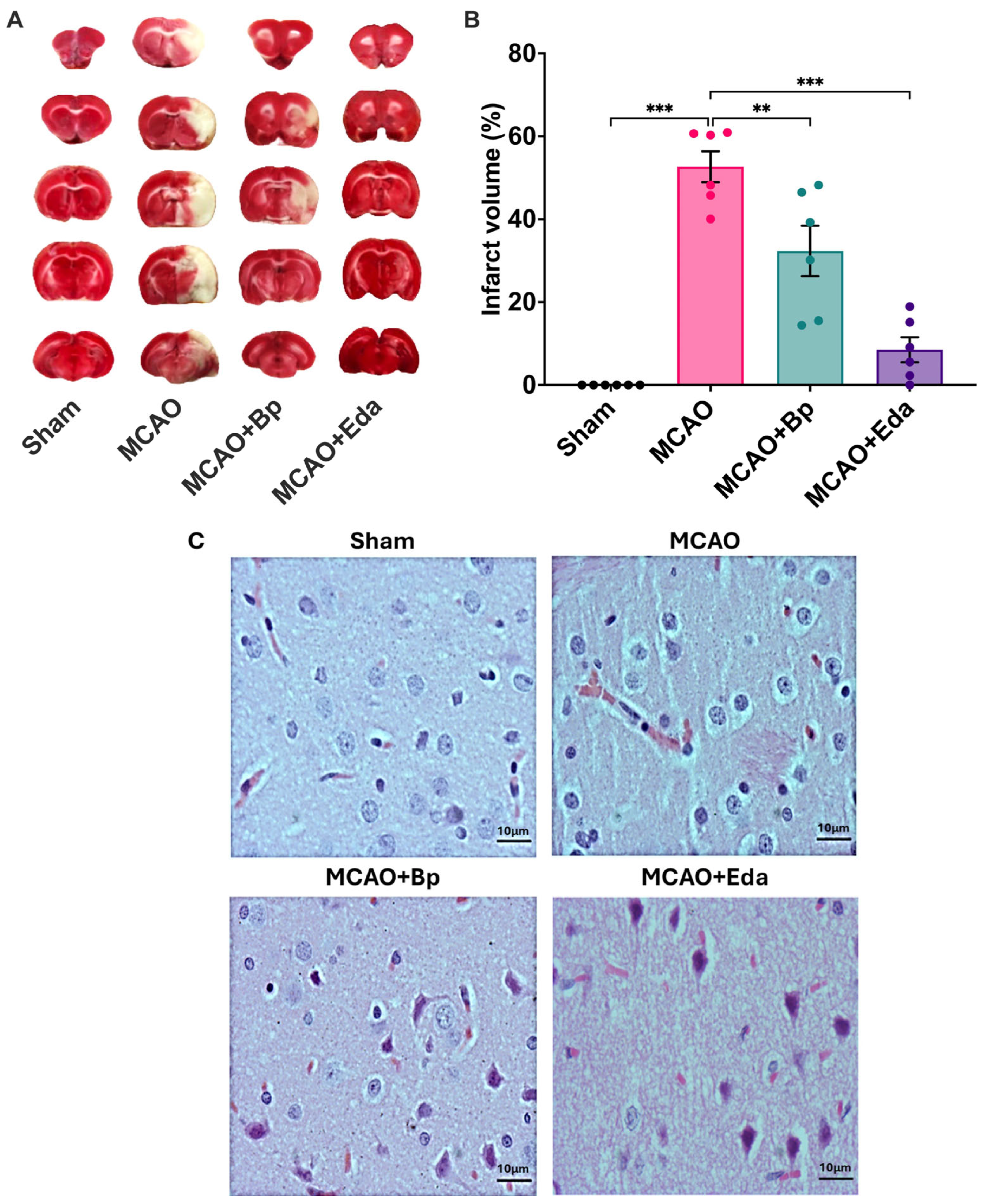
2.2. B. procumbens Reduces Infarct Volume and Decreases Histological Changes After Ischemia/Reperfusion Injury
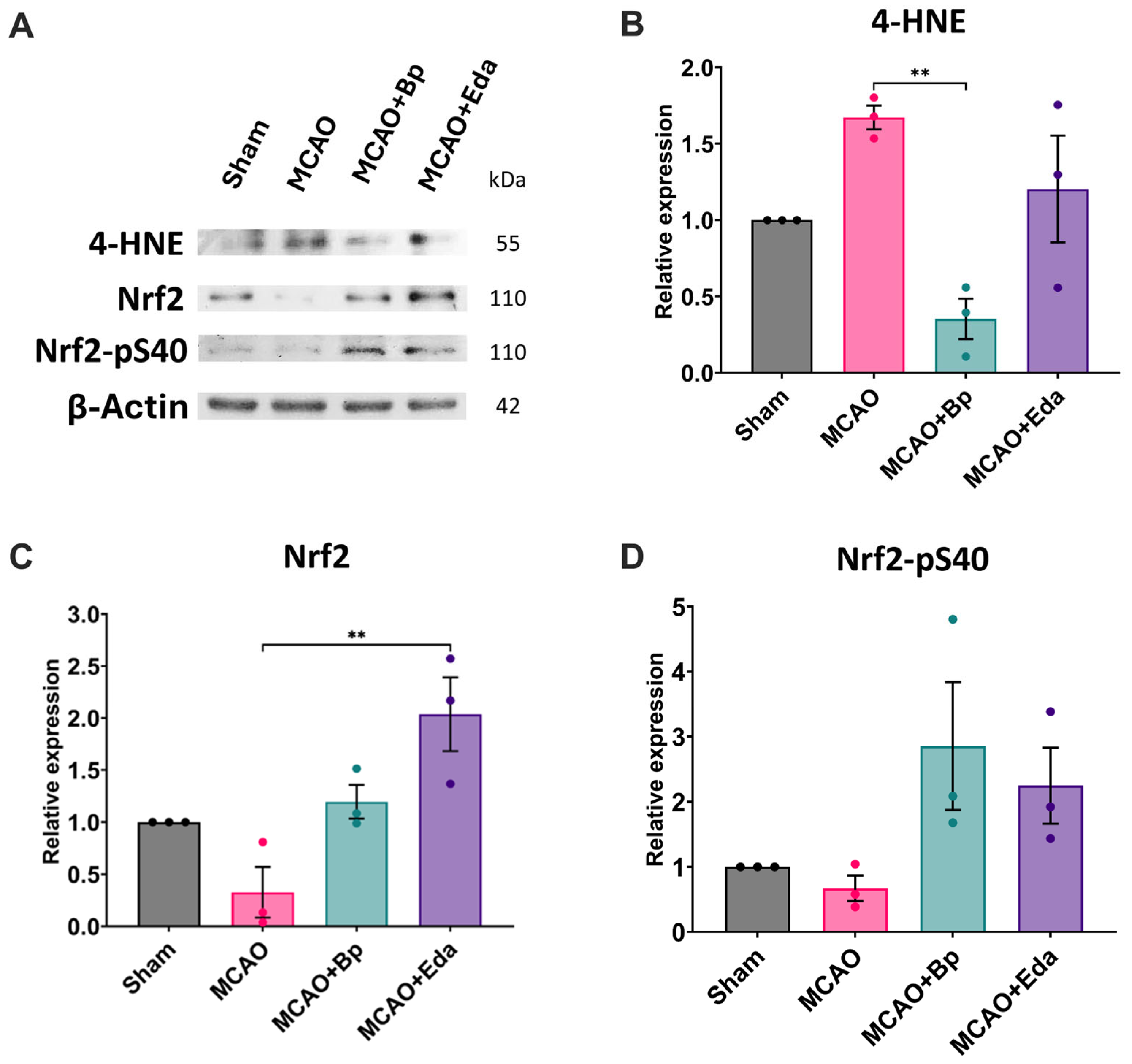
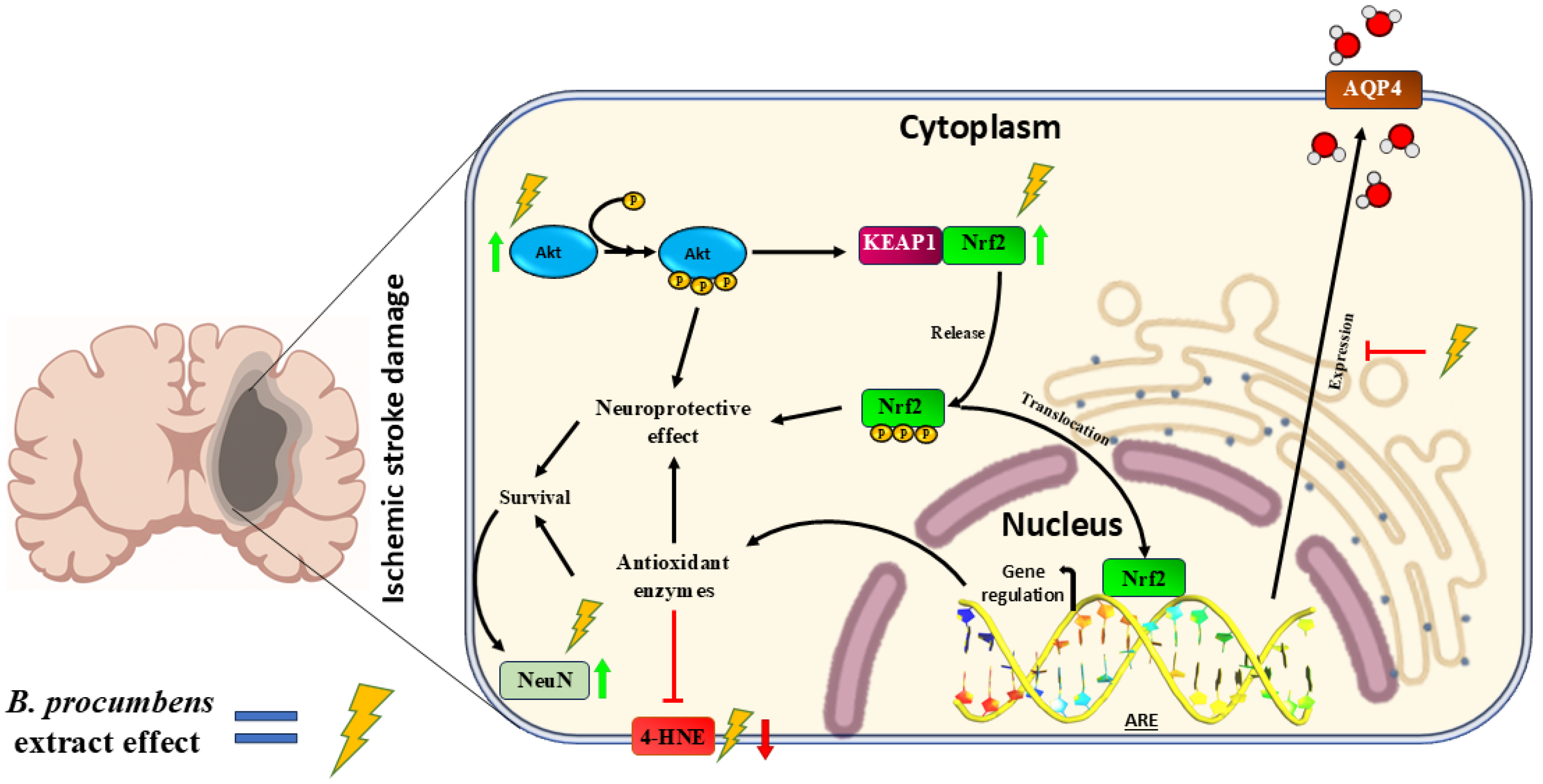
2.3. B. procumbens Reduces Lipid Peroxidation and Activates Nrf2 Protein
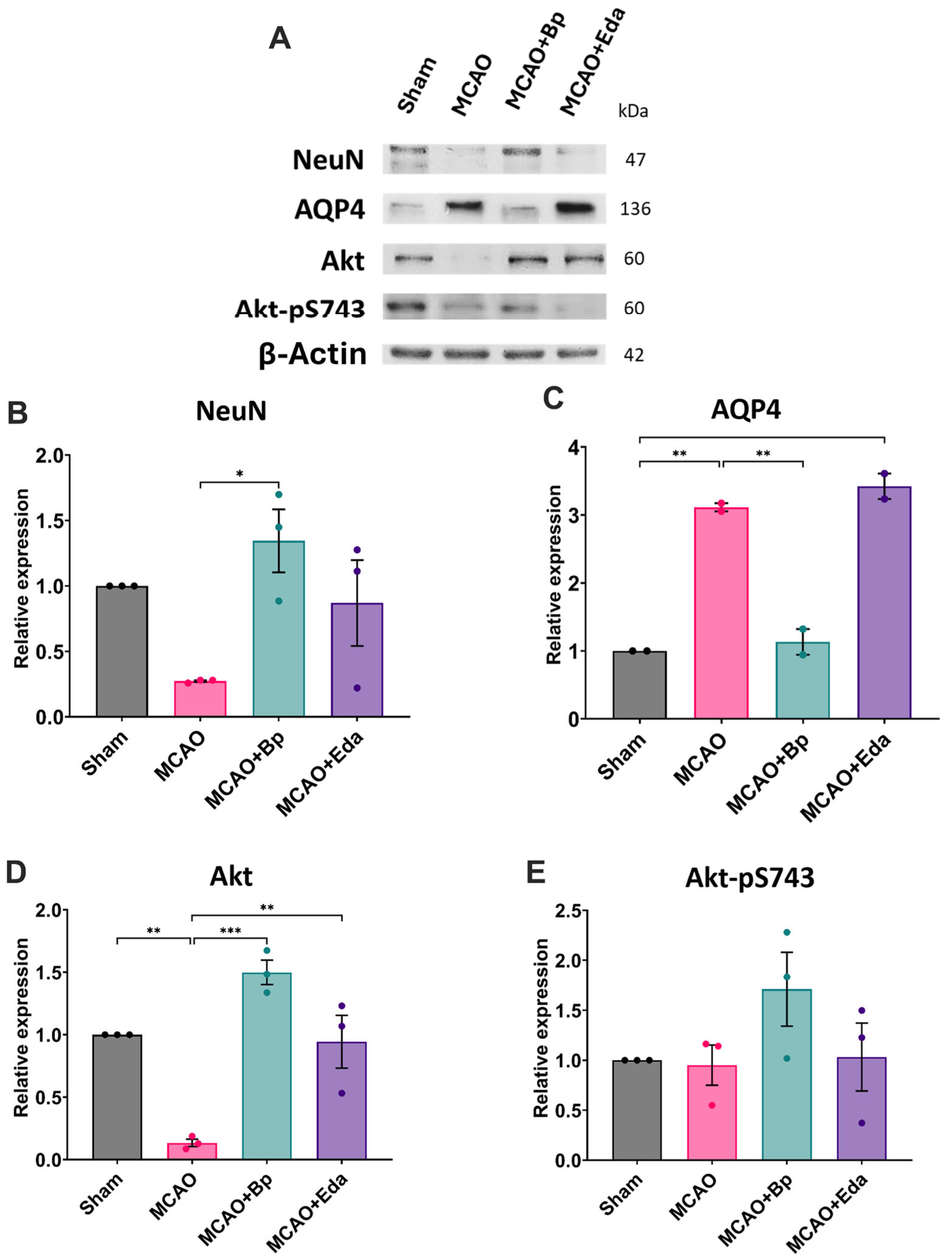
2.4. B. procumbens Regulates the Expression of Proteins Associated with Brain Edema and Neuronal Survival After Ischemia/Reperfusion
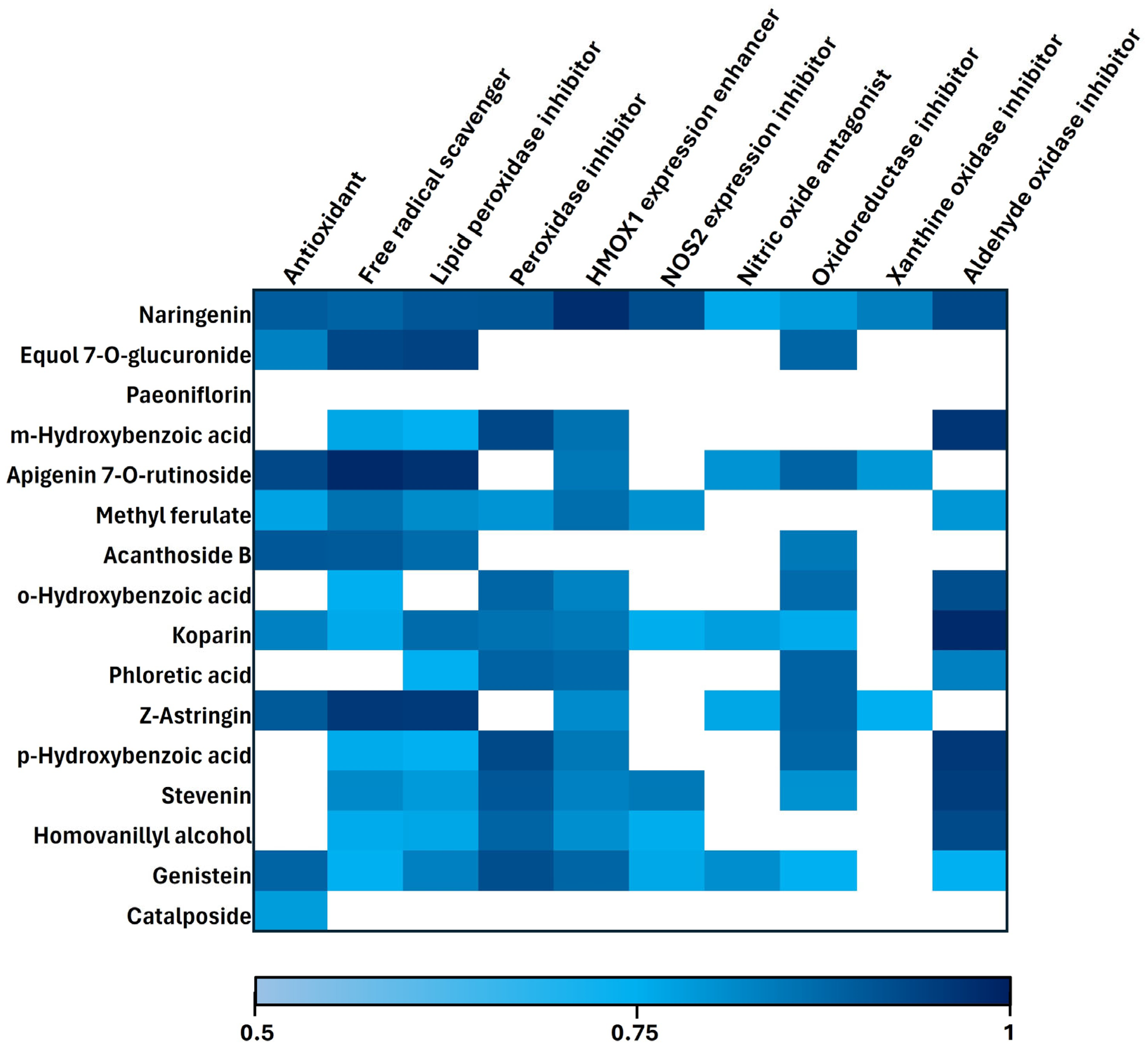
2.5. Prediction of Antioxidant Activities
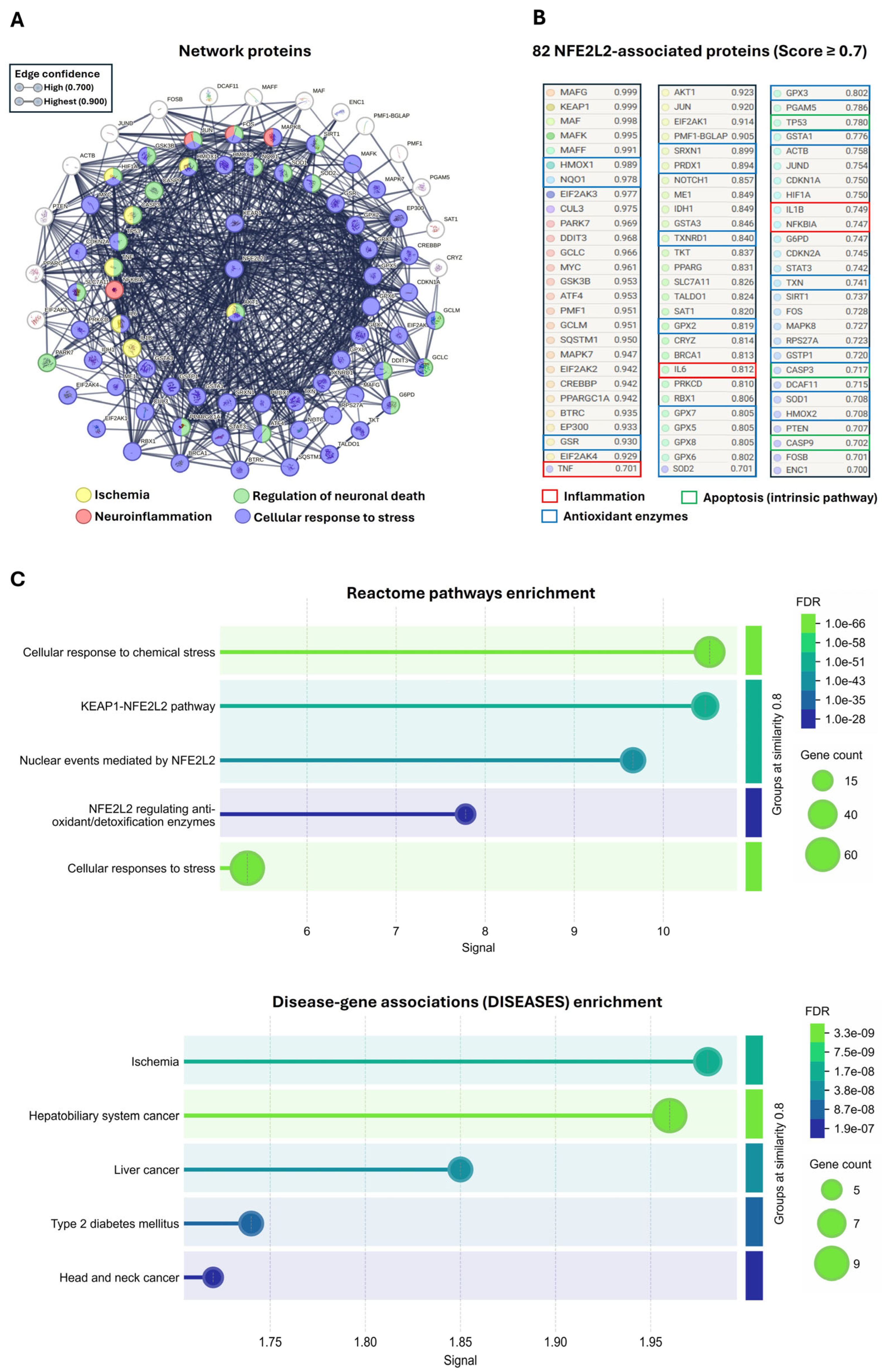
2.6. Interactome and Functional Enrichment Analysis of Nrf2 Focused on Its Antioxidant Role
3. Discussion
4. Methods and Materials
4.1. Preparation of the Aqueous Extract of B. procumbens
4.2. Model of Induction of Transitory Focal Cerebral Ischemia in the Rat
4.3. Experimental Design
- (1)
- Sham, subjected to surgery without middle cerebral artery occlusion (MCAO).
- (2)
- MCAO, undergoing surgery with middle cerebral artery occlusion (2 h of occlusion followed by reperfusion).
- (3)
- MCAO + Bp, subjected to MCAO and treated with B. procumbens (40 mg/kg, intravenous).
- (4)
- MCAO + Eda, subjected to MCAO and treated with Edaravone (0.45 mg/kg, intravenous).
4.4. Neurological Outcome
4.5. Measurement of the Injury Volume
4.6. Histopathological Analysis
4.7. Western Blotting
4.8. Prediction of the Antioxidant Activities of B. procumbens Metabolites
4.9. Nrf2 Interactome Construction and Enrichment Analysis
4.10. Statistical Analysis
5. Conclusions
Author Contributions
Funding
Institutional Review Board Statement
Informed Consent Statement
Data Availability Statement
Acknowledgments
Conflicts of Interest
Abbreviations
| 4-HNE | 4-Hydroxy-2-nonenal |
| Nrf2 | Nuclear factor erythroid 2–related factor 2 |
| Nrf2-pS40 (phospho-Nrf2 Ser40) | Phosphorylated Nrf2 at serine 40 |
| NeuN | Neuronal nuclei antigen/RNA binding fox-1 homolog 3 |
| AQP4 | Aquaporin-4 |
| AKT | Protein kinase B (PKB/AKT) |
| Akt-pS473 (phospho-Akt Ser473) | Phosphorylated Akt at serine 473 |
| β-catenin | Beta-catenin |
| KEAP1 | Kelch-like ECH-associated protein 1 |
| IL-1β | Interleukin-1 beta |
| IL-6 | Interleukin-6 |
| TNF-α | Tumor necrosis factor alpha |
| CASP3 | Caspase-3 |
| CASP9 | Caspase-9 |
| HMOX1 | Heme oxygenase 1 |
| HMOX2 | Heme oxygenase 2 |
| HIF-1α | Hypoxia-inducible factor 1 alpha |
| PARK7 | Parkinsonism associated deglycase |
| JUN | Transcription factor Jun |
| FOXO (FOXO1/3/4) | Forkhead box O transcription factors |
| SIRT1 | Sirtuin 1 |
| NF-κB | Nuclear factor kappa-light-chain-enhancer of activated B cells |
| MAPK8 (JNK1) | Mitogen-activated protein kinase 8 |
| p53 (TP53) | Tumor protein p53 |
| NQO1 | NAD(P)H quinone dehydrogenase 1 |
| SOD1 | Superoxide dismutase 1 |
| SOD2 | Superoxide dismutase 2 |
| GSR | Glutathione reductase |
| TXN | Thioredoxin |
| GPXs (GPX1–8) | Glutathione peroxidases |
References
- The Top 10 Causes of Death. Available online: https://www.who.int/news-room/fact-sheets/detail/the-top-10-causes-of-death (accessed on 13 March 2025).
- Boehme, A.K.; Esenwa, C.; Elkind, M.S.V. Stroke Risk Factors, Genetics, and Prevention. Circ. Res. 2017, 120, 472–495. [Google Scholar] [CrossRef]
- Stroke—What Is a Stroke?|NHLBI, NIH. Available online: https://www.nhlbi.nih.gov/health/stroke (accessed on 17 July 2025).
- Bailey, E.L.; Smith, C.; Sudlow, C.L.M.; Wardlaw, J.M. Pathology of Lacunar Ischemic Stroke in Humans—A Systematic Review. Brain Pathol. 2012, 22, 583–591. [Google Scholar] [CrossRef]
- Zhao, Y.; Zhang, X.; Chen, X.; Wei, Y. Neuronal Injuries in Cerebral Infarction and Ischemic Stroke: From Mechanisms to Treatment (Review). Int. J. Mol. Med. 2022, 49, 15. [Google Scholar] [CrossRef]
- Endres, M.; Dirnagl, U.; Moskowitz, M.A. Chapter 2 The Ischemic Cascade and Mediators of Ischemic Injury. In Handbook of Clinical Neurology; Elsevier: Amsterdam, The Netherlands, 2008; Volume 92, pp. 31–41. [Google Scholar]
- Orellana-Urzúa, S.; Rojas, I.; Líbano, L.; Rodrigo, R. Pathophysiology of Ischemic Stroke: Role of Oxidative Stress. Curr. Pharm. Des. 2020, 26, 4246–4260. [Google Scholar] [CrossRef]
- Neves, D.; Salazar, I.L.; Almeida, R.D.; Silva, R.M. Molecular Mechanisms of Ischemia and Glutamate Excitotoxicity. Life Sci. 2023, 328, 121814. [Google Scholar] [CrossRef] [PubMed]
- Wang, L.; Zhang, X.; Xiong, X.; Zhu, H.; Chen, R.; Zhang, S.; Chen, G.; Jian, Z. Nrf2 Regulates Oxidative Stress and Its Role in Cerebral Ischemic Stroke. Antioxidants 2022, 11, 2377. [Google Scholar] [CrossRef]
- Nonaka, M.; Yoshimine, T.; Kohmura, E.; Wakayama, A.; Yamashita, T.; Hayakawa, T. Changes in Brain Organic Osmolytes in Experimental Cerebral Ischemia. J. Neurol. Sci. 1998, 157, 25–30. [Google Scholar] [CrossRef]
- Yao, Y.; Zhang, Y.; Liao, X.; Yang, R.; Lei, Y.; Luo, J. Potential Therapies for Cerebral Edema After Ischemic Stroke: A Mini Review. Front. Aging Neurosci. 2021, 12, 618819. [Google Scholar] [CrossRef] [PubMed]
- Verkman, A.S.; Mitra, A.K. Structure and Function of Aquaporin Water Channels. Am. J. Physiol.-Ren. Physiol. 2000, 278, F13–F28. [Google Scholar] [CrossRef]
- Papadopoulos, M.C.; Verkman, A.S. Aquaporin-4 and Brain Edema. Pediatr. Nephrol. 2007, 22, 778–784. [Google Scholar] [CrossRef] [PubMed]
- Zador, Z.; Stiver, S.; Wang, V.; Manley, G.T. Role of Aquaporin-4 in Cerebral Edema and Stroke. In Aquaporins; Beitz, E., Ed.; Springer: Berlin/Heidelberg, Germany, 2009; pp. 159–170. ISBN 978-3-540-79885-9. [Google Scholar]
- Swanson, J.A.; Watts, C. Macropinocytosis. Trends Cell Biol. 1995, 5, 424–428. [Google Scholar] [CrossRef] [PubMed]
- Sanchez-Covarrubias, L.; Slosky, L.M.; Thompson, B.J.; Davis, T.P.; Ronaldson, P.T. Transporters at CNS Barrier Sites: Obstacles or Opportunities for Drug Delivery? Curr. Pharm. Des. 2014, 20, 1422–1449. [Google Scholar] [CrossRef]
- Anrather, J.; Iadecola, C. Inflammation and Stroke: An Overview. Neurotherapeutics 2016, 13, 661–670. [Google Scholar] [CrossRef]
- Alsbrook, D.L.; Di Napoli, M.; Bhatia, K.; Biller, J.; Andalib, S.; Hinduja, A.; Rodrigues, R.; Rodriguez, M.; Sabbagh, S.Y.; Selim, M.; et al. Neuroinflammation in Acute Ischemic and Hemorrhagic Stroke. Curr. Neurol. Neurosci. Rep. 2023, 23, 407–431. [Google Scholar] [CrossRef] [PubMed]
- Wardlaw, J.M.; Murray, V.; Berge, E.; del Zoppo, G.J. Thrombolysis for Acute Ischaemic Stroke. Cochrane Database Syst. Rev. 2014, 2014, CD000213. [Google Scholar] [CrossRef]
- Roth, J.M. Recombinant Tissue Plasminogen Activator for the Treatment of Acute Ischemic Stroke. Bayl. Univ. Med. Cent. Proc. 2011, 24, 257–259. [Google Scholar] [CrossRef]
- Tao, T.; Liu, M.; Chen, M.; Luo, Y.; Wang, C.; Xu, T.; Jiang, Y.; Guo, Y.; Zhang, J.H. Natural Medicine in Neuroprotection for Ischemic Stroke: Challenges and Prospective. Pharmacol. Ther. 2020, 216, 107695. [Google Scholar] [CrossRef]
- Cha, S.J.; Kim, K. Effects of the Edaravone, a Drug Approved for the Treatment of Amyotrophic Lateral Sclerosis, on Mitochondrial Function and Neuroprotection. Antioxidants 2022, 11, 195. [Google Scholar] [CrossRef]
- Lapchak, P.A. A Critical Assessment of Edaravone Acute Ischemic Stroke Efficacy Trials: Is Edaravone an Effective Neuroprotective Therapy? Expert Opin. Pharmacother. 2010, 11, 1753–1763. [Google Scholar] [CrossRef]
- Elango, C.; Jayachandaran, K.S.; Niranjali Devaraj, S. Hawthorn Extract Reduces Infarct Volume and Improves Neurological Score by Reducing Oxidative Stress in Rat Brain Following Middle Cerebral Artery Occlusion. Int. J. Dev. Neurosci. 2009, 27, 799–803. [Google Scholar] [CrossRef] [PubMed]
- Shamim, M.; Khan, N.I. Neuroprotective Effect of Panax Ginseng Extract against Cerebral Ischemia–Reperfusion-Injury-Induced Oxidative Stress in Middle Cerebral Artery Occlusion Models. FACETS 2019, 4, 52–68. [Google Scholar] [CrossRef]
- Martínez-Cuazitl, A.; Gómez-García, M.d.C.; Hidalgo-Alegria, O.; Flores, O.M.; Núñez-Gastélum, J.A.; Martínez, E.S.M.; Ríos-Cortés, A.M.; Garcia-Solis, M.; Pérez-Ishiwara, D.G. Characterization of Polyphenolic Compounds from Bacopa Procumbens and Their Effects on Wound-Healing Process. Molecules 2022, 27, 6521. [Google Scholar] [CrossRef]
- González-Cortazar, M.; López-Gayou, V.; Tortoriello, J.; Domínguez-Mendoza, B.E.; Ríos-Cortes, A.M.; Delgado-Macuil, R.; Hernández-Beteta, E.E.; Blé-González, E.A.; Zamilpa, A. Antimicrobial Gastrodin Derivatives Isolated from Bacopa procumbens. Phytochem. Lett. 2019, 31, 33–38. [Google Scholar] [CrossRef]
- Pathak, A.; Kulshreshtha, D.K.; Maurya, R. Chemical Constituents of Bacopa Procumbens. Nat. Prod. Res. 2005, 19, 131–136. [Google Scholar] [CrossRef]
- Pérez-Mora, S.; Ocampo-López, J.; Gómez-García, M.d.C.; Pérez-Ishiwara, D.G. BFNB Enhances Hair Growth in C57BL/6 Mice through the Induction of EGF and FGF7 Factors and the PI3K-AKT-β-Catenin Pathway. Int. J. Mol. Sci. 2023, 24, 12110. [Google Scholar] [CrossRef] [PubMed]
- Martínez-Cuazitl, A.; Gómez-García, M.d.C.; Pérez-Mora, S.; Rojas-López, M.; Delgado-Macuil, R.J.; Ocampo-López, J.; Vázquez-Zapién, G.J.; Mata-Miranda, M.M.; Pérez-Ishiwara, D.G. Polyphenolic Compounds Nanostructurated with Gold Nanoparticles Enhance Wound Repair. Int. J. Mol. Sci. 2023, 24, 17138. [Google Scholar] [CrossRef] [PubMed]
- Pérez-Mora, S.; Ocampo-López, J.; Gómez-García, M.d.C.; Salgado-Hernández, S.V.; Flores-Martinez, Y.M.; Pérez-Ishiwara, D.G. Polyphenols from Bacopa Procumbens Nanostructured with Gold Nanoparticles Stimulate Hair Growth Through Apoptosis Modulation in C57BL/6 Mice. Pharmaceutics 2025, 17, 222. [Google Scholar] [CrossRef] [PubMed]
- Bai, X.; Zhang, X.; Chen, L.; Zhang, J.; Zhang, L.; Zhao, X.; Zhao, T.; Zhao, Y. Protective Effect of Naringenin in Experimental Ischemic Stroke: Down-Regulated NOD2, RIP2, NF-κB, MMP-9 and Up-Regulated Claudin-5 Expression. Neurochem. Res. 2014, 39, 1405–1415. [Google Scholar] [CrossRef]
- Aras, A.B.; Guven, M.; Akman, T.; Ozkan, A.; Sen, H.M.; Duz, U.; Kalkan, Y.; Silan, C.; Cosar, M. Neuroprotective Effects of Daidzein on Focal Cerebral Ischemia Injury in Rats. Neural Regen. Res. 2015, 10, 146–152. [Google Scholar] [CrossRef]
- Li, J.; Gu, Z.; Liu, Y.; Wang, Y.; Zhao, M. Astilbin Attenuates Cerebral Ischemia/Reperfusion Injury by Inhibiting the TLR4/MyD88/NF-κB Pathway. Toxicol. Res. 2019, 8, 1002–1008. [Google Scholar] [CrossRef]
- Kumar, M.; Singh, G.; Kushwah, A.S.; Surampalli, G.; Singh, T.G.; Gupta, S. Arbutin Protects Brain against Middle Cerebral Artery Occlusion-Reperfusion (MCAo/R) Injury. Biochem. Biophys. Res. Commun. 2021, 577, 52–57. [Google Scholar] [CrossRef] [PubMed]
- Sakamula, R.; Thong-asa, W. Neuroprotective Effect of P-Coumaric Acid in Mice with Cerebral Ischemia Reperfusion Injuries. Metab. Brain Dis. 2018, 33, 765–773. [Google Scholar] [CrossRef]
- Liang, H.-W.; Qiu, S.-F.; Shen, J.; Sun, L.-N.; Wang, J.-Y.; Bruce, I.C.; Xia, Q. Genistein Attenuates Oxidative Stress and Neuronal Damage Following Transient Global Cerebral Ischemia in Rat Hippocampus. Neurosci. Lett. 2008, 438, 116–120. [Google Scholar] [CrossRef]
- Zhang, Y.; Qiao, L.; Xu, W.; Wang, X.; Li, H.; Xu, W.; Chu, K.; Lin, Y. Paeoniflorin Attenuates Cerebral Ischemia-Induced Injury by Regulating Ca2+/CaMKII/CREB Signaling Pathway. Molecules 2017, 22, 359. [Google Scholar] [CrossRef] [PubMed]
- Ha, S.K.; Lee, P.; Park, J.A.; Oh, H.R.; Lee, S.Y.; Park, J.-H.; Lee, E.H.; Ryu, J.H.; Lee, K.R.; Kim, S.Y. Apigenin Inhibits the Production of NO and PGE2 in Microglia and Inhibits Neuronal Cell Death in a Middle Cerebral Artery Occlusion-Induced Focal Ischemia Mice Model. Neurochem. Int. 2008, 52, 878–886. [Google Scholar] [CrossRef]
- Yu, W.; Wang, Y.; Zhou, D.-X.; Zhao, L.-M.; Li, G.-R.; Deng, X.-L. Equol Is Neuroprotective During Focal Cerebral Ischemia and Reperfusion That Involves P-Src and Gp91phox. Curr. Neurovascular Res. 2014, 11, 367–377. [Google Scholar] [CrossRef]
- Gao, H.; Zhang, M. Asymmetry in the Brain Influenced the Neurological Deficits and Infarction Volume Following the Middle Cerebral Artery Occlusion in Rats. Behav. Brain Funct. 2008, 4, 57. [Google Scholar] [CrossRef]
- Popp, A.; Jaenisch, N.; Witte, O.W.; Frahm, C. Identification of Ischemic Regions in a Rat Model of Stroke. PLoS ONE 2009, 4, e4764. [Google Scholar] [CrossRef]
- Bardutzky, J.; Shen, Q.; Henninger, N.; Bouley, J.; Duong, T.Q.; Fisher, M. Differences in Ischemic Lesion Evolution in Different Rat Strains Using Diffusion and Perfusion Imaging. Stroke 2005, 36, 2000–2005. [Google Scholar] [CrossRef]
- Scuto, M.; Rampulla, F.; Reali, G.M.; Spanò, S.M.; Trovato Salinaro, A.; Calabrese, V. Hormetic Nutrition and Redox Regulation in Gut–Brain Axis Disorders. Antioxidants 2024, 13, 484. [Google Scholar] [CrossRef] [PubMed]
- Kanner, J. Polyphenols by Generating H2O2, Affect Cell Redox Signaling, Inhibit PTPs and Activate Nrf2 Axis for Adaptation and Cell Surviving: In Vitro, In Vivo and Human Health. Antioxidants 2020, 9, 797. [Google Scholar] [CrossRef]
- Son, T.G.; Camandola, S.; Arumugam, T.V.; Cutler, R.G.; Telljohann, R.S.; Mughal, M.R.; Moore, T.A.; Luo, W.; Yu, Q.-S.; Johnson, D.A.; et al. Plumbagin, a Novel Nrf2/ARE Activator, Protects against Cerebral Ischemia. J. Neurochem. 2010, 112, 1316–1326. [Google Scholar] [CrossRef]
- Fusco, R.; Scuto, M.; Cordaro, M.; D’Amico, R.; Gugliandolo, E.; Siracusa, R.; Peritore, A.F.; Crupi, R.; Impellizzeri, D.; Cuzzocrea, S.; et al. N-Palmitoylethanolamide-Oxazoline Protects against Middle Cerebral Artery Occlusion Injury in Diabetic Rats by Regulating the SIRT1 Pathway. Int. J. Mol. Sci. 2019, 20, 4845. [Google Scholar] [CrossRef]
- Suraweera, L.T.; Rupasinghe, H.P.V.; Dellaire, G.; Xu, Z. Regulation of Nrf2/ARE Pathway by Dietary Flavonoids: A Friend or Foe for Cancer Management? Antioxidants 2020, 9, 973. [Google Scholar] [CrossRef]
- Hassanein, E.H.M.; Sayed, A.M.; Hussein, O.E.; Mahmoud, A.M. Coumarins as Modulators of the Keap1/Nrf2/ARE Signaling Pathway. Oxidative Med. Cell. Longev. 2020, 2020, 1675957. [Google Scholar] [CrossRef]
- He, W.-J.; Lv, C.-H.; Chen, Z.; Shi, M.; Zeng, C.-X.; Hou, D.-X.; Qin, S. The Regulatory Effect of Phytochemicals on Chronic Diseases by Targeting Nrf2-ARE Signaling Pathway. Antioxidants 2023, 12, 236. [Google Scholar] [CrossRef] [PubMed]
- Scuto, M.; Majzúnová, M.; Torcitto, G.; Antonuzzo, S.; Rampulla, F.; Di Fatta, E.; Trovato Salinaro, A. Functional Food Nutrients, Redox Resilience Signaling and Neurosteroids for Brain Health. Int. J. Mol. Sci. 2024, 25, 12155. [Google Scholar] [CrossRef] [PubMed]
- Scuto, M.; Modafferi, S.; Rampulla, F.; Zimbone, V.; Tomasello, M.; Spano, S.; Ontario, M.L.; Palmeri, A.; Trovato Salinaro, A.; Siracusa, R.; et al. Redox Modulation of Stress Resilience by Crocus sativus L. for Potential Neuroprotective and Anti-Neuroinflammatory Applications in Brain Disorders: From Molecular Basis to Therapy. Mech. Ageing Dev. 2022, 205, 111686. [Google Scholar] [CrossRef] [PubMed]
- Scuto, M.C.; Anfuso, C.D.; Lombardo, C.; Di Fatta, E.; Ferri, R.; Musso, N.; Zerbo, G.; Terrana, M.; Majzúnová, M.; Lupo, G.; et al. Neuronutrition and Nrf2 Brain Resilience Signaling: Epigenomics and Metabolomics for Personalized Medicine in Nervous System Disorders from Bench to Clinic. Int. J. Mol. Sci. 2025, 26, 9391. [Google Scholar] [CrossRef]
- Chen, Q.; Cai, Y.; Zhu, X.; Wang, J.; Gao, F.; Yang, M.; Mao, L.; Zhang, Z.; Sun, B. Edaravone Dexborneol Treatment Attenuates Neuronal Apoptosis and Improves Neurological Function by Suppressing 4-HNE-Associated Oxidative Stress After Subarachnoid Hemorrhage. Front. Pharmacol. 2022, 13, 848529, Erratum in Front. Pharmacol. 2024, 15, 1508703. [Google Scholar] [CrossRef]
- Fan, W.; Chen, H.; Li, M.; Fan, X.; Jiang, F.; Xu, C.; Wang, Y.; Wei, W.; Song, J.; Zhong, D.; et al. NRF2 Activation Ameliorates Blood–Brain Barrier Injury after Cerebral Ischemic Stroke by Regulating Ferroptosis and Inflammation. Sci. Rep. 2024, 14, 5300. [Google Scholar] [CrossRef]
- Liu, L.; Kelly, M.G.; Wierzbicki, E.L.; Escober-Nario, I.C.; Vollmer, M.K.; Doré, S. Nrf2 Plays an Essential Role in Long-Term Brain Damage and Neuroprotection of Korean Red Ginseng in a Permanent Cerebral Ischemia Model. Antioxidants 2019, 8, 273. [Google Scholar] [CrossRef]
- Nazim, M. Post-Transcriptional Regulation of the Transcriptional Apparatus in Neuronal Development. Front. Mol. Neurosci. 2024, 17, 1483901. [Google Scholar] [CrossRef] [PubMed]
- Partridge, L.M.M.; Carter, D.A. Novel Rbfox2 Isoforms Associated with Alternative Exon Usage in Rat Cortex and Suprachiasmatic Nucleus. Sci. Rep. 2017, 7, 9929. [Google Scholar] [CrossRef] [PubMed]
- Wang, H.-Y.; Hsieh, P.-F.; Huang, D.-F.; Chin, P.-S.; Chou, C.-H.; Tung, C.-C.; Chen, S.-Y.; Lee, L.-J.; Gau, S.S.-F.; Huang, H.-S. RBFOX3/NeuN Is Required for Hippocampal Circuit Balance and Function. Sci. Rep. 2015, 5, 17383. [Google Scholar] [CrossRef] [PubMed]
- Mullonkal, C.J.; Toledo-Pereyra, L.H. Akt in Ischemia and Reperfusion. J. Investig. Surg. 2007, 20, 195–203. [Google Scholar] [CrossRef]
- Sharma, V.; Kaur, A.; Singh, T.G. Counteracting Role of Nuclear Factor Erythroid 2-Related Factor 2 Pathway in Alzheimer’s Disease. Biomed. Pharmacother. 2020, 129, 110373. [Google Scholar] [CrossRef]
- Zhu, X.-Q.; Gao, D. Naringenin Alleviates Cognitive Dysfunction in Rats with Cerebral Ischemia/Reperfusion Injury through up-Regulating Hippocampal BDNF-TrkB Signaling: Involving Suppression in Neuroinflammation and Oxidative Stress. NeuroReport 2024, 35, 216–244. [Google Scholar] [CrossRef]
- Gaur, V.; Aggarwal, A.; Kumar, A. Protective Effect of Naringin against Ischemic Reperfusion Cerebral Injury: Possible Neurobehavioral, Biochemical and Cellular Alterations in Rat Brain. Eur. J. Pharmacol. 2009, 616, 147–154. [Google Scholar] [CrossRef]
- Guo, R.-B.; Wang, G.-F.; Zhao, A.-P.; Gu, J.; Sun, X.-L.; Hu, G. Paeoniflorin Protects against Ischemia-Induced Brain Damages in Rats via Inhibiting MAPKs/NF-κB-Mediated Inflammatory Responses. PLoS ONE 2012, 7, e49701. [Google Scholar] [CrossRef]
- He, F.; Ru, X.; Wen, T. NRF2, a Transcription Factor for Stress Response and Beyond. Int. J. Mol. Sci. 2020, 21, 4777. [Google Scholar] [CrossRef]
- Zhou, Y.; Tan, Z.; Huang, H.; Zeng, Y.; Chen, S.; Wei, J.; Huang, G.; Qian, C.; Yuan, G.; He, S. Baicalein Pre-treatment Alleviates Hepatic Ischemia/Reperfusion Injury in Mice by Regulating the Nrf2/ARE Pathway. Exp. Ther. Med. 2021, 22, 1380. [Google Scholar] [CrossRef]
- Sadeghzadeh, J.; Hosseini, L.; Mobed, A.; Zangbar, H.S.; Jafarzadeh, J.; Pasban, J.; Shahabi, P. The Impact of Cerebral Ischemia on Antioxidant Enzymes Activity and Neuronal Damage in the Hippocampus. Cell. Mol. Neurobiol. 2023, 43, 3915–3928. [Google Scholar] [CrossRef]
- Lu, X.; Gu, R.; Hu, W.; Sun, Z.; Wang, G.; Wang, L.; Xu, Y. Upregulation of Heme Oxygenase-1 Protected against Brain Damage Induced by Transient Cerebral Ischemia-reperfusion Injury in Rats. Exp. Ther. Med. 2018, 15, 4629–4636. [Google Scholar] [CrossRef] [PubMed]
- Longa, E.Z.; Weinstein, P.R.; Carlson, S.; Cummins, R. Reversible Middle Cerebral Artery Occlusion without Craniectomy in Rats. Stroke 1989, 20, 84–91. [Google Scholar] [CrossRef]
- NOM-062-ZOO-1999. Available online: https://www.dof.gob.mx/nota_detalle.php?codigo=762506&fecha=22/08/2001#gsc.tab=0 (accessed on 26 May 2025).
- NOM-087-ECOL-SSA1-2002. Available online: https://dof.gob.mx/nota_detalle.php?codigo=704675&fecha=17/02/2003#gsc.tab=0 (accessed on 26 May 2025).
- Huang, P.; Wan, H.; Shao, C.; Li, C.; Zhang, L.; He, Y. Recent Advances in Chinese Herbal Medicine for Cerebral Ischemic Reperfusion Injury. Front. Pharmacol. 2022, 12, 688596. [Google Scholar] [CrossRef]
- Zhang, N.-N.; Sun, L.; Chen, W.-T.; Yang, Y.-L.; Wu, Y.-M. Effects of Edaravone on Postoperative Cognitive Function in Elderly Patients Undergoing Hip Joint Replacement Surgery: A Randomized Controlled Trial. Int. J. Surg. 2020, 80, 13–18. [Google Scholar] [CrossRef] [PubMed]
- Faden, A.I. Comparison of Single and Combination Drug Treatment Strategies in Experimental Brain Trauma. J. Neurotrauma 1993, 10, 91–100. [Google Scholar] [CrossRef] [PubMed]
- Bradford, M.M. A Rapid and Sensitive Method for the Quantitation of Microgram Quantities of Protein Utilizing the Principle of Protein-Dye Binding. Anal. Biochem. 1976, 72, 248–254. [Google Scholar] [CrossRef]
- Filimonov, D.A.; Lagunin, A.A.; Gloriozova, T.A.; Rudik, A.V.; Druzhilovskii, D.S.; Pogodin, P.V.; Poroikov, V.V. Prediction of the Biological Activity Spectra of Organic Compounds Using the Pass Online Web Resource. Chem. Heterocycl. Compd. 2014, 50, 444–457. [Google Scholar] [CrossRef]


Disclaimer/Publisher’s Note: The statements, opinions and data contained in all publications are solely those of the individual author(s) and contributor(s) and not of MDPI and/or the editor(s). MDPI and/or the editor(s) disclaim responsibility for any injury to people or property resulting from any ideas, methods, instructions or products referred to in the content. |
© 2025 by the authors. Licensee MDPI, Basel, Switzerland. This article is an open access article distributed under the terms and conditions of the Creative Commons Attribution (CC BY) license (https://creativecommons.org/licenses/by/4.0/).
Share and Cite
Viveros-Bartolomé, J.M.; Pérez-Mora, S.; Alquisiras-Burgos, I.; Martínez-Torres, A.M.; Pérez-Rodríguez, M.; Ocampo-López, J.; Flores-Martinez, Y.M.; Gómez-García, M.d.C.; Aguilera, P.; Pérez-Ishiwara, D.G. Extract of Bacopa procumbens Mitigates Brain Injury and Improves Functional Outcomes Following Ischemia–Reperfusion. Int. J. Mol. Sci. 2025, 26, 11781. https://doi.org/10.3390/ijms262411781
Viveros-Bartolomé JM, Pérez-Mora S, Alquisiras-Burgos I, Martínez-Torres AM, Pérez-Rodríguez M, Ocampo-López J, Flores-Martinez YM, Gómez-García MdC, Aguilera P, Pérez-Ishiwara DG. Extract of Bacopa procumbens Mitigates Brain Injury and Improves Functional Outcomes Following Ischemia–Reperfusion. International Journal of Molecular Sciences. 2025; 26(24):11781. https://doi.org/10.3390/ijms262411781
Chicago/Turabian StyleViveros-Bartolomé, José Manuel, Salvador Pérez-Mora, Iván Alquisiras-Burgos, Ari Misael Martínez-Torres, Maribel Pérez-Rodríguez, Juan Ocampo-López, Yazmin Montserrat Flores-Martinez, María del Consuelo Gómez-García, Penélope Aguilera, and David Guillermo Pérez-Ishiwara. 2025. "Extract of Bacopa procumbens Mitigates Brain Injury and Improves Functional Outcomes Following Ischemia–Reperfusion" International Journal of Molecular Sciences 26, no. 24: 11781. https://doi.org/10.3390/ijms262411781
APA StyleViveros-Bartolomé, J. M., Pérez-Mora, S., Alquisiras-Burgos, I., Martínez-Torres, A. M., Pérez-Rodríguez, M., Ocampo-López, J., Flores-Martinez, Y. M., Gómez-García, M. d. C., Aguilera, P., & Pérez-Ishiwara, D. G. (2025). Extract of Bacopa procumbens Mitigates Brain Injury and Improves Functional Outcomes Following Ischemia–Reperfusion. International Journal of Molecular Sciences, 26(24), 11781. https://doi.org/10.3390/ijms262411781