The Role of Carbon Dots in Regulating the Periodontal Immune Microenvironment: Progress and Perspectives

Abstract
1. Introduction
2. Biological Foundations of CDs in Periodontal Field
2.1. Application Characteristics of CDs in Biology
2.1.1. Size and Morphology
2.1.2. Surface-Enriched Functional Groups
2.1.3. Unique Optical Properties
2.1.4. Enzyme-Mimicking Activity
2.1.5. Excellent Biocompatibility
2.1.6. Favorable Metabolic Properties
2.2. Classification and Preparation of CDs
3. Mechanisms of CDs in Regulating the Periodontal Immune Microenvironment
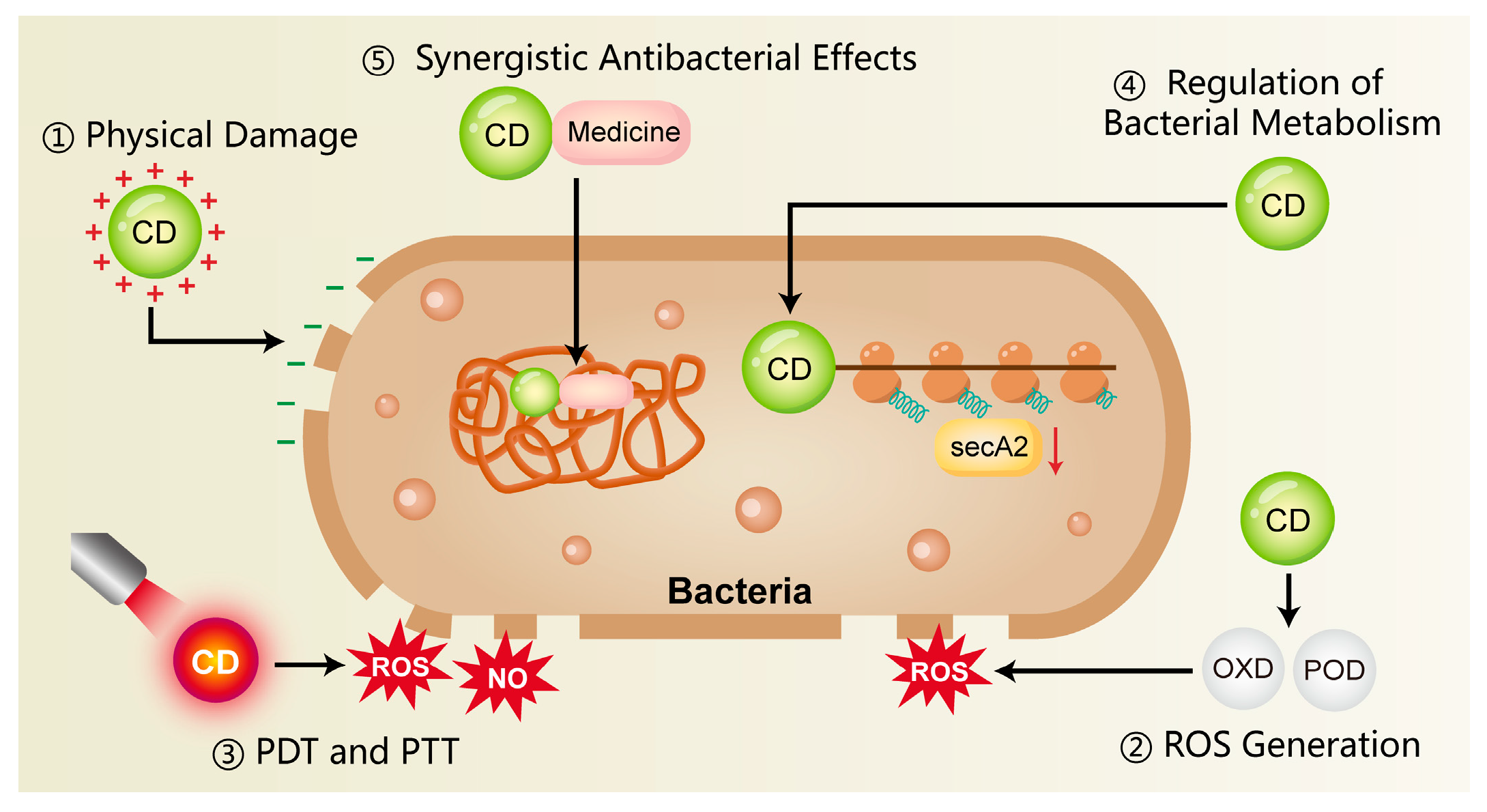
3.1. Antimicrobial and Microbiome Modulation
3.1.1. Physical Damage
3.1.2. ROS Generation
3.1.3. Photothermal Therapy and Photodynamic Therapy
3.1.4. Regulation of Bacterial Metabolism
3.1.5. Synergistic Antibacterial Effects
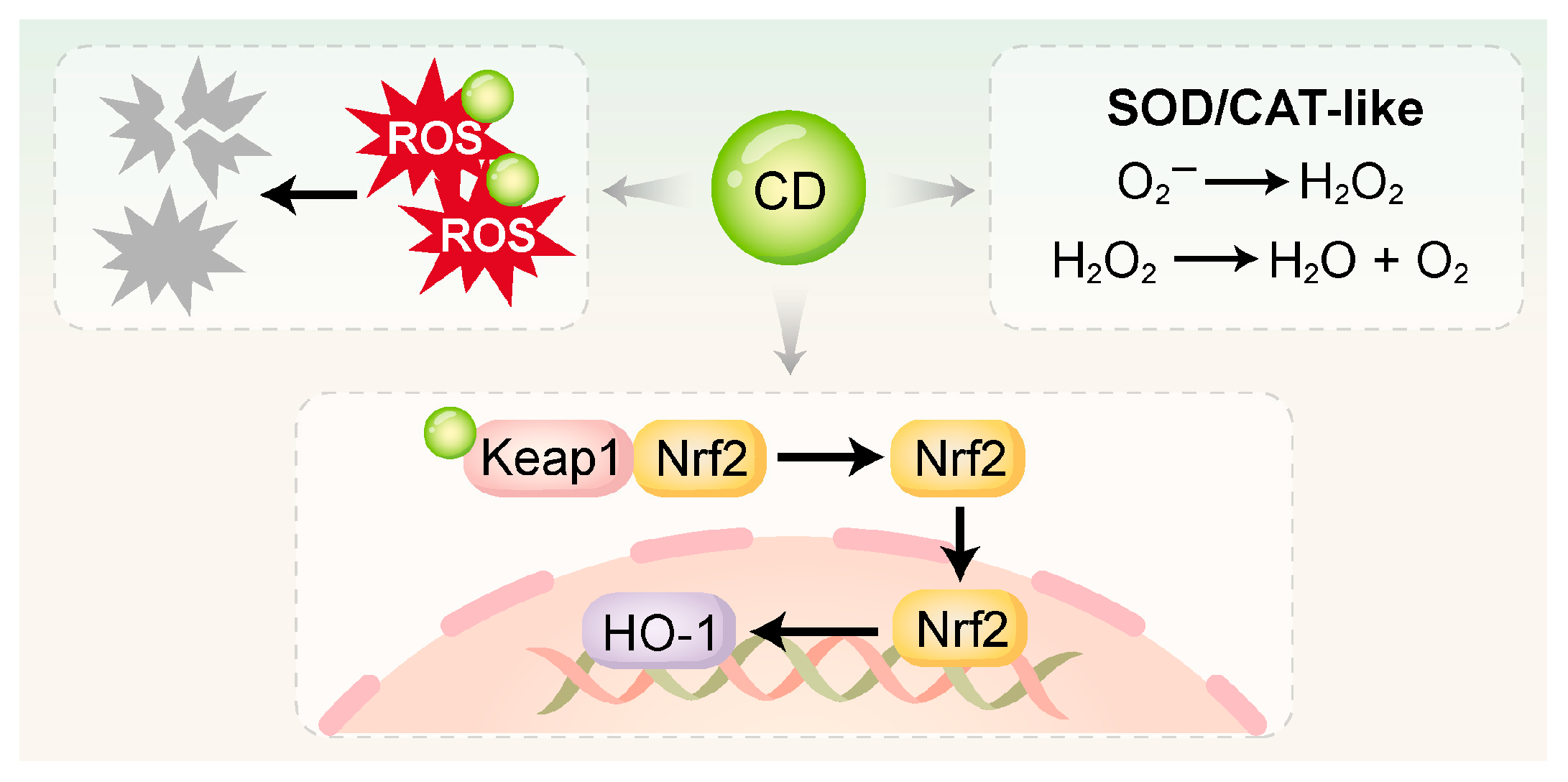
3.2. Inhibition of Oxidative Stress
3.2.1. Direct Free Radical Scavenging
3.2.2. Enzyme-Mimetic Activity
3.2.3. Activation of Endogenous Antioxidant Pathways
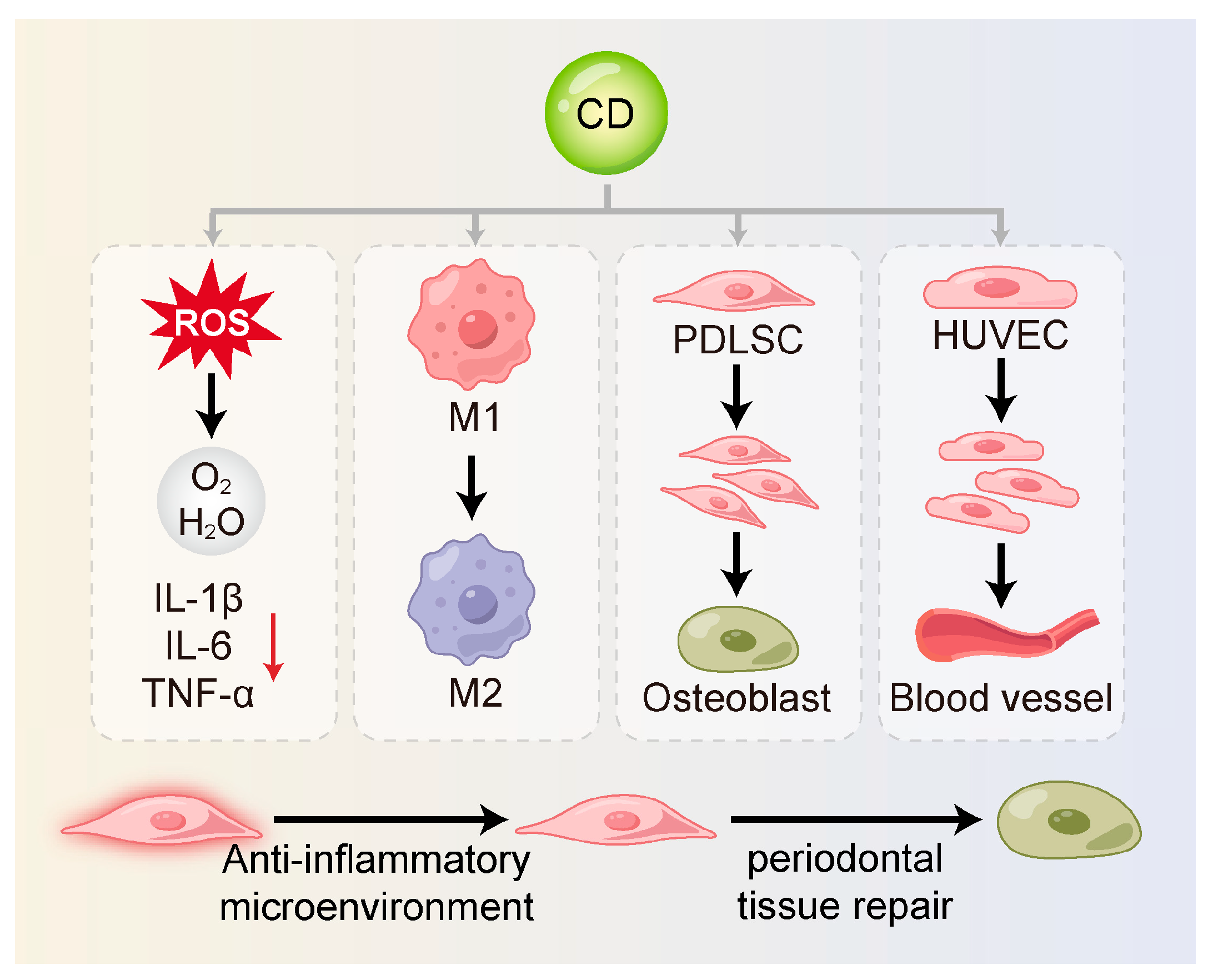
3.3. Regulation of Stem Cell Functions
3.3.1. Alleviation of Inflammatory Damage
3.3.2. Regulation of Macrophage Polarization
3.3.3. Promotion of Stem Cell Proliferation and Differentiation
3.3.4. Promotion of Angiogenesis
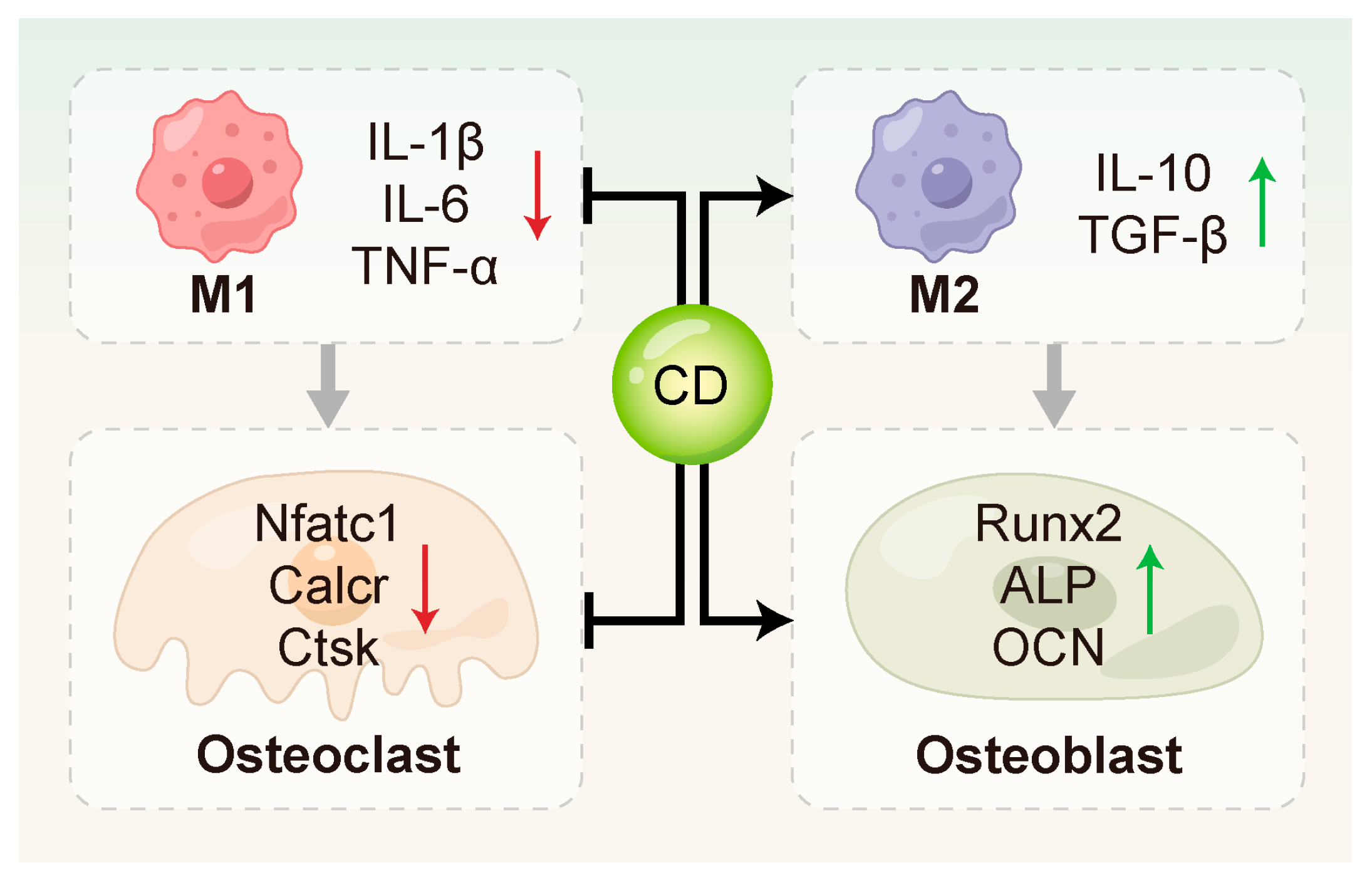
3.4. Regulation of Bone Homeostasis
3.4.1. Inhibition of Osteoclastogenesis and Activation
3.4.2. Promotion of Osteoblast Differentiation and Function
3.4.3. Regulation of Osteoimmunity
4. Conclusions and Future Perspectives
Author Contributions
Funding
Data Availability Statement
Acknowledgments
Conflicts of Interest
Abbreviations
| A. actinomycetemcomitans | Aggregatibacter actinomycetemcomitans |
| CAT | catalase |
| CDs | carbon dots |
| CNDs | carbon nanodots |
| –COOH | carboxyl |
| CPDs | carbonized polymer dots |
| CQDs | carbon quantum dots |
| DFSCs | dental follicle stem cells |
| GOQDs | graphene oxide quantum dots |
| GPx | glutathione peroxidase |
| GQDs | graphene quantum dots |
| HUVECs | human umbilical vein endothelial cells |
| LPS | lipopolysaccharide |
| MIC | minimum inhibitory concentration |
| MSCs | mesenchymal stem cells |
| –NH2 | amino |
| NIR | near-infrared |
| –OH | hydroxyl |
| OMVs | outer membrane vesicles |
| OXD | oxidase |
| P. gingivalis | Porphyromonas gingivalis |
| P. intermedia | Prevotella intermedia |
| PDLSCs | periodontal ligament stem cells |
| PDT | photodynamic therapy |
| PGN | peptidoglycan |
| PL | photoluminescence |
| POD | peroxidase |
| PS | photosensitizer |
| PTT | photothermal therapy |
| rBMSCs | rat bone marrow mesenchymal stem cells |
| ROS | reactive oxygen species |
| SOD | superoxide dismutase |
| UV–Vis | ultraviolet–visible |
References
- Eke, P.I.; Dye, B.A.; Wei, L.; Slade, G.D.; Thornton-Evans, G.O.; Borgnakke, W.S.; Taylor, G.W.; Page, R.C.; Beck, J.D.; Genco, R.J. Update on Prevalence of Periodontitis in Adults in the United States: NHANES 2009 to 2012. J. Periodontol. 2015, 86, 611–622. [Google Scholar] [CrossRef]
- Huang, X.; Kang, L.; Bi, J. Epidemiology of Oral Health in Older Adults Aged 65 or over: Prevalence, Risk Factors and Prevention. Aging Clin. Exp. Res. 2025, 37, 193. [Google Scholar] [CrossRef]
- Botelho, J.; Machado, V.; Leira, Y.; Proença, L.; Chambrone, L.; Mendes, J.J. Economic Burden of Periodontitis in the United States and Europe: An Updated Estimation. J. Periodontol. 2022, 93, 373–379. [Google Scholar] [CrossRef]
- Hajishengallis, G.; Chavakis, T. Local and Systemic Mechanisms Linking Periodontal Disease and Inflammatory Comorbidities. Nat. Rev. Immunol. 2021, 21, 426–440. [Google Scholar] [CrossRef] [PubMed]
- Łasica, A.; Golec, P.; Laskus, A.; Zalewska, M.; Gędaj, M.; Popowska, M. Periodontitis: Etiology, Conventional Treatments, and Emerging Bacteriophage and Predatory Bacteria Therapies. Front. Microbiol. 2024, 15, 1469414. [Google Scholar] [CrossRef] [PubMed]
- Truskewycz, A.; Yin, H.; Halberg, N.; Lai, D.T.H.; Ball, A.S.; Truong, V.K.; Rybicka, A.M.; Cole, I. Carbon Dot Therapeutic Platforms: Administration, Distribution, Metabolism, Excretion, Toxicity, and Therapeutic Potential. Small 2022, 18, 2106342. [Google Scholar] [CrossRef] [PubMed]
- Cho, S.; Kim, H.; Song, D.; Jung, J.; Park, S.; Jo, H.; Seo, S.; Han, C.; Park, S.; Kwon, W.; et al. Insights into Glucose-Derived Carbon Dot Synthesis via Maillard Reaction: From Reaction Mechanism to Biomedical Applications. Sci. Rep. 2024, 14, 31325. [Google Scholar] [CrossRef]
- Kariminia, S.; Shamsipur, M.; Barati, A. Fluorescent Folic Acid-Chitosan/Carbon Dot for pH-Responsive Drug Delivery and Bioimaging. Int. J. Biol. Macromol. 2024, 254, 127728. [Google Scholar] [CrossRef]
- Shabbir, H.; Wojtaszek, K.; Rutkowski, B.; Csapó, E.; Bednarski, M.; Adamiec, A.; Głuch-Lutwin, M.; Mordyl, B.; Druciarek, J.; Kotańska, M.; et al. Milk-Derived Carbon Quantum Dots: Study of Biological and Chemical Properties Provides Evidence of Toxicity. Molecules 2022, 27, 8728. [Google Scholar] [CrossRef]
- Ren, C.; Hao, X.; Wang, L.; Hu, Y.; Meng, L.; Zheng, S.; Ren, F.; Bu, W.; Wang, H.; Li, D.; et al. Metformin Carbon Dots for Promoting Periodontal Bone Regeneration via Activation of ERK/AMPK Pathway. Adv. Healthc. Mater. 2021, 10, e2100196. [Google Scholar] [CrossRef]
- Xu, Q.; Kuang, T.; Liu, Y.; Cai, L.; Peng, X.; Sreenivasan Sreeprasad, T.; Zhao, P.; Yu, Z.; Li, N. Heteroatom-Doped Carbon Dots: Synthesis, Characterization, Properties, Photoluminescence Mechanism and Biological Applications. J. Mater. Chem. B 2016, 4, 7204–7219. [Google Scholar] [CrossRef]
- Wareing, T.C.; Gentile, P.; Phan, A.N. Biomass-Based Carbon Dots: Current Development and Future Perspectives. ACS Nano 2021, 15, 15471–15501. [Google Scholar] [CrossRef]
- Nie, R.; Zhang, J.; Jia, Q.; Li, Y.; Tao, W.; Qin, G.; Liu, X.; Tao, Y.; Zhang, Y.; Li, P. Structurally Oriented Carbon Dots as ROS Nanomodulators for Dynamic Chronic Inflammation and Infection Elimination. ACS Nano 2024, 18, 22055–22070. [Google Scholar] [CrossRef]
- Zhang, Y.; Huang, X.; Luo, Y.; Ma, X.; Luo, L.; Liang, L.; Deng, T.; Qiao, Y.; Ye, F.; Liao, H. A Carbon Dot Nanozyme Hydrogel Enhances Pulp Regeneration Activity by Regulating Oxidative Stress in Dental Pulpitis. J. Nanobiotechnol. 2024, 22, 537. [Google Scholar] [CrossRef]
- Zhang, R.; Miao, C.; Lin, X.; Lin, R.; Deng, X.; Huang, J.; Wang, Y.; Xu, Y.; Weng, S.; Chen, M. Carbon Dots Efficiently Promote Vascularization for Enhanced Repairing of Orthopedic Diseases with Diabetic Mellitus Based on Nanocatalytic Medicine. Carbon 2024, 217, 118617. [Google Scholar] [CrossRef]
- Guo, D.; Hou, Y.; Xu, Q.; Wang, B.; Zhang, T.; Cheng, Q.; Chen, M.; Huang, L.; Xing, G.; Qu, S. J-Type Assembled Pt(IV)-Coordinated Carbon Dots for Near-Infrared Light-Triggered Pyroptosis. Light Sci. Appl. 2025, 14, 163. [Google Scholar] [CrossRef]
- Geng, B.; Hu, J.; Li, Y.; Feng, S.; Pan, D.; Feng, L.; Shen, L. Near-Infrared Phosphorescent Carbon Dots for Sonodynamic Precision Tumor Therapy. Nat. Commun. 2022, 13, 5735. [Google Scholar] [CrossRef] [PubMed]
- Jia, Q.; Ge, J.; Liu, W.; Zheng, X.; Chen, S.; Wen, Y.; Zhang, H.; Wang, P. A Magnetofluorescent Carbon Dot Assembly as an Acidic H2O2-Driven Oxygenerator to Regulate Tumor Hypoxia for Simultaneous Bimodal Imaging and Enhanced Photodynamic Therapy. Adv. Mater. 2018, 30, e1706090. [Google Scholar] [CrossRef] [PubMed]
- Sun, L.; Zhao, Y.; Peng, H.; Zhou, J.; Zhang, Q.; Yan, J.; Liu, Y.; Guo, S.; Wu, X.; Li, B. Carbon Dots as a Novel Photosensitizer for Photodynamic Therapy of Cancer and Bacterial Infectious Diseases: Recent Advances. J. Nanobiotechnol. 2024, 22, 210. [Google Scholar] [CrossRef] [PubMed]
- Guo, Y.; Huang, Z.; Wang, L.; Gao, X.; Chen, Y.; Lu, F.; Sun, C.; Li, H.; Li, H.; He, Y.; et al. Fluorine–Nitrogen Codoped Carbon Dots for Visualization Imaging of Nucleic Acids via Two-Photon Fluorescence Lifetime Microscopy. Anal. Chem. 2025, 97, 5744–5752. [Google Scholar] [CrossRef]
- Shan, F.; Zhang, J.; Liao, C.; Liu, Y.; Li, X.; Mi, H.; Wang, W.; Jiang, S.; Li, M.; Liu, Y.-H.; et al. Amphiphilic Carbon Dots for Ultrafast and Wash-Free Mitochondria-Targeted Imaging. ACS Nano 2025, 19, 20205–20214. [Google Scholar] [CrossRef] [PubMed]
- Guo, Y.; Li, H.; Wang, L.; Chen, Y.; Huang, Z.; Chen, Y.; Lin, F.; Xie, H.; Sun, C.; He, Y.; et al. Near-Infrared Excitation/Emission Metal-Free Probe with Frequency Up-Conversion for Dual-Modality Imaging. Adv. Funct. Mater. 2025, 35, 2502836. [Google Scholar] [CrossRef]
- An, N.; Yan, X.; Qiu, Q.; Zhang, Z.; Zhang, X.; Zheng, B.; Zhao, Z.; Guo, J.; Liu, Y. Human Periodontal Ligament Stem Cell Sheets Activated by Graphene Oxide Quantum Dots Repair Periodontal Bone Defects by Promoting Mitochondrial Dynamics Dependent Osteogenic Differentiation. J. Nanobiotechnol. 2024, 22, 133. [Google Scholar] [CrossRef]
- Cai, D.; Zhong, X.; Xu, L.; Xiong, Y.; Deng, W.; Zou, G.; Hou, H.; Ji, X. Biomass-Derived Carbon Dots: Synthesis, Modification and Application in Batteries. Chem. Sci. 2025, 16, 4937–4970. [Google Scholar] [CrossRef]
- Dong, X.; Liang, W.; Meziani, M.J.; Sun, Y.-P.; Yang, L. Carbon Dots as Potent Antimicrobial Agents. Theranostics 2020, 10, 671–686. [Google Scholar] [CrossRef]
- Yan, F.; Sun, Z.; Zhang, H.; Sun, X.; Jiang, Y.; Bai, Z. The Fluorescence Mechanism of Carbon Dots, and Methods for Tuning Their Emission Color: A Review. Mikrochim. Acta 2019, 186, 583. [Google Scholar] [CrossRef]
- Shen, D.; Long, Y.; Wang, J.; Yu, Y.; Pi, J.; Yang, L.; Zheng, H. Tuning the Fluorescence Performance of Carbon Dots with a Reduction Pathway. Nanoscale 2019, 11, 5998–6003. [Google Scholar] [CrossRef]
- Dua, S.; Kumar, P.; Pani, B.; Kaur, A.; Khanna, M.; Bhatt, G. Stability of Carbon Quantum Dots: A Critical Review. RSC Adv. 2023, 13, 13845–13861. [Google Scholar] [CrossRef] [PubMed]
- Yang, W.; Leng, T.; Miao, W.; Cao, X.; Chen, H.; Xu, F.; Fang, Y. Photo-Switchable Peroxidase/Catalase-Like Activity of Carbon Quantum Dots. Angew. Chem. Int. Ed. Engl. 2024, 63, e202403581. [Google Scholar] [CrossRef] [PubMed]
- Gao, W.; He, J.; Chen, L.; Meng, X.; Ma, Y.; Cheng, L.; Tu, K.; Gao, X.; Liu, C.; Zhang, M.; et al. Deciphering the Catalytic Mechanism of Superoxide Dismutase Activity of Carbon Dot Nanozyme. Nat. Commun. 2023, 14, 160. [Google Scholar] [CrossRef]
- Zhang, Y.; Wang, R.; Fan, H.; Wang, M.; Liu, H.; Wang, Y.; Cui, X.; Wang, E.; Zhang, B.; Gao, H.; et al. Carbon Dots from Camelina Decorating hFGF2-Linked Camelina Lipid Droplets Cooperate to Accelerate Wound Healing. ACS Appl. Mater. Interfaces 2023, 15, 34451–34461. [Google Scholar] [CrossRef]
- Akbarian, M.; Kianpour, M.; Yu, K.W.; Sidow, S.J.; Vashaee, D.; Tayebi, L. Synergistic Prevascularization with Proangiogenic Silica Nanoparticles and VEGF-Mimetic Aptamer in Tailored GelMA Hydrogels. ACS Appl. Bio Mater. 2025, 8, 3783–3800. [Google Scholar] [CrossRef]
- Lu, J.; Li, R.; Ni, S.; Xie, Y.; Liu, X.; Zhang, K.; Li, Y. Metformin Carbon Nanodots Promote Odontoblastic Differentiation of Dental Pulp Stem Cells by Pathway of Autophagy. Front. Bioeng. Biotechnol. 2022, 10, 1002291. [Google Scholar] [CrossRef]
- Wu, J.; Lei, J.H.; Li, M.; Zhang, A.; Li, Y.; Liang, X.; de Souza, S.C.; Yuan, Z.; Wang, C.; Chen, G.; et al. Carbon Dots Crosslinked Egg White Hydrogel for Tissue Engineering. Adv. Sci. 2024, 11, 2404702. [Google Scholar] [CrossRef]
- Abu, N.; Chinnathambi, S.; Kumar, M.; Etezadi, F.; Bakhori, N.M.; Zubir, Z.A.; Md Salleh, S.N.; Shueb, R.H.; Karthikeyan, S.; Thangavel, V.; et al. Development of Biomass Waste-Based Carbon Quantum Dots and Their Potential Application as Non-Toxic Bioimaging Agents. RSC Adv. 2023, 13, 28230–28249. [Google Scholar] [CrossRef]
- Fan, J.; Claudel, M.; Ronzani, C.; Arezki, Y.; Lebeau, L.; Pons, F. Physicochemical Characteristics That Affect Carbon Dot Safety: Lessons from a Comprehensive Study on a Nanoparticle Library. Int. J. Pharm. 2019, 569, 118521. [Google Scholar] [CrossRef] [PubMed]
- De Matteis, V. Exposure to Inorganic Nanoparticles: Routes of Entry, Immune Response, Biodistribution and In Vitro/In Vivo Toxicity Evaluation. Toxics 2017, 5, 29. [Google Scholar] [CrossRef] [PubMed]
- Mansuriya, B.D.; Altintas, Z. Carbon Dots: Classification, Properties, Synthesis, Characterization, and Applications in Health Care—An Updated Review (2018–2021). Nanomaterials 2021, 11, 2525. [Google Scholar] [CrossRef]
- Xia, C.; Zhu, S.; Feng, T.; Yang, M.; Yang, B. Evolution and Synthesis of Carbon Dots: From Carbon Dots to Carbonized Polymer Dots. Adv. Sci. 2019, 6, 1901316. [Google Scholar] [CrossRef] [PubMed]
- Namdari, P.; Negahdari, B.; Eatemadi, A. Synthesis, Properties and Biomedical Applications of Carbon-Based Quantum Dots: An Updated Review. Biomed. Pharmacother. 2017, 87, 209–222. [Google Scholar] [CrossRef]
- Tajik, S.; Dourandish, Z.; Zhang, K.; Beitollahi, H.; Le, Q.V.; Jang, H.W.; Shokouhimehr, M. Carbon and Graphene Quantum Dots: A Review on Syntheses, Characterization, Biological and Sensing Applications for Neurotransmitter Determination. RSC Adv. 2020, 10, 15406–15429. [Google Scholar] [CrossRef] [PubMed]
- Etefa, H.F.; Tessema, A.A.; Dejene, F.B. Carbon Dots for Future Prospects: Synthesis, Characterizations and Recent Applications: A Review (2019–2023). C 2024, 10, 60. [Google Scholar] [CrossRef]
- Cui, L.; Ren, X.; Wang, J.; Sun, M. Synthesis of Homogeneous Carbon Quantum Dots by Ultrafast Dual-Beam Pulsed Laser Ablation for Bioimaging. Mater. Today Nano 2020, 12, 100091. [Google Scholar] [CrossRef]
- Sun, Y.-P.; Zhou, B.; Lin, Y.; Wang, W.; Fernando, K.A.S.; Pathak, P.; Meziani, M.J.; Harruff, B.A.; Wang, X.; Wang, H.; et al. Quantum-Sized Carbon Dots for Bright and Colorful Photoluminescence. J. Am. Chem. Soc. 2006, 128, 7756–7757. [Google Scholar] [CrossRef]
- Xu, H.; Yan, L.; Nguyen, V.; Yu, Y.; Xu, Y. One-Step Synthesis of Nitrogen-Doped Carbon Nanodots for Ratiometric pH Sensing by Femtosecond Laser Ablation Method. Appl. Surf. Sci. 2017, 414, 238–243. [Google Scholar] [CrossRef]
- Doñate-Buendia, C.; Torres-Mendieta, R.; Pyatenko, A.; Falomir, E.; Fernández-Alonso, M.; Mínguez-Vega, G. Fabrication by Laser Irradiation in a Continuous Flow Jet of Carbon Quantum Dots for Fluorescence Imaging. ACS Omega 2018, 3, 2735–2742. [Google Scholar] [CrossRef]
- Nguyen, V.; Zhao, N.; Yan, L.; Zhong, P.; Nguyen, V.C.; Le, P.H. Double-Pulse Femtosecond Laser Ablation for Synthesis of Ultrasmall Carbon Nanodots. Mater. Res. Express 2020, 7, 015606. [Google Scholar] [CrossRef]
- Pan, M.; Xie, X.; Liu, K.; Yang, J.; Hong, L.; Wang, S. Fluorescent Carbon Quantum Dots—Synthesis, Functionalization and Sensing Application in Food Analysis. Nanomaterials 2020, 10, 930. [Google Scholar] [CrossRef]
- Bottini, M.; Tautz, L.; Huynh, H.; Monosov, E.; Bottini, N.; Dawson, M.I.; Bellucci, S.; Mustelin, T. Covalent Decoration of Multi-Walled Carbon Nanotubes with Silica Nanoparticles. Chem. Commun. 2005, 14, 758–760. [Google Scholar] [CrossRef] [PubMed]
- Arora, N.; Sharma, N.N. Arc Discharge Synthesis of Carbon Nanotubes: Comprehensive Review. Diam. Relat. Mater. 2014, 50, 135–150. [Google Scholar] [CrossRef]
- Sharma, A.; Das, J. Small Molecules Derived Carbon Dots: Synthesis and Applications in Sensing, Catalysis, Imaging, and Biomedicine. J. Nanobiotechnol. 2019, 17, 92. [Google Scholar] [CrossRef] [PubMed]
- Iravani, S.; Varma, R.S. Green Synthesis, Biomedical and Biotechnological Applications of Carbon and Graphene Quantum Dots. A Review. Environ. Chem. Lett. 2020, 18, 703–727. [Google Scholar] [CrossRef]
- Wang, F.; Stahl, S.S. Electrochemical Oxidation of Organic Molecules at Lower Overpotential: Accessing Broader Functional Group Compatibility with Electron−Proton Transfer Mediators. Acc. Chem. Res. 2020, 53, 561–574. [Google Scholar] [CrossRef]
- Liu, M.; Xu, Y.; Niu, F.; Gooding, J.J.; Liu, J. Carbon Quantum Dots Directly Generated from Electrochemical Oxidation of Graphite Electrodes in Alkaline Alcohols and the Applications for Specific Ferric Ion Detection and Cell Imaging. Analyst 2016, 141, 2657–2664. [Google Scholar] [CrossRef]
- Molaei, M.J. Principles, Mechanisms, and Application of Carbon Quantum Dots in Sensors: A Review. Anal. Methods 2020, 12, 1266–1287. [Google Scholar] [CrossRef]
- Huang, H.; Cui, Y.; Liu, M.; Chen, J.; Wan, Q.; Wen, Y.; Deng, F.; Zhou, N.; Zhang, X.; Wei, Y. A One-Step Ultrasonic Irradiation Assisted Strategy for the Preparation of Polymer-Functionalized Carbon Quantum Dots and Their Biological Imaging. J. Colloid Interface Sci. 2018, 532, 767–773. [Google Scholar] [CrossRef]
- Tsai, I.-H.; Li, J.-T.; Chang, C.-W. Effects of Sonication and Hydrothermal Treatments on the Optical and Chemical Properties of Carbon Dots. ACS Omega 2021, 6, 14174–14181. [Google Scholar] [CrossRef] [PubMed]
- Wu, P.; Li, W.; Wu, Q.; Liu, Y.; Liu, S. Hydrothermal Synthesis of Nitrogen-Doped Carbon Quantum Dots from Microcrystalline Cellulose for the Detection of Fe3+ Ions in an Acidic Environment. RSC Adv. 2017, 7, 44144–44153. [Google Scholar] [CrossRef]
- Xin, X.; Liu, J.; Liu, X.; Xin, Y.; Hou, Y.; Xiang, X.; Deng, Y.; Yang, B.; Yu, W. Melatonin-Derived Carbon Dots with Free Radical Scavenging Property for Effective Periodontitis Treatment via the Nrf2/HO-1 Pathway. ACS Nano 2024, 18, 8307–8324. [Google Scholar] [CrossRef]
- Chung, S.; Zhang, M. Microwave-Assisted Synthesis of Carbon Dot—Iron Oxide Nanoparticles for Fluorescence Imaging and Therapy. Front. Bioeng. Biotechnol. 2021, 9, 711534. [Google Scholar] [CrossRef]
- Romero, M.P.; Alves, F.; Stringasci, M.D.; Buzzá, H.H.; Ciol, H.; Inada, N.M.; Bagnato, V.S. One-Pot Microwave-Assisted Synthesis of Carbon Dots and in Vivo and in Vitro Antimicrobial Photodynamic Applications. Front. Microbiol. 2021, 12, 662149. [Google Scholar] [CrossRef] [PubMed]
- Gul, U.; Kanwal, S.; Tabassum, S.; Gilani, M.A.; Rahim, A. Microwave-Assisted Synthesis of Carbon Dots as Reductant and Stabilizer for Silver Nanoparticles with Enhanced-Peroxidase like Activity for Colorimetric Determination of Hydrogen Peroxide and Glucose. Microchim. Acta 2020, 187, 135. [Google Scholar] [CrossRef]
- Ma, C.; Yin, C.; Fan, Y.; Yang, X.; Zhou, X. Highly Efficient Synthesis of N-Doped Carbon Dots with Excellent Stability through Pyrolysis Method. J. Mater. Sci. 2019, 54, 9372–9384. [Google Scholar] [CrossRef]
- Shang, W.; Cai, T.; Zhang, Y.; Liu, D.; Liu, S. Facile One Pot Pyrolysis Synthesis of Carbon Quantum Dots and Graphene Oxide Nanomaterials: All Carbon Hybrids as Eco-Environmental Lubricants for Low Friction and Remarkable Wear-Resistance. Tribol. Int. 2018, 118, 373–380. [Google Scholar] [CrossRef]
- Ludmerczki, R.; Mura, S.; Carbonaro, C.M.; Mandity, I.M.; Carraro, M.; Senes, N.; Garroni, S.; Granozzi, G.; Calvillo, L.; Marras, S.; et al. Carbon Dots from Citric Acid and Its Intermediates Formed by Thermal Decomposition. Chem.-Eur. J. 2019, 25, 11963–11974. [Google Scholar] [CrossRef] [PubMed]
- Kurdyukov, D.A.; Eurov, D.A.; Stovpiaga, E.Y.; Kirilenko, D.A.; Konyakhin, S.V.; Shvidchenko, A.V.; Golubev, V.G. Template Synthesis of Monodisperse Carbon Nanodots. Phys. Solid State 2016, 58, 2545–2549. [Google Scholar] [CrossRef]
- Yang, Y.; Wu, D.; Han, S.; Hu, P.; Liu, R. Bottom-up Fabrication of Photoluminescent Carbon Dots with Uniform Morphology via a Soft–Hard Template Approach. Chem. Commun. 2013, 49, 4920–4922. [Google Scholar] [CrossRef]
- Gedda, G.; Sankaranarayanan, S.A.; Putta, C.L.; Gudimella, K.K.; Rengan, A.K.; Girma, W.M. Green Synthesis of Multi-Functional Carbon Dots from Medicinal Plant Leaves for Antimicrobial, Antioxidant, and Bioimaging Applications. Sci. Rep. 2023, 13, 6371. [Google Scholar] [CrossRef]
- Villalba-Rodríguez, A.M.; González-González, R.B.; Martínez-Ruiz, M.; Flores-Contreras, E.A.; Cárdenas-Alcaide, M.F.; Iqbal, H.M.N.; Parra-Saldívar, R. Chitosan-Based Carbon Dots with Applied Aspects: New Frontiers of International Interest in a Material of Marine Origin. Mar. Drugs 2022, 20, 782. [Google Scholar] [CrossRef]
- Meng, W.; Bai, X.; Wang, B.; Liu, Z.; Lu, S.; Yang, B. Biomass-Derived Carbon Dots and Their Applications. Energy Environ. Mater. 2019, 2, 172–192. [Google Scholar] [CrossRef]
- Qi, J.; Zhang, P.; Zhang, T.; Zhang, R.; Zhang, Q.; Wang, J.; Zong, M.; Gong, Y.; Liu, X.; Wu, X.; et al. Metal-Doped Carbon Dots for Biomedical Applications: From Design to Implementation. Heliyon 2024, 10, e32133. [Google Scholar] [CrossRef]
- Kong, J.; Zhou, F. Preparation and Application of Carbon Dots Nanozymes. Antioxidants 2024, 13, 535. [Google Scholar] [CrossRef] [PubMed]
- Lainioti, G.C.; Druvari, D. Designing Antibacterial-Based Quaternary Ammonium Coatings (Surfaces) or Films for Biomedical Applications: Recent Advances. Int. J. Mol. Sci. 2024, 25, 12264. [Google Scholar] [CrossRef] [PubMed]
- Suk, J.S.; Xu, Q.; Kim, N.; Hanes, J.; Ensign, L.M. PEGylation as a Strategy for Improving Nanoparticle-Based Drug and Gene Delivery. Adv. Drug Deliv. Rev. 2016, 99, 28–51. [Google Scholar] [CrossRef] [PubMed]
- Zhao, Y.; Liu, J.; Sun, L.; Liu, H.; Chen, X.; Deng, X.; Ping, Y.; Han, W.; Wang, J.; Tian, F.; et al. Zinc-Doped Curcumin Carbon Dots Promote Infected Wound Healing with Photodynamic via the VEGF Signaling Pathway. J. Nanobiotechnol. 2025, 23, 424. [Google Scholar] [CrossRef]
- Baragau, I.-A.; Power, N.P.; Morgan, D.J.; Lobo, R.A.; Roberts, C.S.; Titirici, M.-M.; Middelkoop, V.; Diaz, A.; Dunn, S.; Kellici, S. Efficient Continuous Hydrothermal Flow Synthesis of Carbon Quantum Dots from a Targeted Biomass Precursor for On–Off Metal Ions Nanosensing. ACS Sustain. Chem. Eng. 2021, 9, 2559–2569. [Google Scholar] [CrossRef]
- Supajaruwong, S.; Porahong, S.; Wibowo, A.; Yu, Y.-S.; Khan, M.J.; Pongchaikul, P.; Posoknistakul, P.; Laosiripojana, N.; Wu, K.C.-W.; Sakdaronnarong, C. Scaling-up of Carbon Dots Hydrothermal Synthesis from Sugars in a Continuous Flow Microreactor System for Biomedical Application as in Vitro Antimicrobial Drug Nanocarrier. Sci. Technol. Adv. Mater. 2023, 24, 2260298. [Google Scholar] [CrossRef]
- Zhang, S.; Zhang, X.; Huang, J.; Zhou, N.; Zhang, F.; Ren, J.; Zhang, W.; Wang, T.; Xu, W.; Luan, X.; et al. Curcumin-Alendronate Carbon Dots: A Dual-Logic Strategy for Precision Treatment of Periodontitis. Mater. Today Bio 2025, 33, 102073. [Google Scholar] [CrossRef]
- Wang, Y.; Li, J.; Tang, M.; Peng, C.; Wang, G.; Wang, J.; Wang, X.; Chang, X.; Guo, J.; Gui, S. Smart Stimuli-Responsive Hydrogels for Drug Delivery in Periodontitis Treatment. Biomed. Pharmacother. 2023, 162, 114688. [Google Scholar] [CrossRef]
- Belibasakis, G.N.; Belstrøm, D.; Eick, S.; Gursoy, U.K.; Johansson, A.; Könönen, E. Periodontal Microbiology and Microbial Etiology of Periodontal Diseases: Historical Concepts and Contemporary Perspectives. Periodontol. 2000 2023, 1–17. [Google Scholar] [CrossRef]
- Zhang, Z.; Liu, D.; Liu, S.; Zhang, S.; Pan, Y. The Role of Porphyromonas gingivalis Outer Membrane Vesicles in Periodontal Disease and Related Systemic Diseases. Front. Cell. Infect. Microbiol. 2021, 10, 585917. [Google Scholar] [CrossRef]
- Li, X.; Huang, R.; Li, P.; Tang, F.K.; He, J.; Sun, H.; Wang, X.; Wang, M.; Lan, X.; Wang, X.; et al. Berberine-Functionalized Bismuth-Doped Carbon Dots in a Pathogen-Responsive Hydrogel System: A Multifaceted Approach to Combating Periodontal Diseases. ACS Nano 2025, 19, 17554–17577. [Google Scholar] [CrossRef] [PubMed]
- Liu, M.; Huang, L.; Xu, X.; Wei, X.; Yang, X.; Li, X.; Wang, B.; Xu, Y.; Li, L.; Yang, Z. Copper Doped Carbon Dots for Addressing Bacterial Biofilm Formation, Wound Infection, and Tooth Staining. ACS Nano 2022, 16, 9479–9497. [Google Scholar] [CrossRef]
- Jian, H.-J.; Wu, R.-S.; Lin, T.-Y.; Li, Y.-J.; Lin, H.-J.; Harroun, S.G.; Lai, J.-Y.; Huang, C.-C. Super-Cationic Carbon Quantum Dots Synthesized from Spermidine as an Eye Drop Formulation for Topical Treatment of Bacterial Keratitis. ACS Nano 2017, 11, 6703–6716. [Google Scholar] [CrossRef] [PubMed]
- Xie, E.; Yuan, Z.; Chen, Q.; Hu, J.; Li, J.; Li, K.; Wang, H.; Ma, J.; Meng, B.; Zhang, R.; et al. Programmed Transformation of Osteogenesis Microenvironment by a Multifunctional Hydrogel to Enhance Repair of Infectious Bone Defects. Adv. Sci. 2025, 12, 2409683. [Google Scholar] [CrossRef]
- Pourhajibagher, M.; Parker, S.; Chiniforush, N.; Bahador, A. Photoexcitation Triggering via Semiconductor Graphene Quantum Dots by Photochemical Doping with Curcumin versus Perio-Pathogens Mixed Biofilms. Photodiagnosis Photodyn. Ther. 2019, 28, 125–131. [Google Scholar] [CrossRef]
- Chu, X.; Zhang, P.; Wang, Y.; Sun, B.; Liu, Y.; Zhang, Q.; Feng, W.; Li, Z.; Li, K.; Zhou, N.; et al. Near-Infrared Carbon Dot-Based Platform for Bioimaging and Photothermal/Photodynamic/Quaternary Ammonium Triple Synergistic Sterilization Triggered by Single NIR Light Source. Carbon 2021, 176, 126–138. [Google Scholar] [CrossRef]
- Shamkhali, L.; Mobarez, A.M.; Siadat, S.D.; Pajavand, H. Synergistic Antibacterial Effects of Carbon Dots Derived from Lactobacillus acidophilus Alone and in Combination against Carbapenem-Resistant Klebsiella pneumoniae. J. Infect. Public Health 2025, 18, 102724. [Google Scholar] [CrossRef]
- John, T.S.; Yadav, P.K.; Kumar, D.; Singh, S.K.; Hasan, S.H. Highly Fluorescent Carbon Dots from Wheat Bran as a Novel Drug Delivery System for Bacterial Inhibition. Luminescence 2020, 35, 913–923. [Google Scholar] [CrossRef] [PubMed]
- Shen, F.; Lu, Z.; Yan, K.; Luo, K.; Pei, S.; Xiang, P. Synthesis and Properties of Carbon Quantum Dots as an Antimicrobial Agent and Detection of Ciprofloxacin. Sci. Rep. 2025, 15, 28535. [Google Scholar] [CrossRef]
- Cui, T.; Fan, Y.; Liu, Y.; Ding, Y.; Li, X.; Cheng, G.; Cheng, J. Synthesizing Carbon Quantum Dots via Hydrothermal Reaction to Produce Efficient Antibacterial and Antibiofilm Nanomaterials. Foods 2023, 13, 58. [Google Scholar] [CrossRef]
- Bing, W.; Sun, H.; Yan, Z.; Ren, J.; Qu, X. Programmed Bacteria Death Induced by Carbon Dots with Different Surface Charge. Small 2016, 12, 4713–4718. [Google Scholar] [CrossRef]
- Wang, S.; McCoy, C.P.; Li, P.; Li, Y.; Zhao, Y.; Andrews, G.P.; Wylie, M.P.; Ge, Y. Carbon Dots in Photodynamic/Photothermal Antimicrobial Therapy. Nanomaterials 2024, 14, 1250. [Google Scholar] [CrossRef]
- Romero, M.P.; Lagos, K.J.; Cuadrado, C.F.; Garzón-Romero, C.C.; Salazar, M.A.; Solorzano, G.; Gardener, J.A.; González, M.A.; Rivera, M. Antibacterial and Antitumor Application of Carbon Dots Based on Natural Products for Photodynamic/Photothermal Effects. Int. J. Nanomed. 2025, 20, 7893–7914. [Google Scholar] [CrossRef]
- Silvestre, A.L.P.; Di Filippo, L.D.; Besegato, J.F.; de Annunzio, S.R.; Almeida Furquim de Camargo, B.; de Melo, P.B.G.; Rastelli, A.N.d.S.; Fontana, C.R.; Chorilli, M. Current Applications of Drug Delivery Nanosystems Associated with Antimicrobial Photodynamic Therapy for Oral Infections. Int. J. Pharm. 2021, 592, 120078. [Google Scholar] [CrossRef]
- Jiang, Q.; E, F.; Tian, J.; Yang, J.; Zhang, J.; Cheng, Y. Light-Excited Antibiotics for Potentiating Bacterial Killing via Reactive Oxygen Species Generation. ACS Appl. Mater. Interfaces 2020, 12, 16150–16158. [Google Scholar] [CrossRef]
- Shi, H.-X.; Qu, X.; Zhao, T.-T.; An, Z.-F.; Zhang, C.-Y.; Wang, H.-L. N-Doped Carbon Dots for Dual-Modality NIR Fluorescence Imaging and Photothermal Therapy. J. Nanobiotechnol. 2025, 23, 513, Erratum in J. Nanobiotechnol. 2025, 23, 591. [Google Scholar] [CrossRef]
- Hussen, N.H.; Hasan, A.H.; FaqiKhedr, Y.M.; Bogoyavlenskiy, A.; Bhat, A.R.; Jamalis, J. Carbon Dot Based Carbon Nanoparticles as Potent Antimicrobial, Antiviral, and Anticancer Agents. ACS Omega 2024, 9, 9849–9864. [Google Scholar] [CrossRef] [PubMed]
- Das, P.; Maruthapandi, M.; Saravanan, A.; Natan, M.; Jacobi, G.; Banin, E.; Gedanken, A. Carbon Dots for Heavy-Metal Sensing, pH-Sensitive Cargo Delivery, and Antibacterial Applications. ACS Appl. Nano Mater. 2020, 3, 11777–11790. [Google Scholar] [CrossRef]
- Patil, R.T.; Dhadse, P.V.; Salian, S.S.; Punse, S.D. Role of Oxidative Stress in Periodontal Diseases. Cureus 2024, 16, e60779. [Google Scholar] [CrossRef] [PubMed]
- Shi, Y.; Bu, W.; Chu, D.; Lin, W.; Li, K.; Huang, X.; Wang, X.; Wu, Y.; Wu, S.; Li, D.; et al. Rescuing Nucleus Pulposus Cells from ROS Toxic Microenvironment via Mitochondria-Targeted Carbon Dot-Supported Prussian Blue to Alleviate Intervertebral Disc Degeneration. Adv. Healthc. Mater. 2024, 13, 2303206. [Google Scholar] [CrossRef]
- Shang, J.; Liu, H.; Zheng, Y.; Zhang, Z. Role of Oxidative Stress in the Relationship between Periodontitis and Systemic Diseases. Front. Physiol. 2023, 14, 1210449. [Google Scholar] [CrossRef]
- Liu, W.; Guo, D. Oxidative Stress in Periodontitis and the Application of Antioxidants in Treatment: A Narrative Review. Front. Physiol. 2025, 16, 1485367. [Google Scholar] [CrossRef]
- Hosseini, S.; Diegelmann, J.; Folwaczny, M.; Frasheri, I.; Wichelhaus, A.; Sabbagh, H.; Seidel, C.; Baumert, U.; Janjic Rankovic, M. Investigation of Impact of Oxidative Stress on Human Periodontal Ligament Cells Exposed to Static Compression. Int. J. Mol. Sci. 2024, 25, 13513. [Google Scholar] [CrossRef] [PubMed]
- Wan, C.; Hu, M.; Peng, X.; Lei, N.; Ding, H.; Luo, Y.; Yu, X. Novel Multifunctional Dexamethasone Carbon Dots Synthesized Using the One-Pot Green Method for Anti-Inflammatory, Osteogenesis, and Osteoimmunomodulatory in Bone Regeneration. Biomater. Sci. 2022, 10, 6291–6306. [Google Scholar] [CrossRef] [PubMed]
- Liu, X.; Hou, Y.; Yang, M.; Xin, X.; Deng, Y.; Fu, R.; Xiang, X.; Cao, N.; Liu, X.; Yu, W.; et al. N-Acetyl-l-Cysteine-Derived Carbonized Polymer Dots with ROS Scavenging via Keap1-Nrf2 Pathway Regulate Alveolar Bone Homeostasis in Periodontitis. Adv. Healthc. Mater. 2023, 12, e2300890. [Google Scholar] [CrossRef] [PubMed]
- Murru, C.; Badía-Laíño, R.; Díaz-García, M.E. Synthesis and Characterization of Green Carbon Dots for Scavenging Radical Oxygen Species in Aqueous and Oil Samples. Antioxidants 2020, 9, 1147. [Google Scholar] [CrossRef]
- Ji, Z.; Arvapalli, D.M.; Zhang, W.; Yin, Z.; Wei, J. Nitrogen and Sulfur Co-Doped Carbon Nanodots in Living EA.Hy926 and A549 Cells: Oxidative Stress Effect and Mitochondria Targeting. J. Mater. Sci. 2020, 55, 6093–6104. [Google Scholar] [CrossRef]
- Geng, H.; Chen, J.; Tu, K.; Tuo, H.; Wu, Q.; Guo, J.; Zhu, Q.; Zhang, Z.; Zhang, Y.; Huang, D.; et al. Carbon Dot Nanozymes as Free Radicals Scavengers for the Management of Hepatic Ischemia-Reperfusion Injury by Regulating the Liver Inflammatory Network and Inhibiting Apoptosis. J. Nanobiotechnol. 2023, 21, 500. [Google Scholar] [CrossRef]
- Bonay, M. Molecular Targets of Oxidative Stress: Focus on the Nrf2 Signaling Pathway in Health and Disease. Antioxidants 2024, 13, 262. [Google Scholar] [CrossRef]
- Suzuki, T.; Takahashi, J.; Yamamoto, M. Molecular Basis of the KEAP1-NRF2 Signaling Pathway. Mol. Cells 2023, 46, 133–141. [Google Scholar] [CrossRef]
- Chen, L.; Zhang, J.; Yu, J.; Guo, S.; Tian, W. LPS Pretreated Dental Follicle Stem Cell Derived Exosomes Promote Periodontal Tissue Regeneration via miR-184 and PPARα-Akt-JNK Signaling Pathway. Stem Cell Res. Ther. 2025, 16, 347. [Google Scholar] [CrossRef]
- Shi, W.; Guo, S.; Liu, L.; Liu, Q.; Huo, F.; Ding, Y.; Tian, W. Small Extracellular Vesicles from Lipopolysaccharide-Preconditioned Dental Follicle Cells Promote Periodontal Regeneration in an Inflammatory Microenvironment. ACS Biomater. Sci. Eng. 2020, 6, 5797–5810. [Google Scholar] [CrossRef] [PubMed]
- Liu, Y.; Liu, Y.; Hu, J.; Han, J.; Song, L.; Liu, X.; Han, N.; Xia, X.; He, J.; Meng, H.; et al. Impact of Allogeneic Dental Pulp Stem Cell Injection on Tissue Regeneration in Periodontitis: A Multicenter Randomized Clinical Trial. Signal Transduct. Target. Ther. 2025, 10, 239. [Google Scholar] [CrossRef] [PubMed]
- Umapathy, V.R.; Natarajan, P.M.; Swamikannu, B. Regenerative Strategies in Dentistry: Harnessing Stem Cells, Biomaterials and Bioactive Materials for Tissue Repair. Biomolecules 2025, 15, 546. [Google Scholar] [CrossRef]
- Entezami, S.; Sam, M.R. The Role of Mesenchymal Stem Cells-derived from Oral and Teeth in Regenerative and Reconstructive Medicine. Tissue Cell 2025, 93, 102766. [Google Scholar] [CrossRef]
- Berbéri, A.; Fayyad-kazan, M.; Ayoub, S.; Bou Assaf, R.; Sabbagh, J.; Ghassibe-Sabbagh, M.; Badran, B. Osteogenic Potential of Dental and Oral Derived Stem Cells in Bone Tissue Engineering among Animal Models: An Update. Tissue Cell 2021, 71, 101515. [Google Scholar] [CrossRef]
- Wang, J.-J.; Zhang, C.-L.; Guo, X.-Q.; Yang, C.-Y. Roles of Human Periodontal Ligament Stem Cells in Osteogenesis and Inflammation in Periodontitis Models: Effect of 1α,25-Dihydroxyvitamin D3. J. Steroid Biochem. Mol. Biol. 2023, 232, 106347. [Google Scholar] [CrossRef] [PubMed]
- Jin, S.; Jiang, H.; Sun, Y.; Li, F.; Xia, J.; Li, Y.; Zheng, J.; Qin, Y. Osteogenic Differentiation of Periodontal Membrane Stem Cells in Inflammatory Environments. Open Life Sci. 2022, 17, 1240–1248. [Google Scholar] [CrossRef]
- Limlawan, P.; Vacharaksa, A. MicroRNA Functions in Osteogenic Differentiation of Periodontal Ligament Stem Cells: A Scoping Review. Front. Oral Health 2025, 6, 1423226. [Google Scholar] [CrossRef]
- Li, W.; Alimujiang, A. METTL3 Promotes Osteogenic Differentiation of Human Periodontal Ligament Stem Cells Under the Inflammatory Microenvironment Through the miR-141-3p/ZEB1 Axis. Cell Biochem. Biophys. 2025, 83, 1771–1783. [Google Scholar] [CrossRef]
- Sui, Y.; Zhou, Z.; Zhang, S.; Cai, Z. The Comprehensive Progress of Tooth Regeneration from the Tooth Development to Tissue Engineering and Clinical Application. Cell Regen. 2025, 14, 33. [Google Scholar] [CrossRef]
- Liu, L.; Li, X.; Bu, W.; Jin, N.; Meng, Y.; Wang, Y.; Wang, D.; Xu, X.; Zhou, D.; Sun, H. Carbon Dots Enhance Extracellular Matrix Secretion for Dentin-Pulp Complex Regeneration through PI3K/Akt/mTOR Pathway-Mediated Activation of Autophagy. Mater. Today Bio 2022, 16, 100344. [Google Scholar] [CrossRef]
- Jiang, J.; Pan, Z.; Su, Y.; Dai, L.; Xu, N.; Wu, H.; Chen, X. Carbon Dots from Purple Sweet Potato as a Promising Anti-Inflammatory Biomaterial for Alleviating the LPS-Induced Inflammation in Macrophages. J. Nanobiotechnol. 2025, 23, 397. [Google Scholar] [CrossRef]
- Zhang, M.; Cheng, J.; Hu, J.; Luo, J.; Zhang, Y.; Lu, F.; Kong, H.; Qu, H.; Zhao, Y. Green Phellodendri Chinensis Cortex-Based Carbon Dots for Ameliorating Imiquimod-Induced Psoriasis-like Inflammation in Mice. J. Nanobiotechnol. 2021, 19, 105. [Google Scholar] [CrossRef]
- Jin, Y.; Zhang, Q.; Qin, X.; Liu, Z.; Li, Z.; Zhong, X.; Xia, L.; He, J.; Fang, B. Carbon Dots Derived from Folic Acid Attenuates Osteoarthritis by Protecting Chondrocytes through NF-κB/MAPK Pathway and Reprogramming Macrophages. J. Nanobiotechnol. 2022, 20, 469. [Google Scholar] [CrossRef] [PubMed]
- Wei, J.; Wang, K.; Li, Y.; Huang, J.; Deng, P.; Xia, X.; Yang, C.; Xu, L.; Xu, J. Metformin Carbon Dots-Based Osteogenic and Protein Delivery System to Promote Bone Regeneration in Periodontitis. Bioact. Mater. 2025, 53, 459–479. [Google Scholar] [CrossRef] [PubMed]
- Jiang, X.; Wang, J.; Gan, L.; Wu, Z.; Wu, T.; Li, F.; Xu, X.; Lei, L.; Li, N. Carbon Dot-Based Treatment for Bacterial Pneumonia by Promoting a PI3K-Mediated M1 Polarization of Macrophages. J. Nanobiotechnol. 2025, 23, 315. [Google Scholar] [CrossRef] [PubMed]
- Shao, D.; Lu, M.; Xu, D.; Zheng, X.; Pan, Y.; Song, Y.; Xu, J.; Li, M.; Zhang, M.; Li, J.; et al. Carbon Dots for Tracking and Promoting the Osteogenic Differentiation of Mesenchymal Stem Cells. Biomater. Sci. 2017, 5, 1820–1827. [Google Scholar] [CrossRef]
- Han, Y.; Zhang, F.; Zhang, J.; Shao, D.; Wang, Y.; Li, S.; Lv, S.; Chi, G.; Zhang, M.; Chen, L.; et al. Bioactive Carbon Dots Direct the Osteogenic Differentiation of Human Bone Marrow Mesenchymal Stem Cells. Colloids Surf. B Biointerfaces 2019, 179, 1–8. [Google Scholar] [CrossRef]
- Xu, Q.; Li, C.; Meng, X.; Duo, X.; Feng, Y. Polyethylenimine-Modified Graphene Quantum Dots Promote Endothelial Cell Proliferation. Regen. Biomater. 2024, 11, rbae013. [Google Scholar] [CrossRef]
- Gao, W.; Liang, Y.; Wu, D.; Deng, S.; Qiu, R. Graphene Quantum Dots Enhance the Osteogenic Differentiation of PDLSCs in the Inflammatory Microenvironment. BMC Oral Health 2023, 23, 331. [Google Scholar] [CrossRef]
- Chen, H.; Liu, Y.; Yu, S.; Li, C.; Gao, B.; Zhou, X. Cannabidiol Attenuates Periodontal Inflammation through Inhibiting TLR4/NF-κB Pathway. J. Periodontal Res. 2023, 58, 697–707. [Google Scholar] [CrossRef]
- Mo, K.; Wang, Y.; Lu, C.; Li, Z. Insight into the Role of Macrophages in Periodontitis Restoration and Development. Virulence 2024, 15, 2427234. [Google Scholar] [CrossRef] [PubMed]
- Qiu, Y.; Ding, Z.; Yang, D. A Bibliometric Analysis of Macrophage Research Associated with Periodontitis over the Past Two Decades. Int. Dent. J. 2024, 75, 363–374. [Google Scholar] [CrossRef] [PubMed]
- Rodríguez, J.P.; Casas, J.; Balboa, M.A.; Balsinde, J. Bioactive Lipid Signaling and Lipidomics in Macrophage Polarization: Impact on Inflammation and Immune Regulation. Front. Immunol. 2025, 16, 1550500. [Google Scholar] [CrossRef]
- Wei, X.; Guo, S.; Liu, Q.; Liu, L.; Huo, F.; Wu, Y.; Tian, W. Dental Follicle Stem Cells Promote Periodontal Regeneration through Periostin-Mediated Macrophage Infiltration and Reprogramming in an Inflammatory Microenvironment. Int. J. Mol. Sci. 2023, 24, 6353. [Google Scholar] [CrossRef]
- Peng, S.; Fu, H.; Li, R.; Li, H.; Wang, S.; Li, B.; Sun, J. A New Direction in Periodontitis Treatment: Biomaterial-Mediated Macrophage Immunotherapy. J. Nanobiotechnol. 2024, 22, 359. [Google Scholar] [CrossRef]
- Yin, L.; Li, X.; Hou, J. Macrophages in Periodontitis: A Dynamic Shift between Tissue Destruction and Repair. Jpn. Dent. Sci. Rev. 2022, 58, 336. [Google Scholar] [CrossRef] [PubMed]
- Lategan, K.; Fowler, J.; Bayati, M.; Fidalgo de Cortalezzi, M.; Pool, E. The Effects of Carbon Dots on Immune System Biomarkers, Using the Murine Macrophage Cell Line RAW 264.7 and Human Whole Blood Cell Cultures. Nanomaterials 2018, 8, 388. [Google Scholar] [CrossRef]
- Zhang, Y.; Choksi, S.; Chen, K.; Pobezinskaya, Y.; Linnoila, I.; Liu, Z.-G. ROS Play a Critical Role in the Differentiation of Alternatively Activated Macrophages and the Occurrence of Tumor-Associated Macrophages. Cell Res. 2013, 23, 898–914. [Google Scholar] [CrossRef]
- Liu, G.; Cao, R.; Liu, Q.; Li, H.; Yan, P.; Wang, K.; Tian, R.; Yang, P. M2 Macrophages-Derived Exosomes for Osteonecrosis of Femoral Head Treatment: Modulating Neutrophil Extracellular Traps Formation and Endothelial Phenotype Transition. Bone Res. 2025, 13, 42. [Google Scholar] [CrossRef]
- Xue, Y.; Chen, J.; Sun, X.; Su, C.; Fan, S.; Song, X.; Deng, R.; Hao, J. Exosomes Derived from M2 Macrophage Promote HUVECs Proliferation, Migration and Tube Formation in Vitro. Sci. Rep. 2025, 15, 17876. [Google Scholar] [CrossRef]
- Ahmad, P.; Estrin, N.; Farshidfar, N.; Zhang, Y.; Miron, R.J. Mechanistic Insights into Periodontal Ligament Stem Cell-Derived Exosomes in Tissue Regeneration. Clin. Oral Investig. 2025, 29, 357. [Google Scholar] [CrossRef] [PubMed]
- Yu, B.; Wang, C.-Y. Osteoporosis and Periodontal Diseases—An Update on Their Association and Mechanistic Links. Periodontol. 2000 2022, 89, 99–113. [Google Scholar] [CrossRef] [PubMed]
- Zhu, L.; Zhou, C.; Chen, S.; Huang, D.; Jiang, Y.; Lan, Y.; Zou, S.; Li, Y. Osteoporosis and Alveolar Bone Health in Periodontitis Niche: A Predisposing Factors-Centered Review. Cells 2022, 11, 3380. [Google Scholar] [CrossRef] [PubMed]
- Costa, F.O.; Miranda Cota, L.O.; Pereira Lages, E.J.; Soares Dutra Oliveira, A.M.; Dutra Oliveira, P.A.; Cyrino, R.M.; Medeiros Lorentz, T.C.; Cortelli, S.C.; Cortelli, J.R. Progression of Periodontitis and Tooth Loss Associated with Glycemic Control in Individuals Undergoing Periodontal Maintenance Therapy: A 5-Year Follow-up Study. J. Periodontol. 2013, 84, 595–605. [Google Scholar] [CrossRef]
- Li, Y.; Ling, J.; Jiang, Q. Inflammasomes in Alveolar Bone Loss. Front. Immunol. 2021, 12, 691013. [Google Scholar] [CrossRef]
- Tang, Y.; Su, S.; Yu, R.; Liao, C.; Dong, Z.; Jia, C.; Yau, V.; Wu, L.; Guo, W.; Zheng, J. Unraveling Ferroptosis in Osteogenic Lineages: Implications for Dysregulated Bone Remodeling during Periodontitis Progression. Cell Death Discov. 2024, 10, 195. [Google Scholar] [CrossRef]
- Hascoët, E.; Blanchard, F.; Blin-Wakkach, C.; Guicheux, J.; Lesclous, P.; Cloitre, A. New Insights into Inflammatory Osteoclast Precursors as Therapeutic Targets for Rheumatoid Arthritis and Periodontitis. Bone Res. 2023, 11, 26. [Google Scholar] [CrossRef]
- Ray, K. Bone: The Immune System Takes Control of Bone Homeostasis. Nat. Rev. Rheumatol. 2014, 10, 382. [Google Scholar] [CrossRef]
- Banoriya, G.K.; Singh, V.K.; Maurya, R.; Kharwar, R.K. Neuro-Immuno-Endocrine Regulation of Bone Homeostasis. Discov. Med. 2025, 37, 464–485. [Google Scholar] [CrossRef] [PubMed]
- Tomić, S.; Janjetović, K.; Mihajlović, D.; Milenković, M.; Kravić-Stevović, T.; Marković, Z.; Todorović-Marković, B.; Spitalsky, Z.; Micusik, M.; Vučević, D.; et al. Graphene Quantum Dots Suppress Proinflammatory T Cell Responses via Autophagy-Dependent Induction of Tolerogenic Dendritic Cells. Biomaterials 2017, 146, 13–28. [Google Scholar] [CrossRef]
- Li, X.; Lu, Y.; Li, J.; Zhou, S.; Wang, Y.; Li, L.; Zhao, F. Photoluminescent Carbon Dots (PCDs) from Sour Apple: A Biocompatible Nanomaterial for Preventing UHMWPE Wear-Particle Induced Osteolysis via Modulating Chemerin/ChemR23 and SIRT1 Signaling Pathway and Its Bioimaging Application. J. Nanobiotechnol. 2022, 20, 301. [Google Scholar] [CrossRef]
- Wei, X.; Peng, X.; Luo, Y.; Feng, S.; Deng, Y.; Pu, X.; Yu, X. Bone Immune Microenvironment-Modulating Naringin Carbon Dot Complex Hydrogel with ROS-Scavenging and Antibacterial Properties for Enhanced Bone Repair. ACS Appl. Mater. Interfaces 2025, 17, 30759–30772. [Google Scholar] [CrossRef]
- Lorenzo, J.; Horowitz, M.; Choi, Y. Osteoimmunology: Interactions of the Bone and Immune System. Endocr. Rev. 2008, 29, 403–440. [Google Scholar] [CrossRef]
- Murayama, M.; Chow, S.K.; Lee, M.L.; Young, B.; Ergul, Y.S.; Shinohara, I.; Susuki, Y.; Toya, M.; Gao, Q.; Goodman, S.B. The Interactions of Macrophages, Lymphocytes, and Mesenchymal Stem Cells during Bone Regeneration. Bone Jt. Res. 2024, 13, 462–473. [Google Scholar] [CrossRef]
- Peng, R.; Dong, Y.; Zheng, M.; Kang, H.; Wang, P.; Zhu, M.; Song, K.; Wu, W.; Li, F. IL-17 Promotes Osteoclast-Induced Bone Loss by Regulating Glutamine-Dependent Energy Metabolism. Cell Death Dis. 2024, 15, 111. [Google Scholar] [CrossRef] [PubMed]
- Sato, K.; Suematsu, A.; Okamoto, K.; Yamaguchi, A.; Morishita, Y.; Kadono, Y.; Tanaka, S.; Kodama, T.; Akira, S.; Iwakura, Y.; et al. Th17 Functions as an Osteoclastogenic Helper T Cell Subset That Links T Cell Activation and Bone Destruction. J. Exp. Med. 2006, 203, 2673–2682. [Google Scholar] [CrossRef]
- Okamoto, K.; Takayanagi, H. Regulation of Bone by the Adaptive Immune System in Arthritis. Arthritis Res. Ther. 2011, 13, 219. [Google Scholar] [CrossRef] [PubMed]
- Yang, M.; Zhu, L. Osteoimmunology: The Crosstalk between T Cells, B Cells, and Osteoclasts in Rheumatoid Arthritis. Int. J. Mol. Sci. 2024, 25, 2688. [Google Scholar] [CrossRef] [PubMed]
- Tegafaw, T.; Mulugeta, E.; Zhao, D.; Liu, Y.; Chen, X.; Baek, A.; Kim, J.; Chang, Y.; Lee, G.H. Surface Modification, Toxicity, and Applications of Carbon Dots to Cancer Theranosis: A Review. Nanomaterials 2025, 15, 781. [Google Scholar] [CrossRef] [PubMed]



| Refs. | CDs | Precursors | Synthesis Method | Mechanism | Effect |
|---|---|---|---|---|---|
| [82] | BiCD-Ber | Berberine, potassium bismuth citrate, citric acid | Hydrothermal method | Bacterial metabolism | Bismuth ions neutralize P. gingivalis gingipain virulence factor, inhibiting pathogenicity. |
| [83] | Cu-CDs | Guanidine HCl, citric acid, copper chloride | Hydrothermal method | Positive charge & ROS generation | Positive charge enhances affinity for lipopolysaccharide (LPS)/peptidoglycan (PGN); oxidase (OXD)/peroxidase (POD)-like activity promotes reactive oxygen species (ROS) generation for antibacterial effects. |
| [84] | CQDSpds | Spermidine (Spd), CQDs | Pyrolysis method | Positive charge | Strong interaction with bacterial membranes due to super-cationic surface. |
| [85] | MCDs | Melatonin | Hydrothermal method | ROS generation & bacterial metabolism | Promotes bacterial ROS generation, disrupts membranes and biofilms; inhibits secA2 protein expression, affecting virulence factor secretion and survival. |
| [86] | GQD-Cur | Graphene oxide (GO), KMnO4, Curcumin | Microwave method | PDT | Blue LED light excitation reduces Porphyromonas gingivalis (P. gingivalis), Aggregatibacter actinomycetemcomitans (A. actinomycetemcomitans) and Prevotella intermedia (P. intermedia) colonies and pathogen load in mixed biofilms. |
| [87] | Cu-RCDs-C35 | Cu-RCDs, cocoamidopropyl betaine (CAB-35) | - | PTT | Good photothermal performance under 808 nm laser (29.51% efficiency), 99.36% and 99.98% antibacterial rate against Escherichia coli (E. coli) and Staphylococcus aureus (S. aureus). |
| [88] | L-C-dots | Lactobacillus acidophilus(L. acidophilus) | Hydrothermal method | Synergistic antibacterial | Combines with antibiotics, reduces minimum inhibitory concentration (MIC), enhances drug stability, solubility, biocompatibility, permeability. |
| [89] | CD-AMX | Wheat bran | Hydrothermal method | Synergistic antibacterial & Delivery | Amoxicillin (AMX) delivery carrier, high loading & sustained release; antibacterial against Gram-positive and Gram-negative bacteria. |
| Refs. | CDs | Precursors | Synthesis Method | Mechanism | Effect |
|---|---|---|---|---|---|
| [15] | CDs | Citric acid, ethane diamine | Hydrothermal method | Enzyme-like activity | Exhibits dismutase SOD-like and catalase CAT-like activities, scavenging O2•− and H2O2, reducing ROS in human umbilical vein endothelial cells (HUVECs). |
| [59] | MT-CDs | Melatonin | Hydrothermal method | Direct free radical scavenging | Inherits potent antioxidant properties of melatonin; modulates intracellular ROS levels. |
| [83] | Cu-CDs | Guanidine hydrochloride, citric acid, copper chloride | Hydrothermal method | ROS inhibition | Decomposes low concentrations of H2O2 into H2O and O2. |
| [85] | MCDs | Melatonin | Hydrothermal method | Signaling pathways | Upregulates expression of antioxidant genes Sirt1 and Nrf2. |
| [101] | CD-PB-TPP | Polyethyleneimine-600, citric acid, K4[Fe(CN)6]·3H2O, Triphenylphosphine | Hydrothermal method | Enzyme-like activity | SOD and CAT-like activities scavenge ROS, reverse mitochondrial dysfunction, inhibit senescence. |
| [105] | DCDs | Citric acid, ammonium fluoride, dexamethasone | Hydrothermal method | Enzyme-like activity | Possesses SOD-like activity scavenging ROS (•OH) while retaining dexamethasone’s activity. |
| [106] | NAC-CPDs | Citric acid, N-acetyl-L-cysteine | Solvothermal method | Signaling pathways | Scavenges ROS, modulates Keap1/Nrf2 pathway to regulate redox homeostasis in periodontitis. |
| Refs. | CDs | Precursors | Synthesis Method | Mechanism | Effect |
|---|---|---|---|---|---|
| [15] | CDs | Citric acid, ethane diamine | Hydrothermal method | Vascularization | Enhances HUVEC tube formation in vitro, up-regulates VEGFA secretion, alleviates endothelial dysfunction. |
| [59] | MT-CDs | Melatonin | Hydrothermal method | Anti-inflammatory & Signaling pathways | Scavenges ROS, maintains mitochondrial homeostasis, inhibits inflammatory mediator production, activates Nrf2/HO-1 pathway, reduces Bax and Caspase-3 expression and inhibits apoptosis. |
| [34] | CEWH | Citric acid, urea, raw egg white | Solvothermal method | Macrophage polarization | Promotes hair follicle regeneration via M2 macrophage polarization, creating a pro-repair microenvironment. |
| [85] | MCDs | Melatonin | Hydrothermal method | Proliferation & Differentiation | Promotes bone marrow stromal cells (BMSCs) osteogenic differentiation, upregulates osteogenesis-related genes (Alpl, Runx2, Col1a1) and proteins (RUNX2, OPN, COL1). |
| [105] | DCDs | Citric acid, ammonium fluoride, dexamethasone | Hydrothermal method | Proliferation and differentiation | Induces osteogenic differentiation of BMSCs under inflammation and enhances mineralization. |
| [105] | DCDs | Citric acid, ammonium fluoride, dexamethasone | Hydrothermal method | Macrophage polarization | Promotes M1 to M2 transition via ROS clearance. |
| [124] | CPP-CDs | Purple sweet potato tubers | Hydrothermal method | Anti-inflammatory | Inhibits cytokine secretion, reduces ROS, suppresses TLR4/NF-κB pathway and NLRP3 inflammasome activation in macrophages. |
| [124] | CPP-CDs | Purple sweet potato tubers | Hydrothermal method | Macrophage polarization | Inhibits pro-inflammatory cytokines (IL-1β, IL-6, TNF-α), inhibits pyroptosis, promotes macrophage polarization from M1 to M2 phenotype. |
| [125] | PCC-CDs | Phellodendri chinensis cortex | Calcination method | Macrophage polarization | Inhibits TNF-α, IL-6, IL-17A, IL-23 expression; promotes M2 polarization while inhibiting M1 polarization. |
| [126] | CDs | Folic acid | Hydrothermal method | Macrophage polarization | Inhibits activation of NF-κB and MAPK signaling pathways, reprograms macrophage polarization. |
| [127] | MCDs | Metformin HCl, carboxymethyl chitosan | Hydrothermal method | Proliferation and differentiation | Alleviates inflammation via PI3K/AKT pathway, promotes osteogenic differentiation of human periodontal ligament stem cells (hPDLSCs) under lipopolysaccharide (LPS)-induced inflammation. |
| [128] | CDots | Polyethyleneimine, ascorbic acid | Hydrothermal method | Macrophage polarization | Binds PI3K catalytic subunit (PIK3CD), inhibiting PI3K/AKT/mTOR pathway and enhancing M1 polarization. |
| [129] | CDs | Citric acid | Hydrothermal method | Proliferation and differentiation | Promotes rBMSCs osteogenic differentiation via ROS-mediated MAPK pathway, enhances mineralization, allows tracking. |
| [130] | AACDs | Aspirin, adenosine | Hydrothermal method | Proliferation and differentiation | Promotes hBMSCs osteogenic differentiation; more effective than adenosine or aspirin alone. |
| [131] | C/N-GQDs-PEI -PLGA/pZNF | C-GQDs, N-GQDs, branched polyethyleneimine, carbodiimide hydrochloride, N-hydroxysuccinimide, carboxylated poly (lactic-co-glycolic acid) | - | Vascularization | Provides good HUVECs adhesion and growth conditions; delivers pZNF580 gene, promoting HUVECs proliferation and migration. |
| [78] | Cur-Alen CDs | Alendronate, curcumin | Hydrothermal method | Proliferation and differentiation | Anti-inflammatory and antioxidant effects, promotes Runx2, Alp and Opn expression in LPS-stimulated BMSCs. |
| [132] | GQDs | - | - | Proliferation and differentiation | Promotes osteogenic differentiation of PDLSCs under LPS-induced inflammatory conditions. |
| Refs. | CDs | Precursors | Synthesis Method | Mechanism | Effect |
|---|---|---|---|---|---|
| [126] | CDs | Folic acid | Hydrothermal method | Regulation of osteoimmunity | Inhibits NF-κB/MAPK pathways, modulates macrophage polarization and protects chondrocyte function. |
| [78] | Cur-Alen CDs | Alendronate, curcumin | Hydrothermal method | Regulation of osteoimmunity & osteoclast inhibition | Reduces inflammatory cytokine levels in RAW264.7 cells, exerts pro-osteogenic activity in vivo and inhibits key osteoclast differentiation genes (Nfatc1, Calcr, Ctsk). |
| [153] | GQDs | Spectroscopic graphite rods | Electrochemical method | Regulation of osteoimmunity | Inhibits differentiation and maturation of human monocyte-derived DCs, indirectly suppresses pro-inflammatory T cell responses (e.g., Th17). |
| [154] | PCDs | Sour apple | Hydrothermal method | Osteoclast inhibition | Down-regulates osteoclast-related genes (Chem, Chem23, NFATc1, ACP5, Ctsk, Itgb3); up-regulates SIRT1, reducing mouse osteoclast progenitor proliferation. |
| [11] | MCDs | Metformin HCl, citric acid | Hydrothermal method | Osteoblast promotion | Induces rBMSCs osteogenic differentiation via ERK/AMPK pathway, more effective than metformin. |
| [155] | Nar-CuCDs | Ammonium citrate, naringin, copper chloride | Hydrothermal method | Osteoblast promotion & regulation of osteoimmunity | Enhances osteogenic capability and mineralization of rBMSCs, optimizes osteoimmune microenvironment via ROS scavenging and M2 polarization, promoting rBMSC osteogenic differentiation. |
| [132] | GQDs | - | - | Osteoblast promotion | Activates Wnt/β-catenin signaling, upregulates osteogenesis-related genes (ALP, RUNX2, OCN), increases mineralized nodule formation. |
Disclaimer/Publisher’s Note: The statements, opinions and data contained in all publications are solely those of the individual author(s) and contributor(s) and not of MDPI and/or the editor(s). MDPI and/or the editor(s) disclaim responsibility for any injury to people or property resulting from any ideas, methods, instructions or products referred to in the content. |
© 2025 by the authors. Licensee MDPI, Basel, Switzerland. This article is an open access article distributed under the terms and conditions of the Creative Commons Attribution (CC BY) license (https://creativecommons.org/licenses/by/4.0/).
Share and Cite
Xue, K.; Wang, T.; Shi, P.; Wang, J. The Role of Carbon Dots in Regulating the Periodontal Immune Microenvironment: Progress and Perspectives. Int. J. Mol. Sci. 2025, 26, 10600. https://doi.org/10.3390/ijms262110600
Xue K, Wang T, Shi P, Wang J. The Role of Carbon Dots in Regulating the Periodontal Immune Microenvironment: Progress and Perspectives. International Journal of Molecular Sciences. 2025; 26(21):10600. https://doi.org/10.3390/ijms262110600
Chicago/Turabian StyleXue, Kun, Tingting Wang, Peilei Shi, and Jun Wang. 2025. "The Role of Carbon Dots in Regulating the Periodontal Immune Microenvironment: Progress and Perspectives" International Journal of Molecular Sciences 26, no. 21: 10600. https://doi.org/10.3390/ijms262110600
APA StyleXue, K., Wang, T., Shi, P., & Wang, J. (2025). The Role of Carbon Dots in Regulating the Periodontal Immune Microenvironment: Progress and Perspectives. International Journal of Molecular Sciences, 26(21), 10600. https://doi.org/10.3390/ijms262110600