Anti-Inflammatory and Immunomodulatory Effects of Aqueous Extracts from Green Leaves and Rhizomes of Posidonia oceanica (L.) Delile on LPS-Stimulated RAW 264.7 Macrophages

 ,
,  , ,
, ,  , , and
Abstract
1. Introduction
2. Results
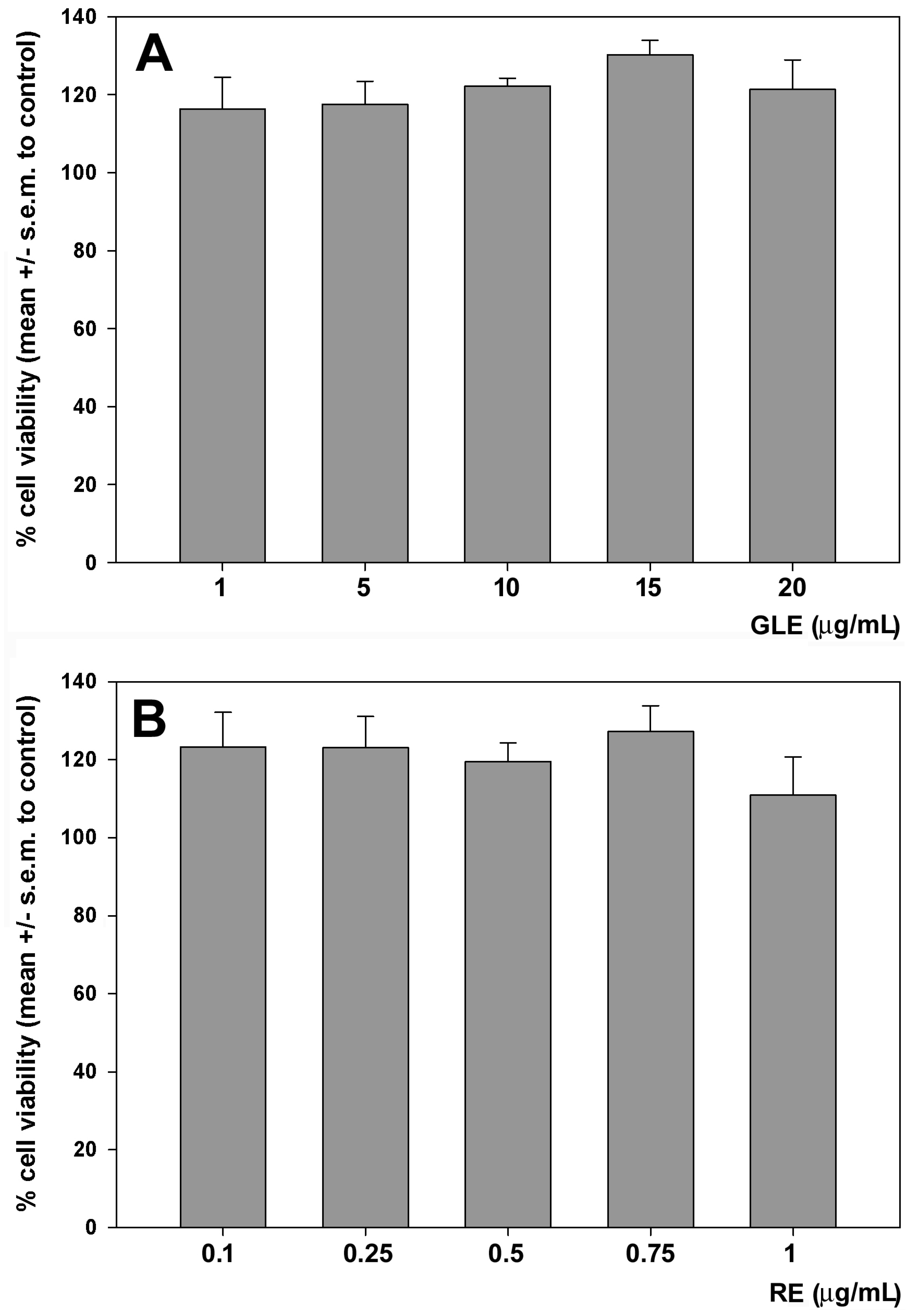
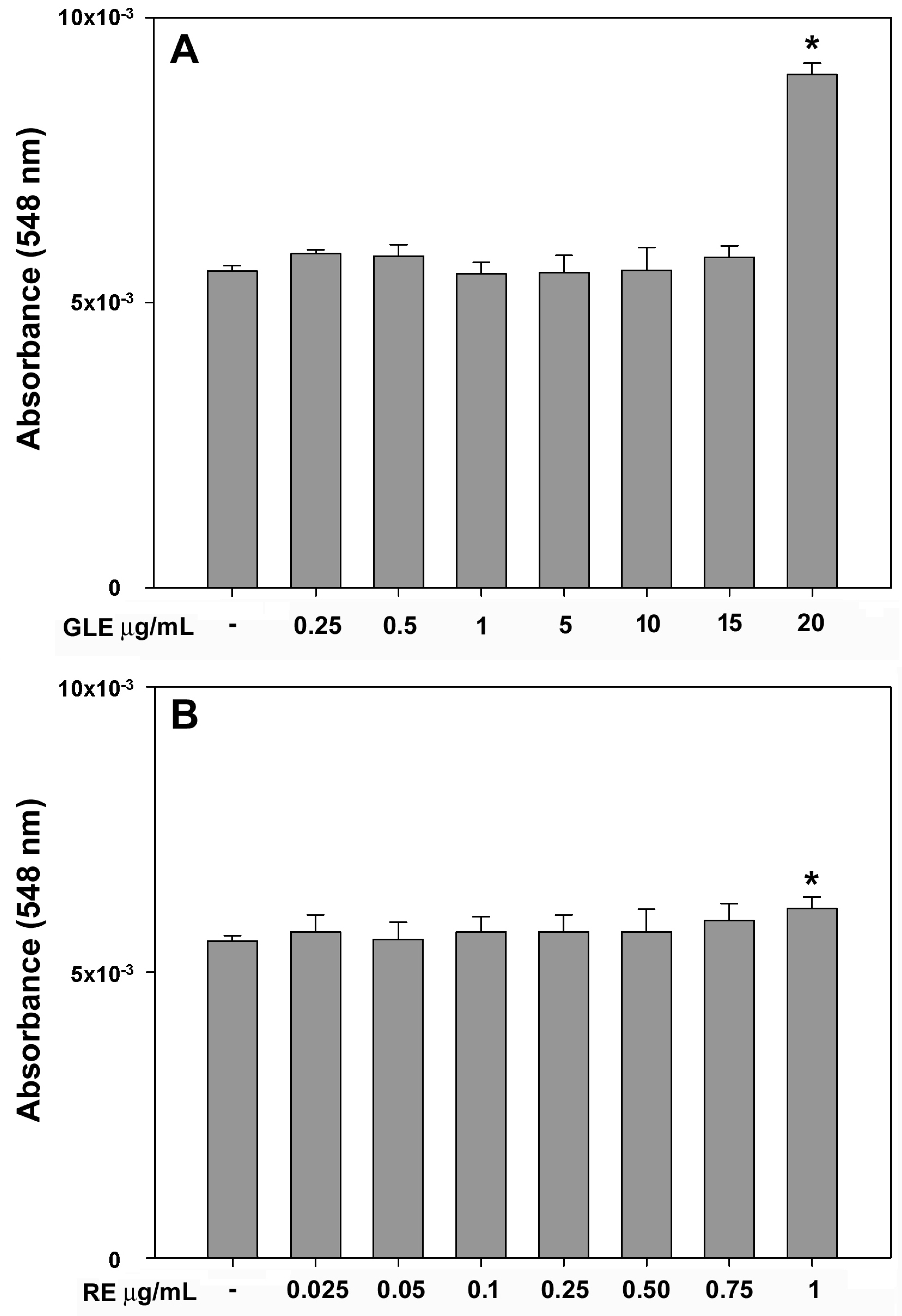
2.1. Effects of GLE and RE on the Viability and NO Production in RAW 264.7 Cells Cultured in Control Conditions
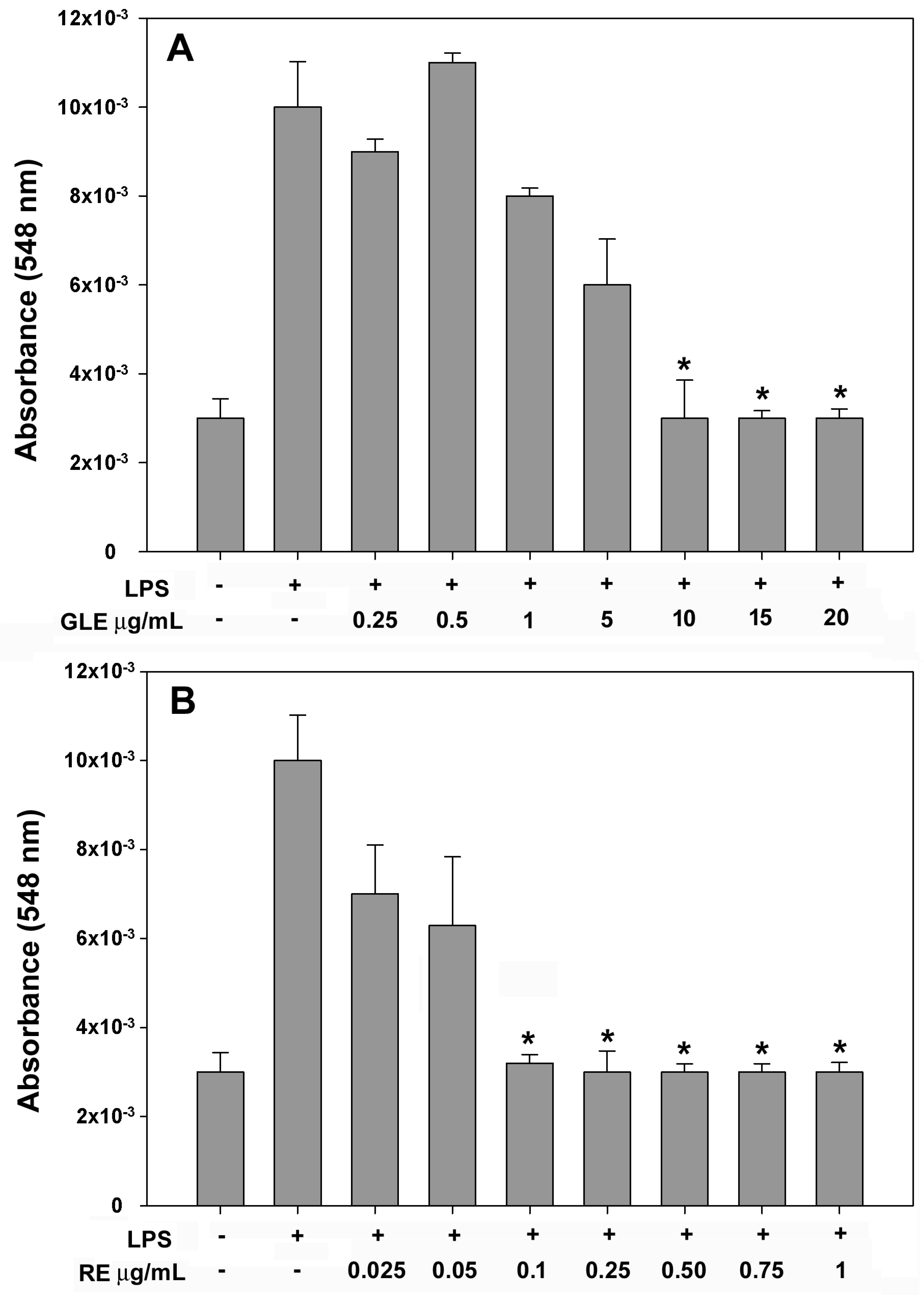
2.2. Effects of GLE and RE on NO Production and iNOS mRNA Expression Level in LPS-Treated RAW 264.7 Cells
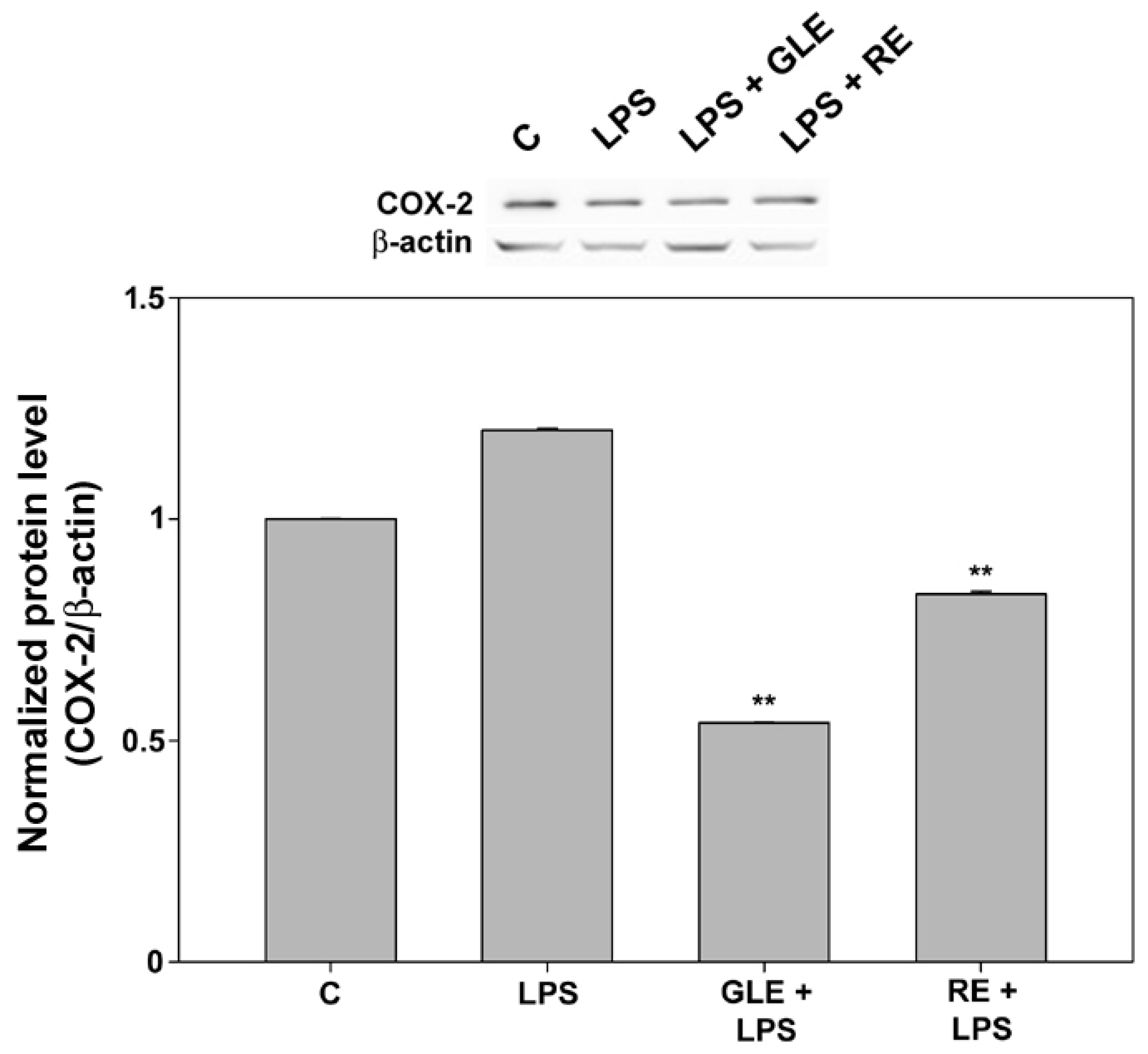
2.3. Effects of GLE and RE on Cyclooxygenase-2 (COX-2) mRNA Expression and Protein Levels in LPS-Treated RAW 264.7 Cells
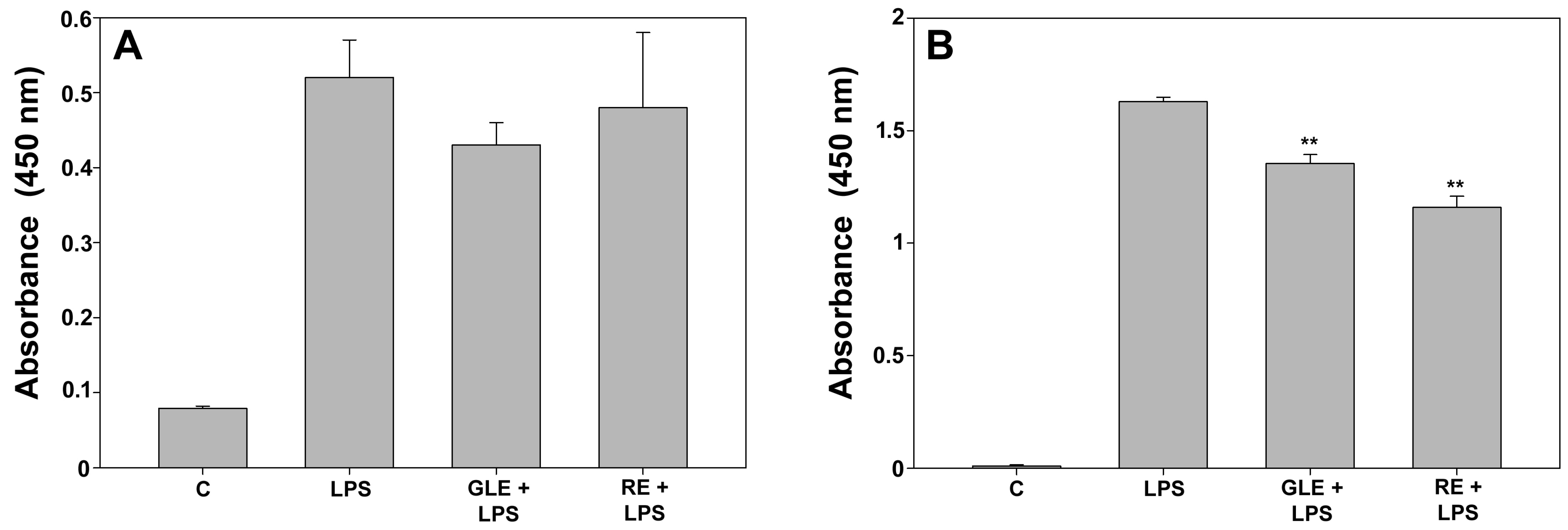
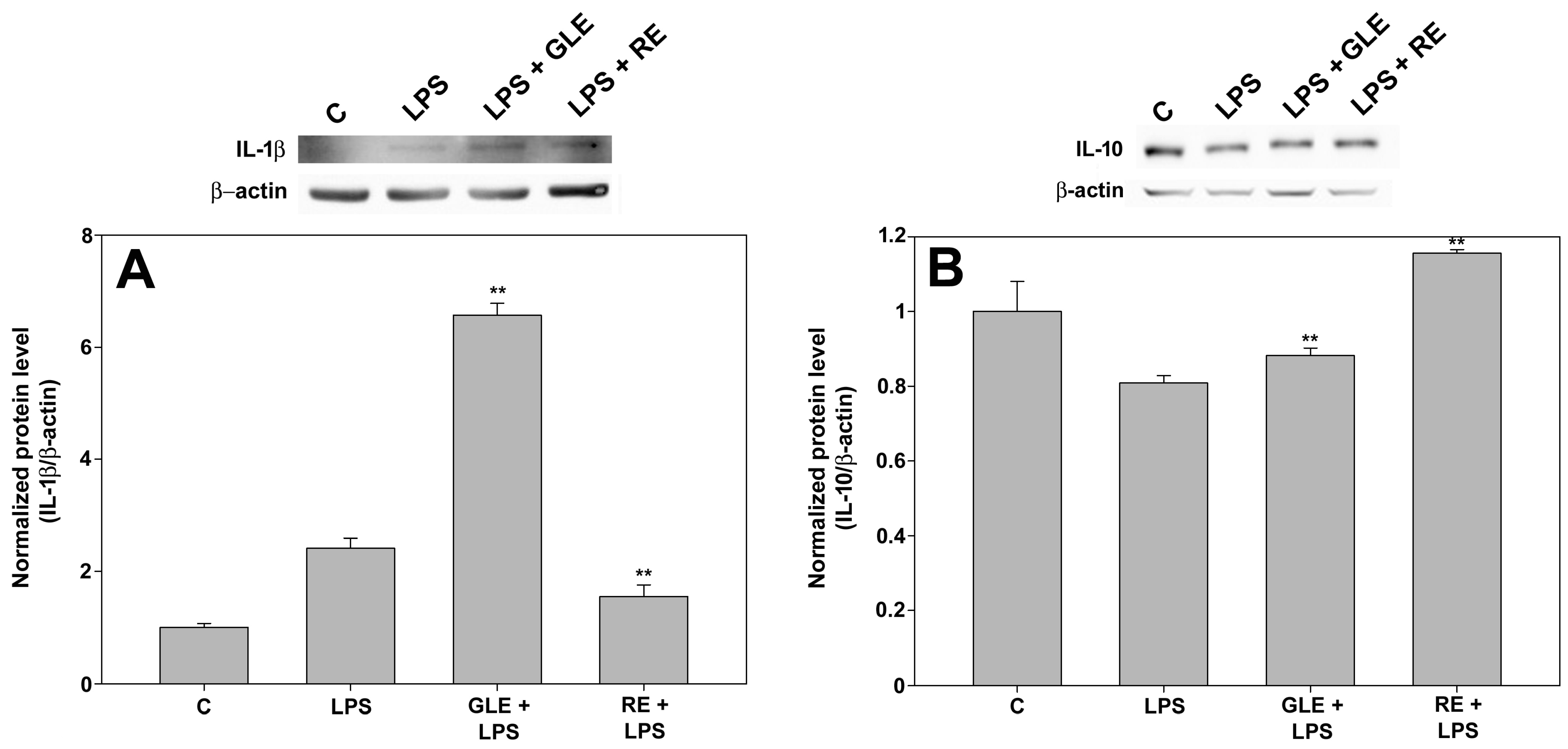
2.4. Effects of GLE and RE on mRNA Expression and Protein Levels of Inflammatory Biomarkers in LPS-Treated RAW 264.7 Cells
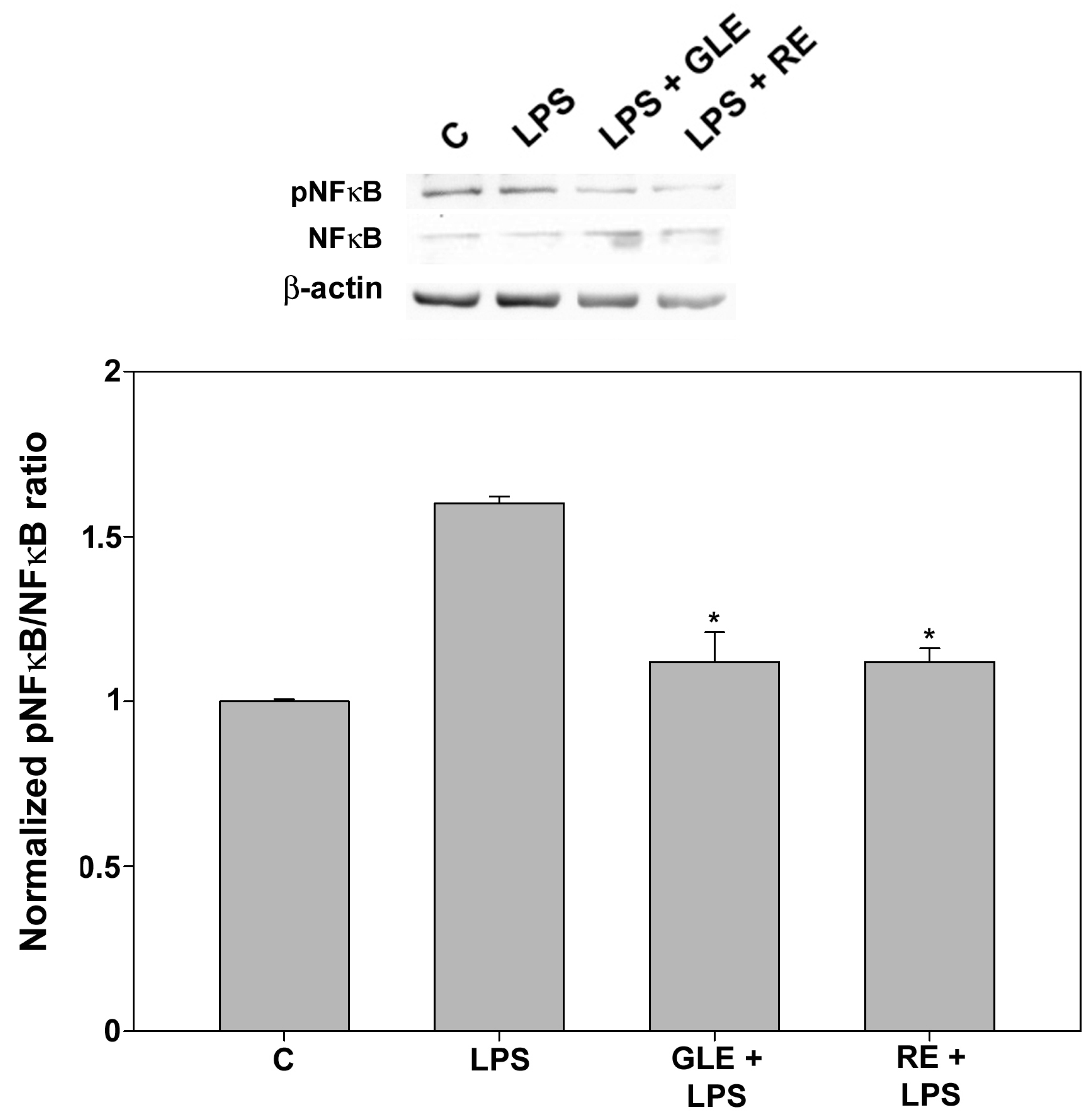
2.5. Effects of GLE and RE on NF-κB p105 mRNA Expression Level and NF-κB Activation in LPS-Treated RAW 264.7 Cells
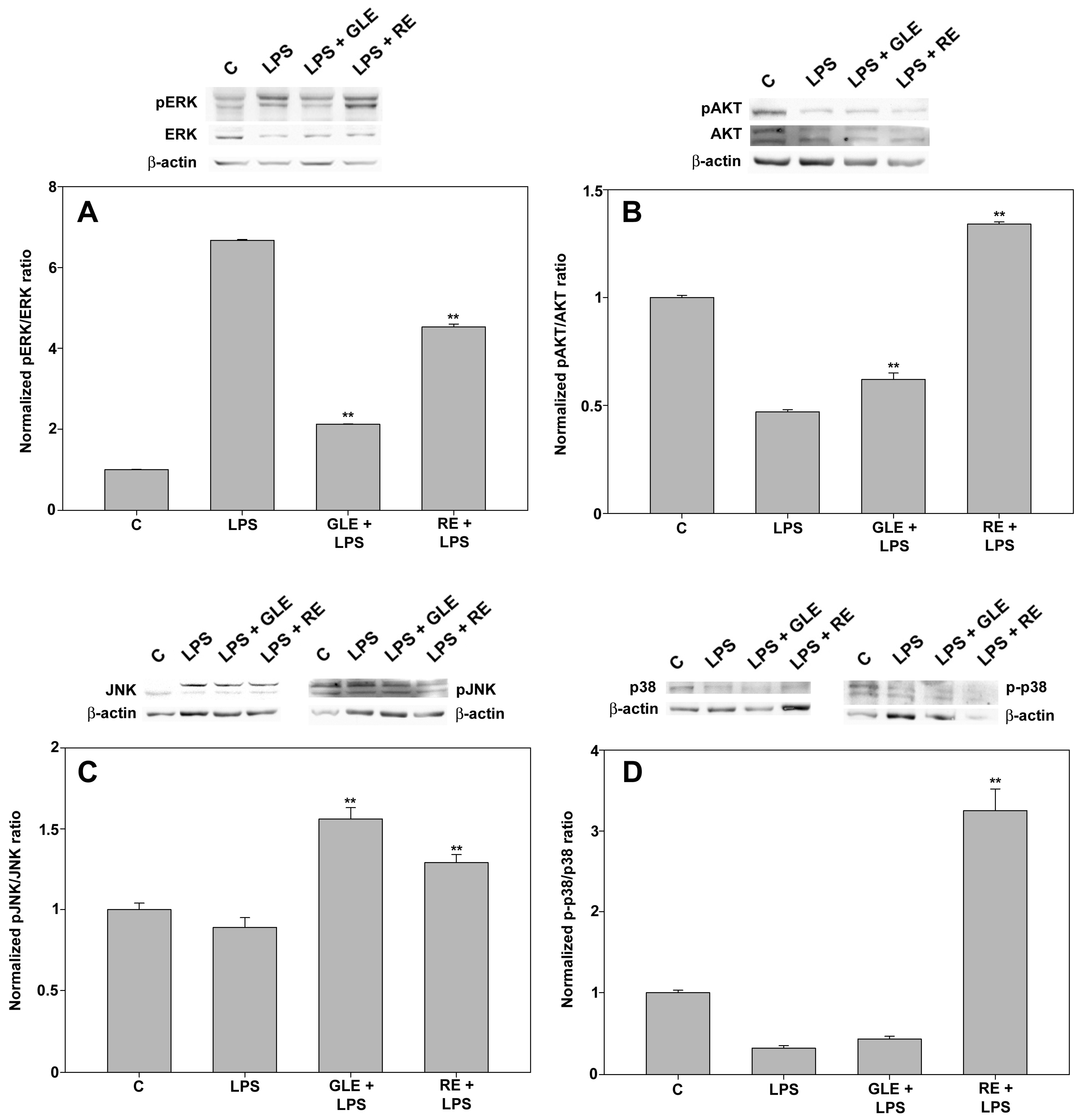
2.6. Effects of GLE and RE on the Activation of Signaling Pathways in LPS-Treated RAW 264.7 Cells
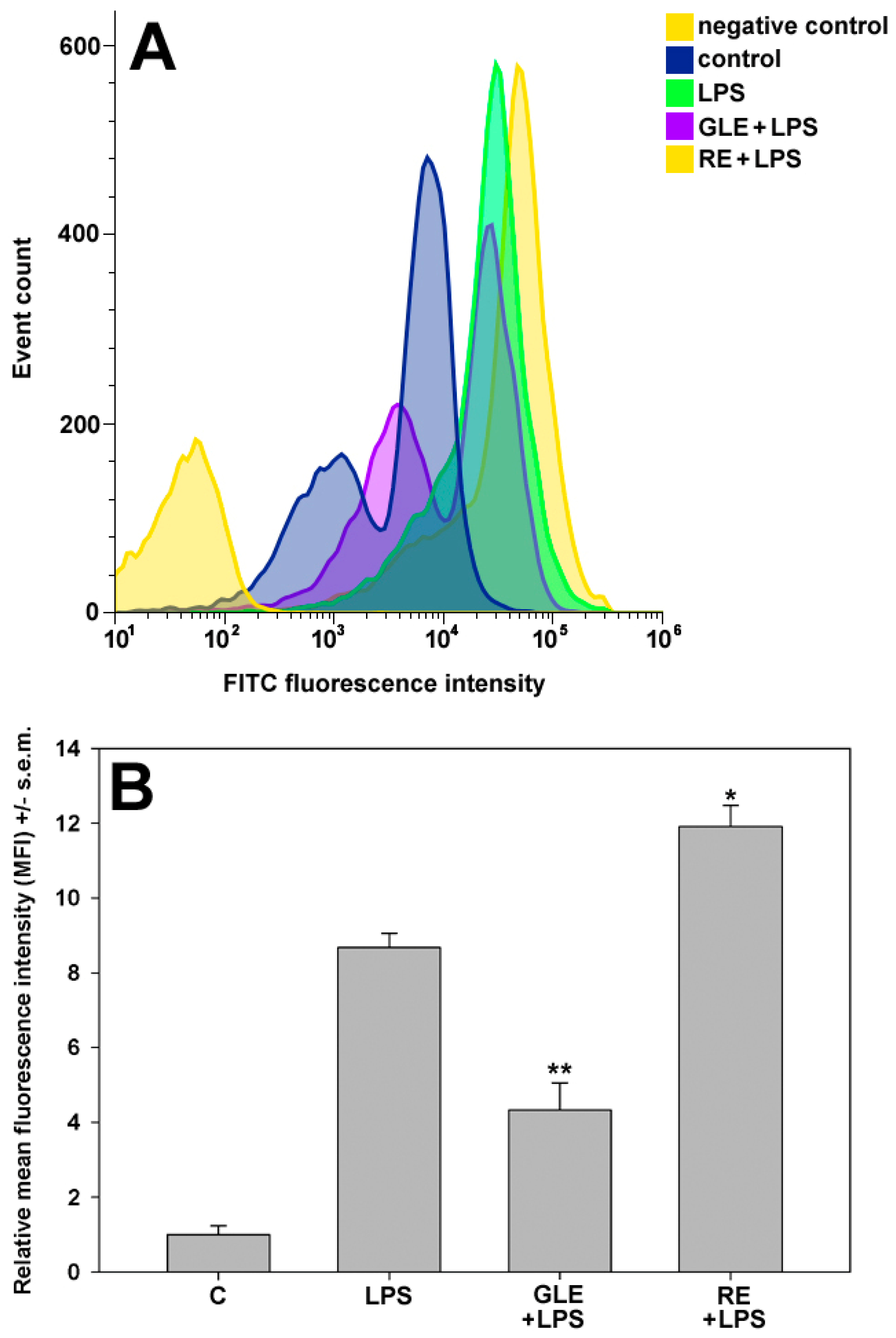
2.7. Effect of GLE and RE on the Bulk-Phase Endocytic Acyivity of LPS-Treated RAW 264.7 Cells
3. Discussion
4. Materials and Methods
4.1. GLE and RE
4.2. Cell Culture
4.3. Viability Assay
4.4. NO Production
4.5. qRT-PCR
4.6. Western Blot
4.7. Enzyme Linked Immunosorbent Assay (ELISA)
4.8. Endocytosis Assay
4.9. Statistics
5. Conclusions
Supplementary Materials
Author Contributions
Funding
Institutional Review Board Statement
Informed Consent Statement
Data Availability Statement
Acknowledgments
Conflicts of Interest
References
- Gutiérrez, J.L.; Jones, C.G.; Byers, J.E.; Arkema, K.K.; Berkenbusch, K.; Commito, J.A.; Duarte, C.M.; Gillis, L.G.; Hacker, S.D.; Hendriks, I.E.; et al. Physical Ecosystem Engineers and the Functioning of Estuaries and Coasts. In Treatise on Estuarine and Coastal Science, 2nd ed.; Baird, D., Elliott, M., Eds.; Academic Press: New York, NY, USA, 2024; pp. 607–644. [Google Scholar]
- Vidaković-Cifrek, Ž.; Tkalec, M.; Bakran-Petricioli, T.; Dolenc Koce, J.; Bobetić, J.; Cvrtila, A.; Grbčić, A.; Maroević, J.; Mikec, N.; Samac, J.; et al. Standard Descriptors and Selected Biomarkers in Assessment of Posidonia oceanica (L.) Delile Environmental Response. J. Mar. Sci. Eng. 2024, 12, 2072. [Google Scholar] [CrossRef]
- Kaal, J.; Serrano, O.; Nierop, K.G.J.; Schellekens, J.; Martinez Cortizas, A.; Mateo, M.A. Molecular composition of plant parts and sediment organic matter in a Mediterranean seagrass (Posidonia oceanica) mat. Aquat. Bot. 2016, 133, 50–61. [Google Scholar] [CrossRef]
- Astudillo-Pascual, M.; Domínguez, I.; Aguilera, P.A.; Garrido Frenich, A. New Phenolic Compounds in Posidonia oceanica Seagrass: A Comprehensive Array Using High Resolution Mass Spectrometry. Plants 2021, 10, 864. [Google Scholar] [CrossRef]
- Abruscato, G.; Chiarelli, R.; Lazzara, V.; Punginelli, D.; Sugár, S.; Mauro, M.; Librizzi, M.; Di Stefano, V.; Arizza, V.; Vizzini, A.; et al. In Vitro Cytotoxic Effect of Aqueous Extracts from Leaves and Rhizomes of the Seagrass Posidonia oceanica (L.) Delile on HepG2 Liver Cancer Cells: Focus on Autophagy and Apoptosis. Biology 2023, 12, 616. [Google Scholar] [CrossRef]
- Batanouny, K.H. Wild Medicinal Plants in Egypt; Academy of Scientific Research and Technology: Cairo, Egypt, 1999. [Google Scholar]
- El-Mokasabi, F.M. Floristic composition and traditional uses of plant species in Wadi Alkuf, Al-Jabal Al-Akhder, Libya. Am. Eur. J. Agric. Environ. Sci. 2014, 14, 685–697. [Google Scholar]
- Abruscato, G.; Tarantino, R.; Mauro, M.; Chiarelli, R.; Vizzini, A.; Arizza, V.; Vazzana, M.; Luparello, C. Glucose consumption and uptake in HepG2 cells is improved by aqueous extracts from leaves, but not rhizomes, of Posidonia oceanica (L.) Delile via GLUT-4 upregulation. Protoplasma 2025, 262, 1483–1493. [Google Scholar] [CrossRef] [PubMed]
- Messina, C.M.; Arena, R.; Manuguerra, S.; Pericot, Y.; Curcuraci, E.; Kerninon, F.; Renda, G.; Hellio, C.; Santulli, A. Antioxidant Bioactivity of Extracts from Beach Cast Leaves of Posidonia oceanica (L.) Delile. Mar. Drugs 2021, 19, 560. [Google Scholar] [CrossRef] [PubMed]
- Vasarri, M.; Barletta, E.; Ramazzotti, M.; Degl’Innocenti, D. In vitro anti-glycation activity of the marine plant Posidonia oceanica (L.) Delile. J. Ethnopharmacol. 2020, 259, 112960. [Google Scholar] [CrossRef] [PubMed]
- Vasarri, M.; Leri, M.; Barletta, E.; Pretti, C.; Degl’Innocenti, D. Posidonia oceanica (L.) Delile Dampens Cell Migration of Human Neuroblastoma Cells. Mar. Drugs 2021, 19, 579. [Google Scholar] [CrossRef]
- Vasarri, M.; Barletta, E.; Degl’Innocenti, D. Posidonia oceanica (L.) Delile Extract Reduces Lipid Accumulation through Autophagy Activation in HepG2 Cells. Pharmaceuticals 2021, 14, 969. [Google Scholar] [CrossRef]
- Qi, Y.; Gao, F.; Hou, L.; Wan, C. Anti-Inflammatory and Immunostimulatory Activities of Astragalosides. Am. J. Chin. Med. 2017, 45, 1157–1167. [Google Scholar] [CrossRef] [PubMed]
- Nofal, A.E.; AboShabaan, H.S.; Fayyad, R.M.; Ereba, R.E.; Omar, N.A.; Elsharkawy, S.M.; Elberri, A.I. Immunostimulatory and anti-inflammatory impact of Fragaria ananassa methanol extract in a rat model of cadmium chloride-induced pulmonary toxicity. Front. Immunol. 2023, 14, 1297315. [Google Scholar] [CrossRef]
- Omar, A.; Barakat, M.; Alzaghari, L.F.; Abdulrazzaq, S.B.; Hasen, E.; Chellappan, D.K.; Al-Najjar, M.A.A. The effect of Jordanian essential oil from coriander seeds on antioxidant, anti-inflammatory, and immunostimulatory activities using RAW 246.7 murine macrophages. PLoS ONE 2024, 19, e0297250. [Google Scholar] [CrossRef] [PubMed]
- Fujiwara, N.; Kobayashi, K. Macrophages in inflammation. Curr. Drug Targets Inflamm. Allergy 2005, 4, 281–286. [Google Scholar] [CrossRef] [PubMed]
- Chen, S.; Saeed, A.F.U.H.; Liu, Q.; Jiang, Q.; Xu, H.; Xiao, G.G.; Rao, L.; Duo, Y. Macrophages in immunoregulation and therapeutics. Signal Transduct. Target. Ther. 2023, 8, 207. [Google Scholar] [CrossRef] [PubMed]
- Vasarri, M.; Leri, M.; Barletta, E.; Ramazzotti, M.; Marzocchini, R.; Degl’Innocenti, D. Anti-inflammatory properties of the marine plant Posidonia oceanica (L.) Delile. J. Ethnopharmacol. 2020, 247, 112252. [Google Scholar] [CrossRef] [PubMed]
- Abruscato, G.; Mauro, M.; Boucau, M.-C.; Arizza, V.; Vazzana, M.; Dehouck, L.; Gosselet, F.; Luparello, C.; Candela, P. Protective Effects of Extracts from Green Leaves and Rhizomes of Posidonia oceanica (L.) Delile on an In Vitro Model of the Human Blood–Brain Barrier. Biology 2025, 14, 699. [Google Scholar] [CrossRef] [PubMed]
- Yao, C.; Narumiya, S. Prostaglandin-cytokine crosstalk in chronic inflammation. Br. J. Pharmacol. 2019, 176, 337–354. [Google Scholar] [CrossRef]
- Tong, W.; Chen, X.; Song, X.; Chen, Y.; Jia, R.; Zou, Y.; Li, L.; Yin, L.; He, C.; Liang, X.; et al. Resveratrol inhibits LPS-induced inflammation through suppressing the signaling cascades of TLR4-NF-κB/MAPKs/IRF3. Exp. Ther. Med. 2020, 19, 1824–1834. [Google Scholar] [CrossRef]
- Sun, X.; Cao, S.; Mao, C.; Sun, F.; Zhang, X.; Song, Y. Post-translational modifications of p65: State of the art. Front. Cell Dev. Biol. 2024, 12, 1417502. [Google Scholar] [CrossRef]
- Doodnauth, S.A.; Grinstein, S.; Maxson, M.E. Constitutive and stimulated macropinocytosis in macrophages: Roles in immunity and in the pathogenesis of atherosclerosis. Philos. Trans. R. Soc. B Biol. Sci. 2019, 374, 20180147. [Google Scholar] [CrossRef]
- Vasarri, M.; De Biasi, A.M.; Barletta, E.; Pretti, C.; Degl’Innocenti, D. An Overview of New Insights into the Benefits of the Seagrass Posidonia oceanica for Human Health. Mar. Drugs 2021, 19, 476. [Google Scholar] [CrossRef]
- Boraschi, D. What Is IL-1 for? The Functions of Interleukin-1 Across Evolution. Front. Immunol. 2022, 13, 872155. [Google Scholar] [CrossRef]
- Sabat, R.; Grütz, G.; Warszawska, K.; Kirsch, S.; Witte, E.; Wolk, K.; Geginat, J. Biology of interleukin-10. Cytokine Growth Factor Rev. 2010, 21, 331–344. [Google Scholar] [CrossRef]
- Hirayama, D.; Iida, T.; Nakase, H. The Phagocytic Function of Macrophage-Enforcing Innate Immunity and Tissue Homeostasis. Int. J. Mol. Sci. 2017, 19, 92. [Google Scholar] [CrossRef] [PubMed]
- Ninković, J.; Roy, S. Morphine decreases bacterial phagocytosis by inhibiting actin polymerization through cAMP-, Rac-1-, and p38 MAPK-dependent mechanisms. Am. J. Pathol. 2012, 180, 1068–1079. [Google Scholar] [CrossRef]
- Jeong, K.M.; Choi, J.I.; Lee, S.H.; Lee, H.J.; Son, J.K.; Seo, C.S.; Song, S.W.; Kwak, S.H.; Bae, H.B. Effect of sauchinone, a lignan from Saururus chinensis, on bacterial phagocytosis by macrophages. Eur. J. Pharmacol. 2014, 728, 176–182. [Google Scholar] [CrossRef] [PubMed]
- Xin, C.; Quan, H.; Kim, J.M.; Hur, Y.H.; Shin, J.Y.; Bae, H.B.; Choi, J.I. Ginsenoside Rb1 increases macrophage phagocytosis through p38 mitogen-activated protein kinase/Akt pathway. J. Ginseng Res. 2019, 43, 394–401. [Google Scholar] [CrossRef] [PubMed]
- Monick, M.M.; Powers, L.S.; Barrett, C.W.; Hinde, S.; Ashare, A.; Groskreutz, D.J.; Nyunoya, T.; Coleman, M.; Spitz, D.R.; Hunninghake, G.W. Constitutive ERK MAPK activity regulates macrophage ATP production and mitochondrial integrity. J. Immunol. 2008, 180, 7485–7496. [Google Scholar] [CrossRef] [PubMed]
- Park, K.H.; Park, M.; Choi, S.E.; Jeong, M.S.; Kwon, J.H.; Oh, M.H.; Choi, H.K.; Seo, S.J.; Lee, M.W. The anti-oxidative and anti-inflammatory effects of caffeoyl derivatives from the roots of Aconitum koreanum R. RAYMOND. Biol. Pharm. Bull. 2009, 32, 2029–2033. [Google Scholar] [CrossRef]
- Shin, K.M.; Kim, I.T.; Park, Y.M.; Ha, J.; Choi, J.W.; Park, H.J.; Lee, Y.S.; Lee, K.T. Anti-inflammatory effect of caffeic acid methyl ester and its mode of action through the inhibition of prostaglandin E2, nitric oxide and tumor necrosis factor-alpha production. Biochem. Pharmacol. 2004, 68, 2327–2336. [Google Scholar] [CrossRef] [PubMed]
- Sunil, M.A.; Sunitha, V.S.; Santhakumaran, P.; Mohan, M.C.; Jose, M.S.; Radhakrishnan, E.K.; Mathew, J. Protective effect of (+)–catechin against lipopolysaccharide-induced inflammatory response in RAW 264.7 cells through downregulation of NF-κB and p38 MAPK. Inflammopharmacology 2021, 29, 1139–1155. [Google Scholar] [CrossRef] [PubMed]
- Pragasam, S.J.; Venkatesan, V.; Rasool, M. Immunomodulatory and anti-inflammatory effect of p-coumaric acid, a common dietary polyphenol on experimental inflammation in rats. Inflammation 2013, 36, 169–176. [Google Scholar] [CrossRef]
- Marmitt, D.J.; Vettorazzi, G.; Bortoluzzi, L.; Alves, C.; Silva, J.; Pinteus, S.; Martins, A.; Gaspar, H.; Pedrosa, R.; da Silva, J.; et al. Wound healing potential and anti-inflammatory action of extracts and compounds of Myrciaria plinioides D. Legrand leaves. Inflammopharmacology 2024, 32, 3327–3345. [Google Scholar] [CrossRef]
- Seo, C.S.; Jeong, S.J.; Yoo, S.R.; Lee, N.R.; Shin, H.K. Quantitative Analysis and In vitro Anti-inflammatory Effects of Gallic Acid, Ellagic Acid, and Quercetin from Radix sanguisorbae. Pharmacogn. Mag. 2016, 12, 104–108. [Google Scholar] [CrossRef]
- BenSaad, L.A.; Kim, K.H.; Quah, C.C.; Kim, W.R.; Shahimi, M. Anti-inflammatory potential of ellagic acid, gallic acid and punicalagin A&B isolated from Punica granatum. BMC Complement. Altern. Med. 2017, 17, 47. [Google Scholar]
- Huang, L.; Hou, L.; Xue, H.; Wang, C. Gallic acid inhibits inflammatory response of RAW264.7 macrophages by blocking the activation of TLR4/NF-κB induced by LPS. Xi Bao Yu Fen Zi Mian Yi Xue Za Zhi 2016, 32, 1610–1614. [Google Scholar]
- Tanaka, M.; Kishimoto, Y.; Sasaki, M.; Sato, A.; Kamiya, T.; Kondo, K.; Iida, K. Terminalia bellirica (Gaertn.) Roxb. Extract and Gallic Acid Attenuate LPS-Induced Inflammation and Oxidative Stress via MAPK/NF-κB and Akt/AMPK/Nrf2 Pathways. Oxid. Med. Cell Longev. 2018, 2018, 9364364. [Google Scholar] [CrossRef]
- Dong, H.; Song, G.; Wang, Z.; Wu, X.; Wang, Q.; Wang, Y.H. Kaempferol as a multifaceted immunomodulator: Implications for inflammation, autoimmunity, and cancer. Front. Immunol. 2025, 16, 1671519. [Google Scholar] [CrossRef] [PubMed]
- Kim, M.S.; Kim, S.H. Inhibitory effect of astragalin on expression of lipopolysaccharide-induced inflammatory mediators through NF-κB in macrophages. Arch. Pharmacal Res. 2011, 34, 2101–2107. [Google Scholar] [CrossRef]
- Zhang, X.; Li, J.; Liu, Y.; Ma, R.; Li, C.; Xu, Z.; Wang, R.; Zhang, L.; Zhang, Y. Myricetin alleviates DNCB-induced atopic dermatitis by modulating macrophage M1/M2 polarization. Int. Immunopharmacol. 2025, 163, 115212. [Google Scholar] [CrossRef] [PubMed]
- Sung, N.Y.; Yang, M.S.; Song, D.S.; Kim, J.K.; Park, J.H.; Song, B.S.; Park, S.H.; Lee, J.W.; Park, H.J.; Kim, J.H.; et al. Procyanidin dimer B2-mediated IRAK-M induction negatively regulates TLR4 signaling in macrophages. Biochem. Biophys. Res. Commun. 2013, 438, 122–128. [Google Scholar] [CrossRef]
- Fan, H.H.; Zhu, L.B.; Li, T.; Zhu, H.; Wang, Y.N.; Ren, X.L.; Hu, B.L.; Huang, C.P.; Zhu, J.H.; Zhang, X. Hyperoside inhibits lipopolysaccharide-induced inflammatory responses in microglial cells via p38 and NFκB pathways. Int. Immunopharmacol. 2017, 50, 14–21. [Google Scholar] [CrossRef] [PubMed]
- Kim, M.C.; Kim, S.J.; Kim, D.S.; Jeon, Y.D.; Park, S.J.; Lee, H.S.; Um, J.Y.; Hong, S.H. Vanillic acid inhibits inflammatory mediators by suppressing NF-κB in lipopolysaccharide-stimulated mouse peritoneal macrophages. Immunopharmacol. Immunotoxicol. 2011, 33, 525–532. [Google Scholar] [CrossRef] [PubMed]
- Zhu, M.; Tang, X.; Zhu, Z.; Gong, Z.; Tang, W.; Hu, Y.; Cheng, C.; Wang, H.; Sarwar, A.; Chen, Y.; et al. STING activation in macrophages by vanillic acid exhibits antineoplastic potential. Biochem. Pharmacol. 2023, 213, 115618. [Google Scholar] [CrossRef] [PubMed]
- Wang, X.; Zhang, J.; Li, N.; Zhang, G.; Shang, Y.; Cai, X.; Qiao, J.; Xia, X.; Meng, Q. The regulatory roles of Fasciola hepatica GSTO1 protein in inflammatory cytokine expression and apoptosis in murine macrophages. Acta Trop. 2023, 245, 106977. [Google Scholar] [CrossRef]
- Nakano, T.; Goto, S.; Takaoka, Y.; Tseng, H.P.; Fujimura, T.; Kawamoto, S.; Ono, K.; Chen, C.L. A novel moonlight function of glyceraldehyde-3-phosphate dehydrogenase (GAPDH) for immunomodulation. Biofactors 2018, 44, 597–608. [Google Scholar] [CrossRef]
- Sulistyowati, E.; Lee, M.-Y.; Wu, L.-C.; Hsu, J.-H.; Dai, Z.-K.; Wu, B.-N.; Lin, M.-C.; Yeh, J.-L. Exogenous Heat Shock Cognate Protein 70 Suppresses LPS-Induced Inflammation by Down-Regulating NF-κB through MAPK and MMP-2/-9 Pathways in Macrophages. Molecules 2018, 23, 2124. [Google Scholar] [CrossRef]
- Antonova, O.Y.; Yurinskaya, M.M.; Funikov, S.Y.; Evgen’ev, M.B.; Vinokurov, M.G. Exogenous heat shock protein HSP70 modulates lipopolysaccharide-induced macrophage activation. Dokl. Biol. Sci. 2013, 452, 320–324. [Google Scholar] [CrossRef]
- Rozhkova, E.; Yurinskaya, M.; Zatsepina, O.; Garbuz, D.; Karpov, V.; Surkov, S.; Murashev, A.; Ostrov, V.; Margulis, B.; Evgen’ev, M.; et al. Exogenous mammalian extracellular HSP70 reduces endotoxin manifestations at the cellular and organism levels. Ann. N. Y. Acad. Sci. 2010, 1197, 94–107. [Google Scholar] [CrossRef]
- Leroux, L.P.; Nasr, M.; Valanparambil, R.; Tam, M.; Rosa, B.A.; Siciliani, E.; Hill, D.E.; Zarlenga, D.S.; Jaramillo, M.; Weinstock, J.V.; et al. Analysis of the Trichuris suis excretory/secretory proteins as a function of life cycle stage and their immunomodulatory properties. Sci. Rep. 2018, 8, 15921. [Google Scholar] [CrossRef] [PubMed]
- Sanz-Lázaro, C.; Malea, P.; Apostolaki, E.T.; Kalantzi, I.; Marín, A.; Karakassis, I. The role of the seagrass Posidonia oceanica in the cycling of trace elements. Biogeosciences 2012, 9, 2497–2507. [Google Scholar] [CrossRef]
- Benito-González, I.; López-Rubio, A.; Martínez-Abad, A.; Ballester, A.-R.; Falcó, I.; González-Candelas, L.; Sánchez, G.; Lozano-Sánchez, J.; Borrás-Linares, I.; Segura-Carretero, A.; et al. In-Depth Characterization of Bioactive Extracts from Posidonia oceanica Waste Biomass. Mar. Drugs 2019, 17, 409. [Google Scholar] [CrossRef]
- Longo, F.; Di Gaudio, F.; Attanzio, A.; Marretta, L.; Luparello, C.; Indelicato, S.; Bongiorno, D.; Barone, G.; Tesoriere, L.; Giardina, I.C.; et al. Bioactive Molecules from the Exoskeleton of Procambarus clarkii: Reducing Capacity, Radical Scavenger, and Antitumor and Anti-Inflammatory Activities. Biomolecules 2024, 14, 1635. [Google Scholar] [CrossRef]
- Wang, Z.; Guan, Y.; Yang, R.; Li, J.; Wang, J.; Jia, A.Q. Anti-inflammatory activity of 3-cinnamoyltribuloside and its metabolomic analysis in LPS-activated RAW 264.7 cells. BMC Complement. Med. Ther. 2020, 20, 329. [Google Scholar] [CrossRef]
- Mangmool, S.; Limpichai, C.; Han, K.K.; Reutrakul, V.; Anantachoke, N. Anti-Inflammatory Effects of Mitrephora sirikitiae Leaf Extract and Isolated Lignans in RAW 264.7 Cells. Molecules 2022, 27, 3313. [Google Scholar] [CrossRef]
- Rod-in, W.; Kim, M.; Jang, A.-y.; Nam, Y.S.; Yoo, T.Y.; Park, W.J. Immunostimulatory Activity of a Mixture of Platycodon grandiflorum, Pyrus serotine, Chaenomeles sinensis, and Raphanus sativus in RAW264.7 Macrophages. Int. J. Mol. Sci. 2024, 25, 10660. [Google Scholar] [CrossRef] [PubMed]





| LPS | GLE + LPS | RE + LPS |
|---|---|---|
| 260.6 ± 4.3 | 0.85 ± 0.02 ** | 0.72 ± 0.01 ** |
| LPS | GLE + LPS | RE + LPS |
|---|---|---|
| 1.52 ± 0.03 | 0.84 ± 0.05 * | 0.68 ± 0.04 * |
| LPS | GLE + LPS | RE + LPS | |
|---|---|---|---|
| Il1b | 230.83 ± 11.1 | 387.65 ± 4.6 ** | 227.24 ± 8.3 |
| Il6 | 2.63 ± 0.04 | 2.87 ± 0.05 * | 3 ± 0.01 ** |
| Il10 | 2.6 ± 0.09 | 2.7 ± 0.05 | 3.3 ± 0.09 ** |
| LPS | GLE + LPS | RE + LPS |
|---|---|---|
| 1.18 ± 0.02 | 1.04 ± 0.02 * | 1.02 ± 0.01 * |
| Molecule | Extract/Amount (μg/g) | Bioactivity | Reference |
|---|---|---|---|
| Caffeic acid | GLE/n.q. | Decrease in NO production, down-regulation of iNOS and COX-2 mRNA expression and protein levels | [32] |
| Caffeic acid methyl ester | GLE/0.37 | Decrease in NO production, down-regulation of iNOS and COX-2 mRNA expression and protein levels, inhibition of NF-κB activation, decrease in TNFα release | [33] |
| Catechin | GLE/n.q. RE/n.q. | Decrease in NO production, down-regulation of iNOS, TNFα and COX-2 mRNA expression and protein levels, inhibition of NF-κB mRNA expression, increase in IL-10 release | [34] |
| p-Coumaric acid | GLE/n.q. | Inhibition of COX-2, decrease in TNFα release, increase in IL-10 release, inhibition of phagocytosis | [35,36] |
| Ellagic acid | GLE/n.q. | Decrease in NO production, inhibition of TNFα production | [37,38] |
| Gallic acid | GLE/n.q. RE/n.q. | Down-regulation of iNOS, TNFα and IL-1β expression, inhibition of NF-κB activation | [39,40] |
| Kaempferol | GLE/n.q. | Down-regulation of iNOS and COX-2 expression, inhibition of NF-κB activation, decrease in TNFα release, increase in IL-10 release | [41] |
| Kaempferol 3-O-glucoside | RE/n.q. | Decrease in NO production, down-regulation of iNOS and COX-2 mRNA expression and protein levels, decrease in TNFα release, decrease in IL-1β release | [42] |
| Myricetin | RE/n.q. | Decrease in NO production, down-regulation of iNOS protein levels, decrease in TNFα release, decrease in IL-1β release, increase in IL-10 release | [43] |
| Procyanidin dimer B type isomer 2 | GLE/n.q. RE/0.20 | Inhibition of NF-κB activation, inhibition of ERK activation, decrease in TNFα release, decrease in IL-1β release | [44] |
| Quercetin 3-O-galactoside | GLE/n.q. RE/10.81 | Decrease in NO production, down-regulation of iNOS expression, inhibition of NF-κB activation, decrease in TNFα release | [45] |
| Vanillic acid | RE/0.6 | Decrease in NO production, down-regulation of COX-2 expression, inhibition of NF-κB activation, decrease in TNFα release, stimulation of phagocytosis | [46,47] |
| Accession Number/Protein Description | Extract/Amount | Documented Bioactivity (Source) | Reference |
|---|---|---|---|
| A0A0K9P699 Glutathione transferase | RE 2.01 × 10⁵ | Decrease in IL-1β and TNFα release, increase in IL-10 release, inhibition of NF-κB and ERK activation (Fasciola hepatica) | [48] |
| A0A0K9P7A0 Glyceraldehyde-3-phosphate dehydrogenase | GLE 1.81 × 10⁶ RE 6.44 × 10⁵ | Decrease in TNFα release, increase in IL-10 release, inhibition of phagocytosis (rabbit muscle) | [49] |
| A0A1D1YEH2 Heat shock cognate protein | RE 1.19 × 10⁵ | Decrease in NO production, inhibition of iNOS and COX-2 expression, inhibition of NF-κB and ERK activation, decrease in TNFα release (recombinant) | [50] |
| A0A0K9NPM0 70 kDa Heat shock-related protein | GLE 1.11 × 10⁵ RE 4.19 × 10⁴ | Decrease in NO production, decrease in TNFα release (recombinant) | [51,52] |
| A0A0K9Q3S1 Nucleoside-diphosphate kinase | GLE 3.87 × 10⁴ RE 2.31 × 10⁵ | Decrease in TNFα release (Trichuris suis) | [53] |
| A0A0K9Q334 Triose-phosphate isomerase | GLE 1.27 × 10⁵ RE 3.65 × 10⁵ | Decrease in TNFα release (Trichuris suis) | [53] |
| Gene (Primer) | Sequence (5′→3′) | Reference |
|---|---|---|
| Il1b (sense) | TGGAAAAGCGGTTTGTCTTC | [57] |
| Il1b (antisense) | TACCAGTTGGGGAACTCTGC | |
| Il6 (sense) | GAGGATACCACTCCCAACAGACC | [57] |
| Il6 (antisense) | AAGTGCATCATCGTTGTTCATACA | |
| Il10 (sense) | GCTGGACAACATACTGCTAACC | [58] |
| Il10 (antisense) | ATTTCCGATAAGGCTTGGCAA | |
| Nfkb1 (sense) | GAAATTCCTGATCCAGACAAAAAC | [58] |
| Nfkb1 (antisense) | ATCACTTCAATGGCCTCTGTGTAG | |
| Nos2 (sense) | CAGGAGGAGAGAGATCCGATTTA | [57] |
| Nos2 (antisense) | GCATTAGCATGGAAGCAAAGA | |
| Ptgs2 (sense) | TGCATGTGGCTGTGGATGTCATCAA | [58] |
| Ptgs2 (antisense) | CACTAAGACAGACCCGTCATCTCCA | |
| Gapdh (sense) | GGCCTTCCGTGTTCCTAC | [57] |
| Gapdh (antisense) | TGTCATCATATCTGGCAGGTT |
Disclaimer/Publisher’s Note: The statements, opinions and data contained in all publications are solely those of the individual author(s) and contributor(s) and not of MDPI and/or the editor(s). MDPI and/or the editor(s) disclaim responsibility for any injury to people or property resulting from any ideas, methods, instructions or products referred to in the content. |
© 2025 by the authors. Licensee MDPI, Basel, Switzerland. This article is an open access article distributed under the terms and conditions of the Creative Commons Attribution (CC BY) license (https://creativecommons.org/licenses/by/4.0/).
Share and Cite
Abruscato, G.; Ganci, D.; Bellistrì, F.; Chiarelli, R.; Mauro, M.; Vizzini, A.; Arizza, V.; Vazzana, M.; Luparello, C. Anti-Inflammatory and Immunomodulatory Effects of Aqueous Extracts from Green Leaves and Rhizomes of Posidonia oceanica (L.) Delile on LPS-Stimulated RAW 264.7 Macrophages. Molecules 2025, 30, 4685. https://doi.org/10.3390/molecules30244685
Abruscato G, Ganci D, Bellistrì F, Chiarelli R, Mauro M, Vizzini A, Arizza V, Vazzana M, Luparello C. Anti-Inflammatory and Immunomodulatory Effects of Aqueous Extracts from Green Leaves and Rhizomes of Posidonia oceanica (L.) Delile on LPS-Stimulated RAW 264.7 Macrophages. Molecules. 2025; 30(24):4685. https://doi.org/10.3390/molecules30244685
Chicago/Turabian StyleAbruscato, Giulia, Daniela Ganci, Federica Bellistrì, Roberto Chiarelli, Manuela Mauro, Aiti Vizzini, Vincenzo Arizza, Mirella Vazzana, and Claudio Luparello. 2025. "Anti-Inflammatory and Immunomodulatory Effects of Aqueous Extracts from Green Leaves and Rhizomes of Posidonia oceanica (L.) Delile on LPS-Stimulated RAW 264.7 Macrophages" Molecules 30, no. 24: 4685. https://doi.org/10.3390/molecules30244685
APA StyleAbruscato, G., Ganci, D., Bellistrì, F., Chiarelli, R., Mauro, M., Vizzini, A., Arizza, V., Vazzana, M., & Luparello, C. (2025). Anti-Inflammatory and Immunomodulatory Effects of Aqueous Extracts from Green Leaves and Rhizomes of Posidonia oceanica (L.) Delile on LPS-Stimulated RAW 264.7 Macrophages. Molecules, 30(24), 4685. https://doi.org/10.3390/molecules30244685