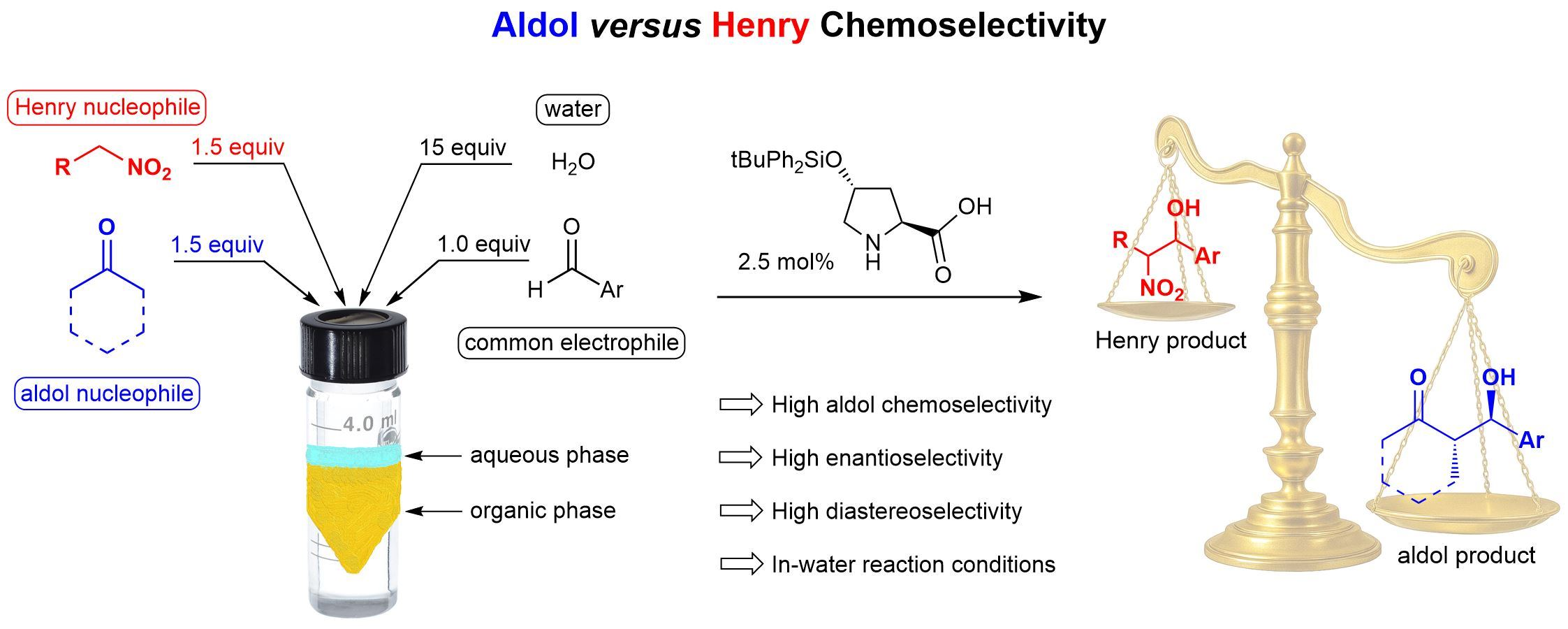
Defining Aldol Chemoselectivity in the Presence of Henry Nucleophiles (Nitroalkanes)

 ,
,  ,
,  , , ,
, , ,  ,
,  ,
,  and
and
Abstract
1. Introduction
2. Discussion and Results
2.1. Aldol Versus Henry Competition Reactions
2.2. Henry Product Reference Standards
2.3. Solvent Studies: Uniqueness of Water-Based Solvent Systems
3. Materials and Methods
4. Conclusions
Supplementary Materials
Author Contributions
Funding
Institutional Review Board Statement
Informed Consent Statement
Data Availability Statement
Acknowledgments
Conflicts of Interest
References
- List, B.; Lerner, R.A.; Barbas, C.F., III. Proline-catalyzed Direct Asymmetric Aldol Reactions. J. Am. Chem. Soc. 2000, 122, 2395–2396. [Google Scholar] [CrossRef]
- Ahrendt, K.A.; Borths, C.J.; MacMillan, D.W.C. New Strategies for Organic Catalysis: The First Highly Enantioselective Organocatalytic Diels-Alder Reaction. J. Am. Chem. Soc. 2000, 122, 4243–4244. [Google Scholar] [CrossRef]
- Marigo, M.; Melchiorre, P. Chemoselectivity in Asymmetric Aminocatalysis. ChemCatChem 2010, 2, 621–623. [Google Scholar] [CrossRef]
- Ma, J.; Gao, B.; Song, G.; Zhang, R.; Wang, Q.; Ye, Z.; Chen, W.-W.; Zhao, B. Asymmetric α-Allylation of Glycinate with Switched Chemoselectivity Enabled by Customized Bifunctional Pyridoxal Catalysts. Angew. Chem. Int. Ed. 2022, 61, e202200850. [Google Scholar] [CrossRef]
- Nugent, T.C.; Najafian, F.T.; Hussein, H.A.E.D.; Hussain, I. Beyond Chemoselectivity: Catalytic Site-Selective Aldolization of Diketones and Exploitation for Enantioselective Alzheimer Drug Candidate Synthesis. Chem. Eur. J. 2016, 22, 14342–14348. [Google Scholar] [CrossRef]
- Jhuo, D.-H.; Hong, B.-C.; Chang, C.-W.; Lee, G.-H. One-Pot Organocatalytic Enantioselective Michael−Michael−Aldol−Henry Reaction Cascade. A Facile Entry to the Steroid System with Six Contiguous Stereogenic Centers. Org. Lett. 2014, 16, 2724–2727. [Google Scholar] [CrossRef]
- Lee, A.; Michrowska, A.; Sulzer-Mosse, S.; List, B. The Catalytic Asymmetric Knoevenagel Condensation. Angew. Chem. Int. Ed. 2011, 50, 1707–1710. [Google Scholar] [CrossRef] [PubMed]
- Ibrahem, I.; Zou, W.; Casas, J.; Sundén, H.; Córdova, A. Direct Organocatalytic Enantioselective α-Aminomethylation of Ketones. Tetrahedron 2006, 62, 357–364. [Google Scholar] [CrossRef]
- Enders, D.; Hüttl, M.R.M.; Grondal, C.; Raabe, G. Control of Four Stereocentres in a Triple Cascade Organocatalytic Reaction. Nature 2006, 441, 861–863. [Google Scholar] [CrossRef] [PubMed]
- Al Beiruty, H.; Zhylinska, S.-S.; Kutateladze, N.; Cheong, H.K.T.; Ñíguez, J.A.; Burlingham, S.J.; Marset, X.; Guillena, G.; Chinchilla, R.; Alonso, D.A.; et al. Enantioselective Catalytic Aldol Reactions in the Presence of Knoevenagel Nucleophiles: A Chemoselective Switch Optimized in Deep Eutectic Solvents Using Mechanochemistry. Molecules 2024, 29, 4. [Google Scholar] [CrossRef]
- Nugent, T.C.; Goswami, F.; Debnath, S.; Hussain, I.; Hussein, H.A.E.D.; Karn, A.; Nakka, S. Harnessing Additional Capability from in Water Reaction Conditions: Aldol versus Knoevenagel Chemoselectivity. Adv. Synth. Catal. 2021, 363, 3539–3545. [Google Scholar] [CrossRef]
- Smith, M.B.; March, J. March’s Advanced Organic Chemistry: Reactions, Mechanisms, and Structure, 6th ed.; Wiley-Interscience: Hoboken, NJ, USA, 2007. [Google Scholar]
- Mukherjee, S.; Yang, J.W.; Hoffmann, S.; List, B. Asymmetric Enamine Catalysis. Chem. Rev. 2007, 107, 5471–5569. [Google Scholar] [CrossRef] [PubMed]
- Trost, B.M.; Brindle, C.S. The Direct Catalytic Asymmetric Aldol Reaction. Chem. Soc. Rev. 2010, 39, 1600–1632. [Google Scholar] [CrossRef]
- Mlynarski, J.; Baś, S. Catalytic Asymmetric Aldol Reactions in Aqueous Media—A 5 Year Update. Chem. Soc. Rev. 2014, 43, 577–587. [Google Scholar] [CrossRef]
- Lam, Y.-H.; Grayson, M.N.; Holland, M.C.; Simon, A.; Houk, K.N. Theory and Modeling of Asymmetric Catalytic Reactions. Acc. Chem. Res. 2016, 49, 750–762. [Google Scholar] [CrossRef]
- Yamashita, Y.; Yasukawa, T.; Yoo, W.-J.; Kitanosono, T.; Kobayashi, S. Catalytic Enantioselective Aldol Reactions. Chem. Soc. Rev. 2018, 47, 4388–4480. [Google Scholar] [CrossRef]
- Nugent, T.C.; de Vos, A.E.; Hussain, I.; Hussein, H.A.E.D.; Goswami, F. A 2000 to 2020 Practitioner’s Guide to Chiral Amine Based Enantioselective Aldol Reactions: Ketone Substrates, Best Methods, in Water Reaction Environments, and Defining Nuances. Eur. J. Org. Chem. 2022, 2022, e202100529. [Google Scholar] [CrossRef]
- Boruwa, J.; Gogoi, N.; Saikia, P.P.; Barua, N.C. Catalytic Asymmetric Henry Reaction. Tetrahedron Asymmetry 2006, 17, 3315–3326. [Google Scholar] [CrossRef]
- Palomo, C.; Oiarbide, M.; Laso, A. Recent Advances in the Catalytic Asymmetric Nitroaldol (Henry) Reaction. Eur. J. Org. Chem. 2007, 2007, 2561–2574. [Google Scholar] [CrossRef]
- Sasai, H. Chapter 2.13: The Henry (Nitroaldol) Reaction. In Comprehensive Organic Synthesis; Johnson, J., Ed.; Elsevier: Oxford, UK, 2014; Volume 2, pp. 543–570. [Google Scholar]
- Saranya, S.; Harry, N.A.; Ujwaldev, S.M.; Anilkumar, G. Recent Advances and Perspectives on the Zinc-Catalyzed Nitroaldol (Henry) Reaction. Asian J. Org. Chem. 2017, 6, 1349–1360. [Google Scholar] [CrossRef]
- Zhang, S.; Li, Y.; Xu, Y.; Wang, Z. Recent Progress in Copper Catalyzed Asymmetric Henry Reaction. Chin. Chem. Lett. 2018, 29, 873–883. [Google Scholar] [CrossRef]
- Alvarez-Casao, Y.; Marques-Lopez, E.; Herrera, R.P. Organocatalytic Enantioselective Henry Reactions. Symmetry 2011, 3, 220–245. [Google Scholar] [CrossRef]
- Oriyama, T.; Aoyagi, M.; Iwanami, K. Henry Reaction and 1,4-Addition of Nitroalkanes to α,β-Unsaturated Carbonyl Compounds under the Influence of MS 4Å in DMSO. Chem. Lett. 2007, 36, 612–613. [Google Scholar] [CrossRef]
- Bora, P.P.; Bez, G. Henry Reaction in Aqueous Media at Neutral pH. Eur. J. Org. Chem. 2013, 2013, 2922–2929. [Google Scholar] [CrossRef]
- Pirola, M.; Compostella, M.E.; Raimondi, L.; Puglisi, A.; Benaglia, M. A Continuous-Flow, Two-Step, Metal-Free Process for the Synthesis of Differently Substituted Chiral 1,2-Diamino Derivatives. Synthesis 2018, 50, 1430–1438. [Google Scholar]
- Phukan, M.; Borah, K.J.; Borah, R. Imidazole-Catalyzed Henry Reactions in Aqueous Medium. Synth. Commun. 2008, 38, 3068–3073. [Google Scholar] [CrossRef]
- Ai, W.; Shi, R.; Zhu, L.; Jiang, D.; Ma, X.; Yuan, J.; Wang, Z. One-Pot Protocol to Synthesize N-(b-nitro)amides by Tandem Henry/Ritter reaction. RSC Adv. 2015, 5, 24044–24048. [Google Scholar] [CrossRef]
- Vovard-LeBray, C.; Jiang, F.; Wu, X.-F.; Sortais, J.-B.; Darcel, C. Cyclen-Catalyzed Henry Reaction Under Neutral Conditions. Tetrahedron Lett. 2010, 51, 4555–4557. [Google Scholar] [CrossRef]
- Luzzio, F.A. The Henry Reaction: Recent Examples. Tetrahedron 2001, 57, 915–945. [Google Scholar] [CrossRef]
- Sahoo, S.C.; Parida, C.; Pan, S.C. Organocatalytic Asymmetric Domino [3 + 2]-Cycloaddition-Acyl Transfer Reaction Between Azomethine Ylides and α-Nitro-α,β-Unsaturated Ketones. Chem. Asian J. 2023, 18, e202300563. [Google Scholar] [CrossRef] [PubMed]
- Gharui, C.; Behera, D.; Pan, S.C. Organocatalytic Asymmetric Domino Michael/Acyl Transfer Reaction Between a-Nitroketones and in situ-Generated ortho-Quinone Methides: Route to 2-(1-Arylethyl)phenols. Adv. Synth. Catal. 2018, 360, 4502–4508. [Google Scholar] [CrossRef]
- Concellón, C.; Martín, J.; Gallegos, M.; Fanjul-Mosteirín, N.; Costales, A.; Pendás, Á.M.; del Amo, V. Mimicking Enzymes: Asymmetric Induction Inside a Carbamate−Based Steroidal Cleft. Org. Lett. 2019, 21, 3994–3997. [Google Scholar] [CrossRef]
- Lõkov, M.; Tshepelevitsh, S.; Heering, A.; Plieger, P.G.; Vianello, R.; Leito, I. On the Basicity of Conjugated Nitrogen Heterocycles in Different Media. Eur. J. Org. Chem. 2017, 2017, 4475–4489. [Google Scholar] [CrossRef]
- Gallo, G.G.; Pasqualucci, C.R.; Radaelli, P.; Lancini, G.C. The Ionization Constants of Some Imidazoles. J. Org. Chem. 1964, 29, 862–865. [Google Scholar] [CrossRef]
- Hall, H.K. Correlation of the Base Strengths of Amines. J. Am. Chem. Soc. 1957, 79, 5441–5444. [Google Scholar] [CrossRef]
- Jones, F.M.; Arnett, E.M. Thermodynamics of Ionization and Solution of Aliphatic Amines in Water. In Progress in Physical Organic Chemistry; Streitwieser, A., Jr., Taft, R.W., Eds.; Wiley: New York, NY, USA, 1974; Volume 11, Chapter 4; pp. 263–322, specifically p. 292. [Google Scholar]
- Carey, F.A.; Giuliano, R.M. Organic Chemistry, 8th ed.; Chapter 25: Amino Acids, Peptides, and Proteins; McGraw-Hill Education: New York, NY, USA, 2010. [Google Scholar]
- Fazary, A.E.; Mohamed, A.F.; Lebedeva, N.S. Protonation Equilibria Studies of the Standard a-Amino Acids in NaNO3 Solutions in Water and in Mixtures of Water and Dioxane. J. Chem. Thermodyn. 2006, 38, 1467–1473. [Google Scholar] [CrossRef]
- Aratake, S.; Itoh, T.; Okano, T.; Nagae, N.; Sumiya, T.; Shoji, M.; Hayashi, Y. Highly Diastereo- and Enantioselective Direct Aldol Reactions of Aldehydes and Ketones Catalyzed by Siloxyproline in the Presence of Water. Chem. Eur. J. 2007, 13, 10246–10256. [Google Scholar] [CrossRef] [PubMed]
- Kitanosono, T.; Kobayashi, S. Reactions in Water Involving the “On-Water” Mechanism. Chem. Eur. J. 2020, 26, 9408–9429. [Google Scholar] [CrossRef] [PubMed]
- Martínez-Castañeda, Á.; Rodríguez-Solla, H.; Concellón, C.; del Amo, V. TBD/Al2O3: A Novel Catalytic System for Dynamic Intermolecular Aldol Reactions That Exhibit Complex System Behaviour. Org. Biomol. Chem. 2012, 10, 1976–1981. [Google Scholar] [CrossRef]
- Mase, N.; Nakai, Y.; Ohara, N.; Yoda, H.; Takabe, K.; Tanaka, F.; Barbas, C.F., III. Organocatalytic Direct Asymmetric Aldol Reactions in Water. J. Am. Chem. Soc. 2006, 128, 734–735. [Google Scholar] [CrossRef]
- Agarwal, J.; Peddinti, R.K. Glucosamine-based Primary Amines as Organocatalysts for the Asymmetric Aldol Reaction. J. Org. Chem. 2011, 76, 3502–3505. [Google Scholar] [CrossRef]
- Nugent, T.C.; Spiteller, P.; Hussain, I.; Hussein, H.A.E.D.; Najafian, F.T. A Catalyst-Directed Remote Stereogenic Center Switch During the Site-Selective Aldol Desymmetrization of Cyclohexanone-Based Diketones. Adv. Synth. Catal. 2016, 358, 3706–3713. [Google Scholar] [CrossRef]
- Ramasastry, S.S.V.; Albertshofer, K.; Utsumi, N.; Tanaka, F.; Barbas, C.F., III. Mimicking Fructose and Rhamnulose Aldolases: Organocatalytic syn-Aldol Reactions with Unprotected Dihydroxyacetone. Angew. Chem. Int. Ed. 2007, 46, 5572–5575. [Google Scholar] [CrossRef] [PubMed]
- Wheland, G.W.; Farr, J. Acid Strengths of Aliphatic Nitro Compounds. J. Am. Chem. Soc. 1943, 65, 1433. [Google Scholar] [CrossRef]
- Matsui, T.; Hepler, L.G. Acid Ionizations of Nitroalkanes in Aqueous Solution. Can. J. Chem. 1973, 51, 1941–1944. [Google Scholar] [CrossRef]
- Bernasconi, C.F.; Kliner, D.A.V.; Mullin, A.S.; Ni, J.X. Kinetics of Ionization of Nitromethane and Phenylnitromethane by Amines and Carboxylate Ions in Me2SO-Water Mixtures. Evidence of Ammonium Ion-Nitronate Ion Hydrogen Bonded Complex Formation in Me2SO-Rich Solvent Mixtures. J. Org. Chem. 1988, 53, 3342–3351. [Google Scholar] [CrossRef]
- Mofaddel, N.; Bar, N.; Villemin, D.; Desbène, P.L. Determination of Acidity Constants of Enolisable Compounds by Capillary Electrophoresis. Anal. Bioanal. Chem. 2004, 380, 664–668. [Google Scholar] [CrossRef]
- Emma, M.G.; Tamburrini, A.; Martinelli, A.; Lombardo, M.; Quintavalla, A.; Trombini, C. A Simple and Efficient Protocol for Proline-Catalysed Asymmetric Aldol Reaction. Catalysts 2020, 10, 649. [Google Scholar] [CrossRef]
- Nugent, T.C.; Umar, M.N.; Bibi, A. Picolylamine as an Organocatalyst Template for Highly Diastereo- and Enantioselective Aqueous Aldol Reactions. Org. Biomol. Chem. 2010, 8, 4085–4089. [Google Scholar] [CrossRef]
- Haynes, W.M. (Ed.) CRC Handbook of Chemistry and Physics, 95th ed.; CRC Press: Boca Raton, FL, USA, 2014. [Google Scholar]
- Yalkowsky, S.H.; He, Y.; Jain, P. Handbook of Aqueous Solubility Data, 2nd ed.; CRC Press: Boca Raton, FL, USA, 2010. [Google Scholar]
- Barton, D.H.R.; Fernandez, I.; Richard, C.S.; Zard, S.Z. A Mild Procedure for the Reduction of Aliphatic Nitro Compounds to Oximes. Tetrahedron 1987, 43, 551–558. [Google Scholar] [CrossRef]
- Barton, D.H.R.; Motherwell, W.B.B.; Zard, S.Z. Nouveau Réactif de Nitrométhylation, Son Application à la Preparation de Composes Nitrométhylénés et de Certains de Leurs Dérivés et les Composes Nouveaux Obtenus. EP (European Patent) 0087359 A2, 31 August 1983. [Google Scholar]
- Barco, A.; Benetti, S.; De Risi, C.; Morelli, C.F.; Pollini, G.P.; Zanirato, V. Generation and Cycloaddition Reactions of Substituted 2-Nitro-1,3-dienes. Tetrahedron 1996, 52, 9275–9288. [Google Scholar] [CrossRef]
- Lund, H.; Nilsson, N.H. Electroorganic Preparations. XXXVII. Electrosynthesis of Cinnolines by Reductive Ring Closure of Dinitrocompounds. Acta Chem. Scand. B 1976, 30, 5–11. [Google Scholar] [CrossRef]
- Mei, H.; Xiao, X.; Zhao, X.; Fang, B.; Liu, X.; Lin, L.; Feng, X. Catalytic Asymmetric Henry Reaction of Nitroalkanes and Aldehydes Catalyzed by a Chiral N,N′-Dioxide/Cu(I) Complex. J. Org. Chem. 2015, 80, 2272–2280. [Google Scholar] [CrossRef]
- Karmakar, A.; Maji, T.; Wittmann, S.; Reiser, O. L-Proline/CoCl2-Catalyzed Highly Diastereo- and Enantioselective Direct Aldol Reactions. Chem. Eur. J. 2011, 17, 11024–11029. [Google Scholar] [CrossRef]
- Pandey, S.; Bansal, D.; Gupta, R. A Metalloligand Appended with Benzimidazole Rings: Tetranuclear [CoZn3] and [CoCd3] Complexes and Their Catalytic Applications. New J. Chem. 2018, 42, 9847–9856. [Google Scholar] [CrossRef]
- Khromova, O.V.; Yashkina, L.V.; Stoletova, N.V.; Maleev, V.I.; Belokon, Y.N.; Larionov, V.A. Selectivity Control in Nitroaldol (Henry) Reaction by Changing the Basic Anion in a Chiral Copper(II) Complex Based on (S)-2-Aminomethylpyrrolidine and 3,5-Di-tert-butylsalicylaldehyde. Molecules 2024, 29, 5207. [Google Scholar] [CrossRef]
- Zhang, S.; Li, X.; Li, W.; Rao, W.; Ge, D.; Shen, Z.; Chu, X. Iron(0)-Mediated Henry-Type Reaction of Bromonitromethane with Aldehydes for the Efficient Synthesis of 2-Nitro-alkan-1-ols. Chin. J. Org. Chem. 2022, 42, 235–241. [Google Scholar] [CrossRef]
- Blay, G.; Domingo, L.R.; Hernández-Olmos, V.; Pedro, J.R. New Highly Asymmetric Henry Reaction Catalyzed by CuII and a C1-Symmetric Aminopyridine Ligand, and Its Application to the Synthesis of Miconazole. Chem. Eur. J. 2008, 14, 4725–4730. [Google Scholar] [CrossRef] [PubMed]
- Nitabaru, T.; Nojiri, A.; Kobayashi, M.; Kumagai, N.; Shibasaki, M. anti-Selective Catalytic Asymmetric Nitroaldol Reaction via a Heterobimetallic Heterogeneous Catalyst. J. Am. Chem. Soc. 2009, 131, 13860–13869. [Google Scholar] [CrossRef] [PubMed]
- Li, Y.; Deng, P.; Zeng, Y.; Xiong, Y.; Zhou, H. anti-Selective Asymmetric Henry Reaction Catalyzed by a Heterobimetallic Cu−Sm−Aminophenol Sulfonamide Complex. Org. Lett. 2016, 18, 1578–1581. [Google Scholar] [CrossRef] [PubMed]
- Xu, K.; Lai, G.; Zha, Z.; Pan, S.; Chen, H.; Wang, Z. A Highly anti-Selective Asymmetric Henry Reaction Catalyzed by a Chiral Copper Complex: Applications to the Syntheses of (+)-Spisulosine and a Pyrroloisoquinoline Derivative. Chem. Eur. J. 2012, 18, 12357–12362. [Google Scholar] [CrossRef]
- Qian, Y.; Zheng, X.; Wang, Y. A Green and Efficient Asymmetric Aldol Reaction Catalyzed by a Chiral Anion Modified Ionic Liquid. Eur. J. Org. Chem. 2010, 2010, 3672–3677. [Google Scholar] [CrossRef]
- Ma, G.; Bartoszewicz, A.; Ibrahem, I.; Córdova, A. Highly Enantioselective Co-Catalytic Direct Aldol Reactions by Combination of Hydrogen-Bond Donating and Acyclic Amino Acid Catalysts. Adv. Synth. Catal. 2011, 353, 3114–3122. [Google Scholar] [CrossRef]
- Toussaint, A.; Pfaltz, A. Asymmetric Henry Reactions Catalyzed by Metal Complexes of Chiral Boron-Bridged Bisoxazoline (Borabox) Ligands. Eur. J. Org. Chem. 2008, 27, 4591–4597. [Google Scholar]
- Blay, G.; Hernández-Olmos, V.; Pedro, J.R. Enantioselective Henry Addition of Methyl 4-Nitrobutyrate to Aldehydes. Chiral Building Blocks for 2-Pyrrolidinones and Other Derivatives. Org. Lett. 2010, 12, 3058–3061. [Google Scholar] [CrossRef]
- Gao, J.; Bai, S.; Gao, Q.; Liu, Y.; Yang, Q. Acid Controlled Diastereoselectivity in Asymmetric Aldol Reaction of Cycloketones with Aldehydes using Enamine-Based Organocatalysts. Chem. Commun. 2011, 47, 6716–6718. [Google Scholar] [CrossRef]
- Wang, G.-W. Mechanochemical Organic Synthesis. Chem. Soc. Rev. 2013, 42, 7668–7700. [Google Scholar] [CrossRef] [PubMed]
- Egorov, I.N.; Santra, S.; Kopchuk, D.S.; Markevich, A.V.; Gordeev, E.G.; Ananikov, V.P. Ball Milling: An Efficient and Green Approach for Asymmetric Organic Syntheses. Green Chem. 2020, 22, 3026–3050. [Google Scholar] [CrossRef]





| Entry | MeNO2 (Equiv) | Additive | Solvent (Molarity) | Time | Yield b (%) |
|---|---|---|---|---|---|
| 1 [25] | 5.0 | 4 Å MS c | DMSO (0.15) | 24 h | 91 |
| 2 [26] | 3.0 | phosphate buffer (pH = 7.0) | H2O (0.25) | 18 h | 78 |
| 3 [27] | 1.4 | NaOAc (33 mol%) | EtOH (1.35) | 18 h | 64 |
| 4 [28] | 3.0 | imidazole (25 mol%) | H2O (0.50) | 15 min | 90 |
| 5 [29] d | 4.0 | DABCO (50 mol%) | CH3CN e | 24 h | 95 |
| 6 [30] | 2.0 | cyclen (5 mol%) | THF (1.0) | 24 h | 80 |
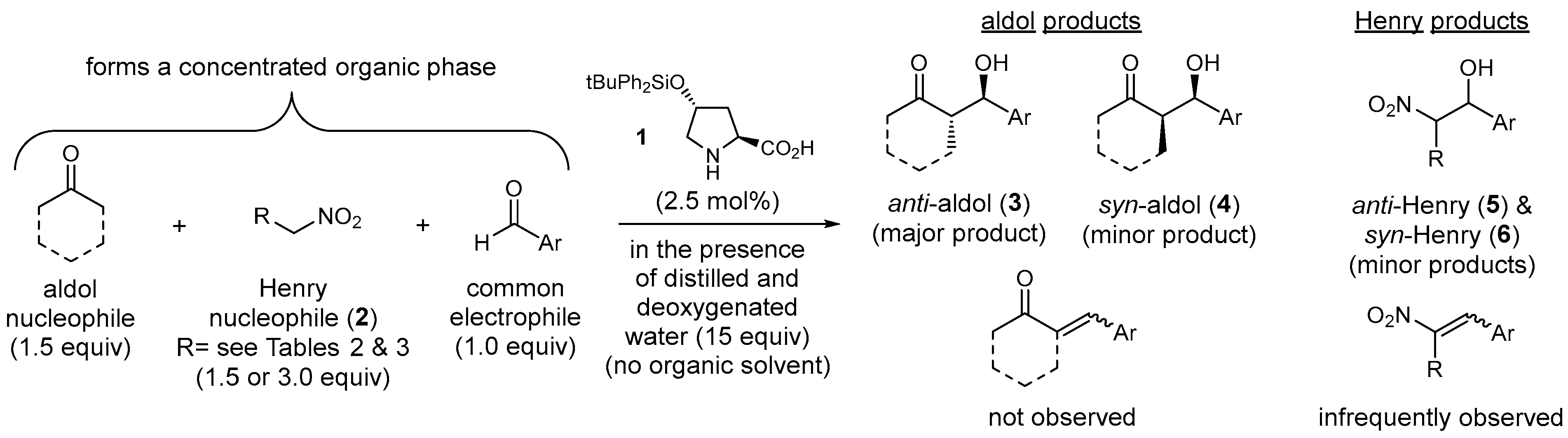
| Entry c | Henry Nucleophile | Major Competition Product | Time (h) | anti-Aldol (3) Yield (%) d | dr e | ee f |
|---|---|---|---|---|---|---|
| 1 [43] | MeNO2 | 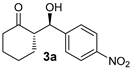 | 24 | 91 | >19:1 | 99 |
| 2 [44] | MeNO2 |  | 36 | 81 | >19:1 | 99 |
| 3 [44] | MeNO2 | 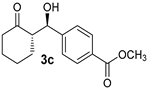 | 40 | 89 | 14:1 | 98 |
| 4 [45] | MeNO2 | 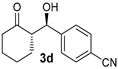 | 40 | 89 | >19:1 | 99 |
| 5 [43] |  |  | 24 | 91 | 14:1 | 99 |
| 6 [44] |  | 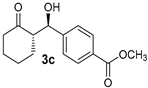 | 40 | 84 | 10:1 | 99 |
| 7 [43] |  | 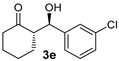 | 49 | 86 | 13:1 | 99 |
| 8 [46] g |  | 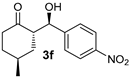 | 24 | 65 | 13:1 >19:1 h | 99 |
| 9 [47] g,i |  | 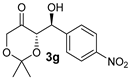 | 24 | 80 | >19:1 | 99 |
| 10 [43] j | 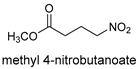 |  | 16 | 86 | >19:1 | 99 |
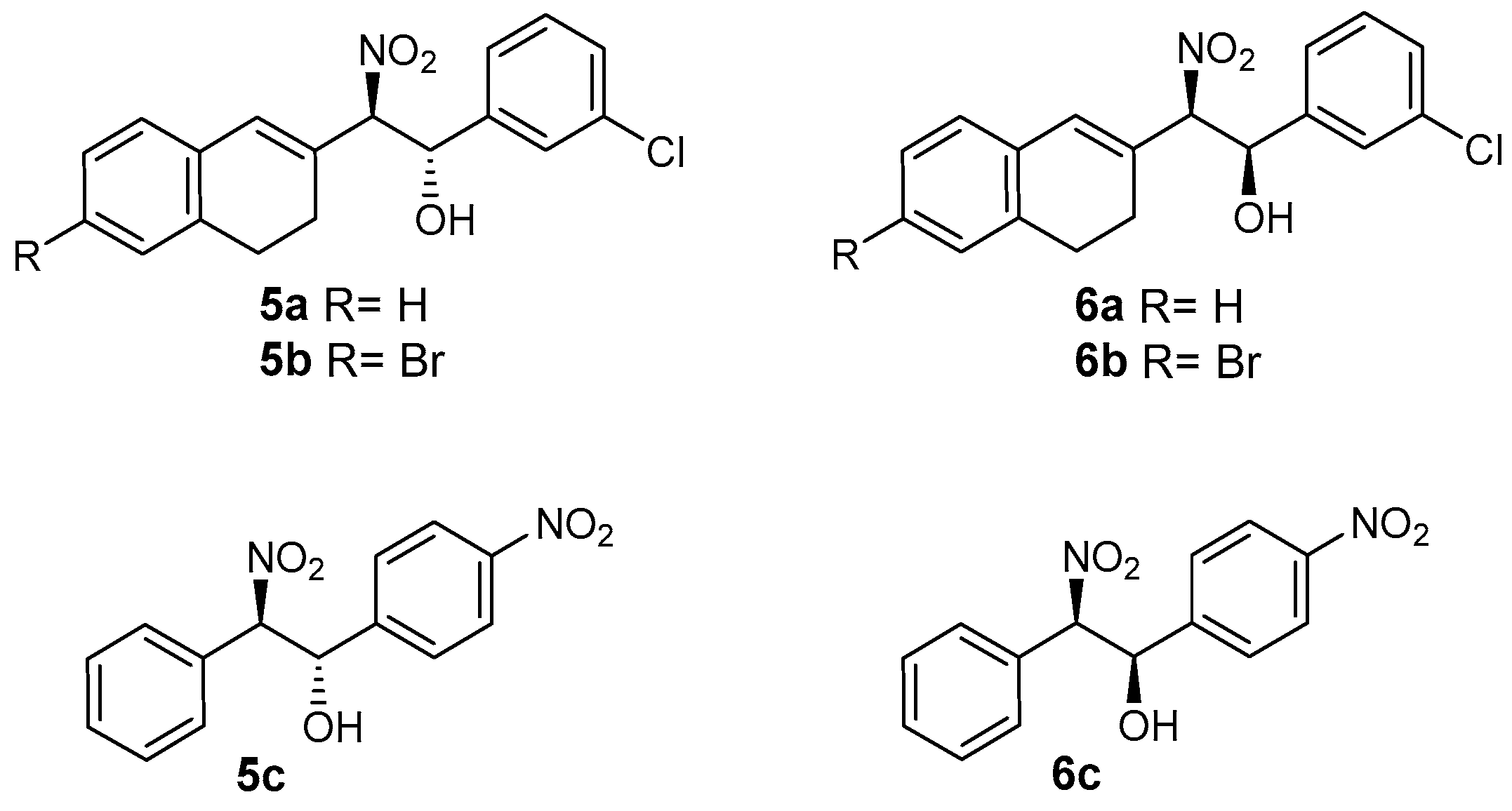
| Entry | Henry Nucleophile | Major Competition Product b | Chemoselectivity Aldol/ Henry c | Time (h) | Anti-Aldol Yield (%) d | dr c | ee e |
|---|---|---|---|---|---|---|---|
| 1 | 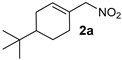 |  | >19:1 | 32 | 84 | 13:1 | 97 |
| 2 |  | 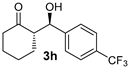 | >19:1 | 32 | 82 | 14:1 | 98 |
| 3 |  |  | >19:1 | 32 | 68 | 16:1 | 98 |
| 4 |  | 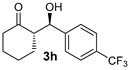 | >19:1 | 32 | 74 | 13:1 | 99 |
| 5 |  | 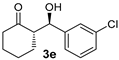 | 6.4:1 | 32 | 76 | 13:1 | 98 |
| 6 |  |  | 6.8:1 | 32 | 74 | 11:1 | 99 |
| 7 f | 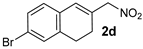 | 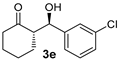 | 4.9:1 | 32 | 66 | 14:1 | 99 |
| 8 g | 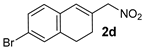 | 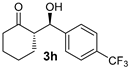 | - | - | - | - | - |
| 9 g |  | 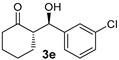 | - | - | - | - | - |
| 10 |  | 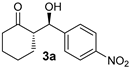 | 5.4:1 5.0:1 i | 24 9 i | 75 h 43 i | 14:1 7:1 i | 99 99 i |
| 11 |  | 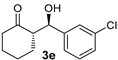 | - j | 32 | 60 | >11:1 k | 99 |
| Entry | Description | Catalyst (mol%) | Solvent | Molarity (Equiv) | Time (h) | Chemoselectivity b | 3e (Yield %) c | dr b | ee d |
|---|---|---|---|---|---|---|---|---|---|
| 1 | unfair e | 2.5 | water | 3.7 (15) | 32 | 4.9:1 | 67 | 14:1 | 98 |
| 2 | unfair e | 2.5 | neat | - | 32 | 5.62:1 | - f | 5.6:1 | - f |
| 3 | homogeneous g | 25 | DMSO | 0.5 | 8 | 2.83:1 | 45 h,i | 1.9:1 | - j |
| 4 | unfair k | 15 | THF | 0.5 | - | - | - | - | - |
| 5 | homogenous g | 20 | EtOH | 0.5 | 21 | 3.4:1 | 54 h | 2.4:1 | 86 |
| 6 | homogenous g | 5 | EtOH | 0.5 | 32 | 5.54:1 | 36 h | 4.5:1 | 94 |
| 7 | unfair e | 2.5 | EtOH | 1.14 (15) | 32 | 6.1:1 | - f | 4.5:1 | - f |
| Entry | Solvent | Molarity (Equiv) | Time (h) | Chemoselectivity b | 3e (Yield %) c | dr b | ee d |
|---|---|---|---|---|---|---|---|
| 1 e | water | 3.7 (15) | 32 | 6.8:1 | 76 | 13:1 | 98 |
| 2 | water | 3.7 (15) | 24 | 5.7:1 | 68 f | 11:1 | 99 |
| 3 | neat | - | 32 | 13:1 | 75 | 5.3:1 | 93 |
| 4 g | EtOH | 0.5 (34) | 22 | 6.1:1 | 55 f | 3.5:1 | 87 |
| 5 h | EtOH | 1.0 (17) | 40 | 8.1:1 | 40 f | 4.8:1 | 94 |
| 6 | EtOH | 1.14 (15) | 72 | 6.2:1 | 62 i | 7.7:1 | 98 |
| 7 | MeOH | 1.65 (15) | 72 | 6.2:1 | 69 i | 9.1:1 | 99 |
| 8 | MeOH/H2O | (3:2) | 60 | 7.7:1 | 77 | 13:1 | 99 |
| 9 | MeOH/H2O | (3:2) | 32 | 7.7:1 | 55 f | 13:1 | 98 |
| Entry | Solvent (Equiv) | Time (h) | Chemoselectivity b | (Yield %) c | dr b | ee 4 d |
|---|---|---|---|---|---|---|
| 1 | Water (15 equiv) | 40 | >19:1 | 3c, 84 | 3c, 10:1 | 3c, 99 |
| 2 | MeOH/H2O (3:2 equiv) | 40 | >19:1 | 3c, 76 | 3c, >19:1 | 3c, 99 |
| 3 | Water (15 equiv) | 49 | >19:1 | 3e, 86 | 3e, 13:1 | 3e, 99 |
| 4 | Water (15 equiv) | 32 | >19:1 | 3e, 74 | 3e, 13:1 | 3e, 98 |
| 5 | MeOH/H2O (3.2 equiv) | 49 | >19:1 | 3e, 82 | 3e, >19:1 | 3e, 98 |
Disclaimer/Publisher’s Note: The statements, opinions and data contained in all publications are solely those of the individual author(s) and contributor(s) and not of MDPI and/or the editor(s). MDPI and/or the editor(s) disclaim responsibility for any injury to people or property resulting from any ideas, methods, instructions or products referred to in the content. |
© 2025 by the authors. Licensee MDPI, Basel, Switzerland. This article is an open access article distributed under the terms and conditions of the Creative Commons Attribution (CC BY) license (https://creativecommons.org/licenses/by/4.0/).
Share and Cite
Dwivedi, K.B.; Knäbe, P.; Shitole, N.N.; Lakew, A.H.; Levochkin, R.; Paredes-Soler, L.; Zhylinska, S.-S.; Kochubei, D.; Guillena, G.; Chinchilla, R.; et al. Defining Aldol Chemoselectivity in the Presence of Henry Nucleophiles (Nitroalkanes). Molecules 2025, 30, 4688. https://doi.org/10.3390/molecules30244688
Dwivedi KB, Knäbe P, Shitole NN, Lakew AH, Levochkin R, Paredes-Soler L, Zhylinska S-S, Kochubei D, Guillena G, Chinchilla R, et al. Defining Aldol Chemoselectivity in the Presence of Henry Nucleophiles (Nitroalkanes). Molecules. 2025; 30(24):4688. https://doi.org/10.3390/molecules30244688
Chicago/Turabian StyleDwivedi, Kritika B., Patrick Knäbe, Nilesh N. Shitole, Aida H. Lakew, Ruslan Levochkin, Luis Paredes-Soler, Sofiia-Stefaniia Zhylinska, Diana Kochubei, Gabriela Guillena, Rafael Chinchilla, and et al. 2025. "Defining Aldol Chemoselectivity in the Presence of Henry Nucleophiles (Nitroalkanes)" Molecules 30, no. 24: 4688. https://doi.org/10.3390/molecules30244688
APA StyleDwivedi, K. B., Knäbe, P., Shitole, N. N., Lakew, A. H., Levochkin, R., Paredes-Soler, L., Zhylinska, S.-S., Kochubei, D., Guillena, G., Chinchilla, R., Alonso, D. A., & Nugent, T. C. (2025). Defining Aldol Chemoselectivity in the Presence of Henry Nucleophiles (Nitroalkanes). Molecules, 30(24), 4688. https://doi.org/10.3390/molecules30244688