Article

Interaction of Catechins with Human Erythrocytes

by
Katarzyna Naparlo
1,
Grzegorz Bartosz
2,
Ireneusz Stefaniuk
3,
Bogumil Cieniek
3,
Miroslaw Soszynski
4 and
Izabela Sadowska-Bartosz
1,*
1
Department of Analytical Biochemistry, Institute of Food Technology and Nutrition, College of Natural Sciences, Rzeszow University, 35-601 Rzeszow, Poland
2
Department of Bioenergetics and Food Analysis, Institute of Food Technology and Nutrition, College of Natural Sciences, Rzeszow University, 35-601 Rzeszow, Poland
3
Teaching and Research Center of Microelectronics and Nanotechnology, College of Natural Sciences, University of Rzeszow, 35-959 Rzeszow, Poland
4
Department of Molecular Biophysics, Faculty of Biology and Environmental Protection, University of Lodz, 90-236 Lodz, Poland
*
Author to whom correspondence should be addressed.
Molecules 2020, 25(6), 1456; https://doi.org/10.3390/molecules25061456

Submission received: 26 February 2020 / Revised: 17 March 2020 / Accepted: 20 March 2020 / Published: 24 March 2020
(This article belongs to the Section Chemical Biology)

Abstract

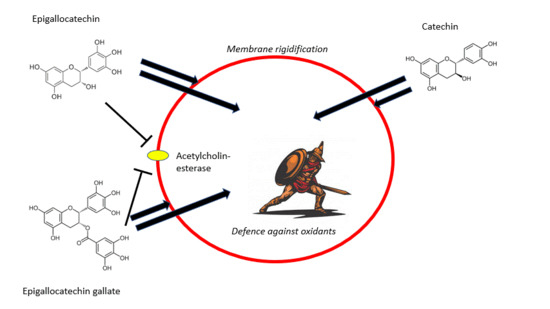
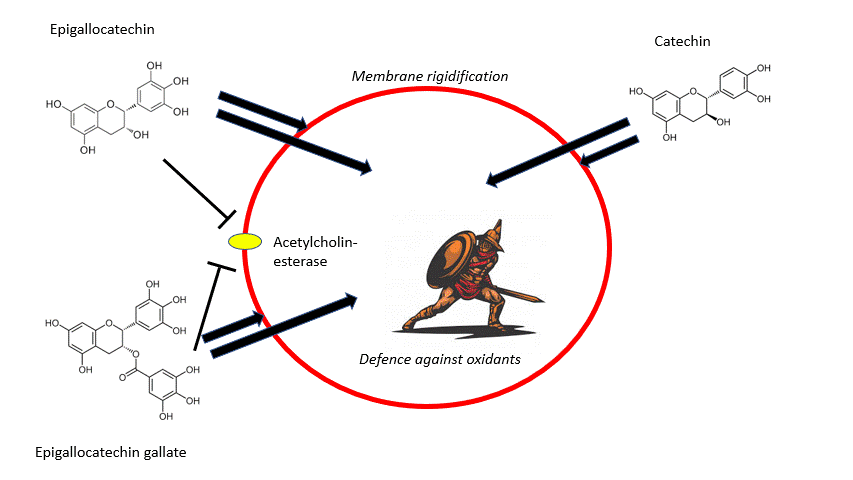
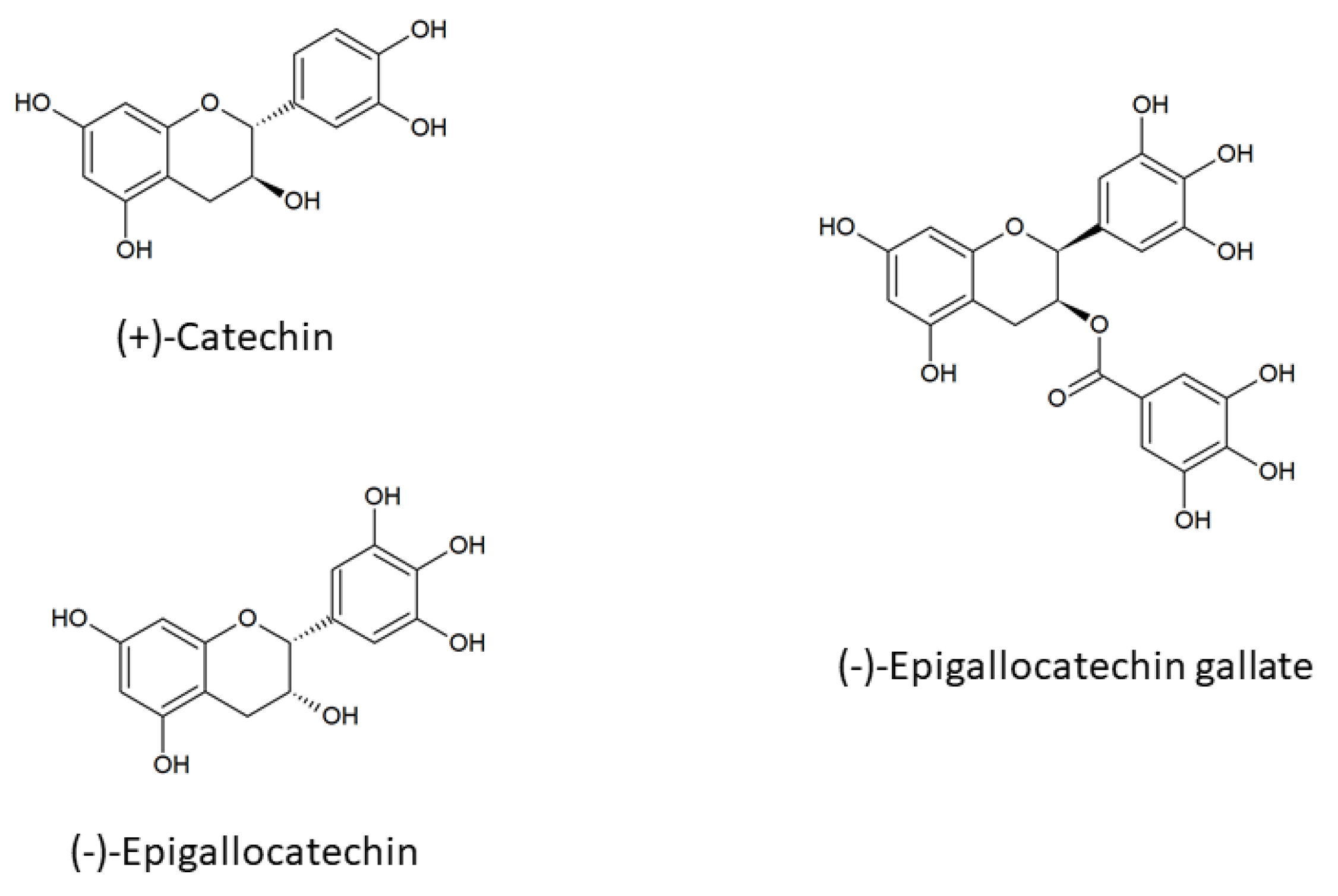
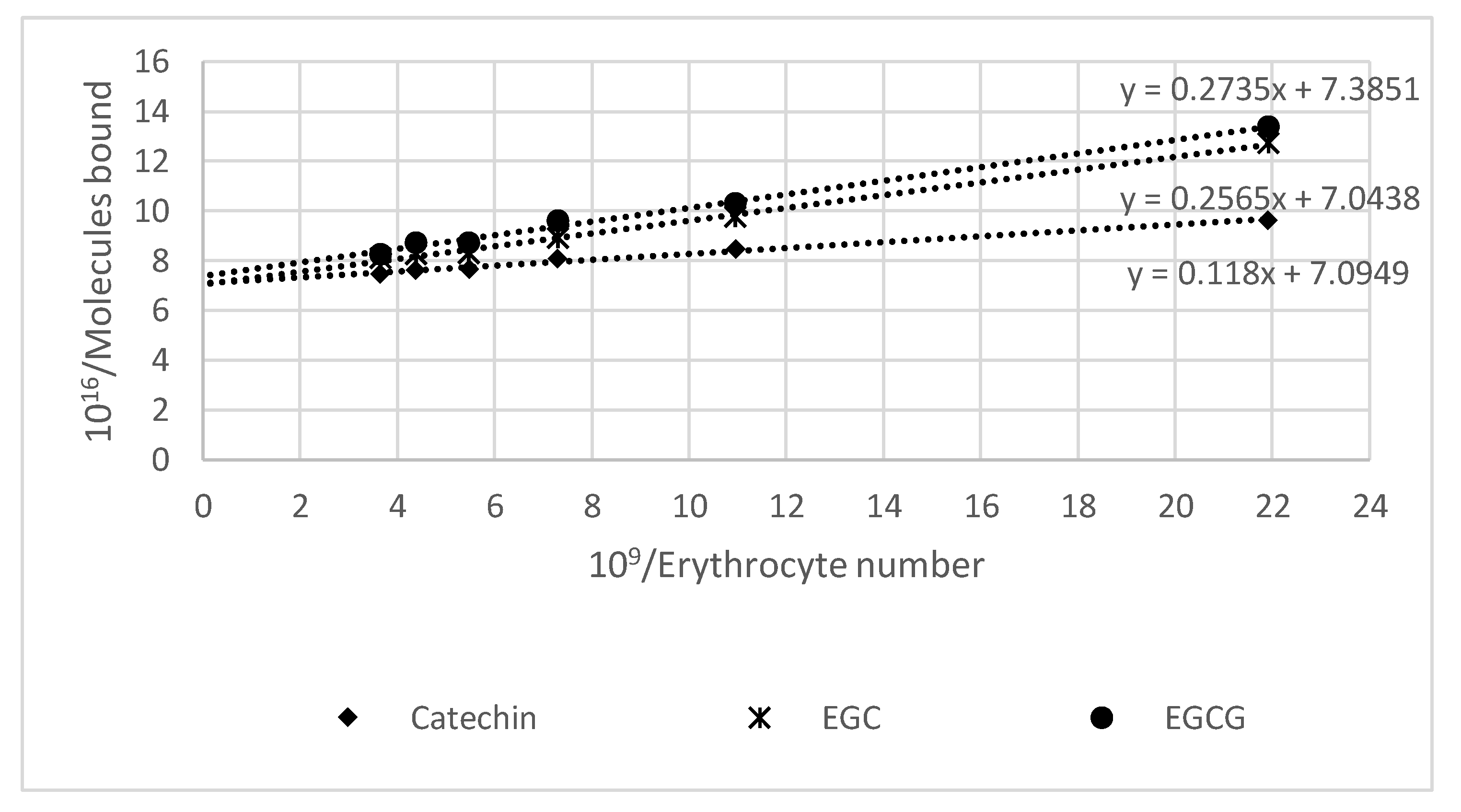
The aim of this study was to characterize the interaction of chosen catechins ((+)-catechin, (−)-epigallocatechin (EGC), and (−)-epigallocatechin gallate (EGCG)) with human erythrocytes and their protective effects against oxidative damage of erythrocytes. Uptake of the catechins by erythrocytes was studied by fluorimetry, their interaction with erythrocyte membrane was probed by changes in erythrocyte osmotic fragility and in membrane fluidity evaluated with spin labels, while protection against oxidative damage was assessed by protection against hemolysis induced by permanganate and protection of erythrocyte membranes against lipid peroxidation and protein thiol group oxidation. Catechin uptake was similar for all the compounds studied. Accumulation of catechins in the erythrocyte membrane was demonstrated by the catechin-induced increase in osmotic resistance and rigidification of the erythrocyte membrane detected by spin labels 5-doxyl stearic acid and 16-doxyl stearic acid. (−)-Epigallocatechin and EGCG inhibited erythrocyte acetylcholinesterase (mixed-type inhibition). Catechins protected erythrocytes against permanganate-induced hemolysis, oxidation of erythrocyte protein thiol groups, as well as membrane lipid peroxidation. These results contribute to the knowledge of the beneficial effects of catechins present in plant-derived food and beverages.
Keywords: erythrocyte; monometric flavanols; catechin; (−)-epigallocatechin; (−)-epigallocatechin gallate; hemolysis; membrane rigidity; antioxidant erythrocyte; monometric flavanols; catechin; (−)-epigallocatechin; (−)-epigallocatechin gallate; hemolysis; membrane rigidity; antioxidant
Graphical Abstract