


Abstract
Despite the increasing number of social media users and the advantages linked to agility in other areas, the implementation of agility within a social media framework remains unexamined. This study aims to examine how perceived social media agility influences customer-based brand equity through the mediating roles of customer engagement and customer motivation. A quantitative method was utilized. Data was collected from 420 Social Networking Site users in Turkey using a questionnaire. The study utilised convenience sampling method to gather the data. Structural equation modelling was used to analyse the data, employing SmartPLS 4. The results show that perceived social media agility has a positive impact on customer-based brand equity, customer engagement, and customer motivation. Customer engagement and customer motivation were found to impact customer-based brand equity significantly. Furthermore, customer motivation has no significant impact on customer engagement. Change-seeking has a positive influence on customer engagement and customer motivation. Customer engagement and customer motivation were found to significantly mediate the link between perceived social media agility and customer-based brand equity. The study contributes to the literature by integrating social media agility into established frameworks of brand equity and consumer behaviour. Practically, the results suggest that firms should develop agile and responsive social media strategies to enhance customer engagement and strengthen brand equity.
1. Introduction
Traditionally stemming from operations management, agility has gained prominence as an essential characteristic for companies functioning in highly dynamic and complicated environments [1]. Dynamic customer expectations have forced businesses to learn how to quickly change their strategies, tactics, and operations in order to survive in today’s highly competitive business world [2,3]. Social media has profoundly influenced customer expectations [4]. Diverse phenomena and disciplines have employed the concept of agility [5]. Change-seeking is a proactive approach to exploring opportunities for growth and innovation in social media [6]. Change-seekers proactively pursue new opportunities instead of simply reacting to external environmental changes [7]. Businesses may remain competitive and adapt to the evolving social media ecosystem by embracing change [8].
The rise of social media as a medium for enhancing customer involvement has been acknowledged in the literature [9,10,11,12]. Projections indicate that the number of global social media users will reach 4.89 billion by 2023, up from 2.77 billion in 2019 and 2.46 billion in 2017 [11]. Social media usage in Turkey has been consistently rising, with over 76 million users annually [12]. Businesses capitalize on this trend by improving customer engagement, employing tailored advertising, and collecting real-time feedback [13,14,15]. Prominent platforms, such as Instagram (approximately 58.3 million users), Facebook (1.9 million users), and Twitter (21.5 million followers), facilitate businesses in enhancing brand visibility, disseminating content efficiently, and developing tailored marketing strategies. Despite the increasing number of social media users and the advantages linked to agility in other areas, the implementation of agility within a social media framework remains unexamined [16,17]. Moreover, there is a limited understanding of how the implementation of agility within a social media framework influences favourable customer-related characteristics, such as customer engagement and customer-based brand equity (CBBE). Social media agility denotes the capacity to rapidly adjust and react to alterations, trends, and audience engagements across digital channels. It entails immediate response, adaptable content, and strategic interaction to sustain relevance in a fluctuating online environment.
This study aims to address the paucity of research on the topic. According to the authors, there is a scarcity of research on perceived social media agility, with notable exceptions being studies by [18,19,20,21,22]. This research distinguishes itself by addressing crucial gaps in understanding how customer motivation and engagement mediate the link between perceived social media agility and customer-based brand engagement within a comprehensive framework. Unlike previous studies that examined these elements separately, this study integrates them to provide a complete view of how social media agility influences brand engagement through mediating factors. It is the first to explore the impact of change-seeking behaviour on customer motivation and engagement, a subject not yet covered in existing literature. Brands can leverage these findings to enhance customer interactions, strengthen brand loyalty, and optimize their social media strategies. By understanding the mediating role of customer motivation, brands can tailor content to match customers’ intrinsic and extrinsic motivators, thereby increasing the relevance and personalization of interactions. Recognizing the significance of perceived social media agility allows brands to create adaptive, responsive, and trend-focused campaigns that keep audiences engaged. Consequently, this work offers multiple theoretical contributions.
First, we contribute to social media literature by extending the previous literature on the constructs of perceived social media agility, customer motivation, customer engagement, change-seeking, and customer-based brand equity, and we tested these proposed constructs within a unified conceptual framework. This innovative approach can assist brands in effectively formulating strategies to meet social media customers’ expectations [18]. Secondly, we posited that perceived social media agility, facilitated by customer engagement and motivation, can enhance customer-based brand equity, recognized as a crucial source of competitive advantage for brands. Comprehending the determinants of customer-based brand equity is essential for fulfilling customer requirements via social media platforms. By examining these antecedents, precise and effective methods that promote meaningful relationships, enhance loyalty, and ultimately propel success can be formulated. Third, we extend the research of [19,20,21,22], addressing the call for additional investigation into the antecedents of CBBE. Although [19] have investigated the mediating role of customer engagement in the relationship between perceived social media agility and customer-based brand equity (CBBE), it is essential to consider additional mediators. Therefore, we respond to this call by examining the mediating function of customer motivation alongside customer engagement within a unified conceptual framework. Customer motivation denotes the fundamental factors that affect individuals’ decision-making processes and purchase behaviour [20]. It includes the requirements, aspirations, and objectives that drive customers to search for, assess, and select particular items or services [21]. Furthermore, to augment prior studies and offer a more thorough understanding, we investigate the influence of change-seeking on improving customer motivation and engagement.
Fourth, the study was carried out in Turkey, a distinct geographic region with more than 76 million users of social networking sites, and this figure is predicted to rise. The integration of social media into daily life in Turkey has become a vital aspect, particularly among younger demographics. This study is notably innovative within the Turkish context due to its unique cultural and geographical setting. Turkey presents a diverse and dynamic digital landscape that offers valuable insights into consumer behaviours. Examining perceived social media agility and its impact on customer-based brand equity in this region may provide significant insights for companies seeking to engage with a technologically proficient and socially active audience.
Service-Dominant (S-D) Logic represents a theoretical framework that transitions the focus from traditional goods-dominant logic to a service-oriented perspective on value creation [22]. Conceived by Stephen Vargo and Robert Lusch, S-D Logic posits that value is co-created through interactions among multiple stakeholders, rather than being inherent to the products or services themselves [23]. The Service-Dominant (S-D) Logic theory effectively elucidates the relationship among perceived social media agility, customer-based brand equity (CBBE), customer engagement, and customer motivation. S-D Logic emphasizes the collaborative generation of value through interactions and relationships between companies and customers. In this context, perceived social media agility enhances customer engagement by facilitating more responsive and participatory communication [24,25,26,27,28,29]. This increased engagement, in turn, augments CBBE by fostering stronger customer-brand connections and loyalty. Furthermore, customer motivation is crucial in promoting engagement and shaping the perceived value of the brand. S-D Logic provides a robust framework for understanding the interconnections among these factors by emphasizing dynamic interactions and value co-creation. The proposed model encompasses several key constructs, including perceived social media agility, change-seeking, customer engagement, customer-based brand equity, and customer motivation, all of which have been empirically discussed by scholars. See Figure 1.
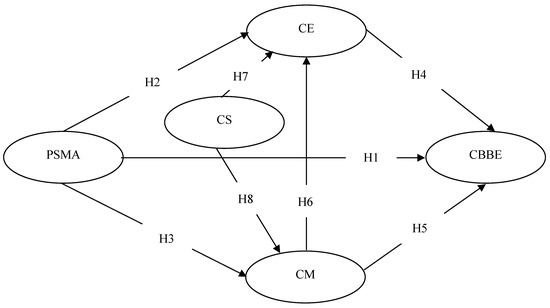
Figure 1.
Conceptual model.
1.1. Perceived Social Media Agility, Customer-Based Brand Equity, Customer Engagement, and Customer Motivation
Perceived social media agility (PSMA) is an organization’s ability to adapt, respond, and engage with its audience in real-time on social media platforms. According to [26,27], customer-based brand equity (CBBE) is impacted by PSMA. PSMA enables brands to personalize communication and address customer concerns quickly [28]. Customer engagement (CE) is the emotional and behavioural connection customers have with a brand [29]. Refs. [30,31,32,33,34] suggest that PSMA promotes CE by creating timely, relevant, and engaging experiences. Customer motivation (CM) is influenced by psychological factors like information, entertainment, or social connection [31,35]. PSMA can impact CM by delivering real-time stimulating content that aligns with customer preferences [36,37].
H1.
Perceived SMA has a significant positive influence on CBBE.
H2.
Perceived SMA has a significant positive influence on CE.
H3.
Perceived SMA has a significant positive influence on CM.
1.2. Customer Engagement and Customer-Based Brand Equity
CE promotes meaningful interactions that improve customers’ emotional and cognitive connections to a brand [29]. These connections support brand associations that contribute to enhanced brand awareness, perceived quality, and loyalty [34]. Moreover, engaged customers often share positive WOM, advocate for the brand, and co-create value, which further strengthens the brand’s equity in the market [35]. Studies of [38,39,40] revealed a significant association between CE and CBBE. Other studies with similar findings include [41,42,43,44,45,46].
H4.
CE significantly influences CBBE.
1.3. Customer Motivation, Customer-Based Brand Equity, and Customer Engagement
Customer motivation (CM) is an internal state that drives customers to identify and buy products or services. It arises from the need to satisfy personal, social, or psychological goals [47,48]. Intrinsic and extrinsic motivation are key factors in customer engagement, influencing brand quality and loyalty [31]. Motivation (intrinsic and extrinsic) is a driver of engagement [49,50]. Highly motivated customers exhibit higher levels of behavioural and emotional involvement with brands, thereby increasing brand visibility and credibility [51,52]. Research shows a strong association between motivation and CE with a brand [47,53,54].
H5.
CM has a significant positive influence on CBBE.
H6.
CM has a significant positive influence on CE.
1.4. Change-Seeking, Customer Engagement, Customer Motivation
Change-seeking behaviour refers to a customer’s inclination to seek out novel experiences, products, or services, so impacting their engagement behaviours [19,52,53]. Refs. [54,55,56,57,58,59] indicate that individuals who demonstrate a lower propensity for change-seeking behaviour are less inclined to engage with the firm.
CM has been empirically found to be impacted by change-seeking tendencies [60,61]. Ref. [52] highlighted that customers with higher change-seeking tendencies show stronger motivational forces [52]. Thus, change-seeking behaviour results in a heightened level of CM [53].
H7.
CS significantly influences CE.
H8.
CS significantly influences CM.
1.5. The Mediation Role of Customer Engagement and Customer
According to Self-Determination Theory [54], CM is essential in translating brand efforts into positive outcomes. Intrinsic and extrinsic motivations drive customer perceptions of brand value [55]. Brands that show PSMA inspire CM through timely and relevant interactions. This motivation leads to stronger CBBE, as motivated customers tend to perceive the brand as valuable, credible, and consistent with their expectations.
PSMA enhances CE by promoting dynamic, personalized, and interactive experiences that captivate and sustain customer attention. Perspectives from engagement theory [62,63,64,65,66,67,68] reveal that highly engaged customers form strong emotional connections with the brand, which increases CBBE. Studies have shown that customers who are actively engaged through social media content tend to perceive the brand as valuable [69,70,71]. Hence, it is proposed that CE will mediate the association between a brand’s agility in social media and its ability to build CBBE.
H9.
CM significantly mediates the link between PSMA and CBBE.
H10.
CE significantly mediates the link between PSMA and CBBE.
2. Materials and Methods
The study employed a quantitative research method. It gathers statistical data and offers insight about an event or organization [72,73]. The research starts with a deductive theory, which the results then test or confirm, creating a framework for the research questions and hypotheses [74,75].
2.1. Sampling and Data Collection
Social media users in Turkey who are actively engaged with social networking sites (SNSs) comprise the research population. Turkey’s distinctive customer dynamics, expanding digital market, and socio-cultural variety make it a representative instance for examining customer engagement and brand interaction. Turkey, characterized by rapid digital transformation and strong brand loyalty, offers valuable insights for emerging countries where digital engagement strategies are crucial for effective branding. This study provides insights relevant to emerging markets. The study used a convenience sampling technique to collect data from the respondents. Ref. [64] confirmed that sample size has a positive effect on reliability and claimed that measurement theory cannot usually tolerate large doses of sampling error, and then recommended 300 as an adequate sample size for analysis. Hence, we confirm that the study’s sample size (420) is sufficient for further analysis. All participants were required to complete the survey. The participants received the questionnaires along with a cover letter. We assured the participants that their responses would remain confidential. The questions in the survey were adopted from the literature. The research instrument consists of five variables: perceived social media agility (6 items), change-seeking (7 items), customer engagement (4 items), customer-based brand equity (4 items), adopted from [6], and customer motivation (4 items), adapted from [65]. The authors constructed the questionnaire on a 7-point Likert scale, which ranges from 1 (strongly disagree) to 7 (strongly agree) (see Table A1 in Appendix A).
2.2. Data Collection and Procedure
Primary data was collected from the respondents with experience in social networking sites through a self-administered questionnaire. The survey approach enabled the collection of data from 420 users. A pilot study using thirty participants was carried out, and the pilot data were used to assess reliability and validity measures. The outcome demonstrated strong validity and reliability metrics (i.e., Cronbach’s alpha > 0.70; AVE > 0.50).
2.3. Data Analysis
The partial least squares (PLS) approach was employed due to its efficacy in forecasting the primary statistical objective of the study, accommodating small sample sizes, analysing extensive residuals, and assessing intricate models [66]. The postulated hypotheses were evaluated using PLS-SEM with SmartPLS software.
3. Results
3.1. Measurement Model Assessment
3.1.1. Convergent Validity
The examination of convergent validity involves computing AVE, reliability, and Composite Reliability (CR) to assess internal consistency [76]. Indicator reliability clarifies the variation in items due to a variable. A score of 0.70, 0.80, or above for reliability and CR score signifies that the associated measure possesses substantial reliability (refer to Table 1).

Table 1.
Construct Reliability and Validity.
3.1.2. Discriminant Validity
The degree to which a factor shows significant variation from others is termed discriminant validity. To set out discriminant validity, it is essential for the Fornell-Larcker criterion diagonal values to be larger than the inter-construct correlations [77]. Discriminant validity is established when an indicator’s loadings are higher than the associated items of a different construct. The Fornell–Larcker result is presented in Table 2.
Table 2.
Discriminant validity—Fornell–Larcker criterion.
HTMT is the ratio of the average correlations. This ratio helps in assessing if the constructs are distinguishable from each other. An HTMT value below 0.85 generally indicates good discriminant validity [67]. In more conservative scenarios, a threshold of 0.90 may be applied. Hence, the values of THMT indicate good discriminant validity (See Table 3).
Table 3.
Discriminant validity—Heterotrait–monotrait ratio (HTMT).
3.2. Structural Model Assessment
The structural model was examined, using the path coefficients to evaluate the importance and relevance of the links within the model [78,79,80,81]. Furthermore, a concise overview of the path coefficients and the relationship between the latent ideas, together with their related t-test values, was provided. Following the process of bootstrapping, Figure 2 presents the connection between the study variables PSMA, CBBE, CE, CM, and CS. The process of bootstrapping is utilized to iteratively estimate the route model by employing significantly modified data configurations, as reported by [70].
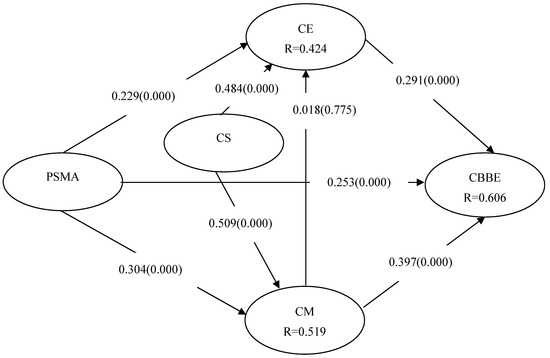
Figure 2.
Structural model (Bootstrapping).
3.2.1. R-Square, Q2predict, and f-Square
The coefficient of determination (R2) values indicates how well the model explains the variability of the outcome data. The closer the R2 value is to 1, the better the model explains the variability [82,83,84,85,86]. The endogenous variables guarantee the forecast significance of the structural model CBBE, CE, and CM, which possess corresponding R2 values of 0.606, 0.424, and 0.519, respectively. Q-square measures the extrapolative relevance, where a value greater than zero indicates a good level of analytical relevance [87,88,89]. This value denotes whether a model can precisely predict outcomes. The values of Q2 for CBBE, CE, and CM were 0.592, 0.416, and 0.513, respectively. The f2 establishes a considerable effect of one variable on another [87,90,91,92] defined the thresholds for interpreting the F-square value (f2 ≥ 0.02 = small effect size, f2 ≥ 0.15 = medium effect size, f2 ≥ 0.35 = large effect size) (see Table 4).
Table 4.
R-square, Q2predict, and f-square.
3.2.2. Hypotheses Test
Hypothesis 1 analyses the impact of PSMA on CBBE (β = 0.253, t = 5.156, p < 0.05). Consequently, H1 is supported. H2 evaluates if PSMA has a substantial impact on CE (β = 0.229, t = 4.330, p < 0.05). Therefore, H2 is supported. H3 was evaluated to ascertain the impact of PSMA on CM (β = 0.304, t = 6.639, p < 0.05). Consequently, H3 is supported. H4 evaluates if customer experience (CE) has a substantial impact on CBBE (β = 0.291, t = 7.052, p < 0.05). Consequently, H4 is supported. The impact of CM on CBBE was evaluated by testing H5 (β = 0.395, t = 9.208, p < 0.05). Consequently, H5 is supported. H6 assesses the impact of CM on CE (β = 0.018, t = 0.286, p > 0.05). Consequently, H6 is not supported. H7 evaluates the significant impact of CS on CE (β = 0.484, t = 8.092, p < 0.05). Therefore, H7 is supported. H8 establishes that CS has a significant impact on CM (β = 0.509, t = 12.414, p < 0.05). Consequently, H8 is supported. A model is deemed to have an acceptable fit when the Standardised Root Mean Square Residual (SRMR) is less than 0.08. The SRMR number is beneath the threshold, signifying an adequate match (refer to Table 5).
Table 5.
Hypothesis Test.
Hypothesis 9 assesses the mediation effect of CM between PSMA and CBBE. The result shows that CM significantly and partially mediates (β = 0.120, t = 5.767, p < 0.05) the link between PSMA and CBBE. Therefore, H9 is supported. Hypothesis 10 examines the mediating effect of CE on the relationship between PSMA and CBBE. The result shows that CE significantly and partially mediates (β = 0.067, t = 3.536, p < 0.05) the link between PSMA and CBBE. Hence, H10 is supported (see Table 6).
Table 6.
Mediation.
The direct, indirect, and total effect of the exogenous construct on the endogenous construct is presented in Table 7.
Table 7.
Direct, Indirect, and Total Effect.
4. Discussion
Main Findings
The study investigated the influence of perceived social media agility on customer-based brand equity. The study’s findings are substantially useful for researchers, lawmakers, and private organisations aiming to improve customer experience.
Perceived social media agility denotes a brand’s ability to promptly and efficiently react to alterations and trends on social media platforms. The current study revealed that PSMA has a significant impact on CBBE, thereby supporting the proposed hypothesis (direct effect) (β = 0.253, t = 5.156, p < 0.05). This result supports service-dominant logic (SDL), which highlights the role of PSMA as an operant resource that fosters value co-creation through interactive and flexible brand-customer interactions. By leveraging agility as a service capacity, brands enhance experiential value, thereby strengthening equity through responsive and relational interactions. The result is consistent with the findings of [77] and [6], who contend that agile brands on social media may communicate with customers in real time, rapidly respond to problems, and stay abreast of current trends. This timeliness and relevance augment customers’ view of the brand’s value and dependability, resulting in enhanced brand equity [78].
The present study found that PSMA significantly affects CE, hence providing support for the proposed relationship (β = 0.229, t = 4.330, p < 0.05). This outcome, grounded in service-dominant logic, underscores PSMA as a dynamic operant resource that empowers companies to cultivate interactive, timely, and rewarding conversations with customers. By utilising agility in social media contexts, brands improve relational depth and participative experiences, therefore reinforcing engagement as a co-created result. The result is similar to those of [6], who found that PSMA has a significant influence on CE and stated that by producing timely and pertinent content that resonates with their audience, PSMA increases contact and participation. The result demonstrates that any effort by the firm to increase agility by a unit potentially results to 22.9% increase in customer engagement.
The study found that PSMA has a significant effect on CM, confirming the proposed hypothesis (β = 0.304, t = 6.639, p < 0.05). This outcome aligns with S-D Logic by positioning PSMA as a strategic and vital resource that enhances motivational drivers through timely, adaptive, and value-enriching brand–customer interactions. Consistent with previous study [79], it has been established that proactive and adaptable characteristics of businesses encourage customer loyalty and investment. Social media agility is essential for establishing and sustaining robust customer relationships [80,81,82,83,84,85,86,87,88,89,90].
The study found that CE significantly affects CBBE, affirming the proposed linkage (β = 0.291, t = 7.052, p < 0.05). This outcome substantiates S-D Logic by conceptualising engagement as a co-created result that enhances brand equity through interactive, immersive, and relational value exchanges between customers and companies. This result is in line with previous studies [91,92] suggesting that when customers are highly engaged, they are more likely to form a strong connection with the brand, resulting in higher levels of customer-based brand engagement.
Our study found that CM significantly affects CBBE, validating the proposed relationship (β = 0.397, t = 9.208, p < 0.05). This strong, positive effect (0.397) underscores the role of motivation as a key driver of brand value. Consistent with S-D Logic, the result highlights that customer-derived operant resources and perceived benefit actively contribute to brand equity through co-creative engagement. This finding is similar to the prior study which found that highly motivated customers engaged deeply with the brand, leading to higher levels of CBBE [82].
Our study found that CM has no significant effect on CE, which results to rejection of the proposed hypothesis (β = 0.018, t = 0.286, p > 0.05). This suggests that motivational factors alone may not directly translate into active brand interaction as indicated by the beta value (0.018) and p > 0.05. Within the foundation of S-D Logic, this means that operant resources such as motivation must be accompanied by enabling service contexts (brand responsiveness, co-creative platforms, or emotional resonance) to activate engagement. This finding contradicts prior study [83], who found that motivated customers interact with brand content, participate in loyalty programs, and spread positive word-of-mouth. This active engagement helps build stronger relationships between the brand and its customers, ultimately enhancing brand loyalty and overall customer satisfaction.
The study found that CS significantly affects CE, affirming this hypothesis (β = 0.484, t = 8.092, p < 0.05). This revealed that any effort made by the business to increase 1 unit of CS can result to 48.4% rise in customer engagement. This finding is consistent with prior studies [6,93,94] they found that change-seeking behaviour significantly influences customer engagement by driving customers to actively seek out new experiences and interactions with brands. This behaviour fosters a deeper connection between the customer and the brand, as it aligns with their desire for novelty and improvement.
The study found that CS significantly affects CM, thereby providing strong support to the hypothesis (β = 0.509, t = 12.414, p < 0.05). According to S-D Logic, this outcome indicates that the quest of change is a resource from customers that fuels their motivation through a desire for novel experiences, improvement, and adaptable brand interactions. It emphasises the importance of proactive customer attitudes in collaboratively generating value within evolving service ecosystems. Assuported by a study which highlighted that customers inclined towards change are more likely to be motivated by the appeal of novelty and innovation, leading them to engage more deeply with companies that offer novel and constantly changing products or services [85].
The results of the mediation revealed that CM significantly mediates the connection between PSMA and CBBE, thus validating the hypothesised relationship (β = 0.120, t = 5.767, p < 0.05). Based on S-D Logic, it shows how resources like agility improve brand value indirectly by motivating customers, highlighting how value is created together in changing service interactions. The study of [6] and supports our finding; they found that when a brand is seen as agile on social media, it can enhance customer motivation, which in turn positively impacts the brand’s equity. Rooted in S-D Logic.
The mediation results show that CE significantly mediates the link between PSMA and CBBE, therefore confirming the hypothesis (β = 0.067, t = 3.536, p < 0.05). This finding supports S-D Logic by demonstrating how agile brand responsiveness cultivates interactive experiences that subsequently enhance brand equity. Engagement serves as a co-creative conduit through which operant resources, such as agility, are converted into relational brand value. The study of [6] found that when a brand is seen as agile on social media, it enhances customer engagement, which in turn positively impacts the brand’s equity.
5. Conclusions
The authors investigated the influence of perceived social media agility on customer-based brand equity. The current research puts forward hypotheses based on the Service-Dominant (S-D) Logic. The utilisation of the theory has highlighted the significance of perceived social media agility, customer engagement, customer motivation, and change-seeking on customer-based brand equity. This study distinguishes itself from prior research by incorporating essential themes, including perceived social media agility, engagement with customers, consumer motivation, and change-seeking, into a cohesive framework. This methodology seeks to analyse the cumulative effect of these principles on customer-based brand equity. This research provides a comprehensive perspective aligned with Service-Dominant (S-D) Logic, emphasising the collaborative creation of value and the dynamic interactions among brands, in contrast to previous studies that examined these elements in isolation. This study investigates the relationship between customer engagement and customer management in linking perceived social media agility to customer-based brand equity, providing empirical evidence of the impact of social media agility on brand equity through consumer behaviours. Unlike earlier studies, it recognises change-seeking as a critical element affecting consumer motivation and engagement, highlighting a hitherto neglected facet of customer behaviour.
This study builds upon existing work about Service-Dominant (S-D) Logic, revealing that perceived social media agility has a significant impact on customer engagement, customer motivation, and customer-based brand equity. Brands demonstrating adaptation on social media are better positioned to attract and retain customer engagement. This agility yields timely and relevant information, rapid responses to client enquiries, and proactive participation in online dialogues. Engaged and motivated clients are more likely to develop a deep emotional and psychological bond with the company, leading to enhanced brand loyalty and advocacy. Moreover, change-seeking was found to influence customer engagement and motivation strongly. Individuals who seek new experiences and innovations are more likely to engage with agile brands. This behaviour substantially affects customer engagement and motivation, hence enhancing brand equity.
5.1. Theoretical Implications
This study’s findings significantly enhance the existing research on perceived social media agility and its impact on customer-based brand equity, particularly within the context of Service-Dominant (S-D) Logic. This study demonstrates that PSMA has a direct and substantial impact on consumer-based brand equity, customer engagement, and customer motivation. These findings underscore that PSMA serves as a crucial tool for enterprises to influence customer choices and enhance engagement. The study offers a comprehensive framework that integrates social media agility, customer motivation, and engagement, thereby improving theoretical models of brand equity and consumer behaviour. This framework can serve as a foundation for subsequent research examining the complexities of digital marketing strategies and their effects on customer relationships and brand outcomes.
5.2. Managerial Implications
The results highlight the strategic significance of perceived social media agility in improving customer-based brand equity, engagement, and motivation. Managers must prioritise the formulation of adaptable social media strategies that provide swift responses to evolving trends and client input, while sustaining a vibrant and engaging online presence.
To implement agility, organisations might create real-time monitoring systems, interdisciplinary digital teams, and decision-making processes that enable swift modifications to content and campaigns. The incorporation of data analytics technologies to monitor customer sentiment and engagement indicators in real time can enhance evidence-based content personalisation. Moreover, training programs can augment the responsiveness and originality of social media teams, facilitating prompt and significant connections with customers.
Considering that customer engagement and motivation influence the relationship between social media agility and brand equity, organisations ought to invest in interactive and co-creative initiatives, including live Q&A sessions, user-generated content, and personalised storytelling, to enhance customer participation and emotional connection. The beneficial impact of change-seeking behaviour underscores the necessity for ongoing innovation, encompassing experimentation with novel media formats and platforms to maintain customer engagement and brand distinction. By institutionalising social media agility via technology infrastructure, agile team frameworks, and innovation-oriented practices, organisations can augment customer-centric brand equity, cultivate lasting loyalty, and maintain competitiveness in a more dynamic digital landscape.
5.3. Limitations and Future Research
This study has several limitations that should be acknowledged. First, the small sample size, primarily consisting of social media users, may constrain the generalizability of the results. In the future, researchers may use a more diverse sample from a broader range of geographical areas to learn more about the things being studied. The cross-sectional study design makes it difficult to see how customer behaviour changes over time. The study only illustrates the relationship between PSMA, CBBE, and other significant factors at a specific moment in time. A longitudinal strategy would have facilitated the observation of the examined relationships as they evolve. A key limitation is the potential for sampling bias due to the use of a convenience sampling technique. Since participants were not randomly selected, this may impact how well the sample represents the broader population. Cultural bias may also arise if the sample reflects specific local norms, constraining the findings’ generalizability. Future research should utilize probability-based or stratified sampling across multiple countries to validate the framework in diverse socio-cultural and technological contexts, enhancing its robustness and theoretical generalizability.
Author Contributions
Conceptualization, F.Y. and I.A.; methodology, C.F.I.; software, I.A.; validation, F.Y. and I.A.; formal analysis, I.A.; investigation, C.F.I.; resources, C.F.I.; data curation, I.A.; writing—original draft preparation, C.F.I.; writing—review and editing, F.Y.; visualization, I.A.; supervision, F.Y. All authors have read and agreed to the published version of the manuscript.
Funding
This research received no external funding.
Institutional Review Board Statement
This study is approved by the Cyprus International University Scientific Research and Publication Ethics Committee (Decision Number: EKK24-25/01/02; Approval date: 16 December 2024).
Informed Consent Statement
Informed consent was obtained from all subjects involved in the study.
Data Availability Statement
The data presented in this study are available on request from the corresponding author due to privacy and confidentiality agreements with the survey participants. The data include information that could potentially identify individuals, which would compromise their anonymity; therefore, it cannot be made publicly available.
Conflicts of Interest
The authors declare no conflicts of interest.
Abbreviations
The following abbreviations are used in this manuscript:
| PSMA | Perceived social media agility |
| CS | Change-seeking |
| CE | Customer engagement |
| CBBE | Customer-based brand equity |
| LSMU | Level of Social Media Use |
| CM | Customer Motivation |
Appendix A
Table A1.
Survey Questionnaire.
Table A1.
Survey Questionnaire.
| Construct | Item |
|---|---|
| Perceived social media agility | |
| PSMA1 | This brand can quickly detect changes in the social media environment |
| PSMA2 | This brand can promptly identify changes in customer needs in the social media environment |
| PSMA3 | This brand can quickly respond to changes in the social media environment |
| PSMA4 | This brand can quickly respond to changes in customer needs in the social media environment |
| PSMA5 | This brand has the capacity to adjust the scale of its response to changes in the social media environment as needed (e.g., the firm being able to build a significant presence on Snapchat when customers’ preferences shift from Facebook to Snapchat) |
| PSMA6 | This brand has the capacity to adjust the scale of its response to changes in customer needs in the social media environment as needed (e.g., the ability to respond to 1 customer post or 100 customer posts in a day if needed) |
| Change-seeking | |
| CS1 | I like trying new things rather than continue doing the same old things |
| CS2 | I like to experience novelty and change in my daily routine |
| CS3 | I like a job that offers change, variety and travel, even if it involves some danger |
| CS4 | I am continually seeking new ideas and experiences |
| CS5 | I like continually changing activities |
| CS6 | When things get boring, I like to find some new and unfamiliar experience |
| CS7 | I prefer an unpredictable way of life to a routine way of life |
| Customer engagement | |
| CE1 | My interaction with this brand makes me feel valuable |
| CE2 | I feel I have a special bond with this brand |
| CE3 | I feel I have a personal connection with this brand |
| CE4 | I feel I have a special relationship with this brand |
| Customer-based brand equity | |
| CBBE1 | It makes sense to buy the products or use the services of this brand instead of any other brand, even if they are the same |
| CBBE2 | Even if another brand has the same features as this brand, I would prefer to buy the products or use the services of this brand |
| CBBE3 | If there is another brand as good as this brand, I prefer to buy the products or use the services of this brand |
| CBBE4 | If another brand is not different from this brand in any way, it seems smarter to purchase the products or use the services of this brand |
| Level of Social Media Use | |
| LSMU1 | Social media has been used by many salespersons in our company. |
| LSMU2 | Social media is widely recognized among our salespersons |
| LSMU3 | Social media is used by our salespersons almost every day. |
| Customer Motivation | |
| CM1 | I am satisfied with the experience of using SNSs |
| CM2 | I am pleased with the experience of using SNSs |
| CM3 | My decision to use SNSs was a wise one |
| CM4 | My feeling with using SNSs was good |
References
- Werder, K.; Maedche, A. Explaining the emergence of team agility: A complex adaptive systems perspective. Inf. Technol. People 2018, 31, 819–844. [Google Scholar] [CrossRef]
- Manzoor, U.; Baig, S.A.; Hashim, M.; Sami, A.; Rehman, H.-U.; Sajjad, I. The effect of supply chain agility and lean practices on operational performance: A resource-based view and dynamic capabilities perspective. TQM J. 2021, 34, 1273–1297. [Google Scholar] [CrossRef]
- Pertheban, T.R.; Thurasamy, R.; Marimuthu, A.; Venkatachalam, K.R.; Annamalah, S.; Paraman, P.; Hoo, W.C. The Impact of Proactive Resilience Strategies on Organizational Performance: Role of Ambidextrous and Dynamic Capabilities of SMEs in Manufacturing Sector. Sustainability 2023, 15, 12665. [Google Scholar] [CrossRef]
- Vinerean, S.; Opreana, A. Measuring Customer Engagement in Social Media Marketing: A Higher-Order Model. J. Theor. Appl. Electron. Commer. Res. 2021, 16, 2633–2654. [Google Scholar] [CrossRef]
- Alviani, D.; Hilmiana; Widianto, S.; Muizu, W.O.Z. Workforce agility: A systematic literature review and research agenda. Front. Psychol. 2024, 15, 1376399. [Google Scholar] [CrossRef]
- Jiang, Z.; Wang, Y.; Li, W.; Peng, K.Z.; Wu, C.-H. Career proactivity: A bibliometric literature review and a future research agenda. Appl. Psychol. 2023, 72, 144–184. [Google Scholar] [CrossRef]
- Kolasani, S. Leadership in business innovation and transformation, navigating complex digital landscapes and enterprise technology ecosystems and achieving sustainable growth in today’s rapidly evolving market. Int. J. Holist. Manag. Perspect. 2023, 4, 1–23. [Google Scholar]
- Pradhan, B.; Kishore, K.; Gokhale, N. Social media influencers and consumer engagement: A review and future research agenda. Int. J. Consum. Stud. 2023, 47, 2106–2130. [Google Scholar] [CrossRef]
- Alalwan, A.A.; Rana, N.P.; Dwivedi, Y.K.; Algharabat, R. Social media in marketing: A review and analysis of the existing literature. Telemat. Inform. 2017, 34, 1177–1190. [Google Scholar] [CrossRef]
- Pang, H. Identifying associations between mobile social media users’ perceived values, attitude, satisfaction, and eWOM engagement: The moderating role of affective factors. Telemat. Inform. 2021, 59, 101561. [Google Scholar] [CrossRef]
- Zakharchenko, A.; Peráček, T.; Fedushko, S.; Syerov, Y.; Trach, O. When Fact-Checking and ‘BBC Standards’ Are Helpless: ‘Fake Newsworthy Event’ Manipulation and the Reaction of the ‘High-Quality Media’ on It. Sustainability 2021, 13, 573. [Google Scholar] [CrossRef]
- Sabla, Y.; Gour, S. Social Media Networking Analytics and Growth Perspectives. In ICT: Innovation and Computing; Joshi, A., Mahmud, M., Ragel, R.G., Karthik, S., Eds.; Springer Nature: Singapore, 2024; pp. 273–285. ISBN 978-981-9994-86-1. [Google Scholar]
- Aldamen, Y. Understanding Social Media Dependency, and Uses and Gratifications as a Communication System in the Migration Era: Syrian Refugees in Host Countries as a Case Study. Soc. Sci. 2023, 12, 322. [Google Scholar] [CrossRef]
- Haris, A. Digital Marketing and Consumer Engagement: A Systematic Review. Amkop Manag. Account. Rev. (AMAR) 2023, 3, 75–89. [Google Scholar] [CrossRef]
- Davids, Z.; Brown, I. The collective storytelling organisational framework for social media use. Telemat. Inform. 2021, 62, 101636. [Google Scholar] [CrossRef]
- Rabal-Conesa, J.; Jiménez-Jiménez, D.; Martínez-Costa, M. Organisational agility, environmental knowledge and green product success. J. Knowl. Manag. 2021, 26, 2440–2462. [Google Scholar] [CrossRef]
- Gligor, D.; Bozkurt, S. The role of perceived social media agility in customer engagement. J. Res. Interact. Mark. 2021, 15, 125–146. [Google Scholar] [CrossRef]
- Siman, F.A. The role of perceived social media agility in customer engagement/Fatin Atirah Siman. In Article Review: Social Media in Business Records; Jack, S., Ed.; Perpustakaan Tun Abdul Razak, Universiti Teknologi MARA Sarawak: Kota Samarahan, Malaysia, 2022; pp. 3–6. [Google Scholar]
- Dwivedi, Y.K.; Ismagilova, E.; Hughes, D.L.; Carlson, J.; Filieri, R.; Jacobson, J.; Jain, V.; Karjaluoto, H.; Kefi, H.; Krishen, A.S.; et al. Setting the future of digital and social media marketing research: Perspectives and research propositions. Int. J. Inf. Manag. 2021, 59, 102168. [Google Scholar] [CrossRef]
- Shukla, P.; Singh, J.; Wang, W. The influence of creative packaging design on customer motivation to process and purchase decisions. J. Bus. Res. 2022, 147, 338–347. [Google Scholar] [CrossRef]
- Kautish, P.; Purohit, S.; Filieri, R.; Dwivedi, Y.K. Examining the role of consumer motivations to use voice assistants for fashion shopping: The mediating role of awe experience and eWOM. Technol. Forecast. Soc. Change 2023, 190, 122407. [Google Scholar] [CrossRef]
- Zhang, M.; Berghäll, S. E-Commerce in Agri-Food Sector: A Systematic Literature Review Based on Service-Dominant Logic. J. Theor. Appl. Electron. Commer. Res. 2021, 16, 3356–3374. [Google Scholar] [CrossRef]
- Sarantidis, G. The Paradigm of Value Co-creation: A Conceptual Review. Spoud. J. Econ. Bus. 2023, 73, 24–41. [Google Scholar]
- Liang, X.; Mohd Hirwani Wan Hussain, W.; Salem, M.R.M. Mapping the digital silk road: Evolution and strategic shifts in Chinese social media marketing (2015–2025). Cogent Bus. Manag. 2025, 12, 2546086. [Google Scholar] [CrossRef]
- Bozkurt, S.; Gligor, D.; Locander, J.; Ahmad Rather, R. How social media self-efficacy and social anxiety affect customer purchasing from agile brands on social media. J. Res. Interact. Mark. 2023, 17, 813–830. [Google Scholar] [CrossRef]
- Hyun, H.; Park, J.; Hawkins, M.A.; Kim, D. How luxury brands build customer-based brand equity through phygital experience. J. Strateg. Mark. 2024, 32, 1195–1219. [Google Scholar] [CrossRef]
- Sürücü, Ö.; Öztürk, Y.; Okumus, F.; Bilgihan, A. Brand awareness, image, physical quality and employee behavior as building blocks of customer-based brand equity: Consequences in the hotel context. J. Hosp. Tour. Manag. 2019, 40, 114–124. [Google Scholar] [CrossRef]
- Upadhyay, Y.; Paul, J.; Baber, R. Effect of online social media marketing efforts on customer response. J. Consum. Behav. 2022, 21, 554–571. [Google Scholar] [CrossRef]
- Gligor, D.; Gligor, N.; Holcomb, M.; Bozkurt, S. Distinguishing between the concepts of supply chain agility and resilience: A multidisciplinary literature review. Int. J. Logist. Manag. 2019, 30, 467–487. [Google Scholar] [CrossRef]
- Bozkurt, S.; Gligor, D.M.; Babin, B.J. The role of perceived firm social media interactivity in facilitating customer engagement behaviors. Eur. J. Mark. 2021, 55, 995–1022. [Google Scholar] [CrossRef]
- Kim, E.; Drumwright, M. Engaging consumers and building relationships in social media: How social relatedness influences intrinsic vs. extrinsic consumer motivation. Comput. Hum. Behav. 2016, 63, 970–979. [Google Scholar] [CrossRef]
- Vivek, S.D.; Beatty, S.E.; Morgan, R.M. Customer Engagement: Exploring Customer Relationships Beyond Purchase. J. Mark. Theory Pract. 2012, 20, 122–146. [Google Scholar] [CrossRef]
- Wallace, E.; Torres, P.; Augusto, M.; Stefuryn, M. Do brand relationships on social media motivate young consumers’ value co-creation and willingness to pay? The role of brand love. J. Prod. Brand Manag. 2022, 31, 189–205. [Google Scholar] [CrossRef]
- Bapat, D.; Hollebeek, L.D. Customer value, customer engagement, and customer-based brand equity in the context of a digital payment app. Mark. Intell. Plan. 2023, 41, 837–853. [Google Scholar] [CrossRef]
- Sohaib, M.; Safeer, A.A.; Majeed, A. Does firm-created social media communication develop brand evangelists? Role of perceived values and customer experience. Mark. Intell. Plan. 2024, 42, 1074–1092. [Google Scholar] [CrossRef]
- Kuvykaite, R.; Piligrimiene, Z. Consumer Engagement into Brand Equity Creation. Procedia—Soc. Behav. Sci. 2014, 156, 479–483. [Google Scholar] [CrossRef]
- Vo, T.-H.; Wei-Han Tan, G.; Pham, N.T.; Truong, T.H.-D.; Ooi, K.-B. Promoting Customer Engagement and Brand Loyalty on Social Media: The Role of Virtual Influencers. Int. J. Consum. Stud. 2025, 49, e70028. [Google Scholar] [CrossRef]
- Vo Minh, S.; Nguyen Huong, G.; Dang Nguyen Ha, G. The role of social brand engagement on brand equity and purchase intention for fashion brands. Cogent Bus. Manag. 2022, 9, 2143308. [Google Scholar] [CrossRef]
- Hutter, K.; Hautz, J.; Dennhardt, S.; Füller, J. The impact of user interactions in social media on brand awareness and purchase intention: The case of MINI on Facebook. J. Prod. Brand Manag. 2013, 22, 342–351. [Google Scholar] [CrossRef]
- Sohail, M.S. Understanding consumer engagement in online brand communities: An application of self-expansion theory. J. Mark. Anal. 2023, 11, 69–81. [Google Scholar] [CrossRef]
- Żyminkowska, K.; Perek-Białas, J.; Humenny, G. The effect of product category on customer motivation for customer engagement behaviour. Int. J. Consum. Stud. 2023, 47, 299–316. [Google Scholar] [CrossRef]
- Xiao, J.; Gong, Y.; Li, J.; Tang, X.; Javeed, S.A.; Deng, Y. A Study on the Relationship Between Consumer Motivations and Subjective Well-Being: A Latent Profile Analysis. Front. Psychol. 2022, 13, 938060. [Google Scholar] [CrossRef]
- Fishbach, A.; Woolley, K. The Structure of Intrinsic Motivation. Annu. Rev. Organ. Psychol. Organ. Behav. 2022, 9, 339–363. [Google Scholar] [CrossRef]
- Nohutlu, Z.D.; Englis, B.G.; Groen, A.J.; Constantinides, E. Innovating with the Customer: Co-Creation Motives in Online Communities. Int. J. Electron. Commer. 2023, 27, 523–557. [Google Scholar] [CrossRef]
- Tran, P.D.; Le, T.D.; Nguyen, N.P.; Nguyen, U.T. The impact of source characteristics and parasocial relationship on electronic word-of-mouth influence: The moderating role of brand credibility. Asia Pac. J. Mark. Logist. 2024, 36, 2813–2830. [Google Scholar] [CrossRef]
- Abdullah, A.; Siraj, S. Brand Equity through Customer Engagement in Social Media: A Critical Review. IOSR J. Bus. Manag. 2016, 18, 38–46. [Google Scholar] [CrossRef]
- Aldhamiri, A.; Carlson, J.; Vilches-Montero, S.; Rahman, S.M.; Gudergan, S.P. What drives higher active customer engagement in luxury brands’ social media? Measurement and contingencies. J. Retail. Consum. Serv. 2024, 79, 103804. [Google Scholar] [CrossRef]
- Soleymani, A.; Aghajani, M.; Landaran, S. Identifying Factors Affecting Variety-Seeking Behavior of Customers in Online Retail Markets: A Qualitative Study. Dyn. Manag. Bus. Anal. 2024, 3, 245–257. [Google Scholar] [CrossRef]
- Brumbaugh, A.M.; Grier, S.A. Agents of Change: A Scale to Identify Diversity Seekers. J. Public Policy Mark. 2013, 32, 144–155. [Google Scholar] [CrossRef]
- Miller, R.S. Inattentive and contented: Relationship commitment and attention to alternatives. J. Personal. Soc. Psychol. 1997, 73, 758–766. [Google Scholar] [CrossRef]
- Gupta, A.; Pandey, S. Should we engage variety seeking customers? J. Asia Bus. Stud. 2022, 16, 885–903. [Google Scholar] [CrossRef]
- Menidjel, C.; Hollebeek, L.D.; Urbonavicius, S.; Sigurdsson, V. Why switch? The role of customer variety-seeking and engagement in driving service switching intention. J. Serv. Mark. 2023, 37, 592–605. [Google Scholar] [CrossRef]
- Mak, A.H.N.; Lumbers, M.; Eves, A.; Chang, R.C.Y. The effects of food-related personality traits on tourist food consumption motivations. Asia Pac. J. Tour. Res. 2017, 22, 1–20. [Google Scholar] [CrossRef]
- Martenson, R. Curiosity motivated vacation destination choice in a reward and variety-seeking perspective. J. Retail. Consum. Serv. 2018, 41, 70–78. [Google Scholar] [CrossRef]
- Gündoğan, H.; Akın, H. The Effect of Food Neophobia, Variety Seeking, and Food Consumption Motivation on Intention to Purchase Local Food. J. Tour. 2023, 9, 50–61. [Google Scholar] [CrossRef]
- Sharma, P.; Sivakumaran, B.; Marshall, R. Exploring impulse buying and variety seeking by retail shoppers: Towards a common conceptual framework. J. Mark. Manag. 2010, 26, 473–494. [Google Scholar] [CrossRef]
- Legault, L. Self-Determination Theory. In Encyclopedia of Personality and Individual Differences; Zeigler-Hill, V., Shackelford, T.K., Eds.; Springer International Publishing: Cham, Switzerland, 2017; pp. 1–9. ISBN 978-3-319-28099-8. [Google Scholar]
- Bagga, T.; Bhatt, M. A Study of Intrinsic and Extrinsic Factors Influencing Consumer Buying Behaviour Online. Asia-Pac. J. Manag. Res. Innov. 2013, 9, 77–90. [Google Scholar] [CrossRef]
- Lim, W.M.; Rasul, T. Customer engagement and social media: Revisiting the past to inform the future. J. Bus. Res. 2022, 148, 325–342. [Google Scholar] [CrossRef]
- Kulikovskaja, V.; Hubert, M.; Grunert, K.G.; Zhao, H. Driving marketing outcomes through social media-based customer engagement. J. Retail. Consum. Serv. 2023, 74, 103445. [Google Scholar] [CrossRef]
- De Oliveira Santini, F.; Ladeira, W.J.; Pinto, D.C.; Herter, M.M.; Sampaio, C.H.; Babin, B.J. Customer engagement in social media: A framework and meta-analysis. J. Acad. Mark. Sci. 2020, 48, 1211–1228. [Google Scholar] [CrossRef]
- Loureiro, S.M.C.; Ruediger, K.H.; Demetris, V. Brand emotional connection and loyalty. J. Brand Manag. 2012, 20, 13–27. [Google Scholar] [CrossRef]
- Huang, Y.; Zhang, X.; Zhu, H. How do customers engage in social media-based brand communities: The moderator role of the brand’s country of origin? J. Retail. Consum. Serv. 2022, 68, 103079. [Google Scholar] [CrossRef]
- Jeswani, R. The Role and Importance of Social Media Marketing in Brand Building. Ir. Interdiscip. J. Sci. Res. 2023, 7, 01–09. [Google Scholar] [CrossRef]
- Ahmad, S.; Wasim, S.; Irfan, S.; Gogoi, S.; Srivastava, A.; Farheen, Z. Qualitative v/s. Quantitative Research- A Summarized Review. J. Evid. Based Med. Healthc. 2019, 6, 2828–2832. [Google Scholar] [CrossRef] [PubMed]
- McNabb, D.E. Research Methods for Political Science: Quantitative and Qualitative Methods; Routledge: Oxfordshire, UK, 2015; ISBN 978-1-317-46097-8. [Google Scholar]
- Fetters, M.D.; Curry, L.A.; Creswell, J.W. Achieving Integration in Mixed Methods Designs—Principles and Practices. Health Serv. Res. 2013, 48, 2134–2156. [Google Scholar] [CrossRef] [PubMed]
- Rockinson-Szapkiw, A. The development and validation of the scholar–practitioner research development scale for students enrolled in professional doctoral programs. J. Appl. Res. High. Educ. 2018, 10, 478–492. [Google Scholar] [CrossRef]
- Koran, N.; Berkmen, B.; Adalıer, A. Mobile technology usage in early childhood: Pre-COVID-19 and the national lockdown period in North Cyprus. Educ. Inf. Technol. 2022, 27, 321–346. [Google Scholar] [CrossRef]
- Xiaozhou, D. A study on the relationship among customer behavior stickiness, motivation of shopping and customer value in the online shopping. J. Contemp. Mark. Sci. 2019, 2, 196–216. [Google Scholar] [CrossRef]
- Purwanto, A.; Sudargini, Y. Partial Least Squares Structural Squation Modeling (PLS-SEM) Analysis for Social and Management Research: A Literature Review. J. Ind. Eng. Manag. Res. 2021, 2, 114–123. [Google Scholar] [CrossRef]
- Cheung, G.W.; Cooper-Thomas, H.D.; Lau, R.S.; Wang, L.C. Reporting reliability, convergent and discriminant validity with structural equation modeling: A review and best-practice recommendations. Asia Pac. J. Manag. 2024, 41, 745–783. [Google Scholar] [CrossRef]
- Kamyabi, M.; Özgit, H.; Ahmed, J.N. Sustaining Digital Marketing Strategies to Enhance Customer Engagement and Brand Promotion: Position as a Moderator. Sustainability 2025, 17, 3270. [Google Scholar] [CrossRef]
- Yesilada, F.; Tshala, A.; Ahmed, J.; Nwosu, L. The role of perceived telemedicine quality in enhancing patient satisfaction during the COVID-19 pandemic: The mediation of telemedicine satisfaction. Multidiscip. Sci. J. 2025, 7, 2025127. [Google Scholar] [CrossRef]
- Yousaf, M.Z.; Singh, A.R.; Khalid, S.; Bajaj, M.; Kumar, B.H.; Zaitsev, I. Enhancing HVDC transmission line fault detection using disjoint bagging and bayesian optimization with artificial neural networks and scientometric insights. Sci. Rep. 2024, 14, 23610. [Google Scholar] [CrossRef] [PubMed]
- Setiadi, D.R.I.M.; Susanto, A.; Nugroho, K.; Muslikh, A.R.; Ojugo, A.A.; Gan, H.-S. Rice Yield Forecasting Using Hybrid Quantum Deep Learning Model. Computers 2024, 13, 191. [Google Scholar] [CrossRef]
- Nuhu, J.A.; Yesilada, F.; Aghaei, I. A critical assessment of male HIV/AIDS patients’ satisfaction with antiretroviral therapy and its implications for sustainable development in Sub-Saharan Africa. J. Health Organ. Manag. 2025. ahead-of-print. [Google Scholar] [CrossRef] [PubMed]
- Tessema, D.H.; Nuhu, J.A.; Obeng, H.A.; Assefa, H.K. The relationship between total quality management, patient satisfaction, service quality, and trust in the healthcare sector: The case of ethiopian public hospitals. Uluslararası Anadolu Sos. Bilim. Derg. 2024, 8, 164–176. [Google Scholar] [CrossRef]
- Susanti, M.; Samara, A. Analysis of profitability, leverage, liquidity, and activity of financial distress basic study of chemical sub sector industry listed on BEI. J. Ekon. Lemb. Layanan Pendidik. Tinggi Wil. I 2024, 1, 5–13. [Google Scholar] [CrossRef]
- Tessema, D.H.; Yesilada, F.; Aghaei, I.; Ahmed, J.N. Influence of perceived service quality on word-of-mouth: The mediating role of brand trust and student satisfaction. J. Appl. Res. High. Educ. 2024. ahead-of-print. [Google Scholar] [CrossRef]
- Obeng, H.A.; Arhinful, R.; Tessema, D.H.; Nuhu, J.A. The mediating role of organisational stress in the relationship between gender diversity and employee performance in Ghanaian public hospitals. Futur. Bus. J. 2025, 11, 38. [Google Scholar] [CrossRef]
- Ahmed, J.N.; Adalıer, A.; Özgit, H.; Kamyabi, M. Do Social Media Platforms Control the Sustainable Purchase Intentions of Younger People? Sustainability 2025, 17, 5488. [Google Scholar] [CrossRef]
- Nwosu, L.; Yesilada, F.; Aghaei, I.; Nuhu, J.A. The impact of perceived physician communication skills on revisit intention: A moderated mediation model. Gadjah Mada Int. J. Bus. 2025, 27, 221–246. [Google Scholar] [CrossRef]
- Wijaya, T.T.; Jiang, P.; Mailizar, M.; Habibi, A. Predicting Factors Influencing Preservice Teachers’ Behavior Intention in the Implementation of STEM Education Using Partial Least Squares Approach. Sustainability 2022, 14, 9925. [Google Scholar] [CrossRef]
- Welch, E.; Gligor, D.; Bozkurt, S. Exploring the impact of perceived social media agility on co-creation opportunities and brand attachment: The moderating role of technology reflectiveness. J. Prod. Amp; Brand Manag. 2024, 33, 397–409. [Google Scholar] [CrossRef]
- Onngam, W.; Charoensukmongkol, P. Effect of social media agility on performance of small and medium enterprises: Moderating roles of firm size and environmental dynamism. J. Entrep. Emerg. Econ. 2023, 16, 1611–1633. [Google Scholar] [CrossRef]
- Bağcı, R.B.; Taşçıoğlu, M. Proactive and Collaborative Strategies to Boost Customer-Brand Engagement and Experience: A Complexity Theory Approach. J. Internet Commer. 2024, 23, 262–283. [Google Scholar] [CrossRef]
- Algharabat, R.; Rana, N.P.; Alalwan, A.A.; Baabdullah, A.; Gupta, A. Investigating the antecedents of customer brand engagement and consumer-based brand equity in social media. J. Retail. Consum. Serv. 2020, 53, 101767. [Google Scholar] [CrossRef]
- Cambra-Fierro, J.J.; Fuentes-Blasco, M.; Huerta-Álvarez, R.; Olavarría, A. Customer-based brand equity and customer engagement in experiential services: Insights from an emerging economy. Serv. Bus. 2021, 15, 467–491. [Google Scholar] [CrossRef]
- Nyadzayo, M.W.; Leckie, C.; Johnson, L.W. The impact of relational drivers on customer brand engagement and brand outcomes. J. Brand Manag. 2020, 27, 561–578. [Google Scholar] [CrossRef]
- Chen, X.; Jiao, C.; Ji, R.; Li, Y. Examining Customer Motivation and Its Impact on Customer Engagement Behavior in Social Media: The Mediating Effect of Brand Experience. Sage Open 2021, 11, 21582440211052256. [Google Scholar] [CrossRef]
- van Esch, P.; Cui, Y. (Gina) Does Consumer Promiscuity Influence Purchase Intent? The Role of Artificial Intelligence (AI), Change Seeking, and Pride. J. Assoc. Consum. Res. 2021, 6, 394–401. [Google Scholar] [CrossRef]
- Ni, S.; Ueichi, H. Factors influencing behavioral intentions in livestream shopping: A cross-cultural study. J. Retail. Consum. Serv. 2024, 76, 103596. [Google Scholar] [CrossRef]
- Bozkurt, S.; Gligor, D.; Ozer, S.; Sarp, S.; Srivastava, R. The impact of perceived social media interactivity on brand trust. The mediating role of perceived social media agility and the moderating role of brand value. J. Mark. Anal. 2024, 12, 523–536. [Google Scholar] [CrossRef]
Disclaimer/Publisher’s Note: The statements, opinions and data contained in all publications are solely those of the individual author(s) and contributor(s) and not of MDPI and/or the editor(s). MDPI and/or the editor(s) disclaim responsibility for any injury to people or property resulting from any ideas, methods, instructions or products referred to in the content. |
© 2025 by the authors. Licensee MDPI, Basel, Switzerland. This article is an open access article distributed under the terms and conditions of the Creative Commons Attribution (CC BY) license.