
Topic Menu
► Topic MenuTopic Editors


Signaling Pathways in Liver Disease
Topic Information
Dear Colleagues,
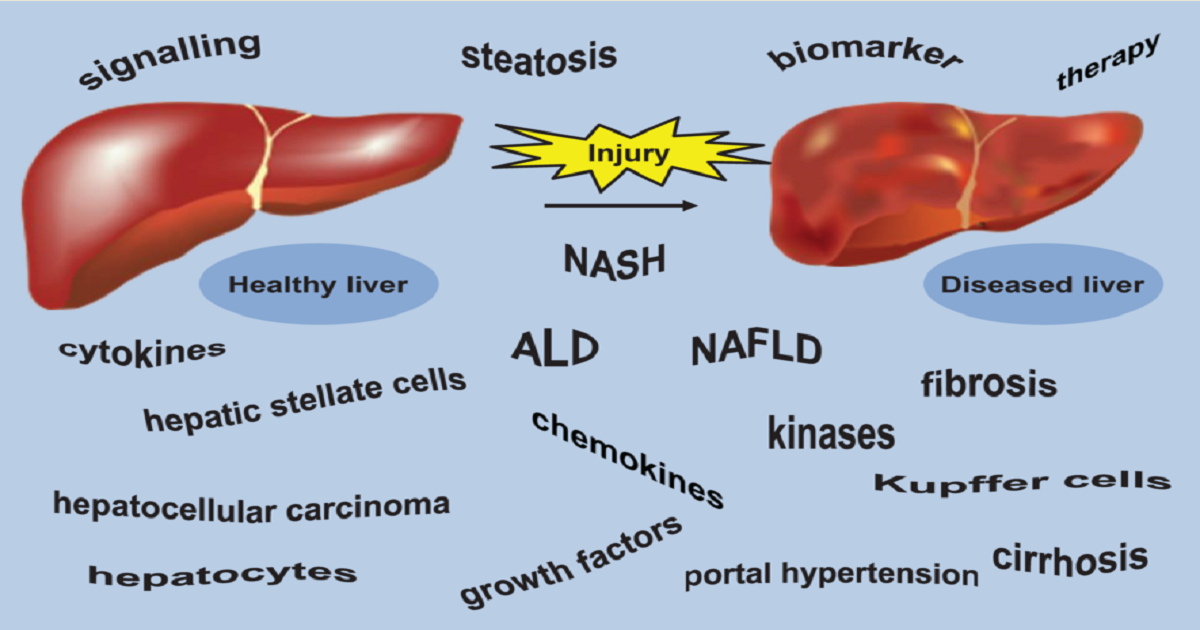
Acute and chronic liver diseases are complex disorders driven by a variety of pathogenic signal transduction processes. These modulate the biology of parenchymal and non-parenchymal liver cells. Most important are cytokine and chemokine networks that orchestrate an inflammatory response leading to the recruitment and activation of distinct leukocyte subsets. Moreover, the different molecular mediators target specific signaling branches that lead to increased formation of extracellular matrix. Simultaneously, different classes of reactive species are formed, resulting in enhanced oxidative- and nitrosative stress, and liver cell damage. Persistent liver damage results in sequential progression from inflammation to fibrosis, cirrhosis, and hepatocellular carcinoma. Currently, there is a great deal of basic and clinical research ongoing, even at the single-cell level, to interrogate core molecular pathways underlying hepatic disease. We cordially invite you to contribute, in the form of original research articles, reviews, or shorter perspective articles, on all aspects related to the theme of “Signaling Pathways in Liver Disease”. Expert articles describing mechanistic, functional, cellular, biochemical, or general aspects of acute and chronic hepatic disease are highly welcome.
Prof. Dr. Ralf Weiskirchen
Dr. Ruchi Bansal
Prof. Dr. Gabriele Grassi
Prof. Dr. Leo A. Van Grunsven
Topic Editors
Keywords
- cytokine
- chemokine
- growth factor, kinases, liver disease
- fibrosis
- cirrhosis
- hepatocellular carcinoma
- therapy
- biomarker
- non-alcoholic fatty liver disease
- alcohol-associated liver disease
Participating Journals
| Journal Name | Impact Factor | CiteScore | Launched Year | First Decision (median) | APC |
|---|---|---|---|---|---|

Bioengineering
|
4.4 | 7.5 | 2014 | 16.9 Days | CHF 2700 |

Cells
|
6.0 | 11.4 | 2012 | 14.9 Days | CHF 2700 |

International Journal of Molecular Sciences
|
5.6 | 10.0 | 2000 | 17.5 Days | CHF 2900 |

Journal of Molecular Pathology
|
2.5 | 2.7 | 2020 | 28.4 Days | CHF 1200 |

Livers
|
2.2 | 4.1 | 2021 | 28 Days | CHF 1200 |

Pathogens
|
3.8 | 6.7 | 2012 | 12.5 Days | CHF 2400 |

Preprints.org is a multidisciplinary platform offering a preprint service designed to facilitate the early sharing of your research. It supports and empowers your research journey from the very beginning.
MDPI Topics is collaborating with Preprints.org and has established a direct connection between MDPI journals and the platform. Authors are encouraged to take advantage of this opportunity by posting their preprints at Preprints.org prior to publication:
- Share your research immediately: disseminate your ideas prior to publication and establish priority for your work.
- Safeguard your intellectual contribution: Protect your ideas with a time-stamped preprint that serves as proof of your research timeline.
- Boost visibility and impact: Increase the reach and influence of your research by making it accessible to a global audience.
- Gain early feedback: Receive valuable input and insights from peers before submitting to a journal.
- Ensure broad indexing: Web of Science (Preprint Citation Index), Google Scholar, Crossref, SHARE, PrePubMed, Scilit and Europe PMC.
Related Topic
- Signaling Pathways in Liver Disease 2nd Edition (4 articles)
