
Topic Editors


2. Institute of Water Problems, Hydropower and Ecology, National Academy of Sciences of Tajikistan, Dushanbe 734042, Tajikistan
Beyond Algorithms: Hardware-Enabled Innovations in Remote Sensing Payloads, CubeSat Missions and Low-Altitude Applications
Topic Information
Dear Colleagues,
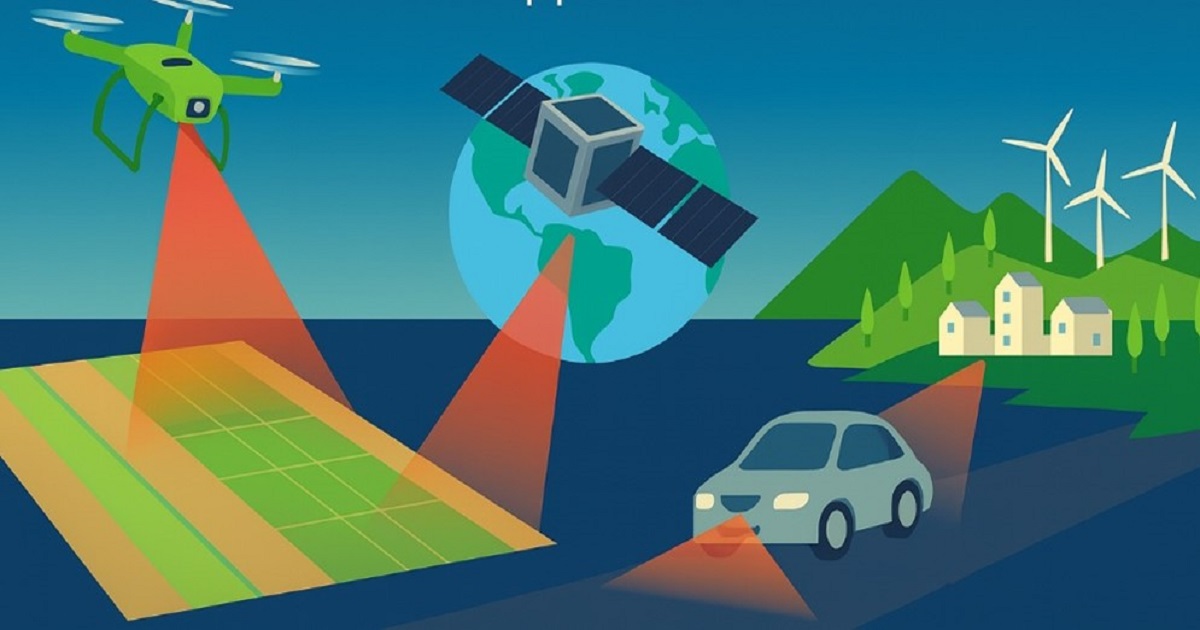
Remote sensing is undergoing a rapid transformation towards miniaturised payloads, agile platforms, and intelligent on-board processing. Advances in sensor design, in-orbit calibration, and multi-platform coordination have created unprecedented opportunities for geosciences, environmental monitoring, urban management, public health, and the emerging low-altitude economy. The continuous evolution of CubeSat technologies, together with innovative airborne and spaceborne payloads, is not only enabling low-cost, high-frequency Earth observation but also fostering novel applications in areas such as precision agriculture, infrastructure monitoring, disaster response, and health geography.
In this Topic, we seek to convene contributions at the frontier of this field that advance the architecture, methodology, and application of next-generation remote and intelligent sensing systems across multiple spatial and technological scales. It spans a continuum from the conception, design, and calibration of innovative sensors and payloads, through satellite and CubeSat missions, to airborne, unmanned aerial, and terrestrial observation networks that together underpin the emerging low-altitude economy. Particular emphasis is placed on the integration of unmanned aerial systems to create agile, reconfigurable, and intelligent platforms that bridge the observational gap between orbital and ground-based sensing, enabling near-real-time data acquisition, edge computing, and multi-scale environmental monitoring. By highlighting the intrinsic synergy among hardware innovation, embedded intelligence, and data-driven analytics, this Topic aims to combine aerospace engineering, electronics, and geomatics into a coherent framework of integrated sensing, fostering new paradigms for urban observability, resilient infrastructure, and sustainable spatial governance while redefining the interface between aerospace capabilities and the complex socio-economic systems of the contemporary world.
We invite the submission of regular articles presenting original research, technical developments, and applied studies. Topics of interest include, but are not limited to, the following:
- Design, development, calibration, and in-orbit validation of novel airborne and spaceborne payloads (multi-/hyperspectral, thermal, LiDAR, radar);
- CubeSat technologies and mission concepts, including payload miniaturisation, intelligent on-board processing, and multi-satellite collaboration;
- Data fusion, physical modelling, and AI-based methods tailored to hardware-enabled, near-real-time, and low-altitude applications;
- Hardware-enabled remote sensing applications: Urban airspace management, smart agriculture, infrastructure monitoring, disaster response, epidemiology, and health geography, all supported by advances in novel payloads, sensors, and edge computing hardware rather than by purely algorithmic innovation;
- Economic and societal applications leveraging novel hardware: Urbanisation monitoring, industrial distribution, and disaster-related economic loss assessment, underpinned by breakthroughs in sensor design, CubeSat platforms, and integrated processing hardware.
Prof. Dr. Shaoju Wang
Prof. Dr. Xiang Zhang
Dr. Mahlatse Kganyago
Dr. Aminjon A. Gulakhmadov
Prof. Dr. Zongxuan Li
Topic Editors
Keywords
- remote sensing payloads
- CubeSat
- hyperspectral and multispectral imaging
- optical system
- on-board processing and edge computing
Participating Journals
| Journal Name | Impact Factor | CiteScore | Launched Year | First Decision (median) | APC | |
|---|---|---|---|---|---|---|

Aerospace
|
2.5 | 4.8 | 2014 | 18.5 Days | CHF 2400 | Submit |

Drones
|
5.2 | 10.0 | 2017 | 21.1 Days | CHF 2600 | Submit |

Electronics
|
2.9 | 7.0 | 2012 | 14.8 Days | CHF 2400 | Submit |

Geomatics
|
3.7 | 4.6 | 2021 | 21.6 Days | CHF 1200 | Submit |

Remote Sensing
|
4.3 | 9.4 | 2009 | 22 Days | CHF 2700 | Submit |

Sensors
|
4.0 | 9.4 | 2001 | 17.8 Days | CHF 2600 | Submit |

Smart Cities
|
6.6 | 13.0 | 2018 | 25.1 Days | CHF 2000 | Submit |

Preprints.org is a multidisciplinary platform offering a preprint service designed to facilitate the early sharing of your research. It supports and empowers your research journey from the very beginning.
MDPI Topics is collaborating with Preprints.org and has established a direct connection between MDPI journals and the platform. Authors are encouraged to take advantage of this opportunity by posting their preprints at Preprints.org prior to publication:
- Share your research immediately: disseminate your ideas prior to publication and establish priority for your work.
- Safeguard your intellectual contribution: Protect your ideas with a time-stamped preprint that serves as proof of your research timeline.
- Boost visibility and impact: Increase the reach and influence of your research by making it accessible to a global audience.
- Gain early feedback: Receive valuable input and insights from peers before submitting to a journal.
- Ensure broad indexing: Web of Science (Preprint Citation Index), Google Scholar, Crossref, SHARE, PrePubMed, Scilit and Europe PMC.
