
Sustainability Education for Recycling: Multidisciplinary Approaches and Innovative Practices

A special issue of Recycling (ISSN 2313-4321).

Deadline for manuscript submissions: 30 June 2026 | Viewed by 3166

Special Issue Editor


E-Mail Website
Guest Editor
Department of Industrial Engineering (DIIN), University of Salerno, 84084 Fisciano, SA, Italy
Interests: circular economy; environmental communication; life-cycle assessment; recycling; waste management; water and wastewater in ancient civilizations; water supply
Special Issues, Collections and Topics in MDPI journals

Special Issue Information

Dear Colleagues,

Recycling is a crucial element in the transition toward a circular economy and sustainable development. However, its success depends not only on technological advancements and policy frameworks, but also on the collective awareness and behavior of citizens. Environmental education plays a fundamental role in fostering sustainable mindsets and encouraging active participation in recycling practices.

This Special Issue aims to explore the educational and communicative dimensions of recycling from a multidisciplinary perspective. We welcome contributions from all academic fields, including environmental sciences, humanities, social sciences, education, communication, psychology, design, and the arts.

The Special Issue is particularly interested in showcasing the following:

  • Educational methodologies and tools for promoting recycling;
  • Case studies of formal and informal educational projects;
  • Communication strategies and public awareness campaigns;
  • Cultural, social, and philosophical reflections on recycling;
  • Innovative didactic approaches and community-based interventions.

Descriptive or narrative contributions are welcome, provided that they clearly demonstrate relevance, originality, and potential impact. Projects that present methodological approaches, pedagogical strategies, or experiential learning practices are highly encouraged.

The objective of this Special Issue is to create a vibrant platform that brings together educators, researchers, communicators, and practitioners to share knowledge, inspire innovation, and promote effective and inclusive environmental education on recycling.

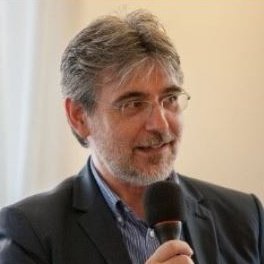
Dr. Giovanni De Feo
Guest Editor

Manuscript Submission Information

Manuscripts should be submitted online at www.mdpi.com by registering and logging in to this website. Once you are registered, click here to go to the submission form. Manuscripts can be submitted until the deadline. All submissions that pass pre-check are peer-reviewed. Accepted papers will be published continuously in the journal (as soon as accepted) and will be listed together on the special issue website. Research articles, review articles as well as short communications are invited. For planned papers, a title and short abstract (about 250 words) can be sent to the Editorial Office for assessment.

Submitted manuscripts should not have been published previously, nor be under consideration for publication elsewhere (except conference proceedings papers). All manuscripts are thoroughly refereed through a single-blind peer-review process. A guide for authors and other relevant information for submission of manuscripts is available on the Instructions for Authors page. Recycling is an international peer-reviewed open access monthly journal published by MDPI.

Please visit the Instructions for Authors page before submitting a manuscript. The Article Processing Charge (APC) for publication in this open access journal is 1800 CHF (Swiss Francs). Submitted papers should be well formatted and use good English. Authors may use MDPI's English editing service prior to publication or during author revisions.

Keywords

  • circular economy
  • community engagement
  • environmental education
  • environmental humanities
  • innovative teaching methods recycling
  • sustainability communication
  • sustainability education

Benefits of Publishing in a Special Issue

  • Ease of navigation: Grouping papers by topic helps scholars navigate broad scope journals more efficiently.
  • Greater discoverability: Special Issues support the reach and impact of scientific research. Articles in Special Issues are more discoverable and cited more frequently.
  • Expansion of research network: Special Issues facilitate connections among authors, fostering scientific collaborations.
  • External promotion: Articles in Special Issues are often promoted through the journal's social media, increasing their visibility.
  • Reprint: MDPI Books provides the opportunity to republish successful Special Issues in book format, both online and in print.

Further information on MDPI's Special Issue policies can be found here.

Published Papers (3 papers)

Order results
Result details
Select all
Export citation of selected articles as:

Research

25 pages, 7607 KB  
Article
Engaging Environmental Education for Sustainable Waste Management—The Greenopoli Education Framework
by Giovanni De Feo
Recycling 2026, 11(1), 2; https://doi.org/10.3390/recycling11010002 - 19 Dec 2025
Viewed by 307
Abstract
This paper presents Greenopoli, an innovative framework for sustainability and waste management education that has engaged over 600 schools and 90,000 students since 2014. Greenopoli is founded on the idea that children and youth can grasp environmental issues as well as adults and [...] Read more.
This paper presents Greenopoli, an innovative framework for sustainability and waste management education that has engaged over 600 schools and 90,000 students since 2014. Greenopoli is founded on the idea that children and youth can grasp environmental issues as well as adults and act as agents of change within their families and communities. The Greenopoli approach combines scientific accuracy with playful, creative pedagogy to simplify complex topics and stimulate peer-to-peer learning. It includes storytelling, games, field visits, and “green raps” (original environmental songs co-created with students). The framework is adaptive, with content and activities tailored to education stages from kindergarten through university. Educators adopt the role of moderators or facilitators, encouraging students to discuss and discover concepts collaboratively. Greenopoli’s participatory method has been implemented across all age groups, yielding enthusiastic engagement and tangible outcomes in waste sorting and recycling behaviors. The program’s reach has extended beyond schools through collaborations with national recycling consortia, NGOs, municipalities, and media (TV programs, social media, TEDx talks). Numerous awards and recognitions (2017–2025) have highlighted its impact. A comparative analysis shows that Greenopoli’s use of peer-led learning, gamification, and creative communication aligns with global best practices while offering a unique blend of tools. Greenopoli is a novel best-practice model in environmental education, bridging theory and practice and contributing to the goals of Education for Sustainable Development and a circular economy. It demonstrates the effectiveness of engaging youth as change-makers through interactive and creative learning, and it can inspire similar initiatives globally. Full article
Show Figures

Graphical abstract

18 pages, 963 KB  
Article
Waste Education in Teacher Training: Exploring the Role of Context in Shaping Perceptions and Didactic Approaches
by María Ángeles García-Fortes, Patricia Esteve-Guirao, Isabel Banos-González, Magdalena Valverde-Pérez and Ana Ruiz-Navarro
Recycling 2025, 10(6), 224; https://doi.org/10.3390/recycling10060224 - 12 Dec 2025
Viewed by 257
Abstract
This study explores how 130 future teachers (FTs) perceive and address massive waste generation when it is framed through two socio-environmental contexts: waste export from affluent to vulnerable countries and microplastic pollution in natural environments. Using a mixed-methods design, we examine how each [...] Read more.
This study explores how 130 future teachers (FTs) perceive and address massive waste generation when it is framed through two socio-environmental contexts: waste export from affluent to vulnerable countries and microplastic pollution in natural environments. Using a mixed-methods design, we examine how each context shapes problem perception, attribution of responsibility, and proposed teaching activities. Both contexts foster a systemic understanding of waste issues. Economic drivers are identified as the main cause (means = 3.2/4), while institutional factors are downplayed in the export scenario and individual factors in the microplastics scenario. Proposed solutions center on institutional and economic measures. Ecological impacts are prioritized in both contexts; however, the export case elicits broader multi-sphere interpretations, whereas microplastics are viewed primarily as ecological–sanitary risks. Perceived responsibility is moderate (mean = 2.6/4) in both contexts, though waste export is interpreted more individually and microplastics more collectively. A disengaged profile predominates, particularly for microplastics (76.92%), with most FTs showing limited intention to change personal habits. In terms of didactic design, only 20% of activities in the export context and 50% in the microplastics context are action-oriented. Findings highlight the importance of carefully selected socio-environmental contexts in teacher education to promote systemic reasoning, shared responsibility, and action-oriented learning. Full article
Show Figures

Figure 1

26 pages, 4279 KB  
Article
Sustainable Mobile Phone Waste Management: Behavioral Insights and Educational Interventions Through a University-Wide Survey
by Silvia Serranti, Riccardo Gasbarrone, Roberta Palmieri and Giuseppe Bonifazi
Recycling 2025, 10(4), 129; https://doi.org/10.3390/recycling10040129 - 1 Jul 2025
Viewed by 1916
Abstract
Mobile phone waste management is a growing environmental challenge, with improper disposal contributing to resource depletion, pollution and missed opportunities for material recovery. This study presents the findings of a dual-purpose survey (11,163 respondents) conducted in a wide academic context in Italy, aimed [...] Read more.
Mobile phone waste management is a growing environmental challenge, with improper disposal contributing to resource depletion, pollution and missed opportunities for material recovery. This study presents the findings of a dual-purpose survey (11,163 respondents) conducted in a wide academic context in Italy, aimed at both assessing mobile phones disposal behaviors and knowledge and raising awareness through structured educational prompts about sustainable e-waste management. The results reveal significant behavioral patterns and knowledge gaps across demographic groups. While most respondents (90.6%) own one phone, males tend to have more than females. Phones are replaced every 3–5 years by 48.8% of users and every 1–3 years by 36.7%, with students tending to replace them earlier. Only 20.2% replace their phone when irreparable while 46% replace them due to high repair costs. A large majority (92.3%) store old devices at home, forming an estimated urban mine of 29,799 unused phones. The awareness of hazardous components is higher than that of critical raw materials, with males more informed than females and students in scientific fields displaying greater awareness than those in humanities and health disciplines. The awareness of official take-back programs is particularly low, especially among younger generations. Notably, 90% reported increased awareness from the educational survey and 93.1% expressed willingness to use an on-campus e-waste collection system. These results highlight the role of universities as catalysts for sustainable behavior, supporting the design of targeted educational strategies and policy actions in line with circular economy principles and Sustainable Development Goal 12 “Responsible consumption and production”. Full article
Show Figures

Graphical abstract

Back to TopTop