


Abstract
In the era of big data, smart cities have become a promising prospect for governments, citizens, and industrials. Many ideas and their derived systems for smart cities depend on big data for achieving a goal of data intelligence. However, there is an urgent transformation trend from data intelligence to service intelligence in the vision of smart cities due to the living requirements of citizens. People-centric service intelligence in smart cities has to support the realization of people’s needs within urban and social domains. This paper introduces a concept of people-centric service intelligence, defines the level of it and its challenges in the aspect of infrastructure, human dynamics, human understanding and prediction, and the human–machine interface. Then, this paper proposes the theoretical framework and technical frameworks of people-centric service intelligence, and the service intelligence schemas for future construction of smart cities. It will be helpful for governments and industries to design people-centric service intelligence for improving the quality of life, the capabilities of good sustainability, and better development.
1. Introduction
The magnificent goals of smart cities include quality of life, sustainability, and development [1], which have already attracted a great deal of attention from researchers in an array of disciplines, such as urban planning [2,3,4], transportation [5,6,7], civil engineering [8], information science [9,10,11,12,13], surveying and mapping [14,15], commercial and logistics [16], energy [17,18], atmosphere and environment [19], society [20,21], tourists [22], governance [2,23], and industry in recent years. Although the proper definition of smart cities are still lacking [2], smart cities’ goals are consistent to include smart living, smart people, smart environment, smart mobility, smart economy, smart governance [24], smart services, and smart infrastructure [25]. To achieve these goals, government and industry create and collect plenty of information related to smart cities’ core components (land, infrastructure, people, and government) by using earth observation (EO) and information and communication technologies (ICT). Therefore, it launched an era of urban big data, which provides a promising vision of supporting smart cities.
By using urban big data, artificial intelligence (AI), and machine learning (ML), governments and industries built up many department-driven data engines to transform data, mash-up flows, accelerate data delivery, and develop augmented analytics for local governance or running business. They could be called as data intelligence for future endeavors. Data intelligence has become the primary facet of big data due to ambitiously powerful capabilities of descriptive, prescriptive, diagnostic, predictive, and decisive techniques. Thus, these works built up various kinds of information infrastructure to construct or practice smart cities.
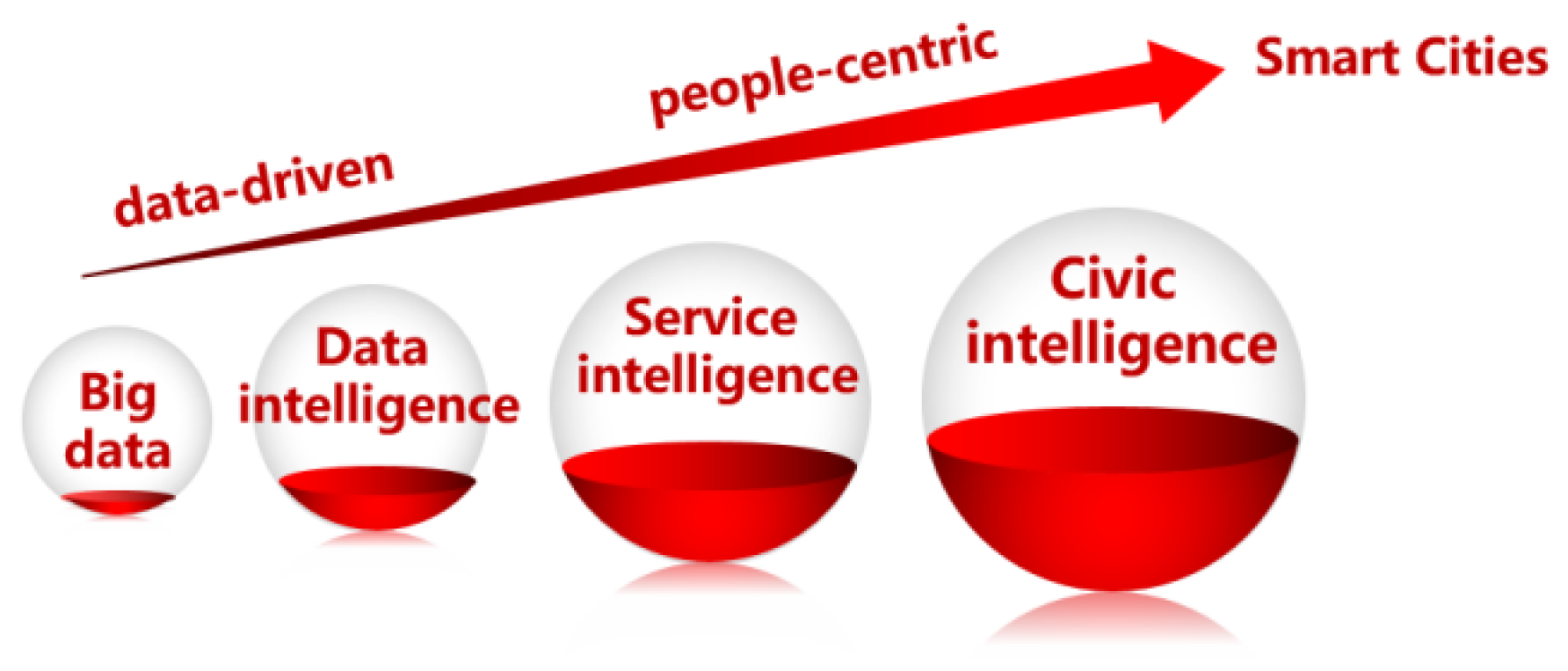
The urban environment is designed for human beings. Although current department-driven data engines could provide work or living-related services to government, employees, or individuals under the framework of data intelligence, there still needs to be a drive for people-centric service intelligence due to the human demands for urban functions (residence, work, recreation, and transportation) according to The Charter of Athens (1933). Therefore, people-centric service intelligence is a natural paradigm shift in the era of big data. People-centric service intelligence is different from business intelligence (BI). BI comprises strategies and technologies used by enterprises for data analysis of business information, while people-centric service intelligence compromises the theories, strategies, and technologies deriving from and complying with the requests and demands of urban citizens. Their requests or demands may involve the authorized scopes of more than one department or company. Eventually, the intelligence in smart cities could evolve to civic intelligence [26]. Figure 1 provides the paradigm shifts of smart cities, which could be concluded as from data-driven intelligence to people-centric service intelligence and even to civic intelligence.
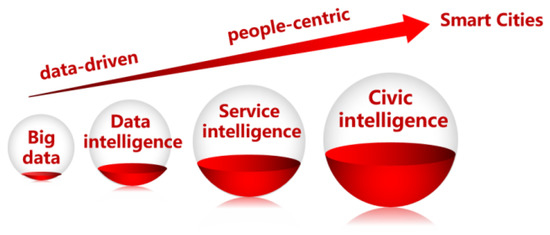
Figure 1.
The paradigm shifts of smart cities.
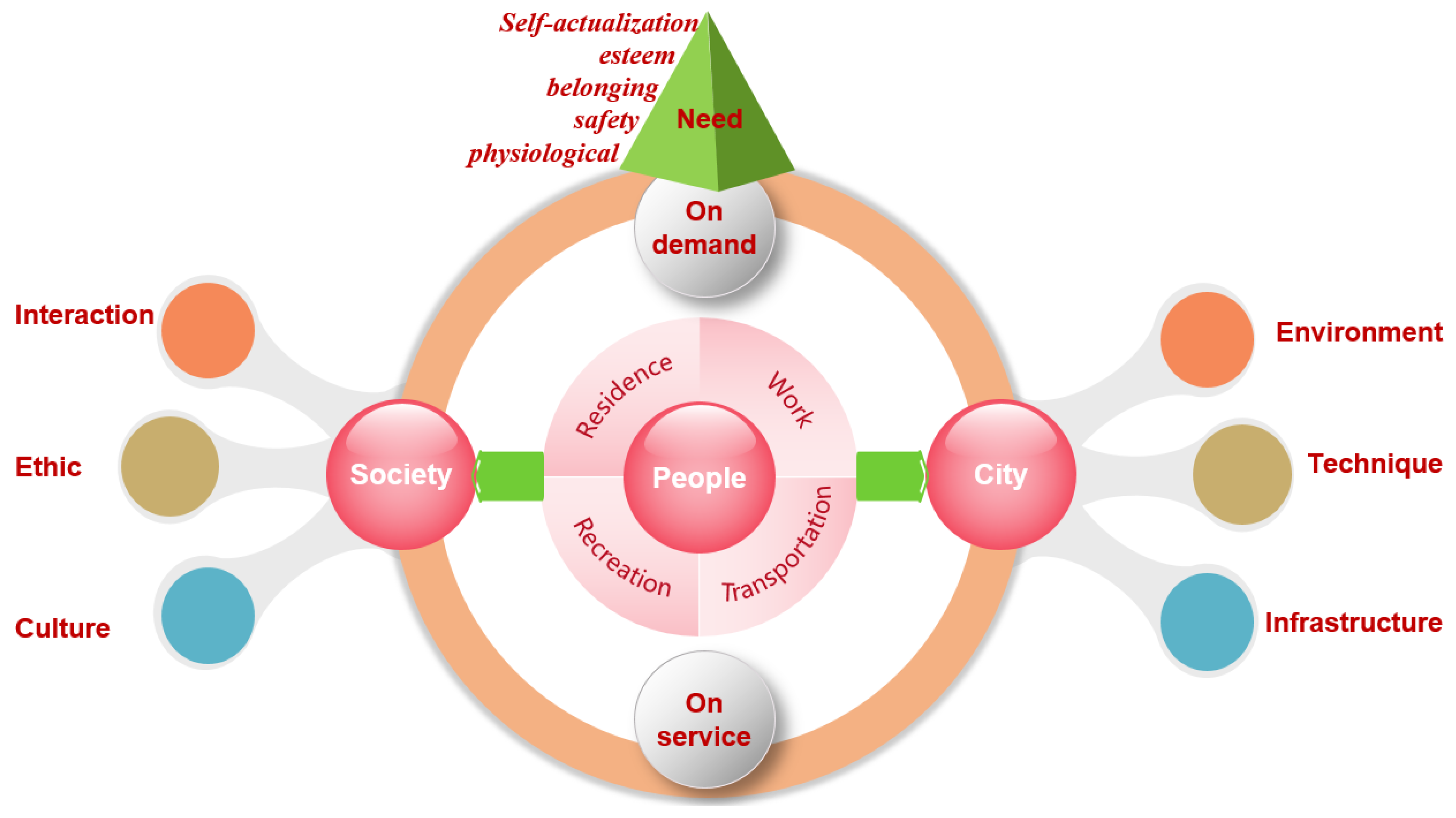
People-centric service intelligence in smart cities has to support the realization of people’s needs within urban and social domains (see Figure 2), for example, physiological, safety, love/belonging, esteem, and self-actualization needs according to Maslow’s theory [27]. City provides critical resource services (i.e., environments, techniques, and infrastructure) to people, while the society support the mental needs of interaction, ethic, and culture. Both of them need to be designed and constructed with an appropriate level of service intelligence suitable to developed or developing cities.
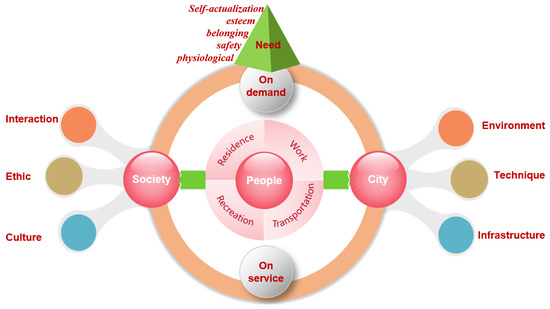
Figure 2.
People-centric service intelligence within urban and society domains.
2. Related Works
Smart cities have been studied by a broad of disciplines, such as urban planning, transportation, civil engineering, information science, surveying and mapping, commercial and logistics, energy, atmosphere and environment, society, tourists, governance, and industry. Many researchers have reviewed the literature related to smart cities [1,2,3,4,5,6,7,8,9,10,28,29,30,31,32,33,34,35,36,37]. It could be summarized as three important aspects, namely, infrastructure, service, and culture.
In the aspect infrastructure, developing countries like China [38], Brazil, India, and others still have huge demand for designing and constructing basic hard infrastructure like buildings, city facilities (e.g., roads bridges, subways), and utilities (e.g., water, energy, waste, heat, etc.) [25,39,40]. Because smart cities try to address the challenges of growth, sustainability, and safety [41] the hard infrastructure in cities does not follow the same development path for cities all over the world. However, developed countries have moved to technology-enhanced infrastructure, which consists of array of physical assets, inventory of embedded, attached, and remote sensors, robust communication and data storage networks, and cohorts of asset managers [42]—for example, fiber Bragg gratings, self-monitoring materials, ground penetrating radar systems, active thermographic systems, and embedded electrical sensors—that allow users to monitor data from structures several hundred miles away. Also, many smart devices within detecting infrastructure, like street quality identification devices, support the novel monitoring workflow of maintaining infrastructure [42,43].
In the aspect of service in smart cities, information centric service supported by pervasive Information and Communication Technology (ICT) and Internet of Things (IoT) systems is a basic main feature in the current stage. For example, Piro et al. [11] summarized the information-centric service in smart cities, which embraces all available and upcoming wireless technologies and enforces ubiquitous and secure applications such as government and public administration, intelligent transportation systems, public safety, social, health-care, educational, and building and urban planning application domains. These information centric services will benefit the future internet-enabled services in open innovation environments [44]. Information infrastructure are also very important for the support of information centric services in smart cities, for example, Maas [45]. Many researchers studied the components of information infrastructure, for example, public–private partnership model based on OneM2M and OSGi solutions, eIDAS public digital identity systems, knowledge management perception systems, cold chains and shelf life of refrigerated foods, HCE-based authentication approach for multi-platform mobile devices, and cloud networking for IoT [46]. From the viewpoint of service architecture in smart cities, a three-layer architecture for smart cities was proposed [14]; namely, information layer, interface layer, and interaction layer. Similar works also were introduced by Anthopoulos et al. [47] and Su et al. [48]. A powerful architecture named ADAPCITY, which is a self-adaptive system for smart cities, includes physical, grid, management, and control layers. These service architectures could be built based on service-oriented architecture and event driven architecture [49,50]. In addition, smart city decision management or urban planning [51] could be empowered by real-time data (i.e., telemetry of smart-cities [52,53]) processing using big data analytics [54]. Most service platforms in smart cities are viewed as a new service economy [55] for supporting sustainable urban development [56].
In the aspect of culture in smart cities, Allam and Newman [2] reviewed the literature about the smart cities in terms of culture. They suggest a citizen-centered outcome-oriented approach rather than a technology-based, corporate-centered solution for smart cities, which is so-called ‘smart culture’ including urban culture heritage, urban creative industries, or the needs of citizens by promoting livability within cities. Currently, culture-led urban regeneration has become a prominent feature of cites in China, many characteristic towns or culture creation industrial zones have been built to drive economic development like industry, tourism, and so on. Therefore, the cultural and historical urban fabrics are respectful of urban culture. Cultural policy is also an important factor to keep urban culture [57,58,59], even the illness culture prevention [60].
The literature in the above three aspects of smart cities shows that current stage of smart city is very close to the approach of data intelligence, which needs a transformation to the approach of service intelligence in visions of smart cities. Importantly, there are several critical and emergent requirements [1,6,7,8] for assessing the intelligence level of smart cites and defining theoretical and technical frameworks [11,17,18] for the constructing smart cities, which are helpful to guide the construction of smart cities. These works have not been investigated very clearly in literature.
3. Levels and Challenges of People-Centric Service Intelligence
There are two important questions that need to be answered for the participation of research works and industrial development of people-centric service intelligence in smart cities. For example, how to define the levels of people-centric service intelligence, and what their research challenges are. The first question help us to judge the development level of service intelligence, and the second question is related to the challenge of creation in research and innovation in industry.
The levels of people-centric service intelligence could be categorized as seven classes listed in Table 1. Their narrative definitions are given in this table according to three basic rules, how they operate automatically, what the complexity and difficulty of services are, and what the hierarchy of needs they could meet is. Here, the service intelligence evolution from a low to high level indicates the transformation from sensing awareness to unawareness, from data-sensitivity to behavior sensitivity, from physiological needs to mental needs. The higher level of people-centric service intelligence, the more challenges exist in its realization.

Table 1.
Levels of people-centric service intelligence
To achieve people-centric service intelligence, researchers need to address challenges in the aspects of infrastructure, human dynamics, human understanding and prediction, human–machine interface.
Infrastructure is the basic support resource of people-centric service intelligence. Smart cities need user-friendly and intelligently physical, digital, and cultural infrastructure to facilitate people-centric services. The challenges of intelligence on infrastructure are human behavior-sensitive content by infrastructure, and the crowdsourcing information connection and integration among infrastructures. For example, how to design adaptive infrastructure for professional or business scenarios. How to assign spatiotemporal infrastructure resources for labor-, energy-, environment-, and cost-savings. How to connect crowdsourcing sensed information by infrastructure efficiently, and how to integrate this crowdsourcing information for promoting the intelligence level of services.
Human dynamics is the basic surrounding conditions on service intelligence. Shaw and Sui [61] conclude the core elements should be considered in human dynamics are from physical space to virtual space, from the historical to real-time, from the human to context, and which are changed by modern technologies, human-technology relationships and interactions. The intelligence challenge of human dynamics in smart cities includes the multi-space interactions (absolute space, relative space, relational space, and mental space) [61], aggregation effects of individuals and their spatiotemporal variation of components, cultures, and forces. For example, how to model human dynamics on the spatial structures of infrastructure. How to assess the aggregation effect of dynamic directionality and regularity, and how to model the effect of human dynamics on the service target.
Human understanding and prediction is an important dimension of people-centric service intelligence. The understanding and prediction of human behavior, called the next frontier by Science [62], could lead to a friendly on-demand service. However, current prediction models and approaches still need full understanding [63] of human behaviors. The understanding of human behavior is related to a broad spectrum of social, biological, health, physical, and spatial science disciplines. The intelligence challenge of human understanding and prediction includes (1) the perception, thinking, feeling, deciding, interacting, and acting of human beings; (2) the differences among individuals, groups, and cultures; (3) the influence of other human beings and environment; and (4) the explanation mechanism of prediction theories.
Human–machine interface (HMI) is the key approach to improving the satisfaction of people- centric service intelligence because intelligent HMI could reduce the interaction load of people in motion understanding and service recommendation. Current HMI is already improved by modern information and communication technologies (ICT), and some promising and innovative HMI approaches (i.e., eye motion [64], brain–machine interface systems [65,66]) are investigated by researchers in multi-disciplines. The intelligence challenges of HMI for smart cities include (1) the low-cost and ubiquitous HMI technologies within the urban environment; (2) people motion-driven and content-oriented HMI services based on multi-source information integration; and (3) transparent and culture friendly HMI with less media.
4. People-Centric Service Intelligence Framework
This section will introduce the theoretical and technical frameworks of people-centric service intelligence. These frameworks are obviously dependent on the people-related theories, which totally builds up the foundations of people-centric service intelligence in smart cities.
4.1. Theoretical Framework
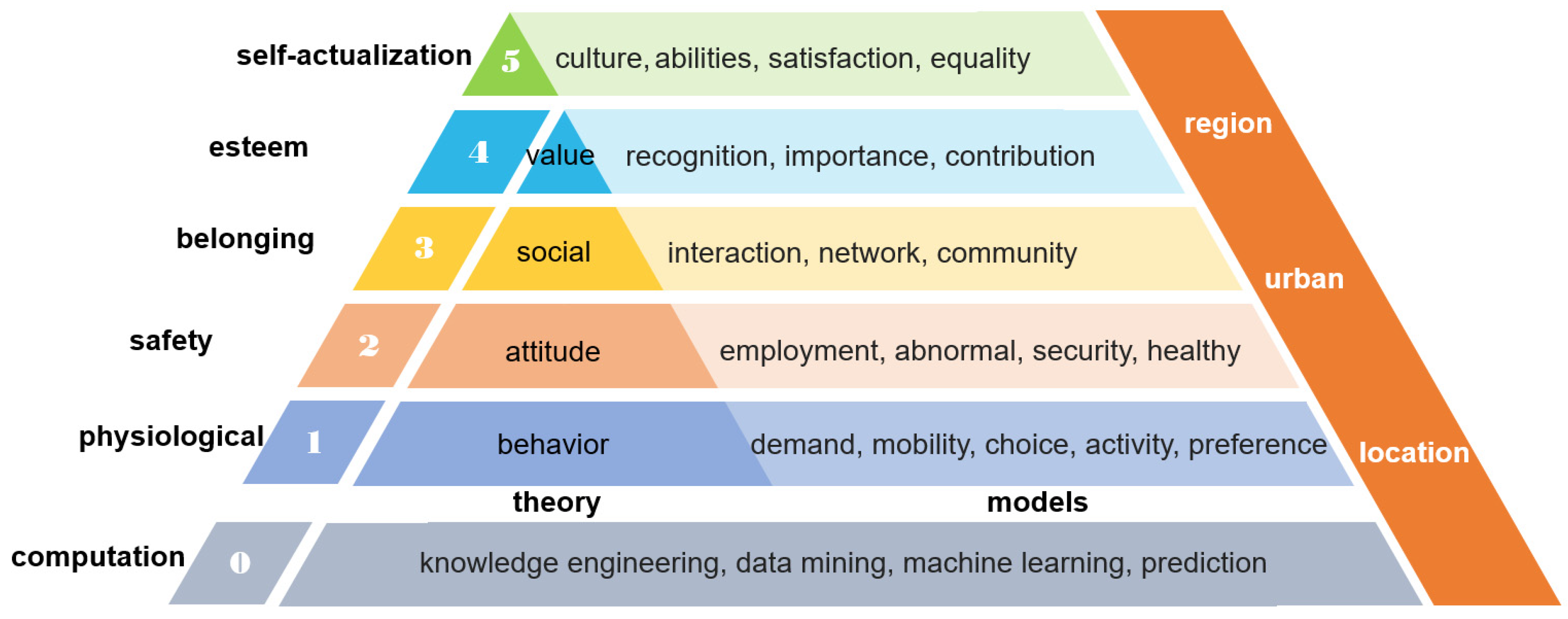
Figure 3 illustrates the theoretical framework of people-centric service intelligence. This framework include six layers. The layer 0 is the computational intelligence in information and computer sciences, which provides the basic theories for implementing the top five layers. Layers 1 to 5 are corresponding hierarchies according to Maslow’s theory [67]. The detailed theories could be explained as follows:
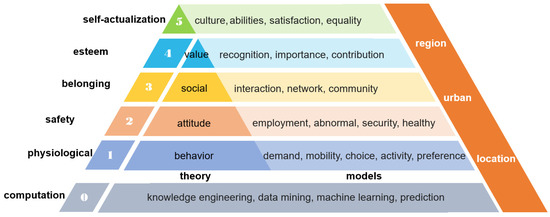
Figure 3.
Theoretical framework of people-centric service intelligence.
The computation layer 0 is highly related to the computational implementation of people-centric service intelligence, for example, the knowledge engineering, data mining, artificial intelligence and machine learning, and prediction theories. These theories provide convenient, efficient, and powerful computational capabilities to define, code, embed, generate service intelligence from people-, society-, and environment-related big data.
The layer 1 is about the theory of behavior. Understanding human behavior is the first step to service intelligence. The models of demand, mobility, choice, activity, and preference are all related to the learning theory, cognitive theory, and reasoning theory of human behavior. Four most widely-used theoretical models of social and behavior theories include the health belief model (HBM) [68], the transtheoretical model/stages of change (TTM) [69], social cognitive theory (SCT) [70], and the social ecological model [71].
The layer 2 is about the theory of attitude. Safety is an important attitude for people’s living. The theory of functional attitude [72] explains that the changing attitudes may involve generalization of change of belief and feeling. The evaluation of effective, behavioral, and cognitive components [73] of attitude is helpful to analyze attitude. Employment ensures a feeling of economic safety. Abnormal events in everyday situations and the security policies and actions formulate the feeling of environmental safety. Healthy attitude is derived from healthy living behaviors. Attitudes limit the effectiveness and practicability of service intelligence.
The layer 3 is about social theory. Social phenomena are also an important aspect of people’s lives. Social theory examines how humans relate to each other and the society they find themselves in. Social interaction, social networks, and social community are some common concepts to understand the social instincts of human beings. Social belonging places limitations on the scope of service intelligence.
The layer 4 is about the theory of value. Personal values are investigated by value theory, which might changes under different situations. The value in the context of psychology and sociology, perceived by people have a great influence on their behaviors. The recognition of value is vital to applicability of service intelligence. The perception of importance and contribution to other people or society lead to feeling of esteem, which are necessary dimensions of constructing service intelligence. Most current studies depend on questionnaire surveys and participant observation, which could develop innovative approaches with the help of big data.
The layer 5 is about the theory of self-actualization. Self-actualization is the highest need in the hierarchy of Maslow’s theory. Service intelligence includes the related theory of discovering and learning people’s culture, defining their abilities, potential, aspirations, reaching equality in surrounding relationships and in society. To achieve these goals, the theory of self-actualization should be dependent on the integration and innovation of multiple disciplines. It is a promising paradigm for service intelligence, but it is still very difficult to define and realize it so far.
Besides the above layers, spatial thinking theory is also an important dimension to service intelligence. Every service relies on physical and virtual space to service people. Location, place, city, and region are critical spatial elements to support service intelligence. The manner of spatial thinking leads to the degree of acceptance of service intelligence, because effective matching between it and people’s spatial thinking patterns is easy for people to follow up.
4.2. Technical Framework
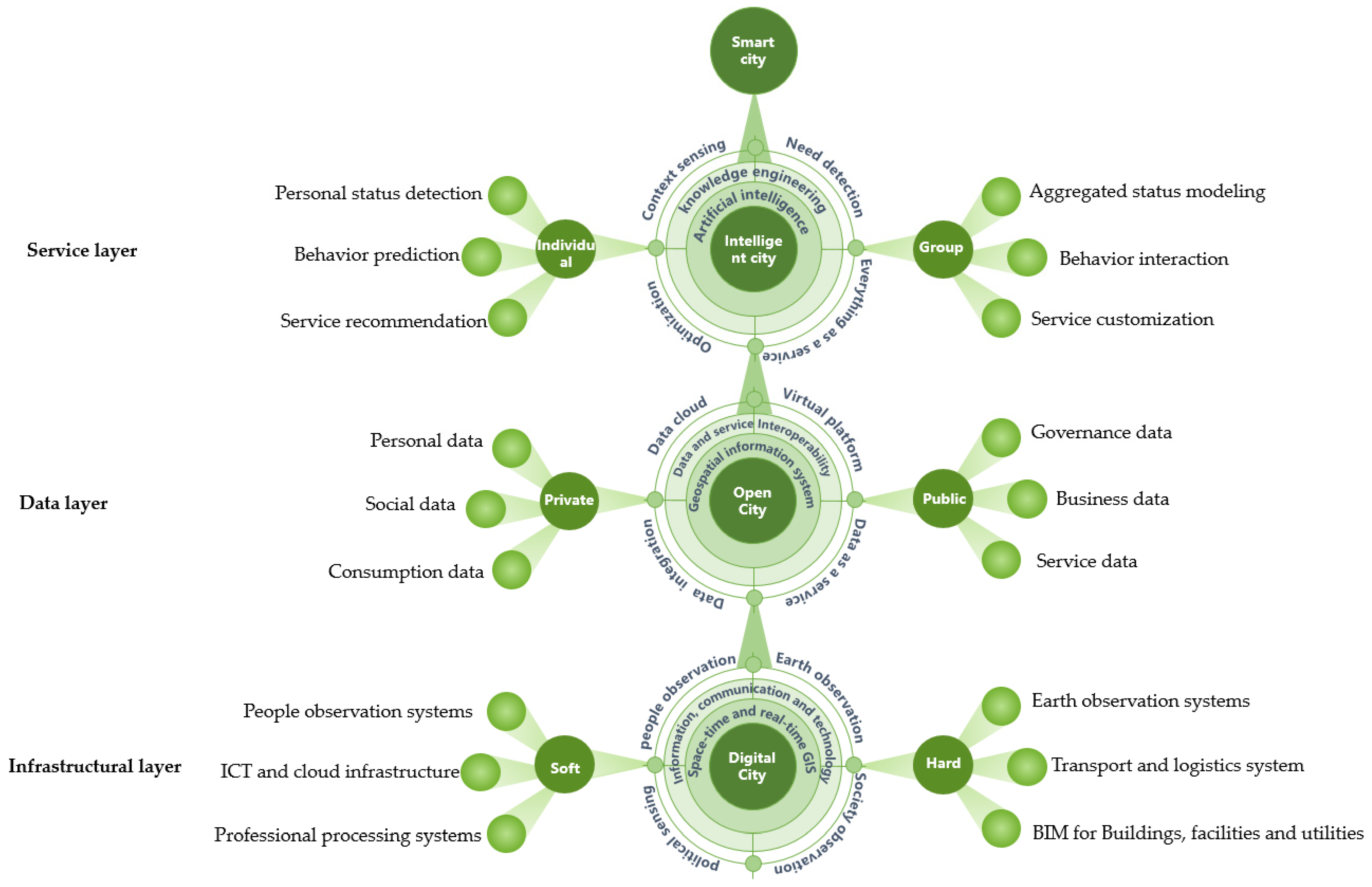
Figure 4 illustrates the technical framework of people-centric service intelligence. It includes three layers, namely, infrastructure, data, and service layers. They could be called ‘digital city’, ‘open city’, and ‘intelligent city’. All of them totally build up the prospect of a smart city.
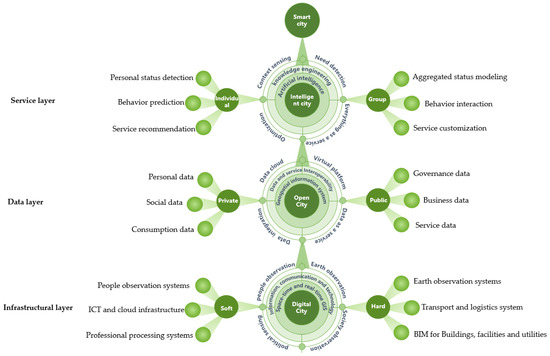
Figure 4.
Technical framework of people-centric service intelligence.
The first layer of this technical framework is the digital city as an infrastructure layer. The digital city is viewed as critical infrastructure for a smart city. The key technologies of the digital city include soft infrastructure and hard infrastructure. (1) Soft infrastructure consists of people observation systems (POS), ICT and cloud infrastructure [74,75,76], professional processing systems [54,57,58,77,78], and others. People observation systems (i.e., closed circuit television; mobile phones; wearable devices like wristbands, glasses, helmets; eye-catching, ubiquitous approaches; etc.) observe activities and behaviors within outdoor or indoor environments. The ICT and cloud infrastructure provide powerful abilities for collecting, communicating, storing, and mining people-related data. The professional processing systems usually are designed for the time- or cost-saving of professional workflows, or the historical documentation of important information. (2) The hard infrastructure consists of earth observation systems, transport, and logistic systems [45], BIM (building information modeling) for buildings, facilities, and utilities. Earth observation systems (EOS) (i.e., camera systems, wave, light detection and ranging (LiDAR), and thermal imaging equipment in satellites, airships or airplanes, and unmanned aerial vehicles) and global positioning and communication systems (i.e., China BeiDou satellite navigation guiding and positioning system, US Global Positioning System) facilitate the ability to observe georgraphic changes such as land-use, atmosphere, landscape, and others. BIM is a process involving the generation and management of digital representations of physical and functional characteristics of buildings, facilities and utilities. BIM technology is an important profiling approach for a digital city. By using on the people observation system, the earth observation system and ICT, the infrastructure layer could observe earth changes, human dynamics including the people, social and political things. Importantly, the space-time and real-time GIS can play important roles of digitalizing, organizing, achieving cities, and providing fundamental space–time analytic functions for servicing cities.
The second layer of this technical framework is the open city as a data layer. Usually, the level of service intelligence is highly dependent on the openness of private and public data. However, openness and privacy are two instinct and opposite issues of service intelligence. How to balance the two issues is the most crucial research question for smart cities. For the perspective of the private or individual personal devices like smart phones and pads, wearable glasses, eye-motion devices, and so on, could help sense individual activities, schedules, and social interactions. Actually, many apps are collecting the individuals’ data with the permission of users at the installation of them. Many CCTV cameras record individuals along the road or within indoor environments for the primary purpose of safety. Short-range internet service (i.e., Wi-Fi) at stores, restaurants, shopping malls, and hotels in cities also collects the appearance of individuals with Wi-Fi sensing devices for the purpose of providing data services. Mobile communication technologies record the trajectories of individuals at all times for the purpose of providing communications services. These technologies provide powerful sensing technical systems able to generate more and more personal, social, and consumption data. For the perspective of the public, government sectors, industries, and businesses build many governance or business systems which are based on geospatial information systems, because they need to relate the people and business to location or place. These systems create daily logs of the public. However, the independence of different sectors, departments, companies leads to a lack of data and service interoperability. Modern technologies like data clouds and virtual platforms facilitate a potential of implementing interoperability easily; meanwhile, it could also create powerful data integration technologies to support Data as a Service (DaaS).
The third layer of this technical framework is the intelligent city as a service layer. The intelligence of a city is not only dependent on the previous two layers, but also highly dependent on the intelligence mechanism for individuals and groups in the service layer. In the aspect of individuals, service intelligence needs to answer questions like, what about the individuals now? What they will do in the next period? What they will choose in their lives? Answering these questions requires solid support of sensing and analyzing technologies, such as personal status detection, behavior prediction and service recommendation. In the aspect of groups, service intelligence needs to answer questions like, what are the aggregated dynamics of groups? How do groups interact within different environments? How can we implement accurate customized services? The answering of these questions needs the solid support of aggregated status modeling, behavior interaction modeling, and differential service customization technologies. Basically, the foundation of these technologies for individuals and groups are spatial behavior theory, artificial intelligence theory, and knowledge engineering modules. The techniques could be summarized as context sensing, need detection, optimization, and Everything as a Service (XaaS).
The technique trajectory from digital city, to open city, to intelligent city actually builds up the three layers and their fundamental technique requirements. It will be a feasible approach to create service-on-demand technical systems for smart cities. The theoretical and technical frameworks could help the frameworks of smart cities to become more powerful [28,29,30,31,32,39,40,49,51].
4.3. Smart City Practices in Wuhan City: Linking of Theoretical and Technical Frameworks
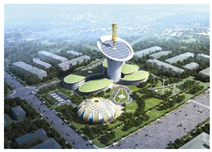
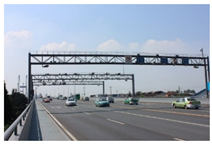
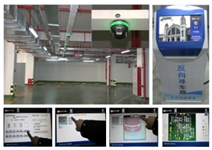
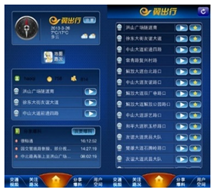
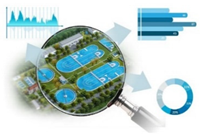
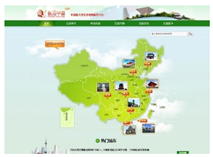
This section uses the smart city practices in Wuhan city to explain the linking of theoretical and technical frameworks (Table 2). The infrastructural layer in Wuhan used camera, IoT, RFID, IC card, mobile internet, GPS/GIS and some other dedicated short-range communication technologies to build up people observation systems, integrates the ICT and cloud computing platforms to support the administrative service, medical and pension service, smart home and intelligent community management systems, and others. Many professional processing systems—for example, smart decision-making systems for governance, meat quality safety traceability information systems, sewage treatment operation management platforms, urban road and bridge non-parking charge systems—were built on a foundation of ICT and cloud infrastructure. The data layer collects many data sources related to people’s living and mobility. The service layer provides administrative service, urban management service, health care service, safe food service, non-parking sensing service, campus education service, and so on. However, Wuhan city is only in the digital city stage, it still could not be called an ‘open city’ or ‘intelligent city’ according to the smart city criteria of the proposed framework. Current smart city practices in Wuhan city only cover the theoretical layer of computation, physiological, and safety conditions. There is a big gap to support the theoretical practices of belonging, esteem, and self-actualization.
Table 2.
Smart city practices in Wuhan.
5. Service Intelligence Schemas for Smart City
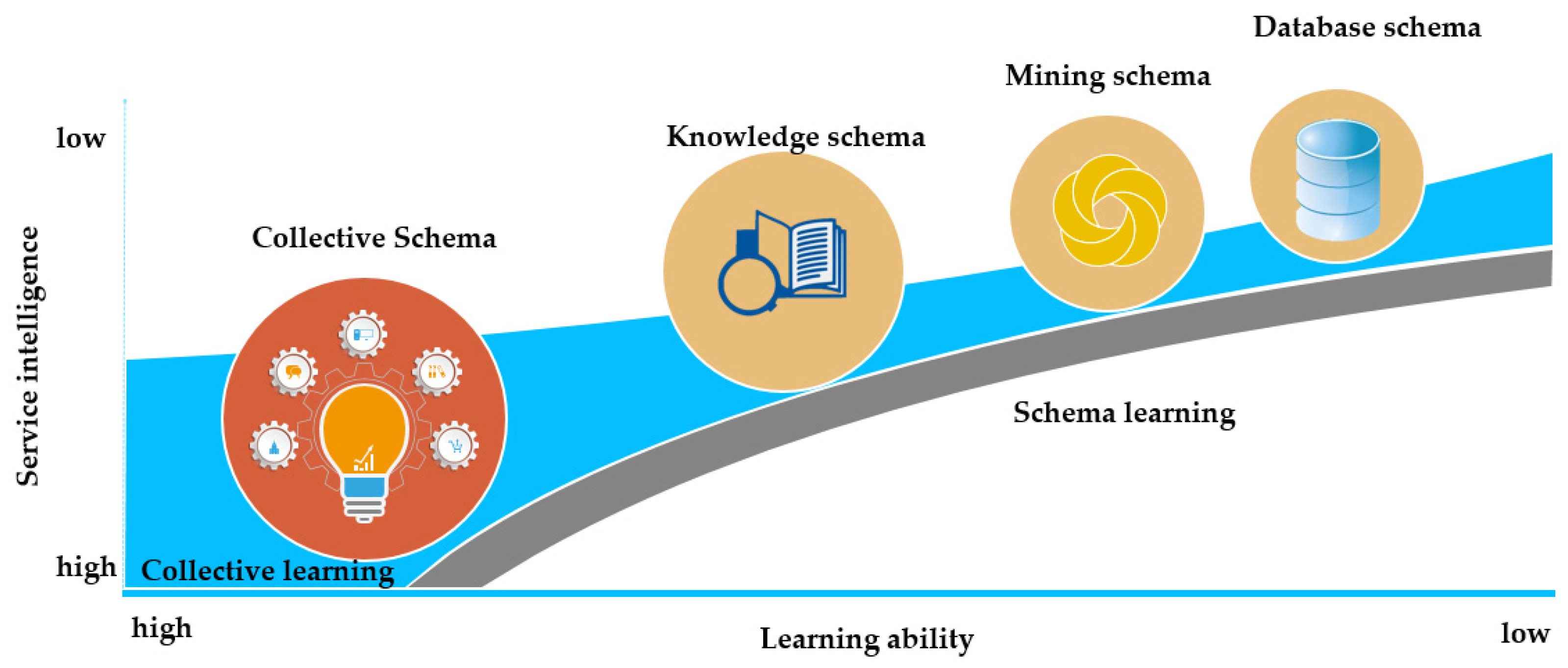
Schema usually describe the pattern of though or behavior that organizes categories of information and the relationships among them [59]. Schema thinking is decisive to computer-based learning theory and technologies especially in the era of big data. This paper concludes the schema thinking for smart cities as a series of evolution from database schema, mining schema, and knowledge schema to collective schema (Figure 5).
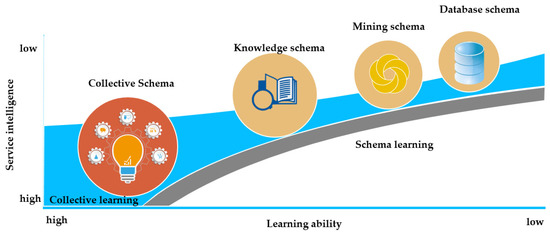
Figure 5.
Research schemas of people-centric service intelligence.
The database schema is the lowest level of schema thinking, which is popularly used in all kinds of information management systems for sectors or companies. This schema defines all elements in database. These elements play roles in organizing the understanding of data, which naturally services end-users. This learning ability of this schema is the easiest one of four schemas. For example, the Administrative Service Center Information System in Wuhan city focuses on the data collection and administrative flow of government, which directly services the citizens with a powerful database engine and does not include more complicated service requirements.
The mining schema is relatively higher than the database schema. The most used technique is called as data mining. It involves related fields of machine learning, statistics, and databases, and includes the tasks of anomaly detection, association rule learning, clustering, classification, regression, summarization, and so on [27]. The mining schema could extract previously unknown, interesting patterns with a good learning ability to support service intelligence. For example, smart hospital project (The Central Hospital of Wuhan) and intelligent medicine logistics implement full-time intelligent real-time tracking and management of drug procurement, storage, sales, and distribution, which needs to mining the demand of drug according to the seasonal rhythms.
The knowledge schema is higher than the previous schemas. This schema focuses on the mathematical logic of problems or phenomena, and the deriving, maintaining, and development of knowledge about problems or phenomena. It is very helpful for problem solving methods. Knowledge involves the domain, inference, and task of problems. The intelligence of deriving, maintaining, and developing structured or non-structured knowledge is decisive to the solving quality of problems. For example, vehicle network public service project in Wuhan needs to know the driving behaviors within different routes, and the knowledge of adapting these behaviors and some abnormal vehicle behaviors and road-crossing behavior of pedestrians.
The future schema for smart cities is the collective schema. It focuses on the collective perceiving, processing, learning, and deciding of human beings in a pattern of collective thinking. The collective schema not only has influence on individual memories, consciousness, individual reasoning, but also plays an important role in collective intelligence of cognition, identity, localization, sensemaking, action, and capabilities. The schema matching or mapping and assembling are crucial processes to intelligent learning process even for machine deep learning, which could improve the level of service intelligence in applications of smart cities. For example, all of the above smart city practices in Wuhan city need to share their data and services to collectively contribute to the implementation of esteem and self-actualization.
6. Conclusions
This paper proposes the theoretical frameworks and technical frameworks of people-centric service intelligence, a promising concept for smart city research and applications. In these frameworks, all people’s needs are classified as six layers (computational implementation, theory of behavior, theory of attitude, social theory, theory of value, and theory of self-actualization) according to the Maslow’s theory. The implementation techniques of smart cities are organized in levels of ‘digital city’, ‘open city’, and ‘intelligent city’ according to the function divisions in computational implementation. Furthermore, this paper concludes the four service intelligence schemas for future construction of smart cities, namely, the database schema, mining schema, knowledge schema, and collective schema. The easiest approach is the database schema, and the most difficult approach is the collective schema. This paper suggests a promising collective schema for smart cities which focuses on the collective perceiving, processing, learning, and deciding of human beings in a pattern of collective thinking. It will be helpful for governments and industries to design people-centric service intelligence for improving the quality of life, capabilities of good sustainability, and better development.
The proposed concept of people-centric service intelligence and its implementation routes could change the current circumstance of data intelligence to meet the human demands on urban functions. It could enhance the capability of constructing smart cities in the aspect of infrastructure, human dynamics, human understanding and prediction, and human–machine interfaces. It will be a promising direction for smart city research and industrial developments. However, there are still some challenges in the implementation of the people-centric service intelligence in current stage. Multi- and crossing disciplines (urban planning, transportation, civil engineering, information science, surveying and mapping, commercial and logistics, energy, atmosphere and environment, society, tourists, governance, and others) should be involved together to solve its challenges.
We plan to improve our approach in several directions. First, the lack of detailed criteria or tools in classifying the level of people-centric service intelligence makes the assessment of smart cities more difficult. It should be carefully defined and validated in the future. Second, it would be valuable to implement and demonstrate this proposed frameworks by a real smart city case. Third, it would be valuable to develop practical service techniques to service urban planning, transportation, civil engineering, information science, surveying and mapping, commercial and logistics, energy, atmosphere and environment, society, tourism, and governance under the framework of the proposed theory.
Author Contributions
Conceptualization, H.X.; Methodology, H.X..; Investigation, X.G.; Writing—original draft preparation, H.X.; Writing—review and editing, H.X.; Visualization, X.G.
Funding
This research was funded by National Natural Science Foundation of China (grants 41771473, 41231171), National key R&D plan (2017YFB0503802, 2017YFC1405302), the Fundamental Research Funds for the Central Universities and the Hubei construction science and technology project (Grants #20170904).
Conflicts of Interest
The authors declare no conflict of interest.
References
- Shapiro, J.M. Smart cities: Quality of life, productivity, and the growth effects of human capital. Rev. Econ. Stat. 2006, 88, 324–335. [Google Scholar] [CrossRef]
- Allam, Z.; Newman, P. Refining the smart city: Culture, metabolism and governance. Smart Cities 2018, 1, 4–25. [Google Scholar] [CrossRef]
- Ekman, U. Smart City Planning: Complexity. Int. J. E-Plan. Res. 2018, 7, 1–21. [Google Scholar] [CrossRef]
- Caragliu, A.; Bo, C.D.; Nijkamp, P. Smart Cities in Europe. J. Urban Technol. 2011, 18, 65–82. [Google Scholar] [CrossRef]
- Nagy, A.M.; Simon, V. Survey on traffic prediction in smart cities. Pervasive Mob. Comput. 2018, 50, 148–163. [Google Scholar] [CrossRef]
- Gohar, M.; Muzammal, M.; Rahman, A.U. SMART TSS: Defining transportation system behavior using big data analytics in smart cities. Sustain. Cities Soc. 2018, 41, 114–119. [Google Scholar] [CrossRef]
- Meneguette, R.I.; De Grande, R.E.; Loureiro, A.A.F. Intelligent Transport System in Smart Cities; Springer International Publising, AG: Cham, Switzerland, 2018. [Google Scholar]
- Ahuja, A. Integration of Nature and Technology for Smart Cities; Springer International Publishing: Cham, Switzerland, 2016; ISBN 978-3-319-25713-6. [Google Scholar]
- Serrano, W. Digital Systems in Smart City and Infrastructure: Digital as a Service. Smart Cities 2018, 1, 134–153. [Google Scholar] [CrossRef]
- Perera, C.; Zaslavsky, A.; Christen, P.; Georgakopoulos, D. Sensing as a service model for smart cities supported by Internet of Things. Trans. Emerg. Telecommun. Technol. 2013, 25. [Google Scholar] [CrossRef]
- Piro, G.; Cianci, I.; Grieco, L.A.; Boggia, G.; Camarda, P. Information Centric Services in Smart Cities. J. Syst. Softw. 2014, 88, 169–188. [Google Scholar] [CrossRef]
- Habibzadeh, H.; Soyata, T.; Kantarci, B.; Boukerche, A.; Kaptan, C. Sensing, communication and security planes: A new challenge for a smart city system design. Comput. Netw. 2018, 144, 163–200. [Google Scholar] [CrossRef]
- Zanella, A.; Bui, N.; Castellani, A.; Vangelista, L.; Zorzi, M. Internet of Things for Smart Cities. IEEE Internet Things J. 2014, 1, 22–32. [Google Scholar] [CrossRef]
- Hancke, G.P.; de Silva, B.C.; Hancke, G.P., Jr. The Role of Advanced Sensing in Smart Cities. Sensors 2013, 13, 393–425. [Google Scholar] [CrossRef] [PubMed]
- Marpu, P.R.; Tuia, D.; Mallet, C. Foreword to the Special Issue on Urban Remote Sensing for Smarter Cities. IEEE J. Sel. Top. Appl. Earth Obs. Remote Sens. 2018, 11, 2575–2577. [Google Scholar] [CrossRef]
- Kumar, I.M.V. Smart Economy in Smart Cities; Springer Nature Singapore Pte Ltd.: Singapore, 2017. [Google Scholar]
- Lazaroiu, G.C.; Roscia, M. Definition methodology for the smart cities. Energy 2012, 47, 326–332. [Google Scholar] [CrossRef]
- Strasser, T.; Siano, P.; Ding, Y. Methods and Systems for a Smart Energy City. IEEE Trans. Ind. Electron. 2019, 66, 1363–1367. [Google Scholar] [CrossRef]
- Ramos, F.; Trilles, S.; Munoz, A.; Huerta, J. Promoting Pollution-Free Routes in Smart Cities Using Air Quality Sensor Networks. Sensors 2018, 18, 2507. [Google Scholar] [CrossRef] [PubMed]
- Witanto, J.N.; Lim, H.; Atiquzzaman, M. Smart government framework with geo-crowdsourcing and social media analysis. Future Gener. Comput. Syst. 2018, 89, 1–9. [Google Scholar] [CrossRef]
- Madsen, A.K. Data in the smart city: How incongruent frames challenge the transition from ideal to practice. Big Data Soc. 2018, 5. [Google Scholar] [CrossRef]
- Romao, J.; Kourtit, K.; Neuts, B.; Nijkamp, P. The smart city as a common place for tourists and residents: A structural analysis of the determinants of urban attractiveness. Cities 2018, 78, 67–75. [Google Scholar] [CrossRef]
- Ruhlandt, R.W.S. The governance of smart cities: A systematic literature review. Cities 2018, 81, 1–23. [Google Scholar] [CrossRef]
- Giffinger, R.; Fertner, C.; Kramar, H.; Kalasek, R.; Pichler-Milanovi, N.; Meijers, E. Smart Cities: Ranking of European Medium-Sized Cities. Centre of Regional Science (SRF), Vienna University of Technology: Vienna, Austria, 2007. Available online: http://www.smart-cities.eu/download/smart_cities_final_report.pdf (accessed on 2 April 2019).
- Anthopoulos, L.G. Understanding Smart Cities: A Tool for Smart Government or an Industrial Trick? Springer International Publishing AG: Cham, Switzerland, 2017. [Google Scholar] [CrossRef]
- Schuler, D. Smart Cities+Smart Citizens= Civic Intelligence? In Human Smart Cities; Concilio, G., Rizzo, F., Eds.; Springer International Publishing: Cham, Switzerland, 2016; ISBN 978-3-319-33022-8. [Google Scholar]
- Fayyad, U.; Piatetsky-shapiro, G.; Smyth, P. From data mining to knowledge discovery in databases. AI Mag. 1996, 17, 37–54. [Google Scholar] [CrossRef]
- Yin, C.; Xiong, Z.; Chen, H.; Wang, J.; Cooper, D.; David, B. A literature survey on smart cities. Sci. China Inf. Sci. 2015, 58, 1–18. [Google Scholar] [CrossRef]
- Cugurullo, F. Sustainable Smart Cities in India: Challenges and Future Perspectives. Urban Stud. 2018, 55, 3494–3496. [Google Scholar] [CrossRef]
- Bătăgan, L. Smart Cities and Sustainability Models. Inform. Econ. 2011, 15, 80–87. [Google Scholar]
- Ghareeb, M.; Bazzi, A.; Abdul-Nabi, S.; Ibrahim, Z.A. Towards smarter city: Clever school transportation system. Analog Integr. Circuits Signal Process. 2018, 96, 261–268. [Google Scholar] [CrossRef]
- Martin, C.J.; Evans, J.; Karvonon, A. Smart and sustainable? Five tensions in the visions and practices of the smart-sustainable city in Europe and North America. Technol. Forecast. Soc. Chang. 2018, 133, 269–278. [Google Scholar] [CrossRef]
- Allam, Z.; Dhunny, A.Z.; Siew, G.; Jones, D.S. Towards Smart Urban Regeneration: Findings of an Urban Footprint Survey in Port Louis, Mauritius. Smart Cities 2018, 1, 121–133. [Google Scholar] [CrossRef]
- Batty, M.; Axhausen, K.W.; Giannotti, F.; Pozdnoukhov, A.; Bazzani, A.; Wachowicz, M.; Ouzounis, G.; Portugali, Y. Smart cities of the future. Eur. Phys. J. Spec. Top. 2012, 214, 481–518. [Google Scholar] [CrossRef]
- Solanas, A.; Patsakis, C.; Conti, M.; Vlachos, I.S.; Ramos, V.; Falcone, F.; Postolache, O.; Pérez-Martínez, P.A.; Pietro, R.D.; Perrea, D.N.; et al. Smart Health: A Context-Aware Health Paradigm within Smart Cities. IEEE Commun. Mag. 2014, 52, 74–81. [Google Scholar] [CrossRef]
- Winters, J.V. Why are smart cities growing? Who moves and who stays. J. Reg. Sci. 2011, 51, 253–270. [Google Scholar] [CrossRef]
- Angelidou, M. Smart cities: A conjuncture of four forces. Cities 2015, 47, 95–106. [Google Scholar] [CrossRef]
- Shen, L.Y.; Huang, Z.H.; Wong, S.W.; Liao, S.J.; Lou, Y.L. A holistic evaluation of smart city performance in the context of China. J. Clean. Prod. 2018, 200, 667–679. [Google Scholar] [CrossRef]
- Allwinkle, S.; Cruickshank, P. Creating Smarter Cities: An Overview. J. Urban Technol. 2011, 18, 1–16. [Google Scholar] [CrossRef]
- Mahizhnan, A. Smart cities The Singapore case. Cities 1999, 16, 13–18. [Google Scholar] [CrossRef]
- Yousif, M. Convergence of IoT, Edge and Cloud Computing for Smart Cities. IEEE Cloud Comput. 2018, 5, 4–5. [Google Scholar] [CrossRef]
- Shen, S.; Wei, Z.Q.; Sun, L.J.; Su, Y.Q.; Wang, R.C.; Jiang, H.M. The Shared Bicycle and Its Network-Internet of Shared Bicycle (IoSB): A Review and Survey. Sensors 2018, 18, 2581. [Google Scholar] [CrossRef]
- Ishida, T. Understanding digital cities. In Lecture Notes in Computer Science; Sanchez, J., Vallejo, D., Eds.; 2000; Volume 1765, pp. 7–17. [Google Scholar] [CrossRef]
- Schaffers, H.; Komninos, N.; Pallot, M.; Trousse, B.; Nilsson, M.; Oliveira, A. Smart cities and the future internet: Towards cooperation frameworks for open innovation, the future internet. Lect. Notes Comput. Sci. 2011, 6656, 431–446. [Google Scholar] [CrossRef]
- Kim, S.; Won, J.; Kim, J.; Lee, S. The Review on MaaS Application Methods for Smart Cities. Int. J. Transp. 2018, 6, 33–46. [Google Scholar] [CrossRef]
- Longo, A.; Zappatore, M.; Villari, M.; Rana, O.; Bruneo, D.; Ranjan, R.; Fazio, M.; Massonet, P. Cloud Infrastructure, Services, and IoT Systems for Smart Cities. Lect. Notes Inst. Comput. Sci. Soc. Inform. Telecommun. Eng. 2018, 189, 38–93. [Google Scholar] [CrossRef]
- Anthopoulos, L.G.; Tsoukalas, I.A. The implementation model of a digital city: The case study of the digital city of Trikala, Greece: e-Trikala. J. E-Gov. 2006, 2, 91–109. [Google Scholar] [CrossRef]
- Su, K.; Li, J.; Fu, H. Smart city and the applications. In Proceedings of the 2011 International Conference on Electronics, Communications and Control (ICECC), Ningbo, China, 9–11 September 2011; pp. 1028–1031. [Google Scholar] [CrossRef]
- Rodriguez, J.A.; Fernandez, F.J.; Arboleya, A. Study of the Architecture of a Smart City. Proceedings 2018, 2, 1485. [Google Scholar] [CrossRef]
- Mahmood, Z. Smart Cities Development and Governance Frameworks; Springer International Publishing AG: Cham, Switzerland, 2018; pp. 107–125. [Google Scholar]
- Batty, M. Big data, smart cities and city planning. Dialogues Hum. Geogr. 2013, 3, 274–279. [Google Scholar] [CrossRef]
- Kuts, V.; Modoni, G.E.; Terkaj, W.; Tähemaa, T.; Sacco, M.; Otto, T. Exploiting Factory Telemetry to Support Virtual Reality Simulation in Robotics Cell. In Augmented Reality, Virtual Reality, and Computer Graphics. AVR 2017; Lecture Notes in Computer Science; De Paolis, L., Bourdot, P., Mongelli, A., Eds.; Springer: Cham, Switzerland, 2017; Volume 10324, pp. 212–221. [Google Scholar]
- Modoni, G.E.; Sacco, M.; Terkaj, W. A telemetry-driven approach to simulate data-intensive manufacturing processes. Procedia CIRP 2016, 57, 281–285. [Google Scholar] [CrossRef]
- Silva, B.N.; Khan, M.; Jung, C.; Seo, J.; Mahammand, D.; Han, J.; Yoon, Y.; Han, K. Urban Planning and Smart City Decision Management Empowered by Real-Time Data Processing Using Big Data Analytics. Sensors 2018, 18, 2994. [Google Scholar] [CrossRef]
- Anttiroiko, A.-V.; Valkama, P.; Bailey, S.J. Smart cities in the new service economy: Building platforms for smart services. AI Soc. 2014, 29, 323–334. [Google Scholar] [CrossRef]
- Liu, Y.P.; Wang, H.; Tzeng, G.H. From Measure to Guidance: Galactic Model and Sustainable Development Planning toward the Best Smart City. J. Urban Plan. Dev. 2018, 144, 04018035. [Google Scholar] [CrossRef]
- Borsekova, K.; Korony, S.; Vanova, A.; Vitalisova, K. Functionality between the size and indicators of smart cities: A research challenge with policy implications. Cities 2018, 78, 17–26. [Google Scholar] [CrossRef]
- Borsekova, K.; Nijkamp, P. Smart cities: A challenge to research and policy analysis. Cities 2018, 78, 1–3. [Google Scholar] [CrossRef]
- DiMaggio, P. Culture and cognition. Annu. Rev. Sociol. 1997, 23, 263–287. [Google Scholar] [CrossRef]
- Wray, A.; Olstad, D.L.; Minaker, L.M. Smart prevention: A new approach to primary and secondary cancer prevention in smart and connected communities. Cities 2018, 79, 53–69. [Google Scholar] [CrossRef]
- Shaw, S.-L.; Sui, D. Human Dynamics Research in Smart and Connected Communities; Springer International Publishing AG: Cham, Switzerland, 2018; ISBN 978-3-319-73246-6. [Google Scholar]
- Subrahmanian, V.S.; Kumar, S. Predicting human behavior: The next frontiers. Science 2017, 355, 489. [Google Scholar] [CrossRef][Green Version]
- Jasny, B.R.; Stone, R. Prediction and its limits. Science 2017, 355, 468–469. [Google Scholar] [CrossRef][Green Version]
- Thakor, N.V. Translating the Brain-Machine Interface. Sci. Transl. Med. 2013, 5, 210. [Google Scholar] [CrossRef]
- Pu, X.; Guo, H.; Chen, J.; Wang, X.; Xi, Y.; Hu, C.; Wang, Z.L. Eye motion triggered self-powered mechnosensational communication system using triboelectric nanogenerator. Sci. Adv. 2017, 3, e1700694. [Google Scholar] [CrossRef]
- Penaloza, C.; Nishio, S. BMI control of a third arm for multitasking. Sci. Robot. 2018, 3. [Google Scholar] [CrossRef]
- Maslow, A.H. A Theory of Human Motivation. Psychol. Rev. 1943, 50, 370–396. [Google Scholar] [CrossRef]
- Becker, M.H.; Maiman, L.A. Sociobehavioral determinants of compliance with health and medical care recommendations. Med. Care 1975, 134, 10–24. [Google Scholar] [CrossRef]
- Prochaska, J.O.; Di Clemente, C.C. Transtheoretical therapy: Toward a more integrative model of change. Psychother. Theory Res. Pract. 1982, 19, 276–288. [Google Scholar] [CrossRef]
- Bandura, A. Social Foundations of Thought and Action: A Social Cognitive Theory; Prentice-Hall, Inc.: Englewood Cliffs, NJ, USA, 1986. [Google Scholar]
- Schwarzer, R. Modeling Health Behavior Change: How to Predict and Modify the Adoption and Maintenance of Health Behaviors. Appl. Psychol. 2008, 57, 1–29. [Google Scholar] [CrossRef]
- Katz, D. The Functional Approach to the Study of Attitudes. Public Opin. Q. 1960, 24, 163–204. [Google Scholar] [CrossRef]
- Breckler, S.J. Empirical validation of affect, behavior, and cognition as distinct components of attitude. J. Personal. Soc. Psychol. 1984, 47, 1191–1205. [Google Scholar] [CrossRef]
- Alavi, A.H.; Jiao, P.; Buttlar, W.G.; Lajnef, N. Internet of Things-enabled smart cities: State-of-the-art and future trends. Measurement 2018, 129, 589–606. [Google Scholar] [CrossRef]
- Di Dio, S.; La Gennusa, M.; Peri, G.; Rizzo, G.; Vinci, I. Involving people in the building up of smart and sustainable cities: How to influence commuters’ behaviors through a mobile app game. Sustain. Cities Soc. 2018, 42, 325–336. [Google Scholar] [CrossRef]
- Rizvi, S.S.R.; Abbass, S.; Rehman, A.U.; Zia, T.J.; Younas, M.; AsadUllah, M. Socio-IoT Enabled Smart Drive System for Smart Cities. Int. J. Comput. Sci. Netw. Secur. 2018, 18, 1–12. [Google Scholar]
- Sanseverino, E.R.; Sanseverino, R.R.; Anello, E. A Cross-Reading Approach to Smart City: A European Perspective of Chinese Smart Cities. Smart Cities 2018, 1, 26–52. [Google Scholar] [CrossRef]
- Rathore, M.M.; Paul, A.; Ahmad, A.; Rho, S. Urban planning and building smart cities based on the internet of things using big data analytics. Comput. Netw. 2016. [Google Scholar] [CrossRef]







© 2019 by the authors. Licensee MDPI, Basel, Switzerland. This article is an open access article distributed under the terms and conditions of the Creative Commons Attribution (CC BY) license (http://creativecommons.org/licenses/by/4.0/).