

Special Issue "Sustainability and Engineering Design"

A special issue of Sustainability (ISSN 2071-1050). This special issue belongs to the section "Sustainable Engineering and Science".

Deadline for manuscript submissions: 18 March 2022.

Special Issue Editors

Prof. Dr. Hassan Abdalla
E-Mail Website
Guest Editor
School of Architecture, Computing and Engineering, University of East London, London E16 2RD, UK
Interests: engineering design; machine learning applications; smart digital interventions
Dr. Arya Assadi Langroudi
E-Mail Website
Guest Editor
School of Architecture, Computing and Engineering, University of East London, London E16 2RD, UK
Interests: modern hazards; detection and preventive measures
Special Issues and Collections in MDPI journals

Special Issue Information

Dear Colleagues,

It is our pleasure to announce a new Special Issue on “Sustainability and Engineering Design” of the journal Sustainability, which we believe will make great contributions to this research area.

Designing future cities, the infrastructure that underpins them, and their components requires a foresight-based, holistic, truly crossdisciplinarity approach. Systems thinking sits at the heart of design and brings together insights from a spectrum of disciplines, including urban planning, big data analysis and AI, materials (responsive, bio-inspired, and bio-mediated), social sciences and psychology, environmental sciences, geography, hydrogeology, and geo-environmental engineering, mechatronics, computer systems, and renewable energies disciplines. Cities are designed to be adaptable to the changing environment, population and demography, and cultural and socioeconomic trends; they are designed to be citizen-centric and to minimize cascading system failure in the times of natural and anthropogenic hazards. 

We look forward to receiving your submissions to this Special Issue on, but not limited to, the above topics.

Prof. Dr. Hassan Abdalla
Dr. Arya Assadi Langroudi
Guest Editors

Manuscript Submission Information

Manuscripts should be submitted online at www.mdpi.com by registering and logging in to this website. Once you are registered, click here to go to the submission form. Manuscripts can be submitted until the deadline. All papers will be peer-reviewed. Accepted papers will be published continuously in the journal (as soon as accepted) and will be listed together on the special issue website. Research articles, review articles as well as short communications are invited. For planned papers, a title and short abstract (about 100 words) can be sent to the Editorial Office for announcement on this website.

Submitted manuscripts should not have been published previously, nor be under consideration for publication elsewhere (except conference proceedings papers). All manuscripts are thoroughly refereed through a single-blind peer-review process. A guide for authors and other relevant information for submission of manuscripts is available on the Instructions for Authors page. Sustainability is an international peer-reviewed open access semimonthly journal published by MDPI.

Please visit the Instructions for Authors page before submitting a manuscript. The Article Processing Charge (APC) for publication in this open access journal is 1900 CHF (Swiss Francs). Submitted papers should be well formatted and use good English. Authors may use MDPI's English editing service prior to publication or during author revisions.

Keywords

  • resilience
  • biomimetics
  • responsive materials
  • adaptive systems
  • smart digital interventions

Published Papers (1 paper)

Order results
Result details
Select all
Export citation of selected articles as:

Research

Article
Quantifying Fenestration Effect on Thermal Comfort in Naturally Ventilated Classrooms
Sustainability 2021, 13(13), 7385; https://doi.org/10.3390/su13137385 - 01 Jul 2021
Viewed by 545
Abstract
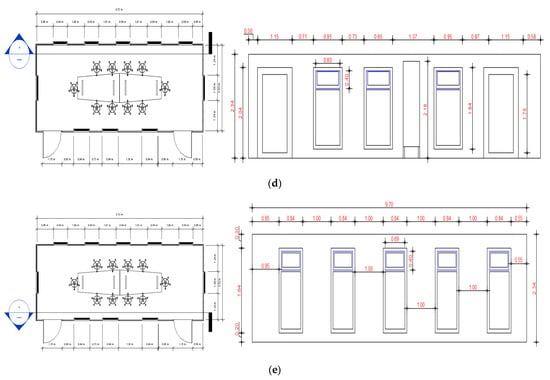
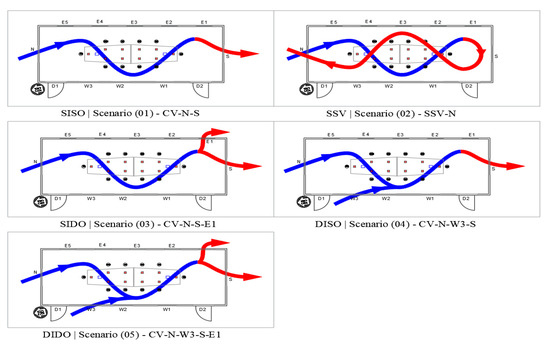
This study seeks to evaluate thermal comfort in naturally ventilated classrooms to draw sustainable solutions that reduce the dramatic energy consumed in mechanically ventilated spaces. Passive ventilation scenarios are generated using alternations of openings on the windward and leeward sides to evaluate their [...] Read more.
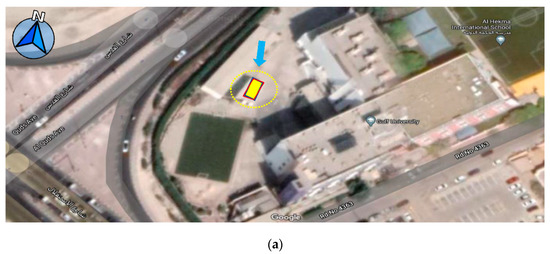
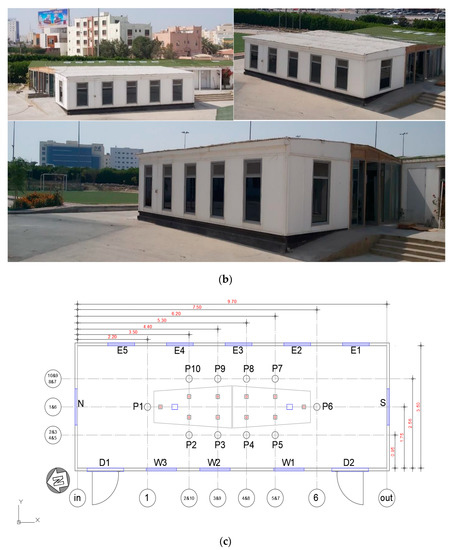
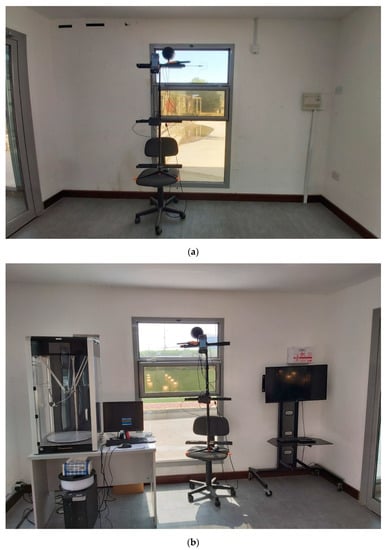
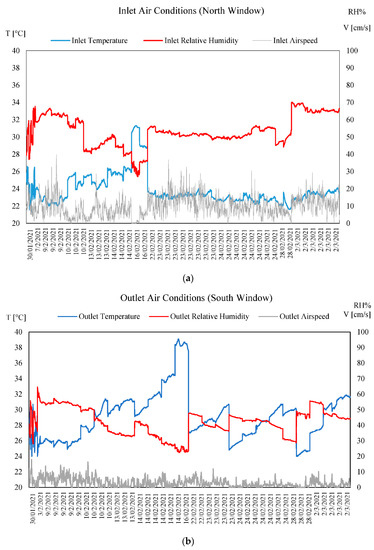
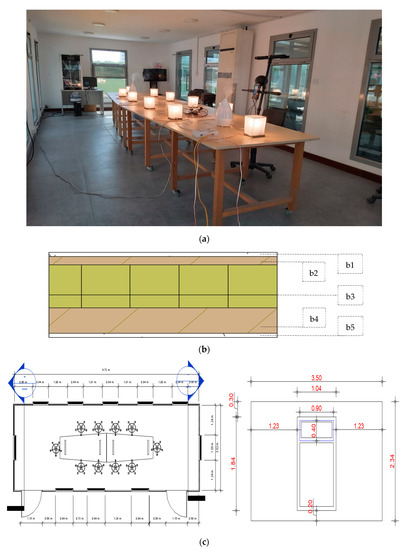
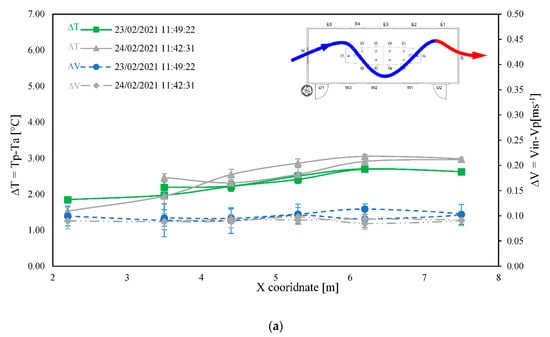
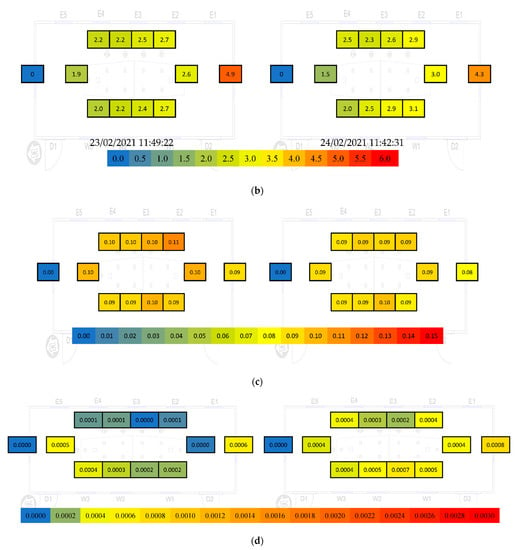
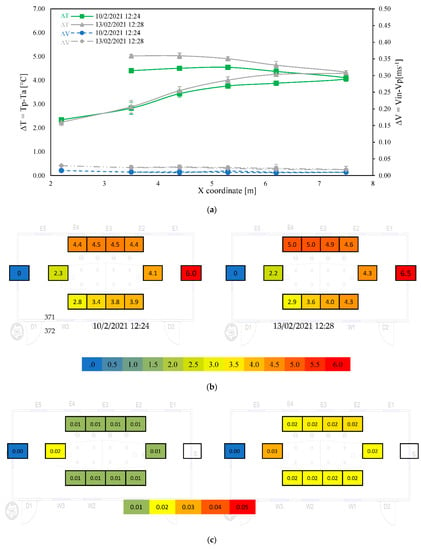
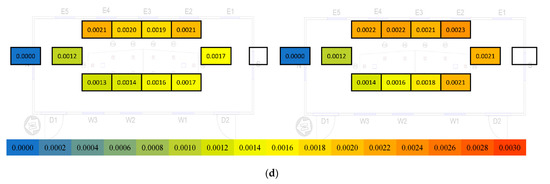
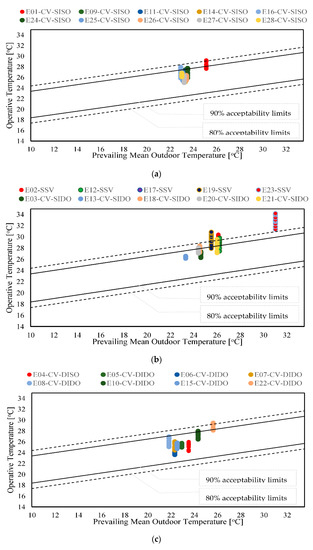
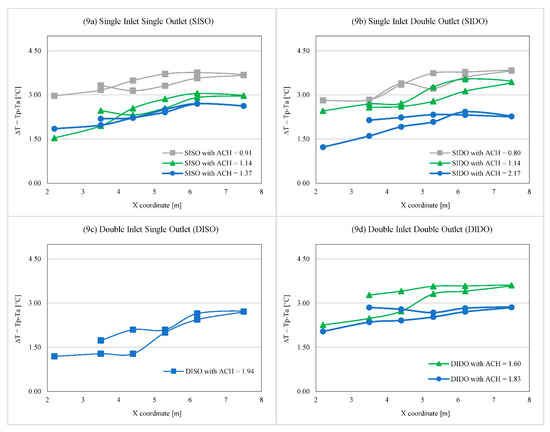
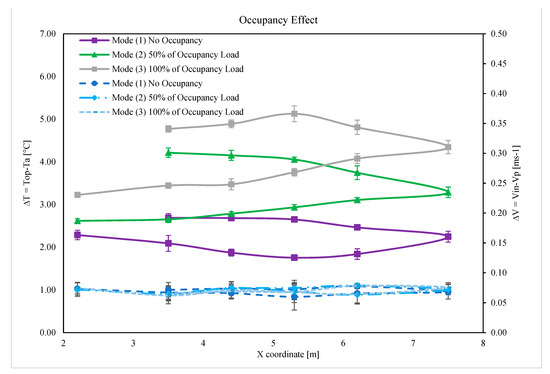
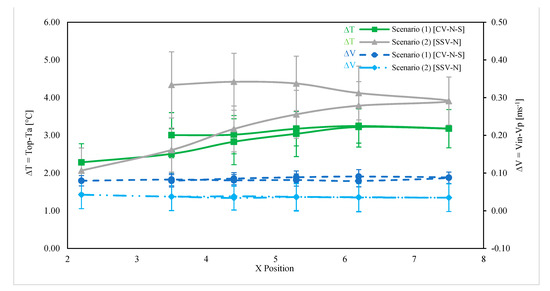
This study seeks to evaluate thermal comfort in naturally ventilated classrooms to draw sustainable solutions that reduce the dramatic energy consumed in mechanically ventilated spaces. Passive ventilation scenarios are generated using alternations of openings on the windward and leeward sides to evaluate their effects on thermal comfort. Twenty-eight experiments were carried in Bahrain during winter inside an exposed classroom, the experiments were grouped into five scenarios namely: “single-inlet single-outlet” SISO, “single-inlet double-outlet” SIDO, “double-inlet single-outlet” DISO, “double-inlet double-outlet” DIDO and “single-side ventilation” SSV. The findings indicate that single-side ventilation did not offer comfort except at high airspeed, while comfort is attained by using cross-ventilation at ambient temperature between 21.8–26.8 °C. The temperature difference between monitored locations and the inlet is inversely proportional to the number of air changes per hour. The DISO scenario accomplishes the lowest temperature difference. Using cross-ventilation instead of single-side ventilation reduces the temperature differences between 0.5–2.5 °C and increases airspeed up to three folds. According to the measured findings, the DISO cross-ventilation scenario is a valid sustainable solution adaptable to climatic variation locally and beyond with zero-energy consumption and zero emissions. Full article
(This article belongs to the Special Issue Sustainability and Engineering Design)
Show Figures

Figure 1
Back to TopTop