

Journal Menu
► ▼ Journal Menu-
- Resources Home
- Aims & Scope
- Editorial Board
- Reviewer Board
- Topical Advisory Panel
- Instructions for Authors
- Special Issues
- Topics
- Topical Collections
- Article Processing Charge
- Indexing & Archiving
- Editor’s Choice Articles
- Most Cited & Viewed
- Journal Statistics
- Journal History
- Journal Awards
- Conferences
- Editorial Office
Journal Browser
► ▼ Journal BrowserNeed Help?
Announcements
4 March 2026
MDPI’s 2025 Best Paper Awards—Award-Winning Papers Announced
MDPI is honored to announce the recipients of the 2025 Best Paper Awards, celebrating exceptional research for its scientific merit and broad impact. After a rigorous evaluation process conducted by Academic Editors, this year’s awards showcase papers that stand out for their innovation, relevance, and high-quality presentation.
Out of a highly competitive pool, 396 winning papers have been recognized for their exceptional contributions. We congratulate these authors for pushing the boundaries of their respective disciplines.
At MDPI, we are dedicated to broadening the reach of innovative science. To learn more about the award-winning papers and explore research projects in your field of study, please visit the following links:
- Biology and Life Sciences;
- Business and Economics;
- Chemistry and Materials Sciences;
- Computer Sciences and Mathematics;
- Engineering;
- Environmental and Earth Sciences;
- Medicine and Pharmacology;
- Social Sciences, Arts and Humanities;
- Physical Sciences;
- Public Health and Healthcare.
About MDPI Awards:
To reward the global research community and enhance academic dialogue, MDPI journals regularly host award programs across diverse scientific disciplines. These awards, serving as a source of inspiration and recognition, help raise the influence of talented individuals who have been credited with outstanding achievements and whose work drives the advancement of their fields.
Explore the Best Paper Awards open for participation, please click here.
2 April 2026
2026 Tu Youyou Award—Open for Nominations
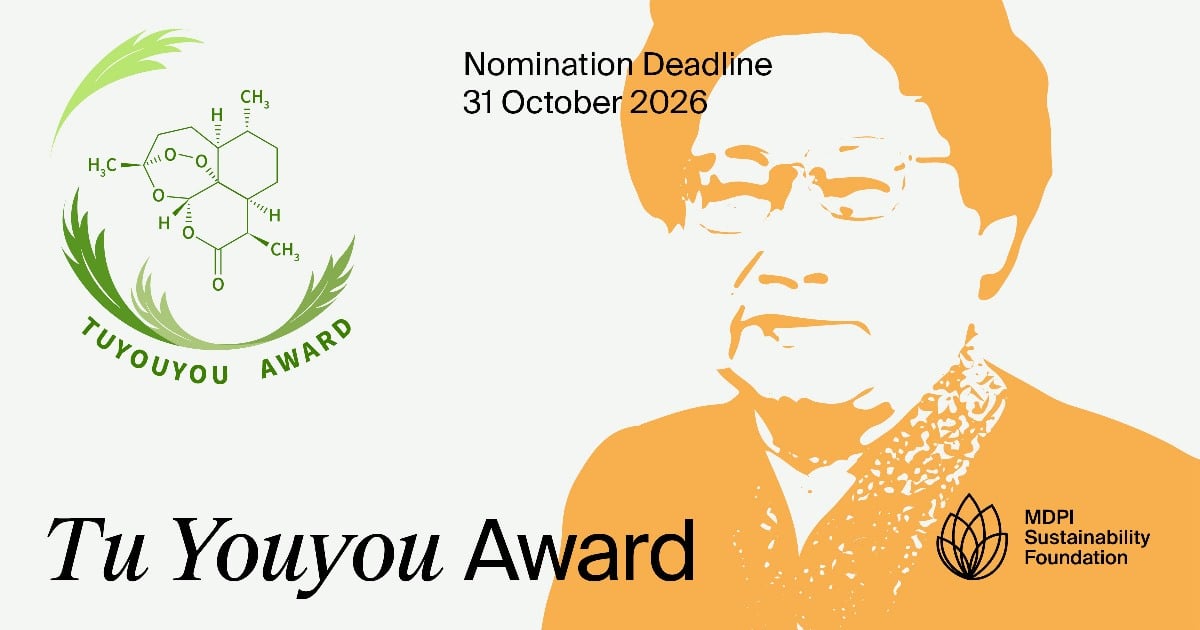
We are delighted to announce that nominations are now open for the 2026 Tu Youyou Award. Named after Nobel Laureate Tu Youyou, whose discovery of artemisinin has saved millions of lives, this award recognizes researchers whose work advances the fields of natural products chemistry and medicinal chemistry, while also contributing to human health.
Prize
– CHF 100,000;
– A medal;
– A certificate.
The monetary prize will be shared equally should there be multiple recipients.
Who May Be Nominated?
– Scientists with outstanding achievements and contributions in the fields of natural products chemistry and medicinal chemistry.
Nominees must be individuals; team or group nominations are not permitted. Nominations are valid only for the current award cycle.
Who May Submit a Nomination?
– The director of the nominee’s host research institution or recognized scientists within the field.
Self-nominations will not be considered.
Nomination Materials
– A biographical sketch;
– A detailed description of the nominee’s contributions;
– 5–10 representative academic publications;
– A list of academic honors, awards, and funded projects;
– A nomination letter signed by two nominators.
How to Submit?
Submit nominations online via the following link: https://tuyouyouprize.org/nomination
Important Dates
– Nomination Deadline: 31 October 2026
– Winner Announcement: March 2027
For further information, please visit the Tu Youyou Award website (https://tuyouyouprize.org/). For any inquiries, please contact the Tu Youyou Award Team at tuyouyouaward@mdpi.com.
31 March 2026
MDPI INSIGHTS: The CEO’s Letter #33 - 2025 Annual Report, Preprints.org, IWD, Recapping Viruses 2026 & Romania Salon

Welcome to the MDPI Insights: The CEO's Letter.
In these monthly letters, I will showcase two key aspects of our work at MDPI: our commitment to empowering researchers and our determination to facilitating open scientific exchange.
Opening Thoughts

Scaling Open Access with Integrity: MDPI Annual Report 2025
I am pleased to share the release of MDPI’s 2025 Annual Report, reflecting our continued progress as one of the world’s leading open access publishers. The report highlights not only our growth, but also the continued evolution of our publishing model and our commitment to quality, transparency, and collaboration.
You can explore the full report here: https://mdpi-res.com/data/mdpi_annual_report_2025_0401.pdf?1775045421
Or visit the interactive page: https://www.mdpi.com/annual-report-2025/
A Year of Growth and Responsibility
2025 was a year of significant growth for MDPI. We received over 669,000 manuscript submissions, the highest in our history, while maintaining a rejection rate above 60%, reinforcing our commitment to both scale and quality.
We published 261,576 peer-reviewed open access articles across a portfolio of 500 journals, supported by a global community of more than 68,000 Editorial Board Members and 209,000 reviewers.
Scaling with Integrity
Growth alone is not the objective; how we grow matters.
Our 2025 Annual Report, Scaling Open Access with Integrity, reflects our continued focus on building the systems and processes that support reliable and trustworthy publishing. As submission volumes increase globally, so too does the importance of robust editorial workflows, research integrity frameworks, and the infrastructure required to support them.
In 2025, we continued to invest in:
- Research integrity and quality assurance processes
- Editorial support and reviewer engagement
- Transparency across the publishing workflow
These efforts ensure that scale does not come at the expense of rigor, but rather reinforces it.
Validation Through Indexing and Visibility
As MDPI continues to grow, validation of quality remains essential.
In 2025, the number of MDPI journals indexed in the Web of Science Core Collection increased from 298 to 329, while Scopus coverage reached 355 journals, including 45 new acceptances. Coverage in major biomedical databases (PMC/Medline/PubMed) expanded to 95 journals, and indexing in Ei Compendex increased significantly.
These milestones reflect the strength of our editorial processes and the trust placed in our journals by independent indexing bodies.
Importantly:
- 96% of all MDPI articles are indexed in Web of Science databases
- More than 1.75 million articles are indexed, with an average of 13 citations per article
Recognition through Journal Citation Reports also continues to grow:
- 298 journals received Impact Factors
- 65% ranked in the top half of their categories
- 61 journals achieved top-quartile positions
These developments demonstrate that growth and quality are advancing together, supported by strong editorial oversight and consistent performance across our journal portfolio.
Strengthening Partnerships and Community
Open access is a collaborative endeavor.
In 2025, we expanded our institutional partnerships to more than 1,000 IOAP agreements, helping simplify publishing for researchers and institutions worldwide.
We also hosted 60 in-person conferences and virtual events, bringing together more than 28,000 participants to exchange ideas, share research, and strengthen connections across the global scientific community.
At the heart of everything we do is this community of authors, editors, reviewers, and partners who make open science possible.
Looking Ahead
Open access continues to move toward becoming the standard model for sharing research globally. With that growth comes increased responsibility.
Our focus moving forward is to continue building a publishing ecosystem that is:
- Collaborative, to serve the research community
- Rigorous, to ensure quality
- Transparent, to support trust
- Scalable, to meet global demand
We believe that open access, when combined with strong editorial standards and integrity, is the most effective way to accelerate scientific progress.
Thank you to all the scholarly community who collaborated with us and our MDPI staff for your continued dedication and contributions in making 2025 a successful year.
Impactful Research

Celebrating Ten Years of Preprints.org: Accelerating Open Research
In 2026, MDPI’s preprints server Preprints.org marked its 10th anniversary as a platform dedicated to accelerating the dissemination of research. Since its launch, Preprints.org has grown into a global platform that hosts more than 120,000 preprints contributed by hundreds of thousands of researchers worldwide, generating tens of millions of views and downloads and demonstrating the value of sharing research openly and rapidly.
At MDPI, we are proud to celebrate ten years of Preprints.org supporting the mission of open science. Over the past decade, we have seen how early sharing of research can accelerate collaboration and help ideas move more quickly from discovery to impact.
The Evolution of Preprints
While Preprints.org launched in 2016, the idea behind it has deeper roots. The concept of rapid research dissemination has existed for decades, with early preprint servers showing how open sharing can accelerate scientific progress.
Over the past decade, preprints have become an increasingly important part of scholarly communication. Researchers across disciplines are looking at faster ways to share their discoveries, exchange ideas, and receive feedback from the global scientific community.
Preprints in a Growing Research Ecosystem
The global preprint landscape has expanded significantly over the past decade, with multiple platforms serving different research communities. The figure below (sourced from James Butcher newsletter), based on data from Dimensions (Digital Science), shows the growth of preprint outputs across several major platforms over time.

Among these platforms, arXiv (the pioneering preprint server) has experienced great growth in recent years. At the same time, other platforms have continued to expand their reach across disciplines, capturing increasing global interest in early research sharing.
Preprints.org contributes to this evolving ecosystem by providing a multidisciplinary platform that works in synergy with academic journals, helping researchers bridge the gap between rapid dissemination and the formal publication process.
Celebrating the First Decade
To commemorate this milestone, Preprints.org launched a 10th Anniversary celebration hub highlighting the impact of preprints and the researchers who contribute to them.

One of the central initiatives is the Popular Preprints of the Decade Award, recognizing influential preprints published between 2016 and 2026 across multiple research fields. Through community voting, the award will recognize research that has generated high engagement and visibility within the global research community.
Looking Ahead: The Next Decade of Preprints
As research communication continues to evolve, preprints will continue to play an important role in enabling faster collaboration, improving transparency, and expanding access to knowledge. The next decade may bring further integration between preprint platforms and journals, new tools for discovery and evaluation, and greater global participation in open science.
At MDPI, we remain committed to supporting researchers through platforms that encourage the open exchange of ideas. The success of Preprints.org over the past ten years reflects the engagement and trust of the global research community – authors, readers, reviewers, and collaborators who believe in the value of sharing knowledge openly.
Congratulations to everyone involved in the development and growth of Preprints.org over the past decade!
Inside MDPI

Beyond International Women’s Day: Supporting Women in Research
International Women’s Day (IWD) offers an opportunity to recognize the achievements of women around the world and reflect on how we can continue building a more inclusive future. In research and academia, this conversation carries particular importance, as scientific progress depends on diverse perspectives, and supporting women in science is essential to strengthening the global research ecosystem.
For MDPI, IWD is an opportunity to celebrate the achievements of women in research and highlight the initiatives, conversations, and collaborations that help support researchers across disciplines and career stages.
Highlighting Women in Science Across MDPI
This year, MDPI marked International Women’s Day with a global campaign highlighting research, awards, and perspectives that support women in science. Throughout the week, our teams shared content across MDPI’s social media channels sharing the work of women researchers and encouraging engagement across the academic community.

As part of this initiative, MDPI published several blog articles exploring important themes related to gender equity in research. One article, Give Support, Gain Progress: Retaining Women in Science, discusses the importance of mentorship, institutional support, and inclusive research environments in helping women build sustainable scientific careers.
Another featured article, Bridging the Gap in Women’s Health Research, highlights the ongoing need to address disparities in health research and ensure that women’s health receives the scientific attention and investment it deserves.
These topics capture the notion that supporting women in science benefits not only individual researchers but the entire scientific community. When researchers from diverse backgrounds can contribute their perspectives and ideas, the scope and impact of scientific discovery expand.
Creating Spaces for Dialogue
Beyond online content, MDPI is also supporting conversations about women in research through community engagement.

On 10 March, MDPI UK hosted the “Women in Research” event, bringing together researchers and professionals to share experiences and discuss the opportunities and challenges women face throughout their scientific careers. Events like these are an opportunity for open dialogue, mentorship, and networking to create more inclusive research communities.
Looking Beyond a Single Day
While IWD is an important moment of recognition, progress requires ongoing effort.
Supporting women in research involves many forms of engagement: from mentorship and collaboration to creating inclusive environments in which diverse voices are heard and valued. Publishers, institutions, and researchers all play a role in building this ecosystem.
At MDPI, we remain committed to supporting the global research community and to promoting open access publishing as a foundation for accessible and inclusive knowledge-sharing.
As we reflect on IWD this year, we recognize the many women who contribute to research as authors, reviewers, editors, mentors, and educators; we also recognize the impact they continue to have on the advancement of science. The influence of women in research extends far beyond a single day of recognition, reminding us that supporting them is a commitment that continues throughout the year.
Coming Together for Science

Highlights from Viruses 2026 – New Horizons in Virology (11–13 March)
Through 11–13 March, we successfully delivered the Viruses 2026 – New Horizons in Virology MDPI conference in Barcelona, bringing together an international community of researchers, editors, and partners dedicated to advancing the field of virology.
Conference Highlights
Viruses 2026 in numbers:
- 198 total registrations, with 171 attendees on site
- 233 submissions, with 122 accepted
- 42 short talks, 9 flash talks, and 80 posters
- 13 invited speakers and 1 keynote speaker

The strong level of participation and quality of submissions once again demonstrate the relevance of the Viruses community.
A standout moment was the keynote lecture by Dr. Ho, which also attracted an NBC documentary film crew, highlighting the broader impact of the research being presented.
Scientific Programme
The conference programme covered areas across modern virology, including viral replication, pathogenesis, immunology, and public health. Sessions explored topics on antiviral therapeutics and vaccines, innate immunity, virus–host interactions, and the structure and mechanisms of virus replication.
Together, these discussions highlighted both the fundamental biology of viruses and the translational challenges of addressing emerging infectious diseases, reflecting the breadth and continued importance of virology research in a global context. The programme also included a sponsored workshop on research data management in virology, further emphasizing the importance of data practices in advancing the field.
Thank You
Feedback from participants has been very positive, and I would like to thank the Conference team for the organization and delivery of this year’s event.

Thank you to our Viruses journal team and all colleagues involved behind the scenes in supporting the delivery of the event. As noted by Dr. Eric Freed (EiC of Viruses), the success of this edition gives us strong momentum as we look ahead to the next conference in 2028, with opportunities to further expand participation and engagement.
Closing Thoughts

Recap from MDPI Romania Salon in Cluj-Napoca (24 March)
On 24 March, we had the opportunity to meet with members of the Romanian research community in Cluj-Napoca at our MDPI Romania Salon. The event was a space for presentations, open discussion, and the exchange of perspectives on publishing and the research landscape in Romania.

We welcomed 39 participants, including 27 researchers from institutions across Romania, representing cities such as Cluj-Napoca, Timișoara, and Reșița. Among them were Editorial Board Members, Associate Editors, and Guest Editors, all of whom play an important role in collaborating with MDPI and shaping the quality and direction of academic publishing.
|
|
|
|



A Shared Commitment to Research Excellence
These events reflect MDPI’s commitment to connecting with and supporting researchers by means of transparency, dialogue, and collaboration. During the day, MDPI colleagues shared a series of presentations covering different parts of our publishing ecosystem:
- MDPI’s presence in Romania – Anamaria Vartolomei (Journal Relationship Specialist (JRS), Section Managing Editor (ME))
- MDPI’s performance, growth, and impact in Romania – Stefan Tochev (CEO)
- Academic services, initiatives, and projects supporting researchers – Ioana Preda (JRS, Section ME)
- Best practices and standards in publication ethics – Lavinia Rogojina (Research Integrity Manager)
- Panel session on ethics, AI, and peer review – Lavinia Rogojina, Ioana Preda, Doris Larisa Albu (JRS, Section ME), Cristina Georgiana Spelmezan (JRS, Section ME)
- Closing remarks – Lavinia Dumitrela Cozma (Operations Manager, Section ME)

Feedback from participants was very positive, particularly regarding the quality of discussions, the relevance of the topics, and the opportunity to engage directly with MDPI colleagues. What stood out most was the openness of the discussion. These events are important not only for the purposes of presenting what we do, but also as an opportunity to listen, understand concerns, and continue to build alignment with the research community.
Romania and the Growth of Open Access Publishing
The Romanian research landscape continues to show growth in open access (OA) publishing.
In 2025:
- 72% of all publications in Romania were published as OA
- Of these, 74% were Gold Open Access
Over the past five years, Romania has produced more than 109,000 publications, with approximately 71% available openly, highlighting a sustained shift toward accessibility and knowledge-sharing.
Within this landscape, MDPI continues to play a significant role:

- MDPI is the leading OA publisher in Romania, contributing 42% of all OA publications in 2025
- More than 37,000 articles have been published with MDPI by Romanian institutions since 1996
- This figure includes over 7,500 publications in 2025 alone
- More than 400 Editorial Board Members from Romania collaborate with MDPI across disciplines
These trends show the growth of OA and the strength of collaboration between MDPI and the Romanian research community.
Looking Ahead
As academic publishing continues to evolve, maintaining open and transparent communication with researchers is essential. Events such as our Salons and Summits provide great opportunities to exchange perspectives and to build trust and collaboration.
Thank you to all participants who joined us in Cluj, and to our teams in Romania for delivering a successful event. A special thank-you to Alina-Florina Agafitei (Marketing Specialist) for her care and attention to detail in delivering the Salon.
Chief Executive Officer
MDPI AG
25 March 2026
Acknowledging the Contributions of Our Reviewers in 2025

As a pioneer in open access publishing, MDPI maintains rigorous publication standards. This mission relies on the dedication and expertise of our reviewers, who invest their time and knowledge to ensure the quality and integrity of the research we publish.
In 2025, over 209,000 reviewers contributed to the peer-review process at MDPI, providing more than 1.3 million review reports for our journals. To express our gratitude, MDPI’s Reviewer Recognition Program highlights reviewers across over 400 journals, featuring those who have assessed at least one manuscript and agreed to be acknowledged.
In addition, MDPI has identified its Top 1000 Reviewers of 2024 to recognize those whose expertise, dedication, and thoughtful evaluations were particularly outstanding.
Many journals have also established Outstanding Reviewer Awards to honor our reviewers’ commitment to publication excellence. Together with the Exceptional Reviewer List, we showcase the importance of reviewers’ work and their time and dedication.
These initiatives serve to express our deepest appreciation and gratitude towards the whole reviewer community. In recognition of their contributions, we also welcome new researchers to join this community. If you would like to contribute to open access publishing, learn more about the reviewers’ benefits and sign up to join us.
20 March 2026
International Day of Forests—“Forests and Economies”, 21 March 2026

In March 2012, the UN General Assembly proclaimed the 21 March as the International Day of Forests, urging countries, international organizations, and the citizen sector to celebrate the value of all types of forests and raise global awareness of their irreplaceable ecological and economic significance. “Forests and Economies” is the theme for the International Day of Forests 2026, which highlights the pivotal role of forests in driving sustainable economic prosperity across the globe.
The International Day of Forests 2026 spotlights how forests underpin not only income and employment from renewable forest product production and trade but also sustain family and community agriculture, boost agricultural productivity, and safeguard healthy watersheds, all while offering nature-based solutions for a sustainable bioeconomy and mitigating climate change impacts. This year’s campaign advocates for the sustainable management of forests, uniting governments, researchers, forestry practitioners, and the public to unlock the dual ecological and economic value of forests for present and future generations together.
We hope that established MDPI journals in the field of Environmental & Earth Science will provide a valuable platform for the exchange of innovative ideas regarding sustainable forest management, forest-based climate change mitigation, and the development of forest-driven green economies.

 |
 |
 |
 |
 |
 |
 |
 |
 |
 |
 |
 |


Invited Speakers:
 |
 |
| Dr. Himlal Baral, Center for International Forestry Research and World Agroforestry (CIFOR-ICRAF), Indonesia |
Dr. Natasha Ribeiro, Eduardo Mondlane University, Mozambique |
Free to register for this webinar here!

“Water Surface Loss and Deforestation in the Brazilian Amazon Biome by Farming Expansion and Weak Legislation”
by Anderson Targino da Silva Ferreira, Maria Carolina Hernandez Ribeiro, Regina Célia de Oliveira, Maurício Lamano Ferreira and Cassiano Gustavo Messias
Earth 2025, 6(3), 108; https://doi.org/10.3390/earth6030108
“Valorization of Forest Biomass Through Biochar for Static Floating Applications in Agricultural Uses”
by Óscar González-Prieto, Luis Ortiz Torres and María Esther Costas Costas
Biomass 2025, 5(3), 44; https://doi.org/10.3390/biomass5030044
“Applications of Machine Learning Methods in Sustainable Forest Management”
by Rogério Pinto Espíndola, Mayara Moledo Picanço, Lucio Pereira de Andrade and Nelson Francisco Favilla Ebecken
Climate 2025, 13(8), 159; https://doi.org/10.3390/cli13080159
“Trends and Applications of Principal Component Analysis in Forestry Research: A Literature and Bibliometric Review”
by Gabriel Murariu, Lucian Dinca and Dan Munteanu
Forests 2025, 16(7), 1155; https://doi.org/10.3390/f16071155
“Landscape Ecological Integrity Assessment to Improve Protected Area Management of Forest Ecosystem”
by Mingquan Yu and Yizhen Liu
Ecologies 2025, 6(2), 38; https://doi.org/10.3390/ecologies6020038
“Perception from a Public Survey of the Social–Ecological Effects of Wildfires in the Chiquitania Region of Bolivia”
by Oswaldo Maillard, Patricia Herrera, Nicolas Mielich and Claudia Venegas
Earth 2025, 6(2), 32; https://doi.org/10.3390/earth6020032
“Advancements in Artificial Intelligence Applications for Forest Fire Prediction”
by Hui Liu, Lifu Shu, Xiaodong Liu, Pengle Cheng, Mingyu Wang and Ying Huan
Forests 2025, 16(4), 704; https://doi.org/10.3390/f16040704
“Harnessing Artificial Intelligence, Machine Learning and Deep Learning for Sustainable Forestry Management and Conservation: Transformative Potential and Future Perspectives”
by Taojing Wang, Yinyue Zuo, Teja Manda, Delight Hwarari and Liming Yang
Plants 2025, 14(7), 998; https://doi.org/10.3390/plants14070998
“Forest Soil Microbiomes: A Review of Key Research from 2003 to 2023”
by Aurelia Onet, Paola Grenni, Cristian Onet, Vlad Stoian and Vlad Crisan
Forests 2025, 16(1), 148; https://doi.org/10.3390/f16010148
“Forest Attribute Dynamics in Secondary Forests: Insights for Advancing Ecological Restoration and Transformative Territorial Management in the Amazon”
by Carlos H. Rodríguez-León, Armando Sterling, Amelia Trujillo-Briñez, Yerson D. Suárez-Córdoba and Lilia L. Roa-Fuentes
Diversity 2025, 17(1), 39; https://doi.org/10.3390/d17010039
“Forest Loss Drivers and Landscape Pressures in a Northern Moroccan Protected Areas’ Network: Introducing a Novel Approach for Conservation Effectiveness Assessment”
by Hamid Boubekraoui, Zineb Attar, Yazid Maouni, Abdelilah Ghallab, Rabah Saidi and Abdelfettah Maouni
Conservation 2024, 4(3), 452-485; https://doi.org/10.3390/conservation4030029
“Remote Sensing Technologies for Monitoring Argane Forest Stands: A Comprehensive Review”
by Mohamed Mouafik, Abdelghani Chakhchar, Mounir Fouad and Ahmed El Aboudi
Geographies 2024, 4(3), 441-461; https://doi.org/10.3390/geographies4030024
“High-Resolution Canopy Height Mapping: Integrating NASA’s Global Ecosystem Dynamics Investigation (GEDI) with Multi-Source Remote Sensing Data”
by Cesar Alvites, Hannah O’Sullivan, Saverio Francini, Marco Marchetti, Giovanni Santopuoli, Gherardo Chirici, Bruno Lasserre, Michela Marignani and Erika Bazzato
Remote Sens. 2024, 16(7), 1281; https://doi.org/10.3390/rs16071281
“Aboveground Biomass and Carbon Storage in Mangrove Forests in Southeastern Mexico”
by Carlos Roberto Ávila-Acosta, Marivel Domínguez-Domínguez, César Jesús Vázquez-Navarrete, Rocío Guadalupe Acosta-Pech and Pablo Martínez-Zurimendi
Resources 2024, 13(3), 41; https://doi.org/10.3390/resources13030041

|
“Silvicultural Practices for Forest Health, Function, and Resilience” |
“Forestry Economy Sustainability and Ecosystem Governance” |
 |
 |
|
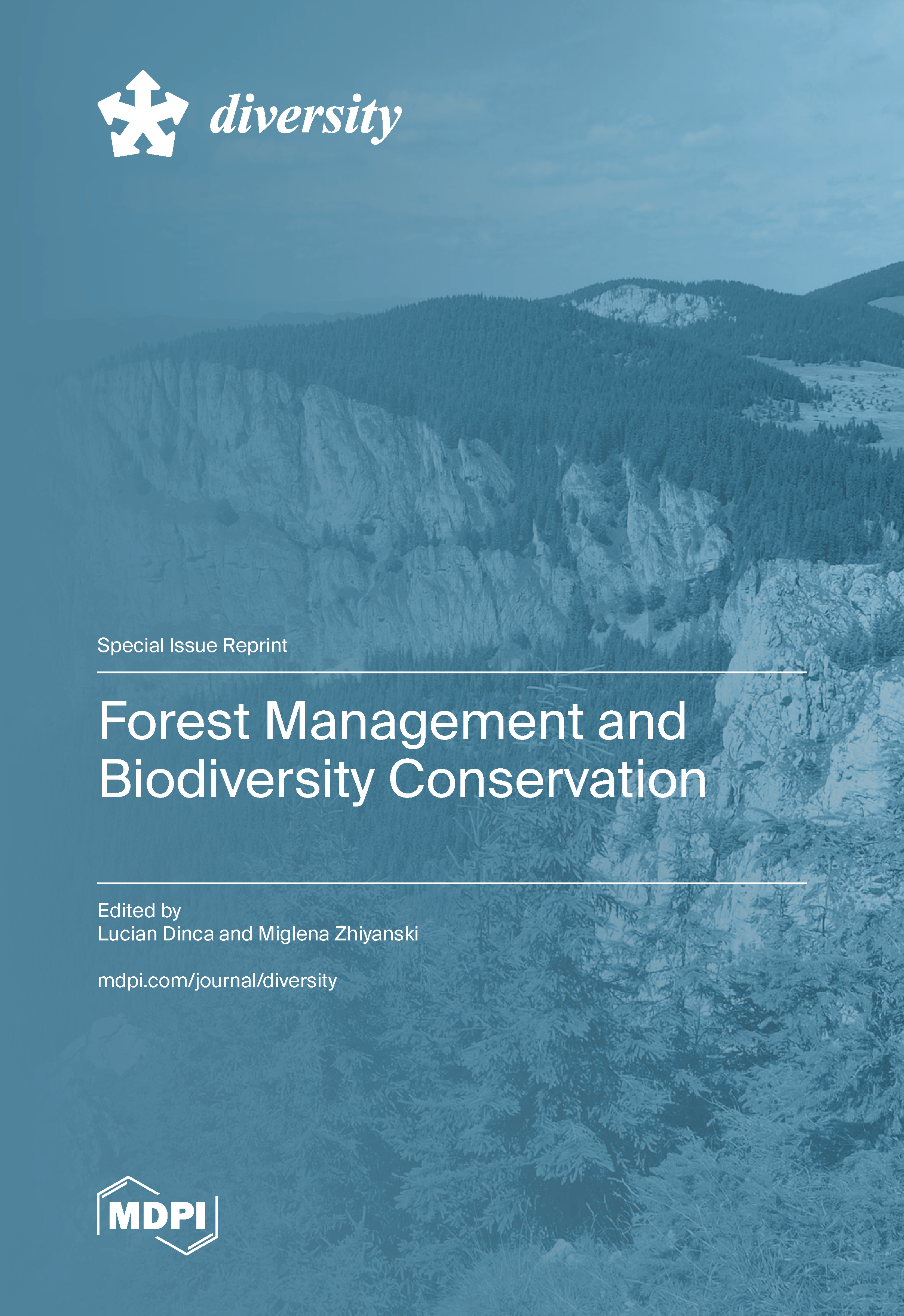
“Microhabitat Diversity and Beetle Conservation in Managed Forests” |
“Strategic Forest-Based Sector Planning and Management in the Era of Bioeconomy, 2nd Edition” |
 |
 |

 |
 |
 |
 |
19 March 2026
World Water Day—“Where Water Flows, Equality Grows”, 22 March 2026

World Water Day celebrates water and inspires action to address the global water crisis. Aligned with Sustainable Development Goal 6 (SDG 6): Clean Water and Sanitation, the day highlights the importance of ensuring the availability and sustainable management of water and sanitation for all.
This year’s theme, “Water and Gender”, emphasizes the critical role that gender equality plays in achieving water security. Around the world, women and girls are often disproportionately affected by water scarcity, as they are commonly responsible for water collection and household water management. Recognizing and empowering their participation in water governance, decision-making, and resource management is essential to building equitable and sustainable water systems.
On this World Water Day, let us acknowledge the intersection of water access and gender equality, and work collectively toward inclusive solutions that ensure safe and reliable water for all.
In recognition of World Water Day, we invite you to explore selected articles, Special Issues, and journals spanning fields such as environmental science, public health, engineering, and sustainability. By sharing this knowledge, we aim to inspire positive action and foster collaboration to address global water challenges, promote gender-inclusive water governance, and advance progress toward Sustainable Development Goal 6: Clean Water and Sanitation for All.
 |
 |
 |
 |
 |
 |
 |
 |
 |

|
Chair and Keynote Speakers |
||||
 |
 |
 |
 |
 |
|
Prof. Dr. Sharon Megdal, |
Dr. Laura Imburgia, |
Dr. Róisín Burke, |
Dr. Heather Tanana, |
Prof. Dr. Corrine Schuster-Wallace, |
Register for this webinar for free here!
“Consequences of the Construction of a Small Dam on the Water Quality of an Urban Stream in Southeastern Brazil”
by Lucas Galli do Rosário, Ricardo Hideo Taniwaki and Luis César Schiesari
Limnol. Rev. 2025, 25(4), 48; https://doi.org/10.3390/limnolrev25040048
“Modeling of Real-Time Water Levels and Mapping of Storm Tide Pathways: A Collaborative Effort to Respond to the Threats of Coastal Flooding”
by Joseph Dellicarpini, Mark Borrelli, Stephen T. Mague and Stephen McKenna
Coasts 2025, 5(4), 36; https://doi.org/10.3390/coasts5040036
“Transforming Water Research Through Human Rights-Based Approaches: A Framework for Implementation”
by Leonie J. Pearson, Vachararutai Boontinand and Phan Thanh Thanh
Water 2025, 17(10), 1418; https://doi.org/10.3390/w17101418
“Water Vulnerability in Dhaka, Narayanganj, and Gazipur Districts of Bangladesh: The Role of Textile Dye Production”
by Kamille Hüttel Rasmussen, Martiwi Diah Setiawati and Kamol Gomes
Water 2025, 17(16), 2475; https://doi.org/10.3390/w17162475
“Investigating the Gender-Climate Nexus: Strengthening Women’s Roles in Adaptation and Mitigation in the Sidi Bouzid Region”
by Houda Mazhoud, Arij Boucif, Abir Ouhibi, Lobna Hajji-Hedfi and Fraj Chemak
Climate 2025, 13(8), 164; https://doi.org/10.3390/cli13080164
“Hydrofeminist Life Histories in the Aconcagua River Basin: Women’s Struggles Against Coloniality of Water”
by María Ignacia Ibarra
Histories 2025, 5(3), 31; https://doi.org/10.3390/histories5030031
“Empowering Women, Enhancing Health: The Role of Education in Water, Sanitation, and Hygiene (WaSH) and Child Health Outcomes”
by Aminata Kilungo, Mark Bayer, Zoe Baccam, Hamisi Malebo and Halima Alaofe
Int. J. Environ. Res. Public Health 2025, 22(5), 706; https://doi.org/10.3390/ijerph22050706
“From Flood Mitigation to Environmental and Socioeconomic Disruption: A Case Study of the Langue de Barbarie Sand Spit Breach”
by Souleymane Fall
Hydrology 2025, 12(4), 97; https://doi.org/10.3390/hydrology12040097
“A Decision Support System for Managed Aquifer Recharge Through Non-Conventional Waters in the South of the Mediterranean”
by Rym Hadded, Mongi Ben Zaied, Fatma Elkmali, Giulio Castelli, Fethi Abdelli, Zouhaier Khabir, Khaled Ben Zaied, Elena Bresci and Mohamed Ouessar
Resources 2025, 14(4), 63; https://doi.org/10.3390/resources14040063
“Sustainable Water Management Practices in Agriculture: The Case of East Africa”
by Meseret Dawit Teweldebrihan and Megersa Olumana Dinka
Encyclopedia 2025, 5(1), 7; https://doi.org/10.3390/encyclopedia5010007
|
“Water Resources Allocation, Planning, and Regulation for Sustainable Management” |
“Freshwater Microbiology and Public Health” |
 |
 |
|
“Editorial Board Members' Collection Series: Water Resources—2nd Edition” |
“Advances in Water Management and Water Policy Research, 2nd Edition” |
 |
 |
 |
 |

|
|
The 8th International Electronic Conference on Water Sciences Highlights
Click here to read the full list of papers. |

18 March 2026
Meet Us at the 34th European Biomass Conference and Exhibition (EUBCE 2026), 19–22 May 2026, The Hague, the Netherlands

Conference: 34th European Biomass Conference and Exhibition (EUBCE 2026)
Date: 19–22 May 2026
Location: The Hague, the Netherlands
MDPI will be attending the 34th European Biomass Conference and Exhibition (EUBCE 2026) as an exhibitor. We welcome researchers from different backgrounds to visit and share their latest ideas with us.
For over 40 years, the European Biomass Conference and Exhibition – EUBCE has been a key platform for reflecting on the biomass sector’s evolution and exploring future trends in bioenergy across research, industry, and policy. As one of the world’s leading biomass events, EUBCE 2026 will bring together 1,500 experts from academia, industry, and policymaking across over 60 countries to explore the latest developments in biomass, bioenergy and the circular bioeconomy. The programme offers opportunities for networking, knowledge exchange, and collaboration through a mix of workshops, exhibitions, and interactive sessions.
The following MDPI journals will be represented at the conference:
- Sustainability;
- Resources;
- Recycling;
- Biomass;
- Sustainable Chemistry;
- Fermentation;
- Energies;
- Earth;
- Fuels.
If you are planning to attend the above conference, please do not hesitate to contact us. Our delegates look forward to meeting you in person and answering any questions that you may have.
For more information about the conference, please visit the following website: https://www.eubce.com/.
12 March 2026
MDPI Webinar | International Day of Forests, 20 March 2026

To commemorate the International Day of Forests 2026, MDPI is honored to host a special webinar dedicated to celebrating and raising awareness of the importance of all types of forests. This global observance reminds us of the vital role that forests play in combating climate change, sustaining our economies, and driving economic prosperity.
With the theme “Forests and Economies”, we aim to bring together researchers, educators, and practitioners to share insights, best practices, and collaborative solutions that can enhance the relationship between forests and economic development.
Join us as we celebrate the International Day of Forests 2026 and inspire action for a greener, healthier and more sustainable future for our forests and economies.
Date: 20 March 2026 at 10:00 a.m. CET | 5:00 p.m. CST Asia
Register now for free!

Program
|
Speaker/Presentation |
Time in CET |
Time in CST Asia |
|
Introduction |
10:00–10:10 a.m. |
5:00–5:10 p.m. |
|
Dr. Himlal Baral The Role of Landscape Restoration in Advancing a Sustainable Circular Bioeconomy |
10:10–10:40 a.m. |
5:10–5:40 p.m. |
|
Dr. Natasha Ribeiro Dry Tropical Forests: Unlocking a Silent Ally for Resilience |
10:40–11:10 a.m. |
5:40–6:10 p.m. |
|
Q&A Session |
11:10–11:30 a.m. |
6:10–6:30 p.m. |
|
Closing of Webinar |
11:30–11:35 a.m. |
6:30–6:35 p.m. |
After registering, you will receive a confirmation email containing information on how to join the webinar. Registrations with academic institutional email addresses will be prioritized.
Unable to attend? Register anyway, and we will let you know when the recording is available to watch.
Invited Speakers:
- Dr. Himlal Baral, Center for International Forestry Research and World Agroforestry (CIFOR-ICRAF), Indonesia;
- Dr. Natasha Ribeiro, Eduardo Mondlane University, Mozambique.
Relevant Journal Cluster:
MDPI’s Journal Cluster of Ecosystem and Resource Management
MDPI’s journal cluster of ecosystem and resource management contains journals that focus on individual ecosystems (e.g., Forests) as well as ecology on a broader scale. The demand for biodiversity and conservation research is growing as the world shifts to more extreme climates, and MDPI’s journals on diversity and conservation will play a larger role in making scientific discoveries more accessible to all researchers across the world.
Relevant Special Issues:
“Silvicultural Practices for Forest Health, Function, and Resilience”
Guest Editors: Zhongkui Jia, Luyi Ma and Zhong Chen
Deadline for manuscript submissions: 20 June 2026
“Plant Biodiversity in Forest and Urban Ecosystems Under Climate Change: Monitoring, Environmental Impacts, Threats, Conservation, Management, and Economic Directions”
Guest Editors: Alexandra D. Solomou, Panagiotis Kouleli, Nikolaos Proutsos and Stefanos Tsiaras
Deadline for manuscript submissions: 30 June 2026
“Forestry Economy Sustainability and Ecosystem Governance”
Guest Editors: Fanbin Kong and Caiyao Xu
Deadline for manuscript submissions: 30 September 2026
“Using Remote Sensing to Assess and Monitor Changes in Forest Ecosystems”
Guest Editor: Ioannis P. Kokkoris
Deadline for manuscript submissions: 30 September 2026
“Intelligent Forest Fire Prediction and Detection: 2nd Edition”
Guest Editors: Demin Gao, Shuo Zhang and Cheng He
Deadline for manuscript submissions: 31 October 2026
“Advances in Vegetation Structure Modeling to Support Acquisition of Sustainable Development Goals Through Forest Management (Second Edition)”
Guest Editors: María Teresa Lamelas and Dario Domingo
Deadline for manuscript submissions:31 December 2026
“Microhabitat Diversity and Beetle Conservation in Managed Forests”
Guest Editor: Francesco Parisi
Deadline for manuscript submissions:31 December 2026
5 March 2026
MDPI World Water Day Webinar | Water for All People – Governance, Security, and Access, 23 March 2026

This webinar focuses on the themes of World Water Day 2026, water and gender, and the 2026 World Water Development Report, “Water for all people: Equal rights and opportunities”. After Dr. Laura Imburgia provides an overview of the World Water Development Report, three experts in water law, security, and public health will engage in a panel discussion to share their insights about ensuring water access for all. The program will end with a moderated question and answer session.
Keywords: water equity; water governance; water and gender; water security; public health; human rights; sustainable development; water law; gender equality
Date: 23 March 2026
Time: 5:00 p.m. CET | 12:00 p.m. EDT | 12:00 a.m. CST (Asia)
Webinar ID: 819 5040 4453
Webinar Secretariat: journal.webinar@mdpi.com
Register now for free!

After registering, you will receive a confirmation email with instructions on how to join the webinar. Registrations with academic institutional email addresses will be prioritized.
Unable to attend? Register anyway and we will let you know when the recording is available to view.
Webinar Speakers:
- Prof. Dr. Sharon B. Megdal, Water Resource Research Center, The University of Arizona, Arizona, USA;
- Dr. Laura Imburgia, UNESCO World Water Assessment Programme (WWAP), Perugia, Italy;
- Dr. Róisín Burke, Public International Law, Utrecht University, Utrecht, the Netherlands;
- Dr. Heather Tanana, University of Denver Sturm College of Law, Colorado, USA;
- Prof. Dr. Corinne Schuster-Wallace, Global Institute for Water Security, University of Saskatchewan, Saskatchewan, Canada.
28 February 2026
MDPI INSIGHTS: The CEO’s Letter #32 - MDPI China and Thailand, China Science Daily, 1,000 Partnerships, R2R
Welcome to the MDPI Insights: The CEO's Letter.
In these monthly letters, I will showcase two key aspects of our work at MDPI: our commitment to empowering researchers and our determination to facilitating open scientific exchange.
Opening Thoughts

Reflections from China: Year-End-Celebrations and Open Access Publishing
In February, I had the pleasure of joining over a thousand colleagues from our Tongzhou and Haidian offices at their end-of-year annual celebration in Beijing.
Spending time with our teams in China is also a powerful reminder of the scale and complexity of MDPI as a global organization. Our colleagues in Beijing, Wuhan, and across the country play a significant role in our day-to-day operations and long-term development. I’m grateful for the hospitality, collaboration, and commitment shown by our managers and teams in China, alongside colleagues worldwide, who have helped steadily build MDPI, brick by brick, over the years.
Below are some data on Open Access (OA) publishing in China and our collaboration in this important research market.
Open Access Publishing in China
China has been the world’s leading country in research and review article publication volume since 2019, exceeding one million publications in 2025. Over the past five years, the gap between China and the second-ranked country, the United States, has continued to widen.
In 2025:
- 47% of China’s research output was published Open Access
- Of those OA publications, 76% were Gold Open Access (approximately 382,930 articles)
- The overall OA distribution remained stable compared with 2024, with Gold OA increasing by 1%
Over the past five years (2021–2025):
- China published 4,398,050 research and review articles
- Approximately 48% of this output was OA
According to Dimensions, when comparing the top 20 countries by publication volume (2021–2025):
- China ranks 1st worldwide in publication volume
- China ranks 9th in citation performance within this group (for comparison, the US ranks 2nd in publication volume and 10th in citation ranking)
- Average citations per article: 12.51
Among the top 10 universities globally by publication volume, six are Chinese institutions, alongside Harvard University (USA), the University of São Paulo (Brazil), the University of Toronto (Canada), and the University of Oxford (UK).

MDPI and China
China is an important and long-standing part of MDPI’s global publishing ecosystem:
- In 2025, MDPI was the largest fully Open Access publisher in China
- MDPI published 22% of China’s Gold Open Access output (82,133 papers)
- We received 290,999 submissions from China-affiliated authors and published 82,133 articles
- There are 8,500+ active Editorial Board Members based in China
- 64% (5,438) have an H-index above 26
- MDPI works with:
- 117 Editors-in-Chief
- 103 Section Editors-in-Chief
- 71 China-based institutions currently hold IOAP agreements with MDPI, seven of which rank among the top 10 Chinese institutions by publication volume
China's scale in research output means that the publishing platforms chosen by Chinese scholars will continue to influence the direction of scholarly publishing. At the same time, MDPI’s strength comes from its international collaboration, with colleagues, editors, reviewers, and authors working together across regions and disciplines.
Thank you to all our colleagues in China, and around the world, who support MDPI’s publishing activities across departments and help advance open access research every day.
Impactful Research

“Progress in open science is built through trust, dialogue, and relationships”
Behind the Scenes: A Conversation with China Science Daily
During my trip to Beijing, I also had the opportunity to visit China Science Daily and take part in an interview and broader exchange with their team in Beijing. Visits like this matter because progress in open science is built not only through platforms and infrastructure, but also through trust, dialogue, and relationships across research communities and regions.
China Science Daily: History Museum
As part of the visit, I was given a tour of their History Museum, which offers a thorough perspective on the evolution of China’s first science and technology newspaper, established in 1959. The exhibition highlights how the organization developed into a trusted institution connecting research with the public and policymakers. It was a helpful reminder that at the core of publishing is stewardship, credibility, and long-term public engagement with science.

An Open Exchange on Open Science
During the visit, I met with Dr. Zhao Yan, Editor-in-Chief of ScienceNet. We had an open and engaging conversation about MDPI’s role in Open Access, the evolution of open science globally, and the potential for more collaboration going forward. He especially appreciated the candid and personal nature of our exchange, noting that this kind of dialogue feels important in a landscape where trust and transparency matter.

Interview on Open Access
I also participated in an interview with Ms. Yan Jie, from the Online Media Center and Editor-in-Chief of ScienceNet, China Science Daily. Our discussion covered the growth of Open Access over the past 30 years, MDPI’s mission and values, academic integrity, collaboration with the Chinese research community, and MDPI’s own 30th anniversary milestone. It was a great opportunity to reflect on how open science has matured, and where shared responsibility across publishers, institutions, and researchers continues to matter most.
“Progress in open science is built by more than scale and infrastructure”
I’m sharing a few photos from the visit as a glimpse behind the scenes. The full interview will be published by China Science Daily in due course, and I look forward to sharing it when it is available.

More broadly, visits like this reinforce something I’ve always believed in: progress in open science is built not only through scale and infrastructure, but also through continued dialogue, mutual respect, collaboration, and a willingness to listen across regions and perspectives. That remains central to our work, especially as MDPI reflects on 30 years of publishing, built together.
Inside MDPI

Bangkok Visit: Growth, Partnership, and Local Impact
In February, I also had the opportunity to visit our Bangkok office for the second time in two years to support their local meetings and deliver a training session on how we present MDPI at a corporate level.
It’s easy to spend time with our colleagues in Thailand. From Editorial and Production to Conferences, Marketing, Design, and our Regional Journal Relations Specialist (RJRS), the team continues to grow in scale and professionalism. I’d also like to recognize our local management and admin teams, who have been steadily expanding our office and supporting more than 500 colleagues on the ground.
Academic Partnerships
During the visit, we met with the Engineering Department at King Mongkut’s Institute of Technology Ladkrabang (KMITL). Our discussion focused on the recent MDPI developments, Institutional Open Access Program (IOAP) opportunities, Author Publishing Workshops (APW), and the potential use of JAMS to support their institutional journal.

“MDPI is the third-largest OA publisher in Thailand”
We also shared insights into the growth of Open Access (OA) in Thailand and KMITL’s own publishing trends. These conversations matter because institutions are looking for sustainable ways to support their researchers. Our IOAP agreements are one simple example of how we can provide value in this area while maintaining accessibility for authors.
Thailand and MDPI: 2025 Snapshot
Our Bangkok office, officially launched in 2022, has been growing to support over 500 staff members while continuing to expand its engagement in scholar visits, workshops, and conference collaborations. As at 2025, Thailand submissions to MDPI have increased about 21% and publications by about 25%, maintaining a rejection rate close to the company average. MDPI is the third-largest OA publisher in Thailand, publishing 15% of all Gold OA output in 2025.
Representing MDPI Externally
During the visit, I delivered a training session on how we present MDPI at external events.

This session covered topics related to:
- Our aim and guiding principles
- High-level company milestones and Indexing facts and figures
- Industry partnerships and collaborations
- Market trends in OA and subscription publishing
- Country-specific publishing data and collaborations with MDPI
- Insights from our Voice of Community report
I find that while many colleagues are very familiar with the specific journal for which they have responsibility, fewer have visibility into the broader MDPI ecosystem and the company’s global positioning. These sessions help build alignment, confidence, and consistency in how we represent the company.
What stands out most is that MDPI’s growth is not abstract: it’s visible in the people, the partnerships, and the professionalism developing across our offices.
Coming Together for Science

1,000 Institutional Partners: A Milestone Built on Trust
This month, we reached an important milestone: more than 1,000 institutions worldwide are now part of MDPI’s Institutional Open Access Program (IOAP). On paper, that is a number. In practice, it represents trust.
This milestone symbolizes thousands of conversations with libraries and institutions. It stands for negotiations, renewals, consortium expansions, and, most importantly, relationships built over time. It reflects the work of colleagues across publishing, institutional partnerships, marketing, editorial, finance, and many other teams who contribute to making these agreements operational.
In 2025 alone, more than 61,300 research articles benefited from article processing charge (APC) discounts through IOAP agreements. Tens of thousands of authors were able to publish through a simplified and structured process. At the same time, institutional administrators gained clearer oversight and streamlined workflows.

Why IOAP Matters
When we launched IOAP, the objective was straightforward: to reduce barriers for researchers while supporting institutions in navigating the evolving OA landscape. Over the past decade, the research ecosystem has changed. Funder mandates, national policies, and Plan S–aligned requirements have accelerated the transition to OA.
Institutions need publishing partners who provide transparency, scalability, and operational efficiency. IOAP was designed to support that reality.
For colleagues who would like to better understand the program, this blog-post overview of MDPI’s IOAP provides additional context, including common questions around the transition to OA and how our institutional partnerships are structured.
“Institutions need publishing partners who provide transparency, scalability, and operational efficiency”
Recent Examples
Our agreements continue to evolve across regions:
- In Sweden, MDPI signed a national Open Access publishing agreement with 96 institutions, enabling affiliated researchers to publish without managing individual APC payments.
- In Spain, we extended our flat-fee agreement with Universidad Católica de Valencia, reinforcing institutional support for OA publishing.
These examples show that institutions seek structured, predictable models that support their researchers at scale.
Looking Ahead
Crossing the threshold of 1,000 partners tells us that institutions see MDPI not just as a publisher but as a reliable operational partner in advancing open science. This milestone is not a finish line. It is a reminder that the work continues.
Thank you to the entire IOAP team and to all colleagues who contributed to reaching this achievement.
P.S. You can read about this milestone across industry outlets, including STM Publishing News, ALPSP, Research Information, EurekAlert, Brightsurf, among others. You can also read about the coverage in Poland (e.g., media-room, bomega) Korea (newstap), and Romania (EduLike).
Closing Thoughts

Reflections from the Researcher to Reader Conference
During 24–25 February, I attended the 2026 Researcher to Reader Conference in London, UK. Leaders from across scholarly publishing, research infrastructure, libraries, and technology gathered to discuss AI and research integrity, peer review reform, metadata and infrastructure, community engagement, open research policy, and the evolving role of publishers in a rapidly shifting ecosystem.
The conversations were open and honest, and at times uncomfortable – exactly what we need at times. Below are a few reflections that stayed with me.
The Battle for Knowledge: What Becomes Accepted as ‘True’?
One recurring theme was not whether science evolves but whether our infrastructure is resilient enough to sustain trust at scale. Science does not promise certainty: it promises process. As publishing systems grow more complex and become more technologically mediated, the question is how intentionally we design, monitor, and strengthen that process.
Peer Review: Speed, Credentials, and Structural Loops
Researchers consistently call for faster peer review. At the same time, reviewer credentials are often tied to publication records. This creates a structural loop. Publishing history opens reviewing opportunities, reviewing strengthens credentials, and those without early access remain outside the cycle.
There is a need for us to reflect on how opportunity circulates within our systems: we should ask how we create more inclusive pathways for researchers globally to participate in peer review.
Community Engagement Workshop
One of the highlights of R2R was the workshop format, whereby small groups met repeatedly over two days and moved from ideas to tangible strategies.
I joined the Community Engagement workshop led by Lou Peck (CEO at The International Bunch) and Godwyns Onwuchekwa (Principal Consultant at Global Tapestry Consulting). We explored two deceptively simple questions: What is a community? and What does engagement truly mean?
“Engagement requires shared design and shared responsibility”
Too often, organizations equate communication with engagement. The framework discussed mapped a maturity spectrum – from enablement (broadcasting, informing and consulting) to true engagement (collaborating and co-creating).
It was a useful reminder of the fact that if we want trust and loyalty, engagement must go beyond announcements and surveys. It requires shared design and shared responsibility.
AI: Democratization or Digital Colonialism?
I especially enjoyed the thought-provoking presentation from Nikesh Gosalia (Chief Partnership Officer at Cactus Communications), which highlighted an uncomfortable reality:

- 93% of AI-generated content is in English
- Approximately 2% is in French
- Approximately 2% is in German
- More than 7,000 languages are represented in less than 5% of the content within large AI systems
The implications are profound. Is AI democratizing access to scholarly publishing (making it easier for researchers everywhere to participate in global knowledge production)? Or are we encoding colonialism at scale (entrenching linguistic and structural hierarchies, and making it harder for voices from the Global South to be heard)?
AI is already reshaping how research is created, reviewed, discovered, and shared. Its potential is enormous. But its impact depends not only on capability, but on governance, design, and intentionality. Publishers, funders, and researchers all share responsibility in shaping how these systems evolve.
Ethicality in practice (Lightening Talk)

It was also great to have our colleague Dr Miloš Čučulović (Head of Technology Innovation at MDPI) present MDPI’s Ethicality platform during a lightning talk.
“Technology alone is not the answer”
Ethicality embeds AI-driven checks directly into the submission workflow, supporting editors proactively rather than reacting after publication. As we scale, tools like this help balance trust, efficiency, and research integrity.
This goes back into the underlying theme of the conference that technology alone is not the answer. However, technology embedded thoughtfully within clear governance frameworks can strengthen confidence in the editorial process.
Final thought
The question is no longer whether technology will transform research infrastructure: it is already doing so. The real question is what role each of us will play in shaping that transformation deliberately, with structural maturity, inclusive governance, and engagement that moves from informing to co-creating.
Science needs to evolve, responsibly. And that responsibility extends not only to what we publish, but also to how the systems behind publication are designed. Some important topics to continue reflecting on both internally and within our broader community.
Chief Executive Officer
MDPI AG
