

- 4.1Impact Factor
- 8.6CiteScore
- 25 daysTime to First Decision
Object Based Image Analysis for Remote Sensing
This special issue belongs to the section “Remote Sensing Image Processing“.
Special Issue Information
Dear Colleagues,
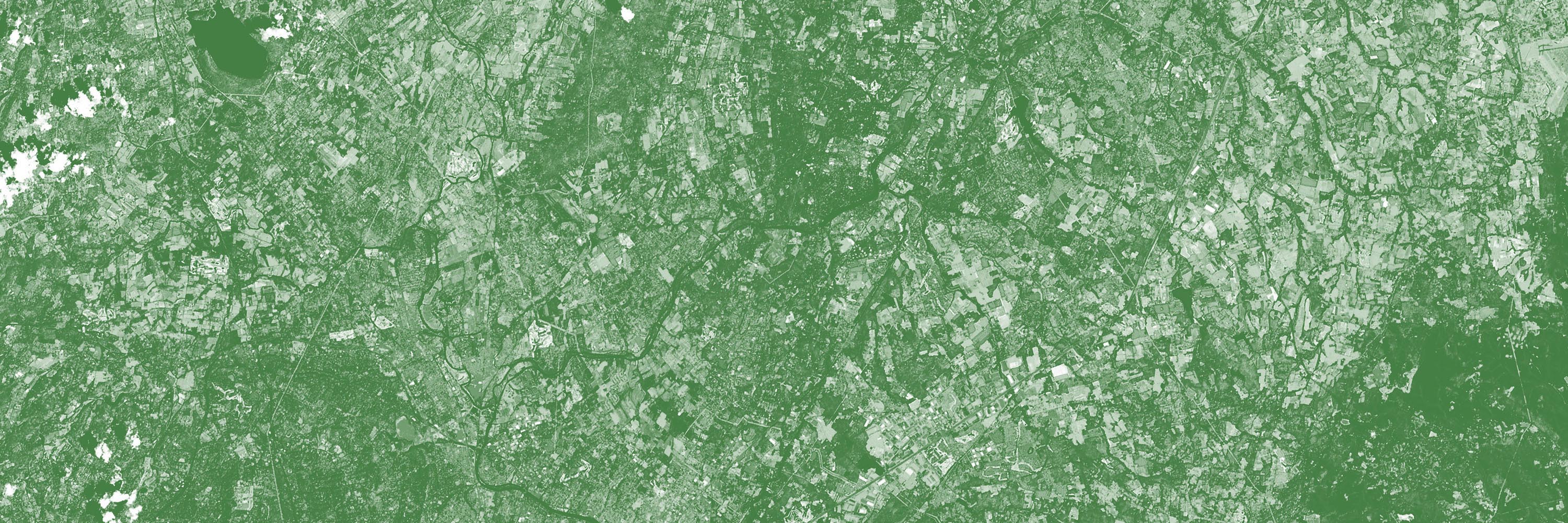
Object-based Image Analysis (OBIA) has evolved to a widespread methodology for image analysis, especially in the context of remote sensing. With the emergence of Very High Resolution (VHR) remote sensing data it turned out that methods which operate on image segments instead of single pixels show lots of advantages when analyzing the content of remote sensing data. With the advent of user friendly software, which allowed to analyze remote sensing data in OBIA manner, OBIA has been further boosted in the remote sensing and GIS community. The numerous scientific publications dealing with OBIA in the remote sensing and GIS domain show, that this methodology has meanwhile established – probably even as a paradigm for image analysis. Simultaneously, the methodology itself underwent a step-by-step evolution, comprising the development of new segmentation methods, the integration of new classification methods and the development of new methods for change detection and monitoring, just to name a few. Meanwhile, the integration of new methods - mainly originating in AI - plays an important role for OBIA. Exemplary, the explicit formulation and management of knowledge, the application of artificial learning and learning mechanisms, but also self-organizing agent-based systems are interesting new developments in OBIA which originate in AI.
In this special issue, we first intend to outline the state-of-the-art in OBIA for remote sensing and the methodologies it comprises meanwhile. Further, we intend to present recent concepts, frameworks and new methods which found their way to OBIA in conjunction with recent applications and success stories of OBIA in remote sensing. This will span a wide spectrum ranging from: image segmentation methods, software engineering in the context of OBIA, semantic modelling and reasoning, ontologies and knowledge representations, classification methods including Complex Neural Networks (CNNs) to self-organizing approaches such as multi-agent systems. Further, OBIA-specific approaches of change detection and monitoring as well as the incorporation of non-remote sensing and even unstructured data are further aspects we want to deal with. Last but not least cloud computing and Big Earth Data in the context of OBIA are challenging fields we would like to spot at.
We would like to invite colleagues to submit articles about their recent research on any of the following topics but not restricted to:
- Image segmentation and joined aspects, such as optimization, quality assessment, transferability, etc.
- Software development and engineering in the context of OBIA including robustness and quality assessment.
- Knowledge representation and management, including ontologies and reasoning.
- Classification methods including CNNs and other ANN-based methods.
- Self-organizing methods such as Multi-Agent Systems in OBIA.
- Object-based change detection and monitoring methods.
- Data integration and usage.
- Cloud computing and Big Earth Data in OBIA.
- Applications of OBIA in remote sensing and success stories with OBIA.
Prof. Dr. Raul Queiroz Feitosa
Dr. Peter Hofmann
Prof. Dr. Cláudia Maria de Almeida
Prof. Dr. Gilson Alexandre Ostwald Pedro da Costa
Guest Editors
Manuscript Submission Information
Manuscripts should be submitted online at www.mdpi.com by registering and logging in to this website. Once you are registered, click here to go to the submission form. Manuscripts can be submitted until the deadline. All submissions that pass pre-check are peer-reviewed. Accepted papers will be published continuously in the journal (as soon as accepted) and will be listed together on the special issue website. Research articles, review articles as well as short communications are invited. For planned papers, a title and short abstract (about 250 words) can be sent to the Editorial Office for assessment.
Submitted manuscripts should not have been published previously, nor be under consideration for publication elsewhere (except conference proceedings papers). All manuscripts are thoroughly refereed through a single-blind peer-review process. A guide for authors and other relevant information for submission of manuscripts is available on the Instructions for Authors page. Remote Sensing is an international peer-reviewed open access semimonthly journal published by MDPI.
Please visit the Instructions for Authors page before submitting a manuscript. The Article Processing Charge (APC) for publication in this open access journal is 2700 CHF (Swiss Francs). Submitted papers should be well formatted and use good English. Authors may use MDPI's English editing service prior to publication or during author revisions.
Keywords
- OBIA
- GeOBIA
- remote sensing
- image analysis
- artificial intelligence
- knowledge representation
- big earth data
Benefits of Publishing in a Special Issue
- Ease of navigation: Grouping papers by topic helps scholars navigate broad scope journals more efficiently.
- Greater discoverability: Special Issues support the reach and impact of scientific research. Articles in Special Issues are more discoverable and cited more frequently.
- Expansion of research network: Special Issues facilitate connections among authors, fostering scientific collaborations.
- External promotion: Articles in Special Issues are often promoted through the journal's social media, increasing their visibility.
- e-Book format: Special Issues with more than 10 articles can be published as dedicated e-books, ensuring wide and rapid dissemination.
Published Papers
Get Alerted
Add your email address to receive forthcoming issues of this journal.


