

- 4.1Impact Factor
- 8.6CiteScore
- 25 daysTime to First Decision
Urban Sprawl and Urban Sustainability: High-Resolution Remote-Sensing Image Analytics
This special issue belongs to the section “Remote Sensing Image Processing“.
Special Issue Information
Dear Colleagues,
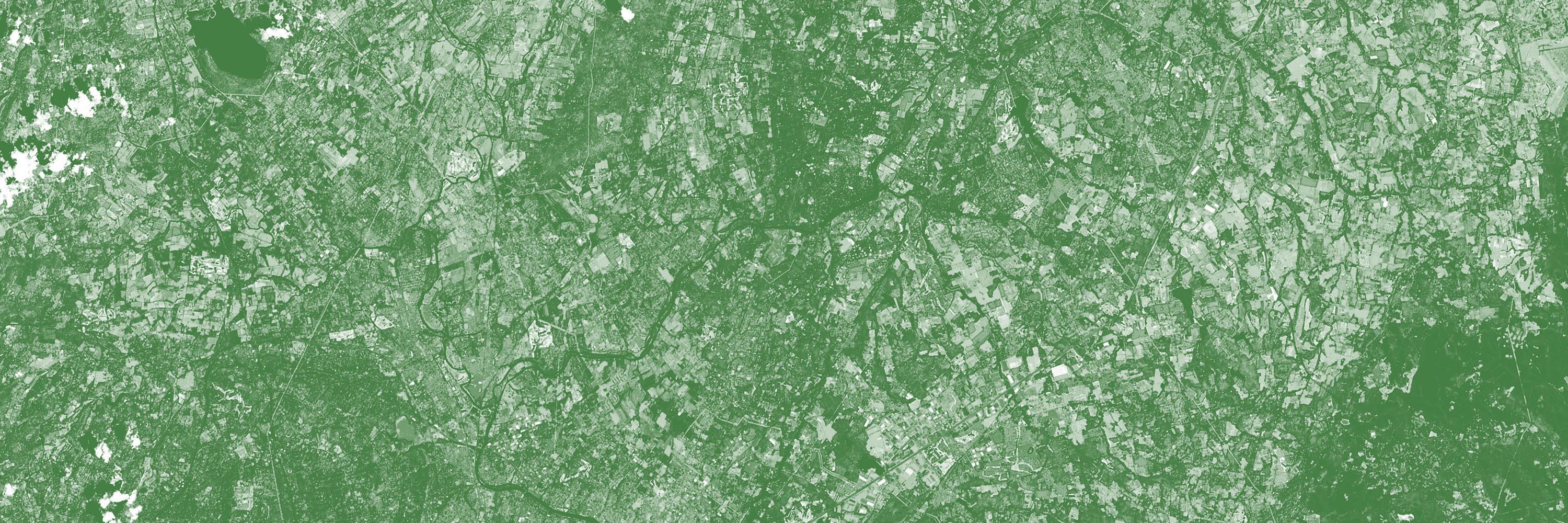
Rapid urbanization is reshaping cities worldwide, often leading to extensive urban sprawl, fragmented landscapes, environmental degradation and unequal access to infrastructure and services. Understanding these spatial patterns is essential for promoting sustainable urban development and achieving SDG 11. High-resolution remote-sensing images have emerged as a powerful data source for observing, quantifying and modeling urban growth and sustainability indicators at fine spatial and temporal scales. Advanced image analytics, including machine learning, deep learning, and multi-modal deep learning, now enable detailed assessments of built-up expansion, land-use transitions, ecological conditions and urban form. This Special Issue aims to showcase cutting-edge research that leverages high-resolution remote sensing and image analytics to monitor urban sprawl, identify SDG-related elements and indicators, assess urban sustainability and support smart-city planning. We welcome contributions that demonstrate methodological innovations, novel geospatial data fusions or applications for understanding urban dynamics and guiding sustainable-city planning.
Topics of interest include, but are not limited to:
(1) High-resolution remote sensing for fine-scaled urban sprawl detection and monitoring;
(2) Urban sustainability assessment, SDG-related elements and SDG indicators derived from remote sensing;
(3) Urban land-use/land-cover/functional-zones mapping, change analysis and spatiotemporal urban dynamics monitoring;
(4) GeoAI, machine learning, multimodal deep learning and advanced image analytics for urban studies;
(5) Multi-sensor or multi-modal geospatial data fusion (e.g., optical, SAR, LiDAR, nighttime light data, geospatial data);
(6) Environmental impacts of urban sprawl/ urban change;
We invite original research articles, innovative methodologies, reviews and case studies that advance the understanding of urban growth and urban sustainability through high-resolution remote sensing and multi-modal geospatial data.
Dr. Runyu Fan
Prof. Dr. Xuecao Li
Dr. Yan Zhang
Guest Editors
Manuscript Submission Information
Manuscripts should be submitted online at www.mdpi.com by registering and logging in to this website. Once you are registered, click here to go to the submission form. Manuscripts can be submitted until the deadline. All submissions that pass pre-check are peer-reviewed. Accepted papers will be published continuously in the journal (as soon as accepted) and will be listed together on the special issue website. Research articles, review articles as well as short communications are invited. For planned papers, a title and short abstract (about 250 words) can be sent to the Editorial Office for assessment.
Submitted manuscripts should not have been published previously, nor be under consideration for publication elsewhere (except conference proceedings papers). All manuscripts are thoroughly refereed through a single-blind peer-review process. A guide for authors and other relevant information for submission of manuscripts is available on the Instructions for Authors page. Remote Sensing is an international peer-reviewed open access semimonthly journal published by MDPI.
Please visit the Instructions for Authors page before submitting a manuscript. The Article Processing Charge (APC) for publication in this open access journal is 2700 CHF (Swiss Francs). Submitted papers should be well formatted and use good English. Authors may use MDPI's English editing service prior to publication or during author revisions.
Keywords
- remote sensing
- deep learning
- multi-sensor/ multi-modal data fusion
- image classification
- change detection
- time-series image analysis
- semantic segmentation
- urban sustainability
Benefits of Publishing in a Special Issue
- Ease of navigation: Grouping papers by topic helps scholars navigate broad scope journals more efficiently.
- Greater discoverability: Special Issues support the reach and impact of scientific research. Articles in Special Issues are more discoverable and cited more frequently.
- Expansion of research network: Special Issues facilitate connections among authors, fostering scientific collaborations.
- External promotion: Articles in Special Issues are often promoted through the journal's social media, increasing their visibility.
- e-Book format: Special Issues with more than 10 articles can be published as dedicated e-books, ensuring wide and rapid dissemination.
Published Papers
Get Alerted
Add your email address to receive forthcoming issues of this journal.


