

- 4.1Impact Factor
- 8.6CiteScore
- 25 daysTime to First Decision
Advances in Data Processing and Geoscience Applications of the Geology-1 Hyperspectral Satellite
This special issue belongs to the section “Remote Sensing in Geology, Geomorphology and Hydrology“.
Special Issue Information
Dear Colleagues,
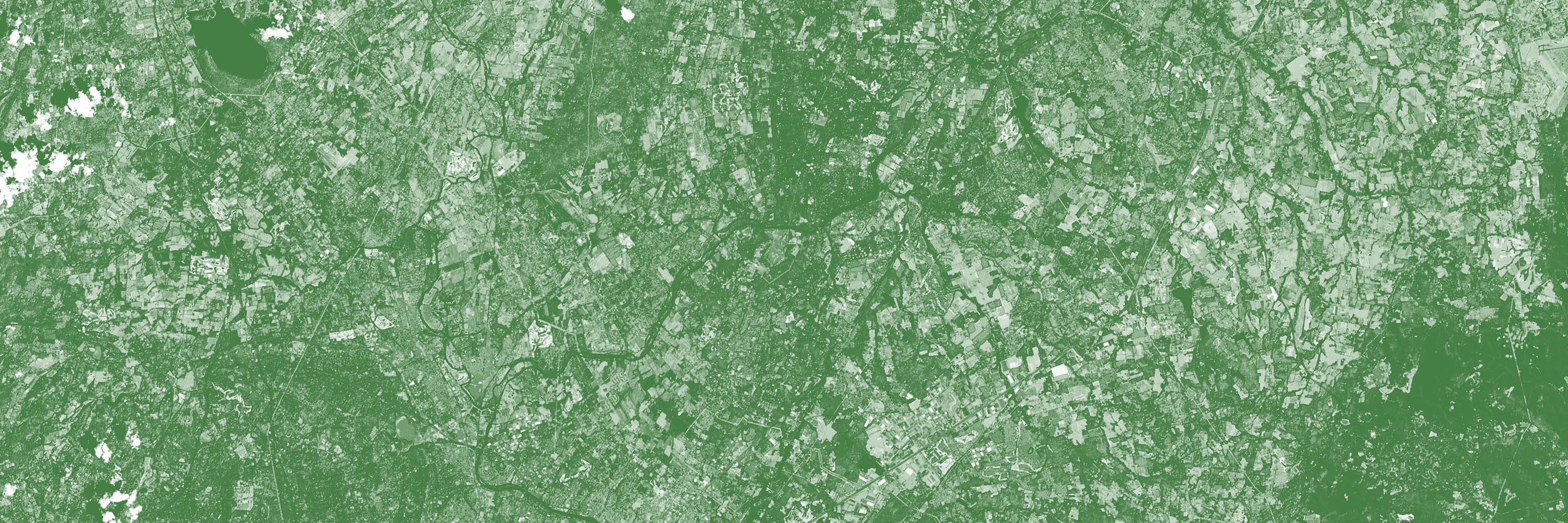
The successful launch of Geology-1 on May 17, 2025, marks a new milestone in China’s hyperspectral Earth-observation program. As the nation’s first hyperspectral microsatellite for geological resources and environmental monitoring, Geology-1 demonstrates the potential of compact satellite design for high-precision spectroscopy. The 83 kg satellite integrates visible-to-near-infrared (VNIR, 410–1000 nm, 14 m, 16 bands) and shortwave-infrared (SWIR, 1000–2480 nm, 30 m, 10 bands) sensors, enabling detailed characterization of water, vegetation, soil, minerals, and lithology.
The initial public release of Geology-1 imagery (http://geosat.com.cn/) provides unprecedented access to national hyperspectral data, supporting innovative research in geological mapping, mineral exploration, environmental assessment, and geohazard monitoring. With its broad spectral range, moderate spatial resolution, and agile microsatellite architecture, Geology-1 offers new opportunities for data processing, spectral analysis, and multi-source fusion. This Special Issue aims to highlight recent advances and applications derived from Geology-1 hyperspectral observations, fostering scientific exchange and promoting the integration of hyperspectral technologies into geoscience and sustainable resource management.
This Special Issue aims to present recent progress in hyperspectral data processing, analysis, and geoscience applications enabled by the Geology-1 satellite: China’s first hyperspectral microsatellite for geological and environmental observation. It focuses on advances in spectral calibration, feature extraction, mineral mapping, and multi-source data fusion, promoting new insights into Earth surface processes. This topic fits squarely within the Remote Sensing journal’s scope, emphasizing the development and application of remote sensing technologies for Earth observation, environmental monitoring, and geological exploration.
Articles may address, but are not limited to, the following topics:
- Hyperspectral data preprocessing, calibration, and atmospheric correction for Geology-1;
- Spectral feature extraction, unmixing, and dimensionality reduction methods;
- Multi-source data fusion of hyperspectral, SAR, optical, and DEM datasets;
- Mineral and lithological mapping using Geology-1 imagery;
- Hyperspectral applications in geological hazard and environmental monitoring;
- Deep learning and AI methods for hyperspectral information extraction;
- Cloud-based or automated processing chains for large-scale hyperspectral data;
- Integration of Geology-1 data with other Earth-observation missions for geoscientific analysis;
- Evaluation of mine waste, tailings, and acid mine drainage (AMD) using SWIR spectra;
- Super-resolution, fusion, and dimensionality reduction methods tailored for VNIR-SWIR integration;
- Quantitative inversion of soil properties (e.g., organic carbon and heavy metals) in mining landscapes.
Dr. Yuewei Wang
Dr. Wei Han
Prof. Dr. Yi Wang
Guest Editors
Manuscript Submission Information
Manuscripts should be submitted online at www.mdpi.com by registering and logging in to this website. Once you are registered, click here to go to the submission form. Manuscripts can be submitted until the deadline. All submissions that pass pre-check are peer-reviewed. Accepted papers will be published continuously in the journal (as soon as accepted) and will be listed together on the special issue website. Research articles, review articles as well as short communications are invited. For planned papers, a title and short abstract (about 250 words) can be sent to the Editorial Office for assessment.
Submitted manuscripts should not have been published previously, nor be under consideration for publication elsewhere (except conference proceedings papers). All manuscripts are thoroughly refereed through a single-blind peer-review process. A guide for authors and other relevant information for submission of manuscripts is available on the Instructions for Authors page. Remote Sensing is an international peer-reviewed open access semimonthly journal published by MDPI.
Please visit the Instructions for Authors page before submitting a manuscript. The Article Processing Charge (APC) for publication in this open access journal is 2700 CHF (Swiss Francs). Submitted papers should be well formatted and use good English. Authors may use MDPI's English editing service prior to publication or during author revisions.
Keywords
- geology-1 hyperspectral satellite
- hyperspectral remote sensing
- spectral unmixing and feature extraction
- mineral and lithological mapping
- geological hazard investigation
- multi-source data fusion
- geoscience applications
- earth observation data processing
- spectral–spatial analysis
Benefits of Publishing in a Special Issue
- Ease of navigation: Grouping papers by topic helps scholars navigate broad scope journals more efficiently.
- Greater discoverability: Special Issues support the reach and impact of scientific research. Articles in Special Issues are more discoverable and cited more frequently.
- Expansion of research network: Special Issues facilitate connections among authors, fostering scientific collaborations.
- External promotion: Articles in Special Issues are often promoted through the journal's social media, increasing their visibility.
- e-Book format: Special Issues with more than 10 articles can be published as dedicated e-books, ensuring wide and rapid dissemination.
Published Papers
Get Alerted
Add your email address to receive forthcoming issues of this journal.


