Journal Description
Pollutants
Pollutants
is an international, peer-reviewed, open access journal on all aspects of environmental pollution published quarterly online by MDPI.
- Open Access— free for readers, with article processing charges (APC) paid by authors or their institutions.
- High Visibility: indexed within ESCI (Web of Science), Scopus, AGRIS, and many other databases.
- Rapid Publication: manuscripts are peer-reviewed and a first decision is provided to authors approximately 32.8 days after submission; acceptance to publication is undertaken in 11.7 days (median values for papers published in this journal in the second half of 2025).
- Recognition of Reviewers: APC discount vouchers, optional signed peer review, and reviewer names published annually in the journal.
Latest Articles
Marine Organisms Fouling on Ghost Nets in the Sounio Marine Protected Area (Greece)
Pollutants 2026, 6(1), 12; https://doi.org/10.3390/pollutants6010012 - 5 Feb 2026
Abstract
Ghost nets are the result of fishing nets ending up at sea by fishing vessels during operations, repairs, accidental loss, and from aquaculture activities. This is a major threat to the marine environment due to the entrapment of marine species, which often leads
[...] Read more.
Ghost nets are the result of fishing nets ending up at sea by fishing vessels during operations, repairs, accidental loss, and from aquaculture activities. This is a major threat to the marine environment due to the entrapment of marine species, which often leads to the mortality of important species, the alteration of the marine benthic habitat, and the release of microplastics. In the current study, the authors conducted underwater clean-up activities in the marine protected area of Sounio in Greece (NATURA2000) to identify, evaluate whether they can be removed, and remove ghost nets. A total of 1200 Kg of ghost nets was removed within one year, with 68 different species reported to have colonized the nets. The reported groups were Mollusca, Porifera, Chordata, Arthropoda, Echinodermata, Bryozoa, Ochrophyta, Tracheophyta, Rhodophyta, Cnidaria, Chlorophyta, and Annelida. The species were not listed as threatened by the IUCN conservation status, while 86% were native, and 14% were invasive in the Mediterranean Sea. The current work presents the need to expand research efforts in the field of underwater plastic pollution, implement monitoring campaigns to a greater extent in the study area, and perform an assessment before the removal of ghost nets.
Full article
(This article belongs to the Special Issue Marine Pollutants: 3rd Edition)
Open AccessReview
Artificial Light at Night (ALAN), an Anthropogenic Pollutant: A Narrative Review
by
Agnieszka Anna Machnowska and Krystyna Skwarlo-Sonta
Pollutants 2026, 6(1), 11; https://doi.org/10.3390/pollutants6010011 - 4 Feb 2026
Abstract
The simplest definition of light pollution (LP) is the presence of artificial light at night (ALAN) at inappropriate times, intensity, and inappropriate amounts and colors. All these parameters of anthropogenic light clearly indicate that the presence of ALAN can disrupt the proper functioning
[...] Read more.
The simplest definition of light pollution (LP) is the presence of artificial light at night (ALAN) at inappropriate times, intensity, and inappropriate amounts and colors. All these parameters of anthropogenic light clearly indicate that the presence of ALAN can disrupt the proper functioning of not only humans but all organisms on Earth that have evolved in conditions of alternating day and night, closing within a 24 h day. Cities are the primary source of LP, and the ever-increasing global urbanization makes LP one of the fastest-growing threats to our civilization. It is particularly dangerous because public awareness of its existence is exceptionally weak, as the presence of light is usually perceived as a good thing, generating safety and beauty, and it is difficult for people to understand that excess of light may turn against us. However, LP dysregulates the well-known circadian rhythms of humans and animals and disrupts normal plant physiology. Furthermore, in a light-polluted world, plant–pollinator relationships are also endangered, which can lead to disruptions in food chains. In this review, we will present various aspects of excessive lighting and propose solutions to mitigate the increasing LP, considering the threats it poses to all living organisms.
Full article
Open AccessArticle
Origin of Polycyclic Aromatic Hydrocarbons in Reduced Mud in the Yoro Tidal Flat, Japan
by
Yuichiro Osaka and Atsuko Nishigaki
Pollutants 2026, 6(1), 10; https://doi.org/10.3390/pollutants6010010 - 3 Feb 2026
Abstract
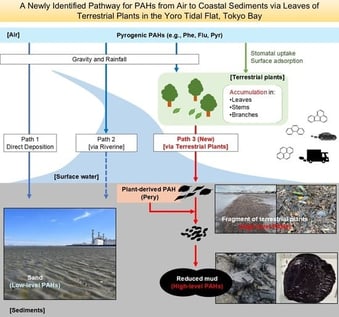
Reduced mud in the Yoro tidal flat (inner part of Tokyo Bay, Japan) consists of black and highly viscous sediment containing high levels of polycyclic aromatic hydrocarbons (PAHs). The mud is formed through the decomposition of terrestrial plants washed up on the tidal
[...] Read more.
Reduced mud in the Yoro tidal flat (inner part of Tokyo Bay, Japan) consists of black and highly viscous sediment containing high levels of polycyclic aromatic hydrocarbons (PAHs). The mud is formed through the decomposition of terrestrial plants washed up on the tidal flat; however, the origin of PAHs within the mud has remained unclear. To investigate the origin of PAHs in the mud, we analyzed PAHs in the mud and fragments of terrestrial plants using gas chromatography–mass spectrometry. The total PAH concentrations except for perylene were comparable between the mud (336 ± 58 μg kg-dry−1) and the fragments of plants (247 ± 77–435 ± 235 μg kg-dry−1), and their compositional patterns were also similar. These results indicate that the high levels of PAHs in the mud primarily originated from the fragments of plants that composed the mud. Furthermore, the perylene (Pery) concentrations in the fragments of plants were the same as or higher than those in the mud, suggesting that the formation of Pery begins in the plant tissues even before the mud was formed. These findings reveal a previously unrecognized pathway by which terrestrial plants introduce PAHs into tidal flat environments.
Full article
(This article belongs to the Section Air Pollution)
►▼
Show Figures

Graphical abstract
Open AccessReview
Potentially Toxic Element Contamination in Uganda’s Potable Water Sources: A Systematic Review of Concentrations, Health Risks, and Mitigation
by
Gabson Baguma, Gadson Bamanya, Hannington Twinomuhwezi, Wycliffe Ampaire, Ivan Byaruhanga, Allan Gonzaga, Ronald Ntuwa and Wilber Waibale
Pollutants 2026, 6(1), 9; https://doi.org/10.3390/pollutants6010009 - 2 Feb 2026
Abstract
►▼
Show Figures
Contamination of drinking water by potentially toxic elements (PTEs) remains a critical public-health concern in Uganda. This systematic review compiled and harmonized quantitative concentrations (mg/L) for key PTEs, lead (Pb), cadmium (Cd), arsenic (As), chromium (Cr), mercury (Hg), copper (Cu), zinc (Zn), nickel
[...] Read more.
Contamination of drinking water by potentially toxic elements (PTEs) remains a critical public-health concern in Uganda. This systematic review compiled and harmonized quantitative concentrations (mg/L) for key PTEs, lead (Pb), cadmium (Cd), arsenic (As), chromium (Cr), mercury (Hg), copper (Cu), zinc (Zn), nickel (Ni), cobalt (Co), manganese (Mn), and iron (Fe), across various potable and informal water sources used for drinking, including municipal tap water, boreholes, protected and unprotected springs, wells, rainwater, packaged drinking water, rivers, lakes, and wetlands. A comprehensive search of different databases and key institutional repositories yielded 715 records; after screening and eligibility assessment, 161 studies met the inclusion criteria, and were retained for final synthesis. Reported PTE concentrations frequently exceeded WHO and UNBS drinking water guidelines, with Pb up to 8.2 mg/L, Cd up to 1.4 mg/L, As up to 25.2 mg/L, Cr up to 148 mg/L, Fe up to 67.3 mg/L, and Mn up to 3.75 mg/L, particularly in high-risk zones such as Rwakaiha Wetland, Kasese mining affected catchments, and Kampala’s urban springs and drainage corridors. These hotspots are largely influenced by mining activities, industrial discharges, agricultural runoff, and corrosion of aging water distribution infrastructure, while natural geological conditions contribute to elevated background Fe and Mn in several regions. The review highlights associated health implications, including neurological damage, renal impairment, and cancer risks from chronic exposure, and identifies gaps in regulatory enforcement and routine monitoring. It concludes with practical recommendations, including stricter effluent control, expansion of low-cost adsorption and filtration options at household and community level, and targeted upgrades to water-treatment and distribution systems to promote safe-water access and support Uganda’s progress toward Sustainable Development Goal 6.
Full article

Graphical abstract
Open AccessArticle
Behavioural and Systemic Determinants of Pesticide Waste Disposal Among Nigerian Cocoa Farmers: Insights from Mixed-Methods Research
by
Oluseye Oludoye, Charles C. Okolo, Opeyemi Adebanjo-Aina, Koleayo Omoyajowo and Lanrewaju Ogunyebi
Pollutants 2026, 6(1), 8; https://doi.org/10.3390/pollutants6010008 - 29 Jan 2026
Abstract
Unsafe disposal of pesticide waste remains a critical environmental and public health issue in developing agricultural systems. This study examined cocoa farmers’ disposal behaviours and their determinants across Nigeria’s major cocoa-producing regions using an explanatory sequential mixed-methods design. Quantitative data were collected from
[...] Read more.
Unsafe disposal of pesticide waste remains a critical environmental and public health issue in developing agricultural systems. This study examined cocoa farmers’ disposal behaviours and their determinants across Nigeria’s major cocoa-producing regions using an explanatory sequential mixed-methods design. Quantitative data were collected from 391 farmers, followed by 23 in-depth interviews to contextualise behavioural drivers. Results showed that knowledge of pesticide risks and availability of disposal facilities significantly predicted safer disposal practices (R2 = 0.469, p < 0.05), whereas age had a negative influence. Qualitative findings revealed that negative attitudes, social norms, and limited infrastructure reinforced unsafe behaviours, while membership in farmers’ associations promoted safer practices through peer learning. A joint display demonstrated convergence between structural enablers (collection cages, extension support) and behavioural factors (knowledge, attitudes, norms). The study identifies a dual challenge of systemic shortcomings and behavioural inertia, suggesting that regulatory action alone is insufficient without farmer engagement and education. Policy and extension programmes should prioritise collection infrastructure, association-based training, and Integrated Pest Management to promote sustainable pesticide waste management. These insights advance understanding of pesticide disposal behaviour and offer actionable guidance for environmental governance in low- and middle-income agricultural contexts.
Full article
(This article belongs to the Section Environmental Systems and Management)
►▼
Show Figures

Figure 1
Open AccessArticle
Enhanced Nutrient Removal from Freshwater Through Microbial Fuel Cells: The Influence of External Resistances
by
Aaron Bain, Burton Gibson, Brenique Lightbourne, Kaitlyn Forbes and Williamson Gustave
Pollutants 2026, 6(1), 7; https://doi.org/10.3390/pollutants6010007 - 19 Jan 2026
Abstract
Eutrophication is a major threat to freshwater ecosystems, leading to harmful algal blooms, biodiversity loss, and hypoxia. Excessive nutrient loading, primarily from nitrates and phosphates, is driven by fertilizer runoff, sewage discharge, and agricultural practices. Sediment microbial fuel cells (sMFCs) have emerged as
[...] Read more.
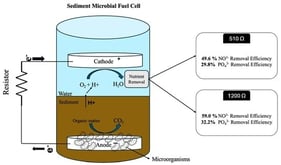
Eutrophication is a major threat to freshwater ecosystems, leading to harmful algal blooms, biodiversity loss, and hypoxia. Excessive nutrient loading, primarily from nitrates and phosphates, is driven by fertilizer runoff, sewage discharge, and agricultural practices. Sediment microbial fuel cells (sMFCs) have emerged as a potential bioremediation strategy for nutrient removal while generating electricity. Although various studies have explored ways to enhance sMFC performance, limited research has examined the relationship between external resistance, electricity generation, and nutrient removal efficiency. This study demonstrated effective nutrient removal from overlying water, with 1200 Ω achieving the highest nitrate and phosphate removal efficiency at 59.0% and 32.2%, respectively. The impact of external resistances (510 Ω and 1200 Ω) on sMFC performance was evaluated, with the 1200 Ω configuration generating a maximum voltage of 466.7 mV and the 510 Ω configuration generating a maximum current of 0.56 mA. These findings show that external resistance plays a major role in both electrochemical performance and nutrient-removal efficiency. Higher external resistance consistently resulted in greater voltage output and improved removal of nitrate and phosphate. The findings also indicate that sMFCs can serve as a dual-purpose technology for nutrient removal and electricity generation. The power output may be sufficient to support small, eco-friendly biosensing devices in remote aquatic environments while mitigating eutrophication.
Full article
(This article belongs to the Topic Environmental Pollution in Modern Agriculture: Causes, Effect, and Control)
►▼
Show Figures

Graphical abstract
Open AccessArticle
Correlating Scanning Electron Microscopy and Raman Microscopy to Quantify Occupational Exposure to Micro- and Nanoscale Plastics in Textile Manufacturing
by
Dirk Broßell, Emilia Visileanu, Catalin Grosu, Asmus Meyer-Plath and Maike Stange
Pollutants 2026, 6(1), 6; https://doi.org/10.3390/pollutants6010006 - 13 Jan 2026
Abstract
Airborne micro- and nanoplastic particles (MNPs) are increasingly recognized as a potential occupational exposure hazard, yet substance-specific workplace data remain limited. This study quantified airborne MNP concentrations during polyester microfiber production using a correlative SEM–Raman approach that enabled chemical identification and size-resolved particle
[...] Read more.
Airborne micro- and nanoplastic particles (MNPs) are increasingly recognized as a potential occupational exposure hazard, yet substance-specific workplace data remain limited. This study quantified airborne MNP concentrations during polyester microfiber production using a correlative SEM–Raman approach that enabled chemical identification and size-resolved particle characterization. The aerosol mixture at the workplace was dominated by sub-micrometer particles, with PET—handled onsite—representing the main process-related MNP type, and black tire rubber (BTR) forming a substantial background contribution. Across both sampling periods, total MNP particle number concentrations ranged between 6.2 × 10⁵ and 1.2 × 10⁶ particles/m3, indicating consistently high particle counts. In contrast, estimated MNP-related mass concentrations were much lower, with PM10 levels of 12–15 µg/m3 and PM2.5 levels of 1.3–1.6 µg/m3, remaining well below applicable occupational exposure limits and near or below 8 h-equivalent WHO guideline values. Comparison with earlier workplace and indoor studies suggests that previously reported concentrations were likely underestimated due to sampling strategies with low efficiency for small particles. Moreover, real-time optical measurements substantially underestimated particle number and mass in this study, reflecting their limited suitability for aerosols dominated by small or dark particles. Overall, the data show that workplace MNP exposure at the investigated site is driven primarily by very small particles present in high numbers but low mass. The findings underscore the need for substance-specific, size-resolved analytical approaches to adequately assess airborne MNP exposure and to support future development of MNP-relevant occupational health guidelines.
Full article
(This article belongs to the Section Air Pollution)
►▼
Show Figures

Graphical abstract
Open AccessArticle
Assessing the Biodistribution and Toxicity of Fluorescently Dyed Nano-Polystyrene in Artemia salina Nauplii
by
Melissa I. Ortiz-Román, Camila M. Martínez-Llaurador, Claudia S. Jiménez-Velez, Beatriz M. Purcell-Collazo and Felix R. Román-Velázquez
Pollutants 2026, 6(1), 5; https://doi.org/10.3390/pollutants6010005 - 5 Jan 2026
Abstract
Plastic pollution is a growing environmental crisis, with millions of tons of plastic entering the ocean each year and breaking down into microplastics and nanoplastics. These tiny particles pose a serious threat to marine life, particularly to zooplankton, which are essential to aquatic
[...] Read more.
Plastic pollution is a growing environmental crisis, with millions of tons of plastic entering the ocean each year and breaking down into microplastics and nanoplastics. These tiny particles pose a serious threat to marine life, particularly to zooplankton, which are essential to aquatic ecosystems. This study investigated the distribution and toxicity of polystyrene nanoplastics in Artemia salina (brine shrimp), a key model organism in ecotoxicology. Using specialized imaging and spectroscopy techniques, we tracked the presence of nanoplastics in A. salina and examined their effects on survival, behavior, and body structure. The results showed that nanoplastics accumulated in the gut and, at higher concentrations, caused gut deformities. The toxicity assay revealed that after 48 h of exposure, lethal concentrations decreased by nearly half compared with 24 h, demonstrating a time-dependent toxic effect. The estimated concentration that caused 50% mortality was 30.21 ± 6.44 mg/L. Additionally, these findings suggest that nanoplastics may impair the salt gland, affecting osmoregulation and energy allocation, leading to reduced feeding and pigmentation. These results highlight the potential risks of nanoplastics to marine organisms and emphasize the need for further research to understand their broader ecological and health impacts.
Full article
(This article belongs to the Section Plastic Pollution)
►▼
Show Figures

Graphical abstract
Open AccessArticle
Harmful Algal Blooms as Emerging Marine Pollutants: A Review of Monitoring, Risk Assessment, and Management with a Mexican Case Study
by
Seyyed Roohollah Masoomi, Mohammadamin Ganji, Andres Annuk, Mohammad Eftekhari, Aamir Mahmood, Mohammad Gheibi and Reza Moezzi
Pollutants 2026, 6(1), 4; https://doi.org/10.3390/pollutants6010004 - 4 Jan 2026
Abstract
Harmful algal blooms (HABs) represent an escalating threat in marine and coastal ecosystems, posing increasing risks to ecological balance, public health, and blue economy industries including fisheries, aquaculture, and tourism. This review examines the impact of climate change and anthropogenic pressures on the
[...] Read more.
Harmful algal blooms (HABs) represent an escalating threat in marine and coastal ecosystems, posing increasing risks to ecological balance, public health, and blue economy industries including fisheries, aquaculture, and tourism. This review examines the impact of climate change and anthropogenic pressures on the escalation of HAB occurrences, focusing especially on vulnerable regions in Mexico, which are the primary case study for this investigation. The methodological framework integrates HAB risk assessment (RA) methods found in the literature. Progress in detection and monitoring technologies—such as sensing, in situ sensor networks, and prediction tools based on machine learning—are reviewed for their roles in enhancing early-warning systems and aiding decision support. The key findings emphasize four linked aspects: (i) patterns of HAB risk in coastal zones, (ii) deficiencies and prospects in HAB-related policy development, (iii) how governance structures facilitate or hinder effective actions, and (iv) the growing usefulness of online monitoring and evaluation tools for real-time environmental observation. The results emphasize the need for coupled technological and governance solutions to reduce HAB impacts, protect marine biodiversity, and enhance the resilience of coastal communities confronting increasingly frequent and severe bloom events.
Full article
(This article belongs to the Special Issue Marine Pollutants: 3rd Edition)
►▼
Show Figures

Figure 1
Open AccessReview
Microplastics in the Rural Environment: Sources, Transport, and Impacts
by
Awnon Bhowmik and Goutam Saha
Pollutants 2026, 6(1), 3; https://doi.org/10.3390/pollutants6010003 - 4 Jan 2026
Abstract
Microplastics (MPs)—synthetic polymer particles less than 5 mm in size—have emerged as ubiquitous contaminants in terrestrial and aquatic environments worldwide, raising concerns about their ecological and human health impacts. While research has predominantly focused on urban and marine settings, evidence shows that rural
[...] Read more.
Microplastics (MPs)—synthetic polymer particles less than 5 mm in size—have emerged as ubiquitous contaminants in terrestrial and aquatic environments worldwide, raising concerns about their ecological and human health impacts. While research has predominantly focused on urban and marine settings, evidence shows that rural ecosystems are also affected, challenging assumptions of pristine conditions outside cities and coasts. This review synthesizes current knowledge on the presence, pathways, and impacts of MPs in rural environments, highlighting complex contamination dynamics driven by both local sources (agricultural plastics, domestic waste, rural wastewater, and road runoff) and regional processes (atmospheric deposition, hydrological transport, and sediment transfer). Key findings highlight that rural lakes, streams, soils, and groundwater systems are active sinks and secondary sources of diverse MPs, predominantly polyethylene (PE), polypropylene (PP), and polyethylene terephthalate (PET) in fibrous and fragmented forms. These particles vary in size, density, and color, influencing their transport, persistence, and bioavailability. Ecological effects include bioaccumulation in freshwater species, soil degradation, and potential food chain transfer, while human exposure risks stem from contaminated groundwater, air, and locally produced food. Despite these growing threats, rural systems remain underrepresented in monitoring and policy frameworks. The article calls for context-specific mitigation strategies, enhanced wastewater treatment, rural waste management reforms, and integrated microplastics surveillance across environmental compartments.
Full article
(This article belongs to the Section Plastic Pollution)
►▼
Show Figures

Figure 1
Open AccessArticle
Urban Heavy Metal Pollution Monitoring Using Ficus nitida as a Bioindicator
by
Nehad F. Elshayeb, Eqbal A. Sadoun, Bothina M. Weheda and Mohamed A. Shahba
Pollutants 2026, 6(1), 2; https://doi.org/10.3390/pollutants6010002 - 25 Dec 2025
Abstract
►▼
Show Figures
This study examined the seasonal and spatial distribution of heavy metals (Cd, Pb, and Ni) in relation to environmental parameters in five regions of Greater Cairo, Egypt (Helwan, Al-Azhar, Al-Orman, Al-Orman Center, and Al-Moqattam) between 2023 and 2024 using Ficus nitida as a
[...] Read more.
This study examined the seasonal and spatial distribution of heavy metals (Cd, Pb, and Ni) in relation to environmental parameters in five regions of Greater Cairo, Egypt (Helwan, Al-Azhar, Al-Orman, Al-Orman Center, and Al-Moqattam) between 2023 and 2024 using Ficus nitida as a bioindicator. Leaf and soil samples were taken periodically and tested for heavy metal levels, growth factors, chlorophyll, NPK, and moisture content. Concentrations of Cd, Pb, and Ni were highest at Helwan, the industrial site, reaching 0.22 mg/kg, followed by Al-Azhar, a high-traffic urban area, with 0.12 mg/kg, particularly during the summer season. In contrast, the lowest concentrations (0.03 mg/kg) were recorded at Al-Orman Center and Al-Moqattam, both characterized as low-traffic residential zones. A positive correlation was observed between heavy metal concentrations in Ficus nitida leaves and those in the corresponding soils. Additionally, the minimum leaf area was recorded at Helwan during winter, followed by the Al-Azhar region, with values of 36.2 cm2 and 41.7 cm2, respectively. Reductions in chlorophyll content and nutritional composition were linked to heavy metal levels. Ficus nitida may function as a trustworthy bioindicator of the environmental heavy metal contamination and the health of urban ecosystems, and it accurately reflects soil and air pollution levels.
Full article

Graphical abstract
Open AccessArticle
Monitoring of VOCs in Indoor Air Quality: Definition of an ISO 16000-Based Sampling Protocol for Inpatient Wards
by
Marco Gola, Stefano Capolongo and Gaetano Settimo
Pollutants 2026, 6(1), 1; https://doi.org/10.3390/pollutants6010001 - 22 Dec 2025
Abstract
►▼
Show Figures
Indoor Air Quality (IAQ) is a major public health concern, as prolonged exposure to indoor environments can significantly affect users’ well-being. In this context, the research proposes a sampling protocol, developed in compliance with ISO 16000 principles, for the assessment of key chemical
[...] Read more.
Indoor Air Quality (IAQ) is a major public health concern, as prolonged exposure to indoor environments can significantly affect users’ well-being. In this context, the research proposes a sampling protocol, developed in compliance with ISO 16000 principles, for the assessment of key chemical and physical parameters influencing air quality in inpatient rooms. These spaces host fragile users, while also requiring adequate protection for healthcare staff. Referring to the scope of the paper, the study outlines a comprehensive methodology for monitoring selected volatile organic compounds (VOCs) and microclimatic factors—temperature and relative humidity—using passive samplers and/or active sensors. The protocol also integrates outdoor measurements to better understand the contribution of internal emission sources. Monitoring activities are scheduled over one year, with regular sampling campaigns (at least one week per month) to analyze seasonal variations and long-term trends. The flexible structure of the protocol allows it to be adapted to different research objectives and types of healthcare facilities. Overall, the proposed approach provides a replicable framework for assessing IAQ in healthcare settings and identifying the main factors affecting indoor environmental performance. This supports improvements in both environmental quality and health protection within healing spaces.
Full article

Figure 1
Open AccessArticle
Assessing Dietary Exposure to Pesticides: Insights from Greek Potato Consumers
by
Konstantinos B. Simoglou, Zisis Vryzas and Emmanouil Roditakis
Pollutants 2025, 5(4), 49; https://doi.org/10.3390/pollutants5040049 - 11 Dec 2025
Abstract
The study investigates Greek consumers’ beliefs and their assessment of the risks associated with consuming potatoes they perceive as contaminated with pesticide residues, aiming to understand the relationship between perceived risk and actual dietary exposure. A survey of 1318 participants was conducted, employing
[...] Read more.
The study investigates Greek consumers’ beliefs and their assessment of the risks associated with consuming potatoes they perceive as contaminated with pesticide residues, aiming to understand the relationship between perceived risk and actual dietary exposure. A survey of 1318 participants was conducted, employing latent profile analysis to identify two distinct consumer profiles: Concerned Consumers, who prioritize certified products and exhibit lower potato consumption, and Confident Consumers, who demonstrate higher consumption levels and lower risk perception. Data from the consumer survey and the two-category grouping were benchmarked against data from the Greek report on pesticide residue monitoring in food to estimate exposure against established toxicological reference values. The results indicate that pesticide residues on potatoes in Greece remain significantly below established toxicological reference values, with mean exposures well within safety limits for both consumer groups. Despite the higher consumption among Confident Consumers, their exposure levels are still negligible. The findings highlight a disconnect between consumer perceptions of pesticide risk and actual exposure, suggesting that current agricultural practices are effective in safeguarding public health. This study underscores the importance of evidence-based risk communication to bridge the gap between consumer concerns and scientific reality, reinforcing the role of potatoes as a safe and essential food source.
Full article
(This article belongs to the Section Food Pollution)
Open AccessOpinion
Hidden Threats in Water: The Global Rise of Emerging Contaminants
by
Baljit Singh, Abhijnan Bhat, Gayathree Thenuwara, Kamna Ravi, Azza Silotry Naik, Christine O’Connor and Furong Tian
Pollutants 2025, 5(4), 48; https://doi.org/10.3390/pollutants5040048 - 3 Dec 2025
Cited by 1
Abstract
The general spread of water safety awareness and enforcement often masks the escalating risks of emerging contaminants (ECs) that evade standard detection and monitoring techniques. Traditional monitoring infrastructures depend heavily on localized laboratory-based testing, which is expensive, time-consuming, and reliant on specialized infrastructure
[...] Read more.
The general spread of water safety awareness and enforcement often masks the escalating risks of emerging contaminants (ECs) that evade standard detection and monitoring techniques. Traditional monitoring infrastructures depend heavily on localized laboratory-based testing, which is expensive, time-consuming, and reliant on specialized infrastructure and skilled personnel. While specific types of ECs and detection technologies have been examined in numerous studies, a significant gap remains in compiling and commenting on this information in a concise framework that incorporates global impact and monitoring strategies. We aimed to compile and highlight the impact ECs have on global water safety and how advanced sensor technologies, when integrated with digital tools such as the Internet of Things (IoT), artificial intelligence (AI), machine learning (ML), geographic information systems (GIS), and cloud-based analytics, can enhance real-time EC detection and monitoring. Recent case studies were reviewed for the assessment of EC types, global contamination, and current state-of-the-art for EC detection and their limitations. An emphasis has been placed on areas that remain unaddressed in the current literature: a cross-disciplinary integration of integrated sensor platforms, multidisciplinary research collaborations, strategic public–private partnerships, and regulatory bodies engagement will be essential in safeguarding public health, protecting aquatic ecosystems, and ensuring the quality and resilience of our water resources worldwide.
Full article
(This article belongs to the Section Emerging Pollutants)
►▼
Show Figures

Graphical abstract
Open AccessArticle
Actinomycetes-Mediated Decomposition of Chicken Feathers: Effects on Nitrogen Recovery over Time
by
Afia Ibnath Shimki, Fahad Al Nur Sajid and Zubaer Hosen
Pollutants 2025, 5(4), 47; https://doi.org/10.3390/pollutants5040047 - 1 Dec 2025
Abstract
►▼
Show Figures
Rapid urbanisation and intensified poultry production have increased chicken feather waste (CFW), posing environmental concerns due to its recalcitrant keratin content. This study aimed to evaluate the potential of Actinomycetes, specifically Streptomyces sp., isolated from peat-rich soils, to degrade CFW and enhance nitrogen
[...] Read more.
Rapid urbanisation and intensified poultry production have increased chicken feather waste (CFW), posing environmental concerns due to its recalcitrant keratin content. This study aimed to evaluate the potential of Actinomycetes, specifically Streptomyces sp., isolated from peat-rich soils, to degrade CFW and enhance nitrogen recovery. Chicken feathers collected from a slaughterhouse near Khulna University were washed, dried, ground, and inoculated with 2.5 mL of Streptomyces broth in a controlled composting setup. The decomposition process was monitored over eight days, with daily assessments of total and available nitrogen using the Micro-Kjeldahl method. The results demonstrated a significant increase (p ≤ 0.05) in nitrogen content in the Actinomycetes-treated decomposition group compared to the control. The highest total nitrogen content (6.43%) was observed on day 7, while peak available nitrogen (4.04%) occurred on day 8. The percentage of nitrogen recovery through Actinomycetes activity was 86.1%. These findings confirm the keratinolytic efficiency of Streptomyces in degrading feather waste and enhancing nitrogen mineralisation. Although nitrogen release was gradual, the resulting compost presents a viable slow-release organic fertiliser. This bioconversion approach offers an environmentally sustainable solution for poultry waste management and soil nutrient enrichment in agriculture.
Full article

Graphical abstract
Open AccessReview
A Mini Review of Pressure-Assisted Soil Electrokinetics Remediation for Contaminant Removal, Dewatering, and Soil Improvement
by
Ahmed Abou-Shady and Heba El-Araby
Pollutants 2025, 5(4), 46; https://doi.org/10.3390/pollutants5040046 - 1 Dec 2025
Abstract
►▼
Show Figures
In the last 32 years (1993–2024), the application of electric fields in soil management (soil electrokinetic, SEK) has undergone several stages of optimization and intensification. SEK has used both alternating current (AC) and direct current (DC). Numerous fields, including agriculture, sedimentation, phosphorus management
[...] Read more.
In the last 32 years (1993–2024), the application of electric fields in soil management (soil electrokinetic, SEK) has undergone several stages of optimization and intensification. SEK has used both alternating current (AC) and direct current (DC). Numerous fields, including agriculture, sedimentation, phosphorus management in soil and sludge, fertilizer production, consolidation, reclaiming salt-affected soils, metal extraction, dewatering, remediation of contaminated soil (both organic, such as PFAS, and inorganic, such as heavy metals), and soil nutrient availability, have utilized the SEK concept. Numerous innovations were included in the SEK equipment’s design or combined with other biological, chemical, and physical processes. While we recently published a review article on soil electrokinetic/electroosmosis–vacuum systems for sustainable soil improvement and contaminant separation, the current study illustrates the role of applying the pressure-assisted soil electrokinetics technique and shows the effect of the opposite technique. Four points were used to show the function of pressure-assisted soil electrokinetics based on our analysis of six search engines from 1993 to 2024 (the previous 32 years), including (1) polluted soil remediation, (2) dewatering, (3) soil improvement, and (4) making soil ready for electrokinetic action by applying pressure. In contrast to other intensification methods (such as reverse polarity, pulsed electric field, and design change), we found very few publications addressing pressure-assisted soil electrokinetics throughout the literature search. Most investigations focused on the dewatering mechanism, despite the paucity of relevant papers. In contrast to conventional electrokinetic remediation, pump-assisted electrokinetic-flushing remediation increased the removal efficiencies of Cs+ and Co2+ from contaminated soil by 2% and 6%, respectively. Additionally, the results demonstrated that the pressured electro-osmotic dewatering approach outperformed the conventional electrokinetic techniques. At 40 kPa, hydraulic conductivity was reduced four-fold by electro-rehabilitation for alternative fuels, while at 100 kPa, it was reduced three-fold. It was also observed that pressure may be used to achieve the soil ready for electrokinetic action in order to guarantee proper operation. Since there are not many articles on the subject, future research may examine how pressure-assisted soil electrokinetics can be integrated with vacuum systems, reverse polarity mode, pulsed electric field mode, modifying the SEK design, overcoming the formation of cracks, etc.
Full article

Figure 1
Open AccessSystematic Review
Exposure to Endocrine-Disrupting Chemicals and Early Onset of Menarche: A Systematic Review
by
Anuli Njoku, Mousa Al-Hassan, Sharaban Tohura, Kaleigh Albert, Taryn Pierce and Wendemi Sawadogo
Pollutants 2025, 5(4), 45; https://doi.org/10.3390/pollutants5040045 - 1 Dec 2025
Abstract
►▼
Show Figures
There has been a decline in the age at which girls experience menarche worldwide. Research suggests that exposure to endocrine-disrupting chemicals is linked to negative health consequences, including early onset of menarche. This systematic review examined the association between exposure to endocrine-disrupting chemicals
[...] Read more.
There has been a decline in the age at which girls experience menarche worldwide. Research suggests that exposure to endocrine-disrupting chemicals is linked to negative health consequences, including early onset of menarche. This systematic review examined the association between exposure to endocrine-disrupting chemicals (EDCs) and the early onset of menarche. Comprehensive searches of the PubMed, Embase, Web of Science, and Scopus databases were conducted to find relevant studies published from inception to November 2024. Exposure to certain EDCs, such as particulate matter and phthalates, showed significant associations with earlier menarche onset, while exposure to other EDCs (e.g., pyrethroids) was linked to delayed menarche timing. Overall, there were mixed findings in the relationships between various EDC exposures and menarche onset. Few studies investigated how exposure to EDCs and early menarche differed by race and ethnicity. This underscores the need for more studies that examine the relationship between early menarche onset and exposure to endocrine-disrupting substances. Education and policy approaches are also warranted to address this issue.
Full article

Figure 1
Open AccessArticle
Scenario-Based LCA of Kitchen Waste Management Incorporating Transport Logistics: A Case Study of Aya Town, Japan
by
Kosuke Toshiki and Kazumori Nishi
Pollutants 2025, 5(4), 44; https://doi.org/10.3390/pollutants5040044 - 26 Nov 2025
Abstract
Kitchen waste management strongly affects greenhouse gas (GHG) emissions, especially in small municipalities with limited treatment options. This study assessed alternative strategies for Aya Town, Japan, by integrating life cycle assessment (LCA) with Geographical Information System (GIS)-based transport analysis. Six scenarios were designed,
[...] Read more.
Kitchen waste management strongly affects greenhouse gas (GHG) emissions, especially in small municipalities with limited treatment options. This study assessed alternative strategies for Aya Town, Japan, by integrating life cycle assessment (LCA) with Geographical Information System (GIS)-based transport analysis. Six scenarios were designed, ranging from mandatory composting with frequent collection to full incineration at a regional waste-to-energy (WtE) facility. Emissions were estimated from transport, composting, and incineration processes, with sensitivity tests on composting electricity use (20, 50, and 90 kWh per ton) and WtE efficiency (15%, 17.9%, 20%, and 25%). The results showed that reducing collection frequency lowered emissions by about 9% relative to the current system, while decreasing composting participation further reduced emissions. Full incineration yielded the lowest emissions, whereas sensitivity analyses confirmed that facility parameters influenced absolute values but not the relative ranking of scenarios. These findings emphasize the importance of transport logistics, participation rates, and infrastructural context. High-quality compost may justify limited voluntary composting; however, WtE incineration remains the most robust option for climate mitigation in Japan’s incineration-based waste management system.
Full article
(This article belongs to the Topic Recent Advances in Municipal Solid Waste Management and Technology)
►▼
Show Figures

Figure 1
Open AccessReview
Industrial Applications, Environmental Fate, Human Exposure, and Health Effects of PFAS
by
Mohammad Jahirul Alam, Ahsan Habib, Mohammad Mehedi Hasan, Saiful Islam and Ershad Halim
Pollutants 2025, 5(4), 43; https://doi.org/10.3390/pollutants5040043 - 25 Nov 2025
Cited by 2
Abstract
Poly- and perfluoroalkyl substances (PFASs) are persistent environmental pollutants widely used in industrial applications due to their thermal stability and chemical resistance. However, their persistence in the environment and potential health risks, including developmental and immunological issues, have raised significant concerns. This review
[...] Read more.
Poly- and perfluoroalkyl substances (PFASs) are persistent environmental pollutants widely used in industrial applications due to their thermal stability and chemical resistance. However, their persistence in the environment and potential health risks, including developmental and immunological issues, have raised significant concerns. This review highlights the industrial uses, environmental fate, and bioaccumulation of PFASs, emphasizing their widespread presence in air, water, soil, and biota. Major sources of PFAS contamination include industrial discharges, wastewater treatment, and military sites. The atmospheric transport of PFASs contributes to their deposition in remote ecosystems, while aquatic and soil contamination stems from both point and nonpoint sources. Bioaccumulation studies reveal that PFASs accumulate in organisms, leading to potential human exposure through food, water, and consumer products. This review calls for further research to address knowledge gaps in PFAS detection, behavior, and health impacts, while advocating for improved regulations to limit their release and exposure.
Full article
(This article belongs to the Topic Disease Risks and Toxic Pathway from Environmental Chemical Exposure)
►▼
Show Figures

Graphical abstract
Open AccessArticle
Evaluating the Cost-Effectiveness of Environmental Protection Plans in Quarrying Using the Social Return on Investment Framework
by
Tochukwu A. Ngwu, Chinwe P. Oramah, Komsoon Somprasong and Chanapol Charoentanaworakun
Pollutants 2025, 5(4), 42; https://doi.org/10.3390/pollutants5040042 - 4 Nov 2025
Abstract
►▼
Show Figures
Environmental Protection Plans (EPPs) are vital for mitigating the socio-ecological impacts of quarry operations, especially in emerging economies like Thailand, where rapid industrialization often intensifies air, water, noise, and land degradation. This study applies the social return on investment (SROI) framework to evaluate
[...] Read more.
Environmental Protection Plans (EPPs) are vital for mitigating the socio-ecological impacts of quarry operations, especially in emerging economies like Thailand, where rapid industrialization often intensifies air, water, noise, and land degradation. This study applies the social return on investment (SROI) framework to evaluate the cost-effectiveness of multi-domain EPPs implemented in a quarry. By applying compliance-based assessment and monetization of environmental and health co-benefits, annual economic outcomes were quantified for particulate matter (PM10), total dissolved solids (TDS), noise reduction, and carbon sequestration. The analysis revealed a high SROI ratio of 59.55:1, primarily driven by substantial health benefits from PM10 and noise abatement. This ratio also reflects consideration of investment from an annual operational cost, with a sensitivity analysis of incorporating an estimated capital expenditure, reducing the ratio to moderate value ranges of 5–10:1. A number of limitations, such as exclusion of capital costs, reliance on fixed proxies, and single-year scope, may overstate short-term returns, suggesting the application of stochastic methods for enhanced robustness. Overall, the findings demonstrate that EPPs deliver substantial economic and public health benefits, supporting their role in fostering community resilience and advancing sustainable operations in quarry sectors.
Full article

Figure 1
Highly Accessed Articles
Latest Books
E-Mail Alert
News
Topics
Topic in
Clean Technol., Environments, Pollutants, Sustainability, Toxics, Processes
New Advances in Adsorptive and Extractive Methods for Pollutant Removal
Topic Editors: Rui Wang, Xinpeng Liu, Yunqian Ma, Kai ZhangDeadline: 9 April 2026
Topic in
Microorganisms, Pollutants, Processes, Sustainability, Recycling, Waste, Microbiology Research
The Role of Microorganisms in Waste Treatment
Topic Editors: Zuotao Zhang, Tan Chen, Bing ZhangDeadline: 31 May 2026
Topic in
Applied Sciences, ChemEngineering, Membranes, Pollutants, Processes, Separations, Clean Technol.
Membrane Preparation and Its Application in Lithium Ions Extraction
Topic Editors: Lei Zhang, Xianhui LiDeadline: 20 June 2026
Topic in
Agriculture, Agronomy, Land, Sustainability, Pollutants
Environmental Pollution in Modern Agriculture: Causes, Effect, and Control
Topic Editors: Yafei Wang, Yizhe Dong, Zhixiong Tan, Longyao Zhang, Hui ZhangDeadline: 30 June 2026
Conferences
Special Issues
Special Issue in
Pollutants
The Interaction Between Microplastics and Heavy Metals in Soil Ecosystems
Guest Editors: Tufail Shah, Imran Azeem, Noman ShakoorDeadline: 31 March 2026
Special Issue in
Pollutants
The Effects of Global Anthropogenic Trends on Ecosystems, 2025
Guest Editors: Giovanni Vinti, Francesca Villa, Vladimiro BoselliDeadline: 31 May 2026
Special Issue in
Pollutants
Marine Pollutants: 3rd Edition
Guest Editors: Francesco Saliu, Paolo GalliDeadline: 31 August 2026
Special Issue in
Pollutants
Treatment and Restoration of Heavy Metal Pollution in Soil and Water: From the Ecological and Sustainable Perspectives
Guest Editor: Tianpeng GaoDeadline: 30 September 2026