

Skip Content
You are currently on the new version of our website. Access the old version .

Nanomaterials

Nanomaterials is an international, interdisciplinary, peer-reviewed, open access journal published semimonthly online by MDPI, and that publishes reviews, regular research papers, communications, and short notes that are relevant to any field of study that involves nanomaterials with respect to their science and applications.
The Spanish Carbon Group (GEC) and The Chinese Society of Micro-Nano Technology (CSMNT) are affiliated with Nanomaterials and their members receive discounts on the article processing charges.
Indexed in PubMed | Quartile Ranking JCR - Q2 (Physics, Applied | Chemistry, Multidisciplinary | Materials Science, Multidisciplinary | Nanoscience and Nanotechnology)

All Articles (21,686)

Optical amplification and spatial multiplexing technologies have important applications in quantum communication, quantum networks, and optical information processing. In this paper, based on the non-reciprocal amplification of a pair of co-propagating conjugate four-wave mixing (FWM) signals induced by a one-way pump field in a double-Λ-type hot atomic system, we demonstrate spatially multiplexed multiple FWM processes by introducing a counter-propagating collinear pump field. This configuration enables simultaneous amplification of bidirectional four-channel FWM signals. Furthermore, when the injected signal and pump beams are modulated to Laguerre–Gaussian beams carrying different optical orbital angular momentum (OAM), the OAM of the pump beam is transferred to each amplified field. Through the tilted lens method, we experimentally demonstrate that the OAM of the amplified signal light remains identical to that of the original injected signal light. In contrast, the OAM of the other three newly generated FWM fields is governed by the angular momentum conservation law of their respective FWM processes, which enables the precise manipulation of the OAM for the other generated amplified fields. Theoretical analysis of the dynamical transport equation for the density operator in light–matter interaction processes fully corroborates the experimental results. These findings establish a robust framework for developing OAM-compatible optical non-reciprocal devices based on complex structured light.

29 January 2026

(a) Energy levels of the D1 line of the 133Cs atom involved in multiple FWM in a double-Λ scheme. ΔP is the frequency detuning of the pump light, and Δ ≈ 2π × 9.192 GHz is the ground-state energy splitting. (b) Schematic for the experimental setup. HWP, half wave plate; PBS, polarizing beam splitter; GT1 and GT2, Glan–Taylor splitter with extinction ratio 105:1; L1 and L2, planoconvex lens with focal length f1 = 750 mm and f2 = 500 mm; TS, beam splitter with reflectivity of 1%; M, 45° mirror; SPP, spiral phase plate; BL, beam block; PD1–PD4, photo detectors.

Next-Generation Carbon-Based Quantum Dots for Healthcare and Beauty Applications

  • Muhammad Noor Nordin,
  • Nur Farhana Shahrul Azhar and
  • Noor Hafidzah Jabarullah
  • + 2 authors

Carbon quantum dots (CQDs) have attracted intense research interest due to their unique physicochemical properties and broad application potential. CQDs are a new class of ultrasmall fluorescent carbon nanoparticles (<10 nm) that exhibit bright photoluminescence, broad excitation spectra, high quantum yields (QYs), and excellent photostability. Structurally, they consist of graphitic sp2/sp3-hybridized carbon with amorphous or nanocrystalline cores. Unlike conventional semiconductor quantum dots (SQDs), which often contain toxic group II–VI, III–VI, or IV–VI elements, CQDs offer a safer and more environmentally friendly alternative for biomedical and cosmetic applications. This review summarizes recent advances in green-chemistry approaches for CQD synthesis, including top-down, bottom-up, waste-derived, and surface-functionalization methods. Particular attention is given to natural carbon sources, which provide low-cost, sustainable, and eco-friendly routes for scalable production. The optical, electronic, and toxicological properties of CQDs are discussed to clarify their performance and safety profiles. Special emphasis is placed on their emerging roles in wound healing and cosmetic formulations, which remain underexplored despite their promising potential. To our knowledge, this is the first comprehensive review focusing on the current progress, key challenges, and future perspectives of CQDs in beauty and personal care applications.

29 January 2026

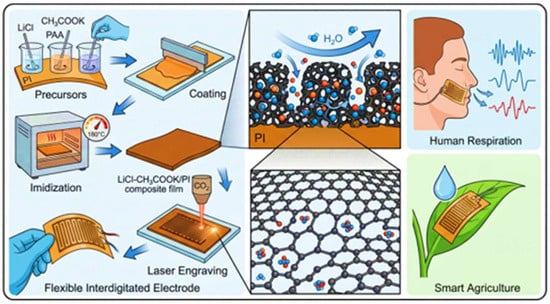
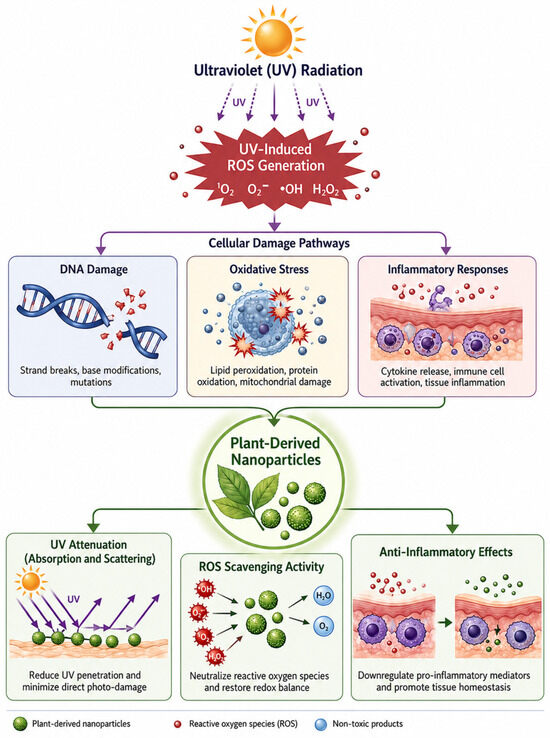
The synthesis of CQDs can be achieved using both top-down and bottom-up approaches. The conceptual illustration was prepared by the authors using AI-assisted design tools.

Chlorella vulgaris is a microalga with well-established nutritional, antioxidant, anti-inflammatory, and antibacterial potential. The current study aimed to explore the green synthesis of silver nanoparticles (AgNPs) using the ethanolic extract of C. vulgaris and to assess how nanoparticle formation affects the chemical composition, antimicrobial potential, antioxidant capacity, and spasmolytic activity of the extract, building on earlier evidence for its modulatory effects on gastrointestinal smooth muscle. Even though AgNPs from Chlorella have been obtained previously, to the best of our knowledge, their spasmolytic activity has not been evaluated. To assess their properties and stability, ATR-FTIR, TEM images, XRD, DLS, and zeta potential were used. The obtained AgNPs were mostly spherical (with a diameter between 10 and 50 nm) and showed good colloidal stability. The synthesis of AgNPs resulted in significant changes in lipid composition, pigment content, and fatty acid profiles, including a decrease in total chlorophylls and an increase in mono- and polyunsaturated fatty acids. The biosynthesized AgNPs showed moderate to strong antibacterial activity against a variety of Gram-positive and Gram-negative bacteria, yeasts, and fungi. The most pronounced inhibitory effect was observed against A. niger and P. chrysogenum. In ex vivo organ bath experiments, AgNPs modulated the contractile activity and the spasmolytic profile of isolated rat gastric smooth muscle compared with C. vulgaris extract. These results demonstrate that green-synthesized AgNPs present systems with altered smooth muscle activity and improved antibacterial qualities, underscoring their potential for use in functional foods, nutraceuticals, and gastrointestinal therapeutics.
28 January 2026

ATR spectra of Chlorella vulgaris (blue) and Chlorella-AgNPs (orange).

Silver nanoparticles (AgNPs) are extensively employed for their antimicrobial and biomedical properties, yet concerns persist regarding their potential toxicity. While AgNPs can induce oxidative stress, membrane disruption, and DNA damage, in vivo data remain inconsistent. This study investigated whether batch-to-batch variability in nominally identical AgNPs of 10 nm size contributes to divergent in vivo toxicity outcomes. CD-1 (ICR) mice were intravenously injected with a single 10 mg/kg bw dose of spherical, citrate-coated 10 nm AgNPs from three different batches purchased from the same manufacturer. The mice were euthanized 24 h post-exposure for quantitative silver determination by inductively coupled plasma–mass spectrometry (ICP–MS) and histopathological evaluation of liver, spleen, lungs, kidneys, and brain. Autometallography and immunofluorescence were used to assess silver distribution and cellular localization in the hepatobiliary system. All the batches induced hepatobiliary toxicity, characterized by hepatocellular necrosis and gallbladder wall hemorrhage, of differing severity. The most toxic batches contained higher proportions of smaller AgNPs, suggesting that differences in size distribution influence toxicological outcomes. Silver agglomerates were localized within multiple cell types, indicating internalization and cell-specific cytotoxicity. These findings highlight that minor physicochemical variations affect in vivo results, underscoring the importance of nanoparticle characterization to improve reproducibility in nanotoxicological research.
28 January 2026

Number-based constituent particle size distribution reported in the manufacturer’s datasheets. (a) Batch A DAG1542; (b) Batch B, DAG1949; (c) Batch C DAG2289. Suspensions of BioPure™ 10 nm spherical Silver Nanoparticles, NanoComposix (San Diego, CA, USA). The AgNP suspensions exhibited distinct particle size distributions across the three batches: the proportion of particles with diameters &lt; 8 nm was 14% in Batch A, 0% in Batch B, and 8% in Batch C. The dashed vertical line indicates the particle diameter threshold set at 8 nm.
News & Conferences

Issues

Open for Submission

Editor's Choice

Get Alerted

Add your email address to receive forthcoming issues of this journal.

XFacebookLinkedIn
Nanomaterials - ISSN 2079-4991